Professional virtual currency information station welcome
We have been making efforts.

vc Page 20

Cryptocurrency is a non-legal monetary asset based on digital technology and blockchain, possessing the functions of a medium of exchange and a store of value. Cryptocurrency is a transaction medium that uses cryptographic principles to ensure transaction security and control the creation of transaction units. Cryptocurrency is a type of digital currency (or virtual currency). Bitcoin became the first decentralized cryptocurrency in 2009, after which the term “cryptocurrency” was more commonly used to refer to such designs. Since then, several similar cryptocurrencies have been created, and they are usually referred to as altcoins. Cryptocurrency is based on a decentralized consensus mechanism, in contrast to the banking financial system that relies on a centralized regulatory system.

UBS Warns: Negative Seasonal Risks In September May Cause SPX Correction, Investors Need To Be Vigilant

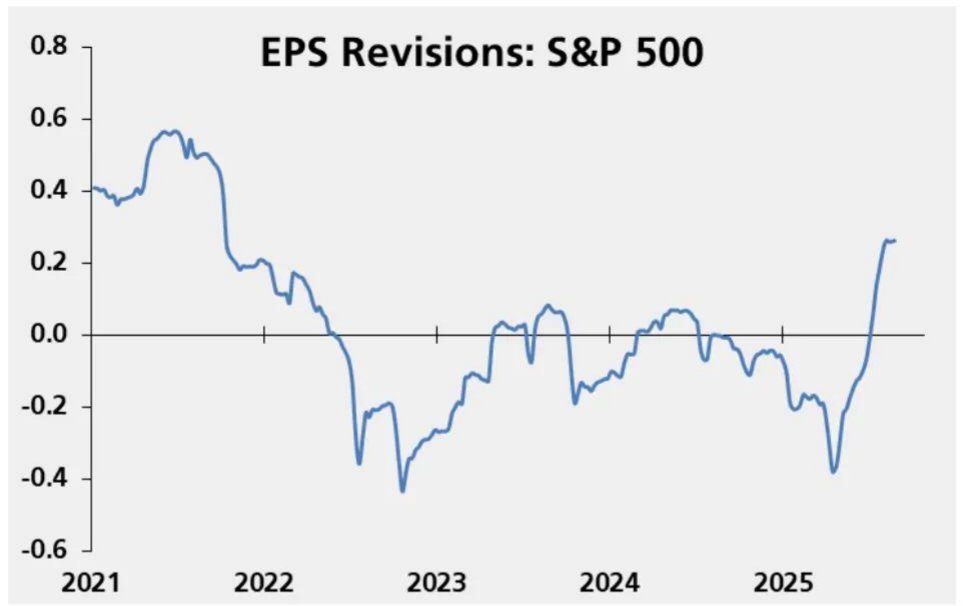
UBS recently stated that the strong rise in the U.S. stock market in August 2025 was mainly driven by EPS revisions. However, with the advent of September – the most negative seasonal month in the history of the S&P 500 – the market faced a turning point. The bank warned that although the economic data showed no signs of slowing down, excessive positions and reliance on the Federal Reserve policy made the market vulnerable, and investors needed to be wary of systemic risks.

spx_S&P 500 Seasonal Risk_US Stock Market EPS Correction

The strongest wave of EPS revisions since the COVID-19 pandemic not only pushed the S&P 500 and Nasdaq 100 higher, but also significantly affected assets with unbalanced positions.

Cyclical growth impulses and Federal Reserve policy expectations further strengthened market optimism. A UBS report shows that the cyclical index (vs. defensive index) is near all-time highs, reflecting the market's pricing of economic growth impulses. Investor confidence stems from the impending enactment of the Big Beauty Act and the passing of weak non-farm payrolls data.

Economic indicators do not point to a material slowdown in growth. In addition, Federal Reserve Chairman Powell's dovish signal for a September interest rate cut became a key driver. Investors "romanticized" the dovish Fed in the context of positive growth and encouraged maintaining risk positions. The report pointed out that attempts to short risk assets have repeatedly failed recently, highlighting the strength of the current environment.

Risks continue to accumulate

UBS highlighted negative seasonal risks in September, the worst month in SPX history. The market is already at historical highs, but seasonal factors usually intensify after mid-September, coinciding with the FOMC meeting, increasing the probability of a correction.

Specific risks include: AI leading stocks (such as Nvidia) may "rest" after the earnings report, resulting in a lack of momentum in the market; the risk of non-farm payroll data or CPI data being less than expected (the bank's economics team predicts non-farm payrolls in September will be 70,000, lower than the consensus of 75,000). Any reading that questions growth may trigger a sharp decline in U.S. stocks; the level of positions has reached the highest point since April, especially systemic funds, which can easily trigger systemic selling.

UBS's early warning signals are no longer bullish, indicating accumulation of downside risks, with models predicting an increased chance of the S&P 500 falling more than 5% over the next month.

hedging strategy

UBS recommends a cautious defensive approach. Given that price action was affected by low liquidity in late August (with many people on vacation), the bank recommends reducing exposure ahead of non-farm payrolls data. Specific strategies include: buying put options on the Russell 2000 Index (IWM.US) as protection against Friday’s data event; buying gold ETF October call options; and going long the software sector rather than the semiconductor sector because of Nvidia’s weakness.

Is There Any Commission When Purchasing PICC Auto Insurance? Introduction To 2023 Renewal Prices And Rebate Details

1. Can I get commission rebates when purchasing car insurance from PICC?

Answer: It is true that you can get rebates when purchasing PICC auto insurance, but the prerequisite is that you have not had a car accident in the previous year and have not applied for auto insurance claims before there will be rebates. If you have applied for auto insurance claims in the previous year, there will be no rebates.

1. PICC compulsory traffic insurance rebate:

In the first year, there is no discount. The price of compulsory traffic insurance for cars with less than 6 seats is 950 yuan, and the price for cars with 6 seats or more is 1,100 yuan.

In the second year, there is a 10% discount, the price of compulsory traffic insurance for cars with less than 6 seats is 855 yuan, and the price for cars with 6 seats or more is 990 yuan.

In the third year, there is a 20% discount. The price of compulsory traffic insurance for cars with less than 6 seats is 760 yuan, and the price for cars with 6 seats or more is 880 yuan.

For the fourth year and above, there is a 30% discount. The price of compulsory traffic insurance for cars with less than 6 seats is 665 yuan, and the price for cars with 6 seats or more is 770 yuan.

2. PICC commercial auto insurance rebate:

The maximum rebate for PICC commercial auto insurance is 30%, but usually no more than 30%.

Auto insurance rebates are divided into exact rebates and informal rebates.

Among them, formal rebates are discounts that can be enjoyed without claims, while informal rebates refer to car insurance sales staff rebates to customers in cash or other forms.

2. How much is the renewal price of PICC auto insurance in 2023?

My friend just bought PICC car insurance a few days ago. The car is 6 years old. Before the expiration of the car insurance contract, he accidentally got into two traffic accidents and made two claims. The detailed price of renewing PICC car insurance a few days ago is as follows:

After two accidents, the premium payable for 2023 PICC Auto Insurance was 2,921.92 yuan, with a rebate of 120 yuan, and the final actual payment was 2,801 yuan.

The guarantee content is as follows:

1. Motor vehicle loss insurance amount: 59526.40 yuan

2. Motor vehicle third party liability insurance coverage: 1,500,000 yuan

3. Complimentary value-added services:

Additional motor vehicle value-added service special terms (road assistance service): 7 times

Additional special terms for value-added motor vehicle services (driving service): 1 time

Additional special terms for motor vehicle value-added services (inspection delivery service): 1 time

To sum up, PICC auto insurance is still very user-friendly. Generally, auto insurance has made claims and there is no commission rebate when renewing the insurance. However, PICC will still give car owners part of the rebate for commercial auto insurance, which shows that PICC auto insurance is most beneficial to car owners.

And I heard from my friend that the service of PICC Auto Insurance is also very good!

① Support the "extremely fast" service of paying compensation first and repairing the car later; the "double-free" service that eliminates the need to fill in documents and accident explanations; and provide one-hour notice for compensation for cases of less than 10,000 yuan.

② Worry-free compensation for personal injury is more "peaceful". Specialists will mediate on-site; notify the compensation on the spot; and handle it quickly at one time.

③Because there are insurance service outlets all over the country, and the service coverage can reach villages, it supports national general compensation and exclusive electronic survey and claim settlement; nationwide 24/7 survey and claims consulting services; and free 50-kilometer rescue service for broken down vehicles nationwide (except for some traffic management sections) (excluding material costs).

If you are interested in the "People's Insurance Company Auto Insurance 2023 Latest Quotation Form" and want to know more, you can click "Consult now and get a free plan", and customer service will provide free consultation and free quotation.

U.S. Stocks Opened Higher And Moved Lower On November 20. Technology Stocks Led The Decline. Follow Up Trends And Industry Analysis.

Zhitong Finance APP learned that CITIC Securities released a research report saying that the overall U.S. stock market will fluctuate slightly until the Federal Reserve interest rate meeting on December 10-11, and funds will shift from technology to defensive medical utilities. Afterwards, Trump is expected to nominate a new candidate for the chairman of the Federal Reserve, and trading expectations for monetary policy are expected to become looser. Therefore, U.S. stocks may begin to rebound in the second half of December. Resident tax cuts will also begin on January 1 next year. Fundamentals will also provide certain support for employment and consumption. At the industry level, it is recommended to pay attention to: 1) the technology industry in the U.S. stock market, where valuations and performance are more consistent; 2) manufacturing, mid-to-upstream resource products, and energy infrastructure (especially nuclear power) that benefit from the reindustrialization process and favorable policies; 3) the military industry with increased fiscal spending; 4) Internet diagnostics that are benefiting from cuts in medical expenditures; 5) the financial industry (especially banks) during the interest rate cut cycle.

event:

On November 20, U.S. stocks opened higher and moved lower as a whole, especially technology stocks, which suffered significant declines. The Nasdaq 100 and Philadelphia Semiconductor Index fell 2.4% and 4.8% respectively. In particular, some technology stocks (more than 50%) that have experienced significant gains since the beginning of the year, including Micron, AMD, Lam Research, Palantir, etc., have all fallen by more than 5%. However, after Nvidia disclosed its better-than-expected third-quarter report and future guidance, CITIC Securities judged that the overnight decline was more driven by profit-taking driven by macro factors, rather than actual panic selling by investors regarding the bursting of the AI ​​bubble.

After the release of new U.S. non-farm payrolls data in September, hawkish comments from Federal Reserve officials heightened expectations for monetary tightening.

Released on November 20, the number of new non-farm jobs in the United States in September was 119,000, exceeding market expectations of 51,000. The new non-agricultural data exceeded expectations, coupled with recent hawkish remarks by many Federal Reserve officials, further boosting market expectations for tightening monetary policy. According to reports from Bloomberg and Reuters, Federal Reserve Board Governor Michael Barr said that since the current inflation level is still hovering around 3%, which is still far from the 2% target, interest rate cutting decisions need to be more prudent; Cleveland Fed President Beth Hammack reiterated his stance against further interest rate cuts; even Chicago Fed President Austan Goolsbee, who had previously been relatively neutral, expressed uneasiness about further cutting interest rates in December. The hawkish statements of Federal Reserve officials have jointly promoted the market's expectations for re-pricing the path of monetary policy. That is, the Federal Reserve will be more inclined to maintain the current interest rate level rather than cut interest rates at the December interest rate meeting. Even before inflation shows a clear downward trend, it may maintain the current interest rate level for a long time.

However, the marginal weakening trend of the U.S. job market has not changed, and the market's "hawkish panic" trade in monetary policy may be nearing its peak.

Judging from labor market data, the U3 unemployment rate rose from 4.3% in August to 4.4% in September, while the U6 unemployment rate, which reflects broad unemployment and marginal labor conditions, fell from 8.1% to 8.0%, while the labor force participation rate rebounded to 62.4%. The coexistence of new jobs, rising participation rates and rising unemployment rates indicates that improvements in labor supply and job replacement may occur at the same time. However, the higher-than-expected non-farm employment data does not mean that the U.S. labor market is once again fully prosperous. Considering that the total number of non-farm employment in July and August this year was revised down by 33,000, continuing the downward revision trend this year, the possibility of further downward revision of non-farm employment data from August to September cannot be ruled out in the future. Therefore, the substantial weakening of the U.S. job market may have been masked by the hawkish statements of Federal Reserve officials.

Looking forward to the market outlook, CITIC Securities predicts that the December Fed interest rate meeting may be the peak of this round of "hawkish panic", and then the main line of market trading may turn to Trump's nomination game for the new Fed chairman; by then, unless a relatively hawkish candidate like Kevin Warsh who does not support QE is nominated, the market is expected to return to the logic of trading loose monetary policy after the dust settles on the new Fed chairman.

The extreme narrative of the “AI bubble” bursting may be difficult to see in the short term.

On the demand side, the diversified competitive landscape of China and the United States promotes model iteration and full-stack innovation. According to Google’s performance meeting, Google The monthly Token processing volume soared from 9.7 trillion in April 2024 to 1300 trillion in October 2025. Under the neutral assumption, it is expected that global monthly Token consumption will still increase by 3 times by the end of 2026 compared with the current level, 203 In 2000, with the popularization of multi-modal and AI agents, the capacity may be expanded by 20 times, while supply-side chip and system performance upgrades continue to reduce unit computing power costs, providing support for demand release, and there are still bottlenecks in many links of the supply chain, and concerns about overcapacity are not yet established. At the commercialization level, there is currently a disconnect between token consumption and commercial returns. However, the three major scenarios of advertising placement, Agent Commerce, and enterprise-level solutions are gradually implemented, promoting the transformation of the industry from "scale growth" to "value growth". It is expected that the commercialization breakthrough of SaaS manufacturers in the short and medium term will become the key.

On the financial side, according to various company performance exchange meetings, the CAPEX of the world's four major technology giants in 2025Q3 totaled +74% year-on-year, and they have revised their guidance upwards. Strong cash flow and policy and tax incentives provide financial support. In terms of risks, CITIC Securities believes that the AI ​​search penetration rate is about to hit the ceiling. Subsequent token growth depends on C-side scenarios and Agent implementation. Debt financing risks are concentrated in small and medium-sized cloud service providers. Ecological cooperation between OpenAI and NVIDIA is difficult to falsify in the short term. Overall, it does not constitute an inducement for the industry bubble to burst.

U.S. stock performance expectations continue to be revised upward, and valuations have narrowed.

Since the end of October, U.S. stock performance expectations have continued to be revised upwards, with the upward revisions concentrated in information technology and health care. At the same time, price retracements in the index and multiple sectors combined with profit increases have caused dynamic valuations to narrow to a large extent. According to LSEG data, as of November 21, the SPX500's 2025/2026 revenue growth expectations were revised upwards by 0.1pcts/0.4pcts respectively compared with the end of October, and the profit growth expectations were revised upwards by 0.03pcts/1.0pcts respectively. However, during the same period, the S&P 500/Nasdaq 100 fell 4.2%/6.5% respectively, resulting in a rapid decline in both PE/PEG of US stocks.

From a structural point of view, the upward revision of revenue growth expectations in 2025 is mainly concentrated in the information technology and financial sectors, with an upward revision of 0.4pcts/0.4pcts respectively; the upward revision of profit growth expectations is mainly concentrated in the real estate, information technology and energy sectors, with an upward revision of 0.7pcts/0.5pcts/0 respectively. .5pcts; the upward revision of revenue growth expectations in 2026 is mainly concentrated in the medical care and communication services sectors, with an upward revision of 1.7pcts/0.8pcts respectively; the upward revision of profit growth expectations is mainly concentrated in the medical care and daily consumption sectors, with an upward revision of 3.6pcts/2.2pcts respectively. During the same period, information technology/non-core consumption/industrial decline and valuation (PE TTM) fell the most. CITIC Securities believes that the recent retracement of U.S. stocks, especially technology stocks, is mainly driven by the contraction of valuation multiples rather than the deterioration of profit expectations.

U.S. stock market outlook: After the Federal Reserve’s interest rate meeting in December, U.S. stocks are expected to resume their upward trend.

In the short term, the trading participation of U.S. institutional investors is expected to gradually decline after Thanksgiving on November 27 this year, which may correspond to an increase in retail trading. As for expectations for monetary policy, there may not be any important new economic data disclosed before the Federal Reserve's interest rate meeting in December. The CPI data originally planned to be disclosed by the U.S. Bureau of Labor on December 10 will be postponed to December 18. The U.S. Department of Commerce also said that the PCE price index originally planned to be disclosed on November 26 will also be "disclosed at another date." The third-quarter reports of U.S. heavyweights were also expected to be disclosed previously.

Therefore, CITIC Securities predicts that the overall U.S. stock market will fluctuate slightly until the Federal Reserve interest rate meeting on December 10-11, with funds diverted from technology to defensive medical utilities. Afterwards, Trump is expected to nominate a new candidate for the chairman of the Federal Reserve, and trading expectations for monetary policy are expected to become looser. Therefore, U.S. stocks may begin to rebound in the second half of December. Resident tax cuts will also begin on January 1 next year. Fundamentals will also provide certain support for employment and consumption.

At the industry level, CITIC Securities recommends focusing on: 1) the technology industry in the U.S. stock market, where valuations are more consistent with performance; 2) manufacturing, mid-to-upstream resource products, and energy infrastructure (especially nuclear power) that benefit from the reindustrialization process and favorable policies; 3) military industry with increased fiscal spending; 4) Internet diagnostics that benefit from cuts in medical expenditures; 5) the financial industry (especially banks) during the interest rate cut cycle.

Investors Are Betting That The Fed Will Resume Interest Rate Cuts In September, Which May Be Good For The Stock Market And The S&P 500 Index

Investors are betting that the Fed will restart interest rate cuts in September, nine months after the last rate cut in December 2024. Analysts said such a long period of policy stagnation could be particularly beneficial to stocks, potentially prolonging and extending the rally.

A big source of support for optimism comes from historical data. Ryan Detrick, chief market strategist at Carson Group, posted on the social platform

Although it's difficult to pinpoint the cause, Detrick said in a phone interview that investor psychology may be a factor. "As the situation stabilizes, the Fed will return to more accommodative language. To some extent, your previous concerns about policy stagnation may be alleviated, and the stock market will return to its previous bull market trajectory."

This background may explain why investors reacted strongly to Federal Reserve Chairman Jerome Powell's speech last Friday. Powell said a rate cut may be justified given growing concerns about the health of the job market.

Mike Reynolds, vice president of investment strategy at Glenmede, said Powell's statement marked a subtle but significant shift: the market's focus has shifted from "whether the Fed will cut interest rates this year" to "how many times it may cut interest rates and the pace of the rate cuts."

According to data from CME Group's FedWatch tool, traders currently see an 85% chance that the Fed will cut its key interest rate by 25 basis points in September, up from 75% a week ago; at the same time, they see an 83.9% chance that the Fed will cut interest rates at least twice in the remaining three policy meetings this year.

U.S. stocks closed higher last week, with the Dow Jones Industrial Average (DJI) hitting a new all-time closing high, rising 1.5% for the week, the S&P 500 Index (SPX) rising 0.3%, and the Nasdaq Composite Index (COMP) falling 0.6%.

Potential Variables: What factors could upset this expectation?

Nonetheless, a number of economic data may still affect the final decision before the end of the Fed's next meeting on September 17. Investors this week will welcome the July personal consumption expenditures (PCE) index – the Fed's favored inflation measure; followed by the August non-farm payrolls report in early September; and on the eve of the September meeting, the latest consumer price index (CPI) and producer price index (PPI) data will also be released.

Powell has reminded the market that the Fed will still adhere to the principle of "data dependence", but analysts said that only a truly unexpected situation may change the current trend. "For the Fed to abandon plans to cut interest rates in September, it would probably take something completely unexpected, such as an unusually strong inflation report," Reynolds said on the call.

However, Reynolds believes that this situation is "extremely unlikely" at this time. "Current labor market problems appear to be more concerning than inflation. And given that interest rates are currently at mildly restrictive levels, combined with the balance of risks, we believe the Fed needs to move rates closer to neutral."

James Ragan, director of wealth management research at DA Davidson & Co., also agreed that a rate cut in September is highly likely. "I think it is unlikely that there will be too many factors that will change the expectation of a 25 basis point interest rate cut at the September meeting. Now the focus of discussion may turn to: Will there be a 50 basis point cut? What action will be taken in October?"

If the interest rate cut is finalized, which sectors will benefit?

Analysts said the stock market rally could spread beyond broad-market technology stocks to more sectors if the Federal Reserve cuts key policy rates. Falling interest rates typically prompt investors to move further up the risk curve in search of higher returns. Steve Sosnick, chief strategist at Interactive Brokers, said: "In general, assets with greater exposure are likely to perform better after interest rate cut expectations increase."

Reynolds noted that small-cap stocks in particular could benefit – such companies typically hold more floating-rate debt and are more sensitive to changes in borrowing costs. The Russell 2000, which tracks the 2,000 smallest companies in the Russell index, rose 3.9% on Friday, outpacing the S&P 500's 1.5% gain.

Reynolds added that growth stocks generally perform better in a low interest rate environment, but current valuations of growth stocks are already at high levels, and if earnings growth cannot keep up, their upside may be limited.

Risks ahead still exist

Despite the positive sentiment, not everyone believes the market rally can continue unimpeded. Sosnick warned that the market may now be in a "hyper state."

"How long can this go on? Will other Fed officials start expressing disapproval?" he said.

Opposition has actually emerged. Cleveland Fed President Beth Hammack said last week she was reluctant to support a rate cut in September based on current data. This highlights the differences within the Fed on the "pace of easing policy."

"There are a lot of other cross-over risks in the market right now, but right now, investor sentiment is very positive," Sosnick said.

The U.S. Stock Market Index Hit A New High This Year, With The S&P 500 Index Rising By 9.84%

This year, the U.S. stock market indexes have repeatedly hit new highs. The market capitalization-weighted indexes Nasdaq Index (IXIC.US) and S&P 500 Index (SPX.US) have cumulative gains of 11.11% and 9.84% respectively, reaching 21,455.55 points and 6,460.26 points, mainly due to the strong trend of the "Seven Sisters" Driven by the trend, Google (GOOG.US), Microsoft (MSFT.US), Meta (META.US), and NVIDIA (NVDA.US) all hit new highs in the second half of this year. Among them, NVIDIA has repeatedly set the highest market value in the history of global listed companies, but this does not hinder the pace of repurchases by giants. Is their aggressive repurchase activity a vote of confidence in themselves, or is it a helpless move due to lack of confidence in potential investments in the market?

NVIDIA buyback

As rational economic people, technology giants like Nvidia, which has the most professional financial analysis team, control every penny of the company very scientifically and accurately, which means that every penny of its use can bring it the greatest economic value.

See the figure below. The AI ​​wave will begin to break out at the end of 2022, and Nvidia's stock price will also start to soar at the end of 2022. According to our estimates, from the beginning of 2023 to the present, Nvidia's stock price has increased by a cumulative 10.93 times.

NVIDIA Repurchase Analysis_spx_US Stock Market Index

According to our estimates, NVIDIA's non-accounting net profit for the 12 months ending July 27, 2025 was US$87.753 billion, which is 6.94 times higher than the company's non-accounting net profit of US$11.058 billion for the 12 months ending July 31, 2022 before the AI ​​boom.

Its current stock price trend far outperforms its profit growth. However, Nvidia still chooses to increase repurchases and increase dividends at this time. Nvidia paid a dividend of US$488 million in the first half of fiscal year 2026, a year-on-year increase of 41.86%.

As of the end of July 2025 this year, the company has returned US$24.3 billion to shareholders through repurchases and dividends. By the end of July, the company still has a repurchase authorization of US$14.7 billion, plus an additional US$60 billion of unlimited repurchase quota, which means that there is still US$74.7 billion of repurchase authorization that can be fulfilled.

Making buyback commitments and increasing dividends may, on the one hand, reflect Nvidia's confidence in its future prospects – buying its own shares at current prices is much more cost-effective than investing in other projects on the market, and it may also mean that the company's expected future earnings growth has not yet been reflected in its current stock price.

But on the other hand, it may also be to appease shareholders. Nvidia's management also mentioned at the July quarterly results meeting that the company will seize investment opportunities in AI solutions and sovereign AI in the future, which means it will increase investment. At the same time, it faces the possibility of missing out on China's major AI market and its current valuation is overvalued. The company may increase returns to shareholders to ease shareholders' concerns about returns on capital investment.

Capital spending ramps up with buybacks

While the "Seven Sisters" are increasing capital expenditures to consolidate their AI development advantages, they are also increasing repurchase amounts and increasing dividends to please shareholders.

Cash-neutral Apple (AAPL.US) has been a big spender on repurchases, with Wind data showing its repurchases amounted to $46 billion this year. However, Cook said at the June financial quarter results conference that Apple will invest US$500 billion in the United States over the next four years to promote innovation and create jobs in cutting-edge fields such as advanced processes, chip engineering, and AI. It is unknown whether this will affect its future repurchase capabilities.

Meta and Google are also the main players in repurchases. Although the stock prices of both companies have hit new highs this year and they have continued to significantly increase capital investment in the construction of data centers, they have not been stingy with repurchases.

Meta repurchased 36 million Class A ordinary shares for US$23.16 billion in the first half of this year. By the end of June 2025, the company still has a repurchase limit of US$28.23 billion. At the same time, Meta will increase its cash dividend by 5% from the first quarter of 2025. However, it should be noted that Meta's increase in capital expenditures is far greater than its return to shareholders. In 2024, its capital expenditure will be US$39.2 billion, and it recently raised its capital expenditure budget for 2025 from US$64-72 billion to US$66-72 billion, which means an increase of at least 68%. Management expects capital expenditures in 2026 to be similar to this year. It is not difficult to understand that Meta needs to give shareholders some small favors through buybacks and increased dividends to rationalize its expansion of AI capital investment.

In the first half of 2025, Google repurchased 164 million shares at a price of US$28.564 billion. In April this year, its board of directors increased its repurchase quota by another US$70 billion. As of the end of June 2025, Google still had a repurchase quota of US$86.3 billion. Similarly, Google, like Meta, increased its quarterly cash dividend by 5% in April this year. However, it should be noted that Google has further increased its capital expenditure, raising its capital expenditure guidance for 2025 from US$75 billion to US$85 billion, and stated that capital expenditure in 2026 will further increase.

The situation is similar at Microsoft.

In fiscal year 2025, which ends in June 2025, Microsoft has repurchased 31 million shares for US$13 billion, and currently has an approved repurchase quota of US$57.3 billion. At the same time, Microsoft is also one of the companies with the highest capital expenditure budget among the "Seven Sisters", although it stated that its fiscal year 2026 resources will This expenditure will increase moderately year-on-year, but we checked the company's previous records and found that Microsoft's capital expenditures have increased exponentially in the past two years. Capital expenditures in fiscal year 2024 and fiscal year 2025 increased by 74.61% and 58.35% year-on-year, respectively, to US$55.7 billion and US$88.2 billion.

spx_US Stock Market Index_NVIDIA Repurchase Analysis

Conclusion

Therefore, technology giants represented by Nvidia are currently significantly increasing stock repurchases and cash dividends. Their deep strategic purpose is not simply shareholder returns, but to pave the way for larger-scale capital expenditures to consolidate and expand their lead in the fierce AI competition.

Through buybacks and dividends, these companies aim to:

Please and appease shareholders: When investing huge amounts of money in long-term, high-risk AI infrastructure (such as data centers, chip research and development), balance shareholders' concerns about profit dilution and long investment cycles through stable cash returns, maintaining market confidence and stock price stability.

Optimize the capital structure and support strategic investment: demonstrate its excellent cash flow management capabilities and prove to the market that the company has the strength to simultaneously "invest in the future" and "return in the present". The ample repurchase quota is more like a financial strategic reserve, ensuring that while fully betting on AI, it can still flexibly use financial tools to manage market value and offset the dilution effect.

In essence, generous repurchases are an extension of its rational economic man’s thinking: it is a necessary measure to exchange short-term profit distribution for shareholders’ long-term strategic support. The ultimate goal is to allocate capital more efficiently and without resistance in areas that can generate the greatest future value—that is, to win the dominance of AI development.

British Experts Build High-power Motors To Expand The Ship Drive Ecology And Improve The Performance Of Pod Thrusters

British electric drive specialist Helix manufactures the world's highest power density motors. The company is now working to expand this compact, high-power design into a marine propulsion ecosystem that it believes will help change the face of everyday recreational and utility watercraft (at least the bottom of the hull). The company’s newly launched “pod module” integrates the necessary electric drive components and aims to make the 360-degree pod thruster a widely available solution, which is expected to improve energy efficiency and enhance maneuverability in the huge ship market.

Helix high power density motor_spx_ship pod thruster

Helix high power density motor_spx_ship pod thruster

Notice: The electric flame stove is here, you no longer have to pay the gas bill

Electric pod thrusters evolved from azimuth thruster systems dating back to the mid-20th century or even earlier. As a flexible, distributed form of ship propulsion, electric pod thrusters can increase efficiency, improve maneuverability, and free up space inside the hull. Unlike the traditional method, which relies on a large central engine to drive a propeller through a long propeller shaft and is equipped with an independent rudder system for steering, these devices integrate all powertrain and running gear components into a horizontally gimbaled underwater pod mounted on the keel of the ship.

The pod then functions as both a propulsion and steering mechanism, with its 360-degree rotation capability achieved through slip rings that deliver electrical power. This omnidirectional rotation allows each pod to accurately direct thrust in the desired direction, eliminating the need for an independent rudder system and greatly improving maneuverability. It can even enable giant ships to turn in place, much like the performance of torque vectoring electric vehicles on land.

In addition to improving maneuverability, pod thrusters are also claimed to increase energy efficiency. They utilize their full range of rotation capabilities to direct thrust in the most efficient manner based on current sailing direction and conditions, while reducing energy-consuming vibrations and eliminating additional drag from rudder components.

Helix high power density motor_spx_ship pod thruster

According to the Swedish-Swiss multinational ABB Group, which currently promotes Azipod, the first electric pod thruster launched in the early 1990s, in open waters, ships propelled by Azipod systems can typically reduce energy consumption by 5% to 15%, and in some cases may even achieve a 20% to 25% reduction. That's a lot for a ship like a cruise ship that consumes hundreds of thousands or even millions of gallons of fuel to travel between ports. A few years ago, a Deltamarin study found that Azipod-powered ferries could save up to $1.7 million in annual fuel costs.

This series of advantages makes pod thrusters a popular solution for some large ocean-going ships (such as cruise ships, container ships, oil tankers and ferries, etc.). We have previously discussed that pod thrusters can rotate directional thrust 180 degrees between "pull" and "push" orientations. This ability is particularly beneficial for icebreakers adapted to polar environments.

However, Helix believes that pod thrusters still have a lot of untapped potential in terms of downstream market expansion, and explained that due to the limitations of traditional motor power density, pod thrusters have long been limited to large ships. To achieve the high power levels required to propel ships, huge motors had to be installed inside giant underwater pods, resulting in high drag. Only in the very large power range above the megawatt level will the ratio of drag to power drop enough to realize the energy efficiency gains of pod propulsion. In smaller pods, the drag ratio becomes too high to overcome.

Ship pod thruster_Helix high power density motor_spx

The hand-cranked dumpling machine is a labor-saving tool for the elderly, making it easy to enjoy delicious food!

Helix is ​​poised to revolutionize this with its rapidly evolving motor topology technology that enables high power and torque in an extremely light and small package. While Helix’s range-topping 25kW/kg SPX177 motor was developed by its experimental division for a supercar prototype and is not optimized for mass-market use, its SPC177 radial flux motor, planned for use in the marine pod ecosystem, can still deliver up to 9.7kW/kg of power density, delivering a sustained output of 300kW from a 31kg package.

Helix reasoned that at this power density level, at sub-megawatt scale, the drag caused by the pod body would become insignificant, opening the door to efficient propulsion of small to medium-sized ships. In fact, the company even claims that its small, high-power motor construction will allow shipbuilders to reduce drag by 70% compared to traditional (giant) pod thrusters.

Helix high power density motor_spx_ship pod thruster

Rather than developing complete pods, Helix hopes to create modular flexibility by offering what it calls “pod modules” to manufacturers of small and medium-sized recreational, commercial and passenger vessels in the sub-megawatt range. Each “module” will be a plug-and-play set of pod internal components for shipyards and propulsion system manufacturers to install into their own designed subsea pod structures and pair them with propellers, battery systems, generators and control software solutions configured to specific vessel requirements.

Each first batch of "modules" will contain an SPC177 motor, complete with Xtrac gear reduction system, CAN bus interface, bearings and seals, and an optional Helix inverter.

"By freeing up aft deck space previously reserved for outboards, or internal space reserved for engine rooms and propeller shafts, our Helix pod modules offer the industry a landmark opportunity to rethink the way ships are designed, while enabling more efficient sailing and supporting the shipping industry's journey towards net-zero emissions," James Edwards, chief marine engineer at Helix, said in the launch last month.

Helix gives examples of how extra hull space can be used to make a trawler more comfortable and practical for fishermen, or a yacht more relaxing and enjoyable for leisure customers.

Three sub-megawatt pod module sizes will be launched at launch: 100kW, 200kW and 300kW. 100 and 200 kW models will be available in low and high torque variants, with Helix planning to eventually expand the product line to output power ranges from 480 kW to 3 MW.

Solid state drive prices plummet! Available in 64G-4TB, now is the time to buy!

Given the limited range of battery-powered electric boats, you may be wondering how on earth ship operators can power conventional multi-megawatt electric pod motors. This does not rely solely on batteries, but requires an onboard power generation system using diesel or hydroelectric power.

Likewise, Helix noted that pod module customers will be able to develop their own powertrains, whether a pure battery system or a series hybrid powered by a diesel generator or other alternative energy source. Unsurprisingly, the company expects customers to gravitate towards hybrid systems in the initial phase.

#shippropulsion#motortechnology#podmodule#shipenergyefficiency

Supervision Strictly Punishes Illegal Insurance Rebates: Sending Property For Physical Examination Is Not Enough, And Some People Are Banned From Business For Life

Recently, regulatory authorities have issued fines one after another to severely crack down on the illegal behavior of "rebates"!

Commission rebate_Supervision of life insurance violations_Insurance rebate penalties

Sending refrigerators, gold and other valuables is not acceptable!

Send clients for physical examination? No way!

Four employees of a certain life insurance branch were punished for giving or promising to give refrigerators, gold and other property to policyholders when selling insurance!

Another life insurance center branch was punished for providing 43 VIP customers with a physical examination package worth 200 yuan each!

Supervision issued huge fines, and some people were banned from business for life!

Rebate_Insurance rebate penalties_Supervision of life insurance violations

According to the official website of the former China Banking and Insurance Regulatory Commission, the China Banking and Insurance Regulatory Commission fined a life insurance company 300,000 yuan because of illegal activities such as "rebate commission" by insurance agents. At the same time, the relevant responsible persons of the company were warned and fined 100,000 yuan each.

The administrative penalty decision showed that upon investigation, the insurance company had committed the following illegal acts:

From 2017 to August 2019, the insurance company provided overseas (overseas) physical examination services to some customers. Physical examination-related expenses included round-trip air tickets, accommodation, free travel, meals, etc., which was a provision of other benefits to policyholders, insureds, and beneficiaries other than those stipulated in the insurance contract.

During the period, 70 customers from the bancassurance channel participated in Japanese physical examinations, involving 86 insurance policies, with a physical examination fee of 2.7169 million yuan; 2 customers participated in Taiwanese physical examinations, involving 2 policies, with a physical examination fee of 59,600 yuan. From the personal insurance marketing channel, 5 customers participated in the physical examination in Taiwan, involving 10 insurance policies, and the physical examination fee was 154,000 yuan; 2 customers participated in the Japanese physical examination, involving 3 insurance policies, and the physical examination fee was 60,500 yuan. The then assistant to the general manager and head of the customer marketing department was directly responsible for the above-mentioned illegal acts.

In this regard, the China Banking and Insurance Regulatory Commission decided to impose the following administrative penalties: a fine of 300,000 yuan on the insurance company; in accordance with the provisions of Article 171 of the Law, the two relevant persons in charge were given a warning and each was fined 100,000 yuan.

Rebate penalties_Rebate_Supervision of life insurance violations

"Give policyholders benefits other than those stipulated in the insurance contract" is commonly known in the industry as rebates or disguised rebates. This problem is a common violation in the insurance industry, and it can be said that it has been banned repeatedly.

According to incomplete statistics from Insurance With My Life, in the past few years, the national regulatory system has issued hundreds of various fines for the illegal situation of "giving policyholders benefits other than those agreed in the insurance contract." In 2022 alone, a total of nearly a hundred fines were issued, with fines ranging from thousands to tens of thousands of yuan.

The official website of Shanxi Banking and Insurance Regulatory Bureau once disclosed an administrative penalty decision:

Cao, a personal insurance agent of a Shanxi branch of a life insurance company, was banned from entering the insurance industry for life for promising to provide policyholders with benefits beyond what was stipulated in the insurance contract, deceiving policyholders and insureds, and concealing important information related to the insurance contract.

This time I was directly fined and banned from entering the insurance industry for life. This was the first time that I was punished with such a heavy penalty. This also demonstrates the determination of supervision to crack down on rebates, eliminate vicious competition, and safeguard the rights and interests of insurance consumers. It reflects the determination of supervision to rectify irregularities in marketing.

In the insurance industry, rebates can be said to be an open secret. In today’s fashionable terms, rebates are the involution of the insurance industry. To put it bluntly, it is vicious competition that disrupts the market order. Therefore, I have been with insurance all my life and believe that rebates have become a fatal cancer in the insurance industry and it is time to eradicate it.

In fact, in recent years, supervision has focused on illegal phenomena such as "giving policyholders benefits other than those stipulated in the insurance contract", "deceiving policyholders and insureds", and "concealing important information in insurance contracts".

Last year, the official website of the China Banking and Insurance Regulatory Commission also announced the penalties for such commission rebates:

A certain An Life salesperson was fined 1,000 yuan for giving hot pot to a customer during the insurance application process;

A Chinese Life salesperson was fined 1,000 yuan for giving a water purifier to a customer during the insurance application process.

The phenomenon of a large number of rebates makes people ignore their own protection needs and product functions when buying insurance, and blindly fall into the comparison of rebates.

So if we are smart and think that the products of various insurance companies are similar, in order to return a little commission, we choose an unprofessional agent and start hastily. Then it is very likely that you will be blinded by the returned commission and make a very irrational purchasing decision.

What’s more serious is that rebate itself is an illegal act.

Article 131 of my country’s current Insurance Law stipulates: Insurance agents, insurance brokers and their employees shall not engage in the following conduct when handling insurance business activities: granting or promising to grant benefits other than those stipulated in the insurance contract to the policy holder, the insured or the beneficiary.

Rebate supervision of life insurance violations_Rebate_Insurance rebate penalties

An insurance agent also said that in order to get customers to pay the bill or to avoid being snatched away by others, agents will directly return part of their personal commissions to customers in the form of gifts, travel or cash. This behavior is very common in the insurance industry.

As the saying goes: "Money can make the world go round." However, unreasonable distribution of "interests" often breeds greater greed.

Driven by commissions, in order to obtain more income, some insurance marketers attract consumers by "giving premium rebates to policyholders other than those stipulated in the insurance contract", or obtain improper benefits through "long-term insurance and short-term insurance" and "false business". From the perspective of Insurance Is My Life, more and more misleading sales have made the insurance industry, a large market with tens of millions of people, become chaotic.

The video below is a wonderful conversation between Bian Hongqi and a beautiful colleague in the TV series "The Story of Bian Hongqi" when she rejected a customer's request for a commission rebate.

Click the video↓↓↓

Is the scene in the video very familiar to insurance salespeople? In order to improve performance, insurance salespeople sometimes ask customers for rebates, and some customers take the initiative to ask for rebates. No matter what the situation, this is a very dangerous thing.

Wang Guojun, a professor at the School of Insurance at the University of International Business and Economics, said that commission rebates are a vicious competition method adopted by individual agents for sales performance. They are repeatedly banned because agents who do this can indeed gain certain competitive advantages in the short term or achieve a specific purpose, but it is very detrimental to industry development and the reputation of the insurance industry. Therefore, regulatory authorities have also increased penalties for rebates.

Don't touch the red line of "rebate". A small fine is a small matter. In serious cases, it may involve a crime, and you will regret it later.

Commission rebate is a lose-lose behavior

1. Service discounts

Insurance is not a "one-and-done deal" that can be bought and sold in a casino, because life insurance policies are usually valid for more than 10 years. The purchase of the policy is only the first step. The agent's services will accompany the policy for its "lifetime", including policy annual inspections, policy renewals, claims consultation and a series of services.

You have taken away the commissions that people depend on for survival. It would be weird if you don't leave. Think about it, if you work in a company and your boss says: I give you half of your salary every month, will you continue to work?

When you go to the hospital to see a doctor, will you ask the doctor to give you a discount on your medical bills? If you go to the bank and deposit 1,000 yuan, will the staff give you 500 yuan back? If you get into an accident and your claim is discounted because you don’t have professional guidance, do you think you’re getting a good deal?

2. Discounts on insurance products

Each insurance salesperson brings not only products, but also different family protection solutions. Insurance has been with me all my life. I believe that the process of buying insurance is the process of choosing a plan. Choose whichever price is close to your expectations and which type of insurance is suitable.

However, "rebate" takes advantage of human nature's inherent tendency to take advantage and blurs the focus of what should be paid attention to when buying insurance. The customer's original intention is to "choose a plan", but the focus has shifted to "how much advantage can be obtained".

Customers can originally choose the product that best suits them. With benefits other than insurance, they may choose products that "seem to be the cheapest". This goes against the original intention of rational insurance planning and is not good for customers.

3. How can agents survive if they have no money?

Commissions are the bread and butter of an insurance agent’s life. He will provide customers with high-quality services, and the quality of services will improve as his abilities improve. Services are meant to be rewarded.

The income of insurance salespeople mainly comes from commissions. They also have to eat, refuel their cars, develop customers, and spend time and energy to do this job. Commissions support them to continue doing it.

If all commissions were given to customers, they would not be able to survive. If you work in a job and all your salary is given to the person being served and you get nothing, how can you stick to this job? Once you leave your job, who will service your policy?

Therefore, commission sales are tantamount to digging one's own grave, showing only nihilistic prosperity, or even more serious, like the reflection of a dying person. He seemed to be in good spirits, but in reality he was already dead.

Experts pointed out: "Agents who recruit customers on the basis of commission rebates cannot choose, because rebates are not allowed by insurance companies and are only private transactions between agents and customers. Agents who ask for commission rebates are mostly because their performance is poor and they are eager for success, so they use this as a way to deal with assessments."

At the end, the insurance industry has only been in my country for a few decades. Compared with the hundreds of years of history in Europe and the United States, there is indeed a big gap. This requires the joint efforts of domestic insurance companies, insurance practitioners and insurance consumers to make this industry more standardized and better. It is not an empty talk that insurance makes life better.

The material comes from the Internet and is for learning and communication only. If there are copyright issues, please contact us in time to delete it. This platform has nothing to do with any disputes caused by reprinting articles from this official account to other platforms.

LeechBlock Official Version 0.5

The official version of LeechBlock is a browser plug-in that helps users easily manage their Internet usage time and provides efficient prevention of network interference. The official version of LeechBlock has a variety of time management tools, such as timers, statistical functions, blocking specific websites, etc., which can help users control their network usage behavior and improve work efficiency. The official version of LeechBlock supports a variety of custom settings. Users can adjust the plug-in settings according to their own needs to meet their personalized needs.

LeechBlock software features

The nice thing about LeechBlock is that you can configure it to block websites for a specific period of time, so if you want to visit a website occasionally, you don't have to activate and deactivate it all the time. This includes between specific times, specific moments, or a combination of both.

Although it's primarily designed for people with shaky mouse cursors, which is why it even lets you set passwords to access banned websites to help "slow things down" in your moments of weakness. If you can't help yourself, LeechBlock will track the time you spend on blocked websites. Adding sites to your Block list is easy – just go into the LeechBlock extension in your add-on manager and click Options to add a site.

The concept of LeechBlock is very admirable, although the fact that you set a password to access the site means it won't really stop you if you're tempted. I'm more likely to use it to block unwanted websites or other people from accessing websites on my machine.

If you really can't trust yourself not to check your email every two minutes, or are distracted by playing poker when you should be working, LeechBlock can help you break that habit.

Added option to pass the URL of the blocked page in the URL of the blocked page (using $U) Added option to keep blocked pages in the browser's "back" history Added option to show a warning message before the site is blocked Added option to calculate time spent when a page is not focused (workaround for some sites using Flash/Java) Added hyperlink from options dialog to examples (online) Redesigned options dialog to use less screen real settings Removed localization (translator not available)

LeechBlock software features

Lock: Immediately blocks the website for a specified period of time.

Access Control: Set a password or random access code for the options page to slow you down when you're vulnerable!

Delay: Set countdowns to delay access to websites instead of blocking them entirely.

Wildcard: Block a range of websites (e.g. *.somesite.com).

Exceptions: Whitelist sites you don't want to be blocked (e.g. +allowedsite.com).

Keywords: Block or allow websites based on keywords (e.g. ~badword).

LeechBlock update log

Added option to pass the URL of the blocked page in the URL of the blocked page (using $U)

Added the option to keep blocked pages in the browser's Back history Added the option to display a warning message before a site is blocked

Added option to calculate time spent when page is not focused (workaround for some sites using Flash/Java) Added hyperlink from options dialog to examples (online) Redesigned options dialog to use less screen real settings Removed localization (translator not available)

LeechBlock update log

1. Fixed several bugs;

2. Optimize details;

PCSOFT editor recommends:

LeechBlock has always been a common network accessory for most netizens. Its dominance in the minds of netizens is obvious. It is strongly recommended that users download LeechBlock and use it. Come to the PC download website to download it. In addition, ec, qq, uc, Aiku, and Maxthon provide downloads.

Net Inflow Exceeded 180 Tons! IiMedia Consulting Interprets China’s Gold Investment Boom In 2025

In 2025, against the background of intensified global geopolitical fluctuations, rising financial uncertainty, and the strengthening of national strategic resource positioning, China's gold industry will usher in a historically high boom cycle, bid farewell to the traditional operating model dominated by cyclical fluctuations in gold prices, and enter a new development stage of bullish gold prices, demand differentiation, policy regulation, and leading concentration. The latest data from iiMedia Research, the world's leading third-party data mining and analysis organization for the new economic industry, released the "2025 China Gold Industry Market Status and Benchmark Enterprise Operation Data Analysis Report" shows that China's gold investment demand will surge in 2025, with net inflows of gold ETFs exceeding 180 tons throughout the year, a year-on-year increase of 127%; sales of investment products such as physical gold bars and gold coins increased by 63% year-on-year, and gold jewelry consumption showed the characteristics of "volume reduction and price increase". The capital market presents a significant stratification pattern, with core indicators such as market value, revenue, profit, and capital flow continuing to cluster towards the top. Among them, Zijin Mining’s cumulative net profit attributable to the parent company in the first three quarters reached 37.864 billion yuan, which is particularly outstanding.

iiMedia Consulting analysts believe that the current operating performance of upstream mining companies and downstream retail companies in China's gold industry is clearly differentiated, and companies with resource reserves, global layout and full industry chain operation capabilities are occupying an absolute advantage. At the same time, multiple favorable factors such as the implementation of the new taxation policy and the continued promotion of high-quality development policies have accelerated the elimination of inefficient entities in the Chinese gold market, forcing the optimization and upgrading of the industrial structure and steadily moving towards strategic, intensive, high-end, and financialization.

In 2025, against the backdrop of escalating global geopolitical volatility, rising financial uncertainty, and the strengthened positioning of gold as a national strategic resource, China's gold industry ushered in a historic high-boom cycle, bidding farewell to the traditional operating mode dominated by cyclical fluctuations in gold prices and entering a new development phase characterized by a long-term bull market in gold prices, differentiated demand, standardized policies, and concentrated leading enterprises. Data from the latest Analysis Report on the Market Situation of China's Gold Industry in 2025 and Data on the Operations of Leading Enterprises released by iiMedia Research, a world-leading third-party data mining and analysis institution in the new economic industry, shows that China's gold investment demand surged in 2025: the annual net inflow of gold ETFs exceeded 180 tons, a year-on-year increase of 127%; the sales volume of investment-oriented products such as physical gold bars and gold coins rose by 63% year-on-year, while gold jewelry consumption showed the characteristic of "decreased volume but increased price". The capital market presented a distinct stratification pattern, with core indicators such as market value, operating income, profits, and capital flow continuing to gather towards leading enterprises. Among them, Zijin Mining's cumulative net profit attributable to parent company in the first three quarters reached as high as 37.864 billion yuan, delivering an especially outstanding performance.

Analysts from iiMedia Research believe that in the current China's gold industry, there is a clear differentiation in the operating performance between upstream mining enterprises and downstream retail enterprises, and enterprises with resource reserves, global layout and full industrial chain operation capabilities are seizing an absolute advantage. At the same time, multiple positive factors such as the implementation of new tax policies and the continuous advancement of high-quality development policies have accelerated the clearance of inefficient entities in China's gold market, forced the optimization and upgrading of the industrial structure, and promoted its steady progress towards strategization, intensification, high-endization and financialization.

Bitcoin current market situation price_Growth trend of gold investment demand_China gold industry market analysis

gold industry definition

Golden type classification

Top 10 companies in gold industry revenue

Monitoring data shows that the top three companies in the gold industry revenue are: Zijin Mining (254.200 billion yuan), Shandong Gold (83.783 billion yuan), and Hengbang Co., Ltd. (76.444 billion yuan). iiMedia Consulting analysts believe that the revenue distribution of leading companies is concentrated, with the top three accounting for more than 60%, indicating a high degree of market concentration. Zijin Mining and Shandong Gold mainly focus on gold, copper and other metal products, while Hengbang Co., Ltd. has more diversified business, which reflects its leading position in the gold industry. The revenue structure of the industry is relatively healthy and the competition pattern is relatively stable. The scale of revenue is closely related to the size and development stage of the enterprise. Most of the leading enterprises are large enterprises in the mature stage.

Top 10 profit companies in the gold industry

Monitoring data shows that the top three profit companies in the gold industry are: Zijin Mining (55.646 billion yuan), Shandong Gold (7.568 billion yuan), and CICC Gold (5.636 billion yuan). iiMedia Consulting analysts believe that the profit distribution of leading companies shows that Zijin Mining has an absolute advantage. The core reason is that in the first three quarters of 2025, the average price of London gold has risen sharply, and companies have acquired new gold mines. The overall profit concentration of the industry is high, and the profit level and quality are high. Overall, the industry's profit model mainly relies on gold mining and sales, and leading companies have significant scale effects.

Gold industry funds flow into TOP10 companies

Monitoring data shows that the top three companies with capital inflows into the gold industry are: Zijin Mining, China Gold, and Western Gold. iiMedia Consulting analysts believe that the capital inflow structure of leading companies shows that the top three companies have significant net inflows of very large orders, indicating a clear preference for large funds, while Zijin Mining has a larger net inflow of small orders, which may be related to the market's attraction to small and medium-sized funds. The concentration of funds within the industry is high, with the top three accounting for 96.37% of the capital flow scale of the TOP10, indicating that market hot spots are concentrated in leading companies. There are significant differences in capital preferences of different sizes. Super large orders are more inclined to leading companies, while large orders show net outflows in some companies, which may be related to the market's cautious attitude towards the short-term performance of these companies. The internal logic of capital flows may be related to gold price fluctuations, corporate fundamentals, and the market's long-term expectations for the gold industry.

Top 10 companies with proportion of gold industry R&D investment

Monitoring data shows that the top three companies in the gold industry in terms of R&D investment in revenue are: Chao Acer (1.16%), CICC Gold (0.97%), and Shanjin International (0.85%). iiMedia Consulting analysts believe that companies with high proportions of R&D investment, such as Chao Acer and CICC Gold, reflect their emphasis on technological innovation, especially in terms of investment intensity in product design, process upgrades and other aspects. The overall technological innovation investment intensity of the industry is relatively low, lower than the average level of high-tech and manufacturing industries, which may affect the long-term competitiveness of the industry to a certain extent. The rationality of R&D investment needs to be analyzed based on the company's scale and development stage. Large companies such as CICC Gold and Chifeng Gold have relatively high R&D investment, which is consistent with their company size and industry status, and helps improve innovation capabilities and market competitiveness.

Top 10 companies with debt ratio in the gold industry

Monitoring data shows that the top three companies in the gold industry with debt ratios are: Yuyuan Holdings (68.91%), Cuihua Jewelry (68.78%), and Western Gold (68.49%). iiMedia Consulting analysts believe that companies with high debt ratios are generally concentrated in the field of gold mining and processing, which is consistent with the characteristics of capital-intensive industries. The gold industry has a large demand for funds, and the high debt ratio reflects the needs of corporate expansion and operations to a certain extent. The overall debt level and financial leverage level of the industry are relatively high, but risks need to be comprehensively assessed based on cash flow and profitability.

Top 10 companies with the highest price-to-book ratio in the gold industry

Monitoring data shows that Zhaojin Gold (41.38 times), Xiaocheng Technology (20.86 times), and Sichuan Gold (17.83 times) rank among the top three in terms of price-to-book ratio. iiMedia Consulting analysts believe that companies with high price-to-book ratios usually have high asset scarcity or brand value, such as Zhaojin Gold’s dual layout in real estate and mining, Xiaocheng Technology’s diversified development in solar power generation and gold mining business, and Sichuan Gold’s focus on gold mining. These companies have high asset quality, good growth potential, and stable returns on net assets, so the market gives them higher valuations. At the same time, the high price-to-book ratio also reflects the market's recognition and expectations of the future development potential of these companies.

Top 10 companies with gross profit margin in the gold industry

Monitoring data shows that Xiaocheng Technology (65.07%), Sichuan Gold (64.11%), and Huayu Mining (51.02%) rank among the top three in terms of gross profit margin. iiMedia Consulting analysts believe that the gross profit margin of leading companies is significantly higher than the industry average, showing strong profitability and competitive advantages. Especially in the resource-based industry of gold, high gross profit margin often means strong resource control and excellent cost control capabilities. The overall industry profitability is relatively high, and the gross profit margins of the top 10 companies are mostly above 20%, reflecting the high value-added nature of the gold industry. High gross profit margins are closely related to corporate moats. Resource endowment, technological advantages and brand influence are the keys for companies to maintain high gross profit margins.

Typical case studies in the industry: Zijin Mining (operations)

Zijin Mining's revenue scale continues to expand rapidly, growing from 293.403 billion yuan in 2023 to 303.640 billion yuan in 2024. In the first three quarters of 2025, it has reached 254.200 billion yuan, a year-on-year increase of 10.33%, maintaining strong growth. The company's performance shows significant seasonal and cyclical characteristics. The first quarter of each year is the low point of the year, which is mainly affected by holidays and production arrangements. Profit performance is in line with revenue and growing at a faster rate, highlighting its profitability flexibility in the upward cycle of metal prices. In terms of business, the company takes gold and copper production from mines as its core profit source, and its performance is highly tied to international metal prices. As a global mining giant, Zijin Mining fully benefits from the commodity boom cycle, but its performance is also closely linked to global macroeconomic and price fluctuations.

Typical case study in the industry: Zijin Mining (R&D investment)

Zijin Mining's R&D investment scale will show a stable and progressive development trend from 2023 to 2025. Looking at the first three quarters, it increased from 1.130 billion yuan in 2023 to 1.160 billion yuan in 2025, with an average investment of 392 million yuan in a single quarter, showing the stability of R&D investment. The intensity of R&D investment has declined, reaching 0.46% in the first three quarters of 2025, which may affect the sustainability and stability of technological innovation. Considering that Zijin Mining is in the gold industry, its R&D investment intensity is lower than that of industries with high R&D investment, but higher than that of traditional manufacturing industries, showing the rationality of the company's investment in technological innovation. In the long run, increased R&D investment will help improve the competitiveness of enterprises, but attention needs to be paid to the long-term effects of technological innovation.

Industry typical case study: Shandong Gold (capital inflow)

Shandong Gold's capital flow data shows that the main capital showed a net outflow on most trading days, especially a large outflow of nearly 800 million yuan on January 29, showing the market's strong concern and cautious investment attitude towards the company. Large order funds were mostly net inflows before January 22, and then showed net outflows. The core reasons were the correction of gold prices and the strength of the US dollar. However, the overall net inflow of mid-order funds may reflect that small and medium-sized investors are relatively optimistic about the company's development prospects and have high market attention. After January 22, investors became more cautious, and the large outflow of main funds may be related to Shandong Gold's recent operating conditions or market expectations.

Typical case study in the industry: Shandong Gold (valuation analysis)

The price-to-book ratio (PB) and dynamic price-to-earnings ratio (PE) data of Shandong Gold in the past 30 days show that both PB and PE show a fluctuating upward trend. The average PB is 6.76, with a wide range of fluctuations, from 5.48 to 9.19, showing that there are large differences in the market's assessment of the value of its assets. The average PE is 39.01, with fluctuations ranging from 31.62 to 52.97, indicating that the market's expectations for its profitability fluctuate greatly. The current PB and PE are both higher than the industry average, which may indicate that the market has higher expectations for Shandong Gold and there is a certain degree of overestimation. Combined with the characteristics of the gold industry, the market is sensitive to gold price fluctuations. The recent rise in gold prices may have pushed up the market's valuation of Shandong Gold. Overall, valuation changes reflect the market’s optimistic expectations for the prospects of the gold industry, but one needs to be wary of the risks posed by gold price fluctuations.

Industry typical case study: Lao Fengxiang (business situation)

As the leader in jewelry, Lao Fengxiang's revenue scale fell back to 56.793 billion yuan in 2024 after hitting a new high of 71.436 billion yuan in 2023. The 48.001 billion yuan in the first three quarters of 2025 was also lower than the same period last year, showing the impact of industry cycle adjustments. Its revenue is highly concentrated in the jewelry business, accounting for 84.55%, and its performance is directly related to the strength of the gold consumer market. The profit trend is highly synchronized with revenue, with a year-on-year decrease of 14.10% in 2024. Despite facing a short-term correction, its core competitiveness in channels and brands remains solid. Future performance requires close attention to the trend of gold prices and the recovery of terminal consumption.

Industry typical case study: Lao Fengxiang (asset analysis)

Lao Fengxiang's total assets showed a trend of first increasing and then decreasing from September 2024 to September 2025, with an average total assets of 25.030 billion yuan, showing that the company's assets are relatively large. The proportion of non-fixed assets is as high as 94.77%, and fixed assets only account for 5.23%. The asset structure is similar to that of the technology industry and is in line with the characteristics of light-asset enterprises. This helps enterprises quickly respond to market changes and improve the efficiency of capital use. In terms of asset growth, both fixed assets and non-fixed assets showed slight growth, and asset growth was relatively balanced. Overall, Lao Fengxiang's asset scale matches the company's operating scale, and its asset structure is reasonable, which helps the company's flexible operations and risk control.

The content of this article is selected from the "iiMedia Consulting | 2025 China Gold Industry Market Status and Benchmark Enterprise Operation Data Analysis Report" released by iiMedia Research. The report has a total of 66 pages. Follow iiMedia.com for more industry reports to decode business trends and help you make accurate decisions!

Huobi Bitcoin Breaks, Litecoin Breaks The Shock Pattern

According to the Litecoin trading platform Huobi.com, as of 10:00 on July 26, Beijing time, the price of Litecoin was RMB 287.96. The opening price of Litecoin on Huobi today was 289.99 yuan. The current highest price is 292 yuan and the lowest price is 282.01 yuan, a decrease of 0.7%.

Look at the hourly chart of Litecoin market on Huobi.com. The price of Litecoin on Huobi.com has broken the shock pattern. The recent shock box of 290-310 yuan has been effectively broken. However, judging from the decline in trading volume and the intensity of the decline, the decline is not large compared with Bitcoin, showing a certain resistance to the decline. Although the willingness to fall is not strong, as the daily-level short position trend has been formed, in the short term, attention is still focused on risks. Shrinking means that the possibility of imminent changes in the market is increased.

Litecoin Price Trend_Bitcoin USD Real-time Quotes_Huobi.com Litecoin Quotes

LTC Litecoin market hourly chart from Huobi.com

Industry:

Ethereum ICO Veritaseum was stolen, losing $4.5 million in funds

Over the past few months, crypto-asset ICOs have been both a blessing and a curse. This type of business model allows users to raise funds without going through official channels. Yet, at the same time, people must entrust millions of dollars to strangers. To make matters worse, ICOs may also face theft and fraud. Veritaseum is the latest ICO to be hacked. The project had $4.5 million worth of tokens stolen last night.

It’s terrible to see a crypto asset project stolen. In most cases, these types of thefts are the result of hacking. The Veritaseum ICO that just concluded recently encountered this accident. Specifically, someone successfully stole a large amount of VERI tokens. All funds were transferred to two different addresses. Currently, the cumulative value of stolen tokens is around $4.5 million, and this attack has gained a lot.

Millions of dollars stolen from Veritaseum ICO

Details about the attack are currently unknown. The hackers appear to have used some "very sophisticated attack techniques," although the team did not disclose specific details. What we do know is that the attack vector has been adjusted to ensure that similar situations don't happen again in the future. Unfortunately for the team, retrieving the funds is nearly impossible. There is no doubt that the stolen tokens will soon be cashed out on multiple exchanges.

Unfortunately, this is not the first time an Ethereum ICO has encountered this type of problem. In fact, recently, theft of funds has become the "normal" for crypto asset ICOs. Not long ago, several projects were stolen due to the MyEhterWallet vulnerability. Additionally, approximately $37 million worth of Ethereum was stolen from some projects in the past few weeks. It is clear that the technology used by these ICOs combined with centralized servers creates a large number of problems. This is the price to pay for adopting immature technology.

Fortunately, the theft had little impact on investors participating in the ICO. It appears that the stolen funds belong to Veritaseum team members, although this has not been confirmed.

Cryptoasset ICOs continue to grab media headlines, often in a negative light. Whether this situation will change anytime soon is uncertain.

The theft of Veritaseum may also be another phishing attack. 4,500 VERI have been sent to Etherdelta so far, worth approximately $500,000.

Sign In

Forgot Password

Sign Up