Professional virtual currency information station welcome
We have been making efforts.

vc Page 22

Cryptocurrency is a non-legal monetary asset based on digital technology and blockchain, possessing the functions of a medium of exchange and a store of value. Cryptocurrency is a transaction medium that uses cryptographic principles to ensure transaction security and control the creation of transaction units. Cryptocurrency is a type of digital currency (or virtual currency). Bitcoin became the first decentralized cryptocurrency in 2009, after which the term “cryptocurrency” was more commonly used to refer to such designs. Since then, several similar cryptocurrencies have been created, and they are usually referred to as altcoins. Cryptocurrency is based on a decentralized consensus mechanism, in contrast to the banking financial system that relies on a centralized regulatory system.

Polygon: Provides A General Framework To Help Developers Create Customized Chains And Implement Multiple Functions

Author | Ryan sean adams Abstract: Polygon provides a general framework that allows developers to create custom, application-specific chains that leverage the security of Ethereum, providing an interoperable network that ties together a variety of different scaling solutions such as Zk-rollups, optimistic-rollups, and sidechains.

How to use Polygon

Polygon is building the blockchain internet of Ethereum. In short, Polygon provides a general framework that allows developers to create custom, application-specific chains that leverage the security of Ethereum, providing an interoperable network that ties together a variety of different scaling solutions such as Zk-rollups, optimistic-rollups, and sidechains.

This app helps with everything you can do on Polygon’s PoS chain, and there are a lot of new protocols that can be done in this emerging DeFi ecosystem.

Let’s explore it.

Everything you can do on the Polygon PoS chain

You probably don't need me to tell you this, but using Ethereum is expensive. The overwhelming demand for its block space has driven up gas prices, pushing network costs to the limit, and users have turned to other lower-cost (but more centralized) chains, such as the Binance Smart Chain (BSC).

For those of us who want to live a life without banks, or who want to spend our days and nights in DeFi, this is a letdown. Ethereum needs to scale or it risks losing users and capital and being replaced by other public chains that do not share the same commitment to self-sovereignty, trusted neutrality and decentralization.

Fortunately, this long-standing gas crisis may soon be close to being resolved. A ton of different scaling solutions are being launched as we speak, including Layer 2, sidechains with Ethereum, and of course ETH 2.0.

Of these solutions, the first to see meaningful adoption is the Polygon PoS chain. Its growth has been absolutely explosive in recent weeks, with the network supporting over $8.9 billion in value locked, with new and old protocols being deployed every day. Along with the sharp increase in the price of MATIC, Polygon became a hot topic on cryptocurrency Weibo.

After spending some time playing around with Polygon, let me tell you: it certainly lives up to the hype. Transactions are lightning fast and prices are low. As more of the Ethereum L1 applications we know and love are built, users are starting to reap the rewards of composability.

By the end of this article, you'll learn about all the different things you can do on Polygon, and how much gas you'll save.

What is Polygon?

Polygon's vision is to build an Internet of Blockchains based on Ethereum. In essence, Polygon provides a general framework that allows developers to create custom, application-specific chains that leverage Ethereum's security, as well as provide an interoperable network that ties together a variety of different scaling solutions such as Zk-rollups, optimistic-rollups, and sidechains.

This article focuses on the Polygon PoS chain, Polygon’s first product to gain significant traction. This chain is somewhere between a sidechain and a pure second-layer scaling solution such as convolutions, and it fully inherits the security of the main chain.

Architecture and security assumptions

Before using Polygon or any other network, it's important to understand its architecture and some important security assumptions you make as a user. This is a new technology after all, so use it at your own risk!

Polygon ensures security through a proof-of-stake consensus mechanism. Verifiers invest MATIC tokens into smart contracts, which are hosted on the Ethereum main chain. For reference, there are currently over $2.6 billion in MATIC staked in these contracts.

To get funds from Ethereum to Polygon, you have to go through what's called a bridge. In a nutshell, transfer bridges work by using an atomic lock and minting mechanism.

In the case of Polygon, when you deposit funds into the transfer bridge, they are actually saved (locked) in a contract on Ethereum and then recreated on Polygon. If you want to withdraw funds, you have to go back through the bridge. When doing this, the tokens you sent across the bridge will be burned on Polygon and the funds in the Ethereum contract will be unlocked.

In Polygon, you can choose to use two bridges: Plasma bridge and PoS bridge. The Plasma Bridge inherits the security of the Ethereum main chain, however, it takes seven days to complete the withdrawal process. The PoS bridge is secured by the same set of validators and pegged MATIC to secure the chain itself, with withdrawal times of approximately three hours.

Tying it all together, the contract holding the collateralized MATIC is responsible for the security of the chain and the funds locked on the PoS bridge. This is something to remember as both marking and bridging contracts can be changed by using a proxy controlled by a multi-signature wallet.

This wallet started out as a 2/3 multisig but has now been upgraded to a 5/8 scheme. Recently, the team confirmed that four of these signers are Polygon co-founders and four are prominent members from other Polygon DeFi projects.

This is a centralized carrier and is certainly a risk factor to consider when deciding to use Polygon. If this wallet were compromised, the security of the network and the ability to transfer funds back to Ethereum would be seriously compromised.

In addition to multisig, approximately 31% of MATIC’s stakes are delegated to a node run by Binance. This concentration of stake is another factor to be aware of when deciding whether to move to Polygon.

How to use Polygon

Before using Polygon, you must take several steps. First, you need to configure the network in your wallet, then as mentioned above, you must use one of the two bridges to transfer funds from Ethereum L1.

Here are some guides that will detail how to do this.

What you can do on Polygon

1. Exchange and provide liquidity on QuickSwap

Decentralized exchanges (DEXs) are the core of any blockchain-based financial system. This is no exception at Polygon, where the most popular DEX name on the web is QuickSwap. As a fork of Uniswap V2, QuickSwap has exploded in popularity in recent days. The protocol certainly lives up to its name: Transactions on QuickSwap are confirmed in the blink of an eye, thanks to Polygon’s average block time of 2.1 seconds.

In recent weeks, the protocol has attracted over $650 million in liquidity while processing $150-250 million in daily transaction volume. As a result, QuickSwap earns hundreds of thousands of dollars in fees per day for its liquidity providers.

For LPs looking to earn additional revenue streams beyond trading fees, there are currently over 100 incentive pools. LPs in these pools can earn QUICK rewards, QuickSwaps’ native governance token, as well as fees in the form of 0.25% of transaction volume.

Additionally, similar to SushiBar on SushiSwap, QUICK holders can stake their QUICK tokens to receive the 0.04% trading fees generated by the protocol in the form of dQUICK tokens.

Save Gas

While DEXs are one of the cheapest DeFi protocols to use, they are still not suitable for small transactions. At current gas prices, the cost to trade on Uniswap is around $30-$80+, while the cost of providing liquidity to the protocol is typically over $100.

These costs are significantly reduced on QuickSwap. To put this into perspective, the cost of exchanging and providing liquidity are both $0.0002, which means that trading on Polygon is 435,000 times cheaper than on Ethereum Layer 1, and initiating an LP position is 785,000 times cheaper!

This means that users with balances of any size can swap or LP to their heart’s content without having to worry about gas fees taking a chunk out of their profits!

2. Borrow and lend on Aave

Aave is one of the first major DeFi projects to announce deployment to Polygon. Following the announcement, Aave’s Polygon integration attracted over $5.1 billion in liquidity. Just like Aave on Ethereum L1, users can deposit assets to the protocol and use them as collateral for borrowing and lending.

Aave’s Polygon marketplace currently supports deposits in seven assets. USDT, USDC, DAI, wBTC, wETH, MATIC and AAVE, as well as all borrowing and lending except the latter. While the sectors are limited compared to the Ethereum market, and deposits or collateral swaps are not currently supported, users can still lend and borrow against some of the most liquid assets in DeFi and go long or short the asset with leverage.

You can also earn MATIC by using the protocol, 1% of the total supply of MATIC will be distributed to Aave users, and the annual interest rate is generally between 5-15%.

Save Gas

The gas savings of using Aave on Polygon is even more obvious than QuickSwap. At current prices, depositing funds to Aave on Ethereum L1 costs around $95, while borrowing will cost users around $125 more, meaning it costs over $200 to fully utilize the protocol.

On Polygon, these combined costs are 235,000 times lower, as deposits and borrowing cost just $0.001

3. Swaps and liquidity provision on the curve

Curve is another major DeFi project that recently deployed on Polygon. While Curve does not offer a full funding pool as we know it on Ethereum L1, it currently offers a single Polygon funding pool called "Aave" where users can deposit aTokens they received from Aave's Polygon integration. With a single click, users can deposit and stake aDAI, aUSDC, or aUSDT (or directly deposit non-aToken versions of these assets) to earn 0.02% in fees per trade, as well as MATIC rewards. This pool has attracted more than $464 million in liquidity and facilitates $50 million in daily trading volume. In addition to this, the comprehensive APY that LPs can earn has always been in the range of 35-45%. This integration is the best embodiment of DeFi’s combinatorial nature: users can make profits by adopting a strategy.

Gas Savings Gas savings are huge. At current prices, exchange fees on Curve are around $70, while depositing and staking as an LP will cost users another $110. On Polygon, these costs are reduced to a paltry $0.0002. These costs are reduced by 355,000x and 570,000x respectively! 4. Exchange, provide liquidity, lend and borrow on SushiSwap SushiSwap is another popular protocol deployed on Polygon. Within two weeks of launch, the project has secured $620 million in liquidity and is processing tens of millions per day. Just like on Ethereum, users can leverage SushiSwap to trade tokens and provide liquidity. The protocol also incentivizes nine popular trading pairs, and liquidity providers can stake their SLP tokens and earn SUSHI and MATIC rewards, as well as the usual 0.25% trading fee. While yields have compressed in recent days, bettors can currently earn annual interest rates ranging from 30-110%, depending on the trading pair. In addition to swapping, users can also take advantage of one of the newest items on the Sushi menu. Kashi! Kashi is the first application built on top of the BentoBox vault, allowing anyone to create their own lending and borrowing. To create a pairing, all you have to do is. While there is a wider service on Ethereum, Kashi on Polygon currently supports creating pairs using any combination of ETH, DAI, AAVE, MATIC, USDC, USDT and wBTC. Save Gas I have nothing creative to say, however. The savings from using SushiSwap on Polygon are huge Sushi is expensive in real life, and it's also expensive on Ethereum. At current gas prices, it costs about $57 to do an exchange, $95 to provide liquidity, and $98 to create a Kashi pair. On Polygon, these costs are reduced to $0.0002, $0.00004, and $0.0004 respectively. This equates to savings of 285,000x, 237,500x, and 245,000x! 5. Enter the Sweepstakes on PoolTogether

Now you can play again on Polygon with PoolTogether, a lossless lottery protocol that currently offers a USDT pool that pays out prizes daily. The prize pool currently holds over $8.2 million in deposits, with daily jackpots typically ranging between $1,000-$2,000. Like Curve, the protocol also bootstraps the power of DeFi portfolios by harvesting proceeds from the prize pool on Aave’s Polygon marketplace.

In addition to the chance to take home the jackpot, lottery participants can also earn a yield, as savers in the prize pool will be rewarded with MATIC, with annual interest rates hovering around 20-25%.

Save Gas

I'm a broken record at this point…but the reduction in gas bills is astronomical. The cost to participate in the PoolTogether draw is $183 on Ethereum L1 and only $0.0006 on Polygon. That’s a 305,000-fold reduction!

6. Collect NFTs on OpenSea

The top NFT marketplace also has a test deployment now on Polygon! While it doesn’t offer as wide a range of tokens as L1, collectors can still purchase a variety of different NFTs. Interestingly, gaming tokens appear to be the most popular collectibles on the market. NFTs related to ZED (a digital horse racing and ownership game) and Neon District (a cyberpunk-themed RPG game) account for more than 60% of the total listed collectibles.

Save Gas

While the cost of becoming a DeFi chad has dropped to close to zero, the cost of becoming an NFT collector on Polygon is literally zero. This is because OpenSea L2 fully subsidizes the gas cost of purchasing NFTs. What cost $72 on Ethereum L1 is now free. That's the power of Polygon, folks.

in conclusion

Ethereum’s scaling has arrived, and it’s living up to expectations. On Polygon, you can move money between applications at the speed of light and at virtually zero cost. While it doesn’t inherit all of Ethereum’s security guarantees, it’s a step toward realizing the vision of an Internet of Money we’ve signed up for.

There's a lot you can do on Polygon, and more applications are being deployed every day. As mentioned before, while there are some security trade-offs, early pioneers are currently compensated by high yields and/or usage cost subsidies, not to mention gas savings! ".

The nightmare of prohibitively expensive gas is finally over. The Ethereum economy is now available to anyone again.

You can become a Polygod and experience the future of finance.

Ryan sean adams Author translated by Zheng Qirui

Edited by Zheng Qirui

The content is for reference only and is not intended to be investment advice. Do so at your own risk.

To Learn About Blockchain, You Have To Read Foreign Forums! BTC Forum And Other Resource Recommendations

How can you learn about blockchain by just watching domestic forums? You must go to famous foreign forums or media communities and browse them all. You must surf the Internet scientifically so that you can get in touch with the most cutting-edge technologies, concepts, and project developments. Let me highlight some recommendations below:

1) Bitcointalk: https://bitcointalk.org/

The famous old Bitcoin forum was established in 2009. In the early days, Satoshi Nakamoto, the founder of Bitcoin, was active on this forum and had in-depth discussions with netizens on issues such as mining energy, Bitcoin network expansion, and block size. Before Satoshi Nakamoto retired, please see https://bitcointalk.org/index.php for a collection of all his speeches on Bitcointalk. action=profile;u=3;sa=showPosts

2) Medium: https://medium.com/

The well-known social blogging platform, founded by Twitter co-founders Evan Williams and Biz Stone in August 2012, allows users to share their stories through text and communicate with like-minded users. Search blockchain and you will find many in-depth articles. It is recommended to read more.

3) The blog of the famous venture capital institution A16Z: https://a16z.com/2018/02/10/crypto-readings-resources/

There are many articles about blockchain and cryptocurrency on it, which are very systematic. It is recommended that those with good English can learn systematically.

Update a16z’s latest encryption entrepreneurship course: Crypto Startup School – Andreessen Horowitz

There is a series of video courses above, which can be said to be the best entrepreneur education courses in the blockchain field. In the blockchain field, a16z has basically invested in the entire upstream and downstream tracks. I think it may become the YC in the blockchain field.

When the mobile Internet industry exploded, what YC did best was entrepreneur education, and then it became the most successful angel investment institution in history. I estimate that a16z will also be the most awesome investment institution in the future. Of course, they are also very awesome now.

Their partner Chris Dixon, who is mainly responsible for the blockchain and Web3 fields: https://x.com/cdixon You can also pay attention to it. He recently published a book that I think is worth reading:

I have been continuing to study their stuff, and I highly recommend everyone to take a serious look at it.

4) Ethereum Community: Home Page | ethereum.org

It is highly recommended to read more about the Ethereum community, there is a lot of knowledge about Ethereum. As a typical representative of the public chain, Ethereum deserves careful study by every enthusiast who pays attention to blockchain. I am personally very optimistic about the Ethereum ecosystem. Especially the current innovations in L2, compared to the group that entered the industry in 2017, the transfer efficiency and application ecology are simply much richer, and I am very optimistic about them.

5) Coindesk: CoinDesk: Bitcoin, Ethereum, Crypto News and Price Data

Their content and data reports are quite good. I must read them every quarter. For example, many of the research reports on this page are worth reading: https://www.coindesk.com/research

6) Recommend some good university courses:

Coursera has several free courses on blockchain. The quality is many times higher than those expensive and leek-cutting courses in China. For example: https://www.coursera.org/learn/cryptocurrency?#syllabus opened by Princeton University

Search for others by yourself, there are also several on https://www.edx.org/.

If your English is not good, you can read "Blockchain and Encrypted Digital Currency" by teacher Luo Mei of Tsinghua University in China. It is a very good popular science course:

Blockchain and Cryptocurrency-Tsinghua University-Xuetang Online

I won’t talk about station B. You can find some by searching on your own.

7) Finally, I recommend some websites for viewing data:

First, a website to look at DApp (decentralized application) data: DappRadar – Ranked list of blockchain dapps

For example, those who are interested can take a look at the data and rankings of popular DeFi, NFT and other applications. However, DApp is still in its early stages, so you can continue to pay attention to the subsequent development trends.

Second, websites to view market data: Cryptocurrency Prices, Charts And Market Capitalizations | CoinMarketCap

This website has been in operation since 2013. It is a very old data platform. Compared with domestic market websites, I think it is much better in terms of data authenticity and experience. In 2020, Changpeng Zhao spent US$400 million to acquire this website, which is quite legendary.

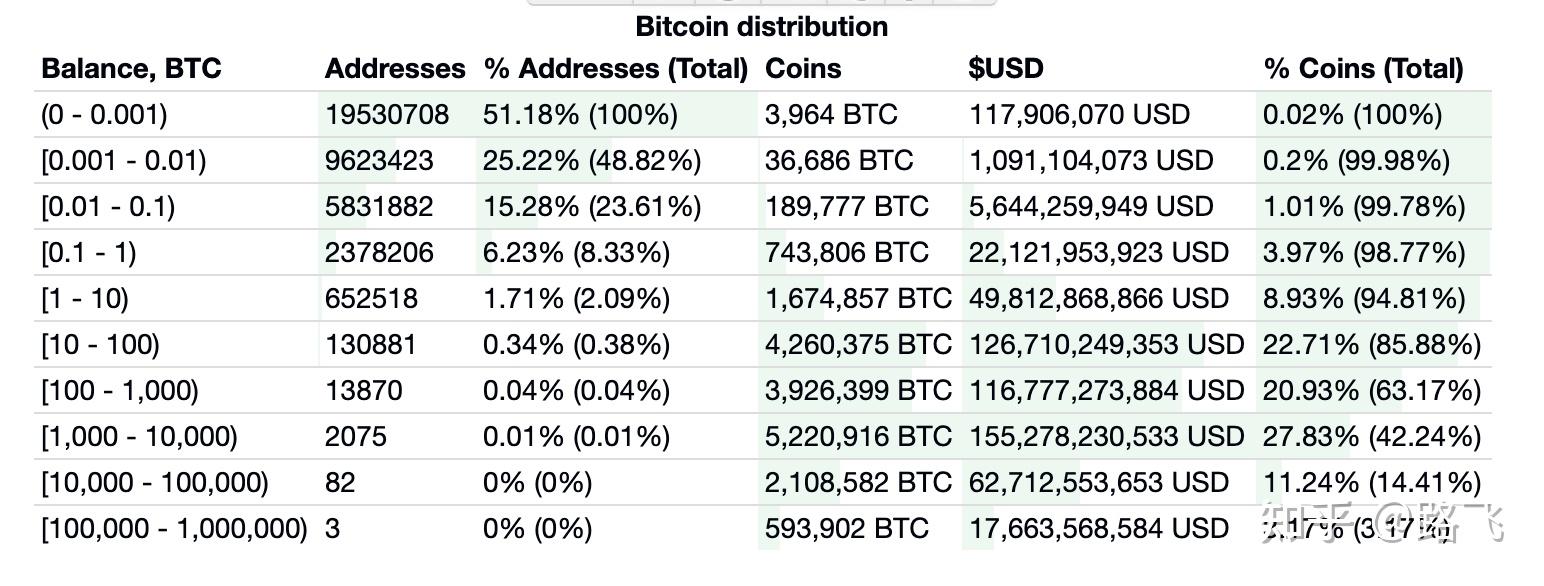
Third, look at the website of the digital currency rich list (one of the interesting data): Top 100 Richest Bitcoin Addresses and Bitcoin distribution

I think the most interesting data on this website is its ranking on the rich list. Of course, it is mainly calculated based on the account amount of the currency-holding address. For example, in the chart below of the continuous number of BTC, the total number of addresses is close to 20 million, but more than 50% of the addresses hold only 0-0.001 BTC. If you own 0.1 BTC, you can be among the top 10% of the BTC rich list.

BTC and ETH btc eth etc_Foreign Blockchain Media Community_Famous Foreign Blockchain Forum

Fourth, add an important index tool called Bitcoin Ahr999 Index. When the index is lower than 0.45, it is a relative bottom, and you can feel free to buy the bottom. However, it is not recommended to copy all the funds at once. It is best to build a position in batches. Each time the price continues to dip, buy a little more to reduce the overall position cost. If you miss the period below 0.45, you can also make fixed investments within the range of 0.45 – 1.20, and you can make fixed investments on a daily or weekly basis.

With the Bitcoin Ahr999 Index, determining the relative bottom of a bear market is easy. Of course, if it is a more experienced analyst, combined with current macro data, etc., the judgment range of the relative bottom will be more accurate.

However, it is not that easy to judge the relative top of the bull market, and it is even more difficult to escape from the absolute top. Different analysts will have different expectations for the top of each bull market, but there is no doubt that it will exceed the previous high of the previous bull market.

Finally, the questioner mentioned a website for viewing projects. I recommend one: https://www.maxweb.red/

However, I would like to remind everyone that this circle is very deep. Don’t pay too much attention to those unknown projects. If you don’t know how to touch them, more than 99% of them are scammers and empty projects. If you focus on studying well-known projects such as Bitcoin and Ethereum, and understand what’s inside, you will be much better than those who claim to be “blockchain experts” on the market.

The blockchain circle is too impetuous, and those who hope to settle down are those who truly like and recognize the long-term value of this new technology.

Recommend some good books on blockchain. If you are interested, you can read them.

Detailed Explanation Of TON Unit: Measurement Of Weight Or Volume, Different Contexts And International Differences

A ton is a unit usually used to express weight or volume.

Here's a detailed explanation:

1. The basic meaning of ton

A ton is a unit of measurement that can be used to express weight or volume. When expressing weight, ton usually refers to 2000 pounds or approximately 907 kilograms. This is a very large unit often used in transportation and logistics, such as the weight of cargo a freight train or cargo ship can carry. When expressing volume, ton refers to a unit of volume, usually used to calculate the space occupied by a large number of items or materials. However, this situation is rare, and it is more commonly used for weight measurement.

2. ton in different contexts

It is worth noting that the specific definition and use of ton may differ in different contexts or industries. For example, in the field of construction, the ton may be used to measure the weight of a specific material; in international trade, especially when it comes to the transaction of bulk commodities, such as iron ore or metals, the ton is used more frequently as a unit of weight. In addition, in some English expressions, "ton" may also have special meanings or usages, which need to be understood in conjunction with the specific context.

3. International differences in the ton unit

It is worth noting that although ton is an international unit, its specific value may vary from country to country. Therefore, when using the unit ton, its specific value needs to be determined according to the standards of the country or region where it is located. In addition, with the continuous development of globalization and trade, there is an increasing demand for the standardization and unification of measurement units, which requires countries to coordinate and unify the use of measurement units.

To sum up, ton is a commonly used unit of weight or volume, mainly used to express the weight or space occupied by a large number of items. In different contexts and industries, its usage and specific meaning may vary. At the same time, due to the existence of international differences, when using the unit ton, it needs to be understood and applied according to the specific situation.

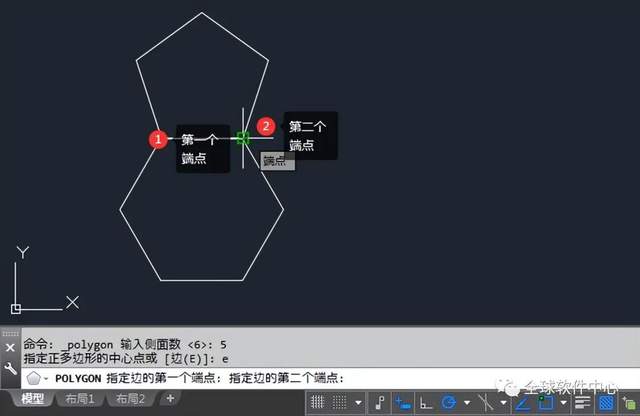
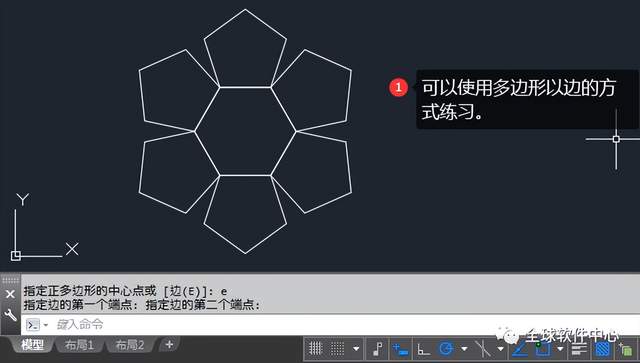
Examples Of Properties, Creation Methods And Points Property Settings Of The Polygon Class In NET MAUI

Browse examples

The .NET Multi-platform App UI (.NET MAUI) Polygon class is derived from the Shape class and can be used to draw polygons, which are closed shapes formed by a series of connected lines. For information about the properties that the Polygon class inherits from the Shape class, see Shapes.

Polygon defines the following properties:

These properties are backed by BindableProperty objects; that is, they can be the target of data binding and can be styled.

The PointsCollection type is an ObservableCollection of Point objects. The Point structure defines X and Y properties of type double, which represent pairs of x and y coordinates in two-dimensional space. Therefore, the Points property should be set to a list of x- and y-coordinate pairs that describe the polygon's vertices, separated by a comma and/or one or more spaces. For example, "40,10 70,80" and "40 10, 70 80" are both valid.

For more information about the FillRule enumeration, see Fill Rules.

Create polygon

To draw a polygon, create a Polygon object and set its Points property to the shape's vertices. A line is automatically drawn connecting the first and last points. To draw inside a polygon, set its properties to a Brush-derived object. To outline a polygon, set its properties to a Brush derived object. Property specifies the thickness of the polygon outline. For more information about the Brush object, see Brushes.

The following XAML example demonstrates how to draw a filled polygon:


In this example, a filled polygon representing a triangle is drawn:

The following XAML example demonstrates how to draw a dashed polygon:


In this example, the polygon outline is dashed:

For more information on drawing dashed polygons, see.

The following XAML example shows a polygon using default fill rules:


In this example, the filling behavior of each polygon is determined using filling rules.

.NET MAUI Polygon class property_polygon_Draw polygon vertex coordinates

The following XAML example shows a polygon using fill rules:


polygon_.NET MAUI Polygon class property_Draw polygon vertex coordinates

In this example, the filling behavior of each polygon is determined using filling rules.

Polygon Node In Unity URP Shader Graph: A Powerful Geometric Shape Generation Tool

[Unity Shader Graph Usage and Special Effects Implementation] Column – Direct

The Polygon node is a powerful geometric shape generation tool in Unity URP Shader Graph, specifically used to create regular polygon patterns in shaders. This node provides shader artists and developers with a procedural way to generate a variety of polygonal shapes, from simple triangles to complex circular approximations, all easily achieved by adjusting parameters. In game development, geometric patterns are often used to create sci-fi style interface elements, decorative textures, special effects masks, and various stylized visual effects.

Using Polygon nodes to generate geometry has several significant advantages over traditional texture mapping methods. First, it is fully procedural, meaning all properties of a polygon can be adjusted in real time without the need to re-import textures. Secondly, the generated shapes have infinite resolution and do not suffer from pixelation issues. In addition, procedural generation reduces dependence on external texture files, helping to reduce project size and simplify resource management processes.

The Polygon node works based on mathematical calculations, using the polar coordinate system and trigonometric functions to determine whether a pixel is inside a polygon. This method is not only efficient, but also produces very clear and sharp edges, which is particularly suitable for visual effects that require precise geometric shapes. Understanding the inner workings of this node is crucial to realizing its full potential, and we’ll delve into various aspects of it below.

describe

The core function of the Polygon node is to generate regular polygon shapes based on input UV coordinates. Regular polygons refer to polygons in which all sides are of equal length and all interior angles are equal, such as equilateral triangles, squares, regular pentagons, etc. The node determines whether each UV coordinate point is located inside the specified polygon through mathematical calculations, and outputs the corresponding value – usually the inner area of ​​the polygon outputs 1, the outer area outputs 0, and the edge area outputs an intermediate value according to anti-aliasing needs.

The size of the shape generated by this node is controlled by two independent parameters: Width and Height. This separated control allows the user to create non-square polygons, such as elongated hexagons or squashed octagons. By default, when the width and height values ​​are the same, a regular polygon is produced; when the two values ​​are different, the polygon is stretched accordingly along one axis.

One of the most important characteristics of a polygon is its number of sides, which is controlled by the Sides parameter. The number of sides must be an integer value greater than or equal to 3. In theory, a very large value can be set to approximate a circle. In practical applications, the choice of the number of edges depends on specific needs:

A key feature of the Polygon node is that it retains the ability to operate on UV space. This means that the user can offset or tile the resulting shape by connecting the Tiling And Offset nodes. However, it is important to note that the nodes themselves do not automatically repeat the shape – if you tile the UVs directly, the entire polygon pattern will be stretched across the entire UV space, rather than multiple polygons being repeated. To achieve a repeating polygon pattern, you need to first process the UV input through the Fraction node. This technical point is crucial for creating checkerboard or grid-like polygon patterns.

From a technical implementation perspective, the Polygon node can only be used in the fragment shader stage because it requires calculations for each pixel to determine whether it is inside a polygon. This pixel-by-pixel calculation ensures the accuracy of generated shapes and high-quality anti-aliasing effects, but it also means that it is not suitable for use in vertex shaders, because the calculation granularity of vertex shaders does not provide enough precision to define clear geometric edges.

port

Unity Shader Graph Polygon node usage tutorial_Polygon node parameters detailed explanation_polygon

The functionality of a Polygon node is implemented through its input and output ports, each of which has a specific role and data type. Understanding the role of these ports is critical to using nodes correctly.

input port

The UV input port is the most basic input of the Polygon node. It receives UV coordinate data of Vector 2 type. This port is typically connected to a UV node in the Shader Graph, but can also be connected to any node that generates Vector 2 data, such as the output of a Tiling And Offset node or the result of other mathematical calculations. The flexibility of the UV input port allows polygons to be placed anywhere in texture space and various transformations to be applied. When not explicitly connected, nodes default to the mesh's base UV coordinates.

The Sides input port controls the number of sides of the generated polygon and accepts values ​​of type Float. Although mathematically the number of edges should be an integer, the port accepts floating point numbers to facilitate dynamically changing edge numbers. In actual calculations, nodes use integer values ​​for the number of edges. The valid range of the number of edges is greater than or equal to 3. When setting a value less than 3, the node may produce undefined behavior or incorrect results. By controlling the Sides value through animation or parameters, you can create interesting effects of polygonal shape deformation, such as gradually changing from a triangle to a circle.

The Width and Height input ports control the size of the polygon in the U and V directions respectively. Both ports accept values ​​of type Float representing the radius or half-width of the polygon in the corresponding direction. When the Width and Height values ​​are equal, a regular polygon is generated; when they are different, the polygon will be stretched in the corresponding direction. This ability to independently control width and height allows users to create polygons of various proportions, not just regular polygons. At a value of 1, the polygon will generally occupy the entire UV space (range from 0 to 1), but this depends on the number of sides and shape of the polygon.

Output port

The Out output port is the main output of the Polygon node and provides a result value of type Float. This value represents the position of the specified position relative to the polygon:

The output values ​​can be used for a variety of purposes, such as directly as transparency values ​​to create shape masks, as blending factors to blend with other textures or colors, or as input to other mathematical calculations. Since the output is a single-channel floating point value, it can be easily integrated into various shader calculations, whether for color, transparency, specularity, or other surface properties.

Port connection practice

In actual use, these ports can be connected in a variety of ways to create complex effects. For example:

Understanding the role and potential connections of each port is key to mastering the use of Polygon nodes. Through creative connections and parameter control, the application range of this node can be greatly expanded.

Generated code example

The functions of the Polygon node are implemented through the underlying HLSL code. Understanding this generated code will help you gain an in-depth understanding of the working principle and potential optimization directions of the node. The following is the possible code implementation of node and its detailed analysis:

void Unity_Polygon_float(float2 UV, float Sides, float Width, float Height, out float Out)
{
    // 定义π常量,用于三角函数计算
    float pi = 3.14159265359;
    // 计算调整后的宽度和高度,考虑多边形边数对表观尺寸的影响
    float aWidth = Width * cos(pi / Sides);
    float aHeight = Height * cos(pi / Sides);
    // 转换UV坐标:从[0,1]范围转到[-1,1]范围,并应用调整后的尺寸
    float2 uv = (UV * 2 - 1) / float2(aWidth, aHeight);
    // 翻转Y轴以匹配常规的坐标系统
    uv.y *= -1;
    // 计算当前UV坐标的极角(从正Y轴顺时针测量)
    float pCoord = atan2(uv.x, uv.y);
    // 计算每条边对应的角度增量
    float r = 2 * pi / Sides;
    // 计算当前角度所属的边,并计算到该边的距离
    float distance = cos(floor(0.5 + pCoord / r) * r - pCoord) * length(uv);
    // 应用抗锯齿并限制输出范围在[0,1]
    Out = saturate((1 - distance) / fwidth(distance));
}

Code analysis

This code can be broken down into several key steps, each corresponding to a specific aspect of polygon generation:

Constant definition and size adjustment: The code first defines the π constant, and then calculates the adjusted width and height (aWidth and aHeight). This adjustment is achieved by multiplying the original size by cos(π/Sides) in order to compensate for the effect of the number of polygon sides on the apparent size. This adjustment is more noticeable for polygons with fewer sides, ensuring that polygons with different sides have a more consistent apparent size under the same size parameters.

Coordinate space conversion: The next step is to convert the input UV coordinates from the standard range to the range, which moves the coordinate origin to the center, which is more in line with the needs of polar coordinate calculations. The coordinates are then divided by the adjusted size to achieve the scaling effect. The Y-axis is flipped to match common coordinate system conventions, where the positive Y-axis is usually upward.

Polar coordinate calculation: Use the atan2 function to calculate the polar angle pCoord of each point. This angle represents the angle between the vectors clockwise from the positive Y axis to the point. The atan2 function can correctly handle all four quadrants compared to the simple atan function, ensuring the accuracy of angle calculations.


Distance calculation: This is the core part of the algorithm. First calculate the angle increment r corresponding to each side, then determine which side the current angle belongs to through floor(0.5 + pCoord / r), then calculate the difference between the current angle and the center angle of the side it belongs to, and finally use the cos function and length to calculate the final distance value. This distance value represents the vertical distance from the current point to the corresponding edge.

Anti-aliasing and output limitation: The last step uses the fwidth function to calculate the rate of change of the distance field to achieve edge anti-aliasing. The saturate function ensures that the output value is limited to the range and avoids invalid values.

Algorithm characteristics

This distance field-based polygon generation method has several important features:

Performance considerations

From a performance perspective, the code uses several transcendental functions (cos, atan2) that are relatively expensive to compute in the shader. In performance-sensitive scenarios, you should consider limiting the number of Polygon nodes used or finding optimization solutions. On modern GPUs, though, the performance impact is generally acceptable for moderate amounts of use.

Understanding this generated code not only helps you use Polygon nodes more efficiently, but also provides the basis for custom modifications and optimizations. For example, users can create variations based on this template to achieve rounded polygons, gradient fills, or other advanced effects.

Practical application examples

Polygon nodes have a wide range of application scenarios in Shader Graph, and they can play an important role from simple shape generation to complex visual effects. The following are some typical application examples and implementation methods.

Basic shape creation

The most basic application is to create various regular polygonal shapes. By adjusting the Sides parameter, different geometries can be easily generated:

In practice, creating a base shape usually only requires connecting a UV node to the UV input of a Polygon node, and then setting the required Sides, Width, and Height parameters. The output can be connected directly to the alpha channel of the main texture to create a shape mask, or multiplied with a color node to assign a color to the shape.

Dynamic polygon effects

By connecting dynamic values ​​to the input ports of a Polygon node, you can create a variety of animations and interactive effects:

These dynamic effects greatly enhance the vitality and appeal of visual expressions, making polygons no longer static decorative elements but active components capable of conveying information and status.

Complex pattern combinations

A single Polygon node is already powerful, but by combining multiple nodes you can create more complex and interesting patterns:

These advanced techniques extend the scope of Polygon nodes, making them a powerful tool for creating complex visual effects. By experimenting with different combinations and parameters, shader artists can develop unique and eye-catching visual styles.

Best practices and tips

To realize the full potential of Polygon nodes and avoid common problems, here are some practical tips and best practices:

Performance optimization

Although Polygon nodes are very useful, improper use can cause performance issues:

quality improvement

Ways to improve the visual effect of polygons:

troubleshooting

Frequently asked questions and solutions:

[Unity Shader Graph Usage and Special Effects Implementation] Column – Direct

This Article Will Help You Understand The Different Meanings And Usage Of The English Word Ton In Various Fields.

"Ton" is an English word with different meanings as follows:

1. "Ton" represents the unit of weight. In international trade, the "ton" unit is usually used to express the weight of goods. "Ton" is abbreviated as "t" in British English and "T" in American English.

2. “Ton” represents the pressure unit. Another meaning of "Ton" is "ton-force", which is an engineering unit used to measure the force or pressure of a heavy object. Typically used in the United States, it represents a weight of 2,000 pounds.

3. In American slang, "ton" can also mean "a large amount" or "a very large amount." For example: “There were tons of people at the concert.”

The meaning of ton_The pronunciation of ton_TON

4. "ton" may also be the abbreviation of a specific color. For example, "Pantone 1807 Ton" in the printing industry is a very popular pink color block and is widely used in trademark design and other aspects.

5. In the field of music, "ton" is a musical term that refers to a pitch, that is, a sound unit that vibrates at a specific frequency.

6. Ton can also be a personal name, which is commonly used in ethnic minority languages, such as Cambodia, Vietnam, and Thailand. It has a similar meaning to "Ming" and "Bright". It is a beautiful name of a static nature, symbolizing hope, light, etc.

The pronunciation of ton_The meaning of ton_TON

7. In the computer field, "ton" may stand for "Hostless Automated Test Platform (TestON)", which is a network protocol testing system based on open source software to help test and deploy SDN and NFV networks.

8. "Ton" can also be used as an abbreviation, which stands for "tonsillectomy and adenoidectomy" in Chinese. It means tonsillectomy and adenoidectomy. This is a common surgical operation used to treat throat and upper respiratory tract infections, respiratory problems and other medical diseases.

pronunciation of ton

The pronunciation of "ton" in English is that the letter o makes a short vowel sound, which is similar to the "u" sound in "fun", and the n makes a voiceless sound. Therefore, the pronunciation of "ton" can be described colloquially and quickly as the pronunciation of "tuh-n".

Buffett Resumes Sale Of Apple, Trims Stake In Bank Of America, Makes New Investment In UnitedHealth In Second Quarter

Position documents show that after half a year, Berkshire Hathaway, led by "Stock God" Buffett, has begun selling its top holding, Apple, and continues to reduce its holdings in another heavy holding, Bank of America.

At the same time, Berkshire made a large position in the medical insurance giant UnitedHealth in the second quarter, buying shares worth nearly US$1.6 billion at the end of the quarter. It also revealed its most recent "mysterious" positions that have attracted much attention – Nucor and two real estate stocks.

"Mysterious" holdings in Nucor Steel have a market value of over US$800 million. Lennar and DR Horton are both real estate stocks.

In May this year, Berkshire disclosed that it had requested to keep confidential its positions in the first quarter. Since then, the "mysterious" positions have been subject to speculation. Wall Street News previously mentioned that based on financial report clues in the first two quarters of this year, the media speculated that Berkshire may have invested in an industrial company, with a total investment of close to US$5 billion.

On Thursday, these “mysterious” positions were revealed. The 13F filing shows that Berkshire had three stock holdings in the second quarter that were not disclosed in the first-quarter 13-F report submitted in May, namely: Nucor Steel, the largest steel producer in the United States, Lennar, the U.S. residential developer, and DR Horton, one of the largest real estate developers in the United States.

Among them, Berkshire bought 6.61 million shares of Nucor Steel (NUE), with a market value of US$857 million at the end of the quarter, accounting for 0.33% of the position, and ranking 25th in terms of position size.

About 7.05 million shares of real estate stock Lennar (LEN) were bought by Berkshire. The market value at the end of the quarter was about US$780 million, accounting for 0.3% of the position, and the position ranked 26th.

Berkshire bought over 1.48 million shares of DR Horton (DHI), with a market value of approximately US$191 million at the end of the quarter, accounting for 0.07% of the position.

After half a year, Bank of America reduced its holdings in Apple again by more than 40% in the past year, clearing T-Mobile positions

According to 13F documents submitted to the U.S. Securities and Exchange Commission (SEC) disclosed on Thursday, August 14th, Eastern Time, Berkshire reduced its holdings of Apple (AAPL) by 20 million shares in the second quarter, a decrease of 6.67% compared with the first quarter. Apple’s position share dropped from 25.76% in the first quarter to 22.31%, and the market value of the position decreased by US$4.1 billion.

This is the first time in six months that Berkshire has disclosed its reduction in Apple. In the second and third quarters of last year, Berkshire significantly reduced its holdings in Apple by 50% and 25% respectively. Since then, in the fourth quarter of last year and the first quarter of this year, Berkshire's Apple holdings have remained unchanged.

Regardless of the proportion of positions or changes in market value, Apple was the stock that Berkshire reduced its holdings the most in the second quarter. Despite this, by the end of the second quarter, Berkshire still held about 280 million shares of Apple, and Apple was still its largest holding.

Another stock that Berkshire significantly reduced its holdings in the second quarter was Bank of America (BAC), which reduced its holdings by approximately 26.31 million shares in the quarter. The number of shares held decreased by 4.71% from the previous quarter, and the market value of the holdings decreased by US$1.24 billion. However, the proportion of holdings increased slightly from 10.19% in the first quarter to 11.12%, making it still the third largest holding.

Berkshire has reduced its holdings in Bank of America by more than 40% in the past year. By the second quarter of this year, Berkshire's Bank of America holdings had dropped from 1.03 billion shares in the middle of last year to 605 million shares, a decrease of nearly 41.3%.

In the second quarter, Berkshire liquidated 3.88 million shares of T-Mobile (TMUS), and its 0.4% position in the first quarter was reduced to zero. The telecommunications giant was the stock with the largest change in Berkshire's position after Apple in the second quarter.

Xinjin UnitedHealth's market value is nearly US$1.6 billion, and its stock price once rose by more than 9% after the bell.

The 13F document shows that Berkshire’s largest purchase of a stock in the second quarter was United Health (UNH), with approximately 5.04 million new shares of the medical insurance giant purchased in the quarter. The market value at the end of the quarter was approximately US$1.57 billion, making it Berkshire’s 18th largest position, accounting for 0.61% of the total holdings.

After the disclosure of Berkshire's holdings, UnitedHealth's stock price rose after the market closed on Thursday, rising by more than 9% after the market closed.

Considering that Berkshire’s stock portfolio is worth approximately US$300 billion, the media believes that the establishment of a position in United Health may not be Buffett’s hand, but more likely the work of Buffett’s two investment deputies, Todd Combs and Ted Weschler.

In the second quarter, Berkshire also bought a new outdoor advertising company, Lamar Advertising Company (LAMR), buying 1.17 million shares respectively, accounting for 0.06% of the position, and the market value at the end of the quarter was approximately US$140 million.

Among the top ten stocks, only Chevron increased its holdings in the second quarter

Among Berkshire's top ten holdings, Chevron (CVX) was the only stock to increase its holdings in the second quarter. Berkshire increased its holdings by 3.45 million shares in the quarter, and the market value of its holdings increased by $495 million from the previous quarter. However, in the second quarter when the stock price fell, Chevron's holdings fell from 7.69% in the first quarter to 6.79%.

By the end of the second quarter, in terms of market value of positions, Berkshire's top ten stocks were still the same "old faces" as in the first quarter, and most of the rankings were the same as in the first quarter. They are:

Apple (AAPL)

American Express (AXP)

Bank of America (BAC) rose to third place from fourth place in the first quarter.

Coca-Cola (KO) dropped from third to fourth.

Chevron (CVX)

Moody's (MCO), ranking rose from seventh to sixth.

Occidental Petroleum (OXY) fell from sixth to seventh.

Kraft Heinz (KHC)

Chubb (CB)

Kidney dialysis provider DaVita (DVA).

There Is A Risk Of Serious Injury Or Fatality If Furniture Falls Over. Be Sure To Use Fixed Accessories To Prevent Danger.

BILLY EnglishTraditional ChineseBahasa Malaysia WARNING! Warning! AMARAN! Serious or fatal crushing injuries can Overturning of furniture can cause serious damage or injuries. Kecederaan serius atau boleh occur from furniture falling down. To avoid the risk of falling down. Be sure to use the fixing accessories included with the product to fix this furniture to the wall. perabot terbalik. Untuk mengelakkan down it must be used with the wall Screws and plastic wall bolts are sold separately; please evaluate the suitability of the wall to ensure that the wall can withstand the forces generated; please use screws and plastic wall bolts that are suitable for the wall in your home and the expected hendaklah digunakan dengan alat load; if you are not sure, please contact a professional Screw(s) and plug(s) for the wall are not included. Please read carefully and install according to the assembly instructions. tambahan yang disediakan. Assess the suitability of the wall to ensure thatSkru dan palam bagi dinding tidak disertakan. it will withstand the forces generated. load. If you are uncertain, seekkru dan palam yang sesuai dengan dinding anda professional advice. Read and follow each step of경고!dan beban yang khusus. Sekiranya anda tidak the instruction carefully.pasti, sila dapatkan nasihat profesional. Baca dan가구가넘어지면치명적인부상을입을수ikuti setiap langkah arahan secara teliti. Español있습니다. يبرع ATENCIÓN나사와플러그는포함되어있지않습니다. 벽이어느!ريذحت정도의힘을견딜수있는지확인해주세요. caso적합한나사와플러그를사용하세요. تاباصإ ثدحت دق de caída del mueble. ثاثلأا اذه عنمل .ثاثلأا بلاقنإ وأ debe fijar a la pared con los dispositivos읽고따라주세요.طئاحلا تيبثت تاودأ عم همادختسا بجي de fijación proporcionados.日本语.ةقفرملا Los tornillos y los tacos no se incluyen..ةنمضتم ريغ طئاحلا تاوشح/ةوشحلاو ريماسملا/رامسملا Comprueba si la pared es lo suficientemente warning! .تيبثتلا تاودأ لقث لمحتيس طئاحلا نأ نم يدكأت It’s so easy to eat. طئاح تاوشح/ةوشحو ريماسم/رامسم يمدختسا para tu pared y la carga. Lee y sigue大ケガ、あるいは生にかかわるようなhurtنم ةوطخ لك عابتاو ةءارق ىجري .صتخم ينف ةراشتسا.ةقدب تاميلعتلا correctamente los pasos indicados en las harmをnegativeうrisk険があります. To prevent furniture from falling, instrucciones must be used. Wall fixtures that must be attached must be used. Portugues wall is made of のネジやプラグは and belongs to していません. Wall の strong คำำ�เตืือน! AVISO! Degree が furniture の weight に very durable え る こ と を confirmed し て く だ さ い. The material of the wall is suitable for the maximum load. อโืร์ คำ่น ล้งม� อ�จก่อใ ห้เ กิด As quedas de móveis podemを用してください. Get the best service ตืร์�ยถึึงชีวิิตืได้ เพื่ื �อีグに关しては, 専店店にご相言ください. Manual をoriginar lesões graves ou fataisよく読み、handshunに Along the ってgroup み立て・SET を行ってくป้้องกัน อุ บั ตืิเห ตืเฟอร์์ุ นเจอร์์ิ ล้้มห อโืร์ คำ่น ตื้อง ยดึpor esmagamento. Para evitar queださい. เฟอร์์นเจอร์์ิ ตืิดผ นงใั ห้แ นนหน่ �ด้ วิยอุ ป้กร์ณ์์ยดึี � este móvel caia, tem de ser fixado àทให้ม � parede com as ferragens de fixação àBahasa Indonesiaสกรููและพุุกส�หำ รูบยึึั ดเฟอ รูนิิ์ เจอ Não estão incluídosเ�องจนิ่ �กติ้องป รูะเม่ิ นิคว�ม่แข็็งแรูงข็องผนิง เั พุ�อใ่ ห้ Avalie aPERINGATAN!ส�ม่�รูถรูบั นิ��หำ นิกไั ด เ้ ล่อกใช้สกรููหรู่อพุุกใหเห้้ ม่�ะกับ วสั ดผุ นิงัและนิ�หำ นิกที่่�ั ติ้องก �รู ห�กไม่่แนิใจ่ ว่ �ควรูเล่อกใช้สกรููหรู่อพุุก้ adequação da parede para garantir queCedera akibat benturan serius atauช้นิิดใด กรูณุ �สอบถ�ม่จ�กผู้เช้ยึวช้�ญ โปรูดอ่ �นิคำ�แ นิะนิ�ำ่� นิ่� suporta as forças geradas.ใหละเ้ อ่ยึดครูบถ้ว นิและปฏิิบติิั Untuk mencegah hal ini, paredes e à. carga prevista. Caso não tenha aperangkat pelengkap dinding yangTiếng Việt certeza, peça ajuda a um técnico. Leia e siga cuidadosamente as instruções.telah disertakan harus digunakan.CẢNH BÁO! tidak termasuk. 中文Nilai kesesuaian dinding untuk memastikanKhi đồ nội thất ngã đổ có thể gây rabahwa perangkat akan menahan kekuatan yang Warning! dihasilkan. Toppling furniture can cause serious crushing injuries or even be fatal. To prevent this furniture from tipping over, be sure to use the Baca dan ikuti setiap langkah panduan dengantường bằng included in the package. các phụ kiện gắn tường điseksama.kèm. Upper wall fixed connection. Screws and bolts required for wall fixing must be purchased separately. Please select appropriate screws and plugs according to the quality of the wall material and its load-bearing capacity. If you are unsure, please seek professional advice. Please read carefully and follow the instructions strictly. dự kiến. luôn tìm kiếm lời khuyên chuyên nghiệptrong trường hợp không chắc chắn. một. bước trong hướng dẫn. 2AA-1894615-33117511435640813363001814189310100101111111 6x4x1x4x2x6x2x9138429086900001112x2x4x 4AA-1894615-3 11554331100114×15310

Luxury Agents Fengda International Fashion Group, DEREK And BILLY Surfaced After Joining

Fengda International Fashion Group_China Luxury Agent Group_billy

When it comes to luxury agent groups, everyone will immediately think of companies such as Junsi, Caihong, Olan, Nissin and Shangdao.

In fact, there is also an "invisible" luxury goods agency group in the Chinese market. It operates in a low-key manner and has a special background. It was not until recently that two top luxury tycoons, DEREK WONG and BILLY DU, joined at the same time that this business giant that had been lurking in the deep sea really surfaced. It is the foreign agent group from the UK: Fengda International Fashion Group!

Today, let us uncover this mysterious veil together.

….

Fengda International Fashion Group_billy_China Luxury Agent Group

01

DEREK WONG

billy_China Luxury Agent Group_Fengda International Fashion Group

Mr. DEREK WONG is one of the few top names in China's luxury goods industry. Before joining Fengda Group, Mr. DEREK held senior management positions in companies such as Hong Kong Junsi Group, GUCCI and YSL (the first general manager of the YSL brand in China).

What's more worth mentioning is that Mr. DEREK has more than 20 years of practical experience in the operation and management of luxury brands and is known as the "Godfather of Operations" in the industry.

02

BILLY DU (Du Wenliang)

China Luxury Agent Group_Fengda International Fashion Group_billy

Mr. BILLY DU (Du Wenliang) is the number one leader in China's luxury goods and high-end commercial real estate industry. He holds a master's degree in science and engineering from the University of Leeds in the UK, is the first vocational trainer in China's luxury goods industry, and is a senior lecturer at RICS, the Royal Institution of Chartered Surveyors in the UK.

Before joining Fengda Group, Mr. BILLY held senior management positions in Hermès, China Intime Group and KARL LAGERFELD (the eponymous brand of Chanel's chief designer). In addition, BILLY has published more than 50 business papers in the industry, and has received unanimous praise and high recognition from tens of thousands of peers in the industry.

China Luxury Agent Group_Fengda International Fashion Group_billy

03

FENGDA (Fengda) Group

Fengda International Fashion Group was established in 2005 and is headquartered in London, England. The consortium behind it is the Huang family, a Chinese-American family engaged in the luxury fabric business in the UK.

billy_Fengda International Fashion Group_China Luxury Agent Group

Mr. LEO HUANG (Huang Shun), the current head of Fengda Group and the third generation heir of the family, graduated from the Malonei School of Art in Italy, majoring in historic monument restoration. After graduation, Mr. LEO worked as the product development director of PEUTEREY, an Italian luxury brand. After that, he returned to the UK and spent 12 long years at CBRE.

Compared with other heirs of business families, Mr. LEO has more sensitivity and unique insights into business. In 2016, under the leadership of LEO, Fengda International Fashion Group officially entered the Chinese market and established its Greater China headquarters in Shanghai. The group currently has more than ten international brands including the French affordable luxury fashion women's clothing brand VESPER LYND.

04

FENGDA Vision

In a recent interview with the media, Mr. LEO publicly disclosed several main development directions of Fengda International Fashion Group:

billy_China Luxury Agent Group_Fengda International Fashion Group

First of all, following the two senior executives DEREK WONG and BILLY DU, Fengda Group will continue to introduce more top executives in the luxury goods industry. In the eyes of LEO, talent is the core asset of an enterprise, so Fengda Group will spend a lot of money to invite more like-minded professionals to join the company.

Second, Fengda Group plans to develop the number of luxury brands under the group to more than 20 in the next two years and become the number one luxury agency group in China’s fashion industry. In addition, with its abundant financial strength, Fengda Group is relatively diversified in its cooperation with luxury brands, including but not limited to "national general agent", "investment holding" or "negotiation acquisition".

Third, in the next five years, the total number of luxury stores under Fengda Group will exceed 2,000. At the same time, it will officially enter the Japanese, Korean and Southeast Asian markets in 2022 and establish the Asia-Pacific headquarters.

Fengda International Fashion Group_China Luxury Agent Group_billy

There is no doubt that Fengda Group is already the most powerful and development potential among the many existing luxury goods agency groups in China, whether in terms of background, capital or core management team. As for whether Fengda Group can realize its ideal of becoming China's largest luxury goods agency group and its vision of "unifying the world" in the next five years, we will wait and see!

VESPER LYND

Follow VL Mall

fnf Silly Billy Module: Music Breakthrough Game, New Experience And Gameplay Highlights

fnf silly billy module is a very exciting music level-breaking game, where players can enjoy the fun brought by music. There will be a large number of music tracks and level-breaking modes to bring you a new experience, and players can unlock different content every time they play. Interested players can come to this site to start a new music journey.

fnf silly billy module introduction

The fnf silly billy module is a new module of Friday Night Funk's music level-breaking game. Players need to click on the corresponding position according to the dropped notes to complete the level. Each level has different enemies. Click on the correct note to get points. At the end, the score is higher than the opponent's, which means victory. This module adds a large number of new levels, and completely transplants the HitSingle-Silly Billy (The Fool) track. The music of this module is very nice. Players need to control the character to flexibly challenge and start a magical rhythmic journey through the levels.

fnf silly billy module highlights

1. Observe the changes in Silly Billy's facial expressions. They can sometimes hint at the upcoming rhythm difficulty.

2. Use the practice mode to get familiar with the unique rhythm pattern of the new character Silly Billy and improve your reaction speed.

3. Mastering the rhythm is the key, pay attention to changes in the music beat, and predict the timing of key presses in advance.

4. When faced with rapid combos, keep your fingers light to reduce misclicks. Continuously correct combos can trigger combo rewards.

fnf silly billy module features_fnf silly billy module introduction_billy

fnf silly billy module features

1. Continue playing and accumulate experience to unlock Silly Billy’s ultimate form, which has exclusive skills and special effects.

2. In multiplayer battles, stay calm, observe your opponent's mistakes, and use counterattack notes to turn defeat into victory.

3. Pay attention to the melody changes in the background music. The climax of the melody is often accompanied by an increase in rhythm difficulty.

4. Learn to use the perfect hitting technique and click when the note falls exactly on the judgment line to get high scores.

fnf silly billy module advantages

1. Complete weekly challenges to unlock Silly Billy’s special skin and background music, making the game more interesting.

2. When challenging a high level of difficulty, start at a slow speed, gradually adapt to it, then speed up, and work steadily.

3. Allocate your attention, not only to the falling notes, but also to the challenge prompts on both sides of the screen.

billy_fnf silly billy module introduction_fnf silly billy module features

fnf silly billy module gameplay

1. The game also has a lot of characters that can be unlocked, and the painting style is very magical. Complete interesting challenges and wonderful adventures are waiting for you to join.

2. The game graphics are very magical and highly recognizable, paired with the beautiful music, giving you an unusual musical adventure world.

3. The game has a large number of levels, each level has different music challenge tasks, and as the level goes by, it becomes more and more difficult to pass the level.

4. New level-breaking content is presented to you, where you can enjoy the joy of the game. Every challenge will allow you to enjoy more excitement, and a lot of content can help you complete it quickly.

fnf silly billy mod review

This time, BF has been replaced by Blackie, and there are many music levels that can be experienced. He is also called the King of Insiders by players. In this game, you can experience different interesting gameplay every day. Players who like the FNFSilly Billy module, come and download it to experience it!

Sign In

Forgot Password

Sign Up