Question 1: Why has Pakistan become a key force in mediating the conflict between the United States and Israel?
Pakistan became the mediator due to its willingness and balancing attributes
When the United States and Iran confirmed a two-week ceasefire and started negotiations on the 7th, Pakistan was frequently mentioned. Experts pointed out that Pakistan urgently needs to maintain its own border security and stability, and at the same time is worried about the continued impact on the economy, which makes Pakistan willing to act as a mediator, and mediation is also conducive to improving Pakistan's international image.
Pakistan's attributes of being relatively "equidistance" from the United States and Iran and having a relatively "balanced" role among the parties involved also help it become an "appropriate" mediator between the United States and Iran.
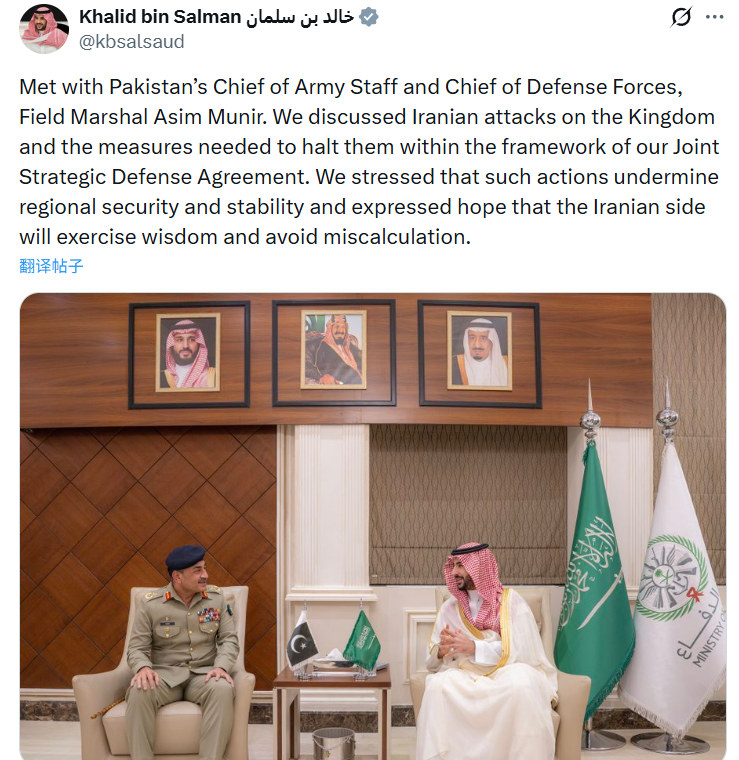
U.S. officials disclosed that Trump had a phone call with Pakistani Army Chief of Staff Munir before announcing the ceasefire. Munir is the key liaison between the United States and Iran. Iran also confirmed that it would convey its position through Pakistan.
Kamran Bokhari, senior fellow at the Washington Council on Middle East Policy: As a third party, Pakistan is no longer just delivering information, but is also trying to convince the relevant parties, at least one of them. Initially, the United States requested the Pakistani government, especially Prime Minister Shahbaz Sharif, and more importantly, Pakistan Army Chief of Staff Munir to intervene.
Question 2: Why should the Lebanese-Israeli negotiations continue when the US-Iran negotiations have not yet been concluded?
Interfering with US-Iran negotiations, the US and Iran are willing to ease the Lebanese-Israeli conflict
Qin Tian, deputy director of the Middle East Institute of the China Institutes of Contemporary International Relations: The US-Iran negotiations and the Lebanese-Israeli negotiations are two highly related negotiations. The negotiations between the United States and Iran have not yet been concluded, and peace talks between Lebanon and Israel need to proceed even more. The Lebanese-Israeli conflict is a disruptive factor to the US-Iran negotiations.
Qin Tian, deputy director of the Middle East Institute of the China Institute of Contemporary International Relations: If Israel continues to escalate its attacks on Hezbollah in Lebanon, Iran may counterattack the United States and Israel, which will completely undermine the negotiations between the United States and Iran. Therefore, both the United States and Iran now have a relatively strong willingness to calm and de-escalate the Lebanese-Israeli conflict. If the negotiations between Lebanon and Israel can produce some kind of ceasefire and easing effect, it will certainly have a positive effect on the negotiations between the United States and Iran to a certain extent.
Question 3: What are the prospects for the two negotiations in the context of ongoing disputes?
Negotiations between the United States and Iran are extremely difficult, and Lebanese is expected to reach a ceasefire through negotiations
Qin Tian, deputy director of the Middle East Institute of the China Institute of Contemporary International Relations: For now, the prospects of these two negotiations may not be optimistic by the outside world. Negotiations between the United States and Iran will obviously be more difficult.
The US-Iran negotiations involve many issues, including the Strait issue, the permanent armistice and the armistice mechanism. There are also traditional conflicts between the United States and Iran, such as nuclear issues and missile issues, which are relatively difficult to resolve. But at the same time, we must also see that US Vice President Vance is considered a "peace advocate" in the United States. Will his joining have some new positive stimulation effect on the negotiations? I think this remains to be seen.
In contrast, although the Lebanese-Israeli relationship is also complex, it basically only involves the ceasefire between Israel and Hezbollah and the disarmament of Hezbollah. Dealing with these problems is relatively easy. Although disarming Hezbollah does not seem to be easy, I think there is still hope for reaching a basic ceasefire.
Qin Tian, deputy director of the Middle East Institute of the China Institutes of Contemporary International Relations: Representatives of the Lebanese government can actually serve as a message for Hezbollah to a certain extent. We must also note that Hezbollah is not directly involved and is obviously not fully represented. If an agreement is reached, there are questions about its sustainability, its enforceability. At the same time, I think it can also be seen from the Lebanese-Israeli Agreement in November 2024 that even if the relevant parties reach a ceasefire agreement, Israel may still ignore the agreement and carry out unilateral military strikes against Hezbollah.