Professional virtual currency information station welcome
We have been making efforts.

vc Page 21

Cryptocurrency is a non-legal monetary asset based on digital technology and blockchain, possessing the functions of a medium of exchange and a store of value. Cryptocurrency is a transaction medium that uses cryptographic principles to ensure transaction security and control the creation of transaction units. Cryptocurrency is a type of digital currency (or virtual currency). Bitcoin became the first decentralized cryptocurrency in 2009, after which the term “cryptocurrency” was more commonly used to refer to such designs. Since then, several similar cryptocurrencies have been created, and they are usually referred to as altcoins. Cryptocurrency is based on a decentralized consensus mechanism, in contrast to the banking financial system that relies on a centralized regulatory system.

Kuanbang Technology: Provides AI Quantification Platforms And Solutions For Individuals And Institutions

Digital currency quantitative trading platform_AI quantitative platform_C-side quantitative investment application

Research | Written by Wang Yugang and Lu Shiyu | Zhang Yang

In recent years, quantitative investment has attracted more and more attention, and financial practitioners and institutions have tried to lift the mystery of quantitative investment and obtain higher returns through it. At the same time, with the support of AI, quantitative investment is more efficient. However, for individuals, there are currently only a handful of AI quantitative platforms; for institutions, building an AI quantitative platform has high technical requirements.

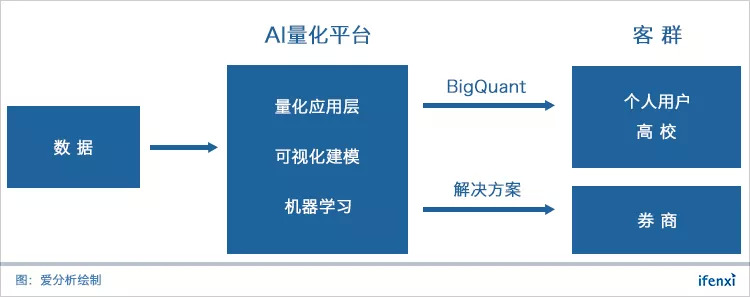
Founded in 2016, Kuanbang Technology applies its own AI technology to quantitative investment, exports a simple and easy-to-use quantitative platform to C-side customers, and provides overall solutions to B-side customers, allowing customers to overcome technical difficulties and directly use AI quantitative tools.

Strategically, Kuanbang Technology first launched the AI ​​quantitative application platform BigQuant for C-end users. In the process, it improved its technical capabilities, optimized its products, demonstrated its strength through the C-end platform, and cultivated brand awareness.

After that, we will provide overall solutions for the AI ​​quantification platform for B-side financial institutions, especially securities firms. At the same time, Kuanbang Technology has commercialized BigQuant’s underlying technology platform and launched the Big AI full-stack artificial intelligence platform, which is commonly used in the financial industry.

Digital currency quantitative trading platform_C-side quantitative investment application_AI quantitative platform

For C-side users, the BigQuant website not only has efficient strategy writing functions, but also has a very low technical threshold.

The platform data is mainly public financial market data, and users can also define their own data sources. In terms of technology, users understand the basic principles of AI and quantification, and if they understand a little bit of code, they can write their own strategies on the platform. Through the simulated real trading function, users can easily conduct model backtesting and optimization. Moreover, through authorization, C-side customers can connect their trading strategies to the brokerage platform where they have opened an account and conduct real trading. In addition, platform users can exchange methods, share function tools, and sell their own strategies.

For B-side customers, after Kuanbang Technology has deployed the AI ​​quantification platform, they can directly apply its writing strategies at work, conduct transactions, and pursue high returns.

Kuanbang Technology will provide overall solutions for the AI ​​quantification platform based on the B-end customer situation. The advantage of BigQuant is that it encapsulates data processing, model building, backtesting, trading and other modules and presents them to strategy writers in a visual interface. This not only greatly reduces the technical requirements for quantitative traders, but also lowers the technical threshold for model development and maintenance.

Kuanbang Technology's overall service eliminates the need for B-end customers to set up their own AI and algorithm teams, reduces the cost of platform construction, and can be quickly applied to work.

01

Brokerages are the main source of income

Cultivate C-side users with a view to commercialization

As mentioned above, Kuanbang Technology serves C-side customers through the BigQuant website and B-side financial institutions through solutions. In addition, it opens the BigQuant platform to universities to assist in cultivating AI quantitative talents.

The C-side has accumulated tens of thousands of strategy developers, 1/3 of which are professional investors. Users who develop strategies on the platform can be subscribed by other users for a fee, and some users can earn over RMB 10,000 per month in strategy subscription fees from the platform. Strategies developed by investors through the platform are used by many quantitative asset managers to release private equity products and for real trading.

B-side financial institutions are Kuanbang Technology’s current main source of income, especially securities firms. Brokerages are the most active party in investment activities in the financial market. They hope to use new methods to increase investment returns, but their own technical capabilities are limited.

On the one hand, Kuanbang Technology has solved the problem of building an AI quantification system for securities companies, enabling the system to go online quickly and reducing personnel barriers and costs for operation and maintenance. On the other hand, compared with traditional trading methods, AI quantitative trading returns have significantly improved.

Based on the above two benefits, brokerages are willing to pay for BigQuant. The charge for the overall solution is divided into two parts, the project deployment fee and the subsequent annual maintenance fee. At present, Kuanbang Technology has served dozens of securities firms and private equity institutions, including leading companies such as CITIC Securities.

C-side quantitative investment application_Digital currency quantitative trading platform_AI quantitative platform

Recently, AiAnalysis conducted an exclusive interview with Liang Ju, founder and CEO of Kuanbang Technology, and now shares the exciting content as follows.

02

China’s quantitative trading market is still in its early stages

AI application potential is huge

AiAnalysis: What can we learn from in the foreign quantitative trading industry?

Liang Ju: Relatively speaking, the foreign quantitative industry is much more mature and has many types of transactions. If high-frequency trading is included, about 80% of the trading orders in the market are issued by machines, and the machines are algorithm-driven in the background. Some larger funds, such as Renaissance and Two Sigma, are using machine learning and other methods to make machines better able to trade.

The domestic quantitative industry is in its early stages. First of all, the market share of companies that conduct transactions through quantitative trading is still very low; secondly, tradable targets are not abundant, and market effectiveness is relatively low; in addition, compared with traditional trading methods, the performance accumulation of quantitative trading is not enough, and it needs to accumulate for a period of time for the market to see the effect.

At the same time, in the face of changes in the domestic market, securities firms are looking for new trading methods. The advantages of AI quantitative trading are reflected in two aspects: on the one hand, AI is a greater productivity; on the other hand, the performance advantages of quantitative trading will gradually emerge. Quantification has many natural advantages, such as not being affected by human emotions. Therefore, the application of AI and quantification is likely to grow significantly in the next few years.

iAnalysis: How is the application of AI quantitative trading in the Chinese market different from that in the United States?

Liang Ju: We found that China is a very large market. Applying our algorithm to A-shares, it is easy to achieve an annualized return of 50%. However, in the US stock market, it is very difficult to achieve 10%-20% because market information is very transparent and other companies are very competitive.

There is a lot of information asymmetry in China's A-share market, and some good results can be achieved by using volume and price. And the machine digs deeper, getting better results. At this stage, those using AI will gain first-mover advantages.

AiAnalysis: Is there any competition with other domestic quantitative trading platforms?

Liang Ju: The entire investment activity covers many aspects. Broadly speaking, it covers investment strategy (which financial products to do), investment strategy (how to do investment transactions), and transaction execution from top to bottom. Companies that provide quantitative services will do a certain part of the business in a targeted manner based on their own capabilities and understanding of the market. So it may be a competitive relationship or a cooperative relationship.

Traditional quantification focuses on the execution level, where people write strategies. Artificial intelligence, on the other hand, is more strategic and involves machine-written strategies. On our platform, you don’t need to give instructions to the machine. You only need to set goals for the machine. For example, screen out the stocks with the highest price increases in the next five days, and then the machine will find the stocks through the machine learning model. People can combine their own abilities to screen and further optimize.

Quantification is low-dimensional, while AI is high-dimensional. We provide a platform with both quantification and AI functions.

03

Provide customers with overall solutions, extending downward from industries with high data concentration

Love Analysis: Is AI an improvement on traditional strategies, or is it using a completely new strategy?

Liang Ju: Including these two aspects. On the one hand, it is optimization, which allows the machine to learn the parameters of the original strategy; on the other hand, AI may find a better path with less resistance, thereby obtaining better results.

Love Analysis: What is the difference between BigQuant and traditional AI technology?

Liang Ju: We mainly treat machine learning as a service, and do not require customers to do data processing, build machine learning frameworks, and build algorithm models themselves.

CITIC Securities used to take 40 minutes to access data, but we helped them optimize it to the second level. They don’t know how to build a machine learning framework, but our platform is transparent to them and can handle large amounts of data.

AiAnalysis: Is it connected to the securities firm’s trading system?

Liang Ju: When we help securities companies with privatization deployment, we will directly extend it to the trading side. Whether it is for the internal needs of securities firms or the needs of their customers, the transaction interface needs to be opened. The docking of the transaction interface is very simple, but compliance must be ensured.

AiAnalysis: Are there any technical or financial barriers to users?

Liang Ju: In fact, we have lowered the ability requirements for users very low, and we will further lower them in the future. Our platform now still requires users to have a certain understanding of AI and quantification. People who understand the rules of market operation will choose better features and let the machine learn them, and the results will be better.

AiAnalysis: Can strategy developers see how their models are optimized?

Liang Ju: AI technology itself is a black box, but we try to open up the AI ​​algorithm part so that strategy developers know how the results come from. So we are also doing investor education and training.

iAnalysis: What securities products can BigQuant be applied to?

Liang Ju: You can do US stocks, A-shares, Hong Kong stocks, and futures. To us, these transactions are actually data. Some foreign exchange institutions are also cooperating with us, and there are even digital currencies. For different securities products, the same AI platform is used, but the trading algorithms are different.

AiAnalysis: In addition to quantification, in what fields do you plan to implement Big AI in the future?

Liang Ju: In the early days, we visited many companies, including securities firms, banks, and insurance companies. Among them, securities companies have many scenarios that can be implemented, and quantification is the most direct. At the same time, quantification can also assist traditional investment, such as screening stocks for investors, and then letting people do further processing.

Other implementation scenarios include intelligent customer service. The original intelligent customer service only needed to add a corpus and knowledge base, but now machine learning can make intelligent customer service do a better job.

The choice of implementation scenario is to start from industries with a high degree of data concentration or a high degree of acceptance of AI, and then expand to areas with a lower degree of data concentration or a relatively low degree of acceptance. During this process, we will also continue to polish the products.

04

Breaking down AI quantitative talent barriers for securities firms

iAnalysis: Which types of financial institutions are the main customers?

Liang Ju: We mostly serve companies with weak IT in the financial field. Brokerages want to do AI quantification, but the IT and development departments themselves lack capabilities and need to rely on mature outside technologies.

AiAnalysis: What are the benefits of Kuanbang’s overall solution to securities companies?

Liang Ju: On the one hand, excellent AI technical personnel are scarce, and it is difficult for brokerage firms to build their own teams and build platforms. The threshold of our platform is very low, which reduces the dependence on talents. AI quantified knowledge can be deposited in enterprises.

On the other hand, when it comes to big data, machines can do better than people. Humans can only see part of the world and achieve local optimization, but machines can see more and achieve global optimization. For example, the results obtained by a human based on 3 stocks may be different from the results obtained by a machine based on 3,000 stocks.

iAnalysis: How long does it take for a brokerage’s privatization deployment process?

Liang Ju: It can be deployed in a week or two, and then it has to be connected to the customer's system. The whole process takes about a few months because the customer's internal system is relatively complex.

The Central Bank Is Clamping Down On The Currency Circle, Digital Currency Transactions Have Been Affected, And Market Conditions Have Suddenly Changed.

As the central bank's digital currency began to recruit troops, a campaign against the currency circle began across the country.

According to rectification notices from Shenzhen, Shanghai, and Beijing, any local Internet companies or exchanges that are engaged in virtual currency activities, including digital currency fund raising, will be deemed to be operating illegally, and the companies will be urged to immediately correct and exit. As of November 22, the official Weibo of two of China's three major digital currency exchanges has been blocked, and one has been filed for review by the court due to customer prosecution.

On the morning of November 22, the progress of the central bank’s digital currency accelerated again, and the Yangtze River Delta Financial Technology Co., Ltd., a subsidiary of the People’s Bank of China, released recruitment information for 2019.

Due to the heavy blows of regulatory authorities in the past three weeks, the regular army may replace the existing currency trading ecosystem. Investors' willingness to hold currency has been significantly reduced, selling has been fierce, and the digital currency market has been bleak. On the evening of November 22, the digital currency market suddenly plummeted across the board. Amid investors' fright, the price of Bitcoin once fell below US$7,000 during the session. The market value of Bitcoin fell by 150 billion yuan in 24 hours, and the decline was close to 30% in the past three weeks.

The crackdown on bandits and arrests in the currency circle may be serious.

If the regular army wants to enter the scene and gain the support and trust of the people, they must first drive away the bandits who are harvesting leeks.

On November 22, the Shanghai Headquarters of the Central Bank of China announced that the Shanghai Financial Stability Joint Conference Office and the Shanghai Headquarters of the People's Bank of China, together with relevant departments at both urban and Shanghai levels, carried out special rectification of virtual currency-related activities in the Shanghai area, ordering problematic companies found during the survey to provide publicity, diversion and other services for virtual currency trading platforms registered overseas to immediately rectify and exit.

On November 22, the official website of the Shenzhen Local Financial Supervision and Administration Bureau announced that the Shenzhen Leading Group Office for Internet Financial Risks and Other Special Rectification Work recently issued a risk reminder on preventing illegal activities of "virtual currency". The notice stated that in response to some phenomena of organizing virtual currency transactions, issuing virtual currencies, raising funds or virtual currency assets such as Bitcoin and Ethereum within the country, the Shenzhen Internet Financial Risks and Other Special Rectification Leading Group Office will investigate and collect evidence for the above illegal activities. Once discovered, it will be dealt with seriously in accordance with the requirements of the "Announcement on Preventing Token Issuance and Financing Risks".

On November 15, under the leadership of the Shanghai Mutual Finance Rectification Office, the Shanghai Joint Financial Stability Office and the Shanghai Headquarters of the People's Bank of China jointly issued the "Notice on Carrying out Rectification and Rectification of Virtual Currency Trading Places" (hereinafter referred to as the "Notice") to carry out the Rectification and Rectification of Virtual Currency Exchanges within their jurisdiction, and complete the investigation and rectification work before November 22.

On November 13, the Beijing Local Financial Supervision Bureau issued the “Risk Warning Regarding Trading Venue Branches Carrying Out Business Activities Without Approval.” According to relevant reports, the "Tips" clearly stated that if branches of out-of-town trading venues (especially financial asset exchanges) carry out business activities in Beijing, it is an illegal operation.

On November 11, the Department of Industry and Information Technology of the Inner Mongolia Autonomous Region issued a notice on a joint inspection of the cleanup and rectification of virtual currency “mining” companies. The inspection period will last from November 11 to November 25, 2019.

It is worth mentioning that the notice of this rectification activity in Shanghai stated that recently, with the promotion of blockchain technology, virtual currency speculation has shown signs of resurgence. In order to prevent a resurgence, according to the relevant deployment of the National Mutual Finance Rectification Office, each district rectification office is requested to conduct a survey and ranking of the three types of virtual currency-related activities within its jurisdiction.

It is reported that the activities included in the scope of rectification include: organizing virtual currency transactions within the country; issuing virtual currencies in the form of "xx coins" and "xx chains" on the grounds of "implementation of blockchain application scenarios" to raise funds or virtual currencies such as Bitcoin and Ethereum; providing publicity, diversion, agency trading and other services for ICO projects and virtual currency trading platforms registered overseas. The "Notice" requires that once Internet companies engaged in the above-mentioned virtual currency-related activities are discovered, the rectification offices of each district in Shanghai should immediately report to the Shanghai Financial Stability Joint Office (Shanghai Local Financial Supervision Bureau) and the Shanghai Headquarters of the Central Bank, and urge the companies to rectify and exit immediately.

Since the end of October, the regulatory level has launched a heavy attack on the currency ecosystem. Who is the core target of this attack?

“It seems like we are going to crack down on digital currencies that raise illegal funds, but in fact the core target of the attack is digital currency exchanges.” The person in charge of a blockchain project in Shenzhen told a reporter from China Brokerage that the core of the chaos in the currency circle is the exchange. For all digital currency projects, if there is no platform, endorsement and publicity provided by the exchange, it will be difficult to cut leeks.

It is the exchanges that really make money in the currency circle. As for various digital currency projects, the income they get from cutting leeks is only a drop in the bucket compared to digital currency exchanges.

On October 30, most of the staff of the Biss exchange were taken away by the police for investigation, mainly on suspicion of fraud and money laundering, including the founder BMAN and BISS employees. It is said that the people taken away also included an intern who had not officially joined the work.

Since BISS Exchange stores a large number of digital currency assets, the exchange itself also issues Villa Coins, a digital currency variety based on the exchange business. After everyone lost contact inexplicably, on the afternoon of October 30, many users belatedly discovered that there was no review of currency withdrawals on the BISS exchange. Users' currency withdrawals prompted a server error, and customer service staff did not respond. Fearing what might have happened, some smarter users immediately began to sell villa coins. That night, the villa coins issued by BISS exchange plummeted by 50% in 15 minutes.

Rectification focus may be on digital currency exchanges

Why digital currency exchanges are the most dangerous part of the industry rectification is because digital currency exchanges are the infrastructure that maintains the operation of the currency circle, and they are also the most capable of cutting leeks. Each exchange is keen to issue its own digital currency. Although securities companies in the A-share market also hope that their companies will issue stocks and go public, this is easy to understand due to the support of licensed businesses. However, digital currency exchanges that do not have domestic license qualifications have more naked intentions in their operations.

Digital currency exchanges issue their own digital currencies. In fact, these copycat teams hope to use their own digital currencies to obtain Bitcoins from users through currency-to-crypto transactions.

Theoretically speaking, Bitcoin may be the only credible asset in the current digital currency field. In other words, the exchange uses the so-called digital currency created by itself and has no scarcity to exchange for the relatively scarce Bitcoin in the hands of users.

High school history textbooks once gave a detailed introduction to the old society's indiscriminate distribution of gold yuan coupons to obtain silver dollars. If the exchange is closed, the digital currency issued by the exchange itself will become worthless. However, by exchanging the Bitcoin in the hands of users, the income has been locked in advance, because Bitcoin assumes the functions of gold and US dollars in the currency circle.

However, BISS is only a smaller exchange after all. Once the regulatory authorities direct their efforts to rectify the currency circle at digital currency exchanges, it means that greater uncertain risks are about to come.

On the evening of November 13, Binance’s official Weibo showed that the account was no longer viewable because it violated laws and regulations and the “Weibo Community Convention.” It is worth noting that when Binance’s official Weibo was blocked, the content displayed in its account and the number of fans were also cleared. Some insiders believe that Binance may have received relatively severe penalties this time.

On the afternoon of November 20, Huobi China’s Weibo account was blocked. This was the second Weibo account to be tricked after Binance’s official Weibo account was blocked on the evening of November 13. Industry insiders pointed out that the blocking of Huobi China’s Weibo account was more serious than the blocking of Binance’s official Weibo account a few days ago, indicating that the regulatory actions launched in Shanghai on November 14 have been extended to the whole country, at least to Beijing.

A digital currency analyst in Shenzhen believes that one of the reasons why Binance was blocked may be that the company openly announced that it would open legal currency transactions. On October 9, Binance announced the launch of OTC fiat currency trading services on the Android version of the app. Shortly thereafter, Binance founder Changpeng Zhao stated on Twitter that users would soon be able to use WeChat and Alipay to purchase cryptocurrencies on the OTC market. After the news was released, Binance Coin issued by Binance Exchange began to rise, with the largest intraday increase of more than 10%. This increase was Binance's largest intraday increase since May 21 this year.

It seems that only OKEX is more compliant? OKEX, an exchange headquartered in Beijing, announced at the end of 2017 that after the regulatory authorities issued an ICO ban, it would stop all RMB-to-Bitcoin transactions and transfer all its business to the overseas site OKEX.

However, not providing legal currency trading services does not mean that there is no cutting of leeks. Brokerage China reporters have obtained multiple videos of investors going to OKEX to defend their rights. OKEX is also considered to be one of the companies with the most records of investor rights protection. Brokerage China reporters also learned on the 21st that OKEX's alleged "misappropriation" of customer funds has been officially filed in the Hangzhou Internet Court recently.

This wave of sweeps by regulatory authorities since the end of October has caused many small and medium-sized investors in the currency circle to begin to consider risk control.

A digital currency investor in Shenzhen told a reporter from Brokerage China that he and some friends have been selling digital currencies one after another since October. The number of digital currency assets held has dropped by half compared to June this year. In particular, the assets stored in some risky digital currency exchanges have been sold out, and he is worried that something will happen.

The digital currency market is bleak

After the heavy blows of regulatory authorities in recent days, the digital currency market has been bleak. On the afternoon of November 22, the digital currency market suddenly plummeted across the board.

Bitcoin plunged 11% intraday on November 22, once falling below 7,000 US dollars, and the circulating market value of Bitcoin also fell below 1 trillion yuan. This was the largest single-day decline for Bitcoin since the regulatory launch of Bitcoin at the end of October this year, and its decline in three weeks was close to 30%.

Trading data shows that on the evening of November 22, the top 100 companies by market capitalization Of the digital currencies, more than half of the currencies have fallen by more than 10% intraday, and more than 90% of the varieties have suffered financial suppression. After the regulatory authorities rectified the currency circle, the OKEX digital currency exchange, which was trapped in the "customer funds gate", also encountered greater market pressure. The OKB issued by it has experienced six consecutive declines. On November 22, the intraday decline reached 15%, and the decline in the past three weeks reached 30%.

The above information means that the regulatory authorities are strongly attacking, or confirm that the regular army is expected to completely replace the existing currency ecosystem, including the three major digital currency exchanges that store a large number of users' funds. Once they fail to obtain operating licenses issued by regulatory authorities, they may face the fate of being banned. The risk appetite of digital currency investors has dropped sharply. As investors' willingness to hold currency has been significantly reduced, the pressure to sell funds has also increased, leading to a collapse in currency prices.

The central bank’s digital currency recruitment staff will have a monthly salary of at least 50,000?

Not long after the regulatory authorities launched a forceful attack, a recruitment message hinted that the currency circle’s anti-bandit operation was preparing for the entry of the regular army.

The Yangtze River Delta Financial Technology Co., Ltd., a subsidiary of the People's Bank of China, recently released recruitment information for 2019. According to the official introduction, the Yangtze River Delta Financial Technology Co., Ltd. is a financial technology company established by the Central Bank's Digital Currency Research Institute and relevant units in Suzhou. It will undertake the construction and stable operation of legal digital currency infrastructure; undertake key technical research and pilot scenario support, supporting R&D and testing of legal digital currency; focus on the cutting-edge directions of financial technology such as blockchain and cryptography.

According to the main recruitment positions of Yangtze River Delta Financial Technology Co., Ltd., they mainly include data center managers, security and cryptography research specialists, senior network engineers, architects (platform, mobile), blockchain technology directors, blockchain architects, blockchain R&D engineers, big data R&D engineers, etc. It is reported that these positions have a minimum monthly salary of 50,000.

It is worth mentioning that at the 2019 China Economy 50 Forum held in Shenzhen, Zhu Min, dean of the National Institute of Financial Research at Tsinghua University, spoke on November 22 and believed that if digital currencies are not issued, central banks of various countries will face great pressure, including pressure from the market. Various cryptocurrencies are currently emerging in the market. Although these cryptocurrencies are not sovereign currencies, they are actually eroding the field of sovereign currencies. The central bank of some small countries is particularly worried that if it does not issue a digital currency, the sovereign currency of the host country is likely to be marginalized.

Huang Yiping, deputy director of the National School of Development at Peking University, believes that mastering the global digital currency will have a great influence on the global payment and monetary system. Not only the central banks of various countries will participate in the competition, but also some less formal non-governmental organizations and institutions. He believes that the People's Bank of China is well prepared for research and is likely to become the first to officially issue a central bank digital currency.

Millions of users are watching

Shocked the financial world! 200 million "transfer fee" + 50 million annual salary, AIA spent huge sums of money to poach Ping An Li Yuanxiang! Autohome Lu Min takes over as chief insurance executive

just! The short-selling agency that "hacked" Li Ka-shing took action again, attacking milk powder stocks that had just been listed for 7 days, pointing out performance fraud, and the market value fell by more than 10 billion.

Hong Kong stocks triggered another "alarm", and the Hang Seng Index plunged 500 points! What are the variables? Real estate stocks were attacked again, the "four major families" shrank across the board, and stocks plummeted 98%

Worrying! Hong Kong stocks fell 1,300 points in 4 days, and the power of short sellers increased by 180%! Hundreds of billions of "Nan Shui" is supporting it, and Hong Kong's largest ETF is also making moves. Will there be a big surprise next year?

Brokerage China is a new media affiliated with Securities Times, an authoritative media outlet in the securities market. Brokerage China owns the copyright to the original content published on the platform. Unauthorized reprinting is prohibited, otherwise legal liability will be pursued.

ID: quanshangcn

Tips: Enter the securities code and abbreviation on the brokerage China WeChat ID page to view individual stock prices and the latest announcements; enter the fund code and abbreviation to view the fund's net value.

Chinese Foreign Minister: Improving Global Governance Through Reform

MUNICH, Germany, Feb. 14 (Xinhua) — The global governance should be improved through reform in order to calibrate the right course of history, Chinese Foreign Minister Wang Yi said here on Friday.

Wang, also a member of the Political Bureau of the Communist Party of China Central Committee, made the remarks while addressing the "China in the World" session of the ongoing Munich Security Conference.

Wang said the international situation has become more volatile and intertwined over the past year. The law of the jungle and unilateralism have been rampant, and the cause of human peace and development has reached a new crossroads.

Chinese President Xi Jinping put forward the Global Governance Initiative, calling for the practice of sovereignty equality, international rule of law, multilateralism, a people-centered approach, and real actions, in a bid to build a more just and reasonable global governance system, Wang said.

The initiative conforms to the progressive trend of the times, represents the broadest common ground of the international community, and has been quickly and widely supported and endorsed, he said. It has injected new impetus into the building of a community with a share future for humanity, and also provided a Chinese compass for the ship of history to navigate through the storm to reach the bright shore.

Humanity has gone through hardships to this day, and sticking together through thick and thin is the right choice, Wang said, calling on the global community to improve global governance through reform and calibrate the course of the historical ship.

In his remarks, Wang made four suggestions in this regard.

First of all, the United Nations (UN) system needs to be revitalized. The UN is an important achievement of the victory of the World Anti-Fascist War, a historical choice of our ancestors, and a peace project to which countries have injected the most effort so far. Wang said the world only has the responsibility to reinforce and repair this "edifice" jointly built by the people of the world, but has no right to destroy it.

Without the UN, the world will return to the era of the law of the jungle, and the vast number of small and medium-sized countries will lose their multilateral support they rely on, Wang said. Today, the most important task is to return to our original aspirations, revitalize the leading position of the UN, abide by the purposes of the UN Charter, enhance the effectiveness of the UN system, in order to help it better adapt to the needs of the 21st century, Wang added.

Secondly, countries should coordinate and cooperate. Wang said the reason why the current international system is not functioning enough is that some countries enlarge differences, pursue their own priorities, and are keen on camp confrontation. Wang said that to maintain international coordination and cooperation is to seek common ground while reserving differences and achieve win-win cooperation. Dialogue and cooperation are needed when there are differences. He expressed hope that countries can respect and empower each other, achieving harmony without uniformity.

Looking back on history, Wang said every progress made by humankind is the result of sincere cooperation among countries across differences. He said that unity is strength, and unity brings hope.

Thirdly, to always practice multilateralism. In the upcoming multipolar world, it is necessary to practice true multilateralism and promote the democratization of international relations, Wang said, urging countries to abide by the same set of rules, that is, the basic norms of international relations based on the purposes and principles of the UN Charter, so that all countries, especially the vast number of small and medium-sized countries, can find their place and play their due role in the international system.

In particular, big countries should set an example in various fields, including taking the lead in promoting cooperation and not engaging in conflicts and confrontations, abiding by the rules and not engaging in double standards, practicing equality instead of coercion, promoting opening up rather than self-interest, Wang said.

Noting that the Global South is rising collectively, Wang said the global governance system should keep pace with the times to more fully reflect their voices and their representativeness.

Fourthly, Wang said the top priority now is to stop the war and promote peace. Today, there are still over 60 conflicts lingering around the world. The vision of common, comprehensive, cooperative and sustainable security proposed by President Xi has pointed out the solution. All parties should promote peace talks, oppose fanning the flames, and resolve conflicts through mediation and dialogue.

Wang called for unremitting efforts to achieve a ceasefire and reconstruction in Gaza, saying that implementing the two-State solution and restoring fairness and justice to the Palestinian people is an inescapable responsibility of the international community. The situation in Iran affects the overall peace situation in the Middle East, and all parties should act with caution to avoid triggering new conflicts. The Ukraine crisis has finally opened the door to dialogue. Wang said all parties involved should seize this opportunity to strive to reach a fair, lasting and binding peace agreement, eliminate the root causes of conflicts and achieve long-term stability in Europe. On the issue of Venezuela, the bottom line of international rule of law must not be crossed and the principle of national sovereignty must be upheld, Wang said.

China will be a firm contributor for peace, stability and historical progress, and will promote the building of a community with a shared future for humanity, Wang said.

The Chinese foreign minister also answered on-site questions on the Ukraine issue, China-EU relations, China-US relations and the situation in the Asia-Pacific region.

During the security conference, Wang met with Serbian President Aleksandar Vucic, German Chancellor Friedrich Merz, Ukrainian Foreign Minister Andrii Sybiha, Argentine Foreign Minister Pablo Quirno, Austrian Foreign Minister Beate Meinl-Reisinger, British Foreign Secretary Yvette Cooper, German Foreign Minister Johann Wadephul, French Foreign Minister Jean-Noel Barrot, Norwegian Foreign Minister Espen Barth Eide, and Czech Deputy Prime Minister and Foreign Minister Petr Macinka.

The Political Bureau Of The CPC Central Committee Held A Meeting And Decided To Convene The Fourth Plenary Session Of The 20th Central Committee Of The CPC To Analyze And Study The Current Economic Situation And Economic Work. Xi Jinping, General Secretary Of The CPC Central Committee, Presided Over The Meeting.

Xinhua News Agency, Beijing, July 30. The Political Bureau of the CPC Central Committee held a meeting on July 30 and decided to convene the fourth plenary session of the 20th Central Committee of the Communist Party of China in Beijing in October this year. The main agenda is that the Political Bureau of the CPC Central Committee will report its work to the Central Committee and study suggestions for formulating the 15th Five-Year Plan for national economic and social development. The meeting analyzed and studied the current economic situation and planned economic work in the second half of the year. Xi Jinping, General Secretary of the CPC Central Committee, presided over the meeting.

The meeting pointed out that the "15th Five-Year Plan" period is a critical period for basically realizing socialist modernization, laying a solid foundation, and making full efforts. my country's development environment is facing profound and complex changes. Strategic opportunities and risks and challenges coexist, and uncertain and unpredictable factors are increasing. At the same time, my country's economic foundation is stable, has many advantages, is strong in resilience, and has great potential. The supporting conditions and basic trends for long-term improvement have not changed. The advantages of the socialist system with Chinese characteristics, the advantages of ultra-large-scale markets, the advantages of a complete industrial system, and the advantages of abundant human resources are more clearly demonstrated. We must maintain strategic focus, enhance confidence in victory, actively recognize and respond to changes, concentrate on doing our own things well, win strategic initiative in fierce international competition, and promote major breakthroughs in strategic tasks related to the overall situation of Chinese-style modernization.

The meeting emphasized that economic and social development during the "15th Five-Year Plan" period must adhere to Marxism-Leninism, Mao Zedong Thought, Deng Xiaoping Theory, the important thought of "Three Represents" and the Scientific Outlook on Development, fully implement Xi Jinping Thought on Socialism with Chinese Characteristics for a New Era, focus on building a modern and powerful socialist country in an all-round way, achieve the second centenary goal, and comprehensively promote the great rejuvenation of the Chinese nation with Chinese-style modernization. The concept of development, adhering to the general tone of seeking progress while maintaining stability, coordinating and advancing the "five-in-one" overall layout, coordinating the advancement of the "four comprehensives" strategic layout, accelerating the construction of a new development pattern, coordinating both domestic and international situations, coordinating development and security, promoting the effective improvement of the economy and reasonable growth of quantity, promoting the all-round development of people and the common prosperity of all people, and ensuring decisive progress in the basic realization of socialist modernization.

The meeting held that since the beginning of this year, under the strong leadership of the Party Central Committee with Comrade Xi Jinping as the core, all regions and departments have actively acted to overcome difficulties and stepped up the implementation of more positive and promising macro policies. my country's economic operation has made steady progress, and high-quality development has achieved new results. Major economic indicators performed well, new productive forces developed actively, reform and opening up continued to deepen, risks in key areas were effectively prevented and resolved, people's livelihood protection was further strengthened, and my country's economy showed strong vitality and resilience.

The meeting pointed out that my country's current economic operation is still facing many risks and challenges. It is necessary to correctly grasp the situation, enhance the sense of urgency, adhere to bottom-line thinking, make good use of development opportunities, potential and advantages, and consolidate and expand the positive momentum of economic recovery.

The meeting emphasized that to do a good job in economic work in the second half of the year, we must adhere to the guidance of Xi Jinping Thought on Socialism with Chinese Characteristics for a New Era, adhere to the general tone of the work of seeking progress while maintaining stability, completely, accurately and comprehensively implement the new development concept, accelerate the construction of a new development pattern, maintain policy continuity and stability, enhance flexibility and predictability, focus on stabilizing employment, stabilizing enterprises, stabilizing the market, and stabilizing expectations, vigorously promote domestic and international dual cycles, strive to complete the economic and social development goals and tasks throughout the year, and achieve a successful conclusion of the "14th Five-Year Plan".

The meeting pointed out that macro policies must continue to exert force and increase their efforts in a timely manner. It is necessary to implement more proactive fiscal policies and moderately loose monetary policies to fully unleash the policy effects. Speed ​​up the issuance and use of government bonds and improve the efficiency of fund use. Keep the bottom line of "three guarantees" at the grassroots level. Monetary policy should maintain sufficient liquidity and promote a decline in comprehensive social financing costs. Make good use of various structural monetary policy tools to increase support for technological innovation, boost consumption, small and micro enterprises, and stabilize foreign trade. Support the major economic provinces in playing a leading role. Strengthen the consistency of macro policy orientations.

The meeting emphasized the need to effectively unleash the potential of domestic demand. We will deepen the implementation of special actions to boost consumption, and while expanding the consumption of goods, we will also cultivate new growth points in service consumption. Expand consumer demand while ensuring and improving people's livelihood. Promote "double" construction with high quality, stimulate the vitality of private investment, and expand effective investment.

The meeting pointed out that we must unswervingly deepen reforms. We must persist in leading the development of new productive forces with technological innovation, accelerate the cultivation of emerging pillar industries with international competitiveness, and promote the in-depth integrated development of technological innovation and industrial innovation. We will deepen the construction of a unified national market and promote the continuous optimization of the market competition order. Regulate disorderly competition among enterprises in accordance with laws and regulations. Promote production capacity management in key industries. Standardize local investment promotion activities. Adhere to the "two unwavering principles" and stimulate the vitality of various business entities.

The meeting emphasized the need to expand high-level opening up to the outside world and stabilize the fundamentals of foreign trade and investment. Help foreign trade companies that have been greatly affected, strengthen financing support, and promote the integrated development of domestic and foreign trade. Optimize export tax rebate policies and build high-level open platforms such as pilot free trade zones.

The meeting pointed out that it is necessary to continue to prevent and resolve risks in key areas. We will implement the spirit of the Central Urban Work Conference and carry out high-quality urban renewal. Actively and steadily resolve local government debt risks, strictly prohibit new hidden debts, and effectively promote the clearing of local financing platforms in an orderly and effective manner. Enhance the attractiveness and inclusiveness of the domestic capital market and consolidate the momentum of stabilization and improvement in the capital market.

The meeting emphasized the need to do a solid job in ensuring people's livelihood. Highlight the employment priority policy orientation and promote the employment of key groups such as college graduates, veterans, and migrant workers. We will implement policies to benefit the people and improve the hierarchical and classified social assistance system. We will lay a solid foundation for "agriculture, rural areas and farmers" and maintain prices of grain and important agricultural products at reasonable levels. Consolidate and expand the results of poverty alleviation to ensure that no large-scale return to poverty occurs. We always put the safety of people's lives first, strengthen production safety and food safety supervision, make every effort to carry out flood prevention, emergency rescue and disaster relief, and ensure energy and power supply during the peak summer season. Do a good job in the preparation of the "15th Five-Year Plan".

The meeting pointed out that it is necessary to fully mobilize the enthusiasm of all parties. Leading cadres must establish and practice a correct view of political performance and do a good job in economic work in accordance with the new development concept. Entrepreneurs must be brave enough to stay ahead of the curve and take the initiative in market competition with high-quality products and services. All regions and departments must fully implement the decisions and arrangements of the Party Central Committee, make good use of the spiritual learning and education results that thoroughly implement the eight central regulations, and provide strong momentum for high-quality development.

Other matters were also considered at the meeting.

CPC leadership holds symposium to seek advice on economic work

BEIJING, July 30 (Xinhua) — The Communist Party of China (CPC) Central Committee has held a symposium with non-CPC personages to seek opinions and suggestions on the country's current economic situation and economic work for the second half of the year.

Xi Jinping, general secretary of the CPC Central Committee, presided over the symposium and delivered an important speech on July 23.

Stressing the general principle of pursuing progress while ensuring stability, Xi said efforts should be made to keep employment, businesses, markets and expectations stable, effectively bolster consumption, and break free from rat-race competition.

Work should be done to strengthen domestic economic circulation and promote the positive interplay between domestic and international economic flows, Xi said.

The symposium was attended by Li Qiang, Wang Huning, Cai Qi and Ding Xuexiang, all members of the Standing Committee of the Political Bureau of the CPC Central Committee. Li briefed the meeting on economic work in the first half of 2025 and introduced relevant considerations for the economic work in the second half.

Chairpersons of the central committees of eight non-CPC parties, chairperson of the All-China Federation of Industry and Commerce (ACFIC), and a representative of persons without party affiliation made speeches.

They agreed with the CPC Central Committee's analysis and considerations for the economic work and offered suggestions on issues including inter-regional coordination of sci-tech and industrial innovation, service consumption and private enterprises.

The Chinese economy posted stable performance and made progress in the first half of this year, reflecting its solid foundation, multiple advantages, strong resilience, great potential, and continuous accumulation of positive factors supporting high-quality development, Xi noted after listening to their speeches.

In the face of risks and challenges in the second half, China should focus on expanding domestic demand, deepening reform and opening-up, promoting the in-depth integration of sci-tech and industrial innovation, preventing and mitigating risks in key sectors, and improving people's livelihoods, Xi said.

Xi expressed the hope that all non-CPC parties, the ACFIC, and persons without party affiliation will forge broad consensus on economic development and put forward more forward-looking and actionable opinions and suggestions on high-quality development.

Net Inflow Exceeded 180 Tons! IiMedia Consulting Interprets China’s Gold Investment Boom In 2025

In 2025, against the background of intensified global geopolitical fluctuations, rising financial uncertainty, and the strengthening of national strategic resource positioning, China's gold industry will usher in a historically high boom cycle, bid farewell to the traditional operating model dominated by cyclical fluctuations in gold prices, and enter a new development stage of bullish gold prices, demand differentiation, policy regulation, and leading concentration. The latest data from iiMedia Research, the world's leading third-party data mining and analysis organization for the new economic industry, released the "2025 China Gold Industry Market Status and Benchmark Enterprise Operation Data Analysis Report" shows that China's gold investment demand will surge in 2025, with net inflows of gold ETFs exceeding 180 tons throughout the year, a year-on-year increase of 127%; sales of investment products such as physical gold bars and gold coins increased by 63% year-on-year, and gold jewelry consumption showed the characteristics of "volume reduction and price increase". The capital market presents a significant stratification pattern, with core indicators such as market value, revenue, profit, and capital flow continuing to cluster towards the top. Among them, Zijin Mining’s cumulative net profit attributable to the parent company in the first three quarters reached 37.864 billion yuan, which is particularly outstanding.

iiMedia Consulting analysts believe that the current operating performance of upstream mining companies and downstream retail companies in China's gold industry is clearly differentiated, and companies with resource reserves, global layout and full industry chain operation capabilities are occupying an absolute advantage. At the same time, multiple favorable factors such as the implementation of the new taxation policy and the continued promotion of high-quality development policies have accelerated the elimination of inefficient entities in the Chinese gold market, forcing the optimization and upgrading of the industrial structure and steadily moving towards strategic, intensive, high-end, and financialization.

In 2025, against the backdrop of escalating global geopolitical volatility, rising financial uncertainty, and the strengthened positioning of gold as a national strategic resource, China's gold industry ushered in a historic high-boom cycle, bidding farewell to the traditional operating mode dominated by cyclical fluctuations in gold prices and entering a new development phase characterized by a long-term bull market in gold prices, differentiated demand, standardized policies, and concentrated leading enterprises. Data from the latest Analysis Report on the Market Situation of China's Gold Industry in 2025 and Data on the Operations of Leading Enterprises released by iiMedia Research, a world-leading third-party data mining and analysis institution in the new economic industry, shows that China's gold investment demand surged in 2025: the annual net inflow of gold ETFs exceeded 180 tons, a year-on-year increase of 127%; the sales volume of investment-oriented products such as physical gold bars and gold coins rose by 63% year-on-year, while gold jewelry consumption showed the characteristic of "decreased volume but increased price". The capital market presented a distinct stratification pattern, with core indicators such as market value, operating income, profits, and capital flow continuing to gather towards leading enterprises. Among them, Zijin Mining's cumulative net profit attributable to parent company in the first three quarters reached as high as 37.864 billion yuan, delivering an especially outstanding performance.

Analysts from iiMedia Research believe that in the current China's gold industry, there is a clear differentiation in the operating performance between upstream mining enterprises and downstream retail enterprises, and enterprises with resource reserves, global layout and full industrial chain operation capabilities are seizing an absolute advantage. At the same time, multiple positive factors such as the implementation of new tax policies and the continuous advancement of high-quality development policies have accelerated the clearance of inefficient entities in China's gold market, forced the optimization and upgrading of the industrial structure, and promoted its steady progress towards strategization, intensification, high-endization and financialization.

Gold investment demand growth trend_China gold industry market analysis_Bitcoin current market situation price

gold industry definition

Golden type classification

Top 10 companies in gold industry revenue

Monitoring data shows that the top three companies in the gold industry revenue are: Zijin Mining (254.200 billion yuan), Shandong Gold (83.783 billion yuan), and Hengbang Co., Ltd. (76.444 billion yuan). iiMedia Consulting analysts believe that the revenue distribution of leading companies is concentrated, with the top three accounting for more than 60%, indicating a high degree of market concentration. Zijin Mining and Shandong Gold mainly focus on gold, copper and other metal products, while Hengbang Co., Ltd. has more diversified business, which reflects its leading position in the gold industry. The revenue structure of the industry is relatively healthy and the competition pattern is relatively stable. The scale of revenue is closely related to the size and development stage of the enterprise. Most of the leading enterprises are large enterprises in the mature stage.

Top 10 profit companies in the gold industry

Monitoring data shows that the top three profit companies in the gold industry are: Zijin Mining (55.646 billion yuan), Shandong Gold (7.568 billion yuan), and CICC Gold (5.636 billion yuan). iiMedia Consulting analysts believe that the profit distribution of leading companies shows that Zijin Mining has an absolute advantage. The core reason is that in the first three quarters of 2025, the average price of London gold has risen sharply, and companies have acquired new gold mines. The overall profit concentration of the industry is high, and the profit level and quality are high. Overall, the industry's profit model mainly relies on gold mining and sales, and leading companies have significant scale effects.

Gold industry funds flow into TOP10 companies

Monitoring data shows that the top three companies with capital inflows into the gold industry are: Zijin Mining, China Gold, and Western Gold. iiMedia Consulting analysts believe that the capital inflow structure of leading companies shows that the top three companies have significant net inflows of very large orders, indicating a clear preference for large funds, while Zijin Mining has a larger net inflow of small orders, which may be related to the market's attraction to small and medium-sized funds. The concentration of funds within the industry is high, with the top three accounting for 96.37% of the capital flow scale of the TOP10, indicating that market hot spots are concentrated in leading companies. There are significant differences in capital preferences of different sizes. Super large orders are more inclined to leading companies, while large orders show net outflows in some companies, which may be related to the market's cautious attitude towards the short-term performance of these companies. The internal logic of capital flows may be related to gold price fluctuations, corporate fundamentals, and the market's long-term expectations for the gold industry.

Top 10 companies with proportion of gold industry R&D investment

Monitoring data shows that the top three companies in the gold industry in terms of R&D investment in revenue are: Chao Acer (1.16%), CICC Gold (0.97%), and Shanjin International (0.85%). iiMedia Consulting analysts believe that companies with high proportions of R&D investment, such as Chao Acer and CICC Gold, reflect their emphasis on technological innovation, especially in terms of investment intensity in product design, process upgrades and other aspects. The overall technological innovation investment intensity of the industry is relatively low, lower than the average level of high-tech and manufacturing industries, which may affect the long-term competitiveness of the industry to a certain extent. The rationality of R&D investment needs to be analyzed based on the company's scale and development stage. Large companies such as CICC Gold and Chifeng Gold have relatively high R&D investment, which is consistent with their company size and industry status, and helps improve innovation capabilities and market competitiveness.

Top 10 companies with debt ratio in the gold industry

Monitoring data shows that the top three companies in the gold industry with debt ratios are: Yuyuan Holdings (68.91%), Cuihua Jewelry (68.78%), and Western Gold (68.49%). iiMedia Consulting analysts believe that companies with high debt ratios are generally concentrated in the field of gold mining and processing, which is consistent with the characteristics of capital-intensive industries. The gold industry has a large demand for funds, and the high debt ratio reflects the needs of corporate expansion and operations to a certain extent. The overall debt level and financial leverage level of the industry are relatively high, but risks need to be comprehensively assessed based on cash flow and profitability.

Top 10 companies with the highest price-to-book ratio in the gold industry

Monitoring data shows that Zhaojin Gold (41.38 times), Xiaocheng Technology (20.86 times), and Sichuan Gold (17.83 times) rank among the top three in terms of price-to-book ratio. iiMedia Consulting analysts believe that companies with high price-to-book ratios usually have high asset scarcity or brand value, such as Zhaojin Gold’s dual layout in real estate and mining, Xiaocheng Technology’s diversified development in solar power generation and gold mining business, and Sichuan Gold’s focus on gold mining. These companies have high asset quality, good growth potential, and stable returns on net assets, so the market gives them higher valuations. At the same time, the high price-to-book ratio also reflects the market's recognition and expectations of the future development potential of these companies.

Top 10 companies with gross profit margin in the gold industry

Monitoring data shows that Xiaocheng Technology (65.07%), Sichuan Gold (64.11%), and Huayu Mining (51.02%) rank among the top three in terms of gross profit margin. iiMedia Consulting analysts believe that the gross profit margin of leading companies is significantly higher than the industry average, showing strong profitability and competitive advantages. Especially in the resource-based industry of gold, high gross profit margin often means strong resource control and excellent cost control capabilities. The overall industry profitability is relatively high, and the gross profit margins of the top 10 companies are mostly above 20%, reflecting the high value-added nature of the gold industry. High gross profit margins are closely related to corporate moats. Resource endowment, technological advantages and brand influence are the keys for companies to maintain high gross profit margins.

Typical case studies in the industry: Zijin Mining (operations)

Zijin Mining's revenue scale continues to expand rapidly, growing from 293.403 billion yuan in 2023 to 303.640 billion yuan in 2024. In the first three quarters of 2025, it has reached 254.200 billion yuan, a year-on-year increase of 10.33%, maintaining strong growth. The company's performance shows significant seasonal and cyclical characteristics. The first quarter of each year is the low point of the year, which is mainly affected by holidays and production arrangements. Profit performance is in line with revenue and growing at a faster rate, highlighting its profitability flexibility in the upward cycle of metal prices. In terms of business, the company takes gold and copper production from mines as its core profit source, and its performance is highly tied to international metal prices. As a global mining giant, Zijin Mining fully benefits from the commodity boom cycle, but its performance is also closely linked to global macroeconomic and price fluctuations.

Typical case study in the industry: Zijin Mining (R&D investment)

Zijin Mining's R&D investment scale will show a stable and progressive development trend from 2023 to 2025. Looking at the first three quarters, it increased from 1.130 billion yuan in 2023 to 1.160 billion yuan in 2025, with an average investment of 392 million yuan in a single quarter, showing the stability of R&D investment. The intensity of R&D investment has declined, reaching 0.46% in the first three quarters of 2025, which may affect the sustainability and stability of technological innovation. Considering that Zijin Mining is in the gold industry, its R&D investment intensity is lower than that of industries with high R&D investment, but higher than that of traditional manufacturing industries, showing the rationality of the company's investment in technological innovation. In the long run, increased R&D investment will help improve the competitiveness of enterprises, but attention needs to be paid to the long-term effects of technological innovation.

Industry typical case study: Shandong Gold (capital inflow)

Shandong Gold's capital flow data shows that the main capital showed a net outflow on most trading days, especially a large outflow of nearly 800 million yuan on January 29, showing the market's strong concern and cautious investment attitude towards the company. Large order funds were mostly net inflows before January 22, and then showed net outflows. The core reasons were the correction of gold prices and the strength of the US dollar. However, the overall net inflow of mid-order funds may reflect that small and medium-sized investors are relatively optimistic about the company's development prospects and have high market attention. After January 22, investors became more cautious, and the large outflow of main funds may be related to Shandong Gold's recent operating conditions or market expectations.

Typical case study in the industry: Shandong Gold (valuation analysis)

The price-to-book ratio (PB) and dynamic price-to-earnings ratio (PE) data of Shandong Gold in the past 30 days show that both PB and PE show a fluctuating upward trend. The average PB is 6.76, with a wide range of fluctuations, from 5.48 to 9.19, showing that there are large differences in the market's assessment of the value of its assets. The average PE is 39.01, with fluctuations ranging from 31.62 to 52.97, indicating that the market's expectations for its profitability fluctuate greatly. The current PB and PE are both higher than the industry average, which may indicate that the market has higher expectations for Shandong Gold and there is a certain degree of overestimation. Combined with the characteristics of the gold industry, the market is sensitive to gold price fluctuations. The recent rise in gold prices may have pushed up the market's valuation of Shandong Gold. Overall, valuation changes reflect the market’s optimistic expectations for the prospects of the gold industry, but one needs to be wary of the risks posed by gold price fluctuations.

Industry typical case study: Lao Fengxiang (business situation)

As the leader in jewelry, Lao Fengxiang's revenue scale fell back to 56.793 billion yuan in 2024 after hitting a new high of 71.436 billion yuan in 2023. The 48.001 billion yuan in the first three quarters of 2025 was also lower than the same period last year, showing the impact of industry cycle adjustments. Its revenue is highly concentrated in the jewelry business, accounting for 84.55%, and its performance is directly related to the strength of the gold consumer market. The profit trend is highly synchronized with revenue, with a year-on-year decrease of 14.10% in 2024. Despite facing a short-term correction, its core competitiveness in channels and brands remains solid. Future performance requires close attention to the trend of gold prices and the recovery of terminal consumption.

Industry typical case study: Lao Fengxiang (asset analysis)

Lao Fengxiang's total assets showed a trend of first increasing and then decreasing from September 2024 to September 2025, with an average total assets of 25.030 billion yuan, showing that the company's assets are relatively large. The proportion of non-fixed assets is as high as 94.77%, and fixed assets only account for 5.23%. The asset structure is similar to that of the technology industry and is in line with the characteristics of light-asset enterprises. This helps enterprises quickly respond to market changes and improve the efficiency of capital use. In terms of asset growth, both fixed assets and non-fixed assets showed slight growth, and asset growth was relatively balanced. Overall, Lao Fengxiang's asset scale matches the company's operating scale, and its asset structure is reasonable, which helps the company's flexible operations and risk control.

The content of this article is selected from the "iiMedia Consulting | 2025 China Gold Industry Market Status and Benchmark Enterprise Operation Data Analysis Report" released by iiMedia Research. The report has a total of 66 pages. Follow iiMedia.com for more industry reports to decode business trends and help you make accurate decisions!

China, Russia And Iran Reiterate That Dialogue Is The Only Feasible Option To Resolve The Iranian Nuclear Issue

China Russia Iran nuclear meeting_Bitcoin current market situation price_Wang Yi Ryabkov Kazem Gharibabadi Beijing

Chinese Foreign Minister Wang Yi, also a member of the Political Bureau of the Communist Party of China Central Committee, meets with Russian Deputy Foreign Minister Ryabkov Sergey Alexeevich and Iranian Deputy Foreign Minister Kazem Gharibabadi in Beijing, capital of China, March 14, 2025.

Photo by Liu Bin/Xinhua

* China, Russia and Iran held a meeting in Beijing to discuss the Iranian nuclear issue on Friday, in a fresh bid to strengthen communication and pave the way for resumption of talks.

* In a joint statement issued after the meeting, the three countries emphasized on the necessity of terminating all unlawful unilateral sanctions, and reiterated that political and diplomatic engagement and dialogue based on the principle of mutual respect remains the only viable and practical option.

* Wang Yi, member of the Political Bureau of the Communist Party of China (CPC) Central Committee and Chinese Foreign Minister, met with the deputy foreign ministers from Russia and Iran. Wang proposed staying committed to the framework of the Joint Comprehensive Plan of Action (JCPOA) as the basis for new consensus.

BEIJING, March 14 (Xinhua) — China, Russia and Iran held a meeting in Beijing to discuss the nuclear Iranian issue on Friday, in a fresh bid to strengthen communication and pave the way for resumption of talks.

The Beijing Meeting was chaired by Chinese Deputy Foreign Minister Ma Zhaoxu, with participation of his Russian and Iranian counterparts Ryabkov Sergey Alexeevich and Kazem Gharibabadi.

In a joint statement issued after the meeting, the three countries emphasized on the necessity of terminating all unlawful unilateral sanctions, and reiterated that political and diplomatic engagement and dialogue based on the principle of mutual respect remains the only viable and practical option.

China and Russia welcomed Iran's reiteration that its nuclear program is exclusively for peaceful purposes, and not for development of nuclear weapons, and also welcomed Iran's commitment to full compliance with its under the Treaty on the Non-proliferation of Nuclear Weapons (NPT) and Comprehensive Safeguard Agreement, supported Iran's policy to continue cooperation with the International Atomic Energy Agency (IAEA), and stressed the need to fully respect Iran's right to peaceful uses of nuclear energy as a State Party to the NPT.

Wang Yi Ryabkov Kazem Gharibabadi Beijing_Bitcoin current market situation price_China Russia Iran nuclear meeting

Chinese Foreign Minister Wang Yi, also a member of the Political Bureau of the Communist Party of China Central Committee, meets with Russian Deputy Foreign Minister Ryabkov Sergey Alexeevich and Iranian Deputy Foreign Minister Kazem Gharibabadi in Beijing, capital of China, March 14, 2025.

Photo by Liu Bin/Xinhua

Wang Yi, member of the Political Bureau of the Communist Party of China (CPC) Central Committee and Chinese Foreign Minister, met with the deputy foreign ministers from Russia and Iran. Wang proposed staying committed to the framework of the Joint Comprehensive Plan of Action (JCPOA) as the basis for new consensus.

"China hopes that all parties will work toward the same direction and resume dialogue and negotiation as early as possible. The United States should demonstrate political sincerity and return to talks at an early date," Wang said.

He voiced opposition to pressing for intervention by the UN Security Council (UNSC). Under the current situation, hasty intervention by the UNSC will not help build confidence or bridge differences among the relevant parties. Initiating the snapback mechanism would undo years of diplomatic efforts, and must be handled with caution.

The Beijing meeting was a useful effort by China, Russia and Iran in seeking to advance the settlement of the Iranian nuclear issue, China's Foreign Ministry spokesperson Mao Ning said.

China is ready to work with other parties for a just, balanced and sustainable resolution to the Iranian nuclear issue, uphold the international nuclear non-proliferation regime, and promote international and regional peace and stability, Mao added.

Experts Predict: China’s Monetary Policy Will Continue To Remain Prudent And Loose

Recently, clusters of epidemics have occurred in many places in China, and international geopolitical instability has increased significantly, which has affected the production and operation activities of Chinese enterprises to a certain extent. In March, the manufacturing purchasing managers index, non-manufacturing business activity index and composite PMI output index all fell to the contraction range, indicating that the overall prosperity level of my country's economy has declined. But analysts remain optimistic about the mid- to long-term prospects of the Chinese economy. Experts predict that in the coming months, the government will introduce stronger fiscal policies and looser monetary policies to further boost economic growth.

Bitcoin current market situation price_China’s manufacturing PMI declines_Analysis of medium and long-term prospects of China’s economy

An employee works on the production line of an engineering equipment manufacturer in Yantai, Shandong province.

Photo by Tang Ke/for China Daily

China's manufacturing activities contracted in March for the first time in five months due to various uncertainties and negative impacts from home and abroad. Affected by multiple uncertainties at home and abroad, China's manufacturing activities contracted in March for the first time in five months.

However, analysts and officials remain upbeat about the medium- and long-term prospects of the Chinese economy, as the country still has room for macro policy fine-tuning and adjustments. However, analysts and officials remain upbeat about the medium- and long-term prospects of the Chinese economy, as the country still has room for macro policy fine-tuning and adjustments.

They expected a stronger fiscal policy and more easing monetary measures in the coming months to further shore up growth, including tax reductions, more infrastructure investment, and interest rate and reserve requirement ratio cuts.

The purchasing managers index for China's manufacturing sector stood at 49.5 in March, compared with 50.2 in February, data from the National Bureau of Statistics showed, slipping into contraction after staying in expansionary territory for four consecutive months. China's manufacturing PMI began to decline after maintaining an expansion trend for four consecutive months. PMI takes 50 points as the "water mark between prosperity and contraction".

The nonmanufacturing PMI, which covers the services and construction sectors, was at 48.4 versus 51.6 in February, slipping into contraction for the first time in seven months, according to the NBS.

Zhao Qinghe, a senior statistician with the NBS, said the resurgence in COVID-19 cases that affected some areas has dealt a blow to service sectors, such as transportation, accommodations and catering.

For manufacturers, the resurgence has affected the production and operation of some enterprises, and the escalating geopolitical tensions led to a decline in or the cancellation of export orders, Zhao said.

Zhao added that midstream and downstream enterprises are also facing pressure from the rising costs of raw materials, with surging commodity prices clouding the outlook. He said that midstream and downstream enterprises are also facing pressure from the rising costs of raw materials, with surging commodity prices clouding the outlook.

However, businesses remained upbeat about future business prospects, Zhao said. The enterprises surveyed said that suppressed demand and production would gradually recover with the government's effective measures to control the pandemic, and the market is likely to rebound. The surveyed companies reported that as the epidemic is effectively controlled, suppressed production and demand will gradually recover, and the market is expected to pick up.

Despite the downward pressures, Luo Zhiheng, chief economist at Yuekai Securities, highlighted that the high-tech manufacturing PMI had stayed in expansionary territory, saying this indicates the steady progress of economic transformation and high-quality development.

Luo said the current economic situation requires a proactive fiscal policy, such as promoting the issuance of local government special bonds to accelerate infrastructure construction and stabilize investment, and more efforts should also be made to ensure the basic livelihood of people affected by COVID outbreaks.

Wu Chaoming, deputy director of the Chasing International Economic Institute, estimated that the manufacturing PMI reading may expand above the 50-point mark in the following months with the help of the government's effective measures to control the pandemic and stabilize growth.

Experts said the intensifying economic headwinds could persuade the People's Bank of China, the country's central bank, to launch near-term easing measures such as cutting the reserve requirement ratio and policy interest rates.

At its first-quarter monetary policy committee meeting, the PBOC declared its determination to stabilize the economy by pledging "more substantial support" for the real economy and efforts to improve the transmission mechanism of monetary policy, according to a statement released on Wednesday.

The statement highlighted the emerging challenges posed by escalating geopolitical tensions and more frequent domestic COVID-19 outbreaks, in addition to the lingering pressures from shrinking demand, supply shocks and weaker expectations.

Yu Yongding, a senior economist at the Chinese Academy of Social Sciences, said China should stick with a fairly expansionary monetary policy to ensure the stabilization of growth, in spite of overseas central banks' interest rate hikes and potentially higher inflationary pressure.

"The risk of inflation has risen due to changes in the international environment. But monetary tightening won't be the sensible solution to inflation caused by supply shocks," Yu said.

If inflationary pressure worsens amid restrictions on the global commodity supply, responsive measures other than monetary policy should be taken, as tightening monetary policy in such circumstances risks triggering deflation, said Yu, who is also a former member of the PBOC's monetary policy committee.

It is advisable for the PBOC to further ease credit conditions to tide over small and medium-sized enterprises amid difficulties while supporting infrastructure investment by reducing the financing costs of related government bonds, he added.

BNB Trading APP: Professional Virtual Digital Asset Trading Platform, Full-featured And Safe

BNB trading APP introduction

BNB Trading APP is a highly professional virtual digital asset trading platform that provides users with a wealth of cryptocurrency trading pairs, covering major cryptocurrencies (such as Bitcoin, Ethereum) and many emerging cryptocurrency projects. This application is committed to creating a high-quality and safe mining environment, while providing various transaction services so that users can use it with peace of mind.

BNB trading APP features

1. Simple currency transactions: realize fast and reliable currency transactions and ensure the security of digital currency transactions.

2. Diversified currency display: Regardless of the cryptocurrency, you can easily view its information and market conditions here.

3. Global asset management: Covers millions of global cryptocurrencies and achieves unified management of the entire network currency system.

4. Powerful liquidity services: Supports transactions in multiple cryptocurrencies and provides stable liquidity services.

BNB trading APP advantages

This app provides you with dedicated online customer service, where you can get answers and help for any questions and issues online, as well as rich and practical learning resources for your reference.

In addition, it also provides you with a mobile mining environment that you can participate in without investment, allowing you to start your cryptocurrency journey anytime and anywhere. Diverse trading methods are available for you to choose from, helping you implement flexible investment strategies.

The most reassuring thing is that the application will strive to protect the personal rights of each user and ensure that all personal information will be kept strictly confidential.

BNB trading APP features

1. Complete data: Provides rich market data and information to help you better understand market conditions.

2. Seize opportunities: Update the latest market trends in real time so that you don’t miss any money-making opportunities.

3. Security: Set a login password and key to ensure the security of your account.

4. Stable operation: The overall system operates stably, giving you an excellent user experience.

5. Clear information: Your account equity and rise and fall status are displayed concisely and clearly so that you can keep track of them at any time.

What Is BNB? Beginners’ Must-read Guide To BNB Chain And Exploration Of Its Functions And Uses

Binance Coin (BNB) is the native cryptocurrency of the Binance Blockchain BNB chain. But what is the use of BNB? What role does it play in the Binance ecosystem? This article provides a guide to the BNB chain for beginners, exploring its functions, uses, and more.

Key takeaways

BNB is a cryptocurrency that can be used for trading and paying fees on the Binance centralized exchange.

The cryptocurrency allows users to enjoy reduced transaction fees when trading on Binance.

While the asset’s connection to the largest cryptocurrency exchange by market capitalization ensures its enduring functionality and utility, this inherent connection also carries risks — if Binance goes into trouble, BNB will likely go into trouble as well.

In this guide:

What is BNB?

In 2017, Binance introduced the BNB cryptocurrency to the market. BNB is the key utility coin in the Binance ecosystem. Its primary use is to pay exchange trading fees and participate in cryptocurrency sales and various other exchange functions.

BNB is one of the top five cryptocurrencies by market capitalization, below Tether but above XRP. The acronym "Build N' Build" symbolizes the network's growing commitment to collaboration, engagement and open source development.

History of BNB

Binance Coin (BNB) was launched in July 2017 as part of Binance’s mission to revolutionize digital asset trading. The token initially raised $15 million through an initial coin offering (ICO).

“ICOs are a valuable tool if used correctly. We didn’t plan everything. This was our first and only ICO. We learned and adjusted our strategy along the way. We were able to execute quickly after each adjustment. We were lucky in a lot of places. We also stepped on a few landmines, but luckily nothing major.”

Changpeng Zhao: LinkedIn

During the ICO, a total of 100 million tokens were sold at an initial price of $0.11 each, accounting for 50% of the total supply.

How does BNB work?

Initially, Binance launched BNB as an ERC-20 token on the Ethereum blockchain. However, it was later migrated to the main BNB chain, which consists of two interconnected blockchains:

BNB Beacon Chain: This part of the network manages governance activities, including staking and voting on proposed network modifications. Previously, this was called Binance Chain. It is an Ethereum Virtual Machine-compatible consensus layer with a multi-chain hub.

BNB Smart Chain: Handling the creation and execution of smart contracts, BNB Smart Chain was formerly known as Binance Smart Chain.

Over time, BNB’s role has expanded beyond just paying fees. Binance launched Binance Launchpad in 2018, allowing users to participate in new token sales using BNB, driving demand and value.

BNB holders can:

In 2019, Binance launched its own blockchain, Binance Chain, migrating BNB from Ethereum to Binance. This change provides more control and brings the introduction of features such as Binance DEX.

Additionally, in September 2020, Binance further expanded its Smart Chain. The Ethereum-compatible chain supports DApps and smart contracts and enhances the utility of BNB.

How does BNB work?

The BNB chain combines elements of PoS and PoA to maintain the network. Users must stake at least 10,000 BNB to be selected as a validator. This setup is intended to prevent bad actors from becoming validators by sacrificing some decentralization in the validation process.

What is unique about BNB?

The BNB cryptocurrency has several unique features that set it apart from other cryptocurrencies:

Reduced Transaction Fees: BNB allows users to significantly reduce transaction fees when trading on the Binance exchange, thus bringing cost benefits to traders.

Token Sale: Binance Launchpad has hosted several successful token sales where users can participate using BNB.

Staking rewards: Even if users do not hold a large amount of cryptocurrency, they can stake BNB to receive rewards. Delegating BNB to validators generates staking rewards.

Utility beyond Binance: BNB is not limited to Binance, but also plays a role in various DeFi projects, NFT ecosystems, and other blockchain platforms.

Regular Token Burning: Binance is committed to reducing the supply of BNB through token burning, demonstrating its unique approach to managing the cryptocurrency’s scarcity and value.

Token Economics of BNB

Binance has pre-mined 200 million BNB. During the distribution process, the founder received 80 million BNB, which vested in four years. As mentioned earlier, 100 million BNB was allocated for the public ICO sale, while 20 million BNB was allocated to investors without vesting restrictions.

By gradually releasing the cryptocurrency, BNB’s tokenomics promote responsible stewardship and ensure that teams do not have immediate access to all tokens.

BNB destroyed

BNB’s deflationary journey began with the “auto-destruction” plan in late 2017. The program has quietly destroyed over 38 million tokens through quarterly burns.

Binance intends to continue burning tokens until 100 million BNB cryptocurrencies (50% of the total BNB supply) are destroyed. This ongoing process ensures that the token remains deflationary.

How to use BNB

Binance Coin has several functions:

Trading: BNB is the base currency for trading pairs on the Binance exchange. This means that users can use BNB to trade various cryptocurrencies on the platform.

Transaction Fees: BNB can be used to pay transaction fees on the Binance exchange, providing users with lower fees compared to other payment methods.

Staking: BNB can be staked to receive rewards such as additional BNB or other tokens. This staking process helps secure the network and rewards users for their participation.

Utility Coin: Binance Coin primarily serves as a utility cryptocurrency within the Binance platform. It offers various benefits, including reduced transaction fees and access to special features and services.

DeFi and NFTs: BNB has utility outside of Binance and has been integrated into various DeFi projects and non-fungible token (NFT) ecosystems. This expands its use within the wider cryptocurrency space.

BNB wallet

Anyone who wants to buy BNB must have a safe and secure BNB wallet to store their tokens and facilitate interaction with DApps on Binance Smart Chain. Think of your wallet as a gateway to your assets.

Users can store BNB in ​​software or hardware wallets. Trust Wallet is an excellent hot wallet option because it is an official Binance wallet and therefore provides the most seamless experience for BNB (Binance Cryptocurrency). Additionally, Trezor, Ledger, and Safepal are leading hardware options. When choosing a wallet, prioritize usability, support for other assets (depending on your portfolio or trading or HODLing plans), and security of your crypto wallet.

BNB: Application speed is very fast

The BNB cryptocurrency’s versatility and role in the Binance ecosystem make it a unique crypto asset. However, BNB is not without its challenges. Binance’s approach to creating a faster, more cost-effective blockchain comes at the expense of decentralization. Nonetheless, BNB’s continued growth and adoption shows that BNB has a bright future as an integral part of a mature decentralized ecosystem.

Frequently Asked Questions What is Binance Coin used for?

Binance Coin (BNB) is used for a variety of activities within the Binance ecosystem, including trading, token sales via Binance Launchpad, and staking. BNB holders also enjoy reduced trading fees and access to special features on Binance CEX.

Is BNB a good currency?

BNB has the utility of trading and fee reductions, as well as investment potential. Ultimately, whether BNB is a "good currency" for you will depend on your investment goals and personal preferences and requirements. For example, holding BNB is beneficial if you interact with the Binance ecosystem on a regular basis.

Is BNB real or fake?

Binance Coin (BNB) is a legitimate cryptocurrency with a solid position in the crypto market. Over the years, Binance Coin’s active trading, strong blockchain ecosystem, and role within the Binance ecosystem have solidified its authenticity and reputation.

Are BNB and BTC the same?

no. Binance Coin (BNB) and Bitcoin (BTC) are different cryptocurrencies with different uses and technologies. While Bitcoin is primarily used as a decentralized digital currency and store of value, Binance Coin operates within the Binance ecosystem, facilitating transactions, lowering transaction fees, and providing a variety of useful features.

Should I invest in Bitcoin or BNB?

Choosing Bitcoin and Binance Ccin to invest in depends on your goals and risk tolerance. It's always a good idea to diversify your portfolio and seek professional advice to ensure your investments are aligned with your financial goals.

How do I buy BNB?

You can buy Binance Coin (BNB) through a variety of exchanges, including Binance. This is done by creating an account, verifying identity, depositing funds and placing an order. It's a simple process, and once you earn BNB, you can explore its various use cases in the crypto ecosystem.

Can I stake BNB to receive rewards?

Yes, you can stake Binance Coin by locking Binance Coin (BNB) to earn rewards and often receive more BNB or other cryptocurrencies. Binance offers this option, which is a great way to grow your cryptocurrency holdings while actively participating in the blockchain ecosystem. Be sure to research specific staking terms and conditions as they may vary by platform.

Disclaimer:

The content and pictures published in this article are intended to disseminate industry information. The copyright belongs to the original author and is for non-commercial use. If there is any infringement, please contact us. All information is for reference and sharing only and does not constitute any investment advice. The cryptocurrency market carries a high degree of risk, and investors should make decisions based on their own judgment and careful evaluation. Investment is risky, so be cautious when entering the market.

Detailed Explanation Of The Usage Of Polygon Command In CAD: Number Of Edges, Center Point, Radius And Connection Mode Settings

Polygon command usage_polygon_CAD polygon drawing tutorial

Usage of Polygon command:

After entering the Polygon command in the command bar, set the number of sides of the polygon, then specify the center point of the polygon and enter the radius of the polygon. Select the desired handover mode. That's it.

Definition and usage:

The polygon polygon command creates an equilateral closed polyline. You can specify various parameters of the polygon, including the number of sides. It shows the difference between inscribed and circumscribed options. You can also create polygon segments using edges.

CAD polygon drawing tutorial_polygon_Polygon command usage

Polygon command usage examples:

1. Open the CAD2018 software, click the polygon tool on the drawing panel, or enter the POLYGON command, or enter the abbreviation POL command.

Polygon command usage_CAD polygon drawing tutorial_polygon

2. POLYGON input the number of sides. That is the number of sides of the polygon. Space for next step.

CAD polygon drawing tutorial_polygon_Polygon command usage

3. POLYGON specifies the center point of the regular polygon, and can capture the center point of the circle as the reference center point. Go to the next step.

Polygon command usage_polygon_CAD polygon drawing tutorial

4. POLYGON input options. There are two modes: inscribed in a circle and circumscribed in a circle. Select Inscribed in Circle to proceed to the next step.

CAD polygon drawing tutorial_Polygon command usage_polygon

5. POLYGON specifies the radius of the circle, which is inscribed in the circle radius. The parameters here are referenced to the radius of the circle 20. The space is complete.

CAD polygon drawing tutorial_polygon_Polygon command usage

6. In the same way, enter the POLYGON command and enter the number of sides as 6. The effect is as follows:

CAD polygon drawing tutorial_polygon_Polygon command usage

7. Also capture the center point of the circle as the center point of the polygon side. Go to the next step.

8. Enter the options, here select circumscribed in the circle as the reference mode. You can also enter C space to proceed to the next step.

Polygon command usage_CAD polygon drawing tutorial_polygon

9. Enter the radius parameter of the circle circumscribed to the circle. For example, if the radius of the circle is 20, leave a space to enter the next step.

Polygon command usage_polygon_CAD polygon drawing tutorial

10. In this way, we can distinguish the effects of being inscribed in a circle and circumscribed in a circle.

Polygon command usage_CAD polygon drawing tutorial_polygon

11. Another way to learn is to set the number of polygon sides.

CAD polygon drawing tutorial_polygon_Polygon command usage

12. Click the edge (E) or enter E to enter the edge drawing mode.

13. Click on the first and second endpoints of the polygon. That's it.

CAD polygon drawing tutorial_Polygon command usage_polygon

14. You can use this method to complete the following graphics.

Polygon command usage_polygon_CAD polygon drawing tutorial

Sign In

Forgot Password

Sign Up