Professional virtual currency information station welcome
We have been making efforts.

vc Page 18

Cryptocurrency is a non-legal monetary asset based on digital technology and blockchain, possessing the functions of a medium of exchange and a store of value. Cryptocurrency is a transaction medium that uses cryptographic principles to ensure transaction security and control the creation of transaction units. Cryptocurrency is a type of digital currency (or virtual currency). Bitcoin became the first decentralized cryptocurrency in 2009, after which the term “cryptocurrency” was more commonly used to refer to such designs. Since then, several similar cryptocurrencies have been created, and they are usually referred to as altcoins. Cryptocurrency is based on a decentralized consensus mechanism, in contrast to the banking financial system that relies on a centralized regulatory system.

Alt Holdings Subsidiary Terminates Major New Energy Vehicle Contract After Consensus Reached Between Buyer And Seller

On December 15, Alt (300825) announced that its holding subsidiary had terminated major contracts for daily operations.

The announcement shows that the company's controlled subsidiary Sichuan Alt New Energy Automobile Co., Ltd. (referred to as Sichuan Alt or the seller) signed the "Contract By and BetweenSichuan IAT New Energy Automobile Co., Ltd. And HDI TRADING" with HDITRADING CO., LIMITED (referred to as HDI or the buyer) on August 26, 2024. CO., LIMITED", HDI plans to purchase special hybrid transmission products (DHT) from Sichuan Alt. The total contract amount is expected to be no less than 1.451 billion yuan (excluding tax).

On December 15, Sichuan Alt and HDI signed a "Termination Agreement". Affected by the market environment in the region where HDI's final customer is located, the buyer and the seller agreed to terminate the original contract in accordance with the original contract through friendly negotiation.

According to Alt's announcement in August last year, HDI hopes to purchase dedicated hybrid transmissions (DHT) from Sichuan Alt for use in its operations and supply to its OEM customers. Sichuan Alt has relevant R&D and production capabilities and agrees to supply DHT products to HDI in accordance with the terms and conditions stipulated in the contract.

Alt said that the termination of the contract was the result of careful study by the company and its holding subsidiaries and consensus with the other party.

Up to now, except for the manpower investment in the early stage of the project plan production, the company has not purchased raw materials and other productive investments, which will not have a significant impact on the company's current operating results and financial status, and there will be no harm to the interests of the company and all shareholders.

According to the data, Alt is a forward-looking technology-driven technological innovation enterprise focusing on full-process R&D of complete vehicles and vehicle platforms, development of new energy intelligent platforms, and R&D and manufacturing of core components. It is the only independent automobile design company listed on A-shares.

In the first three quarters of this year, the company achieved operating income of 736 million yuan, a year-on-year increase of 19.30%; net profit attributable to the parent company was a loss of 151 million yuan, a year-on-year decrease of 12246.62%, and the loss amount has exceeded the 133 million yuan for the whole of 2024.

Looking at the third quarter alone, Alt's net loss was 92.64 million yuan, a further increase of 22.05 million yuan from the previous quarter.

Regarding the reasons for the substantial losses, Alt explained in its third quarter report: "Affected by factors such as the current development status of the domestic automobile industry, pressure to reduce automobile prices has been transmitted to the upstream automobile R&D and design links; the company's profit margin on orders on hand in the past two years has been low, and its gross profit margin has declined."

Alt also disclosed an announcement on December 15 that in order to further optimize the company's resource allocation, reduce management costs, and improve operational efficiency, Chongqing Alt New Energy has completed the deregistration procedures in accordance with relevant procedures.

With Technological Innovation As The Engine, Global Delivery As The Stage, And High Value-added Services As The Core, Shenzhen Service Outsourcing Has Moved Towards The Middle And High End Of The Value Chain.

How to play in contract trading_Shenzhen ITO industry development policy_Shenzhen service outsourcing industry upgrade

Shenzhen High-tech Park. Photographed by Shenzhen Special Economic Zone News reporter Zhou Hongsheng An aerial view of Shenzhen High-tech Industrial Park. Zhou Hongsheng Kingdee International provides localized services for overseas companies. (Visual China) Kingdee International provides localized services for enterprises expanding overseas. VCG

Shenzhen News Network, January 21, 2026 (Shenzhen Special Zone Daily reporter Zhou Yumeng) As the window for China’s reform and opening up and the core engine of the Guangdong-Hong Kong-Macao Greater Bay Area, Shenzhen has used digital service outsourcing as a breakthrough in recent years to continue to promote the upgrading of the information technology outsourcing (ITO) industry towards high value-added and high-tech content.

According to the latest data from the Shenzhen Municipal Bureau of Commerce, as of December 2024, Shenzhen's offshore service outsourcing business covers 82 countries and regions around the world, with digital trade import and export of US$60.16 billion, a year-on-year increase of 11.3%. Among them, the export volume was US$29.21 billion, a year-on-year increase of 6.4%. As a national service outsourcing demonstration city, Shenzhen has made particularly outstanding contributions. In 2024, the execution volume of national service outsourcing will increase by 17.4% year-on-year, among which the execution volume of information technology outsourcing (ITO), business process outsourcing (BPO) and knowledge process outsourcing (KPO) will increase by 6.47%, 10.95% and 11.69% respectively, becoming an important growth pole for national ITO exports.

Policies are targeted to drive high value-added transformation

In order to consolidate and expand the advantages of the ITO industry, in the past two years, Shenzhen's policy support for ITO/KPO and other high value-added service outsourcing has shifted from "widening the net" to "fine focus".

In 2023, Shenzhen issued "Several Measures to Support the High-Quality Development of Digital Trade" which stipulates that 15% of the execution value of cloud computing and AI outsourcing contracts will be rewarded (with a maximum limit of 5 million yuan for a single project) to promote the transition of enterprises to high value-added fields such as AI and industrial software; the "Shenzhen i Enterprise" platform provides 80% cost reimbursement for corporate employees to obtain international certifications such as AWS and PMP; the "International Professional Qualification Certification" piloted in the Qianhai Cooperation Zone recognizes the IT qualifications of Hong Kong, Macao and Singapore, injecting policy dividends into industrial development.

"Shenzhen's service outsourcing policy has entered a new stage of 'improving quality and increasing efficiency'." Li Ming, director of the Service Trade Research Center of Shenzhen University, said, "In the past, we competed for costs, but now we compete for technology, delivery, and ecology. The government uses real money to guide enterprises to upgrade to knowledge-intensive fields such as cloud computing, AI, and industrial software, which is seizing the window period of global digital transformation."

Diverse entities collaborate to build global delivery capabilities

In the Shenzhen ITO ecosystem, different types of enterprises show their strengths and form a synergistic effect. It not only has global technology giants such as Huawei and Tencent, but also gathered a group of professional ITO service companies, forming a complete pattern of "head empowerment + professional deep cultivation".

Platform technology companies rely on their own technology base to export digital infrastructure capabilities. For example, Huawei Cloud has set up multiple delivery centers around the world to provide localized ITO services to customers in Europe, the Middle East, Latin America and other places; Tencent relies on Tencent Cloud and the Qidian platform to build the technical support system for overseas games into an ITO benchmark. "This is no longer a simple code outsourcing, but the output of global digital infrastructure capabilities." An industry analyst commented.

In addition, there are more than 50 leading IT service providers that are listed or in specific fields, including Kingdee International, ChinaSoft International, iSoftStone, and Farben Information, as well as more than 3,000 specialized small and medium-sized enterprises. They have won recognition in the international market with their agile delivery and deep development in vertical fields. For example, Kingdee International has built a three-in-one overseas delivery resource pool to provide localized services to Chinese companies going overseas. Up to now, Kingdee's customer business has spread to 172 countries and regions around the world, and has served a total of 1,000+ overseas benchmark companies, becoming the preferred partner for overseas companies.

The talent structure continues to be optimized to support high-quality development of the industry

Talent is the core driving force for the growth of the ITO industry.

Data shows that as of 2025, the number of registered employees in Shenzhen has exceeded 12.71 million, of which nearly 700,000 are engaged in information transmission, software and IT services, making it one of the cities with the highest concentration of IT talents in the country. In cutting-edge fields such as artificial intelligence and cloud computing, Shenzhen’s concentration of high-end talents ranks among the top in the country; in the field of service outsourcing, Shenzhen’s talents with multi-lingual and international project experience account for about 24%, which is significantly higher than the 12% average level of the national service outsourcing industry.

Through the three-in-one training mechanism of school-enterprise cooperation, government training, and international introduction, universities such as Shenzhen University and Southern University of Science and Technology have established service outsourcing colleges and jointly built industrial bases with Huawei and Tencent, producing tens of thousands of ICT and information technology-related graduates on average every year.

"Currently, Shenzhen is accelerating from the past model of relying on large-scale supply of human resources to a new stage of value creation driven by high-end talents." The head of Liepin South China said that Shenzhen's engineering team is becoming the core competitiveness of service outsourcing "going abroad".

Focus on cutting-edge areas and contribute to service outsourcing upgrade Shenzhen solutions

Currently, Shenzhen's ITO industry is accelerating its climb to the top of the value chain. In 2024, 11 service trade digitalization cases in Shenzhen were selected as the construction results of the "Guangdong-Hong Kong-Macao Greater Bay Area Trade Digital Pilot Zone", covering cutting-edge areas such as AI-driven test automation and low-code platform outsourcing.

Experts generally believe that Shenzhen's ITO industry has initially formed a virtuous cycle of "technology-driven-policy guidance-enterprise implementation". In the future, with the deepening of digital trade rules under the RCEP framework, the advancement of cross-border data flow pilots in the Guangdong-Hong Kong-Macao Greater Bay Area, and the continued enhancement of corporate international operation capabilities, Shenzhen is expected to occupy a more strategic position in the global ITO value chain.

"Shenzhen ITO's model with technological innovation as the engine, global delivery as the stage, and high value-added services as the core has not only contributed to the Shenzhen plan for upgrading China's service outsourcing, but also set a new benchmark in the reconstruction of the global digital service value chain." Li Ming said.

Zhou Yumeng, Shenzhen Special Zone Daily

As China's pioneering reform hub and the core engine of the Guangdong-Hong Kong-Macao Greater Bay Area (GBA), Shenzhen is leveraging digital service outsourcing to propel its information technology outsourcing (ITO) sector toward high-value, technology-intensive offerings.

Data from the Shenzhen Municipal Commerce Bureau revealed that as of December 2024, the city's offshore service outsourcing had reached 82 countries and regions. Digital trade import-export volume hit US$60.16 billion in 2024, up 11.3% year on year, with exports growing 6.4% to US$29.21 billion. As a national service outsourcing model city, Shenzhen saw executed contract value rise 17.4% in In 2024, with ITO, BPO (business process outsourcing), and KPO (knowledge process outsourcing) growing 6.47%, 10.95%, and 11.69%, respectively, cementing its role as a key national growth pole for ITO exports.

Shenzhen has refined policy support to consolidate its advantages in high-value segments like ITO and KPO. In 2023 the city introduced a series of measures to promote high-quality digital trade. Among them was a 15% reward-based on executed contract value-for outsourcing projects in cloud computing and AI, steering firms toward premium sectors like industrial software. Additional incentives included the “Shen i Qi” platform's 80% subsidy for international certifications and Qianhai's pilot program recognizing overseas vocational qualifications.

"Shenzhen's policy has entered a stage of quality and efficiency enhancement," noted Li Ming, director of the Service Trade Research Center at Shenzhen University. "Competition is now centered on technology, delivery, and ecosystem – not just cost."

Shenzhen's ITO ecosystem thrives on the complementary strengths of diverse players. Alongside global giants like Huawei and Tencent, the city hosts a cluster of agile service providers.

Platform-based enterprises are exporting digital infrastructure capabilities globally. Huawei Cloud has established worldwide delivery centers while Tencent leverages its cloud and Qidian Platform to transform technical support for game exports into an ITO benchmark. “This represents the export of global digital infrastructure capability, far beyond simple coding,” an industry analyst observed.

Over 50 leading IT firms, including Kingdee International, Chinasoft International, iSoftStone, and Faben Information, alongside thousands of specialized SMEs, are winning international business through agile delivery and deep vertical expertise. Kingdee, for example, serves clients in 172 countries, supporting over 1,000 overseas flagship enterprises.

A robust talent pool underpins the industry's ascent. Shenzhen's employed population had exceeded 12.71 million by 2025, with nearly 700,000 in IT services. making it one of China's most talent-dense IT cities. The city leads in concentrations of high-end talent in AI and cloud computing. Notably, about 24% of its service outsourcing workforce possesses multilingual and international project experience-double the national average.

Local universities, including Shenzhen University and the Southern University of Science and Technology, partner with industry leaders like Huawei and Tencent, producing tens of thousands of ICT graduates annually.

Shenzhen's ITO sector is now accelerating toward the top of the global value chain. In 2024, 11 of its digital trade cases were featured in the achievements of the GBA Trade Digitalization Pilot Zone, spanning AI-driven test automation and low-code platform outsourcing.

Experts expect Shenzhen to take on a more strategic global role as digital trade rules deepen under RCEP, cross-border data flow pilots advance in the GBA, and local firms enhance international operations.

"Shenzhen's ITO model-powered by innovation, staged for global delivery, and centered on high-value services-offers a blueprint for China's service outsourcing upgrade and sets a new benchmark in the restructuring of the global digital value chain," Li said.

(translated by Li Jing)

Approach APEC

APEC Snapshots

APEC organizational structure

APEC has a five-level operating mechanism: informal leaders’ meeting, ministerial meeting, senior officials’ meeting, committees and working groups, and secretariat.

APEC's main topics: As a regional economic cooperation forum, APEC mainly discusses issues related to the global and regional economy, such as trade and investment liberalization and facilitation, regional economic integration, connectivity, economic structural reform and innovative development, the global multilateral trading system, economic and technological cooperation and capacity building, etc.

APEC Structure

APEC operates within a five-tier framework: the Leaders' Meetings, Ministerial Meetings, Senior Officials' Meetings, committee and working-group meetings, and the Secretariat.

APEC's core agenda: As a forum dedicated to fostering regional economic cooperation, APEC primarily addresses global and regional economic issues. Its core agenda includes trade and investment liberalization and facilitation, regional economic integration, connectivity, economic structural reform and innovation, strengthening the global multilateral trading system, and promoting economic and technical cooperation for capacity building.

Looking back at APEC

APEC Through the Years

Second stop:

Bogor, Indonesia

In 1994, the second APEC leaders' informal meeting was held in Bogor, Indonesia. This meeting established APEC's goal of realizing trade and investment liberalization, known as the Bogor Goals, and proposed two timetables for developed members to achieve this goal before 2010 and for developing members to achieve this goal before 2020.

Bogor City is a famous city in West Java, Indonesia, about 60 kilometers north of Jakarta, the capital of Indonesia, with a population of about 3 million. Bogor has a pleasant climate and abundant rainfall. It is known as the place with the most thunder in the world and is known as the "Thunder Capital of the World". Bogor City has developed agriculture, manufacturing and tourism. Its famous attractions include Bogor Botanical Garden, Sala Volcano, etc. In August 2005, Shenzhen and Bogor established sister cities.

Second Stop: Bogor, Indonesia

The second APEC Economic Leaders'Meeting was held in Bogor, Indonesia, in 1994. At the meeting, APEC leaders adopted the Bogor Goals, which aimed for free and open trade and investment in the Asia-Pacific by 2010 for industrialized economies and by 2020 for developing economies.

Located 60 kilometers south of Jakarta, Bogor is a city of roughly 3 million people. It is known for pleasant climate, abundant rainfall, and frequent thunderstorms—a trait that has earned it the nickname “Lightning Capital of the World.” The city benefits from a well-developed agricultural sector, a strong manufacturing industry, and a thriving tourism scene. Among its notable attractions are the Bogor Botanical Gardens, and the nearby Mount Salak. In August 2005, Bogor and Shenzhen established a sister-city relationship.

Policy highlights

Policy Spotlight

Shenzhen’s “real money” promotes high-quality development of service trade

In May 2025, the Shenzhen Municipal Bureau of Commerce issued the "Ten Key Points of Policies to Support the Development of Shenzhen's Service Trade in 2025", offering "real money" to encourage companies to explore international markets and fully promote the high-quality development of service trade.

The policy proposes to encourage the undertaking of high value-added outsourcing business. Support service outsourcing enterprises to undertake high value-added service outsourcing businesses such as information technology outsourcing (ITO) and knowledge process outsourcing (KPO), and cultivate a number of industrial clusters and leading enterprises with complete functions and outstanding innovation around the high-end field of service outsourcing. Qualifying enterprises will be awarded up to 1 million yuan each.

At the same time, in December 2025, the Ministry of Commerce, the Central Cyberspace Administration of China, the National Development and Reform Commission, the Ministry of Industry and Information Technology, the Ministry of Finance, and the General Administration of Customs jointly issued the "Action Plan to Promote the High-Quality Development of Service Outsourcing." It is proposed to support the high-quality development of service outsourcing demonstration cities such as Shenzhen by focusing on the implementation of platform carrier improvement actions and innovation-led actions.

Shenzhen invests heavily in service trade

In May 2025, the Shenzhen Municipal Commerce Bureau rolled out 10 new measures to bolster service trade development, providing strong financial incentives for enterprises to expand globally and upgrade the sector's growth quality.

The policy encourages firms to take on high value-added outsourcing-including ITO and KPO-and aims to foster innovative, functionally advanced industrial clusters and market leaders. Eligible companies may receive rewards of up to 1 million yuan each.

In December of the same year, national authorities issued an action plan to promote the high-quality development of service outsourcing. The plan outlines initiatives such as enhancing platform infrastructure and spurring innovation, and supports high-quality development in demonstration cities including Shenzhen.

Know Everything About Financial Management! Master The Logic Of Financial Management And Make Money On Your Own

Personal Finance Skills_Financial Management_Introduction to Financial Management

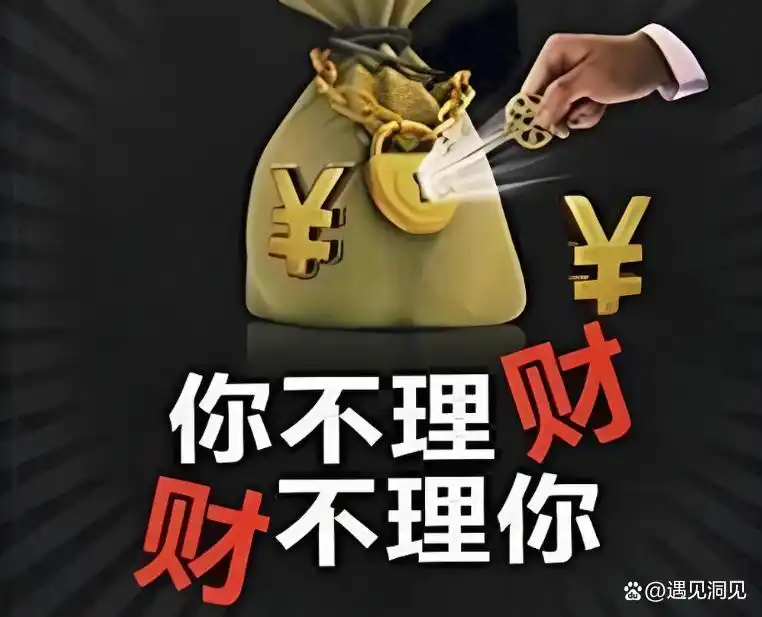
Managing money is managing life. If you don’t manage money, money will not care about you!

1. What is financial management?

Financial management, from a young age, is about establishing your own financial management logic system. By taking care of our finances, while properly managing daily expenses, we have been working hard to increase passive income, and finally embarked on the road of making money just by sitting down. The three cornerstones of wealth growth – principal, interest rate and time, form the core of entry-level financial management and minimalist investment. Reduce risk by diversifying your investments while broadening potential avenues for increasing income.

Financial management, from a broad concept, also includes the source of wealth, consumption concepts, rich people's thinking, how to use five insurances and one housing fund, fixed investment in funds, gold preservation, stock trading, investment evaluation, etc.

Managing money is also managing life. Investing in yourself is the best investment. Investing in yourself here does not mean buying luxury goods, but investing money in projects that can improve our work skills or competitiveness, such as training, courses, work, fitness, etc.

True stability comes from the ability to control money. Only when we build a logical thinking system that suits our own situation, and can effectively integrate and flexibly use resources such as money, wisdom, experience, and connections, can we truly feel the true meaning of freedom and gain true stability.

2. Correct understanding of financial management

Financial management must first get rid of cognitive misunderstandings: Don't wait until you are very rich before you manage money. Think about your life beyond the limitations of money. It does not mean that you will have money in the future and your life will be good if you have a good job and high income.

Of course, financial management is not about getting rich overnight. You have to dig your own moat and choose the right products.

In the field of investment and financial management, the first priority is to improve personal cognitive abilities, because the key to profitability often lies in information asymmetry and cognitive differences. Fundamentally, investing is the financial manifestation of our overall cognitive level, which translates our insights into politics, macroeconomics, industry trends, business operations, understanding of human nature, and even self-awareness into measures of gain or loss.

Therefore, when we have accumulated more and more wisdom and more mature perspectives, investment has become a good choice for our last career.

3. The key to financial management is that you must have money and you must be talented.

All financial management skills and methods will eventually be focused on "money". If you don't even have "money", how can you talk about "management"? Therefore, the key to financial management is that you must have money and you must be talented.

Most of us are struggling on the road of primitive accumulation, that is, you must first have the first pot of gold. As for how much money it is, it depends on your personal situation and the city where you live.

For many 8090s, even if they graduate from college and work hard for four or five years, and have a first pot of gold of about 200,000, they are often prepared for the down payment of a car house. If this is the case, the road to financial freedom through financial management will be aborted. Although buying a house is relatively an investment, you are tied to the house. Just like a kite, you can only fly freely within a limited range. When the kite flyer is tired, you have to go back obediently.

The first pot of gold that can really be retained and managed is often the struggling people in first-tier cities such as Beijing, Shanghai, Guangzhou and Shenzhen. Because the housing prices are too high and they cannot afford it, they simply do not consider the down payment, so financial management is crucial for them.
For those of us on the road to primitive accumulation, we can say less about financial management and more about accumulation, accumulating experience, accumulating knowledge, and accumulating abilities.

If you want to open a lock, your focus is not on the lock, but on finding the key. Experience, knowledge, and ability are the integrated keys to money. Focus on growth and investment and learning, and financial managers will naturally open up for you.

When it comes to money, in addition to increasing income, it is also important to reduce expenditure. Reading a financial management book after your hard work is not as practical as not buying an Apple

4. Regarding the flow of money

Before we start managing money, we need to understand the laws of money.

There are two distribution patterns of things in this world:

The Role Of Yuncoin In The Digital Currency Market And Its Impact On Technology, Supply And Demand, And Team Community

The role and influence of Yunbi in the digital currency market

In the dynamic and variable field of the digital currency market, Yuncoin occupies a unique position. As one of many digital currencies, Yunbi’s status is influenced by a variety of factors.

First of all, from a technical perspective, the advancement and security of the blockchain technology used by Yunbi is one of the key factors that determine its status. If Yunbi's technical architecture is efficient, stable and difficult to break, then its trust and competitiveness in the market will be relatively high.

Secondly, the market supply and demand relationship also has an important impact on the status of Yunbi. When the market demand for Cloud Coins is strong and the supply is relatively limited, the price of Cloud Coins will tend to rise, thereby enhancing its position in the market. Conversely, if there is excess supply and insufficient demand, its position may be affected.

Furthermore, Yunbi’s development team and community support are also factors that cannot be ignored. A strong and active development team can continuously improve and optimize the performance of Yunbi, launch new functions and application scenarios, and attract more users and investors. At the same time, an active community can provide strong support for the promotion and development of Yunbi and enhance its influence in the market.

In order to more clearly demonstrate the status and related impact of Yunbi in the digital currency market, the following is a simple comparison table:

Factors: The impact of Yuncoin’s characteristics on market position

technology

Efficient and secure blockchain technology

Improve trust and enhance competitiveness

supply and demand

Strong demand, moderate supply

Prices rise, status improves

Team and Community

Strong development team, active community

Promote development and expand influence

The change in the status of Yuncoin will also have a chain reaction on the entire digital currency market trend. When the status of Yuncoin rises, it may attract more funds to flow into the digital currency market, driving up the prices of other related currencies and stimulating investment enthusiasm in the market. At the same time, it may also encourage more project parties to learn from Yunbi’s successful experience and promote technological innovation and development in the entire industry.

However, if Yunbi's status declines, it may trigger investor panic, lead to capital outflows, and have a certain impact on the market. In addition, it may also affect market confidence in other similar currencies, triggering market adjustments and reshuffles.

In short, Yuncoin’s position in the digital currency market is not static, but is affected by the interaction of multiple complex factors. Investors and market participants need to pay close attention to changes in these factors in order to make informed investment decisions.

Risks Of Yunbi.com’s Trading Mechanism: No Legal Protection And Highly Volatile Market

Cloud currency is not a formal, regulated and legal financial investment target. It is usually related to virtual currency. The virtual currency market has emerged in recent years, but there are many problems and risks.

Yuncoin’s trading mechanism is mainly based on decentralized blockchain technology. Its transactions are generally conducted on specialized virtual currency trading platforms. Users first need to register an account on the trading platform, complete necessary steps such as identity verification, and then obtain trading funds by recharging legal currency or other mainstream virtual currencies to the platform. When trading, users can choose to buy or sell Yuncoin according to market conditions. During the transaction process, blockchain technology will record each transaction information to ensure the traceability and non-tamperability of the transaction. For example, when user A transfers cloud coins to user B, the transaction information will be packaged into a block and added to the blockchain, and all nodes in the network will verify the transaction.

Legality of Virtual Currency Transactions_Yunbi Transaction Risks_Yunbi.com

However, there are many potential risks associated with this trading mechanism. From a legal perspective, virtual currency transactions are not protected by law in China. In 2017, seven ministries and commissions including the People's Bank of China issued the "Announcement on Preventing Financing Risks of Token Issuance", clearly stating that virtual currency transactions are illegal financial activities. This means that once investors suffer losses in cloud currency transactions, it will be difficult to protect their rights and interests through legal means.

From a market perspective, the Yuncoin trading market is highly volatile. Due to the lack of effective supervision and regulation, its prices are easily manipulated. Some criminals may influence the price of Yuncoin by spreading false information, malicious speculation, etc., thereby making huge profits. For example, they may first buy a large amount of Yuncoin, then publish good news to attract investors to follow the trend and then sell it after the price rises, causing losses to the investors who follow the trend.

On a technical level, although blockchain technology itself has certain security, the Yunbi trading platform may have security vulnerabilities. Hackers may attack the trading platform and steal users' account information and funds. Once this happens, users' assets will face huge losses.

The following table compares the differences between cloud currency trading and regular fund trading:

Comparison project cloud currency trading regular fund trading

legality

Illegal financial activities in China

Strictly supervised by law, legal and compliant

degree of supervision

Almost no effective supervision

Strictly regulated by the China Securities Regulatory Commission and other departments

price stability

Highly volatile and susceptible to manipulation

Relatively stable and related to the overall performance of the market

Risk level

extremely high

It varies depending on the type of fund, but overall it is relatively controllable

To sum up, there are many potential risks in Yunbi trading. Investors should stay away from such illegal transactions and choose legal and compliant financial investment products.

A Guide To Avoiding Financial Pitfalls! Master These Principles And Methods To Avoid Detours In Financial Management

Financial management basics_Financial management_Financial management blood and tears lessons

Financial management is difficult to say, easy to say. Some people have financial freedom throughout their lives, while others are trapped by money all day long. What's the difference? It depends on whether you have mastered the correct concepts and methods of financial management. As someone who has experienced this, I have summarized 15 lessons learned through blood and tears. I hope you can understand at least 7 of them and avoid detours on your financial management journey.

1. Basics of Financial Management

1. Save first, spend later

This is the first principle of financial management, but it is also the most easily ignored. Most people are accustomed to "income – expenditure = savings", while smart people follow "income – savings = expenditure". After receiving your monthly salary, you must first save at least 20% of your salary, and then use the remaining money for consumption. Believe me, this way you will not feel that your quality of life has deteriorated, but you will feel more at ease because you have savings.

2. Accounting is the first step in financial management

You can never manage your finances effectively if you don’t know where your money is being spent. Keep keeping accounts for 3 months, and you will be surprised to find so many "loopholes" in your spending habits. Nowadays, there are many accounting apps that are simple to operate. Spend 5 minutes a day recording, and long-term persistence will yield amazing returns.

3. Build an emergency fund

Life is unpredictable, and unemployment, illness, and accidents may happen suddenly. Before starting any investment, prepare 3-6 months of living expenses as an emergency fund. This money should be placed in a highly liquid place, such as a currency fund or a demand deposit, and can be withdrawn at any time.

2. Consumption Concepts

4. Distinguish between "needs" and "wants"

Financial management basics_Financial management blood and tears lessons_Financial management

Merchants try to confuse these two concepts every day. You need food, but not necessarily three Michelin stars; you need clothes, but not necessarily the latest luxury goods. Before every purchase, ask yourself: Is this really a necessity? Are there any more affordable alternatives?

5. Be wary of "small money" traps

A cup of coffee worth 35 yuan may not seem expensive, but one cup a day costs 12,775 yuan a year, or more than 120,000 yuan in ten years. This doesn’t mean you can’t enjoy life, but you need to realize the power of small amounts of money accumulated. Similarly, the small amount of money saved through investment and financial management can also produce a huge compound interest effect.

6. Avoid "face consumption"

Many people are in debt not because of their basic needs, but because they excessively pursue a lifestyle beyond their capabilities: designer bags, luxury cars, high-end restaurants… True happiness comes from the heart, not external material display. Remember: looking rich and actually having money are two different things.

3. Investment and Financial Management

7. Start investing early

Time is investment's best friend. Assuming an annualized rate of return of 10%, if you start investing 1,000 yuan a month at the age of 25, you can get about 3.2 million yuan by the age of 60; and if you start the same investment at the age of 35, you can only get about 1.2 million yuan. A ten-year gap results in a difference of nearly 2 million! Don't wait to "invest until you have money", start now, even if the amount is small.

8. Don’t touch things you don’t understand

Bitcoin, NFT, futures…these popular investments may bring high returns, but if you don't understand how they work, it's gambling, not investment. Stick to investing in things you understand, and would rather miss than invest in the wrong thing.

Financial management_Financial management basics_Financial management blood and tears lessons

9. Diversify investment risks

"Don't put all your eggs in one basket" is an eternal truth. Diversify your funds into different asset classes based on your risk tolerance: stocks, bonds, real estate, gold, etc. This way, even if one market falls, the overall portfolio won't be fatally hit.

10. Hold for the long term and wait patiently

Investment is not gambling and does not need to be done every day. Choose high-quality assets, hold them for the long term, and ignore short-term market fluctuations. Data shows that frequent traders have much lower returns than long-term holders because transactions incur handling fees and it is difficult to accurately predict short-term market trends.

4. Debt Management

11. Stay away from loan sharks

Credit card installments, cash loans, online loans…the actual annualized interest rates of these seemingly convenient borrowing methods are often as high as 15% or more. Unless absolutely necessary, avoid loan sharking. If you already have high-interest debt, repay it first because the actual rate of return on repayment is equal to the borrowing interest rate.

12. Use leverage with caution

Borrowing money to invest may magnify gains, but it may also magnify losses. Especially for new investors, do not use leverage lightly. Many investment gurus warn: Leverage is a tool of destruction for smart people.

5. Life Planning

Financial management blood and tears lessons_Financial management basics_Financial management

13. Insurance is necessary, but not investment

The core function of insurance is protection, not financial management. Prioritize the allocation of protection insurance such as critical illness insurance, medical insurance, and accident insurance, and the insurance amount must be sufficient to cover risks. But don't buy high-premium products that bundle "investment" features, which are usually very cost-effective.

14. Continuously improve yourself

The best investment is in yourself. Whether it's learning new skills, improving your education, or expanding your network, these investments may not bring immediate financial returns, but they often have the highest returns in the long run. Your ability to make money is your greatest source of wealth.

15. Set financial goals and review them regularly

Financial management without goals is like a headless fly. Set short-term (1 year), medium-term (3-5 years), and long-term (10+ years) financial goals and develop specific plans to achieve them. Review progress every quarter and adjust strategies.

Financial management is a marathon, not a sprint. These tips may seem simple, but few people actually stick to them. If you can understand and practice 7 of them, you will have surpassed 80% of people and will definitely avoid many detours on the road to financial management. Remember, the purpose of financial freedom is to have more choices and live the life you really want, not to be a slave to money.

Start now, pick one or two and take action now. Your future is shaped by every decision you make now.

Beginner's Guide To Financial Management: Recommended Investment Products With Low Risk And Stable Returns

Beginners to financial management can start with investments that have lower risks and relatively stable returns. Do not blindly pursue high-yield investment products without experience, because high returns also mean high risks. Here are some investment references suitable for novices in financial management.

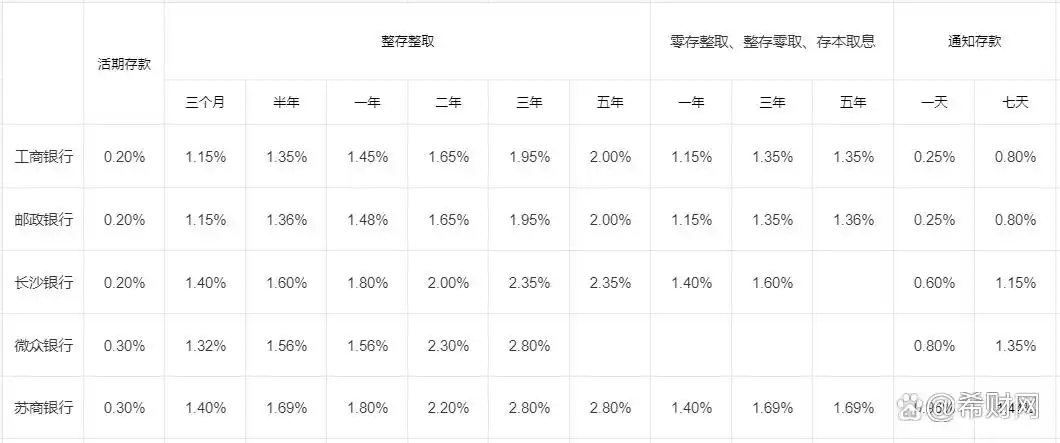
1. Bank deposits

Bank deposits are the most common and least risky financial option. Mainly divided into demand deposits and time deposits. Bank deposits are a capital-protected investment option and are protected by deposit insurance.

Demand deposits can be deposited and withdrawn at any time, and the deposit interest rate is low. If the funds are needed at any time, you can choose the survival period.

Time deposits have a fixed deposit period. Investors deposit funds in the bank to obtain income according to the agreed period and interest rate. The deposit interest rates of different deposit terms and different banks will be different. Investors can compare more bank interest rates before making a choice.

Notice deposits have no fixed term, but the depositor must notify the bank in advance before withdrawing the deposit. It has the properties of both time deposits and demand deposits, with one day and seven days. The interest rate of notice deposits fluctuates according to changes in market interest rates. It is generally higher than the interest rate of demand deposits and lower than the interest rate of time deposits. However, the investment threshold for call deposits will be relatively high, and the minimum deposit amount for individual investors is 50,000 yuan.

The interest rates of several banks are listed as a reference, and the deposit interest rate inquiry website of major banks is attached: https://www.csai.cn/bankrate/.

Financial Management_Sound Investment Products_Financial Management for Beginners

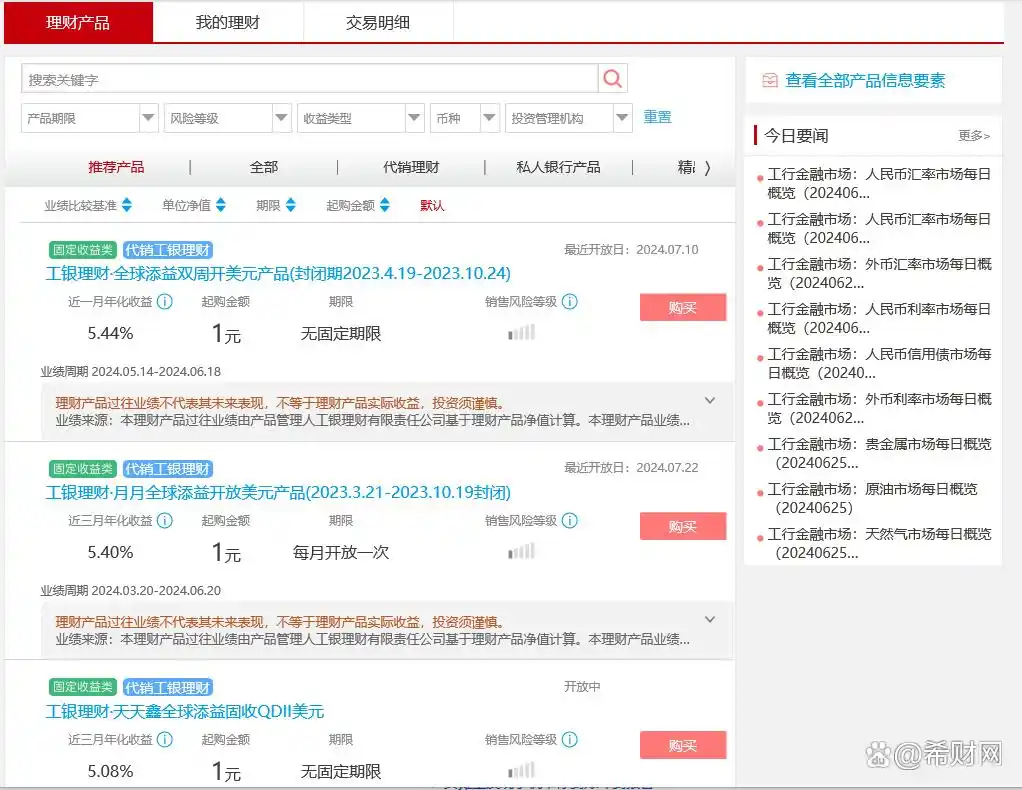
2. Bank financial products

Banks have financial products with different risk levels, and investors can choose products based on their risk tolerance. The investment threshold of bank financial management is lower, the safety and stability are higher, and the rate of return will be lower than that of high-risk products. Bank financial management is not protected by deposit insurance, and there is a risk of principal loss, but most financial products have relatively small risks.

The interest rates, risks, and terms of different financial products will be different. When choosing financial products, investors can check more relevant information on the bank's official website, APP, counter, etc.

Financial Management_Financial Management for Beginners_Sound Investment Products

3. Monetary funds

It is an open-end fund that specializes in investing in money market instruments with low risk. It has the characteristics of high liquidity, low risk and low investment cost. Alipay's Yu'ebao and Lingqiantong in WeChat are both monetary funds, which are very convenient for investors to operate. Moreover, both Yu'ebao and Lingqiantong have principal guarantees. If there is a financial security problem, corresponding compensation will be obtained.

4. Fund fixed investment

Fund fixed investment is a financial management option that is more suitable for office workers nowadays. It can not only share the investment cost, but also avoid investing too much at one time. However, fixed investment in funds involves certain risks, and returns are affected by market fluctuations, and there is a possibility of loss of principal.

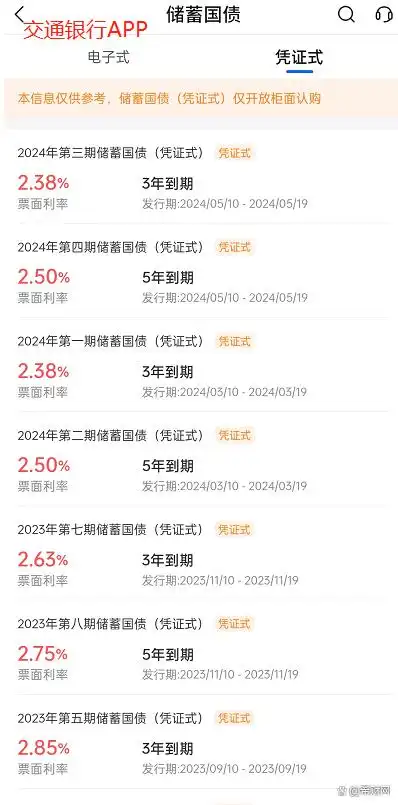
5. Invest in government bonds

Treasury bonds are bonds issued by the government and are mainly used to raise fiscal funds. Treasury bonds are backed by government credit, have low investment risks, and can enjoy certain tax benefits. The level of market interest rates will affect the returns on government bonds. The purchase of treasury bonds is also relatively convenient and can be purchased through the bank’s APP.

Financial Management_Financial Management for Beginners_Sound Investment Products

6. Treasury bond reverse repurchase

Treasury bond reverse repurchase refers to individuals lending their own funds through the treasury bond repurchase market and obtaining fixed interest income. The repurchase party, or the borrower, uses its own treasury bonds as collateral to obtain corresponding funds and repay the principal and interest upon maturity. Treasury repurchases are essentially short-term loans. Treasury bond reverse repurchase has the characteristics of low risk, low investment threshold, considerable and stable yield, low handling fee, and convenient operation.

There are a total of 9 products with different trading periods in Treasury bond reverse repurchase, namely 1-day, 2-day, 3-day, 4-day, 7-day, 14-day, 28-day, 91-day, and 182-day. The investment cycles are relatively short, and investors can choose according to their needs. The interest rate of government bond reverse repurchase is not affected by market changes. The yield will be determined at the time of transaction, and subsequent market changes will not change the interest rate.

Financial Management_Financial Management for Beginners_Sound Investment Products

Things to note for newbies to financial management:

1. Fully understand your own financial situation. Many people do not understand their financial situation, including income, expenses, liabilities, etc., before financial management, so it is difficult to formulate a reasonable financial plan. It is recommended that you have a detailed understanding of your financial situation and formulate a corresponding financial plan before managing your finances.

2. For novices investing for the first time, most investors can choose a conservative and stable strategy and choose medium and low-risk financial products.

3. Don’t go into debt for financial management. Borrowing for financial management is another misunderstanding that many people fall into. Blind borrowing will increase your debt, increase your financial burden, and make it more difficult for you to get out of financial difficulties.

4. Consider risk tolerance and capital liquidity. If you don’t have much money, don’t want to take too much risk, and need money at any time, it’s best to choose low-risk, high-liquidity financial products. If investors have sufficient funds, have little demand for capital liquidity, and have a certain ability to bear risks, they can appropriately pursue higher-risk investments.

5. Reduce risks by diversifying investments, but the amount should not be too large, and you should choose different types or less relevant financial products. At the same time, stop-profit and stop-loss points must be set to control risks within a certain range.

Behind The Hundreds Of Billions Of Global Token Interactions: The Open Source Model Has Changed From "one Company" To "a Group Of Heroes", And China's AI Has Entered The First Echelon

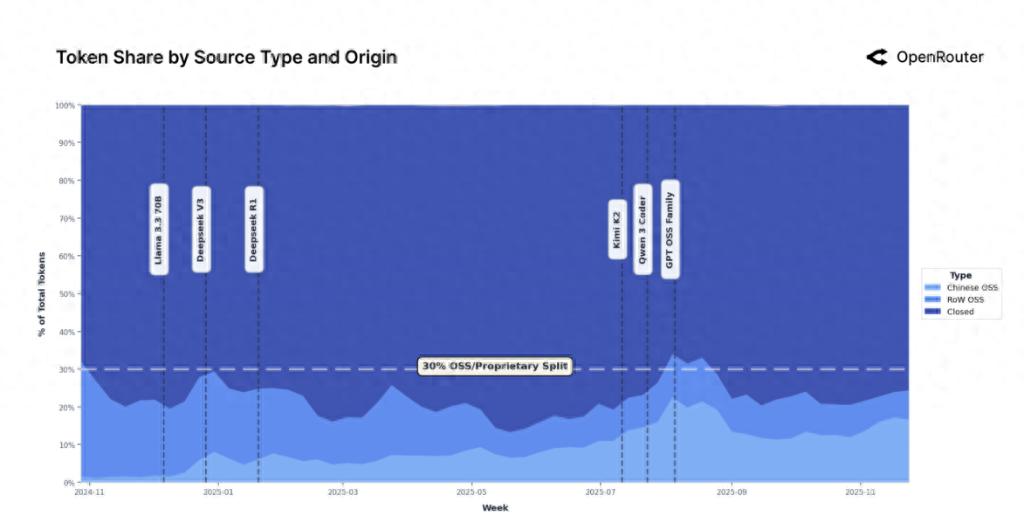
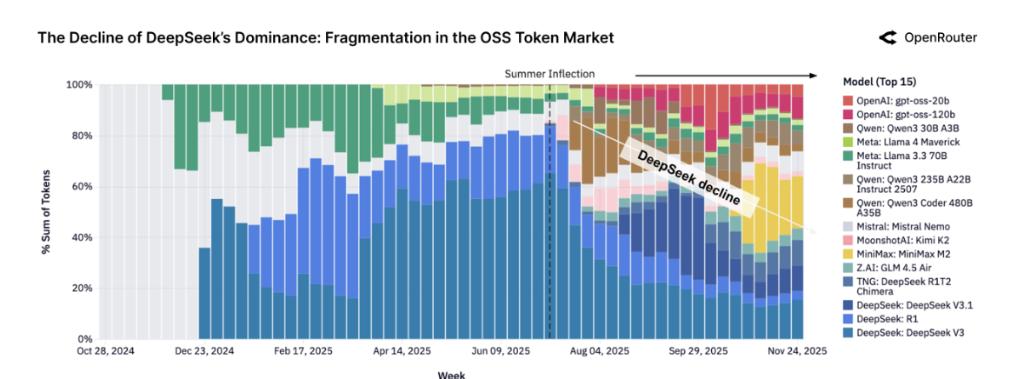
Empirical research based on the OpenRouter platform's over 100 trillion Tokens shows that the large-scale language model market is undergoing profound reconstruction. The share of open source models has climbed to 33%, completely breaking the monopoly of closed source models. The market structure has shifted from DeepSeek's "one company" to diversified competition. China's open source AI has risen strongly in this change and has officially become the first echelon in the world.

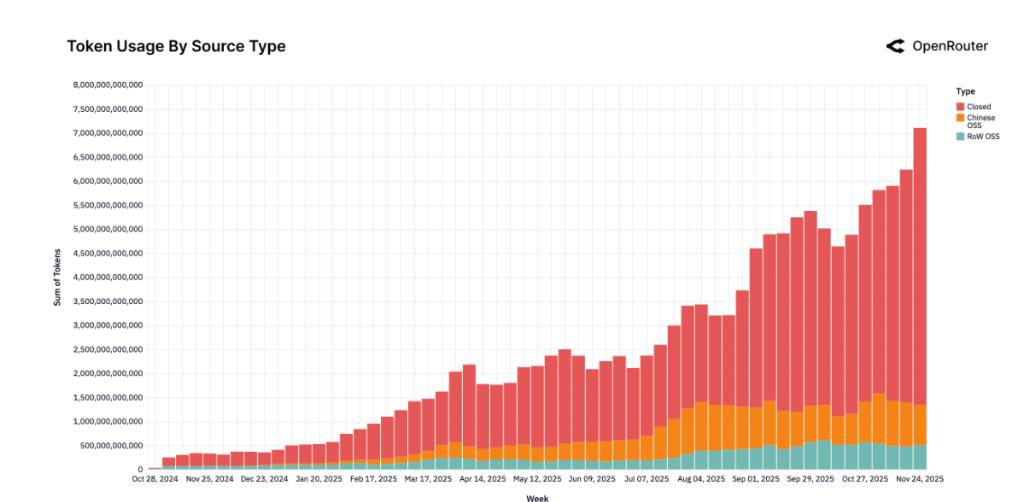
On December 4, a16z, a well-known Silicon Valley venture capital firm, and OpenRouter, a large model API platform, stated in a report co-authored that the core driving force of this change comes from the explosive growth of Chinese models. Data shows that the market share of open source models developed in China has soared from 1.2% at the end of 2024 to a peak of nearly 30% in mid-2025, with an average annual share of 13.0%, which is almost the same as the 13.7% share of open source models in other parts of the world. Chinese models such as Qwen, DeepSeek, and MoonshotAI have achieved the leap from fringe participants to core players by virtue of their technical capabilities and local adaptation advantages.

China's open source AI rise market share_Moonshot token, 18.25% increase in 24 hours, see OKX market module_OpenRouter platform open source model market share reconstruction

The report points out that the competitive landscape within the open source ecosystem has undergone drastic changes simultaneously. After the "summer turning point" in mid-2025, the market has rapidly moved from being highly concentrated, with the DeepSeek family accounting for more than 50% of the market share, to fragmented competition. By the end of 2025, no single model can continue to occupy more than 25% of the market share, and user selection logic has changed from locking the "best model" to flexibly combining among 5-7 top models.

OpenRouter platform open source model market share reconstruction_China's open source AI rise market share_Moonshot token, 18.25% increase in 24 hours, see OKX market module

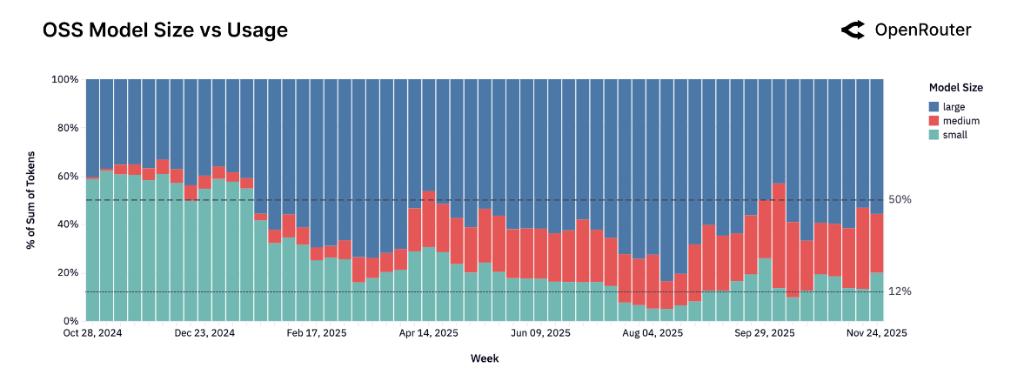
In addition, the research report reveals a number of disruptive trends: medium-sized models (15B-70B) are replacing small models as the mainstream, agent reasoning capabilities surpass text generation and become the core value, the proportion of programming applications has soared from 11% to over 50%, and the Asian market spending share has doubled from 13% to 31%. The rules of competition have shifted from leaderboard scores to real-world usage retention and workload matching capabilities.

China’s power reshapes open source landscape

The report states that the open source model market has formed a dual-track structure in which "closed source defines the upper limit of performance and open source provides multiple values". By the end of 2025, the market share of open source models has steadily climbed to 33%. This growth is not a short-term boom, but driven by the continuous iteration of high-quality models such as DeepSeek V3 and Kimi K2.

The rise of China’s open source model is faster than expected. At the end of 2024, China's model market share was only 1.2%, and by mid-2025, its peak had reached nearly 30%. Chinese models such as Qwen, DeepSeek, and MoonshotAI have demonstrated unique advantages in technical capabilities and localization adaptation, marking that Chinese AI has officially entered the first echelon of the world in the open source track.

OpenRouter platform open source model market share reconstruction_Moonshot token, 18.25% increase in 24 hours, see OKX market module_China's open source AI rise market share

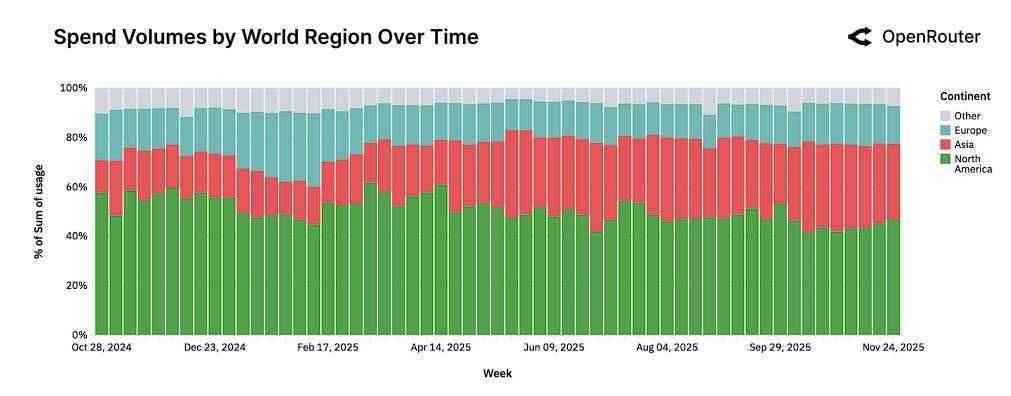
From the perspective of global regional distribution, the overall rise of the Asian market is the most significant, with the share of global spending doubling from 13% at the beginning of the study to 31%, becoming a key growth engine. Although North America is still the largest single region, its spending share has been below 50% for a long time.

Moonshot token, 18.25% increase in 24 hours, see OKX market module_OpenRouter platform open source model market share reconstruction_China's open source AI rise market share

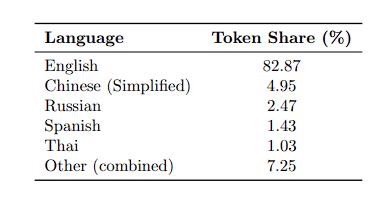
Language distribution data shows that Simplified Chinese has become the second largest language after English with a share of 4.95%, reflecting the strong demand in the Chinese market.

China's open source AI rise market share_OpenRouter platform open source model market share reconstruction_Moonshot token, 18.25% increase in 24 hours, see OKX market module

From monopoly to multi-power co-governance

According to reports, the open source market at the end of 2024 showed a highly concentrated pattern. The V3 and R1 models of the DeepSeek family together accounted for more than 50% of Token usage, almost forming a "one dominant" situation. But this pattern was completely overturned after the "summer turning point" in mid-2025.

With the intensive release of new models such as Qwen, Minimax, Kimi K2, and GPT-OSS series, competition barriers in the open source market have been broken. These new models are ready for large-scale production use within weeks of release. By the end of 2025, no single model will continue to occupy more than 25% of the open source market share.
User behavior patterns have undergone fundamental changes. Developers have shifted from locking the "best model" by default to diversifying combinations among 5-7 top models. This change marks that the open source ecosystem has officially entered the stage of full competition where "the dominant players are divided", and multi-model ecosystem has become the norm in the industry.

"Medium is the new small" subverts size perception

The empirical data of over 100 billion Tokens completely overturns the traditional perception that "the open source ecosystem is dominated by small and lightweight models". Data shows that developers are using practical actions to reshape the model size pattern.

small model (

In contrast, medium-sized models (15B-70B) have achieved explosive growth from scratch, and medium-sized models represented by Qwen2.5 Coder 32B have quickly built a fiercely competitive ecosystem.

This type of model accurately matches users' needs for "the balance point between capabilities and efficiency" and has become the core growth pole of the open source market, confirming the new industry consensus that "medium-sized is the new small".

The field of large models (>70B) also presents a diversified competition. Models such as Qwen3 235B and Z.AI GLM 4.5 have become core benchmark targets. Users tend to flexibly switch between multiple top large models.

OpenRouter platform open source model market share reconstruction_China's open source AI rise market share_Moonshot token, 18.25% increase in 24 hours, see OKX market module

Chinese characteristics of application scenarios

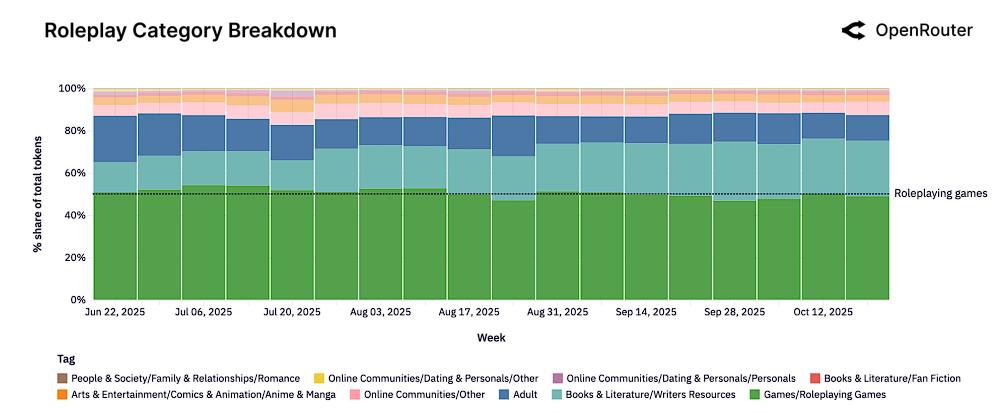
Looking at the overall task distribution of the open source model, role-playing has become the largest application with over 50% of the tokens, benefiting from the natural advantage of the open source model having less content restrictions. Programming assistance ranks second with a share of 15%-20%, and its share continues to grow.

China's open source AI rise market share_Moonshot token, 18.25% increase in 24 hours, see OKX market module_OpenRouter platform open source model market share reconstruction

However, China’s open source model shows significant differentiation characteristics. Different from the "role-playing dominance" of the global market, the total proportion of programming and technology applications in China's open source model reaches 39%, exceeding the role-playing share of 33%.

This difference shows that China’s open source models have the ability to directly compete with world-class models in productivity areas such as code generation and technical reasoning. Its value is more focused on professional efficiency improvement rather than entertainment interaction. This positioning may open up unique competitive advantages for Chinese models in the enterprise market.

Agent reasoning leads paradigm shift

The most disruptive finding revealed by the research is a fundamental paradigm shift in the way LLM is used—from a single round of text completion to a multi-step, tool-integrated agent reasoning workflow.

The amount of tokens processed by models optimized for inference has soared from almost negligible in early 2025 to accounting for more than 50% of total usage. This change is driven by supply and demand in both directions:

On the supply side, the release of models such as GPT-5 and Claude 4.5 has greatly increased the upper limit of reasoning capabilities; on the demand side, users are increasingly favoring models that can manage task status, follow multi-step logic, and support intelligent workflows.

Accompanying the rise of intelligent agent reasoning are two key features:

The prompt length has increased dramatically, and the average number of input tokens per request has increased nearly 4 times from 1.5K to more than 6K. Among them, the programming task prompt length exceeds 20K, which is 3-4 times that of other categories;

Tool calls are becoming increasingly popular, and models such as Claude 4.5 Sonnet and Grok Code Fast are leading the way, marking the essential transformation of LLM from "text generator" to "action executor".

"Crystal slipper effect" defines new moat

The study discovered a group of "founding user groups" with ultra-high long-term retention, and proposed a "Cinderella's glass slipper effect" framework to explain this phenomenon, defining the core moat in the AI ​​era.

The core logic of this framework is: there are always unsatisfied high-value "workloads" in the market; each new generation model release is a matching process of "trying on the glass slipper"; when the model perfectly solves the technical and economic constraints of a specific workload for the first time, users will build processes and data pipelines around the model, resulting in extremely high switching costs and stickiness.

The data confirms this logic: the retention rate of the early foundation user groups of Claude 4 Sonnet and Gemini 2.5Pro still reaches 40% after 5 months, while the retention performance of all user groups of models that have not achieved matching, such as Llama 4 Maverick, is extremely poor. In addition, the DeepSeek model also exhibits a unique "boomerang effect", whereby some lost users will return again after trying other models.

This discovery reveals that the real competitive barriers come from the first matching of "workload-model" and the resulting highly sticky user base. Retention is far more critical than growth. The industry focus is shifting from the slight advantage of rankings to empirical analysis and operational optimization of real-world use, from single-model competition to multi-model flexible strategies. Open source and closed source, East and West will coexist and compete for a long time.

When Importing Portable Electronic Equipment Such As Power Banks, What Should You Pay Attention To When Applying For CCC Certification And Customs Clearance?

Tianjin Customs:

Our company is a trading company that specializes in electronic products. Recently, we are preparing to import a batch of portable electronic equipment such as power banks. I heard that China has a special certification management system for this type of electronic equipment. I would like to ask: What are the precautions when importing this type of products? What is the relevant certification management system?

Tianjin reader Mr. Liu

Mr. Liu:

Hello! Power bank is a type of lithium-ion battery. According to the "Announcement of the State Administration for Market Regulation on the Implementation of Compulsory Product Certification Management for Lithium-ion Batteries and Other Products" (No. 10, 2023), lithium-ion batteries are included in China Compulsory Product Certification (CCC) management. Therefore, when you import such goods, you must follow the relevant regulations of the compulsory product certification system.

The specific explanation for you is as follows:

What is the compulsory product certification system

China Compulsory Certification (CCC), referred to as CCC certification, is a product conformity assessment system implemented in accordance with laws and regulations in my country to protect the personal safety of consumers and national security, and strengthen product quality management. Products listed in the CCC certification catalog must be certified and marked with the certification mark before they can be shipped, sold, imported or used in other business activities.

In accordance with the "Import and Export Commodity Inspection Law of the People's Republic of China" and its implementation regulations, the customs implements verification management of imported commodities listed in the CCC certification catalog, inspects documents, and checks whether the certified goods are consistent.

How to declare for customs clearance of CCC certified products

(1) Which products require CCC certification?

The State Administration for Market Regulation issued Announcement No. 10 of 2023, adding three new types of CCC certified products, including: "lithium-ion batteries and battery packs", "power banks" and "power supplies".

As of now, the products involved in CCC certification in the new "Compulsory Product Certification Catalog" involve 16 major categories: wires and cables, circuit switches and electrical devices for protection or connection, low-voltage electrical appliances, low-power motors, power tools, welding machines, home appliances, electronic products and safety accessories, lighting appliances, vehicles and safety accessories, agricultural machinery products, fire protection products, building materials products, children's products, explosion-proof electrical appliances, household gas appliances, etc.

(2) How to declare products in the catalog?

For goods in the certification catalog, select "Inside the 11-3C Catalog" in the cargo attribute column of the International Trade Single Window when declaring, add "Compulsory Product Certification (CCC Certification) Certificate" to the license information and fill in the certificate number.

(3) Situations where CCC certification is not required or exempted

No need to apply: It is within the certification catalog, but the goods are temporary import and export goods, personal items for diplomats, items carried by entry personnel, inter-governmental aid gifts, ATA document goods, goods entering the bonded area, CCC type test samples, and returned goods. When declaring, select "13-No need to apply for 3C certification" in the cargo attribute column of the single window of international trade when declaring, and upload the corresponding supporting documents in the paperless system.

Exemption: products and samples required for scientific research testing and certification testing, parts and components required for maintenance purposes, equipment and parts required for complete sets of factory production lines, products that are only used for commercial display but not for sale, parts and components imported for the purpose of exporting the complete machine, and other special purposes are exempted. To apply for compulsory product certification, the applicant submits a CCC exemption application to the local market supervision department. For products that have obtained an exemption certificate, select "11-3C Catalog" in the cargo attribute column of the International Trade Single Window when applying, add "Certificate of Exemption from Compulsory Product Certification" to the license information and fill in the certificate number.

Things to note

(1) Starting from August 1, 2023, the designated certification agency has begun to accept certification entrustments for products newly included in the compulsory product certification catalog such as "lithium-ion batteries" and carry out certification work in accordance with the "Compulsory Product Certification Implementation Rules for Information Technology Equipment" and the applicable standards listed in the attachment. Starting from August 1, 2024, products newly included in the CCC catalog that have not obtained the CCC certification and are marked with the certification mark may not be manufactured, sold, imported, or used in other business activities.

(2) When handling import and export business, relevant parties in import and export trade should refer to the "Compulsory Product Certification Catalog" and other documents, and accurately grasp the import and export commodity certification information based on the 10-digit HS code corresponding to the commodity, so as to avoid affecting customs clearance of goods due to declaration reasons.

(3) According to Article 16 of the "Regulations on the Implementation of the Import and Export Commodity Inspection Law of the People's Republic of China", for imported commodities subject to verification management, the consignee shall apply for verification to the entry-exit inspection and quarantine agency at the customs declaration place. When declaring, you need to fill in the license number at the "single window". The customs will conduct online verification of regulatory documents such as "Certificate of Exemption from Compulsory Product Certification" and "Compulsory Product Certification Certificate". Products without CCC certification found during the import customs clearance process will be destroyed or returned.

(Li Mingyong, deputy section chief of the Inspection Section of Nankai Customs under Tianjin Customs, and Liu Yannan, section chief of the Comprehensive Section of the Commodity Inspection Division of Tianjin Customs)

The New Regulations Take Effect From Now On! How To Tell If Your Power Bank Can Be Taken On A Plane? Pay Attention To A Few Keywords

Since the beginning of this year, there have been frequent incidents of lithium battery products such as power banks carried by passengers catching fire and smoking on board.

Recently, the Civil Aviation Administration of China issued an emergency notice, banning passengers from taking domestic flights with power banks that do not have the 3C logo, have unclear 3C logos, or have recalled models or batches, starting from June 28.

What is the 3C logo? What are the rules for bringing power banks on planes?

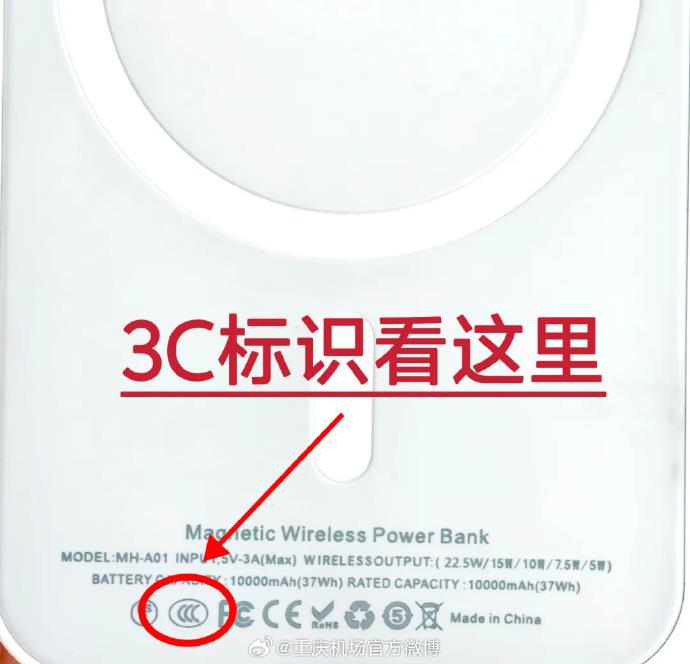
What does the 3C logo look like?

How to judge authenticity?

Binance certification_Power bank 3C certification standards_Power bank boarding capacity regulations

3C certification (China Compulsory Certification, China Compulsory Product Certification) is a compulsory market access system implemented in accordance with the law in my country to protect the personal safety of consumers, national security and the environment.

According to national regulations, power banks that are officially on the market must obtain 3C compulsory certification.

Power bank 3C certification standards_Binance certification_Power bank boarding capacity regulations

Observe the 3C certification mark from the front facing the light. The mark has a white base plate and a black pattern. Aim at the logo screen and observe through the diamond shape of the 3C certification mark. The logo screen has a profound three-dimensional feeling and a sense of reality. If there is no three-dimensional effect, it can be judged to be a counterfeit logo.

Power bank 3C certification standards_Binance certification_Power bank boarding capacity regulations

Power bank boarding

Must meet capacity regulations

It should be noted that power banks that can be boarded on board must not only bear the 3C logo, but also comply with capacity regulations.

According to the "Announcement on the Regulations on Civil Aviation Passengers Carrying "Power Banks" on Boarding:

Power banks can only be carried in hand luggage or on your carry-on, and are strictly prohibited from being carried in checked luggage.

Power banks with a rated energy of no more than 100Wh do not require airline approval; power banks with a rated energy of more than 100Wh but no more than 160Wh can only be carried with the approval of the airline, but each passenger is not allowed to carry more than two power banks.

It is strictly prohibited to carry a power bank with a rated energy exceeding 160Wh. It is strictly prohibited to carry a power bank that does not indicate the rated energy and cannot calculate the rated energy through other marked parameters.

It should be noted that power bank is not allowed to be used to charge electronic devices during flight. For power banks with a start-up switch, the power bank should always be turned off during flight.

It reaches 400℃ in 15 seconds!

How dangerous is the spontaneous combustion of a power bank?

How terrible is it if a power bank catches fire? Previously, the Fire Rescue Brigade of Xiaoshan District, Hangzhou City, Zhejiang Province conducted an experiment on the fire of power bank.

The root cause of the fire in the power bank lies in the thermal runaway of its internal lithium battery. "A common cause of fires in power bank is internal circuit failure leading to a short circuit, which causes a fire." Firefighters said.

In the experiment, firefighters used tools to short-circuit the positive and negative poles of a power bank to simulate a short circuit. About 15 seconds later, the power bank began to smoke a lot, and the temperature quickly soared to over 400°C. "If there are combustible materials such as paper and clothing around, it may cause a fire." Firefighters emphasized.

It should be reminded that in the event of a short circuit, the power bank will continue to heat up. Common fire extinguishers are not very effective and cannot cool down the power bank, which may easily cause re-ignition. Therefore, the best way to put out a fire on a power bank is to use water.

When purchasing a power bank, you should look for the 3C logo

Power bank to carry on board the plane

Must comply with relevant regulations

Sign In

Forgot Password

Sign Up