
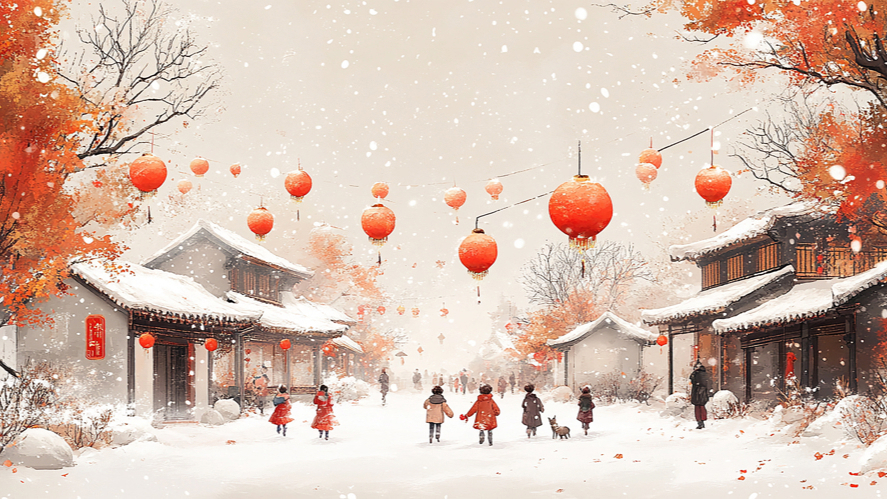
(AI cartography)
"The dream of the new year is the love of the last year. The remaining night is half drunk. The spring breeze is uncertain and the plum blossoms are falling lightly. The broken bridge is long and the short pavilion is short." This is the Spring Festival written by Wu Wenying, a poet of the Southern Song Dynasty. Wu Wenying was the last peak of Song Ci. When Zhu Zumou compiled "Three Hundred Song Ci" in the Qing Dynasty, Wu Wenying's works were selected into 25 poems, ranking first, far surpassing Su Shi, Xin Qiji, etc.
Wu Wenying's words have a special kind of deep meaning. They are delicate, elegant and even a little obscure, and are full of the sorrow of facing the impermanence of life. But after 800 years, it is difficult for people today to understand it.
How much elegance, sadness, enthusiasm and sincerity have gradually been lost over the years. When the Spring Festival becomes more and more like a long holiday and the "New Year's flavor" becomes less and less, where should we go? How to retain the tradition, retain the touch and tenderness of the past? These four books may provide some enlightenment.
When does the Spring Festival start?
This seems like a nonsensical question. However, Xu Xuelian's "Micro "Time" Assigns Meaning – Research on Festival Time and Capital" shows that it is really difficult to explain clearly.
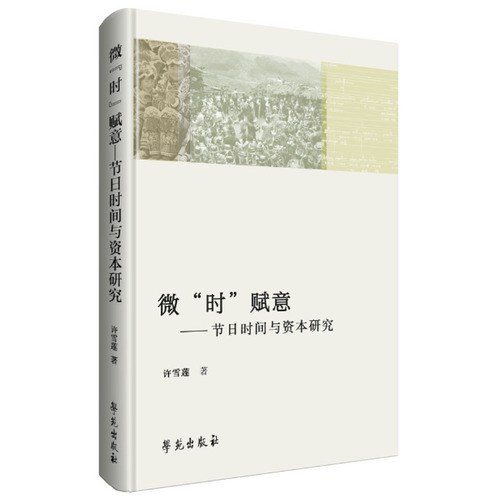
"Micro "times" give meaning – Research on festival time and capital", written by Xu Xuelian, published by Xueyuan Press in 2025
The Xia started the year with the first month of the lunar calendar, the Shang started with the twelfth month, the Zhou started with the eleventh month, and the Qin started with the tenth month of the year. It was not until the Han Dynasty that the first month of the year was officially restored as the start of the year, and this has not changed for more than two thousand years. But even if the official date is set, the festival dates are not uniform in various places: some places start celebrating the festival from "Laba" (the eighth day of the twelfth lunar month); some places start from the "Little New Year", and the "Little New Year" time is different in different places.
When the New Year ends is also different: in some places it ends on the 15th day of the first lunar month, in old Beijing it ends with "Watching Ghost Fighting at the Lama Temple" (from the 29th day of the first lunar month to the first day of February); in some villages in Jiangxi it ends with Nuo dancing (around the 20th day of the first lunar month)…
It is normal for traditional festivals to have uncertain times. For example: Xupu County, Hunan Province has two Dragon Boat Festivals, May 5th is the "Little Dragon Boat Festival" and May 15th is the "Big Dragon Boat Festival" (it is said to be the time when news of Qu Yuan's death reached here); the Mid-Autumn Festival in Zhoushan, Ningbo, Taizhou and some areas of Guangdong Province is August 16th (legend has it that Shi Miyuan, the powerful prime minister of the Southern Song Dynasty, returned to his hometown to visit relatives during the Mid-Autumn Festival. He arrived one day late and local officials did not dare to celebrate in advance)… There are also many festivals at irregular times, such as the Moon Girl Festival of the Dai people, the "Zhuanshan Festival" of the Mosuo people, and the Nongtong Festival of the Zhuang people.
There is no fixed time, so can it be considered a holiday? The author of this book believes: Of course, festivals originated much earlier than the calendar. Most early festivals had no fixed time, including the Mid-Autumn Festival, and the dates were not officially determined until the Tang Dynasty.
Why is the Mid-Autumn Festival on August 15th, not July 15th or September 15th? This is the result of the complex game of political capital, economic capital, social capital and cultural capital. In this dynamic and complex parallelogram, generations of predecessors participated in the selection, because they knew that life requires immersion, just like the New Year's Nuo actors who go from house to house and work tirelessly. When the firecrackers sound, they become one with the legendary Guan Gong and Fang Xiangshi. They use this to bring good luck to the villagers for the year.
With immersion, society becomes a scene, reciprocity, communication, friendship, identity, etc. can occur, and common sense can be spread. Time is meaningless, but people give it meaning. This is a textbook for everyone to move into society, and it is also the basis for maintaining the operation of society.
The Spring Festival is not a "holiday", but a moment of "collective immersion" for generations. In other words, only by regaining the "sense of immersion" can we regain the flavor of the New Year. Perhaps what we should ask more is: How do we lose "immersion"? How to get it back?
The "Taste of the Year" comes from the true feelings of human beings
Every New Year, Feng Jicai writes articles, and with many years of advocacy for the protection of ancient villages and the protection of traditional New Year painting craftsmanship, he has compiled this substantial "New Year's Book".
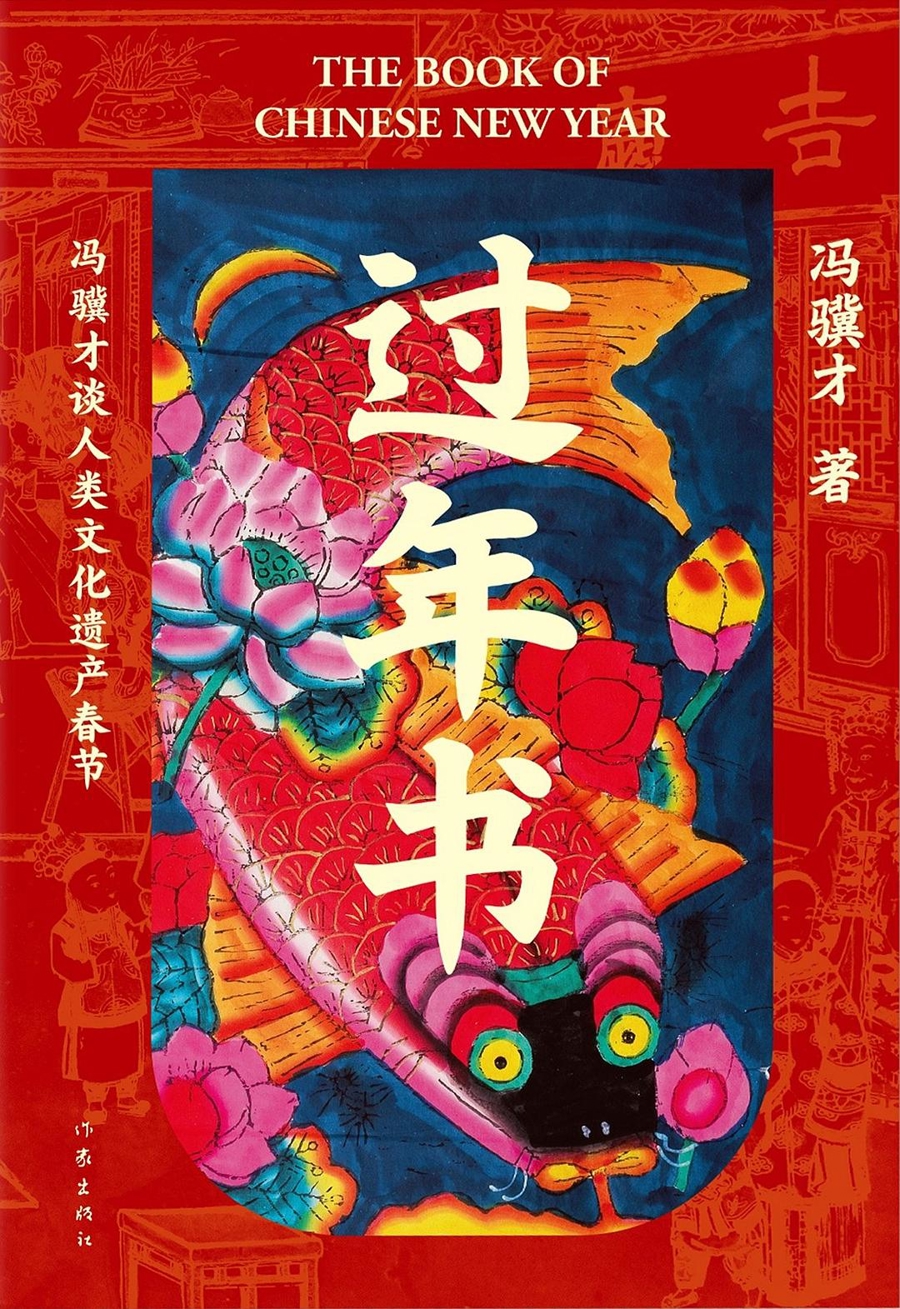
"New Year's Book", written by Feng Jicai, published by Writers Publishing House in 2025
In the book, the author responds to the phenomenon of "the fading of festivals" and believes: "First, the sudden change in lifestyle has loosened the strict Nian culture formed by ultra-stable life for thousands of years, and it is difficult to form a new Nian cultural system for a while, so the phenomenon of dilution is inevitable; second, due to our ignorance of Nian culture, we regard traditional customs as old habits, regard them as dispensable, and give up on our own initiative."
But in my opinion, our lifestyle has been changing drastically over the past hundred years, and we have never been concerned about the New Year culture. However, until the 1980s, the "New Year flavor" was still strong. The culture is strong enough to cope with the modern impact. But the problem is that it is encountering the challenge of postmodernity – modernization has changed the social structure, and postmodernity has changed the human mind.
The first chapter in the book, "Celebrating the New Year," touches on this issue.
In the article, Feng Jicai recalled the nanny. She is from Cangzhou, Hebei. She is "strong-looking, with big arms and legs, like a man." The author's mother went to "Mom's Shop" and took a liking to her at first sight. The wet nurse was deeply trusted. After Feng Jicai was weaned, the wet nurse stayed in the Feng family. She loved Feng Jicai more than Feng's biological mother. "Sometimes I want to find something that my mother wants that is hard to tell, so I just tell her. As soon as I say it, she will immediately find a way to get it for me." When Feng Jicai was four years old, when the Spring Festival was approaching, her nanny received a letter from Cangzhou, asking her to go back. She took Feng Jicai to the Queen's Palace and bought many things at the New Year's Fair, such as fish lanterns, paper balloons, painted faces… When she got home, her nanny gave Feng Jicai a red envelope. Feng Jicai was reluctant to let her go. She said, "But I will come back before the fifteenth day of the first lunar month. I will come back…"
The wet nurse never came back. On the eve of the 30th of the second year, his family called Feng Jicai and said that someone had brought him something. It was a small basket with a pig's head in it and red dots the size of dates on his forehead…it was brought to him by the nanny from the countryside.
Feng Jicai will always remember the New Year.
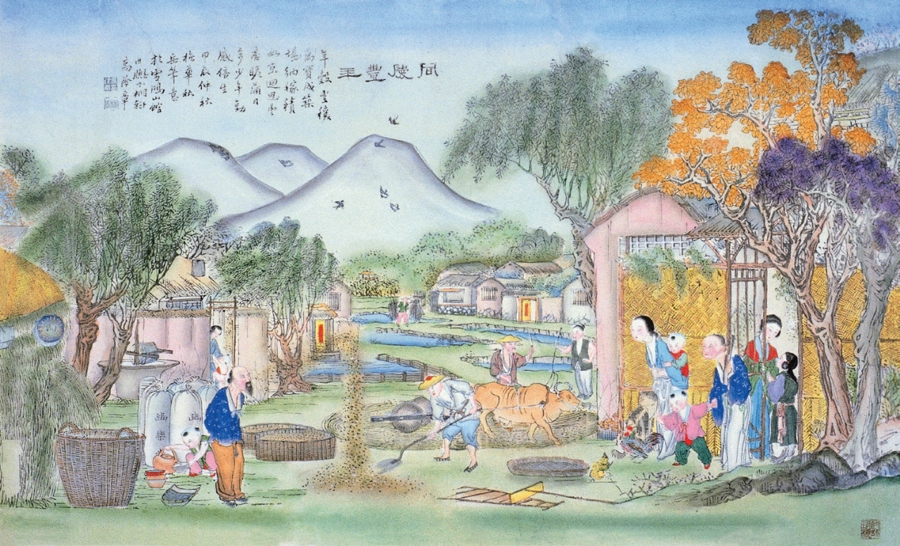
All childhoods will encounter betrayal from the adult world, but there is also adult affection in a beautiful childhood. Growth means understanding that life is not easy, but there is always a kind of love that makes people firmly believe that there is hope in life.
But separated by cement in different spaces, do we still have the chance to encounter Feng Jicai’s childhood story? Instant milk powder has replaced wet nurses, expressions of intimacy are considered offensive, and online chatting has killed real human interactions… There are no more "fatal friendships" where we fight together, no more loyal buddies who are willing to help each other, and no more "best friends" who respond to everything. In the postmodern world, we are more like chimpanzees wandering alone in the jungle than people immersed in groups and enjoying pretending. This sentence in the book, "What can turn a life like water into wine is human emotion" directly touches the soul.
Perhaps, regaining the "taste of the year" is a false topic, and the real question is how to regain the "taste of humanity."
Don’t be seduced by simulacra
People who go to the Louvre in Paris to see the "Mona Lisa" will inevitably be disappointed: it is much smaller than expected, cannot get close, cannot see the details clearly, and is far less pleasing to the eye than the printed version.
Most of those who claim to like the Mona Lisa and regard it as an immortal classic have never seen the original work. This is a wonder created by post-modernity – far more attention is paid to the simulacra than to the real works, and compared with the simulacra, the real works are eclipsed. Many people will ask: What does this have to do with anything? A simulacrum is a realistic imitation of the real thing, doesn’t it look different?
In fact, it's quite different. Simulacra can never answer questions such as "Why did Leonardo da Vinci paint this stroke like this, and how did other painters handle it?" "How did Leonardo Da Vinci express his personality?" The simulacra only presents a soulless body, but it covers up practice and castrates the possibility of re-creation.
Just like when talking about the Spring Festival, everyone knows to set off firecrackers, post Spring Festival couplets, eat dumplings, etc., but why do they do this? Can we do it another way? Few people can answer. Because most people see simulacra of folk customs instead of walking into folk customs, feeling its warmth and gaining enlightenment.
Huang Yuanqi's "Joy of the Years: Joy of the Four Seasons in Traditional Chinese Festivals" attempts to take readers into the fields and find the "flavor of festivals" in practice.
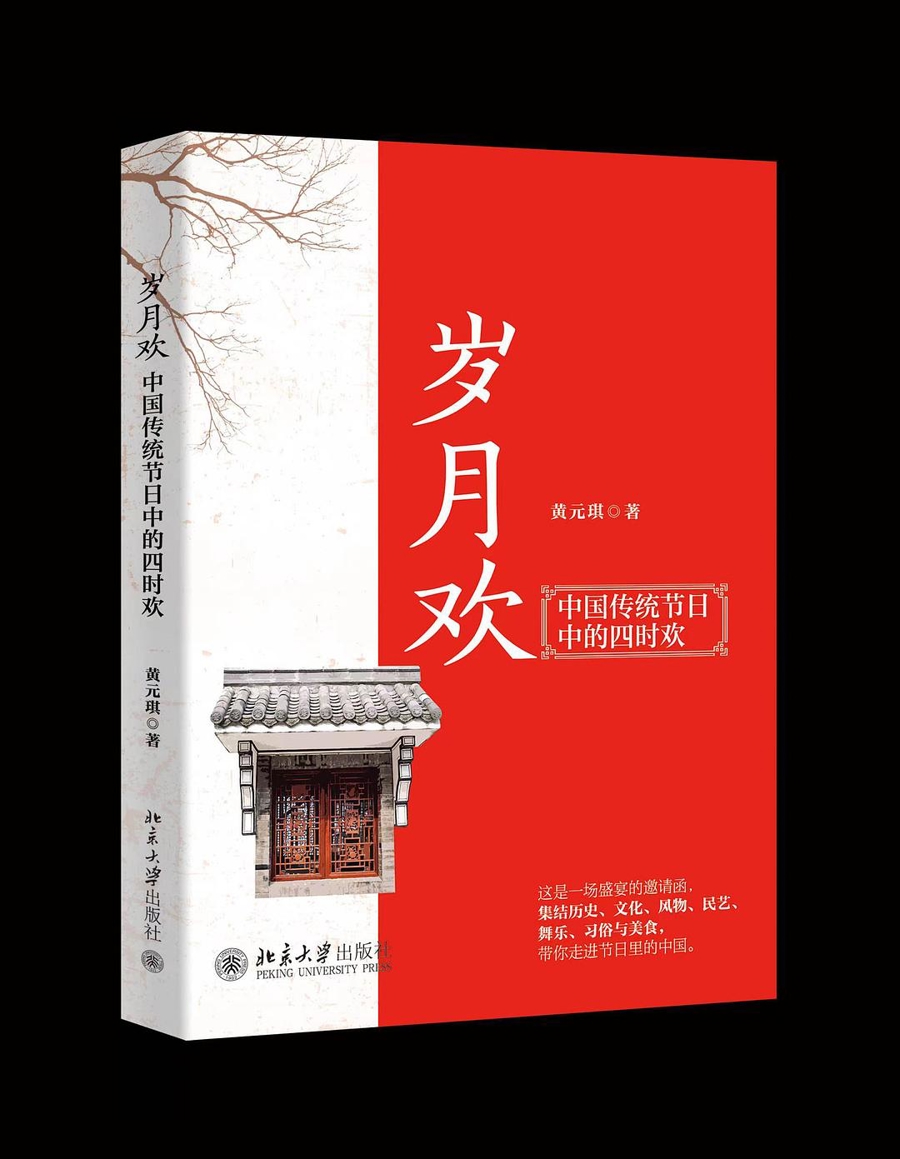
"Joyful Years: Joy of the Four Seasons in Traditional Chinese Festivals", written by Huang Yuanqi, published by Peking University Press in 2022
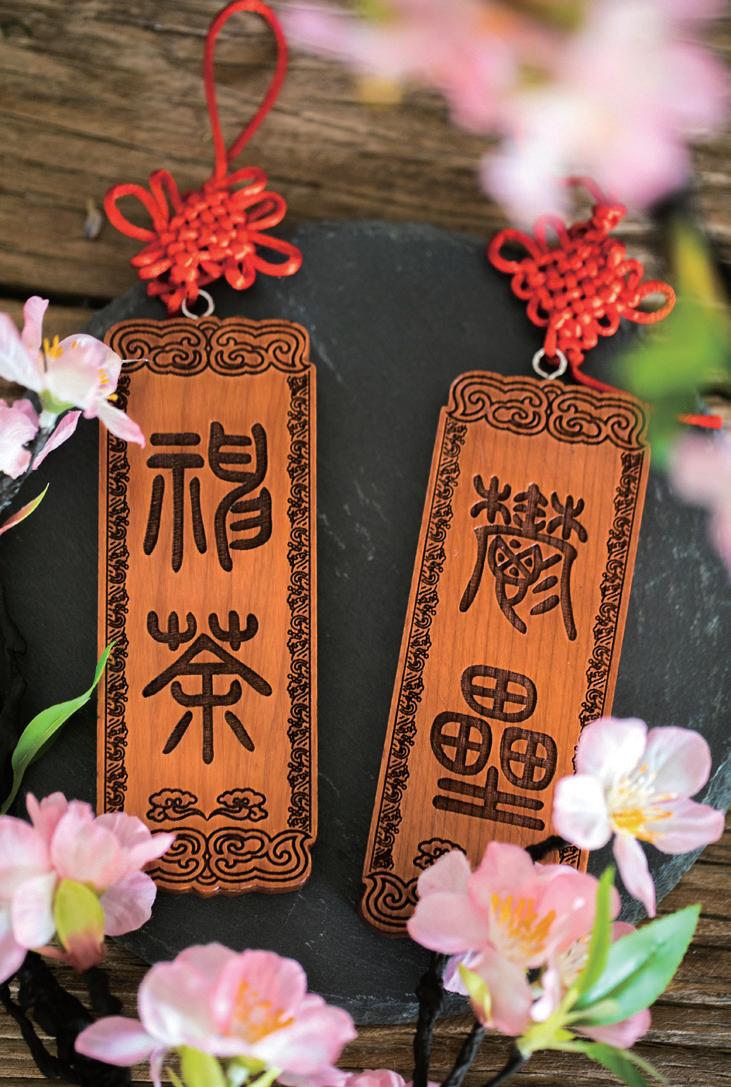
The so-called "festival flavor" actually lies in a cup of Tusu wine, which is drunk starting from the youngest to the oldest, forming what Su Zhe wrote, "drinking Tusu last every year, and he is more than seventy years old before he realizes it." ; Just when the inheritor of Jinhua's elderly paintings sighs "Today's Jiangnan no longer sees every household posting New Year pictures"; when making Cicheng rice cakes, the rice is washed on the 10th day of the twelfth lunar month. When seeing neighbors washing rice for rice cakes, they must say auspicious words, soak the washed rice for 7-10 days, put a red word "happy" on the cylinder cover, and put a pair of scissors or chopsticks to prevent evil spirits from entering…
Taofu
Only by playing with the Youth League did you know the Qingming Festival; by visiting the "Sheep Picking" scene in person did you know the Xiaogong Bahar Festival (a traditional festival of Kazakhs and other ethnic groups, regarded as the beginning of the new year); after walking into the mountains and chewing sour tea, you knew the Sangkan Festival (a traditional festival of the Bulang people, usually on the seventh day after the Qingming Festival)…Festivals are condensed daily life, without the nourishment of concrete life, it becomes a tree without roots.
The best "flavor" comes from searching, from digging into vivid and passionate daily life. As this book presents, you can experience the meaning of the earth and time by walking. This is not only to have a good holiday, but also to break through the spiritual imprisonment of simulacra.
To find the "taste of temperance" is to find yourself. This book tells us how to find it.
How to pass on the Spring Festival to your children
"People in the Shang Dynasty called the year 'sacrifice'. In the Shang Dynasty, there were different sacrificial activities throughout the year, and completing all the sacrificial offerings represented that the year had passed." "The wax sacrifice is the origin of the Spring Festival." "On the day of the wax sacrifice, the emperor would wear undyed linen clothes and present gifts to the gods in simple attire. The farmers participating in the sacrifices wore yellow clothes and yellow hats."
I was a little surprised when I opened Wang Zhaoyu's "Spring Festival through Ancient Times": there are many knowledge points that even adults may not grasp. As a children's book, is it "over the top"?
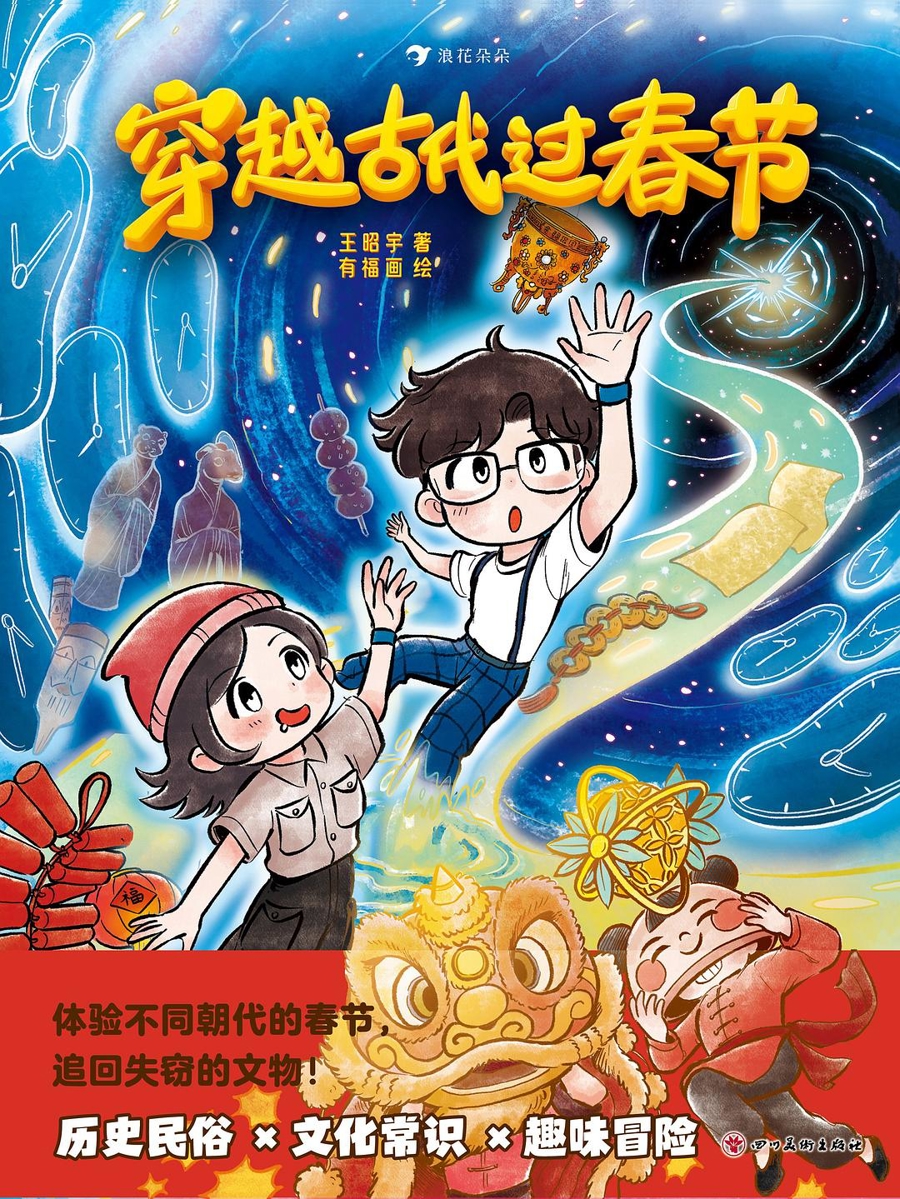
"Celebrating the Spring Festival through Ancient Times", written by Wang Zhaoyu, painted by Youfu, published by Sichuan Fine Arts Publishing House in 2026
If you think deeply, you can understand the painstaking efforts of the authors.
During the 2022 Spring Festival, the then British Prime Minister Johnson issued a blessing and used "Lunar New Year" for the first time instead of the previous "Chinese New Year". This new name was adopted by many Western leaders on the grounds that many countries in East Asia also celebrate the Spring Festival and the feelings of relevant immigrants should be considered.
This is actually a complete lie. Scholar Xu Xuelian pointed out that the Spring Festival comes from the lunar calendar, which is a combined lunar and yang calendar. The beginning of the year derived from the "lunar calendar" is far different in time from the Chinese Spring Festival. The Spring Festival is the Spring Festival, and it can never be a "lunar New Year".
Why do these Western leaders make such obvious mistakes? First, as China's rising influence has caused anxiety among the great powers, in order to maintain hegemony, they deliberately "remove the Chinese label"; second, in order to highlight their presence, some East Asian countries deliberately cover up the Chinese parts of their traditions, and even tamper with the creations of ancient Chinese people into their own originals. The two elements merged and an international joke became popular.
In the golden age of globalization, there was a myth that as exchanges between different nations increase, mutual understanding and mutual trust will increase, and the world will become more peaceful. Judging from the results, this is not the case. Globalization is just the globalization of business. So far, human values still come from different histories, traditions and cultures. American scholar Huntington once wrote: "The next world war, if there is one, will be a war between all civilizations." This statement may not be correct, but it also reminds people that the only way to fight against possible "culture wars" in the future is to cherish their own culture more. Today, all countries in the world are working hard to promote their traditional culture. In this international competition, China should not lag behind.
Gong Zizhen of the Qing Dynasty said in "Ancient History Gou Shen Lun": "If you want to destroy your country, you must first destroy its history." It is a great contribution to spread traditional culture to children and let them know how their ancestors celebrated the Spring Festival. The Spring Festival has gone through thousands of years, and it will continue forever in the coming years. The more solid and interesting books like this one, the more promising the future will be.