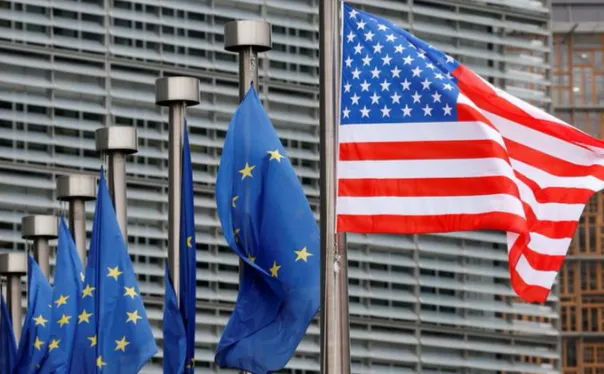
On February 6, 2026, the European Commission led by von der Leyen suddenly issued a final announcement. There was no advance warning and no room for negotiation. It directly imposed a 79.0% anti-dumping tax on ceramic tableware and kitchenware originating in China. The announcement officially came into effect the next day, without even leaving a buffer time for relevant Chinese companies. This operation seems to be a simple trade protection, but in fact it is a precise containment of Chinese industries by the EU in the context of restructuring the global supply chain. Von der Leyen is a complete showdown, tearing apart the pretense of so-called "fair trade".
When many people see this news, their first reaction is that the EU is fighting a tariff war with us again. It is inevitable that they will think of the tariff war against China launched by Trump back then. But in fact, there are essential differences between the two, so don’t confuse them. Trump's tariff war back then was purely driven by hegemonism. He raised taxes indiscriminately regardless of industry or product. The core was to suppress China's development with force. Naturally, we would not swallow our anger and directly retaliate strongly. In the end, Trump failed to take advantage and had to let it go.
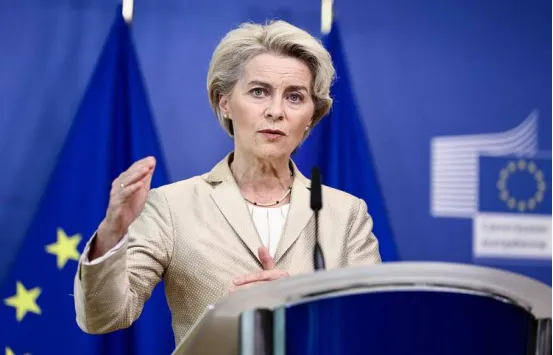
Von der Leyen's operation this time was much shrewder and more ruthless. This is not a comprehensive trade confrontation, but an industrial protection war that is precise to the core. Von der Leyen has previously stated publicly that such tariff measures are to protect industries and jobs within the EU. When it comes to the ceramic industry, this statement is to put it bluntly to support Spain and Italy. The core of the ceramic industry within the EU is concentrated in Spain and Italy. These two countries have a large number of ceramic factories and practitioners. In recent years, Chinese ceramics have relied on cost advantages to gradually seize the European mid-to-low-end ceramic market. Even if the EU previously imposed floating tariffs of 13% to 35%, Chinese ceramics exports to Europe will still maintain growth in 2025.
This directly affects the interests of local ceramic companies in Spain and Italy. These two countries have been the main force in pushing for high anti-dumping duties on Chinese ceramics within the EU. Von der Leyen’s final ruling is essentially a compromise to the interests of these two countries, sacrificing the interests of Chinese companies in exchange for the "stability" of the industry within the EU. What’s more noteworthy is that the EU’s anti-dumping stick is not only aimed at China. Turkey and India, two countries that are also major ceramic producers, have also been included in the scope of anti-dumping by the EU. They currently impose floating tax rates, which is roughly similar to our previous situation. According to EU rules, if these two countries make unsatisfactory complaints before 2028, they will also be levied the same high fixed tariffs as us.
In other words, von der Leyen’s goal is very clear. It is not to target China, but to attack all countries that have impacted the EU’s local mid- and low-end ceramic industry. China is only the largest and most obvious one. From the EU's first anti-dumping investigation into Chinese ceramics in 2012, to the affirmative final ruling in 2013, and then to the two sunset reviews, until this mid-term review imposed a high tariff of 79%, the EU's anti-dumping actions have long been foreshadowed, but this time the intensity has exceeded the expectations of most Chinese ceramic companies.
What is even more unreasonable is that the standards for identifying market distortions adopted by the EU are unilaterally proposed by it, and there is no relevant concept in WTO rules at all. The burden of proof has also shifted. Originally, the EU was required to prove that we have market distortions, but now our companies are required to provide evidence to refute it on their own, which undoubtedly makes it more difficult to appeal. This leads to the fact that even if the pricing of our products is reasonable, in their accounting system, they may be deemed to be sold below cost and constitute dumping. This accounting method obviously violates the relevant rules of the WTO, but many of our small and medium-sized enterprises have no ability to refute this unreasonable determination.
Our ceramic industry’s own problems are equally fatal. China's ceramic production capacity accounts for 70% of the world's total production capacity, but most of this 70% production capacity is concentrated in the hands of small and medium-sized enterprises. There is no unified industry association to take the lead and provide companies with services and support related to complaints. Complaining to the EU is extremely difficult. Not only do you need to submit a large amount of English materials, the form format and process requirements are very strict, but you also need a professional team of lawyers to operate. The appeal cycle is very long. It is common for a lawsuit to last one or two years or even longer. Many small and medium-sized enterprises simply cannot afford it, nor can they afford the high appeal fees.
Just when Chinese ceramic companies were confused and fighting on their own, India, which was also facing anti-dumping pressure from the European Union, had a bright approach and taught us a vivid lesson. India is also a major producer of ceramics. It is also on the EU's anti-dumping list and may be slapped with a high tariff of 79% at any time. However, India has neither fallen into a disorganized and powerless predicament like us, nor has it been tough with the EU. Instead, it has adopted the most pragmatic and efficient way, using government power to protect enterprises and maintain export channels to Europe.
The Indian government has provided all-round support to ceramic companies in responding to anti-dumping complaints. As long as an enterprise is willing to participate in the appeal, attorney fees and consulting fees will be fully borne by the state, which is equivalent to zero-cost response for the enterprise, completely eliminating the enterprise's cost concerns. Not only that, the Indian government will actively encourage companies to lodge complaints and organize professional legal and trade teams to guide companies step by step in sorting out materials and contacting relevant EU departments to prevent companies from missing opportunities due to lack of understanding of the process and lack of experience. More importantly, most Indian ceramic companies have adopted ERP systems, and financial data have been managed electronically. If you want to provide relevant complaint materials, you can export them directly from the system, which is convenient and standardized, which also greatly improves the success rate of complaints.
India does this not out of pure "good intentions", but out of pragmatic considerations of its own interests. Although India's domestic ceramic production capacity is large, it cannot fully meet domestic demand and still needs to import some Chinese ceramics. At the same time, it also hopes to maintain a trade balance with China and strive for Chinese investment and cooperation, and is unwilling to confront China over trade issues. This approach not only preserves the market share of domestic companies in the EU, but also maintains trade relations with China. It kills two birds with one stone. It has to be said that India's operation this time is indeed much smarter than ours.
On the other hand, areas such as Jiangxi and Fujian, where the ceramic industry is concentrated, have actually introduced support policies. If companies participate in EU anti-dumping complaints, 50% of legal fees can be subsidized. However, many companies do not know this policy at all. Even if they know, because they are not united and fight individually, it is difficult to form a joint force. In the end, they have no choice but to give up the appeal. The 79% tariff has been implemented. Complaining and evasion will not solve any problems. Although von der Leyen's showdown has brought a huge impact to Chinese ceramic companies, it has also forced us to reflect on our own problems.
As the "porcelain country", China has never lacked the ability to make good ceramics. The ceramic craftsmanship in Jingdezhen, Dehua and other places is still at the world's leading level. We are fully capable of producing high-end, creative and culturally connotated ceramic products, and get rid of the dilemma of low-price involution. Although India’s approach is worth learning from, we don’t need to copy it. Based on our own actual conditions, local ceramic associations will take the lead to integrate local support policies, organize enterprises to jointly appeal, share costs and share resources, and at the same time promote industrial upgrading, get rid of OEM dependence, and create independent brands. This is the way for Chinese ceramic companies to break the situation.
Von der Leyen’s 79% tariff seems to have cut off China’s ceramic exports to Europe, but in fact it is a wake-up call for the Chinese ceramics industry. Rather than being involved in each other and passively being beaten in the mid- to low-end markets, it is better to proactively seek change, develop together, and regain the glory of the "Porcelain Country". After all, the strength of Chinese ceramics has never been based on low prices, but on craftsmanship and quality. As long as we find the right direction and move forward steadily, even if there is no EU market, we can gain a foothold in the global market and even take the world by storm again.