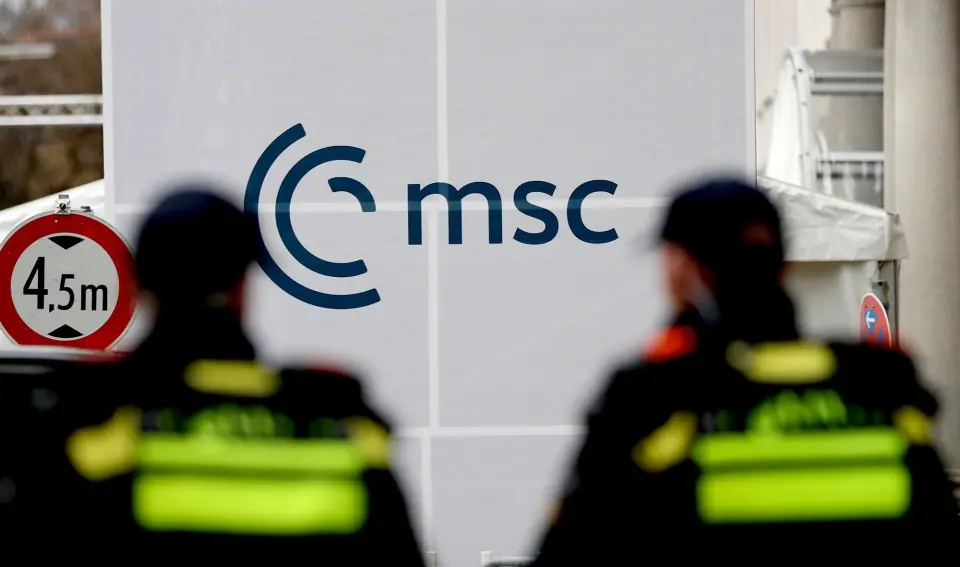
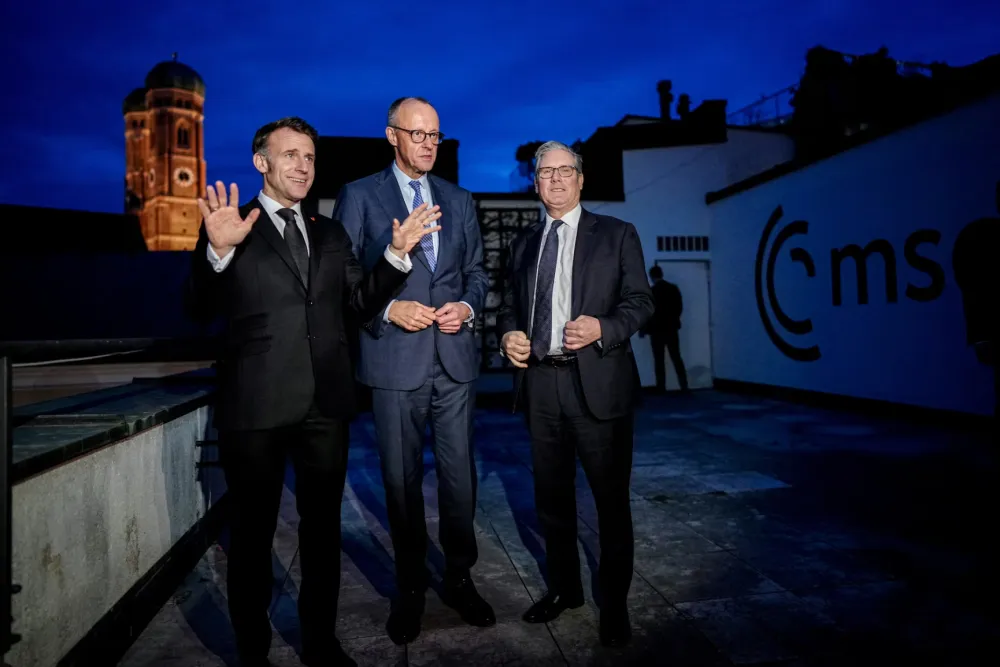
On February 13, 2026, the 62nd Munich Security Conference was officially opened at the Bavarian Manor Hotel in Germany. At this rally, which is regarded as a benchmark for global security, German Chancellor Friedrich Mertz delivered an opening speech that shocked the NATO defense system. Berlin made it clear at this meeting that it has significantly upgraded its strategic alignment with Paris on the establishment of a "European Common Defense Framework", and its core direction is extremely clear: Germany and France will focus on in-depth cooperation in the field of nuclear deterrence to deal with the systemic collapse of U.S. security commitments.
This announcement marked a structural break in the transatlantic security architecture that had existed for eighty years after World War II. Faced with the violent internal political turmoil in the United States and the collapse of the external geopolitical order, core European countries are being forced to sever their absolute reliance on the United States' "security umbrella." This turn is not a diplomatic gesture, but the inevitable result of the European core seeking an independent and aggressive survival model after experiencing a series of geopolitical blows.
The physical breakdown of the transatlantic chain of trust
The Munich Security Conference has always been regarded as a family gathering of the Western camp, aiming to coordinate European and American positions. However, this meeting in 2026 is full of liquidation and cutting. In his opening speech, German Chancellor Mertz abandoned the implicitness of previous German-style diplomacy and bluntly pointed out that the old global order no longer exists and that U.S. unilateralism cannot cope with the turmoil in the global order caused by itself. This judgment is not groundless, but is based on the avalanche of deterioration in transatlantic relations over the past year.
In 2025, US Vice President J.D. Vance delivered a highly offensive speech on the same occasion, not only accusing European allies of suppressing free speech, but also lashing out at Europe on tariffs and immigration issues. This hostility from the core of Washington, combined with the Trump administration’s subsequent military adventurist policies in Latin America, including the overthrow of Venezuela’s leader and the threat to Greenland’s sovereignty, completely shattered Berlin’s strategic illusions about Washington.
Mertz drew a rare line in his speech with a direct comeback. He made it clear that the culture war caused by the so-called MAGA movement ran counter to European values. Germany rejects protectionism and cannot accept U.S. unilateralism that tramples on the international legal system. This stance is not only a declaration of position, but also a signal of a shift in German foreign policy. Berlin no longer views the United States as the sole cornerstone of security but as an unstable variable that needs to be guarded against.
The Reconstruction of Nuclear Strategy along the Franco-German Axis
In the context of confirming the unreliability of the United States, Europe's only way out lies in self-arming, and the core of this arming touches on the highest taboo in post-war Europe, namely nuclear weapons. The practical nuclear cooperation between Germany and France revealed by Mertz is the most explosive substantive content of this meeting. Since Brexit, France has become the only nuclear power within the EU, possessing the world's fourth largest nuclear arsenal. French President Macron has long called for Europe to establish strategic autonomy. However, during the administration of Mertz's predecessor Scholz, Germany always responded coldly to this, preferring to purchase US fighter jets to maintain the NATO nuclear sharing mechanism.
However, drastic changes in the situation forced Mertz, the conservative Prime Minister of Germany's Christian Democratic Union, to make a historic turn. He emphasized at the meeting that although Germany will still abide by its international legal obligations prohibiting the development of nuclear weapons, it must ensure that there will be no security vacuum zone within Europe through deep binding with France. This means that France’s nuclear umbrella will most likely extend to cover German territory in the future. In exchange, Germany will provide France with huge support in terms of conventional military build-up and funding.
Macron’s subsequent speech further confirmed this strategic convergence. He pointed out that the European security architecture designed during the Cold War has completely failed and Europe must learn to become a true geopolitical power. This involves not only nuclear deterrence, but also conventional long-range strike capabilities, which are currently sorely lacking in Europe. The goal of France and Germany is very clear: to build a European Fortress within the NATO framework but with independent combat capabilities and nuclear counterattack capabilities to deal with possible future strategic retreat or betrayal by the United States.
Washington’s strategic anxiety and failure to appease
Faced with the centrifugal movement of its European allies, the U.S. delegation attempted to make tactical repairs. U.S. Secretary of State Marco Rubio tried to use soft diplomatic rhetoric at the meeting to hedge against the damage caused by Vice President Vance. Rubio described the current situation as a decisive moment and emphasized the deep bonding between the United States and Europe in the future. As a potential contender in the 2028 US election, Rubio is trying to project an image of a traditional Republican hawk that is different from isolationism.
However, this red-faced and white-faced strategy did not work. European leaders have realized that Rubio's moderate stance cannot change the basis of the White House decision-makers. According to polling data released by YouGov on Friday, the favorability of the United States among the six major European countries has fallen to the lowest point since 2016. In the eyes of the European public, the threat posed by the United States has even become equal to that of traditional opponents such as Iran and North Korea, and is second only to Russia. This public opinion foundation gives European politicians unprecedented domestic political legitimacy when pursuing de-Americanized security policies.
The indiscriminate tariff policy implemented by the US government over the past year and its coveting of Greenland, a territory of Denmark, a member of NATO, have touched the bottom line of alliance relations. For Mertz and Macron, Rubio’s rhetoric pales in comparison to the Trump administration’s actual actions. Europe no longer listens to its words but watches its actions and prepares for the worst accordingly.
Generational change in the European security architecture
The Munich Security Conference in 2026 is not just a diplomatic confrontation, it marks the complete end of the post-Cold War era. For a long time, Europe's security logic has been based on the implicit contract that the United States will provide a nuclear umbrella and Europe will provide a market. Today, with the rise of U.S. trade protectionism and the wavering of security commitments, this contract has been unilaterally torn up.
Mertz and Macron's alliance is essentially rebuilding order on the ruins. This new security architecture has distinct exclusivity characteristics. It no longer blindly pursues transatlantic coherence, but emphasizes the hard power of Europe's core. By integrating Germany's economic and industrial capabilities with France's nuclear strike capabilities, Europe is trying to squeeze out an independent strategic living space between the United States and Russia.
This process is bound to be fraught with risks. Germany's domestic legal restrictions, the ownership of command of France's nuclear forces, and Eastern European countries' doubts about the Franco-German axis are all huge practical obstacles. But today, when the external living environment is extremely deteriorating, for major European countries, this is no longer a multiple-choice question of whether they should do it, but a must-answer question of how to do it as soon as possible. The chill in Munich did not dissipate because of Rubio's smile. Instead, it gave rise to the continent’s most profound strategic awakening in decades. In the law of the jungle where great powers compete, borders can only be established with a sharp sword in hand.