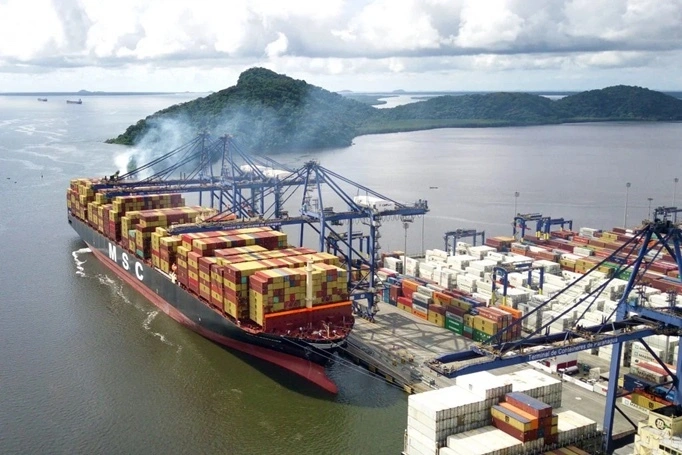
According to Japanese media reports, the Japanese deep-sea drilling ship "Earth" successfully extracted sludge containing rare earths at a water depth of 6,000 meters in the waters of Nantori Island in the Pacific Ocean. It seems that Japan has been chanting the slogan of "getting rid of the rare earth stuck" for so many years, and now it has finally begun to make up its mind to do something practical. But in fact, this only solves the problem of "does Japan have rare earths?" If it wants to achieve the so-called "rare earth independence", Japan still has more and more difficult challenges.
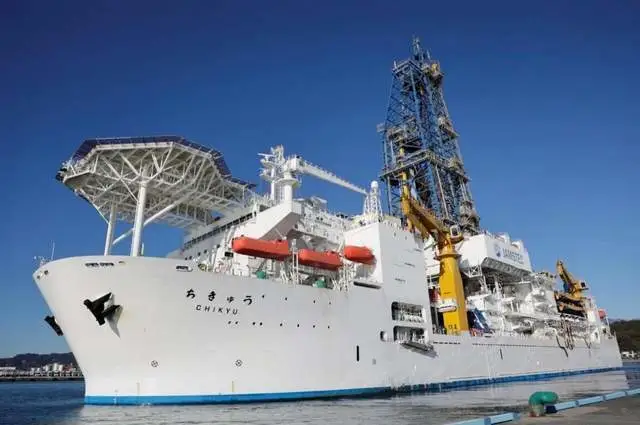
[Japan’s deep-sea exploration ship]
Japan’s deep-sea mining of rare earths is entirely its own fault
Speaking of which, Japan's shift to the development of deep-sea rare earth resources is not because it really has the guts to achieve strategic independence. It is entirely its own fault.
You must know that Japan is extremely structurally dependent on China for the supply of rare earths. Data shows that Japan relies on imports of more than 70% of rare earths from China, and is even more dependent on key rare earth elements and precursor materials.
This dependence makes the supply chains of Japanese related industries, especially high-end manufacturing, such as electric vehicles, electronic equipment, precision instruments, and defense industries, extremely vulnerable.
China has announced that it will strengthen export controls on Japan’s dual-use military and civilian products and is considering further tightening the licensing review for exports of medium and heavy rare earths to Japan. It can be said that it directly hits the vitality of Japan’s industry.
Some research institutions estimate that if China implements a one-year comprehensive restriction on rare earth exports to Japan, it may cause Japan's nominal GDP to decrease by about 0.43%, and economic losses can reach 2.6 trillion yen.
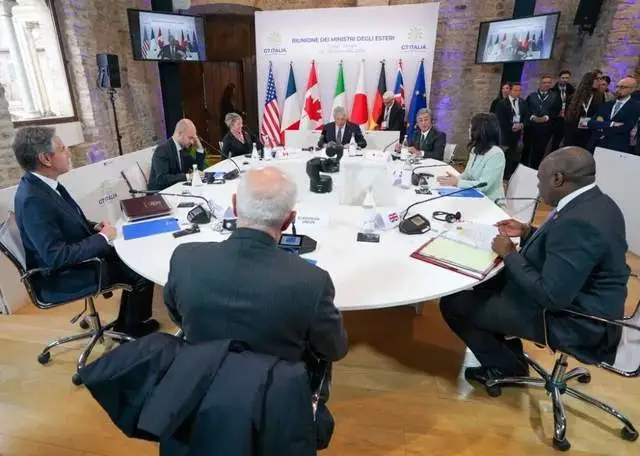
[G7 countries are waiting for Japan’s rare earths]
So, why did Japan face countermeasures? This is because China has repeatedly issued stern warnings against Japanese politicians’ erroneous remarks related to Taiwan, and clearly pointed out that if Japan refuses to withdraw its erroneous remarks, Japan will bear all the consequences.
Even though Japan knew China's bottom line and red line, it not only failed to correct its mistake, but instead tried to deal with it, which ultimately led to counterattacks.
Therefore, Japan has to accelerate its originally technically and economically immature deep-sea mining plan. This is essentially the price it pays for its wrong diplomatic behavior, and it is an attempt to alleviate the resource security crisis exacerbated by provocative behavior.
Of course, Japan's "dream of becoming a rare earth power" has been around for a long time. Japan has launched deep-sea rare earth resource surveys and technical reserves many years ago. The rare earth enrichment phenomenon in the waters of Minamitorishima has long been discovered. However, due to technical difficulties and high costs, commercial development plans have been repeatedly postponed.
However, Japan's political blindness now forces it to accelerate its entry into this unknown field of high cost and high technological risks, which can be regarded as "a hammer is given".

[The EU has “high hopes” for Japanese rare earths]
The United States and Europe have high hopes for Japanese rare earths
If Japan can dig out rare earths as it wishes, it will obviously have to brag about it, and its allies such as the United States and Europe will definitely come to seek cooperation.
For the United States, reducing its dependence on China's rare earths is a bipartisan consensus and long-term strategic goal.
Rare earths are indispensable "vitamins" for modern high-tech industries and defense industries, and their supply chain security has been elevated to the level of "national security" by the United States.
Therefore, it has become a realistic option to win over allies to build a "new rare earth supply chain." If Japan can make a breakthrough in deep-sea rare earth mining, it will provide a potentially important raw material fulcrum for the U.S.-led "ally supply chain."
The situation in the EU is similar to that in the United States. Von der Leyen has publicly stated that she is seeking to establish a "competitiveness alliance" with Japan, and specifically mentioned the prospects for cooperation in the field of rare earth mining.
It can be said that as long as Japan can really "transform" into a rare earth exporter as planned, its strategic status will be greatly improved. The United States and Europe, which are looking to Japan, will also take the initiative to extend an olive branch to fulfill Sanae Takaichi's political ambitions.
However, the utilitarian expectations of the United States and Europe are entirely based on the success of the Japanese project, which is full of uncertainty. Therefore, the question also arises: Can Japan really dig out rare earths?

[Trump also wants rare earths]
Digging rare earths from the seabed of Japan faces more than one obstacle
Although Japan has set an ambitious timetable and attracted external attention, its road to commercialization of deep-sea rare earths is still full of thorns, facing at least four major difficulties: technology, economy, environment and industrial chain.
Technical difficulties are the primary challenge. Operating at a water depth of about 6,000 meters in the waters of Minamitorishima is equivalent to withstanding about 550 atmospheric pressures, which places extreme requirements on equipment reliability, pressure resistance, remote control and fault repair capabilities.
Currently, only "test mining" or "extraction" experiments are carried out, which is far from a stable, continuous, and large-scale industrial mining system.
In addition, seabed rare earth mud has high viscosity and poor fluidity, requiring special mixing, collection and pumping technologies to convert it into transportable slurry. There are technical bottlenecks in every link.
Economic difficulties are the core obstacle to commercialization. The cost of deep-sea mining is extremely high, and the cost may reach several times or even dozens of times the cost of rare earth mining on land in China.
The high cost comes from many aspects: the construction and operation costs of dedicated deep-sea mining vessels, the energy consumption and maintenance costs of the 6,000-meter-long hoisting system, long-distance transportation costs, and the additional cost of dealing with harsh sea conditions.
Even if raw materials can be mined, its products will not be competitive under the current price system of the global rare earth market dominated by China.
What's more, mining is only the first step. The mineral composition and occurrence state of seabed rare earth mud are different from those of terrestrial rare earth minerals. The existing mature smelting and purification processes may not be fully applicable, and new or improved extraction and separation technologies need to be developed.
Rare earth separation itself is an extremely complex chemical process involving hundreds of processes. It took decades of accumulation for China to form efficient and relatively low-cost refining capacity.
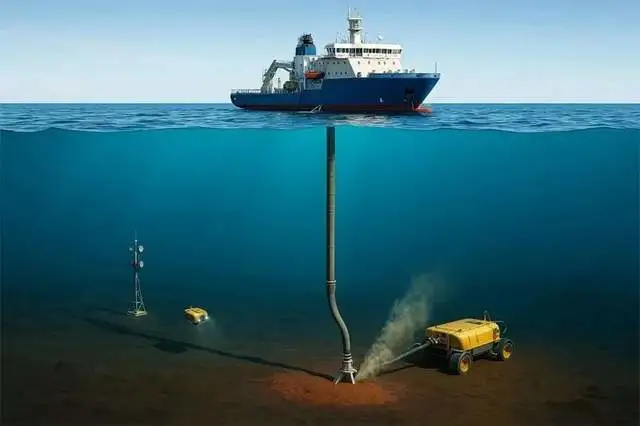
[Japan wants to develop rare earths in the deep sea, but there are more than one obstacle]
This means that even if Japan obtains raw materials, the refining process may still be restricted by technology, environmental protection costs, and insufficient economies of scale.
Therefore, despite the current "joyful" appearance of the Japanese media, we might as well wait and see whether Japan can truly achieve "rare earth independence" in the end.