Author|Lengyan author team-Two-tailed cat
Word count: 2180, reading time: about 6 minutes
Editor's note: When it comes to long pole knives, everyone is familiar with them. Compared with short-handled knives, long-handled knives are easier to use the arm strength of both arms and find the center of gravity, which makes it easier for the user to chop and has a wider attack range. Leng Yan once introduced some long-stemmed knives, such as plain swords, Zhanma swords, naginata, Qinglong Yanyue swords and even knife sticks, etc. But the long pole knife to be introduced in this article is very different from the previous long pole knives.
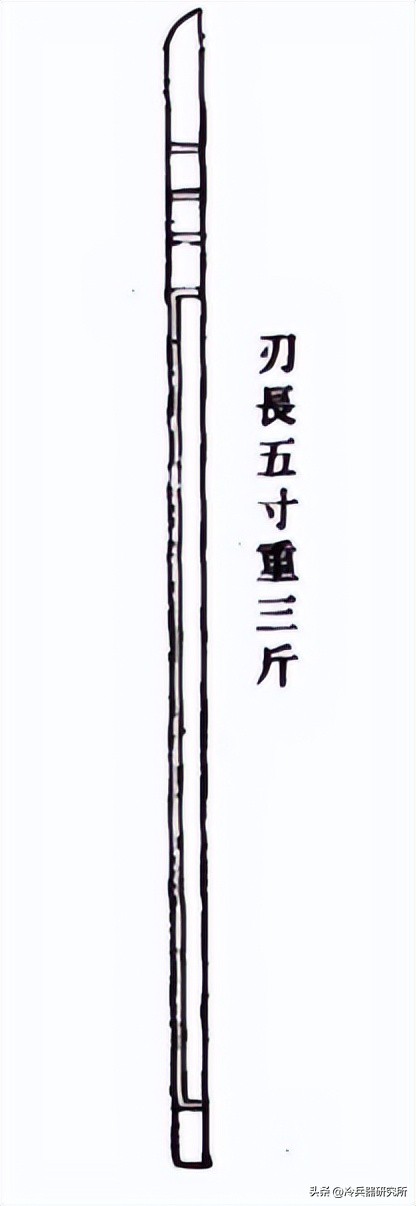
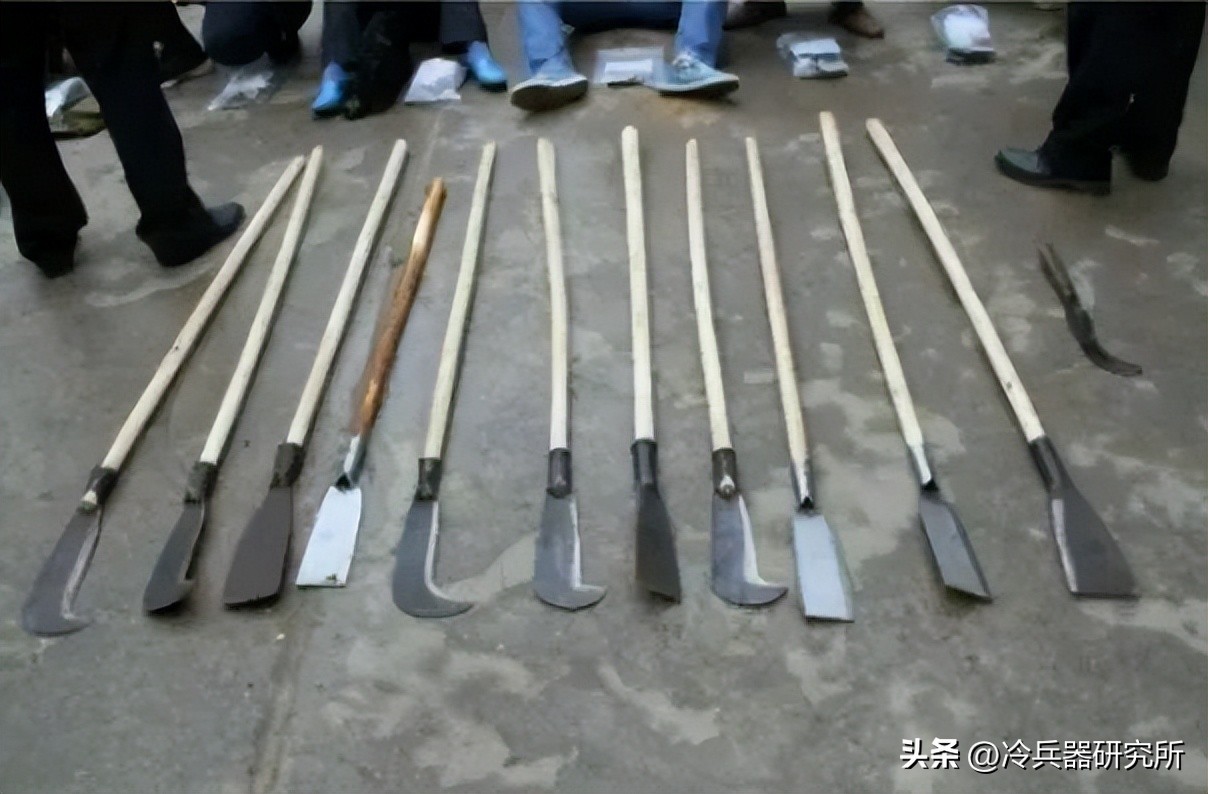
Private long pole knives confiscated by relevant departments
The long knives introduced by Leng Yan before do not matter what kind of blade they are, whether they are collared or mounted, but the shanks are basically straight. But this kind of knife has a curved pole. This is a special long-pole knife from Southeast Asia – the crank Kui knife.
There is a documentary about Angkor Wat called "The Lost Jungle Temple Revealed". At the beginning of the film, some construction methods of the Angkor ruins complex were mentioned. Archaeologists and architects have discovered that the stones of the building were connected with iron rivets.
The documentary also mentions that a nation called Kuy lives in a mountainous area near Angkor Wat. This nation lives in Thailand and Cambodia. Their language belongs to the Mon-Khmer group of the Austro-Asiatic language family. Whether it is culture or blood, it is very closely related to the main ethnic group in Cambodia today.
In the documentary, scientists believe that the iron smelting technology of the Kui people played a role in promoting the emergence of the giant city of the Angkor Dynasty. The film mentioned that this nation has a long history of iron smelting. A researcher also showed a knife made by the Kui people, which was the same as the ancient pattern carved on the architectural reliefs at the Angkor ruins. As you can see from the picture, the handle of this kind of knife is not a straight stick as usual, and the blade and the handle are not in a straight line.
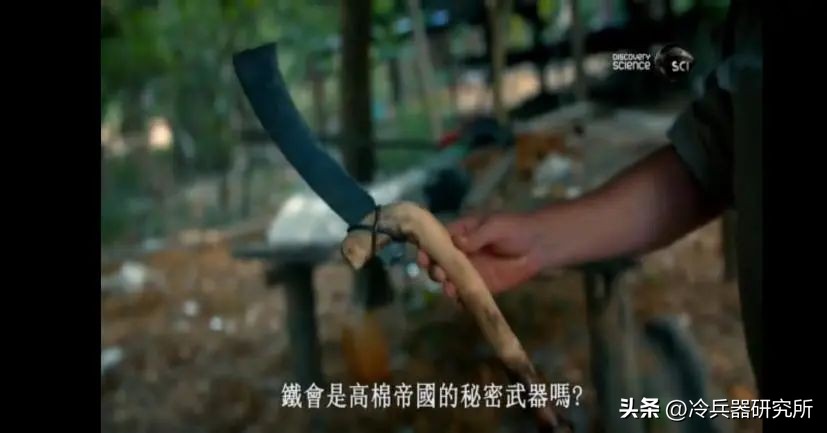
Screenshot from the documentary "The Lost Jungle Temple Revealed"
Leng Yan’s previous articles introducing Southeast Asian swords include “What is the mystery about the Burmese sword, which is more influential than the Tang sword and is popular throughout Southeast Asia? "" and other articles, introduced the Burmese sword (Dha) and the Kris sword.
Burmese knife-style knives are popular in Cambodia, Thailand and other places, and reliefs similar to Burmese knives have also appeared in the Angkor ruins. But the author himself had not discovered a knife of this style at that time, so the researcher said it was the same as the ancient tools from thousands of years ago, which puzzled me. It wasn't until later that I looked at the reliefs of the cavalry that I discovered the clues and realized that this was indeed an ancient weapon that had been passed down for thousands of years.
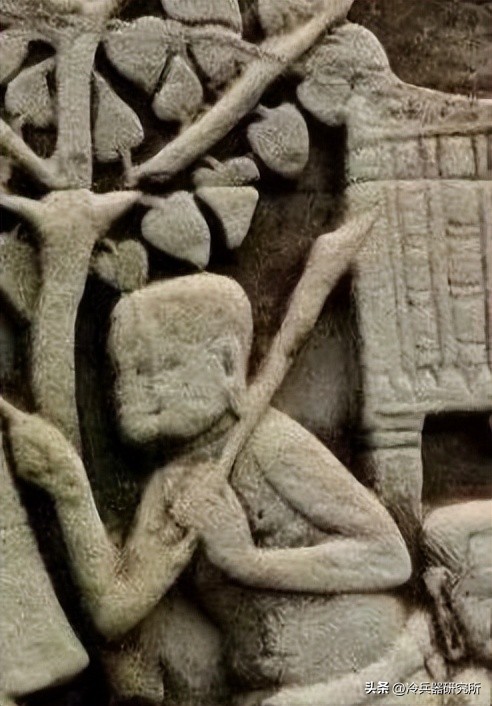
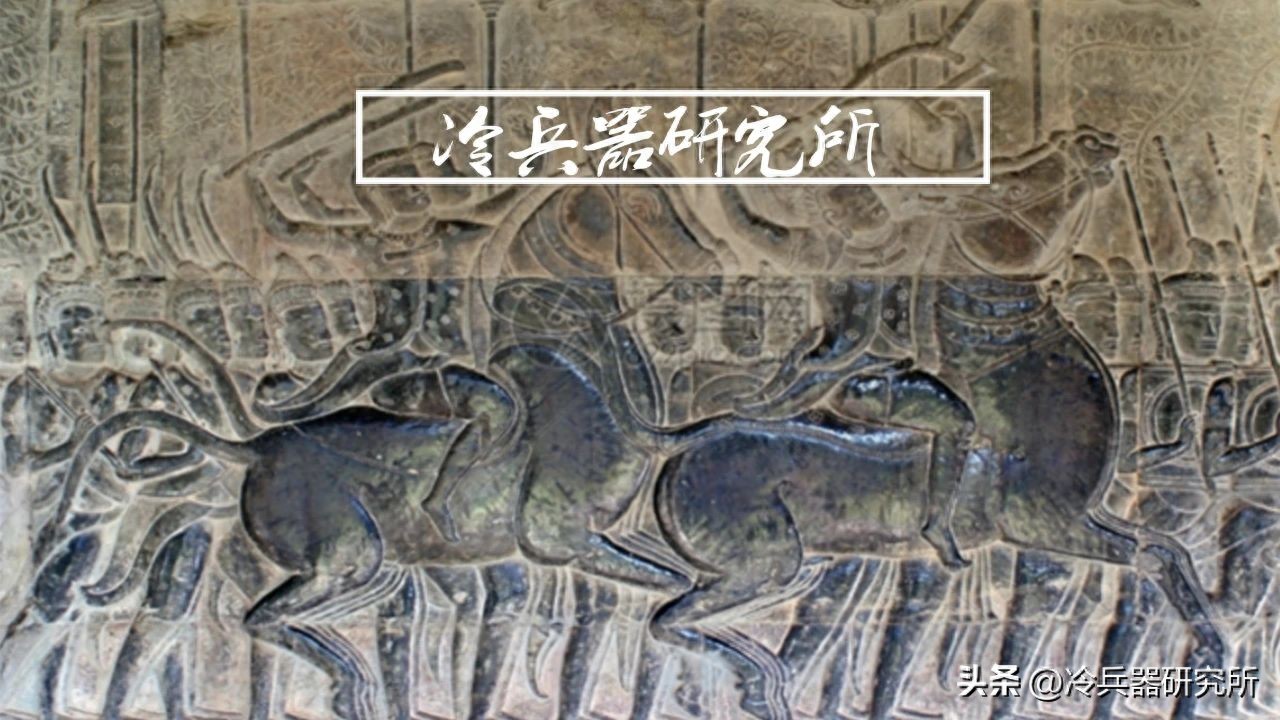
Angkor relief
Readers, please take a closer look at these four cavalrymen. The two cavalrymen on the left are holding one-handed knives similar to Burmese knives, and then look at the weapons held by the two cavalrymen on the right. At first, the author thought that the two cavalrymen on the right were holding weapons similar to Burmese knives, but the blades were more curved and mainly flat. Some people thought that the two cavalrymen were holding polo clubs, but considering the serious occasion of the military parade, they should be holding weapons-broad-headed curved handles.
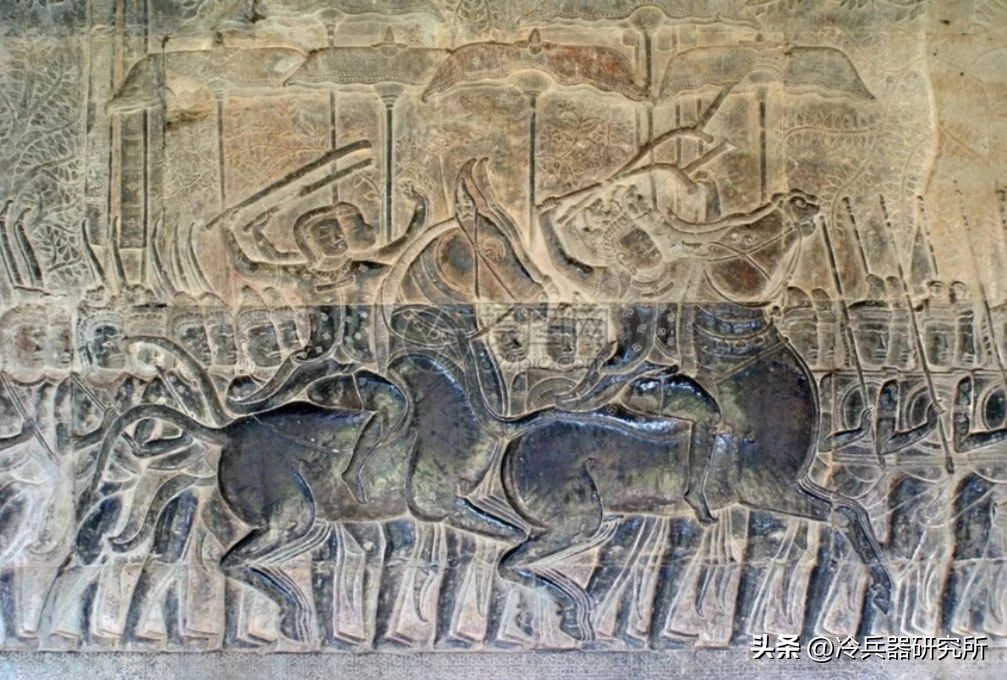
Angkor ruins reliefs
There are also knives with broad tips and straight blades on the reliefs. Therefore, some people think that this is because the craftsman changed the Burmese knife on the left to show his personality, because the carving performance of the two groups of four cavalrymen is indeed different.
But in fact, the knives in the hands of the two cavalrymen on the right are very similar to the Kuy knives in the documentary.
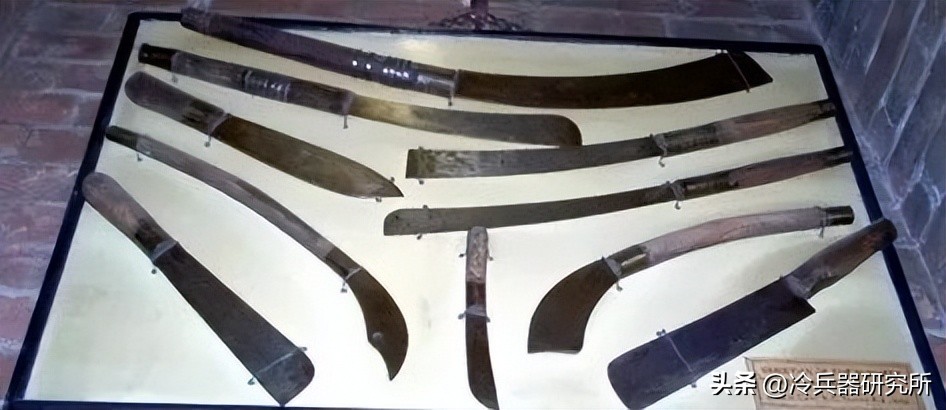
So how is the blade installed? Judging from the collected image data, the blade is inserted into the handle and then fixed with an iron pin or iron bar. Of course, in ancient times, it may also be fixed with a rope. Although the knives in the documentary look simple to make, they are from the collections of some foreign netizens. It can be seen that some knives can also have patterns on their blades.
The author later found a record of this kind of knife in another documentary "Charming Cambodia". The film mentioned that the Kui people's long knife can be used as both a tool knife and a weapon.
As for the name of this kind of knife, the documentary "Charming Cambodia" calls this kind of knife a Kui knife. But looking through the Ethnographic Weaponry Forum, there are other information about this kind of knife, which is usually called Mak. In addition to Cambodia, there are also such curved knives in Thailand and Assam, India. In Thailand and Cambodia this knife is called P'keak or kokok.
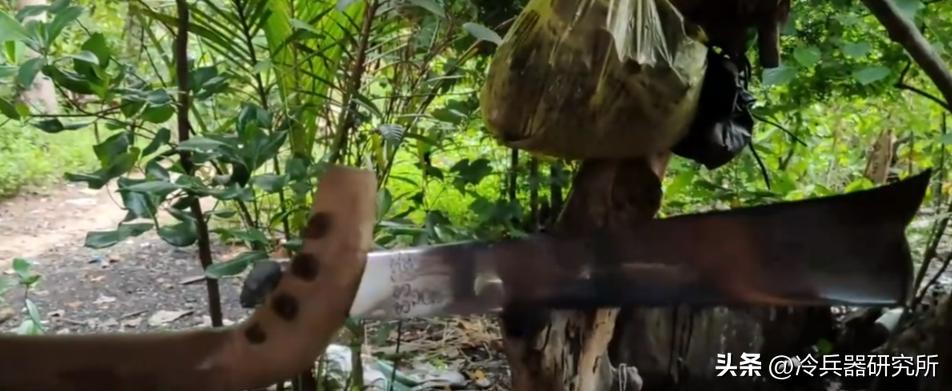
What are the advantages of this kind of curved knife? In terms of use, the blade of this kind of knife is a round pole. Regarding the issue of the blade of a long pole knife, the article "The People's Liberation Army loves long-handled knives: it is not necessary to find a pole to connect the knife to cut down Indians. There are so many things to pay attention to in long-pole weapons." As mentioned in the article, long-pole knives are not suitable for round poles. Because it is difficult to find the blade tendon when chopping with a round pole, the chopping effect is difficult to guarantee. But round rods also have advantages, they are simple to process and have higher strength than flat rods. So how to ensure smooth chopping and maintain the strength of the knife bar? One way is to increase the curvature of the knife, or increase the width of the blade.
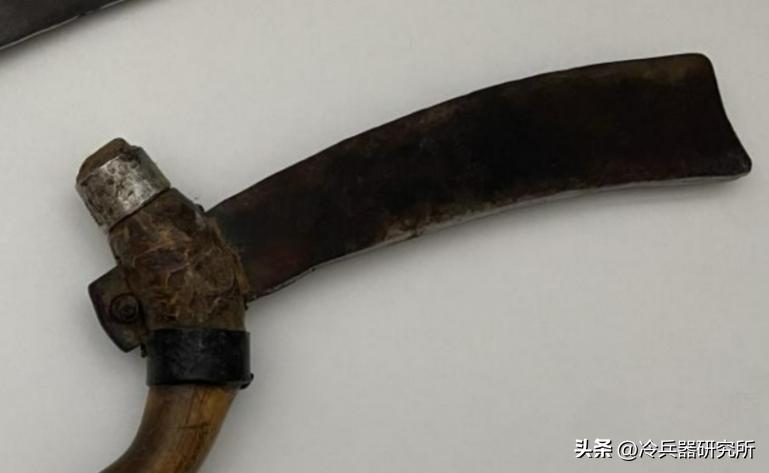
Mak fixed with iron pins
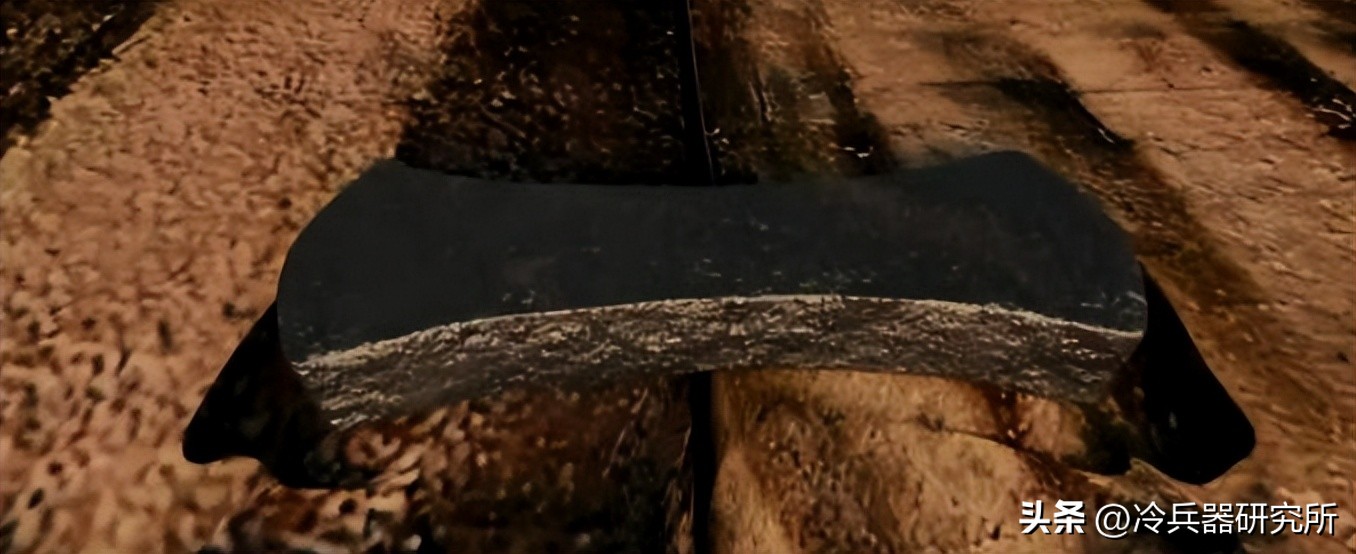
Another method is to start from the shape of the tool bar and change the straight bar into a curved bar. In fact, it is not uncommon for curved weapons to appear. A crank ax has been unearthed in Yunnan. The position of the ax head and the position of the hand are also not in a straight line, which also puts the center of gravity further forward. The weight of this crank weapon is offset from the central axis, so it can self-correct. Because this shape does not make a flat rod, you can still feel the presence of the blade tendon, and it is not easy to shake the hand.
The original saying in the documentary is that the curved handle of the knife is more powerful in swinging, which means that the cutting efficiency is high, and the material of the knife shaft used by the Kui people in the film is also a whole piece of ox wood. The place where the blade is connected is near the root of the ox wood. Because the fibers are not damaged, the strength is very high. And because the blade is sharp and easy to slash, this kind of knife is very popular in dense forest areas.
Because of this ingenious design, this kind of knife has become popular in Southeast Asia. Of course, the shortcomings of this kind of knife are also obvious. Because of the center of gravity problem, it is difficult to make the blade larger. Judging from various records, most of the blade lengths are around 30 centimeters, and many of the wooden poles are natural trees. If there are no qualified trees, the knife shaft is difficult to find, and if the knife is long, it is not necessary. If it is short, it sometimes feels not powerful enough. Therefore, the images of many knives in the reliefs of the Angkor ruins are more similar to Burmese knives.
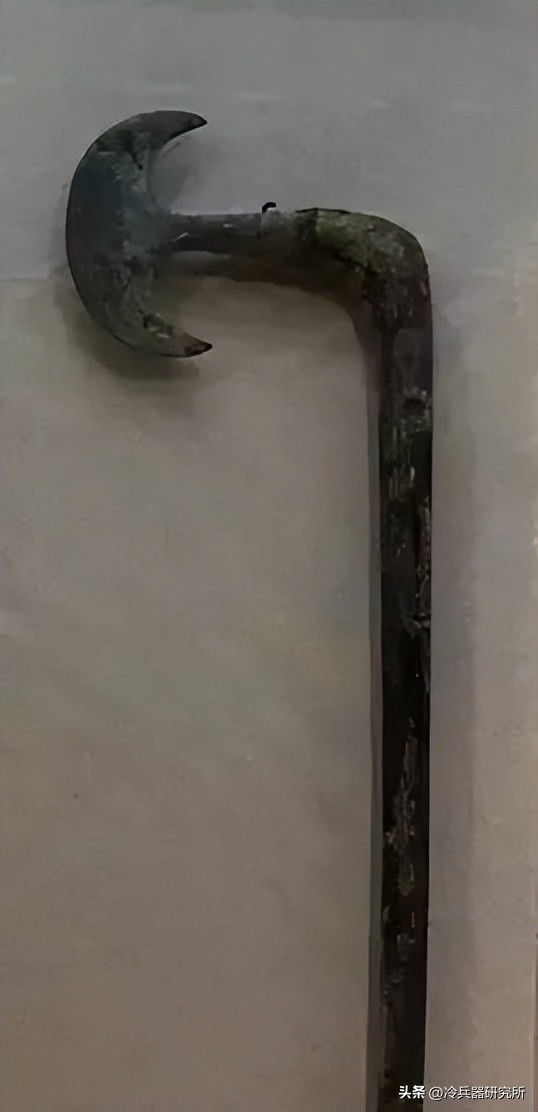
Crank ax unearthed in Yunnan
The culture of the Angkor Dynasty represented by the Angkor ruins often gives people a mysterious feeling, but many things recorded on the reliefs of the Angkor ruins, such as the Burmese knives mentioned before and the curved knives mentioned in this article, etc., still exist today. In addition to tangible artifacts, there are also intangible folk customs and entertainment activities, which are also popular in Southeast Asia today. Comparing ancient and modern times, we find that although the city was later deserted, the culture is still there.
Because the current data collection is limited, this article is more of an introduction. Readers who know more about this kind of knife are welcome to add corrections.
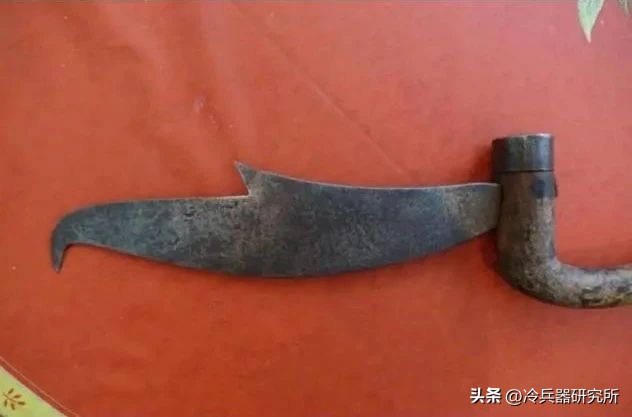
Crank-handled long knife from Assam
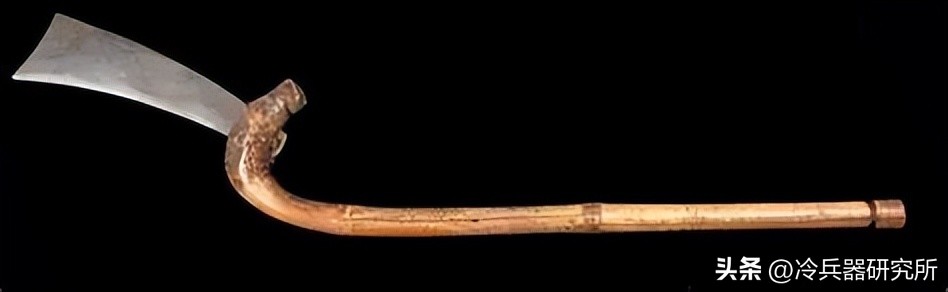
Thai curved knife