Professional virtual currency information station welcome
We have been making efforts.

vc Page 27

Cryptocurrency is a non-legal monetary asset based on digital technology and blockchain, possessing the functions of a medium of exchange and a store of value. Cryptocurrency is a transaction medium that uses cryptographic principles to ensure transaction security and control the creation of transaction units. Cryptocurrency is a type of digital currency (or virtual currency). Bitcoin became the first decentralized cryptocurrency in 2009, after which the term “cryptocurrency” was more commonly used to refer to such designs. Since then, several similar cryptocurrencies have been created, and they are usually referred to as altcoins. Cryptocurrency is based on a decentralized consensus mechanism, in contrast to the banking financial system that relies on a centralized regulatory system.

Bitcoin Price Plummets, What Impact Will Musk’s Remarks Have On It? Bitcoin Client Related Analysis

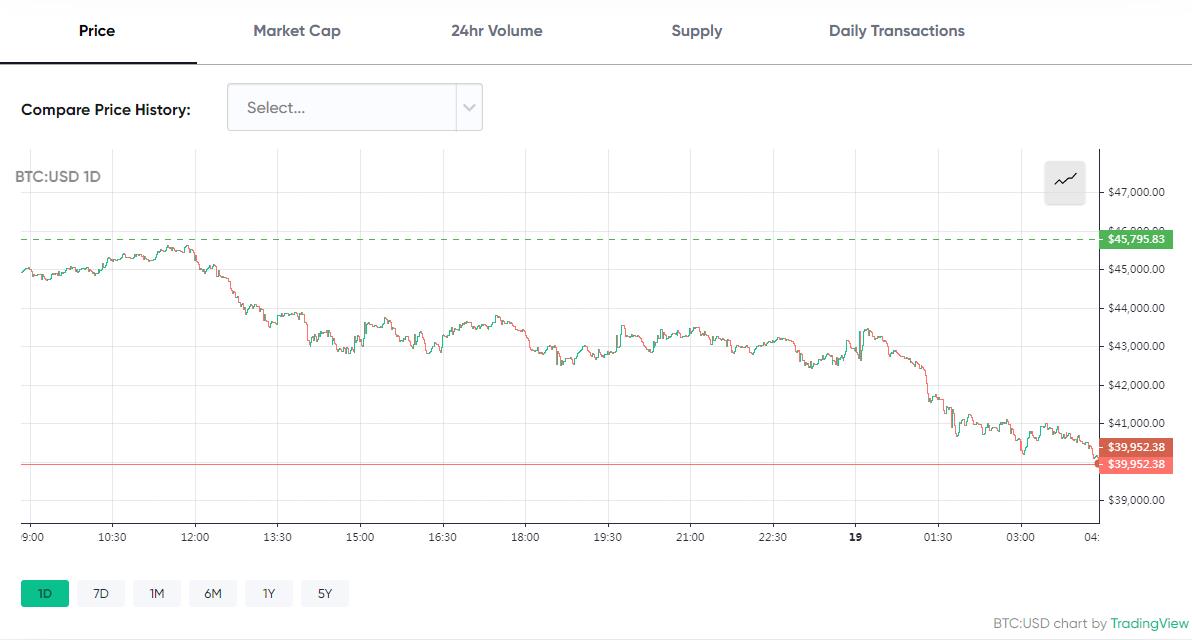
Sino-Singapore Jingwei client reported on May 19 that at noon Beijing time that day, the price of Bitcoin fell below the US$40,000/coin mark, falling by more than 9% during the day. Other virtual currencies also continued to fall, with Ethereum falling below $2,890 per coin, down 14.52% on the day. Dogecoin fell to US$0.4 per coin, and the intraday decline expanded to 20%.

Bitcoin price fell below $40,000_Bitcoin client_Virtual currency prices continued to fall

Source: Bitcoin.com

Is the sudden rise and fall all due to Musk?

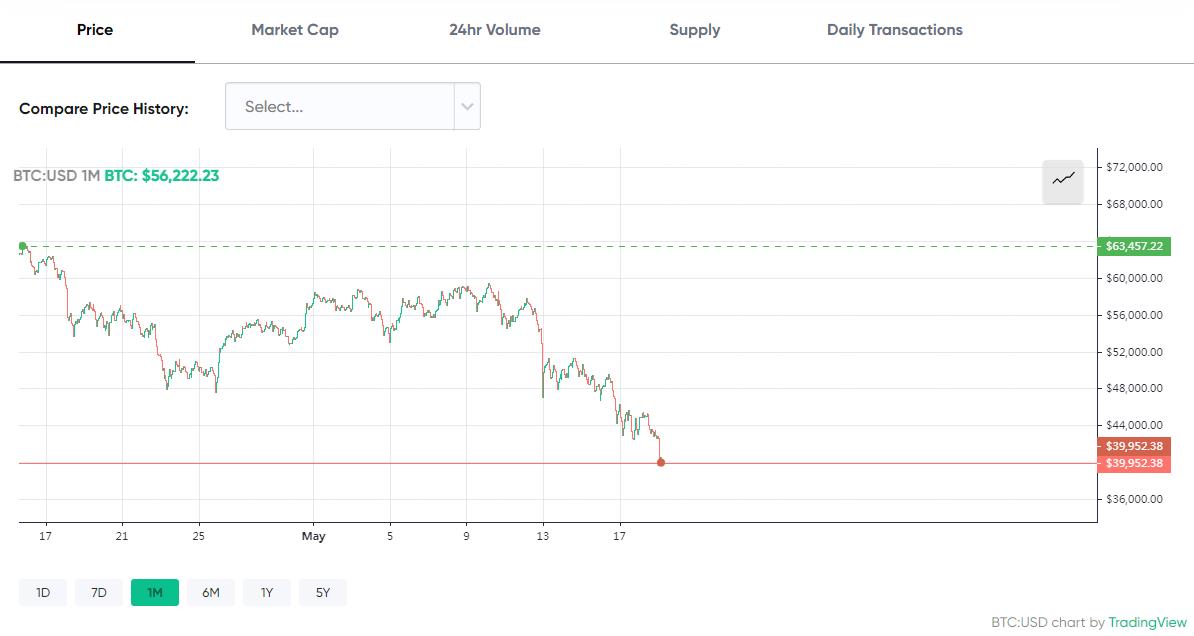
In the past month, Bitcoin has gone out of the "jumping up and down" market, and the Bitcoin market during the year is also inseparable from Musk.

Bitcoin price fell below $40,000_Virtual currency prices continued to fall_Bitcoin client

Source: Bitcoin.com

In January 2021, after Musk changed his personal social media profile to "Bitcoin", Bitcoin rose by nearly 20% in a single day. On February 8, after Tesla’s purchase of Bitcoin documents was made public, Bitcoin rose by as much as 18.8% that day, exceeding US$46,000 per coin. On March 24, Musk announced on social media that Tesla could be purchased with Bitcoin, and then Bitcoin experienced a surge. On April 14, Bitcoin hit a record high of $64,800 per coin, and then began a downward trend. Perhaps because it fell too much, Musk announced on Twitter on May 13 that Tesla would suspend accepting Bitcoin as a payment method, and Bitcoin immediately fell wildly. On May 17, Musk hinted on social media that Tesla may have sold its remaining Bitcoin holdings, causing Bitcoin to plummet by more than 10%. That morning, Musk issued a statement clarifying that Tesla did not sell any Bitcoin. As soon as the news came out, Bitcoin rose in the short term.

Associations join forces to curb virtual currency risks, and some places have issued "mining" regulatory announcements

On the 18th, the China Internet Finance Association, China Banking Association, and China Payment and Clearing Association jointly issued an announcement on matters related to virtual currency transactions. The announcement emphasized that carrying out related transaction activities such as the exchange of legal currency and virtual currency and between virtual currencies, serving as a central counterparty to buy and sell virtual currencies, providing information intermediaries and pricing services for virtual currency transactions, token issuance financing, and virtual currency derivatives transactions, violates relevant laws and regulations, and is suspected of illegal fund-raising, illegal issuance of securities, illegal sales of tokens and other criminal activities.

On the same day, the Resource Conservation and Environmental Protection Division of the Inner Mongolia Development and Reform Commission issued the "Announcement on Accepting Letters and Reports on Problems with Virtual Currency Mining Enterprises." The announcement pointed out that the Office of the Autonomous Region's Energy Consumption Dual Control Emergency Command has established a virtual currency "mining" enterprise reporting platform to comprehensively clean up and shut down virtual currency "mining" projects, and improve the reporting channels for virtual currency "mining" enterprise problems.

(Original title: "Bitcoin fell below the $40,000 mark, what else is Musk going to say?")

Agricultural Bank Of China Issued A Statement: Prohibiting The Use Of Its Services To Trade Virtual Currencies Such As Bitcoin To Combat Illegal Activities

Sino-Singapore Jingwei Client, June 21 (Xinhua) The Agricultural Bank of China issued a "Statement on Prohibiting the Use of Our Bank's Services for Bitcoin and Other Virtual Currency Transactions" (hereinafter referred to as the statement) on its official website on the 21st.

The statement stated that in order to further implement the spirit of the meeting of the Financial Affairs Committee of the State Council and strictly implement the "Announcement on Preventing the Financing Risks of Token Issuance" and the "Announcement on Preventing Speculation Risks in Virtual Currency Transactions" and other regulations, in accordance with the recent interview and guidance requirements of the relevant departments of the People's Bank of China, we will continue to carry out crackdowns and governance actions against virtual currency transactions.

The statement mainly makes three points:

First, we will resolutely not carry out or participate in any business activities related to virtual currency. We prohibit the access of customers involved in virtual currency transactions and will increase the investigation and monitoring of customers and fund transactions. Once relevant behavior is discovered, measures such as suspending account transactions and terminating customer relationships will be immediately taken and reported to the relevant departments in a timely manner.

Second, in order to protect the legitimate rights and interests of customers and the security of funds in their accounts, please actively cooperate with due diligence, assist in fulfilling legal obligations, and combat illegal and criminal activities involving virtual currency mining and fund transactions.

Third, customers should be highly vigilant about the risks of virtual currency-related business activities, improve risk prevention awareness and identification capabilities, and beware of being deceived. If you discover the above-mentioned relevant behaviors, you can call the customer service hotline to report it.

The Agricultural Bank of China emphasized that it will strictly implement relevant national regulatory requirements, abide by industry self-discipline commitments, and resolutely crack down on virtual currency-related business activities. No institution or individual is allowed to use our bank accounts, products, services, etc. for token issuance financing and virtual currency transactions.

Introduction To The Background Of The Birth Of Bitcoin And Methods To Solve Two Major Problems In The Electronic Payment Industry

In 8 years, Bitcoin created a myth-the price increased nearly 3 million times, and the domestic price once exceeded 20,000 yuan. In this myth, different people see different stories. Speculators see opportunities to make money, technology geeks see technology that will change the future, and traditional financial institutions may see a growing ghost…

Today, Galaxy Research Institute will talk about something lighter and introduce the two most popular brothers in the electronic payment industry, Bitcoin and Ethereum, and their underlying blockchain technology. Can they really reshape the world economy? After reading this article, I hope you can get your own answer.

The birth of Bitcoin, the beginning of the revolution?

When it comes to the electronic payment industry, the first thing we think of is either Alipay or WeChat. In fact, behind these two giants, there are two problems that have been plaguing researchers, and they are also problems that truly show the "ambition" of the electronic payment industry:

The first is how to conduct online transfers between the two parties in need without going through an authoritative third party;

The second is how to record payment information while conducting electronic transfers to avoid repeated payments and ensure the safety of funds.

The solution of these two problems means that there will be an independent electronic currency system that has basically nothing to do with the current banking system.

In 2008, a person or a technical group published a white paper titled "A Person-to-Person Electronic Cash Payment System" under the pseudonym Satoshi Nakamoto. Nakamoto proposed two solutions to these two problems:

First, in person-to-person transfers, there is a need for an electronic currency whose value can be judged without being attached to a third-party pricing agency;

Then, we need to have a decentralized digital ledger (once there is a center, it means there is still an "authoritative third-party institution" equivalent to a traditional bank, which is obviously not in line with the ideal world of these geeks) that can distribute transaction records and stored transaction information to computers around the world. Of course, the ledger operates in roughly the same way as other traditional accounting methods.

In 2009, this technical solution that can transmit electronic wealth was officially launched. Its product form is Bitcoin, which has attracted widespread attention today. The underlying technical algorithm it relies on, which is now called blockchain technology, has been proven to have wider practical value and significance.

Although blockchain technology has not yet entered the mainstream government thinking and discourse system, as mentioned before, it has revolutionized the world's economic development.

The impact of Bitcoin and Ethereum on the world economy_Bitcoin mining principle_Electronic payment industry Bitcoin and Ethereum blockchain technology

1. Bitcoin surpasses Amazon

Bitcoin is essentially a decentralized, person-to-person electronic currency system. This kind of electronic banknote has no asset collateral, and it can be issued and circulated without going through clearing and custody institutions such as central banks and banks. Transaction and asset data are stored in every corner of the world connected to the Internet.

The transformation of human trading in the minds of geeks may look like this:

barter

Things – RMB, US dollars, rupees, rubles, pounds… – barter exchange

Things-Electronic Currency-Exchange

The first standardized value of Bitcoin was set at US$0.0008 on October 5, 2009, calculated based on the calculation that 1 US dollar equals 1309.03 Bitcoins. Each Bitcoin is currently trading at over $2,300. The intrinsic value of each Bitcoin has increased 2.9 million times.

According to the Washington Post, if you had purchased $100 worth of Bitcoin seven years ago, those bitcoins would be worth more than $73 million today. By comparison, if you had invested $100 in Amazon stock during its IPO in 1997, your investment would be worth about $64,000 now.

However, the intrinsic value of Bitcoin itself cannot be measured. Therefore, the speculative nature of Bitcoin as an electronic currency is much stronger than the stocks of companies such as Amazon. This means that short-term price fluctuations are very violent, and there is no basis for judgment on forward price trends.

As Bitcoin continues to dominate news headlines around the world, many onlookers naturally have a question: How did Bitcoin come about?

2. Are Bitcoins mined?

One of the characteristics of Bitcoin is that there is no central bank as an issuing institution, so how did they come into being? In fact, it can be said that it was gradually mined by Bitcoin miners.

Bitcoin mining principle_The impact of Bitcoin and Ethereum on the world economy_Electronic payment industry Bitcoin and Ethereum blockchain technology

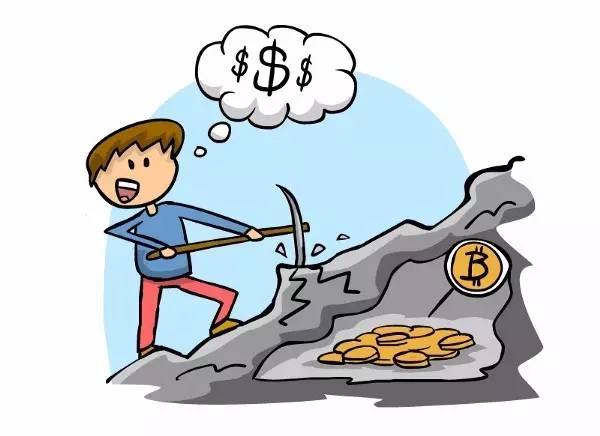
The simplest analogy is to imagine the mining method of gold miners. Gold miners mine gold from the earth. As the gold is dug out and processed, the gold flowing into the market becomes part of the wealth and currency of the economy. The same is true for Bitcoin.

Newly mined Bitcoins are obtained through a complex competitive mining process – miners are rewarded with Bitcoins by running computational programs using highly specialized hardware facilities.

3. How to use Bitcoin?

When Bitcoins are mined, how will they be used and in what situations?

Bitcoin is traded on exchanges just like stocks, bonds, and currencies, and it can also be used as a currency to exchange services or goods.

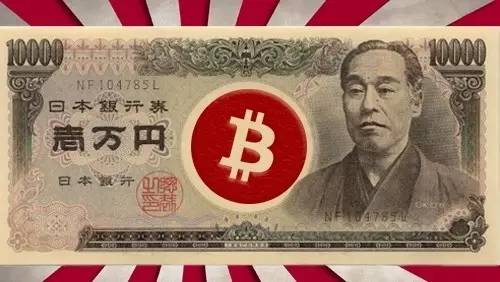
Japan is the first country in the world to officially announce that it accepts Bitcoin as a legal currency. As Japan treats Bitcoin as a currency, it is expected that the number of suppliers and merchants that accept Bitcoin as a currency for purchasing goods and services will increase from 1,000 to 100,000.

The impact of Bitcoin Ethereum on the world economy_Bitcoin mining principles_Bitcoin Ethereum blockchain technology for the electronic payment industry

Such awesome technology and products that may "subvert the world" have received great attention since their emergence, and their value has continued to skyrocket. At present, the number of Bitcoin investors, enthusiasts, including some business people and even financial institutions is already very large.

The most important thing is that with its development, the two functions originally envisioned have been gradually realized and improved, and the idea of ​​whether it can be used as an equivalent electronic currency has been confirmed. Seeing that the originator of electronic currency was so popular and did not die on the beach, thousands of digital currencies were designed and generally kept their value rising. Among them, the most famous latecomer with high market value is Ethereum.

The current total market value of Bitcoin is approximately US$37 billion, and the total market value of Ethereum during the same period is approximately US$16 billion. While Bitcoin was the first electronic currency to appear on the market and thus received most of the media attention, many believe that the Ethereum blockchain and the Ethereum currency based on this technology will become a more powerful tool.

Competitor Ethereum

In the electronic payment industry, another white paper "impacting the world" has appeared.

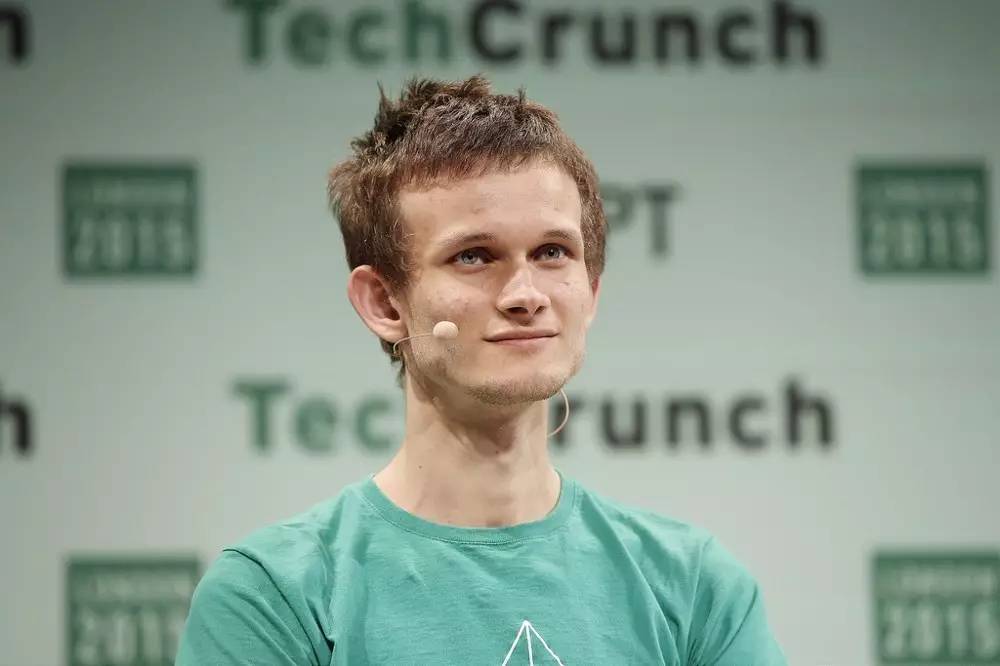
In 2013, 19-year-old Vitalik Buterin first mentioned the idea of ​​Ethereum in a book titled "Ethereum White Paper: The Next Generation of Intelligent Connection and Decentralized Application Platform". Then in 2014, the Ethereum algorithm and protocol were officially implemented, and US$150 million was raised. The system itself was finally completed on July 30, 2015.

The impact of Bitcoin and Ethereum on the world economy_Bitcoin mining principle_Electronic payment industry Bitcoin and Ethereum blockchain technology

Vitalik Buterin

There is an issue that we need to understand very much, and it is also the biggest competitive potential and focus of debate on this platform: that is, Ethereum is not only an electronic currency, but also a platform and smart contract system based on blockchain technology, which can be used to build applications, and electronic currency is just one of the manifestations of this technology.

Similar to financial instruments, properties, domain names, and more complex financial product transactions, derivatives, gambling, as well as identity recognition and personal credit systems that involve the circulation and recording of information and wealth, Ethereum theoretically has a lot of room for development.

Take smart contracts as an example:

Smart contracts are Ethereum’s important contribution to the rapidly expanding field of electronic currency and blockchain technology. It can be seen as a way to use digital means to ensure the security of value exchange and other links. It can save the expensive services provided by professionals such as lawyers and notaries in a transparent and disintermediated way, and instead ensure the validity of the contract by executing the digital terms of the smart contract itself.

1. Ethereum VS Bitcoin

Now, let’s talk about another unique feature of Ethereum – the digital currency Ethereum.

Ethereum is a digital currency like Bitcoin, but the difference is that Ethereum has two digital currencies circulating and trading in the market. One of them uses ETH as the transaction token, and the other is called classic Ethereum, which circulates transactions under the token of ETC.

The impact of Bitcoin Ethereum on the world economy_Bitcoin mining principles_Bitcoin Ethereum blockchain technology for the electronic payment industry

ETC

The impact of Bitcoin and Ethereum on the world economy_Bitcoin mining principle_Electronic payment industry Bitcoin and Ethereum blockchain technology

ETH

The Ethereum Foundation defines the role of Ethereum as a fuel, or a means of payment that allows customers to pay for performing requested operations on servers in the Ethereum platform.

In 2016, a huge scandal shocked the Ethereum community. A still-unidentified hacker exploited a software vulnerability to try to steal more than $50 million worth of Ethereum. The result of this incident was the birth of the second type of Ethereum for transactions.

2. Where did Ethereum come from? What does it do?

Similar to Bitcoin, Ethereum is obtained through mining, with teams of miners verifying and storing Ether, which is then traded on the Ethereum platform. While Bitcoin and other digital currencies can be used to purchase goods or services, as mentioned before, Ethereum is primarily used to pay for fees incurred by users on the Ethereum network.

The value foundation of Bitcoin and Ethereum: Blockchain

Finally, let’s talk about the value foundation of Bitcoin and Ethereum—blockchain technology. The original idea of ​​the framework proposed by Nakamoto was to allow individuals to quickly complete online transactions without the need for traditional middlemen or third parties. This technical framework is currently known as blockchain.

Blockchain is an indestructible digital ledger that can be set up to record not just financial transactions, but almost any valuable information without fear of tampering.

In the simplest model, the blockchain is a simple distributed ledger, but the inherent meaning of the blockchain is far greater than the superficial meaning of its name. Blockchain can transfer value itself during the transaction process. As Sally Rivers, a technology writer at the Financial Times, said, for Bitcoin, blockchain is to it what the Internet is to email.

Just as email facilitates the communication of information, blockchain facilitates the transfer of wealth.

Areas where blockchain technology is being rapidly explored and deployed include capital markets, financial services, payment and remittance, derivatives trading, credit management, government governance, sharing economy, supply chain, auditing, stock trading, the Internet of Things, insurance, healthcare, and many more.

Although digital currencies such as Bitcoin and Ethereum have achieved extraordinary development speed, their size and value are still insignificant compared to the traditional monetary system. It is still difficult to predict how much impact digital currencies will have on the traditional monetary system backed by assets or sovereign credit in the future.

But the development value of blockchain technology goes without saying. It is foreseeable that the blockchain technology hidden in the gorgeous figure of digital currency will be well integrated with the traditional financial industry. In the future, currency transactions, financial asset transactions and transfers, including personal credit records will all rely on the security protection brought by blockchain technology. Perhaps blockchain will be the "ghost" that accompanies the traditional financial system's transition to an unknown digital monetary and financial system.

Reference article: Billy Silva, “Blockchain for the Rest of Us”.

Introduction To Litecoin: Based On The Bitcoin Protocol, Transactions Are Confirmed Quickly And Mining Is Open To The Public.

Litecoin

Litecoin is an online currency based on peer-to-peer technology, which can help users make instant payments to anyone in the world.

Introduction to Litecoin

It is based on the Bitcoin protocol, but unlike Bitcoin, it can be "mined" efficiently with consumer-grade hardware. Litecoin provides you with faster transaction confirmations (2.5 minutes on average), uses hard memory and a mining proof-of-work algorithm based on scrypt (an encryption algorithm), targeting ordinary computers and graphics processing units (GPUs) used by most people. The Litecoin network is expected to produce 84 million currency units.

One of the design goals of Litecoin is to provide a mining algorithm that can be run simultaneously on the machines that mine Bitcoin. While application-specific integrated circuits (ASICs) designed for mining Bitcoin are gradually emerging, Litecoin is also following the technological evolution. But until Litecoin currency is widely adopted, it is unlikely that there will be an application specific integrated circuit (ASIC) designed specifically for Litecoin.

>>>Litecoin LTC mining tutorial: cpu mining and gpu mining

What is the difference between Litecoin and Bitcoin?

Litecoin is inspired by Bitcoin (BTC) and technically shares the same implementation principles. The creation and transfer of Litecoin is based on an open source cryptographic protocol that is not governed by any central authority. Litecoin aims to improve Bitcoin and has three significant differences compared to it:

First, the Litecoin network can process a block every 2.5 minutes (instead of 10 minutes), thus providing faster transaction confirmations.

Second, the Litecoin network is expected to produce 84 million Litecoins, which is four times the amount of currency issued by the Bitcoin network.

Third, Litecoin uses the scrypt encryption algorithm first proposed by Colin Percival in its proof-of-work algorithm, which makes Litecoin mining easier on ordinary computers compared to Bitcoin. Each Litecoin is divided into 100,000,000 smaller units, defined by eight decimal places.

Litecoin History

Litecoin was released on October 7, 2011 through the open source client on Github. The current (as of April 19, 2013) version of the client is v0.6.3c. Other clients have also been released.

Litecoin has been in the news recently as an alternative to Bitcoin.

On April 30, 2013, Mt. Gox, the world's largest Bitcoin trader, announced that it would temporarily postpone its plan to support Litecoin trading. Mt.Gox said it originally planned to launch a platform that supports Litecoin transactions in the past two weeks, but the plan was delayed due to a large-scale DDOS attack on the website.

On July 3, 2013, Mt.Gox launched the API for LTC trading today in preparation for its official launch.

Litecoin client

Litecoin

Litecoin is a free software project released under the MIT/X11 license, which allows you to run, modify and copy the software according to your needs. If you wish, you may also distribute modified versions of the software.

The software is released with full transparency, allowing users to independently verify the binary version as well as the corresponding source code.

Litecoin data block chain

The Litecoin blockchain is capable of handling larger transaction volumes than its competitor, Bitcoin. Since data blocks are generated more frequently, the network can support more transactions without the need to modify the software in the future.

As a result, merchants can get faster transaction confirmations and still be able to wait for more transaction confirmations when selling large-ticket items.

Litecoin wallet encryption

Wallet encryption keeps the private keys in your wallet safe, allowing you to view transactions and account balances, but you must enter your password before using Litecoin.

This function not only prevents the intrusion of viruses and Trojans, but is also an effective legality check before payment.

award

"Miners" can initially produce 50 coins per data block. Every 4 years, the amount of currency produced is reduced by half (840,000 blocks).

Therefore, the total amount of currency produced by the Litecoin network will be approximately 4 times that of Bitcoin, or 84 million Litecoins. (The content of this article is based on Baidu Encyclopedia and Wikipedia)

Litecoin trading

Litecoin transactions, balances, and issuance are processed by a peer-to-peer network similar to Bitcoin through the Scrypt proof-of-work scheme (when a sufficiently small hash value is discovered, a block is created, and Litecoin is issued, and the process of discovering this hash value and creating the block is called "mining").

The issuance rate of Litecoin follows a geometric sequence, halving every four years (every 840,000 blocks), eventually reaching a total of 84 million LTC. Unlike Bitcoin, the memory-intensive nature of Scrypt makes Litecoin more suitable for "mining" with graphics processing units (GPUs). The FPGA (Field Programmable Gate Array) and ASIC (Application Specific Integrated Circuit) implemented for Scrypt are more expensive than the sha256 used by Bitcoin.

Litecoin can currently be exchanged for fiat currencies as well as Bitcoin, mostly through online exchanges. Reversible transactions (such as those made with a credit card) are generally not used to purchase Litecoin because Litecoin transactions are irreversible and therefore pose chargeback risks.

As of April 25, 2013, one Litecoin was worth approximately $3.97 or 0.028 Bitcoin. This makes Litecoin the second-largest electronic currency with a market capitalization of approximately $35,000,000.

Bitcoin Theft Solved! Be Wary Of Security Risks Posed By Bitcoin Clients

Bitcoin is a virtual commodity whose price has continued to skyrocket due to speculation in recent years. Recently, the Henan Province Zhongyuan Oilfield Public Security Bureau successfully cracked the country's first Bitcoin theft case after more than three months of investigation.

On July 27 this year, the Henan Province Zhongyuan Oilfield Public Security Bureau received a call from Wu, a resident of the jurisdiction, claiming that more than 3.4 million yuan worth of Bitcoins he had stored in his online wallet were lost. Wu is a professional investor who started investing in Bitcoin in 2016. In early 2017, he was pulled into a WeChat group of Bitcoin investors.

Zhang Hongzhou, a police officer from the Criminal Investigation Detachment of Zhongyuan Petroleum Field Public Security Bureau in Henan Province: The group leader often posts some messages in the group, saying that it is not safe to put Bitcoin on the trading platform, and it is not absolutely safe. Then he contacts the victim, and when chatting through WeChat, he says that I have a software, and the (electronic) wallet generated by this software is absolutely safe. He sends this software to the victim, and the victim puts all the Bitcoins into this wallet.

WeChat chat records show that WeChat group leader Dai sent the software to Wu on July 16 this year. Following Dai's instructions, Wu deposited 188.31 Bitcoins into the online wallet that day. On July 25, Wu went online after returning from travel and found that the number of Bitcoins in his online wallet was actually 0. Subsequently, Wu contacted Dai many times, but Dai always used various reasons to deal with Wu and was unwilling to have direct contact with him. Under Wu's repeated questioning, Dai actually made an unexpected move.

​Victim Wu: In the end, he said that he was also responsible. Although he taught me that I lost my coins, he was also out of good intentions and said that he would compensate me 10 (bit) coins, saying that he could only bear the part that he was responsible for. Later, he actually transferred money to me using Alipay. If it had nothing to do with him, how could he casually accompany others? Hundreds of thousands, not a small amount.

Crack password-stealing software, police arrest suspect

After preliminary investigation, the police determined that Dai, the owner of the WeChat group, was suspected of committing a major crime. On August 9 this year, the police detained Dai in Shanghai. In Dai's home, the police found 27 bank cards and multiple computers. In one of the computers, the police found an online wallet software that was exactly the same as that used by the victim Wu.

It turned out that Dai was proficient in software programming. After cracking the downloaded genuine wallet software, he added a program to transfer usernames and passwords to steal Bitcoins. Once someone else deposited Bitcoins into an electronic wallet, he would know the other person's account name and password and transfer the Bitcoins in the electronic wallet. He stored the stolen Bitcoins in hundreds of online wallets, transferred them back and forth, and sold them at a low price on the trading platform after confirming their safety. In this way, Dai has committed three crimes, involving more than 20 million yuan. At present, the police have identified Dai's account and frozen it, and have recovered more than 2 million yuan in stolen money.

The police reminded that Bitcoin is a virtual commodity and it is difficult to recover it if something goes wrong during the transaction.

​Su Haizhou, Captain of the Serious Case Brigade of the Criminal Investigation Detachment of the Zhongyuan Petroleum Field Public Security Bureau of Henan Province: Our country has closed all three Bitcoin trading platforms before the end of October 2017. The country currently only recognizes Bitcoin as a virtual commodity and does not recognize its identity as a virtual currency. Therefore, you need to be cautious if you want to invest in Bitcoin.

(Originally titled "Henan Police cracked the country's first Bitcoin theft case")

Bitcoin Mining Principle: How To Obtain Virtual Currency Rewards Through Calculation Code?

The so-called "mining" is to calculate and produce virtual currency through special computers, namely "mining machines". The "miners" only ensure the power supply and network connection of the mining machines.

Take Bitcoin “mining” as an example.

Bitcoin is the first decentralized cryptocurrency. At every other point in time, the Bitcoin system generates a random code on the node. All computers on the Internet can look for this code. Whoever finds this code will generate a block. According to the reward mechanism issued by Bitcoin, every time a block is generated, the node will receive corresponding rewards.

[Note: Cryptocurrency is a trading medium that uses cryptographic principles to ensure transaction security and control the creation of trading units. 】

This process of finding codes and getting rewards is called “mining”.

But there is a problem with Bitcoin "mines", that is, the total number is limited. However, after all, virtual currency is just a few lines of code. Slightly modifying the Bitcoin code becomes a new virtual currency. As a result, various virtual currencies are like crucian carps crossing the river, and those named after animals include Dogecoin, Shiba Inu Coin, Cat Coin, Duck Coin, etc.

In each "mine", countless "miners" are digging day and night, and many people make a lot of money by relying on their first-mover advantage. But as the number of people increased, the competition for mining equipment began, with most miners using powerful, specialized computers to mine cryptocurrencies around the clock. From CPUs, GPUs, FPGAs, to giant warehouses with ASIC Bitcoin mining machines, the computing power has increased astonishingly.

[Note: Computing power, also known as hash rate, is a unit of measurement for the processing power of the Bitcoin network. 】

In addition to constantly upgrading "mining" equipment, many people choose to join forces to form a "mining pool."

The principle is: bring together a group of scattered "miners", and everyone will "mining" together and go hand in hand. There is power in numbers, and the possibility of a group of people poaching is much higher than working alone. When the digital currency is mined, it will be distributed according to the computing power of the equipment. Even if you are unlucky and don't get it, you can still get a share of the pie as long as you enter the "mining pool".

What's more, "mines" have been built. The interior of the huge factory building is divided into about 30 computer rooms with white partitions. The metal racks in each computer room are filled with servers, and the messy wires and power strips are covered with thick dust. There were no workers in the factory, only the roar of fans could be heard.

Electric black hole

Behind the huge computing power that supports "mining", there is also even more terrible power consumption.

As the types of virtual currencies continue to increase, the power consumption caused by virtual currency “mining” is increasing explosively. A "mine owner" once revealed that the electricity consumption of a "mine" in a year is equivalent to the total electricity consumption of several cities in a year.

Bitcoin Mining Principle_Bitcoin Mining Principle_Bitcoin Mining

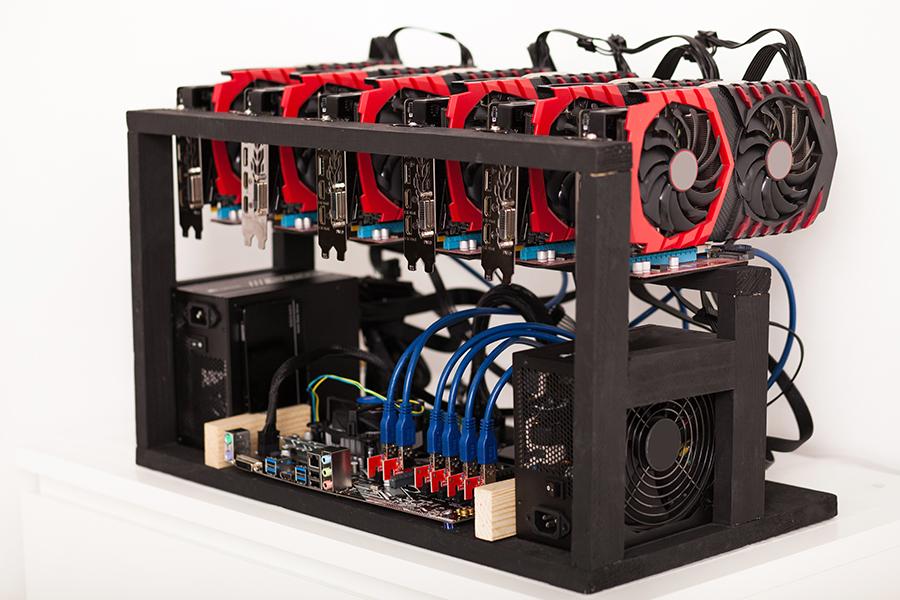
Cryptocurrency mining machines consume an astonishing amount of power. Picture|Picture Chong Creative

According to the Cambridge University Bitcoin Power Consumption Index, Bitcoin mining consumes an estimated 133.68 terawatt hours of electricity per year (1 terawatt hour is 1 billion kilowatt hours of electricity). This number exceeds the electricity consumption of Sweden, ranking 27th in the world.

However, the Financial Times further pointed out that Cambridge University’s prediction is calculated based on Bitcoin “miners” using the least efficient computers to “mine”, so the actual power consumption of “mining” may be higher than the above estimates.

Why does “mining” consume so much power?

We can do some math.

Generally speaking, "mining" is mainly divided into graphics card mining machines and ASIC (professional) mining machines.

[Note: ASIC refers to application specific integrated circuit. 】

Graphics card mining machines mainly use graphics cards to mine. For example, the power of the RX570 graphics card is 150-160 watts, and the total power of a mining machine with 6 graphics cards is generally close to kilowatts.

Let’s look at professional mining machines that use chip mining. The Antminer S9 mining machine has a smaller power consumption of 1,400 watts, while the Shenma M3 mining machine has a larger power consumption, exceeding 2,000 watts.

From this, it can be estimated that the power consumption of a mining machine working normally for one hour is 1-2 degrees.

Although this number may not seem like much, Bitcoin mining machines need to run 24 hours a day. The Antminer S9 mining machine requires 33.6 kilowatt-hours of electricity a day, while the Whatsminer M3 mining machine requires at least 48 kilowatt-hours a day, consuming 1,440 kilowatt-hours of electricity a month. A normal household only consumes 200-400 kilowatt hours of electricity per month.

In the "mine", many mining machines are placed densely, which consumes power and also releases a lot of heat. In order to ensure the normal operation of the mining machine, the "mine" must also be equipped with large fans to ventilate and dissipate heat. A three-phase large fan has a power of 1,000-2,000 watts, and the fans all over the walls outside the "mine" also consume an astonishing amount of power.

For a "mine", "revenue = produced Bitcoin × currency price – mining machine cost – electricity fee – maintenance fee and labor cost – mine depreciation fee." The most important expense is the electricity fee.

Therefore, places with cheap electricity rates have become a natural choice for “mining”.

Washington State in the United States has relatively low electricity bills and is home to many “mining” companies including GigaWatt. Wenatchee, a small town east of Seattle, has extremely low electricity prices, only 2-3 cents/kWh. It has attracted dozens of "miners" to settle there and has become the center of Bitcoin "mining" in the United States.

In Sichuan, China, abundant hydropower resources also provide convenience for “mining”. In order to purchase electricity from the nearest power station, some "mines" were built on river embankments without environmental impact assessment or construction approval. It is reported that for every 100 Bitcoins mined in the world, 5 are produced in the Dadu River.

"Mining" that depends on the weather is occasionally affected by the weather. If there is too much rainfall and the hydropower station cuts off the power supply of the "mine", the "mining pool" will no longer be able to operate; if there is too little rainfall, a large number of mining machines cannot be started, which invisibly increases the sunk cost.

To solve these problems, "mines" will also migrate with the seasons like migratory birds. When the flood season ends and electricity prices rise, “mine owners” often move their equipment to areas where thermal power is cheaper.

eliminate! No mercy!

Since 2020, various regions in Sichuan have begun to introduce policies one after another, hoping to use sufficient hydropower resources to support the development of the Bitcoin "mining" industry to alleviate the economic pressure caused by the epidemic. However, some mining companies use "big data, blockchain projects, supercomputing centers" as guise to defraud local government support and cause serious waste of public resources.

In a certain province in the west, a so-called "data business" company consumes as much as 25 million kilowatt-hours of electricity per month; monitoring by the Jiangsu Provincial Communications Administration found that virtual currency activities in the province consume 260,000 kilowatt-hours of electricity per day.

Someone from a domestic power plant calculated an account for us. If a family consumes 300 kilowatt-hours of electricity a month, 260,000 kilowatt-hours of electricity a day is equivalent to the electricity consumption of 866 families for a month. A small-unit power plant uses 320 grams of standard coal (7,000 kcal of standard coal) to generate 1 kilowatt hour of electricity, and "mining" consumes 78 tons of standard coal a day.

Bitcoin Mining_Bitcoin Mining Principle_Bitcoin Mining Principle

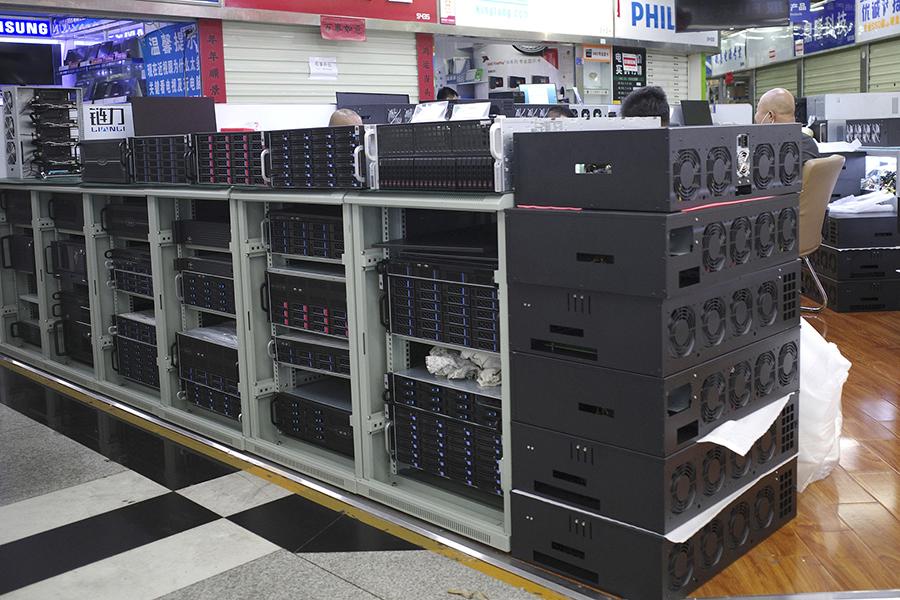
On September 25, 2021, a store in Shenzhen sold virtual currency mining machines. Picture | Visual China

Currently, more than 120 countries and two-thirds of the world's economies have joined the "carbon neutrality" transition. Under this trend, the high energy consumption issue of virtual currency “mining” has become the focus of heated discussions in the industry.

At the same time, unlike traditional currencies, cryptocurrencies are not backed by a specific government or bank, and their decentralized and anonymous nature means there is no regulator deciding how much money will flow into the market.

The endless growth of the "mining" industry has also led many domestic retail investors to illegally participate in virtual currency transactions and speculation, seriously disrupting the economic and financial order, spawning illegal and criminal activities, and becoming an illegal channel for money laundering, tax evasion, terrorist financing, and cross-border fund transfers.

Purging is imperative.

On May 18, 2021, the Internet Finance Association, the Banking Association, and the Payment and Clearing Association jointly issued the "Announcement on Preventing the Risks of Speculation in Virtual Currency Transactions", requiring member institutions not to carry out virtual currency transaction exchanges and other related financial businesses, resolutely resist illegal financial activities related to virtual currency, and not provide accounts, payment settlement, publicity and display and other services for virtual currency transactions.

On the same day, the Inner Mongolia Autonomous Region Development and Reform Commission announced on its website that it would comprehensively clean up and shut down virtual currency mining projects. Soon after, the Natural Resources and Planning Bureau of Kangding City in Sichuan stated that multiple departments in Kangding City had set up a working group to conduct a thorough investigation of Bitcoin mining on the Dadu River and then clean up violations. The Hainan Provincial Development and Reform Commission also clarified that differential electricity prices will be implemented for virtual currency "mining" activities, with the price increase standard being 0.80 yuan per kilowatt hour.

On September 24, ten departments including the central bank, the China Banking and Insurance Regulatory Commission, the Cyberspace Administration of China, and the State Administration of Foreign Exchange issued the "Notice on Further Preventing and Dealing with the Risks of Speculation in Virtual Currency Transactions." The notice pointed out that virtual currencies such as Bitcoin and Ethereum do not have the same legal status as legal tender and cannot be circulated in the market as currencies; virtual currency-related business activities are illegal financial activities and should be resolutely banned in accordance with the law.

At the same time, the National Development and Reform Commission also issued a document, targeting "mining": prohibiting "mining" in any name, including the relevant commitments of data center companies in credit reporting; classifying virtual currency "mining" activities as an eliminated industry, and stopping all fiscal and tax support.

In December, the Beijing Chaoyang District Court and the Dongcheng District Court successively declared the Bitcoin mining contract invalid, making it difficult to even file a case for cryptocurrency-related telecommunications fraud.

Virtual currency “mining” is officially listed as a phased-out industry, which will release a large amount of power resources that are occupied by ineffective and harmful production capacity, so that efficient and beneficial production capacity can obtain relatively sufficient power guarantee, which will help reduce the degree of power shortage, narrow the scope of power restrictions, and effectively reduce greenhouse gas emissions caused by ineffective energy demand.

At the same time, this will also help promote the development of new industries such as energy storage, support the construction of new power systems, serve wind power, photovoltaics and other renewable energy power generation on a large scale, and achieve large-scale substitution of fossil energy with low-carbon renewable energy. It is of great significance to promote the optimization of my country's industrial structure, promote energy conservation and emission reduction, and achieve carbon peak and carbon neutrality goals as scheduled.

Cao Xiao, a professor at the School of Finance at Shanghai University of Finance and Economics, said: Technology itself is not right or wrong. While cracking down on "mining," we must pay attention to distinguishing it from blockchain technology, and adopt a regulatory approach that separates "chains" and "coins."

China has the advantages of massive data and rich application scenarios, and has broad application prospects in the future. How to keep relevant industries from going astray, how to clarify the boundaries of rights and responsibilities of all parties, and how to improve the big data governance system will be the focus of future supervision.

References:

Why Is Bitcoin So Popular? This Article Will Help You Understand The Principles And Advantages Of Bitcoin Mining

Bitcoin, which can be called the "digital gold" of virtual currencies, has seen a sharp rise in global transaction prices in recent days. On June 6, the price of one Bitcoin rose to nearly 20,000 yuan, a record high.

Previously, a "Want to Cry" ransomware attack that ravaged the world attracted global attention. Different from previous virus attacks, this time the hacker did not block the road, but put forward a condition: If you want to recover the data, you can exchange it for Bitcoin!

Anonymous, tax-free, supervision-free, and borderless… the mysterious Bitcoin has once again attracted the attention of all sectors of society and even financial regulatory agencies in various countries. Although the virus attack has been controlled to a certain extent, all parties are still worried that Bitcoin will once again become a money laundering tool for hackers.

Why is Bitcoin so popular? Xiao Lei, chief researcher of Gold Wallet, analyzed that Bitcoin has several advantages that existing financial systems do not have, such as its anonymity. Secondly, it skips the traditional financial system of financial intermediaries, such as banks. Another point is that it is global, especially if it is spread on the Internet, you actually don’t know where the person who initiated the payment is. Bitcoin is now a very expensive thing, its price has exceeded that of gold.

Obtaining is like mining, Bitcoin is equal to "digital gold"

In 2008, when the global financial crisis broke out, a person calling himself Satoshi Nakamoto posted a research report titled "Bitcoin: A Peer-to-Peer Electronic Cash System" on a secret cryptography review group, and Bitcoin was born. On January 3, 2009, the world’s first batch of Bitcoins were “digged”.

Bitcoin is a digital virtual currency. Compared with legal currency, its biggest feature is "decentralization", that is, it does not rely on any issuer, but is generated by calculation. Anyone can obtain it through specific 64-bit operations. Issuance and system security are based on mathematical principles. According to Satoshi Nakamoto's design, the total number of Bitcoins is only 21 million. Currently, more than 16 million Bitcoins are owned by individuals, and the remaining nearly 5 million Bitcoins require a large amount of data calculations to obtain.

The process of obtaining Bitcoin is vividly called "mining", and the participants in mining are "miners", and the supercomputers needed for mining are "mining machines". The process of "mining" is essentially the process of using a computer to solve a complex mathematical problem. In short, mining is like using a computer to solve a complex mathematical problem. Every time a qualified answer is obtained, the Bitcoin network will generate a certain amount of Bitcoin as a reward.

Today, the number of Bitcoins is getting smaller and smaller, and the difficulty of mining is constantly rising, so latecomers mostly obtain them through transactions. Bitcoins can be traded around the world with the help of the Internet. Deng Jianpeng, a professor at the Law School of Minzu University of China and vice president of the China Technology and Finance Law Research Association, said that transferring Bitcoin to the other side of the world is as simple as sending an email, with low cost and no restrictions. Therefore, Bitcoin is used in cross-border trade, payment, remittance and other fields.

Users can use Bitcoin to purchase some virtual items, such as clothes, hats, equipment, etc. in online games. As long as someone accepts it, Bitcoin can also be used to purchase items in real life.

The first transaction in Bitcoin history occurred on May 22, 2010. On that day, a Florida programmer named Han Yates purchased two pizzas for 10,000 Bitcoins.

At the end of November 2013, a restaurant in Beijing launched Bitcoin payment. At the end of the meal, consumers can complete the payment by transferring a certain amount of Bitcoin to the restaurant's account. The whole process is similar to a bank transfer. The restaurant once settled a meal of 650 yuan with 0.13 Bitcoins.

Digital currency is coming, is it worth investing in?

Currently, there are dozens of active Bitcoin trading platforms around the world. According to the latest statistics from the Huobi Blockchain Research Department of the Chinese Bitcoin trading platform, the Japanese yen ranks highest in recent currency-denominated Bitcoin transaction volumes around the world, accounting for more than 30.8%. Previously, Japan’s transaction volume once reached 46%, and nearly half of the world’s Bitcoin transactions occurred in Japan.

Japan introduced regulatory policies around February and March this year, allowing digital currencies like Bitcoin to flow legally within Japan. Globally, this is the first developed country to officially have a relatively positive policy attitude toward digital currencies like Bitcoin. Announced recognition of Bitcoin as a legal payment method. Subsequently, Peach Airlines, Japan’s largest low-cost airline, announced that it would become the first airline in Japan to accept Bitcoin tickets. Peach Airlines is not the first company to announce that it will use Bitcoin for payment. Big Camera, a large electronics chain, has previously announced that it fully supports Bitcoin payment.

However, Bitcoin transactions are not only risky, but are often bundled with illegal activities, so they have been questioned since its birth. The Bitcoin trading market has no price limit, and the price is easily controlled, resulting in violent fluctuations and extremely high risks. In December 2013, the price of Bitcoin reached a historical high of US$1,147, but then plummeted, falling to more than US$100 by early January 2015. Experts exclaimed that "Bitcoin contains huge investment risks, which is worrying."

Xiao Lei believes that Bitcoin looks very attractive, but it is only a speculative product and cannot be called an investment product. Because it does not have a complete price model, the rapid appreciation of Bitcoin is actually a kind of speculation demand by everyone.

Whether Bitcoin is worth investing in? According to Xu Baolong, director of Huobi Blockchain Research Center, from an investment perspective, it is really not recommended that you buy Bitcoin after seeing it rise. The risk of its skyrocketing or plummeting is very high. For investors, first of all, do not blindly follow the trend, and make prudent decisions after having a certain understanding. In addition, Bitcoin is called a cryptocurrency, which does not mean that it is really a currency. It is actually a high-risk, high-yield thing. If you consider it as a long-term investment based on understanding, you can also consider it.

However, Xiao Lei pointed out that the price of Bitcoin depends on everyone’s acceptance. If everyone believes that this thing will be valuable in the future, then the demand will increase, and under the premise of limited supply, the price may rise to a very high price. But it cannot be ruled out that if at a certain point, everyone finds that its payment function is not as convenient as WeChat and Alipay, and suddenly does not recognize it, then the possibility of collapse is also very high.

"China should rush to study the issue of digital currency, explore scientific and systematic regulatory methods and means, support relevant systems, bring it into the scope of supervision as soon as possible, standardize the development of Bitcoin, and lay a good foundation for my country's future legal digital currency." Yin Lei, deputy director of the Department of Finance at Nanjing University of Finance and Economics, said.

The Price Of Bitcoin Is Skyrocketing, The Mining Threshold Is High And Output Is Reduced, But Currency Speculation Is Becoming Increasingly Popular.

Recently, the price of Bitcoin has been rising like a rocket. China News Network IT Channel found from the Bitcoin China website that as of yesterday, the transaction price of 1 Bitcoin had reached 3,490 yuan. A month ago, the price was only about 1,000 yuan. This means that in the past month, Bitcoin has increased by about 249%.

Making money by “mining” is unreliable

It is understood that there are currently two ways to obtain Bitcoin: trading and "mining" (obtaining Bitcoin through complex calculations on the Internet). Faced with the rising price of Bitcoin, many people have begun to consider "mining." But the "mining" blue ocean has long since disappeared. According to a Taobao store owner who sells "mining machines", "mining" requires a mining machine. The higher the performance of the mining machine, the greater the probability of obtaining Bitcoin. However, in the future, the computing power of the entire network will become higher and higher, and the income from mining will also plummet. At the same time, the price of advanced mining machines is getting higher and higher, which has set a big "threshold" for "mining".

In addition, according to the design principle of Bitcoin, the output of mining will decrease as the number of Bitcoins increases. Last year, you could get 50 Bitcoins at a time, but this year it dropped to 25, and the output will be less and less. It is understood that Bitcoin is limited to 21 million, and in April this year, there were already 10.8 million on the market.

However, this has not stopped the "crazy" performance of Bitcoin, the momentum of "mining" has not diminished, and "speculating on Bitcoin" has become increasingly popular in China. A research report recently published by the technology website Business Insider shows: "The largest Bitcoin trading platform is now in China, replacing demand from Japan, the United States and Europe."

Although the price of Bitcoin continues to rise, there are still risks in "speculating on Bitcoin". Wang Yinping, chief analyst of Guolian Futures, said that Bitcoin itself is a virtual currency on the Internet. Only a few countries recognize the legal status of Bitcoin. Generally speaking, it does not have any guarantee, including guarantees from industry and government regulatory agencies.

Bitcoin moves towards payments

The continued rise in the price of Bitcoin has also aroused heated discussions. Netizen @Roy Li believes that Bitcoin is electronic gold (1270.30, -2.00, -0.16%) and plays the role of gold rather than banknotes. @李tiejun believes that Bitcoin is a collectible and has no monetary value. This collection is actually worthless, and the person who takes over in the end will lose it all. However, Beijing Garage, Guoke Electronics, and Baidu Accelerator have successively announced that they support Bitcoin payment, and some developers have even launched physical properties that support Bitcoin purchases. It seems that Bitcoin is moving in the direction of payments.

If Bitcoin performs well for payments, will its value still rise? At a recent trading seminar in New York, the American Winklevoss brothers said that the total market value of Bitcoin will exceed US$400 billion in the near future. If this prediction holds true, based on the number of 10.8 million Bitcoins on the market in April this year, this means that each Bitcoin will rise to about $40,000 in the future.

In June this year, when the Winklevoss brothers disclosed their Bitcoin ETF fund plan, they were ridiculed by some American media. They believed that Bitcoin was unreliable and also doubted the IQ of the brothers.

Regulatory policies may be introduced

While Bitcoin is developing in the direction of payment, it has also caused concerns from relevant departments. It is understood that Bitcoin transactions are not under the supervision system of banks. Some people question this and Bitcoin will be used to engage in illegal activities, such as money laundering and drug purchase.

In view of this consideration, last Friday, the New York State Department of Financial Services announced that it would hold a public hearing to discuss legislative issues regarding this virtual currency. At the meeting, it will be discussed whether to introduce a "BitLicense" license to manage the trading market of online currencies such as Bitcoin. This has caused heated discussions, and many people are worried that the introduction of these regulations may reduce the attractiveness of Bitcoin and lead to its devaluation.

However, Bitcoin circulates around the world, and monitoring may not be easy. Some media analysts believe that traders will use the method of "squeezing toothpaste" to make multiple transactions in small amounts to avoid monitoring, which further increases the difficulty of monitoring. What's more, Bitcoin uses anonymous transactions, and users can open multiple accounts, and the pseudonym has no connection with his real identity in real life.

Australia's "Daily Calculation" reported on the 16th that Bitcoin is exchanged between people and does not involve a third party, so it is more resistant. In addition, it uses passwords to ensure the integrity of transactions, which makes it almost impossible for outsiders to obtain the identity details behind the transactions. In addition, the authorities can close countless Bitcoin trading accounts, but as long as one account remains, Bitcoin can be resurrected.

The Price Of Bitcoin Is Skyrocketing, But Quantum Computing May Be Its End. What’s Going On?

Bitcoin was born in 2009, but its price has risen from 1 cent in 2010 to more than 10,000 US dollars now, achieving a million-fold growth in eight years. The reason why Bitcoin is so popular is because of the freedom, security, and fairness endowed by blockchain technology. However, in the near future, such a virtual currency mechanism may be completely disintegrated. The safety, reliability, and rock-solid foundation that many people believe in may be destroyed by the rapid development of quantum computing.

Just last week, the Chinese Academy of Sciences' quantum computer research made a breakthrough. The Institute of Quantum Information and Quantum Science and Technology Innovation of the Chinese Academy of Sciences released an 11-qubit cloud-access superconducting quantum computing service in the direction of superconducting quantum computing. Worldwide, this is the second company after IBM to provide cloud computing services with more than 10 qubits. This progress has once again made quantum computing the focus.

The rapid development of quantum computing has exceeded everyone’s expectations. Some predict that quantum computing will bring a devastating blow to blockchain (including Bitcoin) within ten years. So, how do quantum computers pose a threat to blockchain? How much of a threat will it pose? Does the blockchain have any countermeasures?

This starts with the principles of quantum computers and blockchain.

1. Quantum computers and blockchain

1. Quantum Computer

Simply put, the operating unit of a quantum computer is a quantum bit (qubit) rather than a bit (bit) of a classical computer. In a classical computer, the value of a bit is certain, it may be 1 or 0. But in a quantum computer, the value of a qubit is uncertain before observation. This value may be 1, it may be 0, or it may be a superposition of 1 and 0, that is, equal to 0 and 1 at the same time.

How big is the difference? Take "Naruto" as an example, that is, Sasuke is a classical computer and Naruto is a quantum computer. If you want to find something, Sasuke can only run to find it one place by himself, maybe for a year. But Naruto can split into 5 shadow clones, and then the 5 shadow clones split into 5 shadow clones, and the clones clone again, and all the clones go to different places, find something in an instant, and then the clone takes it back, leaving only one Naruto, retrieve the thing, and it's done.

Professor Robert Schoelkopf of Yale University said: "When a quantum computer has 50 or 100 qubits, and these qubits can work very well and can be completely error-corrected, then you can use this quantum computer to do more complex calculations."

The changes brought about by the powerful computing power of quantum computers will be earth-shaking and may even affect national security. Therefore, Academician Pan Jianwei of the Chinese Academy of Sciences once said: "I believe that the importance of quantum technology in the 21st century can be compared with the 'Manhattan Project' of the last century."

2. Blockchain and Bitcoin Mining

At present, the most famous application of blockchain technology in the world is Bitcoin. Satoshi Nakamoto is the founder of Bitcoin. Next, we will start from the concept of Bitcoin to get a glimpse of the reality of blockchain.

Now, we can imagine the blockchain as a ledger. Each block contains a part of this ledger. The complete information of this part of the ledger is stored in all nodes of this block. This is the decentralization of blockchain technology. Each block has only a part of the ledger, but this part will record the information of the previous block, and one block is connected to another, forming a blockchain.

The advantage of blockchain is that it forms a trust mechanism. For example, if you deposit 100 yuan in the bank, if a hacker hacks into the bank, takes away your money, and clears the data, you will not have any information to prove that you have 100 yuan in assets in the bank. But if it is replaced by a blockchain, it means that every node in the block where the bank is located has a complete ledger record. In other words, your neighbor, the aunt on the street next door, and even every resident in this area have ledgers that can prove that you have 100 yuan of assets in the bank.

Compared with the centralized mechanism in the traditional financial field, the decentralization of blockchain makes it more reliable and firm. Even if some node information is lost, the system can still continue to operate normally. Therefore, blockchain is considered a very safe and reliable technology.

So what is Bitcoin mining?

Based on the blockchain, Satoshi Nakamoto proposed the concept of Bitcoin in 2009. He stipulated that in the Bitcoin network, 50 Bitcoins will be generated every ten minutes. When the total amount reaches 10.5 million (half of 21 million), 25 Bitcoins will be generated every 10 minutes. When the total amount reaches 15.75 million, 12.5 Bitcoins will be generated every 10 minutes. When the total amount reaches 21 million, Bitcoin will stop growing. In other words, the total number of Bitcoins has been fixed at 21 million from the beginning.

Bitcoin "mining" is how new Bitcoins are generated. People who "mine" are called "miners." Miners use computers to solve mathematical problems in the Bitcoin network. The first miner to solve the problem publishes the answer, records it in the ledger, and records it in all nodes simultaneously. This is called successful mining and obtains Bitcoins.

The mechanism of the blockchain was very safe and reliable before the development of the concept of quantum computing. At least for so many years, Bitcoin has not been hacked by hackers. However, in recent years, quantum computing has developed rapidly, exceeding the speed previously expected. Therefore, some industry insiders predict that within ten years, the security and reliability of blockchain will be greatly threatened by quantum computers.

2. How does quantum computing pose a threat to the blockchain?

To understand the threat of quantum computing to the blockchain, we must first start with the security protocol in the Bitcoin system. The Bitcoin protocol involves two types of cryptography, namely the hash function (hash function) used in the mining process and the asymmetric cryptography used to provide digital signatures on the blockchain.

Miners use their computing power to calculate a random number for each block using the SHA-256 hash function. The result of this process is very easy to verify, but difficult to find. Asymmetric cryptography is used to authorize transactions on the Bitcoin blockchain. Each user on the entire chain will be assigned a public key and a private key. This is the public key cryptography system (Public Key). Public key cryptography uses a pair of keys to encrypt information: a public key that can be shared widely and a private key that is known only to the owner of the key. Anyone can encrypt a message using the intended recipient's public key, but only the recipient can decrypt the message using his private key.
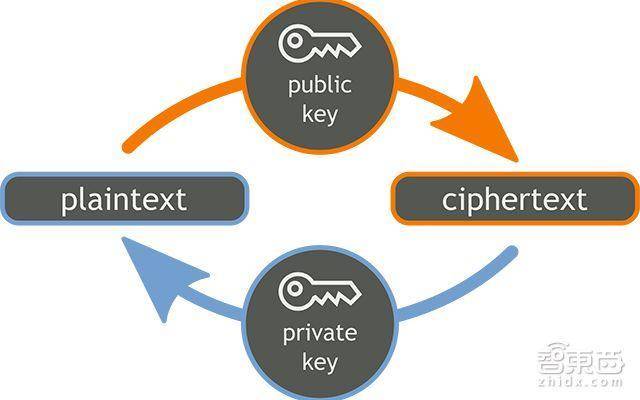
The threat of quantum computing to the blockchain_Principles of Bitcoin Mining_Quantum Computing and Bitcoin Price

The core of such an asymmetric cryptographic algorithm is to use the Elliptic Curve Digital Signature Algorithm (ECDSA) to generate keys. Given a private key, it is easy to deduce the corresponding public key, but in turn it is difficult to calculate. This is why Bitcoin is safe now.

Quantum computers may pose a huge threat to these two lines of security. In the future, quantum computers can quickly crack the hash function and monopolize the entire blockchain. At the same time, there are also predictions that in the near future (perhaps 2027) the quantum computer's Shor's algorithm can crack the key in ten minutes (600 seconds).

In the world of Bitcoin, the success rate of mining with a classic computer has a certain relationship with the computing power, but a large computing power does not mean that you will be able to mine (as long as your computing power does not exceed 50% of the entire network). Mining is also related to luck to a certain extent. Take walking a maze as an example. If a person walks fast and tries one step at a time, he will definitely reach the end of the maze as quickly as possible. But what if a person walks slowly but finds the way to the end of the maze in just one try? Therefore, people who walk fast may not necessarily win against people who walk slowly. In the same way, miners with greater computing power may not necessarily dig mines before miners with small computing power.

As mentioned above, mining is actually solving mathematical problems and finding random numbers encrypted by hash functions. However, it is possible that two different groups of miners will discover two random numbers at the same time and announce different blocks. In this case, Bitcoin’s rule is to prioritize the block that processes more, and the other block will be invalidated. For example, this is similar to 51 people in a community saying that you deposited 100 yuan in the bank, and 49 people saying that you deposited 50 yuan. In this case, the minority obeys the majority, and the bank thinks that your deposit of 100 yuan is true, and that you deposited 50 yuan is false.

Let us further explain the concept of "51% attack" from this rule. In the blockchain, if a group of miners has 51% of the computing power of the entire network, then it can monopolize the entire blockchain. Because he will always process blocks faster than the other group of miners with 49% of the computing power, he will receive all the Bitcoins generated thereafter.

Regarding the issue that quantum computers will threaten mining, Divesh Aggarwal and researchers from the National University of Singapore (NUS) conducted in-depth research and published a paper on this in October 2017. They believe that at least in the next ten years, ASIC mining will be faster than quantum computers, but after ten years, the mining speed of quantum computers will increase rapidly. Secondly, in the face of quantum computers, the asymmetric cryptography algorithm used in the blockchain, that is, the public key cryptography system, will be under greater threat.

Researchers from the National University of Singapore pointed out that by using quantum computers, the process of using public keys to infer private keys can be easily reversed, and everyone's private key will be easily inferred by the quantum computer.
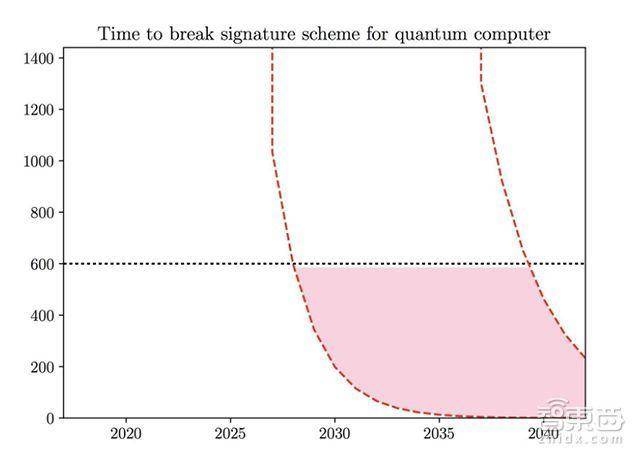
Principles of Bitcoin Mining_Quantum Computing and Bitcoin Price_The Threat of Quantum Computing to the Blockchain

The estimated time required for a quantum computer to crack an encrypted signature is in seconds. It is expected to only take ten minutes/600 seconds in 2027.

Similarly, we can compare this decryption process to walking a maze. What a classical computer can do is go in one direction until it reaches a dead end, and then turn around and choose another path. However, a quantum computer gives you a God's perspective, overlooking the entire maze, and it is clear which way to go.

However, a quantum computer needs to reach a certain level of qubits to achieve such a level. Foreign media Motherboard believes that a 4,000-qubit quantum computer may be able to disrupt the blockchain. In other words, whichever person or team first makes and applies such a quantum computer can solve and verify every transaction. All cryptocurrencies that will be produced in the future and have not yet been circulated will be monopolized by it, and the trust system of cryptocurrencies will be destroyed.

3. The development of quantum computers is still in its infancy.

Although quantum computers are developing rapidly and may pose a huge threat to blockchain in the future, quantum computers are still in a very early "toy computer" stage. At present, the world's giants can only produce about 10 quantum computers with high-fidelity quantum qubits. The 11-qubit superconducting quantum computing service released by the Chinese Academy of Sciences last week is the world's second cloud computing service with more than 10 qubits. Quantum computing services like this cannot yet be used to solve actual computing problems, but developers can already use such cloud services to learn programming knowledge related to quantum computers.

It seems that 4000 qubits are really far away from us? But it may not be as far away as we think, because based on the fact that Microsoft, Google, and IBM have made a series of breakthroughs in the field of quantum computing in recent years, Fortune magazine predicts that the first practical quantum computer will be built within 10 years.

Many companies have predicted how long it will take within 10 years. For example, Microsoft predicted that a practical quantum computer would be built in 2025. Google also announced in 2017 that it would make a commercialized practical quantum computer within five years (that is, around 2022).

Conclusion: There is an impact, but there are also countermeasures

The rapid development of quantum computers is already a major trend and will one day threaten the blockchain, but it seems that many experts in the blockchain have not yet become vigilant. According to Fortune magazine, at the Crypto 2017 conference in November 2017, a conference for top blockchain cryptographers, “no one in the world was worried” about quantum computing risks. One expert said it would be a "very expensive operation" and would likely require "government-level" spending.

Another expert, who completely laughed at the idea, waved his hand and said that by the time practical quantum computers come out, public key cryptography will have developed to the point where there is no need to worry about quantum computers, so this issue will not matter at all.

But these experts all share the same view, which is that the emergence of quantum computing will jeopardize the security of all existing encryption methods, including RSA tokens. Additionally, quantum computers will impact the security of finance and banking, not just blockchain.

At the same time, there are also relevant agencies that attach great importance to this. For example, in 2015, the US National Security Agency announced that it was studying quantum cryptography systems, that is, encryption systems that can withstand quantum computing. In academia, there are also cryptography experts who are studying quantum cryptography, and there are already blockchain projects implementing quantum cryptography.

At present, no one may be able to accurately predict the specific time when practical quantum computers will be born, but if we look at it more positively, the birth of commercial quantum computers may be faster than we expect, because today's technological development is accelerated rather than developing at a uniform speed. Maybe in 2018, quantum computers were still in a very early stage, and the development progress of practical quantum computers was only 5%. But maybe in 2019, the progress will reach 10%, and in 2020, the progress may reach 30%. All of this is possible.

Technology is always developing. Emerging technologies such as blockchain and cryptocurrency may still be in their infancy. There is still a long way to go before reaching technological maturity. Developers need to be careful about a series of obstacles that will appear in the process, including quantum computing.
A Must-read For Huawei Mobile Phone Users! OKX Wallet Download And Installation Guide And Precautions

As a world-renowned digital asset trading platform, OKX's official wallet (OKX Wallet) supports the use of multiple platforms, including Huawei mobile phones. Due to certain differences between the HarmonyOS system and the Android system installed on Huawei mobile phones, and some models may not be able to download third-party financial applications directly through the Huawei App Store, users need to complete the installation through official channels or compliance methods. The following are detailed download and installation steps, as well as precautions to help Huawei mobile phone users use OKX Wallet safely.

Preparation before downloading: Confirm the mobile phone system and network environment. System requirements: Make sure that the Huawei mobile phone is running HarmonyOS 2.0 and above (or EMUI 10.0 and above). If the system is too low, it may cause application compatibility issues. Network permissions: It is recommended to connect to a stable Wi-Fi network to avoid download failure or installation package damage due to network fluctuations. Storage space: Check the remaining storage space of the phone (at least 100MB) to ensure there is enough memory to install the application. Official method to download OKX Wallet

Due to the strict review of financial and cryptocurrency applications in Huawei App Market, OKX official wallet may not be directly available on the shelves. It is recommended to download through the following two official channels:

Method 1: Download from the OKX official website (recommended) and visit the official website: Open the OKX international version official website (www.okx.com) in your mobile browser. If you are a domestic user, you can switch to the "China version" official website (www.okx.cn) and select the version according to your needs. Find the download entrance: Click the "Download" or "Mobile" option on the homepage of the official website to enter the exclusive download page for Huawei mobile phones. Download the installation package: Select "HarmonyOS version" or "Android version" (HarmonyOS system is compatible with Android applications), click "Download" and save the installation package (usually in .apk or .hap format). Method 2: Download through OKX official APP

If you have installed the OKX trading APP, you can update or download the wallet function through the following steps:

OK Wallet Download and Install_OKX Wallet Huawei mobile phone installation steps_Huawei mobile phone download OKX Wallet

Open the OKX Trading APP, click the "≡" menu in the upper right corner of the homepage, and enter "General Settings". Select "Wallet Management", find the "OKX Wallet" entrance, click "Download" or "Try Now", the system will automatically jump to the download page. Steps to install OKX Wallet

Allow installation of apps from unknown sources:

Install APK/HAP file:

Open and initialize the wallet:

Note: Safety and Compliance Priority

Check the official channels:

Huawei mobile phone download OKX Wallet_OKX Wallet Huawei mobile phone installation steps_OK Wallet Download and Install

Be sure to download the installation package through the OKX official website or official APP, and never download through third-party links, forums or informal app stores to avoid encountering phishing or malware.

Be wary of “high imitation applications”:

Huawei mobile phone users should note that some copycat APPs may be disguised as "OKX Wallet", with names and icons that are highly similar to the official ones. Carefully check the application name and developer information before downloading (the official developer is usually "OKX" or an affiliated company).

Comply with regional regulations:

OK Wallet Download and Install_OKX Wallet Huawei mobile phone installation steps_Huawei mobile phone download OKX Wallet

Digital asset transactions and wallet use must comply with local laws and regulations. Mainland Chinese users must ensure that their behavior complies with regulatory requirements and avoid participating in illegal financial activities.

Regularly updated versions:

OKX will update wallet functions from time to time to improve security and stability. It is recommended to check for updates on the official website or APP in time to avoid security risks caused by using old versions.

Frequently Asked Questions

Sign In

Forgot Password

Sign Up