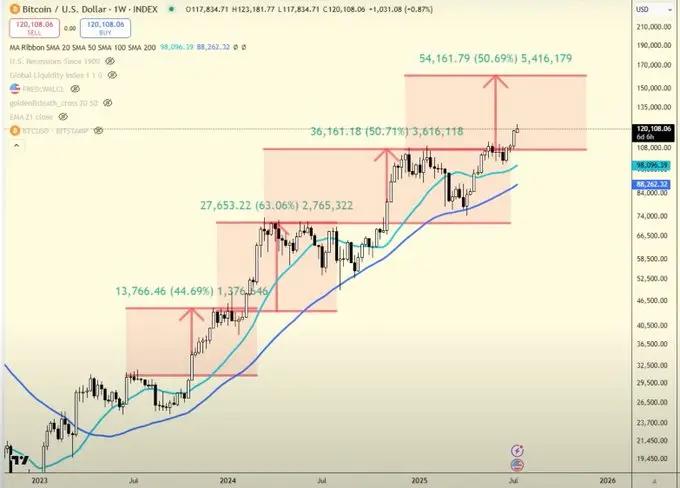
Today I will mainly take you to understand some of the mainstream currencies in the currency circle~
1. Bitcoin
Bitcoin is the world's first decentralized digital currency, born when Satoshi Nakamoto published his white paper in 2008. The biggest features of Bitcoin are decentralization and blockchain technology. The total amount of Bitcoin is limited, only 21 million, so it is also called "digital gold".
Currently the most widely used digital currency, it was born on January 3, 2009. It is a peer-to-peer (P2P) digital cryptocurrency with a total of 21 million coins. The Bitcoin network releases a certain number of coins every 10 minutes and is expected to reach its limit in 2140.
Bitcoin’s transaction speed is fast, fees are low, and it has high anonymity and security.

2. Ethereum
Ethereum is an open source blockchain platform designed to enable the development and deployment of smart contracts and decentralized applications. It features the use of a digital currency called Ether and can also execute smart contract code. Born in 2015, it was created by young programmer Vitalik Buterin. He gained some attention in the Bitcoin community, but felt that Bitcoin's capabilities were limited and began working on a new blockchain platform. As a development result of Buterin, Ethereum has received widespread attention and recognition in the field of cryptocurrency and blockchain.
Ethereum allows developers to write and deploy smart contracts to automate transactions and contract execution. It also provides a platform that allows developers to build decentralized applications that do not rely on centralized servers or service providers.
The advantages of Ethereum are fast transaction speed, low fees, programmability and flexibility, so it is widely used in blockchain games, finance, supply chain and other fields.
3. USDT (Tether)
USDT is an encrypted stable currency based on blockchain technology. The token name is "USD Tether" and is pegged to the US dollar. 1 USDT = 1 US dollar. The biggest feature of USDT is its stable value, which can be used for transactions in the currency circle and can also be exchanged between digital currency and legal currency.
USDT was originally launched in 2014 by a company called Realcoin, which later changed its name to Tether. Tether launched USDT based on the Bitcoin blockchain in 2015, and has since launched USDT on other chains such as Ethereum and TRON.
The main role of USDT is to provide a stable digital currency whose value is always anchored to the US dollar. This allows users to trade in USD values in the cryptocurrency market without having to worry about cryptocurrency price fluctuations. USDT is also commonly used for transfers and transactions on cryptocurrency trading platforms, as well as for hedging, lending and other financial operations. In some cases, USDT can also be used as a replacement for traditional bank accounts, as it can act as a kind of digital dollar. However, it should be noted that USDT is not risk-free, and its value and market operation are also highly controversial. Investors need to be cautious when using it.
4. Litecoin
Litecoin is also a cryptocurrency based on decentralized blockchain technology. It is similar to Bitcoin and was created in 2011 by a former Google engineer Charlie Lee. Litecoin began as a fork of Bitcoin with the purpose of providing a faster and cheaper transaction solution.
Litecoin functions similarly to other cryptocurrencies. It can be used as a decentralized digital currency for transactions, payments, and store of value, as well as for investing and trading. Unlike Bitcoin, Litecoin has shorter transaction confirmation times, faster block generation, and lower handling fees, so it may be more suitable as a payment instrument in some cases. Additionally, Litecoin can also be used for fast, low-cost cross-border transfers due to its short network confirmation times and low fees.
It should be noted that the cryptocurrency market is highly volatile and everyone should invest with caution.
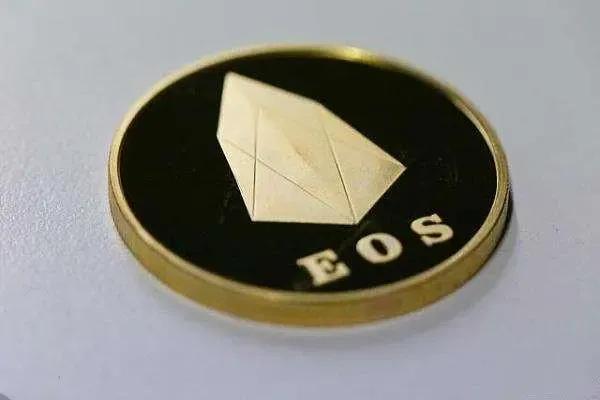
5. Grapefruit Coin EOS
EOS is an independent blockchain platform developed by Block.One and officially launched in 2018. It aims to provide a platform for decentralized application development and deployment, featuring high performance, flexibility and ease of use. One of the design goals of EOS is to solve the scalability, user-friendliness and security issues in actual blockchain systems.
The main features and functions of EOS include:
1. Decentralized Applications (DApps): EOS provides high-performance blockchain infrastructure, encouraging and supporting developers to build various decentralized applications, including games, financial services, social media, etc.
2. Democratic governance: EOS adopts the DPoS (Delegated Proof of Stake) consensus mechanism and provides a democratic governance system that allows voters holding tokens to jointly participate in the management and decision-making of the network. DPOS is similar to the U.S. parliamentary system. Each super node is similar to a member of the parliament. There are 21 super nodes in total, and they are jointly voted by all EOS holders. This "parliament" has great decision-making power over the entire EOS ecosystem. If a certain plan is to be implemented, 15 votes from the super nodes are required before it can be implemented.
3. Platform scalability: EOS aims to provide users with high-performance, high-throughput, low-latency blockchain infrastructure to support large-scale applications and users.
Overall, EOS is an open blockchain platform designed to support high-performance decentralized application development and attract developers and users by providing democratic governance and scalability solutions.
The above is an introduction to the mainstream currencies in the currency circle. Each digital currency has its own unique characteristics and application areas. I hope that through this article, everyone can better understand the characteristics and potential value of the mainstream currencies in the currency circle. In the end, investment is risky, so everyone needs to be cautious!