In Beijing, the entrances and exits of every subway station are marked with routes. For single-line stations such as Liangmaqiao Station, "Line 10" is directly marked after the station name. Passengers can reach the platform immediately after entering the station, which is clear at a glance. But once you arrive at a large station with multiple lines for transfer, such as Ping'anli, you are unable to determine which subway line is closer through the entrance and exit sign information, which becomes a major problem for passengers.
After the launch of Beijing Daily's report "Escalators only go up but not down, elevators become "hidden items", a survey on subway barrier-free facilities" was launched, it received a lot of feedback from readers. They generally hope that the details of various guidelines for subway travel can be further optimized. The reporter continued to follow up and visit.
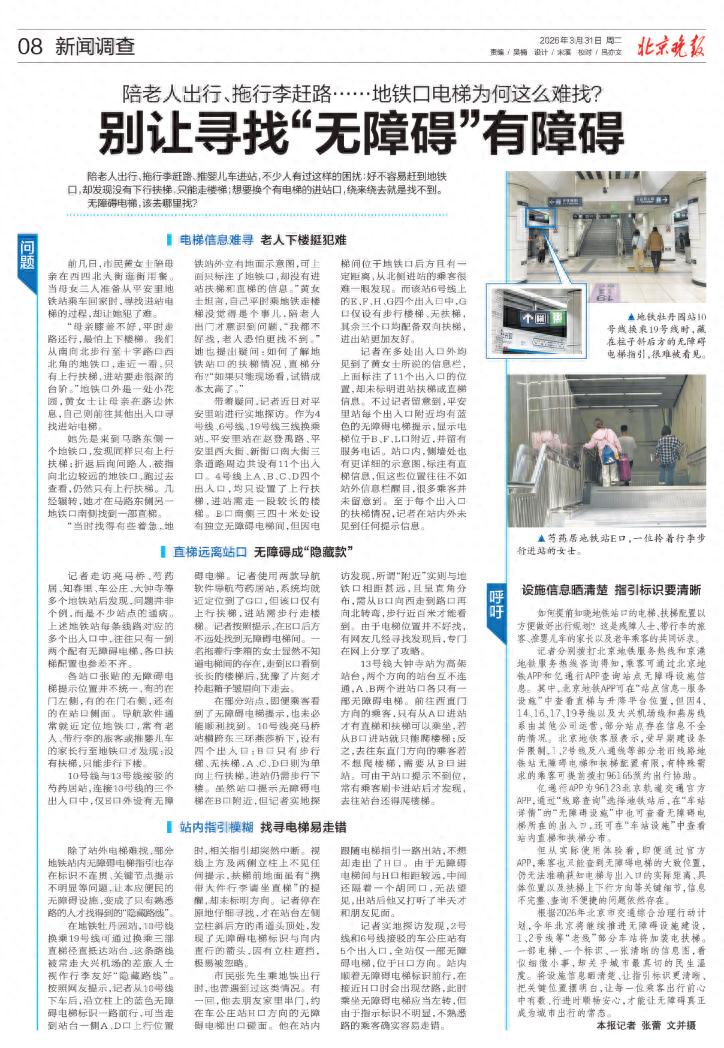
There are multiple entrances to the transfer station. Which entrance is closer?
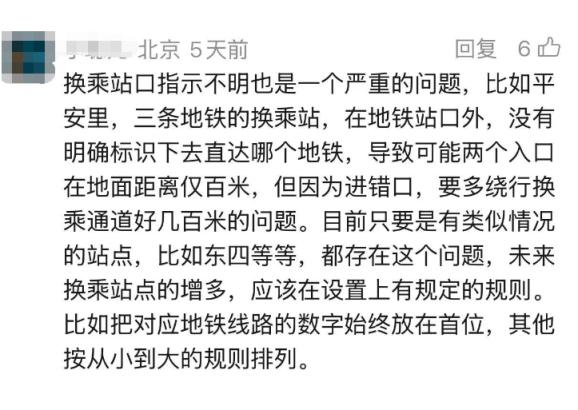
Some readers reported that the instructions at the transfer station entrance are unclear. For example, when transferring to three subway lines at Ping'anli Station, there is no clear sign outside the subway station entrance indicating which subway line the entrance and exit correspond to.
Based on reader feedback, the reporter visited Ping'anli Station of the subway again. As an interchange hub for Line 4, Line 6 and Line 19, Ping'anli Station has 11 entrances and exits on both sides of Zhaodenyu Road, Ping'anli West Street and Xinjiekou South Street: exits A, B, C and D are connected to Line 4, exits E, F, H and G are connected to Line 6, and exits L, K and J are connected to Line 19. For passengers who are in a hurry, choosing the right entrance is a shortcut. If you choose the wrong one, you may have to detour hundreds of meters underground.
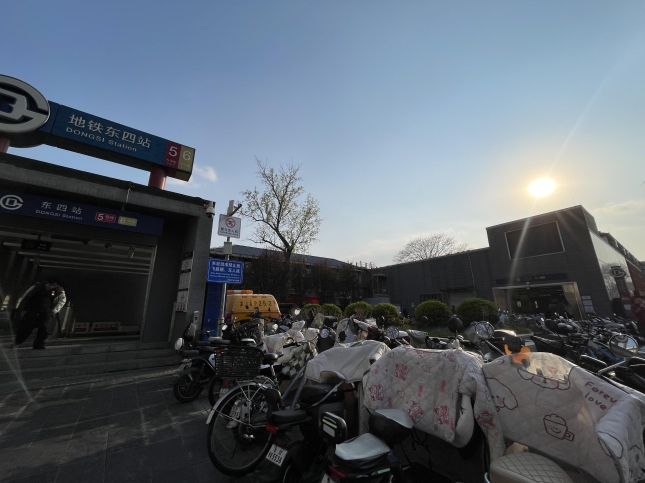
The reporter inspected the 11 entrances and exits one by one and found that the line signs at all the stations were exactly the same: they were arranged in the order of "Line 4, Line 6, and Line 19". Which exit leads directly to which line? It doesn’t make any difference from the sign outside the station.
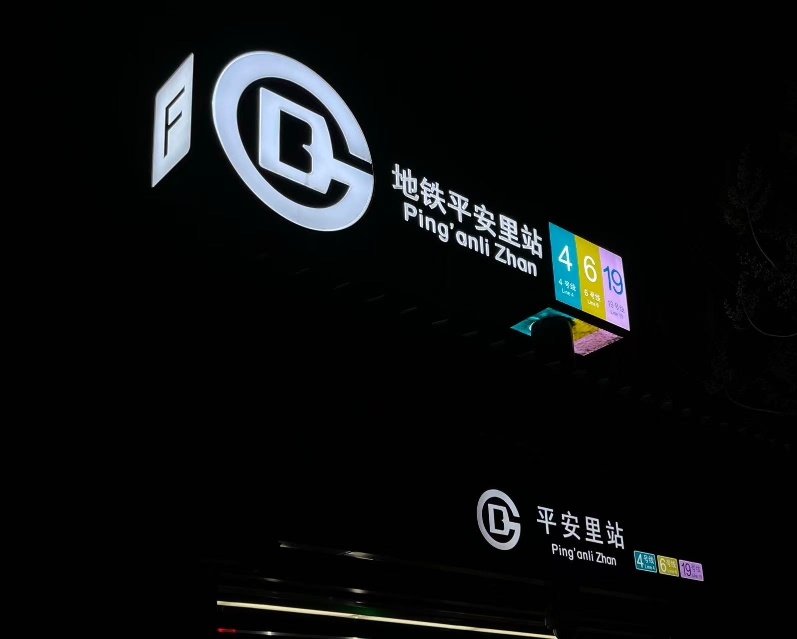
Some people have "suffered" because of this. A passenger once wanted to take Line 19 to catch a flight from Daxing Airport, but mistakenly entered the station from the entrance of Line 4 on the side of Xinjiekou South Street. As a result, he went around underground and was exhausted from the transfer route. Xiaojie, a citizen, works in Dengshikou. When the weather is nice, she occasionally walks one subway stop to Dongsi Station to catch the bus. Because she was not familiar with the line layout of the station, she would be in "difficulty in choosing" every time before entering the station: Exit D and Exit G in the southwest corner of the intersection are only more than ten meters apart, one leads to Line 5 and the other leads to Line 6. "Every time I enter the station, I have to struggle for a long time. After all, if you enter the right entrance, you can go directly to the Line 6 platform. If you enter the wrong station, you have to walk an extra mile."
The reporter saw at Dongsi Station that the seven entrances and exits of the station also use a "unified template": entrances A, B, C, and D are connected to Line 5, and entrances E, F, and G are connected to Line 6. All signs outside the station are marked in the order of "Line 5, Line 6." Similarly, at Chegongzhuang Station, where Line 2 and Line 6 transfer, the five entrances and exits are also labeled in the order of "Line 2, Line 6".
Although the barrier-free elevator diagram at the entrance and exit will show the corresponding relationship between the station entrance and the subway line, even if passengers know how to check, they have to go to the station entrance and take a closer look to distinguish them.
The reporter called the Beijing Metro hotline 96165 and the Beijing-Hong Kong Metro hotline 96123 for consultation. Customer service staff all said that currently it is impossible to determine which subway line the entrance corresponds to only based on the line markings above the subway entrance. Passengers can only know the subway lines corresponding to the subway entrance through the station entrance diagram or official software such as Beijing Metro App, Yitongxing APP or third-party navigation software. They can also call the hotline for help at any time. Customer service also stated that it would record feedback on relevant issues and conduct follow-up research on improvement plans.
suggestion
Put the corresponding line first
Readers suggested that the number of transfer stations will further increase in the future and the rule settings should be improved as soon as possible. For example, put the number of the subway line closest to the entrance and exit first, and the other lines can be sorted by numerical size, so that passengers can see it clearly from a distance.
When transferring in the subway, which of the two channels should I take?
During the visit, the reporter found that many transfer stations have more than one transfer channel, and some routes have obvious differences. In actual travel, passengers often have to choose which route is more labor-saving and which one is more suitable for their own travel direction. If they choose wrongly, they may have to climb a lot of steps.
When transferring to Line 13 at the Zhichun Road Station Line 10 station hall, there are two transfer routes on the left and right, leading to Exit A and Exit B respectively. Due to the simple sign information, it is difficult for passengers to judge the difference. The reporter followed the flow of people and randomly merged into one of the passages, and soon experienced the heartbreaking gap: after arriving at the station hall of Line 13, there was only an elevator leading to the opposite platform in front of him, but the platform he was going to was filled with endless steps.
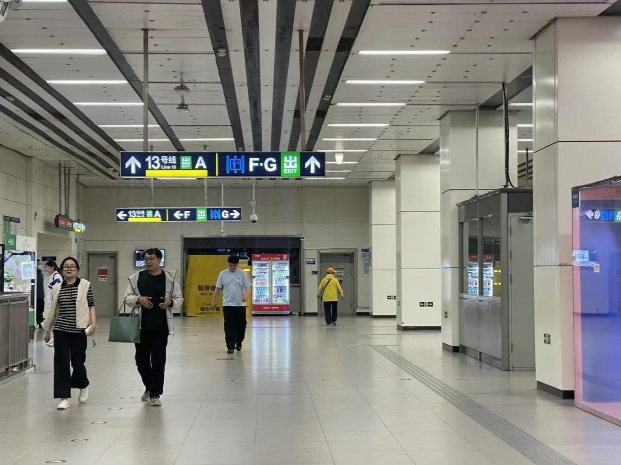
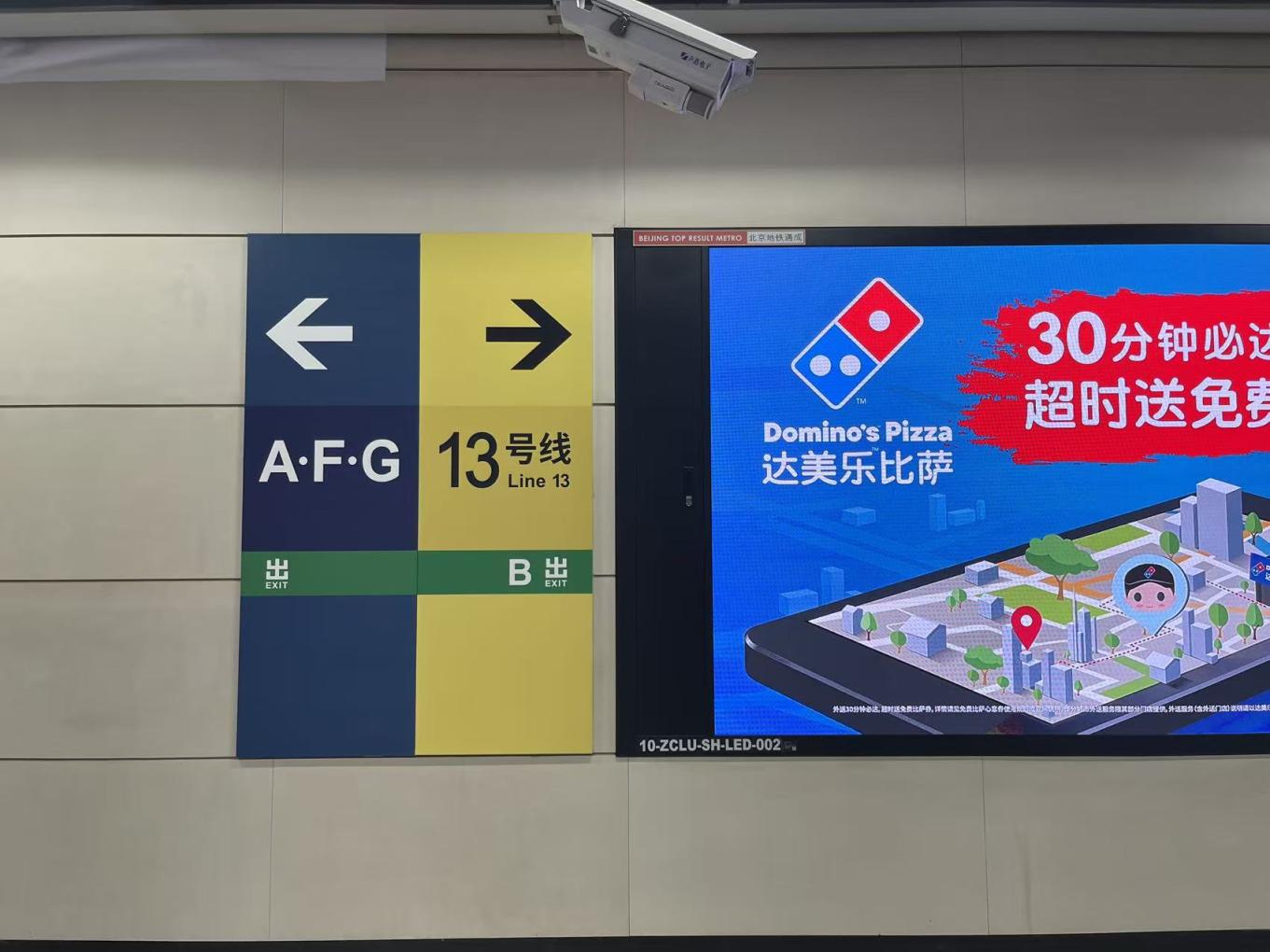
This kind of trouble of choosing the wrong route is not uncommon in the flow of changing passengers. Line 13 at Zhichun Road Station is an elevated side platform. The platforms on the second floor bound for Dongzhimen and Xizhimen are not connected to each other, and only one side of the two platforms is equipped with an elevator. The two passages from Line 10 to Line 13 correspond to the entrances of these two elevators.
The reporter's actual measurement found that the transfer path in the direction of Exit B is the shortest. There is a two-way escalator that can be used to enter the station hall of Line 13. There are no stairs in the whole journey. After entering the station hall, there is an elevator to the platform on the second floor in the direction of Xizhimen; but if you go to the direction of Dongzhimen, you need to climb a long flight of stairs. This route is more friendly to passengers heading towards Xizhimen.
Although the transfer path in the direction of Exit A is longer and involves two short flights of stairs, after arriving at the station hall of Line 13, passengers heading to Dongzhimen can take the elevator, eliminating the most physically demanding climb to the platform. This route is relatively convenient for passengers with luggage, strollers and elderly passengers heading to Dongzhimen. The problem is that there is a lack of relevant prompts for the two channels when transferring within the station, and passengers can only choose blindly.
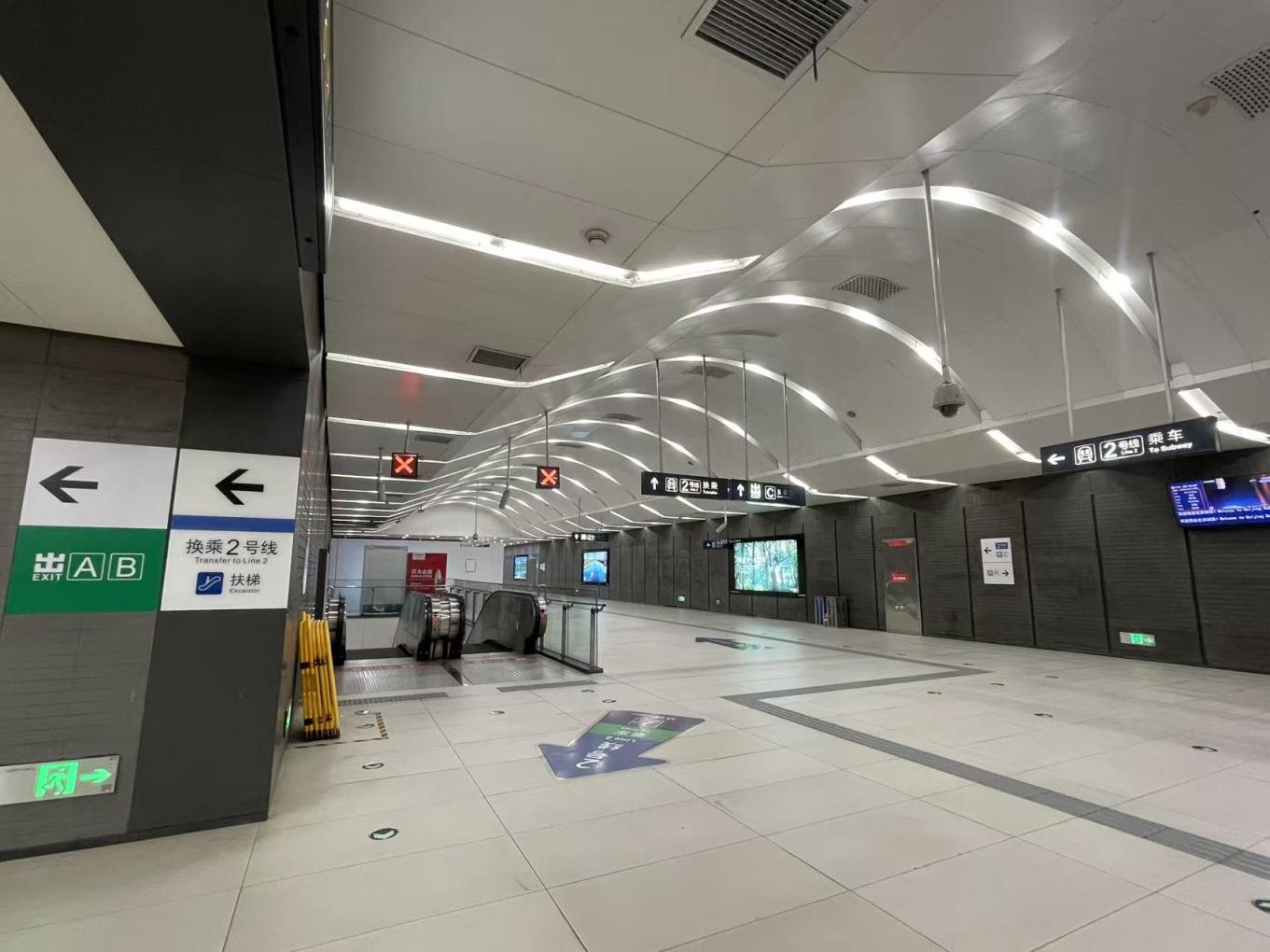
A similar situation also exists at Chegongzhuang Station: when transferring from Line 6 to Line 2, there are two transfer routes, one leading to Exit AB and one leading to Exit C. Among them, there is an escalator in the direction of exit AB during the transfer process. Compared with the other side, you can climb 50 fewer steps. In the transfer station hall, an escalator sign was added to the transfer guide pointing in the direction of Exit AB, but many passengers still did not notice it and chose another route.
suggestion
Added "baggage-friendly" guidelines
At such transfer nodes, it is recommended to add eye-catching, straightforward, and functional guidance signs. For example, at Zhichun Road Station, the two transfer lanes may be marked "Luggage-friendly for Dongzhimen direction" and "Luggage-friendly for Xizhimen direction" respectively, along with the transfer distance to facilitate passengers to choose according to their needs. At the same time, it is recommended to add simple ramps at the steps of the transfer passage and where possible, to provide maximum transfer convenience for passengers with special needs under the existing conditions.
Can navigation software provide more guidance?
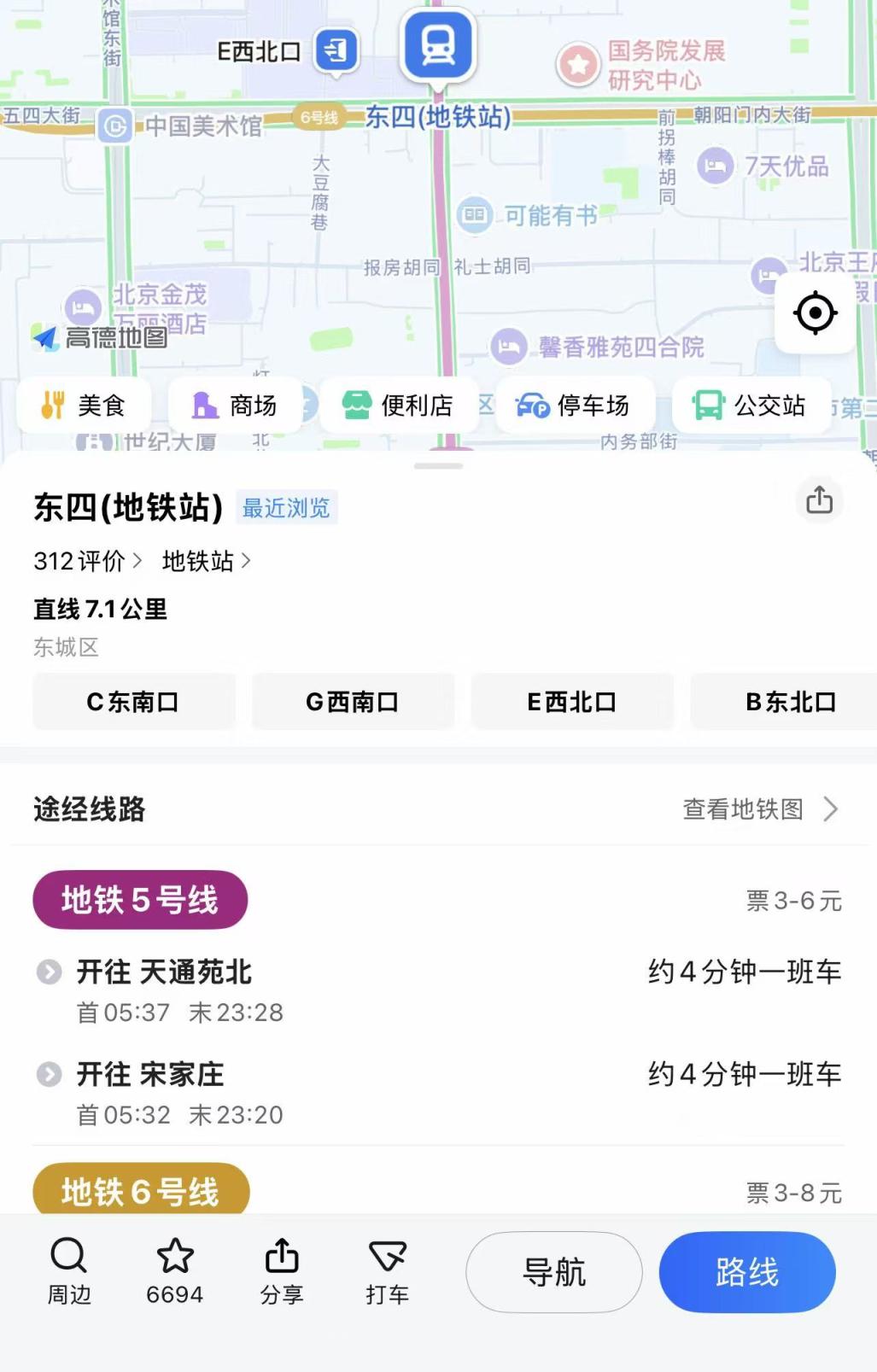
Some readers pointed out that navigation software also needs to be optimized urgently. Practical information such as barrier-free elevators, escalator configurations, and routes can be directly displayed in the entrance and exit information to allow passengers to plan in advance and navigate accurately.
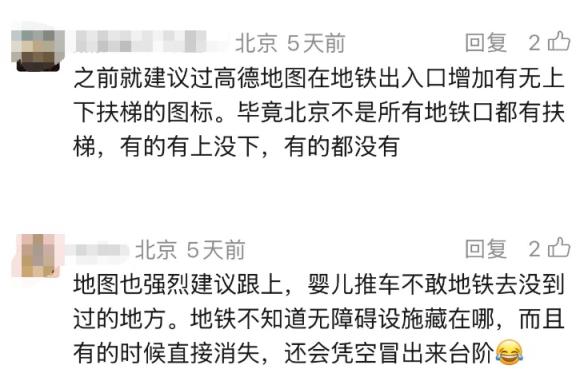
Reporters' actual measurements found that commonly used navigation software generally has problems such as incomplete information, excessively deep display levels, and inconvenient queries when it comes to subway entrances and exits and barrier-free facility guidance.
After entering "Ping'anli Subway Station" on Baidu Map, the page only gives priority to some entrance and exit options such as Exit B, Exit H, and Exit F. Only after scrolling down the page can you see detailed entrance and surrounding information. Among them, Exit B, F, and L display barrier-free elevators and barrier-free ramps, which are basically consistent with the official information of the subway. However, if you want to navigate directly to the barrier-free elevator, you need to re-enter the specific subway entrance name, such as "Ping'anli Subway Station Exit L" and then navigate, which is cumbersome and inconvenient. The official map of Dongsi Metro Station indicates that the barrier-free elevator is located at Exit G, but it is not shown on the Baidu map.
AMAP also has similar problems. Searching for Ping'anli Station on the subway, the page only shows some entrances and exits, and there is no barrier-free elevator option. Only when the reporter specifically searched for "Ping'anli Station Barrier-free Elevator" as the keyword, did two optional results appear for exits B and F; even if the "elevator priority" mode was selected in the navigation, the user experience was still not intuitive and convenient. As for which subway entrance has a two-way escalator, the two navigation software do not provide relevant information.
The customer service staff of Beijing Metro and Beijing-Hong Kong Metro also stated that there is currently no official cooperative navigation software, and third-party software information can be used as an auxiliary query reference. Accurate information such as barrier-free facilities still needs to be subject to the query results of the official channels of the subway operating company.
suggestion
Unlock data and optimize identification

Readers suggested that the subway operator could increase official cooperation with navigation software and add more intuitive barrier-free elevator options, two-way escalator markings, and entrance and exit line markings to the options at relevant subway entrances to facilitate passengers to inquire in advance and navigate with one click.
Some citizens also said that the elderly are generally not used to checking station facilities through mobile apps, and travel still relies heavily on on-site physical signs. How to make the guidance clearer and more intuitive, the query method more unified and standardized, and the display location more eye-catching and convenient, not only meet the online navigation needs of the young group, but also take care of the offline sign reading habits of the elderly group, which is also a topic for the refinement of subway services.
The reporter learned that the revision of Beijing's local standard "Guidelines for the Installation of Urban Rail Transit Passenger Signs" (BJJT/J 117–2017) is in progress. The deadline is April 15. Citizens can submit suggestions and opinions through telephone, website and other channels.