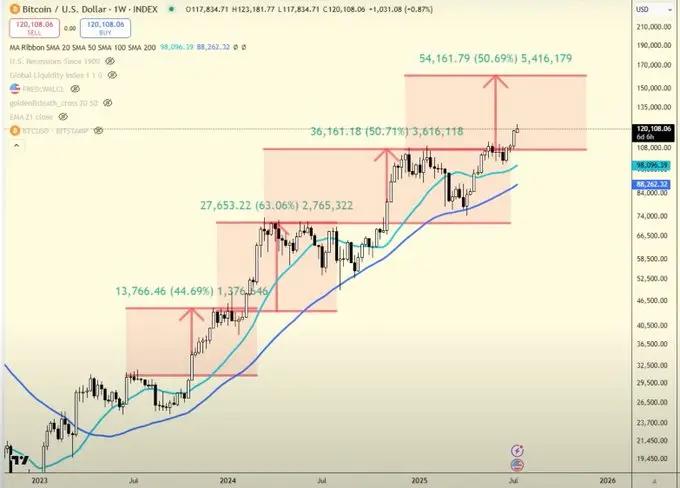
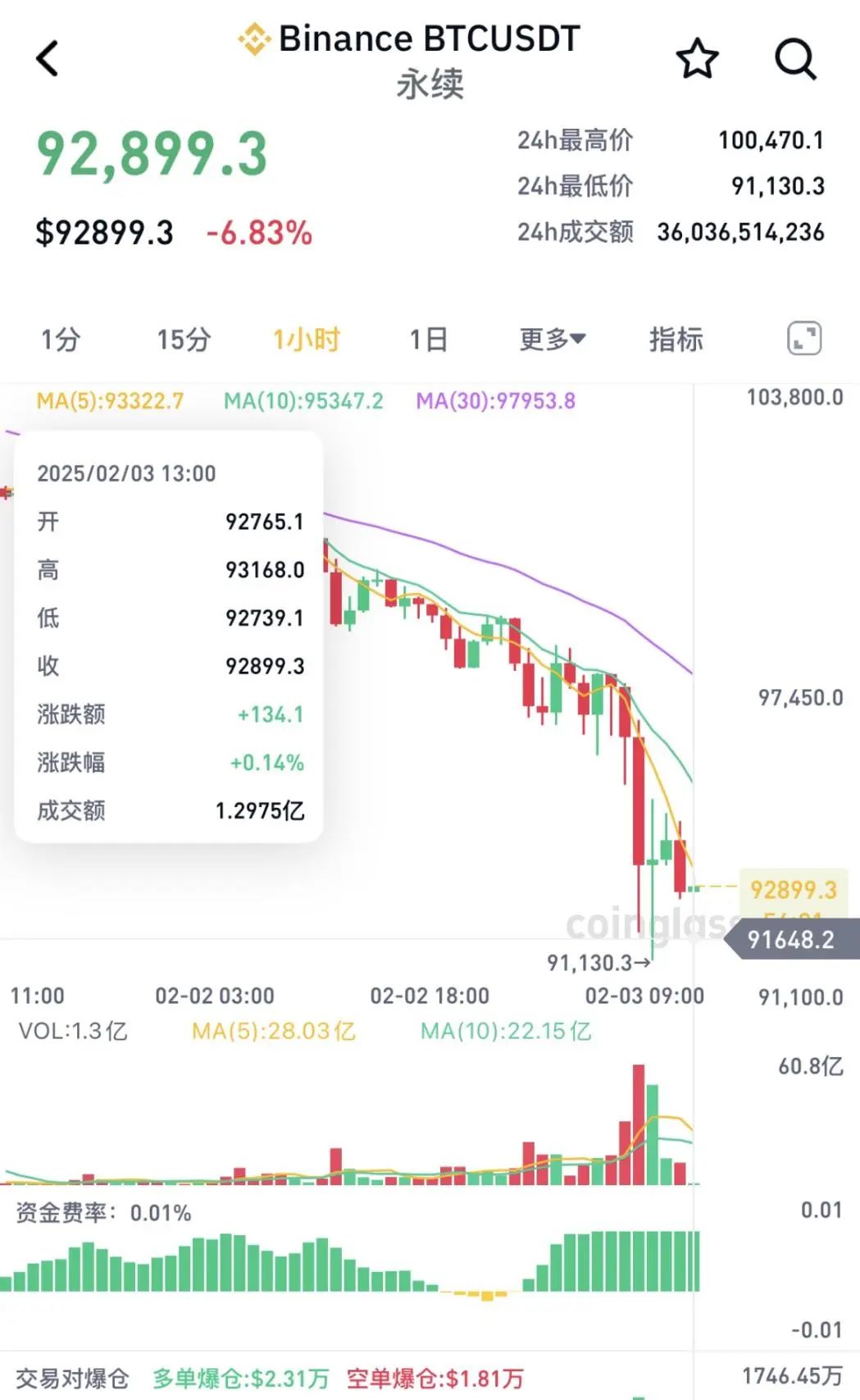
Bitcoin, which can be called the "digital gold" of virtual currencies, has seen a sharp rise in global transaction prices in recent days. On June 6, the price of one Bitcoin rose to nearly 20,000 yuan, a record high.
Previously, a "Want to Cry" ransomware attack that ravaged the world attracted global attention. Different from previous virus attacks, this time the hacker did not block the road, but put forward a condition: If you want to recover the data, you can exchange it for Bitcoin!
Anonymous, tax-free, supervision-free, and borderless… the mysterious Bitcoin has once again attracted the attention of all sectors of society and even financial regulatory agencies in various countries. Although the virus attack has been controlled to a certain extent, all parties are still worried that Bitcoin will once again become a money laundering tool for hackers.
Why is Bitcoin so popular? Xiao Lei, chief researcher of Gold Wallet, analyzed that Bitcoin has several advantages that existing financial systems do not have, such as its anonymity. Secondly, it skips the traditional financial system of financial intermediaries, such as banks. Another point is that it is global, especially if it is spread on the Internet, you actually don’t know where the person who initiated the payment is. Bitcoin is now a very expensive thing, its price has exceeded that of gold.
Obtaining is like mining, Bitcoin is equal to "digital gold"
In 2008, when the global financial crisis broke out, a person calling himself Satoshi Nakamoto posted a research report titled "Bitcoin: A Peer-to-Peer Electronic Cash System" on a secret cryptography review group, and Bitcoin was born. On January 3, 2009, the world’s first batch of Bitcoins were “digged”.
Bitcoin is a digital virtual currency. Compared with legal currency, its biggest feature is "decentralization", that is, it does not rely on any issuer, but is generated by calculation. Anyone can obtain it through specific 64-bit operations. Issuance and system security are based on mathematical principles. According to Satoshi Nakamoto's design, the total number of Bitcoins is only 21 million. Currently, more than 16 million Bitcoins are owned by individuals, and the remaining nearly 5 million Bitcoins require a large amount of data calculations to obtain.
The process of obtaining Bitcoin is vividly called "mining", and the participants in mining are "miners", and the supercomputers needed for mining are "mining machines". The process of "mining" is essentially the process of using a computer to solve a complex mathematical problem. In short, mining is like using a computer to solve a complex mathematical problem. Every time a qualified answer is obtained, the Bitcoin network will generate a certain amount of Bitcoin as a reward.
Today, the number of Bitcoins is getting smaller and smaller, and the difficulty of mining is constantly rising, so latecomers mostly obtain them through transactions. Bitcoins can be traded around the world with the help of the Internet. Deng Jianpeng, a professor at the Law School of Minzu University of China and vice president of the China Technology and Finance Law Research Association, said that transferring Bitcoin to the other side of the world is as simple as sending an email, with low cost and no restrictions. Therefore, Bitcoin is used in cross-border trade, payment, remittance and other fields.
Users can use Bitcoin to purchase some virtual items, such as clothes, hats, equipment, etc. in online games. As long as someone accepts it, Bitcoin can also be used to purchase items in real life.
The first transaction in Bitcoin history occurred on May 22, 2010. On that day, a Florida programmer named Han Yates purchased two pizzas for 10,000 Bitcoins.
At the end of November 2013, a restaurant in Beijing launched Bitcoin payment. At the end of the meal, consumers can complete the payment by transferring a certain amount of Bitcoin to the restaurant's account. The whole process is similar to a bank transfer. The restaurant once settled a meal of 650 yuan with 0.13 Bitcoins.
Digital currency is coming, is it worth investing in?
Currently, there are dozens of active Bitcoin trading platforms around the world. According to the latest statistics from the Huobi Blockchain Research Department of the Chinese Bitcoin trading platform, the Japanese yen ranks highest in recent currency-denominated Bitcoin transaction volumes around the world, accounting for more than 30.8%. Previously, Japan’s transaction volume once reached 46%, and nearly half of the world’s Bitcoin transactions occurred in Japan.
Japan introduced regulatory policies around February and March this year, allowing digital currencies like Bitcoin to flow legally within Japan. Globally, this is the first developed country to officially have a relatively positive policy attitude toward digital currencies like Bitcoin. Announced recognition of Bitcoin as a legal payment method. Subsequently, Peach Airlines, Japan’s largest low-cost airline, announced that it would become the first airline in Japan to accept Bitcoin tickets. Peach Airlines is not the first company to announce that it will use Bitcoin for payment. Big Camera, a large electronics chain, has previously announced that it fully supports Bitcoin payment.
However, Bitcoin transactions are not only risky, but are often bundled with illegal activities, so they have been questioned since its birth. The Bitcoin trading market has no price limit, and the price is easily controlled, resulting in violent fluctuations and extremely high risks. In December 2013, the price of Bitcoin reached a historical high of US$1,147, but then plummeted, falling to more than US$100 by early January 2015. Experts exclaimed that "Bitcoin contains huge investment risks, which is worrying."
Xiao Lei believes that Bitcoin looks very attractive, but it is only a speculative product and cannot be called an investment product. Because it does not have a complete price model, the rapid appreciation of Bitcoin is actually a kind of speculation demand by everyone.
Whether Bitcoin is worth investing in? According to Xu Baolong, director of Huobi Blockchain Research Center, from an investment perspective, it is really not recommended that you buy Bitcoin after seeing it rise. The risk of its skyrocketing or plummeting is very high. For investors, first of all, do not blindly follow the trend, and make prudent decisions after having a certain understanding. In addition, Bitcoin is called a cryptocurrency, which does not mean that it is really a currency. It is actually a high-risk, high-yield thing. If you consider it as a long-term investment based on understanding, you can also consider it.
However, Xiao Lei pointed out that the price of Bitcoin depends on everyone’s acceptance. If everyone believes that this thing will be valuable in the future, then the demand will increase, and under the premise of limited supply, the price may rise to a very high price. But it cannot be ruled out that if at a certain point, everyone finds that its payment function is not as convenient as WeChat and Alipay, and suddenly does not recognize it, then the possibility of collapse is also very high.
"China should rush to study the issue of digital currency, explore scientific and systematic regulatory methods and means, support relevant systems, bring it into the scope of supervision as soon as possible, standardize the development of Bitcoin, and lay a good foundation for my country's future legal digital currency." Yin Lei, deputy director of the Department of Finance at Nanjing University of Finance and Economics, said.