Professional virtual currency information station welcome
We have been making efforts.

vc Page 30

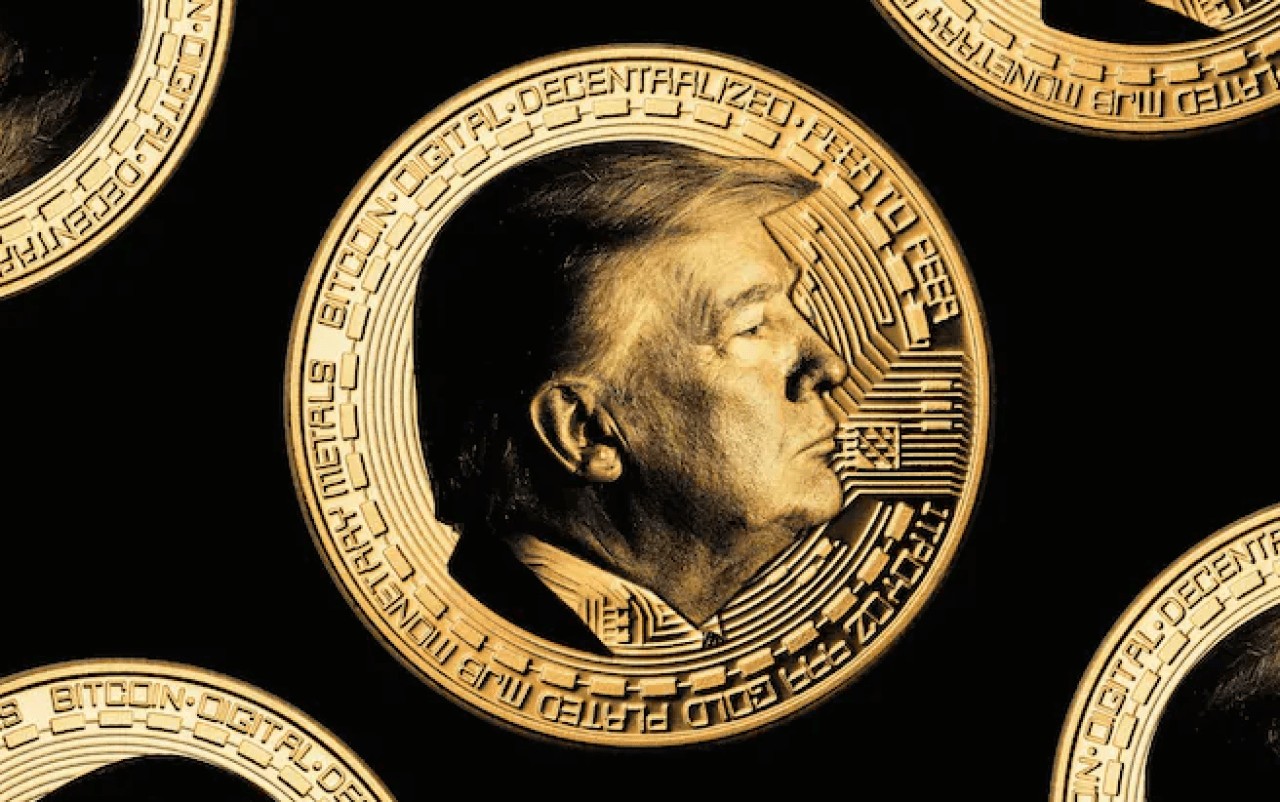
Cryptocurrency is a non-legal monetary asset based on digital technology and blockchain, possessing the functions of a medium of exchange and a store of value. Cryptocurrency is a transaction medium that uses cryptographic principles to ensure transaction security and control the creation of transaction units. Cryptocurrency is a type of digital currency (or virtual currency). Bitcoin became the first decentralized cryptocurrency in 2009, after which the term “cryptocurrency” was more commonly used to refer to such designs. Since then, several similar cryptocurrencies have been created, and they are usually referred to as altcoins. Cryptocurrency is based on a decentralized consensus mechanism, in contrast to the banking financial system that relies on a centralized regulatory system.

MongoDB Arrangement Of Embedded Array Documents

1. About index

1】Index array

Suppose you have a collection of blog posts, where each document represents an article. Each post has a "comments" field, which is an array where each element is a subdocument of a comment. If you want to find the most recent blog post with the most comments, you can index on the "date" key of the nested "comments" array in the blog post collection:

db.blog.createIndex({"comments.date": 1}})

Creating an index into an array actually creates an index entry for each element of the array, so if an article has 20 comments, then it has 20 index entries. Therefore, array indexes are more expensive than single-value indexes: for a single insert, update, or delete, every array entry may need to be updated (there may be thousands of index entries)

Unlike index objects, you cannot index an entire array as a single entity: indexing an array actually indexes each element in the array, not the array itself.

Indexing into an array does not contain any positional information: array indexing cannot be used to find an array element at a specific position, for example: "comments.4"

In a few special cases, a specific array entry can be indexed, such as:

db.blog.createIndex({"comments.10.votes": 1}})

However, this index is only useful if it matches exactly the 11th array element

There can be at most one array field in an index. This is to avoid an explosion of index entries in a multikey index: every possible pair of elements has to be indexed, resulting in "n*m" index entries per document. Suppose there is an index on {"x":1, "Y":1}:

//x是一个数组————这是合法的
db.multi.insert({"x" : [1,2,3], "y" : 1})
//y是一个数组————这是合法的
db.multi.insert({"x" : 1, "y" : [1,2,3]})
//x和y都是数组————这是非法的!
db.multi.insert({"x" : [1,2,3], "y" : [4,5,6]})

If MongoDB were to create an index for the last example above, it would have to create this many index entries:

{"x" : 1, "y" : 4}、{"x" : 1, "y" : 5}、{"x" : 1, "y" : 6}
{"x" : 2, "y" : 4}、{"x" : 2, "y" : 5}、{"x" : 2, "y" : 6}
{"x" : 3, "y" : 4}、{"x" : 3, "y" : 5}、{"x" : 3, "y" : 6}

Even though these arrays only have 3 elements.

2】Multi-key index

For a key of an index, if the key is an array in a document, then the index will be marked as a multikey index. You can see whether an index is a multikey index from the output of explain(): If a multikey index is used, the value of the "isMultikey" field is true. As long as an index is marked as a multikey index, it can no longer become a non-multikey index, even if all documents with this field as an array are deleted from the collection. The only way to restore a multikey index to a non-multikey index is to drop and re-create the index.

Multikey indexes may be slower than non-multikey indexes. There may be multiple index entries pointing to the same document, so MongoDB must first remove duplicate content when returning the result set.

2. Operations on single-value arrays

1】Query

1. Operator: $all

If you need to match an array by multiple elements, use "$all". This will match a set of elements. For example, suppose you create a collection with 3 elements

db.food.insert({"_id" : 1, "fruit": ["apple", "banana", "peach"]})
db.food.insert({"_id" : 2, "fruit": ["apple", "kumquat", "orange"]})
db.food.insert({"_id" : 3, "fruit": ["cherry", "banana", "apple"]})

To find documents that contain both "apple" and "banana", you can use "$all" to query:

db.food.find({"fruit": {"$all": ["apple", "banana"]}})
---查询结果
db.food.insert({"_id" : 1, "fruit": ["apple", "banana", "peach"]})
db.food.insert({"_id" : 3, "fruit": ["cherry", "banana", "apple"]})

The order here doesn't matter. Note that "banana" comes before "apple" in the second result. Using "$all" on an array with only one element is the same as not using "$all".

It is also possible to use the entire array for an exact match. However, exact matching does not work well for missing elements or redundant elements. For example, the following method will match the first document before:

db.food.find({"fruit": ["apple", "banana", "peach"]})

But the following won't match:

db.food.find({"fruit": ["apple", "banana"]})

This one won't match either:

db.food.find({"fruit": ["banana", "apple", "peach"]})

If you want to query the element at a specific position in the array, you need to use the key.index syntax to specify the index:

db.food.find({"fruit.2": "peach"]})

2. Operator: $size

"$size" is also very useful for querying arrays. As the name suggests, you can use it to query arrays of a specific length. For example:

db.food.find({"fruit": {"$size": 1}})

Getting documents within a range of lengths is a common query. "$size" cannot be combined with other query conditions (such as $lte), but such queries can be implemented by adding a "size" key to the document. In this way, each time an element is added to the specified array, the value of "size" is also increased. For example, this original update:

db.food.update(criteria, {"$push": {"$fruit": "strawberry"}})

It will become like this:

db.food.update(criteria, {"$push": {"$fruit": "strawberry"}, "$inc": {"size": 1}})

The auto-increment operation is very fast, so the impact on performance is minimal. After the document is stored in this way, it can be queried as follows:

db.food.find({"size": {"$gt": 3}})

Unfortunately, this technique cannot be used with the "$addToSet" operator.

3. Operator: $slice

The "$slice" operator returns a subset of array elements that match a key.

For example, suppose we have a blog post document and we want to return the first 10 comments. We can do this:

db.blog.posts.findOne(criteria, {"comments": {"$slice": 10}})

You can also return the last 10 comments, just use -10 in the query conditions.

db.blog.posts.findOne(criteria, {"comments": {"$slice": -10}})

"$slice" can also specify an offset value and the number of elements you want to return, to return some result at the middle position of the element collection:

db.blog.posts.findOne(criteria, {"comments": {"$slice": [23, 10]}})

This operation will skip the first 23 elements and return the 24th to 33rd elements. If the array does not have 33 elements, all elements after 23 elements are returned.

2】New

If the array already exists, "$push" will add an element to the end of the existing array, if not, create a new array. for example:

db.food.update(criteria, {"$push": {"$fruit": "strawberry"}})

This relatively simple form of "$push" can also be applied to some more complex array operations. Using the "$each" sub-operator, multiple values ​​can be added with a single "$push" operation.

db.food.update({"_id" : 3}, {"$push": {"fruit" : {"$each" : ["apricot", "grape"]}}})

If you want the maximum length of the array to be fixed, you can use "$slice" and "$push" together to ensure that the array will not exceed the set maximum length. This actually results in an array containing at most N elements:

db.food.update({"_id" : 3}, {"$push": {"fruit" : {"$each" : ["apricot", "grape"], "$slice": -10} } })

This example will limit the array to contain only the last 10 elements added. The value of "$slice" must be a negative integer.

If the number of elements in the array is less than 10 (after "$push"), then all elements will be retained. If the number of elements in the array is greater than 10, then only the last 10 elements will be retained. Therefore, "$slice" can be used to create a queue in the document.

Finally, you can use "$sort" before cleaning elements that require cleaning whenever adding sub-objects to the array, for example:

db.movies.update({"genre" :  "horror"}, {
	"$push": {
		"top10" : {
			"$each": [
				{"name": "Nightmare on Elm street", "rating": 5.5},
				{"name": "Saw", "rating": 4.3}
			],
			"$slice": -10,
			"$sort": {"rating": -1}
		} 
	} 
})

This will sort all the objects in the array based on the value of the "rating" field and keep the top 10. Note that "$slice" or "$sort" cannot be used with "$push", and "$each" must be used.

If you use an array as a data set to ensure that the elements in the array are not repeated, you can use "$addToSet" to achieve this, such as:

db.food.update({"_id" : 3}, {"$addToSet": {"fruit" : "apricot"}})

Combining "$addToSet" and "$each" can add multiple different values, for example:

db.food.update({"_id" : 3}, { "$addToSet": { "fruit" : { "$each" : ["apricot", "grape"] } } })

3】Modify

If the array has multiple values ​​and we only want to operate on part of them, some tricks are needed. There are two ways to manipulate values ​​in an array, through positional or positioning operators ("#34;)

Modify the array by subscripting, such as:

db.blog.update({"post" : "postId_1001"}, { "$inc": {"comments.0.votes": 1} })

But in many cases, the index of the array to be modified cannot be known without querying the document in advance. In order to overcome this difficulty, MongoDB provides the positioning operator "#34;", which is used to locate the array elements that have been matched by the query document and update them. For example:

db.blog.update({"comments.author" : "John"}, { "$set": {"comments.$.author": "Jim"} })

4】Delete

There are several ways to remove elements from an array. If you view the array as a queue or stack, you can use "$pop". This modifier can delete elements from either end of the array. {"$pop": {"key": 1}} deletes an element from the end of the array, {"$pop": {"key": -1}} deletes it from the head.

Sometimes you need to delete elements based on specific conditions, not just based on the element's position. In this case, you can use "$pull". For example:

db.food.update({"_id" : 3}, {"$pull": {"fruit" : "apricot"}})

"$pull" will delete all matching documents, not just one. pair array

1 ,1, 2, 1

Executing pull 1 results in an array with only one element.

3. Operations on embedded document arrays

demo order data:

{ 
    "total_goods_num" : 3, 
    "goods" : [
        {
            "amount" : 3, 
            "goods_code" : "100009464821", 
            "price" : { "$numberDecimal" : "9999.00" }, 
            "wait_num" : NumberInt(3), 
            "goods_id" : "1007"
        }, 
        {
            "amount" : 4, 
            "goods_code" : "100016079918", 
            "price" : { "$numberDecimal" : "5899.59" }, 
            "wait_num" : NumberInt(4), 
            "goods_id" : "1006"
        }, 
        {
            "amount" : 5, 
            "goods_code" : "100008699547", 
            "price" : { "$numberDecimal" : "4798.37" }, 
            "wait_num" : NumberInt(5), 
            "goods_id" : "1005"
        }
    ], 
    "bill_no" : "D20210712174", 
    "address" : {
        "province" : "安徽省", 
        "city" : "", 
		"area" : "", 
        "detail" : ""
    }, 
    "bill_status" : "1", 
    "pay_time" : ISODate("2022-10-05T03:19:34.506+0000"), 
    "total_money" : { "$numberDecimal" : "15496.33000" }, 
}

1】Query

1. Directly use nested field query

For such matching results, as long as there is data containing the query conditions in the data group, the document data will be returned.

db.getCollection("bill").find({ 'goods.goods_code': "100009464821" })

2. Only return matching nested array data

2.1: You can use the $elemMatch operator (supported from mongodb 2.2)

2.2: You can use the $ operator (supported from mongodb 2.2)

---- 使用$elemMatch操作符
db.bill.find(
{
   'goods.goods_code': "100009464821" 
},
{
    "goods": {$elemMatch:{"goods_code":"100009464821"}}
}
)
---- 使用$操作符
db.bill.find({'goods.goods_code': "100009464821"}, {_id: 0, 'goods.#39;: 1});

The above two operators have this official description: the $elemMatch projection returns only the first matching element from the array. That is, only the first matched data element will be returned. (Operator description:

https://docs.mongodb.com/manual/reference/operator/projection/elemMatch/#proj._S_elemMatch)

3. Use $filter to filter the array:

3.1: Only filter the main object field in $match

3.2: Put the sub-object filter conditions in $project and filter through "$filter"

3.3: If there is a query with an array field in $match, when the array does not have data that meets the conditions, the result set will not return any document information. When the array filter is placed in $project and processed by $filter, the document can be returned, and the array key that does not meet the conditions is marked with an empty array.

db.erp_sales_order.aggregate([
 {
	"$match": {
		"$and": [
			{
			"order_id": "orde202209141279id"
			}
		]
	}
 },
 {
	"$project": {
		"perpetual_order": 1,
		"contract_code": 1,
		"erp_sales_order_product": {
			"$filter": {
				"input": "$erp_sales_order_product",
				"as": "erp_sales_order_product",
				"cond": {
					"$or": [
						 {
							"$eq": [
								"$erp_sales_order_product.product_detail_id",
								"espdi20220914331"
							]
						}
					]
				}
			}
		}
	}
 }
])

Compared with $elemMatch and $, $filter will return all matched array data. Furthermore, document data that does not meet the criteria are excluded. In addition, if there are no matching elements in the array, an empty array will be returned, retaining the returned keys, while $elemMatch and $ will not return keys. For example, the results of the above query may be as follows:

{ 
    "_id" : ObjectId("63218dcd768a5a421db1bfcd"), 
    "perpetual_order" : "0", 
    "contract_code" : "SCON2022081454", 
    "erp_sales_order_product" : []
}
erp_sales_order_product 没有符合条件的数据,仍然返回键

2】Modify

1. Use $ to update the array

1.1: The $ operator will only match the first modified document

db.bill.update(
{
    "bill_no" : "D20210623173",
    "goods.amount":  {'$gte':4 , '$lte':5}
}, 
{
"$set": {"goods.$.wait_num": 56} 
}
)

According to the query of the above statement, there are 2 pieces of data that meet the conditions of "goods.amount", but after execution, only the first document data will be updated (the document of "goods_id" : "1006")

2. Use arrayFilters to update the array

2.1: Set arrayFilters to modify one or more elements in a nested array

2.2: The "$" in 'goods.$.wait_num', where "tt" is equivalent to giving an alias to the element, can be any string

2.3: Based on 2.2, the filtering operation in arrayFilters must match the alias string, such as: 'tt.amount', otherwise the modification will fail.

db.bill.updateMany(
{
    "bill_no" : "D20210623173"
},
{
    '$set': {
        'goods.$[tt].wait_num': 36
    }
},
{
	arrayFilters: [
		{'tt.amount': {'$gte':4 , '$lte':5}}
	]
}
)

Suppose the above execution statement is adjusted as follows:

db.bill.updateMany(
{
    "bill_no" : "D20210623173"
},
{
    '$set': {
        'goods.$[tt].wait_num': 6
    }
},
{
	arrayFilters: [
		{'elem.amount': {'$gte':4 , '$lte':5}}
	]
}
)

After execution, there will be an error similar to the following:

2022-10-05T11:46:26.597+0800 E QUERY    [js] WriteError: No array filter found for identifier 'tt' in path 'goods.$[tt].wait_num' :
WriteError({
	"index" : 0,
	"code" : 2,
	"errmsg" : "No array filter found for identifier 'tt' in path 'goods.$[tt].wait_num'",
	"op" : {
		"q" : {
			"bill_no" : "D20210623173"
		},
		"u" : {
			"$set" : {
				"goods.$[tt].wait_num" : 6
			}
		},
		"multi" : true,
		"upsert" : false,
		"arrayFilters" : [
			{
				"elem.amount" : {
					"$gte" : 4,
					"$lte" : 5
				}
			}
		]
	}
})

3】Delete

3.1: Using $pull operator

db.bill.update(
{
    "bill_no" : "D20210623173"
}, 
{
"$pull": {"goods": { "amount":  {'$gte':4 , '$lte':5} }} 
}
)

Let Design Follow Your Fingertips: Interactive Effects On Touch Devices

For web browsers, the several changes in button controls are a very familiar mechanism: Normal, Hover and Archive are the three effects that are easiest to feel when browsing with a mouse. They are the normal state of the button, the effect of the mouse cursor moving above, and the effect of clicking the button.

There is another effect we call Focus. Focus mainly refers to the state displayed by the targeted control when you use the keyboard's Tab key to "aim" at the controls on the web page. Although the mouse is now the main device for operating computers, in some cases, such as when filling out a form, it is much smoother for users to directly use the keyboard's Tab to switch input fields than to constantly operate back and forth between the mouse and keyboard. Therefore, in form system designs that focus on user experience, special attention will be paid to the Focus effect of the input box:

The most common interactive effect on web pages: Hover

In web pages, the Hover effect is a commonly used effect. In addition to effectively providing users with information such as "I am currently targeting this button with my mouse" and "This may be an interactive control", the Hover effect is often used as a way to provide a lot of additional information: For example, when browsing Dribble, what we usually see are pictures of works, and information such as the name and description of the work are designed in the Hover effect:

And the most common prompt: when the user is unclear about the function of the button, Hover can prompt the user for the function description of the button without changing the original layout:

Reasonable arrangement of Hover can make the layout design more concise. Many texts and descriptions that easily cause clutter in the layout can temporarily disappear on the layout, but the necessary information can be provided to users at the right time.

However, on a touch screen, Hover becomes difficult to move

Different from desktop computer operating systems, touch screen devices do not have a mouse cursor due to their operational characteristics. Therefore, the operation is to use a finger or stylus to directly click on the sensor panel. The actions that the user can perform are nothing more than: single click, double click, long press, and sliding in various directions (multi-finger gestures are special actions of some systems, so they are not discussed here).

For example, the control of the App icon in the iOS system is designed to launch the App with a single click, and delete or move it by pressing and holding:

Another common touch operation mode is the familiar pull-down refresh function in iOS systems. The single-finger sliding downward gesture replaces the traditional Refresh button:

Therefore, when developing the app, designers take into account the characteristics of the device itself and must change the design for the operation of the touch system. For example, Plant Nanny has designed a button that must be pressed and held for 2 seconds to complete the task: on the one hand, it avoids accidental touches, and on the other hand, it can be used with sound effects during these 2 seconds to create a "drinking water" feeling.

How to achieve the Hover effect in touch devices?

Since touch devices have completely different operating characteristics, and the proportion of users using touch devices to browse information is increasing, many websites have to consider how to adjust to the needs of touch device browsing:

Give up the Hover effect and use the device detection of the browser to provide different layout arrangements.

For example, Behance’s web version and mobile app show different layout configurations.

Click once to trigger the hover effect, and click again to trigger the click effect.

For example, the website Grids also uses a design where the title and information will be displayed only when the mouse is hovered. When browsing with a touch device, the mechanism automatically changes to display the Hover effect when pressed for the first time, and the actual click action is performed when pressed a second time:

Another similar approach is the purchase button in the App Store, which uses a two-stage button to prompt the user for "more additional information." For example, it originally displays the price of the App. When the user clicks once, the appearance of the button changes and the description changes to the actual action that will be performed after pressing it again (purchase and download and installation). Of course, it also has a two-stage button design that prevents users from accidentally touching the app and purchasing the app.

I don’t know if it is for the sake of design consistency. Although accidental button presses are less obvious on the desktop, in fact, the OSX desktop version of App Stroe also designed this two-stage button, but iTunes 11 did not do this. Maybe it will be unified in the next version.

Use long press and slide to simulate the passing of the mouse cursor

However, the learning cost of this method is high: Generally, touch screen users are not familiar with this UI operation method. Moreover, when browsing the full page, it is quite laborious for the user to constantly press the touch screen and slide the whole screen. Fingers can also easily block the line of sight, which in turn blocks the information that is intended to be displayed to the user.

Therefore, this kind of long-press and sliding operation method is mostly used in games, and is mostly used to control a certain area (such as Angry Bird, Fruit Ninja and other motion-sensing games, or games such as Minigore that simulate traditional joysticks, etc.).

Provides special functions to simulate the effects of a mouse

Although touch devices do not have a mouse cursor, you can actually use a laptop to simulate a touchpad to simulate the effect of a mouse cursor. For example, the browser Puffin provides a "virtual touch pad" function to simulate the existence of a mouse cursor. But there are still shortcomings: the design of the virtual touch panel seriously affects the intuitiveness and smoothness of the touch device experience.

Browsing methods on different browsing devices are different, so it is natural to take various situations into consideration when designing. How to arrange the Hover effect on such a simple web page on a touch device? Is it to change the layout method so that Hover information can be displayed directly? Will using two-stage clicks affect the user's browsing experience? Or maybe the display information of Hover is not important at all, so would it be better to discard it directly?

There is no perfect solution that can be applied to all designs. When designing, everyone still has to choose the most appropriate solution for the product based on the characteristics of their own product. "Touch devices may not necessarily change the world, but they will change some designs."

What Is USDT? An Article Explaining In Detail The Cryptocurrency Pegged To The U.S. Dollar And Related Controversies

What is Tether (USDT)? Tether is a cryptocurrency pegged to legal currencies (such as the US dollar) and belongs to the stablecoin category. It is said that each USDT is supported by 1 US dollar or equivalent assets. It aims to combine the transaction efficiency of cryptocurrency with the stability of legal currencies. We will introduce it in detail below.

In the cryptocurrency space, Tether (USDT) is one of the most widely used stablecoins, maintaining price stability by being pegged to the U.S. dollar. This article will take an in-depth look at Tether’s mechanics, uses, controversies, and its place in the global cryptocurrency market.

What does USDT mean_Tether (USDT) introduction_Tether (USDT) operating mechanism

1. What is Tether (USDT)?

Tether is a cryptocurrency pegged to a fiat currency, such as the U.S. dollar, and falls under the stablecoin category. It is said that each USDT is backed by 1 US dollar or its equivalent, aiming to combine the transaction efficiency of cryptocurrency with the stability of fiat currency.

Main features:

2. How does Tether work?

Tether Limited claims that for every USDT issued, it will reserve an asset of equal value, such as cash, short-term bonds or commercial paper. This system ensures that the price of USDT remains stable and remains pegged 1:1 to the US dollar.

Simple mechanism:

3. What are the use cases for Tether? 4. Controversy surrounding Tether

Although USDT is widely used, its transparency and reserve backing still face scrutiny.

Main disputes:

In recent years, however, Tether has begun publishing regular reserve reports and hiring third-party auditing firms to verify its reserves, such as BDO Italia.

5. Market value ranking of Tether and other stablecoins stablecoin pegged mechanism (June 2025) Audit transparency

USDT

Fiat currency support

First

partial transparency

USDC

Fiat currency support

second

High transparency (round)

Cryptocurrency support

third

Decentralization and on-chain transparency

Tether remains the world’s largest stablecoin by trading volume, accounting for more than 50% of the total stablecoin circulation.

6. Tether’s compliance and future

In response to growing global regulatory pressure, Tether has been strengthening compliance measures:

Going forward, Tether will further expand its capabilities as a cross-border digital payments and settlement tool.

7. Conclusion

Tether (USDT) is the most widely used stablecoin in the world and an important value anchor in the cryptocurrency ecosystem. Despite the controversy, Tether continues to strengthen its compliance and transparency to meet the changing needs of the digital financial world.

This concludes this article about what is Tether (USDT) currency? Comprehensive Guide to USDT (2025). For more comprehensive introduction to USDT currency, please search Script House’s previous articles or continue to browse the relevant articles below. I hope you will support Script House in the future!

A Must-read For Beginners In The Cryptocurrency Industry! What Exactly Is USDT (Tether)?

Uncle Wen of Zhonglian, let me solve your problem.

Interpret the truth with wisdom and let justice illuminate the world

Trust is the premise, understanding is the key, and payment is respect.

————————————————

For everyone who is new to the currency circle, whether they are speculating or doing something else, the first currency that 99% of people will come into contact with is USDT. USDT (Tether) is familiar to people in the currency circle, but it is very unfamiliar to novices who are new to the currency circle. Today, Uncle Wen will talk about USDT (Tether Coin) with newcomers who are new to the currency circle or want to enter the currency circle.

The status and role of USDT in the currency circle_What does USDT mean_How do newbies in the currency circle understand USDT

There are currently a variety of stable coins on the market such as USDC, DAI, TUSD, FDUSD, etc. USDT is one of the stable coins issued by TEDA based on blockchain technology. Its English name is: Tether, its token number is USDT, and its Chinese name is TEDA Coin. Its value is anchored to the US dollar 1USDT = 1USD (US dollar).

USDT is the largest stable currency in circulation on the market.

TEDA officially claims that it will use equivalent U.S. dollars as guarantee and provide a service in which 1 USDT can be exchanged for 1 U.S. dollar. What is the purpose of this? Before the emergence of stable coins, all early currency pairs would be affected by bilateral exchange rates when conducting transactions. For example, the price of Ripple at that time was anchored by Bitcoin. At that time, Bitcoin had the largest trading volume and the highest market value. However, the price of Bitcoin fluctuated greatly and was not suitable as an anchored currency. Therefore, stablecoins were born, which solved the problem of bilateral exchange rates.

What does USDT mean_The status and role of USDT in the currency circle_How do novices in the currency circle understand USDT

As long as you change to a stable currency, you can not be affected by the rise and fall of the market. This has a very obvious hedging effect on funds and has gradually become a rigid demand in the market. When you use legal currency to buy official USDT, your legal currency will be automatically converted into US dollars and deposited in the official account. The number of US dollars stored in this account represents how much USDT is circulating in the market. TEDA reserves reserves at a ratio of 1:1. For every USDT issued, there will be 1 more US dollar in the official account. This is why USDT is able to maintain the basis of stable prices.

On the contrary, when the user converts USDT into US dollars, the official will simultaneously destroy the equivalent USDT to ensure that the reserve fund of the official account is consistent with the circulation. In order to improve transparency, on the official website of Tether, you can check the latest official US dollar reserve amount. Because it is guaranteed by US dollars, most exchanges will support USDT as a pricing trading pair!

The status and role of USDT in the currency circle_How can newcomers to the currency circle understand USDT_What does USDT mean?

Because 1USDT = 1USD (U.S. dollar), the price of USDT will also be affected by the exchange rate of the U.S. dollar. Recently, the price of USDT has dropped from more than 7 yuan to more than 6 yuan. This is because the Federal Reserve has begun to cut interest rates, and the number of U.S. dollars circulating in the market has increased, resulting in the depreciation of the U.S. dollar. The price fluctuations of USDT caused by interest rate increases and decreases in this normal currency cycle are normal.

The sharp decline in USDT must be due to the occurrence of some kind of unexpected event that caused USDT and USD to become unanchored, resulting in a panic, which led to a sharp decline in local or global USDT prices!

In essence, it is the spread of panic that leads to an imbalance in the supply and demand relationship of USDT in the market.

The price of USDT has experienced several price dives in history, and TEDA has experienced several crises of trust. It was accused of insufficient reserve funds, which caused the price of USDT to become seriously unanchored in a short period of time and the price fell sharply, but it quickly recovered.

In 2020, an exchange issued an announcement saying that some of the company's private key managers were cooperating with the public security agency's investigation. They were currently out of contact, unable to complete authorization, and suspended currency withdrawals, causing market panic. Major merchants and retail investors sold USDT in large quantities, resulting in a sharp plunge in the price of USDT outside the exchange. The negative premium of USDT in the exchange was serious, and it took several weeks to recover.

What does USDT mean_The status and role of USDT in the currency circle_How do novices in the currency circle understand USDT

Although there have been many crises of trust, as of October 2024, USDT has a market value of US$120 billion, ranking third in the crypto market by market value, second only to Bitcoin and Ethereum, and is still the stablecoin with the largest market share.

The status and role of USDT in the currency circle_How can newcomers to the currency circle understand USDT_What does USDT mean?

The OTC premium of USDT is the ratio of the OTC price to the US dollar. Excessive digital asset purchase demand will often make this indicator higher than the fair value of 100%, that is, the demand is excessively greater than the supply, causing the price to be higher than the normal price range for a short or long period of time, which is called a positive premium.

On the contrary, when the demand in the crypto market is low, when the supply is strong, and the supply is greater than the demand, a lower bid price will cause the price to be lower than the fair value of 100%, which will result in a lower bid price, which is a negative premium.

According to the rules of the cryptocurrency market, generally the OTC premium of USDT in a bull market is a positive premium. At this time, funds are rushing to enter the market and the demand is large. On the contrary, in a bear market, USDT prices generally have a negative premium. Of course, this is not entirely the case. The outbreak of local market conditions will also cause positive and negative premiums of USDT in the short term.

For newcomers to understand this rule and apply it in practice, you can act according to this logic when to sell and when to buy the U in your hand, which will also help save your own currency holding costs.

I am Uncle Wen. I follow the currency merchant firm and focus on the laws and regulations of the cryptocurrency circle, judicial freezing of bank cards, disciplinary appeals for two cards, currency merchant OTC, safe U-exit channels, etc.

Dynam Recommends 256 Practical Tools, Essential Tools For Operators, Designers, And Advertisers!

15. Visual ME: http://shijue.me/

16. Duitang.com: http://www.duitang.com/

foreign:

1. Gratisography:

http://www.gratisography.com/

2. Pinterest:

https://www.pinterest.com/

3. Dreamstime:

https://www.dreamstime.com/

4. Life Of Pix: http://www.lifeofpix.com/

5. Free Digital Photos:

http://www.freedigitalphotos.net/

6. IM Creator:

http://www.imcreator.com/free (need to circumvent the firewall)

7. Free Photos Bank:

http://www.freephotosbank.com/

8. Pixabay: https://pixabay.com/ (Chinese version)

9. PicJumbo: https://picjumbo.com/

10. Pickupimage: http://pickupimage.com/

11. Canva: https://www.canva.com/

12. 500px: https://500px.com/

13. Unsplash: https://unsplash.com/

14. Illusion Magazine:

http://illusion.scene360.com/

15. 9GAG: http://9gag.com/

Dynamic picture website:

1. GIF cool:

http://gifcool.lofter.com/

2. Kotaiguchi-gif:

http://kotaiguchi-gif.tumblr.com/ (need to circumvent the wall)

3. Rafael-varona:

http://www.rafael-varona.com/

4. Golden Wolf: http://goldenwolf.tv/

5. Julian Glander: http://glander.co/

6. Gifparanoia:

http://www.gifparanoia.org/

7. Rafael-varona:

https://www.behance.net/rafaelvarona

4. WeChat graphics and text typesetting tools

Good article layout can give readers a good reading experience and increase users’ desire to forward and share. The choice of typesetting tools is very important. It should be precise rather than too many. Getting used to and familiar with using typesetting tools can improve typesetting efficiency.

The ones recommended below are not good or bad. Only the typesetting tools that suit you are the best typesetting tools.

1. Typesetting: http://www.ipaiban.com/

2. Xiumi WeChat graphic and text typesetting tool: http://xiumi.us/#/

3. 135 WeChat Editor: http://www.135editor.com/

4. 96 WeChat Editor: http://bj.96weixin.com/

5. Yead WeChat editor: http://wxedit.yead.net/

6. Little Ant WeChat Editor: http://www.xmyeditor.com/

7. 91 WeChat Editor: http://bj.91join.com/

8. WeChat online editor: http://wx.bzrw.net/

9. 005 WeChat editor: http://bj.weixin005.com/

10. Music arrangement graphic and text editing tool: http://pb.ishangtong.com/

11. Beauty editor:

http://www.imeibian.com/main.html

12. Tianxing WeChat Editor: http://tx.huceo.com/

13. Xiudodo graphic editor: http://xiudodo.com/

14. Xiaoyi WeChat Editor: http://xiaoyi.e7wei.cn/

15. WeChat Circle Typesetting Assistant:

http://www.weixinquanquan.com/wxeditor

5. Short link generation tool

Compress the original long address into a short link with fewer letters. This conversion helps save space, facilitates storage, and is more concise and beautiful.

The following five tools can generate short connections and support customized short connections:

1. Sina Weibo short link generator:

http://www.surl.sinaapp.com/

2. Webmaster Tools:

http://tool.chinaz.com/tools/dwz.aspx

3. T.IM short URL/short link generator: http://t.im/

4. Baidu short URL: http://www.dwz.cn/

5. I typesetting short link generator: http://xhr.so/

6. H5 production tools

H5 has rich expressive power and has become a new marketing trend in the mobile Internet era. It helps to create h5 marketing scenarios with more powerful communication and makes operations even more powerful.

Which ones are there? Let’s take a look:

1. Eqxiu: http://www.eqxiu.com/show

2. Rabbit Exhibition:

http://www.rabbitpre.com/store

3. Show production:

http://xiumi.us/studio/booklet#/for/new

4. Maka: http://maka.im/store

5. Close micro page:

http://www.zhichiwangluo.com/

6. First page: http://www.ichuye.cn/

7. Epub360 Yipai: http://www.epub360.com/

8. Vxplo:

http://www.ih5.cn/not-logged-in

9. Sohu Express: http://www.kuaizhan.com/

10. Easy Flyer: http://echuandan.com/

11. Liveapp scene application/Yunlai: http://www.liveapp.cn/

12. Wix: http://www.wix.com/

7. Online QR code generation tool

QR codes play the role of transmitting information, serving as platform entrances, identity credentials, etc. in WeChat, Weibo, the Internet, offline brochures, business cards and other carriers.

We recommend the following tools:

1. Forage: http://cli.im/

2. Liantu: http://www.liantu.com/

3. Xinma: http://www.xmesm.cn/

4. 59na: http://qr.59na.com/

5. Still like: http://ewm.rengzan.com/

6. wwei Weiwei: http://www.wwei.cn/

7. Q code: http://www.qmacode.com/

8. QR Stuff: http://www.qrstuff.com/

9. Visualead: http://www.visualead.com/

10. Littleidiot:

https://qrcode.littleidiot.be/

8. Data statistical analysis website

In the era of big data, data mining, processing, analysis and application are particularly important. Data can provide a strong factual basis for strategies and strategies; it is the basis for enterprises to achieve precise marketing; and it is also the criterion for judging results. For Internet operators, in addition to paying attention to industry big data, they must also focus on the traffic data within the website.

The following data statistical analysis websites may be used:

1. iResearch: http://www.iresearch.cn/

2. TalkingData:

http://www.talkingdata.com/

3. CNZZ: http://www.cnzz.co

4. Baidu statistics:

http://tongji.baidu.com/web/welcome/login

5. Baidu Index: http://index.baidu.com/

6. Baidu data: http://index.baidu.com/

7. Datahoop big data analysis platform: http://www.datahoop.cn/

8. Qianzhan.com:

http://www.qianzhan.com/qzdata/list/147.html

9. Data view: http://www.cbdio.com/

10. Analysys: http://www.analysys.cn/

11. China Statistics Network:

http://www.itongji.cn/cms/article/index

12. Website data analysis:

http://webdataanalysis.net/

13. Ali Index: http://index.1688.com/

14. 199IT: http://www.199it.com/

15. Website analysis in China:

http://www.chinawebanalytics.cn/

16. DCCI Internet Data Center: http://www.dcci.com.cn/

17. 36 big data: http://www.36dsj.com/

9. Emoticon making tools

The emoticons that have maxed out the Moments, WeChat, Weibo, QQ circles, and even traveled to Facebook, Instagram, and Twitter are simply cool. For the majority of operators, emoticon materials are often used, such as occasionally inserting an emoticon into an article to make it appear relaxed and humorous.

We recommend the following three emoticon creation tools:

1. Rampage comic maker:

http://baozoumanhua.com/makers

2. Doubean Software Network: http://www.doubean.com/

3. Love Dou Tu (Dou Tu Artifact):

http://www.adoutu.com/pages/index.php

10. Image processing software

1. Beautiful pictures

2. Photoshop (PS)

3. Adobe Illustrator (AI)

4. Keniu Image (image processing software)

5. Inpaint (watermark removal software)

6. Light and shadow magic hand (improving image quality)

7. SAI painting software

11. Operation/product/entrepreneurship/IT and other online learning platforms

On the long road of operation, you will always encounter certain problems that you cannot figure out even after racking your brains; some obscure knowledge cannot be found even by wearing iron shoes. At this time, someone is especially needed to give guidance. Online communication and sharing is one of the effective ways.

1. Qidian Academy: http://www.qidianla.com/ (products, operations)

2. Three classes: http://www.sanjieke.cn/ (product, operation)

3. Mantou Business School: http://www.mtedu.com/ (products, operations, marketing)

4. Socket Academy: http://www.chazuomba.com/ (new media)

5. Dark Horse Academy:

http://xueyuan.iheima.com/ (Entrepreneurship)

6. ViewSonic Business School: http://www.yopai.com/ (ASO)

7. MOOC (IMOOC): http://www.imooc.com/ (IT)

8. Geek Academy:

http://www.jikexueyuan.com/(IT)

9. 25 School: http://www.25xt.com/ (main APP)

10. MOOC Academy: http://mooc.guokr.com/ (comprehensive)

11. NetEase Cloud Classroom: http://study.163.com/ (comprehensive)

12. Tencent Classroom: https://ke.qq.com/ (comprehensive)

13. Operate Xiaoka Show (main APP operation)

14. Gulu Academy (main operation)

15. After having an account (main new media, public account)

16. Micro-interaction (main public account operation)

17. i typesetting (main WeChat operation, typesetting)

18. Rabbit exhibition hall (main h5)

19. Activity Box Operation Academy (coming soon)

12. Advertising/design creative website

Advertising requires creativity, design requires creativity, and operations actually also require creativity. The stimulation of inspiration can bring about new creations; the occasional brainstorming can lead to a flash of new ideas.

The editor of Tianmu feels that the following novel and creative websites can bring about the divergence of thinking and the emergence of inspiration:

domestic:

1. TOPYS: http://www.topys.cn/

2. UI Chinese inspiration library: http://idea.ui.cn/

3. Design addiction: http://www.shejipi.com/

4. Visual ME design community: http://shijue.me/

5. Design youth: http://www.design521.com/

6. Oritive creative design: http://www.oritive.com/

7. Creative photo site: http://www.poboo.com/

8. Online advertising community: http://iwebad.com/

9. Lazy person gallery:

http://www.lanrentuku.com/

10. China Advertising Network: http://www.cnad.com/

11. Advertising: http://adfuns.com/

12. Meihua Network: http://www.meihua.info/c

13. Creative Network: http://www.fsdpp.cn/

14. Visual China: http://creative.vcg.com/

15. Advertising portal: http://www.adquan.com/

16. Design at 2:30: http://www.2dianban.com/

17. Shuying.com:

http://www.digitaling.com/

foreign:

1. Inspiration Grid:

http://theinspirationgrid.com/

2. siteInspire:

https://www.siteinspire.com/

3. Dribbble: https://dribbble.com/

4. welovead:

http://www.welovead.com/cn/

5. AdSoftheWorld: http://adsoftheworld.com/

6. Framelab Design Direction: http://www.frmlb.de/

7. Cargo:

http://cargocollective.com/

8. boredpanda:

http://www.boredpanda.com/

9. Creativebloq:

http://www.creativebloq.com/

10. Creative Guerrilla Marketing:

http://www.creativeguerrillamarketing.com/ (need to circumvent the firewall)

13. Mind mapping software/website

Use the technique of paying equal attention to pictures and texts to express the relationship between topics at all levels with hierarchical diagrams of mutual affiliation and correlation, and establish memory links between topic keywords, images, colors, etc. Mind maps are highly logical and can build a framework that is clear at a glance. They are simple and easy to read and remember. They are an important tool for listing key points and outlines.

We recommend the following mind mapping tools:

1. XMind mind mapping software:

http://www.xmindchina.net/ (software)

2. Mindjet mind mapping software:

http://www.mindmanager.cc/ (software)

3. FreeMind mind map:

http://freemind.en.softonic.com/ (software)

4. iMindMap mind mapping software: http://www.imindmap.cc/ (software)

What Is USDT? This Article Will Take You To Understand The Birth, Model And Redemption Method Of USDT

What does USDT mean_What is USDT_Issuance and trading of USDT

1What is USDT

Since the birth of Bitcoin, the cryptocurrency market has developed to a market value of 400 billion, with more than 1,800 cryptocurrencies issued, and hundreds of cryptocurrency exchanges appearing. However, due to the unclear supervision of local governments, it is difficult for exchanges to obtain support from banks. The connection between legal currency and cryptocurrency has become a big problem, and USDT was born as a result.

USDT is Tether USD (referred to as USDT), a token based on the stable value currency U.S. dollar (USD) launched by Tether. 1 USDT = 1 U.S. dollar.

Issuance and trading of USDT_What is USDT_What does USDT mean

Tether tokens are issued on the Bitcoin network in accordance with the OMNI layer protocol and can be naturally sent on the Bitcoin network. Users can wire USD to a bank account provided by Tether via SWIFT, or exchange for USDT through an exchange. When redeeming USD, just do the reverse operation. Users can also exchange Bitcoin for USDT on the exchange.

Tether is located in Hong Kong. When users deposit legal currency into the company, they can obtain an equivalent amount of tokens issued by the company. The tokens can be used for transfer transactions. Any user holding Tether tokens can exchange the tokens for legal currency at a ratio of 1:1 (minus remittance fees) as long as they complete user authentication at Tether. Currently it supports the US dollar (USDT) and the euro (EURT), which are hosted in different banks, and will also support the Japanese yen in the future.

This model is similar to the issuance of legal currency. Here, the legal currency is the reserve, and the tokens on the chain are the newly issued legal currency. The company Tether acts as the central bank.

In exchanges that have listed Tether tokens, the prices of USDT and USD are basically anchored at 1:1, with little fluctuation. A small amount of fluctuations also exist, often due to the influence of market supply and demand. For example, when the market is hot, USDT, which is a legal currency entry channel, is in short supply on the exchange, causing the price to rise.

USDT Features

What is USDT_What does USDT mean_Issuance and trading of USDT

Tether claims to have 100% asset reserves and users can exchange USDT back to US dollars on its platform at a ratio of 1:1. At present, USDT has become the basic anchor currency of mainstream exchanges, with a circulation of 2 billion US dollars, and the price has basically remained stable at 1 US dollar.

2The operating mechanism of stablecoins

1. Centralized legal asset mortgage model

The first is through centralized legal asset mortgage. Such as Tether (USDT) or TrueCoin launched by TrustToken (such as TrueUSD).

USDT is a virtual currency issued by Tether. The former's current market value is approximately US$2.275 billion, accounting for about 90% of the entire stablecoin market share. This is what their white paper says.

“Tethers is a digital currency linked to legal currency. All Tethers are first issued in the form of tokens on the Bitcoin blockchain through the Omni Layer protocol. Each issued Tethers is linked to the US dollar one-to-one, and the corresponding total amount of US dollars is stored in Hong Kong Tether Co., Ltd. (that is, one Tether coin is one US dollar).

With Tether Limited's terms of service, holders can redeem/exchange Tethers with their equivalent fiat currency, or exchange them for Bitcoin. The price of Tether is always linked to the price of legal currency, and the storage amount of its linked currency is always greater than or equal to the amount of currency in circulation.

Issuance and trading of USDT_What is USDT_What does USDT mean

To put it simply, Tether promises that for every USDT they issue, they guarantee that at least 1 US dollar will be deposited in the bank at the same time, and USDT holders can exchange it for US dollars or Bitcoin at any time. This is to ensure the stability of USDT value.

Tether's method of achieving stable currency value is simple and clear, but it also has obvious drawbacks.

As some critics have pointed out, Tether suffers from the same problem as traditional centralized financial institutions, which is centralization. You need to bear the following risks:

Put aside these capabilities, reserves, policy risks, and moral trust risks. If currency issuance institutions lack supervision, it will be difficult to avoid over-issuance, spam issuance, and black-box operations, and it will also be difficult to avoid gradually becoming opaque driven by huge profits.

Circle CEO Allaire said: "Users now handle fiat currencies through things like Tether, but we see a lot of weaknesses and challenges with Tether."

Generally speaking, the implementation methods of this type of scheme are very simple and can effectively solve the floating risk. There are rarely huge fluctuations, but they bring credit risk. We need to fully trust the institutions behind it, and there will be no over-issuance, spam issuance, misappropriation of funds, or secret operations. If one day the company and the trust behind it collapse, this centralized approach will bring huge systemic risks.

2. Cryptoasset mortgage model

The second common way is to use crypto assets as collateral. Because decentralized crypto assets/tokens themselves run on the blockchain, they naturally solve trust risks and are easy to audit.

Crypto-asset mortgages are usually implemented in this way: for every 1 yuan of stable currency issued, N times (N>1) of other crypto-currency assets are deposited as collateral. The collateral is stored in a smart contract, in which Ethereum can be used to pay off the debt of the stablecoin, or it can be automatically sold by the contract software when the total price of the stablecoin falls below a certain threshold.

These features of a collateral-backed stablecoin make it unnecessary to rely on a centralized institution.

What does USDT mean_Issuance and trading of USDT_What is USDT

But as mentioned at the beginning of this article, cryptocurrencies themselves are extremely unstable. Therefore, binding cryptocurrencies to achieve value stability solves the trust risk, but it itself has floating risks:

Because the value of collateral will fluctuate, ensure that the unit's stablecoin is adequately collateralized. It's okay if the collateral appreciates, but if the collateral depreciates, the system needs to respond to this. We need to ensure that the collateral value per unit currency is always greater than 1.

Otherwise, once there is a huge fluctuation in the market or a black swan event, and the collateral value is seriously lower than the face value of the corresponding token, the position will be liquidated. Although we have not experienced such a large-scale collapse in the cryptocurrency market so far, it is entirely possible – just like a mortgage on real estate, the collateral depreciates rapidly and the risk of the entire system collapsing increases. This is how the sub-credit crisis of 2008 occurred.

Issuance and trading of USDT_What does USDT mean_What is USDT

The most terrifying animal in finance, the black swan

Taking DAI launched by MakerDao as an example, when the value of the collateral falls below a certain liquidation value, it will be liquidated. The collateral will be used to repurchase DAI from the market to pay off debt. For example, if 1 USD of DAI uses 3 USD of Ethereum as collateral, but if one day the Ethereum currency suddenly depreciates to 10% and is only worth 0.3 USD, then DAI will lose its value support and the system will be liquidated.

At the same time, assuming that we have to deposit $150 worth of Ethereum in exchange for $100 worth of DAI is a mistake that is simply inefficient. The easier way seems to be to go directly to the exchange and buy $100 worth of DAI for $100, and still have $50 left in your hand…

However, the advantages and benefits of this method of encrypted asset mortgage are also obvious. The first is decentralization, and the second is transparency. Everyone can openly see the fluctuation of the value of the collateral, so if it really collapses, the algorithm itself will be executed mindlessly.

DAI has many application scenarios, such as short-term hedging and trading, because we can see the actual value of the collateral. The short-term risk is very small, but long-term use may cause systemic risks such as black swan events.

3. Algorithmic Banking

Different from the first two operating mechanisms that require collateral, the third way to achieve stable currency is algorithmic banking.

The earliest idea of ​​algorithmic banking came from Seignorage Shares proposed by Robert Sams in 2014. The basic idea is: the supply of tokens is elastic. When the supply exceeds demand, the supply of tokens is reduced. When the supply exceeds demand, the supply of tokens is reduced. When the supply exceeds demand, the supply of tokens is increased, thereby controlling its price.

Is it somewhat similar to how in the real world the central bank maintains the purchasing power of currency by adjusting interest rates, liquidity, and foreign exchange reserves?

What does USDT mean_What is USDT_Issuance and trading of USDT

Take the more famous base coin as an example. Basecoin realizes the adjustment of circulation through the three-token mechanism. The three tokens are:

**Base currency:** The core token of the system, its role is to anchor the US dollar at a 1:1 ratio, and to maintain this anchoring through the expansion and contraction of its own circulation;

Bond coin: used to regulate the circulation of tokens. When the market price of the base currency is lower than 1 US dollar, the circulation of the base currency must be reduced. At this time, a bond pen auction will be held according to the smart contract system. Bond coins themselves are not anchored to assets. During the auction, the price of bond coins gradually decreases from 1, and the token holder will eventually spend less than 1 unit of base coins to obtain 1 unit of bond coins. The system promises that when new coins are issued in the future, the new tokens will be used to pay off the bond coins 1:1. This price difference will attract token holders to buy.

At the same time, the system destroys or freezes the tokens obtained from the auction, which completes the task of reducing the circulation of tokens.

When the market price is higher than the face value and the circulation of tokens needs to be expanded, the system starts minting coins. The new coins minted are first used to redeem bondholders. As stated above, new coins will be issued at a 1:1 ratio of the face value of the bonds. When bonds are redeemed, they are redeemed sequentially according to the time of bond issuance.

**Equity Coin:** Its quantity is fixed, and the equity itself is not anchored to any asset. The value of the equity comes from the dividend policy when the system issues new tokens.
That is, when executing the token circulation expansion task, if the bonds of all current creditors (bond currency holders) are redeemed and there are still tokens left to be issued, tokens will be issued to equity holders in proportion to their equity currency holdings. In this way, the number of tokens circulating in the market will be increased, which will effectively adjust the token price (pull-down).

It is not difficult to see that through the above mechanism, the contraction and expansion of token circulation can be effectively realized, thereby maintaining the stability of token prices.

What is USDT_What does USDT mean_Issuance and trading of USDT

However, the problem faced by currencies such as base coin that achieve stability through algorithmic banks is that the market needs to continue to be optimistic about it. Only in this way can it sell the bond coins when it issues them, thus bringing the price of the currency back to $1. Otherwise, we will fall into a terrible death spiral.

In the face of possible trust crises and attacks, Basecoin has designed some mechanisms to allow the system to recover from the death spiral, such as setting the maturity period of the bond. After a certain period of time, the repayment obligation will not be fulfilled (default). However, it is not yet known whether it can withstand the test of time.

The design of a collateral-less stablecoin is ambitious and independent of all other currencies. Even if the dollar collapses, a coin that requires no collateral can survive as a stable store of value. Unlike national central banks, uncollateralized stablecoins do not have perverse incentives to spam money. Its algorithms have only one mission: to achieve stability.

It’s an exciting possibility, and if successful, collateral-free stablecoins could revolutionize the world. But if it fails, it will be extremely catastrophic because there is no collateral to liquidate the tokens back and it will almost certainly collapse to zero.

Interestingly, although Robert Sams himself is the proposer of Seignorage Shares, he is not working on this project himself, but is working on other blockchain projects. Previous similar attempts include Peercoins’ Nubits, including the previous BitShares’ bitcny, which also suffered sharp declines and are currently not widely used. It can be seen that the implementation of this solution is indeed not as simple as imagined.

What is USDT_USDT issuance and trading_USDT means

3 Reasons for the “mysterious” existence of USDT

What is USDT_USDT issuance and trading_USDT means

USDT has always been questioned due to non-disclosure of audits, centralization, and alleged over-issuance to manipulate the price of Bitcoin. Some even regard USDT as a Ponzi scheme. Some other stablecoin (anchored currency) alternatives have also appeared on the market, such as TrueUSD supported by the Bittrex exchange and MakerDAO's Dai. Recently, Bitmain led a US$110 million investment in Circle, which announced that it would release a stable currency USD Coin in an attempt to replace USDT.

I will start from the source and analyze the nature of stablecoins, the reasons for the success of USDT, the problems that other stablecoins need to avoid, and how to compete with USDT.

In general, most people misunderstand USDT. Its "mysterious" existence has its own reasons. It is very difficult to replace USDT. Most stablecoin contenders are probably going in the wrong direction.

1. The difference between stablecoins and tokens – why the controversial USDT is successful

First, we need to understand that the stablecoin market is fundamentally different from other cryptocurrency markets (such as Ethereum, EOS, etc.). The stablecoin market is a money market, while other cryptocurrencies are closer to the stock market.

Nobel Prize winner in economics and Swedish economist Bengt Holmström has made a clear comparison between the two. For details, see his paper "Understanding the role of debt in the financial system" (the Wisdom Institute has also analyzed this paper) and his 2017 speech "Debt and Money Markets".

What is USDT_USDT issuance and trading_USDT means

What is USDT_USDT issuance and trading_USDT means

In Bengt's view, the currency market is fundamentally different from the stock market. The stock market is there to provide risk sharing, while the currency market is there to provide liquidity. An important point is that currency markets are inherently opaque, and opacity can provide better liquidity in many cases.

Bengt cited several examples. When diamond group DeBeers wholesales diamonds, it only allows buyers to check whether the correct diamonds have been shipped correctly, but does not allow them to check the details of each diamond. This is because buyers will be picky and try their best to choose the best diamond package, which greatly increases transaction costs and transaction volume. Instead, DeBeers guarantees the quality of its diamonds with its good reputation and collateral. By the same example, the Fed will not announce the specific banks that lend to its discount window because this would create a liquidity premium.

A similar phenomenon can be seen in Taobao stores. Taobao does not require stores to disclose all the details of each product and take photos of each buyer when each transaction occurs. A better approach is to ask merchants to pay a deposit and highlight the role of store reputation and evaluation.

**Opacity can increase liquidity, but that doesn’t mean we don’t need transparency. Providing valid, aggregated information contributes to liquidity more than providing raw information. **This is most vividly reflected in USDT. The official website of Tide Company has a dedicated "transparency" page, which records the asset balance and the issuance quantity of USDT.

Issuance and trading of USDT_What does USDT mean_What is USDT

However, since the audit company it cooperated with terminated its cooperation, Tide Company has not provided a detailed audit report (the most recent one was in September last year), nor has it proved whether all assets are in US dollars. This is also one of the reasons why people question the over-issuance of USDT.

What is USDT_USDT issuance and trading_USDT means

*Tether official website description: There are 100% real assets behind all USDT

In fact, this opacity at Ted is actually intentional. Providing only aggregated information is more conducive to the liquidity of USDT. Asset reserve is a vague term. I don't know what the real assets behind USDT represent, but neither does anyone else. "Symmetric ignorance" in the market has reached an equilibrium – no one knows the asset composition behind USDT, but still uses USDT.

2. Complete transparency and 100% USD reserves are not good medicine – the fatal flaw of TrueUSD

Doesn’t Tether’s approach run counter to the spirit of transparency and decentralization pursued by the blockchain? This is indeed the case, and because of this, other US dollar-anchored stablecoins have appeared on the market, trying to replace USDT with a more "blockchain approach."

For example, Bittrex exchange supports anchoring TrueUSD (TUSD), and users can get 1:1 TUSD by depositing US dollars. Unlike USDT, TrueUSD 1. Guarantees full US dollar reserves and provides regular audits. 2. Implement strict standards of KYC/AML verification. 3. Independent hosting, no need to deal with the TrueUSD project team. These three major features seem to be "improvements" to USDT. Will they be advantages in the actual market?

TrueUSD's current market value only accounts for 1/250 of USDT. Of course, this is related to the fact that TrueUSD is still in its early stages, but a recent incident almost caused TrueUSD to be detached from the US dollar. A week ago, Binance, the world's largest exchange, announced that it would launch TrueUSD and open the TUSD/BNB, TUSD/BTC, and TUSD/ETH trading markets.

What is USDT_What does USDT mean_Issuance and trading of USDT

This is originally a good thing for TrueUSD. More people trading and using TUSD will inevitably increase its market share and acceptance. However, the result was massive price fluctuations in TUSD.

The picture below is the TUSD price chart before Binance released the news:

Issuance and trading of USDT_What does USDT mean_What is USDT

Despite the fluctuations, TUSD has always been able to maintain a price of around $1.

But after Binance announced that it would list TUSD:

Issuance and trading of USDT_What does USDT mean_What is USDT

The price of TrueUSD surged on exchanges where it was listed, reaching a maximum of 1.3 TUSD = 1 USD. Many investors regard TUSD as an ordinary token. After discovering the news that Binance will list TUSD, they immediately go to other exchanges to try to "buy the bottom", which causes the price of TrueUSD to skyrocket.

Market participants treat the currency market (information insensitive) where TrueUSD belongs to as the stock market (information sensitive). In fact, in the case of severe information asymmetry, a temporary premium is normal. As long as there is sufficient liquidity, the premium can be eliminated quickly. However, the mechanism of TrueUSD buried its fatal flaw, which also caused it to be decoupled from the US dollar for nearly half a day.

TrueUSD emphasizes strict KYC. Generally, users who want to exchange their US dollars into TUSD at a 1:1 ratio need to fill in a detailed form and wait for more than a few weeks.

What is USDT_What does USDT mean_Issuance and trading of USDT

This means that it is difficult for ordinary market participants to act as liquidity providers and smooth out market premiums. At the same time, due to TrueUSD's pursuit of independent custody, the team itself does not have sufficient capital reserves and market-making policies, and is unable to respond to market conditions in a timely manner when a crisis occurs.

The next day, Binance issued a notice that it would delay the listing of TUSD: the TrueUSD team needs sufficient time to meet liquidity.

Issuance and trading of USDT_What does USDT mean_What is USDT

It can be seen that the TrueUSD team is aware of the shortage of liquidity, but the flaws embedded in its mechanism cannot fundamentally solve this problem. Other anchored coin products appear to be following TrueUSD's path. Last week, Bitcoin Continent led a $110 million investment in Circle, which will develop USD Coin and also claims to provide transparent auditing and complete U.S. dollar reserves. As mentioned above, this direction is likely to go against the core of money markets – providing efficient liquidity.

Complete transparency sometimes reduces the efficiency of liquidity. Complete US dollar reserves limit currency-generating assets to fiat currencies, but in reality currency-generating assets are far more than fiat currencies, but include various other debt or asset derivatives. Regarding the money creation of modern banks, it is recommended to read the Bank of England's paper "Money creation in the modern economy (Money creation in the modern economy)"

**3. Alternatives and Breakthrough Points **- Over-collateralization model taking Dai as an example

**Is USDT risk-free? Of course not. As mentioned above, the circulation of USDT is based on the equilibrium reached by people's "symmetric ignorance", but this opacity pushes the risk to the end. **Users and some exchanges regard USDT as a "time bomb" that is used as a last resort. If the banks that Tide cooperates with default, or Tide's reserve assets plummet, or the government bans Tide Company, this black swan event will break the current equilibrium and trigger a domino effect, and the entire cryptocurrency market will face an economic crisis or even collapse.

How to compete for a place in the current equilibrium while providing hedging options for the cryptocurrency market during the USDT crisis?

What does USDT mean_What is USDT_Issuance and trading of USDT

Here is a brief introduction to some basic theories of game theory. **Nash equilibrium is when, given the current reward, market participants have no incentive to move to any other point, so they stay in their current state. **Nash equilibrium does not represent the global optimal equilibrium, but can be a suboptimal equilibrium (there are better options that can benefit the whole world, but people are unwilling to move because any move will not bring higher benefits to individuals). The classic example is the prisoner's dilemma.

The current stable currency market can be said to be in a suboptimal equilibrium: **People realize that USDT may not be the best choice, but individuals have no incentive to try other stable currencies. **Therefore, even if the mechanism becomes better, it will be very difficult for TrueUSD and Circle to challenge or replace USDT in the same field.

Giving market participants new returns and creating another equilibrium paradigm is a more rational (perhaps the only) breakthrough point. This requires that it is fundamentally different from USDT (higher than the level of supervision and auditing) and that it can ensure efficient liquidity.

**Over-collateralization is a feasible and widely used method in financial markets. **The creation of liquidity by over-collateralization is not a new thing. It originated from pawnshops in ancient China. Pawnshops allowed liquidity demanders and providers to quickly obtain liquidity without having to undergo a price discovery process. For example, someone is willing to sell a collection of famous paintings to obtain liquidity, but the accurate valuation of famous paintings is a very costly matter. Instead of bargaining, the pawnshop can give the holder of the famous paintings a loan that is significantly lower than its value, and then both parties agree to pay off the loan and interest within a specified time, and the famous paintings return to their original owners. This ancient but very effective method has continued into the modern financial repo market. (The repo market is an important money market, accounting for nearly $3 trillion in market capitalization).

The most successful project based on this model so far is the MakerDAO project, whose stablecoin Dai is issued through over-collateralized assets. The innovation is that its collateral is on-chain assets such as Ethereum, which can provide liquidity at a low cost based on smart contracts (anyone can obtain liquidity by over-collateralizing Ethereum assets). The issuance model of asset mortgages on the chain encourages people to spontaneously mortgage funds, enriches the sources of liquidity, and eliminates the need for centralized gateways and custody, eliminating people's doubts about central institutions (since the mortgage process is all on the chain, sufficient transparency is provided).

What is USDT_USDT issuance and trading_USDT means

Over-guarantee and automatic liquidation themselves avoid the cost of price discovery and the liquidation of risky debt.

What is USDT_What does USDT mean_Issuance and trading of USDT

Even if Dai experiences temporary illiquidity, any market participant can generate liquidity by staking at a cost of $1 to even out the premium in the form of arbitrage.

Issuance and trading of USDT_What does USDT mean_What is USDT

*Since its launch in 2012, the price of Dai has remained basically stable at $1.

Importantly, Dai does not directly compete with USDT for the traditional exchange market. Dai's decentralized issuance and its own ERC20 standard make it the first choice for decentralized exchanges and applications, and serves as the base currency on many decentralized exchanges (even including some traditional exchanges). This creates another equilibrium paradigm (base currency for decentralized exchanges and applications) by giving market participants new rewards (collaterals).

4 words written at the back

This article introduces the nature of stablecoins and people’s misunderstandings when understanding USDT, and analyzes several major stablecoin models and prospects. The development of stablecoins is still in a relatively early stage. It is foreseeable that USDT will still dominate the stablecoin market in the short term, and with the follow-up of supervision, the development of the blockchain itself and the emergence of new technologies, the current situation may change.

What Does USDT Mean? This Article Will Give You A Detailed Introduction To Tether

What does usdt mean?

USDT is the English abbreviation of Tether, a stable currency based on blockchain technology and issued by Tether. The following is a detailed introduction to USDT:

· Anchoring mechanism: USDT is anchored to the U.S. dollar, that is, 1 USDT ≈ 1 U.S. dollar. Its value is relatively stable with minimal fluctuations (usually within ±0.1%).

What does usdt mean_Introduction to Tether Coin_What does USDT mean

· Issuance principle: Tether claims that for every USDT issued, there will be an asset reserve of one US dollar. Customers can pay USD to Tether in exchange for an equivalent amount of USDT, or they can use USDT to exchange for an equivalent amount of USD to Tether. However, after Tether acquires funds by issuing USDT, it will retain a certain proportion of cash deposits to meet customers' withdrawal needs, and the rest will be used to purchase treasury bonds, bills, gold and other assets for reserves.

· Application scenarios

· Cryptocurrency trading medium: When the prices of cryptocurrencies such as Bitcoin and Ethereum fluctuate violently, users often convert their assets into USDT to avoid losses on currency holdings. In addition, more than 90% of cryptocurrency exchanges support USDT trading pairs. Users can indirectly buy and sell other niche cryptocurrencies through USDT without directly using legal currency to exchange, which lowers the transaction threshold.

· Cross-border payment and fund transfer: USDT transfer through the blockchain only takes a few minutes, and the handling fee is usually less than 1 US dollar. It is especially suitable for foreign trade practitioners and overseas workers to make small cross-border remittances. In some countries with strict foreign exchange controls, people can also use USDT to bypass the risk of local currency depreciation and achieve cross-border transfers of assets.

Introduction to Tether Coin_What does usdt mean_What does USDT mean

· Market size: As of the beginning of 2025, the market value of USDT is approximately US$157.6 billion, accounting for more than 60% of the total market value of global stablecoins. The average daily trading volume exceeds US$60 billion, far exceeding Bitcoin (average daily trading volume is approximately US$20 billion). It supports more than 500 exchanges and 2,000+ cryptocurrency projects, and more than 30 million users around the world use USDT.

· Potential risks: Due to the anonymity of USDT (blockchain addresses are not real-name) and global liquidity, it has been abused in scenarios such as money laundering and cross-border illegal fund transfers. In addition, USDT has caused a crisis of confidence because its reserve assets include non-cash assets such as commercial paper and corporate bonds (rather than 100% US dollar cash). If there is a large-scale redemption in the market in the future, it may trigger a "run" and lead to de-anchoring.

A brief introduction to Tether company! Tether is a stablecoin issuance company headquartered in El Salvador. It is operated by Bitfinex and its CEO is Paulo Ardoino.

__LINK_ICON

Introduction to Tether Coin_What does usdt mean_What does USDT mean

In 2014, Realcoin, the predecessor of Tether, was founded by three co-founders: Brock Pierce, Reeve Collins and Craig Sellars. It was renamed Tether in November of the same year.

__LINK_ICON

. The Tether currency (USDT) issued by Tether is the world's first stable currency and can be exchanged with currencies such as the US dollar, euro, and offshore renminbi at a certain ratio.

__LINK_ICON

. The working principle is that users deposit fiat currency into a Tether account, Tether issues tokens and sends them to the user's wallet. The tokens can be used for transactions, etc. Users can also exchange the tokens for fiat currency, and Tether removes the tokens from circulation and returns the equivalent amount of fiat currency.

__LINK_ICON

What does USDT mean_Introduction to Tether Coin_What does usdt mean

As of the first quarter of 2025, Tether's total assets were US$149.3 billion, total liabilities were US$143.7 billion, and net equity was approximately US$5.6 billion.

__LINK_ICON

. In 2024, Tether's net profit reached US$13 billion, and it directly and indirectly held US$113 billion in US Treasury bonds. In July 2025, Tether also stated that it had nearly 80 tons of gold in Switzerland.

__LINK_ICON

Tether has also experienced some twists and turns during its development. For example, it suffered a hacker attack in 2017, was sued by the New York State Attorney General in 2019, and reached a settlement with the New York State Attorney General in 2021 and paid a fine of US$18.5 million.

__LINK_ICON

(Note: There are risks in the stock market, so investment needs to be cautious. This article is only for sharing industry information and does not constitute investment advice.)

Are You Stuck In The NFT World For The First Time? The Hubble Metaverse Gives You A Must-have Guide

Estimated reading time: 10min

Any views expressed in the below are the personal views of the author and should not form the basis for making investment decisions, nor be construed as a recommendation or advice to engage in investment transactions.

We know that when you first enter the NFT world, you may encounter obstacles everywhere, and you may feel confused.

So, Hubbleverse is here, Hubble Metaverse brings you the NFT collection!

This is a must-have introductory guide for NFT people, which contains many NFT terms you need to know. From NFT novice to NFT master, let this article be your starting point to enter the NFT world!

We know getting onboarded to the NFT world can be daunting. That's why we've put together the NFT Dictionary.

This is a living document that captures all the terms you'll need to know to go from NFT to NFT enthused. With this in mind, remember that this document is for you.

Blockchain – Blockchain

Blockchain is a distributed database used to securely store data and information in a publicly accessible manner. Rather than relying on a single centralized server, blockchain-powered cryptocurrency networks store data on distributed devices (nodes) around the world.

Ethereum – Ethereum

Due to its size and security, Ethereum is the main blockchain used in the Web3.0 ecosystem. It is the most popular blockchain for NFTs for the same reason.

Blockchain

Blockchains are distributed databases used to securely store data and information in a publicly accessible way. Rather than relying on a single centralized server, blockchain-powered crypto networks store data across distributed devices (nodes) worldwide.

Ethereum

Ethereum is the primary blockchain used in the Web3 ecosystem due to its size and security. It's the most popular blockchain for NFTs for the same reason.

NFT terminology of Hubble Metaverse_NFT minting_NFT entry guide

NFT – Non-Fungible Token non-fungible token

NFT is a digital token of information (data) that exists on the blockchain. Each NFT has its own identification code and metadata. Therefore, NFTs are unique and non-fungible, that is, they are "irreplaceable/unforgeable." For more details, please click here to read Hubbleverse’s previous post What is NFT? You don’t know it yet!

NFT Roadmap – NFT Roadmap

The NFT project roadmap is a bit like an investment deck. It is a document that describes the goals, milestones and strategies of the NFT and is used to convey the value and utility of the project.

Gas Fee – Mining fee

Gas fee is a fee paid by individuals to complete transactions on the blockchain and is used to compensate blockchain miners for the computing power they must use to verify blockchain transactions.

NFT

An NFT is a digital token of information (data) that lives on a blockchain. Each NFT has its own identification code and metadata. As a result, NFTs are unique and non-interchangeable ie, they are “non-fungible”. For more information, click here What is an NFT? You don’t know it yet!

NFT Roadmap

An NFT project roadmap is a bit like an investment deck. It's a document that maps out the goals, milestones, and strategies of an NFT project to communicate the project's value and utility.

Gas Fee

A gas fee is the payment individuals make to complete a transaction on a blockchain. These fees are used to compensate blockchain miners for the computing power they have to use to verify blockchain transactions.

NFT entry guide_Hubble Metaverse NFT terminology_NFT minting

Gas War – Gas War

Gas wars occur when users compete over whose transactions will get priority in the next block of the blockchain. Gas wars are common during popular NFT drops, as there are many people competing for a limited supply of NFTs.

Mint – Mint

Simply put, minting is the act of adding, verifying, and recording NFTs on the blockchain. Once minted, the NFT is available for public consumption and can be viewed, purchased, and traded on the open market. For more details, please click here to read Hubbleverse’s previous article I heard you are interested in Writing NFT?

1/1 – Unique

A one-of-a-kind piece of art or NFT is completely exclusive and a second one will never be manufactured.

Gas War

A gas war happens when users compete over whose transaction gets priority in the next block of the blockchain. Gas wars are common during popular NFT drops, as many people are competing over a finite number of NFTs.

Mint

In simple terms, minting is the act of adding, validating, and recording an NFT to the blockchain. Once minted, the NFT is available for public consumption and can be viewed, bought, and traded on the open marketplace. For more information, click here I heard you are interested in Writing NFT?

1/1

A one-of-one artwork or NFT is completely exclusive, never to be made again.

NFT entry guide_Hubble Metaverse NFT terminology_NFT minting

Limited Edition – limited edition

For limited edition NFT collections, the number of NFTs that can be minted is limited. Many limited edition collections include 10,000 editions.

Open Edition – Open Edition

For open version NFT collections, any number of NFTs can be minted. However, don’t confuse “open” with “infinite”, many open version NFTs limit the time period during which coins can be minted.

PFP – Profile Picture

Profile picture (PFP) NFT is a digital token or artwork used as a personal social media avatar. Many of the world's popular NFT collections, such as CryptoPunks and Doodles, are PFP.

Limited Edition

A limited edition is an NFT collection in which there are a finite number of NFTs available to be minted. Many collections consist of 10,000 editions.

Open Edition

An open edition is an NFT collection where any number of items can be minted. However, don't confuse “open” with “unlimited.” Many open editions are only available to mint for set periods of time before they're gone.

PFP

A profile picture (PFP) NFT is a digital token or artwork that is designed to be displayed as a person's social media profile picture. Many of the world's most popular NFT collections (like CryptoPunks and Doodles) are PFPs.

Hubble Metaverse NFT Terminology_NFT Primer_NFT minting

Floor Price – base price

The base price of an NFT collection is the lowest listing price of the entire series. The value of a collection is usually determined by its reserve price.

Whitelist – Whitelist

Users in the whitelist have the right to purchase NFT collections in advance before the project is made public. Whitelisting, which serves as a way to attract the masses before a public release, is usually smaller and consists of a carefully selected group of users by the NFT creator.

Art Reveal – Unveiling of Artwork

The unveiling of the artwork is often the most exciting moment for the release of an NFT collection. After a period of waiting, the holders and the public can finally see the special artwork they minted.

Floor Price

The floor price of an NFT collection is the lowest listed price in the entire collection. The value of a collection is often dictated by its floor price.

Whitelist

A whitelist is a group of users who are given early access to purchase an item from an NFT collection before the project is publicly available. The whitelist is usually small in size, with a select group of users who are handpicked by the NFT creators as a way of generating interest before the public mint.
Art Reveal

The art reveal is often the most exciting moment in an NFT collection launch where, after a period of waiting, holders and the general public can finally see the specific artwork they've minted.

Hubble Metaverse NFT Terminology_NFT Primer_NFT minting

Airdrop – Airdrop

Airdrop refers to the distribution of NFTs or tokens directly to users’ wallets, usually for free. Exclusive airdrops are sent to holders of specific NFT collections or cryptocurrencies as a thank you for their loyalty. Airdrops are a great way for blockchain projects to attract new users or incentivize existing users.

Hot Wallet – Hot wallet

A hot wallet is an online digital wallet that is connected to the blockchain and allows you to store, send, and receive coins. With an internet connection and your private key, you can access it from any device, anywhere in the world. Because they are connected to the Internet, hot wallets are often insecure and vulnerable to hacker attacks. MetaMask is a hot wallet.

Cold Wallet – cold wallet

A cold wallet is a more secure, offline storage cryptocurrency wallet. Cold wallets include paper wallets and hardware wallets. A hardware wallet is a physical device, and many hardware wallets look a lot like USB flash drives.

Airdrop

Airdropping is the process of distributing NFTs or coins directly to users' wallets, often for free. Exclusive airdrops are sent to holders of a specific NFT collection or cryptocurrency as thanks for their loyalty. Airdrops are a great way for blockchain projects to attract new users or reward existing ones for their support.

Hot Wallet

A hot wallet is a digital wallet that is kept online. It's connected to the blockchain, allowing you to store, send, and receive tokens. It can be accessed from any device, anywhere in the world, as long as you have an internet connection and your private keys. Since they are connected to the internet, they tend to be less secure and subject to hacking. MetaMask is an example of a hot wallet.

Cold Wallet

A cold wallet is a more secure kind of cryptocurrency wallet that is stored offline. Examples of cold wallets include paper wallets and hardware wallets. Hardware wallets are physical devices, many of which look like USB drives.

Hubble Metaverse NFT Terminology_NFT Primer_NFT minting

Royalty – Royalty

Royalties are a set amount of money a person receives for owning, creating, or licensing a work. Whenever someone sells their work in the NFT market, the creator receives a secondary royalty or a predetermined percentage of the sales price.

Smart Contracts – smart contracts

A smart contract is a computer program that exists on the blockchain. It is controlled by basic "if/when…then" statements. For example, "If 'a' (event) occurs, then perform step 'b'." Once these predetermined conditions are met, the transaction is automatically executed and recorded on the blockchain.

Decentralized Applications – Decentralized applications

Decentralized applications (dApps) are just like any other website or application you use, except they are built and run on a decentralized network, such as the Ethereum blockchain.

DAO – Decentralized Autonomous Organization decentralized organization

A DAO (Decentralized Autonomous Organization) is an organization that runs on the blockchain through the use of smart contracts. For more details, please click here to read Hubbleverse’s previous post on how to launch the perfect DAO for the Web 3.0 world.

Royalty

A royalty is a set amount of proceeds that one receives in exchange for owning, creating, or licensing a work. Many NFT creators receive secondary royalties or a predetermined percentage of the sale price every time their work is sold on an NFT marketplace.

Smart Contracts

A smart contract is a computer program that lives on the blockchain. It is governed by rudimentary “if/when…then” statements. For example, “if 'a' happens, then execute step 'b.'" Once these predetermined terms are met, the transaction automatically executes and is recorded in the blockchain.

Decentralized Applications

Decentralized Applications (dApps) are just like any other website or application you use, except that these applications are built and run on top of a decentralized network, like the Ethereum blockchain.

DAO

A DAO (a decentralized autonomous organization) is a type of organization that is run on the blockchain through the use of smart contracts. For more information, click here How to launch the perfect DAO for the Web3.0 world.

Hubble Metaverse NFT Terminology_NFT Primer_NFT minting

P2E – Play-to-earn

Play-to-earn (P2E) is an online game where players earn utility tokens through excellent performance in the game.

Metaverse – Metaverse

The Metaverse is defined as the fusion of reality and virtual reality – as a digital extension of the real world.

Discord – Communication software

Discord is a voice, text and video instant messaging platform. Users can talk and share files in private messages or in more public communities called "servers." Each server can contain multiple chat rooms.

P2E

Play-to-earn (P2E) is a type of online game where gamers are awarded utility tokens for successful game performance.

Metaverse

The metaverse is best defined as a blending of physical and virtual reality — as a kind of digital extension of the real world.

Discord

Discord is a voice, text, and video instant messaging platform. Users can converse and share files in private messages or in more public communities called “servers.” Each server can contain a number of chat rooms.

Hubble Metaverse NFT Terminology_NFT Primer_NFT minting

CC0 – Creative Commons Zero Creative Commons License

Creative Commons Zero (CC0) is the most liberal form of copyright protection, in which creators must waive any copyright protection and allow the public to use, adapt, or profit from their work.

Staking – Equity pledge

Cryptocurrency staking is the process of locking proof-of-stake cryptocurrency in a wallet or exchange for a set period of time in exchange for interest rewards. The longer the cryptocurrency is locked, the greater the reward.

On-Chain – on the chain

On-chain refers to digital tokens that exist on the blockchain. The term is also used to refer to any transaction or interaction with a token or contract on the blockchain.

CC0

Creative Commons Zero (CC0) is the most liberal form of copyright protection in which creators must forgo any copyright protection and allow the public to use, adapt, or profit off of their work.

Staking

Crypto staking is the process of locking up a proof-of-stake cryptocurrency in a wallet or exchange over a set period in return for interest rewards. The longer the crypto is staked, the greater the reward.

On-Chain

On-chain refers to a digital token that lives on a blockchain. This term is also used to represent any transaction or interaction with a token or contract on the blockchain.

NFT entry guide_Hubble Metaverse NFT terminology_NFT minting

A Must-read For Newbies: What Is USDT, How To Buy It Safely And An Introduction To The On-chain Version

USDT is a stable currency issued by Tether. Its value is linked to the US dollar at a ratio of 1:1. For ordinary investors, as long as they know that it is supported by asset reserves and the price is relatively stable, as a novice, how to buy USDT safely? The following will explain in detail the definition of the stable currency USDT and the practical guide for safe purchase.

If you want to enter the currency circle, the first thing you need to know is definitely not Bitcoin, but USDT. Simply put, it is the “dollar” of the digital world. Whether you want to buy Bitcoin, Ethereum, or any other token, you usually need to convert your fiat currency into USDT first. It is your “ticket” into the crypto world.

Safe way to buy USDT_What does USDT mean_Stablecoin USDT definition

1. What is the stable currency USDT (Tether)?

USDT (Tether), issued by Tether, is a stable currency whose value is pegged to the U.S. dollar at a ratio of 1:1.

1. Core Definition

The full name of USDT is Tether, and its Chinese name is Tether. It is a centralized legal currency-backed stablecoin issued by Tether Limited (TEDA Company) in 2014. The core goal is 1 USDT ≈ 1 US dollar, providing a stable price trading medium and value storage tool for the encryption market.

Stablecoin USDT definition_What does USDT mean_Safe way to buy USDT

2. Operating mechanism

USDT uses an asset mortgage model to maintain price stability:

3. Mainstream on-chain version (network type)

USDT can be issued on multiple blockchains, and different versions are incompatible with each other. The network must be strictly matched when transferring:

Network type characteristics, handling fees suitable for scenarios

TRC-20 (Tron)

Fast, supports smart contracts

Extremely low (almost free)

Small value transfers, daily transactions

ERC-20 (Ethereum)

Rich ecology and high security

Medium to high (fluctuates with gas fee)

Decentralized Finance (DeFi), NFT trading

BEP-20 (Binance Smart Chain)

Fast speed, low fees

Binance Ecosystem, Decentralized Applications

Omni (Bitcoin)

The earliest version with the highest security

Large transfers and long-term storage

4. The core value and risks of USDT

core value

Main risks

2. How to buy USDT safely? (Nanny-level practical tutorial) 1. Preparation and screening settings before purchasing

We take the OKX exchange as an example to demonstrate how to buy the first USDT safely.

New users who have not yet registered to download the Ouyi APP may wish to refer to the following tutorial:

How to download the Ouyi Apple version APP? Ouyi iOS latest version APP download tutorial

2025 new OKX exchange account registration + KYC identity authentication complete graphic tutorial

How to improve the security of OKX account? Illustration of Ouyi App security settings operation steps

Open the homepage of Ouyi APP (official registration and official download) and click "C2C Buy Coins".

Safe way to buy USDT_Stablecoin USDT definition_What does USDT mean

Key settings:

Click the filter (funnel icon) in the upper right corner and turn on "Only display without verification form". This step can save you the tedious merchant secondary verification process. At the same time, enable "novice-friendly orders" to ensure a smoother trading experience.

Stablecoin USDT definition_What does USDT mean_Safe way to buy USDT

2. Screen the amount and payment method

In the filter menu, continue to set your trading requirements:

Amount:

Enter the amount you want to purchase (for example, 1,000 RMB).

Payment method: Choose the channel that is convenient for you (such as Alipay, WeChat or bank card).

After clicking Confirm, the system will automatically filter out all merchants that meet your conditions.

Safe way to buy USDT_Stablecoin USDT definition_What does USDT mean

3. Core skills – how to choose reliable merchants?

This is the most important step! Don’t just look at price, safety comes first. Please follow the following criteria when selecting a merchant:

Look at the order rate and trading volume: the higher, the better.

Check the registration time (key): Click on the merchant’s homepage to check its registration time. It is recommended to choose an old merchant who has been registered for more than half a year.

Reason: The longer it survives, the safer its source of funds is and the lower the risk of account risk control.

How to safely buy USDT_What does USDT mean_Stablecoin USDT definition

4. Order placing and payment process

After selecting the merchant, click "Buy":

Safe way to buy USDT_What does USDT mean_Stablecoin USDT definition

Place an order: Enter the purchase amount and click "Purchase with 0 Fee".

Check the requirements: Enter the order details page, click the "Chat" window first, and read the seller's requirements carefully (usually requiring real-name payment, no notes when transferring, late arrival not accepted, etc.).

transfer:

Click "Get Payment Details" and copy the seller's Alipay/bank card number. Remember: You need to leave the exchange APP at this time and go to Alipay/bank APP to transfer funds.

Confirmation: After the transfer is successful, you must immediately return to the exchange APP and click "I have paid" to notify the seller. The seller will release the coins after verifying the payment and the transaction is completed.

5. Money-saving benefits (cash back on handling fees)

Finally, if you have not registered an exchange account, or your current account does not have a handling fee discount, it is recommended to use the official link of OKX to register and get a 20% cashback. After long-term trading, this handling fee is also a considerable expense. It is recommended that everyone take advantage of the novice benefits.

3. Top 10 pitfall avoidance guides for purchasing USDT safely (must read)

1. Refuse private transactions: only trade in the OTC area of ​​the regular platform, and the platform's custody funds can prevent "payment without delivery".

2. Insist on real-name payment: use your own bank card/Alipay/WeChat transfer. It is prohibited to use third-party accounts to avoid fund freezing.

3. Be wary of abnormal prices: USDT price should be in the range of 6.9-7.3 yuan (fluctuating with the exchange rate). Merchants that deviate too much may be scams.

4. Do not click on external links: only communicate through the platform’s built-in chat system, and reject any external links and QR codes sent by merchants.

5. Keep transaction vouchers: Save transfer screenshots, order details, and chat records for at least 3 months for subsequent verification.

6. Avoid large high-frequency transactions: Newbies are advised to make a single purchase no more than 5,000 yuan to avoid triggering bank risk control.

7. Prevent "Black U": Give priority to the platform's "Quick Zone" or "Certified Merchants". The USDT sources of these merchants are safer.

8. Do not participate in buying on behalf of others: Any activity of "buying USDT on behalf of others and getting commission back" is a scam and may lead to loss of funds.

9. Transfer assets in a timely manner: It is not recommended to store large amounts of USDT in exchanges for a long time. It is safer to withdraw money to a personal wallet.

What Does USDT Mean? Introduction To Tether, A Virtual Currency Linked To The U.S. Dollar

What is USDT? The Chinese name of USDT is Tether. It is a virtual currency that links cryptocurrency to the legal currency US dollar, and serves as a stable currency.

USDT, the full name of Tether, is a cryptocurrency pegged to the US dollar, also known as a stable currency. Since its launch in 2014, USDT aims to provide a relatively stable trading medium and value storage tool for the digital currency market.

What is USDT_Introduction to Tether_What does USDT mean?

What does usdt mean?

Tether (USDT) is a token TetherUSD (hereinafter referred to as USDT) launched by Tether based on the stable value currency US dollar (USD). 1USDT=1 US dollar. Users can use USDT and USD for 1:1 exchange at any time. Tether strictly adheres to the 1:1 reserve guarantee, that is, for every USDT token issued, its bank account will have 1 US dollar of funds guaranteed. Users can conduct fund inquiries on the Tether platform to ensure transparency. However, this mode of operation of USDT has also caused some controversy. Some skeptics have expressed doubts about whether Tether has sufficient U.S. dollar reserves, and some have raised questions about the transparency of its audits.

Tether is a virtual currency that pegs the cryptocurrency to the U.S. dollar, the fiat currency. Each Tether is symbolically tied to a government-backed fiat currency. Tether is a virtual currency held in a foreign exchange reserve account and backed by legal currency. This method can effectively prevent large price fluctuations in cryptocurrency. Basically, one Tether is worth 1 US dollar.

The main role of USDT

USDT plays an important role in the cryptocurrency market, mainly in the following aspects:

1. Provide stability. Since USDT is pegged to the US dollar, its price is relatively stable. When cryptocurrency prices fluctuate violently, holding USDT can play a hedging role and help investors reduce risks.
2. Convenient trading medium As a stable currency, USDT can be easily used to purchase other cryptocurrencies without going through the cumbersome process of legal currency exchange. The transaction speed of USDT is faster and the handling fee is relatively low.


3. Increase market liquidity. As one of the most widely used stablecoins currently, USDT provides important liquidity support for the cryptocurrency market. Many exchanges support USDT trading pairs, and users can easily use USDT for currency transactions.

Detailed explanation of the role of USDT 1. Acting as a bridge and medium

The main role of USDT is to act as a bridge and intermediary in the cryptocurrency market, allowing users to convert and trade between cryptocurrencies or between cryptocurrencies and legal tender more conveniently, faster, and at lower cost.

For example, if a user wants to buy Bitcoin (BTC) with Chinese Yuan (CNY), he may need to go through the following steps:

This process can take a lot of time and fees, and also involves policy and regulatory risks.

If using USDT, users can simplify this process:

This process saves time and fees, and avoids the risks of using fiat currency directly.

In addition to being a conversion and trading tool, USDT also has the following functions:

2. Keep the value of virtual currency unchanged 1. Avoid the risk of overall decline

In currency-to-crypto transactions, there are three common situations, taking LTC/BTC transactions as an example:

After buying LTC with BTC, both BTC and LTC will rise, and you will enjoy two benefits;

After buying LTC with BTC, BTC and LTC will rise and fall one by one. Your income depends on the rise and fall of the two currencies, which one is greater. As long as the increase of any one is greater than the decrease of the other, you will make a profit. Anyway, it’s a loss. If the rise and fall are equal, there will be no profit or loss;

After buying LTC with BTC, in extreme market conditions, both currencies are falling, and you need to bear two losses. This is often the worst part.

But with USDT, when the currency price drops, you can immediately exchange the currency for USDT, thus ensuring that your assets do not shrink.

2. Reverse operation of digital currency withdrawal

Recharging is simple. The USDT company said investors can wire USD to Tether's bank account via SWIFT, or exchange for USDT through the Bitfinex exchange.

If you have made a lot of profits and want to withdraw cash, you can first exchange your coins for USDT, and then exchange them for US dollars through Tether or other platforms. Here you can find that if you complete the USDT company's certification, you can directly trade on other currency trading platforms that do not require certification, and there is no need to re-certify other platforms.

However, the withdrawal process is not that easy. You can return the USDT in your hand to Tether through Tether. The Tether company destroys the USDT received and issues equivalent US dollars to users. It should be reminded that whether you are buying USDT by wire transfer of US dollars to the bank account provided by Tether, or exchanging USDT back to US dollars, you need to complete account verification. It is understood that Tether's KYC is relatively difficult to pass, and the exchange fee is about 5%.

In addition, USDT can be exchanged for US dollars through trading platforms such as kraken. On the Kraken platform, select the USDT/USD trading pair to convert USDT to US dollars.

Why is USDT so controversial?

Although USDT has many advantages and functions, it also faces a lot of doubts and controversies. Mainly include the following aspects:

In summary, USDT is a cryptocurrency pegged to the U.S. dollar that plays an important role in the cryptocurrency market, providing convenience and value to users. However, USDT also has controversies and risks in terms of reserves, manipulation, and supervision, which require users to use and evaluate it carefully.

Risks faced by USDT

Although USDT has its advantages, there are also some risks worth paying attention to:

1. Issues of trust and transparency The stability of USDT relies heavily on the credibility of Tether and the adequacy of its US dollar reserves. However, the company has been criticized for its transparency and auditing practices, which has led to distrust among some users.

2. Regulatory risks At present, the regulatory policies of various countries on stable currencies are still unclear. If USDT is found to be in violation, it may face regulatory sanctions or use restrictions, which will have an impact on its circulation and use.

3. Market risk Although USDT is anchored to the US dollar, it still operates in the cryptocurrency environment. If the entire cryptocurrency market experiences significant fluctuations or declines, USDT may not be able to completely avoid losses.

in conclusion

USDT is an important stable currency in the cryptocurrency market, providing a trading medium and value scale for the market. It reduces the volatility risk of cryptocurrencies to a certain extent by being pegged to the U.S. dollar.

But at the same time, USDT is also facing problems such as trust crisis, regulatory uncertainty and market risk. In the future, whether USDT can further improve transparency and improve compliance will affect its development prospects to a certain extent.

Regardless, stablecoins still play an indispensable role in the current cryptocurrency market landscape. As a representative of this type of token, USDT’s development deserves continued attention.

Sign In

Forgot Password

Sign Up