Professional virtual currency information station welcome
We have been making efforts.

24-hour news update Page 84

24-hour cryptocurrency news update

US Secretary Of State Says Israel Will Attack Iran, US's 'Pre-emptive Strike' Against Iran Is Questioned

U.S. Secretary of State Rubio claimed on the 2nd that the reason why the United States launched a military strike against Iran was that Israel would attack Iran and the United States would also be the target of Iranian retaliation, so it decided to "preemptively strike."

According to Xinhua News Agency, Rubio told reporters: "We know that Israel will take action, and that will accelerate (Iran's) attack on the US military. If we do not 'pre-empt' them, we will suffer higher casualties."

Rubio's remarks seemed to use Israel as a "shield", and the media and public opinion questioned this. Xinhua News Agency quoted the Times of Israel as saying that public opinion widely believes that Israel will attack Iran only with the "approval" of the United States. An Israeli Defense Ministry official who did not want to be named also revealed that Israel and the United States have been coordinating and planning this military operation for several months, and the date of the operation was finalized a few weeks ago.

The United States and Israel jointly launched a "pre-emptive" military strike against Iran on February 28. Iran's Supreme Leader Ayatollah Ali Khamenei was killed in the attack. Iran launched a counterattack and condemned the United States for launching unprovoked attacks on Iran during the negotiation process on the nuclear issue between Iran and the United States.

CNN said that US President Trump and others used "Iran poses an 'imminent' threat to the United States" as a reason for launching the attack. This is exaggerating the facts and is inconsistent with the assessment of the US intelligence agency. ABC also reported that at a closed hearing in Congress on March 1, Trump administration officials said that based on intelligence, Iran was not preparing to launch a "preemptive" strike against U.S. interests.

Polls by CNN and the Washington Post both show that more than half of the American people oppose the use of force against Iran.

According to Xinhua News Agency, according to the latest opinion poll results released by CNN on the 2nd, nearly 60% of the American people disapprove of the United States taking military action against Iran.

The poll, conducted shortly after the United States and Israel launched a military strike against Iran on February 28, showed that 59% of respondents disapproved of taking military action against Iran, 39% believed that the United States did not first try to solve the problem through diplomatic means, and only 27% believed that the United States had tried its best to solve the problem through diplomatic means before using force against Iran.

Most people interviewed expressed doubts about U.S. President Trump's plan to deal with the situation in Iran. 60% of respondents believe Trump does not have a clear response plan, and 62% believe he should obtain congressional approval for any further military action.

According to a poll conducted by Reuters and Ipsos on March 1, 43% of the American people opposed the US-Israeli attack on Iran, 29% were unsure, and only 27% of the respondents were in favor.

British Royal Family Sarah Ferguson’s Parenting Performance Is Inconsistent With Her Perfect Personality And Is Questioned

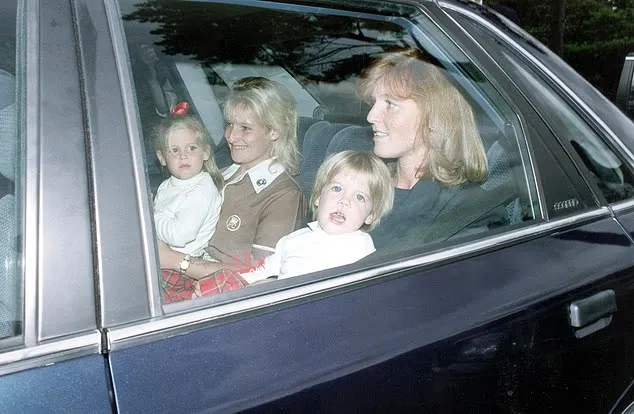
_Ferguson brought his daughter to meet Epstein at a heavy cost. The image of the royal princess was "tarnished" by her mother's behavior! _Ferguson brought his daughter to meet Epstein at a heavy cost. The image of the royal princess was "tarnished" by her mother's behavior!

Under the long-lens lens of the British royal family and the magnifying glass of public opinion, Sarah Ferguson has been committed to maintaining a "perfect mother" persona for many years. She regarded her two daughters, Princesses Beatrice and Eugenie, as her "soul mates" and used them as her last bulwark against outside gossip.

However, although she won the Mother of the Year Award in 2007, the 66-year-old duchess's private parenting performance seems to be very different from her public image of being responsible. The newly disclosed Epstein files reveal disturbing details: In 2009, just days after Jeffrey Epstein was released from prison after serving a sentence for grooming underage girls, Ferguson visited with his daughters. This extreme disregard for moral hazard has once again raised deep questions about its judgment.

Ferguson paid a heavy price for bringing his daughter to meet Epstein. The image of the royal princess was "tarnished" by her mother's behavior! __Ferguson brought his daughter to meet Epstein at a heavy cost. The image of the royal princess was "tarnished" by her mother's behavior!

Despite public claims to do his job, Ferguson was reportedly often absent

Royal biographer Andrew Lowney pointed out in his book "Privilege" that Ferguson often lacked the patience to discipline her daughter when she was young, and that this "motherhood" was largely performative. Loney revealed that the Duchess usually leaves her children in the care of a nanny unless a photographer is on hand for a PR shoot. It is reported that when the two little princesses and their mothers participated in "Hello! magazine and in exchange for a six-figure remuneration, the childcare staff would pick up the children as soon as the shutter stopped. The entire process was described by an insider as "a carefully planned performance from beginning to end."

When Princess Eugenie attended Marlborough College from 2003 to 2008, parents there were also confused by Ferguson's reputation as a "dedicated mother". One parent revealed to Loney that they could barely remember seeing the Duke or Duchess at the school gate. At the same time, according to psychic Mrs. Vasso, during their daughters' childhood, Ferguson took his young daughter on many luxury trips with his rumored lover, which meant taxpayers had to pay thousands of pounds for royal bodyguards.

In January 1992, a batch of vacation photos in Morocco taken in May 1990 were exposed. A total of 120 images recorded scenes of Ferguson and American playboy Steve Wyatt bathing in the sun together. Princess Eugenie was only a few weeks old at the time, while Princess Beatrice, just one, was pictured sitting on the businessman's lap. Given that Ferguson was still married to Prince Andrew at the time, the photos not only raised questions about the nature of her private life but also led to public disillusionment with her responsibilities as a mother.

Ferguson paid a heavy price for bringing his daughter to meet Epstein. The image of the royal princess was "tarnished" by her mother's behavior! _Ferguson brought his daughter to meet Epstein at a heavy cost. The image of the royal princess was "tarnished" by her mother's behavior! _

What made the education community and parents even more angry was that in the summer of 1992, while traveling around the world with his "financial adviser" John Bryan, Ferguson forcibly took Princess Beatrice out of school during the semester. When the group took a private jet to vacation on the French Riviera, the turmoil turned into a huge scandal worthy of the "abdication crisis." Brian was filmed kissing and sucking on Ferguson's toes on a sunbed in Saint-Tropez, while the girls, aged four and two at the time, watched from a short distance away.

Faced with accusations of absenteeism, Ferguson once confessed to Mrs Vasseau that she saw no point in keeping young children in school for months on end. She insists that taking her daughters to travel whenever possible and broadening their horizons by experiencing new cultures is more important than boring classroom education. However, the price of this "broadening of horizons" is often the mother's absence at critical moments. In January 1996, she met Austrian player Thomas Muster in Qatar, and then her flight home was temporarily canceled and diverted to Sydney. As a result, her mother was unable to be with her two children when they returned to school after the Christmas vacation.

Despite all the rumors of his absence circulating behind the scenes, Ferguson never stopped praising his parenting abilities when facing the media. In 2011, she declared in an interview with Harper's Bazaar that she was "the best mother I know" and emphasized that being a good mother was the only thing she did 100% right in her life. In her autobiography, "Finding Sarah," she defined herself as a "global mother," describing motherhood as the greatest achievement of her life, and calling her two daughters a "tripod"—an interdependent, indestructible combination.

Ferguson paid a heavy price for bringing his daughter to meet Epstein. The image of the royal princess was "tarnished" by her mother's behavior! __Ferguson brought his daughter to meet Epstein at a heavy cost. The image of the royal princess was "tarnished" by her mother's behavior!

Andrew Loney analyzed that Ferguson's almost paranoid obsession with motherhood actually stems from her deep childhood trauma. When she was 13 years old, her mother, Susan, abandoned her family and children and fled to Argentina. This sense of abandonment formed the core of her personality. Royal writers pointed out that Ferguson has been seeking recognition throughout his life. His extravagant spending habits and violent mood swings are essentially attempts to fill his inner insecurities and inferiority complex. In 1998, his mother Susan died in a tragic car accident. This tragedy was called the darkest day of her life by the Daily Mail.

Now, as the Epstein scandal further unfolds, Ferguson's relationship with his daughters is facing an unprecedented test. Prince Andrew was arrested on suspicion of official crimes on his 66th birthday. This incident became the straw that broke the camel's back. Royal sources revealed that although Beatrice and Eugenie remained staunchly supportive of their mother in public, the truth revealed in the dossier has put the relationship between mother and daughter into "extreme tension."

The sisters were shocked and embarrassed by their parents' years-long close association with an "abomination" like Epstein. A source close to the princess revealed that they knew very little about these dark inside stories and felt ashamed when they read the emails their mother sent to Epstein. They love their parents deeply, but they are also clearly aware that it was the wrong choices of Andrew and Ferguson that involved them in Epstein's dirty circle, thereby "tarnishing" their image as members of the royal family.

Britain's Attitude Is Clear: It Will Not Participate In The Attack And Agrees To The US Using Bases To Defend Iran

On March 2, British Prime Minister Starmer issued a statement in the House of Commons in London, the capital. Xinhua News Agency

On the evening of March 1, local time, the leaders of the United Kingdom, France and Germany issued a joint statement, sending a strong signal that the three countries may take "necessary and proportionate defensive actions" against Iran. When "defensive action" becomes an option publicly discussed by the three European countries, Britain, France and Germany, this conflict is breaking through the original boundaries and may evolve from a local confrontation into a cross-regional crisis.

Britain will not participate and Germany will not criticize

In the context of the rapidly spreading war, British Prime Minister Starmer tried to draw a clear line for his position: British military bases can be opened for "specific and limited" defense purposes, but the UK will not participate in offensive strikes by the United States and Israel against Iran. Starmer issued a video statement stressing that the UK "did not participate in the initial strike against Iran and will not participate in offensive operations now." He said bluntly: "We all remember the mistakes made by Iraq and learned from them." This statement not only appeases domestic public opinion, but also sends a signal to the international community that the UK is unwilling to repeat the mistake of military intervention. However, Starmer also announced that the United Kingdom has agreed to the use of its military bases by the United States for "specific and limited defense purposes." He explained that the United States requested the use of British bases to prevent Iran from launching missiles in the region, avoid casualties of innocent civilians, and protect the safety of British citizens and troops stationed there.

According to British disclosures, the UK has approximately 200,000 citizens in the region and has armed forces deployed in the Gulf. Iran's retaliatory strikes against targets in many countries have put British personnel and assets at real risk. Starmer pointed out that Gulf partner countries have asked the UK to increase its defense efforts, and the UK has sent fighter jets to perform missions in the region and successfully intercepted Iranian attacks.

Previously, US President Trump had listed two bases in the UK as potential operational nodes, saying they could be used to respond to "potential attacks by highly unstable and dangerous regimes." The UK has rejected similar requests in the past, but its agreement this time was seen by the outside world as a clear adjustment in its position. However, according to people familiar with the matter, the scope of the U.S. request is more limited than before, and the focus is on curbing Iran's retaliation against its Gulf allies rather than expanding the scope of the attack.

At the same time, German Chancellor Mertz refused to publicly criticize U.S. actions, emphasizing that Europe still needs U.S. support on the Russia-Ukraine issue. Trump's ally, US Republican Senator Graham, publicly criticized Britain, France and Germany for not supporting the air strikes more clearly, believing that Europe was "refusing to help the Iranian people." Under the intertwining pressures, Starmer's statement showed a typical balancing strategy: finding space between security reality and political restraint, and drawing a line between alliance obligations and avoiding involvement in war. However, as the situation continues to escalate, it is still unclear whether this line can be maintained in the long term.

EU diplomacy takes priority, NATO sends signal

While Britain, France and Germany released signals of "defensive action", the EU level also responded quickly. EU High Representative for Foreign Affairs and Security Policy Karas issued a statement saying that Brussels is following developments in Iran and the Middle East with "great concern", urging all parties to de-escalate the conflict and calling for "maximum restraint, protection of civilians, and full respect for international law." The statement also pointed out that Iran's attacks on the sovereignty of many countries in the region are "unacceptable" and warned that the Middle East faces "huge losses in a long war." In terms of wording, the EU not only emphasizes avoiding the expansion of the conflict, but also does not shy away from condemning Iran's military actions. The EU said it would continue to "protect the EU's security and interests, including through further sanctions," reiterated its diplomatic goal to "prevent Iran from acquiring nuclear weapons" and urged it to fully cooperate with the International Atomic Energy Agency.

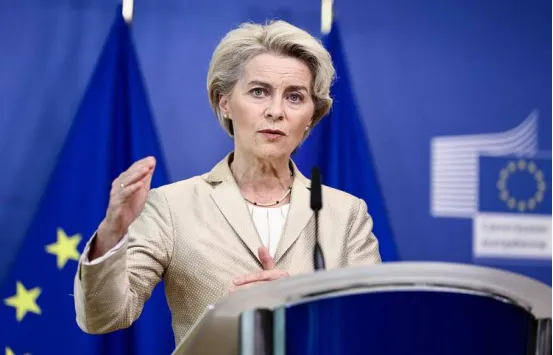
European Commission President von der Leyen also launched intensive diplomatic communications. She spoke with Qatar's emir (head of state) Tamim to discuss the consequences of the Iranian attack and said "Qatar can rely on strong European solidarity." Von der Leyen warned that the risk of further escalation was "real" and that Iran needed "a credible transitional phase that can restore stability and pave the way for a lasting solution," while stressing the need to curb Iran's military nuclear missile program.

At the same time, in terms of security deployment, the EU decided to send two more French ships to join the EU Red Sea escort operation, the EU Navy's "Operation Aspides", bringing the total number of participating warships to five to deal with the threat that Iran's retaliatory actions may pose to maritime traffic. Italian Deputy Prime Minister and Foreign Minister Tajani said that the EU will continue to speak out during the transition phase of the conflict and confirmed that it will continue to implement operations "Aspides" and "Attalanta" while coordinating the protection and evacuation of European citizens in the area.

Judging from its public statements, the EU's tone is restraint and diplomacy first; from an operational perspective, measures such as increasing the navy's deployment, adjusting its military strength, and coordinating the evacuation of overseas Chinese have been simultaneously advanced. The parallel calls for diplomacy and security deployment demonstrate Europe's dual-track strategy between "avoiding war" and "preparing for war."

In addition, NATO also sent a clear signal. Glinkevich, NATO's Supreme Allied Commander in Europe, said that he is "paying close attention" to the development of the situation in Iran and the Middle East and will adjust the deployment of troops as needed to defend against potential threats that may come from ballistic missiles or drones. NATO said it will continue to adjust its force posture to ensure the security of its 32 member countries.

At this stage, the possibility of Britain, France and Germany directly participating in the war is still lower than that of the United States, but the risk of "indirect involvement" is rising. First of all, the UK has allowed the US to use bases to carry out operations against Iran's missile capabilities. Once relevant actions trigger larger-scale retaliation, it will be difficult for the UK to completely cut off from the conflict. Secondly, the EU's military presence in the Red Sea and the Gulf continues to strengthen. If European ships or personnel are attacked, political pressure may escalate quickly. Third, NATO has begun to adjust its defense posture. Once any member state suffers a substantive attack, it is very likely that NATO's Article 5 collective defense clause will be triggered. This not only means that the alliance will initiate mutual defense obligations, but may also push NATO as a whole into a more direct military conflict, further escalating the situation.

Within Europe, there is overall caution about whether to directly participate in military operations against Iran. The historical shadow left by the Iraq War has not yet dissipated, coupled with the domestic political pressures faced by Britain, France and Germany, and the conflict between Russia and Ukraine still occupy a strategic priority, the three countries are generally unwilling to be dragged into this new battlefield in the Middle East. Therefore, the more likely path for Britain, France and Germany is to expand the scope of defensive operations, strengthen sanctions and diplomatic pressure, and provide logistical and intelligence support, rather than actively participating in a comprehensive attack on Iran's homeland. However, whether the line of "defensive support rather than offensive engagement" can be maintained in the long term will depend on two variables: the intensity of Iranian retaliation, and the duration of U.S. actions. Once either side breaks through the existing restraint framework, the probability of Britain, France and Germany being passively involved in the war will inevitably and rapidly expand.

(The author is an associate researcher at the Central and Eastern European Economic and Trade Cooperation Institute of Ningbo University)

The Taiping Year Reveals Wang Jun, The Most Heroic Figure In The Later Zhou Dynasty: His Tortuous Life And Political Ups And Downs

The greatest hero of the Later Zhou Dynasty behind the history of "The Year of Taiping", he had the merits of admiration, support, administration, and warfare.

Wang Jun is played by actor Sun Bin (the concubine in "The Kite") in the TV series "The Year of Peace". The character is set as a minister of the Later Zhou Dynasty during the Five Dynasties and Ten Kingdoms period, ranging from official to privy envoy, prime minister and Pinglu Jiedushi. Together with the military attache leader Wang Yin, he is known as "One Guo and Two Kings" and is the core of the Later Zhou Dynasty.

Wang Jun (?-953), whose courtesy name was Xiufeng, was a native of Anyang, Xiangzhou (now southeast of Anyang, Henan). His father, Wang Feng, is an officer in the county's military band.

Influenced by his family, Wang Jun has had profound musical attainments since he was a child, and his singing is extremely beautiful. Zhang Jun, the high official of the Later Liang Dynasty, fell in love with him and kept him by his side, and later gave him to the powerful minister Zhao Yan. After the fall of the Later Liang Dynasty, he lost his support and lived among the people. After some time, he took refuge with Zhang Yanlang, the third minister in charge of finance in the Later Tang Dynasty. However, this financial official did not appreciate his singing voice and only gave him ordinary treatment. After the collapse of the Later Tang Dynasty, Zhang Yanlang was killed, and all the properties of Wang Jun and Zhang Yanlang were given to Liu Zhiyuan by Shi Jingtang.

Wang Jun, who had always been treated as a plaything, changed his humiliating life in the hands of Liu Zhiyuan, embarked on a regular official career, and became a low-level officer. As Liu Zhiyuan became the master of the world, he also obtained a central official position and was promoted from the envoy of Hakka Province to the envoy of Xuanhui Beiyuan who conveyed the emperor's orders.

The official position was getting bigger step by step, but as his official position rose, Wang Jun fell into an increasingly deep political whirlpool. Especially after Emperor Yin of the Han Dynasty succeeded to the throne, the contradiction between the elders and the new rich in the court became increasingly acute. Finally, the tragedy of the elders being executed finally occurred. When this incident occurred, Wang Jun was serving as a supervisor for Guo Wei in Yedu. All their family members in Beijing were killed. At the same time, their lives were threatened by the imperial court's fatwa.

At this time, Wang Jun and Guo Wei became people in the same boat. In order to escape the disaster, he stood up with pride and hatched a strategic plan with Guo Wei to resist the imperial court. After the army entered Kaifeng, he was appointed as the Privy Envoy to assist Guo Wei in presiding over the political situation. Guo Wei led his troops out and wore imperial robes. He stayed behind in the capital and promptly dispatched troops to move to Song and Xu states, successfully controlling the remaining forces of the Later Han royal family.

After the founding of the Zhou Dynasty, Wang Jun took the lead and took over the post of prime minister as a privy envoy. Wang Jun held political power and military power with one hand and helped Zhou Taizu turn the political wheel of the new dynasty. The country was newly built and the world was troubled. Wang Jun worked hard day and night to manage the government and quickly put the government on track. He told everything he knew, gave advice from time to time, and did his best to consolidate the new regime.

accept people

When the Northern Han Dynasty attacked Jinzhou (now northeast of Linfen, Shanxi Province), Wang Jun took command and was given full authority to act on his own initiative. Entering Shaanzhou, he stationed his troops and stopped advancing. When the news reached the capital, Zhou Taizu was afraid that Jinzhou would be lost. He couldn't hold it any longer and sent an envoy to rush away, saying that if he didn't march again, he would lead his army to conquer it himself. Wang Jun separated his left and right sides and secretly said to the envoy: "The city of Jinzhou is difficult to attack and difficult to break. In addition, the enemy's army is unstoppable and cannot be fought hard. The reason why I stayed and did not advance was not to fear the enemy, but to wait for his energy to weaken before proceeding. The emperor's new After ascending the throne, the vassal towns in the four directions have not yet shown their might, so how can we act lightly! Looking at the current situation, the traces of Murong Yanchao's rebellion in Yanzhou have been revealed. If the emperor goes out, Murong Yanchao will take the opportunity to enter the capital. How will the emperor deal with it? "

The envoy reported back, and Zhou Taizu suddenly woke up. He held his ear and said, "I almost failed!"

Preventing the monarch's personal expedition, Wang Jun waited for a few days and suddenly marched towards Jinzhou with his troops. The Northern Han army that besieged the city could not attack the city for a long time, and its morale gradually declined. When they heard that reinforcements were coming again, they withdrew before they saw the shadow. When Wang Jun entered Jinzhou, the generals unanimously requested to pursue the victory. He hesitated and waited until the next day before ordering the pursuit, but the enemy army was far away.

Wang Jun made great achievements in resolving the siege of Jinzhou. Zhou Taizu personally conquered Yanzhou Murong Yanchao. He once again asked for orders to accompany him and led his troops to attack the city first and made the first contribution to the city's destruction.

Kudos to you! The merit of helping one’s fate! Excellent governance! The success of the attack! Wang Jun, who was full of meritorious deeds, forgot about himself and started to compete with the monarch while lying on his merit book. He takes the world as his own responsibility, no matter what, no matter big or small, as long as he wants to do it, the monarch must agree with him to do it. Once he is slightly dissatisfied, he will put an unhappy look on his face and his mouth will be full of disparaging words.

Zhou Taizu endured and gave in, trying his best to satisfy him. He was two years older than Zhou Taizu. In order to respect him, Zhou Taizu often addressed him as "brother", or just called him by his first name, so as not to forget his common acquaintance. Wang Jun didn't know that the monarch had been extremely tolerant to him. He thought that the monarch could not do without him, so he became even more arrogant.

Zhou Taizu had a group of old brothers, such as Zheng Renjie, Li Chongjin, Xiang Xun, etc. He did not reuse them when he came to the throne. After everything settled down, he gradually arranged important positions one by one. The alert Wang Jun thought this was a signal, a signal that the monarch no longer trusted him, and a signal that he wanted to ignore him. He immediately took three measures: to retreat as an advance, he submitted a resignation letter to the monarch to understand the privy envoy to test the monarch's intention; he hid at home and stopped handling official duties; at the same time, he sent a hint to the "princes" everywhere, asking them to write a letter asking the monarch not to dismiss him from his post.

For several days in a row, memorials from the "princes" flew onto the imperial court like snowflakes. Zhou Taizu was shocked. He didn't expect Wang Jun to do so many things to him. After figuring things out, the experienced Zhou Taizu immediately sent someone to the palace, and said with both comfort and threats: "If you don't come out to take charge, I will personally come to pick you up."

Wang Jun even said he didn't dare, but he still stayed at home. Zhou Taizu sent Chen Tong, a minister who was friendly with Wang Jun, to persuade him, and once again emphasized that he would come to pick him up in person. Wang Jun was forced to enter the palace to meet the monarch.

The turmoil finally subsided, and Wang Jun resumed his work. However, his arrogance remained the same and had not changed at all. The monarch built a small palace in the inner garden. When Wang Jun learned about it, he criticized him in a tone of concern for the country and the people: "There are already many palaces, why build this palace again!"

It stands to reason that Wang Jun should be a model of advocating frugality. Otherwise, he also carried out extensive construction projects in the Privy Council and built an extremely luxurious hearing hall. After the project was completed, he even invited the monarch to come and take a look. When Zhou Taizu saw it, he was moved by the scene and retorted about the past: "There are many rooms in the Privy Council, why do you need to build this hall again?"

Wang Jun was speechless.

After this incident, Wang Jun continued to expand his power without limit and squeeze out dissident forces in order to isolate the monarch. In order to strengthen his actual power, he proposed to take over a large town, and Zhou Taizu reluctantly agreed. He and Chai Rong had a long-term feud and prevented the heir to the throne from entering the capital. Zhou Taizu could only let it go. Zhou Taizu was very comfortable in using talented scribes such as Fan Zhi and Li Gu as prime ministers. However, Wang Jun felt that they did not listen to him and could not stand them, so he wanted to replace them with Yan Sui and Chen Tong who belonged to his own power. After he submitted the report, he asked the monarch to approve it immediately. Zhou Taizu suppressed the anger in his heart and said tactfully: "How can we rush to advance or retreat from the prime minister? We should consider it carefully."

Wang Jun refused to comply, insisted on his own opinion, and uttered offensive words. Zhou Taizu was forced to do nothing, so he excused himself that it was the Cold Food Festival and said he would do it after the festival.

Zhou Taizu, who had endured it for a long time, finally couldn't bear it anymore. When he went to court the next day, he arranged for his guards to arrest Wang Jun and imprison him. This monarch, who had always tried to compromise, explained to Feng Dao and other elders with tears: "Wang Jun insulted me too much, was too rude, and wanted to take away my wings. When I was outside, I blocked him, and when I came to the capital, I started complaining. He is both the chief cardinal and the prime minister, and he also wants to command an important town, and I also granted it to him. His desires are hard to satisfy, and he has no king. Who can bear it willingly!"

Things must be reversed at the extreme, and Wang Jun, who came to the end, was demoted to the Sima of Shangzhou, and finally died in the place where he was demoted.

Comment: Wang Jun was an important minister of the Later Zhou Dynasty. He was courageous and knowledgeable, risking his own life and death, and helped Guo Wei overthrow the Later Han Dynasty. After the founding of the People's Republic of China, he successively established military achievements. As a result, he became a great hero of this dynasty. But he was too greedy for power, despised Zhou Taizu who was killed together, ignored the authority of the monarch, and wanted to convert the qualifications of a great hero into a powerful minister, and become a powerful minister who made the monarch obedient to him. He manipulated power, insulted the monarch, hated the crown prince, eliminated the influence of his relatives, and finally ended up reaping the consequences.

In the TV series "The Year of Peace", Wang Jun, played by Sun Bin, is a complex and layered character. His performance accurately captured Wang Jun's transformation from a hero to a powerful official:

Sun Bin brought Wang Jun's origin to life. As Guo Wei's commoner friend, he showed the characteristics of speaking out for justice and not sticking to trivial matters, as well as the courage and courage to dare to plan big things in the political whirlpool.

When interpreting Wang Jun's expansion in the later period, Sun Bin showed the character's sense of oppression through details. Lying on his merits, he changed from respecting the monarch to looking down or even looking down on him. Through his rivalry with Zhou Taizu, he portrayed Wang Jun's ignorance of advancement and retreat and his desire for power.

Facing the ending of being demoted, Sun Bin's performance is not blindly facialistic, but has an inevitable desolation. It vividly interprets the historical law of "things must turn to the extreme" and reflects the life principle of a good swimmer who drowns in water.


Ni Ping’s Recent Appearance At The Airport Was Exposed! Being Thin And Wearing A Blood Oxygen Machine Causes Worries

Recently, some gossip media posted a video about the well-known host Ni Ping on social platforms. The content of the video was exactly the scene of Teacher Ni Ping appearing alone at the airport. Her recent situation, which had not been seen for a long time, was also exposed by the media, which aroused heated discussions among countless netizens.

In the video that day, Ni Ping was seen wearing a black velvet jacket, a red sweater, white sports trousers, and a mask. She looked very fashionable. She looked a bit like a lady in the velvet jacket, and she was very elegant. Although she was wearing a mask, which covered half of her face, her image had already been engraved in the minds of countless viewers, and she could be recognized at a glance.

Judging from the video, Teacher Ni Ping appeared alone at the airport this time. She seemed to be in good condition. She was wearing light makeup and was full of energy. However, her figure looked a little thin. I wonder if she was losing weight. She wrapped herself very tightly and wore many clothes. She seemed to be really old. At the age of 63, she was indeed not as good as before, but she was still in good spirits.

However, there was a portable oximeter hanging around her neck, which seemed to measure blood oxygen regularly, which made people wonder if there was something wrong with her body, which made her worried for a while.

However, judging from the programs she has participated in before, her performance in them is very good, and her complexion is very rosy. Maybe she wears a blood oxygen machine because of the problems of some elderly people, and it is also a way to prevent diseases. She can test it every once in a while to prevent any physical discomfort!

As a host of the older generation, Yang Liping is very popular, and her popularity is also very high. Many people want to know her recent situation, but this time she is thin, which really makes people worry about her physical condition. She is older, and she carries a blood oxygen machine with her, which is even more worrying. I also hope that she will be safe and healthy in her later years, and hope to see her host the show again.

Hunan Attaches Great Importance To The Development Of Private Economy, The Data Shows Its Weight, And The Measures To Solve The Problem Attract Attention

China News Service, Changsha, February 25 (Reporter Liu Shuangshuang) On February 24, Hunan held a province-wide action deployment conference to promote the development and growth of the private economy and the Year of Enterprise Service. At this "first meeting of the New Year", hundreds of private entrepreneurs and representatives of chambers of commerce were sitting in Seat C of the venue; at the scene, Hunan announced that 2026 would be the year of corporate service; after the meeting, provincial leaders shook hands with entrepreneurs one by one and said goodbye – this all sent a clear signal that Hunan attaches great importance to and supports the development of the private economy: to respond to the practical concerns of the private economy with institutionalized service supply.

Why is the private economy placed in such an important position?

For the private economy in Hunan, a set of "57999" data is enough to give a glimpse of its importance: it contributes about 50% of the province's tax revenue, about 70% of the regional GDP, more than 90% of technological innovation results, more than 90% of urban labor employment, and more than 90% of the number of business entities.

Official data shows that in 2025, the added value of Hunan's private economy will reach 3.80 trillion yuan, a year-on-year increase of 4.8%; private investment will account for 65.2% of all investment, ranking among the top in the country. The National On-site Meeting to Promote the Development and Growth of the Private Economy will be held in Changsha in 2025. Hunan has provided a fresh example for the development of the national private economy and private investment.

These data reveal a basic fact: if the private economy is stable, the Hunan economy will be stable.

How to stabilize? Hunan's choice is to take the lead in solving the problem in terms of institutional mechanisms: in 2025, the Hunan Provincial Private Economic Development Bureau (Hunan Provincial Business Environment Construction Bureau) will be established at the provincial level at the provincial level, becoming the first provincial unit in the country to assume dual functions; 14 cities and states have established specialized work agencies for the private economy relying on the development and reform departments, forming an organizational system covering provinces and cities.

In terms of policy, Hunan is doing both "addition" and "subtraction". Comprehensively clean up the current policy documents and formulate a list of "three batches" of enterprise-related policies: 90 were abolished, 19 were implemented and implemented, and 28 were newly introduced; the "Hunan Provincial Private Enterprise Support Policy Manual (2025)" was compiled and printed to allow private enterprises to go into battle lightly and develop with ease.

By defining 2026 as the "Enterprise Service Year", what problems does Hunan need to solve?

"It is necessary to carry out the annual service year action for enterprises with problems as the target, continuously improve the sense of benefit from policies that benefit enterprises, step up the clearing of arrears to private enterprises, and effectively reduce the cost of using resources." Shen Xiaoming, secretary of the Hunan Provincial Party Committee, clearly stated at the meeting that intermediary services should be further standardized, strict standardization of enterprise-related law enforcement inspections, efforts should be made to promote fair participation of private enterprises in market competition, continue to open channels for private enterprises to reflect their demands and solve problems, actively build pro-Qing government-business relationships, and sincerely solve the problems that are blocking points and pain points that enterprises have strongly reported.

Judging from the content of Hunan Province's "Enterprise Service Year" action plan, its direction is clear: using the "Four Major Actions" as a framework, services will be refined into specific operable and traceable matters.

——The "Society-wide Respect Business and Enterprise Action" attempts to solve the institutional problem of government-enterprise communication. The plan proposes to establish a "Hunan Entrepreneur Day" in accordance with the law, fully implement the system for leading cadres to contact enterprises and business associations, and transform government-enterprise interaction from "emotional contact" to "mechanical guarantee."

——The "Full-cycle Service Enterprise Action" focuses on breaking through the blocking points in the entire life cycle of enterprises. From "AI empowered business establishment" for market access, to reforms such as mixed land use and flexible land supply for factor supply, to the "simple cancellation system" for exit, the coverage of the plan shows that Hunan is trying to build a complete service closed loop from entry to exit.

——The "Full Chain Empowerment Industry Action" extends the vision from a single enterprise to the industrial chain. Institutionalized implementation of "chain growth to the front line", strengthening industrial chain collaboration, helping to improve the quality of the value chain, and optimizing the spatial chain layout are intended to solve the "stuck point" problem of small and medium-sized enterprises integrating into the supply chains of large enterprises.

——The "all-round rights protection action" points to a legalized business environment. The plan clearly proposes to standardize enterprise-related administrative law enforcement, clean up arrears of enterprise accounts, and severely crack down on enterprise-related online infringements. Among them, Hunan's "machine management bidding" reform has achieved initial results – the winning rate of private enterprises has increased from 73.6% to 82.9%.

It can be seen that every item of Hunan's "Corporate Service Year" action plan directly addresses the pain points and makes targeted efforts, so that the policy can truly move from the "file cabinet" to the "production line".

Looking at a deeper level, the development of the private economy depends on policy dividends in the short term and institutional supply in the long term. In the context of various regions competing to optimize the business environment, Hunan's differentiated path lies in upgrading service companies from "emergency response" to "normalized mechanism."

Shen Xiaoming proposed that leading cadres at all levels should "have a high regard for entrepreneurs and show deep love." This is not only an expression of attitude, but also points to a change in the role of the government – when "responding to requests and not disturbing anything" becomes administrative consciousness, and when "getting things done, hiring people, making money, and being fully respected" becomes the common feeling of business entities, only then will the vitality of the private economy have the institutional basis for continued release.

From construction machinery to Beidou applications, from traditional manufacturing to emerging production capabilities, private enterprises in Hunan are undergoing a transformation from "scale expansion" to "value leap". In this process, the quality of government services directly affects the speed and direction of transformation.

In the first year of the "15th Five-Year Plan", Hunan answered the question of "Corporate Service Year" in an attempt to establish a more stable transmission mechanism between policy and the market. The significance of this action plan is not only relevant to Hunan, but also explores the path for high-quality development in the central region and even the whole country: when the marginal effects of "fighting for policies" are diminishing, how to reconstruct the relationship between government and enterprises through "fighting for services" and gather a strong synergy to promote the development and growth of the private economy. (over)

Min Lee's New Song Is Suspected Of Responding To Rumors Of Marriage Changes, And The Lyrics Are Very Informative And Have Been Hotly Debated

Recently, there has been a lot of news about the marriage change between Queen Coco Lee and her husband since the beginning of the year. Moreover, Coco Lee herself has not responded to the matter. On February 14, her new song was released online, and she herself also posted a news update. He sang his new song and captioned it: "When love comes here, one word: tragic." This English word translated into Chinese means tragedy, which makes people wonder whether it is responding to the rumors of a suspected marriage change, which has attracted heated discussions among countless netizens.
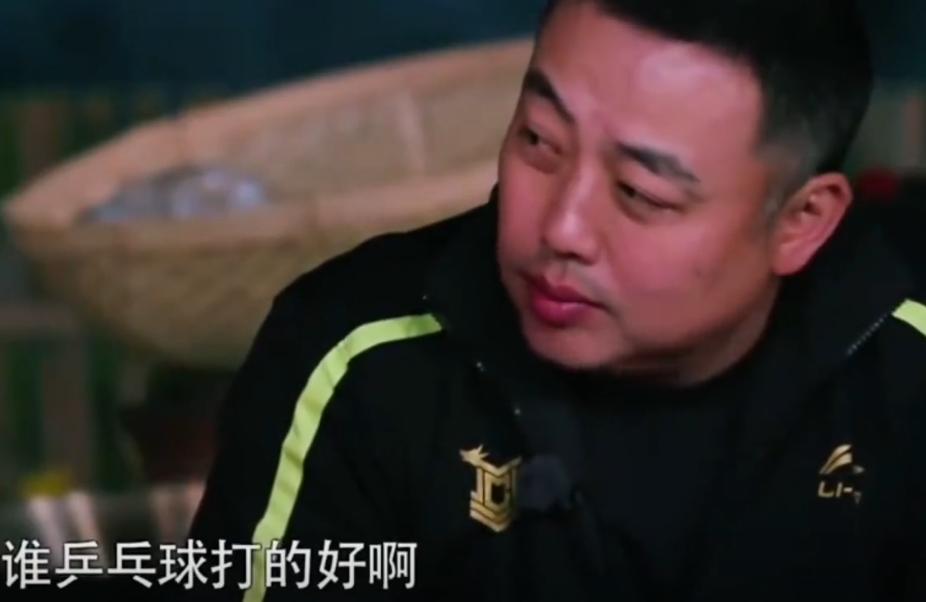
Moreover, her new song also allowed netizens to discover a large amount of information. For example, there are lyrics in this song such as "As long as a little accident, your flaws will be exposed", "Leaving you is my best arrangement", etc. The amount of information is huge, and it has a sad mood. Each sentence has a deep meaning, as if it is hinting at her own marital problems.

Indeed, since the beginning of this year, Coco Lee's marital problems have been circulating on the Internet. They are generally saying that she and her husband have emotional problems and are suspected of having a divorce. It is also revealed that the two are currently separated. Even the two stepdaughters are no longer close to her. They are suspected of severing relations with her and supporting their father.

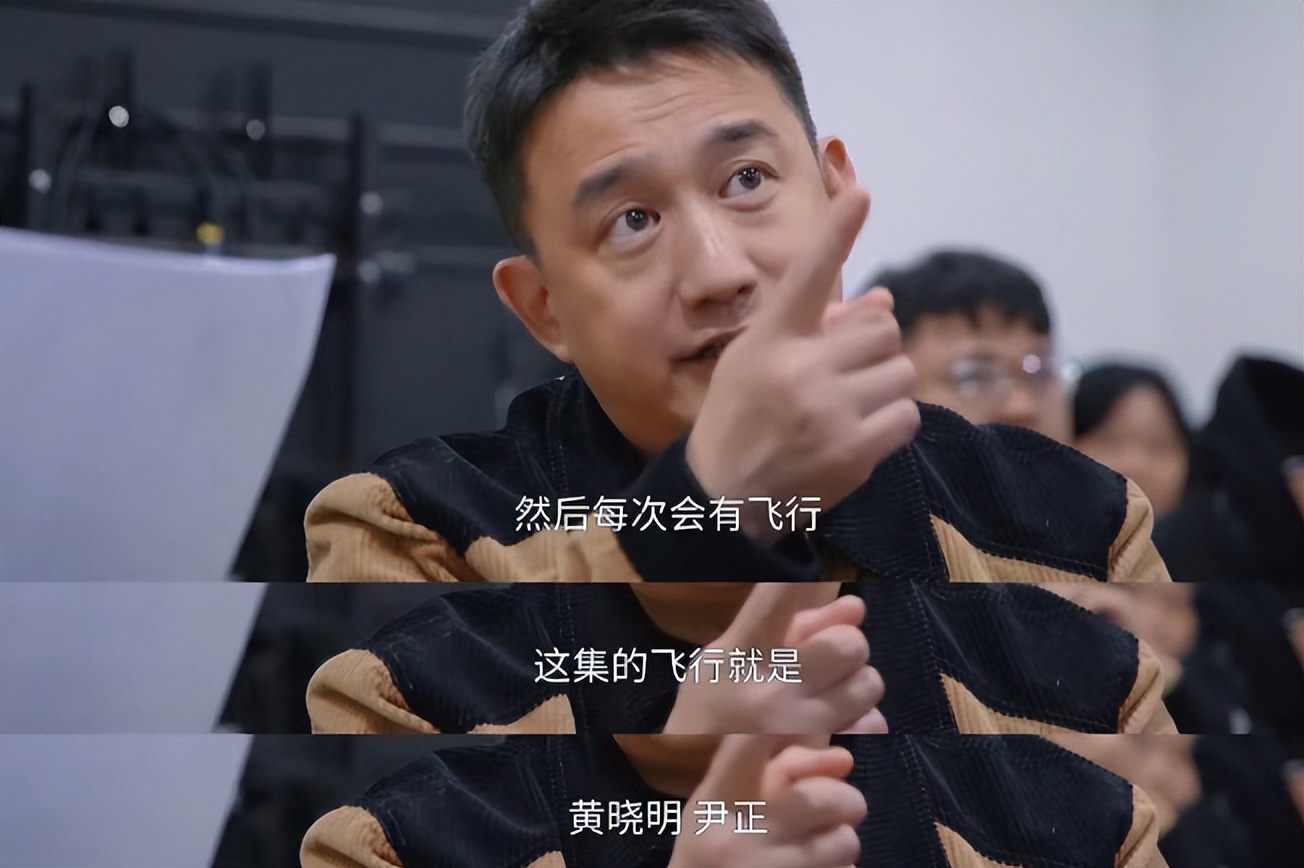
Moreover, Coco Lee's best friend also publicly supported Coco Lee on the Internet, revealing a lot of dirty information about Coco Lee's husband, saying that the husband had cheated on her many times after marriage, and they were not the same person. Even the stepdaughter, whom Coco Lee usually treated sincerely, sided with her father, leaving Coco Lee in a state of isolation and helplessness.
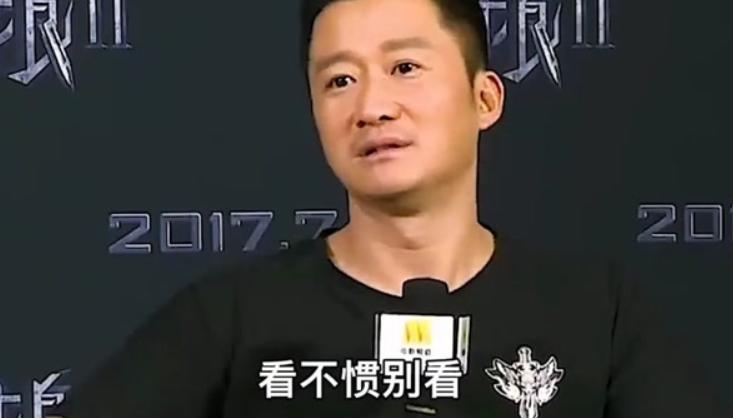
However, after the relationship between the two was exposed, there were still many blessings. Until now, Coco Lee has not responded to her love life. Of course, she still hopes that she can be happy and bring better works to everyone.

First Round Of The All England Badminton Open: Shi Yuqi Was Eliminated After Three Hard Games, And The National Badminton Men's Team Lost Three Players

How to play a three-person badminton final_Badminton three-person rules_

Badminton three-person rules__How to play a badminton three-person final

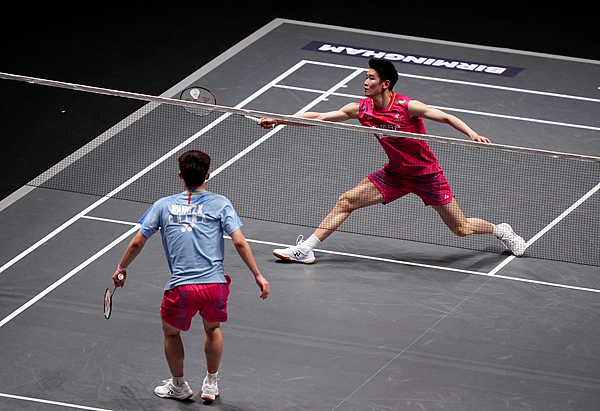
In the first round of the All England Badminton Open held on the evening of March 3rd, Beijing time, the defending champion Shi Yuqi lost to the 24-year-old Indian star Lakshya in three hard games and suffered a "first-round elimination". After that, Wang Zhengxing and Weng Hongyang were also eliminated, and the national badminton men's team lost three generals on the first match day.

Badminton three-person rules__How to play a badminton three-person final

Shi Yuqi lost to Lakshya and stopped in the first round

Relying on his physical advantage, Lakshya took the initiative from the beginning and used speed to restrain Shi Yuqi's delicate skills. The Indian players widened the point difference in the first game. Shi Yuqi came from behind and saved 5 game points in a row, but still lost the first game 21-23. In the second game, Shi Yuqi was almost tied when he was leading by 6 points. He tied the score 21-19 and dragged the game into the deciding game. However, in the deciding game, Lakshya was still strong and did not show any signs of fatigue until the end. He finally won the game 21-17, winning by a big score of 2-1. Shi Yuqi, who topped the All England Open last year for the first time in seven years, unfortunately stopped in the first round this year.

2025 is a relatively complete year for Shi Yuqi's career. In this year, he not only gathered all the Super 1000 championship puzzle pieces, but also finally transformed from the "King of Open Championships" to the World Championship Champion.

Just four days ago, Shi Yuqi celebrated his 30th birthday. In an exclusive interview with "Global People", he revealed: "I have not made it clear that I want to compete in Los Angeles (Olympic Games), so we still take it one step at a time." Shi Yuqi, who has participated in two Olympic Games, said frankly: "The main reason is that the injuries now are indeed more complicated and more numerous. It is still difficult to compete with a intact body, but I hope to overcome it as much as possible."

Malaysian Open final Shi Yuqi chose to abstain due to injury in the second game

This season, Shi Yuqi has only played in one Super 1000 Malaysian Open match. After making it all the way to the finals, he lost the first game 21-23 against his old rival Kunlavut. In the second game, he chose to abstain due to injury when trailing 1-6 in the second game, and finished second. The 24-year-old Thai star was crowned Super 1000 champion for the first time.

In this All England Open, the National Badminton Team sent a total of five men's singles players to participate. Men's singles is also the only event in which the National Badminton Team has two active All England Championship champions. Shi Yuqi reached the top twice in 2018 and 2025. Li Shifeng defeated Shi Yuqi to win the championship in 2023, but now both of them are suffering from injuries. Li Shifeng, the No. 2 men's singles player in the country, retired due to injury in last year's year-end finals. He only played one game this year, losing 0-2 to Japanese player Koga Ho at the German Open.

Although Li Shifeng advanced to the top 16, his physical condition is still not optimistic

In the first round of the men's singles match, Li Shifeng advanced to the top 16 by defeating his teammate Wang Zhengxing 2-0. The latter was the dark horse of last year's China Open. He made it all the way to the final, losing to Shi Yuqi and finishing second. The third national badminton men's singles player Weng Hongyang lost to Hong Kong player Lee Cheuk-yiu 19-21, 17-21 and stopped in the first round. Lu Guangzu will challenge No. 2 seed Kunlavut on the 4th, which is not easy.

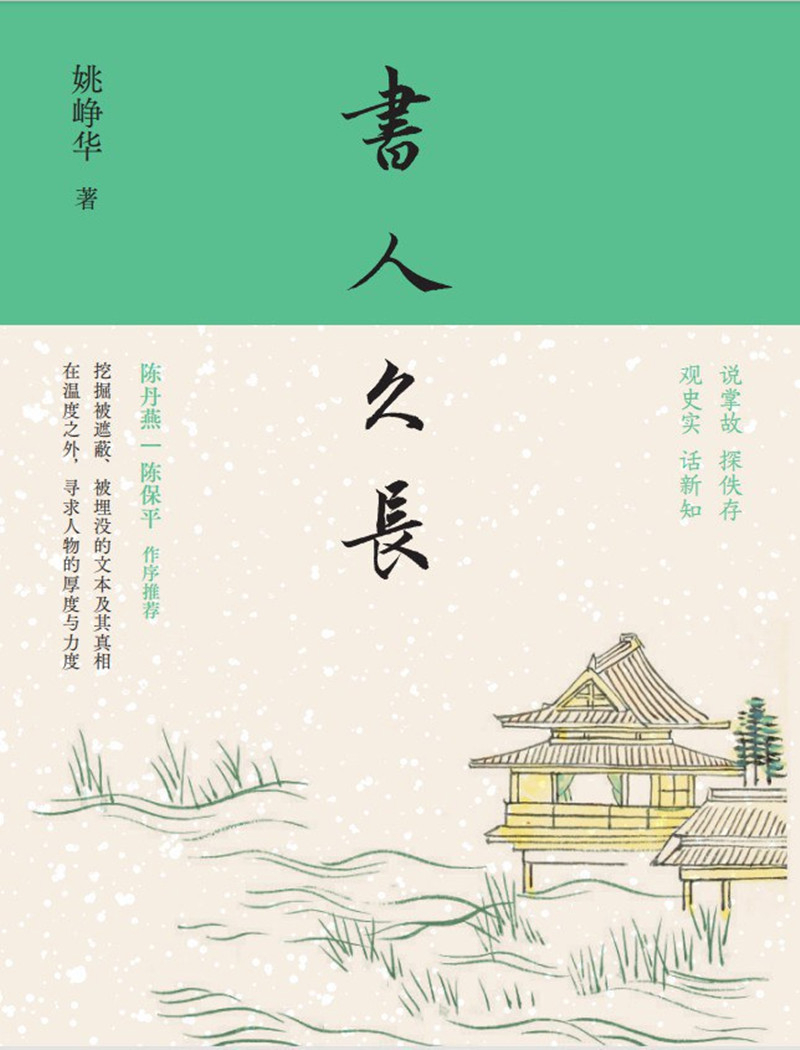
Newly Collected New Books By Hu Hongxia And Yao Zhenghua, Reading Experience Of Shenzhen Virtuous Couples’ Calligraphy Collection

_Xue Bing: The Great Hero and Little Yao_Xue Bing: The Great Hero and Little Yao

Xue Bing: The Hero and Xiao Yao_Xue Bing: The Hero and Xiao Yao_

During my trip to South America at the end of last year, because the cruise ship had no internet connection at sea, I didn't receive the express delivery message until I landed in Mexico. It had been delayed for three days, so I hurriedly notified my wife to pick it up. My wife told me that there were three books and sent me photos. They were Ms. Yao Zhenghua's "The Scholar Is Forever" and Mr. Hu Hongxia's "Four Episodes in the Night Study: The Forest of Books and the Fun of Books" and "Five Episodes in the Night Study: My City and My Books". I can’t help but wonder what new plays Da Xia will direct on the stage of Night Study, and what new horizons Xiao Yao will open up for us in the ninth book of the Book Man series.

When I returned to Nanjing a month and a half later, the first thing I did was to read the new books of this virtuous couple. As expected, the spring breeze brought peaches and plums to life, each with its own new look.

"Night Study" was first the name of Hu Hongxia's newspaper column, and later became his public account on the Internet, and was gradually compiled into a book. The first thing I read was the imitation leather hardcover edition published by Yuelu Publishing House in 2011. On the title page was a message from the hero on December 24, 2012. In my mind, that was also the time when I first met him. There is a bookplate on the front of the book that says "Hong Xia hides beauties, three thousand volumes of beauties in the harem". Because this edition "only printed a thousand copies and was not widely sold", there was a new edition by Zhejiang University Press in 2018. At this time, there were plans to continue the book. The title was changed to "The First Collection of Night Study". As a matter of fact, one after another, not only is the "Night Study" series no longer "lonely", but the hero's study has also become a cultural landmark in Shenzhen.

The two new episodes of "Night Study" are different from the previous three episodes in that they have an additional book title and a clear theme. In fact, they are a transition from a general to a specialist. That is what the author said in "Night Study Room Four Episodes – Preface": "I tried to use 'bricks' that shine with different lights and glow with different colors to build a few more unique buildings. In other words, those scattered reading words were originally like stragglers. This time I organized them into different new formations to perform their own new tasks."

The episode "Book Forest and Book Fun" focuses on the beauty of books, "trying to establish your own 'overall view of books'" to cope with the new situation of the "winter of paper books", and "providing fellow book lovers with a few more reasons to love books even more." The so-called "whole book view" regards the beauty of books as a whole: "Books integrate writing, fonts, typesetting, illustrations, paper, bookplates, book seals, cover design, binding, printing and other arts into one. Even if their stylistic content can be moved to other carriers, their material form is irreplaceable as an artistic carrier. Moreover, sometimes books themselves are art." ("Why Books Will Not Die") as early as "Night" In "The First Episode of the Study", Daxia has already paid attention to the "death" issue of paper books: "Those 'industry insiders' are announcing the 'death date' of paper books again. So I guess what printed books will look like ten or twenty years from now. When e-readers all collect rows and cabinets of E-BOOKs, can we wait until the advent of another era that pays attention to the art of books?" ("The Era of the "Illustrated Collection"). After more than ten years, the author's thinking has become more in-depth, the discussion has become more systematic, and he has quoted from many sources, trying to clarify the artistic and aesthetic functions of books in addition to their function as text carriers, until they become independent works of art. "Time turns 'practical' into 'useless', and 'useless' makes 'objects' into 'art' – many phenomena can be explained clearly by this principle." He also "discovered an interesting and strange phenomenon", that is, "China's most beautiful books" and "Shenzhen Reading Month's top ten books of the year", and the best-selling books in major bookstores "the books in these three categories of lists basically do not overlap", that is, "the tearing of 'beautiful books' and 'good books'", so he proposed the vision of selecting "beautiful books of the year". The first 16 pages of color illustrations are the design work done by students from the School of Art and Design of Zhongyuan Institute of Technology for "The First Collection of Night Study", which can be regarded as a practice in pursuing the beauty of books.

_Xue Bing: The Great Hero and Little Yao_Xue Bing: The Great Hero and Little Yao

"Four Episodes of Night Study: Books and Interests in Books", written by Hu Hongxia, published by Zhejiang University Press in 2025

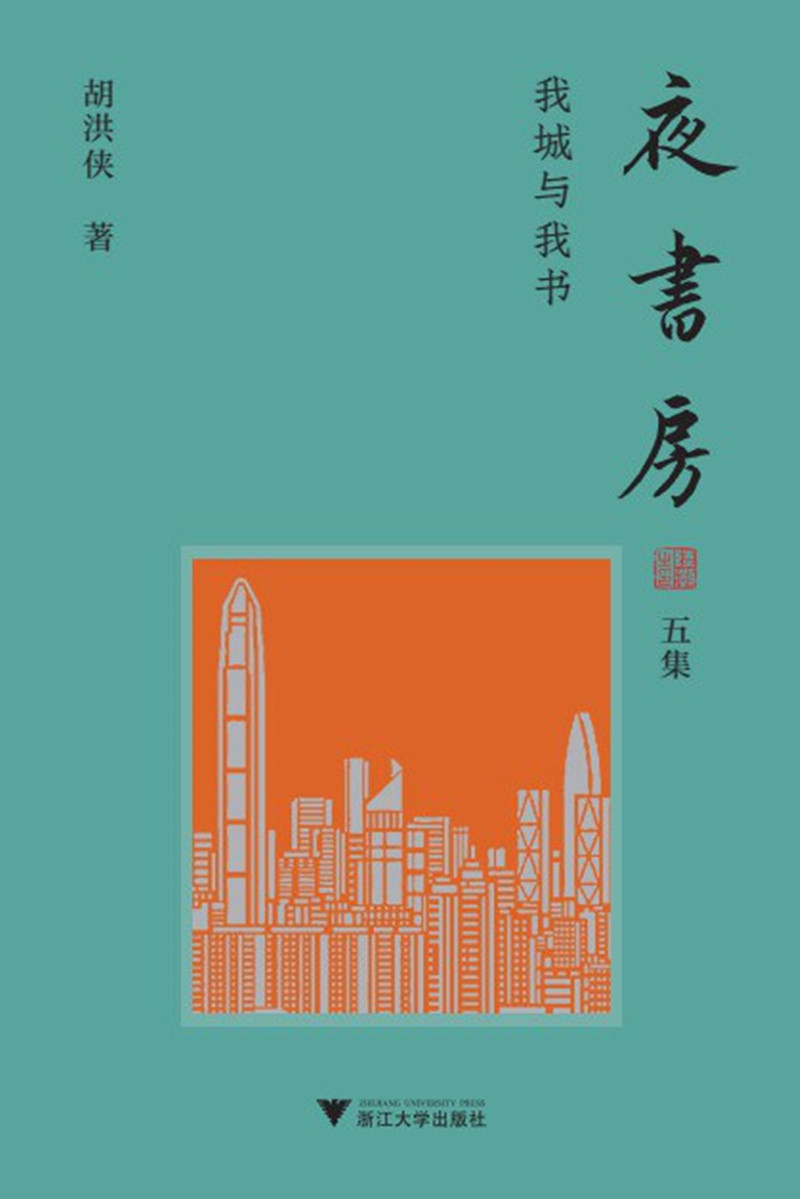
In the episode "My City and My Books", the author's "Preface" explains: "The collected articles are divided into three series: my city, books written by people in the city, and prefaces and postscripts written by me." "'My City' refers to books from the city of Shenzhen," which focuses on urban culture. My favorite part is the "My Book" part, which is the preface and postscript written by the hero for his own book. From it, we can clearly see his writing and ideological process, and it can be reflected in the urban cultural development of Shenzhen: "If you want to have a sense of 'my city', you may need to find a token that 'I' and the 'city' belong to each other and achieve each other. My token is the book." Books written by friends in Shenzhen, and the prefaces and postscripts written by heroes for these books are also such tokens. The colorful insert at the front of this book is the cover of "My Book". I have read most of his books, and I never expected that there would be so many editions.

Xue Bing: The Hero and Xiao Yao_Xue Bing: The Hero and Xiao Yao_

"Five Episodes of Night Study: My City and My Books", written by Hu Hongxia, published by Zhejiang University Press in 2025

In my impression, it was Xiao Yao who I was familiar with first. She hosts a weekly reading magazine at Shenzhen Evening News and can always choose topics that suit you, so friends are happy to be her authors. Later I discovered that I actually read Daxia's books earlier. His books "New Views on Old Illustrations" and "Moonlight in Old Times" he edited are both on the bookshelf, but I didn't remember the names. When I met him, he was already a famous hero in the world. Where the "bigness" of heroes comes from, I am afraid few people have delved into it. I saw in the preface to "So-called Middle Age, So-called Youth" that he quoted Paulo Coelho's "Destiny Theory" and wrote: "Think about it, after living for 50 years, you can be more ambitious. The so-called youth means being brave enough to add, and you must be bold; the so-called middle age means being good at subtraction, and you must be bold." He has indeed done a series of bold and courageous things: such as initiating and long-term hosting of the "Top Ten Best Book Selection of the Year" for Shenzhen Reading Month, which has had a profound impact on the national reading community. For example, he edited China's first "Private Reading History" to reflect the cultural changes in the era of reform and opening up with personalized reading. For example, "Contrast Notes @ 1963", "Three of Us @ 1963" and "Three Lives Three Worlds @ 1963" with Ma Jiahui and Yang Zhao, who "lived in the same age but in different places, and testified to each other's distant life journeys" (Zhang Dachun's "Three"), the casual and interesting "Wei Shuhua", and even the "Fei Diary" written on Xianxian Shuhua, are all pioneering works. Even if the Ye Shufang public account is updated every day, "burning a brick every day", it is very difficult for people to persist. I can't even check the public account that I follow every day. For example, "1984" collected various texts. It is known that there are more than 300 volumes. His "Taiwan's "1984"" has become an important document for studying the history of the Chinese translation and publication of the book. "It turns out that history and truth can be eliminated by simplifying and assembling language. When we no longer speak the language we are familiar with and no longer read the classic books of this nation, the values, life, and customs we once had will gradually drift away, disappear, and cannot be found again." How sad and profound. The hero is so great that he lives up to his reputation.

Xiao Yao's "little" is naturally because she was young back then, not because she was made smaller by the hero's "big". Just like a ship sailing in the rivers and lakes, the hero's bold and humorous words are like the bow of the ship fighting against the wind and waves, and the calm whispers of Xiao Yao are the rudder of the ship's stern. When reading Xiao Yao's book series, I can see great things in every aspect of his works, especially in sorting out the ideological context from a cross-cultural perspective. He can be said to be a white eyebrow in the current calligraphy circle.

Xue Bing: The Hero and Xiao Yao_Xue Bing: The Hero and Xiao Yao_

"Liu Ren Long", written by Yao Zhenghua, published by Zhejiang University Press in 2025

The writing style of the Book Man series is characterized by simplicity, just as Mr. Zhong Shuhe said in the inscription to her: "The redundant and complicated are trimmed away, leaving the thinness, and the painting is raw and mature." The titles of the books are becoming more and more subtle. I once talked about the double entendre of "The Book Man", and "The Book Man Lu Li" was my suggestion. Xiao Yao said in "Shu Ren Jiu Chang·Postscript" that "Shu Ren You Qi" and "Shu Ren Jiu Chang" were Mr. Yang Zhishui's destiny: "The ninth book "Shu Ren Jiu Chang" will be closed and start a new series. She also said that if nine is good, it can be long; if ten is full, there is no room." Xiao Yao obviously accepted this suggestion: "Because of the ending, 'Nine' 'It becomes even more grand." She quoted Helen Macdonald's discussion of "trying to see with eyes that are not your own, so as to understand that the way you see the world is not the only one" and Koji Iizuka's discussion of "making enemies of a group of preconceived notions or academic common sense that once got along well, breaking the 'established', and a new world will appear in front of you." : "China's social structure has changed rapidly. Until now, we have not understood many basic historical facts, let alone paid attention to them. Everyone has taken it for granted without realizing it. We have many confused understandings or biased cognitions. It is necessary to 'try to see with eyes that are not our own', fight against preconceived notions, get out of the cave, and go again." "Understanding." In this book, there are Luo Zhitian's new perspective on the "May Fourth Movement", Wang Mingke's "marginal writing" that is different from the Chinese central view of history, Yao Dali's vigilance against non-historicism, Ma Yong's review of the history of the late Qing Dynasty and the Republic of China, Wesson's "Rereading Hayek" and "Rereading Keynes"… all show the brilliance of breaking the "established". Xiao Yao Shu said that the vastness of the sea and sky is often astonishing, and we also know that only one-eighth of the iceberg is exposed to the sea. The breadth and depth of her reading can be gleaned from her public account "Yao Yan Shu Shi", which also makes us look forward to her new book series.

Literary couples are well-matched and have always been praised as good stories. As far as I know, the most well-matched couples who are still active in the reading world are Chen Pingyuan and Xia Xiaohong in the north, and Daxia and Xiao Yao in the south. Nowadays, under the guidance of the heroes, everyone has changed their name to Teacher Yao. Those who are accustomed to calling Xiao Yao are probably only old friends from the early years.

The Costume Drama Tai Ping Nian Is A Hit! Qi Lang Jun Is Stupid And Wants To Kill Hu Jinsi, But Jiu Lang Jun Is Trying To Turn The Tide.

The costume romance historical drama "The Year of Peace" is directed by Yang Lei, written by Dong Zhe, starring Bai Yu and Zhou Yutong, with Zhu Yawen in the special starring role, and is currently on the air.

Qi Langjun was completely stupid and crazy. He had completely forgotten the legacy of his sixth brother and the loyal advice of his two husbands. However, he believed He Chengxun's slander so much that he even planned to kill Hu Jinsi, an important minister of the country, in public at the Mid-Autumn Festival banquet. If Brother Six knew about such a ridiculous move, he would probably be furious and wish he could get up from his coffin and teach him a lesson.

When you are in power in troubled times, you are most afraid of being ignorant and ignorant, and mistrusting treacherous people. If you are not careful, you will be doomed. However, Qilang Jun seemed to be possessed by evil spirits. At the Mid-Autumn Festival banquet, he openly humiliated Hu Jinsi, scolding him as a low-born butcher butcher and unworthy of the post of Chief Sima. He knew clearly that this was Hu Jinsi's rebellion, but he wanted to use it to establish his authority in an attempt to suppress this veteran of three dynasties. However, Hu Jinsi had been on the battlefield for a long time and had a strong temperament. How could he let others bully him?

Hu Jinsi's counterattack was sonorous, insinuating that Qilangjun had forgotten his roots. He bluntly said that he and King Xianwusu were from humble backgrounds, but they worked together to conquer the thirteen states of Wuyue. Without their bloody battles back then, there would be no Wuyue Kingdom today, and there would be no successor like Qilangjun. These words were like a sharp blade, piercing Qi Langjun's painful spot. He was so angry that his veins popped out and he was so angry that he was about to smash his wine glass and send a signal for He Chengxun to lead his troops into the palace and kill Hu Jinsi on the spot.

At the critical moment, Lord Jiulang stepped forward, interrupted his movements in time, and stopped this shocking disaster. He knew very well that killing important ministers in public was a treasonous and unethical act, which had never happened even in the troubled times of the Central Plains. Once it happened, Wu Yue would lose face and fall into chaos. In desperation, Lord Jiulang quietly informed Duke Shuiqiu of the matter and begged the elder of the Three Dynasties to come forward to resolve the matter and preserve the foundation and face of generations of Wu and Yue people.

After hearing the news, Lord Shui Qiu immediately rushed to the side hall, sternly rebuked He Chengxun, and ordered him with the dignity of an important minister of the country to lead his troops back to the camp and wait for orders. If he dared to disobey, he would be killed on the spot. He Chengxun was as timid as a mouse, bullying the weak and afraid of the strong. Seeing this, he could only bow his head and obey the orders and retreat. The murderous intention of the Mid-Autumn Festival was temporarily subdued, but a bigger storm was already brewing secretly.

After the banquet, Duke Shuiqiu was left alone to admonish Qi Langjun. He bluntly said that with his nature, he would never easily have the desire to kill important ministers. There must be some villain behind the instigation, and he begged him to kill the treacherous traitor as a warning to others. But Qi Lang Jun was extremely stupid and indifferent. Even though Jiu Lang Jun tried his best to persuade him and pointed out that Hu Jinsi had seen through everything, was prepared, and had heavy troops. If he really took action, he would suffer backlash, Qi Lang Jun still refused to understand.

He Chengxun even confused right and wrong, blaming Shui Qiu Gong for his failure to kill Hu Jinsi. He also encouraged Qi Langjun that if he wanted to get rid of Hu Jinsi, he must find a legitimate reason to avoid the obstruction of ministers. These words gave the already mediocre Qi Langjun an even crazier idea. He ordered He Chengxun to see Hu Jinsi three days later and deliberately revealed his murderous intention. If Hu Jinsi did not fight back, He Chengxun would be demoted from Hangzhou, and otherwise he would be named the inner Yadu envoy.

But He Chengxun was cunning, greedy for life and afraid of death, and unwilling to take any risks. When the three-day deadline was up, he betrayed Qi Langjun without hesitation and revealed all the plans for the Mid-Autumn Festival murder and deliberate removal of Hu. He even framed the blame on Shuiqiu Gong, making Hu Jinsi murderous for this loyal veteran.

Qilangjun's stupidity is never inherently evil, but rather his mind is blinded by desire and slander, which is the biggest shortcoming of human nature. He did not listen to loyal advice, mistakenly believed in traitors, and personally pushed himself and the Wuyue Kingdom into the abyss of eternal destruction; He Chengxun sold his goods to seek glory, followed others' influence, and sought personal gain through the stupidity of others. In troubled times, when you are in power, mediocrity is your Achilles heel. Only by staying clear-headed and discerning between loyal and traitorous can you avoid disaster and settle down. This is the story that leaves the world with the most profound warning of human nature.

What do you think about this?

Sign In

Forgot Password

Sign Up