Professional virtual currency information station welcome
We have been making efforts.

24-hour news update Page 81

24-hour cryptocurrency news update

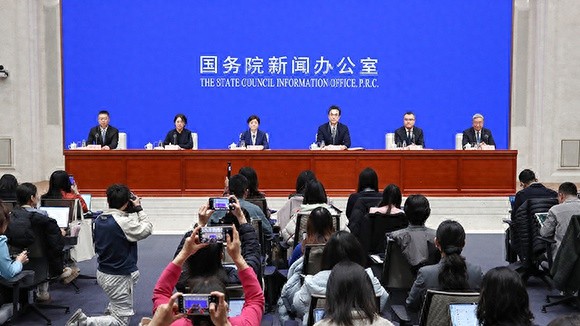
The State Council Information Office Briefing On March 7 Interpreted The Infrastructure Part Of The "15th Five-Year Plan" Outline (draft)

On March 7, the State Council Information Office held a briefing to interpret the "Outline (Draft)" of the "15th Five-Year Plan".

National Development and Reform Commission: Build a national integrated computing power network, coordinate the construction of satellite communications, navigation, and remote sensing systems_National Development and Reform Commission: Build a national integrated computing power network, coordinate the construction of satellite communications, navigation, and remote sensing systems_

Briefing session on site. Picture/Guoxin.com

Chen Lei, director of the Development Strategy and Planning Department of the National Development and Reform Commission, said that infrastructure is an important support for economic and social development. To implement the requirements of the Party Central Committee's "Recommendations", the "Outline (Draft)" of the "15th Five-Year Plan" has a dedicated chapter on "building a modern infrastructure system", which includes not only transportation, water conservancy, energy and other infrastructure, but also major scientific and technological infrastructure, information and communication networks, computing power networks and other new infrastructure. The general direction is to strengthen overall planning, optimize layout structure, promote integration and integration, while improving safety resilience and operational sustainability. Viewed by field:

In terms of transportation. During the "15th Five-Year Plan" period, we will improve the modern comprehensive transportation system, basically build the "eight vertical and eight horizontal" high-speed railway main corridors and the national highway network, promote the upgrading of high-grade inland waterways, basically build a world-class port group and airport group, and implement a number of major engineering projects such as connecting high-standard high-speed rail channels along the river, building new Three Gorges water transportation channels, and promoting highway safety and resilience improvements. At the same time, we will strengthen the coverage and accessibility of weak areas and promote the renewal, renovation, maintenance and management of transportation infrastructure.

In terms of energy. We will focus on building a clean, low-carbon, safe and efficient new energy system, adhere to the simultaneous development of wind, solar, water, nuclear and other energy sources, implement the ten-year doubling action of non-fossil energy, and promote the safe, reliable and orderly replacement of fossil energy by non-fossil energy. During the "15th Five-Year Plan" period, through the implementation of a number of major engineering projects such as Yaxia Hydropower, "Shagohuang" new energy base, and power transmission channels, the west-to-east electricity transmission capacity will reach more than 420 million kilowatts, and non-fossil energy will account for 25% of total energy consumption in 2030.

In water conservancy. In recent years, the main framework and arteries of the national water network have been gradually improved. During the "15th Five-Year Plan" period, we will focus on the construction of modern water networks, accelerate the demonstration and implementation of a number of major engineering projects in river management, flood control reservoirs, major water diversion, construction and renovation of large and medium-sized irrigation areas, and enhance the ability to prevent flood disasters, coordinate the allocation of water resources, and ensure urban and rural water supply.

in new infrastructure. We will strengthen overall planning and intensive and efficient utilization, systematically lay out and build a number of strategically-oriented, application-supporting, and forward-looking major scientific and technological infrastructures, promote the deployment and application of 10G optical networks and large-scale commercialization of 5G-A mobile communication networks, build a national integrated computing network, coordinate the construction of satellite communications, navigation, and remote sensing systems, and use scenario expansion as a guide to build low-altitude infrastructure, thereby providing solid support for industrial upgrading and digital intelligence development in the "15th Five-Year Plan" and beyond.

Jiupai News special correspondent Wen Yanli and Gong Lingwei reported from Beijing

Editor Xiao Jie Ren Zhuo

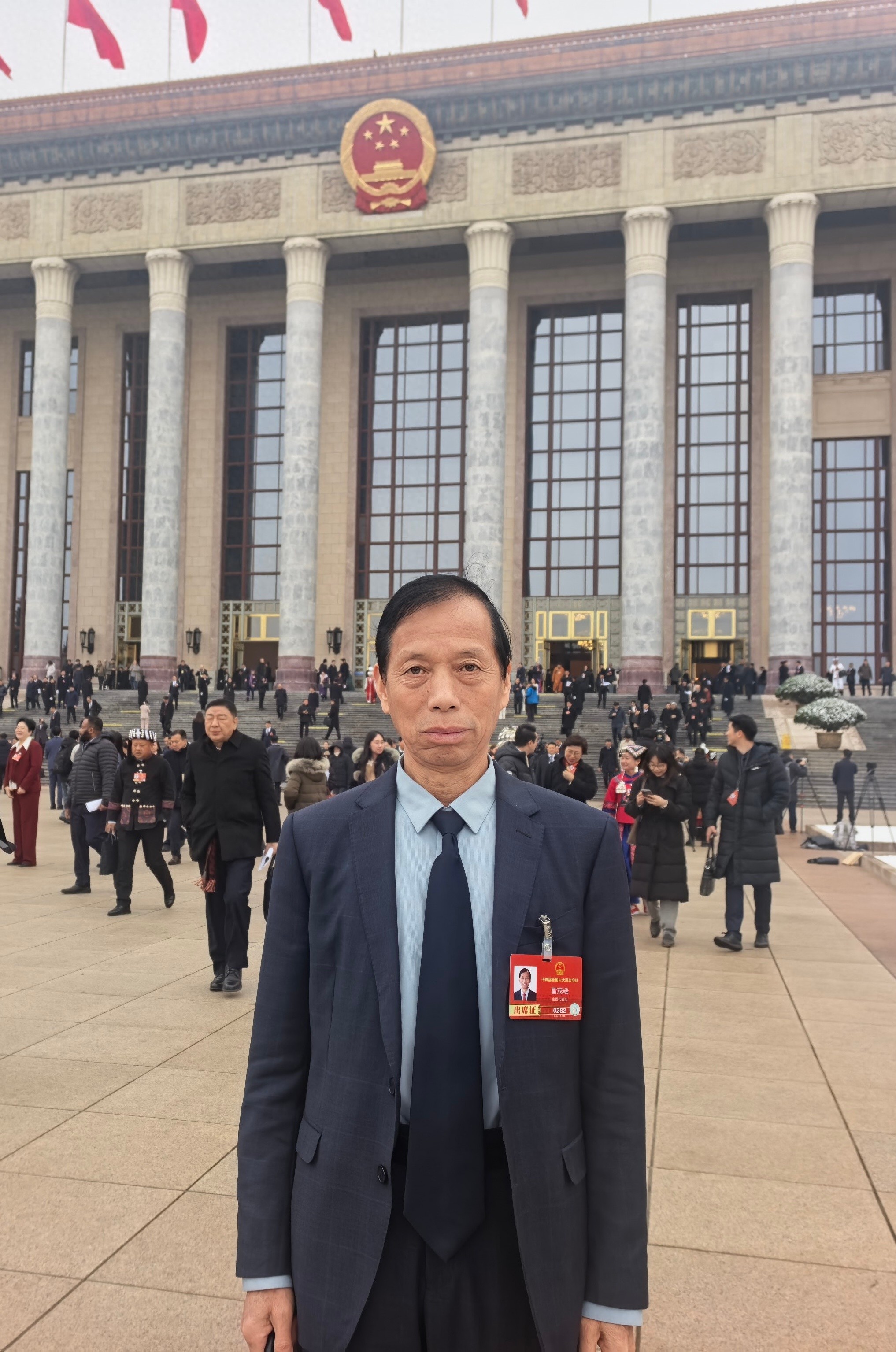
National People's Congress Representative Lei Maoduan: It Is Recommended To Support The High-quality Development Of The Rice Locust Industry And Build A Solid Foundation For Preventing Return To Poverty.

During the National Two Sessions in 2026, Lei Maoduan, deputy to the National People's Congress and head of Shanxi Yingbo Mihuai Development Co., Ltd., attended the meeting with a number of suggestions, one of which was about supporting the high-quality development of the rice locust industry and building a solid foundation for preventing return to poverty.

Lei Maoduan said in an interview with Jiupai News that the rice locust industry is a special Chinese herbal medicine industry specially developed for barren mountains and drylands. Because of its unique advantages of being extremely resistant to drought and barrenness, outstanding economic benefits, and strong ecological restoration capabilities, it has been rapidly promoted in barren mountains and drywalls areas with harsh natural conditions and low traditional agricultural benefits. At present, the planting area of ​​Diyun City alone has reached more than 300,000 acres, and has spread to more than 10 provinces (autonomous regions and municipalities) across the country, including Shaanxi, Gansu, Hebei, and Henan, with a total area of ​​more than 2 million acres, benefiting millions of farmers in mountainous areas. It has become an irreplaceable and important industry for consolidating and expanding poverty alleviation achievements in ecologically fragile areas and promoting rural revitalization.

1.9 meters by meter bathroom layout__Huaimao official website

Lei Maoduan, deputy to the National People's Congress. Picture/provided by interviewee

Lei Maoduan found that at present, most of the rice locust production areas are located in remote mountainous areas with harsh natural conditions. Agricultural production infrastructure such as field roads, soil and water conservation, and soil fertility improvement are seriously lagging behind. The situation of "depending on the weather" has not fundamentally changed. It is difficult to support the high-quality development requirements of scale, standardization, and branding. The industrial foundation for consolidating the results of poverty alleviation is still fragile.

He also added that there is a lack of professional national-level rice locust industrial engineering technology research and development institutions across the country, and the top-level design and stable mechanism for the deep integration of industry, academia, and research have not yet been formed. The systematic protection and innovative utilization system of Sophora japonica germplasm resources is not yet perfect, and the main varieties still face market iteration pressure. New varieties with high yield, high resistance and high added value require a long breeding cycle and high technical requirements, making it difficult to meet the strategic needs of rapid industrial upgrading and restricting the core competitiveness and sustainable development of the industry.

In addition, he noticed that the current industry still mainly sells raw materials of primary agricultural products, sophora rice, and most of the profit margin is lost in the processing and circulation link. The extraction and utilization of high-value active ingredients such as rutin and quercetin in sophora rice is still at the initial stage; the development of high value-added terminal products such as health foods, medicines, and daily chemical products for the big health market is seriously insufficient, resulting in the failure to maximize industrial benefits, weak ability to resist market risks, and a weak foundation for farmers to continue to increase their income. Moreover, the coordination mechanism among entities in various aspects of the industry is not yet complete, and the model of leading enterprises as the core and linking all parties to form a community of interests and values ​​needs to be strengthened.

Therefore, Lei Maoduan suggested the layout and construction of a "National Sophora japonica germplasm resource bank" and the supporting construction of an improved seed breeding base, which should be included in the national forest germplasm resource protection and utilization system. Systematically carry out the census, collection, preservation, identification and evaluation of Sophora japonica germplasm resources across the country, and establish a national germplasm resource information sharing platform. At the same time, we support relying on this resource bank to carry out targeted breeding and joint research on new varieties with high yield, high resistance, and high added value, providing a solid "chip" guarantee for the sustained and high-quality development of the industry.

He also suggested creating a "national-level high-quality development demonstration zone for the entire rice locust industry chain" and building standardized planting and improvement projects, intensive processing and industrial cluster cultivation projects, and industrial integration and brand building projects. Support the development of new business formats such as Mihuai-themed ecological tourism and popular science research, and uniformly create and promote the "Yuncheng Mihuai" regional public brand, making it a demonstration model for the high-quality development of the country's characteristic ecological industries in arid and semi-arid areas. At the same time, the "National Forestry and Grassland Administration Mihuai Engineering Technology Research Center" was established to focus on key common technical problems in the industry, carry out applied basic research and engineering technology research and development, and strengthen the scientific and technological support engine. At the same time, the rice locust industry will be included in the national key industrial sequence of ecologically enriching the people, and long-term stable policy attention will be given.

Liu Qingfeng Talks About The Growth Of Teenagers In The AI ​​era: Learn Mathematics, Physics And Chemistry Well, Find Love And Control Artificial Intelligence

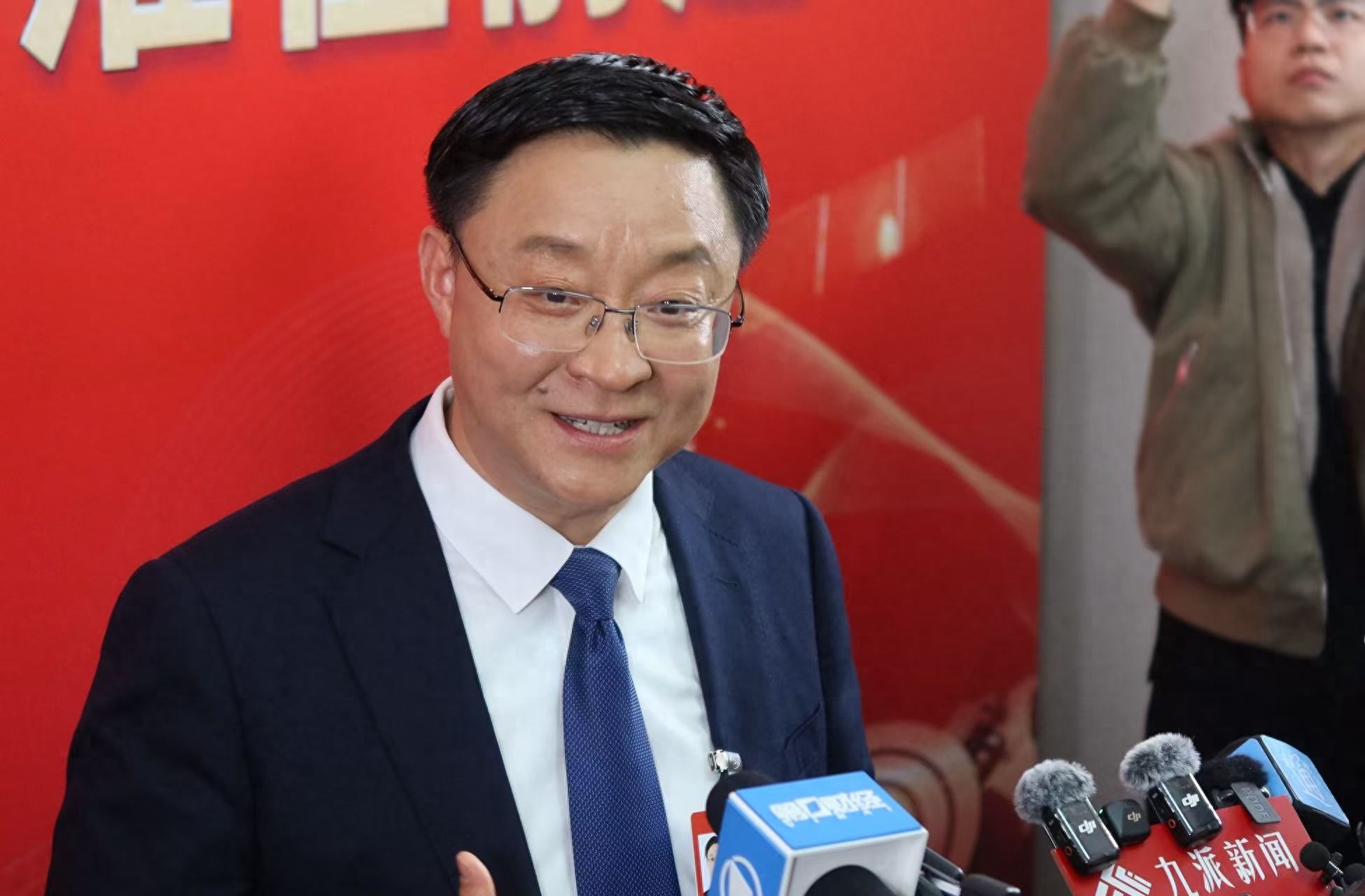
At 9 pm on March 6, Liu Qingfeng, deputy to the National People's Congress and chairman of iFlytek, was interviewed by media reporters at the Anhui News Center of the 2026 National Two Sessions.

_Liu Qingfeng, deputy to the National People's Congress and chairman of iFlytek: Teenagers in the AI ​​era must learn mathematics, physics and chemistry well and find their inner love_Liu Qingfeng, deputy to the National People's Congress and chairman of iFlytek: teenagers in the AI ​​era must learn mathematics, physics and chemistry well and find their inner love

Liu Qingfeng, deputy to the National People's Congress and chairman of iFlytek. Picture/Jiupai News

A young reporter from the China Youth Daily wearing a red scarf and a red vest asked Liu Qingfeng: "In addition to learning knowledge, how can our generation of teenagers who grow up in the AI ​​​​era prepare for the future, and how can they combine their own growth with their contribution to the country?"

Liu Qingfeng replied: "For children, they must not only learn to use artificial intelligence, but also be able to control artificial intelligence and design better artificial intelligence in the future."

He said that in today's learning process, basic knowledge such as mathematics and physics are more important than ever. "Learn mathematics, physics and chemistry well, and you will not be afraid of traveling around the world" is still the most important topic of this era. The essence of artificial intelligence is the advancement of mathematical algorithms.

In addition, he also said: "In this era, everyone's imagination, creativity and inspiration for the future are more important than ever. Therefore, in the learning process, the most important thing for our children is to know what they like best and find their inner love. In order to contribute to the motherland and society in the future, it is more natural and more sustainable to combine it with their own interests."

"Learning basic knowledge well is a prerequisite, but at the same time, you must not stop studying. You must find your own passion and control artificial intelligence." Liu Qingfeng said.

Jiupai News special correspondent Yan Huayang and Li Kai reported from Beijing

Editor Xiao Jie Ren Zhuo

How To Find The Key To Differentiation And Breakthrough In The Transformation Of Artificial Intelligence Smart Economy In Various Places?

_Trillion-level industrial clusters_Ranking of 100-billion-level industrial clusters in each province

What’s the difference in “playing style”?

When humanoid robots enter the public eye to the beat of the Spring Festival Gala, and when large models begin to redefine the boundaries of "labor," a dramatic change in the times is accelerating.

This year's government work report proposed "creating a new form of smart economy" for the first time. New words such as "intelligent body", "smart native" and "satellite Internet" also appeared in the report, attracting much attention.

On March 6, Zheng Shajie, director of the National Development and Reform Commission, introduced at the economic press conference of the Fourth Session of the 14th National People's Congress that the "artificial intelligence +" action will be deepened to empower thousands of industries and serve thousands of households. The scale of artificial intelligence-related industries will grow to more than 10 trillion yuan by the end of the "15th Five-Year Plan".

As soon as my eyes fell, this "secret war" about the future had quietly begun.

After sorting through the 2026 government work reports from various regions, it was found that all 31 provinces across the country have made deployments in areas related to artificial intelligence and smart economy, hoping to win the opportunity in a new round of fierce competition.

As artificial intelligence is widely integrated into thousands of industries and deeply embedded in the underlying genes of regional economies, what various regions are facing is no longer a single technology competition, but an ecological reshaping that is tailored to local conditions.

In other words, the key to winning the initiative in the future is to find the "ecological niche" of differentiated breakthroughs in this wave of change.

lead

The smart economy is an economic form formed by the deep integration of artificial intelligence technology and various economic and social fields. Its core is to reconstruct the allocation of production factors through data, computing power, algorithms, etc., reshape the industrial competition pattern, reconstruct the division of labor in the global value chain, and ultimately promote the transformation of production and lifestyle and form new momentum for economic development.

Among them, technology is undoubtedly the driving force behind everything. Continuously breaking through the "ceiling" of technological innovation will inevitably require pathfinders to take root in the "no man's land", and Beijing is a typical representative.

On February 28, Beijing held a 2026 global digital economy benchmark city construction press conference and revealed that so far, a total of 216 large models have been registered, ranking first in the country. Behind this is its absolute leading core strength in the field of basic scientific research.

Data shows that the number of people in Beijing shortlisted for the AI ​​2000 list of the world's most influential scholars accounts for more than 40% of the country's total, and the total number of AI scholars reaches 15,000, accounting for 30% of the country's total. The unparalleled level of universities, human resources and innovation sources has become an important basis for anchoring its goal of becoming the “first city in artificial intelligence in the world”.

At the same time, Beijing is deeply involved in the formulation of the AI ​​regulatory system and industry standards.

The work report of the Beijing Municipal Government clearly stated in the key tasks for 2026 that it will support the construction of an artificial intelligence cluster in Zhongguancun Science City; solidly promote the construction of a benchmark city for the global digital economy, promote the construction of new infrastructure such as intelligent computing power, comprehensively implement the "artificial intelligence +" action, and build a national artificial intelligence application pilot base.

According to the plan, Beijing will take about two years to achieve the scale of the core artificial intelligence industry exceeding one trillion yuan, and become a global artificial intelligence innovation highland with technological source power and industrial competitiveness.

Besides Beijing, Shanghai provides another “pathfinding” paradigm.

In January last year, in order to promote the high-quality development of my country's artificial intelligence industry, the Ministry of Industry and Information Technology and the Ministry of Finance took the lead in establishing the National Artificial Intelligence Industry Investment Fund. The fund has a total scale of 60.06 billion yuan and is located in Xuhui District, Shanghai.

Prior to this, an artificial intelligence fund of funds with a scale of 22.5 billion yuan has landed in Xuhui District in 2024. Xuhui District, where the fund is located, is also the first artificial intelligence development cluster in Shanghai.

The Shanghai Municipal People's Government press conference held on February 7 further revealed that Shanghai will also build an AI international open source community and establish an AI Youth Entrepreneurship Fund to support the development of young entrepreneurs in Shanghai.

The "admission" of national AI strategic capital is not only a deep penetration of the entire artificial intelligence industry chain, but also a strategic investment in future industry dominance.

“A Shanghai plan for the joint development of finance and science and technology is taking shape.” According to local media, Shanghai has unique financial and scientific and technological resources to promote the joint construction of an international financial center and an international science and technology innovation center. Shanghai is already piloting the project.

This year's Shanghai Municipal Government Work Report has released a clear signal that it will "make greater efforts to cultivate and strengthen long-term capital and patient capital, improve the industry-finance docking mechanism, and promote more financial resources to support the expansion of domestic demand, technological innovation, advanced manufacturing, green development, and small, medium and micro enterprises."

application

Behind Beijing and Shanghai, a number of major economic provinces with manufacturing and market advantages regard the new form of smart economy as a new driving force for economic growth.

The urban evolution theory combed through the provincial government work reports and found that industrial empowerment and terminal applications have become the two core tracks for the deployment of smart economy in many major economic provinces.

As the world's largest manufacturing country, my country's manufacturing transformation and upgrading is an important scenario for "artificial intelligence +". Major manufacturing provinces have tacitly targeted manufacturing upgrades as the main battlefield for "artificial intelligence +".

As a major province in manufacturing and digital economy, Guangdong has an early layout in this field and has a clear practical path. Guangdong has all 31 major categories of the national economy in manufacturing, 15 of which rank first in the country in scale. In 2025, the scale of Guangdong's digital economy has exceeded 8 trillion yuan, ranking first in the country for nine consecutive years.

In other words, Guangdong’s confidence lies in the fact that it has both the most complete “scenario soil” and the most mature “digital base.”

Based on this, this year’s Guangdong government work report proposes to “accelerate the promotion of high-level applications of artificial intelligence in all areas, all-time, and across industries” and makes embodied intelligence and manufacturing upgrades the focus of industrial empowerment.

In specific practice, Guangdong will implement the "artificial intelligence +" action in depth, focusing on strengthening future industries such as intelligent robots, embodied intelligence, and brain-computer interfaces. At the same time, it anchors the position of manufacturing owners, uses AI to run through the entire chain of R&D, production, and sales, and creates a number of large vertical-field models and small scene-specific models to promote the in-depth transformation of "Made in Guangdong" into intelligence.

Different from Guangdong's "universal coverage" logic, Jiangsu and Shandong have taken different paths of "diagnostic upgrade" and "large-scale application" respectively.

Jiangsu relies on 16 advanced manufacturing clusters and 50 key industrial chains to carry out the "artificial intelligence + manufacturing" diagnostic action to promote the intelligent upgrading of the entire manufacturing process and move from a "big manufacturing province" to a "strong manufacturing province".

Based on a complete industrial system, especially industrial software, furniture and home appliance industries, Shandong has launched the "Double Hundred Project" of artificial intelligence, cultivating more than 100 characteristic enterprises and more than 100 industry-level and scenario-level large models and agents, and applying AI to all walks of life on a large scale.

In addition to the deep empowerment of industries, another core track of the smart economy is terminal applications.

Zhejiang has become a core representative of this track with its keen business sense. In 2025, Zhejiang's artificial intelligence core industry revenue will be approximately 680 billion yuan, an increase of more than 20%, confirming the strong monetization capabilities of its AI industry.

This year’s Zhejiang government work report clearly stated that it will vigorously develop “artificial intelligence + consumption” and promote the aggregation of multiple business formats and the integration of multiple scenarios.

Du Ping, deputy director and researcher of the Zhejiang Provincial Institute of Development and Reform, previously wrote that Zhejiang should give full play to its advantages as a highland for the development of artificial intelligence and a benchmark province for new consumption, use artificial intelligence to empower consumption upgrades and drive industrial investment, and enhance the important role of consumption in expanding domestic demand and optimizing supply.

difference

For the central and western provinces and the old industrial bases in Northeast China, AI is a historic opportunity for their industries to catch up. Different from the eastern region's pursuit of a "large and comprehensive" whole-industrial ecology, these provinces are taking a "differentiated entry" path by relying on their respective characteristics and advantages.

Among them, some provinces with relatively good foundations in the science and technology industry have taken the lead in targeting subdivided areas and striving to seize the right to speak about artificial intelligence nationwide.

Anhui, Hunan, and Sichuan are simultaneously making efforts to build and strive to create a national artificial intelligence application pilot base, striving to solve the problem of disconnection between laboratory technology and industrial production lines; Chongqing is focusing on the circulation of data elements and promoting the innovative development pilot of the national trusted data space; Shaanxi is stuck in the smart manufacturing track, relying on the construction results of 16 national outstanding smart factories to form a first-mover advantage in the field of industrial intelligence.

For more central, western and northeastern provinces, it is a more common path to rely on unique local resource endowments to create AI comparative advantages. Computing power has become the common starting point for such regional layouts, and various regions have built computing power systems according to local conditions:

Chongqing iteratively upgrades the national (western) computing power dispatching platform, coordinates the layout of local computing power and integrates Xinjiang computing power into Chongqing, and makes good use of computing power coupons to reduce the cost of using computing power for small and medium-sized enterprises;

Anhui has improved its "four-in-one" overall planning and dispatching capabilities of general computing, intelligent computing, super computing, and quantitative computing, adding 17,000 P of intelligent computing power;

Liaoning plans to build green computing power centers in Shenyang, Dalian and western Liaoning.

In addition to the common layout of computing power, many places have deeply explored local characteristic resources and location advantages to create a unique "moat" for AI development and achieve misaligned competition:

Shanxi is solidly promoting the construction and operation of the national artificial intelligence application pilot base in the coal direction; Jilin is focusing on supporting areas such as machine generation and ice and snow sports…

Hubei takes advantage of the geographical center advantage of the "thoroughway of nine provinces" to build three major computing power circles: Wuhan, Yichang, and "Xiangshi";

Guangxi relies on its unique location facing ASEAN to build the "China-ASEAN National Artificial Intelligence Application Cooperation Center" with high standards. In the next three years, Guangxi will allocate 45 billion yuan to support the development of new productivity led by AI, including the construction of the ASEAN corpus and the Guangxi-ASEAN embodied intelligent pilot training ground, etc., to seize the opportunity of cross-border cooperation in AI.

A clear logic emerges from the deployment of these central and western provinces – they combine their own strengths with AI, either specific resources, unique locations, or subdivided industries that have been cultivated for many years.

This path of "making breakthroughs in long boards and using points to lead to areas" is becoming the confidence for the central and western regions to embrace the smart economy and pursue "overtaking on corners".

Looking at the artificial intelligence-related layout in various regions across the country, as each province finds its position in the "national game of chess", a new pattern of China's AI development with clear gradients, diversified distribution, and efficient coordination is accelerating to take shape.
Li Qiang First Mentioned "computing And Electricity Synergy". Concept Stocks Collectively Strengthened On March 6. What Is The Future Of The Industry?

On March 5, the fourth session of the 14th National People's Congress opened in the Great Hall of the People in Beijing. Premier Li Qiang of the State Council mentioned "computing and computing collaboration" for the first time when delivering his government work report.

The report proposes in the "Step up to cultivate and expand new driving forces" section that we should implement new infrastructure projects such as ultra-large-scale intelligent computing clusters and computing and power collaboration, strengthen national integrated computing power monitoring and dispatch, and support the development of public cloud.

With the development of large models, especially the increase in parameter scale and context length of large models, the demand for computing power is also increasing day by day. This has also led to a relative shortage of electricity, especially green electricity, and energy storage is a "stabilizer" that regulates the fluctuations of green electricity.

The concept of “computing and electricity collaboration” is hot

On March 6, the concept of “computing and computing collaboration” gained momentum rapidly. Jinkai New Energy's "6 days and 3 boards", Tongli Tianqi, China Energy Construction, GCL Nengke, and Yuneng Holdings hit the daily limit, and Henghua Technology also followed suit. Among them, Jinkai New Energy and GCL Nengke are clean energy operators, while Henghua Technology has long provided power system planning and design services to power grid companies and power generation groups.

According to the "Research Report on Coordinated Development of Computing Power and Power (2025)" of the China Academy of Information and Communications Technology, computing power synergy is supported by new power systems, guided by the high-quality development of computing infrastructure and the construction of a national integrated computing network, comprehensively considering all factors and the entire life cycle, deepening intelligent dispatching, source network load storage, new power supply and backup, green power aggregate supply, etc. Technological and mechanism innovation enables the two major productivity forces of computing power and electricity to achieve global optimization at the levels of industrial planning, production operations, resource dispatching, and market systems, and create a cluster of green computing power centers with advanced technology, supply and demand matching, green, low-carbon, safe and reliable, support the flexible adjustment and digital transformation of the power system, and jointly promote the high-quality development of the digital economy and energy economy.

It can be seen that "computing and electricity collaboration" first requires intelligent dispatching, and secondly it requires green and low carbon. Henghua Technology meets the smart dispatch standards, while Jinkai Xinneng and GCL Nengke meet the green and low-carbon standards.

Based on the development trajectory of artificial intelligence technology, China Academy of Information and Communications Technology has constructed three differentiated development scenarios: high, medium and low. Under the high scenario, artificial intelligence will grow explosively, and my country's computing power centers will consume more than 700 billion kilowatt-hours of electricity in 2030, accounting for 5.3% of the entire society's electricity consumption; under the medium scenario, artificial intelligence will grow at a constant rate, and my country's computing power centers will use Electricity may exceed 400 billion kilowatt hours, accounting for 3.0% of the entire society's electricity consumption; under the low scenario, artificial intelligence grows slowly, and the electricity consumption of my country's computing power centers will reach about 300 billion kilowatt hours in 2030, accounting for 2.3% of the entire society's electricity consumption.

It is worth noting that domestic computing power’s demand for electricity does not match the supply of green electricity. According to the above report, as of the end of 2023, the number of racks in the eight major hub nodes accounted for more than 70% of the country. Among them, the national proportions of the number of racks in use in Beijing-Tianjin-Hebei and the Yangtze River Delta were 21.5% and 24.5% respectively. The remaining six major nodes accounted for 25.5% in total.

In other words, the demand for computing power is mainly concentrated in the Yangtze River Delta and the Beijing-Tianjin-Hebei region, while the supply of photovoltaic and wind power is mainly concentrated in Xinjiang, Inner Mongolia, Gansu, Qinghai and other regions.

The mismatch between computing power and green power supply further highlights the scarcity of smart dispatch and clean energy operators.

Energy storage becomes the “guardian” of green electricity stability

It is reported that the coordinated development of computing power and power includes two key elements: computing power system and power system. The key entities of the computing power system include computing power suppliers and computing network operators; the power system mainly includes power generation parties, power grid parties, and energy storage parties.

At the power generation level, green power power plant manufacturers are mainly large central state-owned enterprises such as the "Five Big and Four Small"; at the power grid level, the main domestic ones are the State Grid and China Southern Power Grid. Energy storage is widely distributed, including independent energy storage power stations, distributed energy storage and household storage.
For the first time that "computing and electricity synergy" was written into the government work report, Zhu Junpeng, president of the Jiangsu Energy Storage Industry Association, told the "Daily Economic News" reporter: "This is definitely a major benefit. Behind computing power is electricity, and 'computing and electricity synergy' is an important direction for the development of new productivity."
He said: "The inclusion of 'computing power synergy' in the government work report shows that the coordinated development of computing power and power has become a top-level design at the national level. At present, China has the most abundant power in the world and the best power infrastructure."

What is the role of energy storage in “computing and electricity collaboration”? Zhu Junpeng said: "Energy storage is the guardian of power supply stability, the regulator of green power consumption and the core of business model innovation."

The China Academy of Information and Communications Technology also stated that on the one hand, energy storage systems can participate in power grid peak regulation and can effectively utilize market-based mechanisms such as peak-valley electricity price differences to obtain economic benefits for computing power companies; on the other hand, energy storage systems can be used as emergency power sources to improve the reliability of power consumption in computing power centers.

However, the energy consumption of computing power centers is huge. At this stage, energy storage capacity is difficult to meet the demand for megawatt-level electricity. The high cost of energy storage projects is also one of the main obstacles to industry development. Although technological progress has alleviated this problem to a certain extent, the pressure on initial investment and operating costs still exists.

daily economic news

Zhao Jing Of Buchang Pharmaceutical Suggested During The Two Sessions: Artificial Intelligence Should Be Integrated Into The Development Of Traditional Chinese Medicine Industry.

On March 5, the fourth session of the 14th National People's Congress opened in the Great Hall of the People in Beijing.

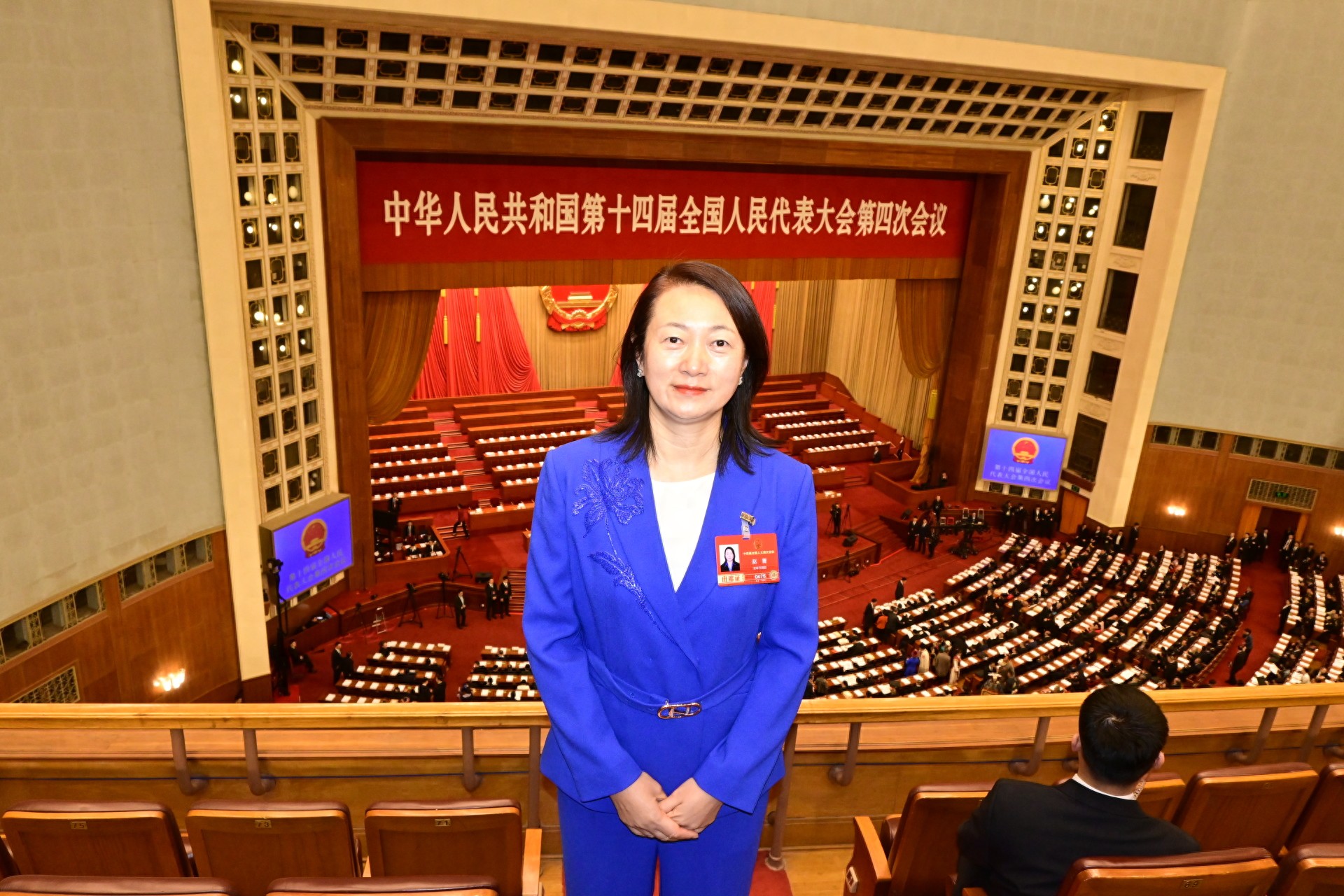
On March 6, a reporter from the "Daily Economic News" learned that Zhao Jing, a representative of the National People's Congress and vice chairman of Buchang Pharmaceutical, submitted a number of suggestions for the two sessions, one of which was "suggestions on integrating artificial intelligence into my country's traditional Chinese medicine career and industry, and inheriting and innovating all aspects of the development chain."

Zhao Jing believes that traditional Chinese medicine, as an important pillar industry related to the national economy and people's livelihood, has ushered in new development opportunities in the wave of digitalization. How to "allow traditional Chinese medicine to maintain its true nature while integrating into modern times, to serve people's livelihood and go global" is a profound issue that should be focused on.

_Zhang Zeping, Director of Lunan Pharmaceutical_Yu Yu, Chairman of Anhui Pharmaceutical

Zhao Jing, Vice Chairman of Buchang Pharmaceutical Picture source: Provided by interviewee

The integration of traditional Chinese medicine and artificial intelligence is the general trend

Traditional Chinese medicine is an important resource in my country that has multiple attributes of health, economic development, cultural inheritance, and ecological protection. It plays an irreplaceable and unique role in protecting the lives and health of the people, cultivating new productive forces in the pharmaceutical industry, assisting the construction of a healthy China, and promoting the process of Chinese modernization.

Zhao Jing believes that taking inheritance and innovation as the core, promoting the integration of artificial intelligence into the entire chain of inheritance and innovation of the traditional Chinese medicine industry, and forming a new pattern of high-quality development covering the entire chain, the purpose is not to replace traditional industries, but to use modern digital and intelligent technology to reconstruct a new ecological development model of traditional Chinese medicine culture. Its core value lies in activating the wisdom of ancient books, reshaping the cognitive system, innovating communication narratives, strengthening cultural identity, and helping more companies successfully "go overseas" to enhance their international voice, so that thousands of years of Chinese nation's wisdom can be reborn in the digital age. This road is both the general trend and the only way to go.

According to Zhao Jing’s observation, in recent years, national-level top-level designs in China and even around the world have simultaneously focused on the field of medical artificial intelligence. The upgrading of health market demand will usher in changes in precision and health efficiency, forcing more pharmaceutical companies to transform and upgrade.

If we can accelerate the integration of artificial intelligence into all links of the entire chain of my country's traditional Chinese medicine and industrial inheritance, innovation and development, intelligent data systems and information systems can help solve the problems of high-frequency collection and real-time storage of large amounts of data in pharmaceutical production and research and development, as well as warehousing and transportation. Production costs such as human, material and financial resources will also be greatly reduced, which will help the high-quality development and rapid upgrading of traditional Chinese medicine and industry.

To build a full-chain traceability system, it is recommended to start from three aspects

During the "14th Five-Year Plan" period, China insisted on taking innovation as the primary driving force for industrial development, ranking among the top ten in the global innovation index for the first time, and taking solid steps in the construction of a modern industrial system. Practice has proven that new productive forces are bringing more opportunities and development space to China, and will surely become a key driving force in promoting economic development and enhancing industrial competitiveness.

Zhao Jing put forward three suggestions regarding the profound question of how to "make traditional Chinese medicine maintain its true nature while integrating into modern times, serve people's livelihood and go global".

First of all, during the "15th Five-Year Plan" period, we will coordinate and promote the three major special actions of "improving the quality and stable supply of traditional Chinese medicine raw materials", "enhancing intelligent manufacturing capabilities" and "cultivating brands of intelligent manufacturing enterprises" to form a "raw material-production-brand" full chain empowerment system and cultivate a large number of digital intelligence transformation enterprises with advanced "digital intelligence technology" levels.

Secondly, during the "15th Five-Year Plan" period, more and more companies will successfully "go overseas", which also means that more and more companies will face the dual pressures of domestic quality control upgrades and international market access. These have put forward higher and newer requirements for the construction of a traceability system for the entire industry chain of traditional Chinese medicine.

In response to these challenges, Zhao Jing suggested building a full-chain traceability system, which includes three major aspects. The first is to upgrade the intelligence level of the Chinese herbal medicine trading platform, using AI (artificial intelligence) algorithms to achieve supply and demand matching, price prediction and risk management, and to support multi-modal smart logistics query methods such as voice, pictures, and videos; the second is to integrate AI and blockchain technology to cover production and processing, product research and development, warehousing, In the entire transportation process, the source of each batch of products can be traced, the destination can be traced, and the responsibilities can be investigated, effectively combating counterfeiting. The third is to optimize cross-border circulation services, develop AI multi-language adaptation modules, rely on the global Chinese medicine resource library to identify import and export business opportunities, shorten document processing time, and help Chinese medicine "go global."

In addition, Zhao Jing believes that strengthening various policy support guarantees and accelerating the convergence of data elements will provide all-round guarantee for the integrated development of artificial intelligence and traditional Chinese medicine; it is also important to launch the "TCM GAP Special Talent Plan" to create a comprehensive talent echelon that understands both traditional Chinese medicine and artificial intelligence.

The Dispute Over The Refund Of 140 Million Subsidy By Bangjie Co., Ltd. Has Been Settled, And The Suspension Of Production Of Photovoltaic Projects Has Attracted Attention

On March 6, Bangjie Shares (SZ002634, stock price 7.13 yuan, market value 3.275 billion yuan) announced that it had received a "Civil Mediation Letter" from the People's Court of Yangzhou Economic and Technological Development Zone.

The "Daily Economic News" reporter noted that this marks the settlement of the 140 million yuan subsidy refund dispute between Bangjie Co., Ltd. and the Yangzhou Economic and Technological Development Zone Management Committee (hereinafter referred to as the "Development Zone Management Committee").

Previously, the Yangzhou 10GW high-efficiency photovoltaic cell project in which Bangjie invested heavily continued to suffer losses and ceased production in March 2025. Due to the delay in resuming work and production as planned, the Development Zone Management Committee took Bangjie Co., Ltd. and its subsidiaries to court to recover the huge equipment subsidies paid in advance.

Photovoltaic project shutdown causes disputes

The starting point of Bangjie Co., Ltd. was full of ambitions.

In order to promote the strategic development of listed companies and form a business structure with dual main businesses of "seamless clothing + photovoltaics", Bangjie Co., Ltd. decided to enter the photovoltaic industry in a big way at the end of 2022. In December 2022, the board of directors of Bangjie Co., Ltd. reviewed and approved the proposal and agreed to sign the "High-efficiency Photovoltaic Cell Project Investment Agreement" with the Yangzhou Economic and Technological Development Zone Management Committee.

According to the above-mentioned agreement, Bangjie Co., Ltd. plans to invest a total investment of approximately 2.6 billion yuan (of which equipment investment is approximately 1.6 billion yuan) to build a high-efficiency photovoltaic cell project with an annual output of 10GW in Yangzhou. To this end, the company invested 500 million yuan in Yangzhou to establish a secondary subsidiary Yangzhou Bangjie New Energy Technology Co., Ltd. (hereinafter referred to as "Yangzhou Bangjie") as the specific implementation entity of the project.

In order to attract the implementation of this major project, the Development Zone Management Committee promised to set up a project service team to provide full-process services and provide relevant support policies to the project company as agreed in the agreement. Bangjie Co., Ltd. promises that the project company will last for no less than 10 years and reduce energy consumption as much as possible.

In September 2023, Bangjie Co., Ltd. announced that its Yangzhou high-efficiency photovoltaic cell project with an annual output of 10GW successfully rolled off the first piece and gradually put it into production. It seems that everything is developing in the expected direction.

However, as competition in the photovoltaic industry intensified and product prices dropped sharply, Yangzhou Bangjie faced major adverse changes in the external operating environment. It has continued to suffer losses since it was put into production, and its operations are far from reaching its predetermined goals. Financial data shows that Yangzhou Bangjie’s net profit in 2023 was -160 million yuan; in the first three quarters of 2024, its losses further expanded, and its net profit plummeted to -275 million yuan.

Under tremendous operating pressure, Yangzhou Bangjie had to step on the "sudden brake" in order to reduce losses and protect the company's interests.

Starting from March 1, 2025, Yangzhou Bangjie will implement a temporary shutdown of its high-efficiency photovoltaic solar cell production line and conduct a comprehensive and large-scale overhaul of core production equipment. It was originally expected that the production suspension would last no more than three months, but after a comprehensive assessment of preparations for resumption of production, the company finally decided to continue to suspend production in order not to expand its loss exposure and not bear additional risks.

It was Yangzhou Bangjie's "suspension of work and production" that triggered the contract dispute with the Development Zone Management Committee.

According to the announcement of Bangjie Shares, the Development Zone Management Committee successively paid relevant subsidies totaling 140 million yuan to Yangzhou Bangjie through the Xinyang Investment Promotion Service Center of the Yangzhou Economic and Technological Development Zone from November 2023 to April 2024.

Seeing that the project company not only failed to resume work and production as planned, but also failed to return subsidies, the Development Zone Management Committee filed a lawsuit with the Yangzhou Economic and Technological Development Zone People's Court in early 2026.

Official website information shows that Bangjie Co., Ltd. was founded in 1993 and is a modern enterprise specializing in seamless clothing design, research and development, weaving and marketing. It was listed on the Small and Medium-sized Board of Shenzhen Stock Exchange on December 5, 2011, becoming the first batch of local companies listed in Yiwu City. Positioned as a global ODM/OEM core manufacturer and supplier of seamless clothing products, the company focuses on the design of seamless clothing products and the R&D and application of digital clothing production technology. After more than ten years of development, it has become the leader in China's seamless clothing industry and ranks among the world's famous enterprises in the field of seamless weaving.

Agree to return 140 million yuan in subsidies

The Development Zone Management Committee not only requested that Bangjie Shares and Yangzhou Bangjie jointly and severally return the principal of 140 million yuan, but also requested compensation for corresponding interest losses (provisionally estimated to be approximately 6.6832 million yuan as of January 11, 2026), with the total principal and interest reaching more than 146 million yuan.

At the same time, as of January 19, 2026, a large number of bank accounts of Bangjie shares and subsidiaries have been frozen due to various lawsuits; in addition, the equity of many core subsidiaries, including Yangzhou Bangjie, has been frozen or waiting to be frozen by creditors.

In the end, Bangjie Shares chose to reconcile with the Development Zone Management Committee to stop the loss.

At the first extraordinary shareholders meeting in 2026 in March this year, Bangjie Shares reviewed and approved the "Proposal on Signing with the Yangzhou Economic and Technological Development Zone Management Committee." Bangjie Shares and Yangzhou Bangjie agreed to reach a mediation agreement with the Development Zone Management Committee under the auspices of the Yangzhou Economic Development Zone Court and conclude the case with a mediation letter issued by the court.

Recently, Bangjie Co., Ltd. and Yangzhou Bangjie officially received the "Civil Mediation Letter" from the Yangzhou Economic Development Zone Court, which also means that the subsidy return case of up to 140 million yuan has been completely settled at the legal level.

According to the contents of the Civil Mediation Letter confirmed by the court, the parties reached several core consensuses through consultation.

First of all, Yangzhou Bangjie has fully confirmed the 140 million yuan in due subsidy debt that has been paid by the Development Zone Management Committee. The mediation letter clearly stipulates that the 140 million yuan debt will be distributed by the Development Zone Management Committee "in accordance with the bankruptcy procedures and legal declaration of claims."

Secondly, for this huge debt, the mediation letter clarified that Bangjie Co., Ltd., as a jointly and severally responsible party, must assume substantial repayment obligations and should return 140 million yuan in full to the Development Zone Management Committee before September 30, 2026.

Third, regarding the litigation costs of the case, the acceptance fee for this case will be halved and will be borne by Yangzhou Bangjie and Bangjie Co., Ltd. jointly.

Finally, the "Civil Mediation Letter" confirms that after the mediation agreement takes effect, the rights, obligations and contract disputes arising from the relevant investment agreement between the Development Zone Management Committee and Bangjie Holdings (excluding Yangzhou Bangjie) based on the relevant investment agreement on December 9, 2022 will be concluded.

Regarding the financial shock caused by the settlement of this major lawsuit, Bangjie Co., Ltd. frankly stated in the announcement that the specific impact of this lawsuit on the company's current or subsequent profits needs to be determined based on the final performance of the mediation letter. The relevant accounting treatment and financial data will be subject to the results of the annual audit confirmation by the audit agency.

Athletes Wearing Bone Conduction Headphones Can Cause Deafness. Bone Conduction Headphones Are Not A 'hearing Safe'

Recently, media reported that Xiao Li, a 20-year-old sports expert, has been frequently troubled by tinnitus recently due to long-term wearing of bone conduction headphones while working out. He was diagnosed with noise-induced deafness when seeking medical treatment. The doctor also said that sensorineural hearing loss is difficult to reverse if it declines steadily for more than 6 months.

Related topics quickly became hot searches. In many people's perception, bone conduction headphones are often labeled as "not damaging the ear canal" or "protecting hearing" due to their special open-ear design. However, Chen Jinxia, ​​deputy chief physician of the Department of Otolaryngology and Head and Neck Surgery at Nanjing Tongren Hospital, reminded that this is not a "hearing safe" and improper use may still cause irreversible hearing damage.

Standards for wearing earplugs due to noise_How much noise exceeds the limit to wear earmuffs_

Deafness as defined clinically is not “complete inability to hear” as we think. Chen Jinxia explained that as long as the hearing loss exceeds the normal range, that is, exceeds 25 decibels, it is defined as deafness. "Clinical deafness is divided into mild, moderate, severe and profound. Once it reaches moderate or above, it will significantly affect normal communication. Therefore, don't wait until you can't hear completely to realize the seriousness of the problem."

Theoretically speaking, bone conduction directly transmits sound wave vibrations through the skull to the cochlea of ​​the inner ear. It bypasses the outer and middle ears, protects the eardrum, and avoids ear canal discomfort or middle ear fatigue that may be caused by wearing in-ear or headphones for a long time. However, the risk of damage to the inner ear still exists.

Not long ago, Chen Jinxia treated a college student who developed tinnitus and hearing loss because he often wore headphones to listen to music for several hours at a time and the volume was relatively loud. After seeking medical treatment, a hearing test revealed high-frequency sensorineural deafness and neural tinnitus, and he was diagnosed as noise-induced deafness. "Due to his timely medical treatment, his hearing gradually recovered after a month of active treatment, but some symptoms of tinnitus remained. This is because noise-induced deafness is essentially sensorineural deafness. The treatment cycle is long, recovery is slow, and the effect is not good. Even after timely and active treatment, some patients still cannot fully recover."

In Chen Jinxia’s view, the key to hearing loss does not lie in the type of headphones, but in the intensity and duration of use. "If the volume of headphones is too loud, especially more than 60% of the maximum volume, and the use time is too long, for example, for more than 60-90 minutes, the excessive vibration energy will also over-stimulate and damage the hair cells of the inner ear. Once this damage occurs, it is irreversible in some cases."

Once noise-induced deafness is diagnosed, there is a strict "golden window period" for intervention and treatment. "Seeing a doctor promptly within 72 hours after the onset of illness has the highest possibility of hearing recovery. If the best window of 72 hours is missed, it is best not to exceed a month. After active treatment, hearing will usually improve to varying degrees. Once the hearing loss exceeds half a year or even a year, further intervention will often have little effect."

Chen Jinxia said that if irreversible hearing damage has occurred, it is recommended to adopt a "long-term hearing protection and intervention" strategy: People with moderate and above hearing impairment can wear hearing aids, and patients with severe to extremely severe hearing loss can consider cochlear implants. "In daily life, once these people need to enter a noisy environment again, they must wear professional noise-reducing earplugs or earmuffs to prevent their hearing condition from further deteriorating."

Chen Jinxia reminded that the "60-60 principle" should be followed when using headphones, that is, the volume is ≤60% and the duration is ≤60 minutes. At the same time, it is recommended to do a pure tone audiometry every 6-12 months to monitor hearing changes. If symptoms such as tinnitus, ear fullness, hearing loss, or dizziness occur after using headphones, you must stop using the headphones immediately, avoid contact with noisy environments again, and go to the hospital for treatment as soon as possible.

When Trump Met With Messi, He Discussed The International Situation, And Messi’s Expression Changed From A Smile To A Serious One.

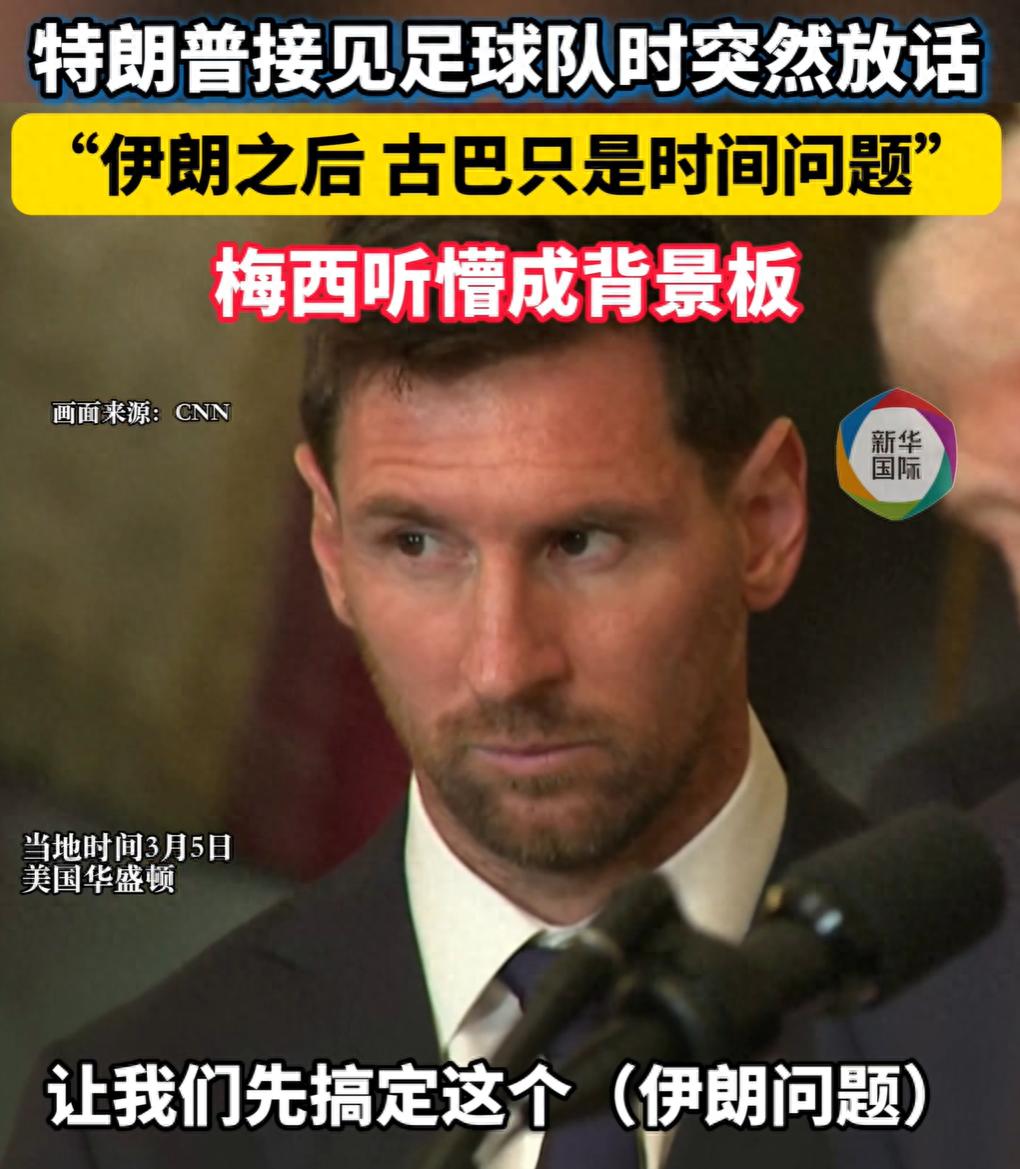
According to Xinhua News Agency, on the 5th local time, U.S. President Trump met at the White House with the Inter Miami team of the Major League Soccer League where football superstar Messi plays. The team will win the Major League Soccer Cup in 2025.

Trump said to Messi: "My son (Barron) is a big fan of yours. He thinks you are a great person." Trump added: "I shouldn't say this because I am older, but I have watched Pele play. You may be better than Pele."

However, after the team presented Trump with customized jerseys and signed footballs, Trump suddenly changed the topic during his speech and talked about the international situation. He said that after using force against Iran, it was only "a matter of time" for the United States to resolve the Cuban issue. U.S. Secretary of State Rubio was making preparations, but at the moment the United States had to "solve the Iranian issue first."

Trump's speech on Iran live_Iran Messi_

He said Cuba was "very desperate to reach a deal" and said the situation in Venezuela had been "stable" and praised Venezuela's current acting president, Delcy Rodriguez.

Messi was obviously confused after hearing this. Some netizens noticed the change in Messi's expression – from the innocent smile at the beginning to vigilance and seriousness.

In addition, Trump declared on social media on the 6th that "there will be no agreement with Iran unless it surrenders unconditionally." He also said the United States "and its many allies" want to "make Iran great again!"

It is worth noting that on March 5, local time, the U.S. House of Representatives rejected a bill by a vote of 219 to 212. The bill was originally intended to require the president to obtain authorization from Congress before launching further military strikes against Iran.

The voting results were basically along party lines, with two Republican congressmen joining the Democratic camp to vote in favor, and four Democratic congressmen joining the Republican camp to vote against.

A similar bill was rejected in the Senate the day before, with 47 votes in favor and 53 votes against.

According to the U.S. Constitution, only Congress can authorize war. A bill passed by the U.S. Congress in 1973 stipulates that the U.S. president can only take limited military action without congressional authorization during a national emergency caused by an attack or imminent threat against the United States. In response to the U.S. military action against Iran, many Democratic congressmen spoke out, criticizing the action as being "illegal" without authorization from Congress.

The Dispute Over The Refund Of 140 Million Subsidy By Bangjie Co., Ltd. Has Been Settled, And The Suspension Of Production Of Photovoltaic Projects Has Caused Disputes

On March 6, Bangjie Shares (SZ002634, stock price 7.13 yuan, market value 3.275 billion yuan) announced that it had received a "Civil Mediation Letter" from the People's Court of Yangzhou Economic and Technological Development Zone.

The "Daily Economic News" reporter noted that this marks the settlement of the 140 million yuan subsidy refund dispute between Bangjie Co., Ltd. and the Yangzhou Economic and Technological Development Zone Management Committee (hereinafter referred to as the "Development Zone Management Committee").

Previously, the Yangzhou 10GW high-efficiency photovoltaic cell project in which Bangjie invested heavily continued to suffer losses and ceased production in March 2025. Due to the delay in resuming work and production as planned, the Development Zone Management Committee took Bangjie Co., Ltd. and its subsidiaries to court to recover the huge equipment subsidies paid in advance.

Photovoltaic project shutdown causes disputes

The starting point of Bangjie Co., Ltd. was full of ambitions.

In order to promote the strategic development of listed companies and form a business structure with dual main businesses of "seamless clothing + photovoltaics", Bangjie Co., Ltd. decided to enter the photovoltaic industry in a big way at the end of 2022. In December 2022, the board of directors of Bangjie Co., Ltd. reviewed and approved the proposal and agreed to sign the "High-efficiency Photovoltaic Cell Project Investment Agreement" with the Yangzhou Economic and Technological Development Zone Management Committee.

According to the above-mentioned agreement, Bangjie Co., Ltd. plans to invest a total investment of approximately 2.6 billion yuan (of which equipment investment is approximately 1.6 billion yuan) to build a high-efficiency photovoltaic cell project with an annual output of 10GW in Yangzhou. To this end, the company invested 500 million yuan in Yangzhou to establish a secondary subsidiary Yangzhou Bangjie New Energy Technology Co., Ltd. (hereinafter referred to as "Yangzhou Bangjie") as the specific implementation entity of the project.

In order to attract the implementation of this major project, the Development Zone Management Committee promised to set up a project service team to provide full-process services and provide relevant support policies to the project company as agreed in the agreement. Bangjie Co., Ltd. promises that the project company will last for no less than 10 years and reduce energy consumption as much as possible.

In September 2023, Bangjie Co., Ltd. announced that its Yangzhou high-efficiency photovoltaic cell project with an annual output of 10GW successfully rolled off the first piece and gradually put it into production. It seems that everything is developing in the expected direction.

However, as competition in the photovoltaic industry intensified and product prices dropped sharply, Yangzhou Bangjie faced major adverse changes in the external operating environment. It has continued to suffer losses since it was put into production, and its operations are far from reaching its predetermined goals. Financial data shows that Yangzhou Bangjie’s net profit in 2023 was -160 million yuan; in the first three quarters of 2024, its losses further expanded, and its net profit plummeted to -275 million yuan.

Under tremendous operating pressure, Yangzhou Bangjie had to step on the "sudden brake" in order to reduce losses and protect the company's interests.

Starting from March 1, 2025, Yangzhou Bangjie will implement a temporary shutdown of its high-efficiency photovoltaic solar cell production line and conduct a comprehensive and large-scale overhaul of core production equipment. It was originally expected that the production suspension would last no more than three months, but after a comprehensive assessment of preparations for resumption of production, the company finally decided to continue to suspend production in order not to expand its loss exposure and not bear additional risks.

It was Yangzhou Bangjie's "suspension of work and production" that triggered the contract dispute with the Development Zone Management Committee.

According to the announcement of Bangjie Shares, the Development Zone Management Committee successively paid relevant subsidies totaling 140 million yuan to Yangzhou Bangjie through the Xinyang Investment Promotion Service Center of the Yangzhou Economic and Technological Development Zone from November 2023 to April 2024.

Seeing that the project company not only failed to resume work and production as planned, but also failed to return subsidies, the Development Zone Management Committee filed a lawsuit with the Yangzhou Economic and Technological Development Zone People's Court in early 2026.

Agree to return 140 million yuan in subsidies

The Development Zone Management Committee not only requested that Bangjie Shares and Yangzhou Bangjie jointly and severally return the principal of 140 million yuan, but also requested compensation for corresponding interest losses (provisionally estimated to be approximately 6.6832 million yuan as of January 11, 2026), with the total principal and interest reaching more than 146 million yuan.

At the same time, as of January 19, 2026, a large number of bank accounts of Bangjie shares and subsidiaries have been frozen due to various lawsuits; in addition, the equity of many core subsidiaries, including Yangzhou Bangjie, has been frozen or waiting to be frozen by creditors.

In the end, Bangjie Shares chose to reconcile with the Development Zone Management Committee to stop the loss.

At the first extraordinary shareholders meeting in 2026 in March this year, Bangjie Shares reviewed and approved the "Proposal on Signing with the Yangzhou Economic and Technological Development Zone Management Committee." Bangjie Shares and Yangzhou Bangjie agreed to reach a mediation agreement with the Development Zone Management Committee under the auspices of the Yangzhou Economic Development Zone Court and conclude the case with a mediation letter issued by the court.

Recently, Bangjie Co., Ltd. and Yangzhou Bangjie officially received the "Civil Mediation Letter" from the Yangzhou Economic Development Zone Court, which also means that the subsidy return case of up to 140 million yuan has been completely settled at the legal level.

According to the contents of the Civil Mediation Letter confirmed by the court, the parties reached several core consensuses through consultation.

First of all, Yangzhou Bangjie has fully confirmed the 140 million yuan in due subsidy debt that has been paid by the Development Zone Management Committee. The mediation letter clearly stipulates that the 140 million yuan debt will be distributed by the Development Zone Management Committee "in accordance with the bankruptcy procedures and legal declaration of claims."

Secondly, for this huge debt, the mediation letter clarified that Bangjie Co., Ltd., as a jointly and severally responsible party, must assume substantial repayment obligations and should return 140 million yuan in full to the Development Zone Management Committee before September 30, 2026.

Third, regarding the litigation costs of the case, the acceptance fee for this case will be halved and will be borne by Yangzhou Bangjie and Bangjie Co., Ltd. jointly.

Finally, the "Civil Mediation Letter" confirms that after the mediation agreement takes effect, the rights, obligations and contract disputes arising from the relevant investment agreement between the Development Zone Management Committee and Bangjie Holdings (excluding Yangzhou Bangjie) based on the relevant investment agreement on December 9, 2022 will be concluded.

Regarding the financial shock caused by the settlement of this major lawsuit, Bangjie Co., Ltd. frankly stated in the announcement that the specific impact of this lawsuit on the company's current or subsequent profits needs to be determined based on the final performance of the mediation letter. The relevant accounting treatment and financial data will be subject to the results of the annual audit confirmation by the audit agency.

daily economic news

Sign In

Forgot Password

Sign Up