Professional virtual currency information station welcome
We have been making efforts.

24-hour news update Page 87

24-hour cryptocurrency news update

2023 TMEA Tencent Music Entertainment Festival: Create A Music Carnival Feast For Music Fans

On July 8, the 2023 TMEA Tencent Music Entertainment Festival (hereinafter referred to as "TMEA" and "Grand Ceremony") organized by Tencent Music Entertainment Group opened in Macau, China. This year's TMEA carries the expectations of thousands of music fans. With the theme of "Music For Fun", it has been newly upgraded to four "ultra-long standby" music ceremonies and music festival carnivals over two days, hoping to create a happy music journey for music fans.

2023TMEA has gathered a lineup of popular international artists to create a high-quality performance stage. With the support of Tongcheng Travel, the general sponsor of this event, TMEA will work with Tongcheng Travel to accompany music fans to explore the music world and experience the joy of travel, making every gathering meaningful. In order to allow more music fans to experience the live spectacle of the music ceremony, Tencent Music Entertainment Group's four major platforms, QQ Music, Kugou Music, Kuwo Music, and National Karaoke, will be presented online.

On the first day of the ceremony, more than 20 groups of singers and musicians, including Jolin Tsai, Faye Zhan Wenting, Hu Yanbin, Huang Guanzhong, Uesugi Noboru, Xu Jiaying, Yuan Yawei, Zhang Dongliang, Zhang Liangying, Zhou Shen, etc., worked together to create the "Annual Stage" to bring an entertainment feast to the audience and music fans. In addition to the hearty performance, a number of major awards were announced on the first day of the ceremony to reward every musician for their efforts.

Come for music fans, international performance lineup exceeds expectations

This year's TMEA has a super-strong lineup of top performers. Influential guests from the Chinese music scene and well-known singers and musicians from Asia, Europe and the United States share the stage, accompanying music fans to explore the music world and create a happy music journey.

This year's TMEA has been newly upgraded to a music ceremony + music festival. On the first day of the TMEA music ceremony, Jolin Tsai, Faye Zhan Wenting, Hu Yanbin, Huang Guanzhong, Su Xing, Yuan Yawei, Zhang Dongliang, Zhang Liangying, Zhou Shen… two The most national artist lineup in the Chinese music scene in Taiwan and Taiwan has brought classic and charming stages; powerful singers Hu Yanbin and Xu Jiaying, musicians Guanting Guo, Man Shuke, Su Xing, etc. use their own music to express musical attitudes.

The "New Force" limited band composed of Tencent musicians Li Changgeng, Pan Yunqi, Su Yuyang, and Wang Yinuo used an original work "The Boy Who Strides the Wind" to show the vitality and style of the new generation of musicians. As potential musicians who have stood out from Tencent Musician's "New Force Project", they have all-round professional abilities such as creation, production, and singing, and are working hard to grow into a "new force" in the Chinese music scene.

In addition to the music ceremony, this year's TMEA Ceremony brought a new upgrade to the music festival. Not only did young singers such as Mika, Yao Bonan, and Zhao Pinlin bring energetic stage performances, but there was also an international performance lineup that exceeded expectations, bringing music fans a dizzying "shock wave" of global trend music culture.

It’s not easy to get together, but the singers on the TMEA stage gave not only a performance, but also a response to the music fans reunited after a long absence, making every wait exceed expectations.

Singing for happiness, diverse stages show thousands of love

This year's TMEA hopes that the joyful factor in music can bring extraordinary happiness to thousands of music fans, so that every gathering will be happy and return with joy.

In the performance that night, many singers and musicians used their singing to show their love for life and music, leading everyone on a passionate and happy journey. Jolin Tsai brought her usual meticulous stage design and gorgeous singing and dancing performances, and used a medley of nearly 10 golden songs on the stage including "The Sun Never Sets", "Say I Love You", "Rewind" and "Rose Boy" to let happy emotions permeate the scene. Yuan Yawei sang "Dancing on the Moon (EMO WHISKEY)" and "God's Prophecy". Her attempts at diverse music also encouraged music fans to continue to explore the unknown areas of life. Jane Zhang uses "beautiful love songs" to evoke the feelings, longings and memories of love among those born in the 80s and 90s. Zhou Shen sang "Brilliant Adventurer", and his clear and story-telling and penetrating voice took us through every time-related story.

At the same time, TMEA also carefully presented songs from time and remembered people on the stage, allowing music fans to hear the memories of youth in the music. Huang Guanzhong sang three Beyond band classic songs, "Glory Days", "No More Hesitation" and "Broader Seas and Sky" to pay tribute to Beyond's 40th anniversary. It was Noboru Uesugi's second time to participate in the TMEA music ceremony. When the melody of "Until the End of the World" sounded, every audience at the scene dreamed back to their passionate youth. Faye Zhan Wenting and Zhang Dongliang also brought familiar melodies to bring a "collective memory killing" to music fans.

In addition, Wang Jingwen's "Be Careful", the most played song by music fans in the past year, also appeared on the stage of the TMEA music ceremony. These different styles of music not only condense the thousands of lives around everyone, but also project their endless love for music.

TMEA hopes to use music to show the thousands of passions and different lives of music fans, and also hopes to spread the joy of music to further places.

Crowning love, honorary awards focus global attention

In the past year, music industry practitioners, singers, and musicians have made their own contributions to music creation, stage performances, user love, and the development of various fields in the music industry. On the evening of July 8, at TMEA's heavyweight music ceremony, they also received honors because of their love.

On the first day of the music ceremony, the first round of Singer of the Year, Music, Performance, Platform and other awards were awarded. Among them, among the high-profile Singer of the Year awards, the Most Influential Mainland Male Singer of the Year was won by Zhou Shen, the Most Influential Hong Kong and Taiwan Female Singer of the Year was won by Jolin Tsai, the Best Mainland Female Singer of the Year and the Best Hong Kong and Taiwan Female Singer of the Year were won by Jane Zhang and Xu Jiaying respectively, and Yuan Yawei won the honor of Quality Singer of the Year. On July 9, the TMEA Music Ceremony will continue to announce the second round of awards.

On the one hand, the awards focus on singers, teams and creators behind the scenes, and reward them for setting a benchmark for the development of the Chinese music scene. On the other hand, the awards for overseas artists and songs have been specially added to fully demonstrate the Chinese music market's diverse tolerance for international music content and the huge potential of the Chinese music market.

As China's leading online music and audio entertainment platform, Tencent Music Entertainment Group holds the TMEA Ceremony, joins hands with outstanding singers and musicians at home and abroad, and creates top-notch stage choreography and performance design. While bringing unique experiences to users and crowning industry honors, it also creates a new benchmark for the global high-gloss stage in the Chinese music market.

There may be shadows behind the sunshine, but the warmth and love that music brings to this world will be preserved forever. This year's TMEA festival specially set up a tribute session to remember CoCo, the treasured singer in the Chinese music scene. Jane Zhang and Yuan Yawei sang "365 Days of Missing You" together with the fans at the venue to sing their love and longing for CoCo. They remembered her deeply rooted singing voice and smile that could melt everything, and also remembered the Chinese light that bloomed with her songs on the world stage.

On July 9, the TMEA Tencent Music Entertainment Festival will enter its second day. There will still be an international artist lineup that exceeds expectations, outstanding singers and independent musicians will continue to bring exciting live performances. The powerful singer Li Jiawei will tell a touching and profound regret with a song "That Moment"; Tencent musician Liu Shuang will also sing about the romance in life with "The Rose Thief"; the charming female singer Chen Zhuoxuan and the new generation singer Mika will not only have their own stage, but also jointly present the annual golden song for the first time to pay tribute to the golden song winner; electronic singer-songwriter Shang Wenjie will present a new song "Follow Your" after five years. Heart" will turn the TMEA festival stage into a new song premiere concert; "Walking CD" JJ Lin will also bring a medley of many golden songs such as "Cao Cao", "Drunk Red Cliff", "No Trends Don't Spend Money", etc., creating a top-notch live that responds to the expectations of many music fans; in addition, the "Top Ten Hot Songs" that attracted much attention in the last session will also continue to be presented in the selection of netizens, recording the true development and evolution of the Chinese music scene… Please continue to look forward to music fans.

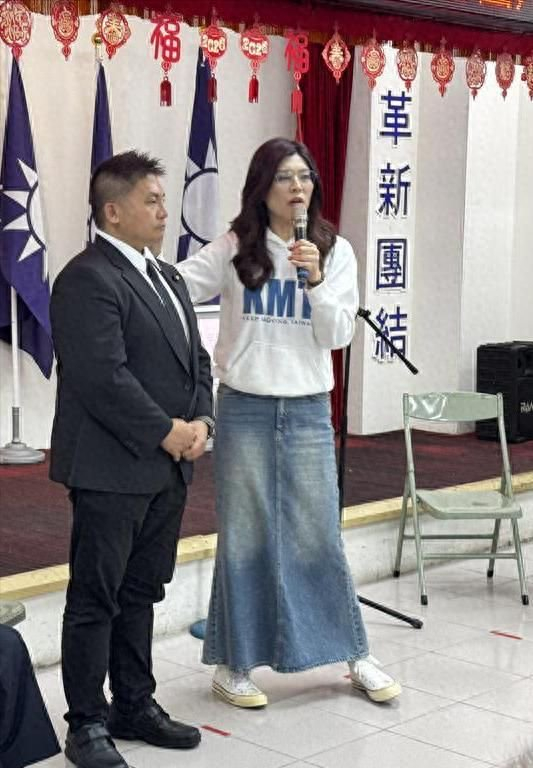
The Kuomintang's Yilan County Magistrate Planned The Critical Moment. Zheng Liwen Supported Wu Zongxian And Called For Blue And White Cooperation.

Straits Herald Comprehensive Report The KMT's Yilan County Governor's layout has entered a critical moment. The results of the primary polls showed that the democratic representative Wu Zongxian won. Party Chairman Zheng Liwen went to Yilan on the 2nd to support Wu Zongxian. In addition to emphasizing the smooth coordination within the party, he also criticized the DPP for using the judiciary and the cyber army to suppress the opposition party. He called on the Blue Camp and the People's Party to unite and cooperate to fight the "most beautiful election campaign" in Yilan.

Support Wu Zongxian! Zheng Liwen criticized Lai Qingde's "judicial suppression": Yilan has no reason to lose_Support Wu Zongxian! Zheng Liwen criticized Lai Qingde's "judicial suppression": Yilan has no reason to lose_

Zheng Liwen said that Wu Zongxian and Speaker Zhang Shengde who participated in the primary election in the party are both outstanding political comrades. During this period, they actively visited the grassroots to win the support of county residents and elected Wu Zongxian through a fair mechanism. Everything went smoothly. Zheng Liwen pointed out that in the future, she will establish a cooperation model with the People's Party, promote blue-white cooperation through existing communication channels between the two parties, and propose a "just and decent" combination for the people of Yilan County.

Cheng Lai-man praised Wu Zongxian for his background as a prosecutor and his unselfishness in fighting crime, but in private he was friendly and easy to get along with. He was a good father who loved his children and was the "King of Children". She pointed out that in the past two years, Wu Zongxian had not only consulted on politics in Taiwan's public opinion organizations, but also volunteered to assist with legal affairs within the party, and had stood on the front line in many political attacks and defenses. She called him "reliable and with a sense of justice" and was more willing to work in Yilan. He was a talent with both professionalism and image.

Zheng Liwen took aim at Lai Qingde, criticizing the ruling party for using judicial means to purge dissidents and attack political opponents. This situation is "unprecedented." She also expressed her grievances for former county magistrate Lin Zhimiao, pointing out that in the face of judicial pressure, the Kuomintang must strive for unity and cannot be bullied.

Regarding the movements of the Green Camp, Zheng Liwen bluntly said that after Wu Zongxian's momentum rose, the DPP's cyber army and flankers immediately launched a full-scale attack, which meant that they were "very nervous and very scared." She called on supporters not to be swayed by sowing discord and rumors, emphasizing that blue-white communication is smooth and there is a basis for cooperation on major issues.

Cheng Lai-wen finally said that this election campaign is not just a grassroots election, but also about right and wrong and the future of Taiwan. She called on voters in the middle to stand up and support candidates with a sense of justice, and strive to win the election for the county magistrate and democratic representatives at all levels. Zheng Liwen said, "With the cooperation between Blue and White, Yilan has no reason to lose."

Shanghai Holds The Second New National Innovative Drug Promotion Conference In 2026 (focusing On Imported Drugs)

In the New Year of the Horse, the clinical application of global innovative drugs is also accelerating in Shanghai. Today (March 2), Shanghai held the second new national innovative drug promotion conference in 2026 focusing on imported varieties. Representatives of many world-renowned pharmaceutical companies attended the conference with their "world's first" and "domestic debut". This is the second promotion after the first promotion on January 15 this year. It is a special session focusing on "imported drugs". It not only sends a signal that the promotion will be more segmented in the future, but also sends a signal that the promotion will be more frequent and intensive.

"High concentration output" in 10 minutes, representatives of imported pharmaceutical companies value the "demonstration effect"

The "National Basic Medical Insurance, Maternity Insurance and Work Injury Insurance Drug Catalogue" will be officially implemented from January 1, 2026. This new version of the national medical insurance drug catalog adds 114 new drugs, 50 of which are Category I innovative drugs involving tumors, chronic diseases, rare diseases and other fields.

With the implementation of the new version of the catalog, people's medication burden will undoubtedly be further reduced. Public hospitals are the main setting for Chinese people to take medicines. So, can the state-controlled medicines in these catalogs be dispensed in hospitals? Are some of the imported drugs that people are concerned about available in hospitals?

In order to optimize the development environment of the city's leading biopharmaceutical industries, further enhance its attractiveness to domestic and foreign biopharmaceutical companies, and promote the admission application of new nationally negotiated innovative drugs to benefit patients, the Nationally Negotiated Innovative Drug Promotion Conference came into being in Shanghai and has been going on for several years. It is worth noting that, based on the first one this year, the second one launched more than a month later focused on imported varieties, attracting nearly 50 representatives from medical institutions and 12 representatives from pharmaceutical companies.

A company, a drug, and a 10-minute promotion can be described as "high-concentration output." Representatives from Boehringer Ingelheim (China) Investment Co., Ltd. came with tenecteplase for injection, a new generation of thrombolytic drug developed by the company. In May 2025, it was approved by the China National Medical Products Administration for the treatment of acute ischemic stroke (AIS) within 4.5 hours after onset. One of its major features is that it can achieve "5-second administration." Such rapid administration will undoubtedly win more "wins" for the clinical treatment of acute ischemic stroke, which is a race against time, and also win more lives for patients.

"This is a very good platform to communicate face-to-face with hospital experts on the clinical value of new drugs. From the scientific research innovation end to the clinical application end, such promotions will become a good bridge. We are very concerned that innovative drugs can be used by more patients and save more lives." Lau Rodrigo, head of therapeutic areas at Boehringer Ingelheim Rodrigo also said that the promotion meeting will also have a good demonstration effect, "Shanghai is one of the most influential cities in the Yangtze River Delta and China, and the clinical application process in Shanghai will also bring leadership and demonstration effects to other regions."

The arrival of the "world's first" and "domestic first" product ensures that patients can use and afford good medicines

At the meeting, 12 responsible companies successively introduced in detail the 18 innovative products newly included in the 2025 version of the National Medical Insurance Drug Catalog, focusing on key information such as product characteristics, innovation advantages, and effect benefits. By quickly outputting core content to medical professionals, it helped relevant hospital experts understand the clinical value of innovative drugs in a short period of time and facilitate subsequent practical applications. According to relevant companies, there are many "world's first", "domestic first", "latest breakthrough" and "authoritative recommendation" products, providing more high-quality choices for clinical medication.
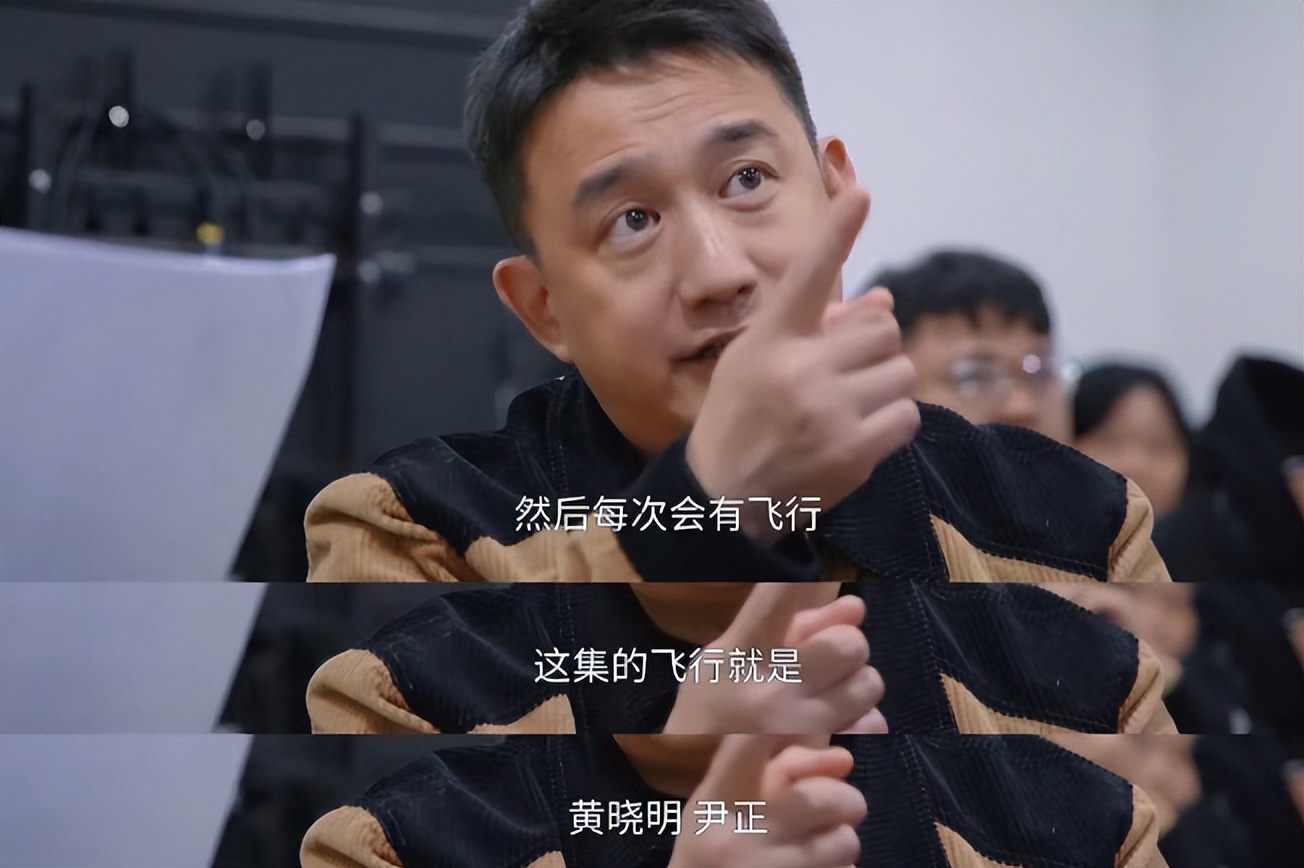
"In recent years, there have been many innovative drugs in the national medicines, involving hematological tumors, autoimmune diseases, rare diseases, etc., which are also consistent with the clinical disciplines and disease diagnosis and treatment types of our hospital. Ruijin Hospital attaches great importance to the admission of national medicines. After the catalog was released at the end of last year, it convened a pharmaceutical council meeting as soon as possible to ensure that the catalog is updated first. time and clinical application on January 1 this year to ensure that patients can use and afford nationally-rated innovative and good drugs." Bian Xiaolan, director of the Pharmacy Department of Ruijin Hospital Affiliated to Shanghai Jiao Tong University School of Medicine, also said that the emergence of innovative drugs is a good thing. At the same time, front-line doctors and pharmacists must also speed up their own "pharmaceutical updates" to understand and make good use of new drugs. In this process, the normalization and detailed promotion of such promotion meetings in Shanghai are in line with clinical needs.
In recent years, the Municipal Medical Insurance Bureau and other relevant departments have collaborated to implement the national policy of “truly supporting innovation, supporting true innovation”, focusing on key aspects of clinical application, innovatively building a “face-to-face” communication platform, and providing efficient and smooth interactive scenarios for hospitals and enterprises, aiming to solve the difficulties and blockages in admissions and accelerate the “last mile” of admissions for innovative drugs. This promotion meeting focuses on some of the newly added imported varieties of nationally discussed innovative drugs. It is also hoped that by improving the fit between drug indications and hospital drug use scenarios, the effect of the promotion activities will be further enhanced, more targeted medical enterprise docking will be achieved, and foreign innovative drugs will benefit domestic patients.

This event is jointly guided by the Municipal Medical Insurance Bureau, Municipal Health Commission, and Shenkang Hospital Development Center, and hosted by the Municipal Medical Insurance Association. In the next step, the Municipal Medical Insurance Bureau and other relevant departments will continue to focus on the goal of promoting the admission use of state-controlled innovative drugs, ensuring effective benefits and reaching patients, continue to build platforms, promote exchanges, and coordinate policies, and carry out a series of promotion activities to inject continuous momentum into Shanghai's construction of an "innovative drug and device friendly city" and accelerating the establishment of a biopharmaceutical industry innovation highland with global influence.

Which Period Drama Will Be A Hit During The Chinese New Year Season This Year? Look At The Good Times

"The kids from the two families are in trouble when they get together."

"But I feel warm and savory in my heart."

As soon as Mei Ting's lines of dialogue came out, it had the flavor of a drama that would mark the beginning of the Year of the Horse.

Among the popular dramas during the Spring Festival, history, costume detectives, suspense, criminal investigation… There are all popular themes on the screen in recent years, but there is still a lack of a genre that is suitable for all ages, period dramas.

From "In the World", which revived period dramas, to the hit "South and North" the year before last, and even last year's "Six Sisters"…

Period dramas rely on the broadest audience base and content that arouses emotional resonance among the audience, setting off a wave of "national drama watching" and "discussing across generations" during the Spring Festival again and again.

During the Chinese New Year season this year, which period drama is likely to become the next hit?

CCTV has prepared three period dramas at once: CCTV eight episodes of "When Time Has Love" on the evening of February 20, starring Huang Jingyu and Guan Xiaotong.

"Love in the Age of Innocence" premiered on the evening of February 21st, starring Chen Feiyu and Sun Qian.

But what I am personally most optimistic about is the one that has just been released——

On February 23 (the seventh day of the Lunar New Year), CCTV will launch a 40-episode family drama – "Good Times" directed by Liu Jiacheng and starring Mei Ting, Tian Yu, Chen Haoyu and Li Xueqin.

It was originally planned as a custom-made drama for Hunan Satellite TV, but it was aired on CCTV's prime time Spring Festival slot as a Lunar New Year drama. It obviously has something to it.

Could it really be the next "In the World"? At least, is it a family reorganization version of "Parental Love"?

Let's take a look at this "good time" together.

1: Introduction

"Life is going smoothly and comfortably these days, but two people are still better than one."

"I wish our family better and better days."

These are two lines from the trailer for "Good Times."

Watching the scene in the play where firecrackers go off and families sit around and toast, these two lines touched me during the Spring Festival.

As a Chinese New Year, it means going home.

No matter whether you are prosperous outside or lonely and silent, when you return to your hometown, you will always see the big girls or big cows from the village wearing big coats and eating melon seeds at the entrance of the village.

People go to other places, and everyone has their own dreams, but I think everyone also has one wish in their heart, which is to live a comfortable life.

I go home during the Chinese New Year, sit around a table, chat about what needs to be said, and call my parents.

For those who work outside the home, nostalgia is the most intense at this time of the year. It is also at this time that parents most want to feel the warmth of their loved ones.

Hidden in the firewood, rice, oil and salt is the healing presence.

In the ordinary years, the warmth of time is conveyed.

The family romance drama "Good Time" of the 1990s is airing at this time, which can send some warmth in the winter.

2: Story

"Actually, let's be together. It's quite suitable. One is without a man, and the other is without a woman."

The person who said this is Zhuang Xianxian (played by Tian Yu), a machine factory worker.

He reorganized a family of seven with song and dance troupe actor Su Xiaoman (played by Mei Ting). This play is about the warm daily life of this family of seven supporting each other during the changes of the times such as the restructuring of state-owned enterprises and laid-off and re-employment.

The whole play is set from the late 1970s to the new millennium. The ups and downs of this family's fate also bear witness to China's 30 years of social changes.

Combined with the trailer, the series has at least two core highlights:

The first is to focus on the ups and downs of reorganizing a family, which is real and heart-breaking.

The Spring Festival family dramas of the past few years, from "In the World" to "Six Sisters", all tell the story of the original family.

So what happens if it is a reorganized family?

"Good Time" tells such a story.

The story begins in a small southwest town in the late 1970s.

Zhuang Xianjin, a machine factory worker, originally lived with his two sons and one daughter.

Song and dance troupe actor Su Xiaoman grew up raising a son and a daughter alone.

Two middle-aged people who have been polished by life, without a vigorous love, just want to give their children a complete home, and they form a family of seven crowded in the staff dormitory.

This half-way couple actually interprets the simple romance of middle-aged love.

But marriage is never a matter of two people, let alone a remarried family.

Zhuang Haohao, the eldest daughter of Zhuang, played by Chen Haoyu, was the first to stand up against her father's remarriage.

If the objection is ineffective, then object again at the dinner table of a family of seven.

Opposition alone was not enough, so the two families started fighting on the street.

Finally, she got married despite the objections of her children.

Life was going very fast. When the family was having dinner, the banker's kid threw a basketball on the table, overturning the whole family's dining table.

"The first move he made was towards an outsider."

"My father was wronged by Mo Xue for so many years, but you only thought about remarrying."

"From now on, our family will have a stepmother and a stepfather. We no longer have a biological father."

Just seeing these lines and clips in the trailer is breathtaking, real and heart-breaking.

If the running-in of the five children can be called a "record of the survival of a reorganized family", then there are even more heart-wrenching things, such as the childhood romance between Zhuang Xuexue (played by Liu Yitie) and Wang Yuanyuan (played by Zhang Yue), which came to an abrupt end due to the union of their parents.

Each of the five children has his own little plan, and the twists and turns of life have added fuel and jealousy to the quarrels between the two families that have become one family.

In the end, these grievances and hatreds are not worth the reconciliation of fate and the family ties established in life.

The second is the ups and downs of the personal fate of the banker's family of seven in the era.

In the play, the experiences of the seven members of the banker family have gone through many twists and turns, and their fate is intertwined with the times.

Their identities, experiences, and stories are the epitome of the reality of ordinary people in China at that time, which also makes it easy for the audience to resonate with the experiences and emotions of the characters in the play.

For example, Chen Haoyu plays the eldest daughter Zhuang Haohao, who goes from being a conductor at a passenger terminal to a resident singer in a dance hall, and then establishing the brand "Haohao Haohao" and becoming a trendsetter in the individual economy.

At home, she also changed from the one who took the lead in making troubles to the "fixing star" in reorganizing the family.

Another example is Zhuang Xianjin's apprentice Liu Cheng, played by Su Xiaoding, who became the first college student in the factory. He unsuccessfully pursued Zhuang Xianjin's daughter Zhuang Haohao, but married Su Xiaoman's daughter.

Fang Liang, played by Wang Renjun, stands at the forefront of the times and frequently meets with foreign businessmen.

It is not difficult to see that the play focuses on the joys and sorrows and the ups and downs of fate of the villagers, supplemented by a strong realism background, thus outlining the changes in the family life of ordinary workers after the factory was restructured.

The story capacity of the 40-episode period drama is full.

3: Lineup

A good story cannot be separated from a good screenwriter, a good director, and a good actor.

Liu Jiacheng, the director of "Good Time", is famous for his masterpieces "Love in the Courtyard" and "The Little Girl at the Zhengyang Gate", which are recognized as masterpieces of period dramas. Last year's annual hit "All Things" has become his latest masterpiece.

This ace director of period dramas knows best how to make the fireworks of the period realistic and moving.

In order to create a distinctive group image, the series also invited a group of powerful actors, who must have good looks and acting skills.

The first is the absolute leading role, Mei Ting, who plays Su Xiaoman.

Mei Ting has been a master of period dramas since her debut.

In addition to An Jie in "Parents' Love", there are also the eldest sister He Jiali in "Six Sisters", Zhang Qinqin in "The Tree of Life",

She is very familiar with period dramas and has long been recognized by the public for her character creation.

It can even be said that as long as there are period dramas in which she appears, the ratings will be the same.

This time she plays Su Xiaoman, a former song and dance troupe actor, a woman who insists on remarrying with her children in pursuit of happiness.

Faced with her children's complaints, Mei Ting did not have too much emotion, but that feeling of grievance and forbearance was exactly the state of many parents in reorganized families.

And a scene of dancing at home uses graceful figures to express the gap between dreams and reality.

Give her this role, it's safe.

Let’s talk about Tian Yu who plays Zhuang Xianxian.

In recent years, the acting skills of this golden supporting actor in Chinese dramas have long been recognized by the audience. As a versatile actor in Chinese dramas, his characteristic is that he can act in any genre and can play with anyone.

This time, he plays Zhuang Xianxian, an ordinary worker who takes care of his family.

In the trailer, there is a scene where Mei Ting is fascinated while clapping her hands while looking at her dancing, which brings to life the warm daily life of a middle-aged couple.

The helplessness faced by her rebellious daughter is equally empathetic.

In the past few major dramas during the Spring Festival period, basically all the characters that appeared were bad fathers. This time the audience finally saw a good father.

In addition to the love between the parents, what is surprising is that all the other actors are also good-looking, good at acting, and full of joy.

For example, Chen Haoyu, who plays the eldest daughter Zhuang Haoyu, has an eye-catching look in the play.

In recent years, she has gained a lot of popularity due to Sister Lang. She showed stable acting skills when she played the role of Xiao Zhou in "Jiuzhou Piaomiao Lu".

This time she plays the most outstanding role among her generation. The shouting scene at the seaside made people excited. I hope she seizes the opportunity of this period drama during the Spring Festival and breaks out of the industry.

Li Xueqin, who plays the role of the Hutong pistachio "Ye Aihua", speaks a Northeastern dialect with a sense of joy.

In the play, she chases Zhuang Xianxian, played by Tian Yu, and is ultimately defeated by Mei Ting, but she always has a happy expression on her face. It seems that she will be a lovable character in the play.

There is also Zhang Yue, who plays Su Xiaoman's daughter. Her love affair with Zhuang Xuezi was interrupted because of her parents' union, and she finally married Liu Cheng, a college student who unsuccessfully pursued Zhuang Haohao.

It is estimated that he will be a character who can provoke dramatic conflicts.

In addition, there are Liu Yitie, Wang Renjun, Su Xiaoding and other period drama regulars, and their acting skills are stable again.

4: Odds of winning

In addition to the plot and cast, many of the period elements of the play are also full of period feeling.

In the trailer, accompanied by long music, the crew built a real-life machinery factory and family courtyard, as well as replica food stamps, butterfly sewing machines, enamel washbasins, 28-year-old bicycles, blue cotton-padded jackets and other old objects, as well as the familiar song and dance hall in "Old Uncle". Every frame carries the youthful memories of the fathers.

The Tao of Service is full of details, and the memories are poignant. The scene highlights the characteristics of the era and also highlights the tremendous changes in China in those 30 years.

From this, we can also see that director Liu Jiacheng has continued the market aesthetics from "Love in the Courtyard" to this day.

The integration of era propositions such as factory restructuring into daily necessities is reminiscent of the changing times in "The Creation of All Things".

It can be said that the series is full of odds.

The biggest chance of winning is the flavor of the year revealed in the play.

From the trivial matters of firewood, rice, oil and salt, to the slapstick growth of the five children, from the lively fireworks in the factory area, to the changes in life under the wave of reform and opening up, every scene feels like the audience is watching the story of their own home.

The most touching thing is the life of a family, the mutual help between neighbors, the mutual support between husband and wife, and the struggle and concern of the children when they grow up.

The sincere feelings between people in the past era can always bring the audience back to that pure and beautiful era.

People of different generations have different feelings about these scenes in the play. Older viewers may see their own past or childhood. Younger viewers, on the other hand, see the past of their elders.

No matter how you feel, "Good Time" tells the story of a family and every Chinese. I hope it can move everyone and bring warmth to everyone during the Spring Festival of the Year of the Horse.

Because nostalgia has the power to heal.

The so-called "good time" is not a great day, but a family together, making ordinary days warm and warm.

Life is full of vegetation and autumn. Going south and north, winter goes and spring comes!

Celebrating the New Year with family is a good time.

The Monthly Activity Scale Of Domestic AI Native Apps Will Be Differentiated In 2025, And The Industry Structure Will Be Analyzed

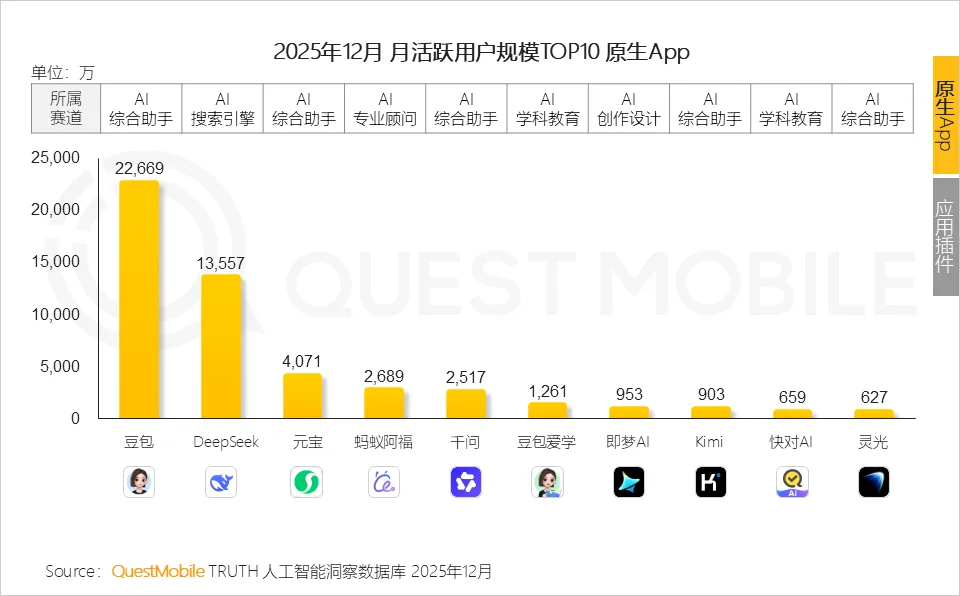
On March 3, the latest "2025 AI Application Layer Development Core Report" released by the research organization Quest Mobile showed that as of December 2025, the scale of domestic AI native App monthly active users (MAU) showed an obvious stepwise differentiation. Among them, Doubao and DeepSeek ranked first and second with monthly active scale of 226 million and 135 million respectively, forming a "duopoly" pattern and leading the entire industry in a discontinuous manner. Tencent Yuanbao, Ant Afu and Alibaba Tongyi Qianwen followed closely behind, firmly ranking in the top five camps.

Ranking of male gods in 2018_Ranking of college entrance examination results in 2019

A Quest Mobile report analyzed that in 2025, domestic AI applications are accelerating their evolution from "universal coverage" to "scenario penetration". Among the top ten AI apps with monthly active users, comprehensive assistants are still the mainstream (accounting for 6 seats), but professional AI in vertical scenarios has emerged strongly (occupying 4 seats). The list shows that professional applications focusing on specific scenarios have demonstrated strong customer acquisition capabilities: for example, Ant Afu, which specializes in professional consultants, Doubao Aixue and Kuaidui AI, which are deeply involved in subject education, and Jimeng AI, which focuses on creative design, have all accumulated a large number of highly sticky users in segmented tracks.

From the perspective of the industry ecological pattern, Internet giants still dominate the AI ​​application landscape by virtue of their advantages in traffic ecology and product matrix. Among the top ten AI native apps, Byte and Alibaba took a total of six seats. ByteDance has demonstrated its strong "App factory" genes. In addition to the top-ranked Doubao, its Doubao Aixue and Jimeng AI were also successfully shortlisted, achieving the precise position of "universal + vertical"; Alibaba and Ant Group also performed well, with Ant Afu, Tongyi Qianwen and the universal AI assistant Lingguang released in November last year all ranking among the top ten.

In addition, the list also reflects the current status of independent large model companies. Surrounded by giants, AI startups represented by DeepSeek and Kimi still occupy an important position that cannot be ignored in the first camp and the tens of millions of echelons with their underlying technological breakthroughs and differentiated product experiences.

Industry analysts pointed out that December’s data serves as the true fundamentals of each company before the next year’s “Spring Festival Marketing War”, revealing the current competitive focus of AI 2C applications: the track has shifted from a pure competition of the underlying model capabilities to a comprehensive competition of channel customer acquisition, scenario implementation and user retention.

Silicon Valley In The United States Has Divided Reactions To China's Large Models, And Musk Praises Alibaba's Qianwen Model

Faced with the strong rise of China's big models, the response of Silicon Valley in the United States is becoming increasingly fragmented.

Just a few days ago, the CEO of Anthropic, who has an anti-Huawei label, once again attacked Chinese models. Not only did he say that many Chinese open source model companies "distilled" Claude's data were suspected of plagiarism, he also belittled the fact that Chinese models achieved ranking scores by "fixing questions in response to benchmark tests."

But on the evening of March 2, when Alibaba launched four small-size models in its Qianwen Kaixin 3.5 series, Musk immediately left a hot comment on social media: "Impressive intelligence density."

On the surface, it seems to be a casual thumbs up from a technology geek, but in the eyes of industry insiders, Musk's reply to the term "intelligent density" is like a sharp knife, accurately piercing the "high performance, high premium" moat that American AI giants such as Anthropic have worked hard to manage.

From heap parameters to heap density

"Smart density" is a core concept that Musk has repeatedly advocated in the past year. It is a key indicator to measure the efficiency of large models.

Not only has he repeatedly stated that "the potential of AI intelligence density has been underestimated by two orders of magnitude," he has also publicly praised his Grok 5 for its 6 trillion parameters and higher intelligence density per GB.

Now he has given his most cherished concept to his competitors, which means that compared to traditional business exchanges, Musk sincerely agrees with this Chinese model.

On the same night, the AI ​​entrepreneur on the other side of the Pacific who knew best about "settling accounts" gave the exact same answer.

MiniMax founder Yan Junjie also mentioned this keyword in his first financial report call after listing. He summarized the company's core strategy as "continuous improvement of smart density, coupled with Token's throughput capacity." He said: "What ultimately determines victory or defeat is not simply burning money and resources, but the speed of advancement in intelligent capabilities."

Two things collided on the same day and pointed to the same word. If you extend the timeline further, you will find that this is not a coincidence, but an industry consensus that is taking shape.

The main theme of the AI ​​industry in the past three years has been an arms race: fighting for parameters, fighting for GPUs, and burning money. One trillion parameters are the threshold, one hundred thousand cards are the standard, and whoever has the larger number is the king. But the returns on this path are diminishing – if the model parameters are increased tenfold, the performance may only be improved by 20%, but the cost will increase more than tenfold.

Under the hustle and bustle, a "hidden thread" has already surfaced.

In November 2025, the research of the team of Professor Liu Zhiyuan of Tsinghua University appeared on the cover of "Nature Machine Intelligence" and formally proposed the "Densing Law" of large models. Based on rigorous backtesting of 51 mainstream large models, the paper reveals a surprising pattern: from 2023 to 2025, the intelligence density of large models will double every 3.5 months.

This means that every hundred days, humans can achieve the performance of the current optimal model with half the number of parameters.

Professor Liu Zhiyuan explained this matter very thoroughly: "The law of scale and the law of density are like the bright and dark lines of the evolution of large models. The same is true for the previous information revolution. The bright line is that devices are getting smaller and smaller, mainframe → minicomputer → personal computer → mobile phone; the dark line is the efficient evolution of the chip industry, which is Moore's Law."

IBM chief research scientist Kaoutar El Maghraoui's judgment is more straightforward: "2026 will be the year of the battle between cutting-edge models and efficient models." The industry is tired of the diminishing returns of simply stacking scale and is looking for new solutions.

So what we are seeing now is not just a few people saying the same word by chance. From academia to industry to competitors, a new consensus is converging: the weights and measures of the AI ​​competition have changed. From comparing who is "bigger" to comparing who is "closer".

Small models can also be practical

But not everyone buys it.

Just a few days ago, Anthropic CEO Amodei publicly sang the opposite tune, saying that the Chinese model was optimized for benchmark testing far more than for real-world use.

Translation: The Chinese model is created by brushing the questions and does not count.

This statement has its own context, and it also exposes the deep anxiety of the leading American manufacturers. Every time a Chinese model proves that a small model can be used, the high-premium pricing model that Anthropic and OpenAI rely on to survive is in danger of collapse – if 9B's model can do the work of a model with ten times the number of parameters, the API profit pool carefully constructed by the giants will be drained instantly.

Then, Musk turned around and gave Qianwen a thumbs up.

There is a subtle game here: Musk is at loggerheads with OpenAI and Anthropic. To praise the Chinese model, to some extent, you are also knocking down your American counterparts – the rivals you say are not worth mentioning are challenging your pricing power in the way you fear most.

Of course, arguments are arguments, and the numbers given by the density law are cold: According to the statistics of the paper, the API call price of the GPT-3.5 model has dropped 266.7 times in just 20 months. This is not someone’s opinion, this is the law of technological deflation.

The debate can go on. The curve waits for no one.

The small model of Qianwen 3.5 is the latest data point on this density curve – and the one that most people dare not ignore.

Let me start with the most intuitive fact: a capability that required an entire server cluster a year ago is now installed on a mobile phone.

The performance of Qianwen 3.5 with 9B parameters is comparable to or even better than that of models with ten times the number of parameters on multiple benchmarks: GPQA Diamond score is 81.7, command following is 91.5, and visual understanding is significantly ahead of GPT-5-Nano of the same level on MMMU-Pro with 70.1 vs 57.2. The most exaggerated thing is that the 0.8B model with less than 1 billion parameters can process an ultra-long context of 260,000 tokens in one breath – equivalent to the size of two or three novels, running on an ordinary mobile phone instead of a hot server room.

The Qianwen team released 9 models in a row within 16 days, all Apache 2.0 models are completely open source, and each model is the king in its own parameter level. This is not a victory for one product, but "living evidence" of an entire density curve.

Professor Liu Zhiyuan has long foreseen this trend. He once asserted: “As long as some kind of intelligence can be achieved, it will definitely be able to run on smaller terminals in the future.”

Qianwen 3.5 is verifying this sentence.

When the 9B model can run ten times the performance of the number of parameters, the threshold for AI deployment has dropped from "a large company with a server cluster" to "an individual developer with a consumer-grade graphics card." When a company with a few hundred people can create a model that can compete with giants with thousands of people, the threshold for startups to enter has changed from "financing a billion dollars first" to "finding 300 smart people first."

MiniMax is a footnote to the latter story. There are 385 people in the company, with an average age of 29. According to Yan Junjie's disclosure during the conference call, the company has spent only US$500 million since its establishment. Compared with OpenAI's thousands of employees and tens of billions of financing, it has delivered a revenue growth of 159% and a gross profit growth of 437%. Intelligent density is not only a physical concept of model parameters, but also an extremely powerful organizational lever.

Don’t underestimate the ocean of personal devices. In the early days of the information revolution, someone predicted that "the world only needs a few large computers." But today, there are more than 7 billion mobile phones in the world. Liu Zhiyuan once calculated an account: As early as 2023, the total end-side computing power scattered on tens of millions of devices across the country is already 12 times that of data centers.

The ultimate outcome of intelligence is destined to be distributed.

This is why "intelligent density" is more important than any single running score. What it points to is not "whose model is stronger today", but "in what form and at what low cost will AI eventually come to every ordinary person".

Back to Musk’s “Impressive intelligence density”. Rather than praising a certain launch by a Chinese company, he is confirming a turning point that is taking place:

The second half of AI does not belong to the largest models, but to the most intensive wisdom.

The Takeout Subsidy War Has Been Going On For Nearly A Year, And The Revenue And Profits Of Catering Merchants Have Been Double Pressured, And Dine-in Dining Has Been Greatly Affected.

Since it kicked off in April 2025, a high-intensity and long-term "subsidy war" led by food delivery platforms has swept across the country and has lasted for nearly a year. The real impact of this competition in the form of traffic and orders is becoming increasingly clear: under the prosperity, there is generally intensified operating pressure on merchants, an overall downward price system, and a severely impacted dine-in ecosystem.

Recently, Lixin Consulting released a research report "From Traffic Carnival to Profit Decline: The Real Situation of Catering Merchants in the "Subsidy War"" (hereinafter referred to as the "Report"). Through questionnaire surveys and interviews with 2,298 catering merchants in 31 provincial-level administrative regions across the country, the report reveals the plight of catering merchants amid the takeout subsidy war.

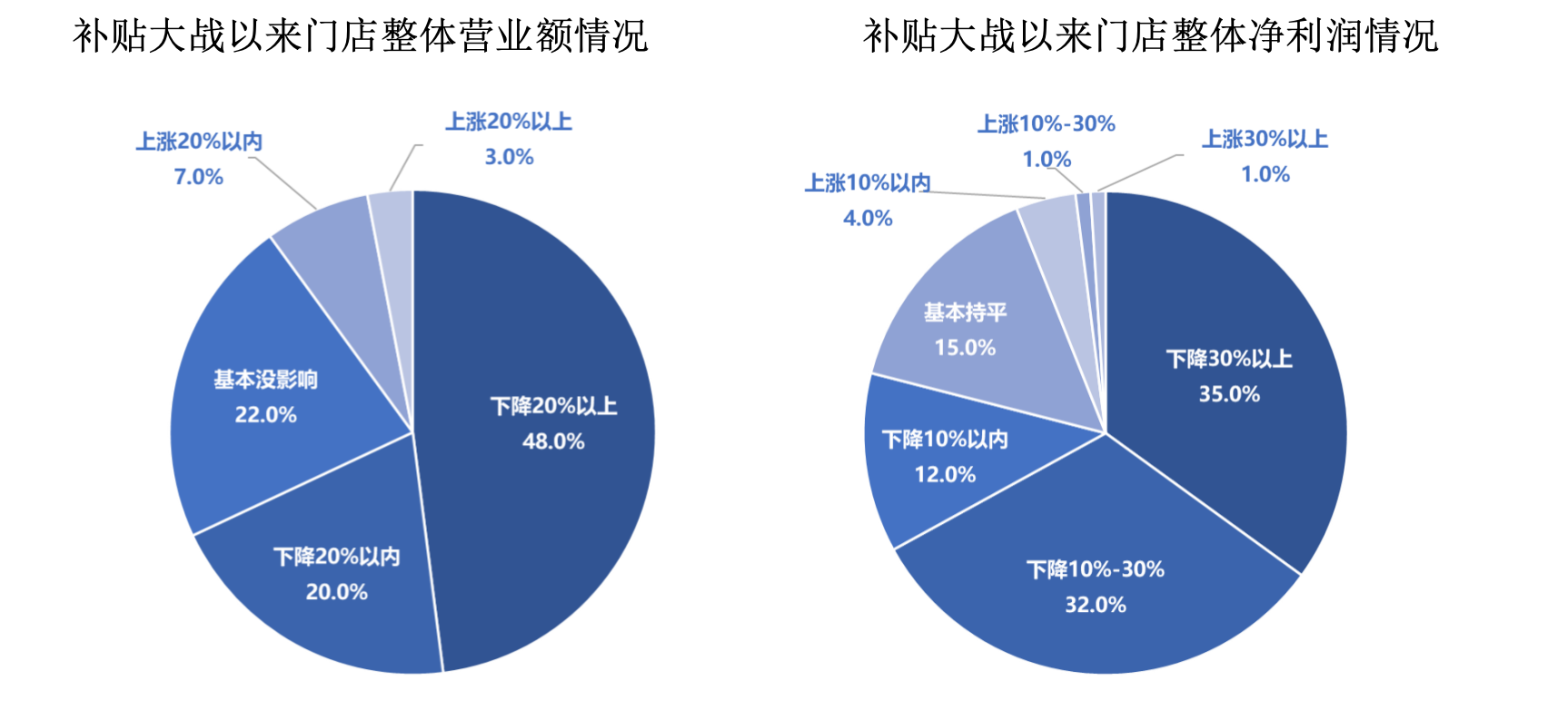
Questionnaire data shows that since the subsidy war, catering merchants have generally been under dual pressure on revenue and profits. Nearly 70% of merchants' turnover has declined compared with 2024, with a drop of more than 20% as high as 48%. Even more severe is the profit indicator: nearly 80% of merchants have experienced a decline in net profit, of which 35% have experienced a decline of more than 30%.

Takeaway shop sales_Takeaway business closure ranking protection

It is worth noting that businesses that focus on dine-in services have been more significantly impacted. Among the merchant groups whose net profits fell by more than 30%, dine-in merchants accounted for 53%, which is much higher than their proportion of 23% in the overall sample. This shows that the shock wave of what appears to be a subsidy war targeting online traffic is violently hitting the fundamentals of offline physical operations.

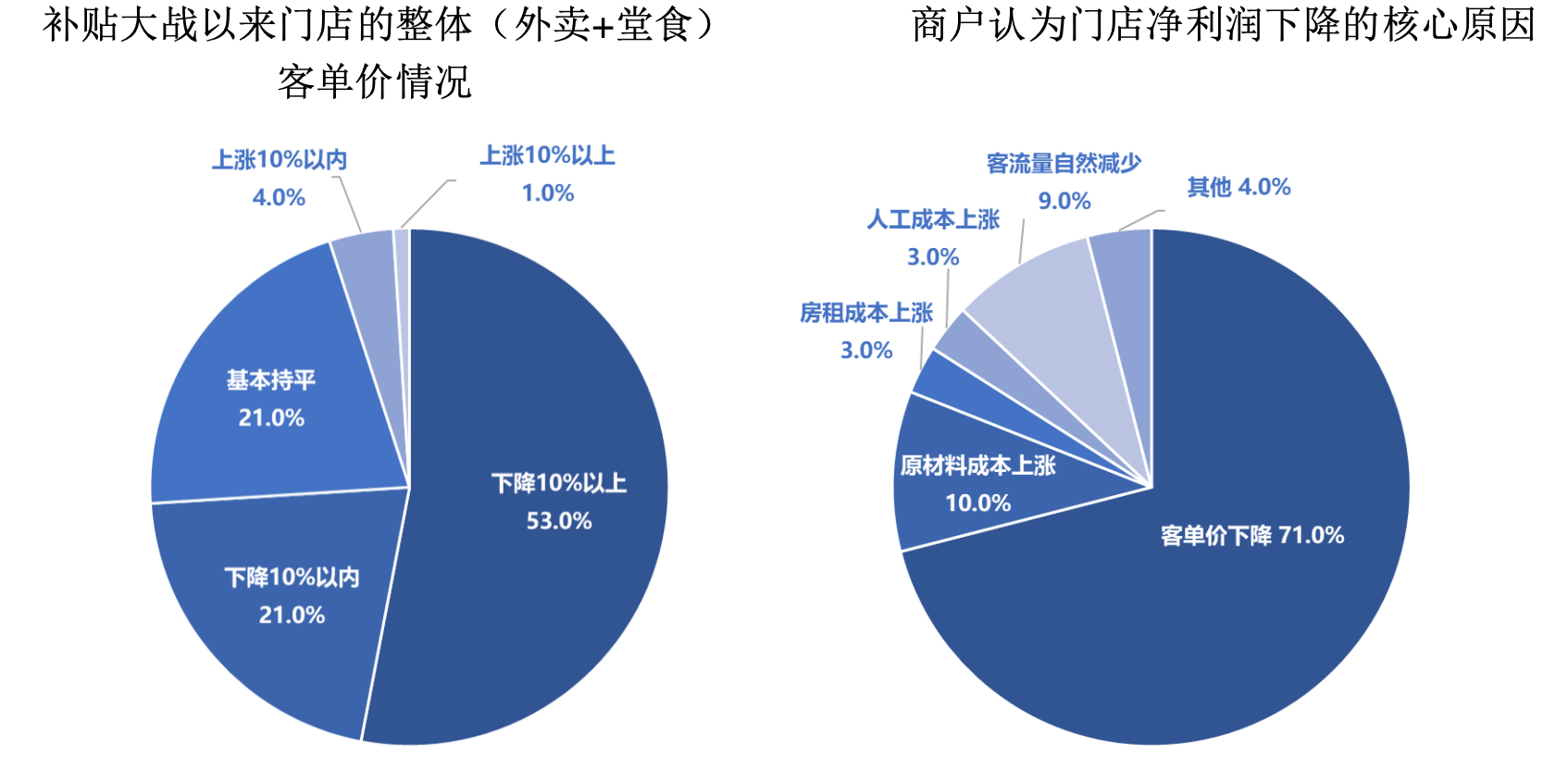
The decline in unit price per customer is regarded by merchants as the core factor eroding profits. More than 70% of merchants attribute the decline in profits to this, and its impact far exceeds factors such as rising raw materials (10%), reduced customer flow (9%), labor and rent costs (3% each).

Takeaway shop sales_Takeaway business closure ranking protection

Specifically, 74% of merchants experienced a decrease in unit price per customer, of which 53% experienced a decrease of more than 10%, while only 5% of merchants experienced an increase in unit price per customer. This trend closely echoes the "low-price consumption" habit formed by consumers. The report pointed out that once low-price consumption habits are solidified by platform subsidies, it will become extremely difficult for prices to rise, and merchants will fall into the long-term dilemma of "it is easy to reduce prices but difficult to increase prices."

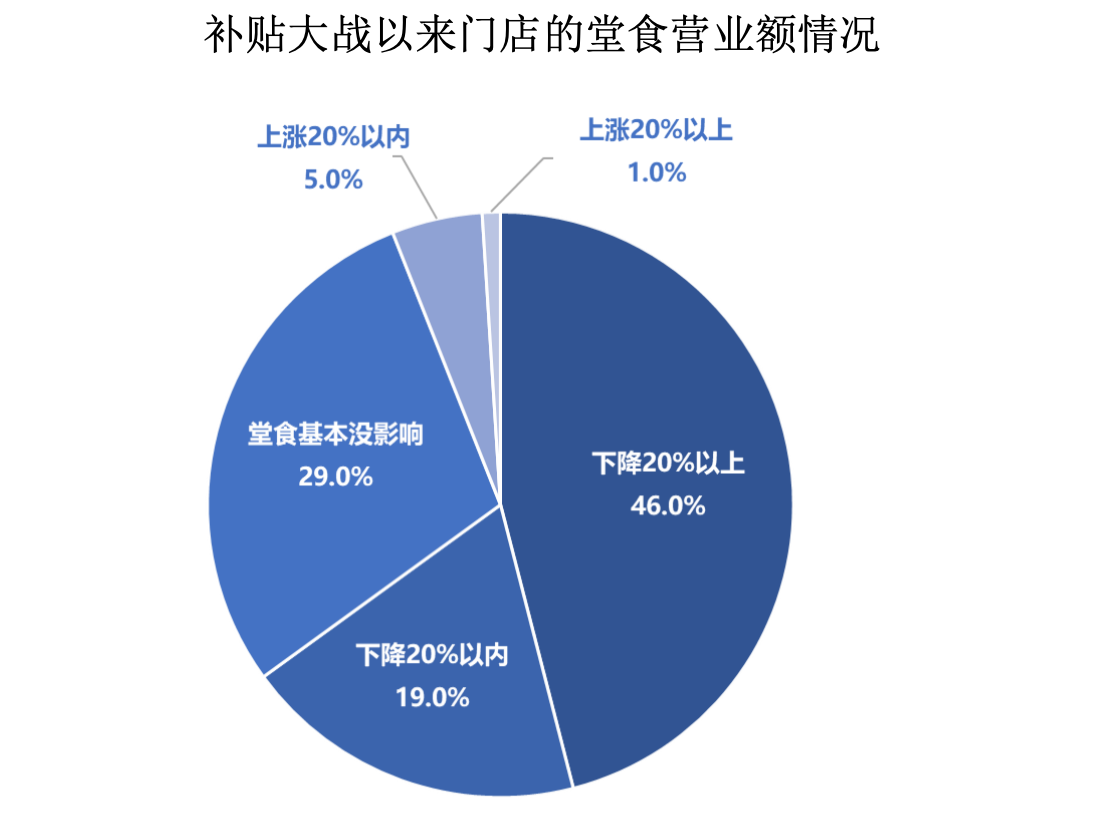
The most direct and violent effect of the subsidy war is reflected in its impact on the traditional dine-in business. The report shows that 65% of merchants' dine-in sales fell year-on-year, with nearly half of them falling by more than 20%, and another 19% of merchants falling by less than 20%. The total number of merchants whose dine-in sales increased was only 6%.

Under the platform subsidy mechanism, takeout prices are generally lower than dine-in prices, which not only makes consumers more inclined to choose takeout, but also gives rise to the strange phenomenon of "ordering takeout at the store". The linkage effect between online and offline is accelerating to reshape or even subvert the original catering consumption structure.

_Takeaway shop turnover_Takeaway business closure ranking protection

This research report simultaneously interviewed some merchants. A Hunan restaurant in Hunan pointed out that customers have become accustomed to low takeout prices, and the unit price for dine-in customers has been severely reduced; a pizza shop in Hubei calculated a cost account – dine-in restaurants bear rent, water, electricity, and labor, but platform subsidies flow to takeout, forcing the same price is equivalent to directly cutting off profits; Cantonese restaurants in Shanghai lamented that they had to participate in involution due to price wars, and their living space continued to be squeezed.

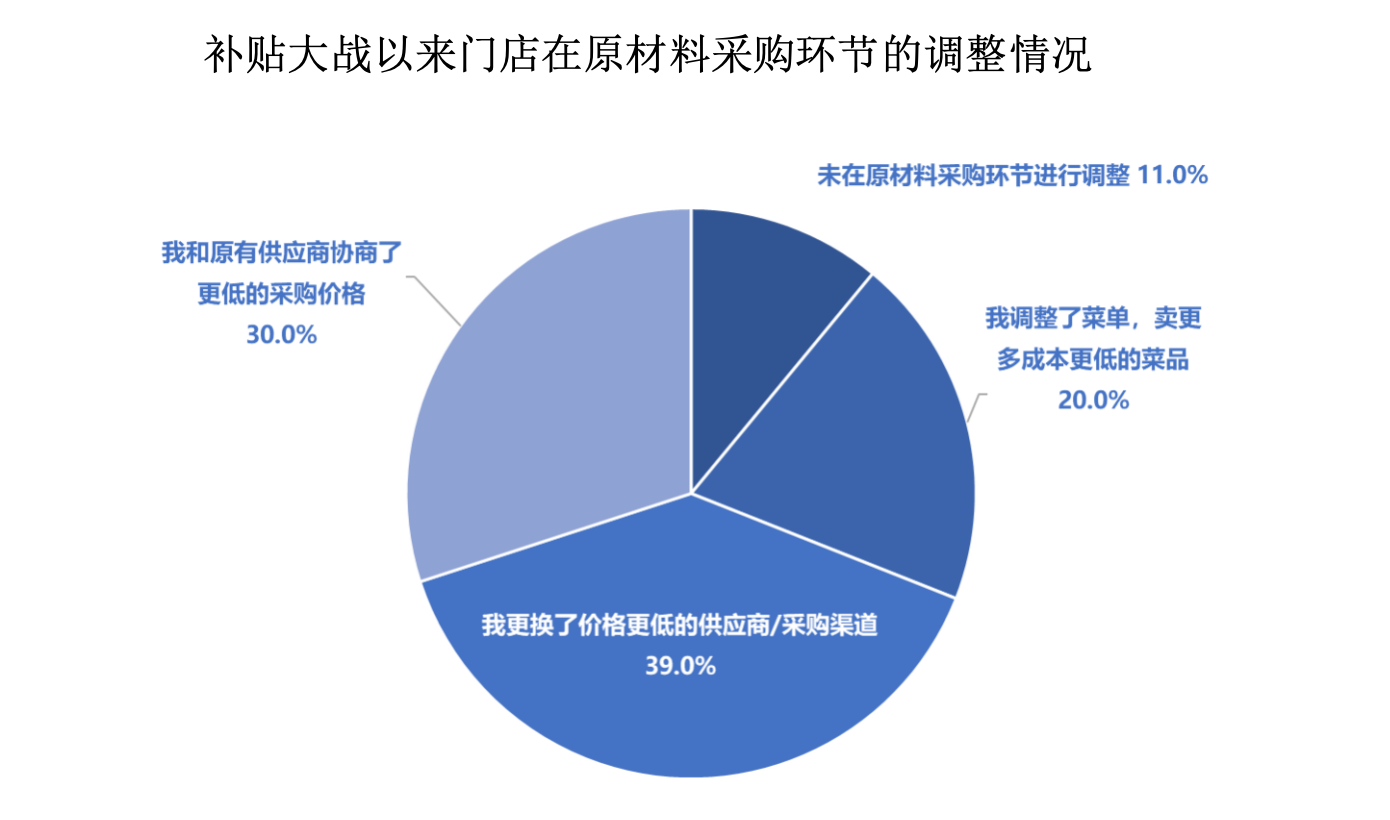
Faced with continued operating pressure, merchants have proactively adjusted their cost structures in order to survive: 39% of merchants have begun to switch to cheaper raw material suppliers, 30% of merchants have strengthened bargaining games with existing suppliers, and 20% of merchants have chosen to increase the proportion of low-cost dishes.

This means that the downward pressure on prices caused by the subsidy war is continuing to be transmitted from catering merchants to the food supply chain. According to a survey by the China Internet of Things Food Committee, in the third quarter of 2025, the prices of most categories in the national food market were under pressure, with the overall transaction prices of aquatic products and meat falling by about 5 to 6 percentage points.

_Takeaway shop turnover_Takeaway business closure ranking protection

It is worth mentioning that the pressure sweeping the industry is not unique to small and medium-sized merchants. It is also difficult for leading chain brands to stay away. Luckin Coffee’s recently released 2025 financial report provides strong evidence for the report’s conclusions.

Financial report data shows that in the second quarter of 2025, the takeout war officially started, and Luckin Coffee's order volume and revenue scale increased. However, in the fourth quarter, as platform subsidies decreased, Luckin Coffee's revenue growth dropped to 32.9%, which was far lower than the growth rate of more than 50% in the second and third quarters, and was the lowest level in the past three years. What’s more serious is that Luckin Coffee’s net profit in the fourth quarter dropped to 518 million yuan, a decrease of 39% from the same period last year, and its net profit margin also dropped to 4.1%.

The takeout war has turned a large number of dine-in orders into takeout orders, changing Luckin Coffee's cup size structure (the proportion of takeout and self-pickup orders), causing the company's cost structure to face challenges. At the performance meeting, Luckin made it clear that it would optimize the takeout channel structure and reduce reliance on third-party takeout platforms to improve profits.

However, this phenomenon has attracted the attention of regulatory authorities and industry associations. According to media reports, before the Spring Festival, municipal supervisory departments in many places across the country issued compliance guidelines for Spring Festival food delivery, warning relevant food delivery platforms to compete rationally.

In addition, industry associations in Shaanxi, Gansu and other places also issued documents before the Spring Festival, saying that vicious price wars have damaged the independent pricing rights of small and medium-sized merchants and weakened their bargaining power, squeezing the profit margins of the offline real economy and affecting the overall employment ecology and local economic stability.

The report by Lixin Consulting finally pointed out that when competition remains at the price level for a long time, what will eventually be weakened is the sustainable development ability of the entire industry. For the long-term prosperity of the industry, it must return to the track of healthy competition in products, services and innovation.

The US Military's Air Strikes On Iran Have Changed The Global Landscape. What Impact Will It Have On Sino-US Relations And Trump's Visit To China?

Article Observer Network Liu Bai

The U.S. military launched a brazen air strike on Iran and killed Iranian Supreme Leader Ayatollah Ali Khamenei. The global geopolitical landscape has suddenly changed. What impact will it have on China-U.S. relations?

The Nikkei Shimbun published an article on March 2 stating that U.S. President Trump’s recent tough actions on Iran, Venezuela and other matters involving China’s interests may be intended to deter China by showing off military strength. However, analysts worry that this will not only prompt China to accelerate its ability to counterbalance the United States, but will also weaken the prospects for stable Sino-U.S. relations and intensify China's distrust of the United States.

_Trump has lost confidence_Trump has overdrawn America's credibility

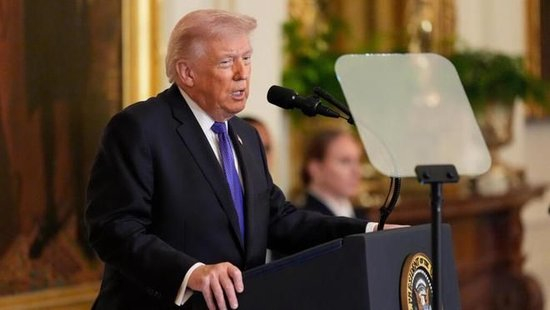
On March 2, local time, U.S. President Trump delivered a speech at the White House on the attack on Iran.

As for some people who believe that the United States' actions against Iran have harmed China's interests, a British scholar pointed out that China has a "long-term calculation" on the Iran issue, and this statement "needs to be viewed rationally."

This article noted that the United States and Israel launched air strikes against Iran at a time when Trump is expected to visit China in four weeks, and the action took place during the negotiations between the United States and Iran. Some Chinese media commented, "The negotiations are not so much a sincere search for a peaceful solution to the dispute, but a tactical pause for the resumption of military strikes."

Pei Minxin, a professor at Claremont McKenna College in California, said that this assessment "may well reflect an increasingly popular view among Chinese elites and the public that the United States cannot be trusted." He is worried that this will also have an impact on Trump's expected visit to China.

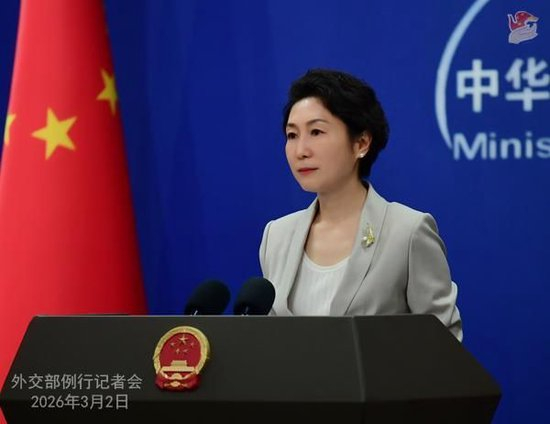
In response to Trump's planned visit to China, Chinese Foreign Ministry spokesperson Mao Ning reiterated on March 2 that China and the United States are maintaining communication on the interaction between the two heads of state. I currently have no information to provide.

_Trump has lost confidence_Trump has overdrawn America's credibility

Chinese Foreign Ministry Spokesperson Mao Ning hosts a regular press conference

Mao Ning also emphasized that the attack and killing of Iran's supreme leader seriously violated Iran's sovereignty and security, trampled on the purposes and principles of the United Nations Charter and the basic norms of international relations, and China firmly opposed and strongly condemned this.

The article mentioned that since the Busan meeting between the heads of state of China and the United States in October last year, the United States has not only taken action against Iran, an important oil supplier to China, but also kidnapped President Maduro of Venezuela, which is also an oil-producing country friendly to China. Under Trump's intimidation, Panama illegally revoked Hong Kong's CK Hutchison's port operating rights, triggering strong dissatisfaction in China.

"Trump may think he is showing off military power to deter Beijing," said Danny Russell, a researcher at the Asia Society Policy Institute. "But his actions in Venezuela and Iran are more likely to prompt Beijing to strengthen its countervailing capabilities and accelerate its alignment with Russia. Overall, this attack weakens the prospects for stability or progress in Sino-U.S. relations."

Some people also feel that Iran's actions break the previous view that Trump will visit China in a "weak state." The U.S. Supreme Court previously rejected Trump's "reciprocal tariffs." The New York Times reported last week, citing sources, that the Trump administration had postponed a $13 billion arms sale to Taiwan out of concern for China.

Zineb Ribois, a researcher at the Hudson Institute, said that the air strike on Iran broke the common perception that President Trump has been weakened. In the long run, this move can free up U.S. resources and thus affect the game pattern across the Taiwan Strait.

She wrote in an analysis article: "For every year Washington spends dealing with Tehran, Beijing will gain one more year to deploy in the Pacific. The direction of the Middle East will determine whether the United States can win the decisive game of this century – mainland China's actions against Taiwan."

In addition, Ribois said that the postponement of arms sales to Taiwan suddenly has a different interpretation.

He said that by shelving the arms sales before the air strikes, it looked like Trump was making concessions to China after China warned not to sell arms to Taiwan in early February. Now, this incident can be reinterpreted as: the United States made active concessions based on its strength advantage. This is a 'gift' that Trump chose to send, rather than the result of China's coercion.

_Trump has overdrawn America's credibility_Trump has lost confidence

Agatha Kratz, a partner at the consulting firm Ruizhid, speculated that although the goal of the US action is vague, it objectively "cut off China's partner network" and Washington will also avoid triggering new crises during military operations in the Middle East.

Affected by the situation in the Middle East, international oil prices jumped sharply on March 2, with the benchmark price of Brent crude oil rising by more than 13%.

Gong Jiong, a professor at the Department of Economics at the University of International Business and Economics, said that once the Strait of Hormuz is blocked, it will inevitably have an impact on China, but China's large imports of oil from Russia can provide a certain buffer. He also believes that real regime change is unlikely to occur in Iran.

Ahmed Abdul, an associate researcher at the Middle East and North Africa Program at Chatham House in the UK, believes that China has a "long-term calculation" on the Iran issue. Although a series of actions by the United States have quickly impacted China's interests, this statement "needs to be viewed rationally."

He told Nikkei Asia that countries in the "Global South" do not regard China as a substitute for the United States and do not expect China to confront the United States militarily. However, the Trump administration "may suffer huge losses because it is shaping the use of force and disregard of international law into the new normal of international politics."

Abdul said that the war and the attack on Iran's supreme leader may "make Iran tough on the United States and Israel for generations" and "make it easier for Iran to rely on China."

U6GHz Is The Focus Of Huawei's Exhibition Area At MWC 2026. What Challenges Does 5G-A Face?

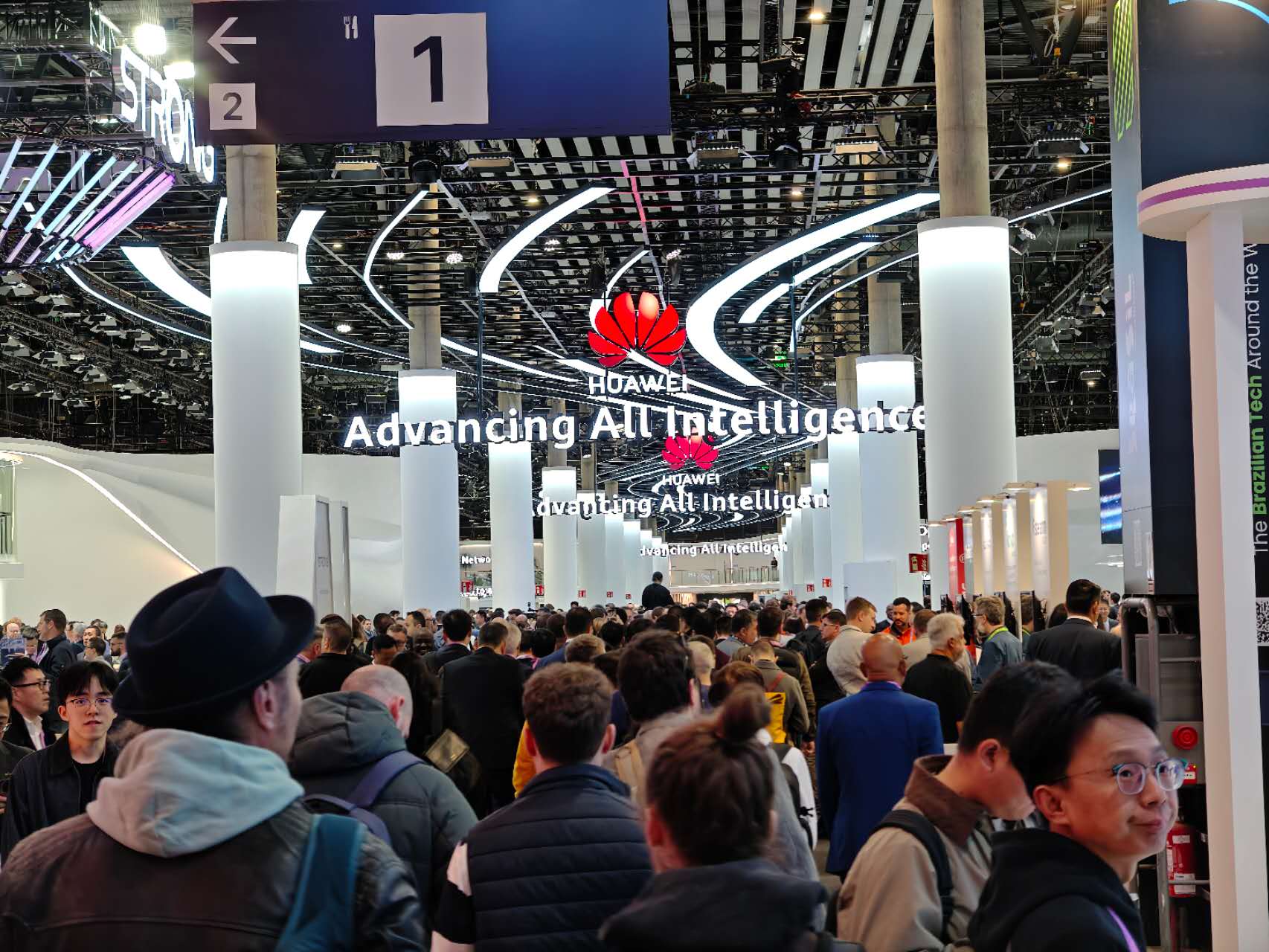
On March 2, local time, the 2026 World Mobile Communications Conference (MWC26) kicked off in Barcelona.

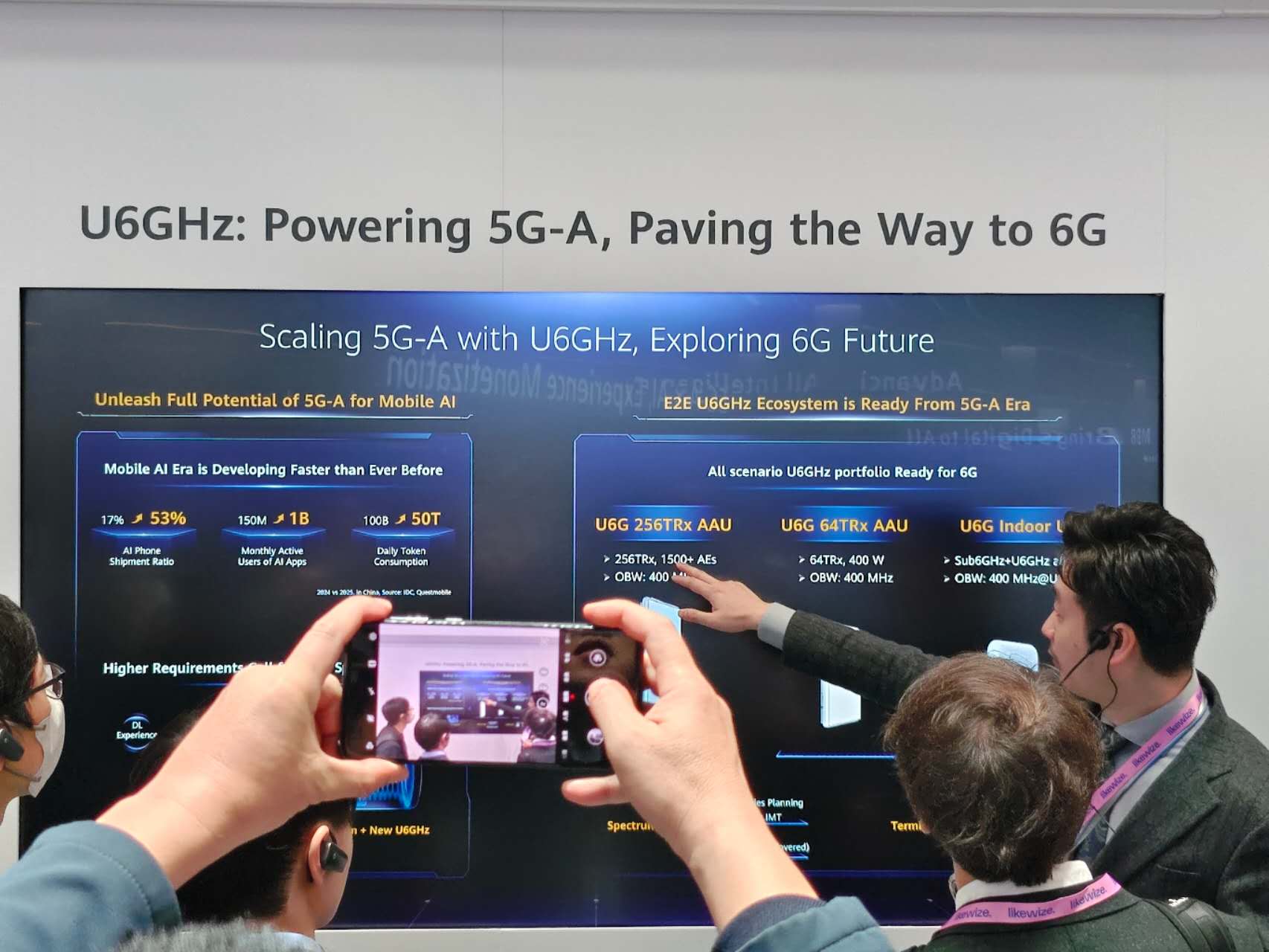
The Huawei booth was still crowded with people. Walking into Huawei's operator business exhibition area, you will find that many people are talking about a technology "U6GHz", which is also one of the key words of Huawei's participation in this exhibition. Before the launch, Huawei released a series of U6GHz full-scenario products and solutions, covering a complete matrix of macro stations, small stations, and microwaves.

What is U6GHz and why is it called the "golden frequency band"? Why do communication equipment giants such as Huawei focus on this technology in 2026? Why is U6GHz the key to unlocking the potential of 5G-A networks, and can it also support smooth evolution towards 6G?

Huawei booth design concept__Huawei booth

Source: Observer.com

To understand these, we have to start with the current development status of communication technology. In 2025, 6G was included in the Chinese government work report for the first time, and our country has also launched the second phase of 6G technology experiments. However, the 6G standard is not expected to be frozen until 2029, and official commercial use may not be until 2030.

Before the official arrival of 6G, 5G-A, known as "5.5G" in the industry, was the mainstream commercial technology for global operators. Especially with the explosive growth of AI applications and terminals, the mobile industry is facing unprecedented opportunities and challenges. AI multi-modal interaction has increased uplink demand by 3-5 times. Real-time decision-making relies on low latency and deterministic guarantees. Ubiquitous agents require more secure and reliable wide-area connections. This makes 5G-A the focus of business innovation and future technology evolution.

At MWC26, Huawei ICT BG CEO Yang Chaobin said that the next five years will be a key window for the explosion of mobile AI business, and it will also be a period of opportunity for the entire industry to create new value. 5G-A has become an inevitable choice. It brings a tenfold increase in uplink and downlink speeds to meet the AI ​​business experience; it also introduces new IoT technologies such as RedCap and Passive-IoT to support the Internet of Everything; at the same time, AI technology has also been introduced into the network to provide diversified network capabilities for businesses to meet the needs brought about by the rapid development of AI.

As of January 2026, 374 operators around the world have completed 5G network deployment. On the basis of wide-area coverage, the commercial implementation of 5G-A technology is accelerating. The current number of global 5G-A users has exceeded the 70 million mark. Currently, in the Chinese market alone, there are more than 135 mobile phone terminal models supporting 5G-A technology, and the cumulative shipment volume has exceeded 170 million units.

Compared with 5G commercialized in 2019, 5G-A has four key features: downlink 10Gbps (10Gbps), uplink gigabit (1Gbps), 100 billion connections, and endogenous intelligence. But if you want to unlock the full potential of 5G-A and allow traffic to run at full speed on this highway, you must widen the "lane", that is, the spectrum.

Yang Chaobin said that 5G-A has achieved large-scale commercial use in more than 300 cities around the world, and its deployment is expanding to all frequency bands, continuing to release technological dividends. The continuous improvement of 5G-A capabilities relies on the introduction of new spectrum and the re-farming of existing spectrum.

This is connected with what Huawei calls "U6G", which is a new spectrum resource.

The full name of U6G is Upper 6GHz, also known as U6GHz. It refers to the upper half of the 6GHz frequency band. The specific frequency range is 6425-7125 MHz, spanning a continuous 700MHz bandwidth. It is also the last 700MHz continuous bandwidth resource in the Sub-6GHz mid-frequency band.

There are many spectrums, high frequency bands have wide bandwidth but poor coverage, and low frequency bands have good coverage but narrow bandwidth.

The reason why U6GHz is called the "golden frequency band" is because it has the dual advantages of wide coverage and large capacity, and has become a key frequency band for 5G-A evolution and commercial use. Not only that, U6GHz, as the n104 frequency band of 5G-A, is also a core candidate frequency band for 6G. It can achieve intergenerational reuse and is the key to operator stock investment protection and smooth connection to 6G.

In other words, U6GHz will unleash the potential of 5G-A, and is also making a forward-looking layout for 6G to protect operators' long-term investments. But the development process of this golden frequency band has not been smooth sailing.

_Huawei booth design concept_Huawei booth

Source: Observer.com

As early as 2022, the world had launched a fierce "spectrum war" around the 6GHz frequency band.

At that time, some countries represented by the United States tended to reserve the entire 6GHz frequency band for Wi-Fi, while Europe, China, the Middle East and other regions advocated using the first half (U6GHz) for 5G and even future 6G cellular mobile communications. In the end, the World Radio Conference (WRC-23) decided to allocate U6GHz for authorized mobile services, clarifying the IMT (International Mobile Communications) positioning of U6GHz under the framework of the International Telecommunications Union (ITU). This is like applying for a property rights certificate for this "golden land", making it clear that it can be used to build public mobile networks.

Although the United States still reserves the entire 6GHz frequency band for Wi-Fi and other unlicensed services, more than 20 countries, including China, the United Arab Emirates, Brazil and many European countries, plan to use the U6G frequency band for IMT (International Mobile Communications). Among them, the United Arab Emirates and Hong Kong, China have released U6G spectrum, and the U6G ecosystem is accelerating.

However, U6GHz must not only meet the requirements of the rapid development of current AI services, but also meet the higher performance requirements of future 6G services, and also faces a number of technical challenges.

One is the coverage problem. The higher the frequency, the greater the loss. The propagation loss of U6GHz is more than 12dB worse than that of C-Band. If the coverage radius cannot be aligned with existing 5G site sites, operators will need to build sites more densely, and costs will be uncontrollable. The 256T U6GHz AAU exhibited by Huawei this time has achieved double breakthroughs in coverage and experience with its industry-leading 1,500+ antenna arrays: the peak rate of a single user has entered the 10G era, and the entire network capacity can support a total traffic of 100,000 Gigabit in a single cell, and can easily cope with the explosion of large-bandwidth services such as AR/VR and 4K live broadcast.

Second, larger bandwidth and more channels will inevitably lead to a surge in equipment power consumption and weight. If a base station equipment weighs more than 100 kilograms, and the wind resistance is huge, the existing sky surface cannot bear it at all, and the tower can only be rebuilt. Huawei's response strategy is to innovate from the underlying materials, using advanced heat dissipation technologies such as three-dimensional radiator cooling and diamond substrates, combined with the "0bit 0Watt" intelligent shutdown algorithm, to strive to soar in performance while controlling energy consumption and volume within an acceptable range.

At present, the verification of U6GHz by global operators is in full bloom. Through joint innovation with strategic partners such as Huawei, e&UAE has successfully completed live network testing in the U6GHz band, achieving the ultimate 10Gbps experience. In Europe, Vodafone completed Europe's first large-scale U6GHz spectrum test. In Central Asia, Uztelecom of Uzbekistan teamed up with Huawei to innovate U6GHz spectrum technology and demonstrated the latest U6GHz verification results at ICT Week 2025, which can achieve transmission rates of up to 10 Gbps. In Latin America, Brazil's TIM teamed up with Huawei to complete U6GHz technology verification in the Americas. In China, China Mobile has also completed U6GHz innovative testing and verification in Zhejiang, and successfully achieved a stable experience with four-carrier aggregation downlink peak rates exceeding 10Gbps with its industry-leading U6GHz solution.

At the industry chain level, U6GHz CPE terminals have been officially launched, and markets such as the United Arab Emirates have successfully completed end-to-end testing and verification and begun commercial deployment. Mainstream CPE and mobile phones are expected to be commercially launched in 2026. This series of verification results proves that the U6GHz spectrum is a key strategic spectrum for the development of 5G-A technology, paving the way for future technology evolution.

As a core promoter of U6GHz industry development, Huawei has also clarified its long-term technology roadmap this time. In 2026, Huawei will release a 5G-A full-scenario solution including U6GHz, and plans to fully support operators in completing U6GHz large-scale network deployment in 2028.

In 2026, global spectrum allocation has entered a critical window period. U6GHz has become the consensus in the development of 5G-A communications with its perfect balance between coverage and capacity. Global operators are working together to transform U6GHz from vision to reality. By then, you may be at a concert with thousands of people, performing real-time holographic interactions through AR glasses, or driving a smart car on the road. Perhaps what supports all these experiences is the "golden band" technology we are talking about today.

On The Evening Of February 27, Trump Went To Work During A Charity Dinner To Monitor Military Operations.

_Trump’s Mar-a-Lago_What estate is Trump’s

_Trump’s Mar-a-Lago_What estate is Trump’s

On one side is the dance floor, on the other side is the war. This is not a dramatic collage, but a real aspect of the current operation of American power.

According to "Reference News", on February 28, Eastern Time, the White House posted a photo on its official social media account saying, "President Trump is monitoring U.S. military operations in Iran: Operation Epic Fury."

White House Press Secretary Levitt disclosed that Trump was sitting at his Mar-a-Lago residence in Florida and paying close attention to the development of the situation. According to reports, senior officials including the Director of the Central Intelligence Agency, the Secretary of Defense and the Chairman of the Joint Chiefs of Staff were also present.

Before that, on the evening of February 27, the Mar-a-Lago banquet hall was brightly lit, and a charity dinner was being held.

"I have to go to work"

"Everyone, have fun! I have to go to work." Trump told the guests in formal attire after the national anthem was played that night.

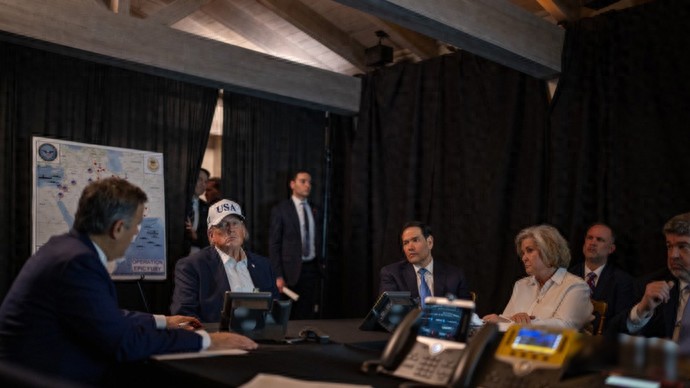
Few people realize that at the same time, after passing through the gilded banquet hall door and layers of security, the other side of the huge manor has been surrounded by black curtains, and a space with a wooden beam structure has been temporarily transformed into a war room. America's top national security officials gathered together to prepare for a long night.

Photos released by the White House on February 28 showed Trump, wearing a suit and a baseball cap embroidered with the word "USA" on his head, sitting around a long table filled with phones with Secretary of State Rubio, White House Chief of Staff Wiles and others. Behind him is a map labeled "Operation Epic Fury," indicating the deployment of U.S. troops in the Middle East and the location of Iranian targets.

According to the White House, before the attack, Rubio called all members of the Congressional Bipartisan Intelligence Leadership Group for a congressional briefing and briefed seven of them. At the same time, U.S. Vice President Vance presided over the meeting in the White House Situation Room, with Director of National Intelligence Gabbard, Treasury Secretary Bessent and other Cabinet secretaries by his side.

On March 1, the White House released multiple videos and posts, announcing the launch of military operations against Iran and confirming the death of Iran’s Supreme Leader Ayatollah Ali Khamenei. However, Trump did not address the nation or hold a news conference to explain his strategic goals or drum up public support.

More controversial than the action itself is the space in which the decision took place. Commanding a highly classified military operation in a business club has once again raised questions about Trump's above-mentioned actions.

Some U.S. national security experts and intelligence officials are concerned that, as a paid membership club, does Mar-a-Lago have the highest level of security? Is there any risk of information leakage in a membership-based environment? Are state decisions being “privatized”?

This is not the first time similar concerns have arisen.

At the beginning of his first term, after North Korea launched missiles into the eastern sea, Trump discussed countermeasures with then Japanese Prime Minister Shinzo Abe on the terrace of Mar-a-Lago. Guests gathered around to watch and uploaded photos online, sparking a safety controversy. To that end, the Trump team has tightened photo rules and beefed up the club's confidential communications system.

Since then, Mar-a-Lago has been the site of many major military decisions.

In 2017, Trump authorized an attack on Syria. In 2020, the decision to eliminate Iran's senior general Soleimani was made in an underground conference room. Last year alone, air strikes against the Houthis in Yemen, Tomahawk missiles fired at suspected Islamic State camps in Nigeria, and operations against Venezuela to kidnap Maduro were all launched here.

But the structure, built in the 1920s and anchored to the reef with reinforced concrete, is not impregnable. Last month, a gunman was shot dead by the Secret Service after breaking into a secure area with a fuel can.

After the US-Israeli attack on Iran, the US has announced to strengthen security around the estate and the White House.

'More important than ever'

Just this past weekend, Trump rarely went out to play golf as usual. But he was still attending a super PAC fundraiser at Mar-a-Lago after dinner on Saturday.

White House press secretary Levitt said the fundraiser was "more important than ever."

While carrying out air strikes and fundraising, some commentators said that when military decisions are made in private clubs, the boundaries of power become increasingly blurred. Behind the US president's free switching between military operations and political mobilization is a complex picture in which state machinery and personal political orbits operate in parallel, and public power and private space are deeply intertwined.

(Editor’s email: ylq@jfdaily.com)

Sign In

Forgot Password

Sign Up