Since it kicked off in April 2025, a high-intensity and long-term "subsidy war" led by food delivery platforms has swept across the country and has lasted for nearly a year. The real impact of this competition in the form of traffic and orders is becoming increasingly clear: under the prosperity, there is generally intensified operating pressure on merchants, an overall downward price system, and a severely impacted dine-in ecosystem.
Recently, Lixin Consulting released a research report "From Traffic Carnival to Profit Decline: The Real Situation of Catering Merchants in the "Subsidy War"" (hereinafter referred to as the "Report"). Through questionnaire surveys and interviews with 2,298 catering merchants in 31 provincial-level administrative regions across the country, the report reveals the plight of catering merchants amid the takeout subsidy war.
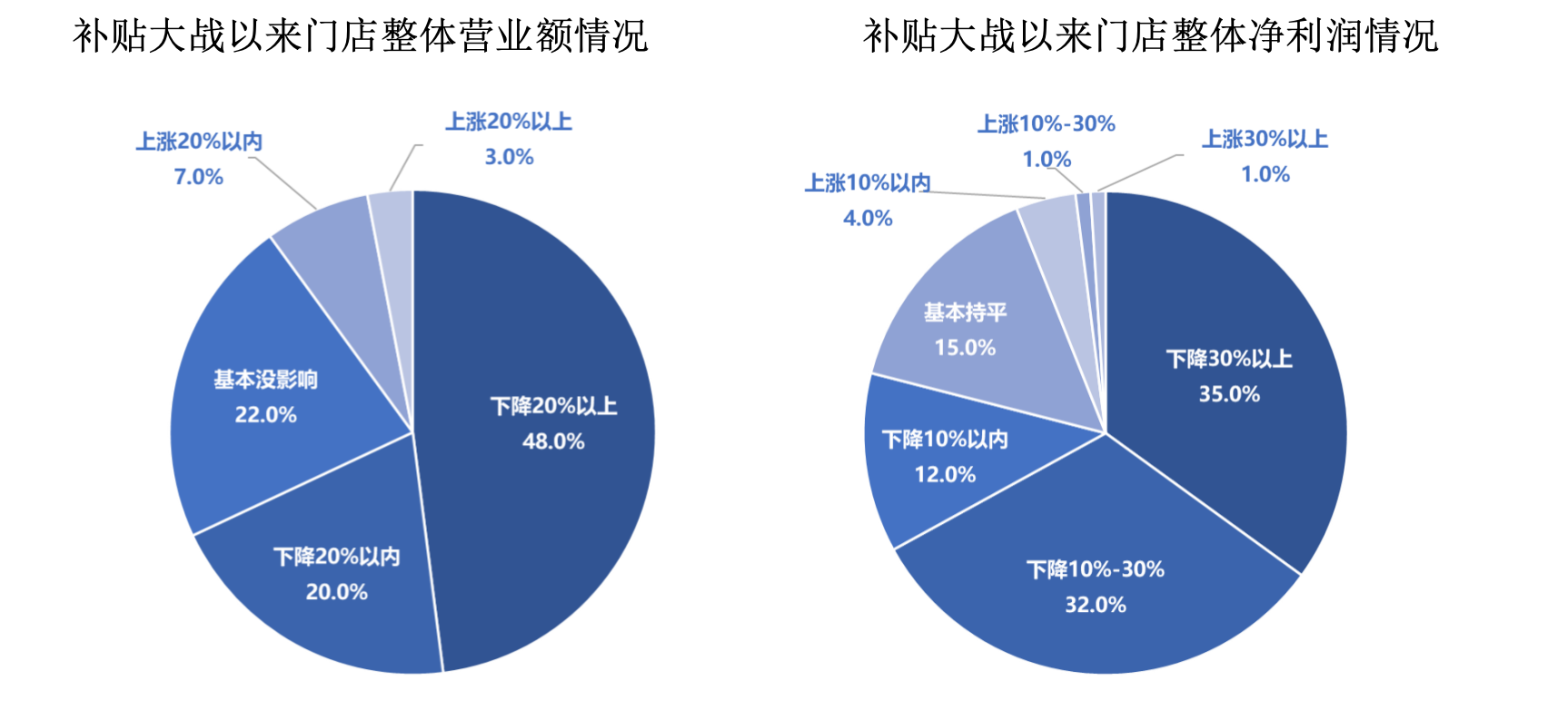
Questionnaire data shows that since the subsidy war, catering merchants have generally been under dual pressure on revenue and profits. Nearly 70% of merchants' turnover has declined compared with 2024, with a drop of more than 20% as high as 48%. Even more severe is the profit indicator: nearly 80% of merchants have experienced a decline in net profit, of which 35% have experienced a decline of more than 30%.
It is worth noting that businesses that focus on dine-in services have been more significantly impacted. Among the merchant groups whose net profits fell by more than 30%, dine-in merchants accounted for 53%, which is much higher than their proportion of 23% in the overall sample. This shows that the shock wave of what appears to be a subsidy war targeting online traffic is violently hitting the fundamentals of offline physical operations.
The decline in unit price per customer is regarded by merchants as the core factor eroding profits. More than 70% of merchants attribute the decline in profits to this, and its impact far exceeds factors such as rising raw materials (10%), reduced customer flow (9%), labor and rent costs (3% each).
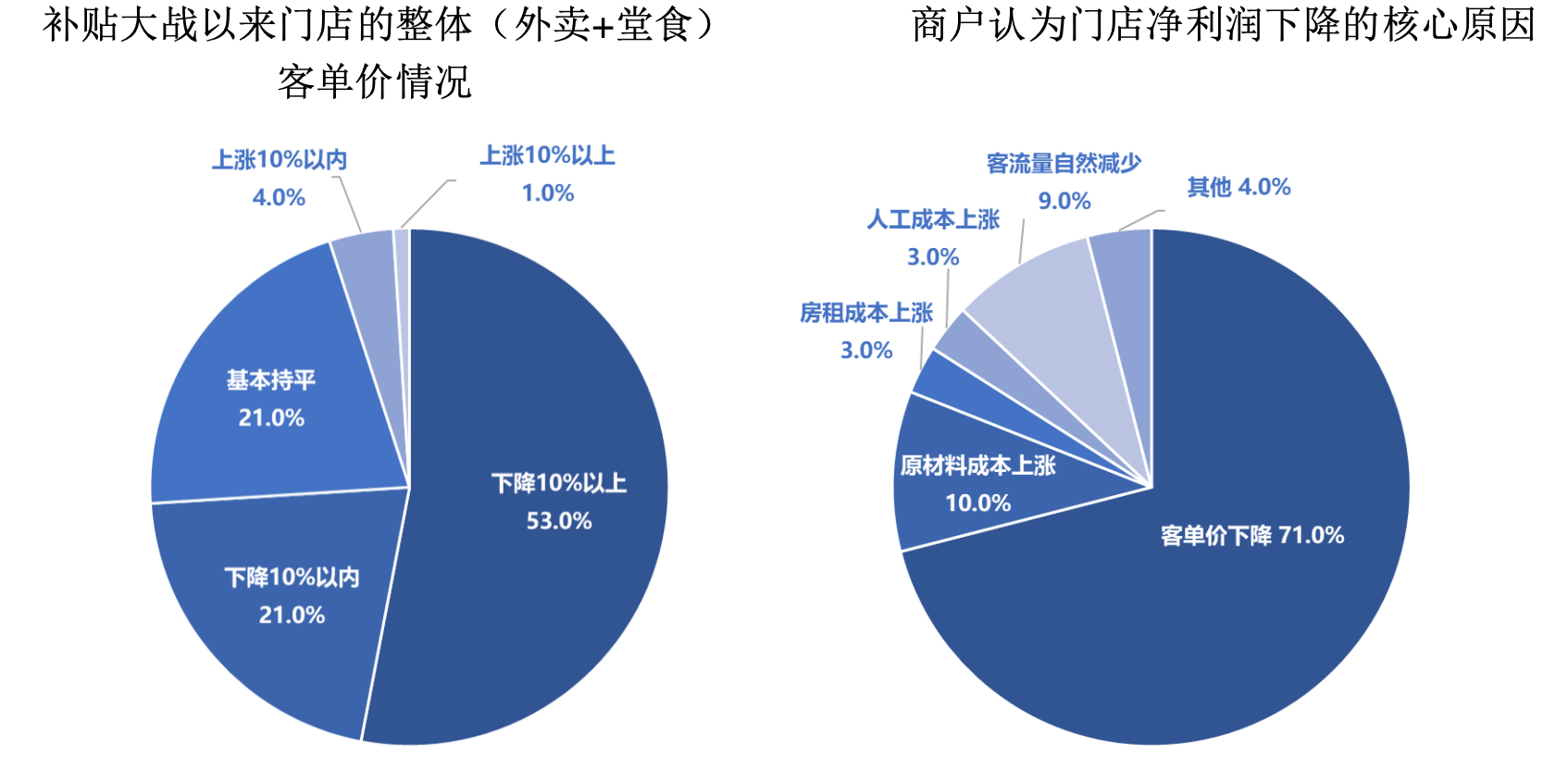
Specifically, 74% of merchants experienced a decrease in unit price per customer, of which 53% experienced a decrease of more than 10%, while only 5% of merchants experienced an increase in unit price per customer. This trend closely echoes the "low-price consumption" habit formed by consumers. The report pointed out that once low-price consumption habits are solidified by platform subsidies, it will become extremely difficult for prices to rise, and merchants will fall into the long-term dilemma of "it is easy to reduce prices but difficult to increase prices."
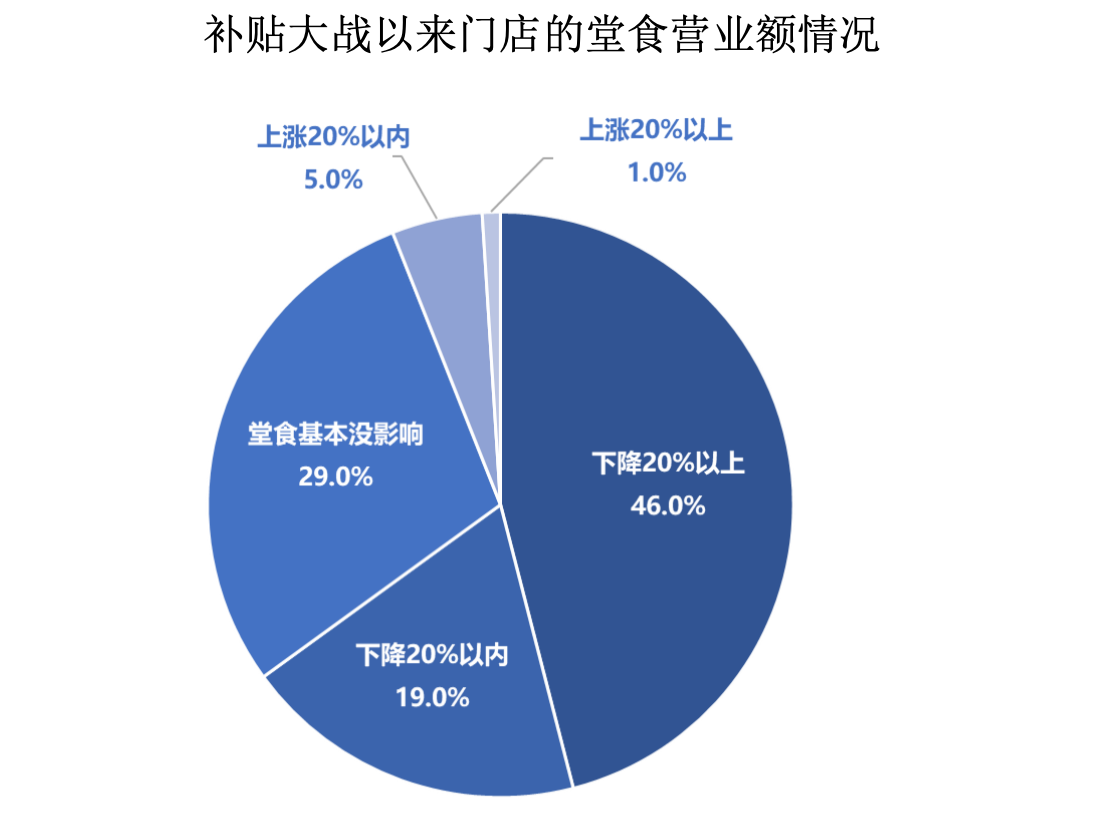
The most direct and violent effect of the subsidy war is reflected in its impact on the traditional dine-in business. The report shows that 65% of merchants' dine-in sales fell year-on-year, with nearly half of them falling by more than 20%, and another 19% of merchants falling by less than 20%. The total number of merchants whose dine-in sales increased was only 6%.
Under the platform subsidy mechanism, takeout prices are generally lower than dine-in prices, which not only makes consumers more inclined to choose takeout, but also gives rise to the strange phenomenon of "ordering takeout at the store". The linkage effect between online and offline is accelerating to reshape or even subvert the original catering consumption structure.
This research report simultaneously interviewed some merchants. A Hunan restaurant in Hunan pointed out that customers have become accustomed to low takeout prices, and the unit price for dine-in customers has been severely reduced; a pizza shop in Hubei calculated a cost account – dine-in restaurants bear rent, water, electricity, and labor, but platform subsidies flow to takeout, forcing the same price is equivalent to directly cutting off profits; Cantonese restaurants in Shanghai lamented that they had to participate in involution due to price wars, and their living space continued to be squeezed.
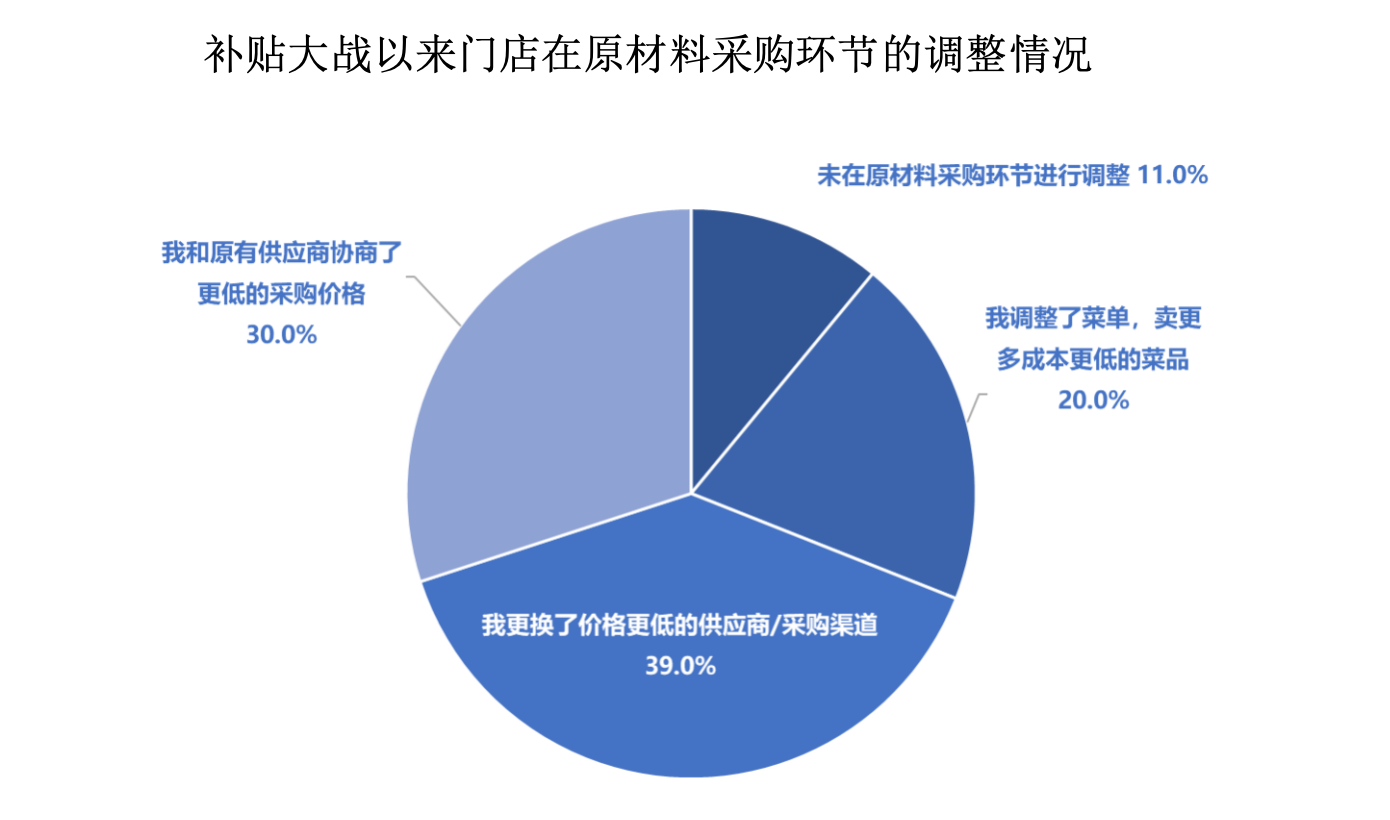
Faced with continued operating pressure, merchants have proactively adjusted their cost structures in order to survive: 39% of merchants have begun to switch to cheaper raw material suppliers, 30% of merchants have strengthened bargaining games with existing suppliers, and 20% of merchants have chosen to increase the proportion of low-cost dishes.
This means that the downward pressure on prices caused by the subsidy war is continuing to be transmitted from catering merchants to the food supply chain. According to a survey by the China Internet of Things Food Committee, in the third quarter of 2025, the prices of most categories in the national food market were under pressure, with the overall transaction prices of aquatic products and meat falling by about 5 to 6 percentage points.
It is worth mentioning that the pressure sweeping the industry is not unique to small and medium-sized merchants. It is also difficult for leading chain brands to stay away. Luckin Coffee’s recently released 2025 financial report provides strong evidence for the report’s conclusions.
Financial report data shows that in the second quarter of 2025, the takeout war officially started, and Luckin Coffee's order volume and revenue scale increased. However, in the fourth quarter, as platform subsidies decreased, Luckin Coffee's revenue growth dropped to 32.9%, which was far lower than the growth rate of more than 50% in the second and third quarters, and was the lowest level in the past three years. What’s more serious is that Luckin Coffee’s net profit in the fourth quarter dropped to 518 million yuan, a decrease of 39% from the same period last year, and its net profit margin also dropped to 4.1%.
The takeout war has turned a large number of dine-in orders into takeout orders, changing Luckin Coffee's cup size structure (the proportion of takeout and self-pickup orders), causing the company's cost structure to face challenges. At the performance meeting, Luckin made it clear that it would optimize the takeout channel structure and reduce reliance on third-party takeout platforms to improve profits.
However, this phenomenon has attracted the attention of regulatory authorities and industry associations. According to media reports, before the Spring Festival, municipal supervisory departments in many places across the country issued compliance guidelines for Spring Festival food delivery, warning relevant food delivery platforms to compete rationally.
In addition, industry associations in Shaanxi, Gansu and other places also issued documents before the Spring Festival, saying that vicious price wars have damaged the independent pricing rights of small and medium-sized merchants and weakened their bargaining power, squeezing the profit margins of the offline real economy and affecting the overall employment ecology and local economic stability.
The report by Lixin Consulting finally pointed out that when competition remains at the price level for a long time, what will eventually be weakened is the sustainable development ability of the entire industry. For the long-term prosperity of the industry, it must return to the track of healthy competition in products, services and innovation.