Article Observer Network Liu Bai
The U.S. military launched a brazen air strike on Iran and killed Iranian Supreme Leader Ayatollah Ali Khamenei. The global geopolitical landscape has suddenly changed. What impact will it have on China-U.S. relations?
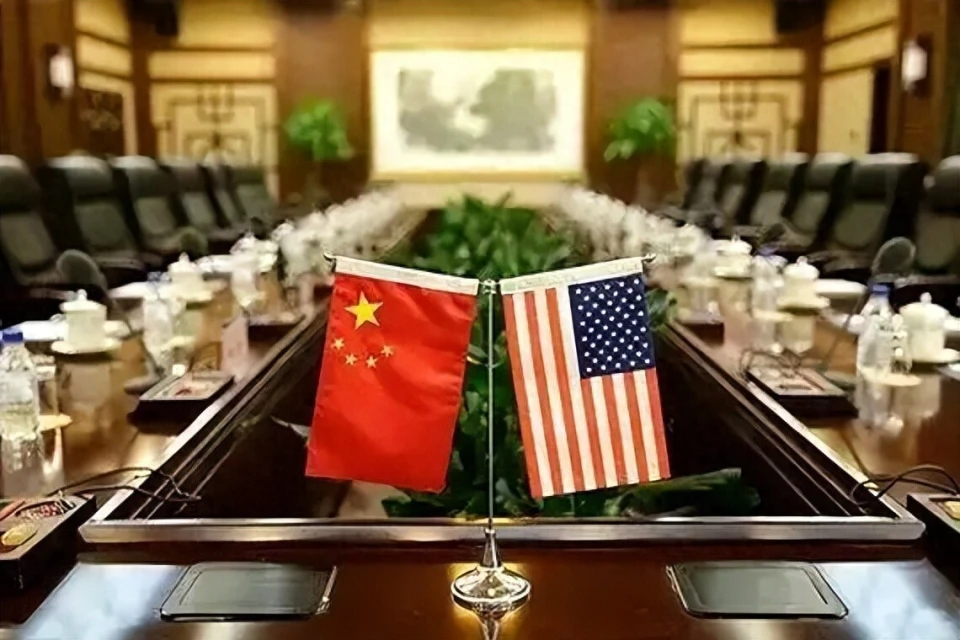
The Nikkei Shimbun published an article on March 2 stating that U.S. President Trump’s recent tough actions on Iran, Venezuela and other matters involving China’s interests may be intended to deter China by showing off military strength. However, analysts worry that this will not only prompt China to accelerate its ability to counterbalance the United States, but will also weaken the prospects for stable Sino-U.S. relations and intensify China's distrust of the United States.
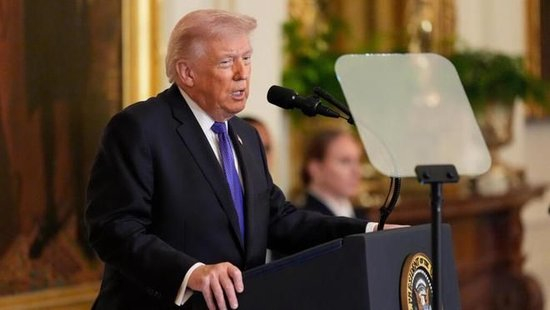
On March 2, local time, U.S. President Trump delivered a speech at the White House on the attack on Iran.
As for some people who believe that the United States' actions against Iran have harmed China's interests, a British scholar pointed out that China has a "long-term calculation" on the Iran issue, and this statement "needs to be viewed rationally."
This article noted that the United States and Israel launched air strikes against Iran at a time when Trump is expected to visit China in four weeks, and the action took place during the negotiations between the United States and Iran. Some Chinese media commented, "The negotiations are not so much a sincere search for a peaceful solution to the dispute, but a tactical pause for the resumption of military strikes."
Pei Minxin, a professor at Claremont McKenna College in California, said that this assessment "may well reflect an increasingly popular view among Chinese elites and the public that the United States cannot be trusted." He is worried that this will also have an impact on Trump's expected visit to China.
In response to Trump's planned visit to China, Chinese Foreign Ministry spokesperson Mao Ning reiterated on March 2 that China and the United States are maintaining communication on the interaction between the two heads of state. I currently have no information to provide.
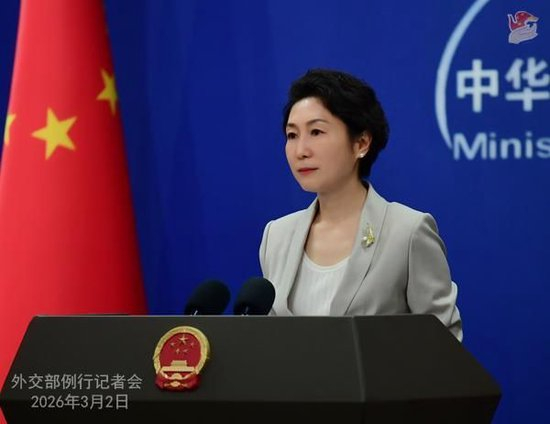
Chinese Foreign Ministry Spokesperson Mao Ning hosts a regular press conference
Mao Ning also emphasized that the attack and killing of Iran's supreme leader seriously violated Iran's sovereignty and security, trampled on the purposes and principles of the United Nations Charter and the basic norms of international relations, and China firmly opposed and strongly condemned this.
The article mentioned that since the Busan meeting between the heads of state of China and the United States in October last year, the United States has not only taken action against Iran, an important oil supplier to China, but also kidnapped President Maduro of Venezuela, which is also an oil-producing country friendly to China. Under Trump's intimidation, Panama illegally revoked Hong Kong's CK Hutchison's port operating rights, triggering strong dissatisfaction in China.
"Trump may think he is showing off military power to deter Beijing," said Danny Russell, a researcher at the Asia Society Policy Institute. "But his actions in Venezuela and Iran are more likely to prompt Beijing to strengthen its countervailing capabilities and accelerate its alignment with Russia. Overall, this attack weakens the prospects for stability or progress in Sino-U.S. relations."
Some people also feel that Iran's actions break the previous view that Trump will visit China in a "weak state." The U.S. Supreme Court previously rejected Trump's "reciprocal tariffs." The New York Times reported last week, citing sources, that the Trump administration had postponed a $13 billion arms sale to Taiwan out of concern for China.
Zineb Ribois, a researcher at the Hudson Institute, said that the air strike on Iran broke the common perception that President Trump has been weakened. In the long run, this move can free up U.S. resources and thus affect the game pattern across the Taiwan Strait.
She wrote in an analysis article: "For every year Washington spends dealing with Tehran, Beijing will gain one more year to deploy in the Pacific. The direction of the Middle East will determine whether the United States can win the decisive game of this century – mainland China's actions against Taiwan."
In addition, Ribois said that the postponement of arms sales to Taiwan suddenly has a different interpretation.
He said that by shelving the arms sales before the air strikes, it looked like Trump was making concessions to China after China warned not to sell arms to Taiwan in early February. Now, this incident can be reinterpreted as: the United States made active concessions based on its strength advantage. This is a 'gift' that Trump chose to send, rather than the result of China's coercion.
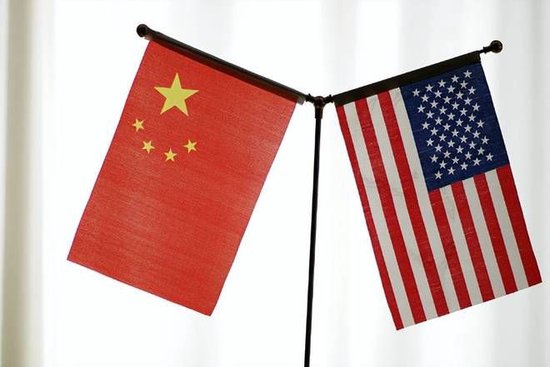
Agatha Kratz, a partner at the consulting firm Ruizhid, speculated that although the goal of the US action is vague, it objectively "cut off China's partner network" and Washington will also avoid triggering new crises during military operations in the Middle East.
Affected by the situation in the Middle East, international oil prices jumped sharply on March 2, with the benchmark price of Brent crude oil rising by more than 13%.
Gong Jiong, a professor at the Department of Economics at the University of International Business and Economics, said that once the Strait of Hormuz is blocked, it will inevitably have an impact on China, but China's large imports of oil from Russia can provide a certain buffer. He also believes that real regime change is unlikely to occur in Iran.
Ahmed Abdul, an associate researcher at the Middle East and North Africa Program at Chatham House in the UK, believes that China has a "long-term calculation" on the Iran issue. Although a series of actions by the United States have quickly impacted China's interests, this statement "needs to be viewed rationally."
He told Nikkei Asia that countries in the "Global South" do not regard China as a substitute for the United States and do not expect China to confront the United States militarily. However, the Trump administration "may suffer huge losses because it is shaping the use of force and disregard of international law into the new normal of international politics."
Abdul said that the war and the attack on Iran's supreme leader may "make Iran tough on the United States and Israel for generations" and "make it easier for Iran to rely on China."