Professional virtual currency information station welcome
We have been making efforts.

24-hour news update Page 79

24-hour cryptocurrency news update

Women’s Travel Report 2025-2026: Analysis Of Solo Trip Trends And Popular Destinations

The world is changing faster and faster, but women are becoming more determined.

On March 6, a female travel report released by Qunar Travel showed that in the past year (March 2025-March 2026), the number of women choosing to stay in hotels alone increased significantly by 63% year-on-year, and the number of women traveling alone by plane also increased by 34%. Compared with men, women fly more economically and live more comfortably. The average hotel price paid by women is 20% higher than that of men.

Women on a solo trip don’t need complicated preparations to set off. They only need an air ticket of their own and a hotel room that only they can stay in.

Girls staying in hotels__What safety precautions do women need to pay attention to when staying in hotels?

In the past year, the most popular cities for hotel stays and flight destinations were still large cities with both business and travel attributes such as Beijing, Shanghai, Guangzhou and Shenzhen. It is worth mentioning that the number of women choosing to stay in hotels alone increased significantly by 63% year-on-year.

Judging from the increase in hotel check-in cities, in the past year, women on solo trips have turned their attention to niche cities around them. Data shows that in Chongzuo, Weifang, Handan, Puyang, Ziyang, Lishui, Haikou, Putian, Linfen, and Jiuquan, the number of women staying in hotels alone has nearly doubled.

Among the increases in female solo trip routes in 2026, short-distance routes will lead the country. Data shows that in the past year, the fastest growing route was Chengdu-Lijiang. In just one weekend, with a one-way flight of 1.5 hours and a round-trip ticket as low as 600 yuan, the "Chengdu Girl" flew to the romantic Lijiang, driving a nearly 50% year-on-year increase in route ticket volume. The Nanjing-Guangzhou route followed closely, with an increase of more than 40%, becoming a popular choice for cross-city roaming.

In terms of outbound travel, in the past year, the number of women traveling alone by air has also increased by 34% year-on-year. The most popular flight routes are still from first-tier cities to neighboring countries such as Thailand and South Korea, as well as China, Hong Kong and Macao. The TOP10 includes Shanghai-Seoul, Beijing-Seoul, Shanghai-Jeju Island, Hangzhou-Seoul, Qingdao-Seoul, Beijing-Hong Kong, China, Guangzhou-Seoul, Shanghai-Bangkok, Shanghai-Hong Kong, China, and Guangzhou-Bangkok. In terms of growth rate, Yantai-Seoul increased by 1.6 times, Guangzhou-Chiang Mai and Hangzhou-Seoul increased by 1.3 times, Shanghai-Busan increased by 1.2 times, and Tianjin-Seoul increased by 1.2 times.

Jiupai News Reporter Li Yang Li Kai

Editor Wan Xuan Fu Shan

The U.S. Biotechnology Sector Is Repeating The Same Mistakes As The Manufacturing Industry, With Many Hidden Dangers In Outsourcing Clinical Trials

Jacob Becraft, co-founder and CEO of the American biotechnology company Strand Therapeutics, published an article in the Washington Post on the 6th. At the end of the last century, the United States outsourced manufacturing to countries with lower labor costs, such as China, in an attempt to maintain its local innovation leadership while enjoying the dividends of cheap goods. However, behind the short-term economic gains are irreversible long-term losses: the hollowing out of the domestic manufacturing industry, the significant weakening of supply chain resilience, and the loss of millions of jobs, which have also contributed to the rise of foreign competitors. Today, these former "contract factories" can compete with the United States in many industrial fields, or even surpass them.

"Today, the United States is repeating the same mistakes in the field of biotechnology." Beckcraft wrote that more and more American biopharmaceutical companies are choosing to transfer clinical trials to China. They value China's high efficiency and low cost of early medical research.

Data show that from 2010 to 2021, the number of clinical trials conducted by Western companies in China more than tripled. By 2023, the number of interventional clinical trials registered in China has been approximately 50% more than that in the United States.

The most common argument among those supporting this trend is that it doesn't matter where a drug is initially tested in clinical trials, as long as Americans eventually have access to it.

But in the view of Becraft, who has worked in the field of genetic medicine for more than a decade, this view has serious flaws. He believes that early clinical research and development is by no means a low-value link that can be replaced at will. Where trials are conducted determines where professional knowledge is accumulated, where data is generated, and where the next generation of treatments is conceived. “Giving this stage of innovation to China will threaten the scientific strength and national security of the United States.”

Becraft said that outsourcing of early innovation is not inevitable. As long as the United States makes a targeted adjustment to the clinical trial approval policy, the United States can reverse this trend and make new drugs cheaper and more accessible to the American people.

In early-stage drug development, speed and cost are critical. The sooner a company starts testing, the sooner it can verify whether its scientific hypothesis holds true. These key milestones will attract investors and partners, which in turn will bring more investment to early-stage innovators and ultimately provide more treatment options for patients.

If you commit a crime in the United States and return to China, what will happen if you make a mistake and return to the United States and China?

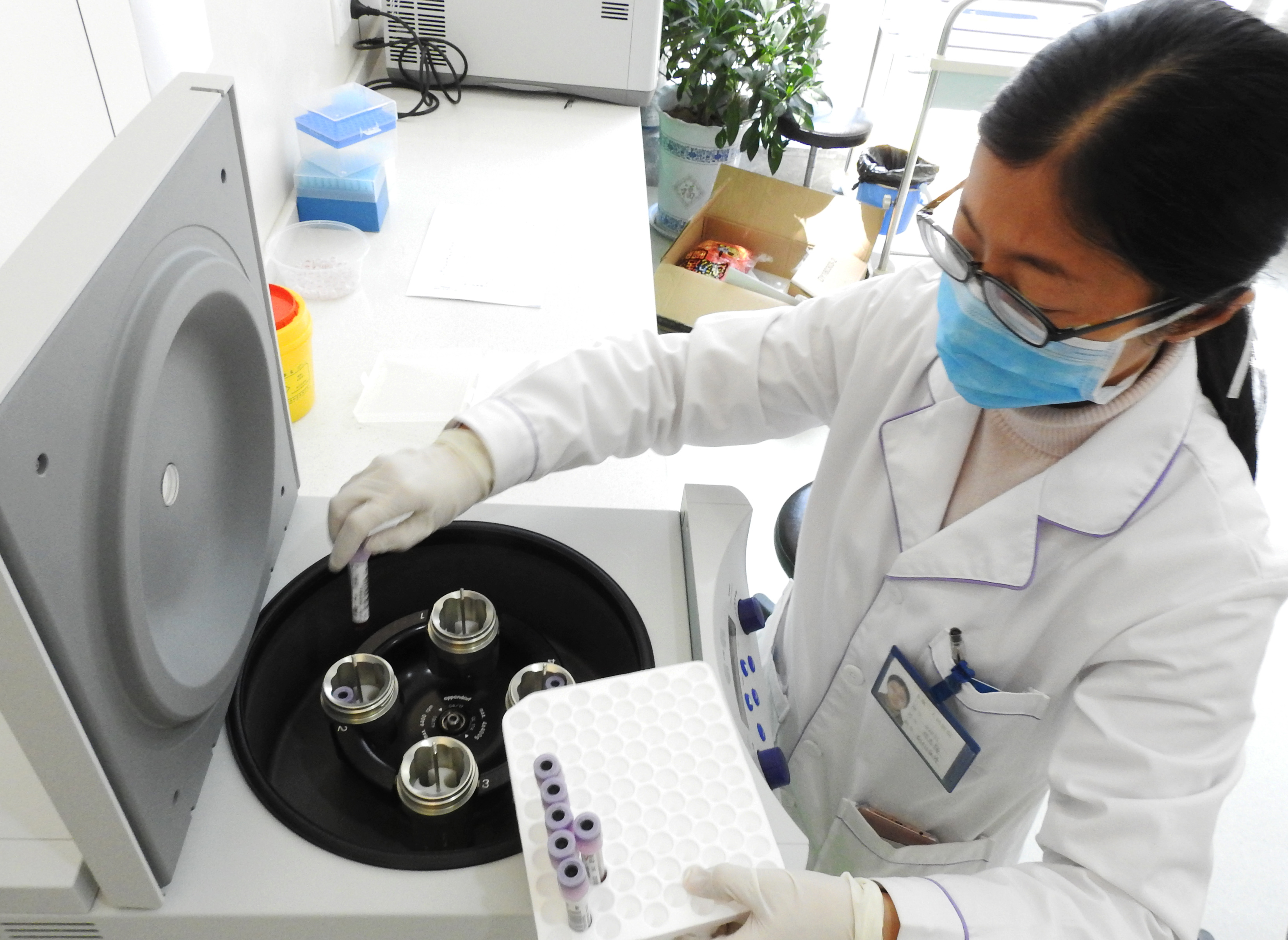
Clinical trial center staff use centrifuges to separate blood. IC photo

China realizes this and takes decisive action. The direct costs of trials in China can be as much as 30% lower than in the United States, patient recruitment is faster, and logistical processes are simpler. Behind all this is the decentralized trial approval mechanism at work.

It is worth mentioning that China continues to optimize the review and approval mechanism for clinical trials and significantly shortens the relevant review and approval time limits. China's State Food and Drug Administration previously stated that the average time for clinical trial review of innovative drugs has been shortened from 175 working days in 2017 to 50 working days in 2024.

The article mentioned that China has decentralized trial approval rights to the local ethics review committees of each hospital, which has greatly shortened the time and energy required to conduct early clinical trials. Coincidentally, Australia also adopts a similar model, with the local ethics committee approving the first human trial while maintaining strict supervision. This model does not compromise safety; after all, no one is more motivated to ensure patient safety than the hospital's own review board. As a result, China and Australia have become popular destinations for early-stage clinical trials.

In the United States, no matter what stage or scale a clinical trial is in, it must be reviewed by the U.S. Food and Drug Administration (FDA) before starting. It is undeniable that strict supervision is necessary for late-stage trials aimed at final approval for marketing, but for small first-in-human trials involving only a few dozen patients with no other treatment options, such review has formed a bottleneck, not only driving up research and development costs, but also hindering the progress of innovation. This misunderstanding of delayed approval is transmitted to the entire R&D process, resulting in high drug prices and long R&D cycles.

Becraft warns that outsourcing clinical trials, which may seem harmless at first, risks repeating the same dangerous vicious cycle that manufacturing has fallen into. As early-stage trials flow overseas, so will the biotech infrastructure. Overseas experimental institutions have accumulated experience in conducting cutting-edge research, and the local industry formed around them continues to grow with the advantages of speed and iteration.

The EU IAA Bill Hits The British Auto Industry Hard, And The British Business Secretary Rushes To Appease Him

The Financial Times quoted people familiar with the matter as saying that Nissan warned the British government that if the UK cannot fully integrate into the EU's "Made in Europe" goal, Nissan will be forced to close its factory in Sunderland; a Jaguar Land Rover spokesperson said that the current EU proposal may seriously affect the competitiveness of British automakers in the EU market; Ford, which produces engines in the UK and commercial vehicles in Turkey, also said that the proposed rules will disrupt the existing supply chain.

The EU drags down the UK_The EU deals with Russia_

In April 2025, British Prime Minister Starmer inspected Jaguar Land Rover Solihull Factory Oriental IC

Mike Hawes, chief executive of the Society of Motor Manufacturers and Traders (SMMT), also stressed that the industry had "grave concerns" about the IAA, saying the proposals would be "discriminatory" against British-made cars and parts. In response, British Business and Trade Secretary Peter Kell quickly reassured that he would take potential threats to British car manufacturers "very seriously."

'The toughest year in a generation'

In fact, the original intention of the EU in proposing the IAA bill was to compete with Chinese manufacturing. However, since the EU is the UK's largest export market, the new bill has put the UK on the defensive and dealt a huge blow to British-made cars and auto parts: 6 out of 10 cars sold in Europe belong to corporate fleets, which is exactly within the IAA's precise attack range; and for some car manufacturers, this market segment accounts for half of their annual sales.

The Financial Times quoted a person familiar with the "Made in Europe" negotiations as saying that the UK was a "collateral victim" of the EU's need to protect its car market.

In addition, the EU's stricter rules of origin for electric vehicle batteries will come into effect in January 2027. By then, if the localization ratio of batteries and core components is insufficient, UK electric vehicles exported to the EU may face high tariffs of 10% to 22%, which will completely make it lose its price advantage in competition with zero-tariff fuel vehicles.

The EU has always been the largest export destination for British cars. But after Britain voted to leave the European Union in 2016, the British automobile industry began to decline. Although five years after Brexit, the British automobile industry still maintains a trade volume of 115 billion pounds, but by 2024, the total automobile trade between the two sides has shrunk to 68.4 billion pounds, nearly halved.

Coupled with the sudden changes in the international trade situation in recent years, the chain reaction brought about by intensified global automobile competition and US tariff increases, the competitiveness of the British automobile industry is becoming more sluggish, and the IAA's "Made in Europe" strategy is further accelerating this process.

The EU drags down the UK_The EU deals with Russia_

Nissan UK Sunderland plant Financial Times

SMMT data shows that the total production of cars, trucks and other vehicles in the UK in 2025 will be 764,700 units, a year-on-year decrease of 15.5%, setting a record low in 73 years, and more than half of the peak of 1.7 million units during Brexit in 2016. Hawes even called 2025 "the most difficult year in a generation."

Last year, Stellantis closed its truck factory in Luton; BMW also suspended its 600 million pound investment plan to produce electric MINI in Oxford; local brand Jaguar Land Rover also shut down its factory for more than a month due to a cyber attack, resulting in a loss of more than 200 million pounds.

Among them, as one of the largest automotive employers in the UK, Nissan's Sunderland plant has about 6,000 workers and provides another 30,000 jobs for the overall supply chain. Nissan has invested 6 billion pounds in the Sunderland plant, but its capacity utilization has been hovering around 30% due to weak demand. Sources familiar with the matter have warned that it could pose an existential threat to Nissan if it is frozen out of EU incentives.

New options?

But it is worth mentioning that under heavy pressure, the British automotive industry is not without gains, and some new opportunities are emerging.

In February this year, Chery, China's largest passenger vehicle exporter, stated that it would launch its new energy overseas brand Lepas in the UK in the next few months. During British Prime Minister Starmer's visit to China, Chery Commercial Vehicles also signed a cooperation agreement with the Liverpool City Council in the UK to set up its European headquarters in Liverpool to support engineering and software development. This is also Chery's first headquarters project in Europe.

Including Chery, 10 Chinese brands have launched and sold cars in the UK. Among them, SAIC MG's cumulative sales in the UK's "home" have exceeded 370,000 units, and pure electric vehicles alone have exceeded 100,000 units. Chinese brands including NIO, GAC Aion and Jikry also plan to launch new cars in the UK this year.

_The EU deals with Russia_The EU drags down the UK

Chery New Energy Brand Lepas Chery Automobile

The main reason why Chinese cars have aggressively entered the British market in recent years is precisely because the UK, unlike the EU, has not imposed countervailing tariffs of up to 37.5% on electric vehicles produced in China.

On the other hand, in order to revive the British automobile industry, which continues to decline, the British government has also set an annual production target of 1.3 million vehicles by 2035. But this also means that the British market must welcome an infusion of new blood. Hawes also said that with the current downturn in the traditional automobile industry, new automobile manufacturers must be introduced, and Chinese automobile companies are regarded as core potential partners.

According to the Financial Times, the British government has been actively seeking for Chery to produce cars in the UK in the past few years. Chery has been exploring the idea of ​​using spare capacity at Jaguar Land Rover's British factories to produce cars under a proposal backed by the British government, people familiar with the matter said.

According to SMMT forecasts, UK automobile production is expected to grow by 10% in 2026, and may return to the 1 million level in 2027. In this process, whether Chinese electric vehicles can replace European and American companies and become a new booster for the UK is posing a new test to the British government and the British automobile industry.

The War Between The United States And Iran Is Tense, And More Than 20 Democratic Congressmen Have Called For An Investigation Into The Military's Use Of Religious Arguments To Justify Its Actions Against Iraq.

When the war between the United States and Israel was tense, I thought that Trump would repeat his old trick and find a bunch of pastors to "pray" around him, which was abstract enough. Unexpectedly, things developed in an even more unexpected direction.

According to a report on the US "Military.com" website on the 6th, more than 20 Democratic members of Congress called for the launch of an internal investigation into the US Department of Defense, accusing top military officials of allegedly citing Christian "Bible prophecies" and "Doomsday Judgment" arguments to justify military actions against Iran. The Pentagon has so far not responded directly.

The original complaint to the Military Religious Freedom Foundation (MRFF) came from an anonymous noncommissioned officer. This person claimed that superiors instilled in the non-commissioned officers that the war with Iraq was part of "God's plan." Trump is the so-called "Chosen One", that is, the person "anointed by Jesus to light the signal fire in Iran, trigger the end of the world, and mark the return of Jesus."

The noncommissioned officer is outside the war zone in Iran but could be redeployed at any time to support operations against Iraq. He claimed to be a Christian and filed a joint complaint on behalf of 15 soldiers, including at least 11 Christians, 1 Muslim and 1 Jew.

This is not an isolated case. Mitch Weinstein, founder of the foundation, revealed to "Military.com" that from last Saturday to Tuesday afternoon, more than 200 similar complaints had been received from 50 US military bases.

Iranian U.S. Army_U.S. Iran Military_

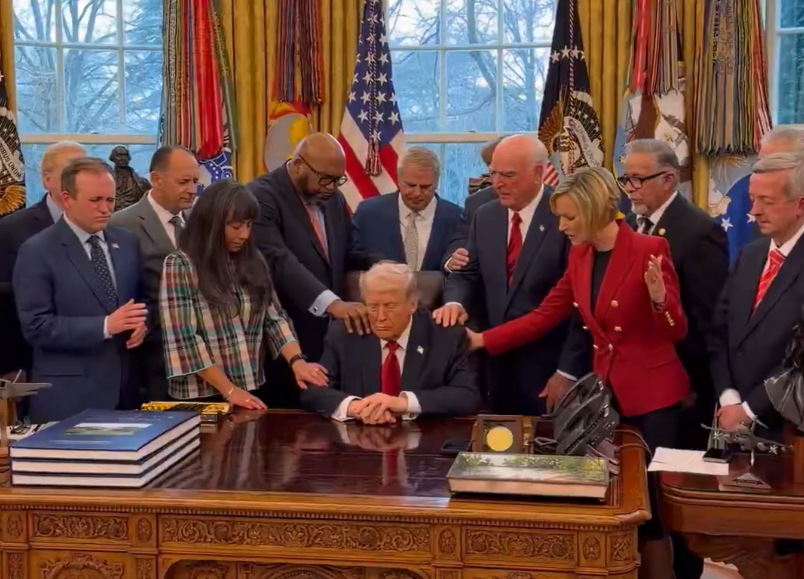
On March 5, local time, Trump prayed with pastors from all over the United States in the Oval Office.

On Friday local time, Reps. Jared Huffman and Jamie Raskin, co-chairs of the U.S. Congressional Free Thought Caucus, and Krissy Holahan, ranking member of the House Armed Services Committee’s Military Personnel Subcommittee, and 27 Democratic colleagues sent a letter to the Inspector General of the Department of Defense Pratt Morin, requesting an investigation into relevant complaints and checking whether there is any behavior that “cites religious prophecies and doomsday theology to justify U.S. military operations in Iraq.”

The signatory members include moderates and progressives in the Democratic Party, including Pelosi, Ilhan Omar, Rashida Tlaib, Mark Pocan and others.

The report pointed out that members of the U.S. Armed Forces take an oath to uphold the secular constitution rather than specific religious doctrines, and service members have the right to perform their duties without forced religious indoctrination by the chain of command.

The lawmakers said in a two-page letter: "If the relevant remarks are true, using biblical prophecies to justify war and telling soldiers that they die for a specific religious vision not only constitutes a serious constitutional issue, but also violates the Department of Defense's religious neutrality regulations and violates the professional obligations and standards of military leadership."

Online Representatives: Jining Focuses On High-quality Development Of Industrial Parks And Promotes The Rise Of Industry

【Online Representative Member】

Guangming Daily reporter Song Xiqun and Feng Fan

During the Spring Festival this year, a unique Robot Spring Festival Gala was staged in Jining, Shandong Province. 14 companies brought more than 200 robots to the stage. The historical heritage of the thousand-year-old city and cutting-edge technology have achieved a wonderful resonance.

This year's government work report proposed that the focus of economic development should be on the real economy, develop new productive forces according to local conditions, and build a modern industrial system. Representative Wen Jinrong, Secretary of the Jining Municipal Party Committee of Shandong Province, said that to build a new industrialized city, we must always adhere to the real economy as the basis and the manufacturing industry as the leader. We must not only expand the "basic market" of traditional industries, but also seize the "new track" of emerging industries.

In 2025, Jining will promote the strengthening of advantageous industries to strengthen chains and groups. Industries such as artificial intelligence, robots, and low-altitude economy will flourish. The new energy and new generation information technology industries will deliver growth rates of over 50% and 20% respectively.

Industrial parks are the main frontier and battlefield of the industrial economy. Representative Wen Jinrong said that this year Jining has made the high-quality development of industrial parks a top priority, and has formulated implementation opinions and a series of supporting policies. More than 70% of the new land quotas will be used for industrial projects, and more than 70% of the industrial land quotas will be located in the parks, promoting the concentration of land, talent, capital and other resource elements in the parks. Planting sycamore trees can attract golden phoenixes. Jining cultivates large enterprises and develops large industries by building large parks, building large platforms, and optimizing the general environment, and further strengthens the backbone of industry on the road to high-quality development.

"Guangming Daily" (Page 08, March 08, 2026)

The Two Sessions Across The Country Are Hotly Discussing The Integration Of Industry And Education. How To Cultivate High-quality Technical Talents?

This year’s government work report proposes to promote the cultivation of outstanding engineers, great craftsmen, and highly skilled talents. During the two sessions of the National People's Congress, the integration of industry and education and the cultivation of high-quality skilled personnel became hot topics. The integration of industry and education is an important link between vocational education and industry, and it is also a key to forging high-quality skilled talents. How can the integration of industry and education become a driving force for the growth of high-quality skilled talents, gathering wisdom and strength to serve new productivity and promote high-quality development? Outside the venue, workers from the front lines of vocational education spoke out and talked about their practices and thoughts.
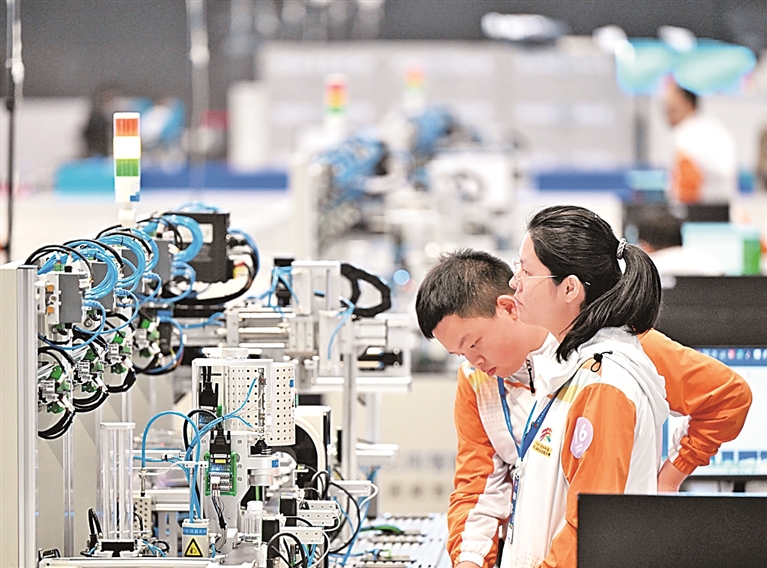
Forge a team of high-quality talents_Forge a team of high-quality professional cadres_

At the 3rd National Skills Competition held in Zhengzhou City, Henan Province, contestants participated in the Industrial Internet Engineering Technology Project Competition. Photo by Xinhua News Agency reporter Li Jianan

Precise education through resonance at the same frequency

Narrator: Zhou Leshan, professor at Nanjing Jinling Vocational and Technical School

This year’s National Two Sessions, “Integration of Industry and Education” has become a hotly debated word among delegates. In the past few days, I have received many relevant policy links from colleagues.

Our school is one of the earliest vocational schools in the country to explore the connection between professional entities and industries. Twenty years of practice have convinced me that only when vocational education resonates with industry can it truly cultivate talents that enterprises need and society recognizes.

In November last year, we took the lead in establishing the low-altitude economic industry-education integration community in the Yangtze River Delta metropolitan area. Taking "integration of industry and education, one body and two centers" as the core path, relying on the community, talent training center and industry incubation center, we put talent training and industry incubation on the same platform, truly realizing "teaching is practiced in industry, and industry is incubated in education."

Why do we dare to get involved in new areas like the low-altitude economy? It is 20 years of practice in integrating industry and education that give us the confidence.

Over the years, we have explored and formed four cooperation models: first, modern apprenticeships, order-based classes and other precision education models, and jointly building on-campus training bases with leading companies; second, using "practical projects" to reconstruct the teaching scene and create 13 professional entities in the school, driving teaching with real scenarios and real production tasks, and using real products and real delivery to allow students to be exposed to the forefront of the industry while in school; third The first is to promote the two-way flow of enterprise backbones and school teachers, and establish a long-term two-way part-time and dual-identity mutual integration mechanism; the fourth is to use characteristic professional colleges as the carrier, and jointly build 7 professional colleges with industry leaders, cultivating more than 20,000 technical talents, and training 15,000 employees for cooperative companies every year. From school students to on-the-job employees, the integration of production and education runs through the entire process of the growth of skilled talents. Today, more than 80% of our school’s graduates have entered the cooperative enterprise system, and students are “booked out” by enterprises before they graduate.

The development of vocational education must always go in line with national strategies. In the future, we will continue to build an industry-education integration community with higher standards, become a professional entity with stricter requirements, optimize practical projects with more practical measures, and cultivate more outstanding high-skilled talents.

(Interviewed and compiled by Guangming Daily reporter Yang Sa)
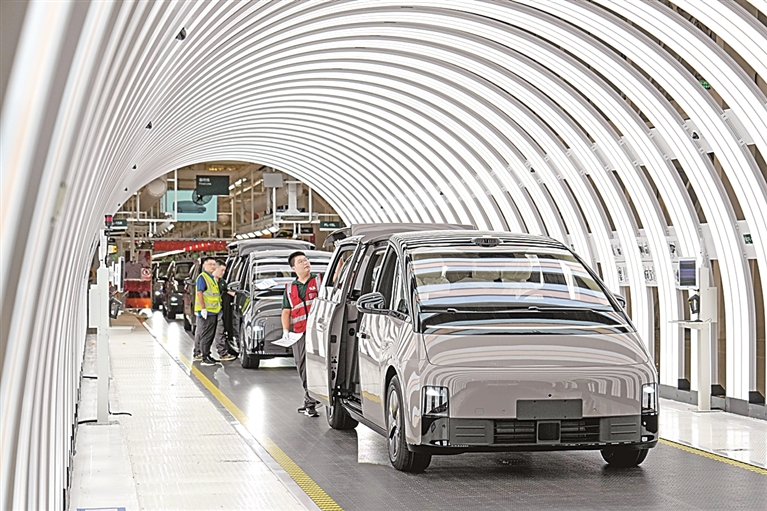
Forge a team of high-quality talents_Forge a team of high-quality professional cadres

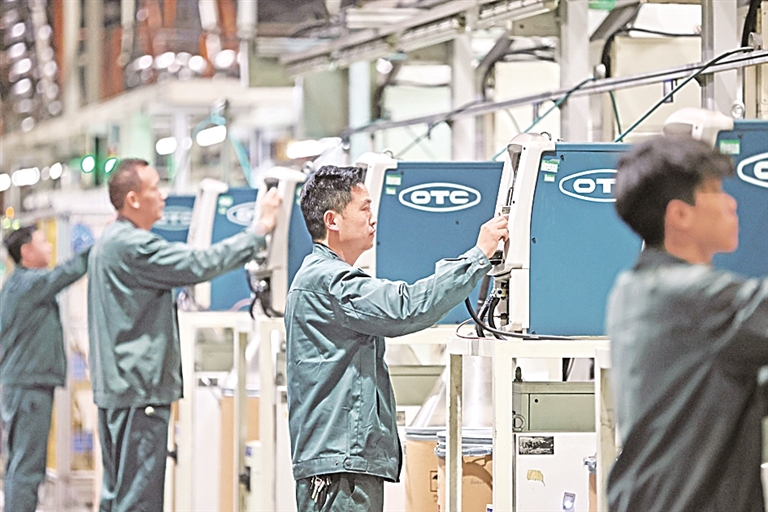
Staff members work in the assembly workshop of a certain brand of automobile’s Beijing intelligent manufacturing base. Photo by Xinhua News Agency reporter Ju Huanzong

Establish oneself with skills, cultivate talents with production

Narrator: Yang Jinlong, General Manager of Weifang Branch of Shandong Rhinecost Intelligent Technology Co., Ltd.

I am a front-line technical worker who is deeply involved in equipment research and development in the field of intelligent manufacturing. I have a lot of feelings about the integration of industry and education.

When I was studying at Weifang Vocational College, I participated in the company's small automated production line debugging project. That was the first time I truly walked into a corporate workshop and had close contact with actual production equipment. While studying at the school, I personally experienced the advantages of combining school theoretical learning with corporate practice. I grew into an outstanding technical backbone through the school-enterprise co-education mechanism, and won the first prize in the National Skills Competition. Now, my company is cooperating with many universities and provides more than 800 teacher trainings and more than 1,500 technical trainings to universities every year.

My growth path is a vivid example of the integration of industry and education. From the training platforms of vocational colleges, to the national skills competition venues, to intelligent manufacturing R&D positions, I realized that skilled talents are participants and promoters of industrial innovation. Every precision improvement and every process optimization is inseparable from the solid foundation laid during school and the actual training on the front line of the enterprise. From winning gold medals in competitions to solving key industrial problems, I deeply understand that highly skilled talents are the foundation of new productivity, and the integration of industry and education is the fast track for talent growth.

This year’s Spring Festival Gala, award-winning representatives of the WorldSkills Competition took to the stage of the micro-musical "Every Light", allowing audiences across the country to see the grace of skilled youth. What this beam of light illuminates is the vigorous vitality of vocational education, and it is also the trend of the times of developing talents through skills and serving the country with skills. As a fellow traveler, I feel inspired and more confident in promoting the integration of industry and education.

In the future, I will continue to delve into the field of intelligent manufacturing and use my own experience to drive more young people to take the road of serving the country with skills. It is expected that with the support of policies, the integration of industry and education will become deeper and more solid, cultivate more craftsmen from major countries for the transformation and upgrading of the manufacturing industry, and inject solid force into high-quality development.

(Interviewed and compiled by Guangming Daily reporter Yang Sa)
Forge a team of high-quality talents_Forge a team of high-quality professional cadres_

Workers work on the production line of a compressor company in Nanhu District, Jiaxing City, Zhejiang Province. Xinhua News Agency

Combining moral skills and honing ingenuity

Narrator: Han Zhibin, a 2023 student at Changchun Automobile Vocational and Technical University

This year's National Two Sessions, deepening the integration of industry and education and accelerating the cultivation of high-skilled talents have become hot topics. As a student majoring in new energy vehicles in a vocational college, I was very inspired, and the seeds of "serving the country with skills" sprouted rapidly in my heart.

In 2023, with my love for national automobile brands, I stepped into the campus of Changchun Automobile Vocational and Technical University. At the beginning of my enrollment, the "three teachers and apprentices" training model integrating industry and education pointed out the way forward for me: Liu Tong, an ideological and political teacher, served as an ideological and political tutor, guiding me to establish my ambition of "cultivating morality and serving the country with skills"; Liu Yinghui, a national technical expert, served as an academic tutor, laying a solid theoretical foundation for me; and Quan Xiaolong, a famous technical master from Changbai Mountain, served as a technical instructor to help me hone my practical skills. In the "factory in school" jointly built by the school and the enterprise, the workshop is the classroom and the equipment is the teaching aid. I have benefited a lot from cutting-edge technology and real training scenarios.

In 2025, I was selected to work as an intern at China FAW, achieving "zero distance" between campus and workshop, and "zero time difference" between studies and industry. Even more fortunately, I became the apprentice of Yang Yongxiu, a great craftsman. Under the careful guidance of my master, I transformed theoretical knowledge into the ability to solve practical problems. In response to the problem of testing the automobile throttle support rod, I proposed an optimization and improvement plan, which successfully reduced the test data deviation rate from 8% to 1.2%, saving the company 240 hours of manpower every month. Looking at the improved data, the master gave a thumbs up with joy: "You already look like a master!" At that moment, I deeply realized the weight of the "craftsman spirit".

Now, as I am about to graduate, I have received “olive branches” from many high-quality companies. Looking back on my journey, I have grown from an ignorant technical novice to a recognized technical expert. My changes are a vivid footnote to the school's philosophy of integrating industry and education, combining education and training, and combining morals and skills. In the future, I will use the excellent skills I have developed in school to hone my skills in new positions, overcome difficulties, and grow into a highly skilled talent that is urgently needed in the Chinese automobile industry!

(Interviewed and compiled by Guangming Daily reporter Jin Haotian)

"Guangming Daily" (Page 07, March 08, 2026)

Japan, France And Canada Plan To Build A New Mechanism To Replace The US Critical Mineral Alliance And Reduce Dependence On China

Reuters quoted senior officials from Japan, France and Canada as saying on the 6th that the three countries are actively planning to build a new mechanism to replace the U.S.-led critical mineral alliance to ensure the supply of strategic minerals and reduce dependence on China.

According to reports, the alternative path proposed by the three countries covers three major directions: implementing import quotas on specific rare earths, providing supply chain diversification subsidies for mining companies, and promoting the "buyers alliance" proposed by Canada.

Japan, France and Canada are starting anew, directly confronting the key mineral cooperation plan led by the United States. In February this year, the Trump administration just announced that it would unite allies and partners to form a "critical minerals alliance." U.S. Vice President Vance added at a meeting that he hopes member states will form a trade bloc among allies and partners to promote the expansion of key mineral production capacity in the region. The new trade area will also set a clear "price bottom line."

But just one month later, Japan, France and Canada were thinking of bypassing the United States. According to reports, this action exactly confirms Canadian Prime Minister Carney’s call that middle powers should work together in the context of U.S. President Trump’s alienation from allies.

Specifically, Japan is using financial subsidies as a starting point to promote project cooperation among allies. The Director of the Americas Division of Japan's Ministry of Economy, Trade and Industry said at the Toronto Mining Conference that Japan can improve the commercial competitiveness of these projects by subsidizing rare earth projects in the Western Hemisphere, allowing it to compete with China's rare earth industry.

At the same time, Japan has clearly required its manufacturing companies to reach commercial cooperation with rare earth projects jointly invested by allies such as Japan, France, Australia, and Canada. "These projects may not be the lowest cost, but now that the industry has recognized the need to strike a balance between risk and cost, adopting these projects is a good idea."

France takes the "G7+" concept as its core and tries to expand its cooperation territory. Benjamin Gallezot, the French government's interdepartmental representative in charge of strategic mineral supply affairs, said that the US plan is only one of the diversification paths, and "there are other feasible ways." France advocates two points: first, it does not pursue a unified policy; second, the establishment of mechanisms requires the participation of many countries, not only the G7, but also the "G7+".

In addition, France also proposed to implement an import quota system to limit the amount of metal imports by companies and force companies in specific industries to diversify their supply chains. Gallezo revealed that France supports Canada’s “Buyers Alliance” concept and will promote the implementation of the plan during the G7 rotating presidency this year.

Japan, France and Canada: Let’s deal with China, don’t look for the United States_ Japan, France and Canada: Let’s deal with China, don’t look for the United States_

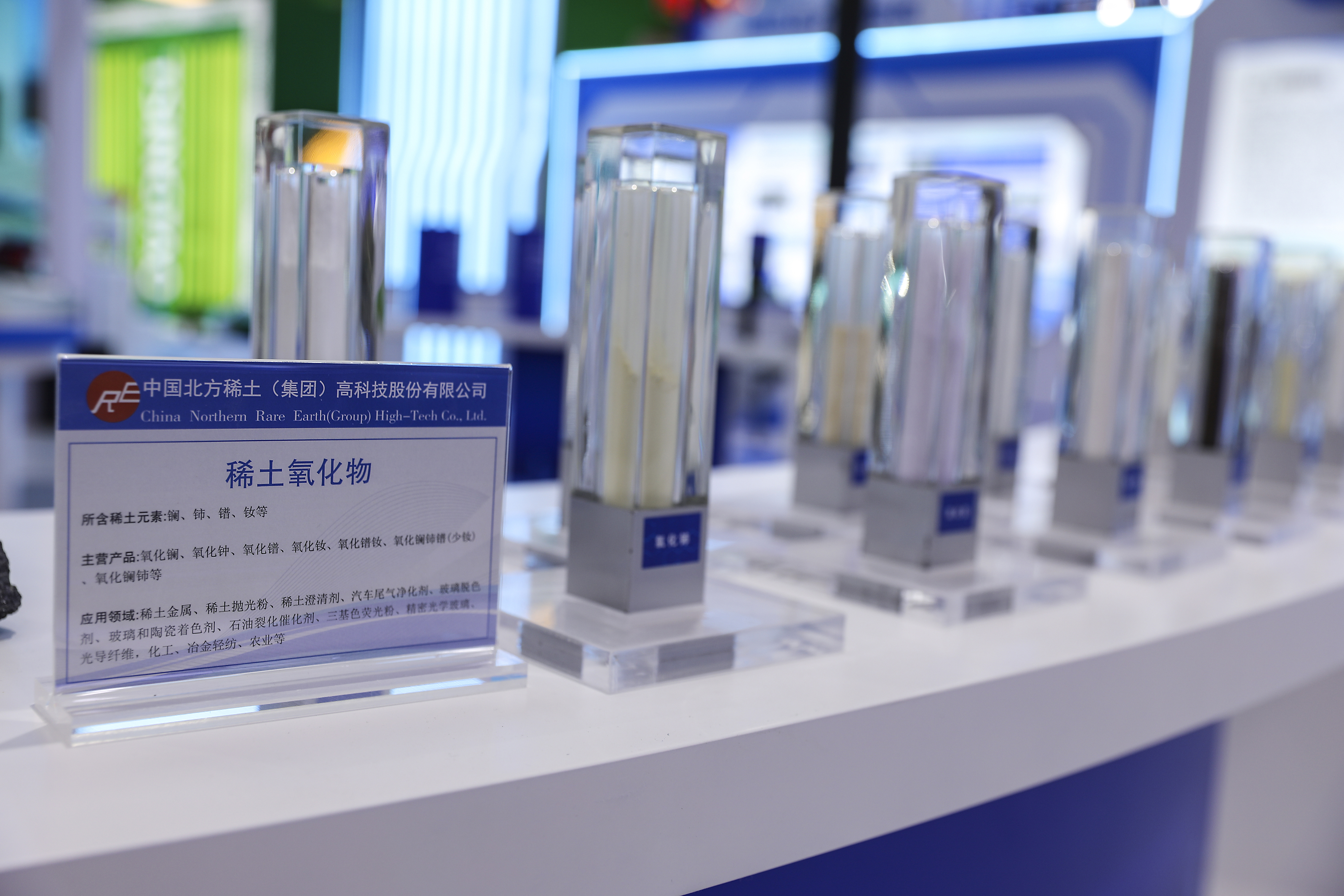
On May 12, 2024, in Shanghai, China Brand Day was held at the World Expo Complex. "Baotou Steel Group" booth, Northern Rare Earth. IC photo

Canada has recently signed 30 new agreements with 12 countries and plans to invest 12.6 billion Canadian dollars (equivalent to approximately 64.06 billion yuan in RMB) in mining and mining technology research and development. Since October last year, the total related investment has reached approximately 18 billion Canadian dollars (equivalent to approximately 91.51 billion yuan in RMB).

On March 5, Carney announced during his visit to Australia that the two countries had signed a series of critical mineral cooperation agreements, including Australia's joining the G7 critical mineral production alliance.

Australian Prime Minister Albanese also said on the same day that Australia and Canada agreed to deepen cooperation in multiple areas and further advance bilateral relations based on the statement of intent on cooperation in key minerals signed last year. The two sides agreed to strengthen cooperation in the field of critical minerals through four major measures: coordinating positions on important issues of critical minerals, strengthening collaboration between Australia's strategic reserves of critical minerals and Canada's defense reserve system, jointly promoting the development of emerging markets, and Australia joining the G7 critical minerals production alliance led by Canada.

Albanese also mentioned that the upgraded key minerals agreement is fully in line with the "Australia's Future Manufacturing" agenda. Both sides are working hard to promote diversified trade relations to ensure that relations will not break down due to the impact of a specific country.

Canadian Energy and Natural Resources Minister Hodgson has said that the most effective way to deal with the highly concentrated supply of critical minerals is to establish a production alliance or a buyer alliance, rather than simply setting a price bottom line.

Reuters pointed out that rare earths are metals that are extremely difficult to extract and are known as "industrial vitamins". They are indispensable resources for countries to transform traditional industries and develop high-tech and cutting-edge defense technologies. Its application scope covers metallurgical machinery, petrochemical industry, light industry and agriculture, electronic information, energy and environmental protection, aerospace, national defense and military industry and other fields. It is also a key mineral that supports the development of new energy and new material industries. Over the past 30 years, China has been the dominant player in rare earth mining and refining.

According to data from the International Energy Agency, China will account for more than 60% of global rare earth mineral production in 2023, but its control over the processing stage accounts for 92% of global production, and it has almost monopoly control in the global rare earth processing field.

In the past two years, many G7 countries have launched a number of measures in an attempt to curb China's dominance in the rare earth field. The spokesperson of the Chinese Ministry of Foreign Affairs has previously made clear its position on the G7 "Critical Minerals Production Alliance". China has standardized and improved the export control system in line with common international practices, with the purpose of better maintaining world peace and regional stability, and fulfilling international obligations such as non-proliferation. We urge the G7 to earnestly abide by the principles of market economy and international economic and trade rules, stop using "small circle" rules to undermine the international economic and trade order, and jointly safeguard the stable development of the world economy.

The Fourth Session Of The 14th National People's Congress Proposed The Expected Target For China's Economic Growth This Year

"4.5%-5%" – The government work report submitted to the Fourth Session of the 14th National People's Congress for review on the 5th proposed the expected target for China's economic growth this year, while emphasizing "strive to strive for better results in practical work." Overseas people believe that this goal is positive and pragmatic. It not only seeks to stabilize the basic market at a reasonable growth rate, but also reserves flexible space for deepening reforms. In an international situation characterized by intertwined events and intensified regional conflicts, China has injected valuable confidence into the global market with the certainty of its own high-quality development.

Reasonable range demonstrates pragmatic policy orientation

"Setting a growth target of 4.5% to 5% reflects China's policy thinking of promoting effective qualitative improvement and reasonable quantitative growth of the economy." Raquel Leon de la Rosa, an expert on China issues at the Meritorious Autonomous University of Puebla, Mexico, said that from formulating five-year plans to setting major expected annual development goals, China has accumulated mature experience, and its economic governance has formed a systematic policy reserve and risk response mechanism, which can maintain economic stability and resilience in the face of changes in the external environment.

Liang Guoyong, a senior economist at the United Nations Conference on Trade and Development, believes that setting the expected economic growth target as a range demonstrates the pragmatism and flexibility of China's economic policy and increases the room for maneuver in responding to external challenges such as global geopolitical turmoil and disordered international economic governance.

Looking at the overall global situation, China's expected economic growth target has considerable "gold content." The International Monetary Fund predicted in January this year that the world economy will grow by 3.3% in 2026, of which developed economies will grow by 1.8%.

"China's expected economic growth target is higher than the global average and ranks among the best among the world's major economies. It will make an important contribution to the stability and development of the global economy and ensure the smooth operation of the global supply chain." said Selcuk Cholakoglu, director of Türkiye's Asia-Pacific Research Center.

Toronbek Abdrov, an economics expert from Kyrgyzstan, said that currently, with the rise of unilateralism and protectionism and the ongoing geopolitical tensions, China’s expected economic growth targets reflect a positive and pragmatic policy orientation.

Rahma Gafmi, a professor of economics at Airlangga University in Indonesia, believes that looking forward to the entire "15th Five-Year Plan" period, the significance of China's expected economic growth targets "does not lie in the numbers or ranges themselves, but in setting the tone for the next five years of development: on the one hand, creating conditions for reform, transformation and risk resolution through reasonable growth; on the other hand, growth is more clearly based on expanding domestic demand, improving total factor productivity and technological innovation capabilities."

A clear signal towards high-quality development

Overseas people have noticed that China's expected economic growth target is not only a quantitative indicator, but also a "navigation mark" for its development path: by releasing clear policy signals, it guides all parties to focus on high-quality development and promotes the transformation of the economic structure into a new and better one.

"The key signal sent by China this year is a clear grasp of the economic direction – firmly moving towards high-quality development." Sergey Korzhumbayev, editor-in-chief of "Kazakhstan Business News", said that China is promoting the construction of a new technological ecosystem, which will profoundly affect the global economic pattern in the next few decades. "For many countries, including Kazakhstan, this is a historic opportunity to expand technological cooperation with China."

Denis Depp (Chinese name: Dai Pu), co-president of the Roland Berger Global Management Committee of the German management consulting company, believes that the setting of this year's expected growth target is China's proactive choice to promote high-quality economic development and will guide investment to areas such as technological innovation and people's livelihood that better meet development needs.

"Judging from the setting of expected growth targets and the deployment of key tasks, the first year of the '15th Five-Year Plan' puts great emphasis on high-quality development orientation." said Pragong Kachari, an expert on China issues in Thailand and a lecturer at the School of Business Administration of Chiang Mai University. Jia Zaili has been studying China's economic and technological development for a long time, and has deep feelings about the "number in the east and calculate in the west" project. "This is China's vivid practice of 'developing new productive forces according to local conditions' – cultivating high value-added industries in line with future development directions based on the resource endowments of different regions."

The concept and practice of high-quality development are not only reshaping China's economy, but also quietly rewriting the global innovation landscape and green process. Hervé Azoulay, a professor at the Silk Road Business School in France and a former executive of Schneider Electric, pointed out that China is becoming an important incubator of innovation results and an important source of technical standards, opening up broad space for global companies to enter the high-end innovation market, participate in advanced technology cluster cooperation, and integrate into the digital industrial ecosystem.

"China's promotion of high-quality development has brought sharable development dividends to the world." Ismael Buchanan, a senior lecturer at the School of Arts and Social Sciences at the University of Rwanda, who has visited China many times, said, "In African countries such as Rwanda, China has more and more new energy vehicles. This has provided great help to African countries in improving the environment and coping with climate change, and African people have benefited a lot."

Play the role of "stabilizer" in the global market

Certainty is particularly scarce in today’s world. Overseas people believe that the economic growth targets set by China play an important role in stabilizing expectations and boosting confidence at the global level, injecting valuable certainty into the world economy.

Azoulay said that in the current complex and ever-changing international environment, China's economy is growing at an appropriate speed, which is of great significance in itself. It will help stabilize commodity demand, manufacturing orders and cross-border investment layout, and provide predictable demand support and policy signals for the international market.

Tafazwa Ruzifer, a researcher and economist at the University of the Free State in South Africa, believes that the predictability of China's development is very valuable in today's world and can provide an important "anchor" for trading partners. "By understanding China's growth goals and development plans, trading partners can adjust their production and investment to match demand."

"China is an important fulcrum for global economic development." Stephen Ndegwa, a Kenyan expert on international issues, said that when the clouds of protectionism and geopolitical conflicts shroud the global economy, China has injected stability and a sense of direction into the chaotic world with the certainty of its own development and its practical actions of openness and cooperation.

(Xinhua News Agency, Beijing, March 7, reporter Du Jing)

"Guangming Daily" (page 11, March 8, 2026)

Hot Discussion At The Two Sessions: 'Artificial Intelligence+' Requires Participation From All Sectors Of Society To Deal With Systemic Changes

[Two Sessions Notes] Guangming Daily reporter Li Nianyue

"This year's government work report proposes to deepen and expand 'artificial intelligence +'. This is not only a subject for our scientific and technological community, but also requires the participation of all sectors of society." On March 6, during the break of the group meeting, Zhao Xiaoguang, member of the Central Committee of the Democratic National Construction Association and researcher at the Institute of Automation of the Chinese Academy of Sciences, stood beside his seat and discussed with several members.

The reporter walked over gently and heard Commissioner Zhao Xiaoguang say: "Taking autonomous driving as an example, current transportation facilities are designed with humans as the driving subjects. When autonomous driving technology develops to L4 and L5 levels, will existing traffic regulations, road design and even parking lot planning have to change accordingly? 'Artificial Intelligence +' is a systemic change that cannot be completed by one company or one industry independently."

"I also have a deep understanding of the systemic changes mentioned by Commissioner Zhao." Commissioner Liu Ning, a researcher at the Institute of Literature of the Chinese Academy of Social Sciences, nodded frequently. "My research found that artificial intelligence has been deeply embedded in primary and secondary education, and in some places there has even been a phenomenon of minors relying on artificial intelligence prematurely. How can minors master new technologies without weakening important abilities such as writing and calculation? This requires joint research and judgment by the education and technology circles and the improvement of regulations."

“Our regulatory framework must also take into account principles and flexibility.” Sun Xueyu, a former full-time member of the National Ethnic Affairs Commission who has long been concerned about artificial intelligence and risk governance issues, also joined the dialogue. “It is necessary to avoid premature excessive restrictions that hinder innovation, and to prevent laissez-faire from causing systemic risks. Testing and innovation should be carried out in a controlled environment, so that laws, regulations, standards and technological development can be advanced simultaneously.”

Listening to the exchanges between several committee members, the reporter felt that this was not just a spontaneous discussion, but also reflected a heavy responsibility. Thinking in different fields exchanged and collided during the discussion and a consensus was formed. This is a vivid portrayal of the performance of CPPCC members' duties.

"Guangming Daily" (Page 07, March 08, 2026)

The 2026 Milan-Cortina Winter Paralympics Opens, With The Largest Chinese Delegation Participating

On the evening of March 6, local time, the 2026 Milan-Cortina Winter Paralympics opened in Verona, Italy. This is the second time Italy has hosted the Winter Paralympics since the 2006 Turin Paralympic Winter Games.

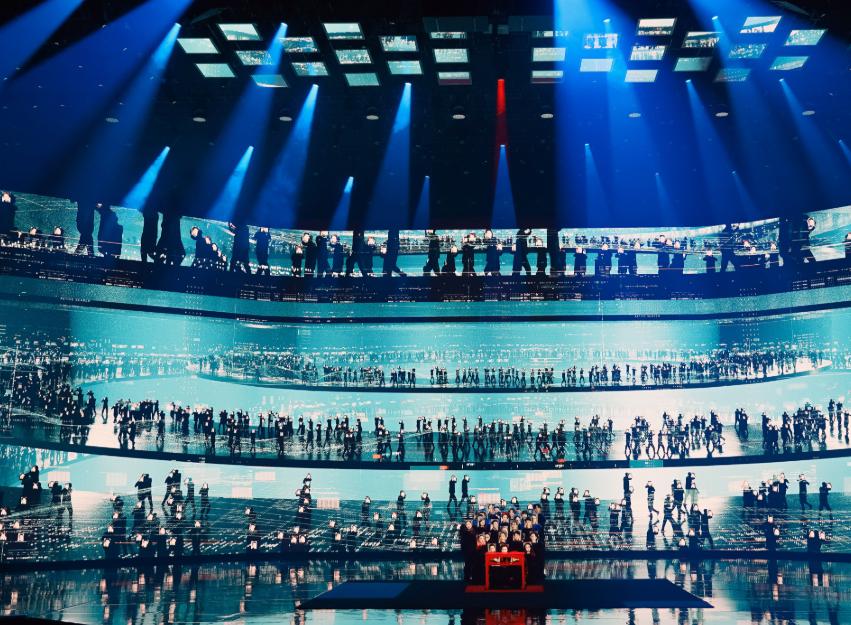
The opening ceremony of the Winter Paralympics was held at Verona's prestigious World Heritage Site, the Colosseum. 2,000 years ago, ancient Roman gladiators competed here; now, it has transformed into a stage for sports passion and contemporary art through dazzling light and shadow technology.

Timisoara Basketball__Minatitlan

The picture shows the scene of the opening ceremony. Photo by Guangming Daily reporter An Shenglan/Guangming Pictures

The theme of the opening ceremony is "Rhythm of Life", which explains the concept that life itself is a butterfly change, and redefines people's understanding of disability through a new harmonious coexistence between people and the environment. In the center of the stage, disabled dancers and able-bodied dancers used body movements to spell out the countdown numbers from 10 to 1. A beam of light is projected down, splitting the stage in two, symbolizing that the Winter Paralympics is open to everyone.

Amid dynamic music and dance, the Chinese delegation entered the venue at the 14th place. Snowboarder Li Tiantian, alpine skier Li Xiang, coach Wang Jingping, and staff Tian Kaixuan appeared as representatives of the Chinese delegation. Other members of the delegation appeared via live video in the Milan, Cortina and Tesero divisions.

This year's Chinese delegation has a total of 70 athletes and will participate in 71 minor events in all 6 major events. This is the Winter Paralympics that China has participated in the most events and the largest number of athletes overseas.

This Winter Paralympics coincides with the 50th anniversary of the Winter Paralympics. It is a milestone and a new starting point. "This Olympic Games will shine not only for its beauty, but also for its meaning and heritage." Andrew Parsons, President of the International Paralympic Committee, said in his speech that Paralympic athletes are ready to redefine possibilities and push the limits of human ability. The wonderful presentation of the Paralympic Games will inspire people around the world.

As the place where Shakespeare’s life-and-death love story of Romeo and Juliet took place, Verona is known as the “City of Love.” Rooted in urban culture, the value core of love and tolerance runs through the opening ceremony of the Paralympic Games. Accompanied by the recitation of poems about "love", "Romeo" played by disabled dancers and "Juliet" played by able-bodied dancers danced suspended on metal arms, leading the audience to "fall in love" – ​​this means that human emotions will not be hindered by differences, and love can eliminate all barriers, bridge all gaps, and allow people to embrace each other and unite together.

As Italian wheelchair fencer Bebe Vio brought the torch into the Verona Arena, everyone passed the light and shadow flames with their hands, turning the entire venue into a torch tower. On the big screen, two torchbearers in Milan and Cortina simultaneously lit two local torch towers. The Winter Paralympic flame rose in the form of golden particles in the center of the Verona Arena stage, and then transformed into silver snowflakes, drawing a dazzling end to the night of celebrations.

A total of 611 athletes from 55 countries and regions participated in this Winter Paralympic Games. Among them, 5 teams from El Salvador, Haiti, Montenegro, North Macedonia and Portugal made their first appearance at the Winter Paralympics. On the ice and in the snow, athletes will unleash their potential, surpass themselves, and write great chapters in sports history one after another.

From Beijing to Milan, Chinese Winter Paralympic athletes have never stopped chasing their dreams. After four years of accumulation, their strength and mentality have become more mature. They are confident and will show off their talents in the next competition.

(Guangming Daily, Verona, March 7)

"Guangming Daily" (page 12, March 8, 2026)
Sign In

Forgot Password

Sign Up