Professional virtual currency information station welcome
We have been making efforts.

24-hour news update Page 78

24-hour cryptocurrency news update

Trump Said Iran Would Only Negotiate An Agreement If It Surrendered Unconditionally, And Also Wanted To Interfere With The Change Of Its Leadership.

As the situation in Iran continues to be tense, U.S. President Trump’s latest statement can be described as “adding fuel to the fire.”

Yesterday (6th), Trump posted on social platforms that he would not reach any agreement with Iran unless Iran surrendered unconditionally. Not only that, Trump also asked Iran to elect a leader that the United States "acceptable" after surrender. In this way, the United States and its so-called "excellent allies and partners" will work hard to "Make Iran Great Again" (MIGA).

At a time when the conflict is about to enter its second week and Iran's tough stance shows no sign of softening, Trump, one of the "initiators", not only demands unconditional surrender, but also attempts to directly interfere in Iran's leadership change, which has already caused a backlash from Iran. On March 7, Iranian President Pezeshizyan emphasized in a televised speech that the enemy’s demand for Iran’s “unconditional surrender” was “an illusion they should take to their graves.”

The analysis of the US media "New York Times" believes that if Trump insists on the goal of "unconditional surrender", this round of conflicts may evolve into a "protracted war." The media even bluntly stated in the report that this goal is unlikely to be achieved.

However, just as American public opinion began to discuss how long the United States would be forced to enter the war and how much it would cost, the White House began to make up for Trump's remarks.

According to reports from PBS News Network, Axios News Network and other US media, on March 6, White House Press Secretary Levitt declared that the so-called "unconditional surrender" of Iran depends on Trump's own judgment, not Iran's.

"When Trump, as commander in chief of the U.S. armed forces, determines that Iran no longer poses a threat to the United States and the objectives of the operation have been fully achieved, Iran is effectively in a state of unconditional surrender," Levitt said, "whether they admit it or not. Frankly, (by that time) they don't have many people left who can say that for them."

Levitt also said that the U.S. government expects this military operation to last four to six weeks. "We are making steady progress toward the goal of annihilating the Iranian navy."

As for Trump's repeated interference in the election of Iran's supreme leader, Levitt said, "Trump intends to pay attention to and explore the candidate for Iran's next leader. The current results remain to be seen and the matter is being discussed." However, she mentioned that Trump does not want the next leader of Iran to be what he calls "radical terrorists" or people who shout the slogan "Death to America."

The New York Times believes that Trump has repeatedly mentioned Venezuela in his recent statements on Iran, indicating his intention to apply the U.S. action model against Venezuela to the Iranian issue. Previously, the United States had claimed that it could take charge of the Venezuelan regime as long as Rodriguez met U.S. requirements, especially oil supplies.

In an interview with CNN on March 6, Trump said, "This will be very easy to succeed, just like in Venezuela." He declared that he did not care whether Iran elected a democratic government, and he was willing to accept it as long as its leaders "treated fairly" Israel and the United States.

But Trump completely ignored one premise – the situations in Iran and Venezuela are completely different and can be said to be much more complicated. Iran's population of approximately 92 million people is almost three times that of Venezuela. Not only that, in Iran, Shiite Muslims make up the majority, but nearly 10% of the population is Sunni, and there are also several ethnic minorities such as Kurds, Arabs, Turkmens, and Baluchis. From this perspective, a better reference is Iraq. Trump, Vance and Hegseth have all criticized the US military's plans in Iraq for depleting US national power.

Wang Yi Discusses China’s Position On The Situation In Iran, Emphasizing That All Parties To A Ceasefire And End Of War Should Return To The Negotiating Table

"Soldiers and weapons must be used without mercy." In February this year, the United States and Israel launched military strikes against Iran. The war spilled over to neighboring countries, and the conflict caused a large number of civilian casualties. Faced with the current situation in Iran, Wang Yi, member of the Political Bureau of the CPC Central Committee and Minister of Foreign Affairs, elaborated on China’s position at the press conference of the two sessions on the 8th: cease fire and end the war.

Many interviewed experts told reporters from China News Service that China's position advocates getting to the crux of the Iran issue and providing a path to properly resolve the issue.

Being tough with fists does not mean being tough with principles

Wang Yi stated on the 8th that issues related to Iran and the Middle East should be handled correctly and properly, and stressed that the abuse of force should not be allowed. "Strong fists do not mean strong principles. The world cannot return to the law of the jungle. Frequent use of force does not prove one's strength, and people cannot become innocent victims of war."

Yan Wei, deputy dean of the School of Regional Studies at Northwest University and deputy director of the Institute of Middle East Studies, said that the United States and Israel launched military strikes against Iran, violated the sovereignty of other countries, and abused force in an attempt to subvert the regime. This is the fundamental reason for the delay in the current situation.

In his view, China's insistence on respecting national sovereignty, refraining from excessive use of force, and non-interference in internal affairs not only addresses the causes of the Iranian issue, but is also the basic principle for resolving the Iranian issue in the future.

All parties should return to the negotiating table as soon as possible

History has repeatedly proven that military means cannot bring lasting peace, and conflicts can ultimately only be resolved through negotiation. Wang Yi stressed, "China has always advocated that peace is the most important thing, and all parties should return to the negotiating table as soon as possible to resolve differences through equal dialogue and make efforts to achieve common security."

Liu Zhongmin, a professor at the Institute of Middle East Studies at Shanghai International Studies University, said that the situation in Iran is not only a spillover effect of the new round of Palestinian-Israeli conflict, but also related to the Iranian nuclear issue. The war launched by the United States and Israel against Iran is not conducive to the resolution of complex issues, but instead intensifies the distrust between relevant parties. "The historical trajectory of the development of the Iranian nuclear issue also proves that negotiation is the correct path to solve the problem."

Tao Jian, a member of the National Committee of the Chinese People's Political Consultative Conference and former dean of the School of International Relations, further pointed out that relevant parties cannot use negotiations as a means of pressure. "Currently, negotiation is the most direct and effective way to achieve peace and development in the Middle East."

Major countries must play a constructive role

China has proven with its practical actions that it has always been a defender of peace and stability in the Middle East, a promoter of development and prosperity, and a supporter of unity and independence.

"China plays a role as a stabilizer in the Middle East, especially in promoting conflict de-escalation, opposing regime change, promoting regional economic and social development, and strengthening regional unity and cooperation," Yan Wei said.

"If benevolence and righteousness are not exercised, the offensive and defensive forces will be different." When talking about the situation in Iran, Wang Yi quoted ancient Chinese proverbs and emphasized that major countries should abide by justice and act on the right path, and contribute more positive energy to the peaceful development of the Middle East.

Liu Zhongmin said that since the outbreak of a new round of Palestinian-Israeli conflict in 2023, the destructive role played by the United States in Middle East affairs has continued to increase. He believes that China's principled position emphasizes respect for international law and norms of international relations, "respect international law, resolve hot issues politically, oppose interference in internal affairs, and major countries must play a constructive role." (over)

Wang Yi’s Diplomatic Press Conference Quotes Ancient Teachings To Talk About History, Responds To Hot Topics And China-Japan Relations

China News Service, Beijing, March 8. Title: Citing ancient teachings to talk about history, Wang Yi discusses the diplomacy of major powers.

China News Service reporter Zeng Yue and Guo Chaokai

The diplomatic-themed press conference of the Fourth Session of the 14th National People's Congress was held on the 8th. Wang Yi, member of the Political Bureau of the CPC Central Committee and Foreign Minister, answered questions from Chinese and foreign reporters. In the 21 questions and answers, he frequently quoted ancient sayings and talked about history, bringing the approximately 85-minute press conference into a longer time and space.

"Soldiers are deadly weapons and cannot be used without caution", which expresses China's position of ceasefire and war; "If benevolence and righteousness are not exercised, the offensive and defensive momentum will be different", emphasizing that great powers should abide by justice and follow the right path. Wang Yi used these two ancient sayings to respond to the current situation in Iran. The wisdom of the ancients warns today's people what they should not do.

Two ancient sayings directly point to the key issues in today's international relations. War is never a good way to resolve conflicts. Resorting to force will only expand conflicts, while the loss of justice and rules will eventually make the situation spiral out of control.

Wang Yi conveyed this concept through ancient teachings. The more tense and turbulent the situation is, the more all parties should exercise restraint, return to the track of dialogue and negotiation, and maintain regional stability with rationality and rules.

Last year marked the 80th anniversary of the victory of the Chinese People's War of Resistance Against Japanese Aggression, and this year marks the 80th anniversary of the opening of the Tokyo Trial. On the occasion of a special historical year, Wang Yi once again quoted an ancient saying on Sino-Japanese relations: "Lake history as a mirror to know the ups and downs; remembering the past is the guide for the future."

80 years ago, after two and a half years of court trials, judges from 11 countries exposed the numerous crimes of Japanese militarism with a massive amount of irrefutable evidence. At the press conference today, Wang Yi clearly stated that "no one will ever be allowed to defend colonization or overturn the verdict of aggression."

Ancient precepts often contain reflections on history. This kind of historical consciousness that runs through ancient and modern times makes China's diplomacy pay more attention to distinguishing right from wrong and clarifying directions from history when facing complex international situations, and also allows the outside world to better understand China's foreign policy choices.

If you know where you are from, you will know where you are going.

From the "Cairo Declaration" and "Potsdam Proclamation" to the "Japanese Instrument of Surrender" and UN General Assembly Resolution 2758, Wang Yi used history to clarify the reality – a series of international legal documents have firmly locked in Taiwan's status.

He once again emphasized that the historical process of resolving the Taiwan issue and realizing the complete reunification of the motherland is unstoppable, and quoted the ancient saying that "those who follow the trend will prosper, and those who go against it will perish." This is not only a historical law, but also a warning to all "Taiwan independence" separatist forces and external interference.

When talking about the concept of building a community with a shared future for mankind, Wang Yi also used ancient teachings to clarify China’s proposition. Today, the concept of building a community with a shared future for mankind has received support from more than 100 countries and international organizations. In this regard, Wang Yi said that this once again proves that "where there is truth, there is much help", and a just cause will definitely receive support from all countries and gather the power of the people.

At a time when the world is facing many common challenges, adhering to win-win cooperation and joint development is becoming the common choice of more and more countries. Looking at the future through history can help us better understand the value orientation of China's diplomacy.

Regarding neighboring countries, "It is China's tradition to help each other, and it is China's culture to be kind and kind to neighbors." When it comes to China-Africa relations, the Chinese Foreign Minister has insisted on visiting Africa for the first time in the New Year for 36 years, "consistently, rain or shine." Looking back on the development of APEC, 25 years of ups and downs have "witnessed that China and the Asia-Pacific colleagues have not changed their original aspirations"…

At a time when global conflicts are becoming increasingly acute and competition and confrontation are intensifying, Wang Yi once again clarified China's responsibility as a major country and its historical mission to the world. The image of a stable, open and responsible China is clearly presented. (over)

Exhibition Of Cultural Relics Unearthed From Zhang Xianzhong Jiangkou Sunken Silver Treasure, Meishan Museum Opens Today

China News Service, Meishan, Sichuan, March 8 (Shan Peng) "The stone dragon versus the stone tiger, gold and silver are worth millions. Whoever knows the difference can buy the Chengdu mansion." This treasure hunting song that has been circulated in Sichuan for hundreds of years has now become the opening preface of the Jiangkou Chenyin Museum. On the 8th, this museum located in Pengshan District, Meishan City, Sichuan Province opened to visitors by appointment for the first time.

On March 8, Jiangkou Chenyin Museum welcomed its first batch of reservation tourists. Photo by China News Service reporter Liu Zhongjun

Regarding the origin of these treasures, it is said that Zhang Xianzhong passed through the river mouth with gold and silver treasures when he was defeated and evacuated from Sichuan. He was defeated by Yang Zhan, a general of the Nanming Army, and a large number of treasures sank to the bottom of the river. For more than 300 years, the legend of Zhang Xianzhong's "treasure" has been preserved in historical documents, folk notes and nursery rhymes.

From 2017 to 2023, archaeologists built embankments at the Jiangkou Street cofferdam in Pengshan District and drained the river water, completely exposing the sand and gravel on the river bottom. After careful cleaning layer by layer, treasures that had been dormant for hundreds of years were finally revealed. After six phases of archaeological excavation, a total of more than 76,000 cultural relics were unearthed, proving that the "silver sinking at the mouth of the river" is indeed a historical fact.

The museum rises from the ground next to the Jiangkou Chenyin ruins. The exterior wall is designed with reference to the red sandstone bedrock of the ruins. The layered texture is like the natural form washed by the river. There are three basic exhibition halls in the museum, focusing on the themes of "silver falling from water", "unsolved mystery of silver falling from the water" and "silver story", with a total of about 7,000 cultural relics on display.

On the first day of opening, thousands of reserved visitors arrived one after another. Deep in the exhibition hall, 50 taels of gold ingots weighing 1805 grams from Changsha Prefecture's "Sui Gong Wangfu", the gold seal of "Shu Shizibao" with a gold content of up to 95%, the gold seal of "Yongchang Grand Marshal" in the shape of a tiger button, as well as rows of gold ingots, silver ingots, gold hat tops, gold beam crowns and other utensils are displayed in rows, shining under the light.

On March 8, tourists visited the Jiangkou Chenyin Museum. Photo by China News Service reporter Liu Zhongjun

These Shenjiang silver ingots also bear witness to the history of China's integration into the global trade network through the "Longqing Switch". In the middle and late Ming Dynasty, Chinese merchants transported silk and porcelain to Manila, Philippines, in exchange for silver shipped by the Spanish from the American colonies, and then imported it into the country through Yue Port, where it was recast into tax ingots such as "Autumn Grain Silver" and "Jingku Silver". In the exhibition hall, the actual tax money and the restored scene of the sailing ship are juxtaposed, showing the picture of globalization in the 16th century. (over)

Bacterial Drug Resistance Has Become A Global Public Health Event, And My Country's Phage Therapy Faces Quality Approval Difficulties

【1】Bacterial resistance has become a global public health event

He pointed out that bacterial resistance has become a global public health event and is expected to directly lead to 39 million deaths and economic losses of hundreds of billions of dollars from 2025 to 2050. Phage therapy that can accurately kill bacteria is the most reliable and disruptive method.

Currently, the United States, Europe, South Korea, Australia and other countries are accelerating the deployment of clinical guidelines, standards and even phage therapy drug and technology approvals to occupy this cutting-edge field. Although my country has many bright spots in scientific research, it lacks unified quality standards for phage preparations, and the approval path and requirements for clinical application of phages are still unclear.

He analyzed the current specific dilemma and current situation.

(1) Quality standards: There is a gap from "group standards" to "national standards".

At present, my country lacks GMP facilities for human phage preparations, and phage therapy-related companies are all in the start-up stage and generally lack the funds and capabilities to build GMP. The Shanghai Pharmaceutical Industry Association released the "Quality Requirements for Therapeutic Phage Preparations" group standard in 2024, which is currently the only domestic standard. However, this standard only requires the quality of the final product, and there is still a lack of guidance standards for the quality requirements and control of the entire process. There is an urgent need to promote the construction of higher-level standards.

(2) Approval path: There is a gap between policy dividends and implementation details.

The State Food and Drug Administration's "Draft for Comment on Advanced Therapeutic Drugs" includes gene-editing phages, and registration guidelines for new phage therapy technologies will also be issued under the framework of the upcoming Order 818. These top-level signals are extremely forward-looking.

However, the specific approval path is still in a fuzzy area and needs to be clarified urgently. Internationally, Belgium, France and Portugal have successively approved personalized treatments according to the EU local preparation route. Australia plans to grant a 2-year GMP exemption period to personalized and phage preparations in the clinical research stage. These adaptive ideas urgently need to be transformed and absorbed in light of our national conditions.

【2】Standards first, path pilot, industry cultivation

Zhu Tongyu said that in order to break the above-mentioned bottlenecks and avoid falling behind, a three-in-one promotion strategy of "standards first, path pilots, and industry cultivation" will be adopted to seize the commanding heights of the industrialization of phage therapy. Specific suggestions are as follows:

(1) Promulgate the "Technical Guiding Principles for Quality Control of Therapeutic Phage Preparations" as soon as possible.

It is recommended that the "Technical Guiding Principles for Quality Control of Therapeutic Phage Preparations" be issued as soon as possible based on the published Shanghai group standards, absorb European experience. Clarify the core requirements for phage selection, production and quality control, and provide a unified yardstick for the development and testing of phage products.

In view of the safety characteristics of bacteriophage, such as specific sterilization and no direct toxicity to eukaryotic cells, it is recommended that personalized phage preparations and formula products with low safety risks that are urgently needed for clinical use should be allowed to be produced by institutions that meet the corresponding biosafety and cleanliness conditions and used within the framework of ethical review and emergency treatment filing. A GMP exemption period of 2-3 years or simplified certification should be piloted. At the same time, companies are required to use the exemption period to accelerate the construction of GMP facilities and pilot "stepped GMP"

(2) Implement classified management and issue review guidelines.

1. Establish a dual-track system with parallel “drug pathways” and “technical pathways”. It is recommended that the State Food and Drug Administration draft and publish the "Technical Guiding Principles for Phage Drug R&D and Review". Clearly incorporate phage fixed formulas into the management of biological products, and clarify the inclusion conditions and licensing policies for advanced therapeutic drugs; personalized preparations that are "matched according to the patient's bacterial type" will be registered and transformed in accordance with the 818 new biomedical technology.

2. Rely on Order 818 to open up a fast channel for the transformation of new technologies. It is recommended that clinical transformation guidelines be formulated as soon as possible. For those whose preliminary clinical research results have met the transformation conditions, they can directly apply for transformation applications. It is allowed to establish regional phage diagnosis and treatment centers in tertiary hospitals and regional medical centers under the 818 framework to carry out standardized and scalable personalized treatments. Clarify charging standards, medical insurance access and post-transformation supervision responsibilities, so that policy dividends can be implemented into clinical tools.

(3) Innovate organizational mechanisms and form working groups.

It is recommended that the National Health Commission take the lead, cooperate with the Food and Drug Administration, the Ministry of Science and Technology and other departments, as well as research, clinical and commercial institutions, to establish a "phage therapy collaborative working group" composed of experts in "regulatory science + clinical medicine + microbiology + pharmaceutical engineering" to establish and upgrade my country's internal regulatory science think tank, hold regular consultations, and coordinate to solve cross-departmental problems such as GMP certification, medical insurance coding, and price declaration.

Phage therapy is a strategic pivot to address biosecurity challenges and develop biomedicine. The unformed international supervision is a window period for my country to take the lead. Through upgrading standards, piloting flexible policies and cross-departmental collaboration, we can find a path to high-quality development of phage therapy that is in line with national conditions.

Reporting from Beijing by Jiupai News special correspondent Li Yang

Editor Wu Diwu Feifei

Build A Robot Training Ground, And National People's Congress Representatives Propose To Equip Grassroots Doctors With AI 'assistants'

The third is to build a robot training ground. It is not difficult to build robots now, but the difficulty lies in the intelligent body. The housekeeping scene is like the "tenth month pregnancy" of AI. Real household data is used to train the intelligent agent and make the robot truly "alive". To put it simply, AI serves as a knowledge base for waiters and a brain for robots. Without AI, it would be impossible for housekeeping to develop with high quality.

Geng Funeng, deputy to the National People's Congress and chairman of Good Doctor Pharmaceutical Group, focuses on primary care, a "key area" for people's livelihood. In 2025, he put forward the suggestion of "AI assisting hierarchical diagnosis and treatment." This year, he continued to make suggestions and called for equipping grassroots doctors with AI "assistants."

"Primary medical institutions include community health service centers, township health centers, village clinics, clinics and other types. They are the first line of defense to protect people's health. They are also a key carrier for implementing the hierarchical diagnosis and treatment system and easing the pressure on large hospitals."

Geng Funeng noticed that in reality, medical AI capital and technical resources are more concentrated in tertiary hospitals. Grassroots institutions have limited funds and weak procurement and operation and maintenance capabilities. Grassroots doctors still treat patients with the same three things – stethoscopes, thermometers and sphygmomanometers, which are no longer able to meet the needs of the masses.

In this regard, he believes that the advantages of AI should be used to help grassroots doctors make efficient and accurate diagnoses. He suggested setting up a special subsidy for the application of AI robots for grassroots doctors, with the central and local finances sharing it in proportion. For the purchase of AI agents that meet the management needs of common and chronic diseases at the grassroots level, a 30%-50% purchase subsidy will be provided, with an appropriate increase in rural areas, and an annual operation and maintenance subsidy will be provided.

At the same time, admission standards and recommended catalogs for primary medical AI agents were formulated to clarify the role of AI. It is a tool that grassroots doctors need to master and is an "assistant" rather than a "replacement" for diagnosis and treatment. During use, grassroots doctors need to clarify the boundaries of technology-assisted diagnosis and treatment and improve their ability to judge and monitor AI results.

In addition, Geng Funeng believes that the combination of AI and the concept of “preventing disease” in traditional Chinese medicine can be promoted. Connect data from three scenarios: homes, clinics, and hospitals to build large models to carry out disease prediction and prevention, allowing people to achieve independent health management through AI just like using household appliances.

As my country's aging population continues to deepen, elderly care services have also become a key livelihood issue of concern during the two sessions, and the relevant suggestions for AI-enabled elderly care have aroused widespread resonance.

What is NPC Elderly Care?_Research Report on the Construction of NPC Elderly Care Service System

Geng Funeng is investigating the application of artificial intelligence in grassroots clinics in Chongzhou City. Picture/provided by interviewee

【2】Accelerate the introduction of the "National Elderly Care Robot Industry Development Action Plan"

According to China News Service, Ge Minghua, a representative of the National People's Congress and president of Zhejiang Provincial People's Hospital, said that the current gap in our country's elderly care nursing staff is about 5.5 million people. In his view, accelerating the development of the elderly care robot industry is the key to solving the contradiction between supply and demand of elderly care services in the era of population aging.

As an important carrier of "AI + elderly care", elderly care robots can cover three major scenarios: home, community, and institution, and provide multiple services such as care, companionship, and health management. It is judged to be a trillion-level blue ocean track that is expected to rival the automobile industry. However, Ge Minghua's research found that China's elderly care robot industry is still in its infancy and cultivation stage, and there is an urgent need to remove development obstacles in terms of systems, technology, and markets.

The lack of top-level design is the primary problem. He admitted frankly that a special development plan for elderly care robots has not yet been issued at the national level, policies are scattered in various comprehensive documents, and the cross-departmental coordination mechanism is not smooth. Subsidy funds for the construction of the elderly care service system do not include a separate budget for the purchase of elderly care robots. Supporting policies such as the first unit (set) application and large-scale procurement are missing, and there is insufficient motivation for industrialization.

The lag in technical research is also prominent. In aspects such as complex environment perception and human-computer collaborative interaction, domestic technology still lags behind international standards. Core components are highly dependent on imports. In addition, the "research, production and use" collaborative system is missing, there is a lack of leading enterprises to lead, and the industrial agglomeration effect has not yet been formed.

The low matching between supply and demand has become another bottleneck. Ge Minghua pointed out that the current supply of large-scale application scenarios for elderly care robots is insufficient, and most products remain in the laboratory stage. The product's aging suitability is low and its operation is complicated. More than 60% of the elderly have concerns about product operation and safety. The payment security system is imperfect, and long-term care insurance and medical insurance provide limited support for equipment purchase and leasing.

In this regard, Ge Minghua suggested strengthening top-level design, accelerating the introduction of the National Action Plan for the Development of the Elderly Care Robot Industry, establishing a cross-department coordination mechanism, and coordinating and solving issues such as product access and standard formulation; establishing a national-level elderly care robot industry guidance fund, including elderly care robots within the scope of the first (set) policy, and providing fixed subsidies for the purchase of compliant products.

"In terms of tackling core technologies, it is recommended to organize and implement core technology research projects, focusing on the collaborative optimization of humanoid robots and the localization of core components to carry out joint research. We can also build cross-ontology open source data sets and full-chain data platforms to further promote the construction of interdisciplinary universities in universities and directional training of interdisciplinary talents." Ge Minghua said.

It recommended further expanding application scenarios, creating a national-level application demonstration scenario, and deploying it through the model of "the government subsidizes a little, enterprises give a little, and insurance guarantees a little", and explore the inclusion of compliant intelligent care equipment in the payment scope of medical insurance and long-term care insurance, establish aging-appropriate design standards and product certification mechanisms, and encourage companies to provide one-stop services of "installation-training-maintenance".

"The elderly care robot industry is not only a strategic need to cope with the aging of the population, but also an important starting point to cultivate new growth points for the silver economy." Ge Minghua said, hoping to speed up the removal of development obstacles and allow more elderly people to enjoy high-quality elderly care services brought by technological innovation.

Jiupai News special correspondent Gong Lingwei and Hu Bingyue reported from Beijing

Editor Wu Diwu Feifei

U.S. Military Cancels Elite Troops Exercise, Sparking Speculation About Troop Deployment In Middle East

The U.S. military suddenly canceled its elite troop exercises, further triggering speculation about its troop deployment in the Middle East.

On the 6th local time, the U.S. "Washington Post" quoted multiple officials as saying that the U.S. Army recently suddenly suspended the major exercises originally planned to be held by the 82nd Airborne Division at Fort Polk, Louisiana, and ordered it to stay at the Fort Bragg base in North Carolina on standby.

According to reports, a brigade-level combat team of about 4,000 to 5,000 people under the 82nd Airborne Division can complete deployment within 18 hours after receiving an order, and undertake diverse tasks such as seizing key facilities such as airports, strengthening embassy security, and performing emergency evacuations.

The report pointed out that although no official deployment order had been issued as of Friday, this unusual move has triggered speculation within the Ministry of Defense: As the conflict between the United States and Iran continues to escalate, this elite paratrooper unit, which is good at ground combat and various tasks, is likely to be transferred to the Middle East.

Domestic factions in Iran __ Iranian media denies that the commander was killed in an attack

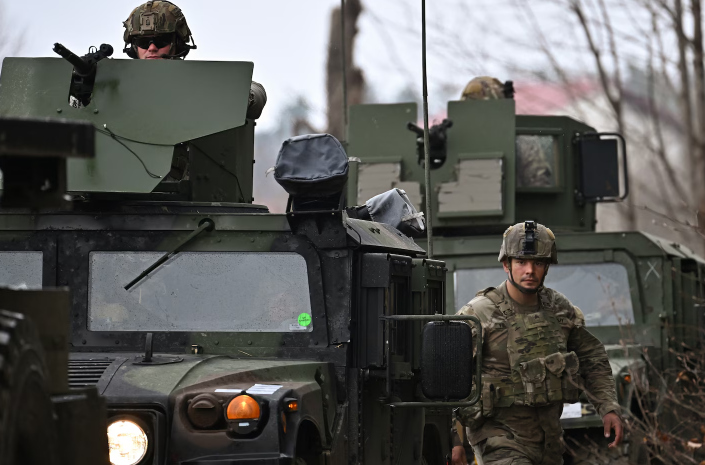
In 2022, soldiers of the U.S. 82nd Airborne Division were in Wola Kozhenzka, Poland. "Washington Post"

Given that the 82nd Airborne Division has played a key role in all crises and is the core of the U.S. Army's global rapid response force, it is generally believed that it is likely to be recruited first.

In recent years, the 82nd Airborne Division has been ordered to strengthen the security of the U.S. Embassy in Baghdad many times, especially before the U.S. assassination of Qasem Soleimani, the commander of the Iranian Islamic Revolutionary Guard Corps' Quds Force, in 2020. In addition, it will play a central role in the withdrawal from Afghanistan in 2021 and the deterrence deployment of US troops in Eastern Europe before the outbreak of the Russia-Ukraine conflict in 2022.

Multiple anonymous U.S. officials revealed that the Army is expected to announce in the near future that helicopter units attached to the 82nd Airborne Division will deploy to the Middle East as previously planned, but related operations will not begin until later in the spring.

"We are all preparing for some kind of situation – just in case," said an official familiar with the matter.

When asked about the matter, the Pentagon issued only a brief statement and refused to disclose details. "For security reasons, we do not discuss future or hypothetical operations." The U.S. Central Command, which is responsible for operations in the Middle East, declined to comment.

“Iran’s Khark Island may be the US military’s primary target”

According to the "Washington Post" report, nearly a week since the conflict broke out, the US military has mainly relied on air strikes and maritime strikes to continue to destroy Iranian military facilities, missile and drone arsenals, and naval vessels. As Iran's defense system gradually disintegrates, US warplanes and bombers have begun flying directly through Iranian airspace to conduct bombings.

Although Trump has publicly stated that there is a "high probability" that U.S. ground forces will not need to intervene in the current operation, he and his senior staff have always refused to rule out this option.

On the 6th, the Wall Street Journal, NBC and other media quoted sources as saying that Trump had discussed the idea of ​​deploying ground troops to Iran with aides and Republican officials and had shown strong interest in it. Rather than a large-scale ground invasion, the approach favors sending small forces to carry out specific strategic objectives. The source also emphasized that Trump has not yet made a decision or issued an order on this matter.

White House Press Secretary Levitt responded that day that the above-mentioned source was not a member of the White House national security team.

On Wednesday, she also said that sending ground troops to Iran was "not a current plan, but it would not rule out any options on the president's desk."

At a Pentagon briefing on the same day, Chairman of the Joint Chiefs of Staff Dan Kaine declined to comment when asked about the involvement of ground forces, saying only that "this is a question for policymakers."

"I don't make policy," Kaine added, "I implement policy."

He was joined by Defense Secretary Hegseth, who earlier this week refused to rule out the possibility of sending ground combat troops.

Despite the ambiguous attitude of the United States, speculation that "Trump may deploy ground troops to Iran" has continued to heat up on the American Internet. Many American netizens shared that they have military friends who have experienced deployment adjustments in the Middle East.

_ Domestic factions in Iran _ Iranian media denies that the commander was killed in an attack

Others bluntly said: "As far as Trump's intentions are concerned, one division is far from enough. The 82nd Airborne Division is likely to become the first large-scale deployment of troops in theaters."

Domestic factions in Iran __ Iranian media denies that the commander was killed in an attack

According to the latest report from NBC, a Department of Defense official revealed that as the war against Iraq advances, the United States plans to recruit more National Guard and Army Reserve personnel to support operations.

Currently, approximately 22,000 Army and Air National Guard members are deployed overseas to perform missions around the world. The official also said that relevant troops had been recruited before the launch of the operation in Iraq, and members of the local guard who had been deployed were also assigned to provide support for the operation from the area where they were located.

A considerable proportion of the personnel and equipment deployed by the US military around the world come from the National Guard and Reserves. The six U.S. military personnel killed in this round of conflicts were all members of the Army Reserve Support Force from Iowa.

The Washington Post quoted analysts as saying that if the United States dispatches ground troops, Iran's Khark Island may become the primary target. The island, located in the Persian Gulf, about 15 miles from the Iranian mainland, is home to Iran's most important oil infrastructure, with about 90% of the country's oil exports transshipped through this facility.

The report pointed out that seizing the island will not only control Iran's core economic resources, but also fit in with Trump's previous strategy of controlling the oil wealth of hostile countries, but it will also expose the US military stationed there to the risk of direct attack.

Michael Rubin, a senior fellow at the American Enterprise Institute, a conservative think tank, believes that seizing Khark Island is "a no-brainer." He also mentioned that the Trump administration seemed to be "increasingly realizing that the Iran problem was much more difficult than they initially thought."

Female Solo Travelers Pursue Safety And Comfort, Like To Make Spontaneous Decisions, And AI Helps Make Quick Decisions

Safety and comfort are both the goal and the prerequisite for women traveling alone. They can fly more economically and live more comfortably than men.

Qunar data shows that women traveling alone pay an average of 20% more for hotels than men, while the average price of air tickets is 2% lower. 66% of women who choose solo trips will stay in three-star or above hotels; among them, the number of women staying in four-star or above hotels in the past year has increased by more than 80% year-on-year.

When traveling alone, many women like an impromptu happy trip. Data shows that compared with women as a whole, the overall decision-making time for women traveling alone is shortened by 20%.

AI also helps women traveling alone to shorten their decision-making time and "go at the drop of a hat." Compared with traditional communication methods, women are more likely to use AI to solve problems on the road. Using AI, they do not need to reveal their identity and personal privacy, and can get more comprehensive answers faster without being disturbed.

Staying in high-star hotels, making good use of AI to solve problems, more women have the ability to "walk away"_Staying in high-star hotels, making good use of AI to solve problems, more women have the ability to "walk away"_

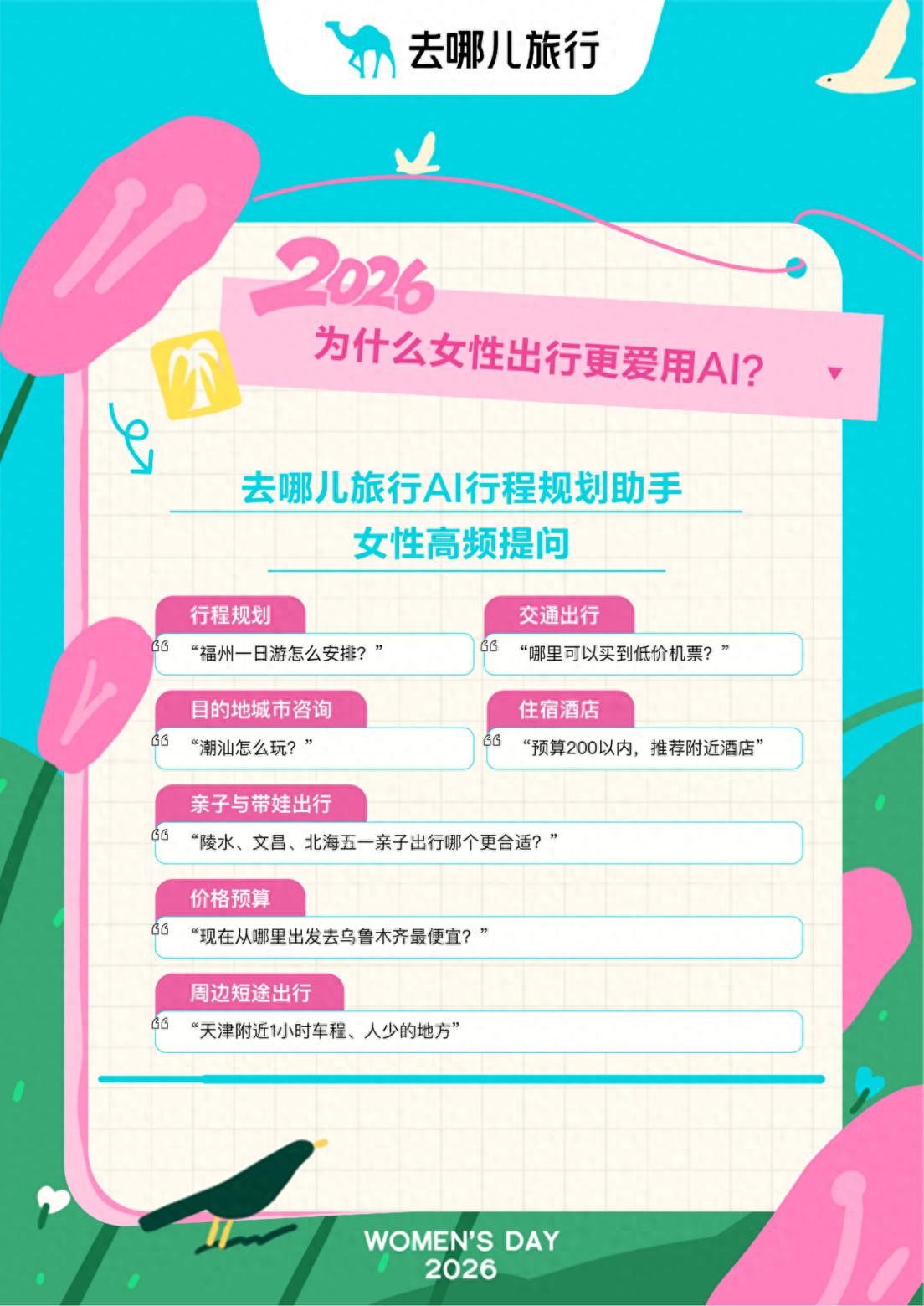
"Ask a question" AI data shows that since the launch of the AI ​​function, the number of conversations and the number of users have increased significantly by about 40%, and among users who use the AI ​​function when booking hotels, women account for 60%. Their favorite questions focus on travel and check-in related scenarios, including location and transportation, entry and exit policies, parking and catering, basic information and supporting facilities.

In addition, more than 60% of female users use travel AI itinerary planning assistants, and they also show higher usage activity. From itinerary planning, transportation, destination consultation, to accommodation selection, price budget, and surrounding short-distance arrangements, women use AI to cope with the uncertainty during the journey and spend more leisurely time with themselves wherever they go.

Jiupai News Reporter Li Yang Li Kai

Editor Fu Shan

Amid The War In The Middle East, Saudi Arabia Consults With Pakistan. Will Pakistan End Up In A Defense Agreement?

As the war in the Middle East spreads, Saudi Arabia has turned to Pakistan, its defense ally. Will Islamabad "end"?

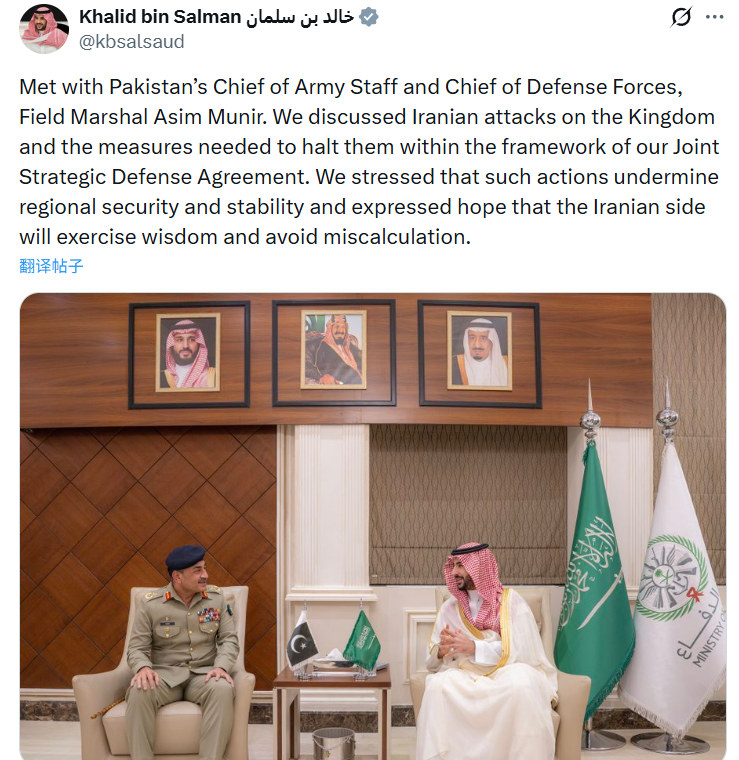
On Saturday local time, Saudi Defense Minister Khalid bin Salman issued a statement through social media

Salman said in the statement that the two sides focused on discussing Iran's missile and drone attacks against Saudi Arabia and other Gulf countries, and also agreed to formulate specific measures to prevent such attacks within the framework of the "Joint Strategic Defense Agreement" between the two countries.

The statement also stated that both sides believe that Iran's relevant military actions have seriously undermined regional security and stability, and called on Tehran to exercise restraint, "exercise wisdom and avoid miscalculation."

_Pakistan-Saudi relations deteriorate_Pakistan escorts Saudi Arabia

The "Joint Strategic Defense Agreement" mentioned by Salman refers to the mutual defense agreement signed by Saudi Arabia and Pakistan, the only nuclear-armed country in the Islamic world, after Israel raided Qatar in September last year and carried out precision strikes against senior Hamas leaders in its capital Doha. Its core provision stipulates that any attack against one of the contracting states is deemed to be a joint attack against both countries.

This is not only the first time that Saudi Arabia, a long-term ally of the United States in the Middle East, has actively sought to get rid of its dependence on Washington for security guarantees, but it is also the most significant formal defense commitment signed by Pakistan in decades.

But now, this agreement is facing a severe test that Pakistan and Saudi Arabia had never expected before. Al Jazeera reported on the 7th that in the face of Saudi Arabia, which has been successively attacked by Iranian missiles and drones, Pakistan is under tremendous internal and external pressure on whether to fulfill its defense commitments.

According to reports, on the one hand, Pakistan has deep defense ties with Saudi Arabia. About 1,500 to 2,000 Pakistani soldiers are stationed in Saudi Arabia for a long time, and millions of workers work in Saudi Arabia and other Gulf countries. The economy and security are deeply tied; on the other hand, Pakistan and Saudi Arabia have deep defense ties. Iran shares a 900-kilometer border and is prone to friction due to cross-border armed issues. Coupled with the sympathy and indignation of the domestic Shiite public over the murder of Iran's Supreme Leader Ayatollah Ali Khamenei, Islamabad has to be sandwiched between Saudi Arabia and Iran and carefully "walk the tightrope."

So far, Islamabad's response has been to conduct intensive diplomatic communication and have frequent contacts with regional leaders, including Iran and Saudi Arabia. However, analysts generally point out that as conflicts in the Middle East continue to escalate, Pakistan wants to stabilize its alliance with Riyadh while avoiding a direct confrontation with Tehran. This balancing strategy of balancing both ends will become increasingly unsustainable.

Pakistan faces 'credibility test'

Ever since the United States and Israel launched multiple rounds of strikes against Iran on February 28, detonating the situation in the Middle East, Pakistan has been in this dilemma.

According to Al Jazeera, after the US-Israeli attack killed Iran's Supreme Leader Ayatollah Ali Khamenei, Pakistan immediately condemned the attack as "unjustifiable"; but within a few hours, Pakistan turned to condemn Iran's retaliatory strikes against Gulf countries as a "blatant violation of sovereignty."

Pakistan's Deputy Prime Minister and Foreign Minister Ishaq Dar was attending an Organization of Islamic Cooperation (OIC) meeting in Riyadh when the conflict broke out last week. He later said that he carried out "shuttle communication" between Tehran and Riyadh.

On March 3, Dar spoke in the Senate and held a press conference, revealing that he had personally reiterated to Iranian Foreign Minister Abbas Araghchi that Pakistan has clear defense obligations to Saudi Arabia.

Dar said, "We have a defense agreement with Saudi Arabia and the whole world knows about it. I told the Iranian leadership that we must respect our agreement with Saudi Arabia."

According to Dar, Araghchi asked Pakistan to guarantee that Saudi territory would not be used to attack Iran, and he informed the other party that he had obtained relevant guarantees from Riyadh. He believes that it is this secret channel communication that effectively limits the scale of Iran's attack on Saudi Arabia.

Two days later (5th), Iranian Ambassador to Saudi Arabia Alireza Enayati said that Iran welcomes Saudi Arabia’s commitment not to allow its airspace or territory to be used against Iran in the current conflict with the United States and Israel.

"We appreciate the position reiterated by Saudi Arabia many times – Saudi Arabia will not allow its airspace, waters or territory to be used against Iran," he said in the interview.

But this brief relaxation did not last long. Just one day later, in the early morning of the 6th, the Saudi Ministry of Defense confirmed that it had successfully intercepted three ballistic missiles aimed at the Prince Sultan Air Force Base. The base is located southeast of Riyadh and houses US military personnel.

The situation instantly became tense again. A few hours later, Pakistani Army Field Marshal Munir arrived in Riyadh and met with Saudi Defense Minister Salman. Salman later emphasized in a statement that the two sides discussed Iran's continued attacks on Saudi Arabia and the necessary measures to stop the attacks within the framework of the Pakistan-Saudi Mutual Defense Agreement.

Pakistan-Saudi relations deteriorate__Pakistan escorts Saudi Arabia

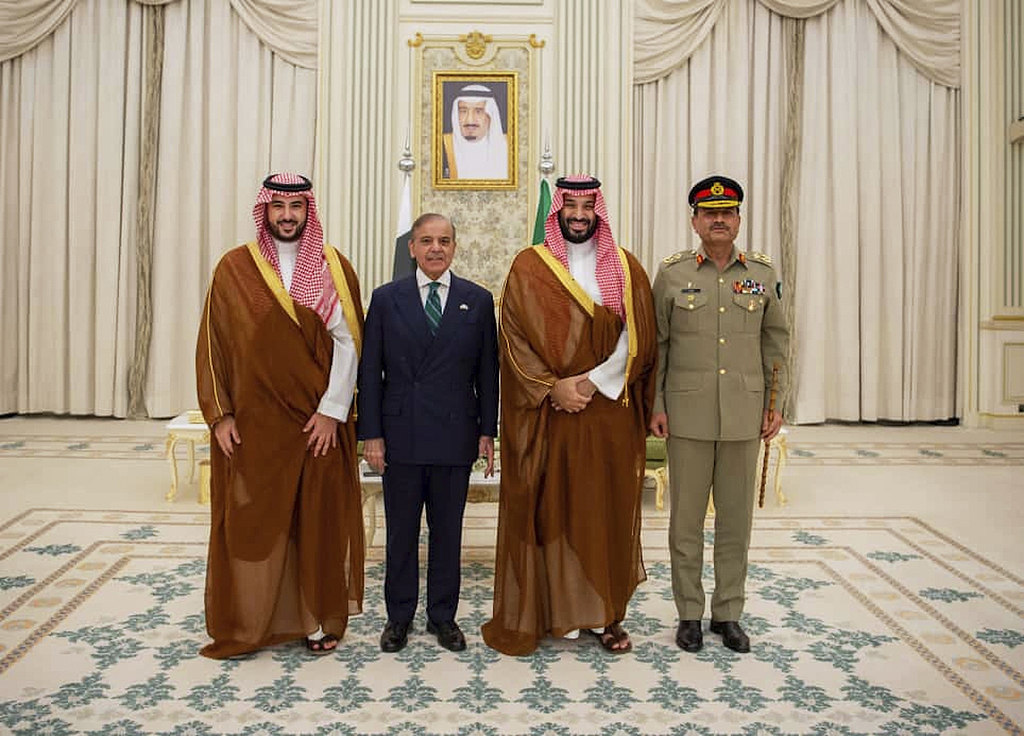
On September 17, local time in Riyadh, Saudi Arabia, Saudi Crown Prince and Prime Minister Mohammed bin Salman (second from right), Saudi Arabian Defense Minister Khalid bin Salman (left), Pakistani Prime Minister Shahbaz Sharif (second from left) and Pakistan Army Chief of Staff Saeed Asim Munir (right) took a group photo after signing a mutual defense agreement. Visual China

Although analysts believe that the core provisions of the agreement should not be directly interpreted as automatically triggering military intervention, as the war continues to escalate, Pakistan, caught between Iran and Saudi Arabia, will find it difficult to maintain absolute neutrality for a long time.

Omar Karim, associate research fellow at the Riyadh-based King Faisal Center for Studies and Islamic Studies, said Pakistan's current predicament stems from miscalculation. He pointed out that Islamabad may never have imagined that it would be caught in the confrontation between Tehran and Riyadh, especially after Saudi Arabia and Iran achieved the easing of relations and the resumption of diplomatic relations in 2023.

High Train Rebooking Fees, No Cancellation Of Operations, And Poor Service. How To Optimize And Protect Rights And Interests?

He further explained that firstly, the change fee rules lacked fair consideration. If a passenger misses the train on the day and changes his ticket before 24:00 on the day of departure, he can only change the train to the next day or later, and he will have to pay a handling fee of up to 40%, which is much higher than the 20% standard for refunds in the same period. This billing method does not fully take into account the objective needs of passengers who "still need to travel after missing the train". Passengers who miss the train due to operational errors or traffic delays often have to bear additional costs beyond their expectations. At the same time, the 15% handling fee for ticket changes less than 24 hours before driving is too burdensome for small tickets and lacks an upper limit protection mechanism.

Second, the rebooking operation lacks a withdrawal mechanism. Once the current change operation is confirmed, it will take effect immediately and cannot be withdrawn. If passengers cannot restore the original ticket status due to operational errors, system delays, or misoperation by others, they can only choose to refund the ticket and bear additional fees. This "correction means loss" design leaves no room for passengers to make corrections and significantly increases the cost of travel without subjective intention.

Third, service connection and information prompts are obviously insufficient. At present, the railway department's "free refund within 30 minutes" policy to benefit the people has not yet been extended to the ticket change process. The official platform operation page lacks clear risk warning and fee preview functions, making it difficult for passengers to predict the actual handling fee amount before confirming the change. In addition, the rules for changing tickets on third-party ticket purchasing platforms are different from the official ones. The rules are opaque and inconsistent, which can easily lead to misunderstandings and disputes.

In order to optimize the EMU rebooking service and protect the legitimate rights and interests of passengers, Lei Maoduan put forward three suggestions. The first is to optimize the billing rules for rebooking fees. The handling fee for rebooking for the next day and subsequent trains after missing a train will be reduced from 40% to 20%, consistent with the refund standards, taking into account railway operating costs and passenger affordability. The 15% handling fee for ticket changes less than 24 hours before driving is stipulated, and a cap of 50 yuan is added to avoid excessively high handling fees for small tickets. At the same time, for special groups such as the elderly, students, and disabled people, relying on the 12306 real-name authentication system, free rebooking opportunities are provided twice a year; any rebooking losses caused by system failures or prompt errors shall be fully refunded after verification.

The second is to establish a withdrawal mechanism for rebooking errors to provide room for error correction. Set up a 30-minute free withdrawal window after ticket changes, allowing passengers to promptly restore their original ticket status after an operation error. The conditions for withdrawal are limited to more than 4 hours before driving time, failure to print out the reimbursement voucher, and failure to check in luggage. After withdrawal, the original seat information will be restored and the number of changes will not be used. For emergency rebooking errors that are less than 4 hours before driving, a manual review channel is opened. If it is verified that it is a non-subjective and malicious operation, the rebooking can be revoked and only a 10 yuan cost will be charged. Special groups are exempted.

The third is to improve the service guarantee system and improve operation friendliness. The official platform operation interface has been optimized, and key information such as fee details and withdrawal time limit are clearly marked on the rebooking page. Secondary pop-up window confirmation and real-time fee preview functions have been added to guide passengers to standardize operations. Promote the unified change of rules between the railway department and mainstream third-party platforms to ensure synchronized and transparent policies. Establish a rapid handling mechanism for rebooking disputes and promise to respond to passenger complaints within 72 hours and provide feedback on the handling results within 15 working days. The 12306 system was simultaneously upgraded to realize the real-time effect of the withdrawal operation, and an online portal for "Rescheduling Error Appeal" was added to support passengers in uploading certification materials for manual review, improving service convenience.

Lei Maoduan pointed out that optimizing the EMU rebooking service can not only effectively solve the practical pain point of "easy to change but difficult to correct errors" for passengers, and highlight the public welfare attribute of railway passenger transportation, it can also promote the transformation of railway services from "management-oriented" to "demand-oriented", reduce rights disputes from the source, and enhance people's sense of travel gain.

Sign In

Forgot Password

Sign Up