
U6GHz Is The Focus Of Huawei's Exhibition Area At MWC 2026. What Challenges Does 5G-A Face?
On March 2, local time, the 2026 World Mobile Communications Conference (MWC26) kicked off in Barcelona.
On March 2, local time, the 2026 World Mobile Communications Conference (MWC26) kicked off in Barcelona.
Article Observer Network Liu Bai
The U.S. military launched a brazen air strike on Iran and killed Iranian Supreme Leader Ayatollah Ali Khamenei. The global geopolitical landscape has suddenly changed. What impact will it have on China-U.S. relations?
The Nikkei Shimbun published an article on March 2 stating that U.S. President Trump’s recent tough actions on Iran, Venezuela and other matters involving China’s interests may be intended to deter China by showing off military strength. However, analysts worry that this will not only prompt China to accelerate its ability to counterbalance the United States, but will also weaken the prospects for stable Sino-U.S. relations and intensify China's distrust of the United States.
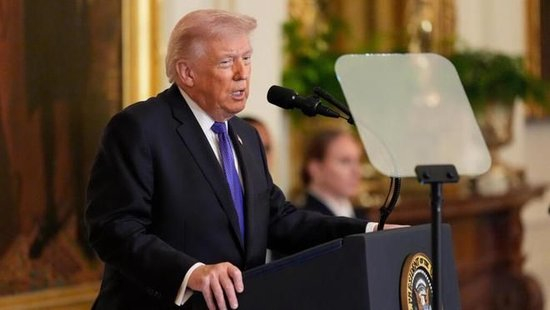
On March 2, local time, U.S. President Trump delivered a speech at the White House on the attack on Iran.
As for some people who believe that the United States' actions against Iran have harmed China's interests, a British scholar pointed out that China has a "long-term calculation" on the Iran issue, and this statement "needs to be viewed rationally."
This article noted that the United States and Israel launched air strikes against Iran at a time when Trump is expected to visit China in four weeks, and the action took place during the negotiations between the United States and Iran. Some Chinese media commented, "The negotiations are not so much a sincere search for a peaceful solution to the dispute, but a tactical pause for the resumption of military strikes."
Pei Minxin, a professor at Claremont McKenna College in California, said that this assessment "may well reflect an increasingly popular view among Chinese elites and the public that the United States cannot be trusted." He is worried that this will also have an impact on Trump's expected visit to China.
In response to Trump's planned visit to China, Chinese Foreign Ministry spokesperson Mao Ning reiterated on March 2 that China and the United States are maintaining communication on the interaction between the two heads of state. I currently have no information to provide.
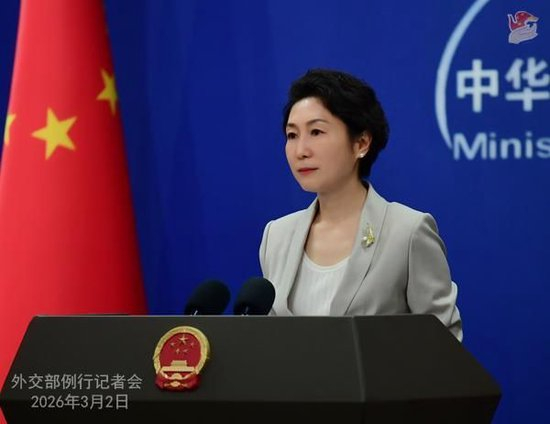
Chinese Foreign Ministry Spokesperson Mao Ning hosts a regular press conference
Mao Ning also emphasized that the attack and killing of Iran's supreme leader seriously violated Iran's sovereignty and security, trampled on the purposes and principles of the United Nations Charter and the basic norms of international relations, and China firmly opposed and strongly condemned this.
The article mentioned that since the Busan meeting between the heads of state of China and the United States in October last year, the United States has not only taken action against Iran, an important oil supplier to China, but also kidnapped President Maduro of Venezuela, which is also an oil-producing country friendly to China. Under Trump's intimidation, Panama illegally revoked Hong Kong's CK Hutchison's port operating rights, triggering strong dissatisfaction in China.
"Trump may think he is showing off military power to deter Beijing," said Danny Russell, a researcher at the Asia Society Policy Institute. "But his actions in Venezuela and Iran are more likely to prompt Beijing to strengthen its countervailing capabilities and accelerate its alignment with Russia. Overall, this attack weakens the prospects for stability or progress in Sino-U.S. relations."
Some people also feel that Iran's actions break the previous view that Trump will visit China in a "weak state." The U.S. Supreme Court previously rejected Trump's "reciprocal tariffs." The New York Times reported last week, citing sources, that the Trump administration had postponed a $13 billion arms sale to Taiwan out of concern for China.
Zineb Ribois, a researcher at the Hudson Institute, said that the air strike on Iran broke the common perception that President Trump has been weakened. In the long run, this move can free up U.S. resources and thus affect the game pattern across the Taiwan Strait.
She wrote in an analysis article: "For every year Washington spends dealing with Tehran, Beijing will gain one more year to deploy in the Pacific. The direction of the Middle East will determine whether the United States can win the decisive game of this century - mainland China's actions against Taiwan."
In addition, Ribois said that the postponement of arms sales to Taiwan suddenly has a different interpretation.
He said that by shelving the arms sales before the air strikes, it looked like Trump was making concessions to China after China warned not to sell arms to Taiwan in early February. Now, this incident can be reinterpreted as: the United States made active concessions based on its strength advantage. This is a 'gift' that Trump chose to send, rather than the result of China's coercion.
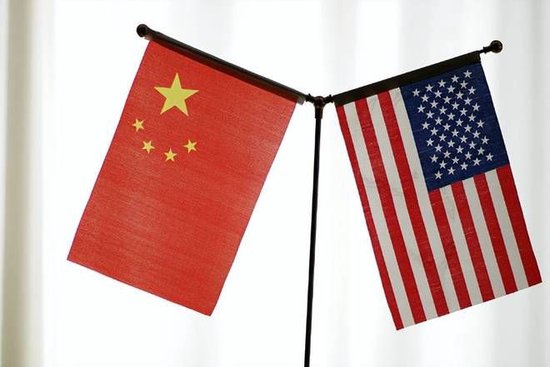
Agatha Kratz, a partner at the consulting firm Ruizhid, speculated that although the goal of the US action is vague, it objectively "cut off China's partner network" and Washington will also avoid triggering new crises during military operations in the Middle East.
Affected by the situation in the Middle East, international oil prices jumped sharply on March 2, with the benchmark price of Brent crude oil rising by more than 13%.
Gong Jiong, a professor at the Department of Economics at the University of International Business and Economics, said that once the Strait of Hormuz is blocked, it will inevitably have an impact on China, but China's large imports of oil from Russia can provide a certain buffer. He also believes that real regime change is unlikely to occur in Iran.
Ahmed Abdul, an associate researcher at the Middle East and North Africa Program at Chatham House in the UK, believes that China has a "long-term calculation" on the Iran issue. Although a series of actions by the United States have quickly impacted China's interests, this statement "needs to be viewed rationally."
He told Nikkei Asia that countries in the "Global South" do not regard China as a substitute for the United States and do not expect China to confront the United States militarily. However, the Trump administration "may suffer huge losses because it is shaping the use of force and disregard of international law into the new normal of international politics."
Abdul said that the war and the attack on Iran's supreme leader may "make Iran tough on the United States and Israel for generations" and "make it easier for Iran to rely on China."
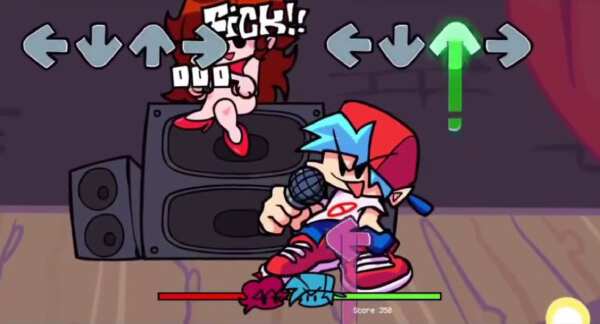
fnf silly billy module is a very exciting music level-breaking game, where players can enjoy the fun brought by music. There will be a large number of music tracks and level-breaking modes to bring you a new experience, and players can unlock different content every time they play. Interested players can come to this site to start a new music journey.
fnf silly billy module introduction
The fnf silly billy module is a new module of Friday Night Funk's music level-breaking game. Players need to click on the corresponding position according to the dropped notes to complete the level. Each level has different enemies. Click on the correct note to get points. At the end, the score is higher than the opponent's, which means victory. This module adds a large number of new levels, and completely transplants the HitSingle-Silly Billy (The Fool) track. The music of this module is very nice. Players need to control the character to flexibly challenge and start a magical rhythmic journey through the levels.
fnf silly billy module highlights
1. Observe the changes in Silly Billy's facial expressions. They can sometimes hint at the upcoming rhythm difficulty.
2. Use the practice mode to get familiar with the unique rhythm pattern of the new character Silly Billy and improve your reaction speed.
3. Mastering the rhythm is the key, pay attention to changes in the music beat, and predict the timing of key presses in advance.
4. When faced with rapid combos, keep your fingers light to reduce misclicks. Continuously correct combos can trigger combo rewards.
fnf silly billy module features
1. Continue playing and accumulate experience to unlock Silly Billy’s ultimate form, which has exclusive skills and special effects.
2. In multiplayer battles, stay calm, observe your opponent's mistakes, and use counterattack notes to turn defeat into victory.
3. Pay attention to the melody changes in the background music. The climax of the melody is often accompanied by an increase in rhythm difficulty.
4. Learn to use the perfect hitting technique and click when the note falls exactly on the judgment line to get high scores.
fnf silly billy module advantages
1. Complete weekly challenges to unlock Silly Billy’s special skin and background music, making the game more interesting.
2. When challenging a high level of difficulty, start at a slow speed, gradually adapt to it, then speed up, and work steadily.
3. Allocate your attention, not only to the falling notes, but also to the challenge prompts on both sides of the screen.

fnf silly billy module gameplay
1. The game also has a lot of characters that can be unlocked, and the painting style is very magical. Complete interesting challenges and wonderful adventures are waiting for you to join.
2. The game graphics are very magical and highly recognizable, paired with the beautiful music, giving you an unusual musical adventure world.
3. The game has a large number of levels, each level has different music challenge tasks, and as the level goes by, it becomes more and more difficult to pass the level.
4. New level-breaking content is presented to you, where you can enjoy the joy of the game. Every challenge will allow you to enjoy more excitement, and a lot of content can help you complete it quickly.
fnf silly billy mod review
This time, BF has been replaced by Blackie, and there are many music levels that can be experienced. He is also called the King of Insiders by players. In this game, you can experience different interesting gameplay every day. Players who like the FNFSilly Billy module, come and download it to experience it!
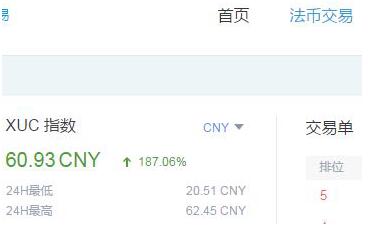
The recent blockbuster news that XUC has been launched in the OKEX fiat currency trading area has really become popular in the currency circle, which brings convenience to investors to quickly trade XUC! At the same time, this good news has also contributed to the market trend of XUC! The XUC index of OKEX-fiat currency trading area-point-to-point trading soared by 187% in 24 hours.
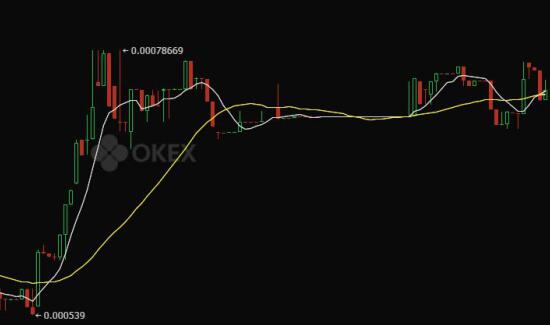
Before logging into the legal currency trading area, the XUC/BTC currency transaction fell at 0.000539 BTC, which was a good news for XUC. It peaked at 0.00078669 BTC, an increase of 45%. Currently, the total 24-hour trading volume of XUC on OKEX currency trading pairs XUC/BTC, XUC/ETH, and XUC/USDT reaches a maximum of 200,000 XUC. As of press time, it was around 140,000 XUC, and the price had stabilized to 0.00074486 BTC, an increase of 37% in 24 hours!
The rising trend of XUC has attracted much attention. Many people are curious. According to the convention, the legal currency trading area of OKEX platform provides mainstream currencies (BTC/LTC/ETH/ETC/BCH/USDT). So who is XUC who was selected as a "new member" of the legal currency trading area? Maybe we can know from the following introduction.
XUC is a token issued by the Exchange Alliance. It has opened currency trading functions on world-renowned exchanges such as HitBTC/OKEX/CEX. The popularity of XUC is mainly due to the exchange alliance project behind it. The Exchange Alliance is the world's first decentralized trading network that does not require credit endorsement. The project itself was born to break through the difficulties in the application of blockchain technology.
Vision and Mission of the Exchange Alliance
Born in 2017, the Exchange Alliance aims to enable users to trade between different exchanges/different digital assets through seamless connections between digital assets, and to solve the current situation of separation between exchanges and users caused by differences in region, legal currency, language, etc. The exchange alliance builds a decentralized exchange trading network that does not require credit endorsement to connect digital asset exchanges around the world and achieve a win-win situation for exchanges, users, and exchange alliances.
Exchange Alliance Technology Model
The exchange alliance opens up and connects digital asset exchanges and proposes the value proposition of a decentralized trading network. The biggest difference between the exchange alliance and Ripple is that the exchange alliance does not require both parties to trust each other when value exchange occurs. This allows any exchange to join the alliance. The exchange alliance does not even require an intermediary such as Ripple to realize value transmission (this method has been proven to be ineffective in practice).
Through the decentralized exchange solution, the exchange alliance can robustly avoid the damage caused by single points of failure, reduce the possibility of many malicious attacks, and at the same time avoid the risks caused by geopolitics. Unlike existing "on-chain" decentralized exchange solutions (such as 0x, ethdelta and altcoin.io), transactions that occur on the exchange alliance are instant, which solves the biggest pain point of all current decentralized trading technology solutions. Current decentralized transactions are not only expensive but also slow (for example, each Bitcoin transaction requires a $5 handling fee and transfer confirmation times are up to 1 hour). Such technology cannot be applied on a large scale. In addition, the exchange alliance supports cross-chain transactions, which means that transactions not only occur on a separate blockchain (the above-mentioned 0x and etherdelta only support digital currency transactions on the Ethereum blockchain).
The core technologies used by the exchange alliance include payment channels, atomic swaps and order book integration. Payment channels are a mechanism introduced by the Lightning Network for instant, off-chain digital asset transactions. In fact, the mutual conversion of two digital assets is achieved through "atomic swaps", which occur directly in the payment channel. In the exchange consortium, payment channels use slightly modified HTLCs. To put it simply, taking the BTC/LTC transaction as an example, real Bitcoin flows from exchange A to exchange B in the Bitcoin payment channel, while real Litecoin flows from exchange B to exchange A in the Litecoin payment channel. HTLCs guarantee the atomicity of asset swaps: either all succeed or the transaction fails. The exchange alliance collects order information through the corresponding payment channels (for example, BTC/LTC transaction orders will only be broadcast in the BTC and LTC payment channels). This method ensures the efficiency and decentralization of the system. The order book should be shared with all alliance members in the network with minimal latency. Each node in the exchange alliance will continuously monitor the trading order books of different digital assets.
To sum up, the exchange alliance will strive to solve the pain points in the development of the blockchain industry through technological innovation. It is not surprising that XUC was selected into the OKEX legal currency trading area! What is more worth mentioning is that XUC has a clear and long-term plan for value discovery: functionally, XUC will serve as a reward mechanism. Rewards are provided to developers of the exchange alliance open source community, service nodes of the exchange alliance network, traders, and exchanges that join the alliance; in terms of value, the current circulation of XUC is 65 million, most of which have a 10-year lock-up period, and most will be destroyed in the future, so XUC is scarce and deflationary.
January is cold and windy, and the currency market is also experiencing ups and downs. Some people cry and some laugh, but the industry continues, and excellent projects and tokens are also emerging. How to find a currency worth sticking to in the hustle and bustle? Users need not only luck, but also wisdom. The essence of investment is to invest in the future, and XUC represents the future era of exchange interconnection. The future is here, are you ready?
On March 2, local time, the 2026 World Mobile Communications Conference (MWC26) kicked off in Barcelona.
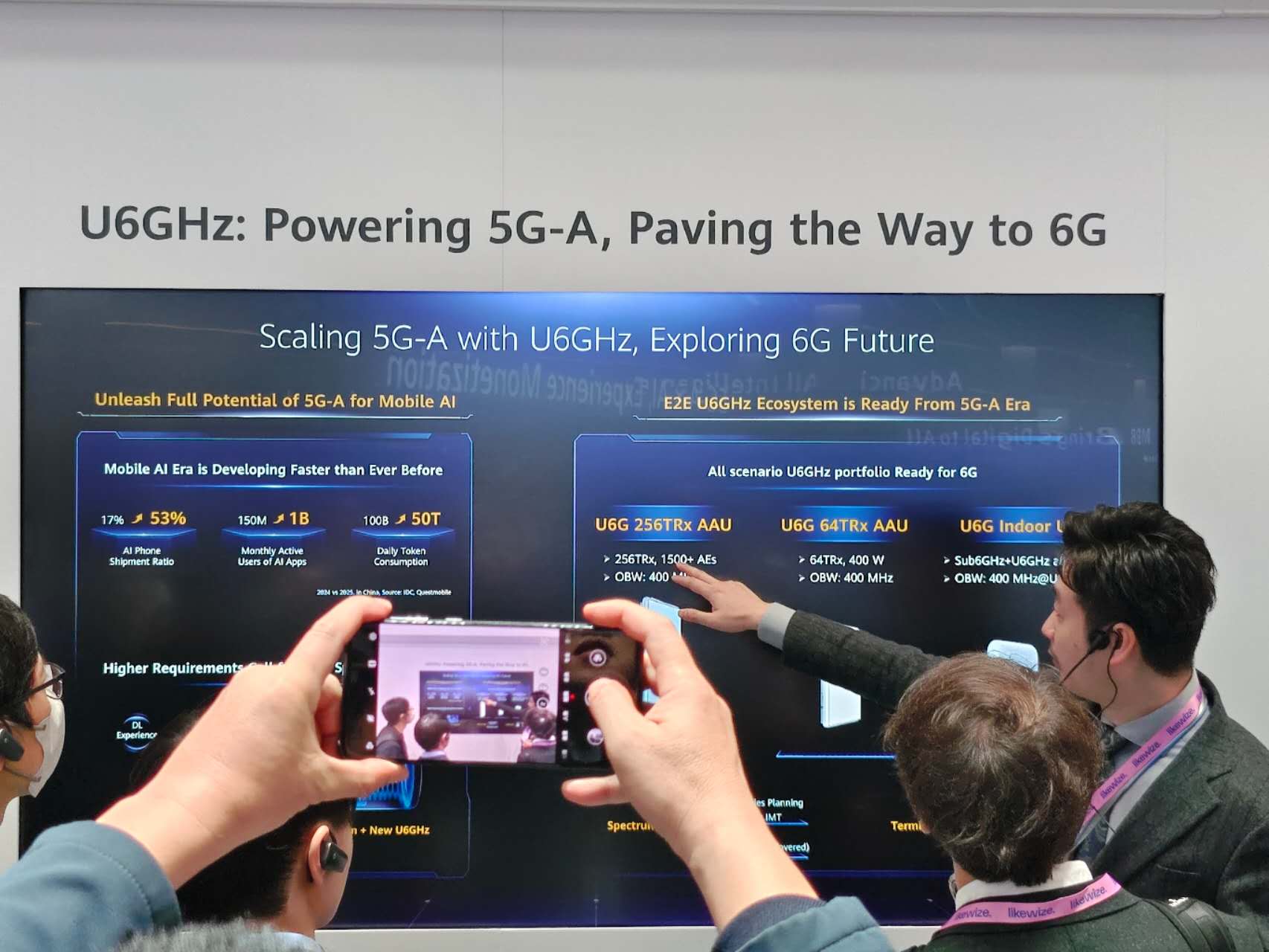
The Huawei booth was still crowded with people. Walking into Huawei's operator business exhibition area, you will find that many people are talking about a technology "U6GHz", which is also one of the key words of Huawei's participation in this exhibition. Before the launch, Huawei released a series of U6GHz full-scenario products and solutions, covering a complete matrix of macro stations, small stations, and microwaves.
What is U6GHz and why is it called the "golden frequency band"? Why do communication equipment giants such as Huawei focus on this technology in 2026? Why is U6GHz the key to unlocking the potential of 5G-A networks, and can it also support smooth evolution towards 6G?

Source: Observer.com
To understand these, we have to start with the current development status of communication technology. In 2025, 6G was included in the Chinese government work report for the first time, and our country has also launched the second phase of 6G technology experiments. However, the 6G standard is not expected to be frozen until 2029, and official commercial use may not be until 2030.
Before the official arrival of 6G, 5G-A, known as "5.5G" in the industry, was the mainstream commercial technology for global operators. Especially with the explosive growth of AI applications and terminals, the mobile industry is facing unprecedented opportunities and challenges. AI multi-modal interaction has increased uplink demand by 3-5 times. Real-time decision-making relies on low latency and deterministic guarantees. Ubiquitous agents require more secure and reliable wide-area connections. This makes 5G-A the focus of business innovation and future technology evolution.
At MWC26, Huawei ICT BG CEO Yang Chaobin said that the next five years will be a key window for the explosion of mobile AI business, and it will also be a period of opportunity for the entire industry to create new value. 5G-A has become an inevitable choice. It brings a tenfold increase in uplink and downlink speeds to meet the AI business experience; it also introduces new IoT technologies such as RedCap and Passive-IoT to support the Internet of Everything; at the same time, AI technology has also been introduced into the network to provide diversified network capabilities for businesses to meet the needs brought about by the rapid development of AI.
As of January 2026, 374 operators around the world have completed 5G network deployment. On the basis of wide-area coverage, the commercial implementation of 5G-A technology is accelerating. The current number of global 5G-A users has exceeded the 70 million mark. Currently, in the Chinese market alone, there are more than 135 mobile phone terminal models supporting 5G-A technology, and the cumulative shipment volume has exceeded 170 million units.
Compared with 5G commercialized in 2019, 5G-A has four key features: downlink 10Gbps (10Gbps), uplink gigabit (1Gbps), 100 billion connections, and endogenous intelligence. But if you want to unlock the full potential of 5G-A and allow traffic to run at full speed on this highway, you must widen the "lane", that is, the spectrum.
Yang Chaobin said that 5G-A has achieved large-scale commercial use in more than 300 cities around the world, and its deployment is expanding to all frequency bands, continuing to release technological dividends. The continuous improvement of 5G-A capabilities relies on the introduction of new spectrum and the re-farming of existing spectrum.
This is connected with what Huawei calls "U6G", which is a new spectrum resource.
The full name of U6G is Upper 6GHz, also known as U6GHz. It refers to the upper half of the 6GHz frequency band. The specific frequency range is 6425-7125 MHz, spanning a continuous 700MHz bandwidth. It is also the last 700MHz continuous bandwidth resource in the Sub-6GHz mid-frequency band.
There are many spectrums, high frequency bands have wide bandwidth but poor coverage, and low frequency bands have good coverage but narrow bandwidth.
The reason why U6GHz is called the "golden frequency band" is because it has the dual advantages of wide coverage and large capacity, and has become a key frequency band for 5G-A evolution and commercial use. Not only that, U6GHz, as the n104 frequency band of 5G-A, is also a core candidate frequency band for 6G. It can achieve intergenerational reuse and is the key to operator stock investment protection and smooth connection to 6G.
In other words, U6GHz will unleash the potential of 5G-A, and is also making a forward-looking layout for 6G to protect operators' long-term investments. But the development process of this golden frequency band has not been smooth sailing.
Source: Observer.com
As early as 2022, the world had launched a fierce "spectrum war" around the 6GHz frequency band.
At that time, some countries represented by the United States tended to reserve the entire 6GHz frequency band for Wi-Fi, while Europe, China, the Middle East and other regions advocated using the first half (U6GHz) for 5G and even future 6G cellular mobile communications. In the end, the World Radio Conference (WRC-23) decided to allocate U6GHz for authorized mobile services, clarifying the IMT (International Mobile Communications) positioning of U6GHz under the framework of the International Telecommunications Union (ITU). This is like applying for a property rights certificate for this "golden land", making it clear that it can be used to build public mobile networks.
Although the United States still reserves the entire 6GHz frequency band for Wi-Fi and other unlicensed services, more than 20 countries, including China, the United Arab Emirates, Brazil and many European countries, plan to use the U6G frequency band for IMT (International Mobile Communications). Among them, the United Arab Emirates and Hong Kong, China have released U6G spectrum, and the U6G ecosystem is accelerating.
However, U6GHz must not only meet the requirements of the rapid development of current AI services, but also meet the higher performance requirements of future 6G services, and also faces a number of technical challenges.
One is the coverage problem. The higher the frequency, the greater the loss. The propagation loss of U6GHz is more than 12dB worse than that of C-Band. If the coverage radius cannot be aligned with existing 5G site sites, operators will need to build sites more densely, and costs will be uncontrollable. The 256T U6GHz AAU exhibited by Huawei this time has achieved double breakthroughs in coverage and experience with its industry-leading 1,500+ antenna arrays: the peak rate of a single user has entered the 10G era, and the entire network capacity can support a total traffic of 100,000 Gigabit in a single cell, and can easily cope with the explosion of large-bandwidth services such as AR/VR and 4K live broadcast.
Second, larger bandwidth and more channels will inevitably lead to a surge in equipment power consumption and weight. If a base station equipment weighs more than 100 kilograms, and the wind resistance is huge, the existing sky surface cannot bear it at all, and the tower can only be rebuilt. Huawei's response strategy is to innovate from the underlying materials, using advanced heat dissipation technologies such as three-dimensional radiator cooling and diamond substrates, combined with the "0bit 0Watt" intelligent shutdown algorithm, to strive to soar in performance while controlling energy consumption and volume within an acceptable range.
At present, the verification of U6GHz by global operators is in full bloom. Through joint innovation with strategic partners such as Huawei, e&UAE has successfully completed live network testing in the U6GHz band, achieving the ultimate 10Gbps experience. In Europe, Vodafone completed Europe's first large-scale U6GHz spectrum test. In Central Asia, Uztelecom of Uzbekistan teamed up with Huawei to innovate U6GHz spectrum technology and demonstrated the latest U6GHz verification results at ICT Week 2025, which can achieve transmission rates of up to 10 Gbps. In Latin America, Brazil's TIM teamed up with Huawei to complete U6GHz technology verification in the Americas. In China, China Mobile has also completed U6GHz innovative testing and verification in Zhejiang, and successfully achieved a stable experience with four-carrier aggregation downlink peak rates exceeding 10Gbps with its industry-leading U6GHz solution.
At the industry chain level, U6GHz CPE terminals have been officially launched, and markets such as the United Arab Emirates have successfully completed end-to-end testing and verification and begun commercial deployment. Mainstream CPE and mobile phones are expected to be commercially launched in 2026. This series of verification results proves that the U6GHz spectrum is a key strategic spectrum for the development of 5G-A technology, paving the way for future technology evolution.
As a core promoter of U6GHz industry development, Huawei has also clarified its long-term technology roadmap this time. In 2026, Huawei will release a 5G-A full-scenario solution including U6GHz, and plans to fully support operators in completing U6GHz large-scale network deployment in 2028.
In 2026, global spectrum allocation has entered a critical window period. U6GHz has become the consensus in the development of 5G-A communications with its perfect balance between coverage and capacity. Global operators are working together to transform U6GHz from vision to reality. By then, you may be at a concert with thousands of people, performing real-time holographic interactions through AR glasses, or driving a smart car on the road. Perhaps what supports all these experiences is the "golden band" technology we are talking about today.

On one side is the dance floor, on the other side is the war. This is not a dramatic collage, but a real aspect of the current operation of American power.
According to "Reference News", on February 28, Eastern Time, the White House posted a photo on its official social media account saying, "President Trump is monitoring U.S. military operations in Iran: Operation Epic Fury."
White House Press Secretary Levitt disclosed that Trump was sitting at his Mar-a-Lago residence in Florida and paying close attention to the development of the situation. According to reports, senior officials including the Director of the Central Intelligence Agency, the Secretary of Defense and the Chairman of the Joint Chiefs of Staff were also present.
Before that, on the evening of February 27, the Mar-a-Lago banquet hall was brightly lit, and a charity dinner was being held.
"I have to go to work"
"Everyone, have fun! I have to go to work." Trump told the guests in formal attire after the national anthem was played that night.
Few people realize that at the same time, after passing through the gilded banquet hall door and layers of security, the other side of the huge manor has been surrounded by black curtains, and a space with a wooden beam structure has been temporarily transformed into a war room. America's top national security officials gathered together to prepare for a long night.
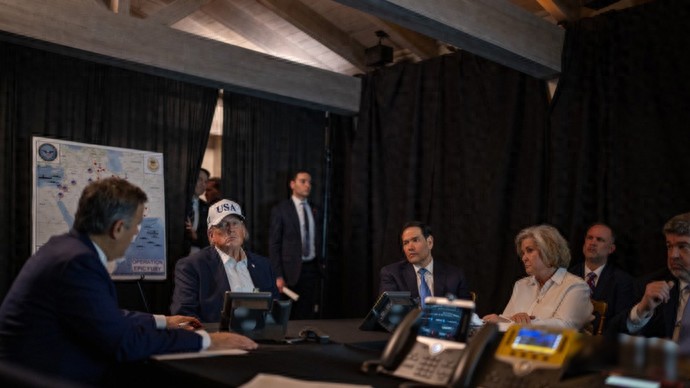
Photos released by the White House on February 28 showed Trump, wearing a suit and a baseball cap embroidered with the word "USA" on his head, sitting around a long table filled with phones with Secretary of State Rubio, White House Chief of Staff Wiles and others. Behind him is a map labeled "Operation Epic Fury," indicating the deployment of U.S. troops in the Middle East and the location of Iranian targets.
According to the White House, before the attack, Rubio called all members of the Congressional Bipartisan Intelligence Leadership Group for a congressional briefing and briefed seven of them. At the same time, U.S. Vice President Vance presided over the meeting in the White House Situation Room, with Director of National Intelligence Gabbard, Treasury Secretary Bessent and other Cabinet secretaries by his side.
On March 1, the White House released multiple videos and posts, announcing the launch of military operations against Iran and confirming the death of Iran’s Supreme Leader Ayatollah Ali Khamenei. However, Trump did not address the nation or hold a news conference to explain his strategic goals or drum up public support.
More controversial than the action itself is the space in which the decision took place. Commanding a highly classified military operation in a business club has once again raised questions about Trump's above-mentioned actions.
Some U.S. national security experts and intelligence officials are concerned that, as a paid membership club, does Mar-a-Lago have the highest level of security? Is there any risk of information leakage in a membership-based environment? Are state decisions being “privatized”?
This is not the first time similar concerns have arisen.
At the beginning of his first term, after North Korea launched missiles into the eastern sea, Trump discussed countermeasures with then Japanese Prime Minister Shinzo Abe on the terrace of Mar-a-Lago. Guests gathered around to watch and uploaded photos online, sparking a safety controversy. To that end, the Trump team has tightened photo rules and beefed up the club's confidential communications system.
Since then, Mar-a-Lago has been the site of many major military decisions.
In 2017, Trump authorized an attack on Syria. In 2020, the decision to eliminate Iran's senior general Soleimani was made in an underground conference room. Last year alone, air strikes against the Houthis in Yemen, Tomahawk missiles fired at suspected Islamic State camps in Nigeria, and operations against Venezuela to kidnap Maduro were all launched here.
But the structure, built in the 1920s and anchored to the reef with reinforced concrete, is not impregnable. Last month, a gunman was shot dead by the Secret Service after breaking into a secure area with a fuel can.
After the US-Israeli attack on Iran, the US has announced to strengthen security around the estate and the White House.
'More important than ever'
Just this past weekend, Trump rarely went out to play golf as usual. But he was still attending a super PAC fundraiser at Mar-a-Lago after dinner on Saturday.
White House press secretary Levitt said the fundraiser was "more important than ever."
While carrying out air strikes and fundraising, some commentators said that when military decisions are made in private clubs, the boundaries of power become increasingly blurred. Behind the US president's free switching between military operations and political mobilization is a complex picture in which state machinery and personal political orbits operate in parallel, and public power and private space are deeply intertwined.
(Editor’s email: ylq@jfdaily.com)
Amid the unpredictable situation in the Middle East, French President Mark broke France's decades-long taboo on nuclear issues, promising to increase the number of nuclear warheads and clarifying France's role in European security.
According to CCTV News, on March 2, local time, French President Macron announced that he had ordered an increase in the number of nuclear warheads possessed by France. Macron said, "I have asked for an increase in the number of nuclear warheads." Macron emphasized that the specific number will no longer be announced to the outside world.
Macron said that in the context of the current increasingly tense international security situation and continued global instability, it is necessary to increase the size of France's nuclear arsenal.
It is worth noting that France and Germany also announced plans to deepen cooperation in the field of nuclear deterrence on the 2nd. According to a joint statement, the two countries will establish a high-level steering group to coordinate strategies. Germany will participate in French nuclear drills and inspections of strategic installations, while the two countries also plan to strengthen conventional and missile defense capabilities with other European partners.
"In response to the evolving threat landscape, France and Germany have agreed to cooperate more closely in the field of deterrence," the statement said.
Zhao Yongsheng, a researcher at the Global Value Chain Research Institute of the University of International Business and Economics and director of the French Economic Research Center who is conducting research in France, told China Business News that the war in the Middle East spilled over, causing the French military base in the United Arab Emirates to be raided. According to what he learned after talking to French policymakers, the French side was quite touched by this incident.
Zhao Yongsheng explained that the above-mentioned decision was announced in this context. Macron’s decision is one of the most significant changes in France’s nuclear strategy since the end of the Cold War. It can be seen from this move that “countries with nuclear weapons like France are increasingly worried about the current international situation. Moreover, unlike Venezuela and other South American countries, European countries in the Middle East have intricate and vital interests.”
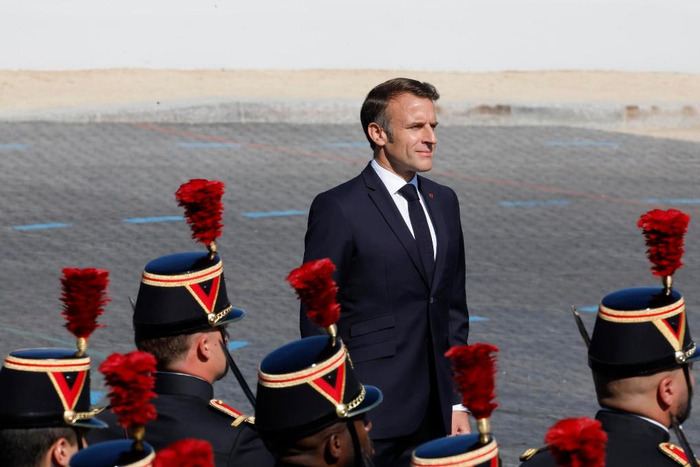
France increases nuclear weapons
On the 2nd, Macron elaborated on France’s new nuclear deterrence strategy at the French Navy nuclear submarine base near Crozon on the Brittany Peninsula in western France. The base hosts four French nuclear submarines.
“It is imperative to increase our nuclear arsenal,” Macron said. When delivering his speech, Macron stood on a high platform in front of the black "Téméraire" ballistic missile submarine.
"One of our submarines, like the one behind me, can carry as much strike power as all the bombs dropped on Europe during World War II," he said.
In his speech, Macron also outlined plans for greater cooperation with European countries, naming Germany, Poland, Greece, the Netherlands, Belgium, Denmark and Sweden, which would include joint nuclear exercises and the eventual possible temporary deployment of French nuclear fighter jets to allies.
"I believe I can say that our partners are ready," Macron stressed.
Currently, France and the United Kingdom are the only two nuclear powers in Europe. In short, France's nuclear arsenal spans both air and sea, and it always has at least one submarine patrolling the seas. But unlike the United Kingdom, France is not a member of the NATO nuclear planning group, although successive French presidents have emphasized that France's major national interests have European significance.
An aide close to Macron said Monday's speech was the culmination of months of consultations with European allies.
As early as 2020, Macron proposed a strategic nuclear dialogue with European allies for the first time, but the proposal did not initially receive much support.
Zhao Yongsheng told reporters that the current international situation and changes in the United States' attitude towards NATO have led EU members in NATO countries to re-examine their security strategies and begin to accept Macron's ideas more openly.
Macron also emphasized this time that France has no intention to replace U.S. nuclear weapons and NATO as the ultimate guarantee of the security of the European continent.
"From the very beginning, it was clear to us and to our partners that this effort would complement NATO's nuclear mission," Macron stressed.
In order to appease the domestic public, he insisted that the final decision on whether to launch nuclear weapons will be firmly in the hands of the French president, who will continue to define France's so-called "core interests" alone.
Héloïse Fayet, an expert on nuclear deterrence at the French Institute of International Relations, said that Macron's speech "achieved success in a situation where France's domestic political environment was restricted and opposition was high. The speech struck a good balance between emphasizing French sovereignty and its contribution to European security, and proposed a new concept of forward deterrence, which seems to have been understood by allies."
According to reports, France currently has about 300 nuclear warheads, which is about one-tenth the size of the nuclear arsenals of the United States and Russia. Macron said France would not reveal how many nuclear weapons it had or how many more it planned to add, adding only that the increase was to maintain the "credibility" of its arsenal.
"This is not an arms race... What is crucial is that our opponents, or the alliance of opponents, do not dare to act even remotely and dare to attack France, and they will suffer irreparable losses," Macron said.
CCTV News reported that analysts believe that this statement shows that France is strengthening its nuclear deterrence capabilities in the face of geopolitical uncertainty and security challenges, and at the same time choosing to adopt a more confidential attitude in terms of the scale of its nuclear forces.
Zhao Yongsheng told reporters that, first of all, this statement is a response to the recent raid on the French military base in the United Arab Emirates in the Middle East situation. Secondly, both Germany and France have been revitalizing their military industries recently, but German military industry companies are more eye-catching, and Germany's budget legislation is also relatively open. France is relatively low-key in comparison, but related work is also progressing steadily and its budget investment is large.
France and Germany announce the establishment of a joint "nuclear steering group"
Currently, with only 14 months left in Macron's term, he is accelerating the pace, emphasizing that the joint nuclear program should be launched this year, including hosting European allies in "strategic locations" and holding joint exercises.
As mentioned earlier, France and Germany announced the establishment of a joint "nuclear steering group" to discuss nuclear doctrine and "the appropriate combination of conventional, missile defense and French nuclear capabilities" in the strategic cooperation between the two countries.
"So, today, a new phase of French deterrence may be taking shape. We are starting what I call 'forward deterrence.'" Macron said, which means integrating more and more European countries into France's deterrence system - starting with participation in nuclear exercises.
"This will ultimately provide the conditions for deploying parts of our strategic air force to allies, depending on the situation," Macron added, referring to squadrons of nuclear-capable Rafale fighter jets.
A senior French official said after Macron's speech that Macron's pledges were designed to ensure that the next French president could not easily walk back them. He added that Macron's speech was actually "more consensus-based" than it appeared on the surface.
The official stressed that no president would dare reverse a decision to increase nuclear warheads.
German Chancellor Mertz said Paris and Berlin wanted to take "concrete measures, including Germany's regular participation in France's nuclear exercises." Germany and Belgium are members of the U.S. nuclear-sharing agreement under the NATO framework, and their fighter aircraft are equipped with equipment to carry U.S. nuclear warheads. Swedish Prime Minister Kristersson said in an online article that Macron's initiative "helps to supplement collective capabilities." “Since World War II, the importance of strengthening Europe’s collective defense capabilities has never been more prominent,” he wrote.
Polish Prime Minister Tusk said: "Poland is consulting with France and some of its closest European allies on an advanced nuclear deterrent plan."
Zhao Yongsheng told reporters that in recent years, we can see that France has loosened its concept. From the previous "only France possesses nuclear weapons" to the current trend of continued integration of the European Union, it has begun to think about cooperation with Germany and other European countries in nuclear technology. "In addition to technology, financial investment is also a practical issue. The development of nuclear weapons costs a lot. France also has practical considerations in this regard when cooperating with EU countries."
 Don’t Panic If The Local Connection Disappears! Full Analysis And Solutions To Hardware And Software Problems2026-03-03Comments(0)
 A Former British Prison Guard Had Close Contact With A Murderer And Was Sentenced For Violating Professional Standards2026-02-24Comments(0)
 15 Years After Steve Jobs Passed Away: Lost Interviews Reveal The Story Of Apple’s Origins And The Blue Box2026-03-01Comments(0)
 milestone! Belgian Chip Center Develops 250μm² 5nm Fastest And Most Cost-effective ADC Chip2026-03-05Comments(0)