IT House reported on February 21 that the Belgian Microelectronics Research Center (imec) released a landmark 7-bit, 175GS/s analog-to-digital converter (ADC) at the IEEE International Solid-State Circuits Conference (ISSCC 2026) held in San Francisco this week.
This ADC chip uses 5nm FinFET process, with a core area of only 250×250 μm², conversion energy consumption per sample as low as 2.2 picojoules, and the sampling speed is among the fastest in the industry.
While achieving top sampling speed, it also sets a record of extremely small footprint and ultra-low conversion energy consumption of 250×250 μm², providing a new solution to meet the growing throughput and processing needs of data centers driven by AI and cloud computing.
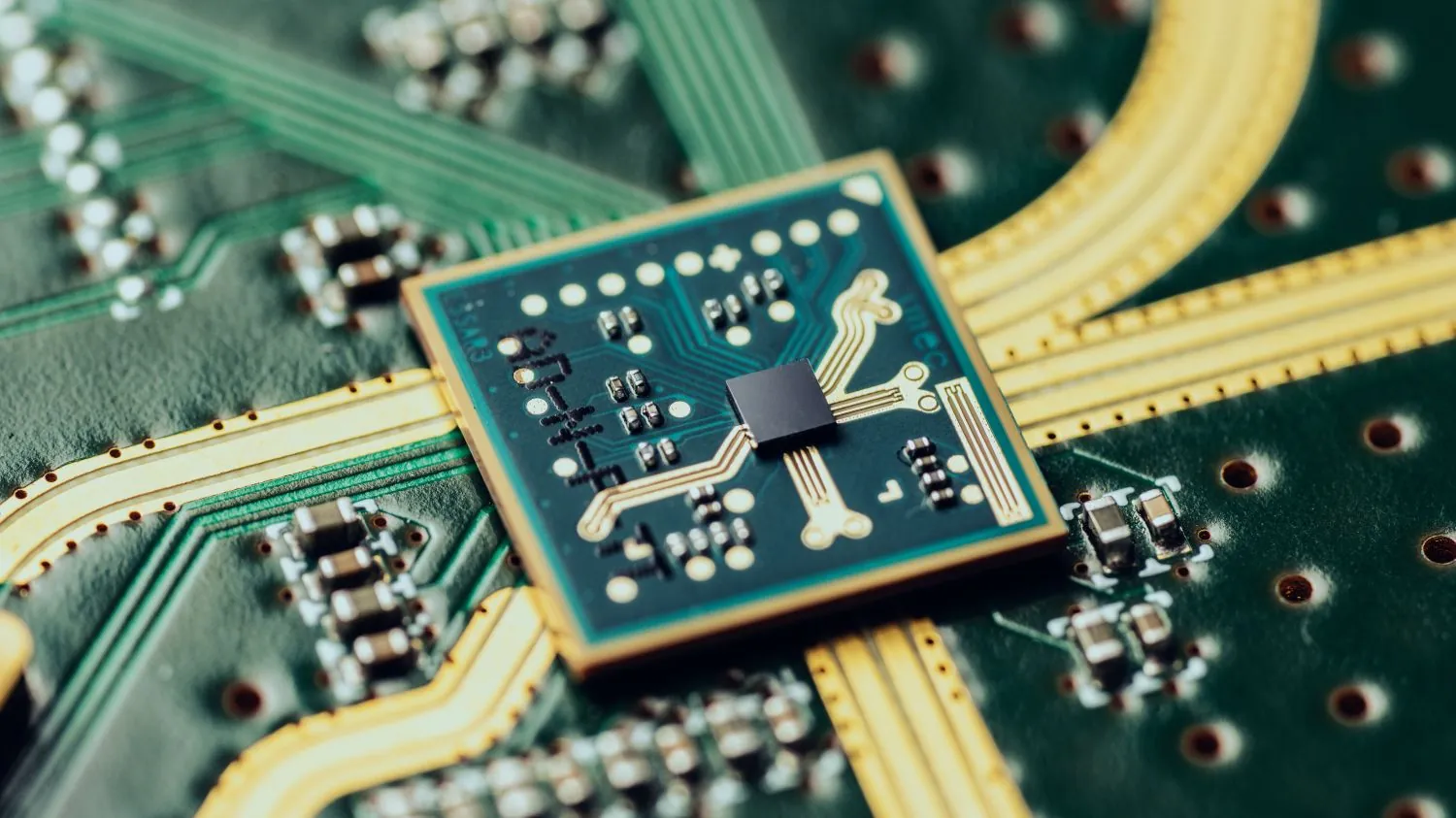
With the explosion of AI and cloud applications, optical communication networks in data centers need to be continuously upgraded to cope with higher throughput and processing pressure. However, when the sampling rate exceeds 100GS/s, the size of the ADC, which is the core component of the optical transceiver, tends to increase dramatically, resulting in extended interconnect lines and the introduction of parasitic effects and energy loss.
Peter Ossieur, Portfolio Director at imec, said: “This combination makes it an extremely attractive solution in digital-intensive wired interconnect applications where every square micron and milliwatt counts.”
At the heart of this breakthrough lies two patented technologies. First, imec uses a novel linearization method to effectively correct the distortion by shaping the ramp signal. Secondly, switching input buffer technology efficiently drives the ADC's 2048-channel time-interleaved array, minimizing electrical load, thereby ensuring signal integrity while achieving ultra-high-speed sampling.
IT House noted that imec will continue to develop the next generation 3nm process design based on the results announced this time, and explore 1.4nm level design solutions, aiming to study how to use these advanced process nodes to create high-performance wired data converters.
Peter Ossieur added: "imec has a long history of developing high-speed integrated circuits for communication applications. One of our core research directions is the development of optical transceivers and their building blocks that can keep up with the fast data rates of wired systems. In this context, our ADC represents a key step towards a new generation of compact, low-power converters, aiming to exceed the performance limits of ADCs based on successive approximation register architectures at ultra-high speeds."