The Milan-Cortina Winter Olympics are being held in Italy. Walking on the streets of Milan, you can feel the strong atmosphere of the Winter Olympics. Inside the stadium, athletes from all over the world compete passionately. Outside the stadium, sponsors compete for advertising space and integrate into the city in various ways.
There are always Winter Olympics-themed billboards on the streets of Milan. TCL took over the largest outdoor billboard in the center of Milan, and famous tourist attractions in Milan also attracted a large number of people. On the morning of February 13, local time, there was a long queue at the Olympic concession store in front of Milan Cathedral. In front of another scenic spot, the Sforzesco Castle, there is also a long queue for Coca-Cola’s pop-up store. Not far away is the experience hall set up by Alibaba. An outdoor transparent crystal ball will become a projection surface for AI-generated visual content at night. TCL’s pop-up store is in front of Milan Central Station.
TCL, Alibaba, and Coca-Cola are all sponsors of the Olympic Global Partner Program (TOP), a top Olympic sponsorship project. Chinese brands participating in this sponsorship program include Mengniu. This Winter Olympics has the largest number of TOP Chinese brand sponsors, and the competition of commercial power has become a major attraction of the Olympic events.
From the arena to the business force on the street
As one of the most watched sports events in the world, the Olympic Games have become a sports marketing venue for many international brands.
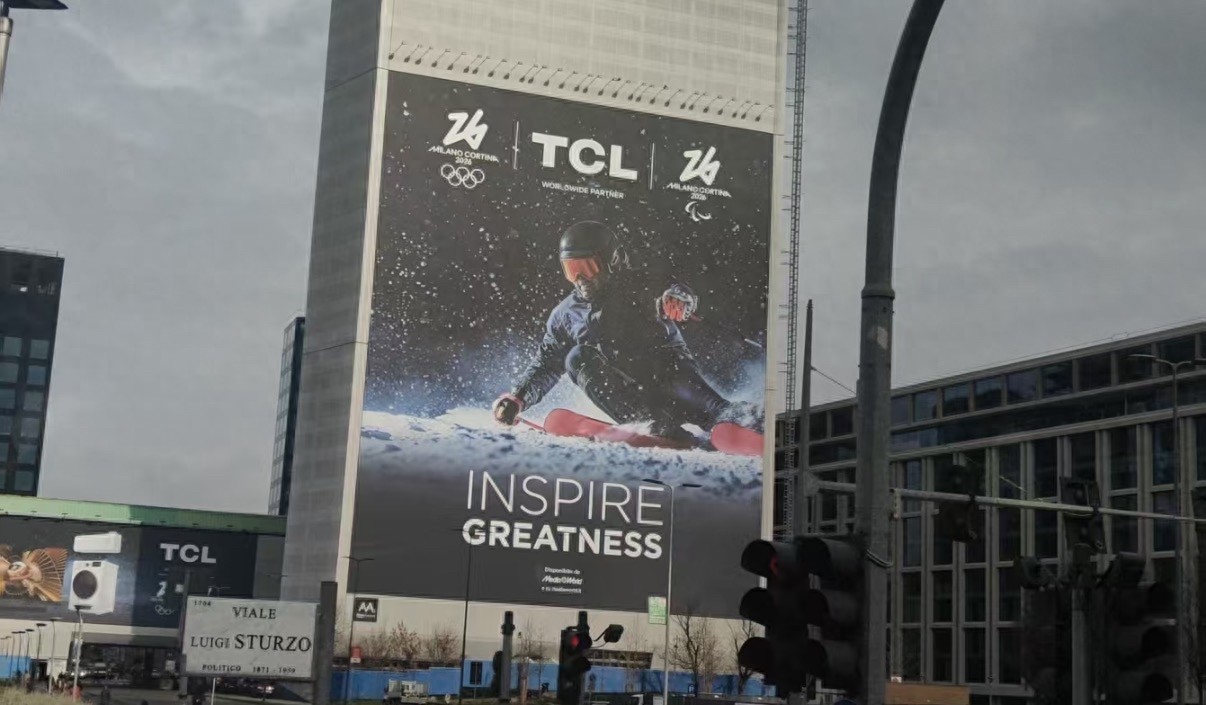
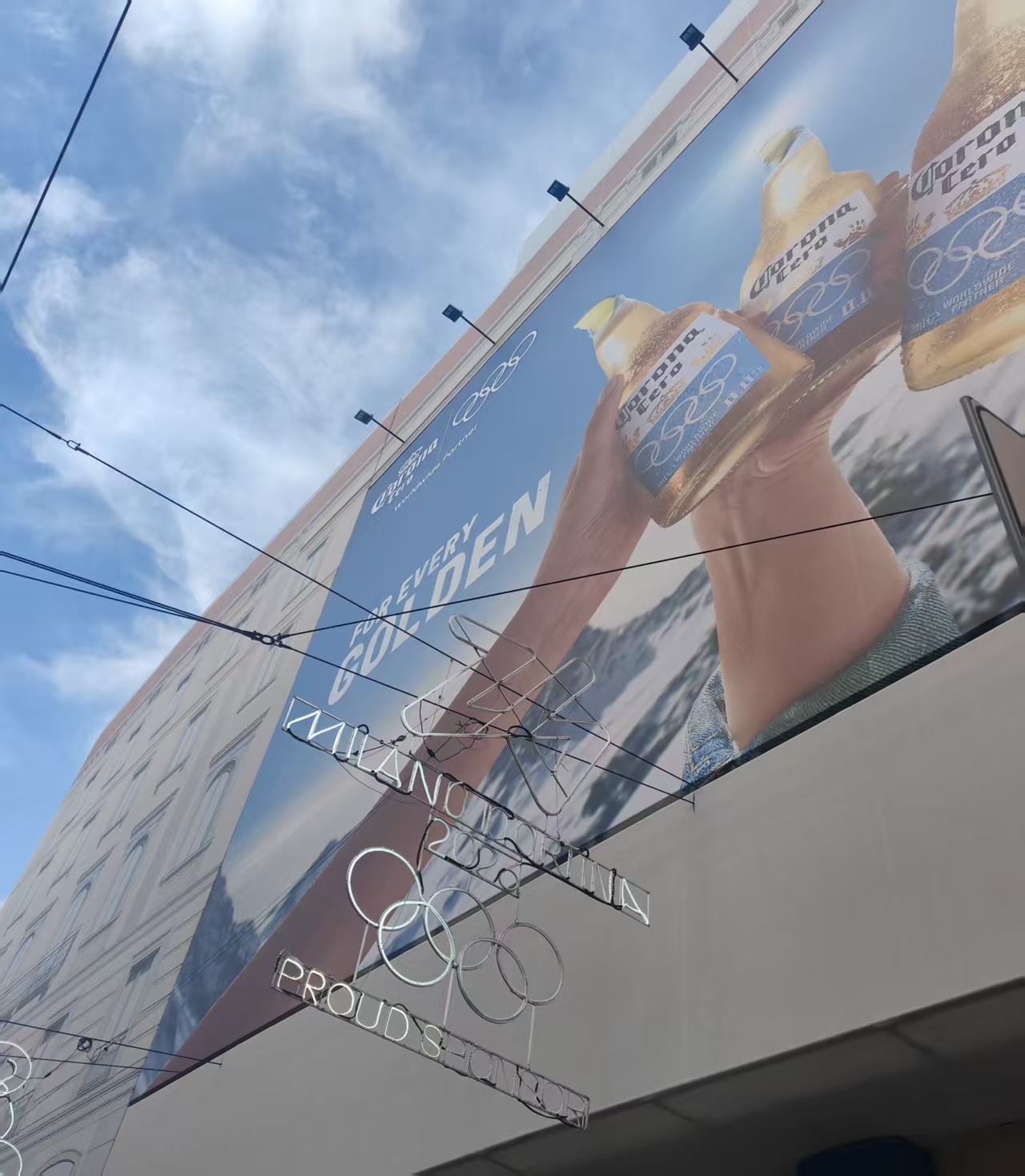
In principle, the height of buildings in the center of Milan cannot exceed the marble Milan Cathedral. There are not many high-rise buildings, so it is not easy to grab huge outdoor advertising space, but Olympic sponsors have still found some obvious positions. TCL's huge outdoor billboard features a scene of skiing in the background, and the billboard next to it displays the company's air conditioners, washing machines and other products. The Winter Olympics-themed outdoor billboards of Corona, owned by Samsung and Anheuser-Busch InBev, are also large, showing mobile phones and beer.
It is no exaggeration to say that the center of Milan has been transformed into a Winter Olympics theme. In addition to billboards on walls, reporters also saw advertisements for TCL, VISA, and Allianz at bus stops and tram bodies. Taking advantage of the privileges of TOP sponsors, these outdoor advertisements are equipped with the Olympic rings.
This Winter Olympics has 12 TOP sponsors, including 3 Chinese sponsors, 4 American sponsors Airbnb, Coca-Cola, Procter & Gamble, and VISA, two Swiss sponsors Deloitte and OMEGA, as well as the German company Allianz, the Belgian company Anheuser-Busch InBev, and the Korean company Samsung. In addition to TOP sponsors, reporters also saw the names of other sponsors at the airport and Olympic Village. For example, there are 8 Premium Partners, 13 Partners, 21 local sponsors, and multiple Official Supporters. Among them, TOP sponsors have the greatest support for the Olympic Games and have the greatest authority for linkage marketing with the Olympic movement.
The reporter learned that these TOP sponsors not only provide financial support for the Olympic Games, but also provide services for the Olympic Games.
There are some areas in the Olympic Village decorated by sponsors. TCL has arranged a living room for athletes and other staff, including the company's TVs, refrigerators, air conditioners and smart glasses. In order to clearly display the details of ice and snow sports, the Winter Olympics games are broadcast on a QD-Mini LED TV with zone light control. There is also Ali's booth in the Olympic Village. After the robotic arm guesses the box with the interactor, it will grab a badge for athletes and staff to exchange badges. Procter & Gamble provides athletes with daily necessities gift packs and services such as shaving. The reporter also saw Samsung’s customized Olympic folding screen mobile phone presented to athletes.
There are many more products or services provided by these TOP manufacturers for this Winter Olympics. For example, TCL provides hundreds of large-screen HDTVs to the International Broadcast Center (IBC). Alibaba’s AI assistants are available online at Olympic committees in many countries and regions to help answer competition issues.
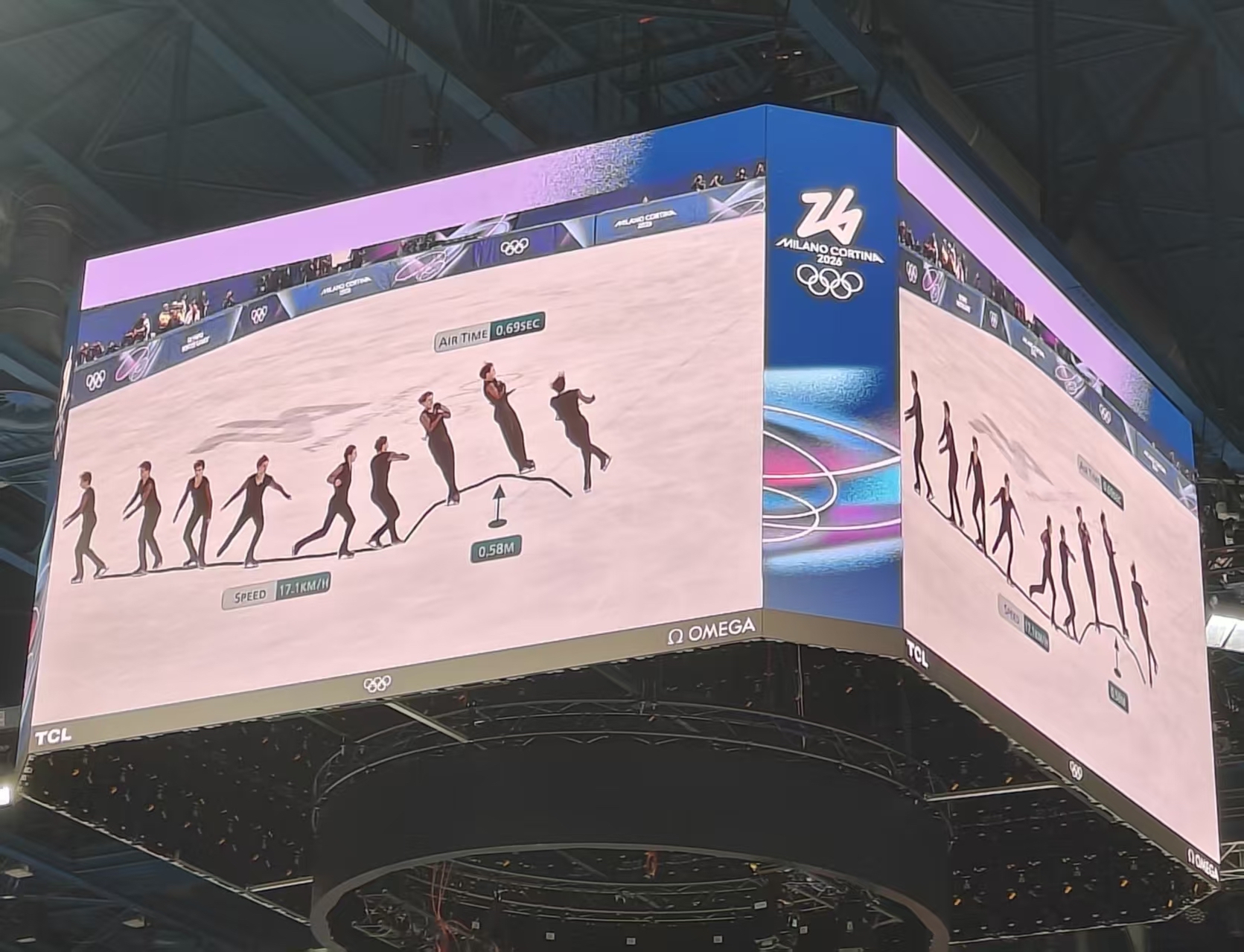
Not only in the Olympic Village, but also in the Winter Olympics venues, TOP sponsors also appear frequently. Bottled water cannot be brought into the venue, but when buying water in the venue, you can always see products from Coca-Cola or its brands. The reporter saw that the logos of TCL and OMEGA were printed on the screens in the arena. When the movements of the figure skaters on the screen are slowed down to display the sliced motion trajectories, Alibaba Cloud's technology is used. The company has also deployed AI-enhanced broadcast special effects technology in multiple venues.
To be frequently exposed during the Olympics and to have various forms of linkage with the Olympics, becoming a TOP sponsor is the most effective way, but becoming a TOP sponsor is not easy. According to regulations, there is only one TOP sponsorship slot for each industry. To squeeze into the TOP plan, it depends on whether there are vacancies for sponsorship slots in the same category. The TOP program also has high requirements on the financial strength of sponsors.
The International Olympic Committee distributes 90% of its revenue to various organizations in the Olympic Movement to support the hosting of the Olympic Games and the development of global sports. As the International Olympic Committee's largest source of income outside of television broadcast rights, the TOP plan provides indispensable financial strength for the hosting of Olympic events. According to the website of the International Olympic Organizing Committee, some companies that have signed up to the 12th phase (2029 to 2032) of the TOP plan have paid more than US$300 million per phase.
Looking back, according to data disclosed by the International Olympic Committee, the International Olympic Committee received a total of US$7.6 billion in revenue during the Tokyo Olympics cycle (2017-2020/2021), of which TOP plan revenue accounted for approximately 30%, and broadcast rights sales revenue accounted for approximately 61%. From 2021 to 2024, the International Olympic Committee's commercial revenue will be US$7.7 billion, with revenue from the TOP program accounting for 36%, and revenue from the TOP program and broadcast rights sales accounting for a total of 91%.
Brands need to carry out sports marketing, and other methods include endorsements. For example, Gu Ailing, who won the first silver medal for the Chinese sports delegation at this Winter Olympics, is TCL’s global brand spokesperson.
There are of course other ways to generate revenue for the Olympic Movement. The most common are ticket and concession merchandise sales. The reporter saw that there are Olympic franchise stores in the Olympic Village, Olympic venues, densely populated attractions and even some hotels in Milan. The price of a short-sleeved shirt is around 40 euros, and sweatshirts and jackets are even more expensive. These Olympic peripherals are also selling like hot cakes. In the Olympic venues, some products are already in short supply, and some clothes are not available in all sizes.
The number of top sponsors in China reaches a new high
This Winter Olympics is the Winter Olympics with the largest number of events and the largest number of athletes outside China. While athletes compete, Chinese sponsors are also particularly eye-catching.
Since Lenovo became the first Chinese TOP sponsor during the Beijing Olympic Games, China's TOP sponsor array has gradually expanded in recent years. Alibaba and Mengniu joined the TOP program in 2017 and 2019 respectively. During the larger round of sponsor array adjustments after the Paris Olympics, TCL replaced Panasonic, the original sponsor of home audio-visual equipment and home appliances, and signed a contract with the International Olympic Committee. At this Winter Olympics, the number of top Chinese sponsors is second only to that of the United States, the highest number in history.
Compared with some old faces at the Olympics, China’s TOP sponsors are fresh faces at the Olympics. Among some permanent sponsors, Coca-Cola sponsored the 1928 Amsterdam Olympics and every subsequent Olympics. OMEGA has provided Olympic timers since 1932. Samsung and VISA joined the TOP program in 1998 and 1986 respectively. Procter & Gamble has been a member of the TOP sponsor camp for more than ten years. However, the replacement of old and new business forces in the Olympic arena is still becoming obvious.
If the TOP program is viewed as an arena for business power from companies in different regions, changes in the sponsor array reflect changes in business power to a certain extent.
After the 2024 Paris Olympics was held, the TOP sponsor array was in turmoil. Three Japanese sponsors Panasonic, Toyota, and Bridgestone and a French technology company withdrew from the TOP plan. Among them, Panasonic is a founding member of TOP and has been a TOP sponsor of the Olympic Games for 37 years. However, the company faced a decline in net profit in fiscal year 2024. In 2024, it withdrew from the TOP plan due to "evaluating sponsorship strategies to adapt to the business environment". Toyota Motor Corporation, which has been a TOP sponsor for 10 years, is also facing a decline in net profit in fiscal year 2024 and will withdraw from the TOP plan in 2024. With the withdrawal of three Japanese manufacturers, there are no longer Japanese companies among the TOP sponsors. Last year, Intel, which was once in trouble in the market competition, also decided not to renew the TOP plan. The collective withdrawal of many sponsors once caused concerns from the outside world.
However, with Anheuser-Busch InBev becoming a new TOP sponsor, and TCL replacing Panasonic to join the TOP program in February last year, the commercial power to support Olympic events has been enriched. Most sponsors have also stabilized. Among them, the cooperation agreements between Mengniu and Coca-Cola, Anheuser-Busch InBev, Deloitte, OMEGA, VISA, TCL, and Allianz will last until 2032, and the cooperation agreements with Procter & Gamble, Samsung, Alibaba, and Airbnb will last until 2028.
While sponsors are changing from old to new, the industries and technologies represented by sponsors are also changing. While manufacturers of fuel vehicles, traditional home appliances, and CPUs are withdrawing from top Olympic sponsorship programs and undergoing business transformation, new technologies represented by AI and new display technologies are receiving more and more attention.
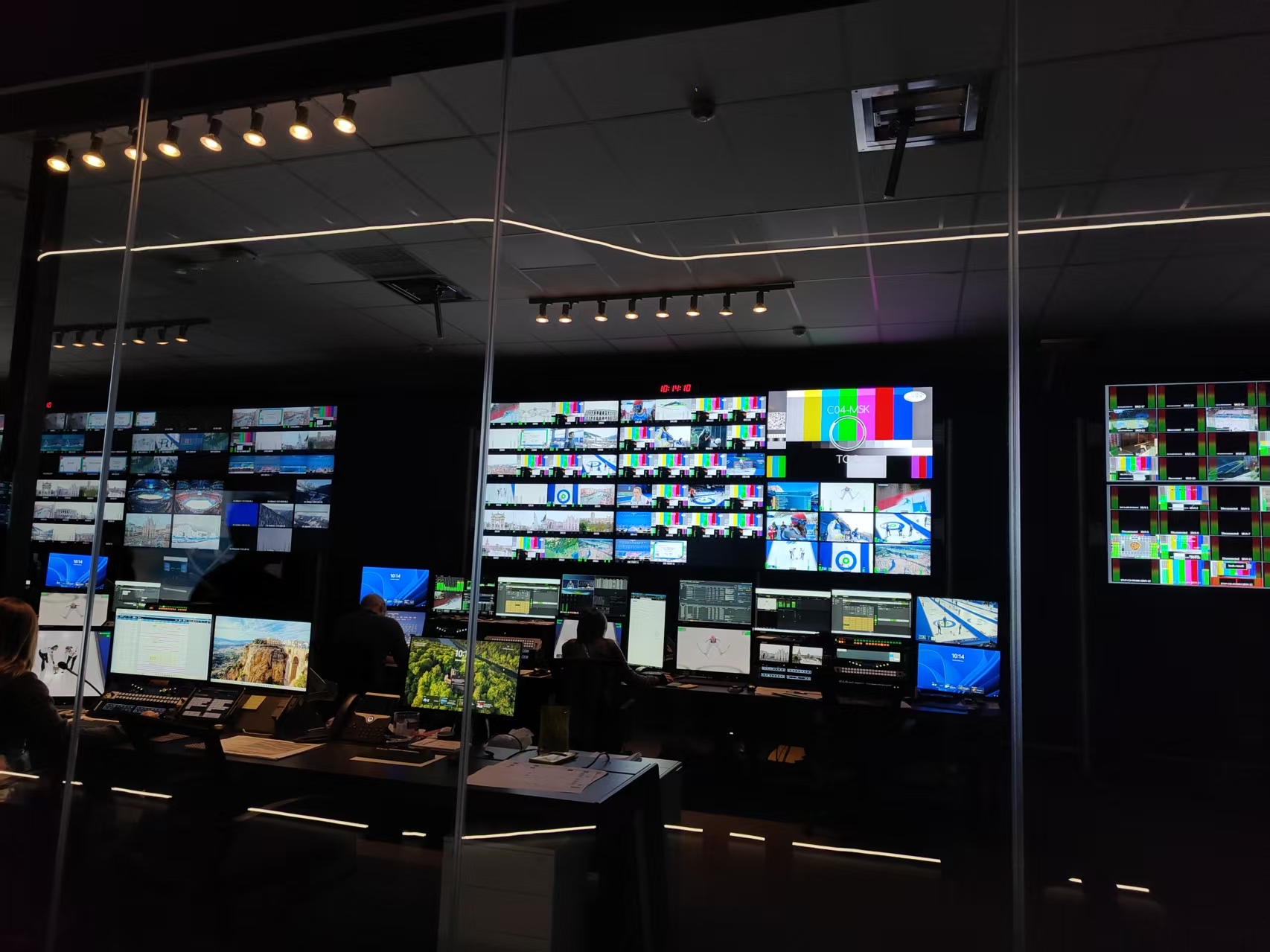
At the Olympic International Broadcasting Center in Milan, reporters saw that live footage was transmitted here and produced for various TV stations to choose to broadcast. According to Olympic Broadcasting Service (OBS) staff, AI and cloud technology are used in the broadcast and picture production of the Winter Olympics, and partners include Alibaba Cloud. The addition of new technology enables 360-degree playback of sports scenes and slice analysis of motion trajectories, which enhances the audience's viewing experience. In addition, connecting screen equipment has been placed in multiple venues for athletes to connect with family and friends in real time. The screens use TCL's low-temperature-resistant and high-definition panels.
Relevant manufacturers also use the Olympic platform to seek global business expansion. For example, Alibaba is seeking to expand its AI and cloud businesses and continues to deploy its cloud business overseas. TCL is also looking to the international market.
The country manager of TCL Italy told reporters that the market share of the company's TV products in Italy last year was about 12%, a year-on-year increase of about 50%, ranking fourth, and its share of the European TV market ranked third last year. The company's TV products in the European market mainly occupy the market share of Japanese and Korean brands. Among Japanese brands, Panasonic has considered the possibility of selling its TV business early last year. Chinese manufacturers represented by TCL are also using SQD MiniLED technology to seize the OLED TV market from brands such as LG.
The country manager told reporters that judging from the effects of sports marketing, the brand's awareness in Italy has improved, and its white goods business has recently been promoting cooperation with local distributors. However, when developing the Italian market, we need to consider the characteristics of the local market. On the one hand, the economic development gap between the north and the south of Italy is large. On the other hand, the local market channels are scattered and competition among channels is fierce, resulting in the market being in a price depression in the European market. Business strategies must be adjusted according to the characteristics of the local market.