© Juanjo Gasull
Leviathan Press:
Perhaps our social patterns have undergone profound changes in the past decade or so. What I mean is that with those friends or colleagues who have a relatively good relationship, the interaction mode between each other has quietly transferred completely or partially to purely online: this includes the social media you use together, and each other's knowledge of each other's life dynamics largely relies on updates in the circle of friends. Unless there is a topic you particularly want to chat about, it seems that voice chat mode is rarely enabled.
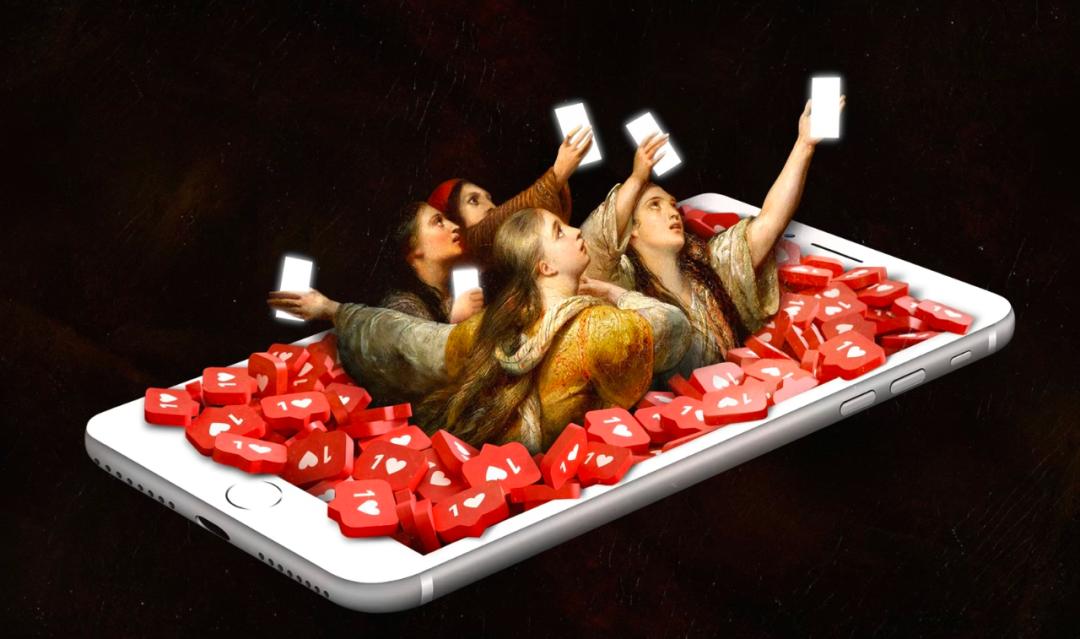
On the other hand, social media will push us a dizzying variety of information streams through algorithms – which are mixed with a lot of junk information that is useless to you, and once you stay on a certain video for a while, subsequent algorithms will continuously push you more such information. This kind of passive consumption results in endless scrolling – which is one of the main purposes of social platforms.
Search [Leviathan Playlist] on NetEase Cloud Music to keep up without getting lost.

All of my relationships exist, at least in part, on my phone, and they are forced to share space with everything else that happens on my phone. Lately, I've been getting the feeling that the relationship pieces that exist on screen seem increasingly indistinguishable from the other content I'm consuming there.
There's a lot going on in my phone. It’s always trying to sell me something. Sometimes, they try to defraud me. There are games, videos, TV shows, movies, news, fitness trackers, podcasts, books, music, shopping, maps, work software, general web browsing, and an app I was forced to download just to use the doorbell. Of course, it also includes all my social interactions that are not face-to-face or correspondence. (Even face-to-face interactions—unless I bump into someone on the street—are likely planned via a smartphone.)
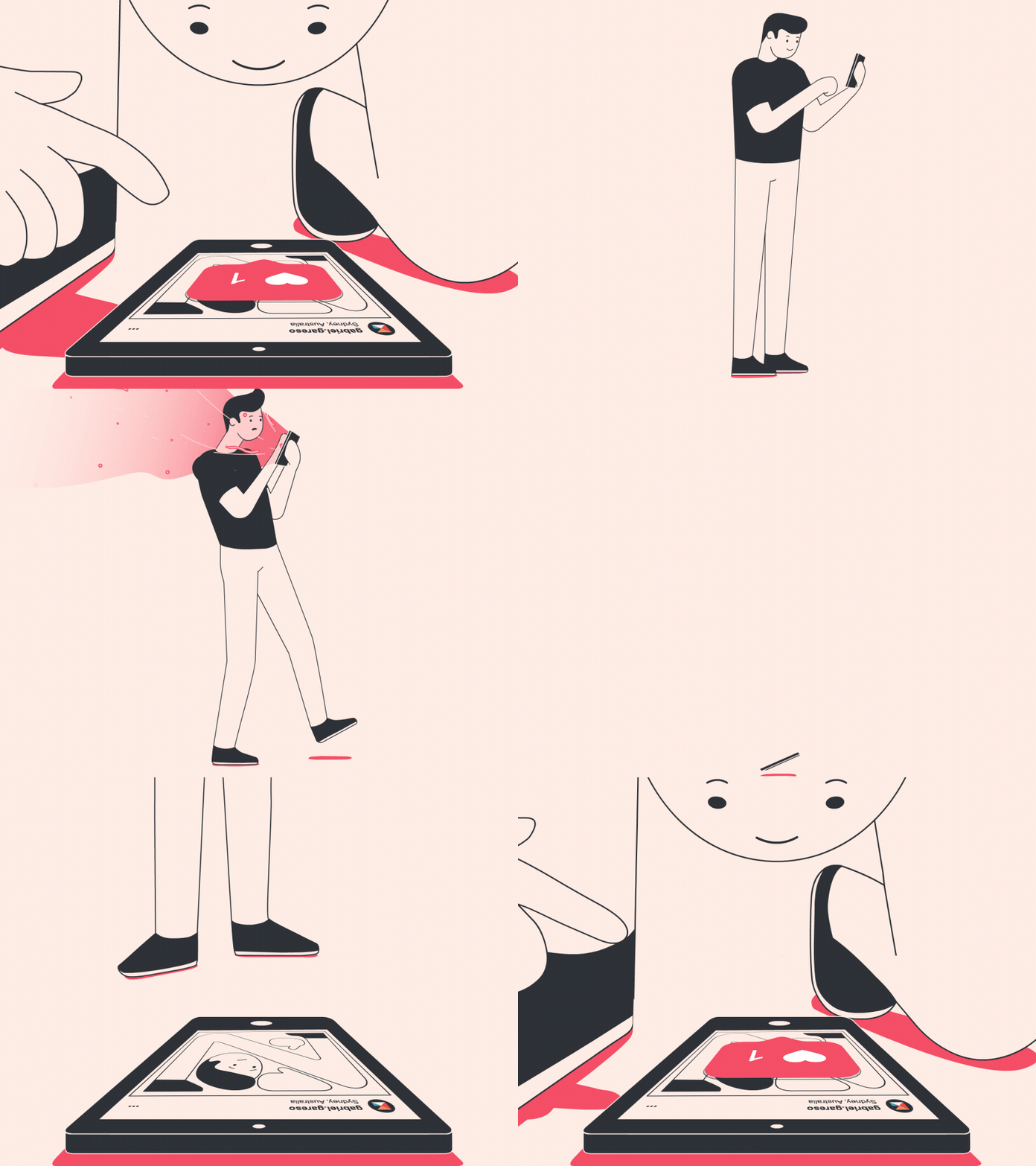
So when my phone dings or buzzes with those mating calls, it could be bringing updates from my loved ones, or it could be showing me corporate notifications that I never asked for, hungry for my attention. When I pick up my phone, content and communication appear in similar forms—notifications, social media posts, vertical videos—all mixed together. Samuel Hardman Taylor, a professor at the University of Illinois at Chicago who studies social media, told me that as interactions with loved ones converge with various other forms of media on smartphones, “our relationships are becoming part of this consumer behavior.” As phones become more of an entertainment hub, using them for social interaction becomes more of a dispensation. And identifying my loved ones in that constant stream of cell phone messages requires extra effort.
—
Since the inception of social media, ordinary people have been using it to showcase their lives and treat their loved ones as viewers. But now, social media is eating into the market share of traditional media, eating into the time people (especially younger generations) used to spend watching TV and movies, and reshaping itself as a broadcast platform rather than an online platform. In the process, social media has become less social. These sites no longer seem to care if people with few followers and lack of influence post anything or reply to anyone as long as they keep scrolling.
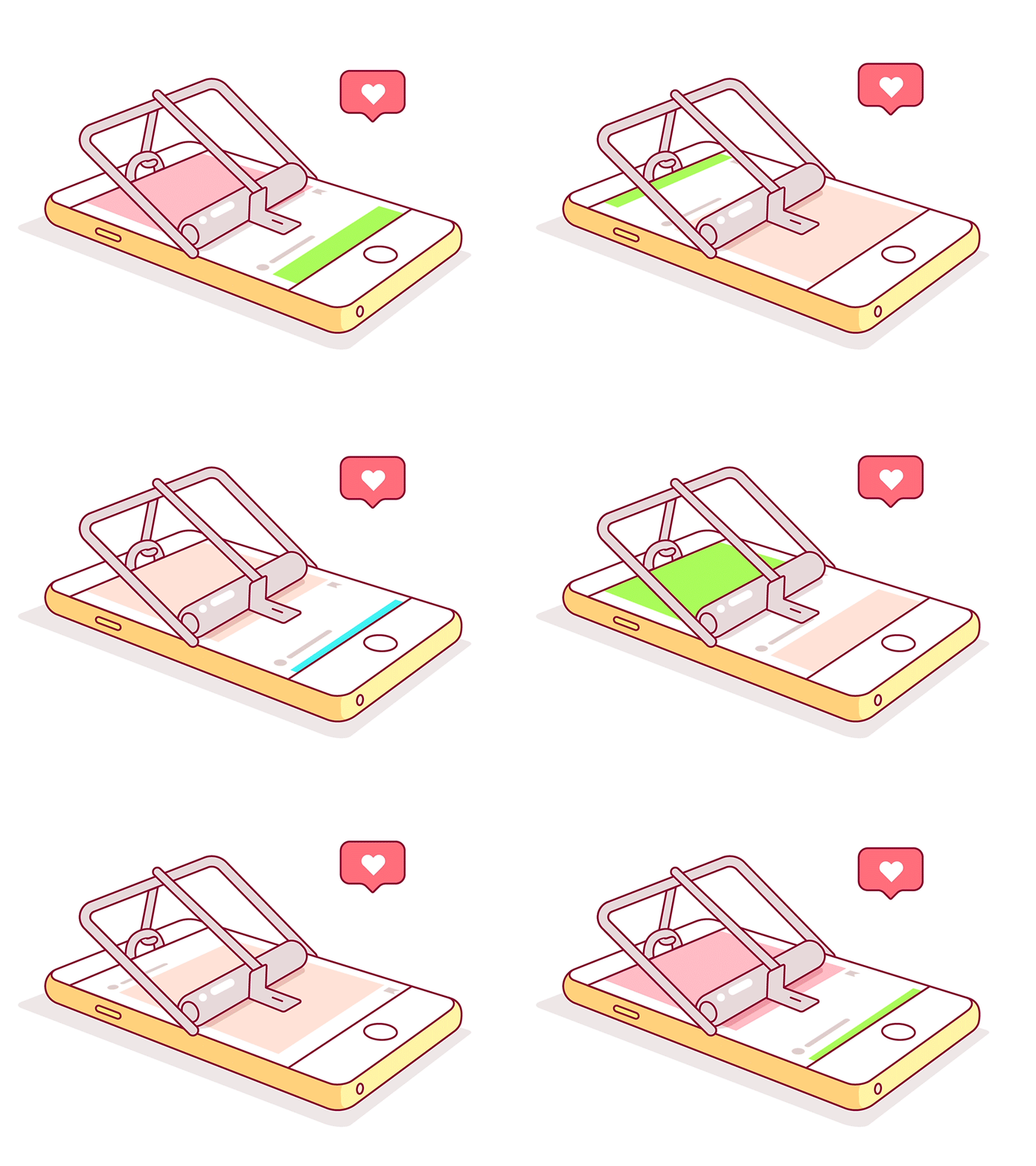
As social media no longer connects users with acquaintances, but instead pushes artificial intelligence garbage and short videos from unknown sources accurately pushed by algorithms, a sense of dissociation arises. My friends and family's posts are still there, but they're buried under a torrent of spam and ads. One moment it’s an ad for washable ballet flats, the next it’s a photo of my friend’s baby, then a baby I don’t know performing some meme-worthy antics, then a video about how terrible millennials are in high-waisted jeans, a video of my friend looking sexy in high-waisted jeans, an ad for trendy jeans, and a sponsored ad for a diet pill so you can wear the jeans you wore in high school that are suddenly popular again.
All of this is consumed passively, page by page.
© Behance
This more passive social media experience has added an almost parasocial feel to some of my relationships. The so-called "quasi-one-way relationship" classically refers to the one-sided imaginary relationship that people have with celebrities or even fictional characters. People develop an emotional connection with someone they've only ever interacted with on screen (or, I suppose, on the pages of a novel) and develop a sense that they "know" that person, even though that's not actually the case.
Gayle Stever, a psychology professor at Empire State University who studies "quasi-one-sided relationships," told me that the line between sociosexual and quasi-unidirectional relationships has long been blurred, and social media has made that blur even more pronounced.
Lack of reciprocity is a key characteristic of quasi-one-way relationships—the fan knows a lot about the celebrity, but the celebrity has no idea who the fan is. But these days, celebrities may reply to your comments on TikTok or even follow you back. At the same time, reciprocity is a key part of real relationships, but in the online part of those relationships, it's more of a "guideline" — and one that's becoming looser over time.
Sometimes I reply to friends' posts on Bluesky or Instagram, but most of the time I don't. I just let it pass by without paying any attention to it. I’ve accumulated bits and pieces of information about people I love—my sister’s boyfriend published a poem; my friend quit his job—but the way I know about these things, like I know about an influencer’s favorite books or the news of Taylor Swift’s engagement, is from an outside perspective.
The quasi-one-way researchers I interviewed were reluctant to assert that passive content consumption is quasi-one-way in the standard sense—after all, I do know these people—but they did point out that, in some ways, social relationships are starting to look more like quasi-one-way relationships. Bradley Bond, a professor of communication at the University of San Diego, conducted several studies during the social isolation period during the pandemic, when many people were only able to connect with loved ones through technology.
The findings suggest that, as one of the papers puts it: "Increased exposure to real-life friends through screen media may blur the lines between social and quasi-one-way relationships because of similarities in form." "Your brain is slightly rewired," Bond told me, "to understand those social 'others' as two-dimensional beings as well." In quasi-one-way relationships, he explained, people tend to use their imagination to fill in the gaps in their knowledge of others. For example, someone might assume that an actor they feel they can relate to must share their values, even if they don't know that actor's politics. “As real-life relationships look more and more like quasi-unidirectional relationships,” Bond speculates, “maybe we’ll stop asking for self-revelation from the other person and start making straightforward assumptions, as we do in quasi-unidirectional relationships.”
If people feel more like they are observing their friends’ lives when they browse social media, that may be partly because they also view their friends as an “audience” when posting.
Some scholars describe the act of posting on social media as something between interpersonal and mass communication (which they call “personal mass communication”
masspersonal
). Research also shows that people tend to have an “imaginary audience” in mind when they post — and that audience doesn’t necessarily match the people who actually see the post.
Further fueling the mix of social and quasi-one-sided relationships, many regular users have also begun posting to their small followings in an “influencer” fashion: looking straight into the camera and speaking (“Hi everyone”), or curating collections of photos to showcase that perfect balance of playful yet effortless.
© Tenor
Of course, that's if they're still posting. Recently, New Yorker critic Kyle Chayka pointed out that today’s society is experiencing a kind of “posting burnout” (posting ennui), because ordinary people’s ordinary life updates are likely to be submerged in the content of a group of Internet celebrities with ring fill lights and signed brand cooperation contracts. In the age of algorithm-driven content streams, when non-influencers post, they may envision a smaller audience than before. “If we can’t guarantee that our friends will actually see what we post,” Chayka wrote, “then what incentive is there to keep posting?”
This in turn affects how people view posts. As the proportion of content tilts more and more towards content that isn't truly "social" – and social media is experienced as a place of entertainment rather than connection – perhaps people are more likely to just "change the channel and zone out" rather than bother interacting with the friends they still see there. “My gut tells me that expectations for audience response have dropped dramatically,” Jeffrey A. Hall, a communications professor at the University of Kansas, told me. So it makes sense that “any benefits we used to get from those tiny interactions in our social media streams are gone.”
Hall says that while researchers aren't sure exactly what this phenomenon means for relationships, he believes it's part of "the long end of public social networks as a place where we observe sociability."
—
At the same time, the era of “group chat” is rising, and similar flattening and convergence phenomena are also taking place. The popularity of WhatsApp is rising and more and more people are using Discord. All of these messages crowd the home screen along with breaking news, ads, social media likes, and push notifications. “We’re reaching across multiple areas of our lives with these notifications,” Taylor told me. My Notification Center was filled with text messages from my family group chat, multiple push reminders from the New York Times, calendar reminders from meetings earlier today, notifications for new episodes of several podcasts I follow, and multiple ads from DoorDash suggesting I order food from Chick-fil-A, Walgreens, and other stores.
In some ways, the move to group chats is a positive development for human connection. Research shows that private messaging platforms are better suited for sharing more personal content and more conducive to ongoing conversations than algorithm-driven social platforms. However, their rise may also go some way to weakening the social norm of “reciprocity.” Back in 2018, I wrote about how text messages have become the norm to be ignored—because the medium allows people to reply to messages at their own pace (or not reply at all). Group chats can make responding feel less necessary because multiple people in the conversation share the “responsibility” for responding. At the same time, Taylor points out, the more players there are, the more likely "broadcast-style" dynamics will creep in.
Another way in which private messaging has become somewhat "broadcast-like" is the popularity of voice messages. Many people like voice messages because they are more intimate than text but don't require an immediate response like a phone call. But let’s be honest – voice notes are essentially little podcasts you record for your friends. They are indeed an act of connection, but more of a "performance" than picking up the phone and talking directly. As for performance, there is always a certain sense of alienation.
My best theory to sum up all of this is this: a “trickle-down effect” is happening — as social media starts to look more like entertainment, private messaging starts to look more like social media. (For example, you can now “like” or “love” a text message.) In both cases, the elements of “performance” and “consumption” are heightened, making the lines between “community” and “audience,” “communication” and “content” subtle and blurry.
The researchers I interviewed have yet to draw conclusions about the blurring of relationships and consumable content—because technology is changing so fast and the pace of scientific research is so slow. But as the mobile world evolves and our relationships warp with it, Linda Kaye, a professor of psychology at Edge Hill University in the UK, gave me a fundamental principle worth sticking to: “Connection will always be more important in relationships than distributing and consuming content.” Your phone craves your attention, but your relationships really need it.