Professional virtual currency information station welcome
We have been making efforts.

vc Page 5

Cryptocurrency is a non-legal monetary asset based on digital technology and blockchain, possessing the functions of a medium of exchange and a store of value. Cryptocurrency is a transaction medium that uses cryptographic principles to ensure transaction security and control the creation of transaction units. Cryptocurrency is a type of digital currency (or virtual currency). Bitcoin became the first decentralized cryptocurrency in 2009, after which the term “cryptocurrency” was more commonly used to refer to such designs. Since then, several similar cryptocurrencies have been created, and they are usually referred to as altcoins. Cryptocurrency is based on a decentralized consensus mechanism, in contrast to the banking financial system that relies on a centralized regulatory system.

21st Century Economic Report

Hi everyone. I'm Stephanie LI.

Hello everyone, I am the host Li Yingliang.

Coming up on today's program.

Highlights

Here's what you need to know about China in the past 24 hours

China Economic News

China's inflation fell to its slowest pace in seven months, in October, due to a high comparison base and softer consumer demand, the National Bureau of Statistics said on Wednesday.

The country's consumer price index, a main gauge of inflation, rose by 2.1 percent year-on-year in October, a seven-month low, down from 2.8 percent in September, the NBS data showed.

Compared with a year ago, food prices increased 7 percent, down from 8.8 percent in September, as the comparison base rose, and vegetables, fruits and aquatic products came into the market in large numbers while consumer demand fell after the National Day holiday, the bureau said.

On a month-on-month basis, the CPI growth also slowed to 0.1 percent, compared with 0.3 percent in September.

The growth in core CPI, which excludes volatile food and energy prices and is deemed as a better gauge of the supply-demand relationship in the economy, came in at 0.6 percent year-on-year, the same as a month earlier.

Meanwhile, China's producer price index, which gauges factory-gate prices, declined by 1.3 percent from a year ago in October, following a 0.9 percent rise in September, marking the first negative PPI growth in almost two years, according to the NBS.

The bureau mainly attributed the fall in producer prices to last year's high comparison base, adding that the PPI rose by 0.2 percent on a monthly basis in October as demand increased in some industries, following a 0.1 percent decline in September.

Affected by factors such as the fall in consumer demand after the holidays and the higher comparison base for the same period last year, the year-on-year CPI growth in October fell. Also affected by the high comparison base in the same period last year, PPI fell year-on-year for the first time since January 2021.

The National Bureau of Statistics released the national CPI (Consumer Price Index) and PPI (Producer Price Index) data for October on November 9. CPI increased by 2.1% year-on-year and 0.1% month-on-month. PPI changed from a 0.9% increase in the previous month to a decrease of 1.3% year-on-year, and a month-on-month decrease from a 0.1% decrease in the previous month to an increase of 0.2%.

The CPI growth rate fell back in October, with food prices maintaining high growth driven by pig prices, while non-food prices remained low due to the weak service industry. Among them, food prices increased by 7.0%, a decrease of 1.8 percentage points from the previous month. Non-food prices increased by 1.1%, a decrease of 0.4 percentage points from the previous month, of which service prices increased by 0.4%, a decrease of 0.1 percentage points from the previous month.

Experts said that the core CPI, which excludes food and energy prices, has been sluggish and declining for a long time in the past. The core CPI continues to soften, indicating that effective social demand is still in the weak recovery stage, and effective demand is still weaker than the production side. The imbalance between supply and demand and internal and external risks may bring deflationary pressure.

In terms of PPI, demand in some industries increased in October, and the national PPI rose slightly month-on-month. However, affected by the high comparison base in the same period last year, the year-on-year increase turned to decrease. The month-on-month period ended with three consecutive months of negative growth and hit a half-year high. Among them, the price of means of production changed from an increase of 0.6% to a decrease of 2.5%; the price of means of living increased by 2.2%, an increase of 0.4 percentage points.

According to a research report, international oil prices and copper prices fell back in October, and coal prices also weakened after the peak season. Infrastructure and housing guarantee policies have driven ferrous metal prices to rebound. However, the shortage of coal and electricity in the same period of 2021 has brought a high base, dragging down the year-on-year increase in PPI.

Moving on to regional highlights

Regional observation

Next on industry and company news

Industry and company newsSwitching gears to financial news

financial market news

Wrapping up with a quick look at the stock market

stock market closing situation

Biz Word of the Day

Focus on financial vocabulary

China Consumer Price Index_China Industrial Producer Price Index_Real-time price of Binance Exchange official website

Executive Editor: Sonia YU

Editor: LI Yanxia

Host: Stephanie LI

Writer: Stephanie LI

Sound Editor: Stephanie LI

Graphic Designer: ZHENG Wenjing, LIAO Yuanni

Produced by 21st Century Business Herald Dept. of Overseas News.

Presented by SFC

Editorial Board Member: Yu Xiaona

OKEx Suspends Withdrawals, OKB Plummets! How Will The Download Of The Eureka Exchange APP Be Affected?

Black swan incidents in virtual currency exchanges always happen from time to time, and this time it is OKEx’s turn.

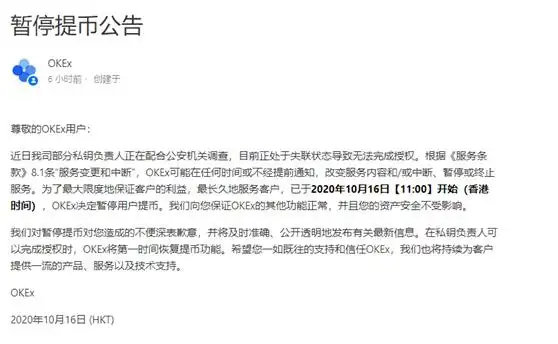
OKEx, one of the three major virtual currency trading platforms in China, suddenly issued an announcement today that it would suspend currency withdrawals and said that some of the people in charge of private keys were cooperating with the public security agency’s investigation.

According to a reporter from the Securities Times, Xu Mingxing, the actual controller of OKEx, has been taken away by the police, and OKEx may be suspected of cross-border money laundering, "because large cross-border transfers through virtual currency must be completed through Xu Mingxing's coordinated operation."

OKEx suspended withdrawals, OKB plummeted during the session

On October 16, OKEx officially announced that because some of the people in charge of OKEx’s private keys are cooperating with the public security agencies in the investigation today, they are currently out of contact and cannot complete the authorization. According to Article 8.1 "Service Changes and Interruptions" of the Terms of Service, OKEx may change the service content and/or interrupt, suspend or terminate the service at any time or without prior notice. In order to maximize the interests of customers and serve customers for the longest time, OKEx has decided to suspend user withdrawals starting from October 16, 2020 [11:00] (Hong Kong time).

OKEx suspended currency withdrawals_OKEx actual controller was taken away_European exchange APP download

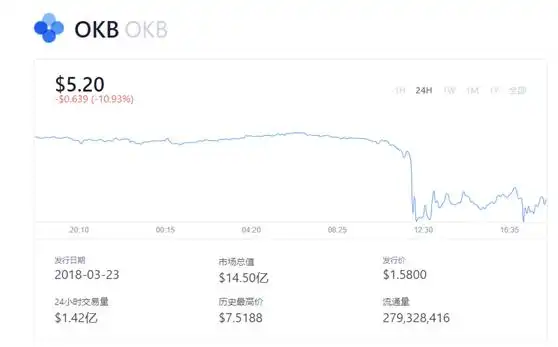
Affected by this, some users began to directly liquidate OTC (over-the-counter), causing the OKB virtual currency to plummet by more than 16% during the session. As of press time, OKB was quoted at US$5.2, a decrease of 10.93%, with a total market value of US$1.45 billion.

OKEx actual controller was taken away_European exchange APP download_OKEx suspended currency withdrawals

The mainstream virtual currency Bitcoin also suffered a sharp short-term decline. Within a few minutes, it dropped $400 from its high point, plummeting 3%. Other mainstream virtual currencies also fell. Data shows that there are currently more than 270,000 BTC (Bitcoin) on OKEx. Based on the current price of Bitcoin at $11,307, the value exceeds $3.052 billion (equivalent to RMB 21.4 billion). Such a huge amount will cause huge fluctuations in the market whether it is liquidated, sold or withdrawn.

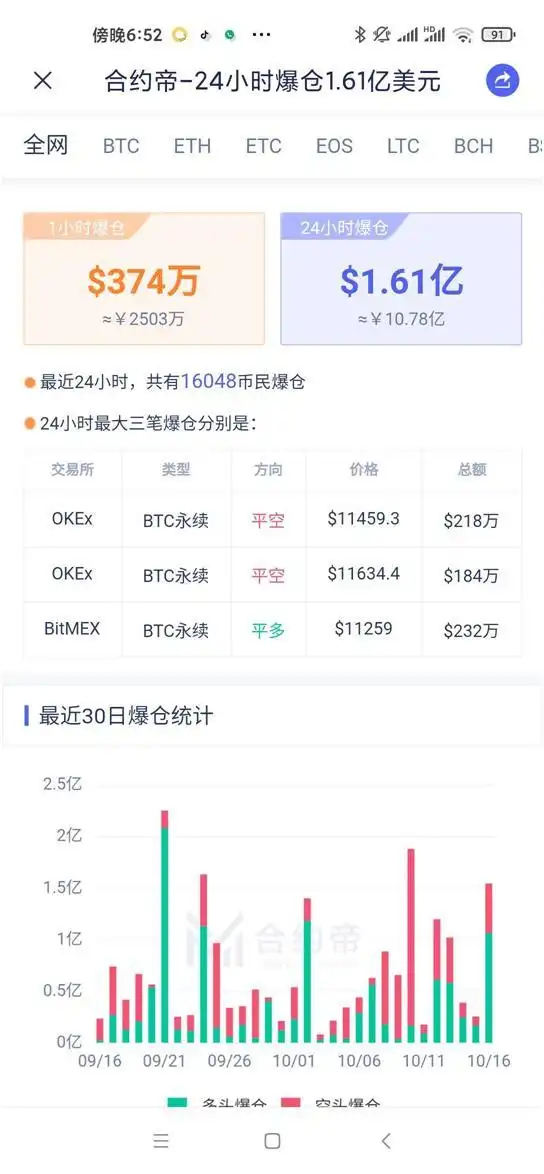
Data from Huishidi shows that the liquidation amount of Binmin in the last hour reached US$3.74 million (equivalent to RMB 25.03 million), and the liquidation amount in 24 hours reached US$161 million (equivalent to RMB 1.078 billion). Among them, the two largest liquidations in the last 24 hours came from the OKEx BTC perpetual contract.

OKEx suspended currency withdrawals_OKEx actual controller was taken away_European exchange APP download

OKEx was established in May 2017. It is a digital asset trading platform that mainly provides spot and derivatives trading services for Bitcoin, Ethereum and various innovative digital assets to global users. However, most users on the OKEx platform are domestic users, so the suspension of currency withdrawals caused an uproar in the domestic encryption industry.

Many domestic currency speculators regard exchange wallet accounts as regular "coin hoarding accounts" to facilitate trading operations. This announcement was sudden, and the digital currencies in the hands of many users may be directly "locked" in the exchange. Therefore, OKEx's suspension of currency withdrawals may have a direct impact on some currency speculators.

OKEx's own ecology also involves various fields such as public chains, wallets, and mining pools. OKEx, formerly known as OKCoin, a well-established exchange, is known as the "Whampoa Military Academy in the Currency Circle" and is one of the earliest exchanges involved in derivatives trading in China.

The actual accuser Xu Mingxing was taken away by the police, was it involved in money laundering?

OKex CEO responded to the previous announcement on the suspension of currency withdrawals on the official Weibo: Please rest assured that the company, business, and platform operations will not be affected. This is a personal issue of the private key manager. The currency withdrawals are temporarily suspended. We will announce the follow-up arrangements to you as soon as possible. Please refer to the announcement information.

From the response of OKEx CEO Jay Hao, we can see that the biggest possibility is the personal problem of the private key manager.

OKEx is not the first company to have problems with exchange private key management. The previous well-known one was the unexpected death of Canadian exchange QuadrigaCX founder Gerald Cotten. However, the exchange's main digital currencies were stored in cold wallets, and the private key of the cold wallet was only known to Gerald Cotten. As a result, approximately US$147 million worth of digital currencies could not be withdrawn.

According to Caixin.com, sources close to OKEx said that OKEx founder Xu Mingxing, who was officially mentioned in the announcement as “cooperating with the public security agency’s investigation,” had been taken away by the police at least a week ago. In this regard, OKEx public relations staff told the Securities Times reporter that they were not sure and everything would be subject to the announcement. However, Andy, a veteran in the currency circle, confirmed the above news to reporters. It was indeed Xu Mingxing who was taken away to cooperate with the investigation, which mainly involved the platform's involvement in cross-border money laundering. "If someone wants to conduct cross-border transactions of virtual currencies through OKEx, especially large funds, they must cooperate with Xu Mingxing."

It is reported that there are currently widespread rumors in the currency circle that OKEx is involved in cross-border money laundering. There are more than 800 accounts involved in this case, the amount is extremely large, and the nature is egregious. As one of the three giants of virtual currency trading platforms, OKEx’s sudden suspension of currency withdrawals really caught users in the currency circle by surprise.

Virtual currency trading becomes an illegal money laundering tool

Due to the non-face-to-face and anonymity of transactions, the wide scope of application, the diversity of capital injection methods, the possibility of obtaining cash, the segmentation of services, the speed and irrevocability of transactions, virtual currency is very difficult to identify the use of virtual currency for money laundering, and the transaction model is complex, it can easily become a tool for money laundering.

In the entire virtual currency money laundering, there are many specialized money launderers who take over the business and use their fund pools, multiple transfers, etc. to help the payers and payees "wash" the information addresses, making it impossible to trace.

Under the new regulatory situation, the central bank's anti-money laundering and other work has been continuously intensified and upgraded. For the first time, the central bank has clearly included third-party payment institutions in its key scope and promoted them to actively fulfill their anti-money laundering obligations. In January this year, the central bank issued a relevant notice. Starting from March 1, the People's Bank of China and its branches will launch on-site anti-money laundering inspections of non-bank payment institutions. The inspected non-bank payment institutions should provide relevant data in accordance with interface specifications.

In March this year, the central bank’s official Weibo released the eighth article in the 315 Financial Consumer Rights Protection Series, reminding financial consumers not to be deceived by virtual currency trading platforms and to be wary of falling into virtual currency traps.

The article points out several "routines" that currently exist in virtual currency exchanges: serious washouts; malicious downtime, forcing leveraged trading to liquidate; money laundering fraud, and reminds investors to avoid falling into the virtual currency trap.

An Introduction To Binance’s Blocking Of U.S. Users And Cooperation With Law Enforcement Agencies

Technical Compliance and Blocking to US Users

Changpeng Zhao said that Binance.com has developed first-class technology to ensure compliance. Binance was the first global (non-US) exchange to implement a mandatory KYC (Know Your Consumer, Know Your Customer) program and still has one of the highest standards in KYC and AML (Anti-Money Laundering). “We block U.S. users by nationality (KYC), IP (including commonly used VPN endpoints outside the U.S.), mobile carriers, device fingerprints, bank deposits and withdrawals, blockchain deposits and withdrawals, credit card issuing bank identification numbers (bin numbers), and more. We know of no other company using a system that is more comprehensive and effective than Binance.”

Cooperation and transparency with law enforcement

Changpeng Zhao said that Binance is committed to maintaining transparency and cooperation with regulatory agencies and law enforcement agencies (LEs) in the United States and around the world. Binance currently has a compliance team of more than 750 people, many of whom have previous backgrounds in law enforcement and regulatory agencies. "To date, we have processed more than 55,000 LE requests and assisted U.S. LEs in freezing/seizuring over $125 million in funds in 2022 and $160 million in funds so far in 2023. We intend to continue to respect and cooperate with regulators in the United States and around the world."

In terms of registration permissions and licenses, Changpeng Zhao believes that “Binance.com has the largest number of registration permissions/licenses in the world (currently 16, and the number will increase), and is well received by our user community.”

Transaction status

Changpeng Zhao stated that Binance will not engage in profitable trading or "manipulate" the market under any circumstances. Binance conducts “trades” in a variety of situations. “Our revenue is in crypto. We do need to convert them from time to time into fiat or other cryptocurrencies to pay fees. We have affiliates that provide liquidity for less liquid pairs. These affiliates are specially monitored and are not allowed to make huge profits.”

Changpeng Zhao mentioned, “Personally, I have two accounts with Binance: one for the Binance Card and one for my crypto assets. I eat our own dog food (using my own company’s services) and store my cryptocurrencies on Binance.com. I also need to convert cryptocurrencies from time to time to pay for my personal expenses or credit cards.”

He said that Binance has a 90-day no-trading rule for employees, which means that Bitcoin cannot be sold within 90 days of the last purchase, and vice versa. This is to prevent any employee from actively trading. Binance also banned employees from futures trading. Additionally, Binance has strict policies regarding any employees who have access to private information, and they are not allowed to buy or sell these cryptocurrencies. "I strictly abide by these policies myself. I have never participated in the functions of Binance Launchpad (blockchain asset issuance platform), Earn (one-stop trading platform), Margin (margin trading) or Futures (futures)."

Binance and founder Changpeng Zhao were sued by the CFTC

At 11:24 local time on March 27, the U.S. Commodity Futures Trading Commission (CFTC) announced on its official website that it had filed a civil enforcement action with the U.S. District Court for the Northern District of Illinois, accusing Changpeng Zhao and three entities operating the Binance platform of repeatedly violating the Commodity Exchange Act (CEA) and CFTC regulations to circumvent compliance controls. The CFTC also charged Binance’s former Chief Compliance Officer (CCO) Samuel Lim with aiding and abetting Binance’s violations.

The CFTC stated that in its ongoing litigation against Binance and Changpeng Zhao, the agency is seeking to recover proceeds, civil penalties, the issuance of a permanent injunction to cease trading and registration, and a permanent injunction for further violations of CEA and CFTC regulations.

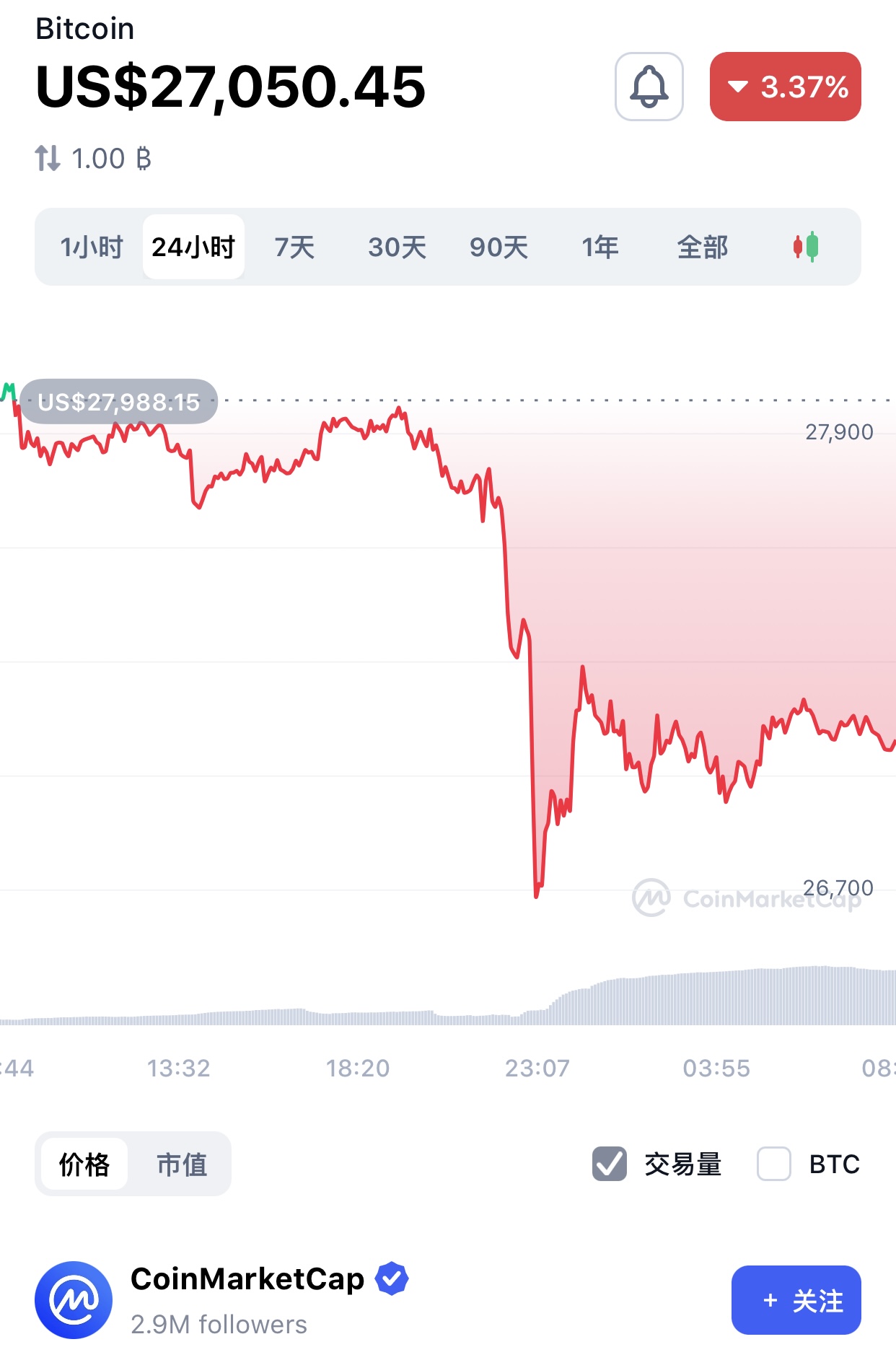
After multiple foreign media reported that Changpeng Zhao and Binance were accused by the CFTC, Bitcoin once fell below $26,700. According to CoinMarketCap data, as of press time, Bitcoin has rebounded slightly to around $27,000, but it has still fallen 3.37% in the past 24 hours.

Real-time Binance Coin Market_Binance Technical Compliance_Binance’s Blocking Measures for US Users

Image from CoinMarketCap

Virtual Currency Collective Flash Crash, Bitcoin Plummeted, 417,000 People Liquidated Their Positions, And Binance Coin Plummeted

Always witnessing history.

On Friday night, the collective "avalanche" of Chinese concept stocks shocked global investors. However, at noon on Saturday, virtual currencies also began a collective "flash crash". Bitcoin plummeted by $10,000 in the afternoon, and the 24-hour drop once exceeded 20%.

The latest data shows that in the past 24 hours, a total of 417,000 people liquidated their positions, and the liquidation amount of digital currency contracts across the entire network reached US$2.584 billion (approximately RMB 16.4 billion). Among them, the liquidation amount of Bitcoin alone exceeded US$1 billion within 24 hours.

According to the latest data from the CoinMarketCap website, as of 9 pm on Saturday, the total market value of global digital currencies was US$2.2 trillion, a decrease of 16.74% from the previous day, and the evaporated market value exceeded US$440 billion (approximately RMB 2,805.3 billion).

According to rough calculations based on public data, with the collapse of Binance Coin, Changpeng Zhao, who is regarded by Forbes as the richest man in China, may lose more than 10 billion yuan in one day.

Virtual currency collective “flash crash”, 417,000 people liquidated their positions

We have just witnessed the collective plunge of Chinese concept stocks. At noon on Saturday, virtual currencies also experienced a "flash crash".

Performance of well-known Chinese concept stocks as of Friday’s close

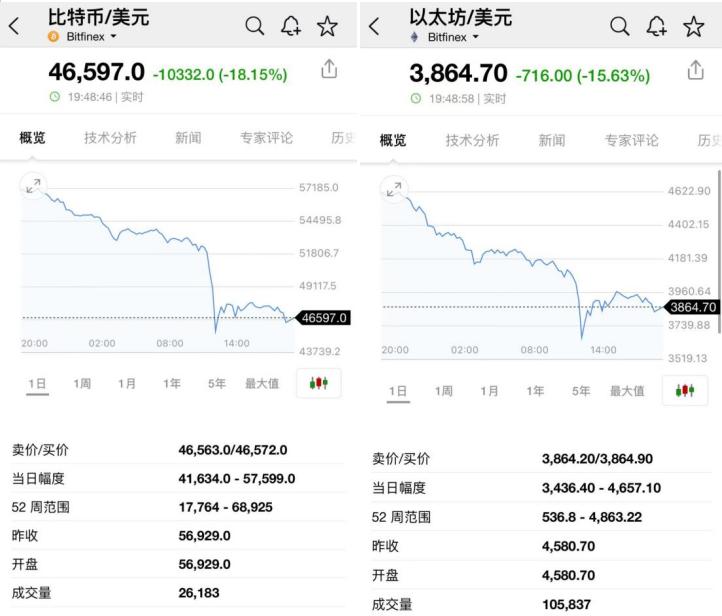
Market data shows that at noon on December 4, Bitcoin quotations fell below $42,000 for a short time, a 24-hour drop of more than 20%. Ethereum fell below $3,500, losing more than 21% in 24 hours.
Virtual currency flash crash_Real-time Binance Coin Market_Bitcoin 24-hour drop

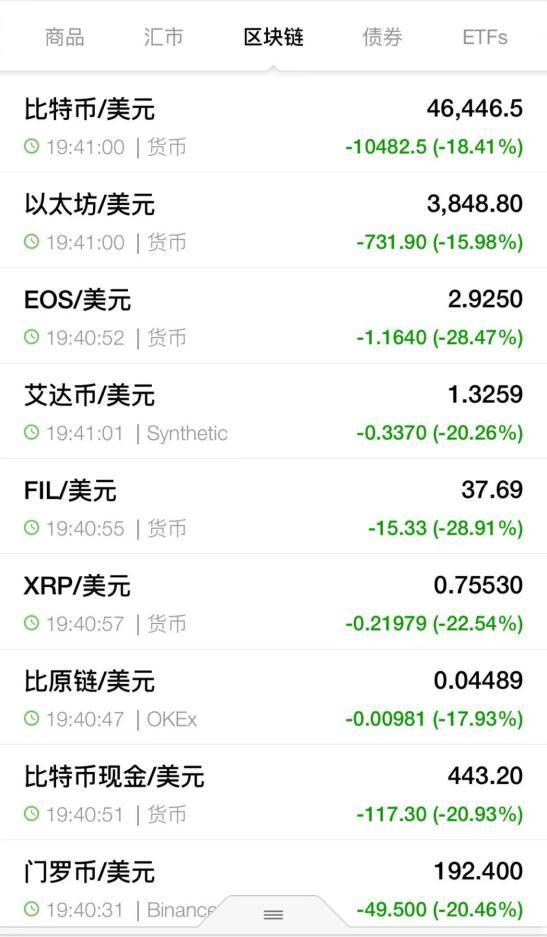
As of around 7:40 pm on December 4, Bitcoin was quoted at about US$46,500 per coin, down more than 18% in 24 hours; Ethereum was quoted at about US$3,850 per coin, down by about 16% in 24 hours. In addition, EOS currency fell by more than 28%, Ada coin fell by more than 22%, Monero fell by more than 20%, Dogecoin fell by more than 22%, and Binance Coin (BNB) fell by nearly 13%.
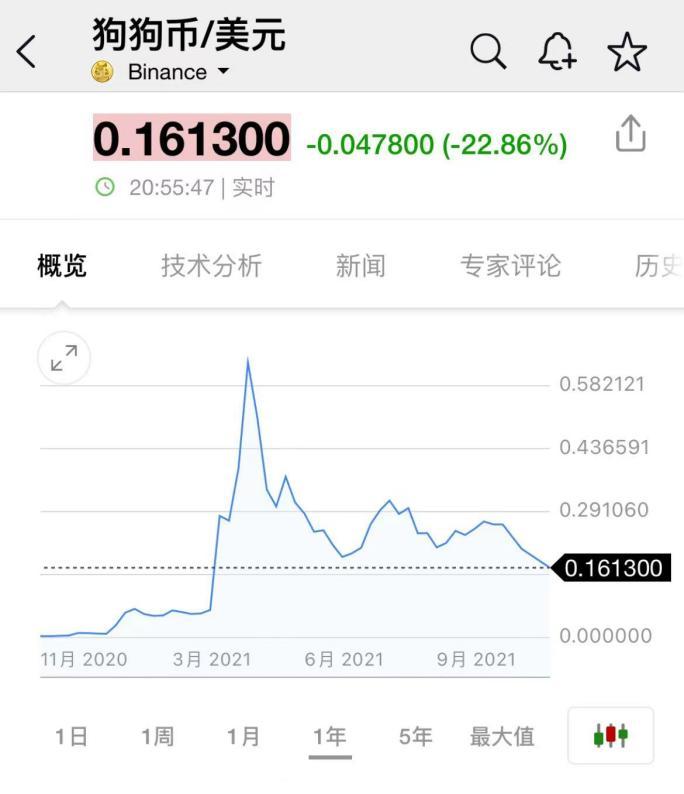
Bitcoin 24-hour drop_Real-time Binance Coin Market_Virtual currency flash crash

Bitcoin 24-hour drop_Real-time Binance Coin Market_Virtual currency flash crash

Previously, the price of Bitcoin hit a record high in November this year, breaking through to $69,000, and the overall market value of cryptocurrency climbed to nearly $3 trillion. However, after the failure to hit the $70,000 mark, the price trend of Bitcoin was obviously weak. The highest price of Bitcoin hit $59,000 on December 1 and has been falling since then.

The latest data shows that as of 8 p.m. on December 4, a total of 417,000 people have liquidated their positions in the past 24 hours, and the liquidation amount of digital currency contracts across the entire network has reached US$2.584 billion. Among them, the liquidation amount of Bitcoin alone exceeded US$1 billion within 24 hours.

Real-time Binance Coin Market_Virtual currency flash crash_Bitcoin 24-hour drop

What is the reason for the collective “annihilation” of virtual currencies? There are different opinions on this on the Internet.

Some analysts said that behind the collapse of virtual currencies may be the resonance of multiple factors: including expectations of interest rate hikes (surge in short-term interest rates), pessimistic expectations of stagflation, expectations of Taper acceleration, etc. In addition, risk factors include the continued spread of new variants of the Omicron strain of the new coronavirus mutated virus. “In short, risk assets are currently undergoing a sharp correction, and the correlation between crypto assets and mainstream risk assets is also increasing.”

On December 3, local time, Maria Van Kerkhove, technical director of the World Health Organization's health emergency project, said in Geneva that from what she learned, the Omicron strain of the new coronavirus mutant virus has appeared in at least 38 countries and regions around the world, and relevant cases have been reported in six regions under the jurisdiction of the WHO. The WHO recently pointed out that the risk of the Omicron virus causing a surge in infection cases globally is "very high" and may bring "serious consequences" to some regions.

"The richest man in China" Zhao Changpeng's net worth may shrink by more than 10 billion in one day

Recently, there has been a lot of big news in the currency circle. Changpeng Zhao, the founder of the cryptocurrency platform Binance, surpassed Zhong Suisui, the chairman of Nongfu Spring, and became the new richest man in China. The news is also on the circle of friends.

According to Caijing, Binance was founded only four years ago and has become the world's largest cryptocurrency exchange, with 3,000 employees worldwide and a daily trading volume of US$76 billion, which is more than its four largest competitors combined. According to insiders, based on the current transaction scale, Binance’s valuation will reach US$300 billion (approximately RMB 1,912.7 billion).

It is reported that Changpeng Zhao controls a majority of Binance’s shares. According to Forbes, founder Changpeng Zhao owns 30% of Binance shares. Based on this calculation, Zhao Changpeng's net worth has now reached 90 billion US dollars (equivalent to 573.3 billion yuan). This net worth means that Zhao Changpeng has become the richest man in China and ranks among the top ten richest people in the world.
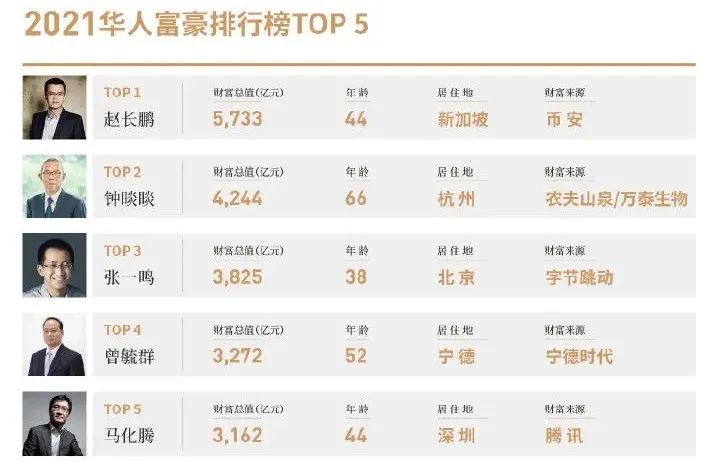
Virtual currency flash crash_Bitcoin 24-hour drop_Real-time Binance Coin Market

However, on November 30, Changpeng Zhao posted information on social media saying that if he sold 0.01% of the company's equity for 1 US dollar, would the company be worth 10,000 US dollars? If a total amount of 1 trillion currency was issued and a token was sold for 1 US dollar, would he have a currency worth 1 trillion US dollars. And in the subsequent comment, valuation without liquidity means nothing. Suspected to be in response to a hot search about the new richest Chinese man with a net worth of US$90 billion.

As of 8 p.m. on December 4, Binance Coin (BNB) fell nearly 13%, with the latest total market value approximately US$90.776 billion, a decrease of more than US$13.5 billion compared to the previous day's total market value.

Changpeng Zhao has said that in terms of investment, he owns some Bitcoin, but the majority of his assets are Binance Coin. However, Changpeng Zhao did not disclose the number of Binance Coins he holds. However, according to previous public information, the Binance team holds about 40% of Binance coins, and Forbes data shows that Changpeng Zhao owns 30% of Binance shares. Based on this rough calculation, Zhao Changpeng's net worth shrank by about 10.3 billion yuan (about 1.62 billion U.S. dollars) in one day.

According to past reports, Changpeng Zhao is a Canadian-Chinese who has a high influence in the field of cryptocurrency and is known as "CZ". He was born in 1977 and lived in Jiangsu as a child. Later, he moved to Vancouver, Canada with his family, and currently lives in Singapore temporarily.

In 2005, Zhao Changpeng successively founded Fuxin Information, Bijie Technology and other companies in Shanghai, making his first pot of gold. He entered the Bitcoin field in 2013, and founded Binance with his team in 2017, issuing the digital currency "Binance Coin" (BNB). Half a year later, Binance reached 6 million users, becoming the world's largest cryptocurrency exchange and maintaining its leading position in the industry to this day. Changpeng Zhao said that he hopes that Binance will grow at a more moderate rate. "We hope that other exchanges can grow a little stronger so that they can share user pressure with us."

According to data from the Coinglass website, in terms of Bitcoin holdings, as of 9 pm on the 4th, the Bitcoin contract holdings of the blockchain trading platform Binance accounted for 22.18%, ranking first among all platforms.
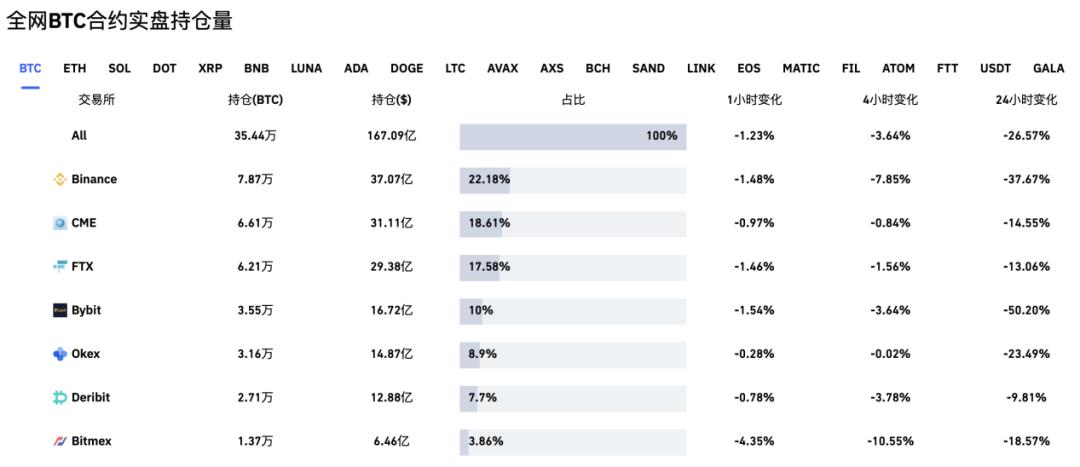
Bitcoin 24-hour drop_Real-time Binance Coin Market_Virtual currency flash crash

However, globally, cryptocurrency exchanges lack regulation and fall into a gray area in many countries. So far, Binance has received warnings from financial regulatory agencies in the United Kingdom, Germany, Japan, Malaysia, South Africa, Singapore and other countries, and has successively announced the withdrawal of users from the United States, China, and Singapore.

SEC Chairman: Concerned about ETFs that directly hold Bitcoin

According to the latest news from Bloomberg on December 4, U.S. Securities and Exchange Commission (SEC) Chairman Gary Gensler expressed concerns about ETFs that directly hold Bitcoin. In response to a question from Pat Toomey, the top Republican on the Senate Banking Committee, Gensler reiterated his concerns about Bitcoin’s lack of regulation and the potential for fraud and manipulation.

On October 15, the first Bitcoin futures ETF in the United States was approved. The U.S. Securities and Exchange Commission approved the listing of the Bitcoin futures ETF applied by ETF giant ProShares under the code BITO. According to Bloomberg statistics, on the first day of listing, BITO changed hands more than 24 million units, and the total trading volume on the first day was close to 1 billion US dollars, second only to BlackRock's carbon neutral ETF, becoming the ETF with the second highest first-day trading volume in history.

Also in October this year, the second Bitcoin futures ETF, the Valkyrie Bitcoin Strategy ETF, was also traded on Nasdaq under the trading code BTF. In mid-November this year, the third VanEck Bitcoin Strategy ETF (XBTF) was also listed for trading.

However, compared with the successive approvals for listing of Bitcoin futures ETFs, the United States is still very cautious about Bitcoin spot ETFs. In November this year, the U.S. Securities and Exchange Commission rejected VanEck’s application for a Bitcoin spot ETF.

Gensler said that while he is comfortable with futures-based ETFs because Bitcoin futures trade on highly regulated exchanges, the same cannot be said for Bitcoin spot.

China strengthens virtual currency regulation

It is worth noting that recently, the cryptocurrency trading platform Huobi began to issue internal messages to remind users in mainland China to clear their account assets, and made it clear that the currency deposit function for users in mainland China will be closed on December 14. On December 15th, the currency trading function for mainland Chinese users will be banned, and on December 31st, OTC transactions will be removed.
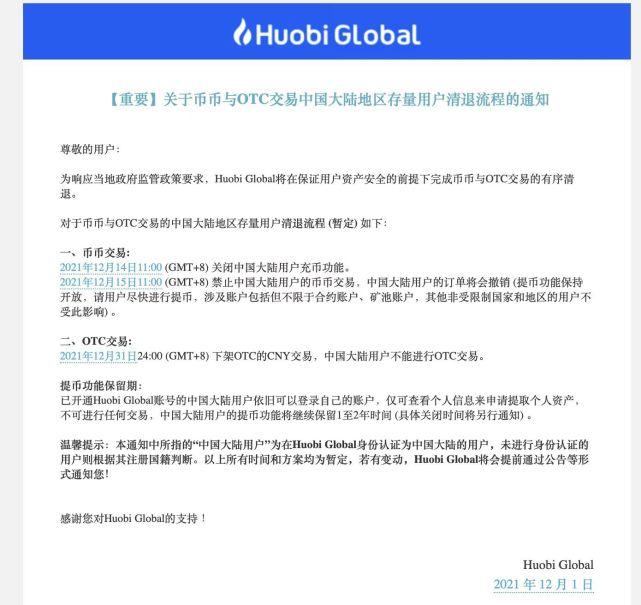
Bitcoin's 24-hour decline_Virtual currency flash crash_Real-time Binance Coin Market

Since 2021, the People's Bank of China has interviewed some banks and payment institutions on the issue of speculation in virtual currency transactions, requiring banks and payment institutions to strictly implement regulatory provisions such as the "Notice on Preventing Bitcoin Risks" and "Announcement on Preventing Token Issuance Financing Risks", effectively perform customer identification obligations, and must not provide account opening, registration, trading, clearing, settlement and other products or services for related activities.

On September 24, ten departments including the People's Bank of China jointly issued the "Notice on Further Preventing and Dealing with Speculation Risks in Virtual Currency Transactions" (hereinafter referred to as the "Notice"). The "Notice" clarified that virtual currency-related business activities are illegal financial activities, and the provision of services by overseas virtual currency exchanges to residents in my country through the Internet is also illegal financial activities. On the same day, 11 departments including the National Development and Reform Commission jointly issued the "Notice on Regulating Virtual Currency "Mining" Activities" to comprehensively rectify the "coin speculation" pattern across the entire chain.

Guosheng Securities analysis believes that with the promulgation of the “924” document, China’s crypto asset supervision has entered a new era. This policy is the most stringent policy in the history of China's crypto-asset supervision after the People's Bank of China, the Cyberspace Administration of China and seven other departments issued the "Announcement on Preventing Financing Risks of Token Issuance" on September 4, 2017 (known as the "September Fourth").

Guosheng Securities believes that the "924" has the following characteristics compared to the "94": 1) The regulatory situation is more severe; 2) There are more regulatory authorities, including the Supreme People's Court, the Supreme People's Procuratorate, the Ministry of Public Security, and the State Administration of Foreign Exchange, and the characterization is more stringent; 3) There are more regulatory reasons involved; 4) There are more regulatory measures; 5) More business types are involved; 6) More business behaviors are involved.

Munger: China did the right thing by banning cryptocurrencies

According to the Australian Financial Review, "Stock God" Buffett's old partner, 97-year-old Charlie Munger, said at an investment conference in Sydney on December 2: "I think the Chinese made the right decision, which is to ban them (cryptocurrencies), and my country made the wrong decision."

Munger praised China for not letting the cryptocurrency investment craze go too far and "they acted in a more mature way." He also said that he would never buy cryptocurrencies and wished cryptocurrencies had never been invented. He also said that the current global stock market environment is even "crazier" than the Internet bubble in the late 1990s.

"I can't stand to be part of this crazy boom, one way or another. It seems to be working fine and everyone wants to get in, and I have a different attitude." Munger added, "I want to make money by selling people things that are good for them, not selling them things that are bad. Trust me, people who create cryptocurrencies are not thinking about their customers, they are only thinking about themselves. I personally can't stand to be part of these crazy booms, in any form."

Blockchain DeFi Exclusive High-frequency Terms

EVM (Ethereum Virtual Machine) is the environment for running smart contracts on Ethereum. It is the core underlying architecture to achieve cross-chain compatibility.

Layer2 is an expansion plan built on the Ethereum main network to reduce transaction costs and increase throughput.

ZK-Rollup is a Layer 2 technology that uses zero-knowledge proof to compress transaction data and has both high efficiency and security features.

DEX (Decentralized Exchange) is a decentralized exchange crypto asset trading platform that does not require an intermediary. Transactions are executed directly through smart contracts.

CEX (Centralized Exchange) is a centralized exchange trading platform operated by a third-party institution. Users need to custody assets, such as Binance and Coinbase.

Liquidity Pool is a capital pool stored in smart contracts, providing trading depth for DEX, and liquidity providers can receive a share of handling fees.

Yield Farming is a way for liquidity mining users to provide assets to the liquidity pool and obtain platform tokens and other rewards.

RWA (Real-World Assets) is a model that maps offline assets such as treasury bonds, real estate, and commodities to programmable tokens on the chain.

LST (Liquid Staking Token) is a tradable token obtained by users of liquid staking tokens after staking ETH and other assets, solving the lock-up restrictions of native staking.

EigenLayer Eigen layer Ethereum's re-pledge protocol allows validators to reuse pledged assets to provide security for other protocols.

Flash Loan is an unsecured instant loan that requires borrowing and repayment in the same transaction. It is often used for arbitrage.

Oracle Oracle is a bridge between blockchain and real-world data, providing external price, event and other information for smart contracts.

Impermanent Loss: The potential loss incurred by a liquidity provider due to price fluctuations of assets in the pool, compared to directly holding assets.

Governance Token is a token that gives holders the right to propose and vote, and is used to participate in the rule formulation and upgrade decisions of the DeFi protocol.

Cross-chain Bridge is a tool for asset transfer and data interoperability between different blockchains. It is the core infrastructure of cross-chain DeFi.

Ferrari’s First Electric Sports Car Is Named Luce, With Many Highlights In Interior And Interactive Design

Thanks to IT House netizen Ku for submitting clues!

IT House reported on February 9 that Ferrari officially announced today that its first electric sports car will be named "Luce" and announced the car's interior and human-computer interaction design, which it claims can bring an "exhilarating driving experience."

Ferrari Luce electric sports car interior design by Jonathan Ive and Marc Newson_luce

IT House here quotes an official press release. The car's name "Luce" comes from Italian, meaning "light" or "illumination", symbolizing Ferrari's firm direction towards the future. It also confirms the brand's new naming strategy and opens a new chapter for an important new member of the product line.

According to reports, this car was designed by former Apple chief design officer Jonathan Ive, known as the "father of the iPhone and iPad", and Mark Newson, the "Queen Designer" of Swarovski and Nike. The LoveFrom creative team founded by the two in San Francisco participated in the design of the car in all aspects.

luce_Ferrari Luce electric sports car interior design by Jonathan Ive and Marc Newson

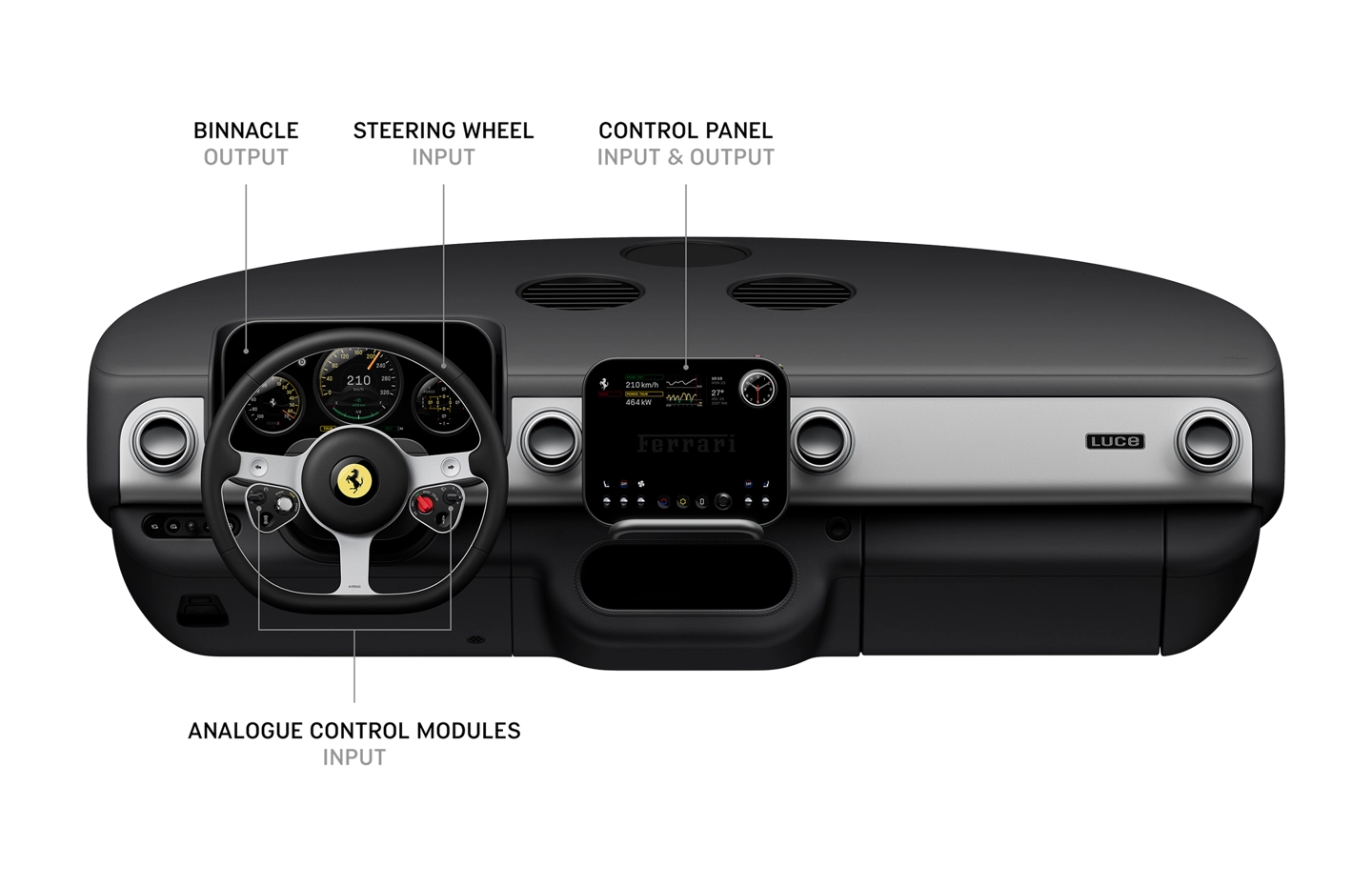
In terms of interior, the cockpit of this car is designed as a simple and unified space. The software and hardware are developed simultaneously to keep the physical structure and UI interface highly consistent. It uses 100% recycled aluminum alloy, which is CNC machined from a single piece of aluminum. The surface is anodized. The glass is from Corning's "Gorilla" brand, which has high durability and scratch resistance.

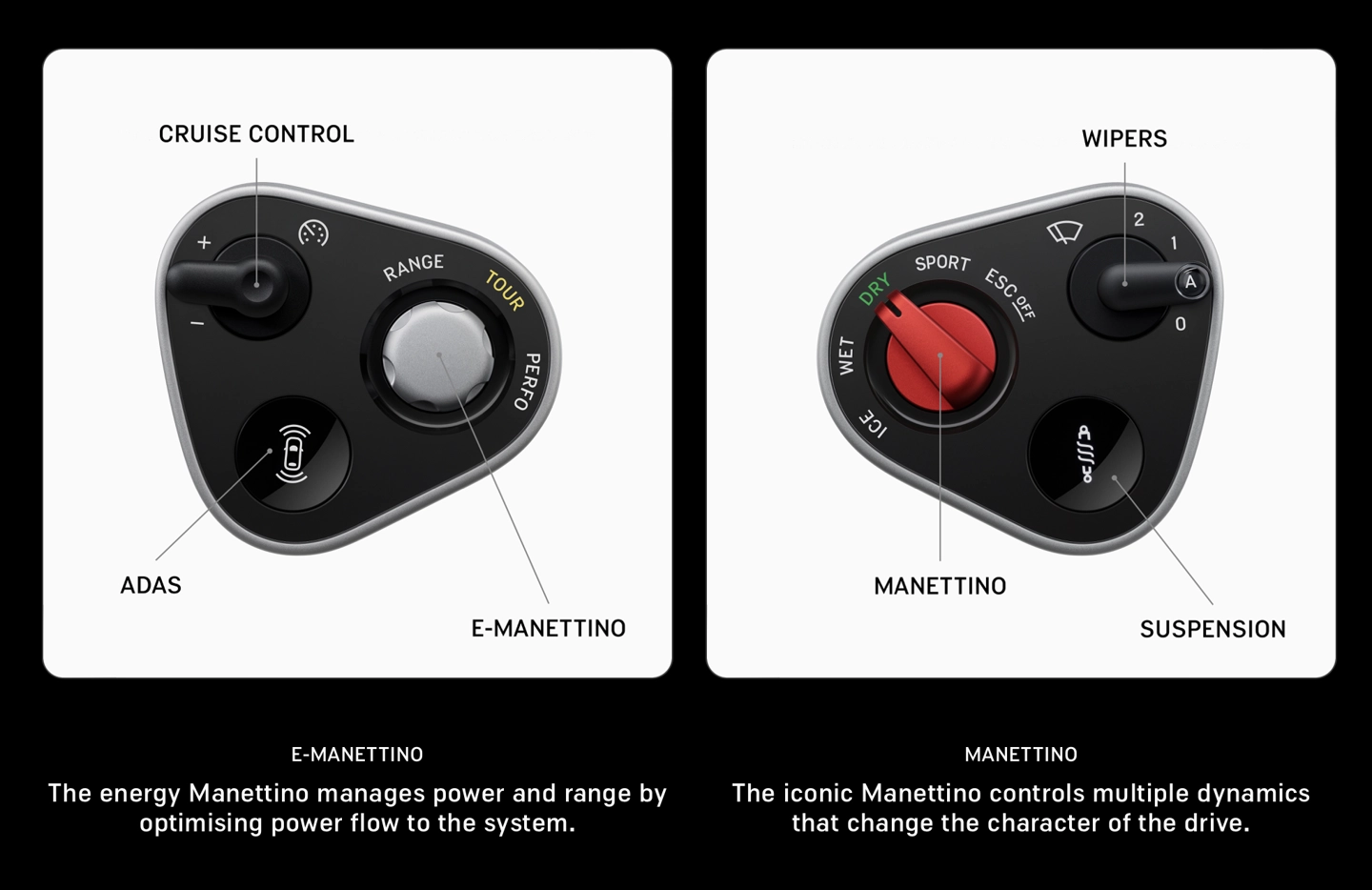
In terms of software, the car's human-computer interaction interface adheres to the three core concepts of touch, clarity, and intuition. The team gave priority to physical buttons to enhance the interaction between people and the vehicle. The steering wheel uses a simplified three-frame structure, inspired by the wooden Nardi steering wheel of the 1950s and 1960s. The whole is divided into two control modules, similar to an F1 racing car, and is 400 grams lighter than a standard Ferrari steering wheel.

Ferrari Luce electric sports car interior design by Jonathan Ive and Marc Newson_luce

Walking into the car, you can find that the center console of this car has been specially designed. The industry's first color E-Ink screen key has the advantage of saving power. When the key is inserted into the center console, the color of the screen will change from yellow to black. The instrument panel and screen will light up at the same time, creating a comfortable atmosphere.

Ferrari Luce electric sports car interior design by Jonathan Ive and Marc Newson_luce

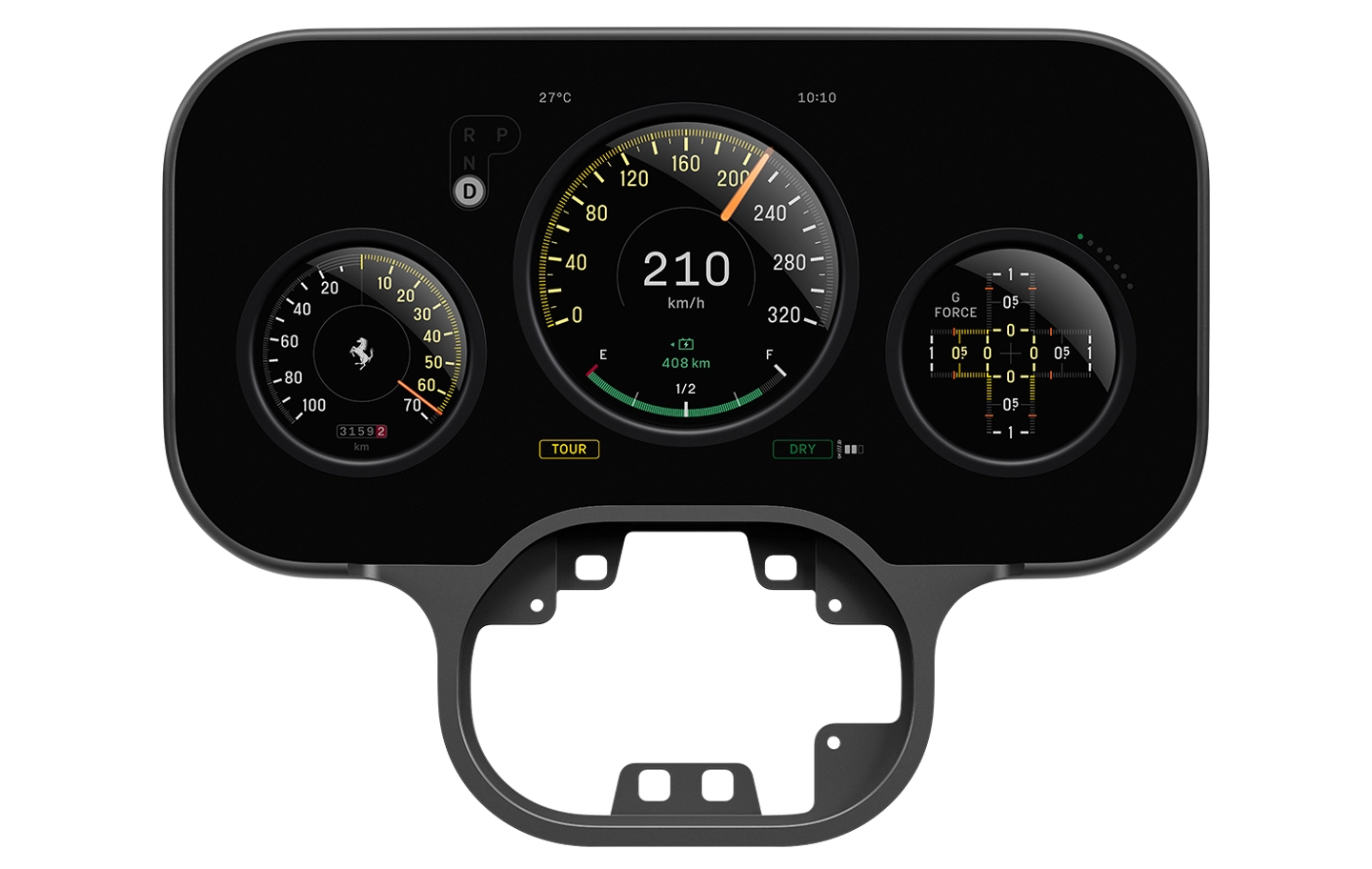
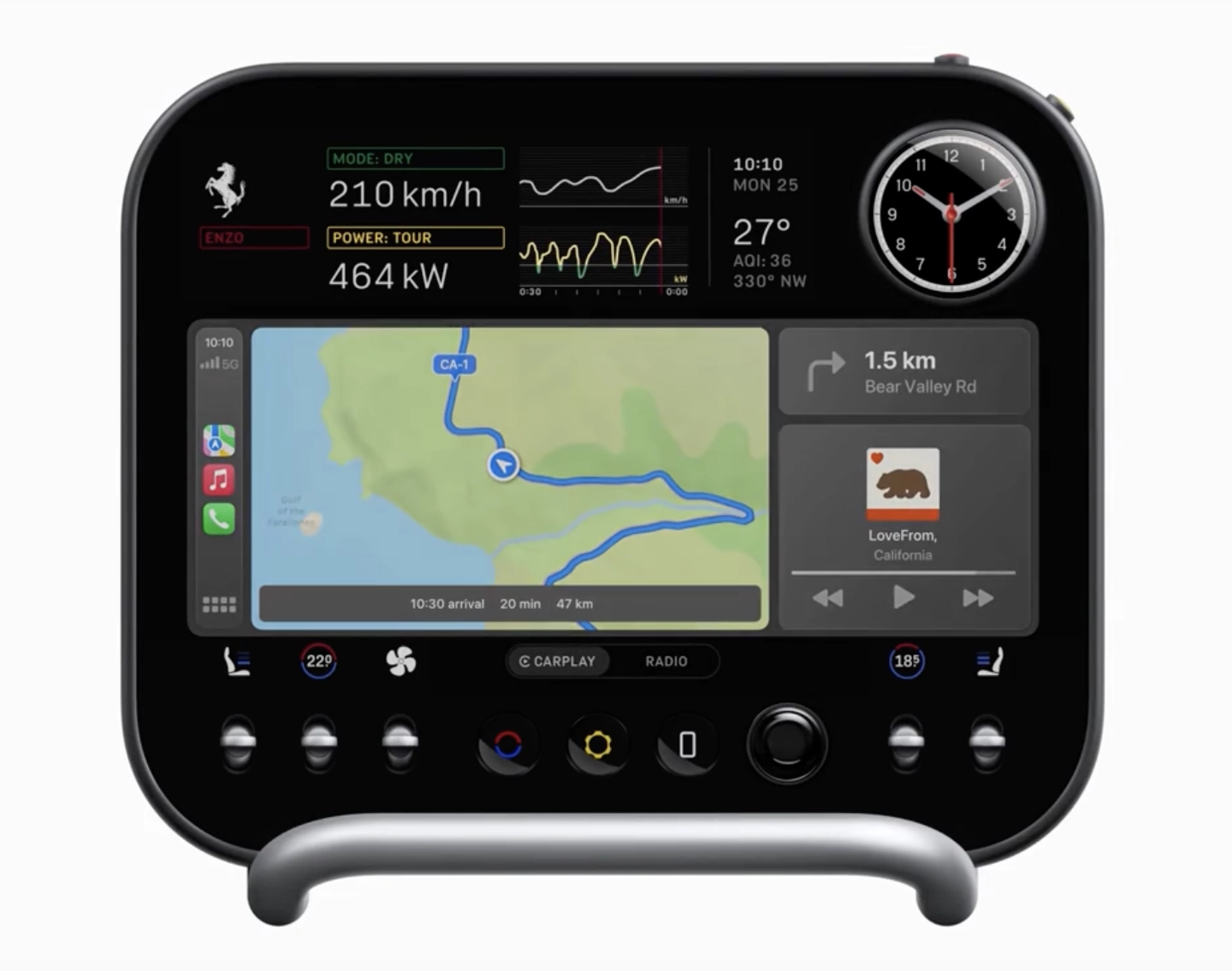
At the same time, this car has a total of three screens, one on the instrument panel, the center console, and the rear row. They are designed to provide a clear, clear, and separated input and output experience. The display fonts are all customized. The instrument panel screen has two overlapping OLED panels built into it. Samsung participated in the development, which can achieve high contrast and bright colors.

luce_Ferrari Luce electric sports car interior design by Jonathan Ive and Marc Newson

The central control screen of this car has a spherical rotating shaft that can be freely oriented towards the driver/co-pilot. It is equipped with a palm rest and can be operated without having to lower your head. There is a spherical multi-function meter on the right side, which can switch the clock, timer, compass and ejection starting guide. The second screen on the top left is used to display advanced parameters such as speed and power. The large screen in the middle can display information such as CarPlay, air conditioning and parameter settings.

luce_Ferrari Luce electric sports car interior design by Jonathan Ive and Marc Newson

Overall, the car's interior is a blend of craftsmanship, thoughtful innovation, and a nod to the past while embracing the future.

The U.S. Dollar-pegged Stablecoin USDG Is About To Be Launched In The EU And Is Supported By Many Parties And Certified.

Zhitong Finance has learned that issuer Paxos released the US dollar-pegged stablecoin Global Dollar (USDG-USD) to users across the EU on Tuesday. The statement stated that the stablecoin is supported by retail trading platform Robinhood (HOOD.US), payment giant Mastercard (MA.US) and crypto exchange Kraken and will be launched in the EU soon.

This implementation will enable more than 450 million consumers in 30 countries to gain access to USDG. The token has been certified by the EU’s Crypto-Asset Market Regulation (MiCA) and is regulated by the Finnish Financial Supervisory Authority (FIN-FSA) and the Monetary Authority of Singapore (MAS).

USDG is issued in Europe by Paxos Issuance Europe OY, a Finnish entity regulated by the Finnish Financial Supervisory Authority and structured to comply with the EU’s new crypto-asset market framework. Paxos will store part of USDG's cash reserves in European banks and commit to one-on-one redemptions to meet MiCA's strict support and auditing rules.

Despite the EU's strict cryptocurrency laws, demand for U.S. dollar-pegged currencies has surged, according to Paxos data. The company expects USDG to compete for market share with other regulated stablecoins, such as Circle (CRCL.US)USDC, which is the first stablecoin to obtain a MiCA license and is currently the largest MiCA-compliant token.

Launched in November 2024, USDG supports the Global Dollar Network (GDN), a consortium of industry leaders dedicated to promoting the adoption of stablecoins. Companies including Robinhood, Kraken, Paxos, Anchorage, Nuvei, Bullish and Galaxy are among its founding partners.

"This move comes at a time when demand for stablecoins is rising rapidly," said Walter Hessert, head of strategy at Paxos.

Recently, during the first Ethereum Community Conference in Europe, the US stock brokerage giant Robinhood officially announced the launch of the most ambitious encryption product suite in history, launching a series of new cryptocurrency-related products, including tokenized stocks, exchange-traded funds, encrypted perpetual futures and encrypted pledge services.

This series of initiatives not only enhances Robinhood’s core competitiveness in the crypto market, but also marks the formation of “tokenized Wall Street.”

OKEx Resumed Fiat Currency Trading After Suspending Currency Withdrawals, USDT Selling Price Suffered Setbacks And Related Situations

European Exchange APP download_OKEx’s escape channels after suspending currency withdrawals_The impact of OKEx’s resumption of fiat currency trading

After OKEx suspended currency withdrawals, user assets were temporarily trapped. As a result, a variety of "extrication" channels have appeared on the market. First, there was a mixed bag of OTC transactions, and then there were the "rigid redemptions" of OKU and TRON supported by other exchanges.

Various forces have come on stage one after another, using OKEx's internal transfer function to seemingly "save" OKEx users, but in fact they have their own agenda, creating a trend of "carving up" OKEx user resources and assets.

This well-established platform is not sitting still. On October 21, first, multiple trigger platform risk control accounts were automatically restricted from internal transfer functions. At around 11:00 that day, OKEx announced that it would resume fiat currency trading at 20:00 (Hong Kong time).

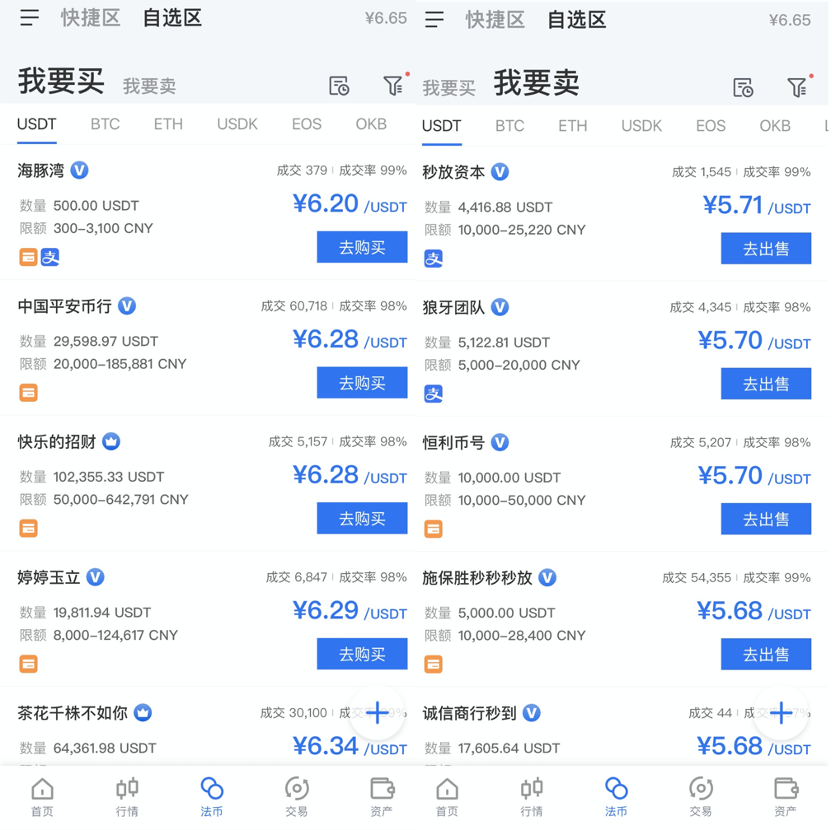
On the OKEx legal currency trading area after the restoration, the selling price range of USDT, the stable currency USDT that is urgently needed by the market, is between 5.01 yuan and 5.71 yuan within 5 minutes, and the selling price is lower than other mainstream platforms. OKB took advantage of the trend and rose sharply in the short term, rising from US$4.81 to US$5 in 10 minutes.

Opening up the exchange channel for fiat currencies and crypto assets is like a counterattack by OKEx, intercepting behaviors that threaten the security of its users and their assets, and more importantly, providing a withdrawal channel for trapped users.

OKEx unblocks fiat currency channels USDT selling price suffers setback

At 8 pm on October 21st, Beijing time, OKEx, which had suspended currency withdrawals for 5 days, first restored the status of the legal currency trading area. Six stable currencies including USDT, 8 mainstream currencies such as BTC, and the platform token OKB are fully open for legal currency trading.

European Exchange APP download_The impact of OKEx’s resumption of legal currency transactions_OKEx’s escape channels after its suspension of currency withdrawals

OKEx resumes fiat currency trading

On the afternoon of the 16th, when OKEx "suspended withdrawals", the platform's fiat currency trading area pending order page became blank. Now, this market has finally recovered, but the fiat currency trading prices of various currencies have suffered setbacks.

Taking USDT as an example, at 20:05, the self-selected area of ​​the OKEx legal currency trading area shows that the buying price of USDT listed by the merchant is between 6.2 yuan and 7.99 yuan; the selling price range is between 5.01 yuan and 5.71 yuan. The bid-ask spread ranges from 1.19 yuan to 2.28 yuan.

At the same time, in the Huobi legal currency trading area, the lowest buying price of USDT was above 7.34 yuan, and the selling price was between 5.93 yuan and 6.61 yuan. The lowest buying price and highest selling price of USDT on OKEx are equivalent to a "14% discount" and "16% discount" respectively compared to USDT on Huobi.

This is also as predicted by outside public opinion during the day. Before users' panic about the platform's inability to withdraw coins has dissipated, it is not difficult to imagine the situation where fiat currency trading merchants will collect coins at low prices.

However, the news of the resumption of legal currency transactions has brought benefits to the platform token OKB.

At 11 a.m. on October 20, just after the announcement, OKB jumped from $4.85 and soared to a high of $5.26 within 12 minutes, a rapid increase of 8.45%.

At 20:00 when withdrawals were officially resumed, OKB once again rebounded from US$4.81 after the correction to US$5, an increase of 3% in 10 minutes. As of 1 a.m. on the 22nd, OKB remained near $5.

Each side of the "carving up" has its own agenda, and users pay for their anxiety

Some commentators called OKEx's resumption of fiat currency trading a "smart move." On the one hand, this alleviated users' anxiety caused by being unable to withdraw money and opened up a channel for users to withdraw funds. Some people in the community think, "This is good, at least everyone will not be cheated by some OTC traders."

Indeed, since OKEx suspended currency withdrawals on October 16, advertisements for “collecting OK-USDT” have appeared in various communities, and a dedicated over-the-counter trading group has even been established. The purchase prices appearing in each group range from 30% to 20% off the market price. The way they operate is to allow OKEx users to transfer USDT to the "U recipient" account through on-site transfers, and buyers and sellers settle the tokens through off-site peer-to-peer settlement.

Industry insiders have warned that if users "cash out" at low prices through this method, they may encounter high risks of fraud or money laundering. Today, OKEx has resumed fiat currency trading, which has alleviated the risks for platform users to a certain extent. From a price perspective, although there is a "discount" on the price of USDT in the platform trading area, it is not lower than the off-site purchase price.

More savvy trading platforms have identified the risk and pain points of OTC trading and quickly launched a currency called OKU. On October 20, CoinEX announced that “in order to help OKEx users’ assets circulate better,” it launched OKU with a 1:1 exchange rate with USDT, and supported transactions between OKU and USDT on its platform.

Since OKU went online at 20:00 on October 20, the price has risen from 0.8USDT to 0.99USDT, and the lowest fell to 0.72USDT that day. As of 1:30 a.m. on October 22, OKU quoted 0.91USDT on CoinEX, with the lowest price in 24 hours being 0.81USDT and the highest being 0.92USDT.

Coin-to-crypto transactions endorsed by the trading platform may have lower risks than OTC transactions, but judging from the price of OKU, they are still discounted USDT. One problem is that there is no way to know the total amount of OKU.

CoinEX also stated in the announcement, "If CoinEx's official account on OKEX is frozen or assets are lost due to OKEx's policies or other force majeure factors, the losses caused will be borne by OKU holders, and CoinEx will not bear any responsibility for this." In other words, helping "OKEx users' assets circulate better" does not mean there is no risk, and the specific risks will be borne by users. For the platform, it is a "double harvest" of user resources and transaction fees.

OKEx’s on-site transfer function is not only used by OTC traders and competitors in the industry, but also by the favorite hot spot Justin Sun. Also on October 20, the Tron Foundation announced that TRX on the OKEx platform can be redeemed on a 1:1 basis. Officials will transfer the TRX in the user's designated account on the Tron site to the user's designated TRX mainnet account.

Affected by this, TRX rose by 9.92% in a short period of time, and then quickly fell by 5.48%. As for where TRON’s TRX comes from, and how TRX transferred to designated accounts on OKEx will be handled, the announcement did not explain.

Players in the currency listing circle on Weibo also have mixed reviews of Justin Sun's move. Some praised him for his "quick thinking" and "helping users escape." Others were worried that the TRX concentrated in Tron's OKEx account would create selling pressure, and TRX holders would ultimately pay for it.

When various parties took advantage of OKEx's on-site transfer function to "divide" its users and user assets, OKEx responded in the early morning of the 21st. The official Weibo posted a reminder that "multiple accounts have been automatically restricted from internal transfer functions due to triggering platform risk control measures." In reply to users, OKEx stated that it was working hard to resume currency withdrawals.

Although no timetable has been given for the opening of currency withdrawals, OKEx, which was the first to resume fiat currency trading, finally made a comeback, more or less counterattacking against the fancy "carve-up" actions in the market. At least one channel for users to withdraw funds has been opened.

Stablecoins Are Valued In The Crypto Market, And USDG Plays An Important Role In Diverse Scenarios

The current total market value of stablecoins in the crypto market has exceeded 100 billion U.S. dollars, of which USDT, USDC, BUSD, and DAI account for over 95% of the entire centralized stablecoin market. With the popularity of the DeFi concept, people's attention to stablecoins is also rising. Stablecoins have become an important infrastructure in the encryption market and are playing an increasingly important role in the global financial market.

Under the recent strong suppression, the direction of suppression ranges from mining to exchanges, from OTC, bulk to blockchain media. What will be the next direction? Some people speculate that it will be stablecoins. Because whether it is rectifying the encryption market or stabilizing the cross-border payment environment, stablecoins play an important part in it.

Diverse scenarios empower USDG

USDG is a blockchain stablecoin anchored to the value of USD, managed by Gate.io (gate.tv) and generated from over-collateralization of a variety of digital currencies. USDG is an ecological member of Gate.io (gate.tv) and is a cross-chain asset stored on multiple blockchains such as GateChain and Ethereum. Users can generate various blockchain assets such as GT through the Gate.io sesame opening (gate.tv) platform or through smart contracts in the future, which can be used for asset transactions, stablecoin liquidity mining, DeFi exchange Swap liquidity pools and other applications. This is undoubtedly a window opened by Gate.io (gate.tv) for USDG. USDG has become the protagonist of many financial products.

Most of the stablecoins on the market have some shortcomings. In addition to the insufficient asset scale behind them, the algorithm mechanism itself does not have reliable support. This makes it difficult for them to accept the test of the market when facing extreme market conditions, and eventually they are eliminated.

After a short period of development, Gate.io's (gate.tv) stablecoin USDG has gradually diversified its usage scenarios. USDG has performed well in all aspects and has achieved outstanding results in the multi-party applications of Gate.io (gate.tv), providing perfect liquidity and transaction scope.

Gate.io (gate.tv) has been launched to obtain the USDG function through blockchain asset mortgage. Both web users and mobile App users can participate in mortgage or redemption at any time. Currently, USDG generated from mortgage borrowing does not charge any interest;

Reaching an intention to cooperate with the S.Finance community, USDG will be listed on S.finance to participate in stablecoin exchange and liquidity mining. Let USDG become a value carrier, and users can run smoothly in the crypto world through USDG;

Gate.io (gate.tv) will provide USDG high-yield financial services in the "Wealth Management" service. Gate.io (gate.tv) will invest assets into DeFi liquidity mining projects that have been extensively verified and audited by smart contracts, and the proceeds will be used to reward financial management users.

In fact, after the lightning expansion of Gate.io (gate.tv) in recent years, the financial ecosystem behind it has already become an empire, and its USDG value endorsement is trustworthy.

Stable portfolio and reduce currency holding risks

As we all know, stablecoins can be defined as cryptoassets that aim to maintain a stable price relative to a benchmark. By using stablecoins, cryptoasset investors are able to stay in the cryptoworld and gain advantages in resilience, integration, immutability, and anonymity, while benefiting from the stable environment typically borrowed from fiat currencies.

Recently, according to an announcement from Gate.io (gate.tv), in order to promote the compliance path of the encryption industry and improve the security protection of user assets, Gate.io (gate.tv) launched the compliant stablecoin combination USD on August 10. This move can add any currency in the platform's recharge portfolio to the account for trading and withdrawal. Users do not need to manually convert, which brings great convenience.

The compliant stablecoin combination USD launched by Gate.io (gate.tv) integrates a variety of mainstream stablecoins into USD, including but not limited to USDC, TUSD, PAX, BUSD, HUSD and other mainstream stablecoins. It can be simply understood that the stablecoins counted into USD are all "certified" compliant stablecoins.

Gate.io's stablecoin portfolio can be simply understood as: users can choose any currency in the recharge portfolio on the Gate.io platform to be accounted for and withdrawn, without manual conversion. Previous stablecoin positions will not be affected. If you want to convert to a USD currency, you can withdraw to your own USD recharge address on the platform. In the future, the compliant stablecoin currencies in Gate.io's gate.tv portfolio will be increased or decreased based on industry development, in an attempt to provide users with a more regulated stablecoin asset portfolio and reduce the risk of stablecoin holdings.

In fact, whether it is a stablecoin portfolio or a stablecoin USDG, with the continuous empowerment of Gate.io (gate.tv), the imagination of USDG is infinite, and the investment path of stablecoin portfolios is more convenient. Investors are always more attracted to products of high quality and full sincerity, and Gate.io’s reputation and achievements today illustrate this point.

Canadian Dollar Crisis Warning: The Trade War Between The United States And Canada Is Heating Up, And The Finance Ministers Of The Seven Countries Will Stage A "tariff Shutdown"! U.S. And Canadian Dollar/Canadian Dollar Trends

After Russian President Vladimir Putin rejected ceasefire negotiations in Istanbul, the G7 parties are more likely to reach an agreement on strengthening sanctions against Russia, but it is difficult to commit to specific actions. Trump had a phone call with Putin on the Ukraine issue on Monday, and the leaders of Britain, France, Germany and Italy had also spoken with Trump before.

Bessant reiterated support for the International Monetary Fund and World Bank in April, which could become another area of ​​consensus for the G7. In addition, issues such as cooperation in combating money laundering and financial crime and relying on the private sector to drive growth are also seen as potential points of consensus.

However, discussions about climate change are likely to be controversial because of Trump's opposition to previous green energy policies. How the G7 describes the economic uncertainty and investment decline caused by tariffs without explicitly blaming U.S. policies is also a sensitive issue in the negotiations.

U.S. Chamber of Commerce CEO Suzanne Clark said at the G7 business meeting in Ottawa that the global economic outlook is uncertain and the business community should continue to advocate common values ​​such as democracy, rule of law and open markets.

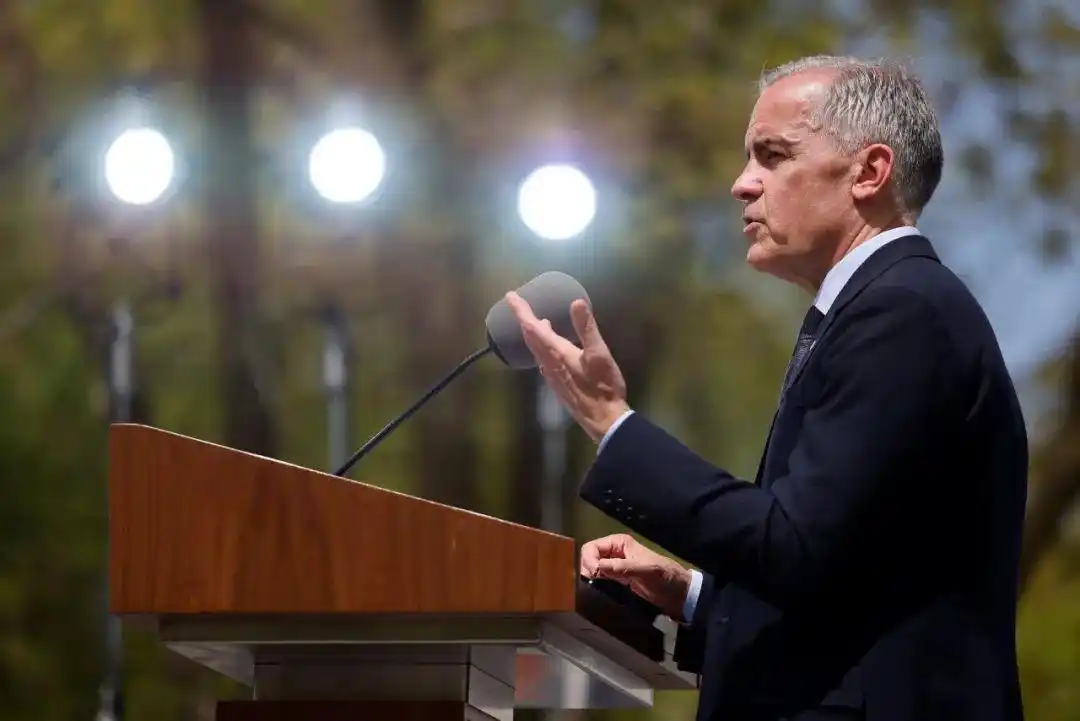
2. Canadian Prime Minister Carney announced that the federal government will submit a budget in the fall

Earlier, Finance Minister Francois-Philippe Champion said the new Liberal government would release an economic update later this year rather than submit an annual budget in the short term.

Carney made the statement after attending the inauguration of Pope Leo XIV at the Vatican. He told a news conference in Rome that it would make no sense to rush through the budget in the short term after the new cabinet is formed.

Carney noted that it would be premature to draw up a budget before a NATO summit in June and in-depth discussions on an economic partnership with the United States. The government is currently looking at how to reduce costs and improve public sector efficiency.

He mentioned that factors such as defense spending, economic prospects, tariff relations with the United States, and government efficiency will be taken into consideration to ensure that the budget submitted in the fall is more comprehensive, effective and prudent.

Carney was among the dignitaries attending the inauguration of the new pope at the Vatican, where he met with Ukrainian President Volodymyr Zelensky, Italian Prime Minister Giorgio Meloni and European Commission President Ursula von der Leyen in preparation for the G7 summit in Canada in June.

3. U.S. sovereign credit rating downgraded

Moody's, one of the three major international credit rating agencies, recently issued an announcement on its official website, announcing that due to the continued increase in the total amount of U.S. government debt and the proportion of interest payments, it has decided to downgrade the U.S. sovereign credit rating from the highest level of Aaa to Aa1.

According to Moody's analysis, U.S. government debt and interest payment ratios have grown significantly over the past decade and are much higher than those of other countries with similar ratings. Although the United States has obvious economic and financial advantages, these advantages can no longer fully offset the continued deterioration of its fiscal situation.

Currently, the United States' annual fiscal deficit is close to 2 trillion US dollars, accounting for more than 6% of the gross domestic product (GDP). In the context of an economic slowdown that may be triggered by global trade frictions, the trend of sluggish economic growth in the United States may further intensify the fiscal pressure on the federal government, because during economic downturns, government spending usually rises accordingly.

In addition, the high interest rate environment in recent years has significantly increased the U.S. government's debt service costs. Since the COVID-19 epidemic, the U.S. government's borrowing scale has continued to expand, causing the overall debt scale to exceed the economic aggregate.

U.S. Treasury Secretary Bessent also admitted at a congressional hearing that the United States is facing an unsustainable fiscal path and the debt problem is worrying. He pointed out that this crisis may lead to an overall contraction of credit, which in turn triggers a sudden economic stagnation, and stressed that the government will try its best to avoid such a situation.

The Yale Budget Laboratory predicts that if the new tax bill proposed by the Republican Party is passed, it will increase the scale of new federal debt to $3.4 trillion in the next decade. If the temporary provisions in the bill that were originally planned to gradually expire are extended to 2035, the debt increase may be as high as $5 trillion. The agency also predicts that if the above provisions are made permanent, the U.S. debt-to-GDP ratio will rise to 200% in 2055.

It is worth noting that Moody's is the last of the three major international rating agencies to revoke the AAA sovereign credit rating of the United States. Standard & Poor's downgraded the long-term sovereign rating of the United States from "AAA" to "AA+" as early as 2011, a move that triggered strong opposition from the U.S. Treasury Department. In August 2023, Fitch also canceled the AAA rating of the United States due to frequent deadlocks in debt ceiling negotiations in Congress, as well as the deteriorating federal fiscal situation and high debt levels.

Today, Tuesday, May 20, investors should pay attention to the release of Canadian CPI inflation data at 20:30 Beijing time. In addition, attention should be paid to the G7 finance ministers meeting held in Canada from May 22 to May 23.

Economic information

Economic Outlook of Canadian Federal Budget Defense Spending_USDG_G7 Summit Strengthens Sanctions on Russia International Monetary Fund

Canadian household wealth innovation and high structural risks are looming. Statistics Canada data shows that in the fourth quarter of 2024, national household wealth reached 17.49 trillion Canadian dollars, a record high, and the average household net worth reached 1,026,205 Canadian dollars, an increase of 30% from 2019. Wealth growth is mainly driven by financial assets (stock market gains). The S&P 500 and Toronto Stock Exchange indices rose by 23% and 18% respectively, and financial assets increased by nearly 10% year-on-year. Real estate values ​​stabilized and rebounded, with house prices rising slightly by 1% year-on-year in 2024.

Generational and regional differences are significant: Millennials and Generation At the regional level, Quebec and the prairie provinces (Alberta and Saskatchewan) lead the way in wealth growth (over 7%). Ontario and British Columbia still lead the list with an average value of over 1.2 million Canadian dollars due to high housing prices, but the growth rate has slowed to 3.4%-5.6%.

Future growth will be under pressure and the trade war may become a variable: Economists warn that the risk of economic recession in 2025 and the U.S.-Canada trade war may reverse the growth trend. If the stock market corrects (due to the impact of Trump's tariff policies), the richest 20% of households (accounting for 65% of the nation's wealth) may face a decline in assets, dragging down the overall data. Rising unemployment (reaching 6.9% in April) and income constraints among young people may exacerbate wealth inequality. Real estate may be relatively stable, but high interest rates are still discouraging young homebuyers from entering the market. The analysis pointed out that the resilience of household wealth depends on the stability of the stock market and policy, and the average value of one million Canadian dollars may be difficult to maintain under external shocks.

political information

USDG_G7 Summit Strengthens Sanctions on Russia International Monetary Fund_Canadian Federal Budget Defense Spending Economic Outlook

The G-7 summit focused on the tariff game and the coordination of differences between Canada and the United States. Canadian Prime Minister Carney met with US Vice President Vance in Rome on May 18 to coordinate positions on tariff disputes, border security and fentanyl control. The two sides agreed to strengthen economic and security cooperation. On May 21, the G7 finance ministers’ meeting was held in Banff, Canada. The host tried to bridge the differences between allies on tariffs against the United States. Canada is under the pressure of the Trump administration’s 25% tariff on aluminum, steel and other products, while members of the G7 may face the risk of the United States’ “reciprocal tariffs” doubling to more than 20%.

During the meeting, Canadian Finance Minister Bessant called on allies to jointly deal with "non-market behavior" and also sought to push the United States to soften its tariff policy. Canada actively mediates the joint statement of the seven countries, supports Ukraine and coordinates sanctions against Russia, but it has significant differences with the United States on climate issues. Analysis pointed out that Canada tried to use a "unity narrative" to hedge against trade uncertainty, but Trump's tough policy made a substantial breakthrough doubtful. The domestic business community calls for maintaining open market values, highlighting the strategic dilemma caught between globalization and protectionism.

financial information

On May 19, the Canadian stock market was closed.

geopolitical war

Economic Outlook of Canada’s Federal Budget Defense Spending_G7 Summit Strengthens International Monetary Fund Sanctions on Russia_USDG

The Israeli offensive in Gaza has escalated, and international pressure has intensified along with forced evacuation and limited assistance. On May 19, the Israeli military launched intensive air strikes on Khan Younis, the second largest city in Gaza. More than 30 air strikes were carried out in a single hour, killing at least 46 people. It forced residents to evacuate to the Mawasi area, warning that it would launch an "unprecedented" attack. Israeli Prime Minister Benjamin Netanyahu said he would allow "minimum" aid to come in to ease international pressure, but did not announce a specific timetable.

British Prime Minister Starmer condemned the situation as "intolerable" and is coordinating with allies to respond. The Gaza Ministry of Health pointed out that the Israeli offensive moved southward, causing a surge in civilian casualties. Wafa News Agency said that an attack on the Nuseirat school resulted in the death of children. Although Israel has designated an evacuation zone, Mawasi has also been attacked recently, leaving residents in a dilemma with "nowhere to escape." Analysts believe that Netanyahu's opening of aid is aimed at hedging allies' dissatisfaction with his blockade policy, but delays in humanitarian access may increase the risk of famine and further shake international support. The current conflict is spiraling into escalation, and the prospects for a ceasefire are slim.

Technology attack

1. Technical summary:

Statistics Canada will release the April Consumer Price Index (CPI) on Tuesday, about two weeks before the central bank's interest rate decision on June 4. Market consensus expects inflation to fall to 1.6% in April from 2.3% in March.

This decline was mainly affected by the cancellation of the carbon tax by new Prime Minister Carney. The carbon tax, which previously increased about 18 cents per liter of gasoline, is expected to reduce overall inflation by 0.7 percentage points in April after its cancellation, and will continue to have a similar impact on inflation in the next year until the base period effect disappears next year.

Royal Bank of Canada forecasts inflation at 1.6%. Economists at the bank pointed out that changes in tax policy, including the elimination of the carbon tax and the temporary tax cuts that ended in mid-February, are affecting the inflation data.

RSM Canada economist Tu Nguyen said the fall in international oil prices in April also caused gasoline prices to fall due to the slowdown in the global economy and OPEC's increase in production. She expects slower housing inflation to bring CPI closer to the central bank's 2% target.

She believes that the Canada-US trade dispute will have a limited impact on inflation in April. Although the United States has imposed tariffs on Canadian steel and aluminum, and Canada has taken countermeasures, some products have been exempted. She pointed out that companies may face higher expenses due to supply chain adjustments or absorbing the cost of tariffs, but this will not significantly push up inflation.

Nguyen emphasized that U.S. CPI data shows that tariffs have a limited impact on prices, and Canada should have a similar effect. In addition, the impact of the trade war is mainly concentrated on the prices of new cars and auto parts, making little contribution to the overall CPI.

The Bank of Canada kept interest rates unchanged in April. Governor Macklem said the move was to monitor the impact of the trade dispute on the economy. The current labor market is weak and the manufacturing unemployment rate is rising. The national unemployment rate rose to 6.9% in April, which may prompt the central bank to cut interest rates again.

TD Bank predicts that the central bank has room to cut interest rates by 25 basis points in June. As of Friday, the market predicted a rate cut probability of over 64% in June. Nguyen predicts there will be two more interest rate cuts this year, bringing the benchmark interest rate to 2.25% by the end of the year. She believes that the central bank will adopt gradual interest rate cuts based on the trade situation and will not operate continuously.

In addition, U.S. Vice President Vance met with Canadian Prime Minister Carney during his visit to Rome on Sunday. The two sides focused on fair trade policies. According to a statement released by Vance's office, the United States and Canada are working to resolve the current tariffs, had in-depth exchanges around the increasing trade pressure and the need to build a new economic and security cooperation relationship, and agreed to continue to maintain communication. This meeting opened a channel for dialogue to ease trade frictions between the United States and Canada, and eased market uneasiness about the trade relations between the two countries.

Currently, the market is paying close attention to relevant trends during the Group of Seven (G7) summit from today to May 23. During the meeting, the Canadian Finance Minister and the US Treasury Secretary are expected to hold talks. The talks are expected to carry out specific consultations on the current trade situation to find solutions to reduce the pressure on the economy caused by tariffs. The progress of the negotiations between the two parties may not only provide a reference for the upcoming autumn federal budget, but also form certain guidelines for the central bank's formulation of future monetary policies.

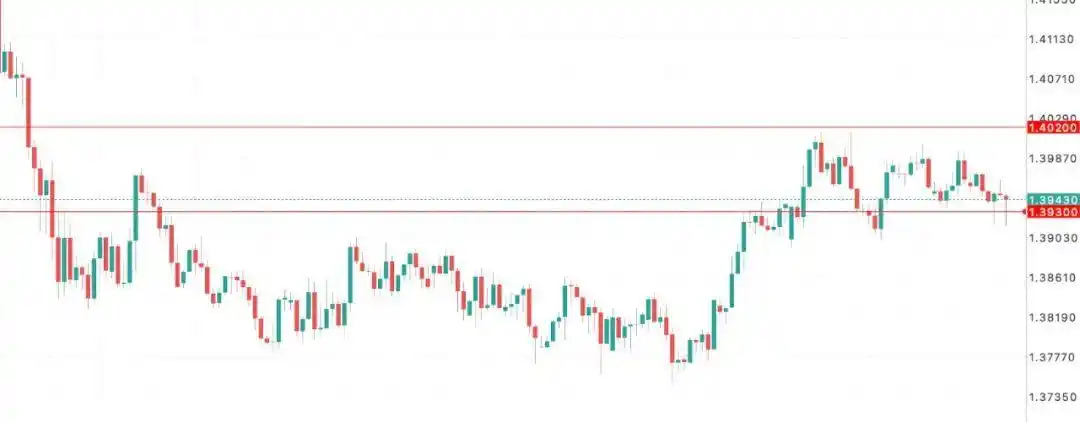
Looking back on Monday, the market maintained a cautious wait-and-see attitude due to the upcoming G7 meeting, which may involve US-Canada trade negotiations. Affected by this, the U.S.-Canada exchange rate fluctuated within a narrow range, waiting for further news. The highest during the day hit the 1.3972 level, and the lowest tested the 1.3917 area.

At the technical structure level, the trend of the United States and Canada is blocked at the 1.4020 area on the daily level. From the perspective of the upward structure, the United States and Canada need to break through the 1.4020 resistance level before they have the opportunity to extend to the 1.4050 main resistance level area for testing. This level is the 38.2% Fibonacci retracement level from March 2 to May 7 this year (1.4543-1.3750), which technically constitutes a strong pressure zone. If further breakthroughs can be achieved, it is expected to challenge the important mid-term resistance level of 1.4150.

The 1.3885 area below is the main support level. This level is the 50% Fibonacci retracement level of this rebound upward trend (1.3750-1.4016), which technically constitutes a strong support zone. If the United States and Canada fall below the 1.3885 level area, it may once again stimulate the market's bearish sentiment and push the exchange rate to continue to challenge the important support level of 1.3750.

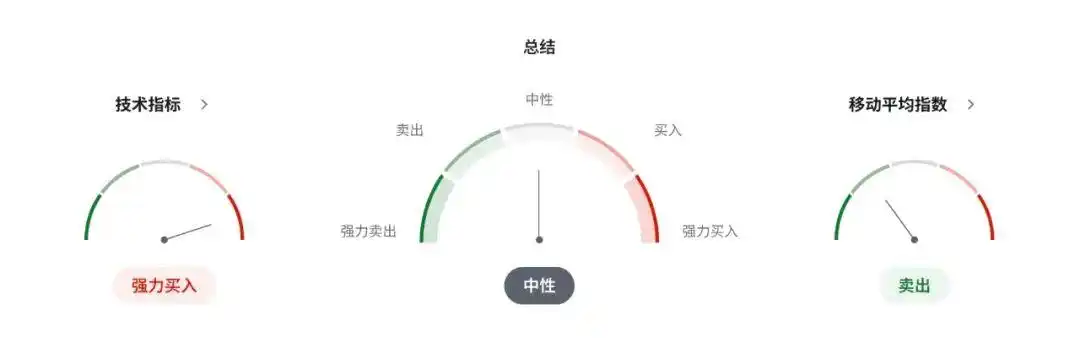
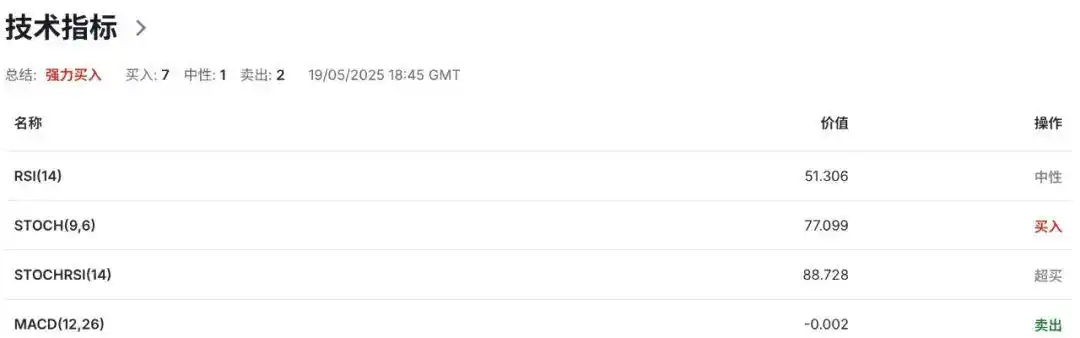
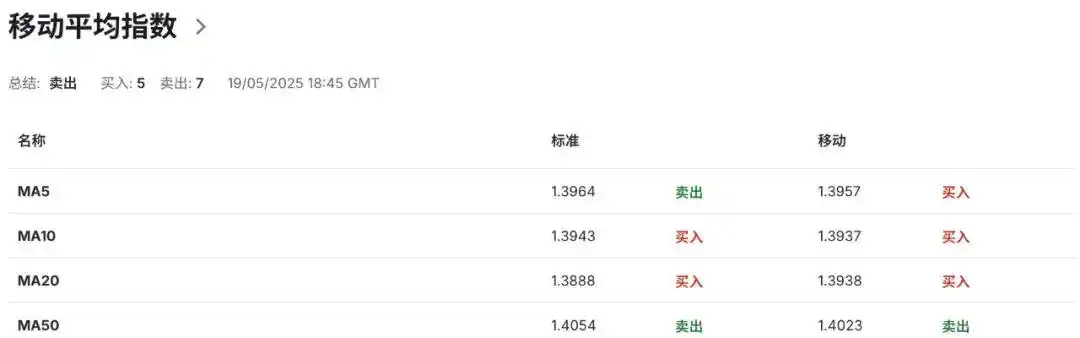
2. Summary of technical indicators:

Economic Outlook of Canadian Federal Budget Defense Spending_USDG_G7 Summit Strengthens Sanctions on Russia International Monetary Fund

Economic Outlook of Canada’s Federal Budget Defense Spending_G7 Summit Strengthens International Monetary Fund Sanctions on Russia_USDG

3. Trading strategy analysis:

Economic Outlook of Canadian Federal Budget Defense Spending_USDG_G7 Summit Strengthens Sanctions on Russia International Monetary Fund

The range of concern for the United States and Canada during the day:

1.4020-1.3930

At the daily level, since last week, the trend of the United States and Canada has been hindered many times by falling back near the 1.4000 integer mark, and has formed a narrow consolidation range after obtaining effective support in the 1.3930 horizontal area.

In the evening, Canada will release April inflation data Consumer Price Index (CPI), which is about two weeks away from the central bank's interest rate decision on June 4. The market expects April inflation to drop to 1.6% from 2.3% in March. If inflation declines as expected, this may support the Bank of Canada to restart its interest rate cut policy. As of last Friday, the market expects the probability of an interest rate cut in June to be over 64%.

If this prediction turns out to be true, it will put potential pressure on the Canadian dollar, and is expected to boost the U.S.-Canada exchange rate to break through the upper edge of the range to above the 1.4020 level, and challenge the 1.4050-1.4070 resistance area.

However, if the CPI data released does not show signs of a decline or even an increase in inflation, it will provide support for the Canadian dollar and is expected to push the US-Canada exchange rate below the 1.3930 level and then test the 1.3900/1.3890 level area.

Rising: 1.4020-1.4050/1.4070

Decline: 1.3930-1.3900/1.3890

Sign In

Forgot Password

Sign Up