After Russian President Vladimir Putin rejected ceasefire negotiations in Istanbul, the G7 parties are more likely to reach an agreement on strengthening sanctions against Russia, but it is difficult to commit to specific actions. Trump had a phone call with Putin on the Ukraine issue on Monday, and the leaders of Britain, France, Germany and Italy had also spoken with Trump before.
Bessant reiterated support for the International Monetary Fund and World Bank in April, which could become another area of consensus for the G7. In addition, issues such as cooperation in combating money laundering and financial crime and relying on the private sector to drive growth are also seen as potential points of consensus.
However, discussions about climate change are likely to be controversial because of Trump's opposition to previous green energy policies. How the G7 describes the economic uncertainty and investment decline caused by tariffs without explicitly blaming U.S. policies is also a sensitive issue in the negotiations.
U.S. Chamber of Commerce CEO Suzanne Clark said at the G7 business meeting in Ottawa that the global economic outlook is uncertain and the business community should continue to advocate common values such as democracy, rule of law and open markets.
2. Canadian Prime Minister Carney announced that the federal government will submit a budget in the fall
Earlier, Finance Minister Francois-Philippe Champion said the new Liberal government would release an economic update later this year rather than submit an annual budget in the short term.
Carney made the statement after attending the inauguration of Pope Leo XIV at the Vatican. He told a news conference in Rome that it would make no sense to rush through the budget in the short term after the new cabinet is formed.
Carney noted that it would be premature to draw up a budget before a NATO summit in June and in-depth discussions on an economic partnership with the United States. The government is currently looking at how to reduce costs and improve public sector efficiency.
He mentioned that factors such as defense spending, economic prospects, tariff relations with the United States, and government efficiency will be taken into consideration to ensure that the budget submitted in the fall is more comprehensive, effective and prudent.
Carney was among the dignitaries attending the inauguration of the new pope at the Vatican, where he met with Ukrainian President Volodymyr Zelensky, Italian Prime Minister Giorgio Meloni and European Commission President Ursula von der Leyen in preparation for the G7 summit in Canada in June.
3. U.S. sovereign credit rating downgraded
Moody's, one of the three major international credit rating agencies, recently issued an announcement on its official website, announcing that due to the continued increase in the total amount of U.S. government debt and the proportion of interest payments, it has decided to downgrade the U.S. sovereign credit rating from the highest level of Aaa to Aa1.
According to Moody's analysis, U.S. government debt and interest payment ratios have grown significantly over the past decade and are much higher than those of other countries with similar ratings. Although the United States has obvious economic and financial advantages, these advantages can no longer fully offset the continued deterioration of its fiscal situation.
Currently, the United States' annual fiscal deficit is close to 2 trillion US dollars, accounting for more than 6% of the gross domestic product (GDP). In the context of an economic slowdown that may be triggered by global trade frictions, the trend of sluggish economic growth in the United States may further intensify the fiscal pressure on the federal government, because during economic downturns, government spending usually rises accordingly.
In addition, the high interest rate environment in recent years has significantly increased the U.S. government's debt service costs. Since the COVID-19 epidemic, the U.S. government's borrowing scale has continued to expand, causing the overall debt scale to exceed the economic aggregate.
U.S. Treasury Secretary Bessent also admitted at a congressional hearing that the United States is facing an unsustainable fiscal path and the debt problem is worrying. He pointed out that this crisis may lead to an overall contraction of credit, which in turn triggers a sudden economic stagnation, and stressed that the government will try its best to avoid such a situation.
The Yale Budget Laboratory predicts that if the new tax bill proposed by the Republican Party is passed, it will increase the scale of new federal debt to $3.4 trillion in the next decade. If the temporary provisions in the bill that were originally planned to gradually expire are extended to 2035, the debt increase may be as high as $5 trillion. The agency also predicts that if the above provisions are made permanent, the U.S. debt-to-GDP ratio will rise to 200% in 2055.
It is worth noting that Moody's is the last of the three major international rating agencies to revoke the AAA sovereign credit rating of the United States. Standard & Poor's downgraded the long-term sovereign rating of the United States from "AAA" to "AA+" as early as 2011, a move that triggered strong opposition from the U.S. Treasury Department. In August 2023, Fitch also canceled the AAA rating of the United States due to frequent deadlocks in debt ceiling negotiations in Congress, as well as the deteriorating federal fiscal situation and high debt levels.
Today, Tuesday, May 20, investors should pay attention to the release of Canadian CPI inflation data at 20:30 Beijing time. In addition, attention should be paid to the G7 finance ministers meeting held in Canada from May 22 to May 23.
Economic information

Canadian household wealth innovation and high structural risks are looming. Statistics Canada data shows that in the fourth quarter of 2024, national household wealth reached 17.49 trillion Canadian dollars, a record high, and the average household net worth reached 1,026,205 Canadian dollars, an increase of 30% from 2019. Wealth growth is mainly driven by financial assets (stock market gains). The S&P 500 and Toronto Stock Exchange indices rose by 23% and 18% respectively, and financial assets increased by nearly 10% year-on-year. Real estate values stabilized and rebounded, with house prices rising slightly by 1% year-on-year in 2024.
Generational and regional differences are significant: Millennials and Generation At the regional level, Quebec and the prairie provinces (Alberta and Saskatchewan) lead the way in wealth growth (over 7%). Ontario and British Columbia still lead the list with an average value of over 1.2 million Canadian dollars due to high housing prices, but the growth rate has slowed to 3.4%-5.6%.
Future growth will be under pressure and the trade war may become a variable: Economists warn that the risk of economic recession in 2025 and the U.S.-Canada trade war may reverse the growth trend. If the stock market corrects (due to the impact of Trump's tariff policies), the richest 20% of households (accounting for 65% of the nation's wealth) may face a decline in assets, dragging down the overall data. Rising unemployment (reaching 6.9% in April) and income constraints among young people may exacerbate wealth inequality. Real estate may be relatively stable, but high interest rates are still discouraging young homebuyers from entering the market. The analysis pointed out that the resilience of household wealth depends on the stability of the stock market and policy, and the average value of one million Canadian dollars may be difficult to maintain under external shocks.
political information
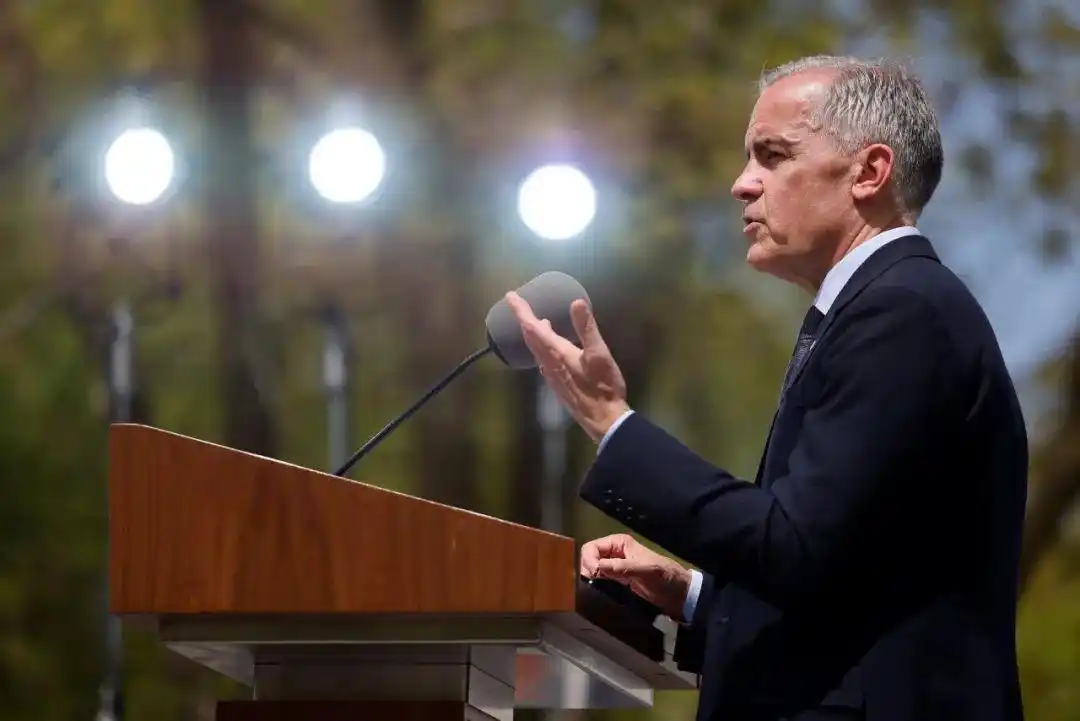
The G-7 summit focused on the tariff game and the coordination of differences between Canada and the United States. Canadian Prime Minister Carney met with US Vice President Vance in Rome on May 18 to coordinate positions on tariff disputes, border security and fentanyl control. The two sides agreed to strengthen economic and security cooperation. On May 21, the G7 finance ministers’ meeting was held in Banff, Canada. The host tried to bridge the differences between allies on tariffs against the United States. Canada is under the pressure of the Trump administration’s 25% tariff on aluminum, steel and other products, while members of the G7 may face the risk of the United States’ “reciprocal tariffs” doubling to more than 20%.
During the meeting, Canadian Finance Minister Bessant called on allies to jointly deal with "non-market behavior" and also sought to push the United States to soften its tariff policy. Canada actively mediates the joint statement of the seven countries, supports Ukraine and coordinates sanctions against Russia, but it has significant differences with the United States on climate issues. Analysis pointed out that Canada tried to use a "unity narrative" to hedge against trade uncertainty, but Trump's tough policy made a substantial breakthrough doubtful. The domestic business community calls for maintaining open market values, highlighting the strategic dilemma caught between globalization and protectionism.
financial information
On May 19, the Canadian stock market was closed.
geopolitical war

The Israeli offensive in Gaza has escalated, and international pressure has intensified along with forced evacuation and limited assistance. On May 19, the Israeli military launched intensive air strikes on Khan Younis, the second largest city in Gaza. More than 30 air strikes were carried out in a single hour, killing at least 46 people. It forced residents to evacuate to the Mawasi area, warning that it would launch an "unprecedented" attack. Israeli Prime Minister Benjamin Netanyahu said he would allow "minimum" aid to come in to ease international pressure, but did not announce a specific timetable.
British Prime Minister Starmer condemned the situation as "intolerable" and is coordinating with allies to respond. The Gaza Ministry of Health pointed out that the Israeli offensive moved southward, causing a surge in civilian casualties. Wafa News Agency said that an attack on the Nuseirat school resulted in the death of children. Although Israel has designated an evacuation zone, Mawasi has also been attacked recently, leaving residents in a dilemma with "nowhere to escape." Analysts believe that Netanyahu's opening of aid is aimed at hedging allies' dissatisfaction with his blockade policy, but delays in humanitarian access may increase the risk of famine and further shake international support. The current conflict is spiraling into escalation, and the prospects for a ceasefire are slim.
Technology attack
1. Technical summary:
Statistics Canada will release the April Consumer Price Index (CPI) on Tuesday, about two weeks before the central bank's interest rate decision on June 4. Market consensus expects inflation to fall to 1.6% in April from 2.3% in March.
This decline was mainly affected by the cancellation of the carbon tax by new Prime Minister Carney. The carbon tax, which previously increased about 18 cents per liter of gasoline, is expected to reduce overall inflation by 0.7 percentage points in April after its cancellation, and will continue to have a similar impact on inflation in the next year until the base period effect disappears next year.
Royal Bank of Canada forecasts inflation at 1.6%. Economists at the bank pointed out that changes in tax policy, including the elimination of the carbon tax and the temporary tax cuts that ended in mid-February, are affecting the inflation data.
RSM Canada economist Tu Nguyen said the fall in international oil prices in April also caused gasoline prices to fall due to the slowdown in the global economy and OPEC's increase in production. She expects slower housing inflation to bring CPI closer to the central bank's 2% target.
She believes that the Canada-US trade dispute will have a limited impact on inflation in April. Although the United States has imposed tariffs on Canadian steel and aluminum, and Canada has taken countermeasures, some products have been exempted. She pointed out that companies may face higher expenses due to supply chain adjustments or absorbing the cost of tariffs, but this will not significantly push up inflation.
Nguyen emphasized that U.S. CPI data shows that tariffs have a limited impact on prices, and Canada should have a similar effect. In addition, the impact of the trade war is mainly concentrated on the prices of new cars and auto parts, making little contribution to the overall CPI.
The Bank of Canada kept interest rates unchanged in April. Governor Macklem said the move was to monitor the impact of the trade dispute on the economy. The current labor market is weak and the manufacturing unemployment rate is rising. The national unemployment rate rose to 6.9% in April, which may prompt the central bank to cut interest rates again.
TD Bank predicts that the central bank has room to cut interest rates by 25 basis points in June. As of Friday, the market predicted a rate cut probability of over 64% in June. Nguyen predicts there will be two more interest rate cuts this year, bringing the benchmark interest rate to 2.25% by the end of the year. She believes that the central bank will adopt gradual interest rate cuts based on the trade situation and will not operate continuously.
In addition, U.S. Vice President Vance met with Canadian Prime Minister Carney during his visit to Rome on Sunday. The two sides focused on fair trade policies. According to a statement released by Vance's office, the United States and Canada are working to resolve the current tariffs, had in-depth exchanges around the increasing trade pressure and the need to build a new economic and security cooperation relationship, and agreed to continue to maintain communication. This meeting opened a channel for dialogue to ease trade frictions between the United States and Canada, and eased market uneasiness about the trade relations between the two countries.
Currently, the market is paying close attention to relevant trends during the Group of Seven (G7) summit from today to May 23. During the meeting, the Canadian Finance Minister and the US Treasury Secretary are expected to hold talks. The talks are expected to carry out specific consultations on the current trade situation to find solutions to reduce the pressure on the economy caused by tariffs. The progress of the negotiations between the two parties may not only provide a reference for the upcoming autumn federal budget, but also form certain guidelines for the central bank's formulation of future monetary policies.
Looking back on Monday, the market maintained a cautious wait-and-see attitude due to the upcoming G7 meeting, which may involve US-Canada trade negotiations. Affected by this, the U.S.-Canada exchange rate fluctuated within a narrow range, waiting for further news. The highest during the day hit the 1.3972 level, and the lowest tested the 1.3917 area.
At the technical structure level, the trend of the United States and Canada is blocked at the 1.4020 area on the daily level. From the perspective of the upward structure, the United States and Canada need to break through the 1.4020 resistance level before they have the opportunity to extend to the 1.4050 main resistance level area for testing. This level is the 38.2% Fibonacci retracement level from March 2 to May 7 this year (1.4543-1.3750), which technically constitutes a strong pressure zone. If further breakthroughs can be achieved, it is expected to challenge the important mid-term resistance level of 1.4150.
The 1.3885 area below is the main support level. This level is the 50% Fibonacci retracement level of this rebound upward trend (1.3750-1.4016), which technically constitutes a strong support zone. If the United States and Canada fall below the 1.3885 level area, it may once again stimulate the market's bearish sentiment and push the exchange rate to continue to challenge the important support level of 1.3750.
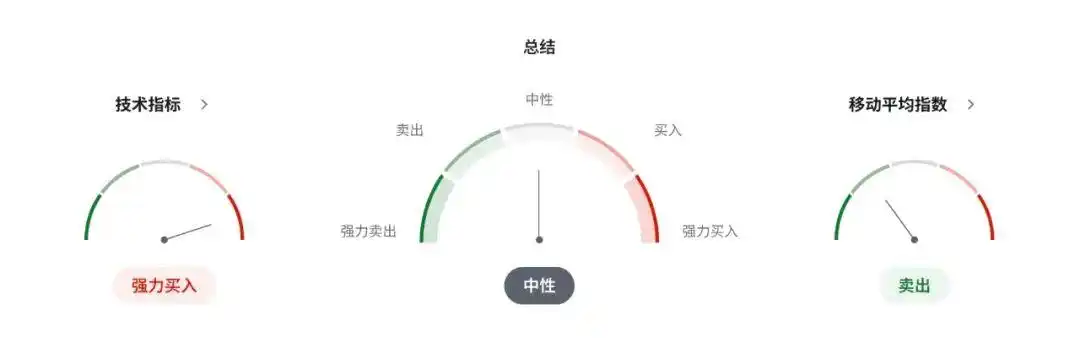
2. Summary of technical indicators:
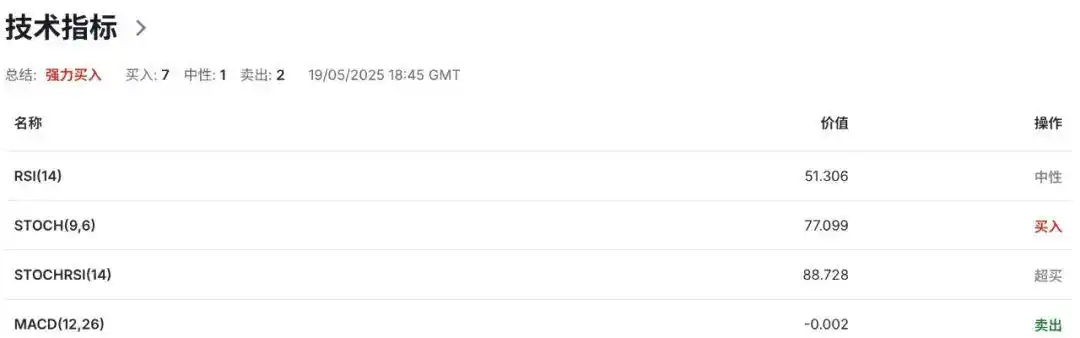

3. Trading strategy analysis:
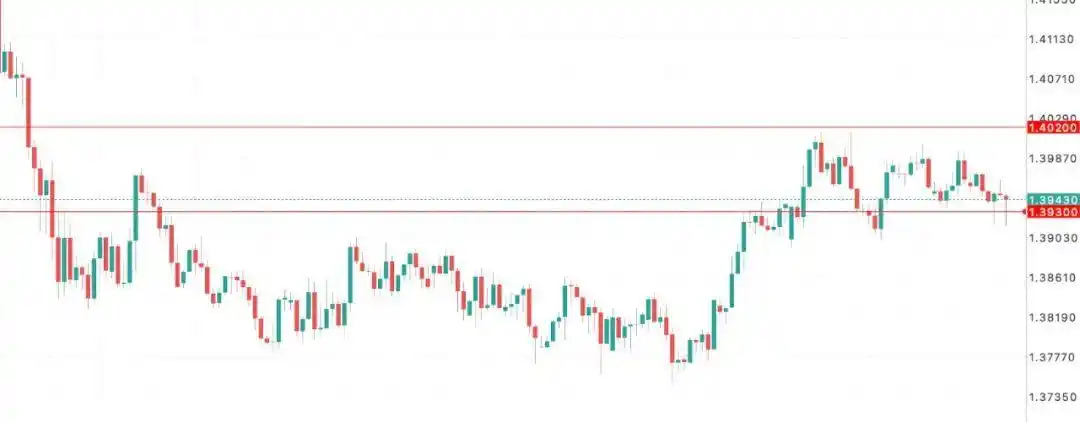
The range of concern for the United States and Canada during the day:
1.4020-1.3930
At the daily level, since last week, the trend of the United States and Canada has been hindered many times by falling back near the 1.4000 integer mark, and has formed a narrow consolidation range after obtaining effective support in the 1.3930 horizontal area.
In the evening, Canada will release April inflation data Consumer Price Index (CPI), which is about two weeks away from the central bank's interest rate decision on June 4. The market expects April inflation to drop to 1.6% from 2.3% in March. If inflation declines as expected, this may support the Bank of Canada to restart its interest rate cut policy. As of last Friday, the market expects the probability of an interest rate cut in June to be over 64%.
If this prediction turns out to be true, it will put potential pressure on the Canadian dollar, and is expected to boost the U.S.-Canada exchange rate to break through the upper edge of the range to above the 1.4020 level, and challenge the 1.4050-1.4070 resistance area.
However, if the CPI data released does not show signs of a decline or even an increase in inflation, it will provide support for the Canadian dollar and is expected to push the US-Canada exchange rate below the 1.3930 level and then test the 1.3900/1.3890 level area.
Rising: 1.4020-1.4050/1.4070
Decline: 1.3930-1.3900/1.3890