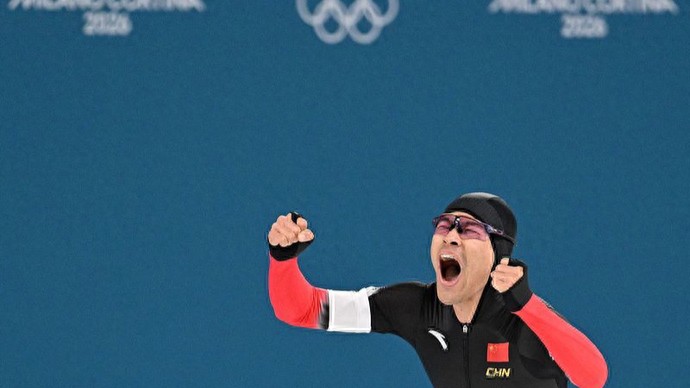

As Ning Zhongyan won the men's 1500m gold medal, the Milan speed skating arena witnessed a new moment in the history of Chinese ice and snow. This is the first gold medal won by the Chinese speed skating team at this Winter Olympics. With three medals, it has set a new high for the number of medals in a single Winter Olympics since the competition in 1980.
Chinese speed skating's previous best record in a single session has always been two medals – at the 1992 Albertville Winter Olympics, Ye Qiaobo won two silver medals in the women's 500 meters and 1,000 meters, achieving China's breakthrough of zero Winter Olympic medals; at the 2006 Turin Winter Olympics, Wang Manli and Ren Hui won the women's 500 meters silver and bronze medals respectively. For many years since then, China's speed skating has never been able to exceed one medal in a single session, but Zhang Hong and Gao Tingyu won the first gold medals in women's and men's history in 2014 and 2022 respectively.
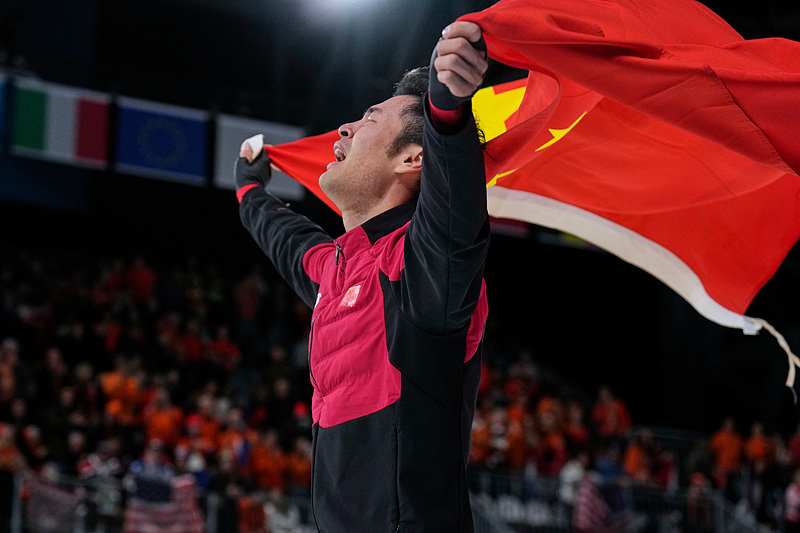
Ning Zhongyan burst into tears after the game
The Chinese speed skating team not only won gold again in this Winter Olympics, but also ushered in a new breakthrough full of gold. The breakthrough is reflected in the total number of medals refreshing history, but also in the comprehensive upgrade of the medal pattern. Medal-winning events have expanded from individual events to team events, and from the traditional short distance to the middle distance. What's even more valuable is that this achievement shows the phased results of the accelerated structural optimization of China's speed skating, injecting confidence into the team and laying a solid foundation for the long-term development of the project.
The most iconic change is the significant improvement in the overall level of the men's event. For a long time, women's speed skating has been my country's traditional advantageous event, while the development of men's events has lagged behind. From Gao Tingyu's breakthrough in the short-distance event to Ning Zhongyan's rise to the top in the middle-distance event, and the team pursuit also reaching the Olympic podium for the first time, the Chinese men's speed skating, which has been steadily catching up, has completely gotten rid of the weak situation in the past and has the confidence to compete with the world's top teams.
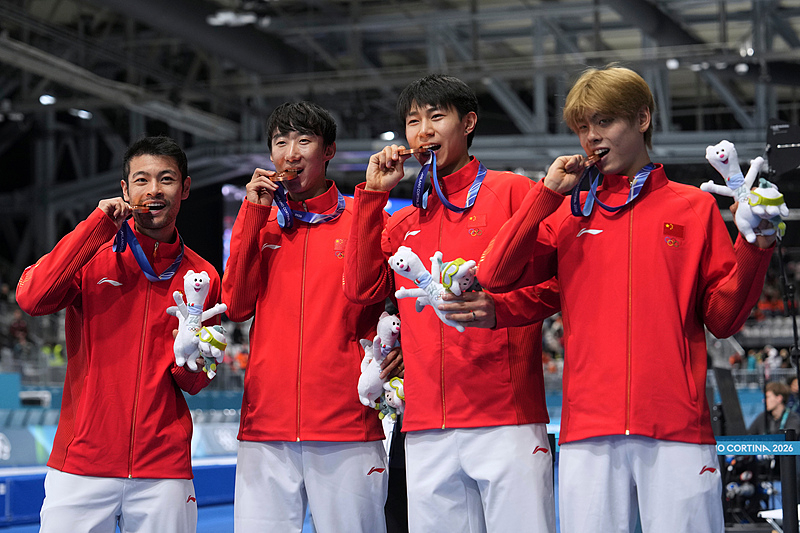
The Chinese speed skating team’s breakthrough in the men’s team pursuit is also very valuable
Among the three medals, the historic breakthrough in the men's team pursuit event is undoubtedly the most powerful evidence of the thickness and resilience of the Chinese speed skating system. As an event that focuses on testing the average competitive level and tactical understanding of players, the team pursuit competition intuitively reflects the overall strength and talent of each team. From defeating the defending champion Norway to defeating the "kingdom of speed skating" the Netherlands, the Chinese team did not rely on individual attacks by star players, but on the powerful synergy of coordinated operations. Among the four people who joined hands on the podium, there are not only long-experienced backbones like Ning Zhongyan and Wu Yu, but also two rising stars who have just emerged, Liu Hanbin and Li Wenhao. The old and new are connected and the echelons are clearly defined. This heavy bronze medal not only brings confidence and motivation to the young players, but also allows the team to clearly see the possibility of maintaining competitiveness in the future.
Whether it is the collective leapfrog of a team event or the individual advancement of a star player, behind every breakthrough comes a scientific and precise strategic layout, a diverse and open talent training model, and complete safeguards. Faced with the reality that long-distance individual strength is not enough to compete with the world's top teams, the Chinese speed skating team uses group pursuit as a breakthrough to achieve "corner overtaking". Compared with the "shortcomings" of strong European and American teams that lack joint training, the Chinese team repeatedly honed their skills and tactics through intensive training, and finally successfully counterattacked with team strength. "Every player in the Dutch team is stronger than us individually." After the bronze medal match, Ning Zhongyan bluntly said that team strength is the key to achieving the dream of podium. "The Chinese team won the game with perfect coordination and tactical execution."
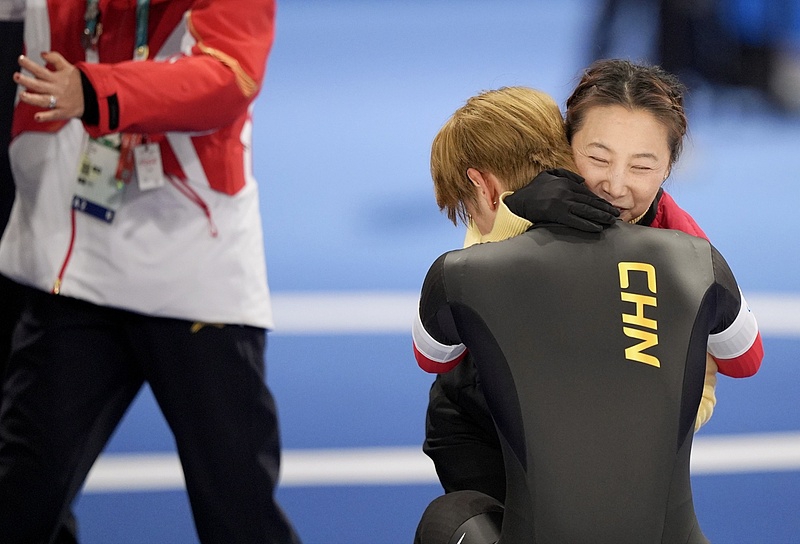
The Chinese speed skating team can achieve a breakthrough, and the famous coach Li Yan (right) is indispensable
In order to learn from the world's top training concepts, Ning Zhongyan joined an overseas club after his failure in the Beijing Winter Olympics and studied under the famous Dutch coach John de Wit. He competes against the world's top players and trains in international competitions to continuously improve his individual competitive level. At the same time, his lonely foreign training journey also helped him establish a training model and way of thinking that best suits him. The growth and transformation that Ning Zhongyan has gained from "going global" has also explored a broader and feasible path for the future development of China's speed skating.
"So many teams are skating very well, how could we win? But we did it. It is not easy for Chinese speed skating to achieve such results. Firm confidence and innovation in training are the reasons why we continue to make breakthroughs." After leading the team to achieve multiple breakthroughs, the famous coach Li Yan is very proud of the performance of his disciples and is full of longing for the future of Chinese speed skating. "We just got the best results under the current conditions. The team still has a lot of room for improvement. As long as we continue to strengthen training, we are fully capable of competing for the championship." She said that her goal in leading the team has always been to win the championship. "If we don't aim to compete for the championship, what is the meaning of our efforts? I hope this time can become a new starting point, and China's speed skating will get better and better."
(This newspaper’s exclusive dispatch from Milan on February 19)


![[Netherlands] France Turns To The Netherlands To Support Its Military Operations-Lijin Finance](https://www.erbetc.com/wp-content/uploads/2026/03/1773277663261_0.webp)