Professional virtual currency information station welcome
We have been making efforts.

vc Page 32

Cryptocurrency is a non-legal monetary asset based on digital technology and blockchain, possessing the functions of a medium of exchange and a store of value. Cryptocurrency is a transaction medium that uses cryptographic principles to ensure transaction security and control the creation of transaction units. Cryptocurrency is a type of digital currency (or virtual currency). Bitcoin became the first decentralized cryptocurrency in 2009, after which the term “cryptocurrency” was more commonly used to refer to such designs. Since then, several similar cryptocurrencies have been created, and they are usually referred to as altcoins. Cryptocurrency is based on a decentralized consensus mechanism, in contrast to the banking financial system that relies on a centralized regulatory system.

HyperNEST, A Subsidiary Of South Korea’s Meta.N Group, Successfully Developed “HyperNEX” Technology

South Korea's Meta.N Group is a company that develops and provides artificial intelligence technology (Artificial Intelligence social Technician) that conforms to the cultural environment and the trend of the times. Meta.N plans to provide platform technology that supports a variety of financial transactions and trading systems based on the HyperNEX technology developed by its subsidiary HyperNEST.

HyHyperNEX technology was developed to solve the problems of value sharing and value distribution that arise during the integration of traditional technology and finance. Based on the fifth generation artificial intelligence distributed computing technology, it supports content creation and activity sharing online.

The core of the technology is for rapid processing and fair distribution, using a system that is first implemented centrally and then audited in a decentralized manner. Decentralized audit nodes introduce artificial intelligence systems to prevent errors and biases that may occur when human intervention occurs.

David Han Lee, representative of Hypernest, which developed HyperNEX technology, said: "Artificial intelligence may also have errors and biases, but due to its lack of emotion, it has more advantages in fair distribution than the direct intervention of humans. We will cut off intervention for specific interests and improve the completion of the technology. The more experience we have in fair distribution of this technology, the more competitiveness we will have that is difficult for other companies to match.'"

Meta.NGroup provides the "W(Wallet)-M(Messenger)-M(NFT Marketplace)" service based on the above-mentioned Super Nex technology, using blockchain technology to solve the problems of user value sharing and value distribution. Taking NFT Market Place and NFT traded in the Market as the core axis, media content is included in the NFT and correct sharing and distribution is achieved.

The GxG NFT Marketplace launched by Meta.N Group provides 1GB of cloud space. Users can use corresponding tools to convert various contents such as images and high-definition images into NFT, and create new records and certifications. In particular, intellectual property issues, which have been a problem in the NFT market before, can be solved through high-capacity cloud space, and this advantage has attracted market attention.

Upgrading and developing cloud space and artificial intelligence above 1GB requires large-capacity hardware infrastructure. In order to solve this problem, Meta.N Group aims at "One Korea, One Cloud". That is, individuals or companies in the Republic of Korea will use part of the cloud space of PC storage, network, and GPU to build "shared network infrastructure" to ensure that the platform provides fair distribution. Through this technology, countries around the world will build large-scale cloud infrastructure.

The existing NFT Mining service supports low-capacity limited capacity, but Meta.N's 1GB cloud service supports ultra-large capacity, so it is expected that NFTs will appear in a variety of fields compared to the past. A person related to Meta.N said: "The conversion capacity of the NFT conversion service is 1GB, but the more active the cloud construction, the more large-capacity civilian services can be provided." If the distribution of one's own works and intellectual property rights is realized, many creators will emerge, and more high-quality content will be spread through these activities.

Yan Min, chairman of Meta.N Group, said: "Although many conceptual cases of resource sharing have existed and been proven before, the actual implementation solutions are not satisfactory. With NFT Market Place as the core, we bundle "media content production" and "physical environment sharing" to provide services, thus forming the entry point for the final stage that can be realized. Groups that share physical resources and groups that produce content carry out natural DAO activities based on the concept of "value sharers", building an ecosystem where everyone is integrated. In the future, we will expand the market to 'One World, One Cloud' starting from 'One Korea, One Cloud', and be favored by multinational companies interested in our platform and technology. "

Korean Companies Have Entered The NFT Market One After Another, And Virtual Currency Platforms Have Made Huge Profits From The Investment Boom.

In "Digital Collections with an Annual Transaction Volume of US$11 Billion, Is It a Bubble or the Future?" 》In the article, we noticed that although there is a huge bubble in the NFT market, the giants do not want to lag behind the times.

Domestic Tencent, Alibaba, Bilibili, etc. have all laid out digital collections. Review: Alibaba, NetEase Bilibili, etc. promote digital collections | Tencent iQiyi and others promote digital collections, covering many IPs from cultural blogs to animation, games and other fields.

In Japan, IPs such as Ultraman, Astro Boy, My Neighbor Totoro, Godzilla, Katsushika Hokusai, and giants such as Rakuten, Line, Mediado, etc. have all set foot in it. Reviewing the cultural and creative trend interpretation: Observation on the model of 12 NFT platforms in Japan: Giants enter the game, classic IP comes on stage

What is the scene like in South Korea?

According to incomplete statistics on the cultural and creative trend, Korean comic companies that have joined the NFT market include Kakao, Naver, Toomics, Kidari Studio, YLAB, Gtooon, Mrblue, etc., and game companies include NCSoft, Yumede, Com2us, Joycity, PearlAbyss, Devsisters, Krafton, etc. In addition, South Korea's large artist management companies SM, YG, HYBE, and JYP have also entered the market.

Virtual currency exchanges and various industries’ different perceptions of NFT

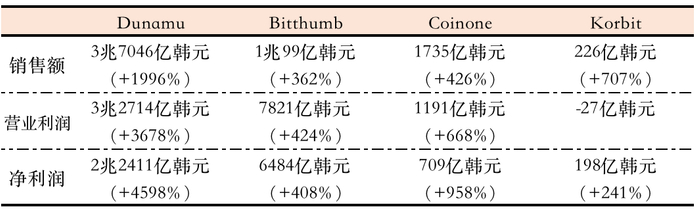
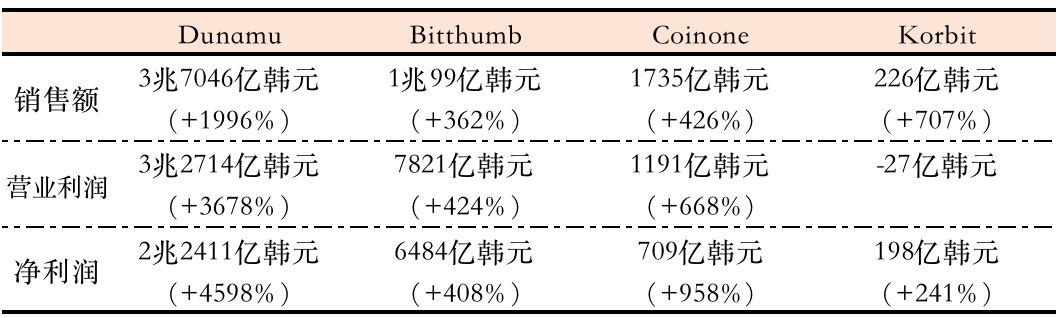
We have noticed that there are currently 4 virtual currency platforms trading in Korean won in South Korea, and they have all achieved good returns in 2021 under the influence of the virtual currency investment boom.

Korean digital collection platform analysis_NFT minting_Korea NFT market development

Among them, Dunamu, which operates the UPbit exchange, had annual sales of 3.7046 billion won, a year-on-year increase of 1,996%; net profit was 2.2411 billion won, a year-on-year increase of 4,598%. Bitthumb's full-year sales were 1.999 billion won, a year-on-year increase of 362%; net profit was 648.4 billion won, a year-on-year increase of 408%.

After entering 2022, due to the turmoil in the virtual currency market, all four trading platforms have been greatly affected. In order to achieve sustainable development, they noticed the emerging trend of NFT and started NFT business like many Internet companies.

However, many industries in South Korea have different understandings of the new field of NFT.

Games: It mainly promotes to the public models that can earn money from playing games through P2E (Play to Earn), PAE (Play And Earn), etc., in order to actively promote attempts to integrate NFT into games. However, South Korea's "Game Industry Promotion Law" currently does not allow such business activities, and the attitudes of game companies and players towards this model cannot be unified.

Film and television: Movies, TV series, variety shows, and OTT original content are all actively creating NFT content and auctioning it. Many related companies have successfully generated income once or even N times.

Music: Due to the current restrictions on concert activities due to the epidemic, many large brokerage companies and music platforms are trying to develop "music products" using NFT and actively create a music-centered metaverse. Large Korean brokerage companies such as SM, YG, HYBE, JYP, etc. have successively entered this field.

Webcomics: Minting classic scenes from webcomics and turning them into NFT content, and selling them in limited quantities to obtain high profits. South Korea's webtoon giant KakaoPage has successfully sold related products and established a subsidiary that can conduct transactions.

Fashion: Creating products in the virtual world, but currently it only remains at the level of advertising offline products in the virtual world, while actively exploring new models that can gain profits.

Since NFT is an emerging commercial market, South Korea has not yet formulated relevant laws to regulate it. Therefore, there are no clear regulations on the division of interests between creators, trading platforms, and consumers, so there are concerns about unfair transactions. And because most of these products are limited edition products, their prices fluctuate greatly and are not subject to market rules. They are more like stock investments than a product transaction.

After news broke that Musk would acquire Twitter, the price of an NFT owned by the Twitter founder plummeted from $2.9 million to $280. In addition, according to reports from overseas media, as of the beginning of this year, NFT transactions, which were once very popular, have continued to cool down, and the transaction volume of some trading platforms has even plummeted by 50%.

NFT performance of 7 webcom companies

Let’s look at some situations in South Korea’s NFT market.

Jiansong Art Museum, which holds the example version of South Korea's No. 70 National Treasure Hunmin Jeongeum, has produced 100 virtual collections of the work and sold them on the NFT trading platform. The price of a single product is as high as 100 million won (approximately RMB 530,000).

NFT minting_Korea digital collection platform analysis_Korea NFT market development

A virtual chess record of Korean Go player Lee Sedol playing against artificial intelligence Alpha Go was auctioned on the NFT platform for a high price of 250 million won (approximately RMB 1.325 million).

After NCSoft, a major Korean game company, announced that it would add NFT models to the game, the company's stock price soared 29.92%. The stock price of Wemade, which has integrated NFT in the overseas version of "Legend 4", soared 345%.

Cultural Creativity Trend here focuses on the practices of Korean webtoon companies.

1) Kakao

Kakao created the NFT trading platform Klip Drops specifically for NFT trading of its IP.

In December last year, as KakaoPage's super-popular comic "I Level Up Alone" came to an end, KakaoPage made the last scene of the comic finale into a virtual collection, selling a limited number of 100 pieces on the NFT trading platform, each priced at 500 Klay Coin. There are 200 auxiliary NFTs, each priced at 100Klay Coin. It sold out in just 1 minute.

(Klay Coin is a virtual currency launched by Kakao. The price fluctuates greatly. When the product was sold in December, 1 coin was equivalent to approximately 1,600 won.)

South Korea NFT market development_NFT minting_Korea digital collection platform analysis

After the success of the virtual collection of "I Level Up Alone", Kakao immediately launched "Duchess in the Shell", which also sold 7,777 virtual collection products. This product will use automatic art generation technology and will be the first virtual collection in South Korea supported by this technology.

NFT minting_Korea NFT market development_Korea digital collection platform analysis

2) Naver

Line, a subsidiary of Naver, launched the NFT exchange "Line NFT" in Japan. In the Japanese article on NFT market observation, the cultural and creative trends were listed. Review: Observation on the model of 12 NFT platforms in Japan: Giants enter the game, and classic IP comes on the scene.

Naver also issued 12 sets of NFT Sakura Gardens through its virtual social APP – ZEPETO, with a total of 1,200 units. They were sold for the first time in Crypto games, each priced at 500 yen. Then it was sold twice in the Line Bitemax NFT Market beta version.

South Korea NFT market development_NFT minting_Korea digital collection platform analysis

Naver is also working hard to develop its own NFT trading market, and has created a subsidiary Line Next for this purpose. It is expected to launch the NFT trading market "City (도시)" in the first half of this year.

The platform will provide services in 8 languages ​​and be available in 180 countries around the world, enabling borderless transactions. Moreover, the platform will not limit the types of trading currencies, allowing transactions in multiple currencies.

Currently, Naver has produced and sold 600,000 NFT products under its IP "Line Friends" in South Korea through its blockchain subsidiary Line techplus.

NFT minting_Korea digital collection platform analysis_Korea NFT market development

3)Toonmics

Toonmics, a webtoon platform that is available in many regions around the world and has 53 million monthly active users, launched TooNFT to combine webtoon IP with NFT, hoping to further expand the webtoon business.

TooNFT claimed that the project was launched to create a decentralized application software based on Toomics, provide a freer environment for the webtoon market, make readers' rewards for works and authors more transparent, and find a better model to protect creators' income and readers' rights. To this end, TooNFT will provide rewards for content creators and strive to solve existing problems in the webtoon market.

TooNFT allows authors to upload works without paying any fees, and users can create communities within the platform.

In addition, TooNFT also has NFT infrastructure, which is a benefit distribution system, which means that once a work uploaded on the platform triggers income, the creator will share the corresponding income. To this end, TOON virtual tokens will be circulated within the platform.

Korean digital collection platform analysis_NFT minting_Korea NFT market development

4) Kidari Studio

Kidari Studio, a Korean comic company that previously received a 250 million yuan investment from ByteDance, signed a cooperation agreement with Netmarble F&C, a subsidiary of South Korea's major game company Netmarble, on game content and blockchain platform-related businesses.

Through this agreement, Netmarble will be able to use the online literature IP held by Kidari to produce games and develop Metaverse content.

At the same time, Kidari will be able to carry out its NFT business holding IP (including LezhinComics, Bomtoon, and Delitoon) through the blockchain platform developed by Netmarble. Check out Kidari’s business: How does a Korean comic company, a Korean comic company invested by ByteDance with 250 million yuan, make web comics?

Korean digital collection platform analysis_NFT minting_Korea NFT market development

Kidari recently announced that it is cooperating with Yuan Airlines to produce NFT passports based on the movie "Hot Blood" adapted from its own online text IP and sell them on OpenSea.

"Hot Blood" will sell 2 products, one of which is a seal NFT and the other is a bullet NFT. Each product will be sold in 3 batches.

The first batch of seal NFT products is priced at 60MATIC, with a purchase limit of 5 per person; the second batch is 120MATIC, with a purchase limit of 8 per person; the third batch is priced at 180MATIC, with a purchase limit of 10 per person, and the quantity sold is not clearly limited.

Bullet NFT sells for 0MATIC, and only 20 are sold in each batch. The first batch of products is limited to 1 +WL per person, the second batch of products is limited to 3 +WL per person, and the third batch of products is limited to 5 +WL per person.

South Korea NFT market development_NFT minting_Korea digital collection platform analysis

5) GToon Comics

Gtoon Comics owns a number of classic web comics, classic scenes from popular web comics, web comic characters, and IPs of various web texts. The company is currently focusing on developing an NFT trading platform for web comics and web articles based on blockchain technology that can be traded in multiple countries.

FanVerse is an NFT platform that provides communication between content creators and fans. It has developed various forms of NFT such as digital artworks, artist NFT fan cards, and fan tokens.

Not long ago, in order to successfully create an online literature NFT trading platform, Gtoon Comics signed a cooperation agreement with the FanVerse platform to plan, create, and trade web comic NFT products on the Fanverse platform.

Korean digital collection platform analysis_NFT minting_Korea NFT market development

6)YLAB

Webtoon creation studio YLAB has cooperated with blockchain startup BlockoXYZ and announced that it will officially enter the business of using webcomic IP to produce NFT products.

YLAB has not yet made it clear which NFT platform it will use and how it will trade its NFT products.

NFT minting_Korea digital collection platform analysis_Korea NFT market development

7)Mrblue

The Mrblue platform, which focuses on martial arts comics, also announced that it will use its martial arts comic IP to actively develop the NFT business.

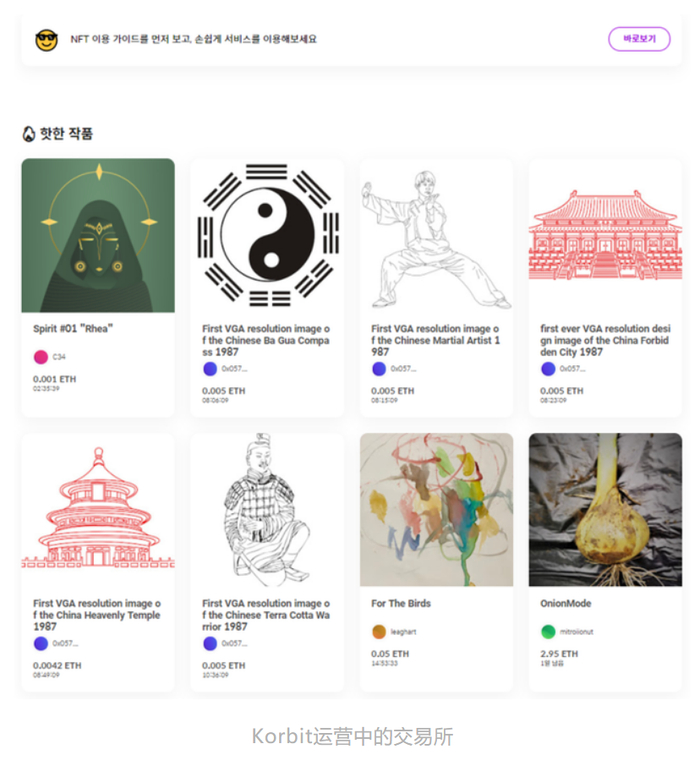
To this end, Mrblue is actively cooperating with companies that possess NFT-related technologies and announced that it will circulate NFT products of its IP through the virtual currency trading platform Korbit in the future.

The Development Of The Digital Collection Market Encounters Obstacles. How To Solve The Problem Of Excessive On-chain Handling Fees?

summary:

The digital collection market based on blockchain is one of the main application scenarios of NFT technology. However, the high cost of on-chain handling fees (gas) has hindered the development of the digital collection market to a certain extent. This article lists some cutting-edge technological solutions explored in the current digital collection market to solve the problem of excessive gas costs, including: off-chain methods, on-chain methods, multi-chain deployment, side chains, Layer 2 and cross-chain methods, etc., and also looks forward to some future technological development directions.

1. Digital collection market and on-chain handling fees

The digital collection market based on blockchain is one of the most important application scenarios of NFT technology. As NFT technology is applied to various practical application scenarios, the usage of the digital collection market is also increasing. Taking Ethereum as an example, according to ultrasound.money data, from the implementation of EIP-1559 to December 16, 2021, the gas consumed by the digital collection market OpenSea has reached about 126,414 ETH, surpassing ordinary on-chain transfers and Uniswap, becoming the largest gas consuming application.

So, what is "gas"? Why is the gas consumption in the digital collection market so large?

The so-called "gas" is the term for on-chain handling fees on blockchain platforms such as Ethereum. On-chain handling fees are one of the most common technical features of blockchain platforms. The operation of on-chain transactions, including simple transfers or complex smart contract operations, will use corresponding computing and storage blockchain resources; users who initiate these on-chain transactions will pay corresponding on-chain handling fees for consuming these blockchain resources. Blockchain uses this mechanism to incentivize the maintainers of the blockchain network, while preventing the blockchain network from being attacked by malicious users such as DDoS, maliciously running infinite loop code, etc. Therefore, it can be said that on-chain handling fees play a very necessary and positive role in ensuring the normal operation of the blockchain network.

However, some complex on-chain processes also bring higher on-chain handling fee costs to users. Taking the digital collection market of Ethereum as an example, users usually need to consume gas in multiple processes such as creation, listing authorization, and transfer. For example, in the transfer process, users usually need to consume about 0.02 ETH of gas (it varies according to the gas price at the time. The gas price refers to the unit price of the on-chain handling fee). When the activity of some digital collection application

When the time was relatively concentrated, the overall gas price of Ethereum also soared.

On August 26, the application of digital collections caused the gas price to soar to 1,429 GWei, which is about ten times more than usual.

These gases generally need to be paid by users of digital collection applications. Obviously, excessive gas will hinder the further use and development of the digital collection market, and may also affect the use of other applications on the blockchain network (for example, the application of Ethereum Cat at the end of 2017 caused congestion on the Ethereum network). At present, the digital collection market has conducted some technical explorations to save and reduce gas.

2. Technical solutions to save gas

The problem of excessive gas in digital collections is, to a certain extent, caused by the large amount of data in digital collections, complex business processes, and the need to improve the performance and scalability of blockchain networks represented by Ethereum. To solve these problems, you can refer to various methods to solve scalability technologies and improve efficiency. Some current technical exploration directions include: off-chain methods, on-chain methods, multi-chain deployment, side chains, Layer 2 and cross-chain methods, etc.

Solutions for reducing gas in the digital collection market (Source: Frontier Research Institute)

2.1. Off-chain method

Since gas is generated on the chain, the most natural idea is to use off-chain methods as much as possible. The main solutions include two categories: putting some processes on the original chain outside the chain and postponing some processes on the chain.

Some processes are placed outside the chain

Combined with off-chain process processing to reduce some on-chain steps. Taking Nifty Gateway as an example, by placing some exchange steps outside the chain to reduce on-chain processing steps, the cost reduction goal is achieved. For example, an exchange that originally required a total of 10 on-chain operations can be performed off-chain through Nifty Gateway's exchange process optimization. Only steps that must be confirmed by consensus on the blockchain are retained on the chain, thereby reducing the overall on-chain processing cost.

Some processes are postponed

Postponing the execution of some processes and allowing business processes to run first, allowing digital collection creators to create and publish them first at a lower cost, is an encouraging approach that can provide a more user-friendly experience for creators. A typical representative of this type of solution is OpenSea's Lazy Minting. It adopts a centralized approach, allowing creators to first create content for free and then put it on the shelves for sale. OpenSea uses a centralized approach to store and process it first, and then confirm it on the chain during transactions and other steps (generating gas consumption). At this time, the buyer and seller complete the delivery of digital collections through blockchain consensus.

But this method cannot completely solve the cost problem. Lazy Minting mainly postpones the timing of minting and lets buyers bear it. In a strict sense, it does not reduce the overall cost.

2.2. Optimization of this chain

Optimize code writing

The generation of Gas is mainly due to the consumption of blockchain resources such as computing and storage during the operation of smart contracts. Before creating digital collections, optimizing code writing can reduce gas costs to a certain extent. Some optimization methods include choosing to use an appropriate code base during development (such as using ERC721A and avoiding using ERC721Enumerable), and using optimization tools such as Truffle during compilation.

Batch aggregation

For digital collections that have been deployed on the chain, batching, aggregation, etc. can be used to reduce the overall cost. Taking Genie as an example, this aggregation tool supports packaging multiple operations for different digital collections in different markets into one transaction, while also using a combination of off-chain and other methods to reduce the average cost of a single operation.

2.3.Multiple chains

In addition to optimizing all aspects of computing and storage in this chain, a relatively direct and easy way is to integrate multiple blockchain networks on the application side; users can choose the appropriate network when using it.

Take OpenSea as an example. In addition to the Ethereum platform, OpenSea also provides the option of Polygon network. When the cost of the Ethereum network is high, users can choose to switch to the Polygon network on the OpenSea application.

2.4 Side chain/Layer 2 method

In addition to directly integrating multi-chain networks at the application level, another application option is to start from the blockchain protocol layer and transfer many businesses and processes of digital collections to side chains or Layer 2 to reduce costs, etc. Usually, such solutions also provide cross-chain transfer tools between side chains, Layer 2 and the original chain.

side chain

Side chains usually refer to blockchain networks that are parallel to the main chain and have a two-way bridging function. Ethereum's side chains include xDai, Skale, POA Network, etc. At present, some digital collection markets will choose side chains to reduce the cost of digital collections on the main chain.

A typical case is nifty.ink. It supports users to create and manage artistic works on the xDai side chain, including on-chain creation (mint), transfer (transfer), etc. If users want to transfer digital collection works to Ethereum, they can transfer (upgrade) to Ethereum through the AMB bridge tool, such as publishing to the OpenSea market.

Other similar cases include Axie Infinity’s use of Ronin side chains.

Layer2

Similar to side chains, some digital collection markets have chosen the Layer 2 technology route to reduce costs. One of the more typical cases is Immutable X, which is specially designed for digital collection applications and based on ZK Rollup, and its own digital collection market. Some other solutions include choosing from various digital collection markets and applications on Arbitrum.

2.5 Cross-chain

Cross-chain technology, in addition to solving value and data transfer issues, can also be one of the solutions to solve the cost problem of digital collections. To solve the scalability problem of blockchain and the "Impossible Triangle" paradox, the solution of cross-chain protocol + application of proprietary chain is a very good choice.

Similar to the side chain and Layer 2 solutions, the digital collection market can be deployed on an application-specific chain with lower usage costs; and when it needs to be transferred on a larger scale, it can be transferred through a cross-chain protocol.

Some current cross-chain digital collection solutions mainly use centralized gateways or cross-chain bridges. However, the IBC/TIBC cross-chain protocol based on completely decentralized verification can already support cross-chain transfer of non-homogeneous data content. For example, in 2021, after the Chinese traditional cultural digital artwork IDA was registered and confirmed on the BSN Wenchang chain, it relied on the TIBC cross-chain protocol and cross-chain hub in a cross-chain form, and was transferred from the BSN Wenchang chain to the global market through the cross-chain service hub.

3. Summary and outlook

The on-chain cost problem of digital collections is, to a certain extent, a microcosm of the performance and scalability problems of blockchain networks represented by Ethereum. Fortunately, the rapid development of underlying technologies such as Layer 2 and cross-chain in recent years, the prosperity of on-chain applications and the ecosystem have provided practical solutions for the current application of digital collections. Current solutions include centralized deferred processing, optimization of processing on this chain, deployment of multiple chains, use of side chains and Layer 2 expansion technology outside the chain, and cross-chain protocols.

It should be pointed out that there are still areas for improvement in some current technical implementations such as over-centralization (such as some cross-chain bridges) and technical security risks; completely decentralized cross-chain digital collection methods based on IBC/TIBC are emerging and need to be further supported for more applications; there is still room for improvement in digital collection support technology based on Rollup.

However, with the continuous development and improvement of blockchain scalability and cross-chain technology, the support of related technologies for the application of digital collections will become more complete, and the technical solutions will become more abundant and diverse.

Boundary Institute

Based on Border Intelligence's long-term technology accumulation in autonomous controllable blockchain underlying technology, cross-chain technology, and combined big data and privacy computing, the Border Research Institute is committed to hot event analysis, cutting-edge technology sharing, industry viewpoint elaboration, industry standard formulation, domestic and foreign open source community exchanges and other research work, and contributes professional research results with blockchain technology as the core to various industries.

Key research directions at this stage include cross-chain technology exploration (NFT, smart contracts, computing services and cross-chain interoperability of distributed identities), industrial applications (metaverse, cultural creativity and copyright, global cross-border trade, central bank digital currency, carbon neutrality, etc.), cutting-edge technology integration (blockchain + privacy computing, big data analysis) and other fields.

Everyone is welcome to contact us to discuss and promote the development of industrial blockchain.

The Story Of A Currency Gambler’s Leveraged Position Blowout

The Abyss of Leverage: Summary of a Report on In-depth Behavioral and Financial Pathology on the Destruction Process of Individual Speculators under the "519" Extreme Market

This report aims to conduct a panoramic review of the devastating experience of a typical retail speculator (codename "Chen") in the "519" cryptocurrency market crash in 2021, and provide an in-depth analysis of the behavioral finance fallacies in high-leverage cryptocurrency trading, exchange microstructure risks, and the evolving mechanism of gambler psychology. This study is not only a financial analysis of asset liquidation, but also a sociological archive of how human nature is swallowed up by algorithms, leverage, and neurochemical reactions under extreme volatility. The report is about 15,000 words in length. Through a combination of narrative case reconstruction and technical theoretical analysis, it demonstrates in detail how high leverage can push an ordinary middle-class technician to a double financial and mental collapse.

Contents Introduction: Liquidity Feast and the Desire for Escape in the Era of Involution 1.1 Macro Background: Madness and “Animal Spirits” in 2021 1.2 Hotbed of Speculators: Why Cryptocurrency? 1.3 The "coolness" effect: Survivor bias and the poison of the myth of wealth creation Chapter 1: Sample portraits and environmental psychology analysis 2.1 Subject profile: Chen – a stranger floating in Tokyo 2.2 Stress test of the physical environment: sound insulation, tram noise and claustrophobic space 2.3 Alcohol as a catalyst: "Strong Zero" and impaired cognitive function Chapter 2: Fatal flaws of the trading system – technology and mechanism 3.1 Perpetual contract (Perpetual) Swaps) temptations and traps 3.2 The mathematical tyranny of leverage: What does 100 times mean? 3.3 Cross and Isolated: Wrong Risk Management Choices Chapter 3: The Construction of the Trap—The Calm Before the Storm (May 1-18, 2021) 4.1 Animal Coin Frenzy and the Accumulation of FOMO (Fear of Missing Out) 4.2 Musk’s Tweets and Regulatory Black Swans: Reversal of Market Sentiment 4.3 Behavioral analysis of the logic of "buying the dip": Disposition effect and confirmation bias Chapter 4: The night of 519 – microscopic recurrence of systemic collapse (timeline review) 5.1 Prelude (20:00 JST): The color of the K-line and cultural cognitive dissonance 5.2 Acceleration (21:30 JST): Breaking through the psychological defense line 5.3 Dark hour (22:00-23:00 JST): Exchange downtime and liquidity black hole 5.4 Data Forensics: Benford’s Law Anomaly and the Suspicion of Exchange “Unplugging” Chapter 5: Liquidation – Algorithm Execution and Psychological Death 6.1 The Working Principle of the Liquidation Engine 6.2 That Email: The Embodiment of the Disappearance of Digital Wealth 6.3 Physiological Reactions: Acute Stress Disorder (ASD) and Cortisol Storm Chapter 6: Aftermath – Revenge Trading and Total Destruction 7.1 The Ultimate Form of the Gambler’s Fallacy: Lending and "Recovering Capital" Obsession 7.2 Echoes of social media: Despair and carnival on Weibo 7.3 Ending: The demise of a social existence Conclusion and reflection: The system always wins

Introduction: Liquidity Feast and the Desire for Escape in the Era of Involution 1.1 Macro Background: Madness and “Animal Spirits” in 2021

In the spring of 2021, the global financial market is in an almost hallucinogenic state of excitement. The unlimited liquidity released by the Federal Reserve after the epidemic poured into various asset classes like a flood, and the cryptocurrency market became the most turbulent place for this torrent. Bitcoin broke through an all-time high of $64,000 in April, and Ethereum followed suit by hitting the $4,000 mark.

This is a special moment for the younger generation in East Asian cultural circles. The traditional upward channel is becoming increasingly narrow, and "involution" has become a popular term to describe the fierce competition in society and diminishing returns. Cryptocurrency, with its decentralization, borderlessness and extremely exaggerated volatility, is regarded by many young people as the only elevator to break class solidification and achieve a "class jump". In this context, leverage trading is no longer just a financial tool, it has been given a certain rebellious and heroic color.

1.2 A hotbed for speculators: Why cryptocurrencies?

Unlike the traditional stock market, the cryptocurrency market is a 24/7 casino that never sleeps. This round-the-clock nature deprives traders of a window of time for calm thinking, leaving the dopamine reward circuit in a state of constant overload. For our protagonist, Chen, this nonstop beating K-line is both a source of anxiety and the fuel of life.

1.3 “Cool” Effect: Survivor Bias and the Poison of the Wealth Creation Myth

Before Chen's story begins, it is necessary to mention a spiritual totem that had a devastating impact on him-"Liang Xi". This 17-year-old boy used extremely high leverage to turn a few thousand yuan into tens of millions of yuan in a short period of time during the 2021 market boom.

Liang Xi's story went viral on Weibo and WeChat groups, and he became the "god" in the hearts of all gamblers. Although Liangxi eventually took on huge debts due to liquidation, in that crazy May before May 19, Chen only saw the first half of the story: high leverage is the shortcut to freedom. This extreme survivor bias makes Chen subconsciously believe that as long as he has good skills and courage, he can become the next "Liang Xi". He ignored the most basic mathematical probability – in a game with negative expected value, bankruptcy is the only end point of convergence.

Chapter 1: Sample portraits and environmental psychology analysis 2.1 Subject file: Chen – a stranger floating in Tokyo

Chen is a typical "poor and busy family in Kochi". He graduated from a good domestic science and engineering university and later came to Tokyo through labor dispatch to work in IT outsourcing. Although he is called an "engineer", he actually earns a subsistence salary and does repetitive code transfer work. In the high-pressure city of Tokyo, he felt deeply lonely and alienated. He has no Japanese friends and is unwilling to integrate into the local society. His only social activities are browsing Weibo, reading Twitter, and speculating in coins after get off work.

2.2 Stress test of physical environment: sound insulation, tram sound and claustrophobic space

The apartment Chen rents is a typical Showa-era building with a wooden structure and walls as thin as paper. This is not uncommon in Tokyo, where land is at a premium, but for a full-time trader who requires a lot of concentration (even though he has to work during the day), it's hell.

Every night, the coughing sound of the neighbor next door, the sound of the TV, and even the sound of electricity turning on and off the lights can be clearly heard. To make matters worse, the apartment is less than 50 meters away from the Chuo Line tracks. Every few minutes, a train would roar past, causing subtle vibrations throughout the room. This kind of continuous low-frequency noise and vibration has long kept Chen in a sub-healthy physical and mental state. His sleep quality is extremely poor, his nerves are extremely sensitive, and he is easily irritable.

In the week before 519, Chen barely slept in order to keep track of the market. He shut himself in this claustrophobic space of only 15 square meters, closed the curtains, and cut off the natural light from the outside world. The room was filled with the greasy smell of take-out lunch boxes, the smell of sweat from unwashed clothes, and the lingering smell of alcohol.

2.3 Alcohol as a Catalyst: “Strong Zero” and Impaired Cognitive Function

To combat anxiety and insomnia, Chen developed a deadly habit: drinking Strong Zero.

This is a canned cocktail (Chūhai) that can be seen everywhere in Japanese convenience stores. It is famous for its "9% high alcohol content" and "zero sugar". It is cheap (a can is less than 150 yen), tastes as smooth as juice, but has great staying power. It is nicknamed "water of nothingness" or "fragmented wine" by Japanese netizens.

Late at night in trading, when fear strikes, Chen will open a can of lemon-flavored Strong Zero. The temporary paralysis caused by alcohol made him feel that he was omnipotent. The fluctuations on the K-line no longer frightened him, but instead gave him the illusion of controlling the overall situation. However, neuroscience research shows that alcohol severely inhibits the function of the prefrontal cortex, the area of ​​the brain responsible for rational decision-making, risk control, and impulse suppression.

Under the dual effects of alcohol and sleep deprivation, Chen's brain had degenerated into a primitive machine powered by the amygdala. He is no longer "trading", he is looking for excitement.

Chapter 2: Fatal Flaws of the Trading System—Technology and Mechanism

To understand how Chen lost all his savings and went into huge debt overnight, we must deeply analyze the financial instrument he used—Bitcoin Perpetual Futures.

3.1 The temptation and trap of perpetual contracts (Perpetual Swaps)

Perpetual contracts are the greatest “invention” of the cryptocurrency market and the sharpest sickle. Unlike traditional futures, there is no delivery date. This means that as long as you don't liquidate your position, you can hold it forever. This mechanism gives retail investors the illusion that as long as I look in the right direction, I can "carry" the intermediate fluctuations.

3.2 The Mathematical Tyranny of Leverage: What Does 100x Mean?

On the night of 519, Chen opened 100 times leverage.

That's a crazy number. Under 100 times leverage, if the price of the underlying asset (Bitcoin) fluctuates by 1%, Chen's principal will double (+100%) or return to zero (-100%). In fact, it's worse than that. Because the exchange needs to charge transaction fees, and in order to prevent liquidation (the account balance becomes negative), the exchange will set a "maintenance margin rate" (Maintenance Margin), usually around 0.5%. This means that as long as the price fluctuates 0.5% – 0.7% in an unfavorable direction, Chen's position will be forced to be liquidated.

In the cryptocurrency market, a 0.5% fluctuation can occur in a second. This is no longer investing, or even gambling, this is picking up coins on the railroad tracks.

3.3 Cross and Isolated: wrong risk management choices

Another fatal mistake Chen made was choosing the Cross Margin model.

Chen's logic for choosing a full position is a typical retail investor's thinking: "I'm afraid of being liquidated, so I have to use all my money to cover the order. Bitcoin can't keep falling. As long as I have enough money, I can carry it until it rebounds." This kind of thinking ignores the destructive power of black swan events. Under the full position mode, once an extreme unilateral market situation like 519 is encountered, the outcome will not only be a stop loss, but also a complete loss of money.

Chapter 3: The Construction of the Trap—The Calm Before the Storm (May 1-18, 2021) 4.1 Animal Coin Frenzy and the Accumulation of FOMO (Fear of Missing Out)

At the beginning of May 2021, the protagonists of the market are Dogecoin and Shiba Inu Coin (SHIB). Chen watched helplessly as these "air coins" without any value support increased more than ten times or even dozens of times in a few days. His colleagues and the bloggers he follows on Weibo all seem to be making money.

“I missed Doge, I missed Shib, I can’t miss the next major rise in Bitcoin.”

This strong FOMO (Fear Of Missing Out) mentality completely destroyed his sense of risk. He felt that the market owed him a chance to get rich.

4.2 Musk’s tweets and regulatory black swan: reversal of market sentiment

On May 12, Tesla CEO Elon Musk suddenly announced that Tesla would suspend accepting Bitcoin payments due to environmental concerns. The market fell in response. On May 18, the China Internet Finance Association and three other associations jointly issued an announcement to prevent the risks of speculation in virtual currency transactions. This is a clear regulatory bearish signal.

However, at this time, Chen had already fallen into cognitive dissonance. He refuses to believe the bull market is over. He believes that these are "FUD" (panic news) and are smoke bombs released by bookmakers in order to defraud retail investors of their chips.

4.3 Behavioral analysis of the logic of “buying the dip”: disposition effect and confirmation bias

On the evening of May 18, Bitcoin fell to around $42,000. Chen believes this is a once-in-a-lifetime opportunity to “buy the dip.” Not only did he not reduce his position, but he added to his long position at this position. He converted all the money he cashed out from his credit card and the money he originally planned to send home into USDT and transferred it to his Binance contract account.

He looked at the 100 times leverage ratio on the screen, his hands trembling slightly, but he told himself: "Wealth can be found through risk. This is what Liang Xi does." At this time, the average price of his positions was around US$43,500, and the liquidation price was displayed at US$35,000 under the protection of the full position mode. "It's impossible for Bitcoin to fall below 35,000," he said to himself as he took a sip of Strong Zero and looked at the screen. "That was the top of the last bull market, and the support is very strong."

What he didn't know was that Death was already standing outside the door.

Chapter 4: The Night of May 19th – Microscopic Reappearance of Systemic Collapse (Timeline Review) 5.1 Prelude (20:00 JST): The Color of the K-Line and the Cognitive Dissonance of Culture

May 19, 2021, 8 pm Tokyo time. When Chen came home from get off work, he didn't even take a shower and just slumped down in front of the computer. The room was unbearably hot, and the early summer in Tokyo was already a bit humid. He opened an ice-cold can of Strong Zero (grapefruit flavor).

On the screen, the price of Bitcoin is hovering near $39,000. Here is a detail: Although Chen is Chinese, in order to appear "professional", he uses the default color scheme of the international version of TradingView – green up and red down. However, the tradition of China's stock market is that it rises in red and falls in green. Under the influence of extreme fatigue and alcohol, this counter-intuitive setting of colors increased the cognitive load on his brain.

Whenever a red K-line (falling) appears, his subconscious takes 0.1 seconds longer to reflect that this is a "bad thing". This tiny delay became a fatal liability over the next few hours.

5.2 Acceleration (21:30 JST): Breaking through psychological defenses

At 9:30 p.m., U.S. stocks opened. Instead of rebounding as Chen expected, the market began to fall at an accelerated pace. Bitcoin falls below 38,000. The floating losses in Chen's account began to expand. The Margin Ratio has changed from the green safety zone to the yellow warning zone.

The phone vibrated. ** Margin Call:** "Your margin balance is low…" This is a margin call notification email.

Chen's palms began to sweat. He quickly opened Alipay and WeChat to check if he had any spare money to deposit. there is none left. The credit card is maxed out, and the borrowed money is empty. "It's okay, it's still early for 35,000." He comforted himself.

5.3 Dark Hour (22:00-23:00 JST): Exchange Outage and Liquidity Black Hole

At 10pm (13:00 UTC) the real crash began. The price of Bitcoin no longer fluctuates downwards, but falls vertically like a waterfall. 37,000… 36,000… 35,000…

Chen's psychological defense collapsed the moment 35,000 was penetrated. "The position must be closed! The loss must be stopped!" He clicked the mouse frantically, trying to click the "Close Position" button on the mobile app.

Spin in circles. Infinite circles. The line of words that made him despair popped up on the screen: "Network Request Failed" or "System Busy".

This is the darkest scene in the May 19 tragedy: the exchange pulled out the network cable. Due to the influx of massive sell orders and liquidation requests in a short period of time, the matching engines of leading exchanges such as Binance were overwhelmed and the API interfaces were paralyzed. This means that retail investors are watching their money burn, but they are unable to operate, escape, or even recharge their margins. They were locked in the burning house.

Chen refreshed the web page frantically, and the F5 key was almost broken. On the mobile app, the price is stuck at $34,502. But on Twitter, someone sent a screenshot of a Bloomberg terminal: BTC has fallen below $31,000.

This information asymmetry made Chen feel suffocated. He stood up and paced back and forth in the narrow room, his heart beating violently as if it was about to burst through his chest. The neighbor next door knocked on the wall again because he thought his footsteps were too noisy. Chen roared at the wall: "Go to hell!"

5.4 Data Forensics: Anomalies in Benford’s Law and Suspicions of Exchanges “Unplugging Network Cables”

Later academic research showed that Binance’s data between 13:00 and 15:00 UTC on the night of May 19 had serious deficiencies and anomalies. Using Benford's Law analysis, researchers found that the data later filled in by the exchange may not have been generated by real transactions, but were manipulated or forged in order to conceal the fact that the matching engine collapsed and the resulting loss of the Insurance Fund (Insurance Fund).

For Chen, this meant he was playing against a black box. The K-line he saw may not be real, but the money he lost was real.

Chapter 5: Liquidation – Algorithm Execution and Psychological Death 6.1 How the Liquidation Engine works

When the price of Bitcoin fell below $33,000, although Chen’s screen was still stuck, Binance’s internal liquidation engine had taken over his account.

In the cross position mode, the system detected that his margin rate was lower than the maintenance margin rate. In order to protect the exchange from losing money, the engine will forcefully sell all the Bitcoin contracts he holds at the market price (Market Order). In a plunge when liquidity is exhausted, this kind of market sell order will be executed at an extremely low price (slippage), further depressing the price and causing more people to liquidate their positions. This is the so-called Liquidation Cascade.

6.2 That email: the embodiment of the disappearance of digital wealth

11:05pm (JST). The network was finally restored. Chen refreshed the page with trembling hands.

Account total equity (Total Equity): 0.0000 USDT. It may even be a negative number (but with an insurance fund mechanism, it is usually reset to zero).

Immediately afterwards, the email announcing the death sentence was sent to his mailbox. Even in his dreams, the content of this email would haunt him countless times:

Subject: Liquidation Call

Dear User, Your position has been liquidated. All open orders have been canceled. Symbol: BTCUSDT Type: Liquidation Price: 30,850.00

There is no comfort, no explanation, just cold algorithmic logic. The 3 million yen he had saved while working in Tokyo for three years, plus the 2 million yen in credit card debt, were all wiped out in just two hours.

6.3 Physiological response: acute stress disorder (ASD) and cortisol storm

The moment he saw "0", Chen didn't cry. He felt an extreme sense of dissociation. It was as if the soul had drifted away from the body and was looking at the person sitting in front of the computer on the ceiling. What follows is a violent physiological reaction:

This is the body’s exhaustion response after a massive release of cortisol and adrenaline. His brain chose to temporarily "shut down" because it could not process the huge loss signal.

Chapter 6: Aftermath – Revenge Deal and Total Destruction 7.1 The ultimate form of the gambler’s fallacy: borrowing and the obsession with “getting back money”

If you are a rational investor, you should stop your losses and leave the market at this time and pay off your debt slowly. But Chen was already a gambler. After 519, Bitcoin did rebound. It rebounded from a low of 30,000 to 38,000. For Chen, this is more painful than losing money. "If I don't liquidate my position, I will take it back! Not only do I not lose money, I can also make money!"

This psychological suggestion of "near-miss" is the core driving force of gambling addiction. Over the next month, Chen entered a state of madness. He started taking out online loans and even lied to his parents in China that he wanted to buy a house, defrauding him of tens of thousands of yuan. He started Revenge Trading. This time, he opened the leverage to 125 times. "Since the principal is less, higher leverage must be used to recover the capital."

The results speak for themselves. In the volatile market after 519, the fault tolerance rate of high leverage is zero. His new funds hit zero again within days.

7.2 Echoes of social media: despair and carnival on Weibo

While Chen collapsed alone, a carnival and mourning about May 19 was going on on the Chinese Internet. On Weibo, topics such as #Bitcoin slump# and # warehouse burst became hot searches. Some posted screenshots of losses, some broadcast live on the rooftop (although most of them were jokes), and some were scolding like "Liang Xi".

Chen posted a post on Weibo, with no picture and only a few words: "The trains in Tokyo are too noisy. I want to go home." This Weibo was submerged in countless jokes and lamentations. No one responded, except for a robot selling U (Tether) who commented: "Recycle USDT at high prices, integrity first."

7.3 Ending: Death as a Social Being

Three months later. Chen moved out of his apartment in Shinjuku because he couldn't pay the rent. He moved to a more remote and cheaper area in Saitama Prefecture. His company received collection calls from credit card companies and lending platforms. He resigned, or was persuaded to quit. He did not return home because he was too embarrassed to face his parents. He started working as a manual laborer in Tokyo, delivering food, and traveling through the veins of the city like a ghost.

He deleted Binance and deleted Twitter. But he still buys Strong Zero at convenience stores. Whenever he passes by an electronics store and sees financial news on TV and mentions that Bitcoin has risen or fallen again, his hands still tremble unconsciously. The high-spirited engineer "Chen" died in the 4.5-meter room filled with the smell of alcohol and the sound of trams on the rainy night of May 19, 2021.

Conclusion and Reflection: The system always wins

Chen’s story is not an exception. He is the epitome of hundreds of thousands of liquidated accounts during the 519 incident.

Through an in-depth analysis of this case, we draw the following conclusions:

The inevitability of probability: High leverage (>20x) is mathematically destined to zero because it cannot withstand the standard deviation fluctuations in Brownian motion. Predatory nature of the system: Centralized exchanges (CEX) actually constitute an unfair game for retail investors by providing a full position model, high leverage, and "technical failures" at critical moments. The complicity of the environment: the survivor bias of social media (Ryoxi Mythology), the oppression of the physical environment (narrow spaces in Tokyo), and addictive substances (alcohol), together create a perfect closed loop that turns rational people into gamblers.

In the seemingly decentralized free world of cryptocurrency, retail investors have not gained freedom. Instead, they become sacrifices in a liquid feast. As the old casino proverb goes: "If you sit down for ten minutes and don't know who the fool is, you are the fool."

In-depth Analysis Of The Core Characteristics, Price Performance, And Future Trends And Opportunities Of Pepe Currency

Welcome to the blockchain information channel, we will provide an in-depth analysis of the core features, market performance and future trends of Pepe Coin (PEPE). As a meme coin with the image of a frog as its logo, PEPE has risen rapidly with its community drive and social influence, and its price fluctuations are closely related to market sentiment. The following content will give you a comprehensive understanding of the current situation and potential of PEPE.

Core Features of Pepe Coin (PEPE)

Pepe Coin is an ERC-20 token based on the Ethereum blockchain, inspired by the popular internet meme "Pepe the Frog". Unlike other projects, PEPE does not have a traditional business plan or technical white paper and relies entirely on community strength for development. The total supply is fixed at 42069000000000000000000, and this limited design gives it a scarcity attribute.

PEPE price historical performance

In the second half of 2023, PEPE prices will show explosive growth. Data shows that between July and November 2023, its price increased more than 100 times, reaching a maximum of $0.000013. This violent fluctuation is mainly due to market speculation and increased community activity.

Price Outlook 2025

Analysts are divided on the future direction of PEPE. Conservative predictions believe that its price may remain in the range of $0.000008 to $0.000012; optimistic views point out that if the ecological expansion is successful, the price may exceed $0.000015. However, it should be noted that the memecoin market is highly uncertain.

Development opportunities and risks

The viral spread of PEPE has brought short-term popularity to it, but long-term development still needs to face challenges. Regulatory policy changes and ecological construction progress will become key factors. If more developers can be attracted to participate, such as building an NFT platform or game economic system, its value may be further enhanced.

Investment risk assessment

Investors should pay close attention to market dynamics and avoid blindly following the trend. It is recommended to adopt a diversified investment strategy and refer to professional analysis tools to assist decision-making. The high volatility of meme coins requires investors to have strong risk tolerance.

Pepe Coin Price Historical Performance_Pepe Coin Core Features_PEPE Coin

On September 13th, PEPE Coin Performed Super Well As A Mainstream Meme Currency, With A Full Analysis Of The Reasons For The Price Surge.

On September 13, PEPE coin outperformed other mainstream meme coins. In the past seven days, the price surged by about 24%, the trading volume surged to US$1.34 billion, and the market value also exceeded US$5 billion. What's driving this surge? We boil it down to three main reasons:

1. Big whale buys PEPE coins

One of the biggest drivers of this price increase is a large purchase from a whale. According to data from Lookonchain, a new wallet purchased 1.52 trillion PEPE tokens for nearly $16 million in a transaction that occurred on crypto exchange Kraken. The transaction became one of the largest single purchases in PEPE's history and sparked widespread market interest. Many small investors followed up after seeing the whale's actions, further driving the rise of PEPE coins.

2. The push for altcoin season

PEPE’s rise is also aided by the current “altcoin season.” This is a period when mainstream currencies such as Bitcoin are performing steadily in the crypto market, while some high-risk, high-return tokens such as PEPE are favored by investors. Recently, the CMC Altcoin Seasonal Index has risen sharply from 66% to 76% and remains around 70%. Money is flowing from Bitcoin to these high-potential coins. PEPE Coin, as a meme coin supported by a loyal community, utilizes a token burning system to further reduce supply and strengthen price support.

3. Technical breakthrough of PEPE currency

According to technical indicators, PEPE coin has broken through key resistance levels, indicating that the upward trend may continue. A sharp rise in momentum indicators and volume shows buyers have taken control. Social media buzz is also driving the rise. PEPE coin prices have surged by about 6% recently, trading at $0.00001187 on September 14.

Market Outlook: $0.00003 Target

Recently, the price of PEPE coin formed a double bottom structure in the $0.0000090 area and rebounded quickly, successfully breaking through the downward channel and changing the trend. PEPE is currently testing the resistance level of $0.0000130. If it can break through, the next target price will be $0.0000160. In the long term, $0.000022 will become the next key node, with the final breakthrough target pointing to $0.000030. As technical support increases, the possibility of breaking through this goal increases.

PEPE Coin_PEPE Coin Big Whale Buying Drives the Rise_The Reasons for the Price of PEPE Coin to Soar on September 13

Compared to other top meme coins, PEPE shows stronger volatility and higher upside potential, which makes it stand out during capital flows. Although it may face a correction in the short term, its chart structure shows that PEPE is expected to break through $0.000030, further enhancing the upward momentum.

PEPENODE: Introduction of meme mining model

In addition to PEPE’s price surge, new crypto project PEPENODE ($PEPENODE) ​​is also rapidly attracting early funding. The project combines meme culture with a decentralized mining model and launches a "earn while mining" virtual mining machine system, which allows users to participate in mining and accumulate profits without additional hardware. This design greatly lowers the threshold for participation, allowing more people to enter the field.

PEPENODE’s pre-sale phase has raised more than $1.1 million, with each token priced at $0.0010575 and an annualized return of 1,240%. The project also launched a multi-layered reward mechanism, including ranking competition and meme coin airdrops, which enhanced community interaction and diffusion. It is expected that in the future, PEPENODE will be listed on decentralized exchanges and launch on-chain versions and NFT mining machine upgrade modules to further deepen its ecology.

I've Been A Web3 Detective For The Past Few Years: I've Watched The "decentralization Dream" Collapse One After Another.

Mysteries involving millions of dollars are displayed on a wall in Coffezilla's office until they are solved. Just like in a Sherlock Holmes detective novel, several red lines intersect with each other, connecting photos of different "suspects."

Coffezilla has 120,000 followers on Twitter. He calls himself a "cyber detective" and focuses on exposing scams in the fields of cryptocurrency, Web3.0 and DeFi (decentralized finance).

Over the past decade, cryptocurrencies have gone from a niche, fringe thing to an important part of financial markets and pop culture, with their market capitalization soaring from $5.4 billion to $1.8 trillion, according to statistics website CoinMarketCap.

Coffezilla exposed the scam on social media. It takes courage to dare to show your face | Picture screenshot from Coffezilla’s YouTube

Also booming are “scams”. Starting in 2021, the popularity of NFT, DeFi and other projects has made scammers and hackers smell "business opportunities." It seems that every other day, some famous collectors will have an NFT stolen, an anonymous developer will run away with the money, or an encryption project will be hacked away with millions of dollars – this is the B-side of Web3.0 today.

"Everyone keeps emphasizing how cryptocurrencies make the world a better place, but they don't talk about how the people at the bottom are exploited by them. There are a lot of scams in cryptocurrencies." Coffezilla described Web3.0 in an interview with VICE. "It's like the Wild West out there, and regulators are a little slow to catch up."

The uniqueness of Web3.0 gave birth to the profession of "Web3 Detective". For now, it appears to be better positioned to address investors' questions and concerns than regulators and cybersecurity companies. Coffezilla is not alone. There are more and more like him. They are active on various social media and have become an important part of Web3. They expose scammers and track down hackers, then publicize them to warn the public to stay away from them. You can also understand them as Web3 bounty hunters and counterfeiters, dedicated to giving netizens a "clear cyberspace."

01 Web3 Detective Rise

ZachXBT never shows his face or uses his real name, but his impact on Web3 and the crypto world is as important as Coffeezilla's. ZachXBT calls himself a "rug pulls survivor". The so-called rug pulls scam refers to the project team immediately taking the money and running away after raising funds. After being scammed, I started focusing on researching crypto scams. He has more than 200,000 followers on Twitter.

Unlike Coffeezilla, he has made a full-time job as a blockchain detective, making a living by trading cryptocurrencies and collecting donations from the crowdfunding platform Gitcoin. So far, he has exposed more than 30 crypto scams and the people involved in them on the Internet.

Unfortunately, these scams are always associated with celebrities.

For example, ZachXBT once exposed that rapper Gunna was involved in promoting a crypto scam; he also accused a YouTube blogger with 500,000 followers of calling on viewers to buy an altcoin called The Famous Token (TFT) during a live broadcast in early 2022. ZachXBT discovered that the token had been abandoned by developers in September 2021.

"It frustrates me why famous people with so many fans keep lying to their fans." ZachXBT was confused.

Molly White is a software engineer and crypto blogger who runs a Twitter account and website called "Web3 is going just great". The purpose of the website is to provide an archive of scams, hackers, and lawsuits in the Web3 world.

Molly White feels that there is "a lack of any consumer protection" in the Web3 ecosystem. Without the "critical" work done by ZachXBT and people like him, numerous scams would never have been exposed. Web3 is becoming more and more popular, there are more and more scams, and Web3 detectives are also emerging in large numbers.

March 15, 2022, New York, USA, an NFT vending machine | Image source: Visual China

According to technology channel Motherboard, Alessandro Ribeiro, the founder of the Rug Pull Finder social media account, began investigating Web3 scams as an independent detective after he fell into three rug pulls scams. In February this year, he registered Rug Pull Finder as a company and formed a team of 16 people. “In this way, it will be easier to establish business relationships with other institutions and companies.”

One of the reasons these Web3 sleuths exist, he said, is that the Web3 ecosystem relies on public blockchains, which allow anyone to view the activity of smart contracts, public Discord channels, and social media accounts.

"Web3 detectives have access to more information than other ecosystems. This means talented investigators can more easily uncover clues and expose scams," said Nick Bax, director of research at Web3 cybersecurity company Convex Labs. Convex Labs, one of the few cybersecurity companies in the crypto space, recently launched its first project called HonestNFT, which promises to audit "the fairness of NFT projects." It also sells its own line of NFTs, called "Vigilante NFTs."

Web3 vulnerabilities give Web3 detectives room to "flex their talents", and there are more than just ways to protect Web3. For example, artist and cybersecurity veteran Simona Panzica, in addition to tracking down clues of scammers or hackers and helping to recover stolen digital assets, she also does some fraud prevention-related education projects.

Panzica is aimed at NFT artists and collectors and has published a book dedicated to teaching cybersecurity. She also hosts Twitter Spaces and Clubhouse sessions to teach people in the community how to avoid becoming a victim.

Web3 detectives are often anonymous. Because they constantly expose other people's scams, they will inevitably be targeted by some "enemies". ZachBXT said, “It’s not nice to receive death threats, but I’m glad that there are many people who support me.” ZachXBT has received offers from some encryption companies, but he hopes to remain independent. “Working for any entity does not allow the same level of freedom and creativity.”

02 The formation of a scam

Celebrity endorsements have accelerated Web3's popularity, but are often the starting point for scams.

Many celebrities have endorsed cryptocurrencies: Matt Damon promoted Crypto.com, an app for trading cryptocurrencies. Tampa Bay Buccaneers quarterback Tom Brady and his wife Gisele Bundchen have advertised for cryptocurrency exchange FTX. Cryptocurrency bloggers on YouTube, TikTok, Instagram and Twitter often show off their lives filled with first-class flights, luxury suites, and top-notch swimming pools. They are trying their best to express: Cryptocurrency is an excellent way to get rich quickly.

Matt Damon stars in Crypto.com encryption company's commercial | Picture from commercial screenshot

Scam writers know how to influence the psyche of the masses. They know how to use more money to impress key people and key communication nodes who can influence the encryption circle.

A recent publication report circulated on the Internet, revealing how much it costs to retweet a tweet and publish an original tweet, ranging from a few hundred dollars to tens or hundreds of thousands of dollars. The list includes dozens of influencers, many of whom have profiles that say they are promoting a certain crypto project. They call themselves cryptocurrency promoters, KOLs, Web3 builders, and Crypto traders.

The content of these paid tweets is often exaggerated, and the text usually contains the following familiar words: "Millionaire maker!", "Led by two of the most transparent people in the cryptocurrency field", "Doubling every 36 days!", "Super high fixed annual return of 159,402.57%". ——Projects like this often end up running out of money. Coffeezilla said the ads make it seem like celebrities and influencers can make "easy money," but it turns out these people are often being taken advantage of.

“What’s most prevalent right now is the promotion of undisclosed ‘private placement’ projects by influential bloggers and celebrities on social media platforms such as Twitter, YouTube and Instagram,” he said when explaining how these scams work.

ZachXTB exposed such a scam not long ago. He found that behind 9 fraudulent NFT projects were 4 young Croatians, aged between 20-23 years old. In total, they "walked away" with $2.8 million.

ZachXTB exposed their names on Twitter. "It is obvious that these fraudsters have not fully understood the principles of blockchain and have left too many clues. These clues can eventually be traced back to them." He explained that due to carelessness (perhaps ignorance), they forgot to delete all traces and configuration files that might connect them to the project.

These fraud projects all claim to have great plans and prospects, creating a "big pie" for investors. They are constantly hyped in the crypto community and various social media to attract more novice investors, and then the project team disappears overnight with the money.

"The strategies used by scammers have been evolving. Placing false advertisements or directing users to copycat websites with similar domain names to actual products is more popular now," said a "white hat" from a security company.

In addition, hackers are also the hunting targets of Web3 detectives. In the past few months, hackers have targeted large cryptocurrency companies such as money-making games Axie Infinity and WonderHero, stablecoin Beanstalk, Poly Network, cross-chain bridge Wormhole, exchange Crypto.com, Multichain, crypto gaming company Vulcan Forge, BadgerDAO and crypto exchange BitMart, among others, profiting by directly stealing their accounts.

03 Smart contracts: the root of gaming

According to data from blockchain analytics firm Elliptic, DeFi protocols have lost $12 billion to date. A core issue is that there are inherent risks in the smart contracts that many cryptocurrency or DeFi projects rely on.

Smart contracts refer to highly complex self-executing code that exists on the blockchain. They're public, can't be deleted, and are difficult to change, which means you can't easily fix a vulnerability when you find it. Many crypto project initiators always want to build projects and smart contracts as quickly as possible to enter the market first, which also leads to more contract loopholes.

All software has flaws, but in the Web3 world where "code is law", this risk is magnified. Security in the crypto world is in "dire straits."

It's all fun until you lose $5 billion due to a software vulnerability, said Jennifer Fernick, senior vice president at cybersecurity firm NCC Group.

Jennifer Fernick said that another challenge of Web3 is that "many vulnerabilities in smart contracts come from external interactions with other smart contracts, so even if your application code is secure, if other applications you interact with have vulnerabilities, it can cause catastrophic losses."

And Web3 detectives exploit contract vulnerabilities to track down hackers and scammers. A white hat hacker revealed several simple investigation methods. He said that based on the "non-tampering", "transaction openness and transparency", "traceability" and other characteristics of blockchain technology, you can use the blockchain browser to view the wallet balance, transaction records, transaction-related fees, and the whereabouts of the money and other information; and then combine it with some open source intelligence tools to find relevant emails, social media information and other clues.

04 The future of “regulation”

"Get ready for an SEC enforcement onslaught," said one former SEC employee.

The SEC announced on May 3 that the U.S. Securities and Exchange Commission’s crypto enforcement team will double in size, bringing the division’s total headcount to 50 people, in order to deal with the growing crypto industry. The SEC renamed the division the “Crypto-Assets and Networks Division,” explaining that it did so to better protect investors in the fast-growing, scam-ridden and often unregulated world of cryptocurrencies. The unit will focus on investigating NFTs, decentralized finance (or “DeFi”) platforms, stablecoins, crypto assets and exchanges, as well as crypto asset lending and staking products.

There Are Huge Differences In Bitcoin Trend Predictions In 2026, And The Range Of Views Of Each Camp Is Here

Previously, we summarized institutions’ judgments on Bitcoin’s trend in 2025, and the result was a “collective miscalculation” – whether it was predictions of growth, rhythm, or retracement paths, they all deviated from the final market trend. Under this premise, the market's trust in "target price narratives" has significantly declined, and forecasts are viewed more as scenario deductions rather than "committed guidance." Despite this, each company still gave a new framework and range: the optimistic camp bet on the structural buying brought about by the expansion of institutional allocations and spot ETF capital channels, with targets mostly focusing on US$150,000-250,000; the cautious and bearish camps emphasized that slowing demand, macro tightening or damage to the technical structure may trigger a deep retracement, which could reach US$70,000, 56,000, 25,000 or even US$10,000. The following table retains the "core conclusions" of each viewpoint and visually presents the scope of disagreements and main logic in 2026.

Tom Lee: 200,000–250,000

In many public discussions in 2025, Tom Lee pointed to the upside in 2026 as being in the range of US$200,000-250,000 by the end of 2026. The core reason he gives is usually the marginal buying brought about by the expansion of institutional allocation and funding channels such as ETFs. He also believes that the cyclical structure may be changed by institutional funds.

https://finance.yahoo.com/news/bitcoin-reach-250-000-2026-110500453.html

However, Sean Farrell, head of digital asset strategy at Tom Lee’s fund Fundstrat, said in his latest 2026 cryptocurrency strategy recommendations to internal clients that there will be a deeper correction in the first half of the year, with target prices of BTC 60000–65000, ETH 1800–2000, and SOL 50–75. In response to this, he replied to Wu that Fundstrat is composed of multiple analysts. Each analyst has an independent research framework and time dimension to serve the different needs of different types of customers. He himself prefers to serve investment portfolios with a high proportion of crypto assets, and his strategy emphasizes active management and risk rebalancing; while TomLee targets institutional investors who only allocate 1%-5% of their funds to BTC and ETH, so he focuses more on long-term macro trends and structural judgments, which are not contradictory.

https://x.com/SeanMFarrell/status/2002475989033758740

Ripple CEO: 180,000 Solana Foundation Chairman: more than 100,000

On December 4, 2025, Ripple CEO Brad Garlinghouse made a bold Bitcoin price prediction during the Binance Blockchain Week discussion with Solana Foundation Chairman Lily Liu and Binance CEO Richard Teng. He said he expects BTC to reach $180,000 by the end of 2026. Richard Teng did not give a specific price target but said he expected prices to be higher than current levels. Lily Liu said the price could be higher than $100,000.

https://www.coindesk.com/markets/2025/12/04/ripple-ceo-s-bold-call-bitcoin-to-hit-usd180k-by-end-of-2026

JPMorgan: 170,000

Based on the "volatility-adjusted BTC-gold relative valuation" framework, JPMorgan (Team of Nikolaos Panigirtzoglou) believes that the theoretical price/implied fair price of BTC is close to 170,000, and based on this judgment, there is still room for upside "in the next 6-12 months". It's more like a model-derived valuation upper edge than a "committed end-2026 price target."

https://www.businessinsider.com/bitcoin-price-prediction-btc-170k-jpmorgan-gold-forecast-2025-12

Standard Chartered Bank: 150,000

Standard Chartered Bank has previously been very optimistic about the long-term trend of Bitcoin. It has predicted that the price of BTC may reach about US$200,000 by the end of 2025 (even higher expectations are expected) and a target of about US$300,000 in 2026. Now the bank has significantly lowered its forecast: Bitcoin is expected to reach about $100,000 by the end of 2025, halved from the previous forecast; the target price in 2026 has been reduced to about $150,000, which is about half of the original expectation. Standard Chartered believes that this is an adjustment to the recent market weakness and weakening driving forces (such as reduced DAT buying and slowing ETF inflows). At the same time, although it is still optimistic that Bitcoin can eventually reach higher levels in the long term, the realization time has been delayed.

The following is Standard Chartered’s prediction of Bitcoin’s price trend over the next four years:

https://www.businessinsider.com/bitcoin-price-prediction-btc-2026-forecast-standard-chartered-150k-2025-12

Bernstein: 150,000

Wall Street investment bank Bernstein released its latest Bitcoin outlook in the context of the recent market correction, believing that the recent BTC correction does not mean the end of the bull market and that Bitcoin will continue to rise. The agency predicts a Bitcoin price target of approximately $150,000 in 2026 and believes that the Bitcoin price cycle is no longer limited by the traditional four-year halving rhythm, but has entered an extended bull market cycle driven by institutional funds. In the long term, Bernstein maintains his view of a longer-term target (such as about $1 million in 2033), emphasizing institutional demand and ETF inflows as the core driving forces supporting future gains.

https://finance.yahoo.com/news/bernstein-reveals-bitcoin-target-amid-204043033.html

BSTR President: 150,000

Katherine Dowling, president of Bitcoin Reserve Company BSTR, recently stated that although BTC is still about 20% lower than its previous high, she expects Bitcoin to rise to US$150,000 by the end of 2026; her bullish logic mainly comes from three clues: US encryption regulations and legislation (such as stable currency/market structure related bills, regulatory guidelines) are gradually becoming clearer, the monetary environment may become more relaxed (such as the end of QT, interest rate cuts expectations), and Wall Street and institutional allocations are accelerating (spot BTC ETF With continued penetration, some large banks have begun to allow investment advisors to recommend allocations to Bitcoin ETFs to their clients, giving an allocation range of approximately 1%–4%).

https://finance.yahoo.com/news/bitcoin-hit-150-000-2026-193349256.html?utm_source=chatgpt.com

Citigroup: 143,000

Citigroup predicts that Bitcoin is expected to rise to $143,000 in the next 12 months, which is about 62% higher than the current price (about $88,000). The forecast is based on expected increases in inflows into spot Bitcoin ETFs and the potential for digital asset-related legislation in the United States to drive market adoption. Citi analysts set a key support level of about US$70,000 and gave three directions in the scenario analysis: the basic scenario target is US$143,000, the pessimistic scenario may drop to about US$78,500, and the optimistic scenario may rise to US$189,000 with the large-scale participation of institutions and retail investors.

https://www.marketwatch.com/story/bitcoin-will-climb-to-143-000-according-to-this-wall-street-forecast-cd202b39

Arthur Hayes: 124,000 to 200,000

In his article "Love Language" on December 19, veteran crypto trader Arthur Hayes discussed the new term RMP (Reserve Management Purchases) launched by the Federal Reserve, arguing that it is essentially equivalent to quantitative easing (QE) – that is, money printing in disguise. The article points out that the Federal Reserve and political officials use complicated terminology to cover up that they are actually expanding the money supply. This monetary expansion will eventually push up the prices of financial assets (such as Bitcoin, gold, etc.). The analysis of the article believes that as major central banks around the world accelerate money creation, Bitcoin has the potential to exceed approximately US$124,000 in 2026 and further impact the level of ~US$200,000. Hayes' logic is based on: money supply expansion → inflationary pressure → investors turn to limited supply assets (such as BTC) as a hedge.

https://cryptohayes.substack.com/p/love-language

Jocy, founding partner of IOSG: 120,000 to 150,000

Jocy, the founding partner of IOSG, gave a more "half-year perspective" judgment in a long public post/paraphrase: the mid-term (first half of 2026) target is US$120,000-150,000, and summarized the driving factors as "dual drivers of policy and institutions"; he also explained the market structure in 2025 (long-term holders are distributed in batches, etc.), believing that multiple waves of allocation make the trend more tortuous.

https://x.com/jocyiosg/status/2002730918142783882

Grayscale: A new high in the first half of the year

Asset management company Grayscale predicted in its latest 2026 Digital Asset Outlook report that Bitcoin will hit a new all-time high in the first half of 2026. Grayscale believes that the main factors driving price increases include the continued growth of institutional investment demand and the gradual clarity of the U.S. regulatory environment, which will attract more funds to enter the market. The company also pointed out that as demand for alternative value storage instruments (such as BTC) rises at the macro level, and regulatory progress brings mainstream adoption, Bitcoin’s valuation is overall bullish in 2026, and believes that the traditional “four-year cycle theory” may be invalid in the current cycle.

https://cointelegraph.com/news/grayscale-predicts-bitcoin-all-time-high-q1-2026

Bitwise: Hit new highs

Bitwise judged in its annual outlook "The Year Ahead: 10 Crypto Predictions for 2026" (December 15, 2025): Although mainstream currencies will retreat from their highs at the end of 2025 and market sentiment is cautious, 2026 is more likely to be "bullish", and institutional adoption and regulatory progress will overwhelm the retracement expectations brought about by the traditional "four-year cycle", and gave 10 predictions: BTC breaks the four-year cycle and reaches new highs, BTC Volatility will be lower than Nvidia, U.S. spot ETFs will buy more than 100% of the annual new supply of BTC/ETH/SOL, crypto-related stocks outperform technology stocks, Polymarket open interest hits a new all-time high, stablecoins will be "accused" of disturbing an emerging market currency, on-chain treasury ("ETF 2.0") AUM doubles, ETH and SOL if the "CLARITY Act" is passed Another new high, half of the Ivy League foundations have allocated crypto assets, and more than 100 crypto-related ETFs will be launched in the United States; additional judgments are that the correlation between BTC and stocks has declined.

https://bitwiseinvestments.com/crypto-market-insights/the-year-ahead-10-crypto-predictions-for-2026

CryptoQuant: 56,000 to 70,000

CryptoQuant, an on-chain data analysis agency, said that the market may have entered a bear market stage due to a significant slowdown in demand growth for Bitcoin. Based on its model, there are downside risks to the current Bitcoin price: it may first fall towards the support level of about $70,000 in the medium term. If momentum continues to weaken, a deeper correction may touch about $56,000, a level close to the so-called "realized price". Historically, the bottom of bear markets is often aligned with this indicator. Factors such as weak institutional demand (such as spot ETFs turning into net sales) and declining risk appetite in the derivatives market are regarded as the main reasons. In terms of timing, a drop to $70,000 may occur in the next few months, while $56,000 is more of a longer-term scenario in the second half of 2026.

https://www.theblock.co/post/383407/cryptoquant-bitcoin-bear-market

Peter Brandt: 25,000

Senior trader Peter Brandt warned that Bitcoin’s current parabolic growth structure has broken down, which historically usually means that the market will see a major correction. Based on historical cycles, Brandt observed that Bitcoin bull markets exhibit what’s known as “exponential decay”—each bull cycle’s rise becomes progressively smaller, making price corrections likely to be deeper and faster once trend support is broken. Based on his analysis of past cycles, if Bitcoin retraces significantly by about 80% from its historical high, the price may drop to about $25,000 as a reference for the bottom of a potential pullback. This view emphasizes the downside risks caused by technical structural failures rather than upward predictions in the traditional sense.

https://cointelegraph.com/news/peter-brandt-bitcoin-price-exponential-decay-model-2026-25k

Mike McGlone: ​​10,000

Mike McGlone, senior commodities strategist at Bloomberg Intelligence, issued an extremely pessimistic warning, saying that after experiencing a recent shock above $100,000, Bitcoin may fall sharply back to about $10,000 in 2026 – equivalent to a drop of about 88%–90% from its historical high. He believes that this risk comes from the shift in the macroeconomic environment to "post-inflationary deflation", tightening liquidity, and deep adjustments in the speculative asset market, which may lead to the overall collapse of the crypto asset market and prompt a sharp decline in Bitcoin prices. McGlone noted that a breakout of price highs may have initiated a reverse correction cycle, similar to the deep retracements that have historically followed asset bubbles.

https://www.coindesk.com/markets/2025/12/18/bloomberg-intelligence-strategist-mike-mcglone-sees-bitcoin-at-10000-in-2026

Barclays Bank: No clear price

Barclays Bank released a research report stating that in the absence of major market catalysts (such as regulatory breakthroughs, product launches or policy promotions), the cryptocurrency market may perform flat or even weak in 2026, and trading activity and investor enthusiasm will be difficult to significantly rebound. The bank pointed out that spot trading volume continued to decline and retail investor participation weakened, which put pressure on platforms that rely on trading volume for profitability (such as Coinbase, Robinhood). Barclays believes that the market is more likely to enter a "transitional" stage, with insufficient motivation for sharp price increases, and it is difficult to see new growth drivers in the short term; it also mentioned that regulatory clarity (such as CLARITY Act) and long-term technological development may be potential benefits in the future, but they will have limited effect in 2026.

VanEck: Consolidation stage, partial to “consolidation/consolidation year”

In its 2026 investment outlook report, investment management company VanEck expressed cautious optimism about Bitcoin and market direction but no longer issued a clear price target. The report believes that Bitcoin is more likely to enter a "consolidation" stage in 2026 – neither an explosive rise nor a collapse, but a sideways fluctuation and digestion of previous fluctuations. VanEck pointed out: Bitcoin’s four-year cycle is still there, but its current trend lags behind the performance of assets such as the Nasdaq, reflecting the short-term weakness in market risk appetite and liquidity; as global liquidity, credit environment and on-chain activities gradually improve, 2026 may be a relatively mature year of integration, suitable for accumulating positions through disciplined strategies such as fixed investment. The report emphasizes that opportunities come from ecological developments such as Bitcoin mining economic structural adjustment and stable currency payment, rather than specific price expectations.

https://www.vaneck.com/us/en/blogs/investment-outlook/plan-for-2026-predictions-from-our-portfolio-managers/

There Are Still 180 Days Until Zhao Changpeng Is Pardoned

In the middle of the night on October 23, 2025, Changpeng Zhao, the richest man in Chinese cryptography, was announced to have been pardoned by President Trump of the United States.

According to public information, President Trump previously expressed to advisers that he sympathized with the notion that Zhao Changpeng faced "political persecution in the United States."

However, just a year ago, on April 30, 2024, Zhao Changpeng was experiencing the darkest moment in his life: he was stripped naked, underwent a humiliating body search, showed his buttocks, and was then locked in a cold cell. The inmates are muscular men with tattoos on their faces and designs carved on their heads.

In the federal court in Seattle, Zhao Changpeng, wearing prison uniform, admitted his crime. This man, known as the "richest man in China", voluntarily chose to pay a fine of US$4.3 billion, and said in front of the media: "I choose to pay a political fine."

If someone had told him at that time: Not only would you be pardoned by the United States in a year, but you would also be able to set foot in China again, and the cold eyes and fists in the Seattle jail at this moment, as well as the 4.3 billion political fine, would be cleared. He would probably curse in his mind, what kind of black humor is this?

The signal about Zhao Changpeng’s pardon will be released starting from September 17, 2025. On the same day, CZ suddenly updated his Twitter profile and changed "ex-@binance" back to "@binance". To some extent, it shows that the dust has settled that he can return to Binance.

At the same time, just in October, the two major "compliant trading portals" in the United States almost gave signals: the crypto listing platform Coinbase and the mainstream brokerage Robinhood regulated by the SEC successively opened BNB trading. This platform coin from the Binance ecosystem founded by Changpeng Zhao has obtained an official entry into the mainstream financial system in the United States for the first time.

White House Press Secretary Karoline Leavitt announced the pardon was effective and emphasized: "The Biden administration's war on cryptocurrency has come to an end."

Let's turn the clock back to 180 days before the amnesty. When Changpeng Zhao, the richest man in China and founder of Binance, is one step away from "political amnesty", what is he doing?

In the spring of 2025, the air in Victoria Harbor was filled with a long-lost excitement, and a group photo quickly swept the screen.

There are four people standing in seat C of the group photo: Huobi founder Li Lin, Changpeng Zhao CZ, Justin Sun, and Kong Jianping.

The ninth from the left is Li Lin, the founder of Huobi, the tenth from the left is Changpeng Zhao, the founder of Binance, and the sixth from the left is Kong Jianping

To others, this is just a group photo of a few big guys in the cryptocurrency industry, but in the eyes of knowledgeable people, this scene itself is a signal.

Eight years ago, China completely banned ICOs and trading platforms. Binance hurriedly went overseas, and Changpeng Zhao became "the person least likely to return to China." Eight years later, he reappeared in this photo. This was his opening salvo to reconnect with local capital and institutions.

The host of this party, Li Lin, was the founder of Huobi, one of the top three trading platforms in the world. Three years ago, he sold the company he founded to Justin Sun, who was also at the dinner party. After the dinner, the person who had the most contact with CZ was Kong Jianping who stood beside them.

Kong Jianping was once the co-chairman of the board of directors of Canaan Technology, a well-known mining machine manufacturer. In 2020, he founded Nano Labs and served as chairman. He is also a director of Hong Kong Cyberport, a member of Hong Kong’s “Task Force to Promote Web3 Development”, and was even appointed by the Secretary for Financial Services and the Treasury of the Hong Kong SAR Government to serve as a member of the tribunal.

Two months after the party, Kong Jianping announced in a high profile that he would build a $1 billion BNB treasury, with the goal of hoarding 5% to 10% of the circulation, and packaging the Binance platform currency BNB into a "US stock listed company."

CZ's tweet was forwarded personally, which immediately ignited market sentiment and the stock price soared, with an intraday increase of even as high as 107%+. Changpeng Zhao emphasized that he and his associated entities "did not participate in this round of financing." However, they "remain very supportive."

Since then, Kong Jianping can be seen behind most of Zhao Changpeng's public speaking events in Hong Kong.

Four months later, when Changpeng Zhao returned to Hong Kong for the second time, he was no longer just a "mysterious guest" at the Binance event, but came with a clear agenda: on the one hand, he officially announced the cooperation with China Renaissance before the event; on the other hand, he finalized the connection with OSL after the event. The echoes before and after marked the gradual clarity of his landing path in Hong Kong.

The story of China Renaissance has a lot in common with Binance, where glamor and dissociation coexist. Founder Bao Fan is the most disruptive person in the investment banking circle. He has brokered mergers of the century between Didi and Kuaidi, Meituan and Dianping, and has invested in Circle, the largest listed stablecoin company.

But in February 2023, Bao Fan suddenly "disappeared", so Huaxing became a sensitive name in the capital market. The investment banking business is still running, but because the founder is "in custody", it has been in a free position for a long time: traditional finance does not dare to fully trust it, and emerging Internet capital feels that its power has been exhausted.

At the end of August 2025, Binance officially announced its cooperation with China Renaissance.

Before the cooperation between China Renaissance and BNB came to fruition, a subtle coincidence occurred. On August 8, 2025, Caixin disclosed that Huaxing founder Bao Fan was "released", ending a two-and-a-half-year disappearance investigation; just three weeks later, Huaxing announced an investment of US$100 million in BNB and joined hands with the Changpeng Zhao family fund YZi Labs to launch a compliance fund. Bao Fan’s wife Xu Yanqing, who is also the current chairman of Huaxing’s board of directors, participated in the BNB Ecology fifth anniversary event as a guest speaker.

In addition, Changpeng Zhao and Huaxing also implemented a seemingly inconspicuous initiative: promoting BNB to be listed on a virtual asset trading platform licensed by the Hong Kong Securities Regulatory Commission.

Just 12 days later, OSL, Hong Kong's first licensed trading platform, made an announcement online: Binance Platform Token BNB became the fifth crypto asset approved for trading on a licensed trading platform in Hong Kong.

As the earliest trading platform to obtain a license in Hong Kong, OSL is backed by its parent company BC Technology, a licensed financial technology group listed on the Hong Kong Stock Exchange. OSL itself has obtained the first batch of virtual asset trading platform licenses in Hong Kong. It also has custody and brokerage businesses, and has a network that directly connects local brokers, ETF custodians and institutional distribution.

The reason why this company is special in the industry is considered to be related to the "financialization background" of its early management. Its largest shareholder, accounting for 25.43% of the shares, was originally from a traditional brokerage, but later entered encryption. He is also the founder of the trading platform Bitget, and has the most thorough integration of compliance and capital markets.

Zhao Changpeng's return to China is written between these coincidences and operations, relying on pieces of capital and politics to complete the puzzle.

In the 180 days before receiving the pardon from the US President, Zhao Changpeng's seemingly loose actions actually served the same goal: to first reestablish the legitimacy of CZ's return to China.

Changpeng Zhao said this during an event at the University of Hong Kong, "When I left the mainland four years ago, I thought I would never return to the core stage of the Chinese-speaking world. But standing in Hong Kong today, I clearly know that the previous wandering was just a foreshadowing, and the real story has just begun."

Some people think this is just a statement, but once you know the story behind it, you will find that it may be something from the bottom of your heart.

In July 2017, Binance started in Shanghai. Two months later, ICOs and trading platforms were completely banned in China, and CZ was forced to evacuate with a team of more than 30 people. In six weeks, they moved data from Alibaba Cloud to AWS, and applied for visas for engineers who had never been abroad. Like a makeshift expedition team, they arrived in Tokyo.

At that time, Japan seemed to be an ideal safe haven, and the government had recognized virtual currencies as legal. So Binance rented an office, and it was the "global headquarters" for about ten people.

The bull market in 2017 was raging, with Bitcoin rushing from US$3,000 to US$19,000. Binance reached the top spot in terms of global trading volume in just five months. During that time, they worked almost non-stop, and the number of registrations soared to the point where they temporarily closed down account openings.

But the tide quickly reversed. In early 2018, scammers used fake Google ad phishing to defraud investors of their Binance accounts and funds. The Japan Financial Services Agency suddenly tightened its policies and directly warned Binance of unlicensed business activities in Japan in March. The cold face of the regulators was more terrifying than the hackers. CZ once again packed up and evacuated Tokyo.

After retreating from Tokyo, CZ bet on Malta in the Mediterranean. In 2018, Prime Minister Muskat shouted the slogan "Blockchain Island". So Changpeng Zhao cooperated with the local government and announced that Binance’s global headquarters would be here. Within three months, the team expanded to employees from 39 countries. But two years later, the Malta Monetary Authority issued a cold statement: Binance has never been registered.

After this back and forth, Japan looked coldly and Malta repented, forcing CZ to simply announce that Binance will no longer be looking for a headquarters.

In September 2021, this "headquarterless model" began to play a special role in supervision. In 2021, a trading platform opponent sued Binance in the United States, and a class action lawsuit brought Binance, CoinMarketCap and Changpeng Zhao to court.

Here comes the place of being a god: the company can still be found with the summons, but the address cannot be found for "no headquarters", and in the end we can only go after the founder. So the plaintiff's lawyer hired a private detective who was a retired Marine to track down CZ's whereabouts. The investigation spanned Asia, Europe and the Middle East, looking through flight data, business registrations and social media. Months passed and still nothing.

Until the end, the detective left a sentence in the report: "We have made great efforts to track Zhao Changpeng, but Zhao Changpeng's whereabouts are almost impossible to detect."

The lawyer finally suggested sending the subpoena directly through Twitter, after all, CZ speaks on it every day. Of course, this was rejected by the judge.

Drifting is just a preparation. The headquarters can disappear and the passport can be replaced. But soon, Zhao Changpeng will face another more difficult identity test question – when the Americans point the finger at his Chinese ancestry, what answer can Zhao Changpeng give?

On the poker table of the world's power game, one's origins are revealed first, followed by passports. As for ability, it is often just the final talking point.

From a U.S. prison to a U.S. presidential pardon, Changpeng Zhao’s dedication to so-called “compliance” has always been “more than just” compliance.

At the end of 2022, FTX, the second largest trading platform in the United States, collapsed and closed, resulting in a huge funding gap due to losses. Immediately seven months later, the US SEC began to prosecute Binance CZ for illegal operations, and issued a sky-high US$4.3 billion fine at the end of the year.

Outside the courtroom, the power play in Washington never stops. The regulatory storm led by the Democratic Party has shaped CZ into a perfect target: a Chinese entrepreneur who controls half of the crypto world but is suspected of violating anti-money laundering laws and sanctions. In the prosecutor's charge sheet, Binance was accused of "serving illegal activities", and CZ's background, a Chinese who was born in China and lived in Shanghai in his early years, became the cheapest and most efficient entrance for attacks.

On November 24, 2023, a hot post on Reddit, an overseas social media, became a hot search topic in the crypto sector, discussing whether Binance can really afford a US$4.3 billion fine, and comparing it with FTX's US$6.8 billion hole. Many American netizens even suggested that the government is "squeezing blood" from Binance to fill the shortfall in the U.S. encryption industry.

But money can only solve financial problems, and doubts about one's origins always follow.

U.S. Congressman Stacey Plaskett said bluntly at a hearing: "Although he is a Canadian citizen, he is Chinese."

In the Forbes article, Changpeng Zhao said: "My Chinese identity is brought up again, as if it is important." Zhao has been the target of discrimination in the past because of his Chinese identity, especially when some people tried to associate him with relevant governments in Asia.

In the spring of 2024, Zhao Changpeng paid a fine of US$4.3 billion, put on prison uniform and entered the Seattle Prison in the United States to commit suicide. This period of prison life, which he called "the most difficult moment in his life," did not completely bring about a political identity reset.

The real turning point was when Republican Trump returned to the White House and gave the encryption industry an "amnesty."

The 4.3 billion fine that Changpeng Zhao handed over to the Democratic Party has become a sunk cost of political sacrifice. He had to start betting again.

In March 2025, Binance announced a $2 billion investment from Abu Dhabi sovereign fund MGX. The proportions, governance rights, and use of funds are not disclosed, but what really stands out is the settlement method. Not US dollar cash, but USD1 stablecoin – behind it stands World Liberty, which has close ties with the Trump family.

Soon after, Changpeng Zhao posted a photo with Zach Witkoff on social media. Zach is both a co-founder of USD1 and an ally of the Trump camp. His father, Steve Witkoff, is serving as the Trump administration’s special envoy for the Middle East.

This gave a financial investment more political meaning. Middle Eastern capital entered the market, the Trump family’s stablecoin came to the stage, and CZ used this in exchange for a new layer of asylum.

Just two weeks later, the Trump family’s stablecoin USD1 announced its official launch on the Binance ecosystem BNB Chain.

USD1’s slogan is simple: “A digital dollar for Americans.” The first thing CZ did was to connect it to its basic disk. BNB Chain is originally a lively food market, with everything from lending, DEX, and Meme. As soon as USD1 was put on the shelves, lending pools were launched, cross-chain tools were connected, and the Trump Family Fund even brought Meme coins directly related to Binance’s Four.meme project.

In fact, nearly 90% of the total issuance of USD1 stablecoins is circulating on the BNB chain.

On the surface, this is a product cooperation; in fact, everyone is envious of this political blessing that is difficult to obtain even if they squeeze their heads. Even so, Changpeng Zhao formally applied for a presidential pardon from Trump in April this year, and it took five months for him to receive an official document saying "pardon has been approved."

Bob Dylan once sang in his famous song "Blowin' in the wind":

How many roads must a man walkdown

How many roads does a person have to walk?

Before you can call him a man

To be called a real man.

For Binance, this problem is equally difficult: "How many roads do we have to go through and how many hurdles do we have to cross before we can truly stand on the stage of compliance?"

For Zhao Changpeng, this is a personal disaster; for Chinese entrepreneurs, it is a collective problem. The nationality page of the passport can be changed, but in the political narrative, Chinese identity has become an irresolvable label in the game.

This kind of label brings structural fragility. Business competition is a contest under a legal framework, but war is different. The opponent will hardly consider any rules and restrictions, and will use any means to achieve its strategic goals.

Changpeng Zhao once said: "If there is an audience, I might be willing to serve as a mentor to a few emerging entrepreneurs in private. If for no other reason, I can at least tell them what not to do."

After all, for Chinese entrepreneurs, "compliance" is not just compliance, it often also means a higher threshold of "identity redemption."

On the surface, this is the institutional friction behind business competition, but on a deeper level, it is the projection of identity politics in the global market. Even if a German entrepreneur, a Japanese entrepreneur, or a Korean entrepreneur faces supervision, their "nationality background" is rarely magnified indefinitely. But when the subject is Chinese, the identity naturally takes on a geopolitical metaphor, as if every expansion of the company implies the will of the country.

Shein’s CEO Xu Yangtian obtained a Singaporean passport, but failed to exchange for Shein’s smooth listing; TikTok replaced Singaporean CEO Zhou Shouzi, but it could not stop Congress’s continued questioning of “Chinese identity”; Temu moved its headquarters to Ireland, but could not get rid of Washington’s accusations of “forced labor”.

Because of this, there is always a disconnect between the "passport" and "identity" of Chinese entrepreneurs. Passports can be changed again and again: Canada, Singapore, Grenada… But "identity" is a deeper brand, written on the face, engraved in the experience, and difficult to erase. It makes these entrepreneurs always have to pay extra costs on the road to cross-border expansion, with more explanations, more scrutiny, and even more compromises.

Some people say that this is the inevitable result of globalization reaching deep waters: capital can flow freely, but people's identities cannot easily cross political barriers. The success and difficulties of Chinese entrepreneurs are a concentrated expression of this contradiction.

On the one hand, they have proved the hard work of the Chinese community. On the other hand, they are constantly reminded that no matter how big the market is and how strong the capital is, they are always in a position where they need to prove that they are harmless.

This may be the common pain of Changpeng Zhao: they can change the company structure and embrace different markets, but they must learn to find asylum in different power structures in the United States, Europe, and the Middle East; they must accept that passports can become tools and identity is another fate that is difficult to escape.

Changpeng Zhao tweeted immediately after receiving the pardon: Thank you to President Trump for the pardon and will make every effort to help the United States become the capital of cryptocurrency.

Perhaps for Chinese entrepreneurs, this game about "identity" is far from over.

References

.Binance CZ talks about his prison experience for the first time: the body search process was embarrassing, the roommate turned out to be a double murderer, an in-depth interview with Farokh Sarmad and CZ

. Official Gazette of the Hong Kong Special Administrative Region

.Plaskett uses “anti-Asian discrimination” against Canadian crypto CEO in congressional hearing, Federal Newswire Report

alert! Pig-killing Plate Borrowed Foreign Exchange Investment Fraud, A Woman Invested A Large Amount Of Money In Insurance And Was Defrauded

"Pig-killing plate" refers to a fraud gang using online social platforms to make false friends, marriages, and then commit fraud. Different from ordinary telecommunications fraud, "Pig Killing Plate" is more deceptive and difficult to see through. Scammers use fake "personas" to slowly interact with the victim and cultivate feelings. After gaining the victim's trust, the scammer will lure the victim to borrow, invest, and recharge on fake investment websites to achieve "harvest."

Case 1

Ms. B arrived in South Australia to visit relatives. Because she was depressed, she downloaded karaoke songs on her mobile phone app to entertain herself. Recently, a male singer named "Stone" Z sent a personal song to B, and the two became friends on WhatsApp. Soon, Z began to introduce foreign exchange investment and financial management to B, and guided B to register on the foreign exchange trading platform coinspot and conduct foreign exchange transactions online. After B invested US$5,000, he gained US$500. Z then guided B to register for investment in Metatrade5 app, another gold and foreign exchange trading platform. After B invested US$50,000, Z suggested that B collect US$100,000 to make greater profits, and expressed his willingness to lend money to B. After B persuaded his family to raise US$200,000, he asked Z to assist in foreign exchange speculation. B once again made US$20,000. After that, when Z continued to persuade B to collect US$300,000 for reinvestment, B realized that he might be cheated and tried to withdraw the principal invested before but failed. For further verification, B added several strange netizens to the national karaoke with whom he wanted to chat privately, and found that their fraud tactics were the same as Z's. B then called the police and contacted the Consulate General for help.

Case 2

C met a stranger named X online, and soon joined Whatsapp to discuss investment and financial management matters. First, After successive profits, X suggested that C transfer the money to the foreign exchange speculation platform Full Crown Market to continue investing. When C said that he needed to withdraw money, X said that C needed to pay a deposit of tens of thousands of Australian dollars and register for another operating platform before he could withdraw money. Only then did C realize that he had been cheated. At this time, C’s accumulated investment in Full Crown Market of nearly 100,000 Australian dollars could no longer be withdrawn. Although C has changed his mobile phone and blocked X, he still often receives various scam calls and feels very anxious about this.

The Consulate General in Adelaide solemnly reminds:

You should be cautious when making friends online, especially when it comes to recommendations involving online investment and financial management, speculation in digital currency (virtual currency), speculation in gold, buying lottery tickets, etc. You must maintain a high degree of vigilance and enhance your discernment to avoid unnecessary losses.

Contact number:

Global Consular Protection and Service Emergency Hotline of the Ministry of Foreign Affairs (24 hours):

+8610-12308

+8610-59913991

Consular Protection and Assistance Telephone Number of the Consulate General in Adelaide:

+61-882688806

Pay attention to consular express trains to ensure overseas safety and avoid getting lost

Sign In

Forgot Password

Sign Up