Preface
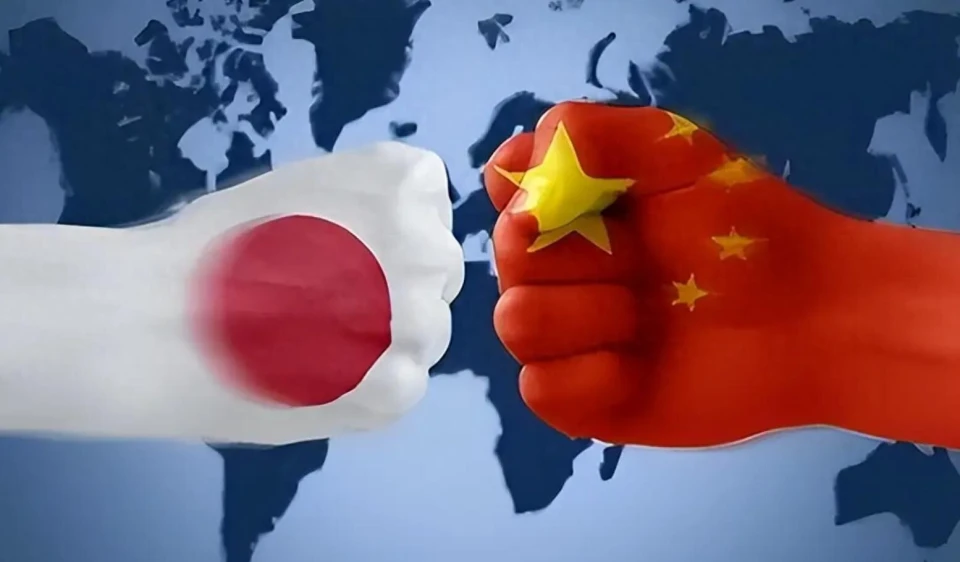
In just one day, two things happened one after another. China sent a tough signal, and Japan quickly adjusted its statement on China. This was no coincidence, but the beginning of a head-on collision. What appears on the surface is a change of wording, but behind the scenes is a conflict of lines.
1. It is not a diplomatic friction, but a conflict of directions.
Let’s sort things out first. On April 9, "People's Daily" issued a weighty commentary, directly naming Japanese Prime Minister Takaichi Sanae, asking him to retract his remarks involving military intervention in China, and also named the United States, asking it to restrain Japan. This kind of public naming has not been common in recent years, and the signal is very direct: the problem is no longer differences, but the bottom line.
Less than 24 hours later, Japanese Foreign Minister Toshimitsu Motegi submitted a new version of the "Diplomatic Blue Book" at a cabinet meeting. The most eye-catching point in the document is the change in the positioning of China, which has been adjusted from "one of the most important bilateral relations" that has been used for a long time in the past to "an important neighbor." It seems like there are only a few words missing, but in a diplomatic context, this is a downgrade.
If you look at these two actions together, you can see the nature of the problem. China clearly drew a line, and Japan did not relent. Instead, it responded with institutional documents. This shows that the two sides are not communicating, but confirming their respective positions.
Looking further ahead, Takaichi Sanae previously discussed the so-called "Taiwan incident" in Congress, including the Taiwan Strait issue in Japan's security agenda, and even involved the application of the right of collective self-defense. This statement directly touches on China's core interests. China's response is to make the problem public and clarify the responsibilities. Japan's response is to "downgrade" relations while strengthening its own narrative.
This is not a simple diplomatic friction, but a collision in direction.
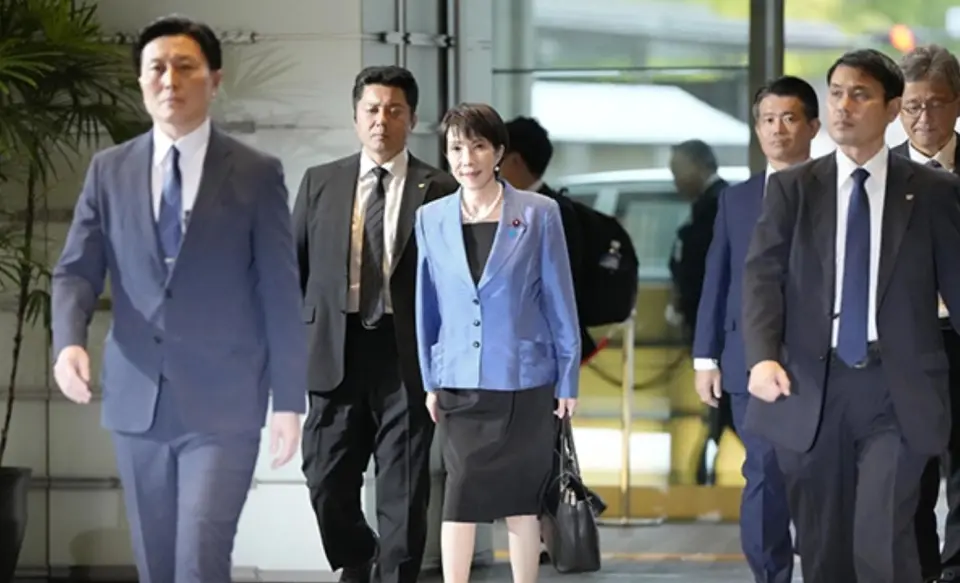
2. Why does Japan take the initiative to "cool down"? The answer is not in China
Many people will ask, why does Japan take the initiative to push down relations at this point? On the surface, it is dissatisfaction with China's tough stance, but the real reason lies mainly with Japan itself.
The first factor is internal pressure. After Takaichi Sanae came to power, he continued to promote the military expansion route. The defense budget for fiscal year 2026 exceeded 9 trillion yen, which has been increasing for many years. This rhythm has caused considerable controversy and even protests in Japan. With approval ratings under pressure, the government needs an external issue to shift focus. Showing strength to others is the most common method.
Shaping China as a "source of pressure" can, on the one hand, consolidate conservative support, and on the other hand, provide justification for subsequent policies. This kind of operation is not unfamiliar in the politics of various countries.
The second factor is relations with the United States. Japan’s security system has long relied on the U.S.-Japan alliance. In the current international environment, Japan hopes to gain more space in the US strategic system, including loosening military policy and technical cooperation. Being tough on China is a signal. The message is clear: I'm on your side.
The problem is that this kind of "taking sides" does not necessarily lead to reciprocal returns. The strategic priorities of the United States are being adjusted, and support for allies is becoming increasingly conditional. Japan takes the initiative to increase its position, but the other party may not increase its position at the same time.
The third factor is to pave the way for military policy. In recent times, Japan has taken frequent actions in the security field. SDF structural adjustment, long-range strike capability building, and relevant system modifications are all progressing. These changes have clearly gone beyond the traditional "defense-focused" framework.
But these policies are not without controversy at home. For these actions to proceed smoothly, they need a reason. This reason is external threats. Defining China as a source of pressure is intended to make these changes more acceptable.
Therefore, Japan's "downgrade" this time is not a passive reaction, but an active choice. It is the result of the superposition of multiple internal and external factors.
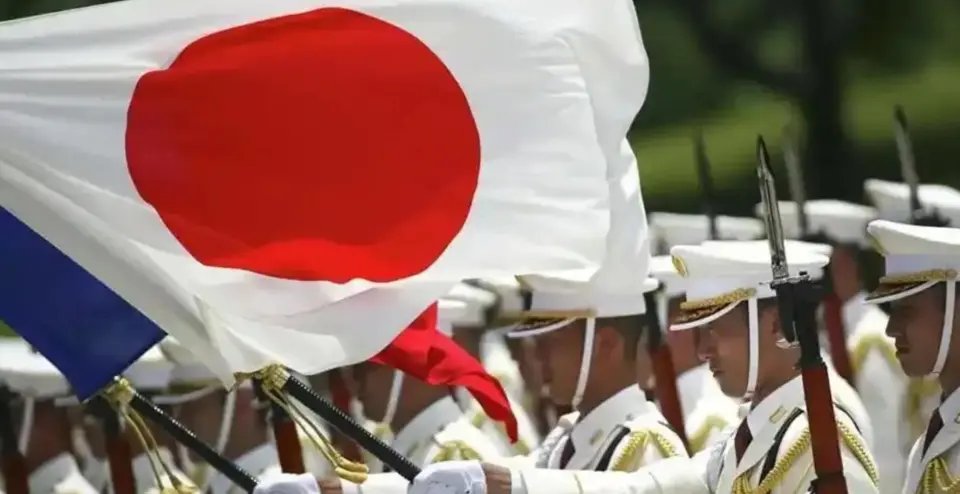
3. The so-called “safety transformation” is essentially system reshaping.
If you lengthen the timeline, you will find that Japan's changes are not impulsive, but a continuous path.
Let’s look at the institutional level first. Japan is considering adjusting the "Three Principles of Defense Equipment Transfer". In the past, this principle placed strict restrictions on arms exports and emphasized non-combat uses. The current adjustment direction is to expand the scope, even involving the export of equipment to conflict areas. what does that mean? This means that Japan is shifting from "restricting exports" to "participating in exports."
Let’s look at the military structure. The Maritime Self-Defense Force has canceled its long-standing establishment and replaced it with a more centralized command system. The Ground Self-Defense Force established new intelligence capabilities, and the Air Self-Defense Force strengthened its space capabilities. Taken together, these adjustments point to one result: the combat system is changing from a defensive orientation to a more proactive direction.
Another key point is remote capability building. Japan has deployed equipment capable of attacking enemy bases in some areas. This step is of great significance. In the past, its positioning was defensive, but now it has begun to have the ability to extend outwards.
The superposition of these changes is not a piecemeal adjustment, but a reshaping of the system.
The problem is that this change has ripple effects. Regional security is inherently complex. Once a country significantly adjusts its military route, other countries will inevitably react. Risks are not one-way but diffuse.

4. China’s attitude has been made clear and there is no room for ambiguity.
In the face of these changes, China's attitude has actually been made very clear, and it has been progressive.
The first level is the judgment of direction. China believes that Japan's current security policy has deviated from its original track and is developing in a more offensive direction. This judgment is based on a series of specific actions rather than a single event.
The second level is the response to specific remarks. Takaichi Sanae was explicitly asked to retract her statements regarding the Taiwan Strait issue. This is very critical. The Taiwan Strait issue is China's internal affair and there is no room for external intervention. Any talk involving military intervention is an act that crosses the line.
The third level is the roll call of external factors. China mentioned the United States in its statement and asked it to play a restraining role. This illustrates a judgment: Japan’s policy changes are not isolated, but related to the alliance system.
These three levels of attitude constitute a complete bottom-line framework. The core is just one sentence: the direction cannot be wrong, and the red line cannot be touched.
Meanwhile, countermeasures are already underway. Export management in some key areas has been tightened, and the flow of dual-use items involving both military and civilian use has been strictly restricted. The characteristics of this type of measures are obvious. They are not short-term actions, but institutional arrangements.
For Japan, this impact is real. The industrial chain is highly intertwined. Once key links are restricted, the impact will not disappear immediately, but will continue to amplify.

Conclusion:
Relationships can be downgraded, but reality will not follow. Treating external pressure as a bargaining chip and risk as a tool often ends up not winning the confrontation, but losing space. The real price is never written in documents, but in future choices.