Professional virtual currency information station welcome
We have been making efforts.

vc Page 31

Cryptocurrency is a non-legal monetary asset based on digital technology and blockchain, possessing the functions of a medium of exchange and a store of value. Cryptocurrency is a transaction medium that uses cryptographic principles to ensure transaction security and control the creation of transaction units. Cryptocurrency is a type of digital currency (or virtual currency). Bitcoin became the first decentralized cryptocurrency in 2009, after which the term “cryptocurrency” was more commonly used to refer to such designs. Since then, several similar cryptocurrencies have been created, and they are usually referred to as altcoins. Cryptocurrency is based on a decentralized consensus mechanism, in contrast to the banking financial system that relies on a centralized regulatory system.

Product Manager Tips And Tools: From Idea To Product Prototype

If a worker wants to do his job well, he must first sharpen his tools.

From idea to product, there are several twists and turns in between. The determination of product positioning determines the life and death of the product. The determination of product functional requirements determines the development cycle and the cost of trial and error. The Internet is all about speed, so it is necessary to make an MVP (minimum viable product). Of course, before that, you can also demonstrate the product through high-fidelity prototypes.

Let’s sort out some working methods and tools from product conception to project execution and product prototype delivery stages:

1. Idea

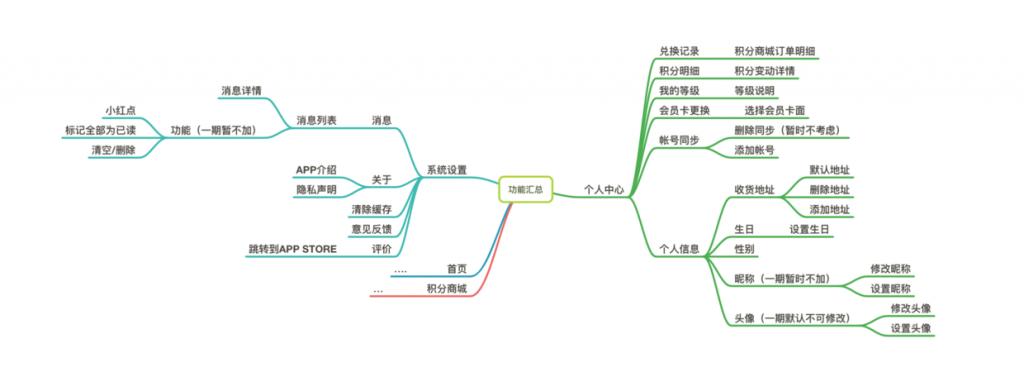
First, draw a user flow chart based on the product form, such as the registration and login process, and the shopping process of shopping APP users, which will help you think about the pages and functions involved in the product. Next, you need to classify and summarize the functions of the APP, and use a mind map to sort out the structural framework of the product, which will serve as a reference for designing the APP interface.

In the conception stage, it is OK to draw a sketch with a pencil. Once it is finalized, it needs to be organized into the PRD document.

Behance Download for Android_Product conception to execution_Product prototype design

Sample flowchart

Flowchart software recommends VISIO and OmniGraffle, simple flowchart Powerpoint is also acceptable.

Product prototype design_Behance Download for Android_Product conception to execution

Example mind map

Mind mapping software recommended Xmind and MindNode

2. Inspiration

A good design inspiration must come from the accumulation of daily materials. After you have seen N apps, N kinds of design solutions, and become familiar with the design patterns, and see a need, you will already have an idea of ​​what the app will look like.

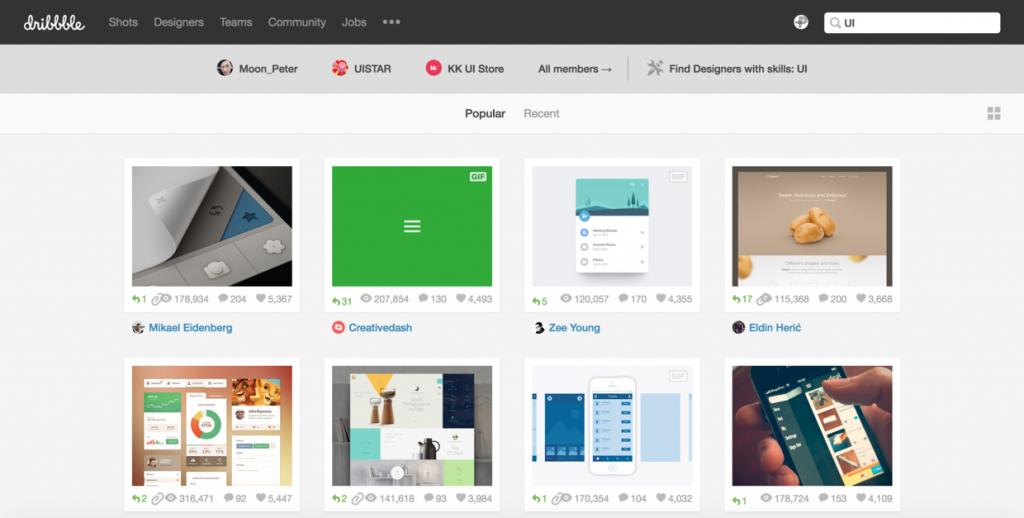
Recommended inspiration websites: Behance, Dribble

Product conception to execution_Product prototype design_Behance Download for Android

dribbble

Material organizing tools: Pixave, Ember, Inboard… Quickly build your material library by labeling and classifying pictures, and it is easy to search.

You may ask, "With a professional UI/UX designer, does a product need to be so in-depth about design?" On the one hand, I really love design, and I will devote all my energy to research; on the other hand, my point of view is that UI design is based on your prototype for interface design, which will be subject to certain limitations. If you are a more advanced designer, you will add your own experience and thinking to the design. The junior UI may be designed directly based on your prototype. You have more say in UI design such as color matching and icon drawing, but your product structure and layout affect the design ideas from the beginning.

3. Sketch

Behance Download for Android_Product conception to execution_Product prototype design

paper and pen

Paper and pen are the best tools, bar none, that can quickly draw the interface in your mind.

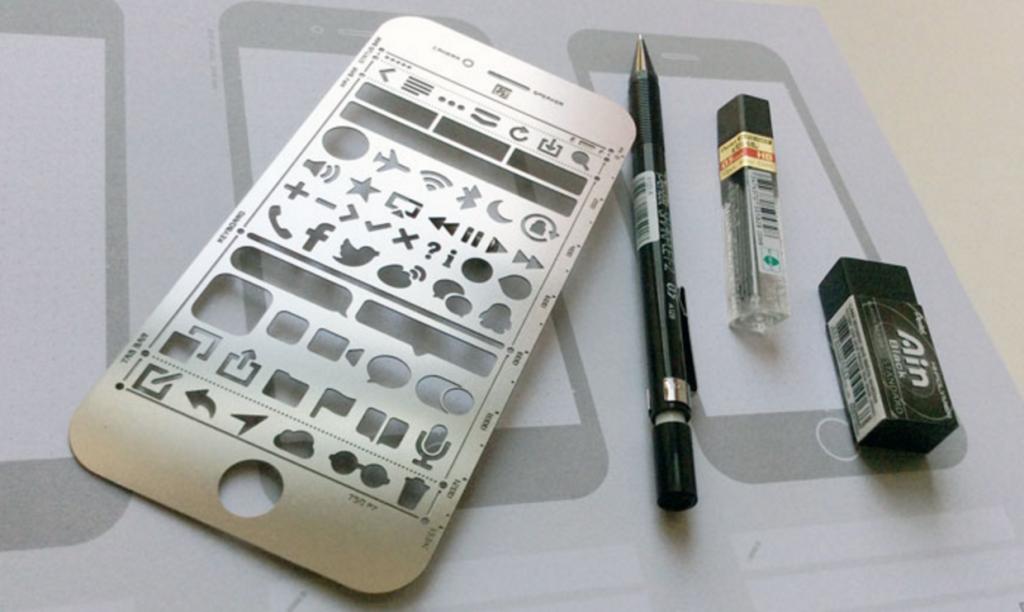
It is recommended to use dotted scratch paper with a mobile phone frame to facilitate controlling the size of elements according to their actual physical dimensions.

Behance Download for Android_Product prototype design_Product conception to execution

prototype paper

If you are a Virgo who pursues details, or a Libra who pursues perfection, you can try this ruler.

Behance Download for Android_Product conception to execution_Product prototype design

prototype ruler

A printable template is provided, courtesy of Marvel App: Download here

4. Design

At this stage, hand-drawn design drafts can be made into prototypes. The high-fidelity model can define a UI interaction design draft that includes colors and interface elements, or it can be defined as a relatively high-fidelity grayscale, colorless design that includes interaction logic. I think that for products, it is the latter. The product focuses more on the interaction between the interface and people and the logic between interfaces.

High fidelity can reduce communication costs, and the display of product logic, processes, layout, and operating status can quickly be understood by team members.

There are many tools for prototyping, such as Axure RP for Web, Justmind for mobile design, and online Ink Knife, etc.

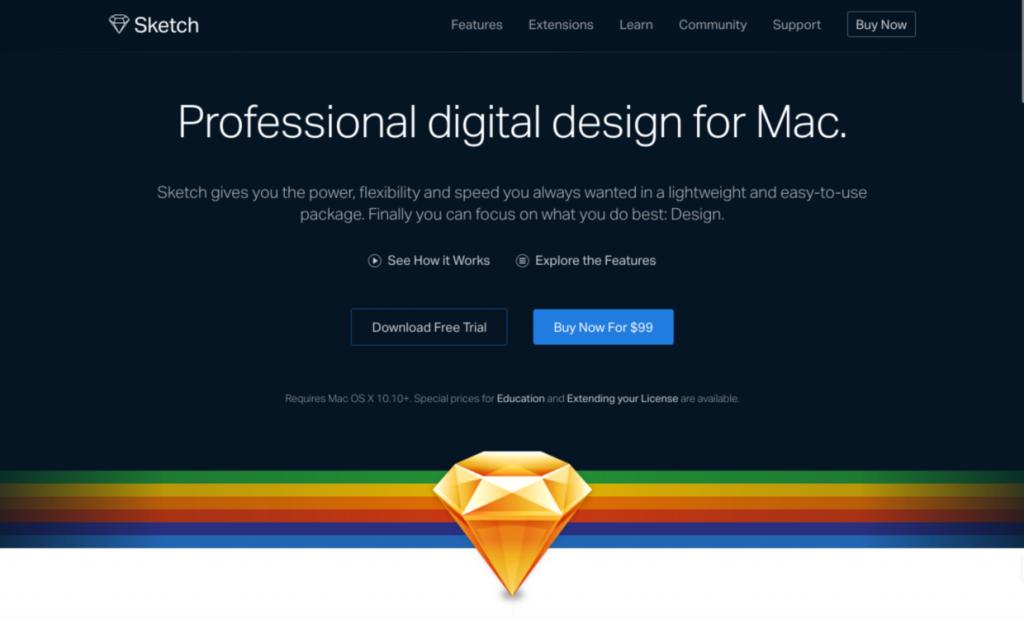
Sketch is highly recommended here, a professional mobile APP interface design software, and the product can also be used for prototypes.

Product conception to execution_Product prototype design_Behance Download for Android

Sketch

Sketch is a vector drawing app for all designers. Vector drawing is currently the best way to design web pages, icons and interfaces. But in addition to vector editing capabilities, we also added some basic bitmap tools, such as blur and color correction. We try our best to make Sketch easy to understand and use. Experienced designers can use their design skills in Sketch in a few hours. For most digital product designs, Sketch can replace Adobe Photoshop, Illustrator and Fireworks. ——Excerpted from "sketch User Manual"

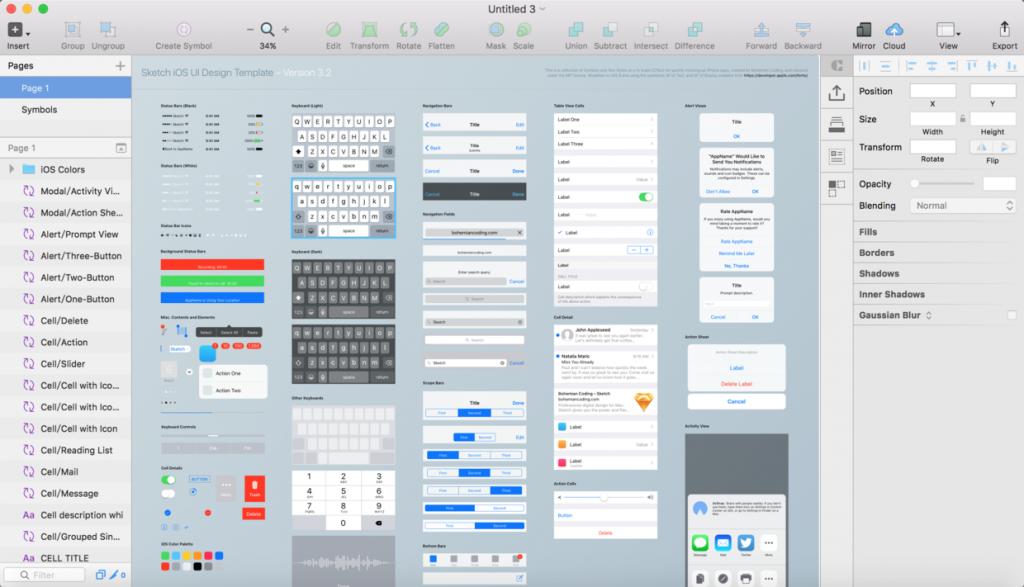
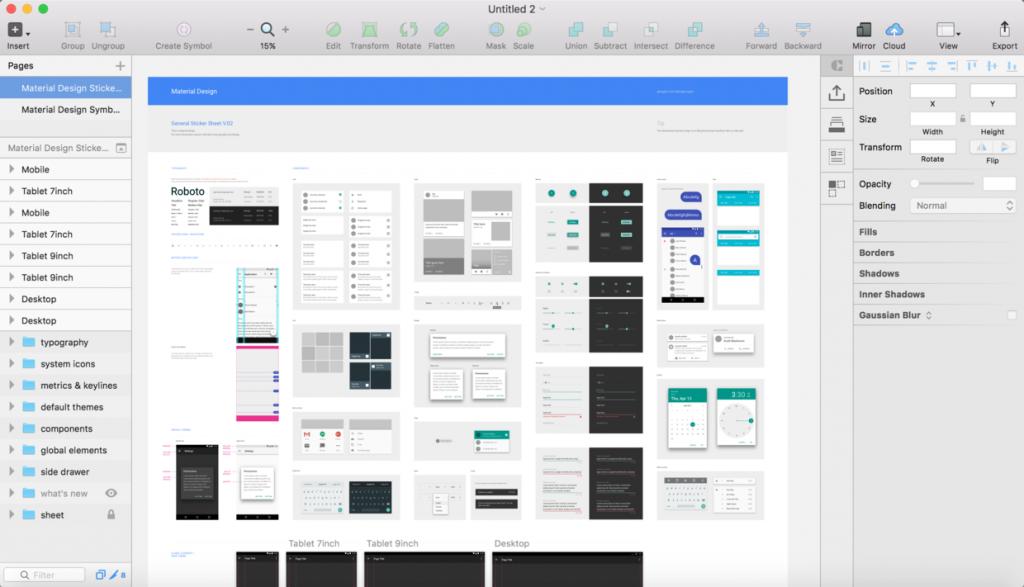
Sketch provides native controls for iOS and Android systems, which can be used directly.

ios UI Template

Product conception to execution_Product prototype design_Behance Download for Android

Material Design Template

Behance Download for Android_Product prototype design_Product conception to execution

As a product, you don’t need to do any complicated and cool designs. You can get started with this tool in about an hour.

Study materials:

Sketch Chinese Manual Medium Sketch Collection Design + Code

Material website:

sketch app sourcessketch repoUI8 (paid) 5. Demo

Whether it is to customers, bosses, or team members, demonstrating interactive effects is an essential part.

Demonstrations of hand-drawn sketches and low-fidelity models can be demonstrated through the POP APP, taking photos and then creating connections between pages.

POP

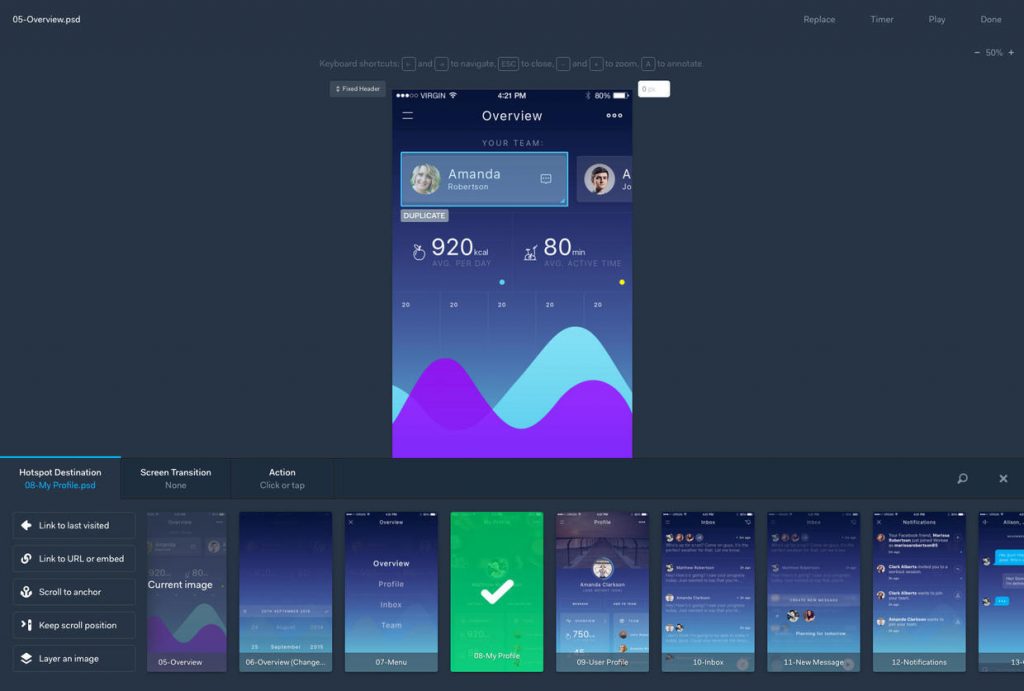
In addition, high-fidelity models for Sketch output. Demonstrations can be done through interactive tools.

Silverflows is a tool for prototyping directly in Sketch. However, the front-end time was acquired by invision. It is planned to be integrated into the Craft2.0 version produced by invision labs. It is still very worth looking forward to. BTW, Craft is a very powerful plug-in in Sketch.

Recommended: Flinto, Principle and Marvel. All three tools can directly import Sketch design drafts, and then design click jumps and transition animations between pages. It is worth mentioning that Principle supports timelines, and you can create parallax scrolling effects.

Behance Download for Android_Product prototype design_Product conception to execution

Marvel

Remember not to spend too much time on cool effects, which may slow down the progress of the project. Just be able to achieve basic demonstration effects.

Tips: You can connect your phone to your mac and use Quicktime to record the screen and project the phone screen onto the projector for demonstration.

6. Collaboration

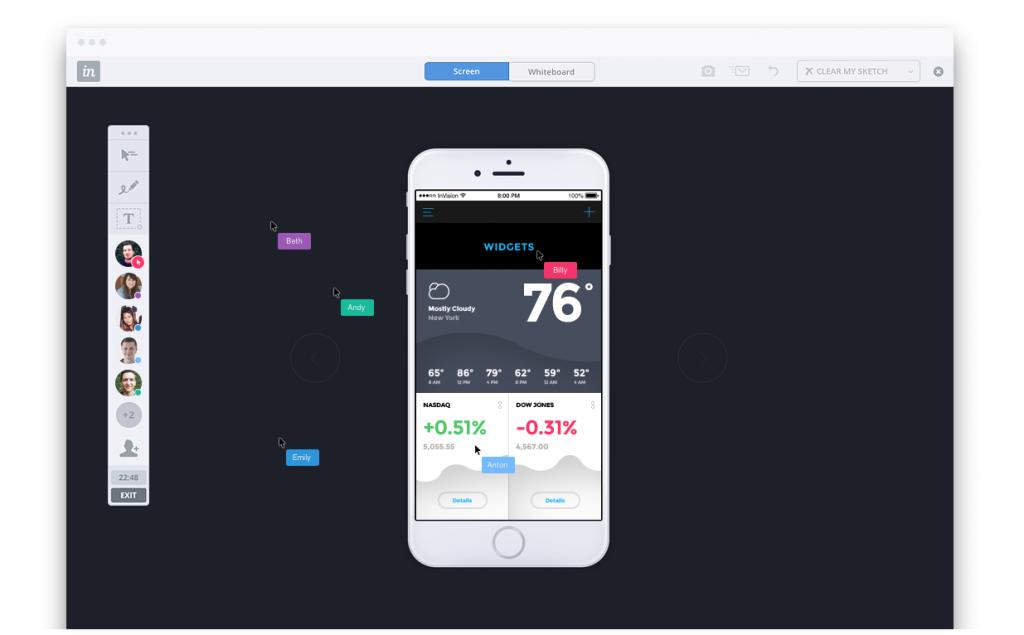
If you need to show the prototype to team members for real-time discussion, you can mark it in real time, which can save communication costs and improve efficiency.

We recommend several real-time collaborative marking tools such as invision, zeplin, and the domestic Bearyboard.

Behance Download for Android_Product conception to execution_Product prototype design

invision

Prototyping is only a small part of the product manager's work. The product manager's focus should be on user research, demand analysis, and product planning.

Those Techniques - Color Theory (translation Theory)

Remember the early days of your school days, when having a 64-count box of Crayola crayons was the ultimate in creative freedom?

Okay, so as a designer in the digital age, you certainly don’t have to work with paints, inks, or other pigments, although we can learn color from a fine art approach. In fact, the human eye can see millions of different colors – but sometimes, choosing, or even just 2 or three, to use from these millions can seem like a daunting task.

This is because choosing colors for design is very subjective and, sometimes, highly scientific. So, where are the designers who just want a color palette that looks good or makes the client happy? Like it or not, the most effective color choices are more than personal preference, as color has an extraordinary ability to influence mood, emotion, and perception; take on cultural and personal meaning; and attract attention, whether consciously or subconsciously.

For designers and marketers, the challenge is balancing these complex roles that color plays to create an attractive, effective design. This is where a basic understanding of color theory can come in handy. Traditional color theory can help you understand which colors work well together (or not) and what effects different combinations will have in a design.

It all starts with the color wheel.

Basics: Understanding Color

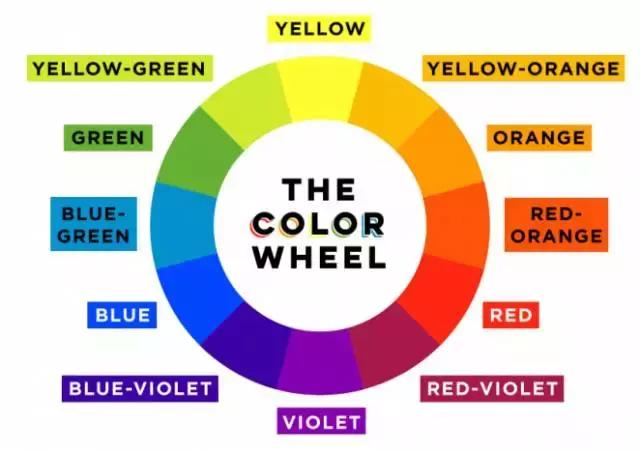
color wheel

You may have seen it in a school art class, or at least be familiar with it in its stripped-down form: the primary colors of red, yellow, and blue. We will deal with the 12 traditional colors often used by painters and other artists. This is a simple visual way to understand color relationships.

The basis of color theory_Behance Download for Android_Color psychology application

The color wheel is all about mixing colors. Mixing the primary colors, red, yellow and blue, you get the secondary colors of the color wheel: orange, green and violet. Combine those with a primary color and you get the third level of the color wheel, the tertiary color. These include red-orange, yellow-orange, chartreuse, blue-green, bluish-violet, and red-violet. The primary and secondary colors (with the additional blue) are part of the visible light spectrum, or the "colors of the rainbow," which many of you remember by the abbreviation "Roy. G BIV." As a child, remember these colors: red, orange, yellow, green, blue, indigo, and violet.

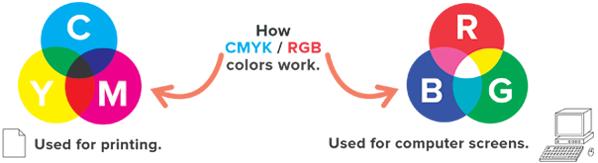
This way of understanding color is called a subtractive color model, which involves mixing color pigments in paints or inks – both traditional colors and printing equipment used fall within this category of the CMYK color system. This is opposed to the additive model, which involves mixing colored light (like the colors you see on your computer screen or TV) using a set of different primary colors: red, green, and blue, often abbreviated RGB.

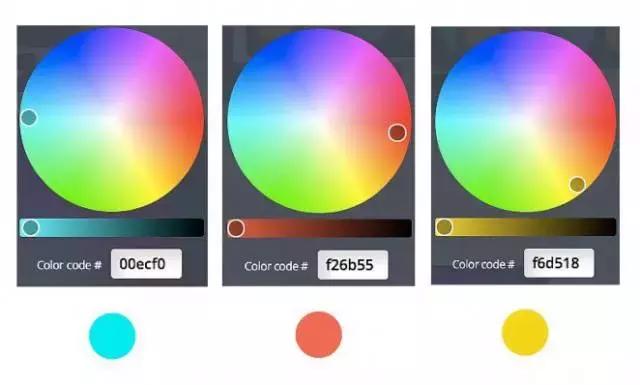
In the survey we have our own version of the colors that you can choose. Any color you choose will be determined by a hexadecimal value (or hex code), a six-digit number and/or letter combination (usually preceded by #) used in many design schemes to determine specific colors when designing web pages.

The basis of color theory_Behance Download for Android_Color psychology application

color words

Before we get into how to use the color wheel to create a color palette for your designs, let’s look at some color-related terms that will help you understand the different types of colors you might use in your work on design projects:

Hue: A synonym for "color" or a specific color, traditionally referring to one of the 12 colors on the color wheel

Color: black color

Color: Dull gray

Color: bright white color

Saturation: refers to the intensity or purity of a color (closer to a hue, closer to gray, more saturated)

Value: refers to the lightness or darkness of a color

color harmony

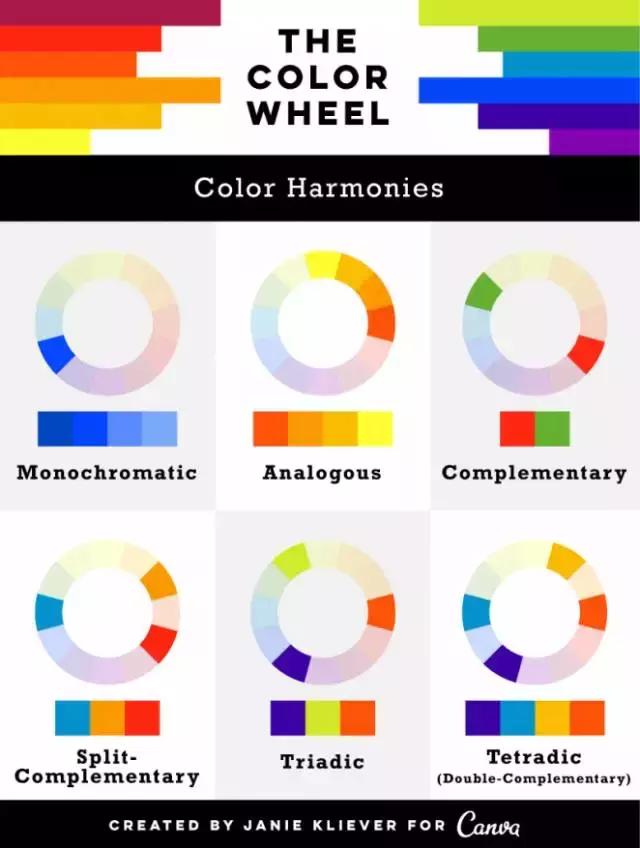
Now that we've got the more technical stuff out of the way, let's look at how the color wheel can be a practical resource for choosing colors for design projects. We can think of some classic palettes as color wheels that painters have used for centuries to create balanced and visually pleasing (or high contrast and stunning) compositions. In most design applications, these color schemes need to be broken down into one dominant color, either because of how much it appears in the design, or because of how it compares to other colors – and one or more accent colors.

1) Monochrome: A variety of colors, tints, or tints of one color; for example, blues range from light to dark; this scheme is more subtle and conservative

2) Similar: Having a color on the color wheel, this type of scheme is versatile and easy to apply to design projects

3) Complementary: colors that are in opposite directions, like red/green or blue/orange; complementary colors are high contrast and high intensity, but can be difficult to apply in a balanced, harmonious way (especially in their purest form, when they can easily clash in a design)

4) Split Complementary: Two more flankers on the color wheel complement any color; this scheme still provides strong visual contrast, but is more harmonious than complementary color combinations

5) Three: Three, evenly spaced colors on the color wheel

6) Quad/Double Complementary: Two pairs of complementary colors; this scheme is very eye-catching, but may be more difficult to apply to a pair of complementary colors because the colors are more difficult to balance. If you use this type of plan, you'll want to choose one of four colors that are dominant and adjust the saturation/value/etc of some or all of the colors so they work well in different parts of the design, such as text and background.

The basis of color theory_Behance Download for Android_Color psychology application

color inspiration

In addition to the color combinations found in color combinations, nature offers endless inspiration for harmonious color schemes. For 25 great color palettes pulled from nature photography (and others inspired by travel, food and drink, and everyday items), check out another of our design school articles, “100 Gorgeous Color Combinations: How to Apply Them to Your Designs.”

Colors can also be paired with temperature (warm or cool colors), saturation (bright colors often look younger, while washed out looks), mood (bright and fun, dark and serious), theme (location, season, holiday), and other qualities. To explore different color schemes, check out one of the many color selection tools available online, some will even let you upload an image to generate a color scheme. Some attempts include paletton, Adobe CC (formerly known as Kuler Color), and colorexplorer. If you use a browser, you can download the Eyedropper extension, which allows you to identify and pull colors directly from the web.

Color theory basis_Color psychology application_Behance Download for Android

The bright, cheerful color palette is inspired by exotic travel locations.

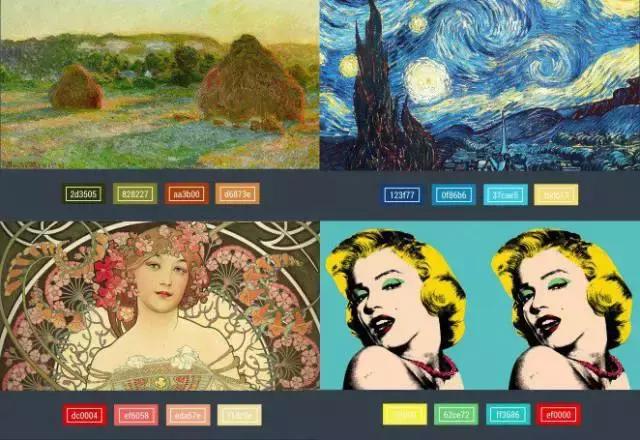
Finding color inspiration from different historical periods and art movements can be another great technique. The palette below shows the warm, light-filled colors common to Impressionist paintings; the vivid, unexpected combinations used by Post-Impressionist painters; the soft, earthy colors characteristic of Art Nouveau; and the bright, bold colors of Pop Art.

Color psychology application_Behance Download for Android_Color theory basis

Left to right: “Wheatstacks (Late Summer)” by Claude Monet; “Starry Night” by Van Gogh; “Revelation” by Alphonse Mucha; “Marilyn” by Andy Warhol

color psychology

The colors around us. Whether we realize it or not, it plays an important role in our daily lives. That orange or yellow traffic sign you see on the road? This gets your attention. Do you buy a box of cereal at the market, even if it is a little more expensive than others? You may have been drawn to the color of its packaging. Color even creeps into language in creepy ways… Why do we say people "see red" when they're angry or "blue" when they're sad? Because color has a unique connection to our moods and emotions.

But not everyone thinks or experiences color in the same direction. The meanings and symbolism of the cultural and social groups we identify with and the different colors we associate with them are greatly affected. Let’s take a look at the basic colors in Western culture:

color symbolism

Red: This color can convey many different ideas depending on the context. Because red is associated with fire, it can represent warmth or danger. Since red is also the color of blood, it is considered an energy, lively color and is also associated with heart problems and sometimes violence.

Alternative meanings: In some Eastern cultures, red symbolizes good luck and prosperity and is the color worn by brides on their wedding day. Across the world, red has been associated with various political movements and symbolizes revolution.

In terms of branding: Red often conveys power, confidence, and power, and is a very visible color.

Color psychology application_Behance Download for Android_Color theory basis

dribbble/studiojq

•Orange: Also a fiery color, orange hues, combined with communicative activities, can bring joy to yellow, warmth to red, and optimism. It is also associated with the harvest or autumn festival.

The basis of color theory_Behance Download for Android_Color psychology application

Dribbble/Mike Jones

Alternate meanings: In India, saffron, a certain shade of yellow-orange, is considered sacred. In Japan, orange is the color that symbolizes love.

Brand: Orange often represents youth and creativity. Gold, which is an orange or yellow color depending on its hue, is a symbol of luxury or high quality.

Download for Android_Color Psychology Application

Dribbble/Bendidier

•Yellow: The color of sunlight, yellow often conveys happiness, joy, friendship, and the freshness of spring. It can also issue warnings or warnings in certain circumstances. Some variations (especially saturated yellows and greens) can look sick or unpleasant; historically, yellow was sometimes associated with disease quarantine.

Color Theory Basics_Color Psychology Application_Behance Download for Android

Behance / ronggo wanggori

Alternative meanings: In some Eastern and Asian cultures, yellow is associated with royalty or high status. In parts of Africa and Latin America, yellow is the traditional color of mourning.

On branding: Solid/bright yellow work attracts attention but can be visually disturbing and even difficult to see (e.g. a bright yellow background or vice versa) if not used with care.

Green: This is the color of nature, plant life, growth. As such, it often conveys healthy, fresh, or "all natural" qualities. Dark green can represent wealth (or anything money related) and stability.

Alternative meanings: In the culture that practices Islam, green is a sacred color. Green is also associated with Ireland and, by extension, St. Patrick's Day and the lucky four-leaf clover.

Brands or products that want to be "green" (in the sense of natural, healthy, sustainable, eco-friendly, organic, etc.) often use nature-inspired colors such as green and brown.

Dribbble/Anna Hurley

Blue: The color of the sea and sky, blue often conveys peaceful, clean qualities. And more energetic, warmer and cooler, blue is seen as calming. In some cases, it can represent sadness or depression.

Dribbble/DI

Alternative meanings: In Middle Eastern cultures, blue has traditionally represented protection from evil. Because of its association with heaven, blue symbolizes immortality and/or spirituality in many cultures.

In Branding: Blue is one of the most widely used and versatile colors. Generally used to communicate integrity, security and stability. Dark or deep blue is an especially popular choice because of its corporate background and because it is believed to have serious, conservative, professional qualities.

Color theory basis_Color psychology application_Behance Download for Android

Dribbble/Alibaba

Purple/Purple: Purple is often associated with royalty, majesty, or honor. It can also have spiritual, mystical or religious connotations.

Alternative meanings: In many cultures around the world, purple represents nobility or wealth; however, in Thailand and southern America, the color is associated with mourning.

Brand: Darker shades of purple also often symbolize luxury and affluence, while lighter/brighter shades can come across as feminine or childish.

The basis of color theory_Behance Download for Android_Color psychology application

BehanceHanoi/Nicholas

Black: Red, black has many (and sometimes opposing) meanings. It can represent power, luxury, sophistication, and exclusivity. On the other hand, it can symbolize death, evil, or mystery. In dress, black people generally wear either ceremonial ("black tie" for parties) or sad and sorrowful (as traditionally worn for funerals).

Alternative meanings: In some Asian and Latin American cultures, black is considered a masculine color. In Egypt, black represents rebirth. In many cultures, colors have magical powers, superstition, or bad luck, again, this is still unknown.

In terms of branding: black is so widely used that it’s almost a neutral, but it can still communicate more than its meaning depending on the context. Many designs are in black and white, either as a deliberate choice or simply to save money on color printing. Colors always look brighter and more strongly against black.

Color psychology application_Behance Download for Android_Color theory basis

Dribbble/澾gjokaj

White: Due to the color of light and snow, white often represents purity, innocence, kindness, or perfection (and is traditionally worn by brides), but it can also be exactly as stark or sterile.

Alternative meaning: In China, white is the color of mourning. It represents peace in many cultures – a white flag is a universal symbol of truce or surrender.

In branding: White often conveys simplicity or clean, modern qualities. Designers seeking a minimalist aesthetic will often use lots of white.

Color Theory Basics_Color Psychology Application_Behance Download for Android

color in design

Add a color scheme to your design rather than choosing two or three more shades to smash down in equal parts throughout your layout. Effectively applying color to a design project has a lot to do with balance and the colors you use, the more complicated it is to achieve balance.

An easy way to think about this concept is by splitting your color choices into dominant and accent colors. In your design, the dominant color will be the most obvious and most frequently used color, while one or more accent colors will complement and balance the main color. Paying attention to how the colors interact with each other in terms of contrast (or lack thereof), the readability of the text when it is referenced, how certain colors make others look when they are next to them, what kind of mood color combinations create, etc. – will help you fine-tune a perfect color palette for your design purposes.

Using a basic common rule of thumb in designing with three colors is called the 60-30-10 rule. This method is typically used in interior design, but can also be effectively applied to web or print design projects. You'll only make your dominant hue 60% of the color in the design, while bicolor colors use the remaining 30% and 10%. A good analogy to understand this piece is to depict a man's suit: the blazer and pants account for 60% of the outfit color; the shirt and tie account for 30%; provide a small pop of color at 10% – creating a balanced, polished look.

Another way to keep your palette simple and balanced is to use tints and tints (or dark versions of your chosen shades). This way, you can expand your color options without overwhelming your design with a rainbow of colors.

Dribbble/Seán Halpin

Color in marketing and branding

Brand identity is closely linked to color. Just think of Coca-Cola, Facebook, or Starbucks, and I bet you can immediately name the colors that those brands associate with.

A study by the University of Winnipeg, titled "The Impact of Color on Marketing," found that people's initial judgments about products are based on color (about 60 to 90% of evaluations – in just 90 seconds – are based on color). This means that in design, color is not only an artistic choice, but also an important business decision – influencing everything from consumer perceptions of a brand to product sales.

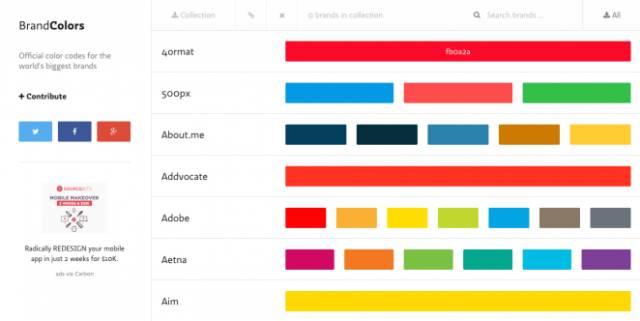
However, when choosing a color scheme for your logo or brand, you don't have to stick to any traditional symbols, or conventional methods. There are no foolproof processes or hard and fast rules when it comes to color. Most importantly, the color used in the design is a good fit for the brand's personality and market environment. For some inspiration, visit a website, brandcolors, that has compiled a visual guide (hex code) from well-known brand color choices from around the world.

The basis of color theory_Behance Download for Android_Color psychology application

RGB and CMYK color systems

When you are working on a design that will be printed, your computer monitor will not be able to display the colors accurately as they will be seen on paper. "What you see is not what you get," because digital monitors/screens and printers use two different color systems: RGB and CMYK. RGB refers to the small dots of red, green, and blue light that form visible colors on the screen; while CMYK represents the color printing created by mixing cyan, magenta, yellow, and black inks on printing equipment. Since the RGB color space uses other colors than CMYK, it is worth noting that some designers prefer to initially create print projects in RGB for more color options and then transfer the design into the finished product before printing in CMYK.

Download for Android_Color Psychology Application

Because of these differences, designers need a way to get consistent color results when working with both systems – for example, if you're designing a logo for your website but also want to get a business card printed. This is where the Pantone Color Matching System (or systems) can help. Colors can be matched to web and print (as well as different types of printing surfaces) to ensure a unified look. The Pantone system makes it easy for designers, clients, and printers to collaborate to ensure the final product looks as intended.

Color: understand it, explore it and love it!

Color psychology application_Behance Download for Android_Color theory basis

How Is The Price Fluctuation Of Tether Affected? An Article Explaining In Detail The Working Principle Behind USDT

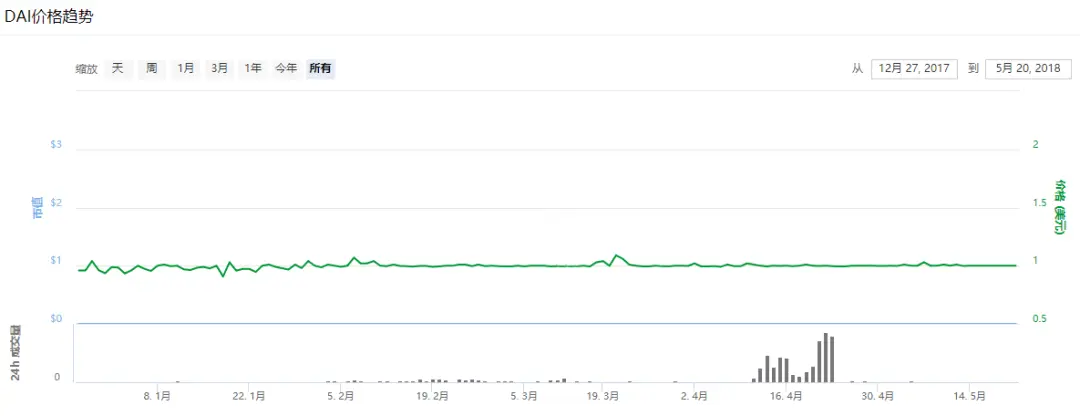
Tether's main goal is to maintain a price of $1, but there have been several significant price fluctuations in history.

For example: In 2017, due to the Taiwan Bank incident, the price fell to $0.91. In 2018, it fell to $0.9 due to the US government investigation.

But it is worth noting that after these events, the price of Tether is usually able to return to levels close to $1 within a short period of time.

Fourth, factors affecting market confidence

Tether’s stability largely depends on the market’s confidence in it. For example, government regulation may affect this confidence. Once market participants become uneasy about the reserves behind Tether or how it operates, prices can be subject to volatility.

Although Tether has been in existence for nearly 10 years, many price changes have always returned to the value of 1 US dollar "within 2-3 weeks".

However, investors still need to pay attention to relevant risks and market changes and should not take it lightly.

Factors affecting Tether market confidence_What does USDT mean_Tether price fluctuations

The principle of Tether (USDT)

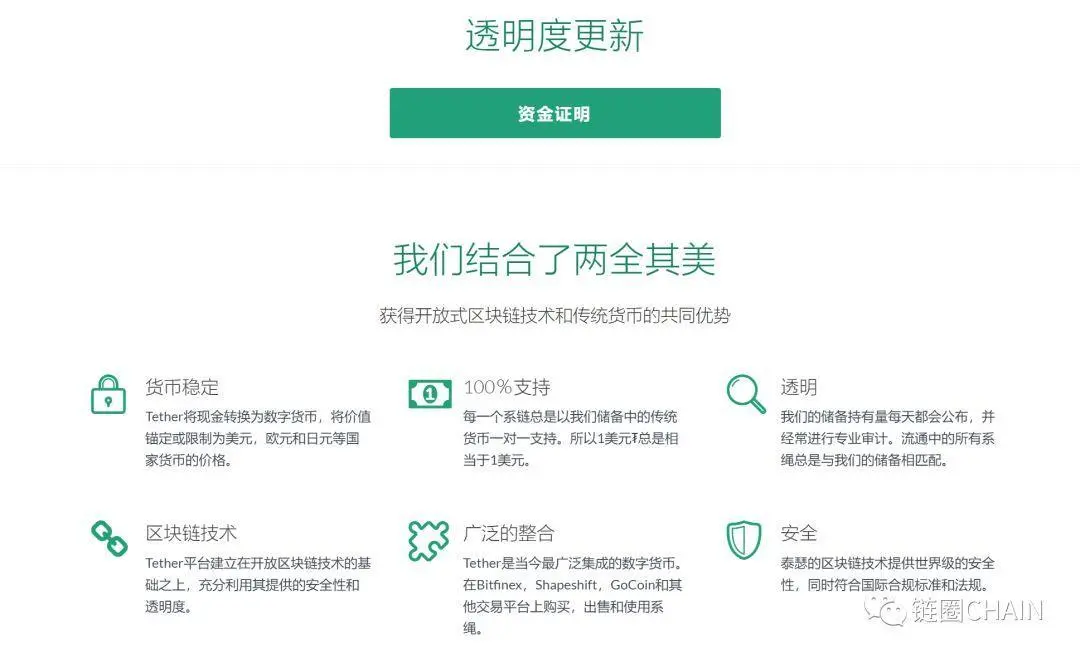
It is stated in the white paper on the official website: Each Tether coin is worth equal to 1 US dollar and is 100% backed by Tether reserves. That’s why we call it a “stablecoin.” But how does it work behind the scenes?

First, when you use 1 USD to buy Tether, Tether Limited will deposit the 1 USD into a specific bank account as a reserve. In contrast, when you exchange Tether for U.S. dollars, the company will withdraw the equivalent amount of U.S. dollars from its reserves and destroy the USDT. This ensures that the total amount of USDT issued is always consistent with the total amount of USD reserves.

In short, the company Tether Limited acts like a middleman, providing us with a "USD play currency" that can be used in the cryptocurrency world. This model is very popular among cryptocurrency exchanges, especially when market prices fluctuate violently, Tether provides a relatively stable value anchor.

However, there are still some doubts and doubts. Although Tether Limited has always emphasized that each Tether coin is backed by US$1, there are still doubts in the market about the authenticity and adequacy of its reserves. One of the key questions at the heart of this is: If everyone wants to convert USDT to USD, does the company really have enough cash to support it?

This incident also reminds us of an important concept: currency is valuable because people generally trust it. Now, the market recognizes the value of Tether, but if trust is damaged, the value of Tether will also be seriously affected.

Tether uses advanced blockchain technology, which not only provides transaction transparency, but also ensures security. In addition, with the advancement of technology, Tether has been implemented on different blockchain platforms, such as: Ethereum and TRON, which means that there are multiple versions of USDT.

What will happen if there are "multiple versions" of USDT? Tether (USDT) has multiple versions on different blockchain platforms, just like a popular game has its own versions on different gaming platforms. So what does the existence of these multiple versions mean to us?

First, the convenience of transactions. First of all, multiple versions of USDT mean that it can be circulated on different blockchain networks. For example: when a person uses an exchange based on Ethereum, he will use the USDT version based on Ethereum, and on an exchange on the TRON network, he will use the USDT version based on TRON. This increases the convenience of transactions and allows users to easily switch between different platforms.

Second, enhanced liquidity because USDT can operate on multiple blockchains, which enhances its market liquidity. No matter which platform you are on, you can find USDT, which makes it a cross-platform "universal game currency".

Third, we should pay attention to the exchange issues. However, this also brings some minor troubles. Different versions of USDT are not directly compatible with each other. If you have Ethereum-based USDT but want to use it on the TRON network, you may need to exchange it through a specific bridge service or exchange.

Fourth, multiple guarantees of security. Each blockchain platform has its unique security features. Multi-version USDT means that the security behind it is multiple and not entirely dependent on a single blockchain platform. This provides an additional layer of security to some extent.

What are the risks of Tether (USDT)?

As one of the most popular stablecoins, Tether has a wide range of applications in the market, but there are many risks and questions behind it.

Risk 1. Opacity of financial data

In 2021, Tether reached an agreement with the New York Prosecutor's Office and promised to disclose its guarantee information. However, judging from the data it provides, its reserve information has not been formally audited and confirmed, and detailed information is relatively lacking.

Real cash accounts for less than 4% of published margins, while the majority of reserves (about 65%) are classified as commercial paper. However, specific details of the commercial paper were not disclosed due to "commercial reasons." This is the first risk of Tether.

Risk 2. Doubts arising from reserves

According to data disclosed by Deltec Bank, in the first nine months of 2020, Tether's foreign currency increased by US$600 million, but its Tether issuance increased by US$5.4 billion during the same period, a gap of nearly 7 times.

Tether's other reserves, such as mortgage loans and investments in Bitcoin, are mostly assets that cannot be cashed out quickly. This means that once there is a large demand for Tether exchanges, Tether may face payment difficulties, leading to a price drop or even a collapse. This is the second risk of Tether.

Risk 3. Legal and regulatory issues

Unlike other financial institutions, Tether's custodian bank Deltec does not purchase insurance specifically designed to protect investors, such as the FDIC or the Central Deposit Insurance Corporation. In other words, if Tether is subject to large-scale theft or loss, it will be difficult for investors to receive compensation.

Although Tether claims to have registered an MSB license, it has not actually obtained strict financial supervision, which may mean that there are risks in business operations and investors cannot fully rely on the information currently provided. This is the third risk of Tether.

Although Tether has an important position in the crypto market, the risks and opacity behind it are still areas that investors need to pay special attention to. The above three potential risks should be carefully considered before using Tether.

What does USDT mean_Factors affecting Tether market confidence_Tether price fluctuations

Is Tether (USDT) worth investing in?

Despite all the controversies Tether has experienced, its current position in the cryptocurrency market seems to remain solid. Many people believe that Tether is a safe and stable investment option, but is this true?

First of all, we cannot deny the huge influence of Tether. Since its launch, it has dominated the market and become the most popular stablecoin today. The daily transaction volume is "billions of dollars" and not even Bitcoin can match it. This widespread usage means that most people believe in its stability and will use it as a bridge for transactions.

However, the financial issues behind it cannot be ignored. Many critics point out that Tether's financial data is not transparent and are skeptical about its true reserve margin content. Although Tether claims to have sufficient reserves, the lack of public information makes it difficult to determine the authenticity.

But on the other hand, Tether’s popularity means it’s unlikely to disappear anytime soon. Many people choose to trust it, not only because it is convenient, but also because "everyone is using it." So despite the risks, many investors still think it's relatively safe to use funds as excess in the short term.

As for long-term investment, since the price fluctuations of USDT itself are very small, it may not be an option that can bring significant returns. If you are looking for high risk and high reward, other options in the cryptocurrency market, such as Bitcoin or Ethereum, will be more attractive.

In addition, although Tether itself is not a scam, it has indeed been exploited by many scammers. From fake exchanges, fraudulent APPs to various scams, criminals often use the name of Tether to commit fraud. Therefore, whether you choose to invest or not, you should remain vigilant, do not be easily tempted by good promises, and be sure to purchase from reliable sources.

How to make money by buying Tether (USDT)?

Many investors use Tether for arbitrage. So, how is arbitrage realized, and how to make money by buying?

Arbitrage is basically divided into "two major strategies": one is to use the "price difference" between multiple platforms, and the other is to obtain "time difference" income by holding for a long time.

First, multi-platform arbitrage requires investors to buy USDT at a low price on platform A and then sell it at a higher price on platform B. However, this strategy is relatively difficult in practice because investors need to have in-depth knowledge of multiple platforms and continuously pay attention to market price dynamics. Therefore, this strategy usually requires professional teamwork and is difficult for ordinary investors to operate.

As for the long-term holding strategy, its risks are closely related to market performance. Traditionally, when the price of Bitcoin falls, people may turn to buying Tether; and when the price of Bitcoin rises, investors may consider selling Tether. But as Tether continues to sell Tether coins, this arbitrage space is shrinking. In addition, in the financial services provided by some cryptocurrency exchanges (such as Binance), depositing Tether will earn annual interest of up to 10%. This is also a very good way to invest.

When it comes to how to buy Tether, investors can generally use "two channels": exchanges and over-the-counter transactions. Exchanges such as Binance, OKX, etc. provide direct purchase functions. OTC transactions include: B2C, C2C, and P2P methods.

What does “over-the-counter” cryptocurrency trading mean? Over-the-counter (OTC) transactions are transactions completed directly between buyers and sellers, bypassing traditional cryptocurrency exchanges. This method is mainly used to conduct a large number of buying and selling operations quickly and efficiently without causing excessive price fluctuations in the open market.

When we trade on a general cryptocurrency exchange, the buy and sell orders will be publicly displayed and will directly affect the market price. But in the case of large transactions, if a large amount of Bitcoin or Ethereum is suddenly sold, it may cause large price shocks in the market.

OTC transactions are designed to avoid this situation, allowing buyers and sellers to directly negotiate the price and conditions of the transaction and then complete the transaction safely and privately. This is especially useful for larger organizations! However, OTC trading also has its risks. Without centralized regulatory guarantees like exchanges, you will face a higher risk of fraud. Therefore, it is crucial to choose a reliable OTC trading partner and ensure the safety of the transaction!

FeaturesB2C

(Business to Customer)C2C

(Customer to Customer)P2P

(Peer to Peer)

describe

Directly from the trading platform to the user

Provide transaction services

Transactions are conducted directly between platform users,

The platform provides matching services

Through a decentralized approach,

Not tied to a specific platform

participants

Trading platform and individual users

between individual users

direct transactions between individuals

advantage

Standardization of transaction process,

User experience is relatively simple and intuitive

Provide more flexibility and choice,

Sometimes you can get a better price

Completely decentralized,

Provide maximum freedom and privacy

shortcoming

More dependent on trading platforms

Reliability and security

Users need to identify themselves

Reliable trading partner with higher risk

Without the protection of intermediaries,

Higher transaction risk and fraud risk

Where to buy Tether (USDT)?

Tether is currently the most popular stablecoin on the market and is widely traded with cryptocurrencies.

The following are the channels through which USDT can be purchased:

Channel 1. Trading through cryptocurrency exchanges

Many major cryptocurrency exchanges support trading of Tether.

Here are some well-known exchanges: Binance, OKX, Huobi, etc.

Through these exchanges, Tether can be purchased using other cryptocurrencies (such as BTC or ETH) or traditional fiat currencies (such as USD, EUR, JPY, etc.).

Channel 2: Through over-the-counter transactions

This is a method of trading outside of public exchanges.

Many large exchanges offer over-the-counter trading services, making it possible to buy Tether in large quantities without having a big impact on the market price.

Channel 3. Through P2P transactions

Some platforms allow users to trade directly with each other without going through an intermediary or exchange at all.

This usually involves the seller sending Tether directly to the buyer's wallet, and the buyer paying the seller via traditional payment methods.

Channel 4. Through cash/local transactions

Although this method is less common, in some areas, people will meet at a certain place and exchange cash for Tether.

Special note: before purchasing Tether, please be sure to confirm whether the channel you are using is reliable and safe. Also, please make sure your Tether is stored in a secure wallet and properly backs up your keys to prevent loss.

Tether (USDT) purchase tutorial

There are many crypto exchanges that support USDT. Next, I will take Binance, the largest exchange in China, as an example to introduce the registration and purchase methods in detail.

Android mobile APP download

Android phone users can directly use the browser to open the APP download address: https://static.jbzj.com/qkl/ba/baxz.html

Apple mobile APP download

Apple mobile phone users can check the tutorial below to register an overseas Apple ID, and then go to the Appstore to search for binance and download it.

Step 1: Create an Apple ID for Taiwan, China

Due to country restrictions on Apple mobile phones, we need to register an apple ID in Taiwan, China, before we can download the Binance software. Apple IDs in the United States and Hong Kong no longer work. Apple IDs in the US can only download the emasculated version of Binance. In Hong Kong, due to regulatory reasons, the apps of these exchanges may also be required to be removed from the Appstore. So our best option is to register an Apple ID in Taiwan, China.

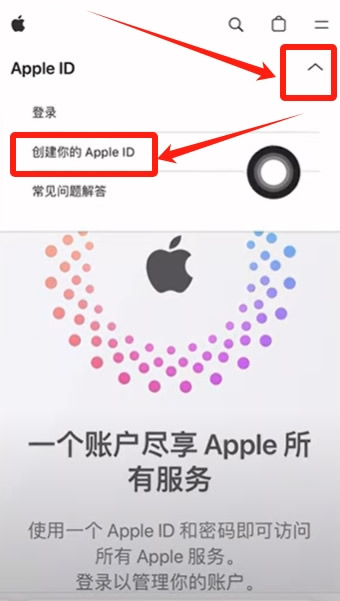
1. Enter the official Apple account website through a browser search, find the small downward arrow in the upper right corner of the page, and click "Create your Apple ID".
Tether price fluctuations_What does USDT mean_Factors affecting Tether market confidence

2. Fill in our [last name and first name]. Here we change the country or region from [Mainland China] to [Taiwan], and here we can make up any date of birth. The email address must be one that has not registered an Apple ID. Whether you have a domestic Apple ID or a foreign Apple ID, you must have never registered one.

3. Set up our Apple ID password again. At least 8 characters, including uppercase, lowercase and numbers.

4. Enter our mobile phone number. Because it requires verification, we need to receive text messages and voice calls, so we can just fill in whatever phone number we have.

5. Enter the verification code and click [Continue].

6. At this time, we will receive a verification code in our mailbox. We check it in the mailbox, enter the verification code, and click [Next].

7. Enter the mobile phone verification code again, and then click [Next].

8. Now comes a very important step. After we log in to our Apple ID, first click the downward arrow next to log out and find "Personal Information".

9. Find and click [Country or Region], and then click "Change Country or Region".

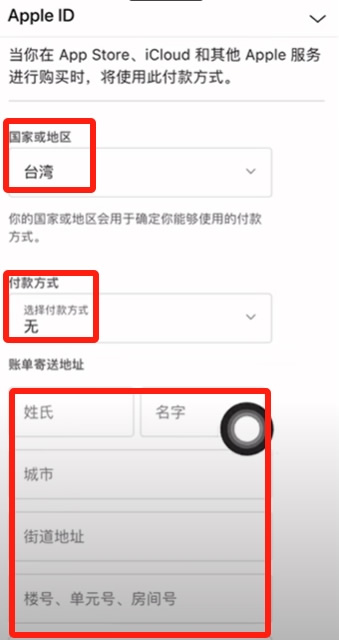
10. For the next country and region, we still choose Taiwan, China. We must select "None" for payment method and do not add any payment method. Next is the billing address and shipping address. Here we need to use the Taiwan address generator. Let’s not close this page yet, let’s open a new page first.
Factors affecting Tether market confidence_What does USDT mean_Tether price fluctuations

11. Directly search for "Taiwan Address Generator" and then open it.

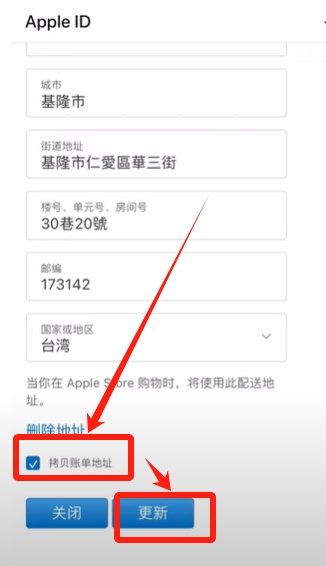
12. Go to the Taiwan address generator page. Below is some randomly uploaded fake information. We can fill it in to the personal information page of our apple ID just now. Paste the name, city, street address, building number, unit number, zip code, area code and phone number. The area code is usually 886.

13. We don’t need to fill in the shipping address below again. Just click "Copy Billing Address" below, then click "Update".
What does USDT mean_Factors affecting Tether market confidence_Tether price fluctuations

14. Now our Taiwan personal information has been entered. You now have a complete account with an Apple ID in Taiwan, China.

Step 2: Download and install the Binance Chinese version APP

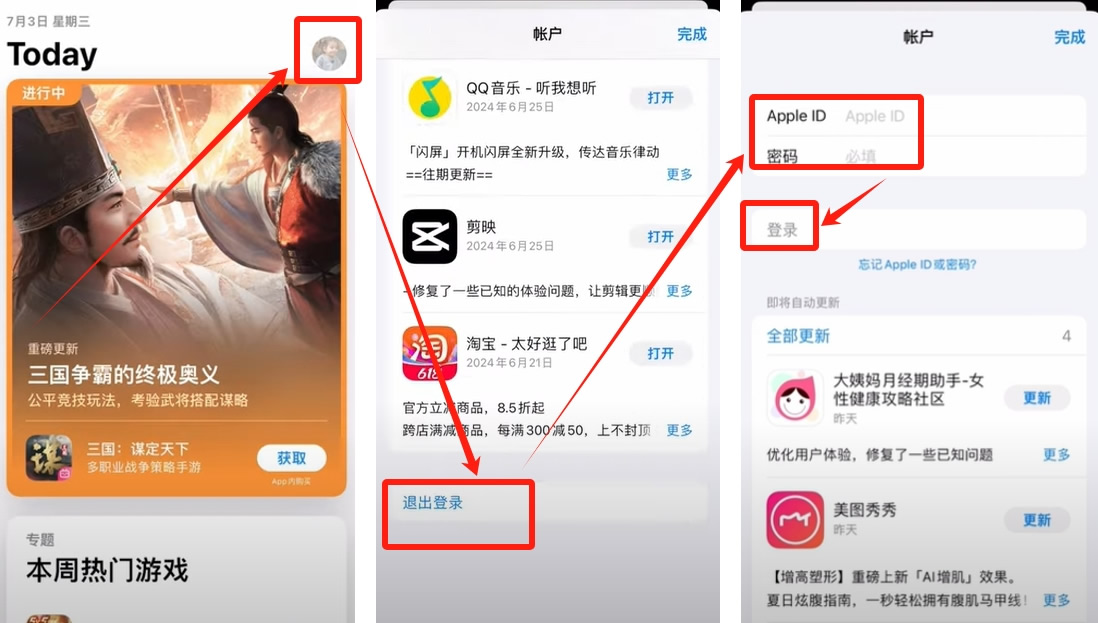
1. Next, we open the Appstore, click on the villain avatar in the upper right corner, scroll down and click [Log Out]. Go back again, fill in the apple ID and password we just registered here, and click [Login].
What does USDT mean_Factors affecting Tether market confidence_Tether price fluctuations

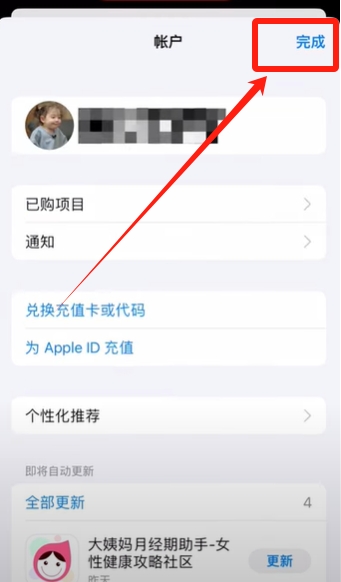
2. After logging in, click [Finish].

What does USDT mean_Factors affecting Tether market confidence_Tether price fluctuations

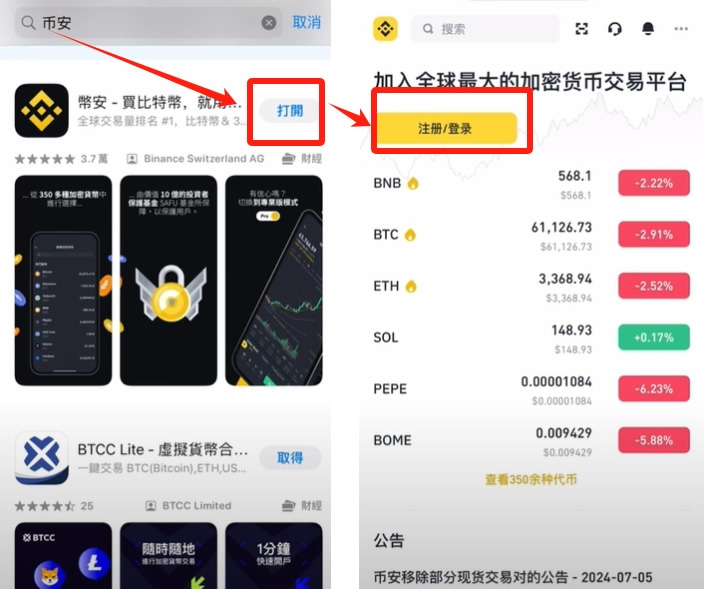
3. Search for "Binance" in the search box. The first one is advertising, we can leave it alone. We find Binance below and click to download.

4. Now our Binance APP has been downloaded successfully, click [Open]. Next we can use Binance normally.
What does USDT mean_Factors affecting Tether market confidence_Tether price fluctuations

Tutorial on Binance account registration and purchasing USDT

1. After downloading, let’s register a Binance account (official registration, official download).

Open the Binance APP, click [Register] on the homepage, click "Create a Binance Account" in the lower left corner, and click [Register via email/mobile phone number]

2. You can directly enter our mobile phone number or email to register an account. You can fill in A0Y8K980 as the referral code here, so that you can get a permanent 20% fee reduction. This will help us save 20% in handling fees for each transaction we make later. It can help us save a lot of money virtually.

3. Complete the KYC identity verification of the account

1. After registering a Binance account and logging in, he will ask us to authenticate our identity. Click [Go to Verification] on the homepage and click [Verify Now]

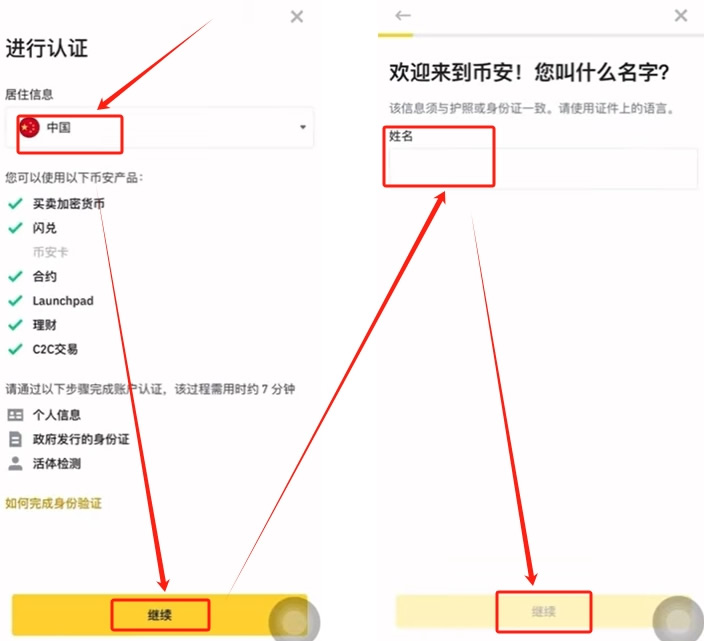
2. Select [China] as your country of residence, click [Continue], fill in your name, and click [Continue]
Tether price fluctuations_What does USDT mean_Factors affecting Tether market confidence

3. Select your nationality again, we just select [China], click [Continue], enter your date of birth, and click [Continue]
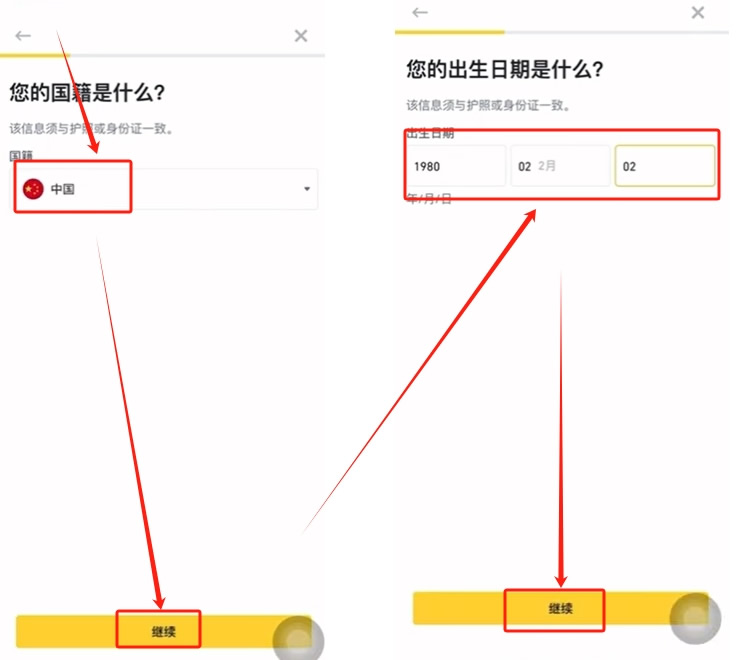
Tether price fluctuations_What does USDT mean_Factors affecting Tether market confidence

4. Select [China] as the document issuing country, select [ID card] as the document type, click [Continue], and then he will ask us to upload photos of the front and back of the ID card. Please upload it. Be sure to use real identity information, because face recognition is needed later.
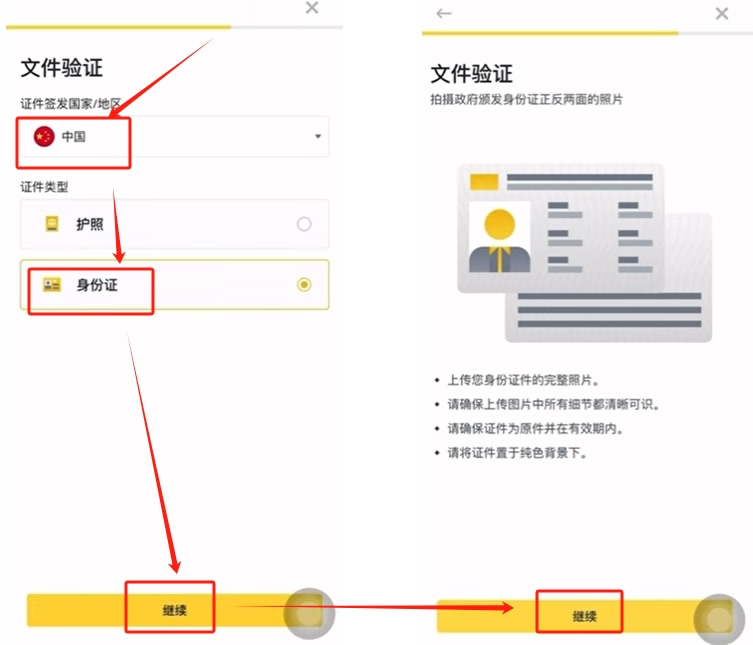
Factors affecting Tether market confidence_What does USDT mean_Tether price fluctuations

4. Security settings (authenticator APP verification)

After the authentication is completed, everyone needs to perform security settings.

1. Click on the small four-square logo in the upper left corner. Click the small gear icon in the upper right corner, scroll down, and find [Account Security]

2. If you use your email to register, the email will be automatically bound for us. We also need to bind the following authenticator APP, click on it. Click [Enable] again, and he will send a verification code to our email. We can go to the email to check.

3. Then he will give us a 16-digit secret key and a QR code. You can copy this secret key or save the QR code, then open Binance Google Authenticator and use the 16-digit key you just copied. Add new authenticator.

4. We copy this 16-digit key, and then open our Google Authenticator. Everyone downloads this Google Authenticator. Be careful not to download the wrong Google Authenticator. Then click the + sign in the lower right corner and enter the setup key.

5. We can fill in the account here casually, and then paste in the secret key we just copied. Click [Add], and now our Google Authenticator verification code has been generated. It's the six digits below. These six digits are our Google verification code. Copy this Google verification code.

6. Return to Binance, click [Next], paste the Google verification code we copied, and click [Submit]. Now our Binance Authenticator APP has been bound.

7. When we return, we can see that there is a small green check mark behind our authenticator APP, which means that we have successfully bound it. After we set up the security settings, our accounts will be safer.
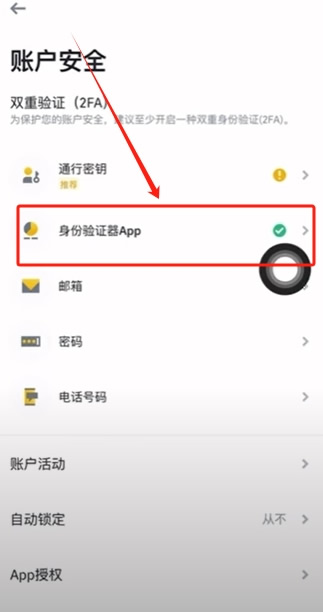
Tether price fluctuations_What does USDT mean_Factors affecting Tether market confidence

After the authentication is completed and the security settings are completed, we can buy coins on Binance.

5. Buy USDT, sell USDT

Buy USDT:

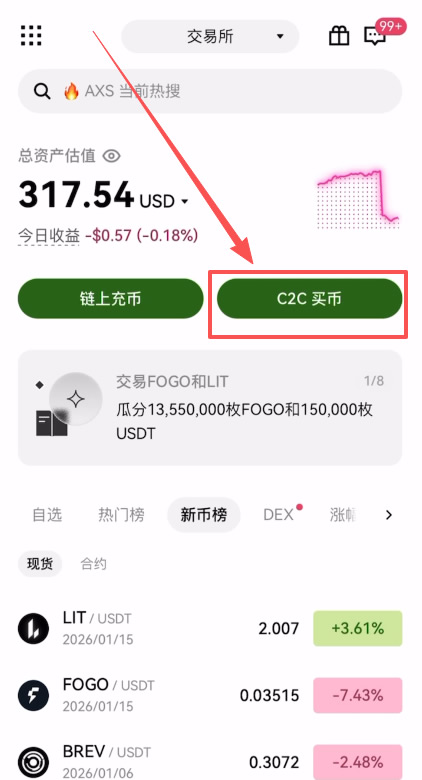
1. Click [Add Funds] on the Binance homepage and select [C2C Transaction].
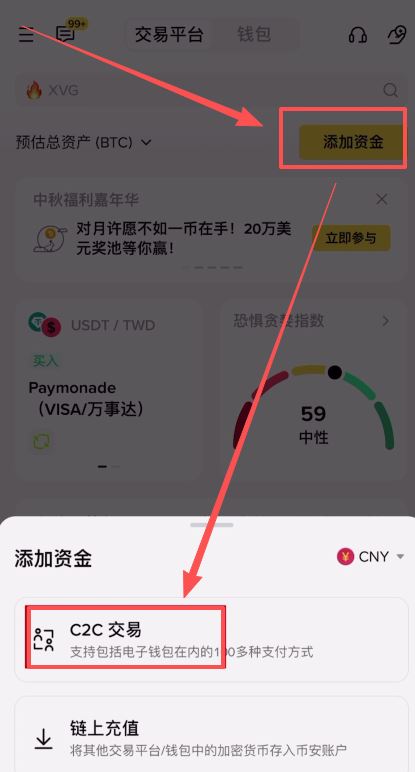
What does USDT mean_Factors affecting Tether market confidence_Tether price fluctuations

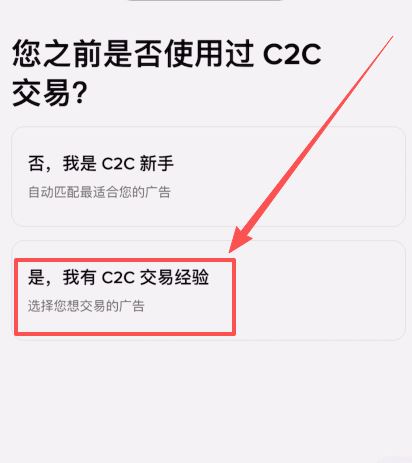
2. For novice users, it will ask us "Have you ever used C2C transactions?", I will skip the novice guidance and select I have experience.
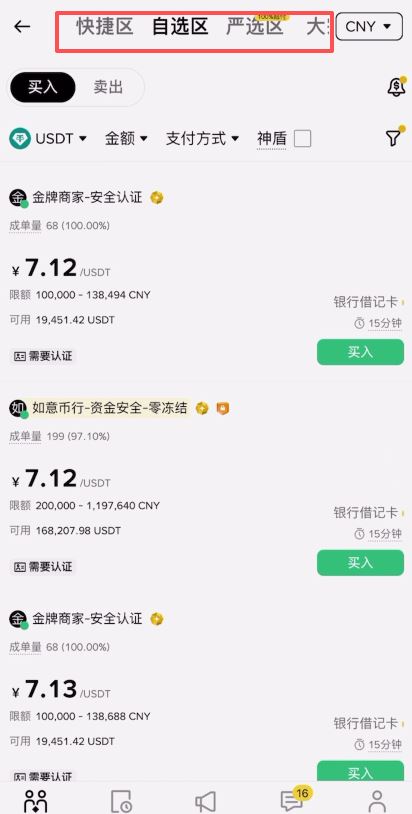
3. After entering, you can see that there are express zones, self-selected zones, strict zones and bulk zones.
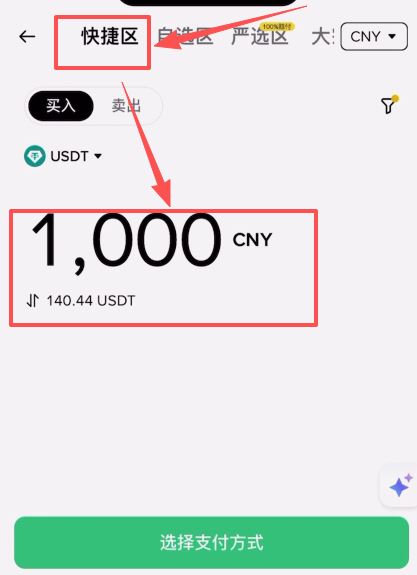
4. As the name suggests, the quick area is more convenient and fast. We directly enter the amount of RMB we want to buy, and then we can buy the corresponding amount of USDT. It calculates for me here that I can buy about 140.44 U for 1,000 yuan.
Factors affecting Tether market confidence_Tether price fluctuations_What does USDT mean

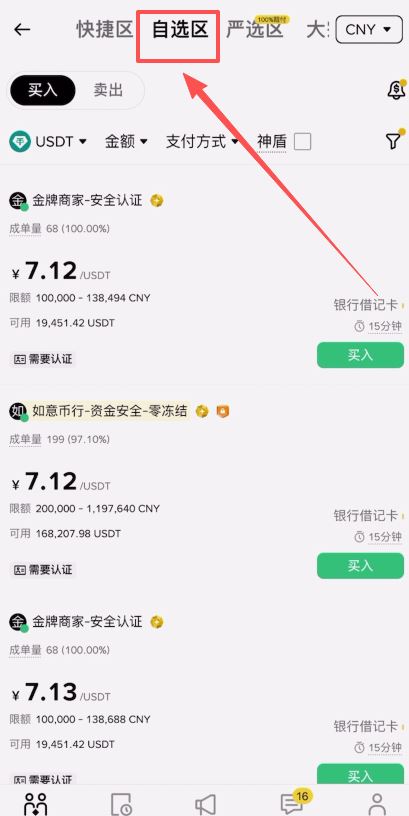
5. The "self-selected area" is a little more complicated, but the self-selected area, the strict area and the bulk area are relatively similar. The difference is that the large area is specifically designed for large-amount transactions, and its limits are generally relatively high.
Factors affecting Tether market confidence_What does USDT mean_Tether price fluctuations

6. The "strict area" is equivalent to the selling area of ​​the self-selected area. The strict area only has the function of selling, which means that it is specifically designed for withdrawals. We can see that it has written a 100% compensation for us here. Because the merchants in Yan District are all Aegis merchants, they have deposited a large amount of deposits on the platform. If something goes wrong during our transactions with them, this will cause our funds to be frozen, our accounts to be blocked, etc. It will compensate us 100%, so when we withdraw money, it is safest to use this strict area.
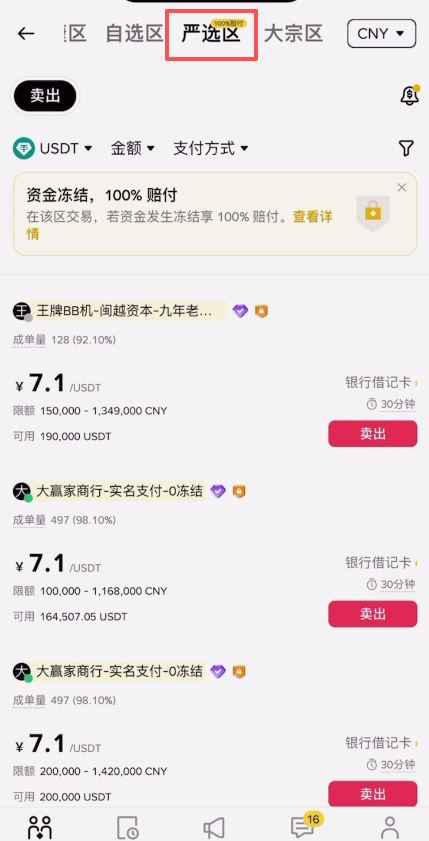
Factors affecting Tether market confidence_What does USDT mean_Tether price fluctuations

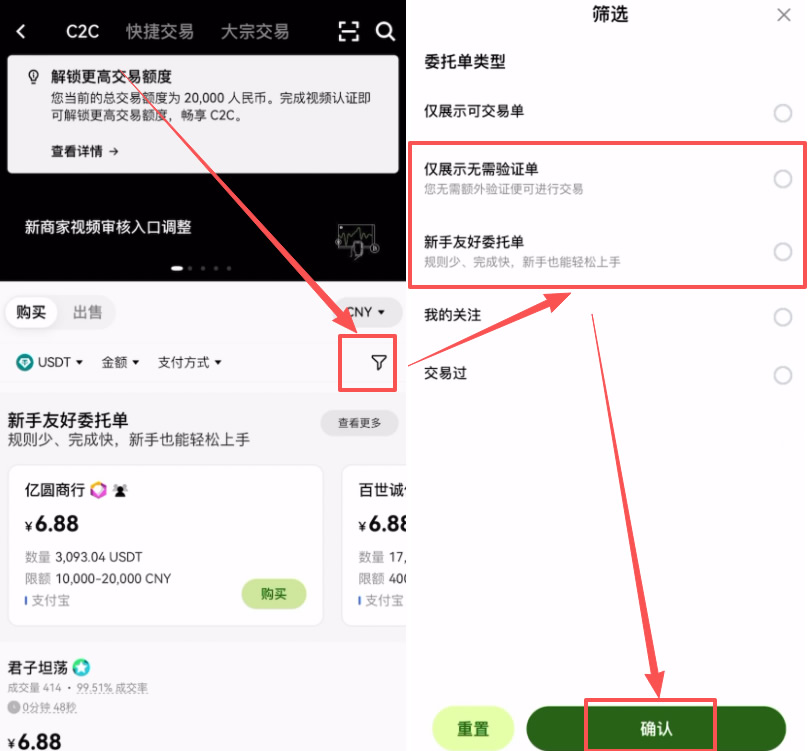
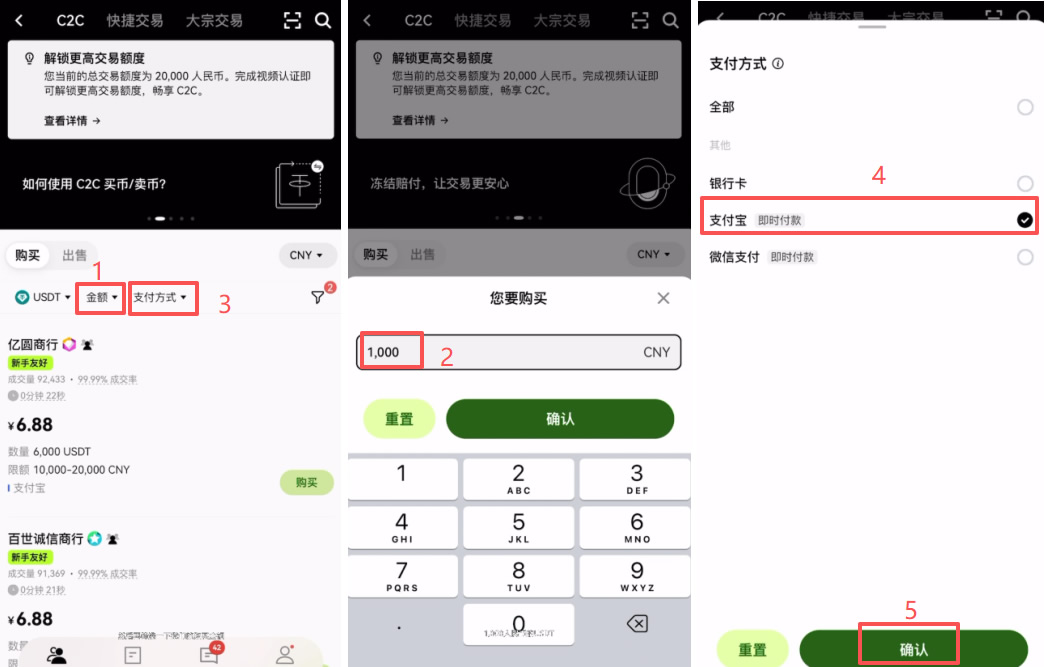
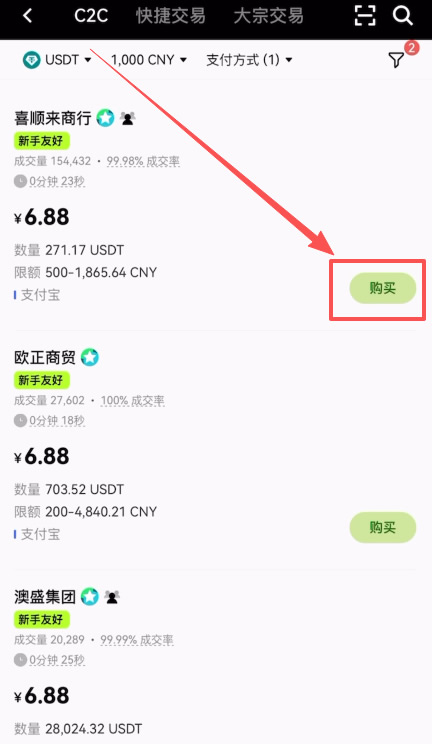
7. When depositing money, we can directly use the buying function in this self-selected area, and then screen some more reliable merchants by ourselves. How to filter? First, we can filter the amount we want to buy, for example, I want to buy 1,000 RMB USDT, and then filter our payment method, for example, I want to pay using WeChat, click [Confirm].
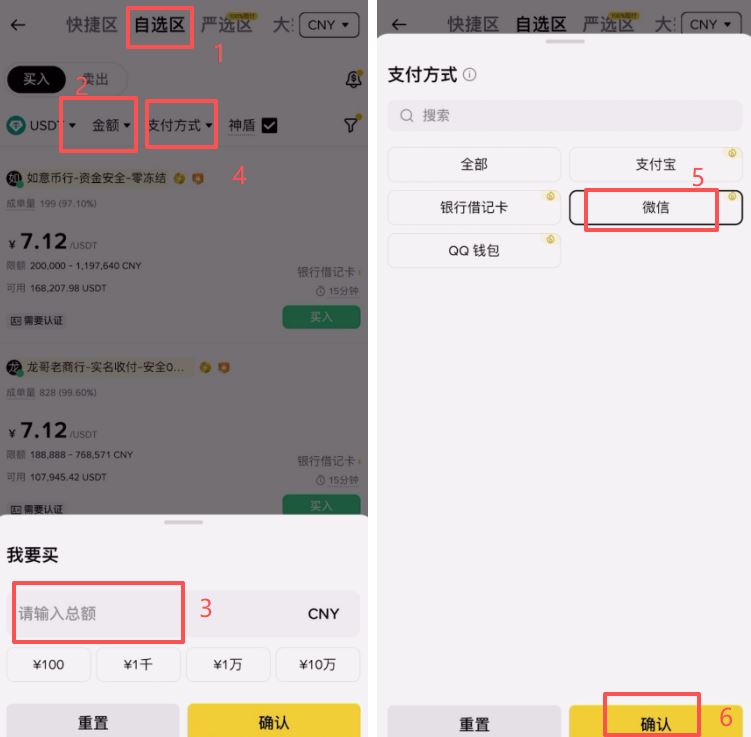
What does USDT mean_Factors affecting Tether market confidence_Tether price fluctuations

8. We check this Aegis, so that we have a relatively high safety factor.
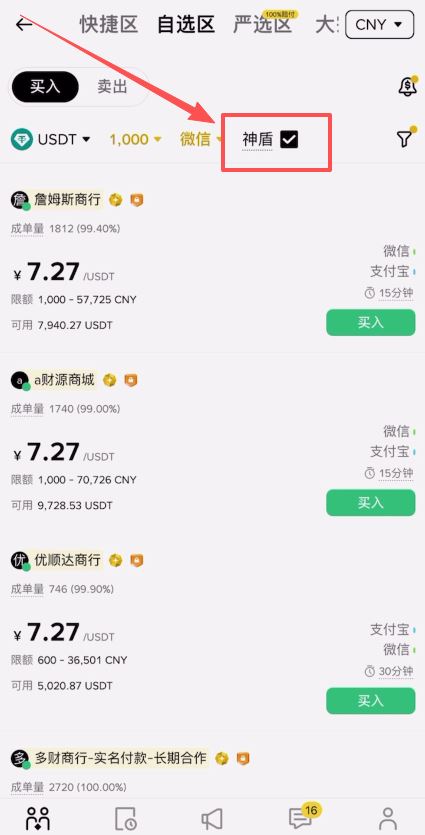
What does USDT mean_Factors affecting Tether market confidence_Tether price fluctuations

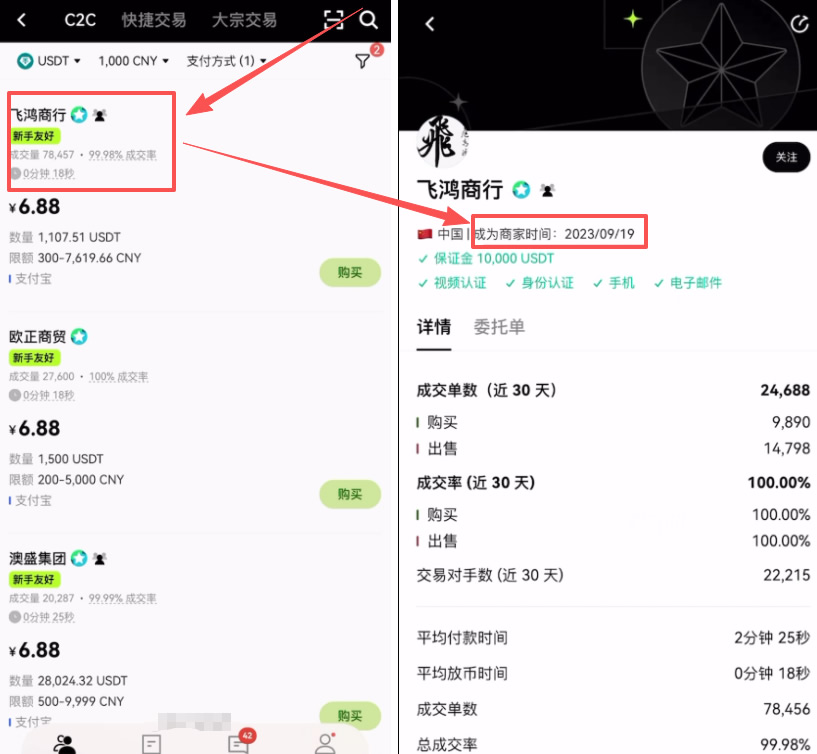
9. Let’s directly look at the following merchants that meet our conditions. The higher the order volume and order rate, the better. Then we click on his homepage to check when he became a merchant. We can see that this merchant's account has been created for more than 1,200 days, and the first transaction is relatively long ago. We need to look for merchants that have been registered for a long time, at least for more than half a year. Because the longer his account survives, it proves that his assets are safer, and he has done so many transactions without any problems. After confirming the transaction with him, we click [Buy] here.

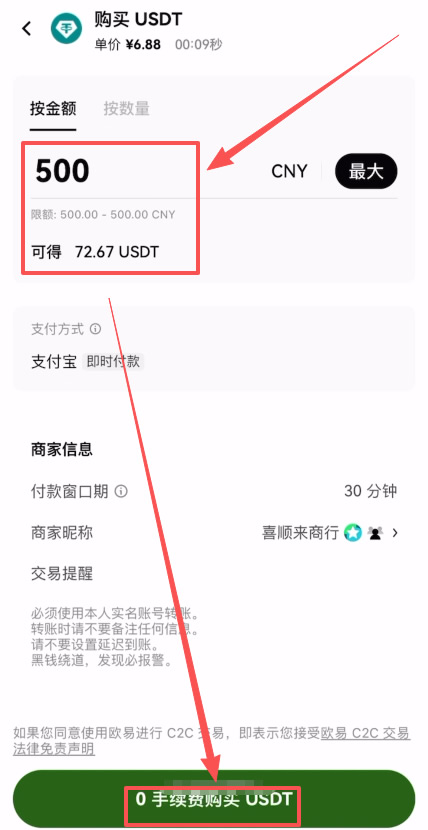
10. After entering the amount we want to purchase, it calculates for us that we can receive 137.55 U, and then click [Place Order].
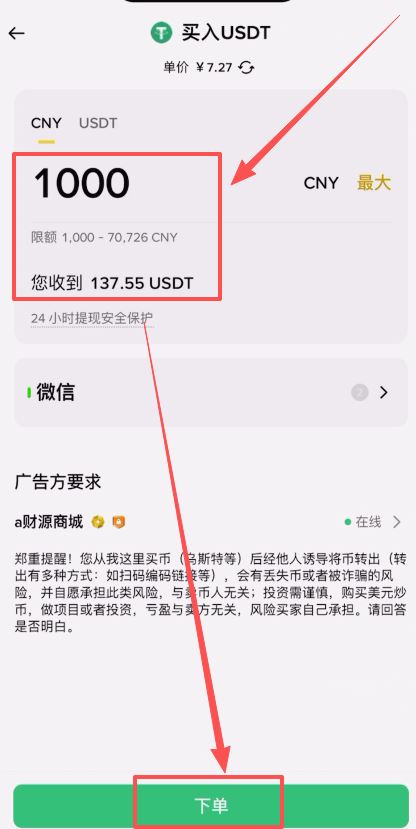
Factors affecting Tether market confidence_Tether price fluctuations_What does USDT mean

11. At this time, our order is generated, and the merchant's name, WeChat account, and payment QR code will be displayed to us. At this time, we need to leave the platform and add his friends in WeChat, or use the scan function to transfer money to him. After the transfer is completed, remember to take a screenshot to keep the voucher, then return to the platform and click [Upload Payment Proof].

12. Upload the screenshot we just took here, and then click [I have completed the payment, notify the seller]. In this way, after the seller receives the money, he will release the coins to us. In this way we have completed a deposit process.

13. However, I would like to remind everyone that you must not make any remarks during the transfer process. You must also use your Binance real-name name, WeChat account or Alipay account under your name to transfer money to others. These are the basic requirements for some transactions. Of course, if there are any problems during the payment process, you can also click [Chat] to communicate with the merchant.

14. After buying USDT, we go to [Assets] in the lower right corner and we can see that he has many accounts here.

Tether (USDT) Review

Most people think USDT is usable, but they still need to be aware of the risks.

Dcard netizens’ opinions PTT netizens’ opinions on Tether (USDT) News Compilation

In recent years, Tether has been closely watched by investors, researchers and the media due to the controversy and turmoil behind it.

Here is a summary of these important news:

Sorting out 1. Issues of financial auditing and real reserves

Tether promises to conduct regular audits to ensure that every USDT is backed by one dollar. However, the accounting firm Friedman LLP, which was originally scheduled to perform the audit, chose to discontinue cooperation in 2018 because the financial information provided by Tether was too simple.

Later, although Tether obtained a report from Freeh Sporkin & Sullivan indicating that it had sufficient bank deposit support, detailed financial data has not been made public. In fact, in 2019, Tether even admitted that only 75% of its reserves were backed by U.S. dollars.

Summary 2. Charges from the New York Prosecutor’s Office

The New York Prosecutor's Office revealed that Tether had no real U.S. dollar reserves for a certain period of time.

In addition, in April 2019, the prosecutor's office accused Tether of using its own reserves to fill an $850 million funding gap of its parent company.

By 2021, the two parties reached a settlement, and Tether agreed to pay a fine of US$85 million, but did not formally admit its fault.

Arrangement 3. Concerns about market manipulation

At the end of 2017, the activities related to Tether and Bitcoin prices attracted attention.

The U.S. Commodity Futures Trading Commission issued subpoenas to Tether and Bitfinex, suspecting that Tether may be manipulating the price of Bitcoin by issuing Tether coins. Research from the University of Texas also found that there is a correlation between the additional issuance of Tether and the rise in Bitcoin prices, raising concerns that Tether may be manipulating the market.

What does USDT mean_Factors affecting Tether market confidence_Tether price fluctuations

Sort out 4. Recent price fluctuations

Tether has recently seen a massive sell-off on several trading platforms, pushing the price slightly below $1.

The chief technology officer of Tether hinted on social media that competitors (such as Binance) may be involved in this fluctuation. At the same time, some analysts also pointed out that Binance may be planning a market attack on Tether, trying to improve the status of its own stable currency through various means.

Tether (USDT) FAQ Question 1. The stable currency UST has plummeted. Is USDT still safe?

The stablecoin TerraUSD (UST) decoupled from the US dollar and its price plummeted, which in turn had a huge impact on the entire cryptocurrency market. This incident has attracted the attention of many investors, and many people have wondered: Is it possible that USDT will follow the same path?

First, we must understand the classification of stablecoins. Stablecoins are divided into three categories: legal currency stablecoins, cryptocurrency stablecoins, and algorithmic stablecoins.

Use a table to let you clearly understand the differences between the three!

Features Fiat Stablecoin Cryptocurrency Support Stablecoin Algorithm Stablecoin

describe

Directly linked to fiat currency, each issued stablecoin is backed by equivalent fiat currency or fiat currency equivalents

Backed by other cryptocurrencies as collateral, the value depends on the collateral cryptocurrency

It does not rely on any actual asset support and uses algorithms and smart contracts to regulate supply to maintain price stability.

Linked assets

Fiat currency (USD, Euro, etc.)

Other cryptocurrencies (Bitcoin,

Ethereum, etc.)

No real asset support

advantage

The price is stable and easy to understand and accept

Decentralization, reducing reliance on traditional financial systems

Fully decentralized and highly flexible

shortcoming

Centralized management is required and there are regulatory and audit risks

High price volatility and may require over-collateralization to maintain value stability

Extremely dependent on algorithm efficiency, facing complexity and predictability issues

Among them, USDT is a "fiat currency stable currency", which means that each USDT is linked to 1 US dollar. Cash reserves are maintained by TEDA Limited in Hong Kong. However, in 2021, the company inadvertently revealed that its physical cash reserves accounted for only 2.94% of total assets. Other major assets include: commercial paper, trust deposits, guaranteed loans and corporate bonds.

In contrast, UST is an "algorithmic stablecoin" whose price is entirely determined by the decentralized algorithm on the Terra protocol, without any form of physical reserves behind it. Stability depends on another token, LUNA, which is a dual-token model. When the price of UST fluctuates, this algorithm will stabilize the price of UST by adjusting the supply and demand of LUNA coins.

But it is this stabilization mechanism that only relies on algorithms that makes UST susceptible to market changes. When the value of UST continues to decline, in order to maintain stability, the price of LUNA begins to fall, and a large number of new LUNA are created, hoping to maintain the value of UST in this way. As a result, the issuance of LUNA coins increased an astonishing 328 times in a short period of time, eventually causing the values ​​of both UST and LUNA to plummet and completely lose their stability.

Although USDT and UST are both stablecoins, their operation methods and the mechanisms behind them are very different. Therefore, the collapse of UST does not directly mean that USDT will have the same risk, but investors still need to remain vigilant about the reserve assets behind it.

Question 2: How to convert USDT into RMB?

The process of converting Tether to RMB includes the following 6 steps:

Special tip: do a small test before trading and withdrawing money to make sure everything works smoothly. In addition, try to choose an exchange with a good reputation and reputation to reduce unnecessary risks.

Recommendations For Various Design Material Websites, Including Excellent Design Case Reference Website Behance, Etc.

Lazy person gallery

Behance Download for Android_Free design material website_Recommended domestic material site

Domestic material sites, you don’t need to register for Shenma to download, just click to download, and there are no ads.

Graphics-Fuel

Free design material website_Recommended domestic material site_Behance Download for Android

There are various free PSD and WEB design materials.

Freebbble

Free design material website_Behance Download for Android_Recommended domestic material site

This is an amazing website that focuses on collecting all kinds of free resources on Dribbble.

VectorHQ

Free design material website_Recommended domestic material site_Behance Download for Android

500,000+ various design materials.

Typography design inspiration materials, albums/WEB/posters, etc.

BEHANCE

Recommended domestic material sites_Free design material website_Behance Download for Android

Excellent design case reference website.

PINTEREST

Free design material website_Recommended domestic material site_Behance Download for Android

petal net

Free design material website_Behance Download for Android_Recommended domestic material site

Accompany you as a designer of life (discover and collect your favorite inspirations, home furnishings, outfits, weddings, food, travel, beautiful pictures, products, etc.).

Dribbble

Similar to Behance, there are various design works from designers around the world.

UI China

Recommended domestic material sites_Free design material website_Behance Download for Android

A platform for displaying the works of various UI/UX masters.

ZCOOL

A gathering place for the works of domestic masters, and also provides downloads of various materials.

Optimal design

Behance Download for Android_Free design material website_Recommended domestic material site

A highly comprehensive design site that provides tutorials/materials/experiences and even recruitment positions.

SDC Designer Website Navigation

Finding material is no longer difficult, and material sources are updated every week.

Download site for free high-quality PPT templates

OfficePLUS, the official online template website for Microsoft Office

Behance Download for Android_Free design material website_Recommended domestic material site

The free templates produced by OFFICE's professional team are all of medium-to-high quality!

Powerful PPT

Free design material website_Behance Download for Android_Recommended domestic material site

An independently operated free template sharing website, all works are indicated with the source and author, which is very reliable.

Download site for paid templates

Envatomarket

The world-famous Envato Market has all kinds of design materials, and the PPT template area even has templates with 40,000+ pages for $20.

show network

Recommended domestic material sites_Free design material website_Behance Download for Android

On the sales platform where I work – Yanjie.com, the trick to find good-looking and practical PPTs is to follow the rankings. You can't go wrong on the first few pages. If you don't like it, you can come to my shop. All PPTs are original templates.

Viewing the sea PPT

Free design material website_Behance Download for Android_Recommended domestic material site

Of course, our study abroad party uses Word the most. Reply to [word] home page to secretly teach you those hidden Word skills that will subvert your outlook. You will rely on them for future papers!

Now that we are talking about ppt… then we can avoid the existence of the great master Qiao Gangzhu. Reply to the [Jobs] homepage to tell you that in front of Steve Jobs, your PPT is just a cloud.

Introduction To Stablecoins, What Is The Largest Stablecoin USDT, And What Is The Market Structure?

It has been more than ten years since the birth of stablecoins, but it was not until recently that Circle, one of its major issuers, was listed on the New York Stock Exchange and its stock price soared eightfold in more than ten days, attracting widespread attention from investors. This article aims to introduce investors to the “magic” capabilities of stablecoins.

What is a stablecoin?

Simply put, a stablecoin is a cryptocurrency and a private currency whose currency value is linked to a stable asset such as a certain legal currency (such as the U.S. dollar), and has the characteristics of stable currency value. As of June 2025, the global stablecoin market value is approximately US$250 billion, and there are more than 200 stablecoins on the market, and this number continues to grow.

USDT (Tether) is currently the largest stablecoin, with a market value of more than 150 billion US dollars, occupying approximately 60% to 62% of the market share. USDT has been issued since 2014 and is pegged to the US dollar at a ratio of 1:1. It can be circulated on multiple mainstream blockchains such as Ethereum, Solana and Tron.

USDC (USD currency) is the second-largest stablecoin in terms of market value. Its market value will reach approximately US$61.5 billion to US$61.7 billion in 2025, with a market share of nearly 23% to 25%. USDC is issued by Circle, which is known for its compliance and transparency and is favored by institutional investors. The United States has the largest number of stablecoin projects, including USDC, USDP, TUSD, etc., and its regulatory system is relatively complete.

At present, the market has formed an "oligopoly" structure dominated by USDT and USDC, which together account for more than 85% of the stablecoin market. Most mainstream stablecoins are issued using a legal currency reserve model, and their reserve assets are mostly cash, U.S. Treasury bonds and short-term reverse repurchase agreements to support currency value stability.

In terms of international regulation and innovation, the U.S. Congress is accelerating legislation and promoting a series of legal processes that are beneficial to the crypto-asset industry, paving the way for the integration of digital assets and traditional finance. Hong Kong, China, has also passed the Stablecoin Bill to establish a robust and comprehensive regulatory framework and encourage institutional innovation through the "Stablecoin Sandbox" model. The European Union is formulating regulations to regulate crypto asset markets such as MiCA, and puts forward higher compliance requirements for stablecoins.

New tools for high returns on capital

Compared with other investment tools, stablecoin investment has the following significant advantages:

First, liquidity advantage. Coinbase Wallet users can obtain an annualized rate of return of approximately 4.7% by holding USDC, and the funds remain highly liquid and can be accessed at any time. This is more flexible than traditional time deposits or bond investments and meets investors' needs for financial freedom.

Second, income stability. The current pledge yield range of USDC on different platforms is 1.16%~10.88%, which is much higher than the low interest rate of traditional bank deposits, bringing investors a more attractive income option.

Third, technological convenience. Relying on blockchain technology, stablecoin investment realizes 24/7 transactions, global transfers and automated income distribution. Taking Coinbase Wallet as an example, USDC income is automatically paid through the Base Layer 2 network every month without a lock-up period. It supports multiple blockchain networks such as Base, Ethereum and Polygon, which greatly facilitates user operations.

Other platforms such as Binance offer annualized returns of up to 10.88% and adopt a flexible staking mechanism. Some decentralized financial platforms (DeFi) such as Trader Joe's specific USDC liquidity pool yields even as high as 211.52%, but high returns are often accompanied by higher risks, and investors need to weigh them carefully.

According to the above framework, the author compiled the following table to help investors fully understand the different profit opportunities and potential risks of stablecoins in the DeFi ecosystem.

The invisibility cloak that moves assets anonymously

Stablecoins enable rapid on-chain transfer of funds around the world, often within minutes, making traditional cross-border fund tracking increasingly difficult. This characteristic of stablecoins makes them widely used to bypass global financial restrictions, including tax evasion, underground gambling, fraud, and other illegal activities.

The latest data shows that stablecoins have become the preferred tool for circumventing traditional financial supervision and money laundering in cryptocurrency activities. In 2024, stablecoins will account for 63% of all cryptocurrency money laundering activities, and have replaced Bitcoin as the main tool for anonymous asset transfers. This is mainly due to the stable currency value and wide acceptance, making it an ideal means to transfer and hide illegal funds.

The biggest challenge in implementing financial regulation of stablecoins is tracking the ownership of funds and their movement. The core feature of blockchain is "pseudonymity" rather than complete anonymity. This means that although the transaction data is open and transparent, the address on the chain is not directly related to the user’s real identity, making it difficult to track the source and flow of funds. Especially against the background that criminals are constantly developing new money laundering techniques, which further increases the difficulty of identification.

For example: Cross-chain bridges: are increasingly used to transfer funds between different blockchains to obfuscate payment paths; privacy coins, such as Monero (XMR), provide stronger anonymity and are preferred by some users; “Peel chains”, which split large amounts of funds into a series of small, difficult-to-trace transactions; virtual currency mixers (Mixers): a common tool for hiding the source and destination of transactions.

Many decentralized finance protocols make heavy use of stablecoins. The lack of a centralized regulator provides additional opportunities for bad actors to use these platforms to launder money. Although various countries and industry organizations have been actively promoting "know your customer" and "anti-money laundering" regulations, requiring stablecoin issuers and exchanges to strengthen identity verification and transaction monitoring, due to their cross-border nature, fast transaction speed, and deep integration with DeFi, the implementation of these regulatory measures still faces many challenges.

To sum up, although regulatory agencies and blockchain analysis companies are continuously strengthening their ability to combat illegal financial activities, the rapid, global and pseudonymous characteristics of cryptocurrency, coupled with the evolving means of money laundering, have indeed made this field a "financial regulatory gray area" that requires continued strengthening of regulatory governance.

Efficient chain with low transaction costs

Stablecoins play a unique role in the cryptocurrency world due to the fact that their prices are pegged to a specific stable asset, such as the U.S. dollar. Not only do they provide the convenience of digital assets, they also circumvent the shortcomings of violent fluctuations in traditional cryptocurrencies (such as Bitcoin, Ethereum). Therefore, stablecoins can be regarded as “efficient chains with low transaction costs” in many aspects, especially in the following aspects.

First, the transaction speed is fast and uninterrupted 24/7.

Traditional bank transfers, especially international remittances, often take hours or even days to clear and are subject to bank working hours, holidays, etc. Stablecoin transactions are built on blockchain technology. As long as the network is not congested, transactions can be completed almost instantly no matter when and where. For example, a foreign trade company located in China needs to pay a payment to a US supplier. If it is transferred through a traditional bank wire, it may take 2 to 5 working days, and may be delayed due to time differences and bank processing time. But if both parties accept payment in stablecoins such as USDT or USDC, the payment can be sent from the digital wallet in China to the digital wallet of the US provider within minutes, with no time limit. In addition, suppose a multinational enterprise needs to allocate funds urgently at night or on weekends to deal with emergencies. The traditional banking system cannot meet the immediate demand, but the use of stable coins can transfer funds anytime and anywhere.

Second, transaction fees are low, especially compared to international remittances.

Although the blockchain transaction itself will generate "Gas fees" (network fees), this fee is usually much lower than the SWIFT fees of traditional bank international remittances, intermediary bank fees or third-party payment platform fees. For large transactions, the relative cost advantage of stablecoins is particularly obvious. For example, if a freelancer in Hong Kong provides services to customers in the United States, if the customer pays through PayPal or traditional bank transfer, he may be charged a handling fee of 3% to 5% or even higher, and there will also be a large exchange rate conversion loss. If payment is made through USDT, the gas fee for a single transaction may be only a few to more than ten dollars when the Ethereum network is not severely congested. On more efficient blockchains such as Tron or Solana, the fee may be as low as a few cents. For a payment of hundreds or thousands of dollars, the transaction cost is extremely low. Although stablecoin payments are not yet popular at the retail level, in some cryptocurrency-native communities or specific scenarios, the fees for using stablecoins for small payments are lower than some credit card fees.

Third, it is censorship-resistant and permissionless.

Stablecoin transactions are conducted on a permissionless public blockchain, meaning anyone can send and receive stablecoins without approval from a bank or financial institution. This provides an important alternative for some users in areas subject to strict capital controls or inadequate financial infrastructure. For example, in some countries, individuals or companies are subject to strict restrictions on transferring funds abroad. Through stablecoins, it is theoretically possible to bypass these restrictions and conduct international capital flows under the premise of compliance.

Fourth, stability and predictability.

Compared with more volatile cryptocurrencies such as Bitcoin, stablecoins have extremely small price fluctuations, making them a more reliable unit of account and value storage, significantly reducing the risks of currency price fluctuations for both parties to the transaction. If a business accepts Bitcoin as a means of payment, significant fluctuations in the price of Bitcoin between the time it is received and the time it is converted into fiat currency could cause the business to incur losses. If you use stable currencies such as USDT or USDC, after the company receives the payment, its value is almost the same as the US dollar, thus effectively avoiding exchange rate risks.
Fifth, new financial instruments to serve high-value, long-term industrial projects.

Stablecoins provide a new financial tool for high-value, long-term industrial projects, and are particularly suitable for project management involving many participants and complex capital chains. Based on the programmable payment and smart contract technology of stablecoins, fund allocation at each stage of the project can be automatically linked to the contract agreement, and payments are automatically made according to progress nodes, thereby effectively reducing trust costs and default risks. Multinational participants can realize the free flow of global funds through stablecoins, avoid the high costs and delays of traditional cross-border settlements, and improve financial security and compliance with on-chain transparent supervision. This brings a more efficient and controllable funding operation model to long-term projects.
Although stablecoins also face regulatory challenges, some centralization risks, and on-chain network congestion leading to rising handling fees, their fast, low-cost, and permissionless characteristics of global transactions make them an efficient tool that cannot be ignored in the current financial field. Especially in scenarios such as cross-border payments, international settlements, and circumvention of traditional financial barriers, the advantages of stablecoins have become increasingly apparent.

(The author is a professor of economics at the University of Maryland)

Introduction To Mainstream Currencies In The Currency Circle: What Are Bitcoin And Ethereum, And What Are Their Characteristics?

Today I will mainly take you to understand some of the mainstream currencies in the currency circle~

1. Bitcoin

Bitcoin is the world's first decentralized digital currency, born when Satoshi Nakamoto published his white paper in 2008. The biggest features of Bitcoin are decentralization and blockchain technology. The total amount of Bitcoin is limited, only 21 million, so it is also called "digital gold".

Currently the most widely used digital currency, it was born on January 3, 2009. It is a peer-to-peer (P2P) digital cryptocurrency with a total of 21 million coins. The Bitcoin network releases a certain number of coins every 10 minutes and is expected to reach its limit in 2140.

Bitcoin’s transaction speed is fast, fees are low, and it has high anonymity and security.

What does USDT mean_The mainstream currency in the currency circle_Bitcoin characteristics

2. Ethereum

Ethereum is an open source blockchain platform designed to enable the development and deployment of smart contracts and decentralized applications. It features the use of a digital currency called Ether and can also execute smart contract code. Born in 2015, it was created by young programmer Vitalik Buterin. He gained some attention in the Bitcoin community, but felt that Bitcoin's capabilities were limited and began working on a new blockchain platform. As a development result of Buterin, Ethereum has received widespread attention and recognition in the field of cryptocurrency and blockchain.

Ethereum allows developers to write and deploy smart contracts to automate transactions and contract execution. It also provides a platform that allows developers to build decentralized applications that do not rely on centralized servers or service providers.

The advantages of Ethereum are fast transaction speed, low fees, programmability and flexibility, so it is widely used in blockchain games, finance, supply chain and other fields.

What does USDT mean_The mainstream currency in the currency circle_Bitcoin characteristics

3. USDT (Tether)

USDT is an encrypted stable currency based on blockchain technology. The token name is "USD Tether" and is pegged to the US dollar. 1 USDT = 1 US dollar. The biggest feature of USDT is its stable value, which can be used for transactions in the currency circle and can also be exchanged between digital currency and legal currency.

USDT was originally launched in 2014 by a company called Realcoin, which later changed its name to Tether. Tether launched USDT based on the Bitcoin blockchain in 2015, and has since launched USDT on other chains such as Ethereum and TRON.

The main role of USDT is to provide a stable digital currency whose value is always anchored to the US dollar. This allows users to trade in USD values ​​in the cryptocurrency market without having to worry about cryptocurrency price fluctuations. USDT is also commonly used for transfers and transactions on cryptocurrency trading platforms, as well as for hedging, lending and other financial operations. In some cases, USDT can also be used as a replacement for traditional bank accounts, as it can act as a kind of digital dollar. However, it should be noted that USDT is not risk-free, and its value and market operation are also highly controversial. Investors need to be cautious when using it.

The mainstream currency in the currency circle_What does USDT mean_Bitcoin characteristics

4. Litecoin

Litecoin is also a cryptocurrency based on decentralized blockchain technology. It is similar to Bitcoin and was created in 2011 by a former Google engineer Charlie Lee. Litecoin began as a fork of Bitcoin with the purpose of providing a faster and cheaper transaction solution.

Litecoin functions similarly to other cryptocurrencies. It can be used as a decentralized digital currency for transactions, payments, and store of value, as well as for investing and trading. Unlike Bitcoin, Litecoin has shorter transaction confirmation times, faster block generation, and lower handling fees, so it may be more suitable as a payment instrument in some cases. Additionally, Litecoin can also be used for fast, low-cost cross-border transfers due to its short network confirmation times and low fees.

It should be noted that the cryptocurrency market is highly volatile and everyone should invest with caution.

The mainstream currency in the currency circle_What does USDT mean_Bitcoin characteristics

5. Grapefruit Coin EOS

EOS is an independent blockchain platform developed by Block.One and officially launched in 2018. It aims to provide a platform for decentralized application development and deployment, featuring high performance, flexibility and ease of use. One of the design goals of EOS is to solve the scalability, user-friendliness and security issues in actual blockchain systems.

The main features and functions of EOS include:

1. Decentralized Applications (DApps): EOS provides high-performance blockchain infrastructure, encouraging and supporting developers to build various decentralized applications, including games, financial services, social media, etc.

2. Democratic governance: EOS adopts the DPoS (Delegated Proof of Stake) consensus mechanism and provides a democratic governance system that allows voters holding tokens to jointly participate in the management and decision-making of the network. DPOS is similar to the U.S. parliamentary system. Each super node is similar to a member of the parliament. There are 21 super nodes in total, and they are jointly voted by all EOS holders. This "parliament" has great decision-making power over the entire EOS ecosystem. If a certain plan is to be implemented, 15 votes from the super nodes are required before it can be implemented.

3. Platform scalability: EOS aims to provide users with high-performance, high-throughput, low-latency blockchain infrastructure to support large-scale applications and users.

Overall, EOS is an open blockchain platform designed to support high-performance decentralized application development and attract developers and users by providing democratic governance and scalability solutions.

The above is an introduction to the mainstream currencies in the currency circle. Each digital currency has its own unique characteristics and application areas. I hope that through this article, everyone can better understand the characteristics and potential value of the mainstream currencies in the currency circle. In the end, investment is risky, so everyone needs to be cautious!

His Own App Ranks Among The Top 20 Most Downloaded Apps In The U.S., But The Founder Is Worried

Behance Download for Android_Jingna Zhang Founder's Entrepreneurship Story_Cara App Overseas United States Download Volume Analysis

The number of daily downloads in the United States exceeds Threads, WhatsApp, Facebook and Telegram, but the founders are not happy.

Jingna Zhang Founder's Entrepreneurship Story_Cara App Overseas United States Download Volume Analysis_Behance Download for Android

Going overseas is a process that tests the comprehensive capabilities of the team.

Going overseas in the United States requires a team with at least one skill in product, operation, growth and other dimensions.

Getting results in overseas studies in the United States is a combination of the right time, place, and people.

Being able to advance into the top 5 of the US App Store social rankings and the top 20 of the total download list is a matter of pride for any start-up company, but Jingna Zhang, founder of the non-AI picture community Cara, is happy and pained.

Jingna Zhang expressed her joy at gaining 300,000 users on Instagram a few days ago, but at the same time expressed her worries about paying $13,500 per month. At the same time, she also posted the cloud computing bill email she received on her platform, with the current amount to be paid being US$96,000.

Not only that, in just 10 days from June 3 to June 13, Cara's user base increased from 300,000 to 900,000 without advertising.

According to Diandian data, Cara, a photo community launched in October 2023, has received 570,000 downloads in the App Store alone in the past 30 days. The top five download markets are the United States, the United Kingdom, Canada, Germany and France.

In fact, from the perspective of product design alone, Cara and Twitter are at least "direct relatives", which is why there is such a similarity.

In addition, from the perspective of the positioning of the picture community, there are integrated social media such as Instagram and Pinterest in the larger overseas countries, and picture platforms such as Behance and DeviantArt in the smaller ones. So why does Cara enter the public eye?

The high consistency between the founder and the product makes Cara the only one in the world.

This starts with the resistance of some creators to AI since the launch of ChatGPT and Midjourney.

Due to work reasons, we are fortunate to have contact with creators and platforms, and understand everyone's attitude towards AI content from different perspectives:

(1) Some creators believe that AI is a good auxiliary tool that can complete drafts of ideas at a lower cost, or complete some preliminary work to improve work efficiency;

(2) Another group of creators believe that most of the content generated by AI is trained based on existing content. In particular, the creative pictures generated by AI are basically "dismemberment and reorganization" of the works of multiple artists/creators. This is unacceptable behavior that disrespects creativity and copyright;

(3) Some platform parties believe that: We allow AI and non-AI content to coexist. Human creativity and thinking will always have irreplaceable brilliance, but AI content can indeed be a good content supplement, and can help more people who have ideas for creativity but lack the ability to implement them to realize what they want, and will face content with an attitude of development, tolerance, review, and coexistence;

(4) Another part of the platform believes that protecting the creative passion and copyright of creators is protecting the entire content ecosystem. When AI content floods the entire social media, it is when human creativity is exhausted.

Obviously as a conservative, the non-AI picture community Cara has found a user group that holds the same attitude as itself. The main reasons for being able to quickly verify needs and gain user approval are as follows:

1. Jingna Zhang, the founder of Cara, is an artistic and creative practitioner herself and a well-known photographer. Jingna Zhang was born in Beijing and grew up in Singapore. Her photography works have been published in multiple national editions of fashion magazines such as "VOGUE", "Harper's Bazaar", and "ELLE". She has collaborated with many models, actors, and celebrities around the world, and has won many international awards.

Therefore, from this perspective, Jingna Zhang can fully understand and represent the needs of Cara’s main user groups. In other words, Jingna Zhang’s past experience makes creators and users believe that their interests are consistent.

2. Jingna Zhang has participated in many works rights protections. She first filed a lawsuit against plagiarized works in 2022 and won the appeal in May 2024. Later, it participated in a class action lawsuit against Stable Diffusion, Google and other AI mapping tools, which reflected its determination to protect copyright.

3. Another trigger is that Mark Zuckerberg made it clear that he will use pictures posted by users on Instagram and Facebook to train models without the user’s consent.

But in fact, the reason why many creators and artists are willing to publish their works on Meta's social media platforms is obviously to increase their visibility and find potential customers.

Obviously, Meta's AI policy will affect the development of creators to some extent, so the confrontation has gradually heated up in the past period of time.

This time, the growth of Cara and the user's resistance to Meta AI's mapping are not just pure community resonance, but also a confrontation of interests.

At present, many artists, graphic designers, painters, illustrators, 3D modelers, creators and users who support non-AI content have joined Cara. From the author's observation, the quality of the pictures uploaded by users is indeed relatively high and creative.

Cara product screenshots

And judging from the likes and forwarding of user works, the 900,000 user data announced by the founder is highly authentic. The number of likes on the homepage of the works is more than 300, and some works have even been liked nearly 10,000 times. High-quality works and rich creativity are important labels given to Cara by users.

In addition, as a social media platform, Cara also demonstrates the unique inclusiveness of early products. Users can follow the homepage and timeline to view the content posted by the other party, and can also click to view the content the other party likes and the other party's personal introduction details.

Many developers have attached their official website, personal blog, or links to Instagram, X, Discord, etc. in their introductions and personal introductions. Users can also directly send private messages to the creators for more detailed communication.

In addition, Cara has also integrated recruitment functions into its products. Currently, 199 relevant positions are being recruited through the Cara platform. Judging from the details, the recruitment positions are highly overlapped with the Cara population.

The anti-AI community may not be as strict as imagined

Despite this, Cara only received a score of 4.1 on the App Store. This score is indeed not high among social products, especially emerging social products that do not have monetization methods. After sorting out the reviews, we found that user dissatisfaction is mainly concentrated in the following aspects:

.The product stability is not strong, and multiple users reported that it often crashes to the login page. Speculation may be related to the sudden influx of large numbers of users exceeding the server capacity.

.NSFW review is not perfect, and many users have reported that Cara's NSFW is suspected of being overcorrected. The uploaded tattoo patterns and safety works are occasionally judged to be non-compliant content and cannot be uploaded.

.AI filtering capability is not strong enough. Some users reported that some obvious AI-style content can still be found in the platform, which is not in line with the positioning.

.It is not convenient enough to upload the portfolio, and it cannot be more convenient to classify different series of works.

But in fact, more users are tolerant of the various problems currently occurring in Cara. These users believe that as an emerging social media platform, it is normal for Cara to have various problems. The most important thing is that its anti-AI image positioning is the most rare.


In fact, in addition to Cara, which is obviously opposed, various social media platforms have also begun to strengthen the monitoring of AI content. Facebook, Instagram, and LinkedIn all require users to clearly mark when uploading or publishing related content generated by AI. They hope that while using AI to open up imagination, the boundaries between virtual and reality will not be blurred.

However, due to filtering technology, it is still based more on user consciousness. This is why there are still AI images slipping through the clear-cut anti-AI Cara platform. So how does Cara protect the platform from AI "infringement"?

First, Cara will label all uploaded works as "NoAI" to resist data capture by AI crawlers. Cara describes this form as an "uninvited" dialogue with AI.

Second, Cara encourages users to use Glaze, developed by the SAND Laboratory at the University of Chicago, to protect works by adding invisible pixels to them.

Third, by cooperating with the third-party platform Hive, we monitor and restrict users from uploading AI-generated content. According to the official website information, Hive uses image recognition algorithms, multi-mode detection, model training and real-time detection to determine whether an image is generated by AI.

In layman's terms, when a user uploads a photo to Cara, Hive will analyze the texture, pixel distribution and pattern of the image. The Hive model will use the captured information to determine whether the image was generated by mainstream models such as DALL-E, Midjourney, Stable Diffusion, etc., and compare it with known AI images to finally give a confidence score. If it exceeds a certain threshold, it will be judged as AI-generated and will not be allowed to be published to the platform.

If users have objections to the review results, they can also send an email to Cara officials to apply for reconsideration.

However, there is currently no unified opinion on Hive's detection capabilities in the market. Some users even left a message in the Reddit community that "Hive is Cara's biggest weakness." Some users pointed out that "all the ones on the market are not good. Experienced people can escape detection immediately, but Hive may be 1% better than its competitors."

In any case, the highly unified anti-AI persona of founders Jingna Zhang and Cara is indeed very distinctive in the current market.

Although global capital is currently slowing down its investment in AI projects, and no truly explosive AI applications have emerged for the time being, there are still a large number of practitioners who firmly believe that the future of AI applications is not too far away. The anti-AI platform Cara’s rise to the top of the list also reflects some users’ attitudes and concerns about AI to some extent.

The author tried to search with the keyword "anti-AI" on Chrome and ChatGPT, and found that although there are many anti-AI posts, updates, and discussions on the market, anti-AI social media applications are indeed unique.

Regardless of AI access or not, Cara's appearance once again proves the importance of "finding product differences". Even in the picture community track surrounded by tigers and wolves, there are still new players who can come out of the circle. I know it is difficult, but many times it may be more important to re-enter the track from a different angle than to work harder.

Cara’s future will be accompanied by money burning, manpower shortage, and difficulty in monetization

Although initial results have been achieved, now is not the time to celebrate.

Cara now has several thorny problems that need to be solved:

(1) As more and more users register and use, the cost of Cara’s cloud services and other third-party services will become higher and higher;

(2) As of now, except for voluntary rewards from users who “buy a cup of coffee”, Cara has not set up a monetization method. If it wants to continue operating, it must either make money or raise money;

(3) Cara has only had four or five full-time employees in the past year, and until recently some volunteers and part-time employees have appeared, but it is not sure who will stay. The current official website shows that Cara is recruiting React engineers, React Native engineers, graphic designers, writers, moderators and QA testers.

Looking for people and money are urgent. In fact, it’s easy to find people. In the current talent market, it is theoretically easy to find people with experience working on X, Instagram and other platforms, but the premise is that the product needs to have stable development, and this comes back to “money”.

At present, the main monetization methods of picture social platforms include advertising, subscriptions, rewards, and delivery of goods (live broadcast, shop), etc.

Some users pointed out in Jingna Zhang’s Cara dynamic comments that “advertising can be added to alleviate economic pressure. I support Cara very much and hope you can continue to operate it.” However, more users immediately retorted, “If advertising is added, Cara will sooner or later become the same platform as Instagram, so where will we escape then?”

In fact, to a certain extent, Cara is facing the same predicament as BeReal before it. BeReal has tens of millions of users, good user retention, and high user praise. However, it can neither raise money nor make money. There were several reports that it may cease operations. Until June 11, Voodoo spent 500 million euros to acquire BeReal, and the deal was reached through deferred payment.

You must know that BeReal has 40 million MAU. Although the later data is not stable or even declining, you must know that its number of days on the list in 2022 will even exceed TikTok. On the other hand, although Cara is on the rise, it has only reached 1 million registered users.

With the same picture community, the same anti-Instagram (AI), and the same being placed here by users, Cara’s path to monetization may not be simple.

I don’t know if Cara will try to start an art trading business or engage in business cooperation (such as finding a designer) in the future, but frankly speaking, the business of professional photo entrepreneurs that Cara targets is not easy to do.

But no matter what, the fact that another Chinese woman’s entrepreneurial product has made it to the Top 20 in the U.S. download list is another incentive for overseas entrepreneurs.

Jingna Zhang once wrote in her personal blog after winning the lawsuit, "In the past two years, I have been harassed because of my gender, race, and identity as a photographer. My address and personal information have been doxxed. I am exhausted but unwilling to give up because I believe justice will come. The final result also proves that copyright belongs to creators like us who create with heart."

Well, I think Cara’s departure from the industry is also a candy given by God to Jingna Zhang. I also hope that every practitioner who goes overseas will have the opportunity to get his or her own candy.

Copyright-free Free Video Material Website 1-10

1. pexels

Link:

https://www.pexels.com/zh-cn/videos/ (can be accessed for personal testing)

A free and high-definition video material website. All videos provided on the site support free commercial use. The video types provided include business, seaside, sunset, people, seasons, festivals, scenery, animals, flowers, etc.

Behance Download for Android_Free HD video material website_Commercial video material platform

2. Coverr

Link: https://coverr.co/ (accessible for personal testing)

A slightly niche video sharing platform that shares a variety of short video materials.

3.Pond5

Link: https://www.pond5.com/ (accessible for personal testing)

This platform also contains a variety of different resources including video, audio, and pictures, but the video materials are of the highest quality.

4.stockio

Link: https://www.stockio.com/ (accessible for personal testing)

It is the largest community video material website in foreign countries, covering hundreds of styles of video materials. You can even find a lot of free photos, icons, fonts and other materials here. When you open the homepage and slide down the video page, you can see many high-definition videos. It also supports click-to-preview effects.

Behance Download for Android_Commercial video material platform_Free HD video material website

5.isorepublic

Link: https://isorepublic.com/ (Accessible for personal testing, sometimes you need to visit several times)

A video material website that provides more than a dozen categories. All videos support personal and commercial use, with no limit on the number of downloads. The video styles provided include beach, abstract, nature, people, science fiction, technology, animal and other videos.

Commercial video material platform_Free HD video material website_Behance Download for Android

6. DISTILL

Link: https://wedistill.io/ (accessible for personal testing)

A foreign website that provides high-definition video materials for free, supporting free commercial and personal use, and the videos do not have any copyright. All videos on the webpage are licensed for free by CCO. Downloaded videos can be modified, reproduced, copied, etc. and used in personal videos.

Commercial video material platform_Free HD video material website_Behance Download for Android

7.Vimeo

Link: www.vimeo.com (Access failed, address not found)

Commercial video material platform_Free HD video material website_Behance Download for Android

Vimeo is a free material resource library specially provided for users. As a well-known foreign video sharing platform, Vimeo can be said to have given a lot of benefits to editors. It supports users to upload high-definition videos and can download them freely. Many foreign personal video producers will use this website to share their works. Platforms such as Behance can also embed Vimeo links in their websites, which is very convenient. There are also a huge number of creative videos in Vimeo. Students who need inspiration can browse more, there are many excellent works.


8.Ignitemotion

Link:

https://www.ignitemotion.com/ (Accessible for personal testing)

A free video material platform based on technology style, which contains a large number of technology and space elements, as well as dynamic video effects produced by AE.

9. mixkit

Link: https://mixkit.co/ (accessible for personal testing)

A completely free and copyright-free video material website that not only provides rich material styles, but also provides a lot of audio materials. The video material styles provided include simplicity, scenery, characters, animals, romance, etc. You can also directly search for the video materials you need based on tags.

10.mazwai

Link: https://mazwai.com/ (accessible for personal testing)

A website that specializes in providing various video editing materials, covering a lot of high-quality video materials related to movie styles, animations, scenery, characters, etc., and also provides detailed parameters of the videos. All videos are basically HDR high-definition

Behance Download for Android_Commercial video material platform_Free HD video material website

Forward To Headlines

The rise of quasi-one-way relationships_Behance Download for Android_The blurring of social media relationships_The rise of quasi-one-way relationships

Behance Download for Android_The blurring of social media relationships_The rise of quasi-one-way relationships

© Juanjo Gasull

Leviathan Press:

Perhaps our social patterns have undergone profound changes in the past decade or so. What I mean is that with those friends or colleagues who have a relatively good relationship, the interaction mode between each other has quietly transferred completely or partially to purely online: this includes the social media you use together, and each other's knowledge of each other's life dynamics largely relies on updates in the circle of friends. Unless there is a topic you particularly want to chat about, it seems that voice chat mode is rarely enabled.

On the other hand, social media will push us a dizzying variety of information streams through algorithms – which are mixed with a lot of junk information that is useless to you, and once you stay on a certain video for a while, subsequent algorithms will continuously push you more such information. This kind of passive consumption results in endless scrolling – which is one of the main purposes of social platforms.

Search [Leviathan Playlist] on NetEase Cloud Music to keep up without getting lost.

Behance Download for Android_The blurring of social media relationships_The rise of quasi-one-way relationships

All of my relationships exist, at least in part, on my phone, and they are forced to share space with everything else that happens on my phone. Lately, I've been getting the feeling that the relationship pieces that exist on screen seem increasingly indistinguishable from the other content I'm consuming there.

There's a lot going on in my phone. It’s always trying to sell me something. Sometimes, they try to defraud me. There are games, videos, TV shows, movies, news, fitness trackers, podcasts, books, music, shopping, maps, work software, general web browsing, and an app I was forced to download just to use the doorbell. Of course, it also includes all my social interactions that are not face-to-face or correspondence. (Even face-to-face interactions—unless I bump into someone on the street—are likely planned via a smartphone.)

© Pinterest

So when my phone dings or buzzes with those mating calls, it could be bringing updates from my loved ones, or it could be showing me corporate notifications that I never asked for, hungry for my attention. When I pick up my phone, content and communication appear in similar forms—notifications, social media posts, vertical videos—all mixed together. Samuel Hardman Taylor, a professor at the University of Illinois at Chicago who studies social media, told me that as interactions with loved ones converge with various other forms of media on smartphones, “our relationships are becoming part of this consumer behavior.” As phones become more of an entertainment hub, using them for social interaction becomes more of a dispensation. And identifying my loved ones in that constant stream of cell phone messages requires extra effort.

Since the inception of social media, ordinary people have been using it to showcase their lives and treat their loved ones as viewers. But now, social media is eating into the market share of traditional media, eating into the time people (especially younger generations) used to spend watching TV and movies, and reshaping itself as a broadcast platform rather than an online platform. In the process, social media has become less social. These sites no longer seem to care if people with few followers and lack of influence post anything or reply to anyone as long as they keep scrolling.

As social media no longer connects users with acquaintances, but instead pushes artificial intelligence garbage and short videos from unknown sources accurately pushed by algorithms, a sense of dissociation arises. My friends and family's posts are still there, but they're buried under a torrent of spam and ads. One moment it’s an ad for washable ballet flats, the next it’s a photo of my friend’s baby, then a baby I don’t know performing some meme-worthy antics, then a video about how terrible millennials are in high-waisted jeans, a video of my friend looking sexy in high-waisted jeans, an ad for trendy jeans, and a sponsored ad for a diet pill so you can wear the jeans you wore in high school that are suddenly popular again.

All of this is consumed passively, page by page.

Behance Download for Android_The blurring of social media relationships_The rise of quasi-one-way relationships

© Behance

This more passive social media experience has added an almost parasocial feel to some of my relationships. The so-called "quasi-one-way relationship" classically refers to the one-sided imaginary relationship that people have with celebrities or even fictional characters. People develop an emotional connection with someone they've only ever interacted with on screen (or, I suppose, on the pages of a novel) and develop a sense that they "know" that person, even though that's not actually the case.

Gayle Stever, a psychology professor at Empire State University who studies "quasi-one-sided relationships," told me that the line between sociosexual and quasi-unidirectional relationships has long been blurred, and social media has made that blur even more pronounced.

Lack of reciprocity is a key characteristic of quasi-one-way relationships—the fan knows a lot about the celebrity, but the celebrity has no idea who the fan is. But these days, celebrities may reply to your comments on TikTok or even follow you back. At the same time, reciprocity is a key part of real relationships, but in the online part of those relationships, it's more of a "guideline" — and one that's becoming looser over time.

Sometimes I reply to friends' posts on Bluesky or Instagram, but most of the time I don't. I just let it pass by without paying any attention to it. I’ve accumulated bits and pieces of information about people I love—my sister’s boyfriend published a poem; my friend quit his job—but the way I know about these things, like I know about an influencer’s favorite books or the news of Taylor Swift’s engagement, is from an outside perspective.

The quasi-one-way researchers I interviewed were reluctant to assert that passive content consumption is quasi-one-way in the standard sense—after all, I do know these people—but they did point out that, in some ways, social relationships are starting to look more like quasi-one-way relationships. Bradley Bond, a professor of communication at the University of San Diego, conducted several studies during the social isolation period during the pandemic, when many people were only able to connect with loved ones through technology.

The findings suggest that, as one of the papers puts it: "Increased exposure to real-life friends through screen media may blur the lines between social and quasi-one-way relationships because of similarities in form." "Your brain is slightly rewired," Bond told me, "to understand those social 'others' as two-dimensional beings as well." In quasi-one-way relationships, he explained, people tend to use their imagination to fill in the gaps in their knowledge of others. For example, someone might assume that an actor they feel they can relate to must share their values, even if they don't know that actor's politics. “As real-life relationships look more and more like quasi-unidirectional relationships,” Bond speculates, “maybe we’ll stop asking for self-revelation from the other person and start making straightforward assumptions, as we do in quasi-unidirectional relationships.”

If people feel more like they are observing their friends’ lives when they browse social media, that may be partly because they also view their friends as an “audience” when posting.

Some scholars describe the act of posting on social media as something between interpersonal and mass communication (which they call “personal mass communication”

masspersonal

). Research also shows that people tend to have an “imaginary audience” in mind when they post — and that audience doesn’t necessarily match the people who actually see the post.

Further fueling the mix of social and quasi-one-sided relationships, many regular users have also begun posting to their small followings in an “influencer” fashion: looking straight into the camera and speaking (“Hi everyone”), or curating collections of photos to showcase that perfect balance of playful yet effortless.

Behance Download for Android_The blurring of social media relationships_The rise of quasi-one-way relationships

© Tenor

Of course, that's if they're still posting. Recently, New Yorker critic Kyle Chayka pointed out that today’s society is experiencing a kind of “posting burnout” (posting ennui), because ordinary people’s ordinary life updates are likely to be submerged in the content of a group of Internet celebrities with ring fill lights and signed brand cooperation contracts. In the age of algorithm-driven content streams, when non-influencers post, they may envision a smaller audience than before. “If we can’t guarantee that our friends will actually see what we post,” Chayka wrote, “then what incentive is there to keep posting?”

This in turn affects how people view posts. As the proportion of content tilts more and more towards content that isn't truly "social" – and social media is experienced as a place of entertainment rather than connection – perhaps people are more likely to just "change the channel and zone out" rather than bother interacting with the friends they still see there. “My gut tells me that expectations for audience response have dropped dramatically,” Jeffrey A. Hall, a communications professor at the University of Kansas, told me. So it makes sense that “any benefits we used to get from those tiny interactions in our social media streams are gone.”

Hall says that while researchers aren't sure exactly what this phenomenon means for relationships, he believes it's part of "the long end of public social networks as a place where we observe sociability."

At the same time, the era of “group chat” is rising, and similar flattening and convergence phenomena are also taking place. The popularity of WhatsApp is rising and more and more people are using Discord. All of these messages crowd the home screen along with breaking news, ads, social media likes, and push notifications. “We’re reaching across multiple areas of our lives with these notifications,” Taylor told me. My Notification Center was filled with text messages from my family group chat, multiple push reminders from the New York Times, calendar reminders from meetings earlier today, notifications for new episodes of several podcasts I follow, and multiple ads from DoorDash suggesting I order food from Chick-fil-A, Walgreens, and other stores.

In some ways, the move to group chats is a positive development for human connection. Research shows that private messaging platforms are better suited for sharing more personal content and more conducive to ongoing conversations than algorithm-driven social platforms. However, their rise may also go some way to weakening the social norm of “reciprocity.” Back in 2018, I wrote about how text messages have become the norm to be ignored—because the medium allows people to reply to messages at their own pace (or not reply at all). Group chats can make responding feel less necessary because multiple people in the conversation share the “responsibility” for responding. At the same time, Taylor points out, the more players there are, the more likely "broadcast-style" dynamics will creep in.

© Pinterest

Another way in which private messaging has become somewhat "broadcast-like" is the popularity of voice messages. Many people like voice messages because they are more intimate than text but don't require an immediate response like a phone call. But let’s be honest – voice notes are essentially little podcasts you record for your friends. They are indeed an act of connection, but more of a "performance" than picking up the phone and talking directly. As for performance, there is always a certain sense of alienation.

My best theory to sum up all of this is this: a “trickle-down effect” is happening — as social media starts to look more like entertainment, private messaging starts to look more like social media. (For example, you can now “like” or “love” a text message.) In both cases, the elements of “performance” and “consumption” are heightened, making the lines between “community” and “audience,” “communication” and “content” subtle and blurry.

The researchers I interviewed have yet to draw conclusions about the blurring of relationships and consumable content—because technology is changing so fast and the pace of scientific research is so slow. But as the mobile world evolves and our relationships warp with it, Linda Kaye, a professor of psychology at Edge Hill University in the UK, gave me a fundamental principle worth sticking to: “Connection will always be more important in relationships than distributing and consuming content.” Your phone craves your attention, but your relationships really need it.

The NFT Market Has A Big Bubble, And Giants Such As Tencent, Ali Bilibili, Etc. Have Entered The Digital Collection Industry.

Although there is a huge bubble in the NFT market, giants do not want to lag behind the times. Domestic Tencent, Alibaba, Bilibili, etc. have already laid out digital collections.

In Japan, IPs such as Ultraman, Astro Boy, My Neighbor Totoro, Godzilla, and Hokusai, and giants such as Rakuten, Line, and Mediado have all set foot in the industry.

What is the scene like in South Korea?

According to incomplete statistics on the cultural and creative trend, Korean comic companies that have joined the NFT market include Kakao, Naver, Toomics, Kidari Studio, YLAB, Gtooon, Mrblue, etc., and game companies include NCSoft, Yumede, Com2us, Joycity, PearlAbyss, Devsisters, Krafton, etc. In addition, South Korea's large artist management companies SM, YG, HYBE, and JYP have also entered the market.

Virtual currency exchanges and various industries’ different perceptions of NFT

We have noticed that there are currently 4 virtual currency platforms trading in Korean won in South Korea, and they have all achieved good returns in 2021 under the influence of the virtual currency investment boom.

South Korea NFT platform company layout_NFT minting_South Korea NFT market development

Among them, Dunamu, which operates the UPbit exchange, had annual sales of 3.7046 billion won, a year-on-year increase of 1,996%; net profit was 2.2411 billion won, a year-on-year increase of 4,598%. Bitthumb's full-year sales were 1.999 billion won, a year-on-year increase of 362%; net profit was 648.4 billion won, a year-on-year increase of 408%.

After entering 2022, due to the turmoil in the virtual currency market, all four trading platforms have been greatly affected. In order to achieve sustainable development, they noticed the emerging trend of NFT and started NFT business like many Internet companies.

However, many industries in South Korea have different understandings of the new field of NFT.

Games: It mainly promotes to the public models that can earn money from playing games through P2E (Play to Earn), PAE (Play And Earn), etc., in order to actively promote attempts to integrate NFT into games. However, South Korea's "Game Industry Promotion Law" currently does not allow such business activities, and the attitudes of game companies and players towards this model cannot be unified.

Film and television: Movies, TV series, variety shows, and OTT original content are all actively creating NFT content and auctioning it. Many related companies have successfully generated income once or even N times.

Music: Due to the current restrictions on concert activities due to the epidemic, many large brokerage companies and music platforms are trying to develop "music products" using NFT and actively create a music-centered metaverse. Large Korean brokerage companies such as SM, YG, HYBE, JYP, etc. have successively entered this field.

Webcomics: Minting classic scenes from webcomics and turning them into NFT content, and selling them in limited quantities to obtain high profits. South Korea's webtoon giant KakaoPage has successfully sold related products and established a subsidiary that can conduct transactions.

Fashion: Creating products in the virtual world, but currently it only remains at the level of advertising offline products in the virtual world, while actively exploring new models that can gain profits.

Since NFT is an emerging commercial market, South Korea has not yet formulated relevant laws to regulate it. Therefore, there are no clear regulations on the division of interests between creators, trading platforms, and consumers, so there are concerns about unfair transactions. And because most of these products are limited edition products, their prices fluctuate greatly and are not subject to market rules. They are more like stock investments than a product transaction.

After news broke that Musk would acquire Twitter, the price of an NFT owned by the Twitter founder plummeted from $2.9 million to $280. In addition, according to reports from overseas media, as of the beginning of this year, NFT transactions, which were once very popular, have continued to cool down, and the transaction volume of some trading platforms has even plummeted by 50%.

NFT performance of 7 webcom companies

Let’s look at some situations in South Korea’s NFT market.

Jiansong Art Museum, which holds the example version of South Korea's No. 70 National Treasure Hunmin Jeongeum, has produced 100 virtual collections of the work and sold them on the NFT trading platform. The price of a single product is as high as 100 million won (approximately RMB 530,000).

South Korea NFT market development_NFT minting_South Korea NFT platform company layout

A virtual chess record of Korean Go player Lee Sedol playing against artificial intelligence Alpha Go was auctioned on the NFT platform for a high price of 250 million won (approximately RMB 1.325 million).

After NCSoft, a major Korean game company, announced that it would add NFT models to the game, the company's stock price soared 29.92%. The stock price of Wemade, which has integrated NFT in the overseas version of "Legend 4", soared 345%.

Cultural Creativity Trend here focuses on the practices of Korean webtoon companies.

1) Kakao

Kakao created the NFT trading platform Klip Drops specifically for NFT trading of its IP.

In December last year, as KakaoPage's super-popular comic "I Level Up Alone" came to an end, KakaoPage made the last scene of the comic finale into a virtual collection, selling a limited number of 100 pieces on the NFT trading platform, each priced at 500 Klay Coin. There are 200 auxiliary NFTs, each priced at 100Klay Coin. It sold out in just 1 minute.

(Klay Coin is a virtual currency launched by Kakao. The price fluctuates greatly. When the product was sold in December, 1 coin was equivalent to approximately 1,600 won.)

South Korea NFT market development_NFT minting_South Korea NFT platform company layout

After the success of the virtual collection of "I Level Up Alone", Kakao immediately launched "Duchess in the Shell", which also sold 7,777 virtual collection products. This product will use automatic art generation technology and will be the first virtual collection in South Korea supported by this technology.

South Korea NFT market development_NFT minting_South Korea NFT platform company layout

2) Naver

Line, a subsidiary of Naver, launched the NFT exchange "Line NFT" in Japan.

Naver also issued 12 sets of NFT Sakura Gardens through its virtual social APP – ZEPETO, with a total of 1,200 units. They were sold for the first time in Crypto games, each priced at 500 yen. Then it was sold twice in the Line Bitemax NFT Market beta version.

South Korea NFT platform company layout_NFT minting_South Korea NFT market development

Naver is also working hard to develop its own NFT trading market, and has created a subsidiary Line Next for this purpose. It is expected to launch the NFT trading market "City (도시)" in the first half of this year.

The platform will provide services in 8 languages ​​and be available in 180 countries around the world, enabling borderless transactions. Moreover, the platform will not limit the types of trading currencies, allowing transactions in multiple currencies.

Currently, Naver has produced and sold 600,000 NFT products under its IP "Line Friends" in South Korea through its blockchain subsidiary Line techplus.

South Korea NFT platform company layout_NFT minting_South Korea NFT market development

3)Toonmics

Toonmics, a webtoon platform that is available in many regions around the world and has 53 million monthly active users, launched TooNFT to combine webtoon IP with NFT, hoping to further expand the webtoon business.

TooNFT claimed that the project was launched to create a decentralized application software based on Toomics, provide a freer environment for the webtoon market, make readers' rewards for works and authors more transparent, and find a better model to protect creators' income and readers' rights. To this end, TooNFT will provide rewards for content creators and strive to solve existing problems in the webtoon market.

TooNFT allows authors to upload works without paying any fees, and users can create communities within the platform.

In addition, TooNFT also has NFT infrastructure, which is a benefit distribution system, which means that once a work uploaded on the platform triggers income, the creator will share the corresponding income. To this end, TOON virtual tokens will be circulated within the platform.

South Korea NFT market development_South Korea NFT platform company layout_NFT minting

4) Kidari Studio

Kidari Studio, a Korean comic company that previously received a 250 million yuan investment from ByteDance, signed a cooperation agreement with Netmarble F&C, a subsidiary of South Korea's major game company Netmarble, on game content and blockchain platform-related businesses.

Through this agreement, Netmarble will be able to use the online literature IP held by Kidari to produce games and develop Metaverse content.

At the same time, Kidari will be able to carry out its NFT business holding IP (including LezhinComics, Bomtoon, and Delitoon) through the blockchain platform developed by Netmarble.

South Korea NFT platform company layout_NFT minting_South Korea NFT market development

Kidari recently announced that it is cooperating with Yuan Airlines to produce NFT passports based on the movie "Hot Blood" adapted from its own online text IP and sell them on OpenSea.

"Hot Blood" will sell 2 products, one of which is a seal NFT and the other is a bullet NFT. Each product will be sold in 3 batches.

The first batch of seal NFT products is priced at 60MATIC, with a purchase limit of 5 per person; the second batch is 120MATIC, with a purchase limit of 8 per person; the third batch is priced at 180MATIC, with a purchase limit of 10 per person, and the quantity sold is not clearly limited.

Bullet NFT sells for 0MATIC, and only 20 are sold in each batch. The first batch of products is limited to 1 +WL per person, the second batch of products is limited to 3 +WL per person, and the third batch of products is limited to 5 +WL per person.

5) GToon Comics

Gtoon Comics owns a number of classic web comics, classic scenes from popular web comics, web comic characters, and IPs of various web texts. The company is currently focusing on developing an NFT trading platform for web comics and web articles based on blockchain technology that can be traded in multiple countries.

FanVerse is an NFT platform that provides communication between content creators and fans. It has developed various forms of NFT such as digital artworks, artist NFT fan cards, and fan tokens.

Not long ago, in order to successfully create an online literature NFT trading platform, Gtoon Comics signed a cooperation agreement with the FanVerse platform to plan, create, and trade web comic NFT products on the Fanverse platform.

6)YLAB

Webtoon creation studio YLAB has cooperated with blockchain startup BlockoXYZ and announced that it will officially enter the business of using webcomic IP to produce NFT products.

YLAB has not yet made it clear which NFT platform it will use and how it will trade its NFT products.

South Korea NFT platform company layout_NFT minting_South Korea NFT market development

7)Mrblue

The Mrblue platform, which focuses on martial arts comics, also announced that it will use its martial arts comic IP to actively develop the NFT business.

To this end, Mrblue is actively cooperating with companies that possess NFT-related technologies and announced that it will circulate NFT products of its IP through the virtual currency trading platform Korbit in the future.

South Korea NFT platform company layout_NFT minting_South Korea NFT market development

Sign In

Forgot Password

Sign Up