
Hunan Attaches Great Importance To The Development Of Private Economy, The Data Shows Its Weight, And The Measures To Solve The Problem Attract Attention
Private economy in Hunan
Private economy in Hunan
When you come to Zigong Xianshi Ancient Town, you will see such a group of people. During holidays, they travel in small groups in the streets and alleys, accepting tourists' consultations and maintaining traffic; every time it is time to go to and from school, they disperse to the gates of primary and secondary schools to escort children to cross the road safely and go to and from school safely; whenever necessary, they will also assist the police station to complete household registration related work... This group of people has a common name - "Light City Vigilantes".
In recent years, the Yantan Branch of the Zigong Municipal Public Security Bureau has actively explored the construction of a "Dengcheng Volunteer Police" mass prevention and control team, proactively responded to the basic and source problems that plagued grassroots policing, used unlimited civilian power to break the bottleneck of limited police force, and continued to build a new grassroots governance pattern of "10,000 police officers to promote deep cultivation".
A stay-at-home mother enjoys being a "Light City vigilante", assisting in school care and patrols
Her name is Zhang Yan, 36 years old, from Xianshi Town, Yantan District. Two years ago, in order to better take care of her 13-year-old daughter and 9-year-old son, Zhang Yan chose to go home and become a full-time mother.
For Zhang Yan, who has no hobbies, the life of raising a child is inevitably a bit boring. On the recommendation of a friend, in September 2023, Zhang Yan joined the Dengcheng Volunteer Police, a public welfare organization initiated and established by the local public security agency, and became a "Dengcheng Volunteer Police" in Xianshi Ancient Town.
“My understanding of the so-called vigilantes is voluntary police service.” Zhang Yan said that on weekdays, the police station will release event information through the WeChat applet, such as when and where there are large-scale events, how many vigilantes are needed to help maintain on-site order and traffic order, or how many vigilantes are needed to assist in night patrols during holidays, etc.
After seeing the information, the vigilantes can choose to participate or not according to their own schedule. For vigilantes who participate in and complete tasks, the administrator will reward them with certain points in the system. The reward points will be accumulated in the personal account. When a certain amount of points is reached, the vigilante can use the points to exchange for products of equal proportion in the designated supermarket in the jurisdiction. Currently, 1 point = 0.5 yuan.
From September last year to April this year, Zhang Yan participated in various tasks such as patrolling, duty, and household registration information released by the police station 67 times, accumulating 5,986 points. The number of tasks he completed and the points he accumulated ranked first among the more than 200 volunteer policemen in his jurisdiction.
Zhang Yan admitted that it doesn't matter how many points she has accumulated or how much money she can exchange for goods. What matters is that she enjoys the sense of accomplishment of participating in charity, serving the society, and contributing to society as a volunteer.
Zhang Yan said that as a full-time mother, she used her spare time to participate in volunteer activities. On the one hand, she enriched her life. On the other hand, she could tell her children about her experience in participating in the activities. She also used her weekend time to take her children to participate, so that they could also experience the joy of doing charity.
By becoming a vigilante, Zhang Yan's thinking also changed. "The mentality becomes calmer, the relationship between neighbors can be better handled, the relationship with others can be better, and the person can be more proactive in helping others," Zhang Yan said.
Regarding the use of points, Zhang Yan said: "It must be used meaningfully." In addition to exchanging daily firewood, rice, oil and salt, she will use most of the points to motivate her children. She also implements a points reward system at home, encouraging her children to earn points in exchange for gifts by doing housework, doing good deeds, doing charity, etc., so that her children can finally feel and understand through their own actions.
Assisted in 186 regular police release tasks
As the vigilante administrator of the Xianshi area, Zhu Zhiwei, the auxiliary police officer of the Xianshi Police Station, told reporters that as of now, the Xianshi Police Station has 244 registered vigilantes, including more than 20 activists. In terms of age group, most of them are between 30 and 50 years old, and there are more women.
Zhu Zhiwei introduced that the main tasks of the volunteer police are five words: "collecting, arranging, preventing, transforming and serving", that is, assisting the public security organs to register relevant information, patrol communities, protect schools and gardens, protect rivers and fisheries, and mediate disputes. They can effectively collect and report various risks and hazards, promote more stable social security and more harmonious social relations, and relieve the pressure of insufficient police force to a certain extent, allowing the civilian auxiliary police to have more energy to focus on more important police work.
"Our vigilantes play a very important role in ordering the flow of people and vehicles outside the Zigong Lantern Festival." Zhu Zhiwei said, taking this year's Zigong Lantern Festival as an example, the arrival of many tourists during the Spring Festival brought pressure to the police station in the area due to heavy traffic and police calls. In order to organize traffic well, the police station issued the tasks to the vigilantes through a small program to maintain the order of the lantern festival and serve the tourists watching the lanterns. 20-30 volunteers are recruited each time, from 6 pm to 11:30 pm, and their tasks are to participate in patrols outside the park and maintain order in and out of the park.
Zhu Zhiwei introduced that in order to promote the construction of volunteer police, the higher-level public security organs have adopted a points reward system, that is, points are awarded based on the number of services and service quality of the volunteers. Volunteers can exchange points for physical goods at offline contracted service outlets, and can also use points to offset the expenses of catering, accommodation, learning and training, entertainment consumption, etc., so that the volunteers can be recognized for their responsibilities and rewarded for their dedication, thus serving as an incentive.
According to preliminary statistics, from March last year to April this year, the Xianshi vigilantes issued a total of 186 tasks, with a total of 2,825 people participating, and 30,971 points issued.
In order to promote the healthy and orderly development of the volunteer group and play a greater role, Yantan has also carried out activities to evaluate star-rated volunteers. At the same time, it coordinates with relevant district departments to implement preferential policies for outstanding volunteers such as employment, children's education, assistance and assistance, and further broadens the policy support and results application of the volunteer reward mechanism. (Xu Ziyuan)
According to Russian media reports on March 3, on Tuesday, the European Commission stated that it will continue to safeguard the interests of the EU and believes that the United States will act in accordance with the commitments signed with the European Union (EU). Earlier, Trump announced that the United States may interrupt all trade with Spain because Spain refuses to provide military bases to support attacks on Iran.

EU trade spokesman Gill said in an interview with EFE about Trump's threats: "We expect the United States to abide by the commitments made in our joint statement. The European Commission will always ensure that EU interests are fully protected."
The senior official also said that Brussels' position "has not changed" and assured that these "two basic elements" were included in the European Commission's announcement on February 21. The announcement comes in response to the U.S. Supreme Court ruling that most of the tariffs imposed by the Trump administration are unconstitutional and his subsequent announcement that tariffs will be imposed globally.
At the time, the European Commission urged Washington to abide by the agreement in the August 2025 joint statement. The statement stipulates the imposition of tariffs of up to 15% on products from the euro area to curb a possible trade war.
"No one can stop us from using (military bases)"
On the same day, the Republican politician accused the Spanish authorities of not fulfilling the stipulated share of defense investment among North Atlantic Treaty Organization (NATO) member states, and threatened to "cut off all trade with Spain" on this basis.
He also expressed anger at the Sanchez government's refusal to provide military bases to support the United States and Israel's war of aggression against Iran. "Now Spain says we can't use its military bases... but we could have, we could fly over and use them. No one can stop us from using them," he said.
(Original title: Comisión Europea defiende a España de Trump)
The signing ceremony and farewell ceremony for the third batch of exchange students from our college to Russia was held on September 18 in Comprehensive Building 410. Relevant leaders and teachers from the International Cooperation and Exchange Office and the School of International Economics and Trade attended the farewell party.
The student exchange program between Russian students majoring in international economics and trade in our school and St. Petersburg University of Finance and Economics in Russia was officially launched in October 2011. The first two batches of exchange students overcame many difficulties in study and life, and their Russian language proficiency and professional abilities have been greatly improved. They have been fully recognized and praised by the Russian school leaders, teachers and students, and have won honors for the school. This year’s third batch of exchange students to Russia will depart on September 25.
At the farewell party, Director Wang Kai of the International Cooperation and Exchange Office first clarified the trend and significance of international exchanges among college students, analyzed the development prospects of Russian language and trade with Russia, and hoped that students going to Russia will strengthen their professional thinking and study hard. He also pointed out that as an outstanding student of the University of Finance and Economics, he represents the image of Jilin University of Finance and Economics and must have a high sense of honor and mission. He also reminded students to increase their awareness of safety precautions and make preparations in all aspects.
Professor Wang Yunfeng, the dean of our college, expressed his gratitude to the school and urged students who went to Russia to study in a foreign country to be mentally prepared to deal with various difficulties, to be self-reliant, to hone their will and quality, and to remember that the motherland, alma mater and teachers will always be their strong backing.
Teachers and students talked cordially at the farewell party. After carefully listening to the instructions and many valuable suggestions, the students going to Russia also expressed their gratitude to the International Cooperation and Exchange Office and the leaders of the college. They asked their alma mater to rest assured that they would cherish this rare opportunity, study hard, live up to the expectations of their alma mater and leaders, and repay their alma mater with excellent results.
Finally, Director Wang Kai and Dean Wang Yunfeng signed the "Agreement to Study in Russia" with four students on behalf of our school. The farewell party ended successfully in a warm atmosphere.

Reporter Hong Xiaotang
Against the background of the escalating geopolitical situation in the Middle East, the oil and gas sector of the A-share market has made strong changes and "taken the lead" in just a few days.
Oil and gas stocks set off a frenzy, and public funds responded quickly and adjusted the pace of issuance of related products. On the evening of March 3, E Fund National Securities Oil and Gas ETF (159181) issued an announcement to advance the fundraising time by two working days.
However, in the re-pricing of asset prices caused by geopolitical conflicts, the market is paying attention to whether the resource sector is a trend reversal or a phased transaction? What kind of signal does the fund company’s rush to launch products release?
ETF "rush"
With the recent market performance, public funds have rapidly adjusted the pace of product issuance.
On the evening of March 3, E Fund issued an announcement on adjustments to the fundraising period. The announcement stated that the fundraising time of E Fund National Securities Oil and Natural Gas ETF has been adjusted from March 5 to March 12, 2026. The fund manager can appropriately adjust the fundraising time based on the subscription situation and make a timely announcement, but the maximum statutory fundraising period will not be exceeded.
On February 28, E Fund National Securities Oil and Gas ETF announced that the fund will be on sale from March 9 to March 20, 2026.
This also means that the fund will be released only 2 trading days in advance.
According to public information, the index tracked by E Fund National Securities Oil and Gas ETF is the National Securities Oil and Gas Index, with a product management fee of 0.5% and a custody fee of 0.1%.
A person from the product department of a fund company in South China said that as long as the adjustment of fund raising time is within the validity period of the approval document, fund raising time adjustments can be submitted to regulatory approval, but fund companies still need to communicate with custodians and agency sales channels. If multi-party negotiations are successful, the new fund can adjust its fundraising time.
From a compliance perspective, it is not uncommon for funds to adjust their fundraising time within the validity period of the approval document, but rapid "rushing" when market sentiment is high reflects the manager's judgment on the capital window period.
An investment researcher from a public equity institution in Beijing believes that recently, the geopolitical situation in the Middle East has heated up sharply, international oil prices have risen sharply, the A-share oil and gas sector has experienced a strong rise, the "three barrels of oil" have collectively reached the daily limit, and the scale of oil and gas ETFs has rapidly expanded. E Fund most likely wanted to catch up with this market trend, so it hurriedly adjusted its fundraising period.
According to statistics from Wind, a reporter from the Economic Observer found that the total size of the six existing products tracking the National Securities Oil and Gas Index is approximately 9.122 billion yuan, of which 3 ETFs have a size of 9.090 billion yuan. In the past week alone, the net inflow of funds into three ETFs reached 5.475 billion yuan, accounting for more than 60% of the total. The large inflows in a short period of time reflect the strong impulse of funds to allocate to the oil and gas sector. The rapid expansion of the supply side is also a response to market demand to some extent.
Regarding the details of the fund's adjustment to the fundraising period, a reporter from the Economic Observer contacted E Fund, but did not receive a response as of press time.
Geopolitical conflicts “ignite” oil and gas stocks
The "rush" action of public equity institutions stems from the recent rise in oil and natural gas prices.
As of the close of trading on March 4, the oil and gas index (399439) has increased by more than 40% since the beginning of 2026. Especially on March 3, the A-share market suffered a heavy setback. The Shanghai Composite Index fell by 1.43%, the Shenzhen Composite Index fell by 3.07%, the GEM Index fell by 2.57%, and the Oil and Gas Index bucked the trend and rose by 8.5%. On the evening of the same day, more than a dozen oil and gas stocks and energy stocks, including PetroChina (601857.SH), Sinopec (600028.SH), CNOOC (600938.SH), Zhongman Petroleum (603619.SH), China Oilfield Services (601808.SH), etc., issued collective announcements to warn of risks.
Many listed companies responded to the impact of the situation in the Middle East on their business in announcements or interactive platforms.
In the announcement of changes on the evening of the 3rd, the "three barrels of oil" (CNOOC, China National Petroleum Corporation, and Sinopec) all stated that the recent international crude oil market has been affected by multiple factors such as the geopolitical situation and the supply and demand pattern, and prices have shown a wide range of fluctuations. There is great uncertainty in short-term oil price fluctuations, and investors are reminded to pay attention to risks.
On March 4, the market opened lower and moved lower. The Shanghai Composite Index fluctuated and adjusted, falling 0.98% throughout the day, the Shenzhen Component Index fell 0.75%, and the ChiNext Index fell 1.41%. The oil and gas sector opened higher and moved lower, with an intraday drop of more than 7%. As of the close, the sector fell more than rose. China Merchants Energy Shipping, Sinopec, Jerry Holdings, JOVO Energy, etc. fell more than 5%; Intercontinental Oil and Gas rose by the limit; PetroChina rose 0.68%. Its A-share market value exceeded 2.1438 billion yuan, ranking first in the market value.
Opportunity or risk?
The question is: Is this a trend layout or a typical emotional chase?
From a broader perspective, the escalation of the situation in the Middle East may be just a microcosm of the deep reshaping of global geopolitics. Shen Jing, manager of Morgan Stanley Resources Select Hybrid Fund, believes that if the conflict lasts for more than four weeks and touches production infrastructure, global short-term crude oil supply risks will increase significantly. This still requires close monitoring of the direction of the conflict in the coming week.
Many interviewed institutions are relatively optimistic about the future oil and gas market, but they need to pay attention to short-term risks.
Zhang Jingsong, fund manager of China Asset Management, said that geopolitical conflict risks and rising oil prices will benefit assets such as gold, oil and gas, chemicals, and military industries in a phased manner. However, the profit-centered growth logic of the market boom in the first half of the year has not systematically changed, and industrial investment opportunities are still relatively diversified. It is recommended to strengthen the insight and confidence in fundamentals during a period of amplified volatility.
Wang Xiang, fund manager of the oil and gas ETF Boshi, said that oilfield equipment and offshore engineering orders and prosperity are event-driven and elastic, and domestic targets are expected to benefit. Rising insurance costs and the risk of port congestion will increase the cost of the entire chain. Oil shipping leaders and those with superior fleet structures are more flexible. The impact on container shipping and dry bulk cargo will be relatively limited, but attention needs to be paid to the Houthi armed forces’ resumption of disruption to Red Sea traffic.
However, Wang Xiang further reminded that the direction of macro-geopolitical events is difficult to predict, and recurrences are common. High volatility in the oil and gas sector may also lead to fast-paced retracement-repricing switching. It is recommended that investors still treat it with an allocation approach and avoid over-trading short-term emotions.
Thomas Mucha, geopolitical strategist at Wellington Investment Management, believes that in the short term, the market is expected to have a risk aversion trend, which is mainly driven by energy and geopolitical uncertainty rather than direct economic losses. Energy oil prices face asymmetric upside risks. Even without actual supply losses, rising insurance costs, shipping disruptions and geopolitical risk premiums can move oil prices significantly. At this stage, though, the energy shock will complicate the global deflation narrative and reinforce central bank caution even as growth slows elsewhere.
Thomas Mucha further said that volatility in the stock and credit markets is likely to remain high until it is clear whether Iran is setting the limits of the conflict or preparing to escalate the situation.

Since February 28, the escalation of the military conflict between the United States, Israel and Iran has triggered unexpected changes in the geopolitical situation in the Middle East. The global crude oil market has experienced violent fluctuations. The A-share oil and gas sector and related funds have surged in response, and many oil and gas ETFs and LOF funds have achieved 10% daily limit. However, market sentiment quickly switched. On March 4, the oil and gas sector experienced a collective correction, and the previously hot oil and gas funds simultaneously weakened. In the face of a huge market shock, exchanges and fund companies have successively tried to cool down the market by suspending trading, warning of premium risks, and restricting large-amount subscriptions. Analysts from several fund companies pointed out that supply concerns caused by the obstruction of transportation in the Strait of Hormuz are the core driving force of this market. However, short-term risk premiums have accumulated rapidly, and investors need to be wary of callback pressures caused by repeated geopolitical situations and reversals in market sentiment.
The escalation of geopolitical risks has caused shocks in the oil market, and oil and gas funds have started to rise and limit their prices.
The core of this change in the oil and gas market is the continued escalation of geopolitical conflicts in the Middle East. On February 28, Israel and the United States launched a joint military operation against Iran, and Iran immediately launched a counterattack. On March 1, the news that Iran's Supreme Leader Ayatollah Ali Khamenei was killed in an air strike further intensified the market's concerns about the expansion of the conflict. As the core channel of global crude oil trade, the Strait of Hormuz is responsible for 20% of the world's crude oil transportation tasks. Due to the conflict, the Strait was almost completely closed. Dozens of oil tankers took refuge in the Persian Gulf. More than half of the world's marine insurance institutions also canceled war risk coverage in the region. The expectation of crude oil supply interruption directly pushed up international oil prices, and the Brent and WTI crude oil futures curves strengthened simultaneously.
Market sentiment switches rapidly, regulatory authorities and fund companies cool down urgently
Multi-dimensional interpretation of institutions: short-term events dominate, medium and long-term supply and demand provide support
As for the core driving factors of this round of oil and gas prices, institutions generally believe that supply-side shocks caused by geopolitical conflicts are the main cause. Ren Fei, deputy director of the Equity Research Department of China-Europe Fund, pointed out that in the short term, the uncertain geopolitical situation and the risk of denial of claims in shipping insurance will jointly support the high prices of benchmarks such as Brent crude oil. JPM estimates that the current price of Brent oil only implies a risk premium of US$10. If global oil shipments continue to be disrupted, oil prices may rise further.
Boshi Fund Manager Wang Xiangze said that the US-Israeli military action against Iran has escalated from the previous "shadow conflict" to an open military strike. The "substantial closure" of the Strait of Hormuz and the detour decision of marine insurance and shipping companies are pushing the geo-premium from the financial level to the physical level. Under the current crude oil supply and demand and inventory conditions, oil prices are expected to remain high under the baseline scenario. Among them, oilfield equipment, offshore engineering orders and prosperity have event-driven elasticity, and domestic related targets are expected to benefit.
Li Muyang, manager of Huatai-PineBridge Fund, analyzed that against the background of overall pressure on risk assets, the energy sector has received concentrated allocation of funds due to its dual attributes of "quasi-risk aversion + inflation hedging". On the one hand, rising oil prices directly increase the profit elasticity and cash flow expectations of upstream exploration and development companies (E&P), and the market has upward revisions to their free cash flow for 2024-2025; on the other hand, if oil prices remain high, expectations of sticky global inflation may be strengthened, and the relative valuation attractiveness of energy assets is expected to increase. Judging from the market structure, oil services, oil transportation and upstream resource stocks performed better.
In terms of judging the sustainability of the market, institutions generally believe that the short-term oil and gas market is still dominated by geopolitical events, while the mid- to long-term trend depends on the subsequent evolution of crude oil supply and demand fundamentals and the geopolitical situation. Cathay Fund pointed out that the market is currently only pricing local wars with "limited scope and short-term supply losses". If Iran leads the war to a protracted war, shipping in the Strait of Hormuz is suspended for too long, and overlapping inventories are depleted, short-term risks will escalate to structural tensions, and oil prices will gain further upward momentum. Goldman Sachs estimates that the oil price risk premium is about US$18/barrel. Many overseas investment banks also pointed out that if the blockade of the Strait of Hormuz continues for several weeks, oil prices may point to US$100/barrel or even higher.
Li Muyang also gave a risk warning. A certain risk premium has been included in the current international oil prices. If the conflict does not substantially affect production or transportation, prices may retreat in stages. In the short term, the oil and gas sector is still driven by events; in the medium and long term, factors such as the tight balance between supply and demand, the resilience of downstream demand, and the strengthening of energy security strategies may also provide certain support for the value of medium and long-term allocations.
Tian Yue, a senior strategist at China Merchants Fund, said that from a global market perspective, energy and commodities are expected to avoid risks first and then ease, while long-term risks still exist. The scale and duration of this conflict are likely to exceed that of the previous round, and the corresponding market uncertainty window may also be lengthened accordingly. The long-term trend of oil prices will still depend on factors such as supply and demand fundamentals, various countries' oil production capacity and production potential.
Abandon short-term speculation, institutions explain in detail the allocation logic of the oil and gas market
Facing the violently volatile oil and gas market, whether ordinary investors are still suitable to enter the oil and gas ETF has become the most concerned issue in the current market. In this regard, fund institutions generally recommend that investors treat it rationally, abandon the thinking of short-term speculation, and distinguish the different logics of short-term games and medium- and long-term allocations.
Boshi Fund Manager Wang Xiang made it clear that the direction of macroeconomic events is difficult to predict, and recurrences are common. High volatility in the oil and gas sector may also lead to fast-paced retracements and re-pricing. It is recommended that investors still treat it with an allocation approach and avoid over-trading short-term emotions. Ren Fei, deputy director of the Equity Research Department of China Europe Fund, said that in a market environment with significantly intensified short-term uncertainty, it is recommended that investors pay more attention to oil and gas resources and cost-advantage coal chemical assets.
For investors who prefer mid- to long-term allocation, institutions recommend adopting a bargain-hunting strategy. Ren Fei suggests focusing on investment opportunities in the oil and gas mining and refining sectors, while seizing the cost advantage opportunities in the coal chemical industry chain. Based on my country's resource endowment of rich coal and poor oil, domestic coal chemical companies The industry has a natural cost moat on the raw material side. Coupled with the recent overall low thermal coal price affected by the warm winter, the cost advantages of coal-to-olefins, coal-to-methanol and other subdivisions will be further amplified. The profit scissor gap will continue to widen, and the ROE of related leading companies is expected to usher in a substantial recovery.
China Merchants Fund gave a broader allocation idea. Tian Yue said that from the domestic market, the slow bull pattern of A-shares is still there, and the RMB has been in a moderate appreciation channel since the beginning of 2025. Against the backdrop of weak growth in the U.S. stock technology sector this year, the growth of China’s equity assets The attractiveness may be further enhanced. In terms of allocation structure, equity assets should maintain active positions and deploy high-quality assets. In addition to energy sectors such as oil and gas, they can also focus on and deploy products with cyclical price increase logic such as chemicals and non-ferrous metals, as well as energy, dividends and other assets with undervalued quality logic.
On March 4, the tense situation in the Middle East continued to dominate the domestic futures market.
Crude oil, fuel oil, and container shipping index (European line) futures once again hit the daily limit, leaving the daily limit unilateral market for the third consecutive day. After the market opened, the Shanghai Futures Exchange (hereinafter referred to as the Shanghai Futures Exchange) and the Shanghai International Energy Trading Center (hereinafter referred to as the Shanghai Futures Energy) announced a series of new measures to adjust the price limits and trading margin ratios of contracts related to relevant products.
Rare rising triple board
As of Wednesday afternoon's close, the EC2604 contract, the main container shipping index (European line) futures, closed at 1909.5 points, sealing the daily limit with an increase of 20%, leading the rise in the domestic futures market.
In the energy and chemical sector, crude oil futures and fuel oil futures also hit daily limits. The main crude oil SC2604 contract closed at 641.1 yuan/barrel, an increase of 13.99%; the main fuel oil FU2605 contract closed at 3888 yuan/ton, an increase of 13.98%. The above three major varieties have all experienced a rare three consecutive rises.
In addition, the increase in low-sulfur fuel oil is also considerable, with the main LU2605 contract rising by 10.90%, but failing to reach the daily limit.

Speaking of Container Shipping Index (European Line) futures, Lei Yue, head of the shipping group of Haitong Futures Research Institute, pointed out that EC continued to maintain strong bullish sentiment today, with the main contract 2604 fluctuating at a high level, hitting the daily limit of 1909.5 points many times during the session and closing back to that position in late trading; in contrast, other contracts showed signs of a weak upward trend, especially the far-end 09-12, which fell. As the bullish atmosphere in the external market weakens and switches to the main line of recession trading, EC has gradually returned from the expected side to the realistic side of trading.
Lei Yue analyzed that the European route is currently still circumventing the Cape of Good Hope as the only option, and some routes that were previously planned to return to the Suez Canal have been shelved. The Strait of Hormuz is not an important passage for European routes, and its geographical location is very different. The blockage in the passage of the strait is more due to the emotional transmission from the increase in the Middle East route. What is being tested is whether shipping companies can consistently raise prices for other routes amid the chaos in the regional supply chain. But at the same time, the deeper contradiction of the European line comes from the rigid off-season period of March. Factories are still in the process of resuming work and production, and the flexibility of booking recovery is limited.
Judging from the trading logic on the market, it will be switched to reality verification in the future. After the price center rises to around US$2,300 for large containers, the changes in actual loading rates of shipping companies are worthy of attention, especially Maersk and PA Alliance, which have high spot exposure. In addition, although the potential spillover of capacity on the Middle East route will not directly affect the European route, it may shake the enthusiasm and consistency of shipping companies to raise prices during the off-season. There is still great uncertainty in the short-term geopolitical situation, external financial assets fluctuate greatly, and EC's own high volatility may continue. Investors are advised to trade cautiously and pay attention to corresponding risk management.
Relatively speaking, the problem of crude oil is more complicated, and it faces a greater risk of supply interruption. Fan Chunhua, chief analyst of Guosen Futures Energy, said that in the past three trading days, the increase in domestic crude oil futures prices was greater than the increase in international crude oil futures prices. On the one hand, because about 84% of the crude oil transported through the Strait of Hormuz is shipped to Asia, it has a greater impact on oil prices in Asia; on the other hand, regarding the duration of the US-Iran conflict, foreign countries may believe that the conflict will end quickly, and that it will end with the United States winning and achieving its goals. Domestically, after seeing the intensity and sustained intensity of Iran's organized counterattack, they believe that the conflict may last for a longer period of time.
It is worth noting that major international banks have recently raised their oil price expectations. Both JPMorgan Chase and Goldman Sachs believe that if the conflict lasts for more than four weeks, international oil prices may rise to around US$100 per barrel. Citibank believes that international oil prices may reach US$130-150/barrel.
Jin Xiao, chief analyst of energy and carbon neutrality at Orient Securities Futures, pointed out that due to the recent sudden changes in the Middle East, the prices of energy products have increased across the board, including but not limited to oil products and natural gas. The rise in energy product prices is mainly driven by two factors. First, Iran blocks the Strait of Hormuz, which interrupts the normal logistics transportation of goods. Second, Iran indiscriminately attacks the energy production infrastructure of neighboring countries, forcing energy production to be interrupted. Without the above two points, even if the US-Iraq war continues, the impact on energy product prices is expected to be relatively limited. The precise timing of the improvement in the situation is difficult to judge, but it is not expected to last long.
In terms of fuel oil fundamentals, my country is basically self-sufficient in terms of low sulfur and has low dependence on foreign countries. In terms of high sulfur, although high sulfur in the Middle East is a relatively important part of global high sulfur supply, short-term interruptions will not have a serious impact on the market, and the overall supply chain is more resilient than we imagined. The current market is in an environment of extreme volatility, and the difficulty of trading has increased exponentially. Once the geopolitical situation shows signs of easing, prices will fall sharply.
The exchange continues to provide guarantees and expand the board
After the market closed on March 4, the Shanghai Futures Exchange and Shanghai Futures Energy announced a series of new measures to adjust the price limits and trading margin ratios of contracts related to crude oil, fuel oil, and container shipping index (European lines). Among them, crude oil, fuel oil and low-sulfur fuel oil have increased their margins and expanded their stocks for the second consecutive day following the adjustment the day before.
According to the last energy notice, starting from the closing settlement on March 4, 2026 (Wednesday), crude oil futures sc2607, sc2608, sc2609, sc2610, sc2611, sc2612, sc2701, sc2702, sc2703, s The price limit for c2706, sc2709, sc2712, sc2803, sc2806, sc2809, sc2812, and sc2903 contracts is 12%, the margin ratio for hedging positions is 13%, and the margin ratio for general position transactions is 14%. The price limit for low-sulfur fuel oil futures lu2604, lu2606, lu2608, lu2609, lu2610, lu2611, lu2612, lu2701, lu2702, and lu2703 contracts is 12%, the margin ratio for hedging transactions is 13%, and the margin ratio for general position transactions is 14%. The price limit of the container shipping index (European line) futures ec2604, ec2605, ec2606, ec2607, ec2608, ec2609, and ec2612 contracts is 20%, the margin ratio for arbitrage trading is 22%, and the margin ratio for general position trading is 22%. The price limit of the Container Shipping Index (European Line) futures ec2610 contract is 18%, the margin ratio for hedging positions is 20%, and the margin ratio for general position transactions is 20%.
The Shanghai Futures Exchange also issued a notice stating that the fuel oil futures fu2604 contract has experienced a daily limit unilateral market in the same direction for three consecutive trading days. According to Articles 15 and 16 of the "Shanghai Futures Exchange Risk Control Management Measures", the exchange has made the following research decisions: Starting from trading on March 5, 2026 (i.e., the evening trading on March 4), the fuel oil futures fu2604 contract will continue to trade. Starting from the closing settlement on March 4, 2026 (Wednesday), the price limit of the fuel oil futures fu2604 contract is 17%, the margin ratio for hedging positions is 18%, and the margin ratio for general position transactions is 19%.
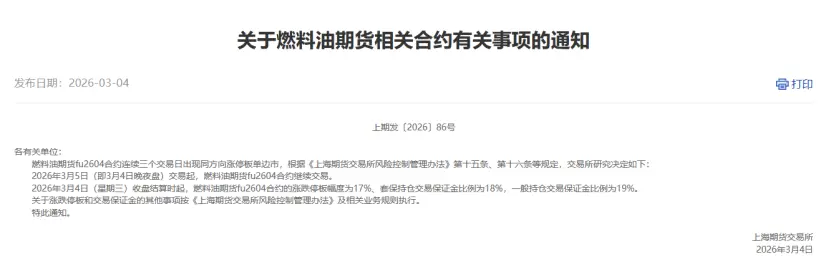
In addition, the Shanghai Futures Exchange also made adjustments to other related contracts of fuel oil futures. The price limits of fu2605, fu2606, fu2607, and fu2608 contracts were adjusted to 14%, the margin ratio for hedging positions was 15%, and the margin ratio for general position transactions was 16%.
 Five Major Market Needs And Promising Buying And Selling Directions That Ordinary People Can Participate In In 20262026-02-28Comments(0)
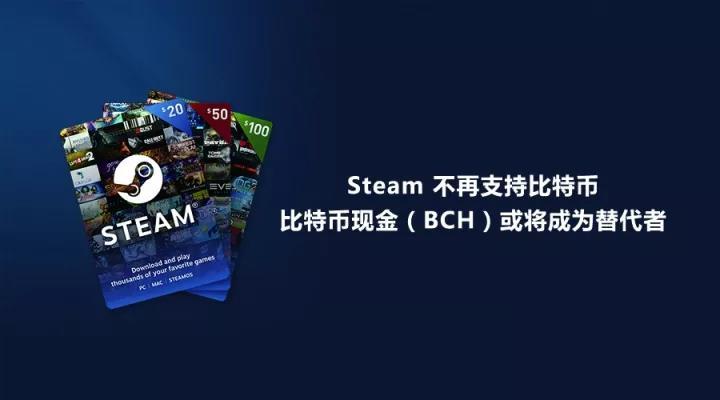 Steam Abandons Bitcoin Due To Handling Fees, BCH Regains Lost Ground With Low Price And Becomes Bitcoin2026-03-08Comments(0)
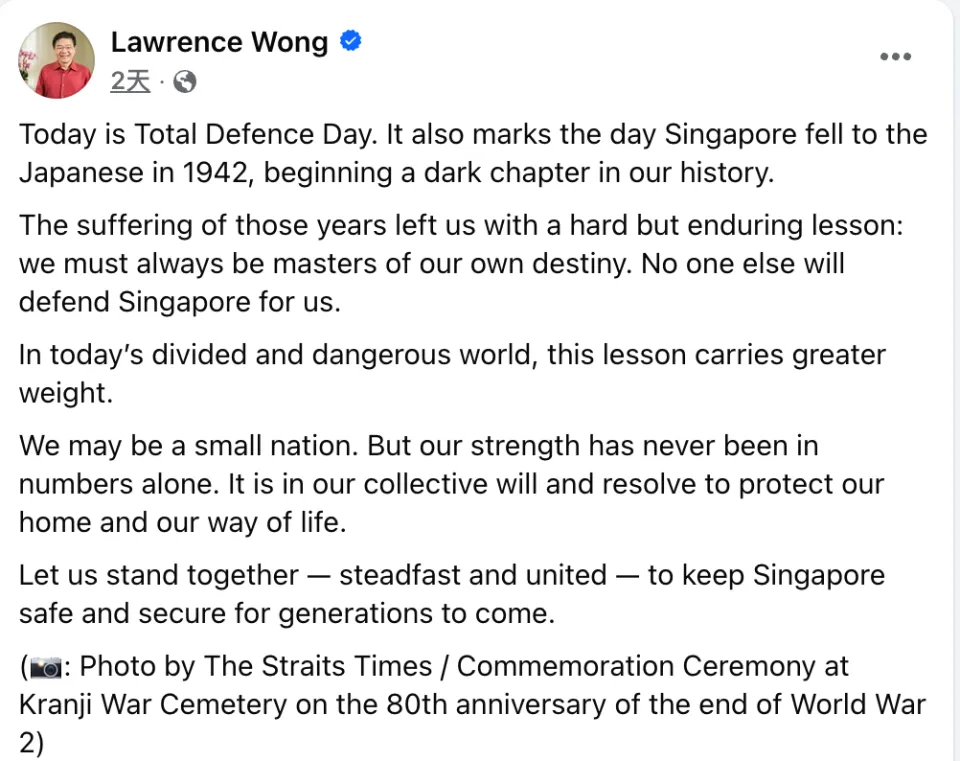 Singapore's 'Total Defense Day' Commemorates Singapore's Dark History Of Being Under Japanese Rule For More Than Three Years2026-02-26Comments(0)
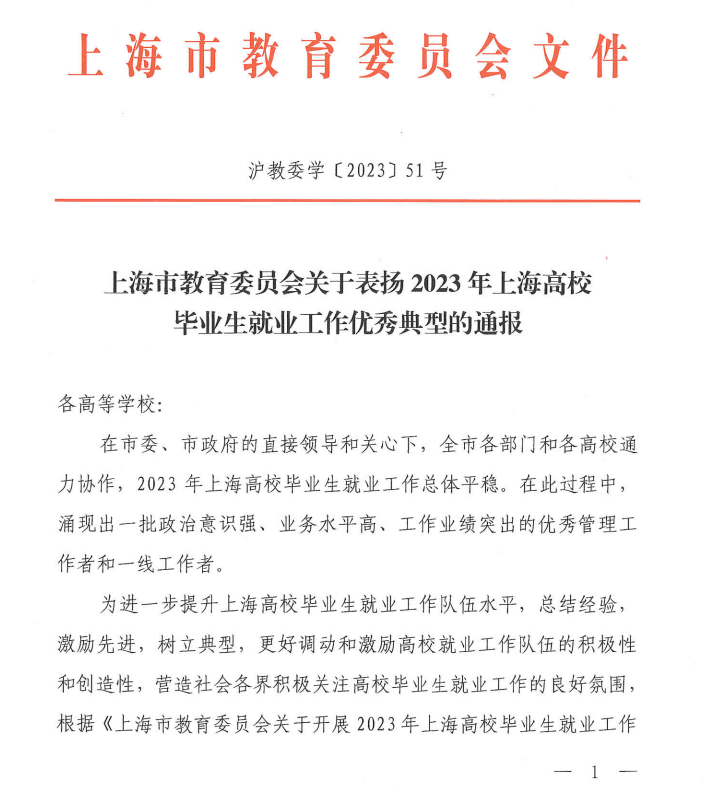 Wen Youbao, Yang Li, And Li Tingwei Won The Title Of Outstanding Employment Model Of Shanghai College Graduates In 20232026-03-07Comments(0)
 Chinese AI Model Seedance 2.0 Sparks Heated Discussions Overseas, Crushing Top American Models2026-02-20Comments(0)