Peter Mandelson was sacked as Britain's ambassador to Washington last September over his links to convicted sex offender Jeffrey Epstein. On Monday, the former political giant was formally arrested by British police on suspicion of misconduct as a public official.
The arrests come just days after Prince Andrew, formerly known as Prince Andrew, was detained and questioned for several hours by British police on Thursday on suspicion of similar misconduct in public office.
For Mandelson, who has been in British politics for 40 years and is a good dancer, Monday's sudden arrest is tantamount to a devastating blow, pushing his political career into the abyss.
adventurous diplomat candidate
In the eyes of many political observers, promoting Mandelson to the position of British Ambassador to the United States was an extremely risky move in itself.
At that time, his affair with Epstein was an open secret. Although British Prime Minister Keir Starmer strongly defended himself after the incident, claiming that Mandelson had deliberately concealed and lied about the true extent of their relationship.
Looking back on his tumultuous political career, Mandelson was twice forced to resign from core government positions due to extremely embarrassing personal scandals.
In addition, he has previously publicly criticized US President Trump as a "white supremacist" and a "threat facing the world." These sharp remarks have led to fierce bombardment and resistance from Trump’s core allies.
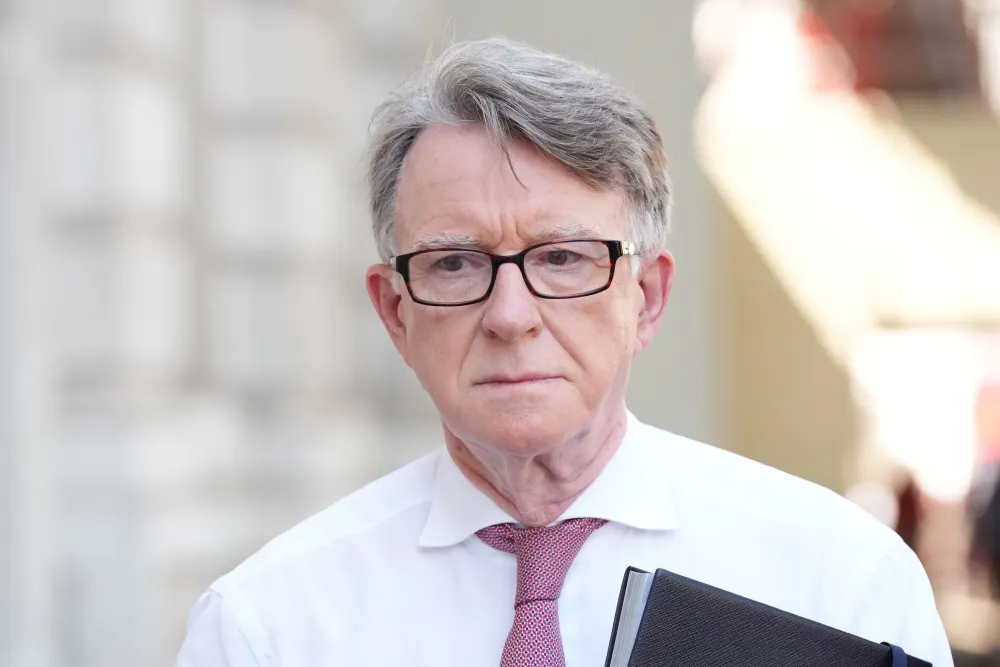
However, after taking office, the 72-year-old Mandelson incredibly quickly integrated into and became a frequent visitor to Washington's top social circles, and even frequently visited the White House to participate in important affairs.
The good times did not last long. After only seven months in office, his lingering old relationship with Epstein turned into a haunting nightmare again.
In a scathing statement, the British Foreign Office pointed out that the "depth and breadth" of the relationship between the two men, as confirmed by internal emails first disclosed by Bloomberg, was "materially and materially different from the circumstances known to the British government at the time of his appointment."
Faced with irrefutable evidence, Prime Minister Starmer finally had to make a painful decision and directly dismissed Mandelson from his diplomatic post.
focus of criminal investigation
Since the beginning of this year, the political storm has not subsided, but has intensified.
The U.S. Department of Justice released the latest batch of top-secret files on Epstein on January 30. The bombshell documents reveal that Mandelson's friendship with the disgraced sex offender and financial tycoon was far closer than he had previously admitted to the public.
What is even more shocking is that the clues in the file seem to imply that during his tenure in a senior position in the British government, Mandelson most likely secretly conveyed core information involving state secrets to Epstein that could affect the direction of the financial market.
Just this month, the British police officially launched a full-scale criminal investigation into Mandelson's serious accusation of "misconduct in a public office."
As of now, Mandelson has not been formally charged with a criminal offense. Since announcing his resignation from the Labor Party on February 1, he has chosen to remain silent and has not made any public comments to the outside world.
However, in the early stages of the controversy, he issued a strong defense statement, insisting that the documents released by the U.S. Department of Justice "absolutely cannot prove any improper performance of my duties or illegal activities on my part."
political strategist
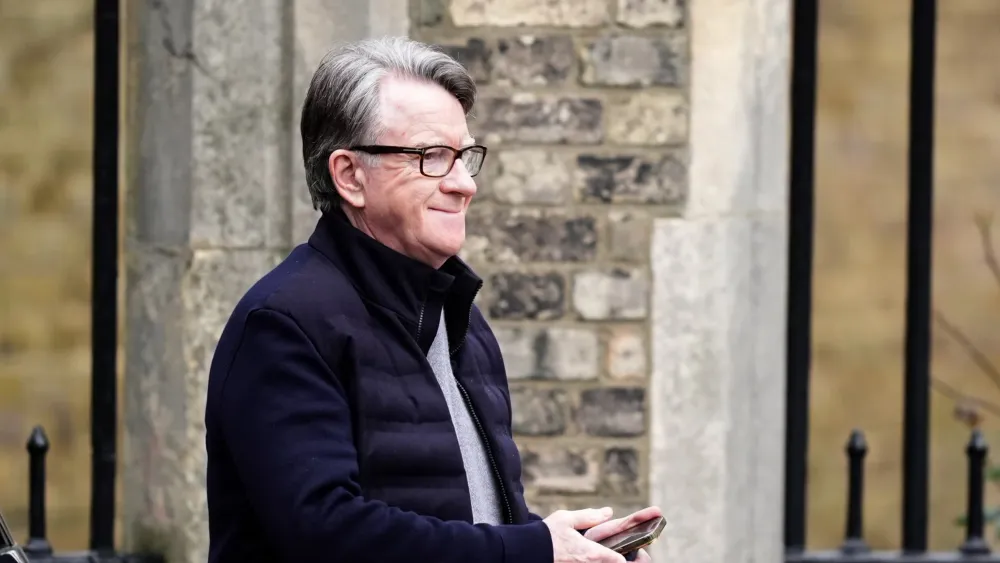
Going back to 1992, Mandelson entered parliament for the first time as a Labor MP. With his keen political sense, he helped to create the core ideas of the famous "New Labor Party".
It was the successful operation of this concept that strongly promoted Tony Blair to successfully enter No. 10 Downing Street in 1997 and ascend to the position of Prime Minister.
However, Mandelson's official career was not all smooth sailing. He resigned from important government positions twice due to scandals he triggered. He was forced out of office in 1998 after he concealed a huge housing loan from a cabinet colleague.
In 2001, he resigned again after being accused of using his position to try to interfere with the passport application process on behalf of a generous political donor.
From 2004 to 2008, he went to Brussels to serve as the European Union Trade Commissioner. However, during this period, the multilateral negotiations on global trade agreements that he was deeply involved in eventually collapsed.
He has since been recalled to the inner circle of the British government. As an important senior member of Brown's cabinet at the time, he not only won a lifetime seat in the House of Lords, but was also canonized as Lord Mandelson.
The latest disclosure of confidential documents has torn away another layer of secrecy. After the Labor Party suffered an electoral defeat in 2010 and lost its majority in parliament, he co-founded a consulting agency with Epstein's strong encouragement and advice.
This institution, called Global Consulting Company, had no choice but to initiate bankruptcy liquidation proceedings last week due to the recent loss of core major clients.
It was not until last year that Mandelson, who was always good at dancing, returned to the public eye and the center of power as ambassador to the United States.
Scandal shakes government to its foundations
After the intricate entanglement of interests between Mandelson and Epstein was exposed, it triggered a huge public anger. This anger was like triggering a political earthquake, directly shaking the highest levels of British politics.
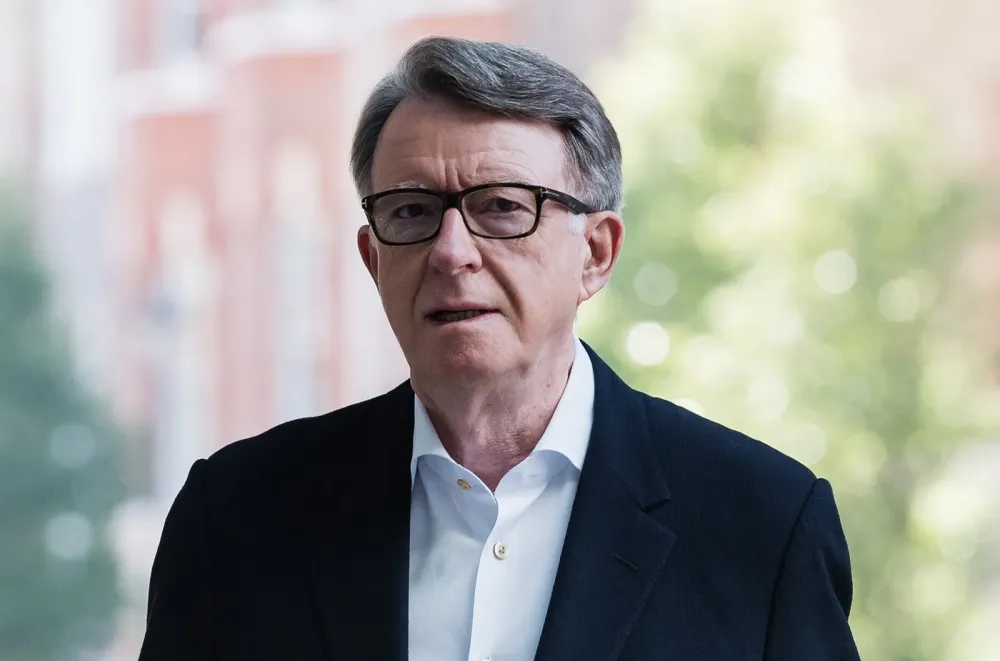
The leader of the Scottish Labor Party even used fierce words, publicly demanding that Prime Minister Starmer must resign for his serious negligence in appointing Mandelson as ambassador to the United States.
Faced with overwhelming pressure, Starmer has so far maintained his position as prime minister in Downing Street.
In a public speech this month, he solemnly expressed a belated apology to all the victims of the Epstein case and admitted that Mandelson should not have been pushed into that key position in the first place.
"I would like to express my deepest apologies," he said in a heavy tone. "I am deeply sorry that so many people in power have ruthlessly failed you. I am deeply saddened and regretful that I believed Mandelson's lies."
Contributor: Amelia Nirenberg, international correspondent for The New York Times in London
First media: "The New York Times"
Source: Who Is Peter Mandelson?