
Bitcoin Plunged 45%, Like Apple In 2013, The Valley Of Despair May Last Seven Years
Bitcoin, desperate! ,financing,credit,finance,bitcoin,exchange,currency related business,coindesk
Bitcoin, desperate! ,financing,credit,finance,bitcoin,exchange,currency related business,coindesk
Recently, the price of Bitcoin has been rising like a rocket. China News Network IT Channel found from the Bitcoin China website that as of yesterday, the transaction price of 1 Bitcoin had reached 3,490 yuan. A month ago, the price was only about 1,000 yuan. This means that in the past month, Bitcoin has increased by about 249%.
Making money by “mining” is unreliable
It is understood that there are currently two ways to obtain Bitcoin: trading and "mining" (obtaining Bitcoin through complex calculations on the Internet). Faced with the rising price of Bitcoin, many people have begun to consider "mining." But the "mining" blue ocean has long since disappeared. According to a Taobao store owner who sells "mining machines", "mining" requires a mining machine. The higher the performance of the mining machine, the greater the probability of obtaining Bitcoin. However, in the future, the computing power of the entire network will become higher and higher, and the income from mining will also plummet. At the same time, the price of advanced mining machines is getting higher and higher, which has set a big "threshold" for "mining".
In addition, according to the design principle of Bitcoin, the output of mining will decrease as the number of Bitcoins increases. Last year, you could get 50 Bitcoins at a time, but this year it dropped to 25, and the output will be less and less. It is understood that Bitcoin is limited to 21 million, and in April this year, there were already 10.8 million on the market.
However, this has not stopped the "crazy" performance of Bitcoin, the momentum of "mining" has not diminished, and "speculating on Bitcoin" has become increasingly popular in China. A research report recently published by the technology website Business Insider shows: "The largest Bitcoin trading platform is now in China, replacing demand from Japan, the United States and Europe."
Although the price of Bitcoin continues to rise, there are still risks in "speculating on Bitcoin". Wang Yinping, chief analyst of Guolian Futures, said that Bitcoin itself is a virtual currency on the Internet. Only a few countries recognize the legal status of Bitcoin. Generally speaking, it does not have any guarantee, including guarantees from industry and government regulatory agencies.
Bitcoin moves towards payments
The continued rise in the price of Bitcoin has also aroused heated discussions. Netizen @Roy Li believes that Bitcoin is electronic gold (1270.30, -2.00, -0.16%) and plays the role of gold rather than banknotes. @李tiejun believes that Bitcoin is a collectible and has no monetary value. This collection is actually worthless, and the person who takes over in the end will lose it all. However, Beijing Garage, Guoke Electronics, and Baidu Accelerator have successively announced that they support Bitcoin payment, and some developers have even launched physical properties that support Bitcoin purchases. It seems that Bitcoin is moving in the direction of payments.
If Bitcoin performs well for payments, will its value still rise? At a recent trading seminar in New York, the American Winklevoss brothers said that the total market value of Bitcoin will exceed US$400 billion in the near future. If this prediction holds true, based on the number of 10.8 million Bitcoins on the market in April this year, this means that each Bitcoin will rise to about $40,000 in the future.
In June this year, when the Winklevoss brothers disclosed their Bitcoin ETF fund plan, they were ridiculed by some American media. They believed that Bitcoin was unreliable and also doubted the IQ of the brothers.
Regulatory policies may be introduced
While Bitcoin is developing in the direction of payment, it has also caused concerns from relevant departments. It is understood that Bitcoin transactions are not under the supervision system of banks. Some people question this and Bitcoin will be used to engage in illegal activities, such as money laundering and drug purchase.
In view of this consideration, last Friday, the New York State Department of Financial Services announced that it would hold a public hearing to discuss legislative issues regarding this virtual currency. At the meeting, it will be discussed whether to introduce a "BitLicense" license to manage the trading market of online currencies such as Bitcoin. This has caused heated discussions, and many people are worried that the introduction of these regulations may reduce the attractiveness of Bitcoin and lead to its devaluation.
However, Bitcoin circulates around the world, and monitoring may not be easy. Some media analysts believe that traders will use the method of "squeezing toothpaste" to make multiple transactions in small amounts to avoid monitoring, which further increases the difficulty of monitoring. What's more, Bitcoin uses anonymous transactions, and users can open multiple accounts, and the pseudonym has no connection with his real identity in real life.
Australia's "Daily Calculation" reported on the 16th that Bitcoin is exchanged between people and does not involve a third party, so it is more resistant. In addition, it uses passwords to ensure the integrity of transactions, which makes it almost impossible for outsiders to obtain the identity details behind the transactions. In addition, the authorities can close countless Bitcoin trading accounts, but as long as one account remains, Bitcoin can be resurrected.
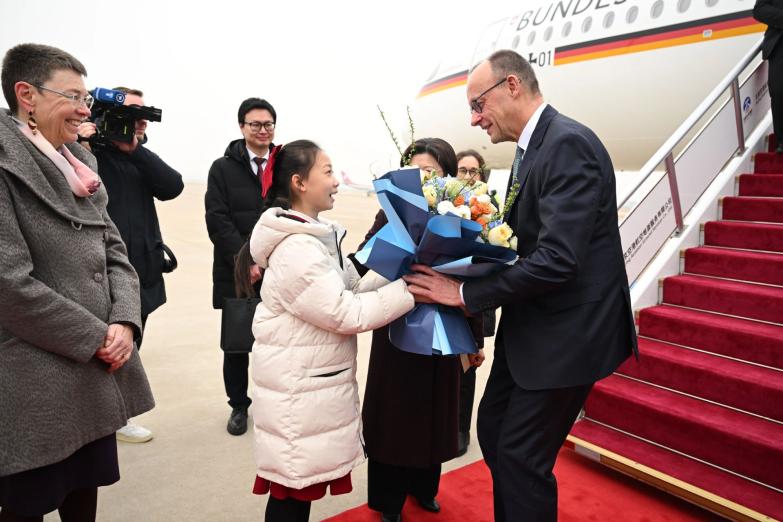
On the morning of February 25, German Chancellor Mertz arrived in Beijing for a two-day official visit to China. (Xinhua News Agency photo)
Peter Bofinger, professor of economics at the University of Würzburg in Germany and former member of the German Economic Expert Committee, wrote an article in China Daily on February 25, pointing out that Sino-German relations have long been based on comparative advantages and division of labor and are an important fulcrum for global economic stability. Facts have shown that new energy, two-way investment and industrial collaboration are not only beneficial to China and Germany, but also help maintain the stability of a multi-polar world and global supply chains.
The article stated that in the complex context of the global economy, the Sino-German partnership is one of the most closely connected bilateral relationships. For decades, this relationship has shown the characteristics of mutual benefit and win-win, confirming the basic views of Adam Smith, the "father of modern economics", on the division of labor and mutual benefit.
The historical success of China-Germany relations stems from complementary advantages. Through direct investment and joint ventures in China, German companies not only bring capital, but also transfer technology and establish high industrial standards. In return, Germany has found the most dynamic growth market in China, allowing German industrial giants and small and medium-sized enterprises to expand their business scale, raise funds for research and development, and lead the world. Today, this tradition continues, for example, the German chemical giant BASF invested 10 billion euros in a new integrated base in Zhanjiang, Guangdong, which is the company's largest single investment project to date. This deep integration shows that when the world's second- and third-largest economies strengthen cooperation, they can bring stabilizing effects to global supply chains.
The most promising areas for future cooperation lie in renewable energy and green technologies. Through strategic and forward-looking industrial policies, China has become a global leader in battery technology, solar energy and electric vehicles. This is not only an economic achievement, but also an important contribution to global climate policy. By reducing the cost of green technology through large-scale production and innovation, China has enabled other countries, including Germany, to smoothly promote energy transition.
Despite the obvious synergies, the shadow of protectionism is growing. In addition to economic costs, explicit or implicit trade barriers will also bring heavy geopolitical costs. Moving towards "decoupling" or aggressive protectionism could fragment the world into competing camps. This bipolar world is inherently unstable and more prone to conflict. Real competitiveness should be built through open competition and cooperation, rather than hiding behind trade barriers.
At this critical moment of geopolitical tension and the impact of a wave of protectionism, China-Germany relations are no longer just about trade balance or corporate profits, but can become the cornerstone of global stability.
(The original English text was published in the "China Daily" Zhixianghui column
https://www.chinadaily.com.cn/a/202602/25/WS699e3462a310d6866eb3a11b.html)
Bitcoin was born in 2009, but its price has risen from 1 cent in 2010 to more than 10,000 US dollars now, achieving a million-fold growth in eight years. The reason why Bitcoin is so popular is because of the freedom, security, and fairness endowed by blockchain technology. However, in the near future, such a virtual currency mechanism may be completely disintegrated. The safety, reliability, and rock-solid foundation that many people believe in may be destroyed by the rapid development of quantum computing.
Just last week, the Chinese Academy of Sciences' quantum computer research made a breakthrough. The Institute of Quantum Information and Quantum Science and Technology Innovation of the Chinese Academy of Sciences released an 11-qubit cloud-access superconducting quantum computing service in the direction of superconducting quantum computing. Worldwide, this is the second company after IBM to provide cloud computing services with more than 10 qubits. This progress has once again made quantum computing the focus.
The rapid development of quantum computing has exceeded everyone’s expectations. Some predict that quantum computing will bring a devastating blow to blockchain (including Bitcoin) within ten years. So, how do quantum computers pose a threat to blockchain? How much of a threat will it pose? Does the blockchain have any countermeasures?
This starts with the principles of quantum computers and blockchain.
1. Quantum computers and blockchain
1. Quantum Computer
Simply put, the operating unit of a quantum computer is a quantum bit (qubit) rather than a bit (bit) of a classical computer. In a classical computer, the value of a bit is certain, it may be 1 or 0. But in a quantum computer, the value of a qubit is uncertain before observation. This value may be 1, it may be 0, or it may be a superposition of 1 and 0, that is, equal to 0 and 1 at the same time.
How big is the difference? Take "Naruto" as an example, that is, Sasuke is a classical computer and Naruto is a quantum computer. If you want to find something, Sasuke can only run to find it one place by himself, maybe for a year. But Naruto can split into 5 shadow clones, and then the 5 shadow clones split into 5 shadow clones, and the clones clone again, and all the clones go to different places, find something in an instant, and then the clone takes it back, leaving only one Naruto, retrieve the thing, and it's done.
Professor Robert Schoelkopf of Yale University said: "When a quantum computer has 50 or 100 qubits, and these qubits can work very well and can be completely error-corrected, then you can use this quantum computer to do more complex calculations."
The changes brought about by the powerful computing power of quantum computers will be earth-shaking and may even affect national security. Therefore, Academician Pan Jianwei of the Chinese Academy of Sciences once said: "I believe that the importance of quantum technology in the 21st century can be compared with the 'Manhattan Project' of the last century."
2. Blockchain and Bitcoin Mining
At present, the most famous application of blockchain technology in the world is Bitcoin. Satoshi Nakamoto is the founder of Bitcoin. Next, we will start from the concept of Bitcoin to get a glimpse of the reality of blockchain.
Now, we can imagine the blockchain as a ledger. Each block contains a part of this ledger. The complete information of this part of the ledger is stored in all nodes of this block. This is the decentralization of blockchain technology. Each block has only a part of the ledger, but this part will record the information of the previous block, and one block is connected to another, forming a blockchain.
The advantage of blockchain is that it forms a trust mechanism. For example, if you deposit 100 yuan in the bank, if a hacker hacks into the bank, takes away your money, and clears the data, you will not have any information to prove that you have 100 yuan in assets in the bank. But if it is replaced by a blockchain, it means that every node in the block where the bank is located has a complete ledger record. In other words, your neighbor, the aunt on the street next door, and even every resident in this area have ledgers that can prove that you have 100 yuan of assets in the bank.
Compared with the centralized mechanism in the traditional financial field, the decentralization of blockchain makes it more reliable and firm. Even if some node information is lost, the system can still continue to operate normally. Therefore, blockchain is considered a very safe and reliable technology.
So what is Bitcoin mining?
Based on the blockchain, Satoshi Nakamoto proposed the concept of Bitcoin in 2009. He stipulated that in the Bitcoin network, 50 Bitcoins will be generated every ten minutes. When the total amount reaches 10.5 million (half of 21 million), 25 Bitcoins will be generated every 10 minutes. When the total amount reaches 15.75 million, 12.5 Bitcoins will be generated every 10 minutes. When the total amount reaches 21 million, Bitcoin will stop growing. In other words, the total number of Bitcoins has been fixed at 21 million from the beginning.
Bitcoin "mining" is how new Bitcoins are generated. People who "mine" are called "miners." Miners use computers to solve mathematical problems in the Bitcoin network. The first miner to solve the problem publishes the answer, records it in the ledger, and records it in all nodes simultaneously. This is called successful mining and obtains Bitcoins.
The mechanism of the blockchain was very safe and reliable before the development of the concept of quantum computing. At least for so many years, Bitcoin has not been hacked by hackers. However, in recent years, quantum computing has developed rapidly, exceeding the speed previously expected. Therefore, some industry insiders predict that within ten years, the security and reliability of blockchain will be greatly threatened by quantum computers.
2. How does quantum computing pose a threat to the blockchain?
To understand the threat of quantum computing to the blockchain, we must first start with the security protocol in the Bitcoin system. The Bitcoin protocol involves two types of cryptography, namely the hash function (hash function) used in the mining process and the asymmetric cryptography used to provide digital signatures on the blockchain.
Miners use their computing power to calculate a random number for each block using the SHA-256 hash function. The result of this process is very easy to verify, but difficult to find. Asymmetric cryptography is used to authorize transactions on the Bitcoin blockchain. Each user on the entire chain will be assigned a public key and a private key. This is the public key cryptography system (Public Key). Public key cryptography uses a pair of keys to encrypt information: a public key that can be shared widely and a private key that is known only to the owner of the key. Anyone can encrypt a message using the intended recipient's public key, but only the recipient can decrypt the message using his private key.
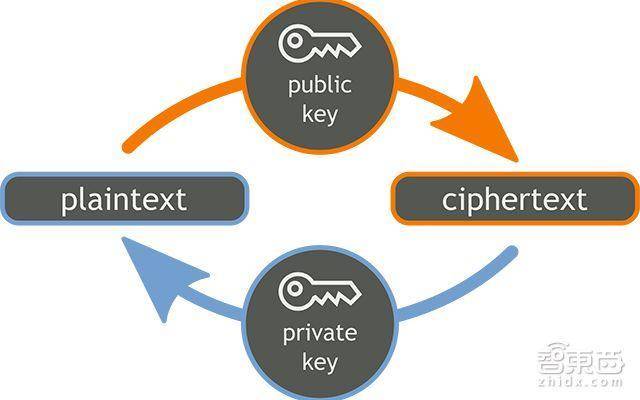
The core of such an asymmetric cryptographic algorithm is to use the Elliptic Curve Digital Signature Algorithm (ECDSA) to generate keys. Given a private key, it is easy to deduce the corresponding public key, but in turn it is difficult to calculate. This is why Bitcoin is safe now.
Quantum computers may pose a huge threat to these two lines of security. In the future, quantum computers can quickly crack the hash function and monopolize the entire blockchain. At the same time, there are also predictions that in the near future (perhaps 2027) the quantum computer's Shor's algorithm can crack the key in ten minutes (600 seconds).
In the world of Bitcoin, the success rate of mining with a classic computer has a certain relationship with the computing power, but a large computing power does not mean that you will be able to mine (as long as your computing power does not exceed 50% of the entire network). Mining is also related to luck to a certain extent. Take walking a maze as an example. If a person walks fast and tries one step at a time, he will definitely reach the end of the maze as quickly as possible. But what if a person walks slowly but finds the way to the end of the maze in just one try? Therefore, people who walk fast may not necessarily win against people who walk slowly. In the same way, miners with greater computing power may not necessarily dig mines before miners with small computing power.
As mentioned above, mining is actually solving mathematical problems and finding random numbers encrypted by hash functions. However, it is possible that two different groups of miners will discover two random numbers at the same time and announce different blocks. In this case, Bitcoin’s rule is to prioritize the block that processes more, and the other block will be invalidated. For example, this is similar to 51 people in a community saying that you deposited 100 yuan in the bank, and 49 people saying that you deposited 50 yuan. In this case, the minority obeys the majority, and the bank thinks that your deposit of 100 yuan is true, and that you deposited 50 yuan is false.
Let us further explain the concept of "51% attack" from this rule. In the blockchain, if a group of miners has 51% of the computing power of the entire network, then it can monopolize the entire blockchain. Because he will always process blocks faster than the other group of miners with 49% of the computing power, he will receive all the Bitcoins generated thereafter.
Regarding the issue that quantum computers will threaten mining, Divesh Aggarwal and researchers from the National University of Singapore (NUS) conducted in-depth research and published a paper on this in October 2017. They believe that at least in the next ten years, ASIC mining will be faster than quantum computers, but after ten years, the mining speed of quantum computers will increase rapidly. Secondly, in the face of quantum computers, the asymmetric cryptography algorithm used in the blockchain, that is, the public key cryptography system, will be under greater threat.
Researchers from the National University of Singapore pointed out that by using quantum computers, the process of using public keys to infer private keys can be easily reversed, and everyone's private key will be easily inferred by the quantum computer.
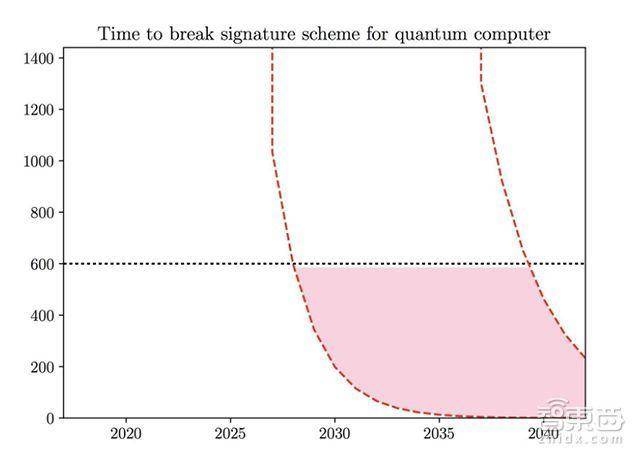
The estimated time required for a quantum computer to crack an encrypted signature is in seconds. It is expected to only take ten minutes/600 seconds in 2027.
Similarly, we can compare this decryption process to walking a maze. What a classical computer can do is go in one direction until it reaches a dead end, and then turn around and choose another path. However, a quantum computer gives you a God's perspective, overlooking the entire maze, and it is clear which way to go.
However, a quantum computer needs to reach a certain level of qubits to achieve such a level. Foreign media Motherboard believes that a 4,000-qubit quantum computer may be able to disrupt the blockchain. In other words, whichever person or team first makes and applies such a quantum computer can solve and verify every transaction. All cryptocurrencies that will be produced in the future and have not yet been circulated will be monopolized by it, and the trust system of cryptocurrencies will be destroyed.
3. The development of quantum computers is still in its infancy.
Although quantum computers are developing rapidly and may pose a huge threat to blockchain in the future, quantum computers are still in a very early "toy computer" stage. At present, the world's giants can only produce about 10 quantum computers with high-fidelity quantum qubits. The 11-qubit superconducting quantum computing service released by the Chinese Academy of Sciences last week is the world's second cloud computing service with more than 10 qubits. Quantum computing services like this cannot yet be used to solve actual computing problems, but developers can already use such cloud services to learn programming knowledge related to quantum computers.
It seems that 4000 qubits are really far away from us? But it may not be as far away as we think, because based on the fact that Microsoft, Google, and IBM have made a series of breakthroughs in the field of quantum computing in recent years, Fortune magazine predicts that the first practical quantum computer will be built within 10 years.
Many companies have predicted how long it will take within 10 years. For example, Microsoft predicted that a practical quantum computer would be built in 2025. Google also announced in 2017 that it would make a commercialized practical quantum computer within five years (that is, around 2022).
Conclusion: There is an impact, but there are also countermeasures
The rapid development of quantum computers is already a major trend and will one day threaten the blockchain, but it seems that many experts in the blockchain have not yet become vigilant. According to Fortune magazine, at the Crypto 2017 conference in November 2017, a conference for top blockchain cryptographers, “no one in the world was worried” about quantum computing risks. One expert said it would be a "very expensive operation" and would likely require "government-level" spending.
Another expert, who completely laughed at the idea, waved his hand and said that by the time practical quantum computers come out, public key cryptography will have developed to the point where there is no need to worry about quantum computers, so this issue will not matter at all.
But these experts all share the same view, which is that the emergence of quantum computing will jeopardize the security of all existing encryption methods, including RSA tokens. Additionally, quantum computers will impact the security of finance and banking, not just blockchain.
At the same time, there are also relevant agencies that attach great importance to this. For example, in 2015, the US National Security Agency announced that it was studying quantum cryptography systems, that is, encryption systems that can withstand quantum computing. In academia, there are also cryptography experts who are studying quantum cryptography, and there are already blockchain projects implementing quantum cryptography.
At present, no one may be able to accurately predict the specific time when practical quantum computers will be born, but if we look at it more positively, the birth of commercial quantum computers may be faster than we expect, because today's technological development is accelerated rather than developing at a uniform speed. Maybe in 2018, quantum computers were still in a very early stage, and the development progress of practical quantum computers was only 5%. But maybe in 2019, the progress will reach 10%, and in 2020, the progress may reach 30%. All of this is possible.
Technology is always developing. Emerging technologies such as blockchain and cryptocurrency may still be in their infancy. There is still a long way to go before reaching technological maturity. Developers need to be careful about a series of obstacles that will appear in the process, including quantum computing.
A Kremlin decree that appears to elevate Russia's National Guard into a powerful "parallel" force outside the Defense Ministry both bolsters regime security and increases the risk of future internal rifts, an analyst has warned.

Analyst William James Dixon has warned that Russia is building a "parallel structure" of armed forces outside its defense ministry that could be used not only on the battlefield in Ukraine but also to protect President Vladimir Putin from domestic threats.
Dickson is a senior research associate at the Royal United Services Institute, which claims to be the world's oldest independent defense and security think tank and one of the UK's leading institutions in the field. He said in an interview that a recent Kremlin decree seemed aimed at strengthening the Russian National Guard rather than integrating it into the regular military command structure.
Instead, he said, the decree elevated the National Guard to a system "outside the Ministry of Defense" whose "overall operational control" was concentrated in the hands of its chief, Viktor Zolotov, who reported directly to Putin. Dixon said the shift indicated the creation of a "parallel structure" within the Kremlin's security architecture.
Strength for the security of the regime
The interview focuses on what these changes might signal about the Kremlin's priorities as Russia's all-out war in Ukraine continues. Dixon argued that authoritarian systems tend to insulate leaders from elite machinations and public unrest, especially after moments of exposed vulnerability.

He linked the development of the National Guard to the impact of the Prigozhin mutiny in 2023, saying it highlighted the inadequacy of existing capabilities to deal with serious internal challenges. He said the force has since transformed from essentially a police structure to something closer to a competitive military force, pointing to reports that special forces and heavy equipment, including tank formations, are being formed within it.
Dickson likened the role of the National Guard to Iran's Islamic Revolutionary Guard Corps, calling it a "praetorian guard" designed to protect the regime. He also pointed out that Russia's internal controls are being tightened across the board, including increased digital surveillance and measures aimed at dividing elites. This environment, he argued, was shaped by the stress of prolonged war.
Battlefield Roles and Future Risks
The National Guard has also been deployed in Ukraine, including participating in intense fighting and occupation missions in eastern regions such as Donbas, as well as assuming rear security roles.
Asked whether the creation of a privileged parallel force would deepen tensions within the Russian military, Dixon said it could become a "flashpoint for further divisions." Looking ahead to what happens after Putin, he warned that such a structure could make any future transfer of power more volatile, potentially creating competing centers of power as leadership transitions.
This father-in-law is so awesome! At a wedding in Anhui, the bride's father returned the 188,000 yuan gift on the spot and only accepted 100 yuan. This sentence made the whole audience burst into tears!

On February 23, at a wedding in Anhui, the bride was wearing a white gauze, with her eyes full of longing for the future. But when the bride's father picked up the phone, no one expected that he would make such a decision.
The bride's father did not praise his son-in-law or warn his daughter. Instead, he first received a thick red envelope from someone around him - it was a 188,000 yuan gift from the groom's family.
He held up the envelope and said to all the guests in a loud voice: "Today I am marrying my daughter, not selling my daughter. This bride price is the man's intention. I accept it with my heart, but I can't accept it all."
As soon as he finished speaking, he took out a hundred-dollar bill from the envelope, put it into his pocket, and then solemnly handed the remaining 187,900 yuan to the groom's hand.
"I'm just going to keep this 100 yuan to get a good chance of 'picking one in a hundred', as long as it makes sense."
The scene was silent for a few seconds, followed by applause. The bride stood aside and couldn't help but shed tears. The groom's eyes were also red. He took the money with both hands and bowed deeply to his father-in-law.
The bride's father continued: "I want to say to all young people, don't let money blind you in your marriage. Marriage is about two people living together, relying on feelings and responsibilities, not the amount of betrothal gifts or the size of the house. I just hope that my daughter can be treated sincerely after marriage, and that the young couple can be harmonious and beautiful, which is better than anything else."
There are no fancy words in these words, but every word touches the heart. The guests present nodded.
China News Service, Tianjin, February 23 (Reporter Zhou Yaqiang) The 2026 Spring Festival holiday has come to an end, and Tianjin’s cruise tourism market data is eye-catching. The reporter learned from the Tianjin Dongjiang Border Inspection Station that during the Spring Festival holiday, the Tianjin Cruise Port inspected and released a total of 4 inbound and outbound cruise ships, with nearly 9,000 entry and exit personnel. Cruise travel has become a popular choice for more and more people to "spend the New Year at sea", and its popularity continues to rise.
On the afternoon of February 22, the "Dream" cruise ship departed from the Tianjin International Cruise Home Port carrying more than 2,000 passengers, embarking on a six-day and five-night trip to South Korea. (Photo courtesy of Dongjiang Border Inspection Station)
According to statistics from the border inspection department, in terms of passenger composition, family travel occupies the absolute majority, accounting for more than 80%. Among them, elderly passengers over the age of 60 account for more than one-third of the total, and teenagers under the age of 16 account for more than one-quarter. Cruise tourism has become increasingly attractive to family customers.
In terms of tourist sources, in addition to the Beijing-Tianjin-Hebei region, tourists from Shanxi, Liaoning, Inner Mongolia and other places have increased significantly. Many passengers said that after the cruise itinerary, they would choose to stay in Tianjin for a few days and go to ancient cultural streets, Yangliuqing Ancient Town and other places to experience the strong atmosphere of the Spring Festival.
The picture shows passengers passing through the waiting hall with their luggage. (Photo courtesy of Dongjiang Border Inspection Station)
In order to cope with the peak passenger flow during the Spring Festival, the Dongjiang Border Inspection Station of Tianjin Border Inspection Station has determined the passenger structure in advance, opened additional inspection channels and special channels, optimized customs clearance procedures, and scientifically diverted personnel to ensure efficient and smooth entry and exit of passengers.
It is understood that since 2026, Tianjin Cruise Port has inspected a total of 20 inbound and outbound cruise ships, with more than 33,000 inbound and outbound passengers. It is worth noting that on March 3, the day of the Lantern Festival, the luxury cruise ship "Regita" will arrive in Tianjin, carrying nearly 600 foreign tourists from 24 countries including the United States, Canada, and Australia, and embark on a two-day Chinese New Year trip in Beijing and Tianjin.
The picture shows the border inspection scene. (Photo courtesy of Dongjiang Border Inspection Station)
The relevant person in charge of the Dongjiang Border Inspection Station stated that they will continue to optimize the efficiency of entry and exit inspections, fully implement convenient policies such as visa-free entry for foreign tourist groups on cruise ships, and 240-hour visa-free transit, to further enhance the passenger customs clearance experience and help the high-quality development of Tianjin’s cruise industry. (over)
 Japan’s Deep-sea Mining Of Rare Earths Is Its Own Fault. Why Is It Being Countered By China? The Reason Is Surprising2026-02-23Comments(0)
 The Bride Responded To Her Father’s Return Of The Bride Price At The Wedding: He Doesn’t Value Money Over Feelings, And Hopes Not To Spread False Information2026-03-05Comments(0)
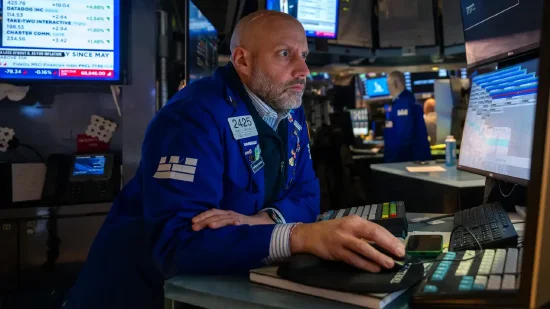 In The Early Morning Of February 13, U.S. Stocks Fell In Midday Trading, Silver And Crude Oil Fell, And The Financial Reports Of Many Companies Attracted Attention.2026-02-18Comments(0)
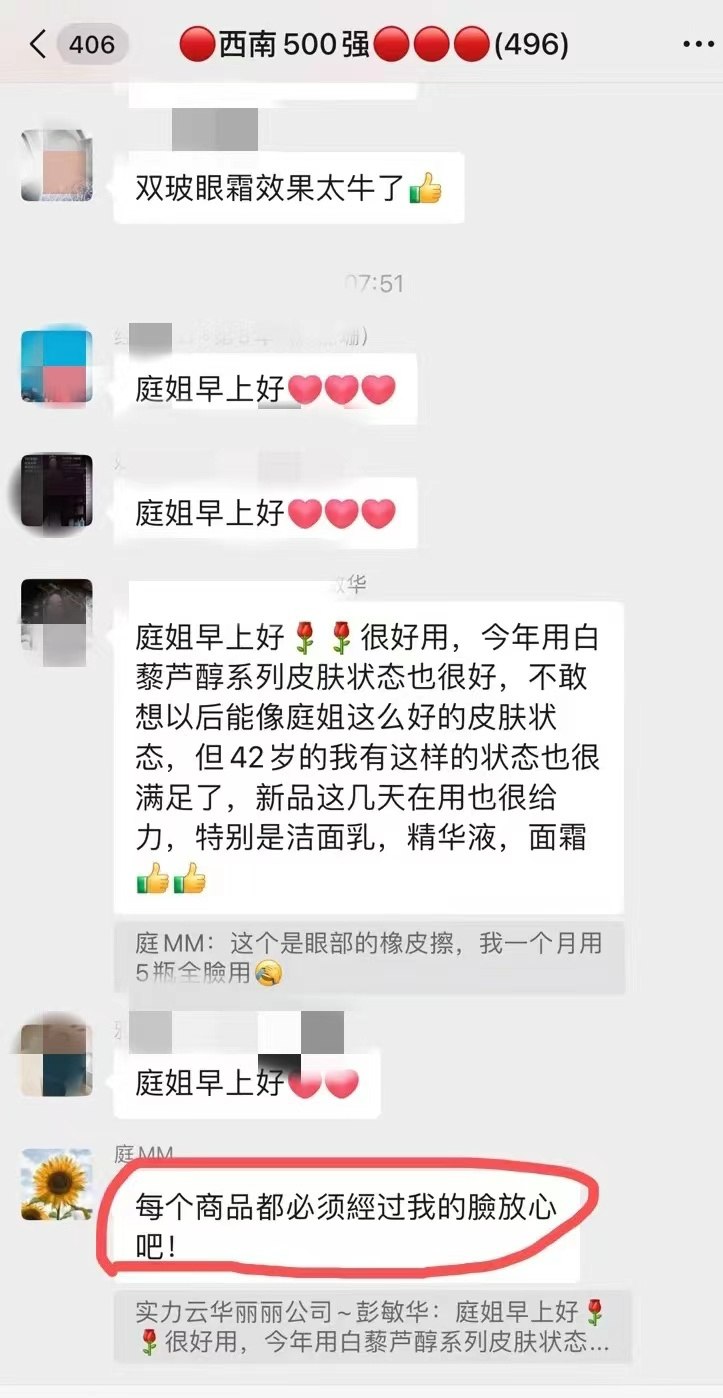 TST Parent Company’s 8th Anniversary Live Broadcast, Zhang Ting Appeared In The Agent Group, New Products Will Be Launched Soon2026-03-03Comments(0)