A Kremlin decree that appears to elevate Russia's National Guard into a powerful "parallel" force outside the Defense Ministry both bolsters regime security and increases the risk of future internal rifts, an analyst has warned.
Analyst William James Dixon has warned that Russia is building a "parallel structure" of armed forces outside its defense ministry that could be used not only on the battlefield in Ukraine but also to protect President Vladimir Putin from domestic threats.
Dickson is a senior research associate at the Royal United Services Institute, which claims to be the world's oldest independent defense and security think tank and one of the UK's leading institutions in the field. He said in an interview that a recent Kremlin decree seemed aimed at strengthening the Russian National Guard rather than integrating it into the regular military command structure.
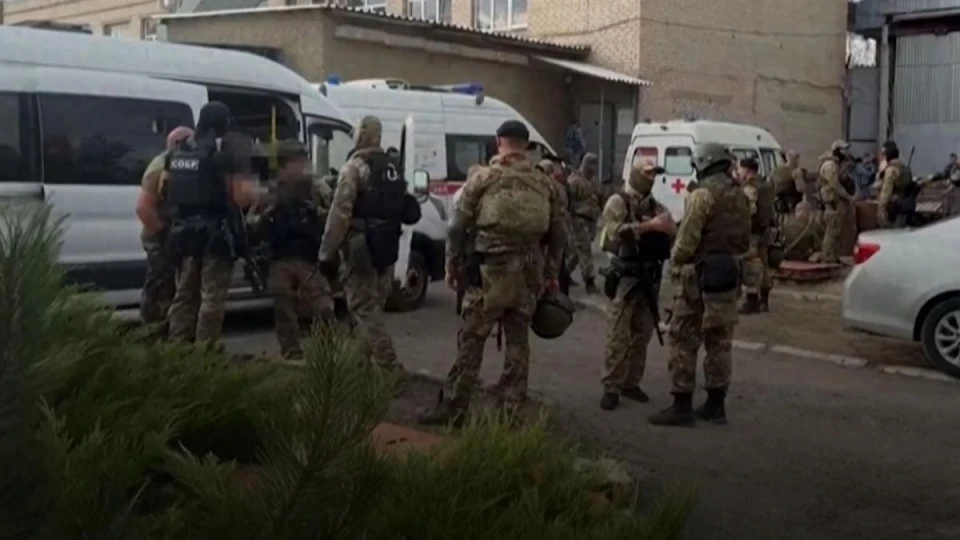
Instead, he said, the decree elevated the National Guard to a system "outside the Ministry of Defense" whose "overall operational control" was concentrated in the hands of its chief, Viktor Zolotov, who reported directly to Putin. Dixon said the shift indicated the creation of a "parallel structure" within the Kremlin's security architecture.
Strength for the security of the regime
The interview focuses on what these changes might signal about the Kremlin's priorities as Russia's all-out war in Ukraine continues. Dixon argued that authoritarian systems tend to insulate leaders from elite machinations and public unrest, especially after moments of exposed vulnerability.
He linked the development of the National Guard to the impact of the Prigozhin mutiny in 2023, saying it highlighted the inadequacy of existing capabilities to deal with serious internal challenges. He said the force has since transformed from essentially a police structure to something closer to a competitive military force, pointing to reports that special forces and heavy equipment, including tank formations, are being formed within it.
Dickson likened the role of the National Guard to Iran's Islamic Revolutionary Guard Corps, calling it a "praetorian guard" designed to protect the regime. He also pointed out that Russia's internal controls are being tightened across the board, including increased digital surveillance and measures aimed at dividing elites. This environment, he argued, was shaped by the stress of prolonged war.
Battlefield Roles and Future Risks
The National Guard has also been deployed in Ukraine, including participating in intense fighting and occupation missions in eastern regions such as Donbas, as well as assuming rear security roles.
Asked whether the creation of a privileged parallel force would deepen tensions within the Russian military, Dixon said it could become a "flashpoint for further divisions." Looking ahead to what happens after Putin, he warned that such a structure could make any future transfer of power more volatile, potentially creating competing centers of power as leadership transitions.