Bitcoin is a decentralized digital currency that allows anyone to send or receive value peer-to-peer online without relying on banks or payment institutions. Since its inception in 2009, Bitcoin has evolved from a niche experiment to a global financial phenomenon. This article will take you from entry to advanced to understand the complete guide to Bitcoin in 2025
Main points
What is Bitcoin?
– Essentially, Bitcoin is a decentralized digital currency that allows anyone to send or receive value peer-to-peer online without relying on a bank or payment institution.
Since its inception in 2009, Bitcoin has evolved from a niche experiment to a global financial phenomenon, attracting strong interest in Bitcoin Overview, BTC price fluctuations, and trading tools such as spot BTC/USDT and BTC contracts.
This guide will take you through the history, workings, and practical applications of Bitcoin while demonstrating how to trade spot, stake your position with XT Earn, and keep your coins safe. Whether you are a newbie or an experienced trader, you can deepen your understanding of the Bitcoin ecosystem.
Bitcoin History and Evolution
The story of Bitcoin began in October 2008, when the founder of the pseudonym Satoshi Nakamoto released the "Bitcoin White Paper", proposing a peer-to-peer electronic cash system. By January 2009, the genesis block was mined, marking the birth of the decentralized ledger. Early users could exchange it for Bitcoin with just a few cents; by the end of 2010, a programmer bought two pizzas with 10,000 BTC, vividly reflecting its value at the time.
Image Credit: Bitcoin Whitepaper (Bitcoin.org)
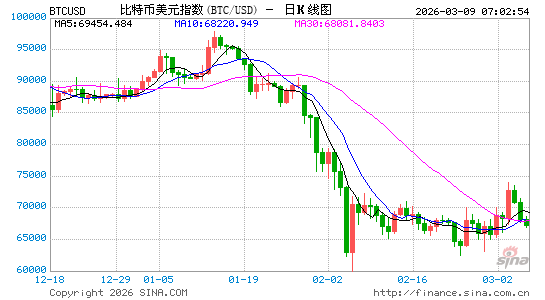
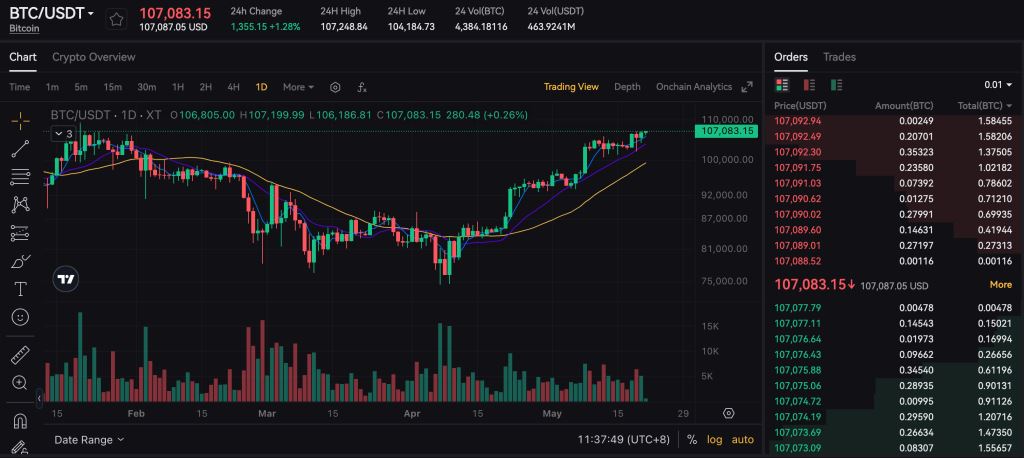
Over the next decade, Bitcoin's market capitalization continued to soar and hit BTC price milestones at multiple stages: breaking $1 for the first time in February 2011, exceeding $1,000 at the end of 2013, and once approaching $20,000 in December 2017. Each bull run has fueled popular interest and spawned thousands of altcoins. From 2020 to 2021, institutional investors have made plans to include BTC in company balance sheets. To this day, Bitcoin’s journey is a testament to the power of decentralized innovation and the appeal of censorship-resistant assets.
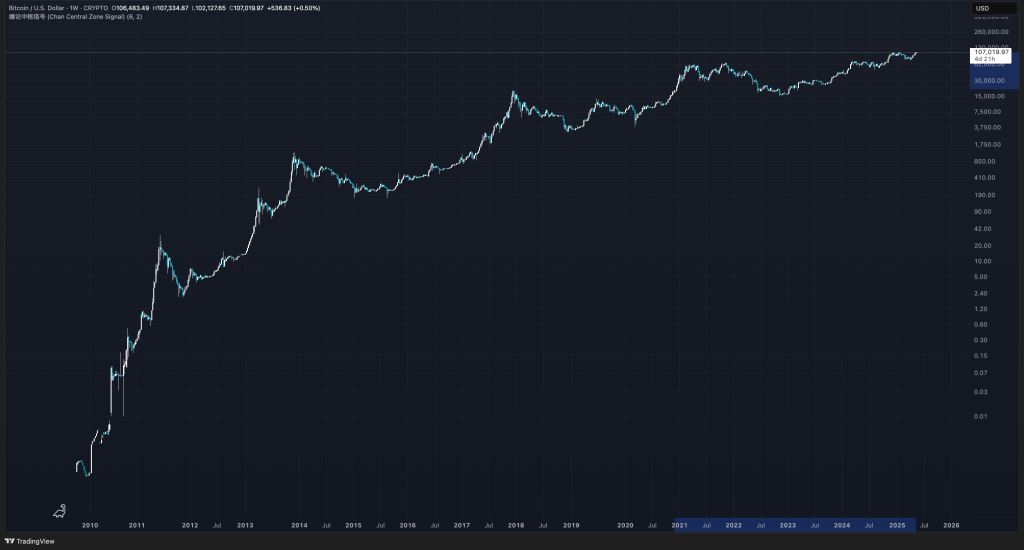
Image Credit: TradingView
How Bitcoin works
1. Blockchain Basics
Bitcoin runs on a decentralized ledger called a blockchain, and every transaction is recorded sequentially in blocks. Nodes around the world hold copies of the ledger, ensuring that the network is transparent and cannot be tampered with.
2. Mining and consensus
Mining nodes compete for accounting rights by solving complex cryptographic puzzles (proof of work). The first node to find a valid solution will package the new block onto the chain and receive BTC block rewards and transaction fees. Such a consensus mechanism can prevent fraud and double spending.
3. Detailed explanation of transaction process
Image Credit: T&H Consulting
Bitcoin vs. other cryptocurrencies
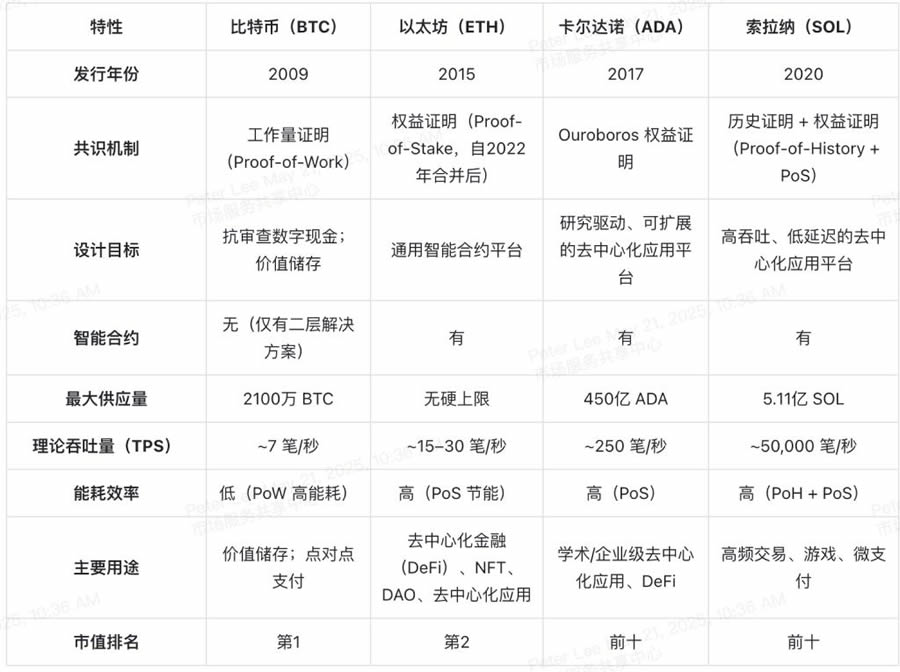
Bitcoin started the cryptocurrency wave, but countless “altcoins” have emerged since then. The fundamental difference between Bitcoin and projects such as Ethereum, Cardano, Solana, etc. is the design goals: Bitcoin focuses on censorship-resistant digital cash and store of value, while many altcoins place more emphasis on smart contracts, scalability, or specific application scenarios.
Altcoins often experiment with different consensus algorithms (such as proof of stake) to improve energy efficiency, or introduce programmable features to support decentralized applications. Despite innovation, Bitcoin remains dominant due to first-mover advantage, decades of security of computing power, and the world's largest network of users and developers.
The addition of institutions further consolidates Bitcoin’s leading position. Many investors view it as “digital gold”, a hedge against inflation and geopolitical risks. In comparison, altcoins may have higher growth potential, but they also face greater technical and compliance risks. Altogether, altcoins have enriched the ecosystem, and Bitcoin remains the flagship of the crypto space thanks to its proven track record and brand power.
Bitcoin Trading (BTC)
spot trading
In the spot market, you are buying and selling actual BTC. Common trading pairs include BTC/USDT, which enables instant settlement of stablecoins and Bitcoin.
Contracts and Derivatives
BTC contracts allow you to bet on Bitcoin price movements without actually holding a physical stake. Leverage can magnify returns and increase risks, so strict risk management is required. Popular contracts include BTC/USDT and BTC/USD.
“Stake” BTC with XT Earn
While Bitcoin itself is not a proof-of-stake token, lending platforms like XT Earn offer yield products commonly known as BTC staking. You can lend BTC to institutional borrowers and earn interest under transparent terms.
Bitcoin practical use cases
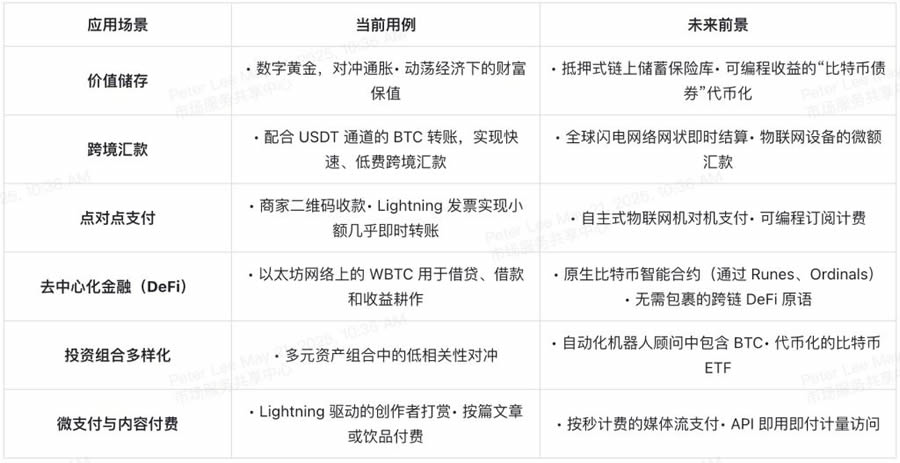
Beyond speculation, Bitcoin also plays a role in multiple real-life scenarios. First, it serves as a means of storing value, similar to digital gold, helping people protect their wealth in areas with devalued legal currencies or strict capital controls.
Secondly, Bitcoin enables cross-border remittances. Traditional remittances are expensive and slow. Using BTC and the USDT channel, international transfers can be completed in less than one hour at a lower cost.
Third, Bitcoin supports peer-to-peer payments. Merchants and individuals can collect payments through QR codes and use the Lightning network to achieve an almost instant and low-cost experience of small-amount payments.
Fourth, Bitcoin drives decentralized finance experiments. Wrapped BTC (WBTC) and other tokenization methods allow Bitcoin to flow into the smart contract ecosystem and support various DeFi applications such as lending and revenue farming.
Finally, Bitcoin provides a trust-minimized diversification solution for investment portfolios. Its low correlation with traditional assets makes it an attractive hedging tool. Whether it is preserving value, making payments, or entering DeFi, Bitcoin continues to expand global financial inclusion.
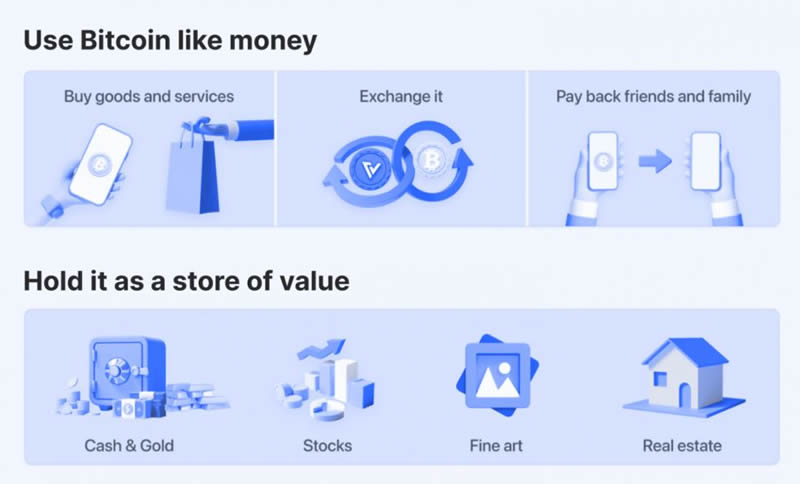
Image Credit: B2BInPay
How to buy Bitcoin?
The Bitcoin trading tutorial mainly includes the steps of registering and verifying an account, recharging funds, purchasing Bitcoins, setting a target selling price, selling Bitcoins, and withdrawing funds. Users must pay attention to protecting account security during operation.
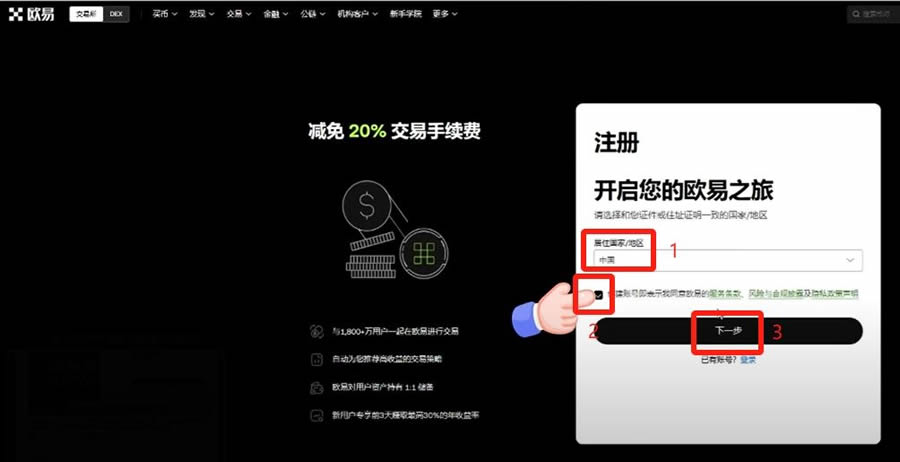
First open the official website of OKX Exchange (official registration). After entering, we first need to register with our email and mobile phone number.
Ouyi can directly use the Chinese mobile phone number, which is +86, to register. First, we select the country and region, select "China" as the place of residence, click to agree to create an account, agree to Ouyi's terms of service, and click [Next].
Enter your email here. Google email, NetEase email, and Outlook email are all acceptable. If you open the webpage through my invitation link, the invitation code is automatically filled in. If you haven't filled it out, just manually enter my Ouyi invitation code jbzj999, and you can see that the current cash back rate is 20%. Use my invitation code and you can enjoy the 20% cash back rate permanently. We click [Register].
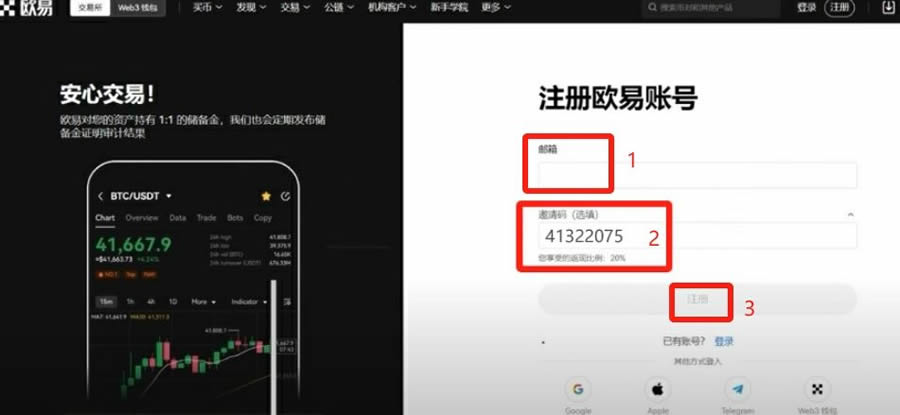
A verification code will be sent to your email. You just need to enter the verification code.
Next, we bind our mobile phone number and just select +86. Then enter your mobile phone number and click [Verify Now].
He will send a text message verification code to your mobile phone number. You copy the verification code, fill it in here, and then click [Next]. OuYi registration is complete.
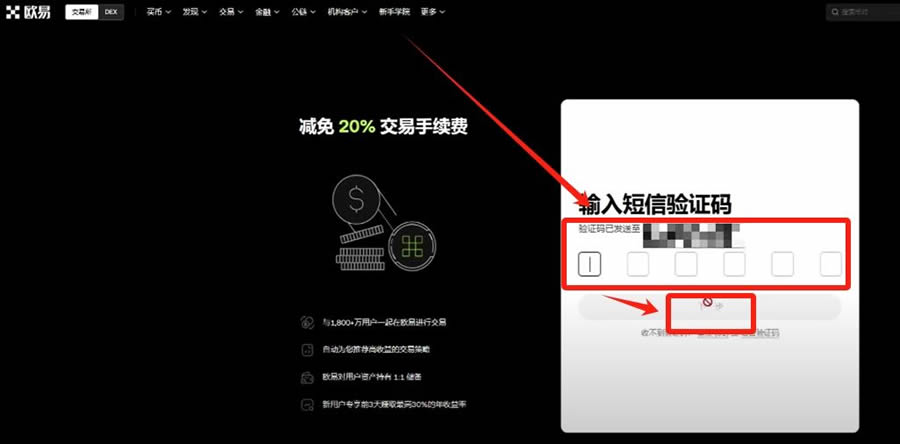
After successful registration, we need to download Ouyi’s mobile APP. Users of Android phones can open the link above and click the download icon in the upper right corner. There will be a scan code to download the APP. We can scan this QR code to download.
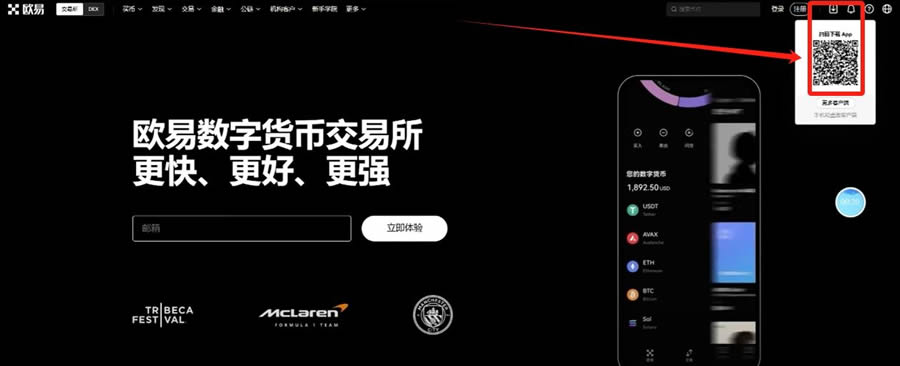
Click [More Clients].
Click "Download Ouyi APP". You can download it directly for Android phones here (official download).
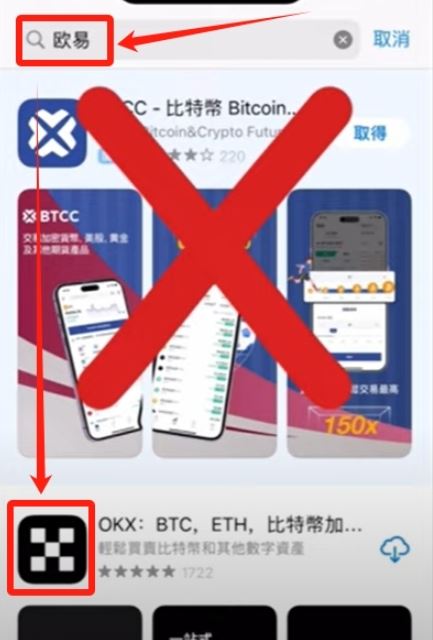
Users of Apple mobile phones must first register an overseas Apple ID and directly search for "Apple i" on Taobao to purchase an overseas Apple ID.
Log in to the overseas Apple ID you purchased, open the Apple Store, and search for Ouyi to download. Be sure to look for the Ouyi icon and don’t download pirated versions. The specific operation is that we first search for Ouyi, and then select the second OKX to download. After the download is completed, we click on Ouyi APP and log in to the account we just registered.
When we open the Ouyi APP (official download), the first thing to do when entering Ouyi is to complete the real-name authentication. We first click on the 9 small dots in the upper left corner, and then click on your personal avatar. There is an identity authentication here. There are three levels of identity authentication. The higher the level, the higher the withdrawal limit and legal currency limit. It also contributes to the security of your account and assets, so we must conduct real-name authentication.
Newly registered users can also click [Go to Verification] on the main page of Ouyi and click [Verify Now]. This includes ID and face recognition authentication, as well as the collection of personal information. Then select your country and region, select "China" as the country, select "ID card" as the document type, and then click [Next]. Have your ID card ready and click to take a photo of the front and back of the ID card. Finally, there is a video authentication, which means shaking your head left and right and nodding your head up and down to prove that you are a real person appearing on the camera. At this point our identity authentication has been completed.
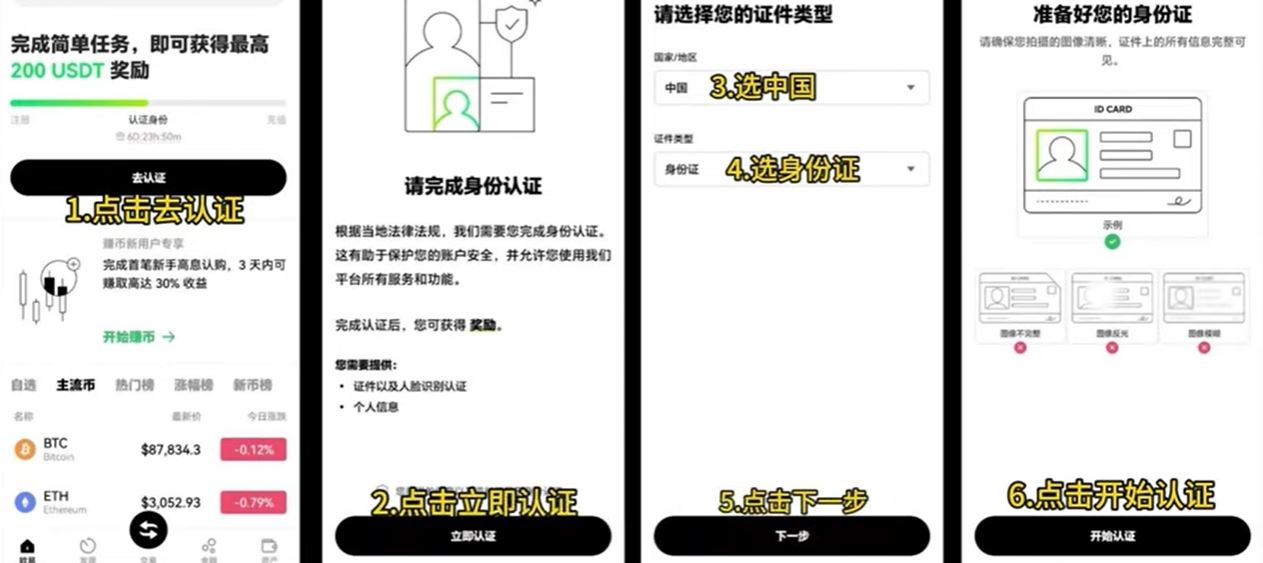
After completing all the real-name authentication steps, we can buy coins on Ouyi. Next I will show you how to buy coins. First, let’s buy USDT and click [C2C Buy Coins] on the Oyi homepage.
There is a quick way to buy coins. Select the currency you want to buy as USDT. You can see that there are many types here, such as Bitcoin and Ethereum. We want to buy USDT. USDT is actually similar to the U.S. dollar. After you use your legal currency to purchase USDT, you can use USDT to exchange for hundreds of other digital currencies. Moreover, buying USDT first and then exchanging USDT for any other currency will be cheaper than buying it directly with RMB.
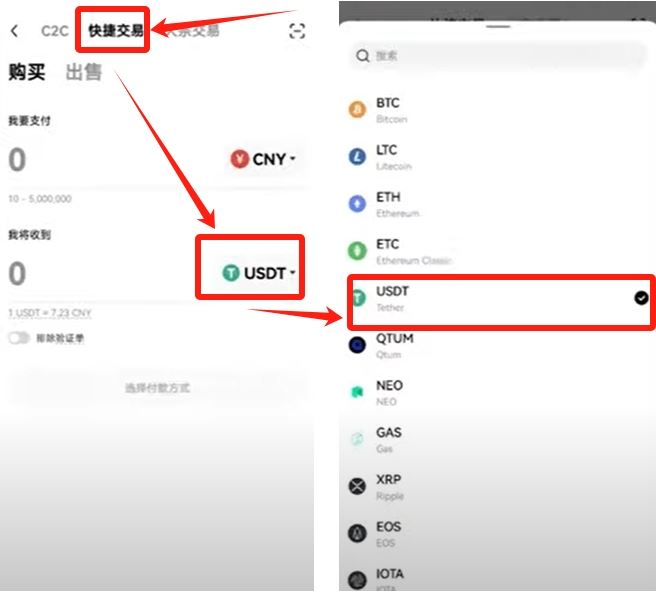
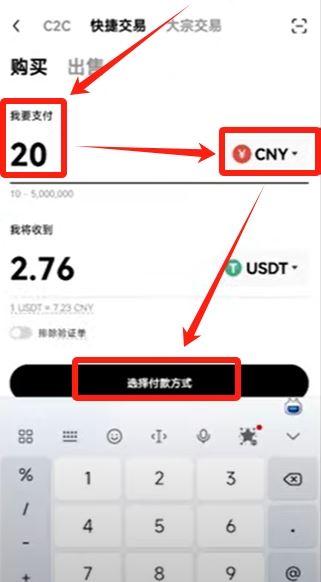
Then we enter the amount we want to purchase here, the following CNY means RMB, and then we click [Select Payment Method] below.
Select "Alipay". You can see this merchant below, we click to confirm.
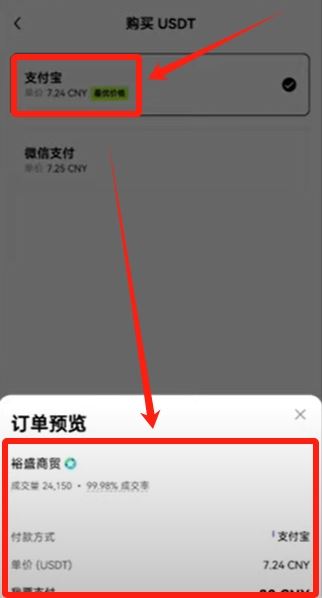
A C2C transaction security prompt will appear here. Do not use a third-party platform to chat with the other party. You must always chat through Ouyi. If you have already paid, do not cancel the order. If the other party requires this, be sure to file an appeal.
Here you can see that the seller’s payment method is Alipay, click [Get Payment Details]. On this page we can see the merchant's name and Alipay account, as well as the amount to be paid and the order number. We copy the merchant’s Alipay account to facilitate payment to him. If you have completed the payment, click [I have paid].
Here is a reminder: "If you click Confirm without transferring the money, your account may be frozen." Click to confirm that I have transferred 20 yuan to the other party through Alipay. Then we just need to wait for the seller to confirm payment.
You can see that the seller has confirmed receipt of payment and the transaction has been completed. We can click [View Assets] below. The USDT we purchased will be in the capital account, and then we click [Transfer].
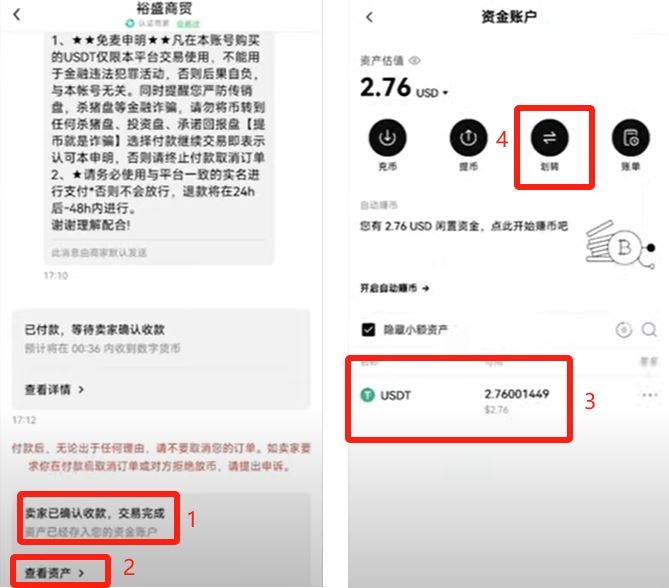
After transferring the assets from the capital account to the trading account, we can purchase other virtual currencies. Enter the amount here for the quantity, the maximum quantity, and click [Confirm].
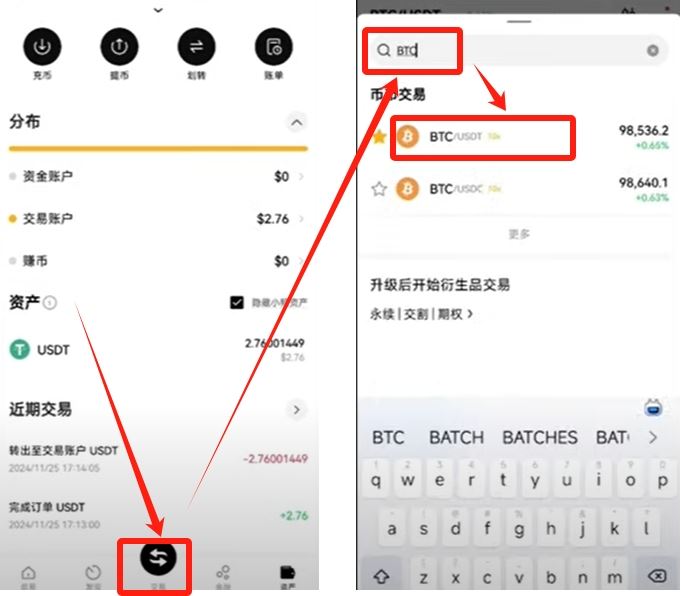
After the transfer is successful, return to the homepage and click [Assets] in the lower right corner. You will see that there is no money in the capital account because all the money in the capital account has just been transferred to the trading account. Next we can buy Bitcoin.
Then we click the [Transaction] button in the middle below. Here at the top we can search for the currency to be traded. For example, if I want to buy Bitcoin, I search for BTC. BTC is the code for Bitcoin, and then select the first "BTC/USDT", which means we use USDT to exchange for Bitcoin. You can search here and use USDT to redeem.
We choose [Buy], where you can see limit orders and market orders, etc. The ones we commonly use are limit orders and market orders.
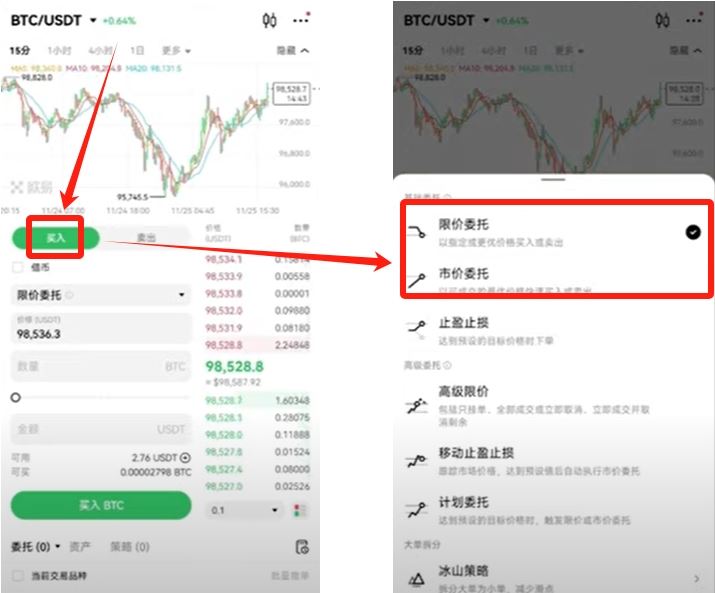
A limit order means that we enter the amount we want to buy and wait for the seller to complete the transaction with us. Enter the price we want to complete the transaction here, directly fill up the amount USDT, and click [Buy BTC].
There is an order confirmation here, and the system prompts us that the order was successfully placed.
This so-called successful order does not mean that the transaction is completed, but that our transaction request is successful. We can see our order in the current order below. It needs to fall to the target price we want before it can be completed. If you don’t want to wait any longer, click [Cancel Order] next to it, and the order will be canceled successfully. Please note that no handling fee will be charged if the order is placed or canceled if the order is not completed.
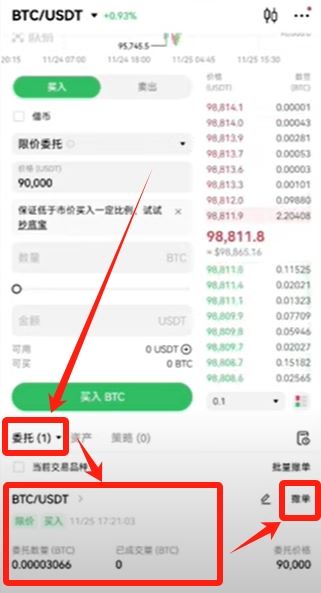
If you want to buy now, you can choose "market order". The market price order means that it will be given to us at the most appropriate price in the current market. We directly enter the amount we want to buy, fill it up directly, click [Buy BTC], and the purchase is successful.
Now that our Bitcoin has been purchased successfully, we still click [Assets] in the lower right corner and select [Trading Account], and we can see the Bitcoin we just purchased.
If you wanted to sell all your Bitcoin, it would be relatively simple to convert it into money. Let's go back to the trading interface just now. Select BTC/USDT in the upper left corner, select [Sell], or select "Market Order". When the quantity is filled up, all is sold, and click [Sell BTC]. At this time, our Bitcoin has been sold successfully.
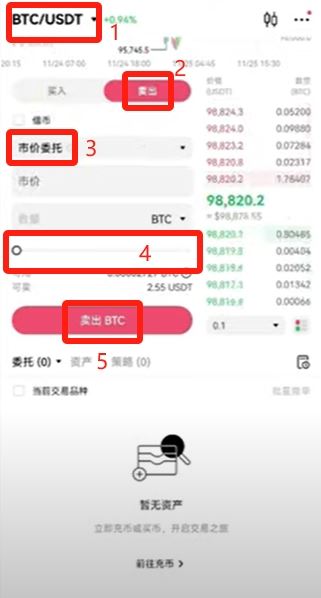
Next, we will introduce how to withdraw cash. Let's go back to the asset page just now. We need to transfer the money to the capital account before we can withdraw it. Click [Transfer].
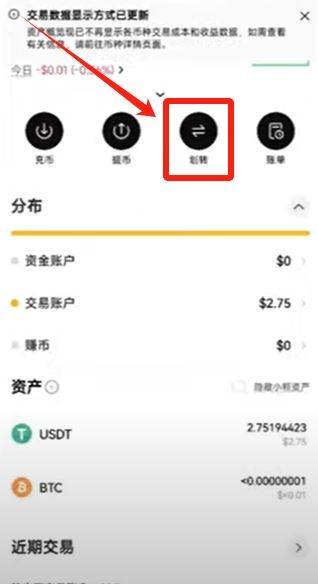
From the trading account to the capital account, the currency is still USDT, the quantity directly selects "Maximum", click Confirm and the transfer is successful. At this time our money will arrive in the capital account.
Let’s click on Yiyi’s homepage again and click [C2C Buy Coins].
There is a quick transaction inside, click [Sell]. Selling USDT is the same as buying USDT. Enter the amount you want to sell here. We can use 2.75 USDT to sell it for 19 yuan in RMB, click [Select Payment Method].
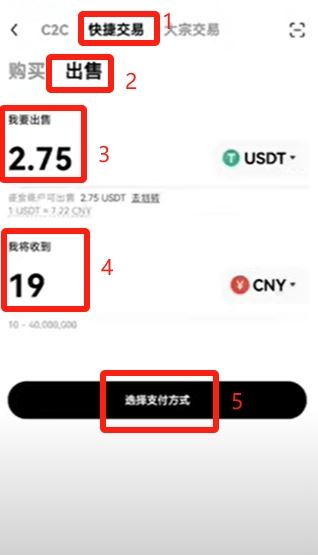
I will still use Alipay as an example for everyone. Check Alipay and click [Preview Order].
Check the merchant. The transaction volume should be greater than 3,000, the transaction rate should be greater than 98%, and the payment method is "Alipay". Click [Confirm].
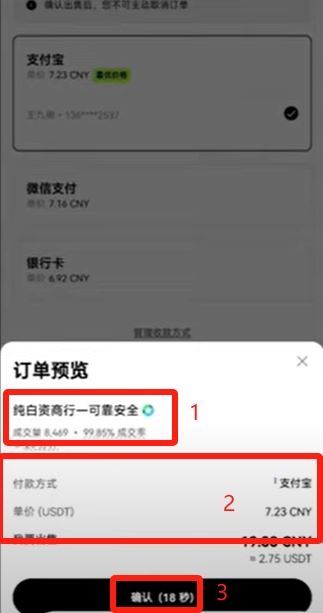
Now we just wait for the seller to pay. On this page we can see the unit price and quantity, as well as the total amount we will receive. The payment method is Alipay. Below is the order number and the time of placing the order. We click [Chat].
You can see that the buyer has paid, so we click [Confirm].
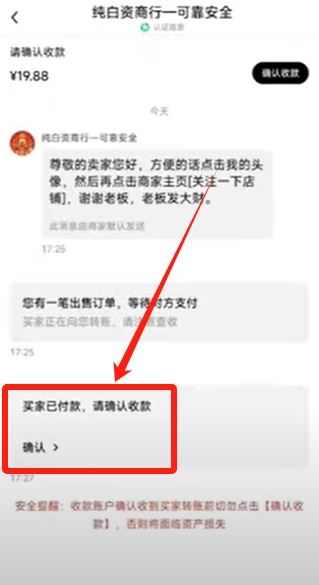
Then check your payment account or ask the buyer to confirm the name of the payer and we will check it out. Click "Yes" and click "Confirm Coin Release". In this way we have successfully sold 2.75 USDT.
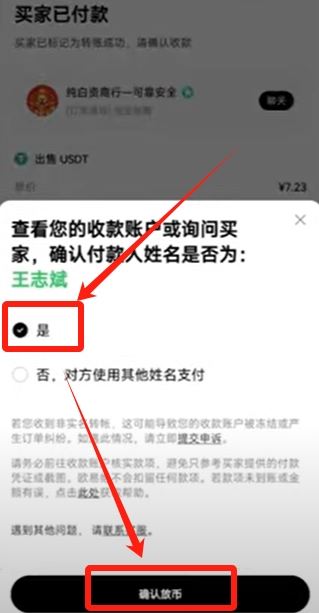
One thing to note here is that if you use a bank card to collect payment, you must wait until the funds arrive in your bank account before clicking I have received the payment. If you have not received the funds in your bank account, do not click "I have received the money", otherwise you may not receive the money and the USDT will be gone.
Risks and Cautions
price fluctuations
BTC prices can fluctuate 5–10% or more in a day. While there is the potential for quick gains, it can also lead to serious losses.
regulatory uncertainty
Countries have different attitudes towards Bitcoin, some support it, while others restrict or even ban it.
security threats
There are always risks such as exchange breaches, phishing emails, and malware.
Fraud and scams
Various high-yield promises and phishing airdrops emerge in endlessly.
BTC future outlook
Institutional investment and an increasingly clear regulatory environment are strengthening Bitcoin’s legitimacy. Large companies and funds continue to increase their positions in BTC, and the launch of spot Bitcoin ETFs has also attracted more retail and institutional funds. At the same time, on-chain progress such as Taproot upgrades and Lightning Network expansion have improved privacy, scalability and daily use experience.
Looking to the future, these technological innovations are expected to reduce handling fees and speed up transactions, thereby improving user experience and spawning more new scenarios, which will positively affect the price trend of BTC. As global macro uncertainty continues, Bitcoin's status as a decentralized store of value will be further consolidated, attracting more capital and technology investment.
Bitcoin (BTC) FAQ
What is Bitcoin?
The total amount of decentralized digital currency is fixed at 21 million, relying on blockchain and proof-of-work (PoW) mechanisms to ensure security.
How to store Bitcoin?
Hardware wallets are recommended for long-term holdings; software wallets or exchange-hosted wallets are optional for daily small amounts.
What are the risks of investing in Bitcoin?
Large price fluctuations, uncertain regulatory policies, security threats (hackers, phishing) and various scams.
How to pay with Bitcoin?
Payment can be made via on-chain transfer or Lightning Network, and merchants support QR code or invoice collection.
Summarize
Bitcoin is a truly decentralized, censorship-resistant digital currency. From Satoshi Nakamoto’s white paper to today’s globally thriving network, Bitcoin combines security, scarcity, and transparency.