The 20th century was not only a century full of turmoil and dramatic changes, but also a century in which theories emerged one after another. As human beings' outlook on the universe, outlook on life, aesthetics, ways of living, and ways of thinking have all undergone drastic and profound changes, various schools of theory have continuously appeared on the scene, and the same is true for literary and artistic theories. In this way, Western literary theory has formed a contemporary literary theory that is completely different from the 19th century and has a clear anti-traditional tendency and new characteristics of the 20th century.
But unfortunately, our teaching material construction has not kept up with the pace of theoretical development. Many emerging or still-developing literary theories have not been included in the textbooks. For example, theories about urban modernity, sound narrative, visual narrative, spatial narrative, literary anthropology, intersexual poetics, digital poetics, semiotic poetics, therapeutic poetics, etc. are basically missing from our literary theory textbooks. In order to make up for this shortcoming, the author, on the basis of in-depth study of various Western literary theories of different schools and my country's Western literature theory textbooks, absorbed the latest results of my country's Western literature theory research in the past twenty years, and wrote in the missing content in the above-mentioned Western literature theory textbooks. Its purpose is to, under the guidance of Marxist theory, better absorb the cutting-edge theoretical results of Western literary theory to serve the construction of our literary theory, develop our own literary theory, and improve students' theoretical thinking ability.
The following is an overview of the main contents of this textbook.
Narrative is storytelling. Narrative, as a cross-cultural, cross-media and cross-historical phenomenon, is the most basic and natural form. Narration can be expressed in various ways, it can be expressed in spoken or written language, or it can be expressed through images and gestures. French literary critic Roland Barthes believes:
There are countless narrative ways to represent this world. Narratives present themselves in colorful and prominent types, themselves distributed in different substances, as if any material were suitable for the representation of human stories. Narrative can be expressed in clear spoken or written language, through fixed or moving images, gestures, and aggregations of all these elements, and of course in myths, legends, fables, stories, novellas, epics, histories, tragedies, comedies, pantomimes, paintings (reminiscent of St. Ursula, named for her use of red and white), mosaics, films, comics, news items, and conversations. Moreover, in this almost infinite variety of forms, narrative exists in every period, in every place, and in every society. It also accompanies human history and is ubiquitous in human activities. All classes, all groups, have their own narratives, and different kinds of people enjoy them, even in opposing cultural contexts. Narrative does not care about the quality of literature. It is international, transhistorical and transcultural. It exists as freely as life itself. ①
From a physiological perspective, hearing is the earliest sense of human development. The ears of a fetus in the womb begin to have a listening function after four and a half months, and can hear the heartbeat of the mother and itself at the same time. German literary critic Benjamin talked about three cultural forms in "The Storyteller" and "Works of Art in the Age of Mechanical Reproduction": one is the oral culture represented by the ancient culture of "telling stories", the second is the print culture represented by novels and news, and the third is the mechanical reproduction culture represented by movies. Storytelling was originally transmitted orally, and Homer's epics went through a very long era of oral transmission before they were written down. Most of the culture in the oral transmission era was transmitted through sound, and the narrative method of oral transmission was sound narrative. In ancient Greece there was no poetry for viewing, only poetry for reciting, or rather, only poetry for singing. Later tragedies were always put on the stage combined with songs and dances. Sound narrative belongs to the category of auditory culture, and it is the earliest narrative form of mankind. From oral communication to written communication, visual centrism was formed. The Odyssey embodies the transformation from sound narrative to visual narrative, and from auditory culture to visual culture. By the beginning of the 5th century BC, vision began to overwhelm hearing in the fields of philosophy, science, and art. Therefore, Heraclitus claimed that the eyes are more accurate witnesses than the ears. By the time of Plato, visual mode had gained overwhelming dominance and visual centrism had taken shape.
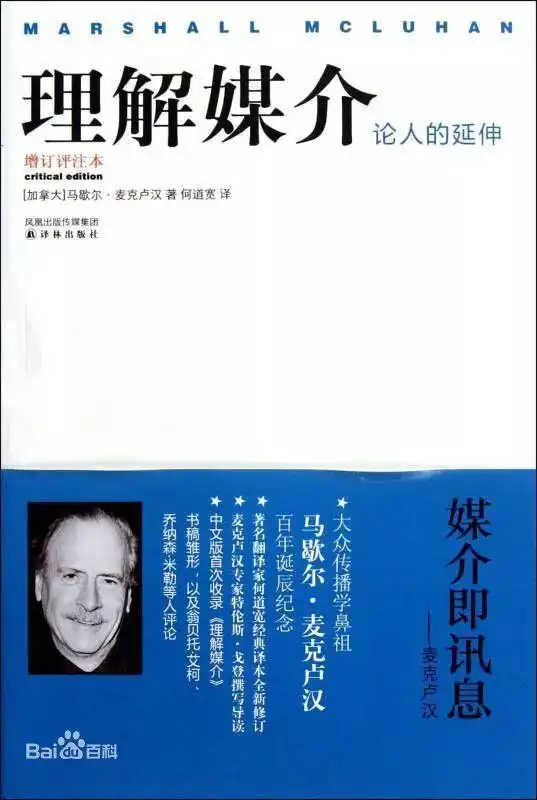
The rise of auditory culture is the result of questioning and criticizing visual supremacy. After the 20th century, with the rapid development of modern science and emerging digital media fully penetrating into our daily lives, visuocentric all-seeing machines have become a nightmare-like existence in daily life. The ubiquitous "seeing" and "being seen" are intertwined. The nightmare of vision awakened philosophy to rethink vision. Visual centrism began to be replaced by an anti-visual tendency. The value of sound began to receive more attention from academic circles. There was an "auditory turn" in the field of cultural studies. If sound narrative is an artistic and aesthetic process in which a storyteller tells a story orally to stimulate the auditory imagination of the audience and thereby obtain aesthetic pleasure, then visual narrative reproduces the plot of the story through visual images and directly stimulates people's senses to satisfy the reader's aesthetic needs. Once the narrative begins, there is a difference between images and words. Both sound narrative and visual narrative are related to the construction of space. McLuhan believed that visual space is a space with distance, while acoustic space is completely discontinuous, it has neither center nor edge; visual space is continuous, while auditory space is synchronous.
There are various spatial forms in literary narratives. From a spatial perspective, modernity refers to the modernity of cities. On the one hand, modernity originated in cities; on the other hand, modernity is a metropolitan phenomenon. Richard Lehan believes that “a city is a dual construction of urban life added to literary form and literary form added to urban life.” ② The rise of cities is inextricably linked to the ebb and flow of literary movements, especially various narrative modes. The theory of aesthetic modernity links modern life with modern art, emphasizing the transitional, fleeting, and accidental, and the discontinuous experience of time, space, and causality. Its characteristics are mainly reflected in the discontinuity and instantaneity of modern experience, as well as the fragmentation and novelty of modern experience.
Regarding the ultimate function of literature, the traditional concept holds that literature has cognitive, educational and aesthetic functions. From an anthropological perspective, art originated from witchcraft, and poetry was differentiated from the trinity of poetry, music, and dance. Primitive art is the trinity of poetry, music, and dance. Our ancestors hoped to express their emotions through lyrics, gestures, melody, and rhythm. Therefore, literature and art have an inseparable native connection with medicine. The healing function is the first and oldest function of literature. Literary anthropology is the study of literature from the perspective and methods of cultural anthropology. It is committed to exploring the literary phenomena of unwritten and marginalized ethnic groups that are obscured by mainstream culture. In other words, literary anthropology takes the living literary phenomena and primitive culture living among the people as its research objects, studies the living ritual performances that have been passed down from ancient times to the present, and explores the intrinsic relationship between ritual performances and culture. Western scholars use the theory of literary anthropology to interpret Homer's epics and find that there is a long-standing oral cultural background behind the textual narrative of Homer's epics. According to the findings of archaeologists, before the writing of Homer's epic poems, the tradition of singers singing, ritual performances, and worshiping gods was at least 100,000 years old. The active literature in my country's remote ethnic minority areas is still very active among the people, and the theories and methods of literary anthropology still have a place to be used.
Generally speaking, symbols refer to the markings of things, and semiotics is the study of symbols, their indicating characteristics and ideographic mechanisms. The understanding of semiotics can be traced back to ancient Chinese classics in the pre-Qin period, and in the history of Western thought it can be traced back to the ancient Greek period. The word "semiotics" comes from the ancient Greek word "semeiotikos", coined by Hippocrates, the father of Western medicine, which means "symptom observation". For doctors, by observing the external symptoms (semeions, marks) of the patient's body, such as stains, marks, etc., they can gain insight into the diseases in the patient's body. In semiotic terms, it is to see through the visible marks on the outside of the human body to see through the inner invisible essence. This relationship between the outside and the inside is through one thing indicating another thing. This kind of indicating and signifying relationship can be said to be the essence of symbolic phenomena. Semiotics is the theory of studying symbols, studying the various laws of the use of symbols in human society, or studying the culture, literature and art of this society from the way of using symbols. Semiotic poetics, also known as semiotic literary theory, is a literary theory constructed using semiotic methodology.
Digital poetics is a literary theory that studies digital literature. From a media perspective, literary expression has experienced the development process from oral text to printed text to digital text. These three media constitute three different experiences and three different ways of interpretation. The narrative program of oral epics relies on oral transmission, and the birth of literature led to the prosperity of tragic narratives; printing technology created the meticulous narrative art of 19th-century realist novels; photography and film technology broke through the time and space limitations of the stage, making narratives in movies and television possible. Computer network technology has brought about a major transformation of literary narrative. Literature presented through the Internet, e-books, computers, disks, CD-ROMs and other carriers has not only affected the theme, narrative style and poetic effect of literature, but also changed the way literature is created, disseminated and accepted, and brought readers a new narrative experience in a new narrative form. As a result, digital literature developed successfully. Digital literature is a literary type named from the perspective of media. As a product of digital media and a new means of literary creation, it is not the opposite or substitute of printed literature, but is just a continuation of experimental narratives.
At present, academic circles usually adopt the theories and methods of comparative culture, comparative poetics and comparative literature, emphasizing attributes such as cross-culture, cross-language, and cross-ethnicity. However, comparative research between the same culture, the same language, and the same nation is often ignored or even not recognized, so it appears to be rather rigid and narrow-minded. Compared with the traditional expressions of "cross-culture, cross-language, cross-discipline…" in comparative literature and comparative poetry, the formulation of "intermediation" or "in-betweenness" with interactive characteristics and generative possibilities is more appropriate. Since the 20th century, the issue of intersexuality has touched many humanities fields such as philosophy, aesthetics, literature, and anthropology, and "the emergence of intersexuality" has become a new theoretical consensus. Intersexual poetics is based on the overlapping and interactive relationships between cultures, texts, subjects, and discourses.
The content of each chapter in this textbook is an independent chapter, and there is no necessary connection between the preceding and following chapters. Starting from any chapter does not affect the understanding of the overall content.
① Roland Barthes: "Introduction to Structural Analysis of Narrative Works", in "Narratology Research" edited by Zhang Yinde, China Social Sciences Press, 1989, page 2.
② Richard Lihan: "Cities in Literature—The History of Knowledge and Culture", translated by Wu Zifeng, Shanghai People's Publishing House, 2009, page 3.

Cai Xi, a native of Yongzhou, Hunan, has a Ph.D. in literature, a professor at the School of Literature and Journalism of Xiangtan University, a doctoral supervisor, a postdoctoral co-supervisor, a Distinguished Professor of Furong Scholars in Hunan Province, and a director of the Chinese Comparative Literature Society. He has hosted 3 National Social Science Foundation projects, published more than 80 papers, published five monographs (single author), published the translated work "Collection of Dickens Studies" (first translator), and published his doctoral thesis "Research on the Academic History of Contemporary British and American Dickens (1940-2015)" Later, it was awarded the second prize of the 8th Higher Education Institutions Scientific Research Outstanding Achievement Award (Humanities and Social Sciences) (one of three volumes, ranked second). "Research on Literary Anthropology of King Yalu" won the 2022 Second Hunan Provincial Literature and Art Award for Outstanding Works (regardless of grade).