【Abstract】Since the spread of the COVID-19 epidemic around the world, people have deeply realized that a community with a shared future for mankind is not just an idea. In the context of the development of high-tech technologies such as Internet communication technology, artificial intelligence, virtual reality and augmented reality, the government has greatly accelerated the process of social digital survival by optimizing the digital social environment. The information explosion brought about by modern communication technology provides people with a variety of possibilities that can be expressed, obtained, and interacted with. Concepts and meanings are being generated all the time, and self-awareness changes in the categories, properties, and attributes of things. Based on this, we need to re-examine the motivations, principles, styles, and habits behind different social psychology and social behaviors, and continuously improve people's thinking abilities and cognitive levels.
[Keywords] Acceleration of cognition of media-based survival in digital society, digital governance [Chinese Classification Number] G122 [Document Identification Code] A
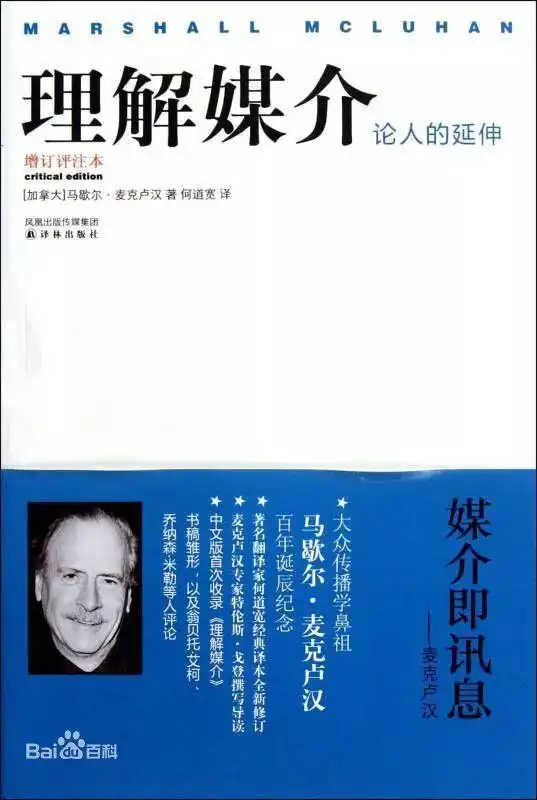
The universalization of digital existence under the accelerated development of society has made people once again realize the significance of media socialization and social mediaization, and McLuhan's idea of "the medium is the message" has been further confirmed. Various media activate the vitality of their connections and messages under the rapid action of communication speed and feedback mechanism. While they are fully unfolding in people's daily lives, they also closely link international politics, military, economy, society, culture and other aspects, affecting the adjustment and transformation of social structure, social system and other aspects. Social changes that are not dependent on human will once again provide us with the profound connotation of understanding McLuhan's "global village".
Changes in communication ecology and the emergence of “instant subjectivity”
Since the 18th National Congress of the Communist Party of China, General Secretary Xi Jinping has emphasized many times that "people's hearts are the greatest politics." This is because human communication activities are not only affected by political ideologies such as nation-states, but also restricted by the costs of physical space transportation, verbal communication, and physical proximity. With the development of information and communication technology, the cost of verbal communication is increasing compared with other costs. The reason is that the basis of verbal communication refers more directly to the mutual recognition and trust of people's bodies and minds. It reveals the role of people's life background, human nature, emotions, emotions and other psychological activities in communication and dialogue. Driven by public opinion, it has increasingly become the source of human power.
The various fandom cultures formed around idols are constantly in and out of drama in the repeated struggles between public opinion and social power structures. By spreading all kinds of pyrotechnics in daily life, social platforms have brought about the rise of Internet celebrities, Internet celebrity stores, and Internet celebrity products. There is a revival of tradition, the rise of many self-created brands and trendy brands, and changes in a variety of new business and marketing methods. While the culture is flourishing, it also drives the development of the economy itself under different economic concepts. In mediaized existence, communication runs through people's lives, work and actions. They are in a state of ebb and flow and are inseparable. On the one hand, this reflects the complexity of information feedback, making multi-directional reversal between the transmitter and the receiver possible. On the other hand, it also shows that the interactivity and interactivity between the transmitter and the receiver, who are constantly changing their identities, are important features of Internet platform communication.
People have always regarded literary works as objects of reading, and they continue to taste, understand and reflect on them in their own world. Nowadays, various literary works use offline communication methods such as escape rooms and script killings to attract more young people, allowing them to enter the works and play the roles in the scripts, showing the "improvisational subjectivity" pointed out by literary critics. We also call this "improvisational subjectivity" "instant subjectivity", which has penetrated into people's daily necessities, food, housing and transportation. For example, due to the epidemic, many important foreign hip-hop competitions had to be canceled, but instead China's "This!" Just Street Dance" program. Many foreign masters participated in the competition and comments. Their superb skills, humble attitude, and their understanding of Chinese and Western cultures were integrated into the street dance choreography, and they presented unforgettable performances to the audience. Both the production staff, actors, and audiences have benefited a lot from this process. They have a new understanding of themselves and continue to explore and inspire themselves through interactions with others. They understand that one's own survival cannot be separated from the strength of the country. Many social contradictions and conflicts are caused by differences in individual thinking and cognitive styles. Individual cognition has become the basis for profound social changes in concrete and subtle daily life, highlighting the differences in psychological motivations, values, etc. behind the hidden subjects.
The shift and significance from macro-politics to micro-narrative
The gatekeepers of information dissemination in the global communication ecology are not weakening but increasing. Everyone can become a disseminator of information, and the public opinion formed may also contribute to changes in the establishment of issues and information reporting by all parties. It is difficult for the media to arouse public attention with simple qualitative arguments and eager to take sides. People have more room for independent thinking and reflection in the clicks and sending of differentiated information. The global communication trend brought about by technological development has become an irreversible social reality. With the help of multiple subject interactions and interactions on various Internet platforms, it affects the direction of global politics, economy, technology, culture and even military development. For example, regarding the withdrawal of US troops from Afghanistan, which attracted global attention, social platforms allowed us to see various scenes of instant trouble almost at the same time, which left many people who care about Afghanistan at a loss as to what to do in the face of the incident. There are various expressions of this incident on social platforms. In the past, the global calls for freedom, justice, democracy, and peace, which were able to effectively mobilize the emotions, emotions, and even actions of all parties, seemed to be difficult to guide the direction of public opinion. When these calls were more broken down and revealed the complex game relationship between the interests and powers of all parties, and when faced with various nuanced problems that needed to be solved, all the high-pitched talk seemed so inappropriate. A national or even global public opinion war that was thought to be rising still exists in people's imagination.
From macro-politics to micro-politics, and then from micro-political standpoints to micro-narratives, the most important change is from emphasizing things to emphasizing personnel, and emphasizing stances to emphasizing narratives, that is, from grand narratives to micro-narratives, from micro-narratives to specific events themselves, and back to the nuanced daily life. The historical, social, and cultural context that affects the development of events, as well as the subject discourse and level of understanding, all require us to understand, explain, and respond in micro-narratives, and the aesthetics and emotions that obscure the subsequent feelings, induction, obsession, and shock have also become an important part of the narrative. Large and unsuitable analytical discourses in the fast-spreading social context are often instantly submerged in the vivid, reversal of the truth. The enthusiasm and enthusiasm we express for events first tests our cognitive abilities. Whether we can capture clues about the events based on self-doubt and reflection during listening, and conduct careful and detailed analysis, this may be the only way to get closer to the truth of things or find answers to questions.
The reversal in the magic of media and its impact on digital survival
As Marx said: "History first happens as a real event, and then it repeats itself like a farce." The frequent occurrence of media events is a symptom of digital existence. It reflects the conflict of people's ideas on things. It is also the most faithful and subtle expression of the thinking and cognitive styles of diverse social subjects such as governments, enterprises, social organizations, media, and individuals. The media represents society, and also shapes and recreates the media environment. The ever-changing media environment in the accelerating society has increasingly become the matrix of concepts and sources of ideas for social development, affecting the direction and future of human beings and society. While we should maintain distance and vigilance in response to the changing media environment, we should also realize that digital existence has actually evolved human beings into a mediated existence.
The magic of media challenges people's ideas and ways of thinking. In the rapid dissemination of information, various information breaks down the boundaries and is quickly connected, resulting in actions and even changes, revealing differences in concepts, consciousness, etc. among individuals. McLuhan once profoundly pointed out: "All technologies have the nature of alchemy. Whenever society develops a technology that extends itself, all other functions in society must change to adapt to the form of that technology. Once a new technology penetrates deeply into society, it will immediately penetrate into all systems of society." In order to contain and isolate the epidemic, under the leadership of the government, it has become a necessity to combine people's travel with digital passcodes. Smartphones have naturally become a common need, and people have begun various digital lives consciously or unconsciously. Tens of billions of consumer coupons have been issued across the country, many of which can be directly consumed online. Many people who are unwilling or unfamiliar with smartphones have gradually adapted to digital life. Many people have become accustomed to this new way of obtaining information. The issuance of government consumer vouchers is to promote economic development, but the digital application of consumer vouchers has allowed social media to penetrate into all aspects of people's daily lives.
Smartphones, digital passcodes, and consumer coupons as media not only add a way of life, but more importantly, they trigger a revolution in people's ideas, thinking and cognition, as well as social rules and norms. The e-commerce platform has greater openness, various products are rich and colorful, and merchants have good service attitudes, price advantages, and increasingly convenient door-to-door services. While people can enjoy convenient online services, it has also had a huge impact on traditional shopping malls, supermarkets, and vegetable markets. At the same time, the cross-media narrative formed by the combination of words, sounds, and images used by people as media releases the magic of emotions, emotions, speech, language, images, etc., and turns it into a new driving force for organizing society and daily life. The instant explosive power of cross-media narratives is deeply rooted in people's entertainment, recreation and work, but it transcends time and space and turns to the deconstruction and reconstruction of social relations and social institutions. The stable aesthetics, cognition, customs, habits, rules, norms, etc. that people often relied on in the past have been shaken. They all need to return to the human affairs themselves for rethinking, and make specific understandings and judgments in specific people's cognition and identification of media forms.
"Individuals begin to take responsibility for 'personal actions'"
The constant reversal and reversal in the magic of media heralds the arrival of the individual cognitive revolution. McLuhan called this reversal and reversal the "transformation point", that is, "individuals begin to be responsible for their 'individual actions'". The foundation of the construction of social order is increasingly related to individual psychological ideas. It is related to individual thinking and cognition, the ability to perceive social trends and symptoms, and the ability to respond to changes in social systems and social structures. The rapid social changes brought about by media technology are concretely reflected in the changes in people's way of thinking and cognition. Everyone needs to think in a larger space and time in order to get closer to the truth of things. The most critical of these is the cognitive revolution of the human self.
Internet phrases such as "social fear", "996", "I'm in trouble", "social animal", "social death", "mourning", "beating workers", "tool man", "payment person" and "involution" were quickly understood by people as soon as they spread. Internet slang is a creation of everyday language, and it is also a symptom of the times. While they express the voices of many people, the way and degree of acceptance vary greatly from person to person. Many people just use it as a social term and "spice" in life, pushing problems to society but rarely reflecting on themselves. On the premise that people cannot complete self-understanding, their understanding of others and society will always be on the road. The identification of self and others in the self can easily lead to "me in the mirror", limiting the self to narcissism and self-talk. Everyone lives in a self-constructed information "cave". People often think that their own world is the entire world, which has become one of the reasons for modern people's anxiety and pain.
Individual development is a process of continuous understanding of oneself and continuous interaction with the world. Human subjectivity is between active and passive. In particular, for people to truly become their own subjects, they need to actively participate in the construction of themselves and society. This kind of initiative first requires the self to have the cognition and ability of introspection and reflection, and this introspection process is a self-revolution of the habitual way of thinking and cognition that people have formed about themselves. It forms an understanding of the external world based on the continuous division and refinement of the self. It recognizes individual differences and takes them as a prerequisite for communication and dialogue, extending and strengthening the understanding of others and the world while examining others. Mediated survival emphasizes that things that appear to be truths in cross-media narratives may become absurd, and what is generally considered absurd becomes the cradle of truth. McLuhan repeatedly emphasized that many people do not first embrace and accept new media. Instead, they adopt methods such as self-numbing and self-amputation to refuse to acknowledge the impact of new media on themselves and society in their sensory perception. When people accept and use new media, they will find themselves trapped in it, enjoying themselves in pain, and it is difficult to control their own feelings and desires. While modern communication technology provides high efficiency and effectiveness, people find that they have more time at their disposal and become busier and more tired.
Individuals are responsible for their own actions, reflected in willpower and self-control. But this is only one aspect of cognition. The difference in people's cognition starts from people's different understanding of knowledge. Cognitive acceleration emphasizes that knowledge itself is as important as the process of knowledge exploration. The self needs to be constantly recognized in the development process of things. It can recognize the nature of human beings and the sum of social relations through people's self-survival, self-affirmation, self-denial, and self-conflict through the country, ethnicity, race, gender, class, class, identity, etc. attached to people. In the cognitive acceleration of people as the scale of social order, systems and regulations, the self's cognition and thinking style in the acceleration of individual cognition determine the perspective and way of observing things. The self is an important participant and participant in events when examining and judging society. They all determine the depth and breadth of one's understanding of events. People's way of thinking has undergone the following changes: from omniscience and "God's perspective" judgment without reflection, to delayed judgment after reflection; from self-affirmation of omniscience to all meanings yet to be generated; from pure pursuit of efficiency to conscience discovery in order to produce more wisdom strategies; from enhancement of willpower to improvement of overall perception; from segmentation and differentiation to holistic and integrated thinking and cognitive methods; from perception, acceptance, and absorption of information to the ability to continuously connect and connect. These cognitive accelerations promote the reproduction and reconstruction of the self.
Communication and understanding in cognitive acceleration
Rollo May, an American existentialist and humanistic psychologist, distinguished two kinds of ignorance. One is "the ignorance of an imaginative nature, that is, the ignorance of a poet or artist. It is the childlike clarity retained in the adult heart. Everything has a fresh, pure, new and colorful nature. Awe and wonder flow from this ignorance." Another kind of ignorance is false ignorance, that is, "This kind of false ignorance takes advantage of innocence and childishness. It is a childhood that never grows up and is a fixation on the past. It is naive but not childlike." It is easy to "take incompetence, weakness and helplessness as virtues." The difference between the two is that the former "makes things clear" and the latter "can only make things look simple and easy". It is a pity that falsehood and ignorance are always prevalent in society. Cognitive acceleration means that in the face of changing things, the self should have the ability to constantly correct the angles and methods of observing things. In false ignorance, we will use solid positions and postures as the foundation of our lives, but in imaginary ignorance, people's cognition is open and rational, and in practice, we continue to gain the ability to observe and reflect in silence. Ignorance has profoundly affected the development of the self and society. What is urgently needed in social acceleration is the continuous improvement of people's cognitive abilities and levels in daily communication and dialogue. It is against this background that cognitive acceleration is proposed.
Moral, ethical, and value discourses are ubiquitous in the digital world. Building consensus in diverse and heterogeneous expressions and actions requires interaction among complex relationships among countries, nations, religions, systems, mechanisms, ideologies, cultures, and concepts. Among them, "empathic awareness" of individual aesthetics, beliefs, and values that have been hidden for a long time has also been added to the production of conceptual meanings. People's value judgments and judgment frameworks are difficult to settle once and for all. In a rapidly changing society, people's cognitive acceleration leads to constantly changing standards for self-judgment, sometimes even self-denial. This is the charm of self-correction and calibration, and it is also the most basic feature of ignorance in communication and dialogue. It constantly adapts to the changing context and constantly strengthens the subject's self-awareness in the process of change. Only by constantly correcting our own biases can we piously accept our own ignorance while facing the unknown. Thinking and understanding in ignorance not only focus on the things themselves, but also focus on how the understanders themselves understand, which then requires us to understand why we understand things in the way we do. The understanding of events depends on how the background of one's own thoughts outlines the boundaries of the event situation. What is constantly reflected in the situation boundary line of the event is the self's understanding of others, and from this, we continue to learn how to understand ourselves.
The information explosion brought about by modern communication technology provides people with a variety of possibilities that can be expressed, obtained, and interacted with. Concepts and meanings are being generated all the time, and self-awareness changes in the categories, properties, and attributes of things. Everyone's world is constantly changing through interaction with information, which leaves room for infinite and far-reaching communication, interpretation, and understanding between people and themselves, and between people and others. Understanding is subtle and requires insights that transcend time and space and specific and nuanced self-awareness. Here, transcending time and space is not an empty concept, it is an expression of the complex interconnection of things. There is a difference between cause and effect between things at the same time and cause and effect at different times. Many scholars regard the cause and effect at different times as a manifestation of the mystery, sacredness, and sublimity of things. Little do they know that Eastern wisdom directly points out the importance of timing and fate behind them to the development of things. They are unexpected and cannot be prevented by the individual self or even human beings. The so-called "It's not that you don't repay, the time has not yet come. When the time comes, everything will be repaid" is exactly what it means.
Understanding is achieved through various media. In the modern communication ecology, language is only one of the media for communication. People need to cross the boundaries that prevent our cognitive development in the awareness of self-ignorance, open the channel for communication between self and others, and release the power of human perception and feeling. A picture album of a foreign culture can attract more attention from people from other places rather than local people. The customary habits of local people will reduce people's sensitivity to the subtle differences in daily life. Therefore, if local people see the different understandings of things by foreigners, they may also discover what they have left behind and re-examine and recognize themselves.
In short, under the epidemic, high technologies such as artificial intelligence have brought people's digital survival to a path unprecedented for mankind. Only by constantly recognizing and understanding one's own ignorance among others can one be aware of various events and the many factors that influence them. The self is a process of continuous production and reproduction. Cognitive acceleration allows us to constantly face the vast unknown and uncertain world; pious and imaginative ignorance allows our consciousness, concepts, and thoughts to be continuously generated. It will not stay in the past, but constantly understand the past and future in reality. This understanding also makes reality, the past and the future become one. Whether people are willing or not, an enhanced sense of individual responsibility and the ability to assume obligations are an indispensable and important component of a better society.
(The author is a professor and doctoral supervisor at the School of Journalism and Communication at Peking University, and the director of the Humanitarian Communication and Resource Mobilization Center at the International College of the Red Cross)