write in front
Speaking of which, there are two ways to classify festivals: those with holidays and those without holidays, those with chopping hands and those without chopping hands. Among the four overlapping festivals, those that are neither a holiday nor a festival often have little sense of existence, and Father's Day is naturally among them. People seem to have become accustomed to letting their father just quietly, in the corner, murmur the prose poems he has written all his life. Maybe his father will have his own readers, but it must not and does not have to be himself.
There are two pairs of academic father-son soldiers that are most familiar to the field of Chinese communication research: McLuhan and Schiller. Counting the relatively unfamiliar Goffman and Peters, that's probably all I can count.
The halo of the father's generation cannot cover up the pioneering work of the children's generation in the academic field: "The Essence of McLuhan" compiled by Eric McLuhan for his father, Marshall McLuhan, has been translated into Chinese; Dan Schiller (son of Herbert Schiller) has interacted a lot with Chinese communication political economics researchers. Major works such as "History of Communication Theory", "Digital Capitalism" and "Information Fetishism" have been introduced to China. In recent years, he has also published two Chinese translations of "Digital Decline" and "The Rise and Expansion of Information Capitalism"; "On the Run" by Alice Goffman (daughter of Erving Goffman) has been introduced and published by Renmin University of China Press; Benjamin Peters (son of John Peters) is also an accomplished media historian.
Alice and Benjamin are both researchers of the post-80s generation and have had limited influence on Chinese communication research, while Eric McLuhan and Dan Schiller (now 70 years old) have already become famous.
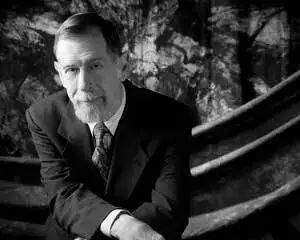
Eric McLuhan
Eric McLuhan passed away in 2018 at the age of 76. He studied in the United States in his early years and received a bachelor's degree in communication from Wisconsin in 1972. He then obtained a master's degree and a doctorate in English literature from the University of Dallas in 1980 and 1982 respectively. He later returned to Canada and served as the director of the Harris School of Art in Toronto. Since 1964, his research and reflections have been published in the form of books, magazines and journal articles on media, perception and literature. Co-authored with his father: "Media Laws", "Communication Theory" and "Media and Determinative Causes". Among them, "Media Law" has also appeared in the academic master's entrance examination of the School of Journalism, Renmin University of China.
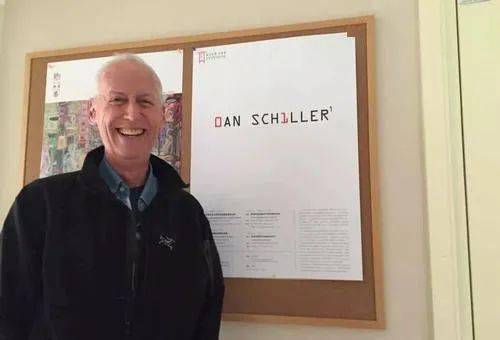
Dan Schiller
Dan Schiller is an emeritus professor in the School of Library and Information Science and the Department of Communication in the College of Arts and Sciences at the University of Illinois at Urbana-Champaign. He received a bachelor's degree in philosophy from the University of Wisconsin in 1972, and a master's and doctoral degrees in communication from the University of Pennsylvania in 1976 and 1978 respectively. Since 1990, he has been an associate professor in the Department of Communication at the University of California, San Diego, working with his father, Herbert Schiller. In 2007, he was invited by the School of Journalism and Communication of Wuhan University as a visiting professor. He is committed to critically exploring the history of information and communication in the context of capitalist political economy. Currently, he focuses on the history of the development of telecommunications infrastructure in the United States and the impact and role of information and communication technology on the current economic crisis.
In the past 20 years, many Chinese scholars have conducted academic interviews with Eric McLuhan and Dan Schiller. We have excerpted their reminiscences about their fathers for the benefit of readers and as a special memory for this Father's Day.
To the most amazing dad in our lives!
about my father
@Eric McLuhan:
My father initially studied engineering. When he was young, he liked to make things with his hands and was very good at them. He likes to take things apart and put them back together again. Me too. However, the things I dismantled were relatively expensive, including radios and televisions. I became a radio amateur and lost a lot of money when I was young.
But later, my father discovered a more important problem. During the summer, he worked as an engineer in Manitoba, building a dam, and spent his evenings reading English literature. When he returned to school in the fall, he began to study literature.
He learned how to study poetry, study art. He discovered that poetry has an effect, and the content of the poem has another effect. The two effects are different. This is true not only of poetry, but of all art forms such as music, sculpture, and architecture. The meaning of form and content have a separation effect. The content of poetry has not changed much over the past hundreds of years, expressing love, trouble, turmoil, anger and other plots, but the form of poetry has changed greatly.
So my father started studying media in his own way, and he was the first person to do that. He often said that without training in poetry and art, he would not have studied the medium. General courses, sociology, and psychology training are not enough and cannot provide you with the tools or skills you need. In addition to studying sociology and psychology, it will be helpful to study the forms of poetry, literature, painting, and sculpture. Otherwise, you will only be on the surface and not go deep. The same goes for media.
Without training in art, you won’t understand that media expand the senses and change the way of understanding—not just the way a medium is used, but the impact it has on an entire culture. This is what makes his thinking so different, and why it is impossible to disagree with him.
@DanSchiller:
My father originally studied economics. He turned to communication studies from about 1962 to 1969, and published his first communication book "Mass Communications and American Empire" in 1969.
One of the ways he accomplished this shift was by viewing information communication resources as natural resources, such as water, electricity, and other resources. And his transformation happened to occur in an era when communication began to become one of the main features of the global economy.
That was when I was going through middle school, high school, and college, so we would have regular conversations, and the whole family would be discussing and thinking at the dinner table all the time. In 1971, he asked me to be his research assistant. At that time, he had no scientific research funds, so he only paid me a small fee. So I undertook research for some chapters of his second book, called Mind Managers.
Later, after I finished college, I began to plan to go to graduate school, but at that time I was not sure which graduate school I wanted to study. At that time, the Annenberg School of Communication at the University of Southern California was an option. This is not because I want to follow in my father’s footsteps, but because communication history, literature, etc. really attract me. From 1972 to 1973, I began to gradually form my own research interests and developed a strong interest in communication studies.
my father's influence on me
@Eric McLuhan:
How much can a son know about his father? What any father and son know most about each other is nothing more than life, hobbies, etc. But when it comes to understanding a person's way of thinking, what you get from your parents can never be learned in school because it's a different kind of learning, one that comes from observation and living together.
@DanSchiller:
How did I form my current understanding of communication studies and political economy? First of all, without a doubt, it must be the environment in which I grew up. Before I even developed my own academic identity, I had some cursory exposure to political economy because it was an everyday topic at our family dinner table. It wasn’t just my father’s influence, but my mother’s, and even close friends of my parents from outside the family. I have been immersed in this environment since I was a child, and their discussion and discourse on current affairs are often from the perspective of political economy.
No one would formally tell me that this is political economy, but this environment and way of thinking prompted me to move in the direction of political economy from a very young age. I absorbed this persuasive way of thinking about how power relations shape our social and political spheres from my parents. I also gradually realized that it is crucial to stay alert to the emerging political and economic trends and to join in the emerging cultural construction.
@Eric McLuhan:
I worked as his assistant from 1965 until his death in 1980, a period of 15 years. I am currently doing a study on the impact of medical technology on human tissue, such as the effect on different parts of the human brain. A few years ago we did a comparison before and after the emergence of the Internet in Canada, and a comparison before, during and after the emergence of television in Bhutan. I hope to do research about China. My interest lies in artists, mature and responsible artists, because they are particularly worthy of my respect.
@DanSchiller:
As an academic, I have some of the pressure of being the son of Herbert Schiller. But I think my parents were probably surprised that I would later choose communication as a major for my doctoral studies.
Choosing the field of communication seemed like a no-brainer to me, not only because of the influence from my father, but also because the major was closely related to my experience as an active participant in anti-war demonstrations as a student. In my opinion, critical communication studies provide important research propositions and an international framework perspective for studying some issues that we must face but do not pay enough attention to.
For me, I started to take this seriously probably when I was working as a research assistant for my father in the summers of 1971 and 1972. The research for a chapter in his book "The Thought Manager" was primarily done by me. In addition, I also sorted out the history of the principle of "free flow of information," which I think is one of his most important academic achievements to date, because this issue has such a profound impact on U.S. foreign policy.
This part of the research was mainly completed by me at that time. The research results were first published in the form of academic papers and were later included as a chapter in his other book "Communication and Cultural Hegemony". Naturally, in the process of working as a research assistant, I established a certain connection with my father's academic thoughts, and more importantly, I gained a deeper understanding of the history of the U.S. government's use of communications to promote its power.
In the eyes of children, "the communication scholars who are their fathers" seem to make those distant names in the textbooks more friendly and smoky. What other parent-child programs do you know about in the communication field? Welcome to leave a message in the comment area to add.