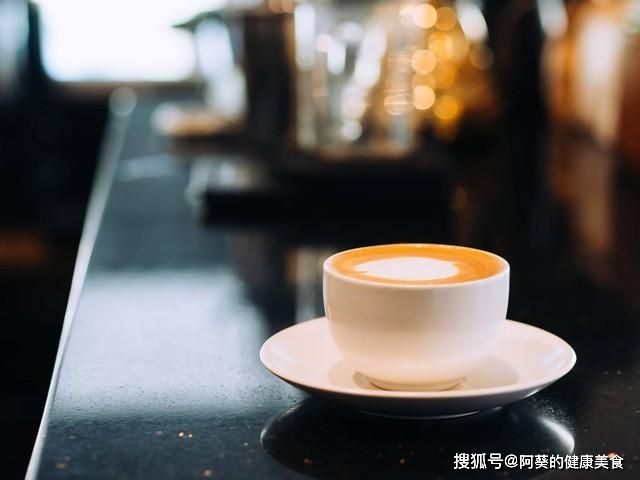
Original Silver Gun Xiaobailong Foodie Research Institute
Hey, let me sigh first.
Why can I write "What is a latte" with such empathy? This is similar to how many people ask me every day "Why are spicy strips and chicken chops not pancakes?"
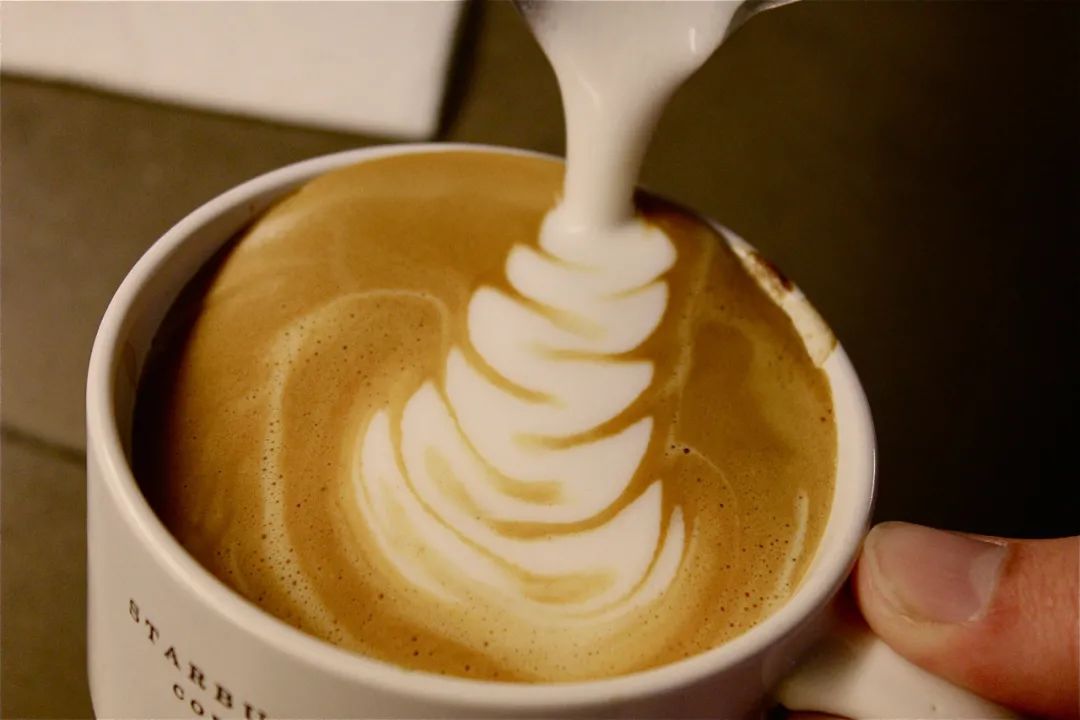
Flickr Kristin Stumpfig
01
What is a latte?
/ Espresso with milk/
The relationship between latte and iron is – there is no relationship. Latte means "milk" in Italian, but translating it into milk coffee seems not enough, so there are translations such as latte, cappuccino, mocha, macchiato, etc. that seem to have nothing to do with pictures and texts.
In one sentence: the fundamentalist latte is actually espresso + milk.
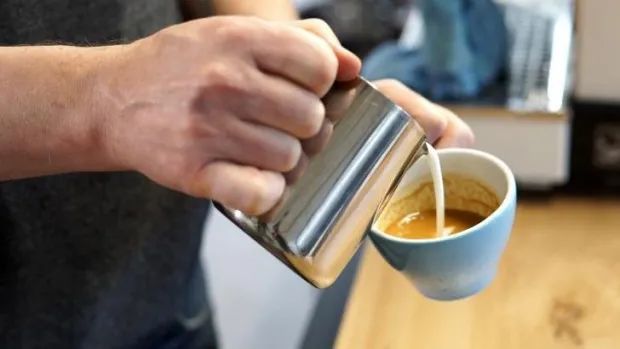
Espresso with milk becomes a latte | goodfood.com.au/Cal Wood
The ratio of espresso to milk in specialty coffee shops is about 1:2-1:3, which is closer to the original "Italian style". If you are used to drinking Papa Xing, you will feel uncomfortable and even suspect that you have been cheated – because the ratio of espresso to milk in Papa Xing's latte is ≥1:7 (I can't help but think of the teacher Zhao Lirong's song "It's actually an Erguotou, mixed with boiled water").
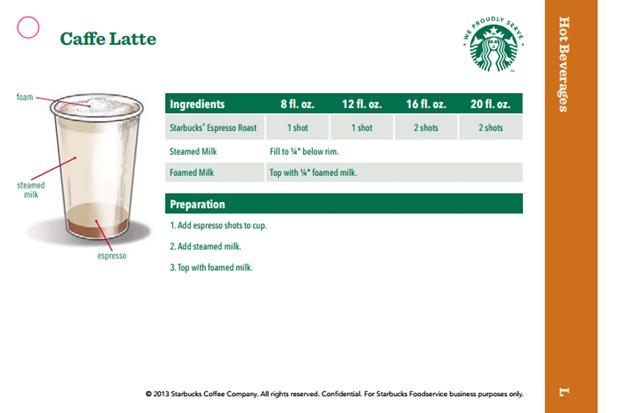
Star Papa’s latte contains much more milk than specialty coffee shops | Starbucks official website
How to evaluate the quality of a cup of latte?
Although latte is a free art, the milk used can be used in various ways. For example, the popular plant milk (oat milk, cashew milk, coconut milk, etc.) can also be called latte in a broad sense. However, the essence of a good latte is actually reflected in the latte art.
Although the presence or absence of latte art does not affect the taste of latte, if the espresso is not made well or the milk is not frothed well, it is impossible to make beautiful latte art. Therefore, if the latte art is good, it means that the espresso and milk foam are both good. Various world-class barista competitions also include special competitions for latte art, which shows the importance of latte art to latte.
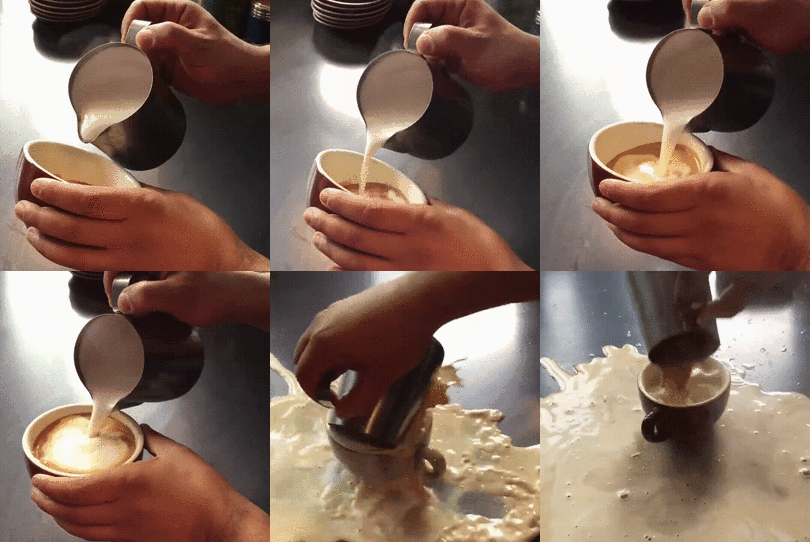
Latte art is not just something you can do if you want | giphy
Latte art espresso
The first is espresso, which must have enough crema (the layer of brown grease on top) to make latte art. If you want the oil to be thick enough, the coffee beans need to be fresh enough, the grinding thickness should be appropriate, the pressed powder should not be loose or tight, the air pressure should be adjusted appropriately, and the extraction time should be reasonable…
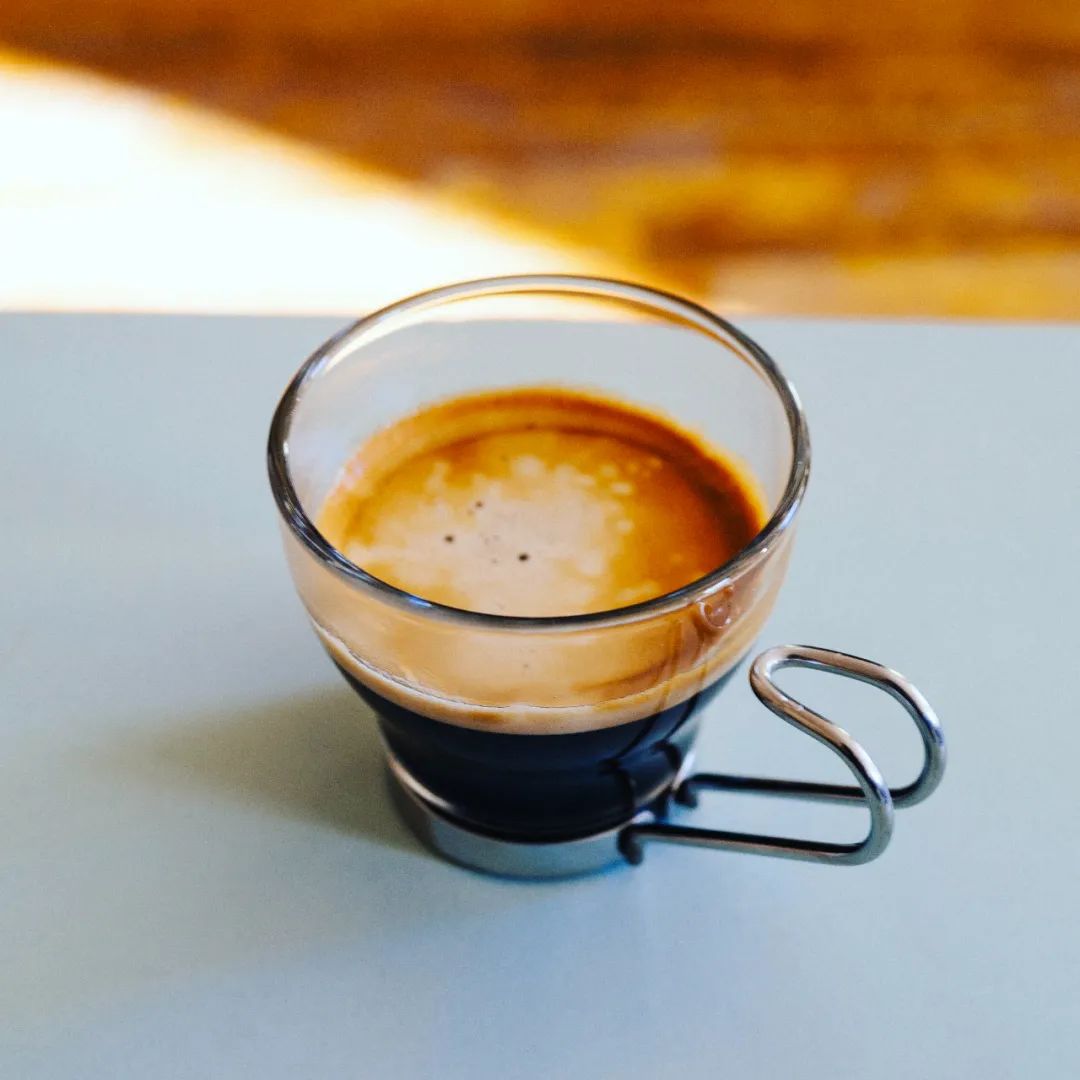
Espresso crema | flickr Min Ma
Latte art milk
And milk is not much easier than espresso. The steam nozzle of the espresso machine sprays high-temperature water vapor, and when it is quickly filled with milk, bubbles will be generated. but–
The overall heating time must be controlled properly: the optimal temperature for milk foaming is 60-63°C. If it exceeds this temperature too much and beats for too long, the milk will not be foamed. Most baristas "feel" this temperature with their hands.
The most perfect milk foam should be super fine with no foam visible to the naked eye, just like the texture of melted ice cream. This requires the barista to accurately control the position and angle of the steam nozzle inserted into the milk. Generally, it needs to be "shallow first and then deep". In this way, large milk foam will form in the milk first, and then the large milk foam will turn into ultra-small milk foam and evenly mixed in the milk. As for when to adjust the position and angle, it basically depends on experience and craftsmanship.
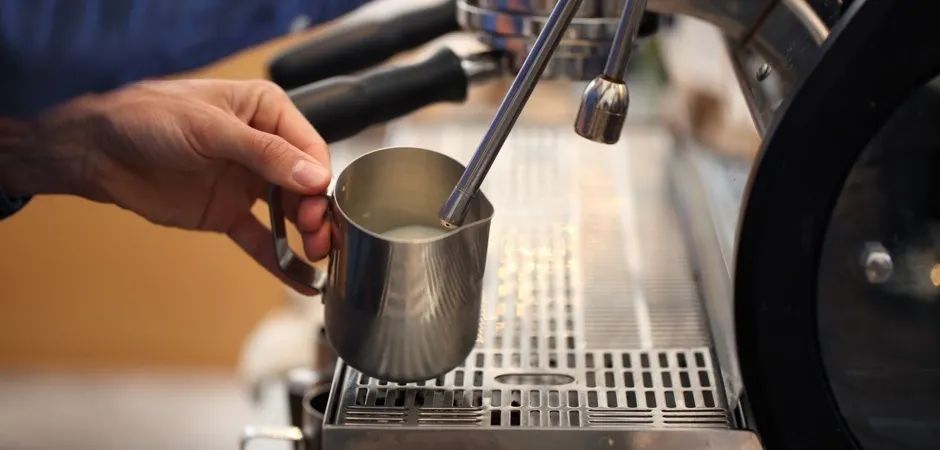
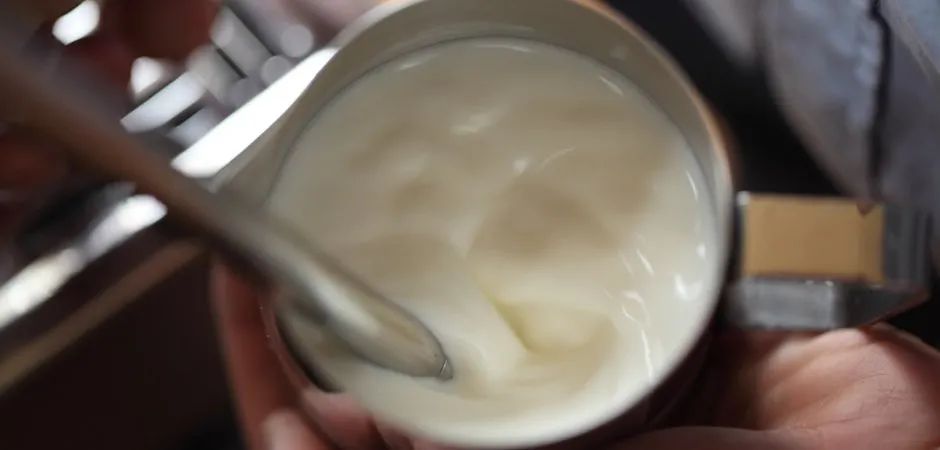
The texture of well-beaten milk foam is like melted ice cream | bluebottlecoffee.com
The espresso cannot be cooled, and the milk cannot stand. You need to start making it quickly after frothing the milk, otherwise the milk will separate and the latte art will look mushy or even impossible to latte art;
If the milk is poured into the espresso coffee too quickly or too slowly, it will cause the latte art to fail. You need to lift the milk jug higher and rotate it at a slightly faster speed. When the milk is about half a cup, start to move closer to the coffee cup and use a slightly thinner milk flow to draw the flowers. An excellent latte art should have no big bubbles, uniform line thickness, centered pattern, symmetrical left and right, and velvety dense bubbles that will stick to the upper lip.
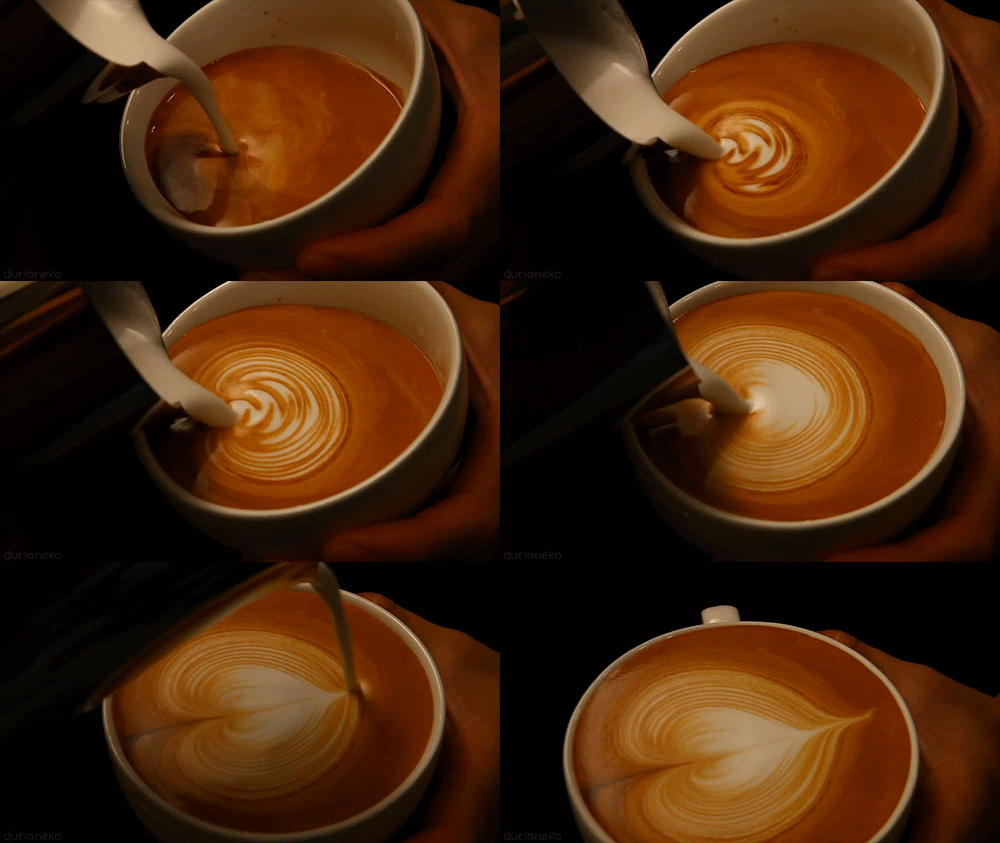
Correct demonstration of latte art | giphy
02
Latte derivatives
/Fruit white, cappuccino, macchiato/
If latte is the basic version of Italian coffee, then burrito, cappuccino, and caramel macchiato are derivatives, and they are all a certain kind of "milk coffee." Comparing pancake fruits, it’s probably: Fuli Bai = double eggs, cappuccino = double fruits, caramel macchiato = add more chopped green onions.
But those drinks such as matcha latte, black tea latte, Earl Gray tea latte, bean juice latte, etc., do not necessarily have coffee. If you order a latte, you will definitely have milk, but you need to confirm with the clerk whether there is coffee.
So let’s take a closer look at the easily confused combinations of custom pancakes, fruit milk coffee.
Group 1: Latte, Cappuccino, Flat White
Latte = coffee + milk
Cappuccino = coffee + less milk
Fuli white = more coffee + less milk
Latte has been mentioned in detail above. Let me just mention it again. In Papa Star’s latte, the medium cup is 1 part espresso, and the large and extra large cups are both 2 parts espresso. Then the clerk will top up the milk, so the extra large cup will always be black.
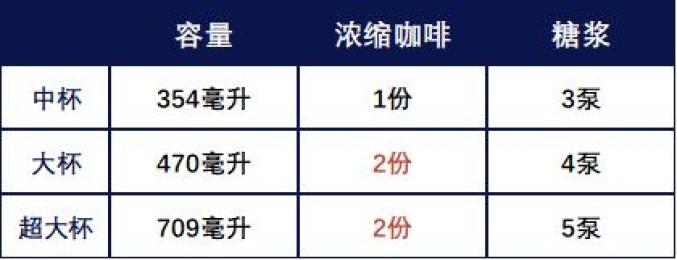
The capacity, espresso amount and syrup amount of the three cup types of Star Papa
The only difference between cappuccino and latte is that the proportion of foam added to the milk will be higher, just like when pouring beer, some people can achieve more foam and less foam, while others can achieve more foam and less foam. But milk foam + coffee has a dense and light taste, while latte tastes more "solid".
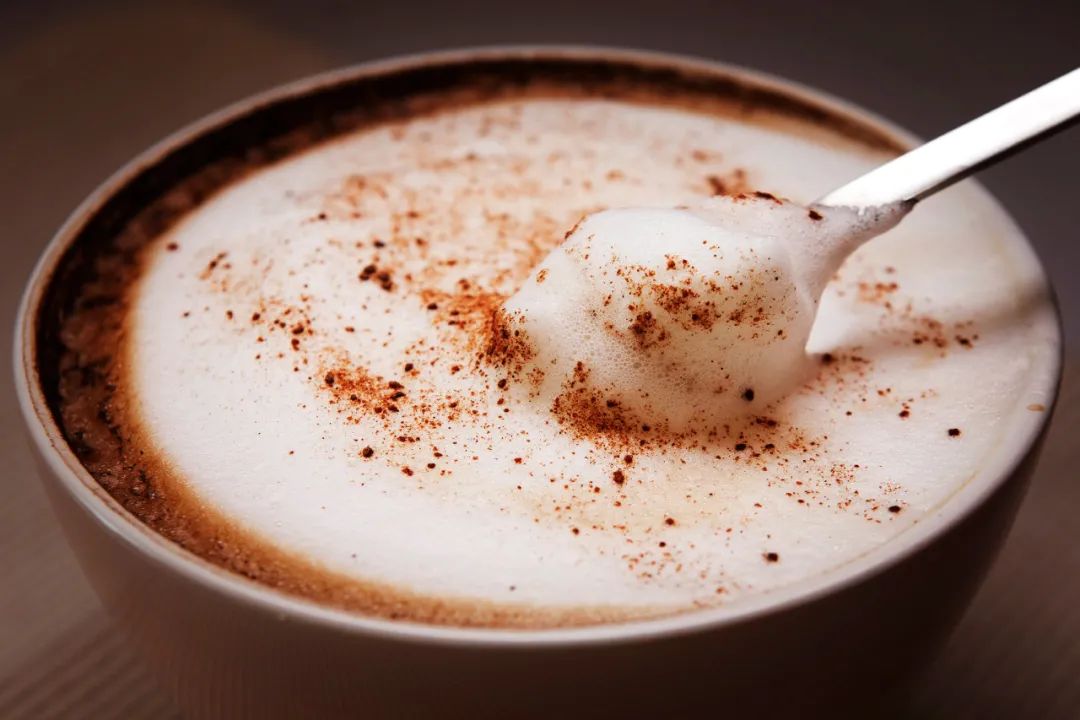
A cappuccino has more foam than a latte | flickr SH Lee
Fuli White (also called Australian White in some stores) adds more espresso than latte. The espresso in latte and cappuccino is both 1/2/2 parts (Star Papa medium/large/extra large), while the espresso in Fuli White is 2/3/3 parts.
However, the espresso used in the exquisite Fulibai should be ristretto, which is "concentrated espresso". It uses less water and the extraction time is shorter, which will produce a smaller and richer concentrate. At the same time, because the time is short, there is less bitterness, so it should have a stronger and sweeter taste.
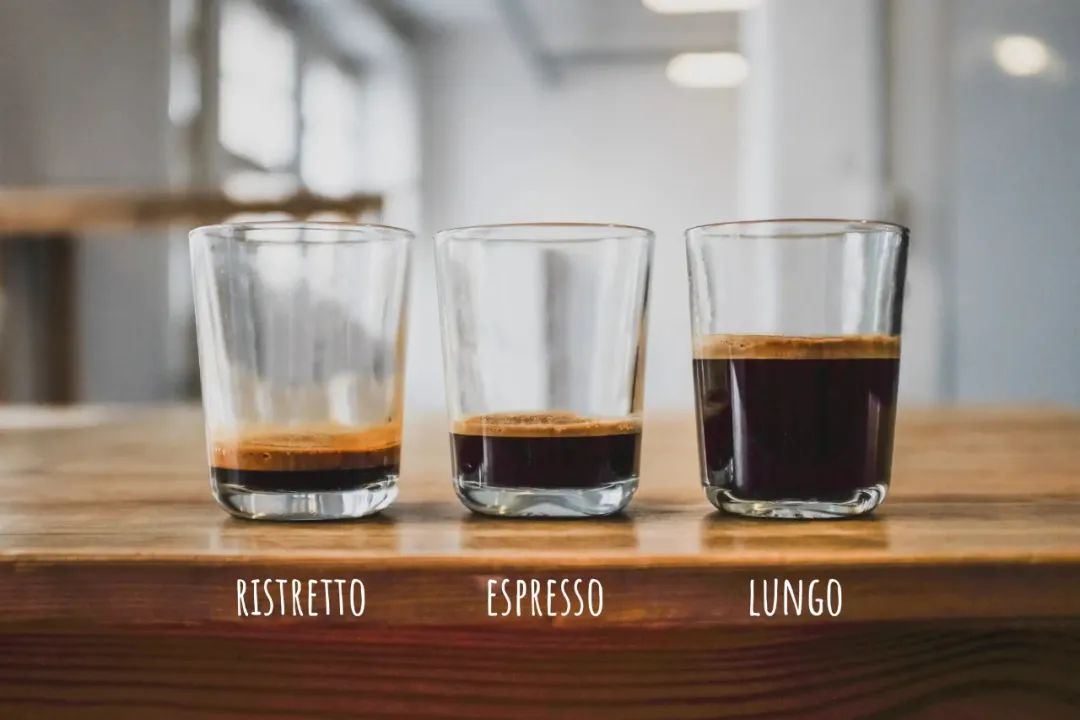
Usually espresso is used to make latte | coffeecircle.com
Group 2: Macchiato series
Macchiato means "marked" in Italian, which means adding a little xx as embellishment on top of xx. so:
Espresso macchiato is espresso coffee with a drop (usually a spoonful) of milk foam on top;
Latte macchiato is milk with a dash of espresso;
The caramel macchiato is quite special. It was invented by a young clerk of Star Papa in 1996. It is a super sweet latte macchiato with a little caramel syrup on top.
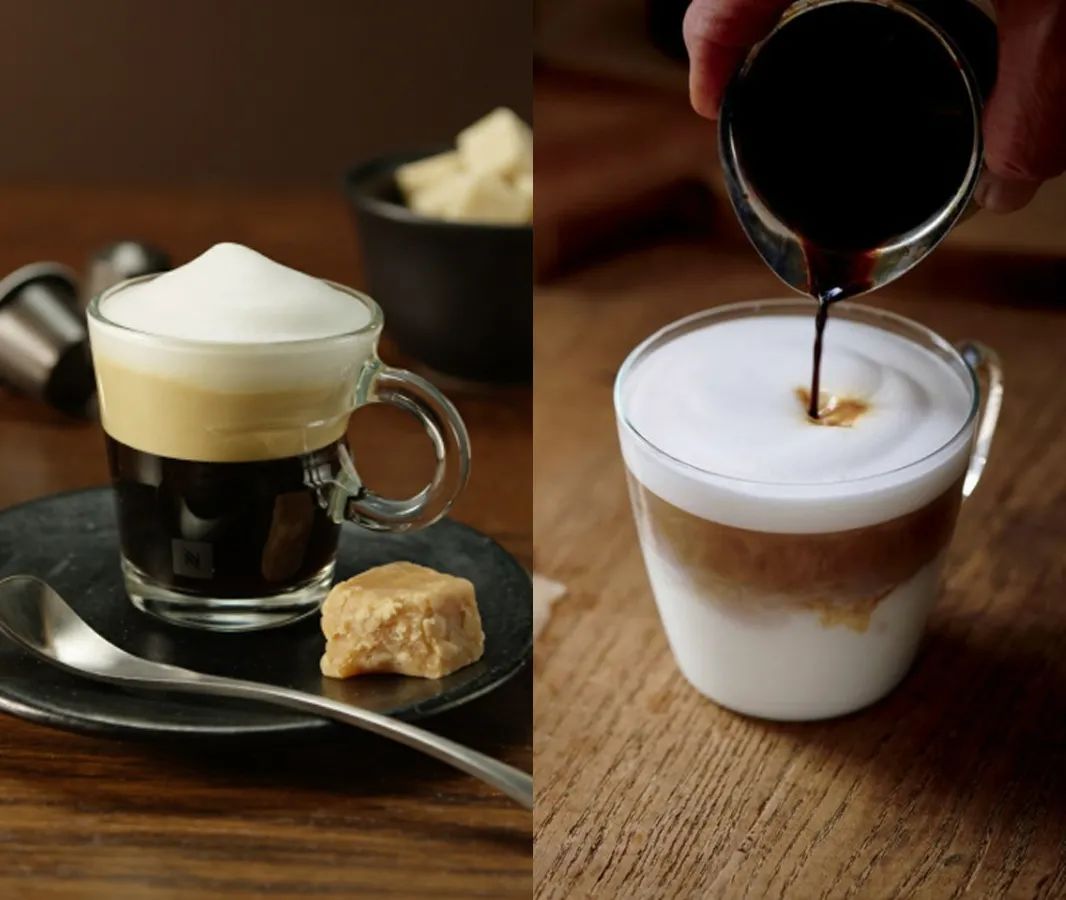
On the left is an espresso macchiato, on the right is a latte macchiato | nespresso.com&delish.com
Group 3: Ice latte and dirty
Iced latte is more trouble-free than hot latte. You don’t need to heat the milk, just pour it at room temperature and then add ice cubes.
And dirty without ice! It's best to use a chilled glass and pour the freshly extracted hot double concentrate over the milk. It's best not to take it out, drink it quickly, and drink it all in three sips. The feeling of each sip is different.
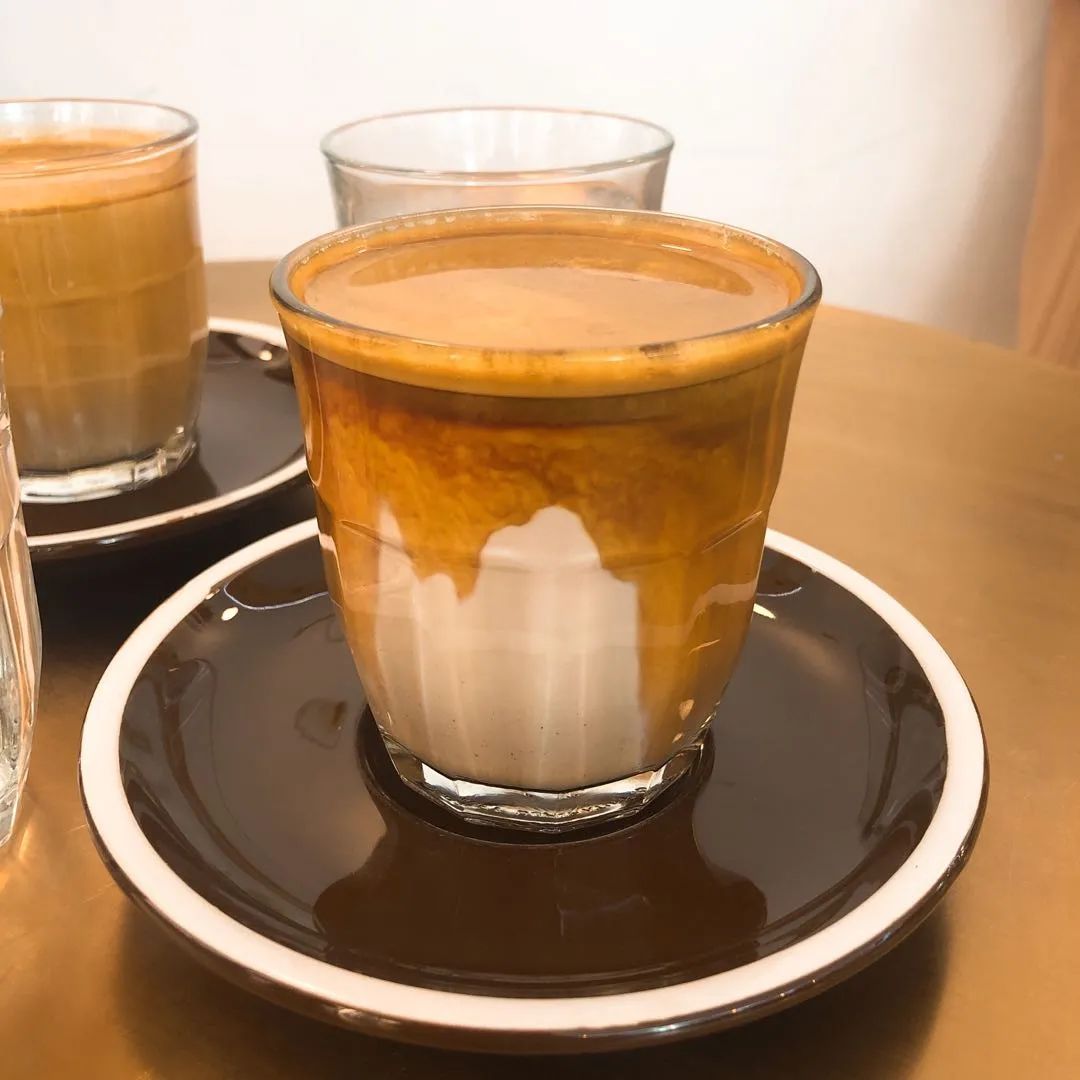
dirty | reserved photo
The heaviest and most essence is the first sip, where you can drink coffee oil and a little bit of very sweet milk; the second sip is a more balanced taste of milk and coffee; and finally, the third sip is dominated by the sweetness and fragrance of milk.
Because the concentrate is hot and the milk is cold, you can still drink it with the taste of ice and fire. Either the cup is too small or you are at a disadvantage. It seems that the small cup of dirty can produce several flavors, which is a cracker.
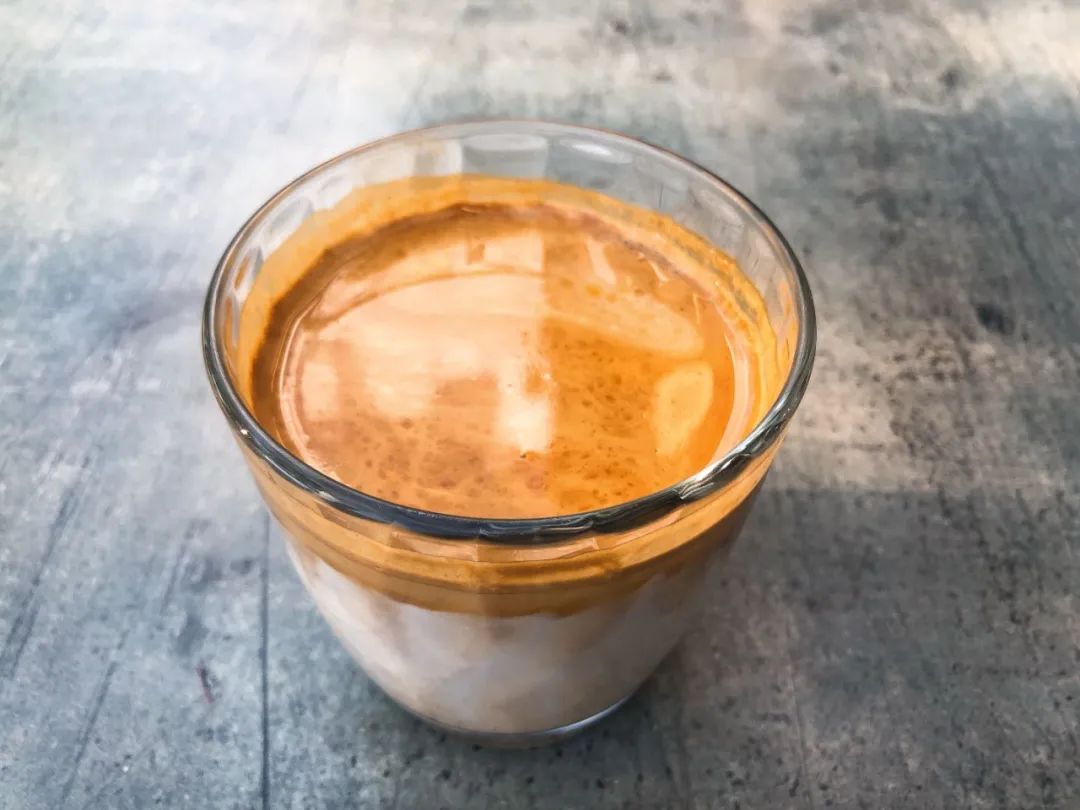
The taste of dirty is very rich | Photographed by Reserved
03
Can’t tell the difference between milk and coffee?
/First of all, you have to drink it in the correct way to drink it/
Seeing this, some people may think I'm talking nonsense. Latte, cappuccino, macchiato… all taste the same, so how can there be so many differences? In fact, these coffees do taste similar after being left for about half an hour after being made. The prerequisite for being able to notice a clear difference is that you drink it correctly.
First, try to drink it as quickly as possible, especially hot drinks or drinks with a lot of milk foam. If you say "I just want to drink it slowly", it is recommended to buy the cheapest one. The milk froth will burst if left on it, and the coffee and milk will have the same taste after they are completely blended.
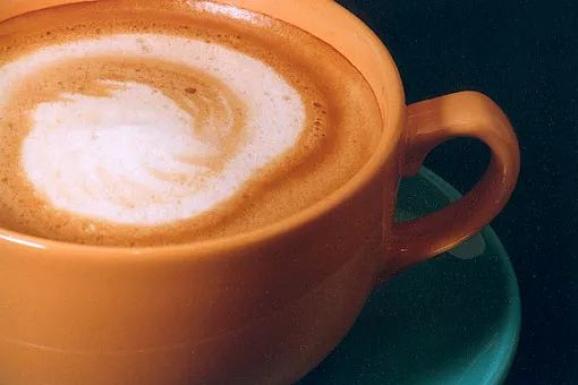
If left too long, the milk foam will burst | flickr Aristocrat
Secondly, take-out cups virtually ruin the taste of many drinks, such as the rich and dense milk foam on the top of cappuccino, the caramel on top of caramel macchiato, the cream and chocolate chips on mocha, and the latte art on latte (although there is really no difference in the taste with or without latte art) – so if possible, you can open the lid and drink.
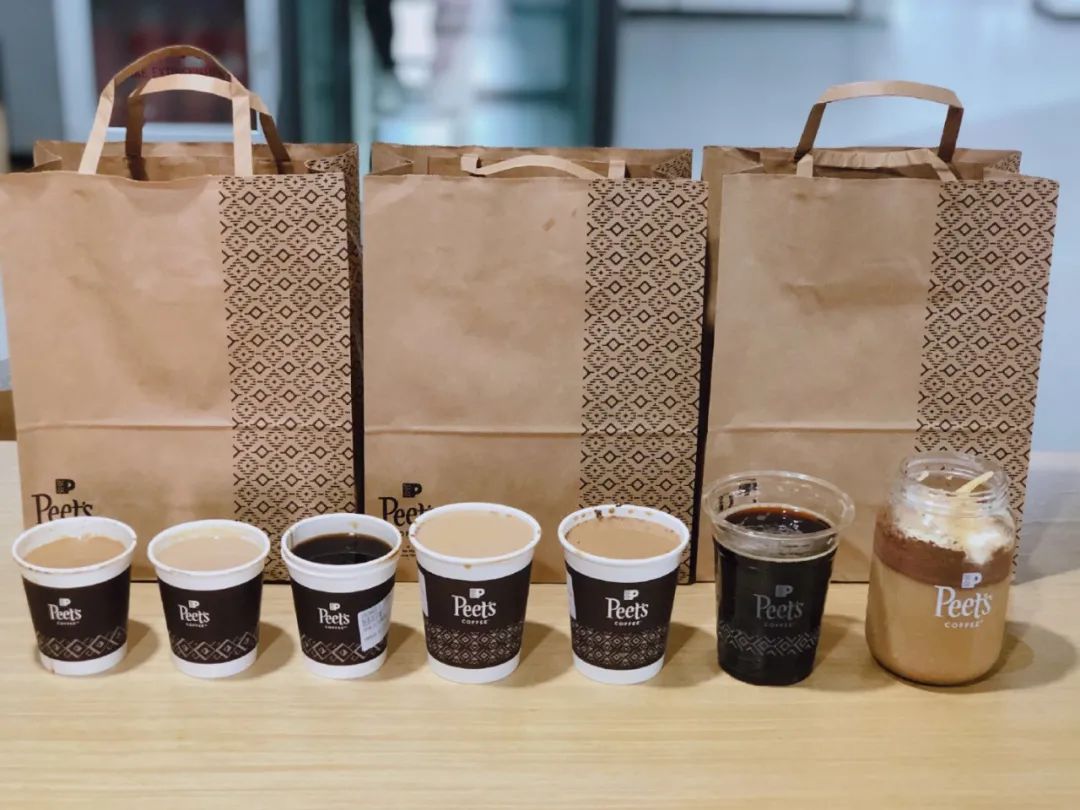
Taking away cups will destroy the tenderness of coffee to a certain extent | Photo by Reserved
04
A guide to making your own latte
/ Can be used without an espresso machine /
If you have an espresso coffee machine at home, it’s very convenient and you can just have some concentrated milk. But can you make your own latte without an espresso machine?
Of course!
To make a latte, all you need is espresso and milk.
If you don’t have additional equipment, the simplest way to concentrate is freeze-dried coffee powder or espresso liquid. In addition to bulky espresso machines, simple and lightweight Aeropress and Moka pots can also make espresso, but I'm lazy!
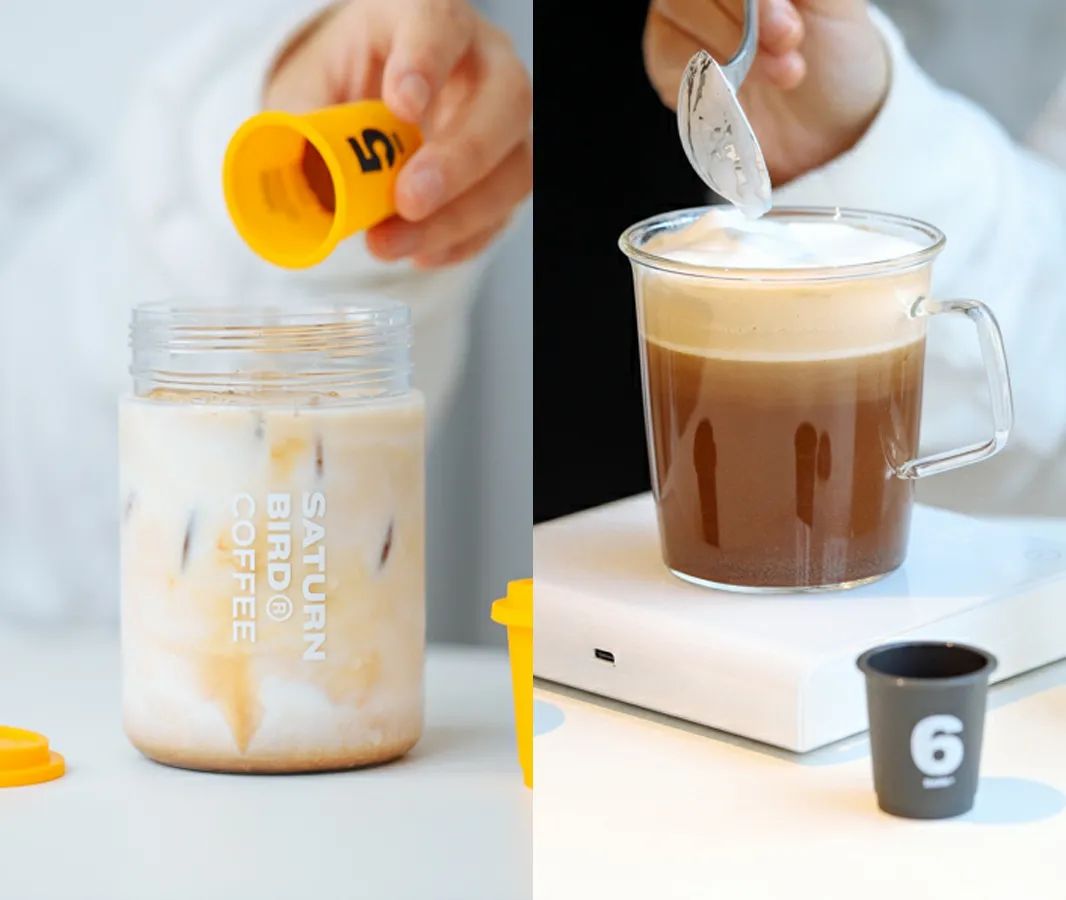
Freeze-dried coffee powder is so fragrant
As for the milk, just pour it in! If you want to drink it hot, put it in the microwave and heat it up. If you want to drink it with the taste of milk foam, just shake it (seriously), and you can really get milk foam by shaking it! However, you can also use an egg beater or an electric milk frother. If you are interested in this part, I will explain it in detail later.
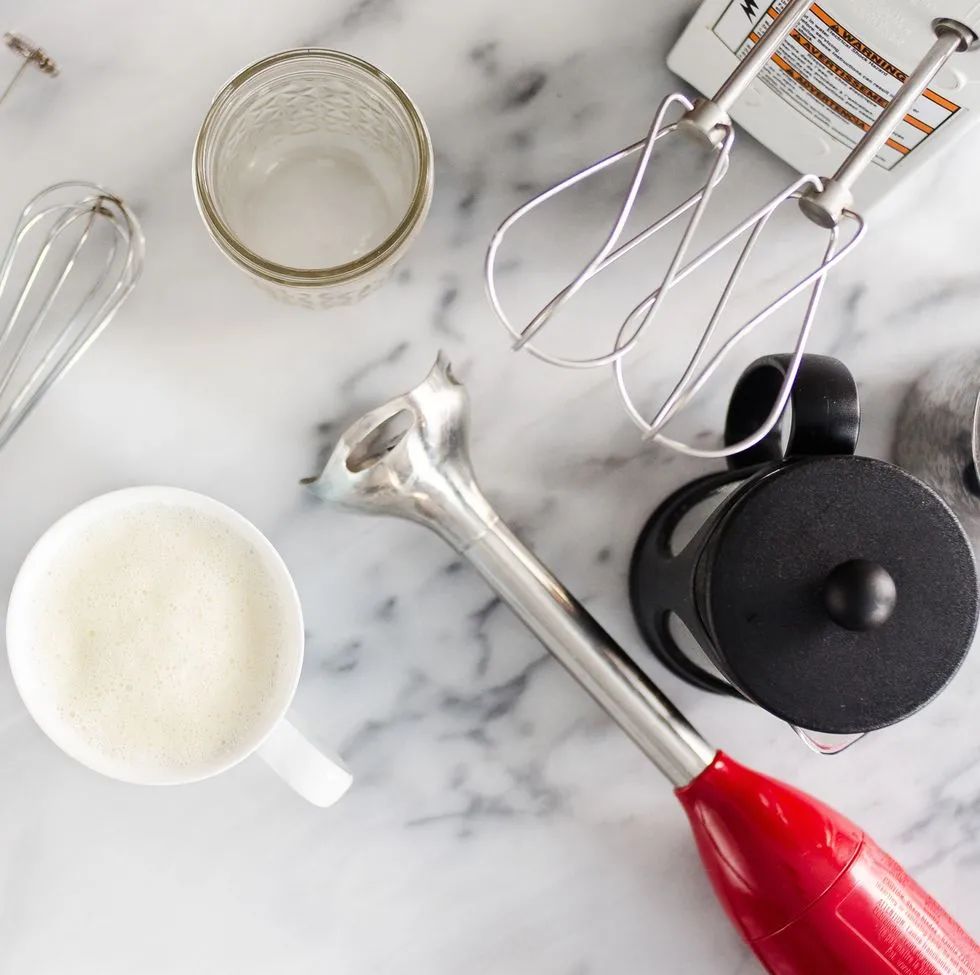
There are many ways to froth milk | thepioneerwoman.com

Author business card