Professional virtual currency information station welcome
We have been making efforts.

vc Page 3

Cryptocurrency is a non-legal monetary asset based on digital technology and blockchain, possessing the functions of a medium of exchange and a store of value. Cryptocurrency is a transaction medium that uses cryptographic principles to ensure transaction security and control the creation of transaction units. Cryptocurrency is a type of digital currency (or virtual currency). Bitcoin became the first decentralized cryptocurrency in 2009, after which the term “cryptocurrency” was more commonly used to refer to such designs. Since then, several similar cryptocurrencies have been created, and they are usually referred to as altcoins. Cryptocurrency is based on a decentralized consensus mechanism, in contrast to the banking financial system that relies on a centralized regulatory system.

His Own App Ranks Among The Top 20 Most Downloaded Apps In The U.S., But The Founder Is Worried

Behance Download for Android_Jingna Zhang Founder's Entrepreneurship Story_Cara App Overseas United States Download Volume Analysis

The number of daily downloads in the United States exceeds Threads, WhatsApp, Facebook and Telegram, but the founders are not happy.

Jingna Zhang Founder's Entrepreneurship Story_Cara App Overseas United States Download Volume Analysis_Behance Download for Android

Going overseas is a process that tests the comprehensive capabilities of the team.

Going overseas in the United States requires a team with at least one skill in product, operation, growth and other dimensions.

Getting results in overseas studies in the United States is a combination of the right time, place, and people.

Being able to advance into the top 5 of the US App Store social rankings and the top 20 of the total download list is a matter of pride for any start-up company, but Jingna Zhang, founder of the non-AI picture community Cara, is happy and pained.

Jingna Zhang expressed her joy at gaining 300,000 users on Instagram a few days ago, but at the same time expressed her worries about paying $13,500 per month. At the same time, she also posted the cloud computing bill email she received on her platform, with the current amount to be paid being US$96,000.

Not only that, in just 10 days from June 3 to June 13, Cara's user base increased from 300,000 to 900,000 without advertising.

According to Diandian data, Cara, a photo community launched in October 2023, has received 570,000 downloads in the App Store alone in the past 30 days. The top five download markets are the United States, the United Kingdom, Canada, Germany and France.

In fact, from the perspective of product design alone, Cara and Twitter are at least "direct relatives", which is why there is such a similarity.

In addition, from the perspective of the positioning of the picture community, there are integrated social media such as Instagram and Pinterest in the larger overseas countries, and picture platforms such as Behance and DeviantArt in the smaller ones. So why does Cara enter the public eye?

The high consistency between the founder and the product makes Cara the only one in the world.

This starts with the resistance of some creators to AI since the launch of ChatGPT and Midjourney.

Due to work reasons, we are fortunate to have contact with creators and platforms, and understand everyone's attitude towards AI content from different perspectives:

(1) Some creators believe that AI is a good auxiliary tool that can complete drafts of ideas at a lower cost, or complete some preliminary work to improve work efficiency;

(2) Another group of creators believe that most of the content generated by AI is trained based on existing content. In particular, the creative pictures generated by AI are basically "dismemberment and reorganization" of the works of multiple artists/creators. This is unacceptable behavior that disrespects creativity and copyright;

(3) Some platform parties believe that: We allow AI and non-AI content to coexist. Human creativity and thinking will always have irreplaceable brilliance, but AI content can indeed be a good content supplement, and can help more people who have ideas for creativity but lack the ability to implement them to realize what they want, and will face content with an attitude of development, tolerance, review, and coexistence;

(4) Another part of the platform believes that protecting the creative passion and copyright of creators is protecting the entire content ecosystem. When AI content floods the entire social media, it is when human creativity is exhausted.

Obviously as a conservative, the non-AI picture community Cara has found a user group that holds the same attitude as itself. The main reasons for being able to quickly verify needs and gain user approval are as follows:

1. Jingna Zhang, the founder of Cara, is an artistic and creative practitioner herself and a well-known photographer. Jingna Zhang was born in Beijing and grew up in Singapore. Her photography works have been published in multiple national editions of fashion magazines such as "VOGUE", "Harper's Bazaar", and "ELLE". She has collaborated with many models, actors, and celebrities around the world, and has won many international awards.

Therefore, from this perspective, Jingna Zhang can fully understand and represent the needs of Cara’s main user groups. In other words, Jingna Zhang’s past experience makes creators and users believe that their interests are consistent.

2. Jingna Zhang has participated in many works rights protections. She first filed a lawsuit against plagiarized works in 2022 and won the appeal in May 2024. Later, it participated in a class action lawsuit against Stable Diffusion, Google and other AI mapping tools, which reflected its determination to protect copyright.

3. Another trigger is that Mark Zuckerberg made it clear that he will use pictures posted by users on Instagram and Facebook to train models without the user’s consent.

But in fact, the reason why many creators and artists are willing to publish their works on Meta's social media platforms is obviously to increase their visibility and find potential customers.

Obviously, Meta's AI policy will affect the development of creators to some extent, so the confrontation has gradually heated up in the past period of time.

This time, the growth of Cara and the user's resistance to Meta AI's mapping are not just pure community resonance, but also a confrontation of interests.

At present, many artists, graphic designers, painters, illustrators, 3D modelers, creators and users who support non-AI content have joined Cara. From the author's observation, the quality of the pictures uploaded by users is indeed relatively high and creative.

Cara product screenshots

And judging from the likes and forwarding of user works, the 900,000 user data announced by the founder is highly authentic. The number of likes on the homepage of the works is more than 300, and some works have even been liked nearly 10,000 times. High-quality works and rich creativity are important labels given to Cara by users.

In addition, as a social media platform, Cara also demonstrates the unique inclusiveness of early products. Users can follow the homepage and timeline to view the content posted by the other party, and can also click to view the content the other party likes and the other party's personal introduction details.

Many developers have attached their official website, personal blog, or links to Instagram, X, Discord, etc. in their introductions and personal introductions. Users can also directly send private messages to the creators for more detailed communication.

In addition, Cara has also integrated recruitment functions into its products. Currently, 199 relevant positions are being recruited through the Cara platform. Judging from the details, the recruitment positions are highly overlapped with the Cara population.

The anti-AI community may not be as strict as imagined

Despite this, Cara only received a score of 4.1 on the App Store. This score is indeed not high among social products, especially emerging social products that do not have monetization methods. After sorting out the reviews, we found that user dissatisfaction is mainly concentrated in the following aspects:

.The product stability is not strong, and multiple users reported that it often crashes to the login page. Speculation may be related to the sudden influx of large numbers of users exceeding the server capacity.

.NSFW review is not perfect, and many users have reported that Cara's NSFW is suspected of being overcorrected. The uploaded tattoo patterns and safety works are occasionally judged to be non-compliant content and cannot be uploaded.

.AI filtering capability is not strong enough. Some users reported that some obvious AI-style content can still be found in the platform, which is not in line with the positioning.

.It is not convenient enough to upload the portfolio, and it cannot be more convenient to classify different series of works.

But in fact, more users are tolerant of the various problems currently occurring in Cara. These users believe that as an emerging social media platform, it is normal for Cara to have various problems. The most important thing is that its anti-AI image positioning is the most rare.

In fact, in addition to Cara, which is obviously opposed, various social media platforms have also begun to strengthen the monitoring of AI content. Facebook, Instagram, and LinkedIn all require users to clearly mark when uploading or publishing related content generated by AI. They hope that while using AI to open up imagination, the boundaries between virtual and reality will not be blurred.

However, due to filtering technology, it is still based more on user consciousness. This is why there are still AI images slipping through the clear-cut anti-AI Cara platform. So how does Cara protect the platform from AI "infringement"?

First, Cara will label all uploaded works as "NoAI" to resist data capture by AI crawlers. Cara describes this form as an "uninvited" dialogue with AI.

Second, Cara encourages users to use Glaze, developed by the SAND Laboratory at the University of Chicago, to protect works by adding invisible pixels to them.

Third, by cooperating with the third-party platform Hive, we monitor and restrict users from uploading AI-generated content. According to the official website information, Hive uses image recognition algorithms, multi-mode detection, model training and real-time detection to determine whether an image is generated by AI.

In layman's terms, when a user uploads a photo to Cara, Hive will analyze the texture, pixel distribution and pattern of the image. The Hive model will use the captured information to determine whether the image was generated by mainstream models such as DALL-E, Midjourney, Stable Diffusion, etc., and compare it with known AI images to finally give a confidence score. If it exceeds a certain threshold, it will be judged as AI-generated and will not be allowed to be published to the platform.

If users have objections to the review results, they can also send an email to Cara officials to apply for reconsideration.

However, there is currently no unified opinion on Hive's detection capabilities in the market. Some users even left a message in the Reddit community that "Hive is Cara's biggest weakness." Some users pointed out that "all the ones on the market are not good. Experienced people can escape detection immediately, but Hive may be 1% better than its competitors."

In any case, the highly unified anti-AI persona of founders Jingna Zhang and Cara is indeed very distinctive in the current market.

Although global capital is currently slowing down its investment in AI projects, and no truly explosive AI applications have emerged for the time being, there are still a large number of practitioners who firmly believe that the future of AI applications is not too far away. The anti-AI platform Cara’s rise to the top of the list also reflects some users’ attitudes and concerns about AI to some extent.

The author tried to search with the keyword "anti-AI" on Chrome and ChatGPT, and found that although there are many anti-AI posts, updates, and discussions on the market, anti-AI social media applications are indeed unique.

Regardless of AI access or not, Cara's appearance once again proves the importance of "finding product differences". Even in the picture community track surrounded by tigers and wolves, there are still new players who can come out of the circle. I know it is difficult, but many times it may be more important to re-enter the track from a different angle than to work harder.

Cara’s future will be accompanied by money burning, manpower shortage, and difficulty in monetization

Although initial results have been achieved, now is not the time to celebrate.

Cara now has several thorny problems that need to be solved:

(1) As more and more users register and use, the cost of Cara’s cloud services and other third-party services will become higher and higher;

(2) As of now, except for voluntary rewards from users who “buy a cup of coffee”, Cara has not set up a monetization method. If it wants to continue operating, it must either make money or raise money;

(3) Cara has only had four or five full-time employees in the past year, and until recently some volunteers and part-time employees have appeared, but it is not sure who will stay. The current official website shows that Cara is recruiting React engineers, React Native engineers, graphic designers, writers, moderators and QA testers.

Looking for people and money are urgent. In fact, it’s easy to find people. In the current talent market, it is theoretically easy to find people with experience working on X, Instagram and other platforms, but the premise is that the product needs to have stable development, and this comes back to “money”.

At present, the main monetization methods of picture social platforms include advertising, subscriptions, rewards, and delivery of goods (live broadcast, shop), etc.

Some users pointed out in Jingna Zhang’s Cara dynamic comments that “advertising can be added to alleviate economic pressure. I support Cara very much and hope you can continue to operate it.” However, more users immediately retorted, “If advertising is added, Cara will sooner or later become the same platform as Instagram, so where will we escape then?”

In fact, to a certain extent, Cara is facing the same predicament as BeReal before it. BeReal has tens of millions of users, good user retention, and high user praise. However, it can neither raise money nor make money. There were several reports that it may cease operations. Until June 11, Voodoo spent 500 million euros to acquire BeReal, and the deal was reached through deferred payment.

You must know that BeReal has 40 million MAU. Although the later data is not stable or even declining, you must know that its number of days on the list in 2022 will even exceed TikTok. On the other hand, although Cara is on the rise, it has only reached 1 million registered users.

With the same picture community, the same anti-Instagram (AI), and the same being placed here by users, Cara’s path to monetization may not be simple.

I don’t know if Cara will try to start an art trading business or engage in business cooperation (such as finding a designer) in the future, but frankly speaking, the business of professional photo entrepreneurs that Cara targets is not easy to do.

But no matter what, the fact that another Chinese woman’s entrepreneurial product has made it to the Top 20 in the U.S. download list is another incentive for overseas entrepreneurs.

Jingna Zhang once wrote in her personal blog after winning the lawsuit, "In the past two years, I have been harassed because of my gender, race, and identity as a photographer. My address and personal information have been doxxed. I am exhausted but unwilling to give up because I believe justice will come. The final result also proves that copyright belongs to creators like us who create with heart."

Well, I think Cara’s departure from the industry is also a candy given by God to Jingna Zhang. I also hope that every practitioner who goes overseas will have the opportunity to get his or her own candy.


Copyright-free Free Video Material Website 1-10

1. pexels

Link:

https://www.pexels.com/zh-cn/videos/ (can be accessed for personal testing)

A free and high-definition video material website. All videos provided on the site support free commercial use. The video types provided include business, seaside, sunset, people, seasons, festivals, scenery, animals, flowers, etc.

Behance Download for Android_Free HD video material website_Commercial video material platform

2. Coverr

Link: https://coverr.co/ (accessible for personal testing)

A slightly niche video sharing platform that shares a variety of short video materials.

3.Pond5

Link: https://www.pond5.com/ (accessible for personal testing)

This platform also contains a variety of different resources including video, audio, and pictures, but the video materials are of the highest quality.

4.stockio

Link: https://www.stockio.com/ (accessible for personal testing)

It is the largest community video material website in foreign countries, covering hundreds of styles of video materials. You can even find a lot of free photos, icons, fonts and other materials here. When you open the homepage and slide down the video page, you can see many high-definition videos. It also supports click-to-preview effects.

Behance Download for Android_Commercial video material platform_Free HD video material website

5.isorepublic

Link: https://isorepublic.com/ (Accessible for personal testing, sometimes you need to visit several times)

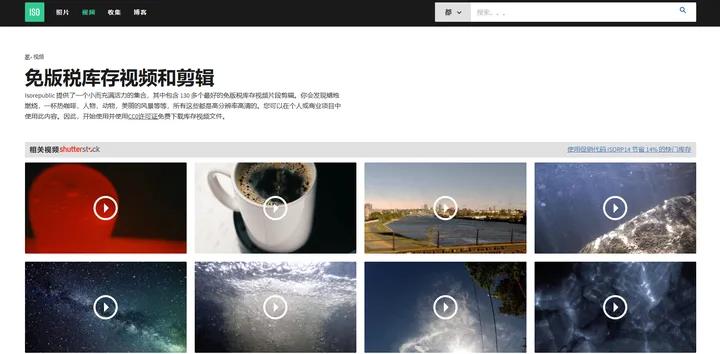
A video material website that provides more than a dozen categories. All videos support personal and commercial use, with no limit on the number of downloads. The video styles provided include beach, abstract, nature, people, science fiction, technology, animal and other videos.

Commercial video material platform_Free HD video material website_Behance Download for Android

6. DISTILL

Link: https://wedistill.io/ (accessible for personal testing)

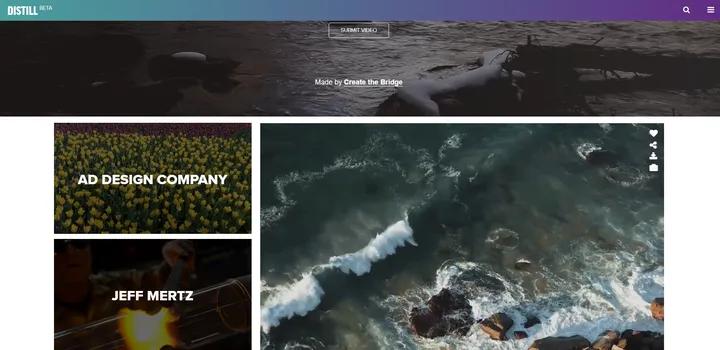
A foreign website that provides high-definition video materials for free, supporting free commercial and personal use, and the videos do not have any copyright. All videos on the webpage are licensed for free by CCO. Downloaded videos can be modified, reproduced, copied, etc. and used in personal videos.

Commercial video material platform_Free HD video material website_Behance Download for Android

7.Vimeo

Link: www.vimeo.com (Access failed, address not found)

Commercial video material platform_Free HD video material website_Behance Download for Android

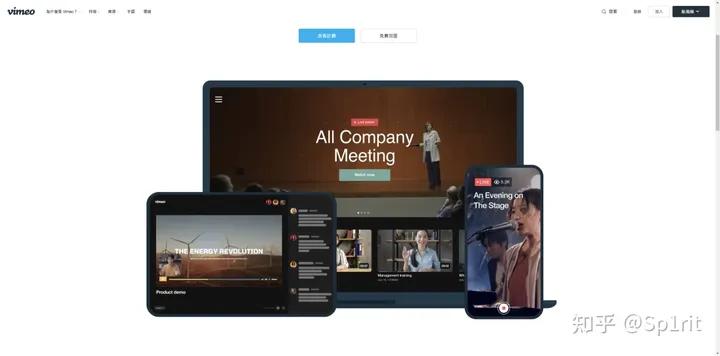
Vimeo is a free material resource library specially provided for users. As a well-known foreign video sharing platform, Vimeo can be said to have given a lot of benefits to editors. It supports users to upload high-definition videos and can download them freely. Many foreign personal video producers will use this website to share their works. Platforms such as Behance can also embed Vimeo links in their websites, which is very convenient. There are also a huge number of creative videos in Vimeo. Students who need inspiration can browse more, there are many excellent works.

8.Ignitemotion

Link:

https://www.ignitemotion.com/ (Accessible for personal testing)

A free video material platform based on technology style, which contains a large number of technology and space elements, as well as dynamic video effects produced by AE.

9. mixkit

Link: https://mixkit.co/ (accessible for personal testing)

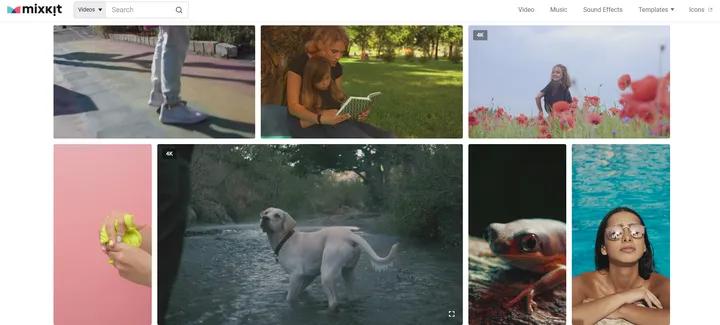
A completely free and copyright-free video material website that not only provides rich material styles, but also provides a lot of audio materials. The video material styles provided include simplicity, scenery, characters, animals, romance, etc. You can also directly search for the video materials you need based on tags.

10.mazwai

Link: https://mazwai.com/ (accessible for personal testing)

A website that specializes in providing various video editing materials, covering a lot of high-quality video materials related to movie styles, animations, scenery, characters, etc., and also provides detailed parameters of the videos. All videos are basically HDR high-definition

Behance Download for Android_Commercial video material platform_Free HD video material website

Forward To Headlines

The rise of quasi-one-way relationships_Behance Download for Android_The blurring of social media relationships_The rise of quasi-one-way relationships

Behance Download for Android_The blurring of social media relationships_The rise of quasi-one-way relationships

© Juanjo Gasull

Leviathan Press:

Perhaps our social patterns have undergone profound changes in the past decade or so. What I mean is that with those friends or colleagues who have a relatively good relationship, the interaction mode between each other has quietly transferred completely or partially to purely online: this includes the social media you use together, and each other's knowledge of each other's life dynamics largely relies on updates in the circle of friends. Unless there is a topic you particularly want to chat about, it seems that voice chat mode is rarely enabled.

On the other hand, social media will push us a dizzying variety of information streams through algorithms – which are mixed with a lot of junk information that is useless to you, and once you stay on a certain video for a while, subsequent algorithms will continuously push you more such information. This kind of passive consumption results in endless scrolling – which is one of the main purposes of social platforms.

Search [Leviathan Playlist] on NetEase Cloud Music to keep up without getting lost.

Behance Download for Android_The blurring of social media relationships_The rise of quasi-one-way relationships

All of my relationships exist, at least in part, on my phone, and they are forced to share space with everything else that happens on my phone. Lately, I've been getting the feeling that the relationship pieces that exist on screen seem increasingly indistinguishable from the other content I'm consuming there.

There's a lot going on in my phone. It’s always trying to sell me something. Sometimes, they try to defraud me. There are games, videos, TV shows, movies, news, fitness trackers, podcasts, books, music, shopping, maps, work software, general web browsing, and an app I was forced to download just to use the doorbell. Of course, it also includes all my social interactions that are not face-to-face or correspondence. (Even face-to-face interactions—unless I bump into someone on the street—are likely planned via a smartphone.)

© Pinterest

So when my phone dings or buzzes with those mating calls, it could be bringing updates from my loved ones, or it could be showing me corporate notifications that I never asked for, hungry for my attention. When I pick up my phone, content and communication appear in similar forms—notifications, social media posts, vertical videos—all mixed together. Samuel Hardman Taylor, a professor at the University of Illinois at Chicago who studies social media, told me that as interactions with loved ones converge with various other forms of media on smartphones, “our relationships are becoming part of this consumer behavior.” As phones become more of an entertainment hub, using them for social interaction becomes more of a dispensation. And identifying my loved ones in that constant stream of cell phone messages requires extra effort.

Since the inception of social media, ordinary people have been using it to showcase their lives and treat their loved ones as viewers. But now, social media is eating into the market share of traditional media, eating into the time people (especially younger generations) used to spend watching TV and movies, and reshaping itself as a broadcast platform rather than an online platform. In the process, social media has become less social. These sites no longer seem to care if people with few followers and lack of influence post anything or reply to anyone as long as they keep scrolling.

As social media no longer connects users with acquaintances, but instead pushes artificial intelligence garbage and short videos from unknown sources accurately pushed by algorithms, a sense of dissociation arises. My friends and family's posts are still there, but they're buried under a torrent of spam and ads. One moment it’s an ad for washable ballet flats, the next it’s a photo of my friend’s baby, then a baby I don’t know performing some meme-worthy antics, then a video about how terrible millennials are in high-waisted jeans, a video of my friend looking sexy in high-waisted jeans, an ad for trendy jeans, and a sponsored ad for a diet pill so you can wear the jeans you wore in high school that are suddenly popular again.

All of this is consumed passively, page by page.

Behance Download for Android_The blurring of social media relationships_The rise of quasi-one-way relationships

© Behance

This more passive social media experience has added an almost parasocial feel to some of my relationships. The so-called "quasi-one-way relationship" classically refers to the one-sided imaginary relationship that people have with celebrities or even fictional characters. People develop an emotional connection with someone they've only ever interacted with on screen (or, I suppose, on the pages of a novel) and develop a sense that they "know" that person, even though that's not actually the case.

Gayle Stever, a psychology professor at Empire State University who studies "quasi-one-sided relationships," told me that the line between sociosexual and quasi-unidirectional relationships has long been blurred, and social media has made that blur even more pronounced.

Lack of reciprocity is a key characteristic of quasi-one-way relationships—the fan knows a lot about the celebrity, but the celebrity has no idea who the fan is. But these days, celebrities may reply to your comments on TikTok or even follow you back. At the same time, reciprocity is a key part of real relationships, but in the online part of those relationships, it's more of a "guideline" — and one that's becoming looser over time.

Sometimes I reply to friends' posts on Bluesky or Instagram, but most of the time I don't. I just let it pass by without paying any attention to it. I’ve accumulated bits and pieces of information about people I love—my sister’s boyfriend published a poem; my friend quit his job—but the way I know about these things, like I know about an influencer’s favorite books or the news of Taylor Swift’s engagement, is from an outside perspective.

The quasi-one-way researchers I interviewed were reluctant to assert that passive content consumption is quasi-one-way in the standard sense—after all, I do know these people—but they did point out that, in some ways, social relationships are starting to look more like quasi-one-way relationships. Bradley Bond, a professor of communication at the University of San Diego, conducted several studies during the social isolation period during the pandemic, when many people were only able to connect with loved ones through technology.

The findings suggest that, as one of the papers puts it: "Increased exposure to real-life friends through screen media may blur the lines between social and quasi-one-way relationships because of similarities in form." "Your brain is slightly rewired," Bond told me, "to understand those social 'others' as two-dimensional beings as well." In quasi-one-way relationships, he explained, people tend to use their imagination to fill in the gaps in their knowledge of others. For example, someone might assume that an actor they feel they can relate to must share their values, even if they don't know that actor's politics. “As real-life relationships look more and more like quasi-unidirectional relationships,” Bond speculates, “maybe we’ll stop asking for self-revelation from the other person and start making straightforward assumptions, as we do in quasi-unidirectional relationships.”

If people feel more like they are observing their friends’ lives when they browse social media, that may be partly because they also view their friends as an “audience” when posting.

Some scholars describe the act of posting on social media as something between interpersonal and mass communication (which they call “personal mass communication”

masspersonal

). Research also shows that people tend to have an “imaginary audience” in mind when they post — and that audience doesn’t necessarily match the people who actually see the post.

Further fueling the mix of social and quasi-one-sided relationships, many regular users have also begun posting to their small followings in an “influencer” fashion: looking straight into the camera and speaking (“Hi everyone”), or curating collections of photos to showcase that perfect balance of playful yet effortless.

Behance Download for Android_The blurring of social media relationships_The rise of quasi-one-way relationships

© Tenor

Of course, that's if they're still posting. Recently, New Yorker critic Kyle Chayka pointed out that today’s society is experiencing a kind of “posting burnout” (posting ennui), because ordinary people’s ordinary life updates are likely to be submerged in the content of a group of Internet celebrities with ring fill lights and signed brand cooperation contracts. In the age of algorithm-driven content streams, when non-influencers post, they may envision a smaller audience than before. “If we can’t guarantee that our friends will actually see what we post,” Chayka wrote, “then what incentive is there to keep posting?”

This in turn affects how people view posts. As the proportion of content tilts more and more towards content that isn't truly "social" – and social media is experienced as a place of entertainment rather than connection – perhaps people are more likely to just "change the channel and zone out" rather than bother interacting with the friends they still see there. “My gut tells me that expectations for audience response have dropped dramatically,” Jeffrey A. Hall, a communications professor at the University of Kansas, told me. So it makes sense that “any benefits we used to get from those tiny interactions in our social media streams are gone.”

Hall says that while researchers aren't sure exactly what this phenomenon means for relationships, he believes it's part of "the long end of public social networks as a place where we observe sociability."

At the same time, the era of “group chat” is rising, and similar flattening and convergence phenomena are also taking place. The popularity of WhatsApp is rising and more and more people are using Discord. All of these messages crowd the home screen along with breaking news, ads, social media likes, and push notifications. “We’re reaching across multiple areas of our lives with these notifications,” Taylor told me. My Notification Center was filled with text messages from my family group chat, multiple push reminders from the New York Times, calendar reminders from meetings earlier today, notifications for new episodes of several podcasts I follow, and multiple ads from DoorDash suggesting I order food from Chick-fil-A, Walgreens, and other stores.

In some ways, the move to group chats is a positive development for human connection. Research shows that private messaging platforms are better suited for sharing more personal content and more conducive to ongoing conversations than algorithm-driven social platforms. However, their rise may also go some way to weakening the social norm of “reciprocity.” Back in 2018, I wrote about how text messages have become the norm to be ignored—because the medium allows people to reply to messages at their own pace (or not reply at all). Group chats can make responding feel less necessary because multiple people in the conversation share the “responsibility” for responding. At the same time, Taylor points out, the more players there are, the more likely "broadcast-style" dynamics will creep in.

© Pinterest

Another way in which private messaging has become somewhat "broadcast-like" is the popularity of voice messages. Many people like voice messages because they are more intimate than text but don't require an immediate response like a phone call. But let’s be honest – voice notes are essentially little podcasts you record for your friends. They are indeed an act of connection, but more of a "performance" than picking up the phone and talking directly. As for performance, there is always a certain sense of alienation.

My best theory to sum up all of this is this: a “trickle-down effect” is happening — as social media starts to look more like entertainment, private messaging starts to look more like social media. (For example, you can now “like” or “love” a text message.) In both cases, the elements of “performance” and “consumption” are heightened, making the lines between “community” and “audience,” “communication” and “content” subtle and blurry.

The researchers I interviewed have yet to draw conclusions about the blurring of relationships and consumable content—because technology is changing so fast and the pace of scientific research is so slow. But as the mobile world evolves and our relationships warp with it, Linda Kaye, a professor of psychology at Edge Hill University in the UK, gave me a fundamental principle worth sticking to: “Connection will always be more important in relationships than distributing and consuming content.” Your phone craves your attention, but your relationships really need it.

The NFT Market Has A Big Bubble, And Giants Such As Tencent, Ali Bilibili, Etc. Have Entered The Digital Collection Industry.

Although there is a huge bubble in the NFT market, giants do not want to lag behind the times. Domestic Tencent, Alibaba, Bilibili, etc. have already laid out digital collections.

In Japan, IPs such as Ultraman, Astro Boy, My Neighbor Totoro, Godzilla, and Hokusai, and giants such as Rakuten, Line, and Mediado have all set foot in the industry.

What is the scene like in South Korea?

According to incomplete statistics on the cultural and creative trend, Korean comic companies that have joined the NFT market include Kakao, Naver, Toomics, Kidari Studio, YLAB, Gtooon, Mrblue, etc., and game companies include NCSoft, Yumede, Com2us, Joycity, PearlAbyss, Devsisters, Krafton, etc. In addition, South Korea's large artist management companies SM, YG, HYBE, and JYP have also entered the market.

Virtual currency exchanges and various industries’ different perceptions of NFT

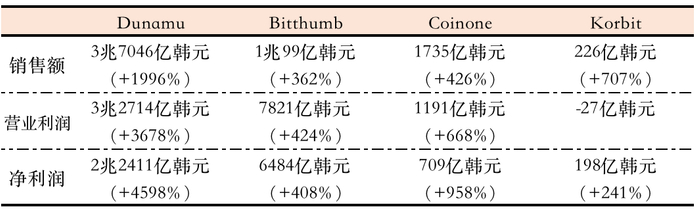
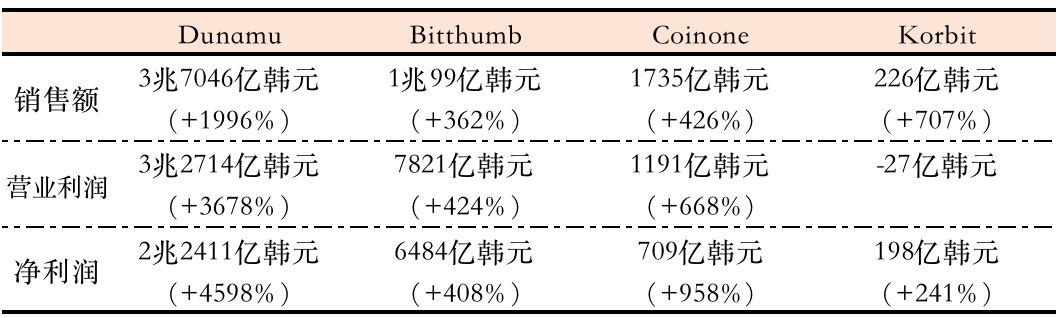
We have noticed that there are currently 4 virtual currency platforms trading in Korean won in South Korea, and they have all achieved good returns in 2021 under the influence of the virtual currency investment boom.

South Korea NFT platform company layout_NFT minting_South Korea NFT market development

Among them, Dunamu, which operates the UPbit exchange, had annual sales of 3.7046 billion won, a year-on-year increase of 1,996%; net profit was 2.2411 billion won, a year-on-year increase of 4,598%. Bitthumb's full-year sales were 1.999 billion won, a year-on-year increase of 362%; net profit was 648.4 billion won, a year-on-year increase of 408%.

After entering 2022, due to the turmoil in the virtual currency market, all four trading platforms have been greatly affected. In order to achieve sustainable development, they noticed the emerging trend of NFT and started NFT business like many Internet companies.

However, many industries in South Korea have different understandings of the new field of NFT.

Games: It mainly promotes to the public models that can earn money from playing games through P2E (Play to Earn), PAE (Play And Earn), etc., in order to actively promote attempts to integrate NFT into games. However, South Korea's "Game Industry Promotion Law" currently does not allow such business activities, and the attitudes of game companies and players towards this model cannot be unified.

Film and television: Movies, TV series, variety shows, and OTT original content are all actively creating NFT content and auctioning it. Many related companies have successfully generated income once or even N times.

Music: Due to the current restrictions on concert activities due to the epidemic, many large brokerage companies and music platforms are trying to develop "music products" using NFT and actively create a music-centered metaverse. Large Korean brokerage companies such as SM, YG, HYBE, JYP, etc. have successively entered this field.

Webcomics: Minting classic scenes from webcomics and turning them into NFT content, and selling them in limited quantities to obtain high profits. South Korea's webtoon giant KakaoPage has successfully sold related products and established a subsidiary that can conduct transactions.

Fashion: Creating products in the virtual world, but currently it only remains at the level of advertising offline products in the virtual world, while actively exploring new models that can gain profits.

Since NFT is an emerging commercial market, South Korea has not yet formulated relevant laws to regulate it. Therefore, there are no clear regulations on the division of interests between creators, trading platforms, and consumers, so there are concerns about unfair transactions. And because most of these products are limited edition products, their prices fluctuate greatly and are not subject to market rules. They are more like stock investments than a product transaction.

After news broke that Musk would acquire Twitter, the price of an NFT owned by the Twitter founder plummeted from $2.9 million to $280. In addition, according to reports from overseas media, as of the beginning of this year, NFT transactions, which were once very popular, have continued to cool down, and the transaction volume of some trading platforms has even plummeted by 50%.

NFT performance of 7 webcom companies

Let’s look at some situations in South Korea’s NFT market.

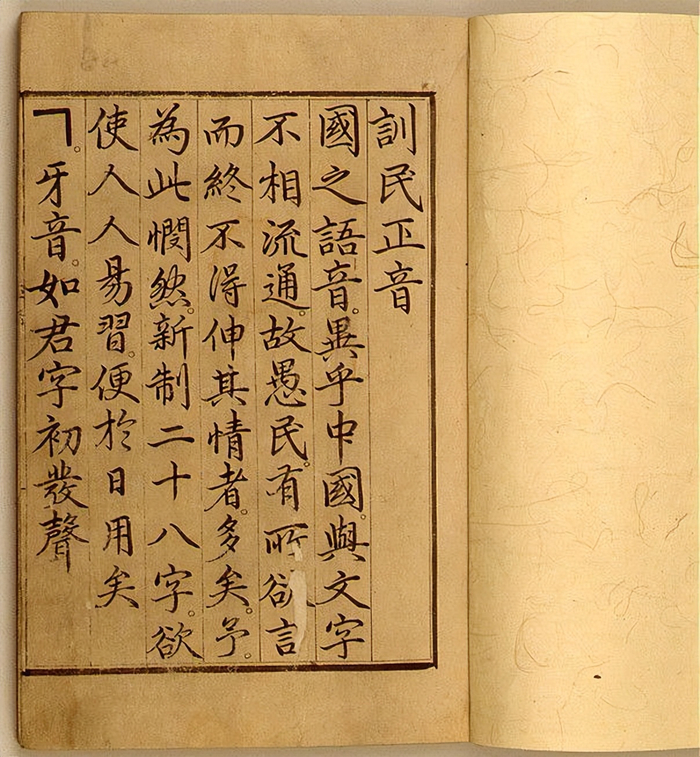
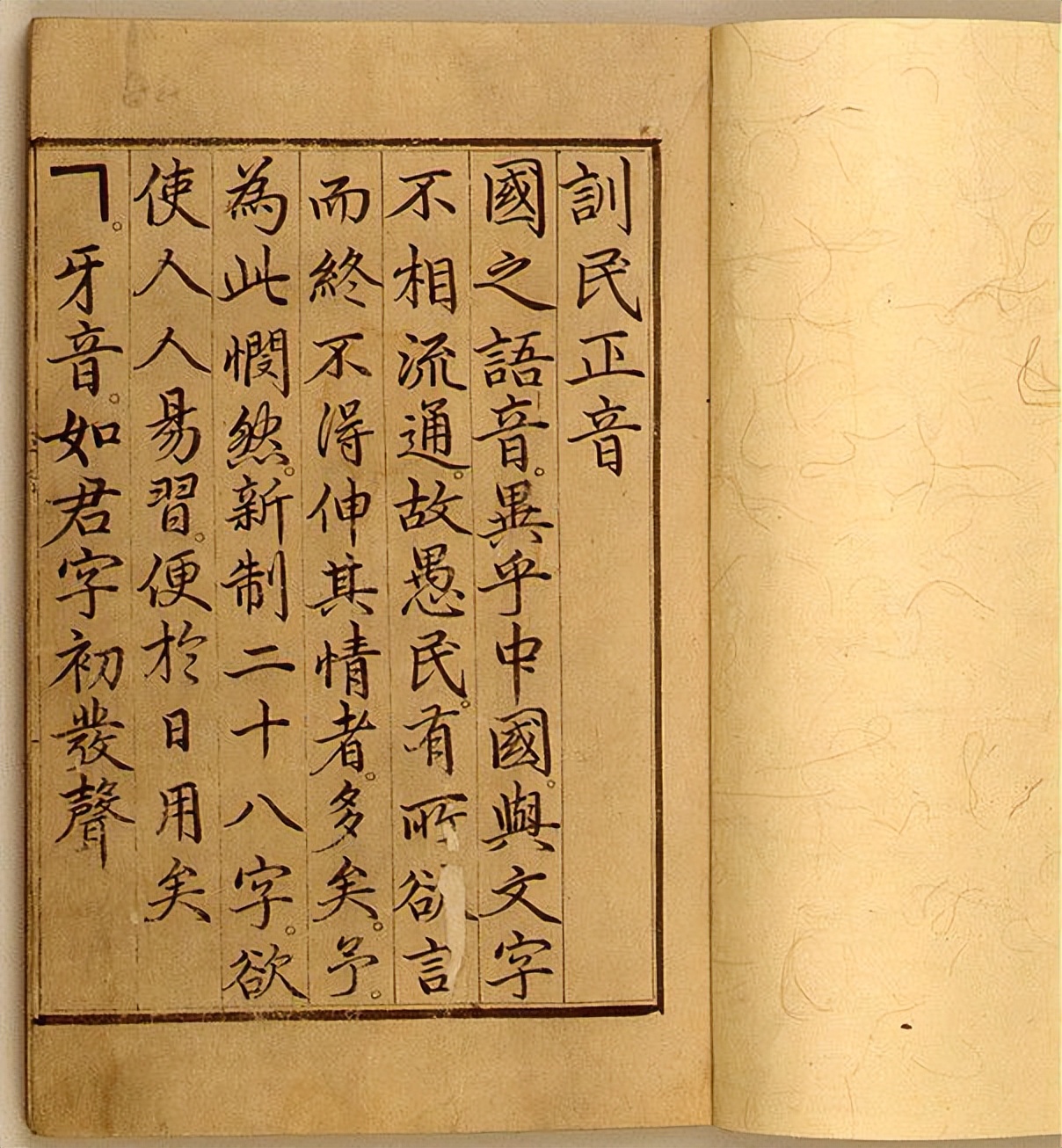
Jiansong Art Museum, which holds the example version of South Korea's No. 70 National Treasure Hunmin Jeongeum, has produced 100 virtual collections of the work and sold them on the NFT trading platform. The price of a single product is as high as 100 million won (approximately RMB 530,000).

South Korea NFT market development_NFT minting_South Korea NFT platform company layout

A virtual chess record of Korean Go player Lee Sedol playing against artificial intelligence Alpha Go was auctioned on the NFT platform for a high price of 250 million won (approximately RMB 1.325 million).

After NCSoft, a major Korean game company, announced that it would add NFT models to the game, the company's stock price soared 29.92%. The stock price of Wemade, which has integrated NFT in the overseas version of "Legend 4", soared 345%.

Cultural Creativity Trend here focuses on the practices of Korean webtoon companies.

1) Kakao

Kakao created the NFT trading platform Klip Drops specifically for NFT trading of its IP.

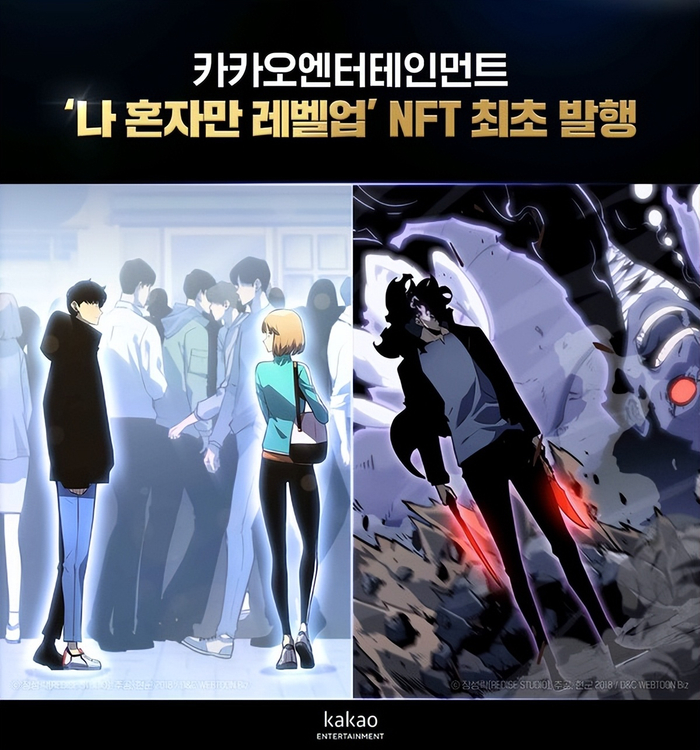
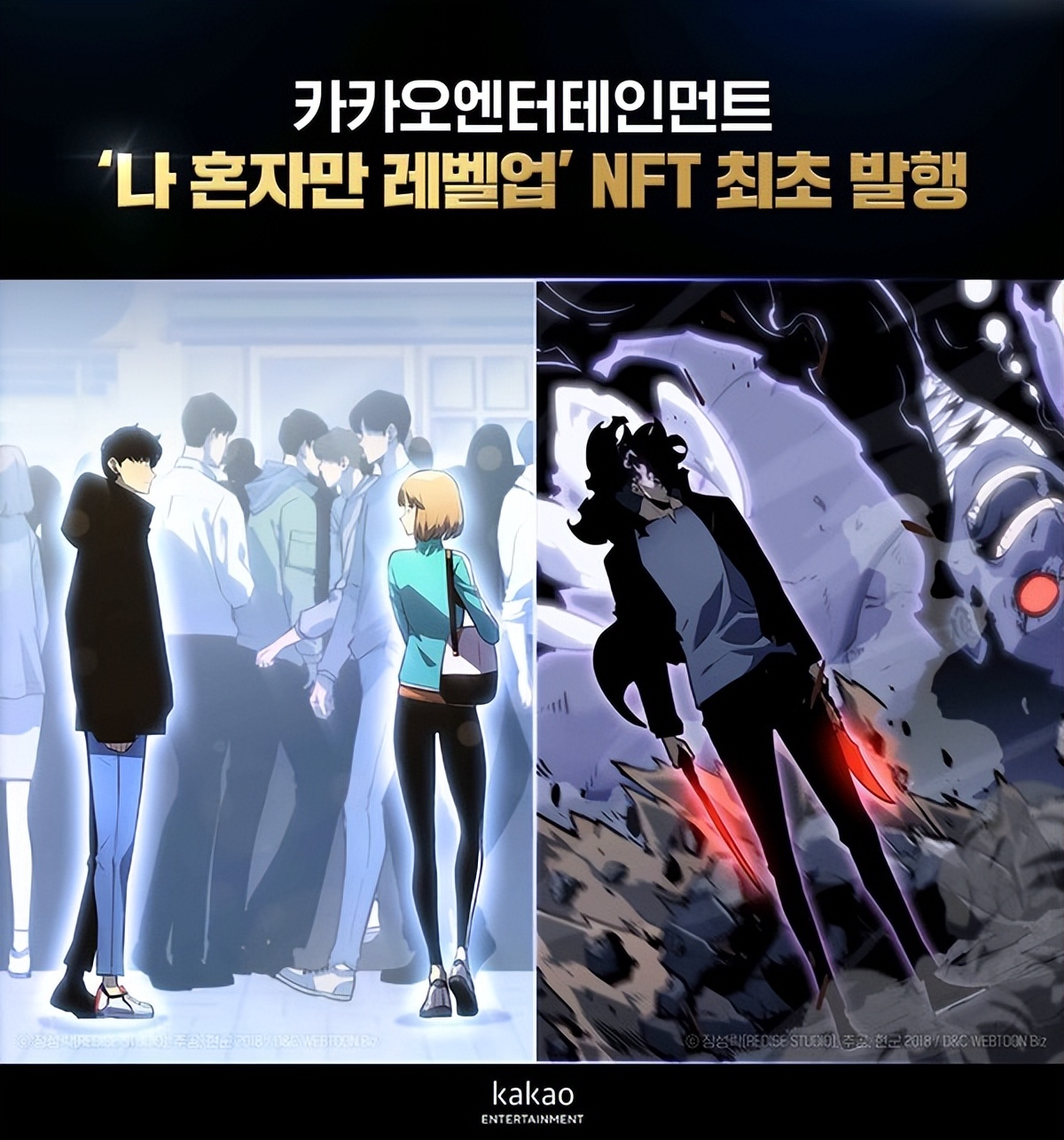
In December last year, as KakaoPage's super-popular comic "I Level Up Alone" came to an end, KakaoPage made the last scene of the comic finale into a virtual collection, selling a limited number of 100 pieces on the NFT trading platform, each priced at 500 Klay Coin. There are 200 auxiliary NFTs, each priced at 100Klay Coin. It sold out in just 1 minute.

(Klay Coin is a virtual currency launched by Kakao. The price fluctuates greatly. When the product was sold in December, 1 coin was equivalent to approximately 1,600 won.)

South Korea NFT market development_NFT minting_South Korea NFT platform company layout

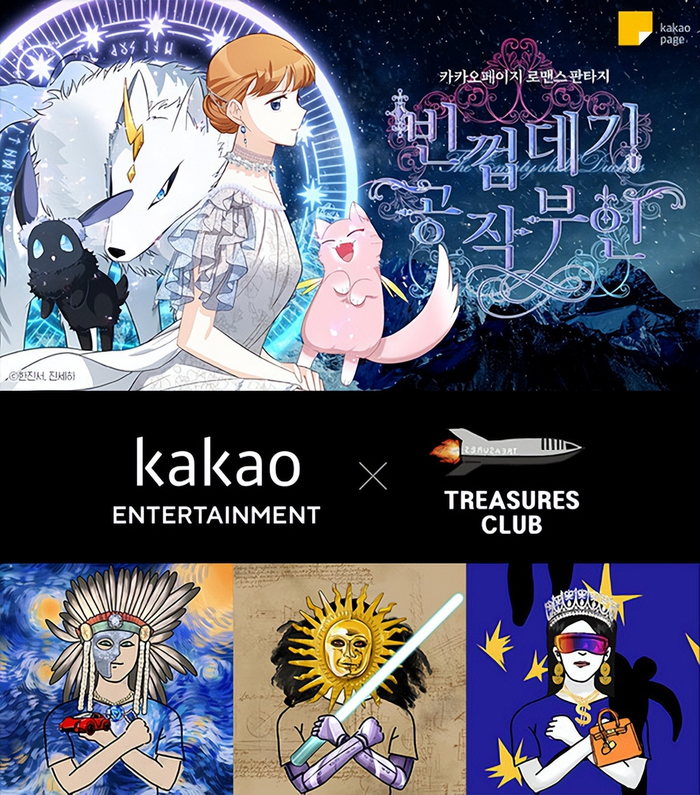
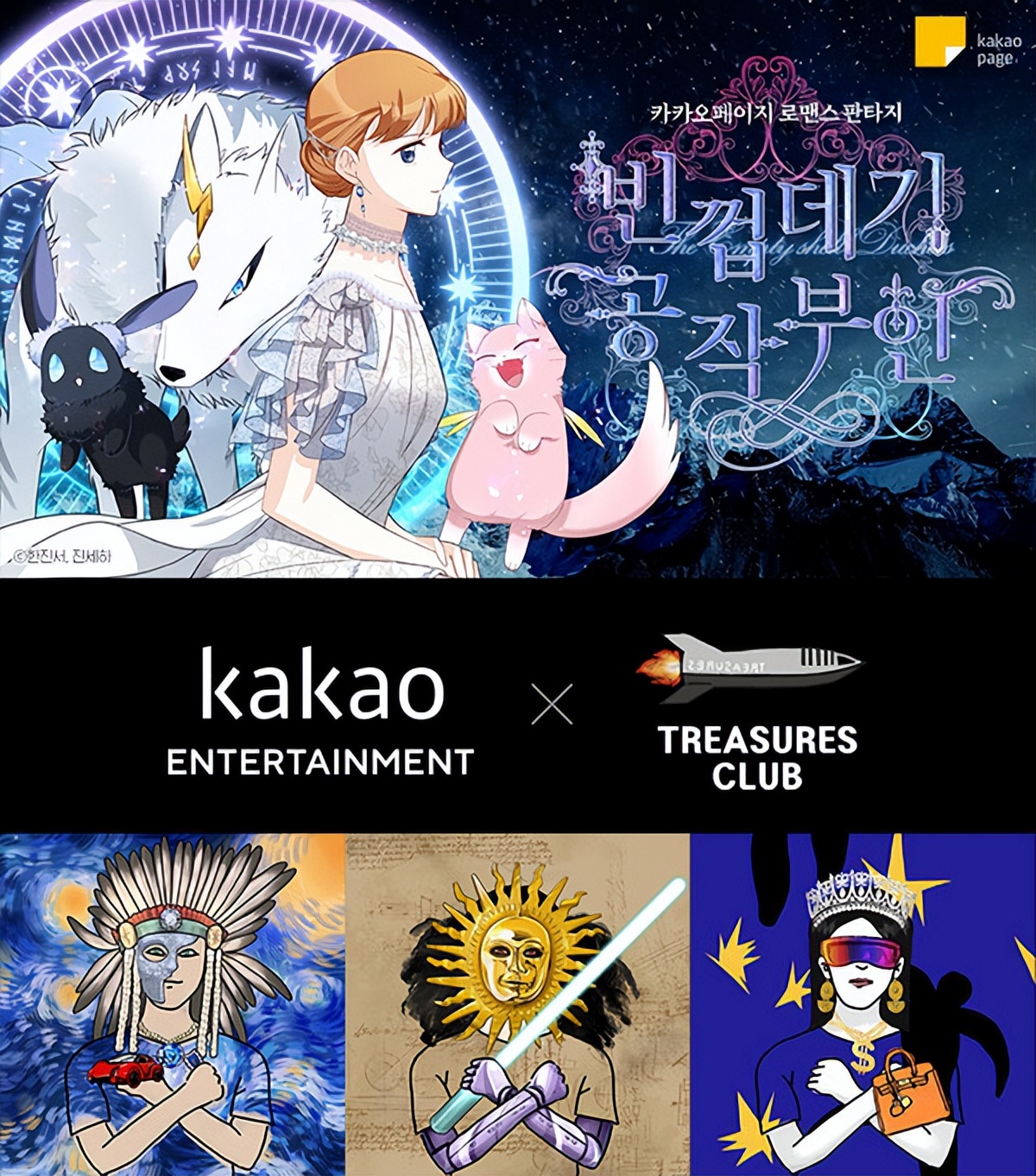
After the success of the virtual collection of "I Level Up Alone", Kakao immediately launched "Duchess in the Shell", which also sold 7,777 virtual collection products. This product will use automatic art generation technology and will be the first virtual collection in South Korea supported by this technology.

South Korea NFT market development_NFT minting_South Korea NFT platform company layout

2) Naver

Line, a subsidiary of Naver, launched the NFT exchange "Line NFT" in Japan.

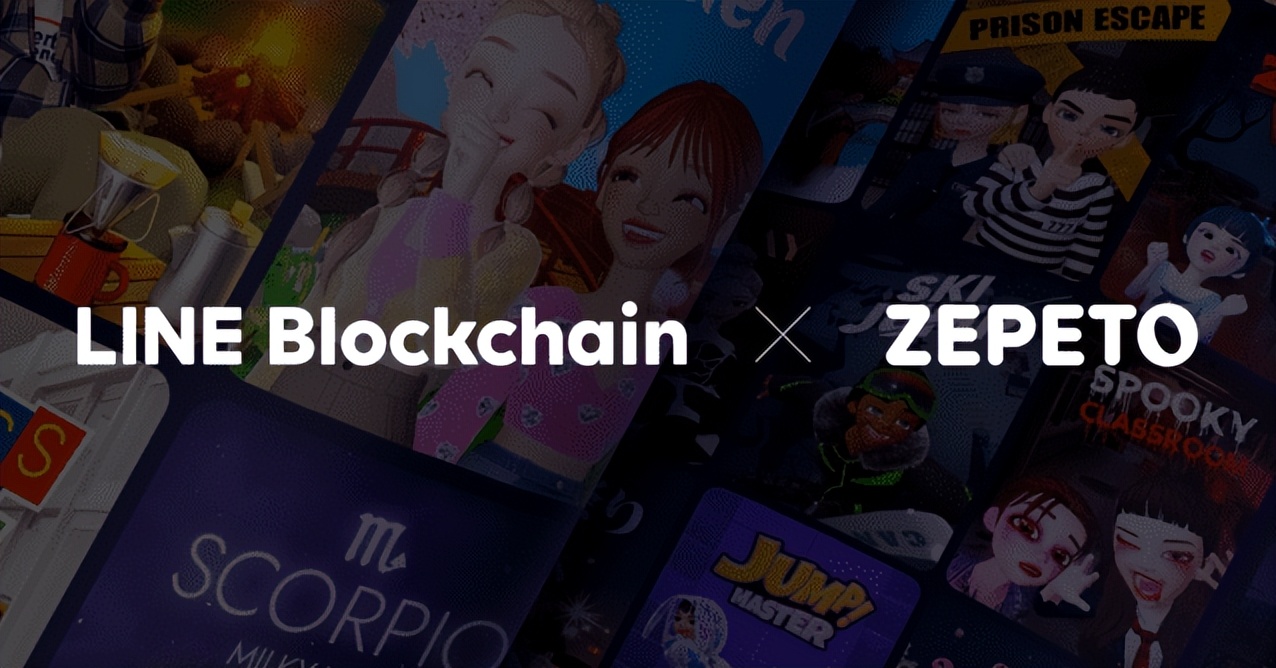
Naver also issued 12 sets of NFT Sakura Gardens through its virtual social APP – ZEPETO, with a total of 1,200 units. They were sold for the first time in Crypto games, each priced at 500 yen. Then it was sold twice in the Line Bitemax NFT Market beta version.

South Korea NFT platform company layout_NFT minting_South Korea NFT market development

Naver is also working hard to develop its own NFT trading market, and has created a subsidiary Line Next for this purpose. It is expected to launch the NFT trading market "City (도시)" in the first half of this year.

The platform will provide services in 8 languages ​​and be available in 180 countries around the world, enabling borderless transactions. Moreover, the platform will not limit the types of trading currencies, allowing transactions in multiple currencies.

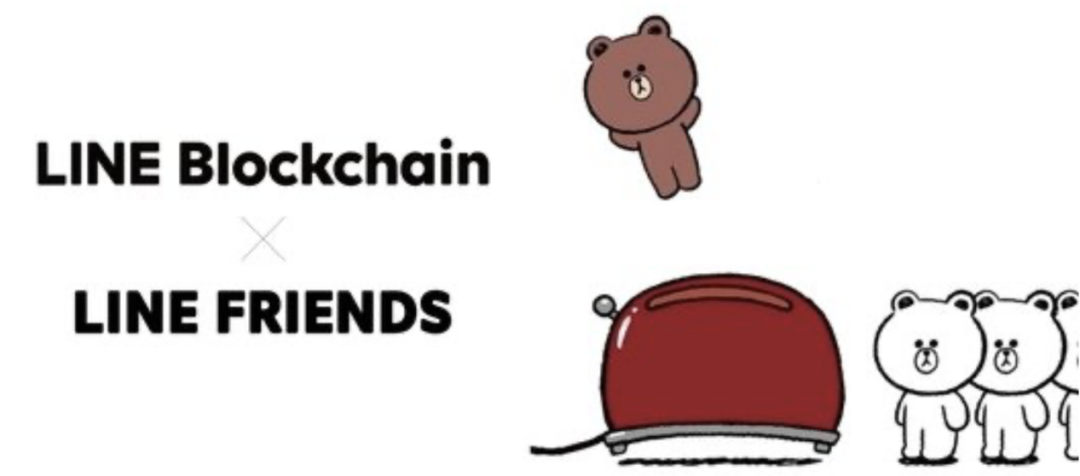
Currently, Naver has produced and sold 600,000 NFT products under its IP "Line Friends" in South Korea through its blockchain subsidiary Line techplus.

South Korea NFT platform company layout_NFT minting_South Korea NFT market development

3)Toonmics

Toonmics, a webtoon platform that is available in many regions around the world and has 53 million monthly active users, launched TooNFT to combine webtoon IP with NFT, hoping to further expand the webtoon business.

TooNFT claimed that the project was launched to create a decentralized application software based on Toomics, provide a freer environment for the webtoon market, make readers' rewards for works and authors more transparent, and find a better model to protect creators' income and readers' rights. To this end, TooNFT will provide rewards for content creators and strive to solve existing problems in the webtoon market.

TooNFT allows authors to upload works without paying any fees, and users can create communities within the platform.

In addition, TooNFT also has NFT infrastructure, which is a benefit distribution system, which means that once a work uploaded on the platform triggers income, the creator will share the corresponding income. To this end, TOON virtual tokens will be circulated within the platform.

South Korea NFT market development_South Korea NFT platform company layout_NFT minting

4) Kidari Studio

Kidari Studio, a Korean comic company that previously received a 250 million yuan investment from ByteDance, signed a cooperation agreement with Netmarble F&C, a subsidiary of South Korea's major game company Netmarble, on game content and blockchain platform-related businesses.

Through this agreement, Netmarble will be able to use the online literature IP held by Kidari to produce games and develop Metaverse content.

At the same time, Kidari will be able to carry out its NFT business holding IP (including LezhinComics, Bomtoon, and Delitoon) through the blockchain platform developed by Netmarble.

South Korea NFT platform company layout_NFT minting_South Korea NFT market development

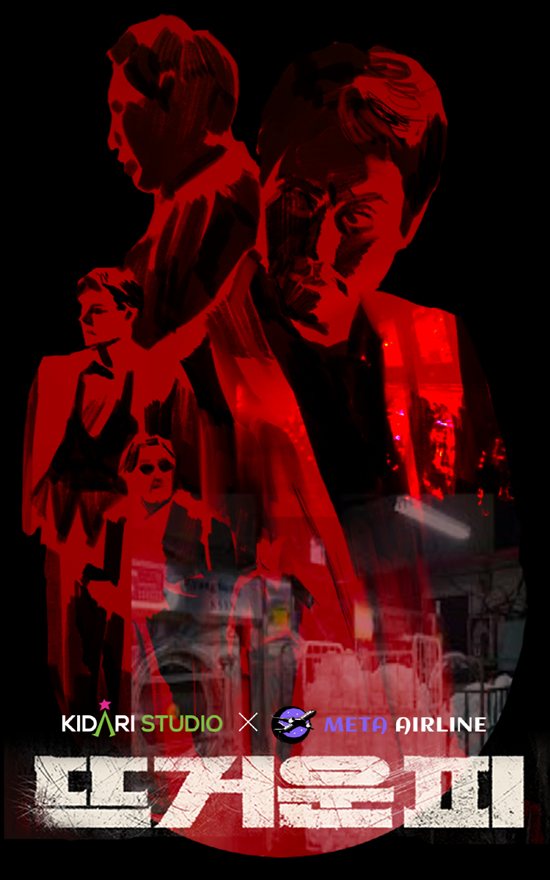
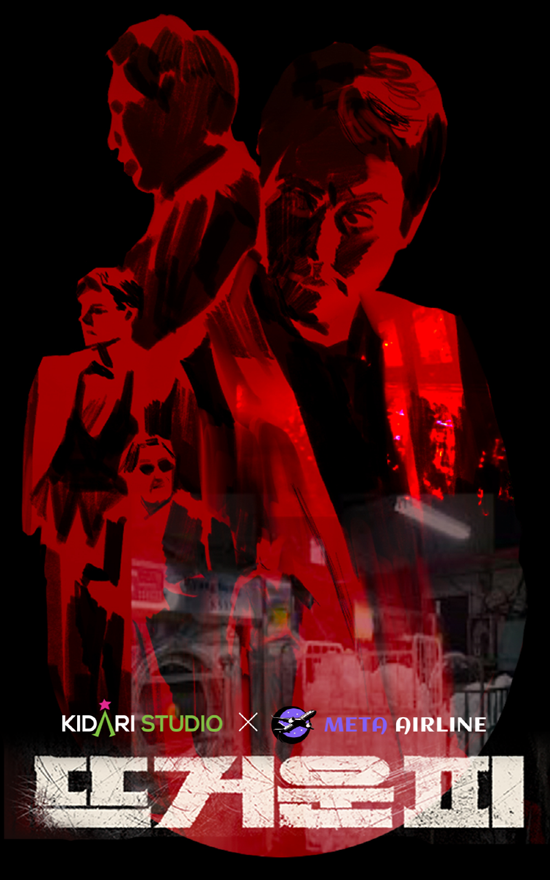
Kidari recently announced that it is cooperating with Yuan Airlines to produce NFT passports based on the movie "Hot Blood" adapted from its own online text IP and sell them on OpenSea.

"Hot Blood" will sell 2 products, one of which is a seal NFT and the other is a bullet NFT. Each product will be sold in 3 batches.

The first batch of seal NFT products is priced at 60MATIC, with a purchase limit of 5 per person; the second batch is 120MATIC, with a purchase limit of 8 per person; the third batch is priced at 180MATIC, with a purchase limit of 10 per person, and the quantity sold is not clearly limited.

Bullet NFT sells for 0MATIC, and only 20 are sold in each batch. The first batch of products is limited to 1 +WL per person, the second batch of products is limited to 3 +WL per person, and the third batch of products is limited to 5 +WL per person.

5) GToon Comics

Gtoon Comics owns a number of classic web comics, classic scenes from popular web comics, web comic characters, and IPs of various web texts. The company is currently focusing on developing an NFT trading platform for web comics and web articles based on blockchain technology that can be traded in multiple countries.

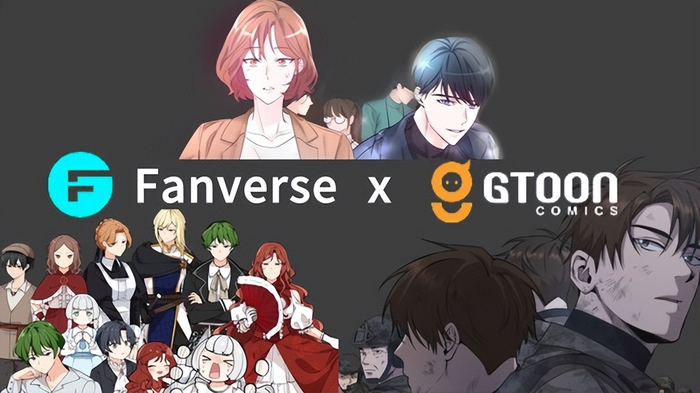
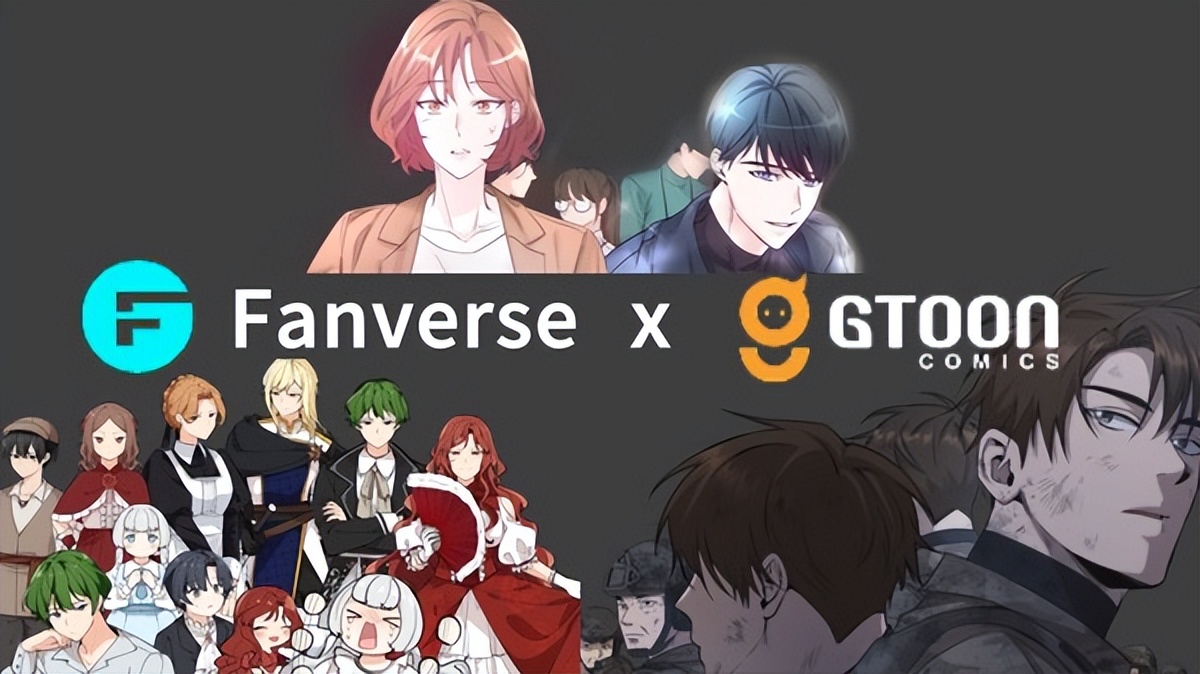
FanVerse is an NFT platform that provides communication between content creators and fans. It has developed various forms of NFT such as digital artworks, artist NFT fan cards, and fan tokens.

Not long ago, in order to successfully create an online literature NFT trading platform, Gtoon Comics signed a cooperation agreement with the FanVerse platform to plan, create, and trade web comic NFT products on the Fanverse platform.

6)YLAB

Webtoon creation studio YLAB has cooperated with blockchain startup BlockoXYZ and announced that it will officially enter the business of using webcomic IP to produce NFT products.

YLAB has not yet made it clear which NFT platform it will use and how it will trade its NFT products.

South Korea NFT platform company layout_NFT minting_South Korea NFT market development

7)Mrblue

The Mrblue platform, which focuses on martial arts comics, also announced that it will use its martial arts comic IP to actively develop the NFT business.

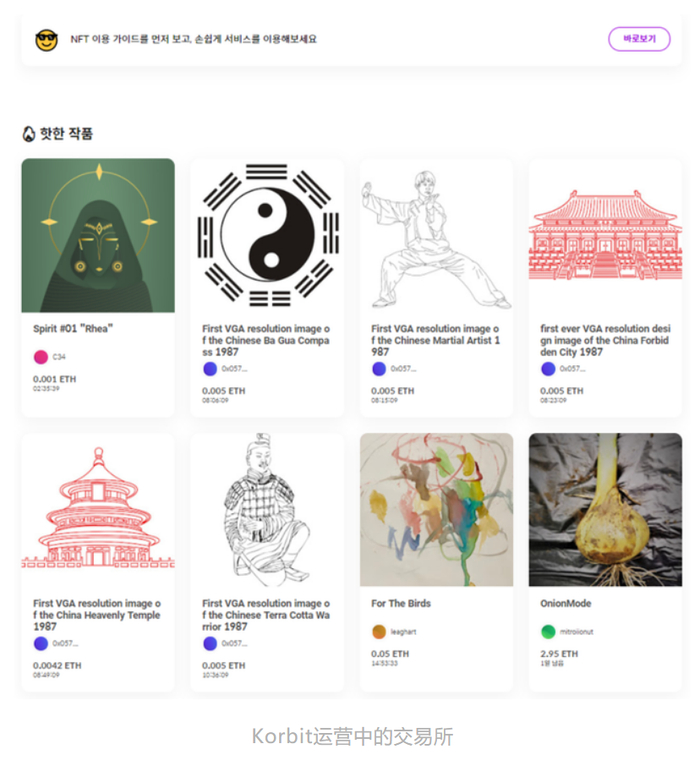
To this end, Mrblue is actively cooperating with companies that possess NFT-related technologies and announced that it will circulate NFT products of its IP through the virtual currency trading platform Korbit in the future.

South Korea NFT platform company layout_NFT minting_South Korea NFT market development

HyperNEST, A Subsidiary Of South Korea’s Meta.N Group, Successfully Developed “HyperNEX” Technology

South Korea's Meta.N Group is a company that develops and provides artificial intelligence technology (Artificial Intelligence social Technician) that conforms to the cultural environment and the trend of the times. Meta.N plans to provide platform technology that supports a variety of financial transactions and trading systems based on the HyperNEX technology developed by its subsidiary HyperNEST.

HyHyperNEX technology was developed to solve the problems of value sharing and value distribution that arise during the integration of traditional technology and finance. Based on the fifth generation artificial intelligence distributed computing technology, it supports content creation and activity sharing online.

The core of the technology is for rapid processing and fair distribution, using a system that is first implemented centrally and then audited in a decentralized manner. Decentralized audit nodes introduce artificial intelligence systems to prevent errors and biases that may occur when human intervention occurs.

David Han Lee, representative of Hypernest, which developed HyperNEX technology, said: "Artificial intelligence may also have errors and biases, but due to its lack of emotion, it has more advantages in fair distribution than the direct intervention of humans. We will cut off intervention for specific interests and improve the completion of the technology. The more experience we have in fair distribution of this technology, the more competitiveness we will have that is difficult for other companies to match.'"

Meta.NGroup provides the "W(Wallet)-M(Messenger)-M(NFT Marketplace)" service based on the above-mentioned Super Nex technology, using blockchain technology to solve the problems of user value sharing and value distribution. Taking NFT Market Place and NFT traded in the Market as the core axis, media content is included in the NFT and correct sharing and distribution is achieved.

The GxG NFT Marketplace launched by Meta.N Group provides 1GB of cloud space. Users can use corresponding tools to convert various contents such as images and high-definition images into NFT, and create new records and certifications. In particular, intellectual property issues, which have been a problem in the NFT market before, can be solved through high-capacity cloud space, and this advantage has attracted market attention.

Upgrading and developing cloud space and artificial intelligence above 1GB requires large-capacity hardware infrastructure. In order to solve this problem, Meta.N Group aims at "One Korea, One Cloud". That is, individuals or companies in the Republic of Korea will use part of the cloud space of PC storage, network, and GPU to build "shared network infrastructure" to ensure that the platform provides fair distribution. Through this technology, countries around the world will build large-scale cloud infrastructure.

The existing NFT Mining service supports low-capacity limited capacity, but Meta.N's 1GB cloud service supports ultra-large capacity, so it is expected that NFTs will appear in a variety of fields compared to the past. A person related to Meta.N said: "The conversion capacity of the NFT conversion service is 1GB, but the more active the cloud construction, the more large-capacity civilian services can be provided." If the distribution of one's own works and intellectual property rights is realized, many creators will emerge, and more high-quality content will be spread through these activities.

Yan Min, chairman of Meta.N Group, said: "Although many conceptual cases of resource sharing have existed and been proven before, the actual implementation solutions are not satisfactory. With NFT Market Place as the core, we bundle "media content production" and "physical environment sharing" to provide services, thus forming the entry point for the final stage that can be realized. Groups that share physical resources and groups that produce content carry out natural DAO activities based on the concept of "value sharers", building an ecosystem where everyone is integrated. In the future, we will expand the market to 'One World, One Cloud' starting from 'One Korea, One Cloud', and be favored by multinational companies interested in our platform and technology. "

Korean Companies Have Entered The NFT Market One After Another, And Virtual Currency Platforms Have Made Huge Profits From The Investment Boom.

In "Digital Collections with an Annual Transaction Volume of US$11 Billion, Is It a Bubble or the Future?" 》In the article, we noticed that although there is a huge bubble in the NFT market, the giants do not want to lag behind the times.

Domestic Tencent, Alibaba, Bilibili, etc. have all laid out digital collections. Review: Alibaba, NetEase Bilibili, etc. promote digital collections | Tencent iQiyi and others promote digital collections, covering many IPs from cultural blogs to animation, games and other fields.

In Japan, IPs such as Ultraman, Astro Boy, My Neighbor Totoro, Godzilla, Katsushika Hokusai, and giants such as Rakuten, Line, Mediado, etc. have all set foot in it. Reviewing the cultural and creative trend interpretation: Observation on the model of 12 NFT platforms in Japan: Giants enter the game, classic IP comes on stage

What is the scene like in South Korea?

According to incomplete statistics on the cultural and creative trend, Korean comic companies that have joined the NFT market include Kakao, Naver, Toomics, Kidari Studio, YLAB, Gtooon, Mrblue, etc., and game companies include NCSoft, Yumede, Com2us, Joycity, PearlAbyss, Devsisters, Krafton, etc. In addition, South Korea's large artist management companies SM, YG, HYBE, and JYP have also entered the market.

Virtual currency exchanges and various industries’ different perceptions of NFT

We have noticed that there are currently 4 virtual currency platforms trading in Korean won in South Korea, and they have all achieved good returns in 2021 under the influence of the virtual currency investment boom.

Korean digital collection platform analysis_NFT minting_Korea NFT market development

Among them, Dunamu, which operates the UPbit exchange, had annual sales of 3.7046 billion won, a year-on-year increase of 1,996%; net profit was 2.2411 billion won, a year-on-year increase of 4,598%. Bitthumb's full-year sales were 1.999 billion won, a year-on-year increase of 362%; net profit was 648.4 billion won, a year-on-year increase of 408%.

After entering 2022, due to the turmoil in the virtual currency market, all four trading platforms have been greatly affected. In order to achieve sustainable development, they noticed the emerging trend of NFT and started NFT business like many Internet companies.

However, many industries in South Korea have different understandings of the new field of NFT.

Games: It mainly promotes to the public models that can earn money from playing games through P2E (Play to Earn), PAE (Play And Earn), etc., in order to actively promote attempts to integrate NFT into games. However, South Korea's "Game Industry Promotion Law" currently does not allow such business activities, and the attitudes of game companies and players towards this model cannot be unified.

Film and television: Movies, TV series, variety shows, and OTT original content are all actively creating NFT content and auctioning it. Many related companies have successfully generated income once or even N times.

Music: Due to the current restrictions on concert activities due to the epidemic, many large brokerage companies and music platforms are trying to develop "music products" using NFT and actively create a music-centered metaverse. Large Korean brokerage companies such as SM, YG, HYBE, JYP, etc. have successively entered this field.

Webcomics: Minting classic scenes from webcomics and turning them into NFT content, and selling them in limited quantities to obtain high profits. South Korea's webtoon giant KakaoPage has successfully sold related products and established a subsidiary that can conduct transactions.

Fashion: Creating products in the virtual world, but currently it only remains at the level of advertising offline products in the virtual world, while actively exploring new models that can gain profits.

Since NFT is an emerging commercial market, South Korea has not yet formulated relevant laws to regulate it. Therefore, there are no clear regulations on the division of interests between creators, trading platforms, and consumers, so there are concerns about unfair transactions. And because most of these products are limited edition products, their prices fluctuate greatly and are not subject to market rules. They are more like stock investments than a product transaction.

After news broke that Musk would acquire Twitter, the price of an NFT owned by the Twitter founder plummeted from $2.9 million to $280. In addition, according to reports from overseas media, as of the beginning of this year, NFT transactions, which were once very popular, have continued to cool down, and the transaction volume of some trading platforms has even plummeted by 50%.

NFT performance of 7 webcom companies

Let’s look at some situations in South Korea’s NFT market.

Jiansong Art Museum, which holds the example version of South Korea's No. 70 National Treasure Hunmin Jeongeum, has produced 100 virtual collections of the work and sold them on the NFT trading platform. The price of a single product is as high as 100 million won (approximately RMB 530,000).

NFT minting_Korea digital collection platform analysis_Korea NFT market development

A virtual chess record of Korean Go player Lee Sedol playing against artificial intelligence Alpha Go was auctioned on the NFT platform for a high price of 250 million won (approximately RMB 1.325 million).

After NCSoft, a major Korean game company, announced that it would add NFT models to the game, the company's stock price soared 29.92%. The stock price of Wemade, which has integrated NFT in the overseas version of "Legend 4", soared 345%.

Cultural Creativity Trend here focuses on the practices of Korean webtoon companies.

1) Kakao

Kakao created the NFT trading platform Klip Drops specifically for NFT trading of its IP.

In December last year, as KakaoPage's super-popular comic "I Level Up Alone" came to an end, KakaoPage made the last scene of the comic finale into a virtual collection, selling a limited number of 100 pieces on the NFT trading platform, each priced at 500 Klay Coin. There are 200 auxiliary NFTs, each priced at 100Klay Coin. It sold out in just 1 minute.

(Klay Coin is a virtual currency launched by Kakao. The price fluctuates greatly. When the product was sold in December, 1 coin was equivalent to approximately 1,600 won.)

South Korea NFT market development_NFT minting_Korea digital collection platform analysis

After the success of the virtual collection of "I Level Up Alone", Kakao immediately launched "Duchess in the Shell", which also sold 7,777 virtual collection products. This product will use automatic art generation technology and will be the first virtual collection in South Korea supported by this technology.

NFT minting_Korea NFT market development_Korea digital collection platform analysis

2) Naver

Line, a subsidiary of Naver, launched the NFT exchange "Line NFT" in Japan. In the Japanese article on NFT market observation, the cultural and creative trends were listed. Review: Observation on the model of 12 NFT platforms in Japan: Giants enter the game, and classic IP comes on the scene.

Naver also issued 12 sets of NFT Sakura Gardens through its virtual social APP – ZEPETO, with a total of 1,200 units. They were sold for the first time in Crypto games, each priced at 500 yen. Then it was sold twice in the Line Bitemax NFT Market beta version.

South Korea NFT market development_NFT minting_Korea digital collection platform analysis

Naver is also working hard to develop its own NFT trading market, and has created a subsidiary Line Next for this purpose. It is expected to launch the NFT trading market "City (도시)" in the first half of this year.

The platform will provide services in 8 languages ​​and be available in 180 countries around the world, enabling borderless transactions. Moreover, the platform will not limit the types of trading currencies, allowing transactions in multiple currencies.

Currently, Naver has produced and sold 600,000 NFT products under its IP "Line Friends" in South Korea through its blockchain subsidiary Line techplus.

NFT minting_Korea digital collection platform analysis_Korea NFT market development

3)Toonmics

Toonmics, a webtoon platform that is available in many regions around the world and has 53 million monthly active users, launched TooNFT to combine webtoon IP with NFT, hoping to further expand the webtoon business.

TooNFT claimed that the project was launched to create a decentralized application software based on Toomics, provide a freer environment for the webtoon market, make readers' rewards for works and authors more transparent, and find a better model to protect creators' income and readers' rights. To this end, TooNFT will provide rewards for content creators and strive to solve existing problems in the webtoon market.

TooNFT allows authors to upload works without paying any fees, and users can create communities within the platform.

In addition, TooNFT also has NFT infrastructure, which is a benefit distribution system, which means that once a work uploaded on the platform triggers income, the creator will share the corresponding income. To this end, TOON virtual tokens will be circulated within the platform.

Korean digital collection platform analysis_NFT minting_Korea NFT market development

4) Kidari Studio

Kidari Studio, a Korean comic company that previously received a 250 million yuan investment from ByteDance, signed a cooperation agreement with Netmarble F&C, a subsidiary of South Korea's major game company Netmarble, on game content and blockchain platform-related businesses.

Through this agreement, Netmarble will be able to use the online literature IP held by Kidari to produce games and develop Metaverse content.

At the same time, Kidari will be able to carry out its NFT business holding IP (including LezhinComics, Bomtoon, and Delitoon) through the blockchain platform developed by Netmarble. Check out Kidari’s business: How does a Korean comic company, a Korean comic company invested by ByteDance with 250 million yuan, make web comics?

Korean digital collection platform analysis_NFT minting_Korea NFT market development

Kidari recently announced that it is cooperating with Yuan Airlines to produce NFT passports based on the movie "Hot Blood" adapted from its own online text IP and sell them on OpenSea.

"Hot Blood" will sell 2 products, one of which is a seal NFT and the other is a bullet NFT. Each product will be sold in 3 batches.

The first batch of seal NFT products is priced at 60MATIC, with a purchase limit of 5 per person; the second batch is 120MATIC, with a purchase limit of 8 per person; the third batch is priced at 180MATIC, with a purchase limit of 10 per person, and the quantity sold is not clearly limited.

Bullet NFT sells for 0MATIC, and only 20 are sold in each batch. The first batch of products is limited to 1 +WL per person, the second batch of products is limited to 3 +WL per person, and the third batch of products is limited to 5 +WL per person.

South Korea NFT market development_NFT minting_Korea digital collection platform analysis

5) GToon Comics

Gtoon Comics owns a number of classic web comics, classic scenes from popular web comics, web comic characters, and IPs of various web texts. The company is currently focusing on developing an NFT trading platform for web comics and web articles based on blockchain technology that can be traded in multiple countries.

FanVerse is an NFT platform that provides communication between content creators and fans. It has developed various forms of NFT such as digital artworks, artist NFT fan cards, and fan tokens.

Not long ago, in order to successfully create an online literature NFT trading platform, Gtoon Comics signed a cooperation agreement with the FanVerse platform to plan, create, and trade web comic NFT products on the Fanverse platform.

Korean digital collection platform analysis_NFT minting_Korea NFT market development

6)YLAB

Webtoon creation studio YLAB has cooperated with blockchain startup BlockoXYZ and announced that it will officially enter the business of using webcomic IP to produce NFT products.

YLAB has not yet made it clear which NFT platform it will use and how it will trade its NFT products.

NFT minting_Korea digital collection platform analysis_Korea NFT market development

7)Mrblue

The Mrblue platform, which focuses on martial arts comics, also announced that it will use its martial arts comic IP to actively develop the NFT business.

To this end, Mrblue is actively cooperating with companies that possess NFT-related technologies and announced that it will circulate NFT products of its IP through the virtual currency trading platform Korbit in the future.

The Development Of The Digital Collection Market Encounters Obstacles. How To Solve The Problem Of Excessive On-chain Handling Fees?

summary:

The digital collection market based on blockchain is one of the main application scenarios of NFT technology. However, the high cost of on-chain handling fees (gas) has hindered the development of the digital collection market to a certain extent. This article lists some cutting-edge technological solutions explored in the current digital collection market to solve the problem of excessive gas costs, including: off-chain methods, on-chain methods, multi-chain deployment, side chains, Layer 2 and cross-chain methods, etc., and also looks forward to some future technological development directions.

1. Digital collection market and on-chain handling fees

The digital collection market based on blockchain is one of the most important application scenarios of NFT technology. As NFT technology is applied to various practical application scenarios, the usage of the digital collection market is also increasing. Taking Ethereum as an example, according to ultrasound.money data, from the implementation of EIP-1559 to December 16, 2021, the gas consumed by the digital collection market OpenSea has reached about 126,414 ETH, surpassing ordinary on-chain transfers and Uniswap, becoming the largest gas consuming application.

So, what is "gas"? Why is the gas consumption in the digital collection market so large?

The so-called "gas" is the term for on-chain handling fees on blockchain platforms such as Ethereum. On-chain handling fees are one of the most common technical features of blockchain platforms. The operation of on-chain transactions, including simple transfers or complex smart contract operations, will use corresponding computing and storage blockchain resources; users who initiate these on-chain transactions will pay corresponding on-chain handling fees for consuming these blockchain resources. Blockchain uses this mechanism to incentivize the maintainers of the blockchain network, while preventing the blockchain network from being attacked by malicious users such as DDoS, maliciously running infinite loop code, etc. Therefore, it can be said that on-chain handling fees play a very necessary and positive role in ensuring the normal operation of the blockchain network.

However, some complex on-chain processes also bring higher on-chain handling fee costs to users. Taking the digital collection market of Ethereum as an example, users usually need to consume gas in multiple processes such as creation, listing authorization, and transfer. For example, in the transfer process, users usually need to consume about 0.02 ETH of gas (it varies according to the gas price at the time. The gas price refers to the unit price of the on-chain handling fee). When the activity of some digital collection application

When the time was relatively concentrated, the overall gas price of Ethereum also soared.

On August 26, the application of digital collections caused the gas price to soar to 1,429 GWei, which is about ten times more than usual.

These gases generally need to be paid by users of digital collection applications. Obviously, excessive gas will hinder the further use and development of the digital collection market, and may also affect the use of other applications on the blockchain network (for example, the application of Ethereum Cat at the end of 2017 caused congestion on the Ethereum network). At present, the digital collection market has conducted some technical explorations to save and reduce gas.

2. Technical solutions to save gas

The problem of excessive gas in digital collections is, to a certain extent, caused by the large amount of data in digital collections, complex business processes, and the need to improve the performance and scalability of blockchain networks represented by Ethereum. To solve these problems, you can refer to various methods to solve scalability technologies and improve efficiency. Some current technical exploration directions include: off-chain methods, on-chain methods, multi-chain deployment, side chains, Layer 2 and cross-chain methods, etc.

Solutions for reducing gas in the digital collection market (Source: Frontier Research Institute)

2.1. Off-chain method

Since gas is generated on the chain, the most natural idea is to use off-chain methods as much as possible. The main solutions include two categories: putting some processes on the original chain outside the chain and postponing some processes on the chain.

Some processes are placed outside the chain

Combined with off-chain process processing to reduce some on-chain steps. Taking Nifty Gateway as an example, by placing some exchange steps outside the chain to reduce on-chain processing steps, the cost reduction goal is achieved. For example, an exchange that originally required a total of 10 on-chain operations can be performed off-chain through Nifty Gateway's exchange process optimization. Only steps that must be confirmed by consensus on the blockchain are retained on the chain, thereby reducing the overall on-chain processing cost.

Some processes are postponed

Postponing the execution of some processes and allowing business processes to run first, allowing digital collection creators to create and publish them first at a lower cost, is an encouraging approach that can provide a more user-friendly experience for creators. A typical representative of this type of solution is OpenSea's Lazy Minting. It adopts a centralized approach, allowing creators to first create content for free and then put it on the shelves for sale. OpenSea uses a centralized approach to store and process it first, and then confirm it on the chain during transactions and other steps (generating gas consumption). At this time, the buyer and seller complete the delivery of digital collections through blockchain consensus.

But this method cannot completely solve the cost problem. Lazy Minting mainly postpones the timing of minting and lets buyers bear it. In a strict sense, it does not reduce the overall cost.

2.2. Optimization of this chain

Optimize code writing

The generation of Gas is mainly due to the consumption of blockchain resources such as computing and storage during the operation of smart contracts. Before creating digital collections, optimizing code writing can reduce gas costs to a certain extent. Some optimization methods include choosing to use an appropriate code base during development (such as using ERC721A and avoiding using ERC721Enumerable), and using optimization tools such as Truffle during compilation.

Batch aggregation

For digital collections that have been deployed on the chain, batching, aggregation, etc. can be used to reduce the overall cost. Taking Genie as an example, this aggregation tool supports packaging multiple operations for different digital collections in different markets into one transaction, while also using a combination of off-chain and other methods to reduce the average cost of a single operation.

2.3.Multiple chains

In addition to optimizing all aspects of computing and storage in this chain, a relatively direct and easy way is to integrate multiple blockchain networks on the application side; users can choose the appropriate network when using it.

Take OpenSea as an example. In addition to the Ethereum platform, OpenSea also provides the option of Polygon network. When the cost of the Ethereum network is high, users can choose to switch to the Polygon network on the OpenSea application.

2.4 Side chain/Layer 2 method

In addition to directly integrating multi-chain networks at the application level, another application option is to start from the blockchain protocol layer and transfer many businesses and processes of digital collections to side chains or Layer 2 to reduce costs, etc. Usually, such solutions also provide cross-chain transfer tools between side chains, Layer 2 and the original chain.

side chain

Side chains usually refer to blockchain networks that are parallel to the main chain and have a two-way bridging function. Ethereum's side chains include xDai, Skale, POA Network, etc. At present, some digital collection markets will choose side chains to reduce the cost of digital collections on the main chain.

A typical case is nifty.ink. It supports users to create and manage artistic works on the xDai side chain, including on-chain creation (mint), transfer (transfer), etc. If users want to transfer digital collection works to Ethereum, they can transfer (upgrade) to Ethereum through the AMB bridge tool, such as publishing to the OpenSea market.

Other similar cases include Axie Infinity’s use of Ronin side chains.

Layer2

Similar to side chains, some digital collection markets have chosen the Layer 2 technology route to reduce costs. One of the more typical cases is Immutable X, which is specially designed for digital collection applications and based on ZK Rollup, and its own digital collection market. Some other solutions include choosing from various digital collection markets and applications on Arbitrum.

2.5 Cross-chain

Cross-chain technology, in addition to solving value and data transfer issues, can also be one of the solutions to solve the cost problem of digital collections. To solve the scalability problem of blockchain and the "Impossible Triangle" paradox, the solution of cross-chain protocol + application of proprietary chain is a very good choice.

Similar to the side chain and Layer 2 solutions, the digital collection market can be deployed on an application-specific chain with lower usage costs; and when it needs to be transferred on a larger scale, it can be transferred through a cross-chain protocol.

Some current cross-chain digital collection solutions mainly use centralized gateways or cross-chain bridges. However, the IBC/TIBC cross-chain protocol based on completely decentralized verification can already support cross-chain transfer of non-homogeneous data content. For example, in 2021, after the Chinese traditional cultural digital artwork IDA was registered and confirmed on the BSN Wenchang chain, it relied on the TIBC cross-chain protocol and cross-chain hub in a cross-chain form, and was transferred from the BSN Wenchang chain to the global market through the cross-chain service hub.

3. Summary and outlook

The on-chain cost problem of digital collections is, to a certain extent, a microcosm of the performance and scalability problems of blockchain networks represented by Ethereum. Fortunately, the rapid development of underlying technologies such as Layer 2 and cross-chain in recent years, the prosperity of on-chain applications and the ecosystem have provided practical solutions for the current application of digital collections. Current solutions include centralized deferred processing, optimization of processing on this chain, deployment of multiple chains, use of side chains and Layer 2 expansion technology outside the chain, and cross-chain protocols.

It should be pointed out that there are still areas for improvement in some current technical implementations such as over-centralization (such as some cross-chain bridges) and technical security risks; completely decentralized cross-chain digital collection methods based on IBC/TIBC are emerging and need to be further supported for more applications; there is still room for improvement in digital collection support technology based on Rollup.

However, with the continuous development and improvement of blockchain scalability and cross-chain technology, the support of related technologies for the application of digital collections will become more complete, and the technical solutions will become more abundant and diverse.

Boundary Institute

Based on Border Intelligence's long-term technology accumulation in autonomous controllable blockchain underlying technology, cross-chain technology, and combined big data and privacy computing, the Border Research Institute is committed to hot event analysis, cutting-edge technology sharing, industry viewpoint elaboration, industry standard formulation, domestic and foreign open source community exchanges and other research work, and contributes professional research results with blockchain technology as the core to various industries.

Key research directions at this stage include cross-chain technology exploration (NFT, smart contracts, computing services and cross-chain interoperability of distributed identities), industrial applications (metaverse, cultural creativity and copyright, global cross-border trade, central bank digital currency, carbon neutrality, etc.), cutting-edge technology integration (blockchain + privacy computing, big data analysis) and other fields.

Everyone is welcome to contact us to discuss and promote the development of industrial blockchain.

The Story Of A Currency Gambler’s Leveraged Position Blowout

The Abyss of Leverage: Summary of a Report on In-depth Behavioral and Financial Pathology on the Destruction Process of Individual Speculators under the "519" Extreme Market

This report aims to conduct a panoramic review of the devastating experience of a typical retail speculator (codename "Chen") in the "519" cryptocurrency market crash in 2021, and provide an in-depth analysis of the behavioral finance fallacies in high-leverage cryptocurrency trading, exchange microstructure risks, and the evolving mechanism of gambler psychology. This study is not only a financial analysis of asset liquidation, but also a sociological archive of how human nature is swallowed up by algorithms, leverage, and neurochemical reactions under extreme volatility. The report is about 15,000 words in length. Through a combination of narrative case reconstruction and technical theoretical analysis, it demonstrates in detail how high leverage can push an ordinary middle-class technician to a double financial and mental collapse.

Contents Introduction: Liquidity Feast and the Desire for Escape in the Era of Involution 1.1 Macro Background: Madness and “Animal Spirits” in 2021 1.2 Hotbed of Speculators: Why Cryptocurrency? 1.3 The "coolness" effect: Survivor bias and the poison of the myth of wealth creation Chapter 1: Sample portraits and environmental psychology analysis 2.1 Subject profile: Chen – a stranger floating in Tokyo 2.2 Stress test of the physical environment: sound insulation, tram noise and claustrophobic space 2.3 Alcohol as a catalyst: "Strong Zero" and impaired cognitive function Chapter 2: Fatal flaws of the trading system – technology and mechanism 3.1 Perpetual contract (Perpetual) Swaps) temptations and traps 3.2 The mathematical tyranny of leverage: What does 100 times mean? 3.3 Cross and Isolated: Wrong Risk Management Choices Chapter 3: The Construction of the Trap—The Calm Before the Storm (May 1-18, 2021) 4.1 Animal Coin Frenzy and the Accumulation of FOMO (Fear of Missing Out) 4.2 Musk’s Tweets and Regulatory Black Swans: Reversal of Market Sentiment 4.3 Behavioral analysis of the logic of "buying the dip": Disposition effect and confirmation bias Chapter 4: The night of 519 – microscopic recurrence of systemic collapse (timeline review) 5.1 Prelude (20:00 JST): The color of the K-line and cultural cognitive dissonance 5.2 Acceleration (21:30 JST): Breaking through the psychological defense line 5.3 Dark hour (22:00-23:00 JST): Exchange downtime and liquidity black hole 5.4 Data Forensics: Benford’s Law Anomaly and the Suspicion of Exchange “Unplugging” Chapter 5: Liquidation – Algorithm Execution and Psychological Death 6.1 The Working Principle of the Liquidation Engine 6.2 That Email: The Embodiment of the Disappearance of Digital Wealth 6.3 Physiological Reactions: Acute Stress Disorder (ASD) and Cortisol Storm Chapter 6: Aftermath – Revenge Trading and Total Destruction 7.1 The Ultimate Form of the Gambler’s Fallacy: Lending and "Recovering Capital" Obsession 7.2 Echoes of social media: Despair and carnival on Weibo 7.3 Ending: The demise of a social existence Conclusion and reflection: The system always wins

Introduction: Liquidity Feast and the Desire for Escape in the Era of Involution 1.1 Macro Background: Madness and “Animal Spirits” in 2021

In the spring of 2021, the global financial market is in an almost hallucinogenic state of excitement. The unlimited liquidity released by the Federal Reserve after the epidemic poured into various asset classes like a flood, and the cryptocurrency market became the most turbulent place for this torrent. Bitcoin broke through an all-time high of $64,000 in April, and Ethereum followed suit by hitting the $4,000 mark.

This is a special moment for the younger generation in East Asian cultural circles. The traditional upward channel is becoming increasingly narrow, and "involution" has become a popular term to describe the fierce competition in society and diminishing returns. Cryptocurrency, with its decentralization, borderlessness and extremely exaggerated volatility, is regarded by many young people as the only elevator to break class solidification and achieve a "class jump". In this context, leverage trading is no longer just a financial tool, it has been given a certain rebellious and heroic color.

1.2 A hotbed for speculators: Why cryptocurrencies?

Unlike the traditional stock market, the cryptocurrency market is a 24/7 casino that never sleeps. This round-the-clock nature deprives traders of a window of time for calm thinking, leaving the dopamine reward circuit in a state of constant overload. For our protagonist, Chen, this nonstop beating K-line is both a source of anxiety and the fuel of life.

1.3 “Cool” Effect: Survivor Bias and the Poison of the Wealth Creation Myth

Before Chen's story begins, it is necessary to mention a spiritual totem that had a devastating impact on him-"Liang Xi". This 17-year-old boy used extremely high leverage to turn a few thousand yuan into tens of millions of yuan in a short period of time during the 2021 market boom.

Liang Xi's story went viral on Weibo and WeChat groups, and he became the "god" in the hearts of all gamblers. Although Liangxi eventually took on huge debts due to liquidation, in that crazy May before May 19, Chen only saw the first half of the story: high leverage is the shortcut to freedom. This extreme survivor bias makes Chen subconsciously believe that as long as he has good skills and courage, he can become the next "Liang Xi". He ignored the most basic mathematical probability – in a game with negative expected value, bankruptcy is the only end point of convergence.

Chapter 1: Sample portraits and environmental psychology analysis 2.1 Subject file: Chen – a stranger floating in Tokyo

Chen is a typical "poor and busy family in Kochi". He graduated from a good domestic science and engineering university and later came to Tokyo through labor dispatch to work in IT outsourcing. Although he is called an "engineer", he actually earns a subsistence salary and does repetitive code transfer work. In the high-pressure city of Tokyo, he felt deeply lonely and alienated. He has no Japanese friends and is unwilling to integrate into the local society. His only social activities are browsing Weibo, reading Twitter, and speculating in coins after get off work.

2.2 Stress test of physical environment: sound insulation, tram sound and claustrophobic space

The apartment Chen rents is a typical Showa-era building with a wooden structure and walls as thin as paper. This is not uncommon in Tokyo, where land is at a premium, but for a full-time trader who requires a lot of concentration (even though he has to work during the day), it's hell.

Every night, the coughing sound of the neighbor next door, the sound of the TV, and even the sound of electricity turning on and off the lights can be clearly heard. To make matters worse, the apartment is less than 50 meters away from the Chuo Line tracks. Every few minutes, a train would roar past, causing subtle vibrations throughout the room. This kind of continuous low-frequency noise and vibration has long kept Chen in a sub-healthy physical and mental state. His sleep quality is extremely poor, his nerves are extremely sensitive, and he is easily irritable.

In the week before 519, Chen barely slept in order to keep track of the market. He shut himself in this claustrophobic space of only 15 square meters, closed the curtains, and cut off the natural light from the outside world. The room was filled with the greasy smell of take-out lunch boxes, the smell of sweat from unwashed clothes, and the lingering smell of alcohol.

2.3 Alcohol as a Catalyst: “Strong Zero” and Impaired Cognitive Function

To combat anxiety and insomnia, Chen developed a deadly habit: drinking Strong Zero.

This is a canned cocktail (Chūhai) that can be seen everywhere in Japanese convenience stores. It is famous for its "9% high alcohol content" and "zero sugar". It is cheap (a can is less than 150 yen), tastes as smooth as juice, but has great staying power. It is nicknamed "water of nothingness" or "fragmented wine" by Japanese netizens.

Late at night in trading, when fear strikes, Chen will open a can of lemon-flavored Strong Zero. The temporary paralysis caused by alcohol made him feel that he was omnipotent. The fluctuations on the K-line no longer frightened him, but instead gave him the illusion of controlling the overall situation. However, neuroscience research shows that alcohol severely inhibits the function of the prefrontal cortex, the area of ​​the brain responsible for rational decision-making, risk control, and impulse suppression.

Under the dual effects of alcohol and sleep deprivation, Chen's brain had degenerated into a primitive machine powered by the amygdala. He is no longer "trading", he is looking for excitement.

Chapter 2: Fatal Flaws of the Trading System—Technology and Mechanism

To understand how Chen lost all his savings and went into huge debt overnight, we must deeply analyze the financial instrument he used—Bitcoin Perpetual Futures.

3.1 The temptation and trap of perpetual contracts (Perpetual Swaps)

Perpetual contracts are the greatest “invention” of the cryptocurrency market and the sharpest sickle. Unlike traditional futures, there is no delivery date. This means that as long as you don't liquidate your position, you can hold it forever. This mechanism gives retail investors the illusion that as long as I look in the right direction, I can "carry" the intermediate fluctuations.

3.2 The Mathematical Tyranny of Leverage: What Does 100x Mean?

On the night of 519, Chen opened 100 times leverage.

That's a crazy number. Under 100 times leverage, if the price of the underlying asset (Bitcoin) fluctuates by 1%, Chen's principal will double (+100%) or return to zero (-100%). In fact, it's worse than that. Because the exchange needs to charge transaction fees, and in order to prevent liquidation (the account balance becomes negative), the exchange will set a "maintenance margin rate" (Maintenance Margin), usually around 0.5%. This means that as long as the price fluctuates 0.5% – 0.7% in an unfavorable direction, Chen's position will be forced to be liquidated.

In the cryptocurrency market, a 0.5% fluctuation can occur in a second. This is no longer investing, or even gambling, this is picking up coins on the railroad tracks.

3.3 Cross and Isolated: wrong risk management choices

Another fatal mistake Chen made was choosing the Cross Margin model.

Chen's logic for choosing a full position is a typical retail investor's thinking: "I'm afraid of being liquidated, so I have to use all my money to cover the order. Bitcoin can't keep falling. As long as I have enough money, I can carry it until it rebounds." This kind of thinking ignores the destructive power of black swan events. Under the full position mode, once an extreme unilateral market situation like 519 is encountered, the outcome will not only be a stop loss, but also a complete loss of money.

Chapter 3: The Construction of the Trap—The Calm Before the Storm (May 1-18, 2021) 4.1 Animal Coin Frenzy and the Accumulation of FOMO (Fear of Missing Out)

At the beginning of May 2021, the protagonists of the market are Dogecoin and Shiba Inu Coin (SHIB). Chen watched helplessly as these "air coins" without any value support increased more than ten times or even dozens of times in a few days. His colleagues and the bloggers he follows on Weibo all seem to be making money.

“I missed Doge, I missed Shib, I can’t miss the next major rise in Bitcoin.”

This strong FOMO (Fear Of Missing Out) mentality completely destroyed his sense of risk. He felt that the market owed him a chance to get rich.

4.2 Musk’s tweets and regulatory black swan: reversal of market sentiment

On May 12, Tesla CEO Elon Musk suddenly announced that Tesla would suspend accepting Bitcoin payments due to environmental concerns. The market fell in response. On May 18, the China Internet Finance Association and three other associations jointly issued an announcement to prevent the risks of speculation in virtual currency transactions. This is a clear regulatory bearish signal.

However, at this time, Chen had already fallen into cognitive dissonance. He refuses to believe the bull market is over. He believes that these are "FUD" (panic news) and are smoke bombs released by bookmakers in order to defraud retail investors of their chips.

4.3 Behavioral analysis of the logic of “buying the dip”: disposition effect and confirmation bias

On the evening of May 18, Bitcoin fell to around $42,000. Chen believes this is a once-in-a-lifetime opportunity to “buy the dip.” Not only did he not reduce his position, but he added to his long position at this position. He converted all the money he cashed out from his credit card and the money he originally planned to send home into USDT and transferred it to his Binance contract account.

He looked at the 100 times leverage ratio on the screen, his hands trembling slightly, but he told himself: "Wealth can be found through risk. This is what Liang Xi does." At this time, the average price of his positions was around US$43,500, and the liquidation price was displayed at US$35,000 under the protection of the full position mode. "It's impossible for Bitcoin to fall below 35,000," he said to himself as he took a sip of Strong Zero and looked at the screen. "That was the top of the last bull market, and the support is very strong."

What he didn't know was that Death was already standing outside the door.

Chapter 4: The Night of May 19th – Microscopic Reappearance of Systemic Collapse (Timeline Review) 5.1 Prelude (20:00 JST): The Color of the K-Line and the Cognitive Dissonance of Culture

May 19, 2021, 8 pm Tokyo time. When Chen came home from get off work, he didn't even take a shower and just slumped down in front of the computer. The room was unbearably hot, and the early summer in Tokyo was already a bit humid. He opened an ice-cold can of Strong Zero (grapefruit flavor).

On the screen, the price of Bitcoin is hovering near $39,000. Here is a detail: Although Chen is Chinese, in order to appear "professional", he uses the default color scheme of the international version of TradingView – green up and red down. However, the tradition of China's stock market is that it rises in red and falls in green. Under the influence of extreme fatigue and alcohol, this counter-intuitive setting of colors increased the cognitive load on his brain.

Whenever a red K-line (falling) appears, his subconscious takes 0.1 seconds longer to reflect that this is a "bad thing". This tiny delay became a fatal liability over the next few hours.

5.2 Acceleration (21:30 JST): Breaking through psychological defenses

At 9:30 p.m., U.S. stocks opened. Instead of rebounding as Chen expected, the market began to fall at an accelerated pace. Bitcoin falls below 38,000. The floating losses in Chen's account began to expand. The Margin Ratio has changed from the green safety zone to the yellow warning zone.

The phone vibrated. ** Margin Call:** "Your margin balance is low…" This is a margin call notification email.

Chen's palms began to sweat. He quickly opened Alipay and WeChat to check if he had any spare money to deposit. there is none left. The credit card is maxed out, and the borrowed money is empty. "It's okay, it's still early for 35,000." He comforted himself.

5.3 Dark Hour (22:00-23:00 JST): Exchange Outage and Liquidity Black Hole

At 10pm (13:00 UTC) the real crash began. The price of Bitcoin no longer fluctuates downwards, but falls vertically like a waterfall. 37,000… 36,000… 35,000…

Chen's psychological defense collapsed the moment 35,000 was penetrated. "The position must be closed! The loss must be stopped!" He clicked the mouse frantically, trying to click the "Close Position" button on the mobile app.

Spin in circles. Infinite circles. The line of words that made him despair popped up on the screen: "Network Request Failed" or "System Busy".

This is the darkest scene in the May 19 tragedy: the exchange pulled out the network cable. Due to the influx of massive sell orders and liquidation requests in a short period of time, the matching engines of leading exchanges such as Binance were overwhelmed and the API interfaces were paralyzed. This means that retail investors are watching their money burn, but they are unable to operate, escape, or even recharge their margins. They were locked in the burning house.

Chen refreshed the web page frantically, and the F5 key was almost broken. On the mobile app, the price is stuck at $34,502. But on Twitter, someone sent a screenshot of a Bloomberg terminal: BTC has fallen below $31,000.

This information asymmetry made Chen feel suffocated. He stood up and paced back and forth in the narrow room, his heart beating violently as if it was about to burst through his chest. The neighbor next door knocked on the wall again because he thought his footsteps were too noisy. Chen roared at the wall: "Go to hell!"

5.4 Data Forensics: Anomalies in Benford’s Law and Suspicions of Exchanges “Unplugging Network Cables”

Later academic research showed that Binance’s data between 13:00 and 15:00 UTC on the night of May 19 had serious deficiencies and anomalies. Using Benford's Law analysis, researchers found that the data later filled in by the exchange may not have been generated by real transactions, but were manipulated or forged in order to conceal the fact that the matching engine collapsed and the resulting loss of the Insurance Fund (Insurance Fund).

For Chen, this meant he was playing against a black box. The K-line he saw may not be real, but the money he lost was real.

Chapter 5: Liquidation – Algorithm Execution and Psychological Death 6.1 How the Liquidation Engine works

When the price of Bitcoin fell below $33,000, although Chen’s screen was still stuck, Binance’s internal liquidation engine had taken over his account.

In the cross position mode, the system detected that his margin rate was lower than the maintenance margin rate. In order to protect the exchange from losing money, the engine will forcefully sell all the Bitcoin contracts he holds at the market price (Market Order). In a plunge when liquidity is exhausted, this kind of market sell order will be executed at an extremely low price (slippage), further depressing the price and causing more people to liquidate their positions. This is the so-called Liquidation Cascade.

6.2 That email: the embodiment of the disappearance of digital wealth

11:05pm (JST). The network was finally restored. Chen refreshed the page with trembling hands.

Account total equity (Total Equity): 0.0000 USDT. It may even be a negative number (but with an insurance fund mechanism, it is usually reset to zero).

Immediately afterwards, the email announcing the death sentence was sent to his mailbox. Even in his dreams, the content of this email would haunt him countless times:

Subject: Liquidation Call

Dear User, Your position has been liquidated. All open orders have been canceled. Symbol: BTCUSDT Type: Liquidation Price: 30,850.00

There is no comfort, no explanation, just cold algorithmic logic. The 3 million yen he had saved while working in Tokyo for three years, plus the 2 million yen in credit card debt, were all wiped out in just two hours.

6.3 Physiological response: acute stress disorder (ASD) and cortisol storm

The moment he saw "0", Chen didn't cry. He felt an extreme sense of dissociation. It was as if the soul had drifted away from the body and was looking at the person sitting in front of the computer on the ceiling. What follows is a violent physiological reaction:

This is the body’s exhaustion response after a massive release of cortisol and adrenaline. His brain chose to temporarily "shut down" because it could not process the huge loss signal.

Chapter 6: Aftermath – Revenge Deal and Total Destruction 7.1 The ultimate form of the gambler’s fallacy: borrowing and the obsession with “getting back money”

If you are a rational investor, you should stop your losses and leave the market at this time and pay off your debt slowly. But Chen was already a gambler. After 519, Bitcoin did rebound. It rebounded from a low of 30,000 to 38,000. For Chen, this is more painful than losing money. "If I don't liquidate my position, I will take it back! Not only do I not lose money, I can also make money!"

This psychological suggestion of "near-miss" is the core driving force of gambling addiction. Over the next month, Chen entered a state of madness. He started taking out online loans and even lied to his parents in China that he wanted to buy a house, defrauding him of tens of thousands of yuan. He started Revenge Trading. This time, he opened the leverage to 125 times. "Since the principal is less, higher leverage must be used to recover the capital."

The results speak for themselves. In the volatile market after 519, the fault tolerance rate of high leverage is zero. His new funds hit zero again within days.

7.2 Echoes of social media: despair and carnival on Weibo

While Chen collapsed alone, a carnival and mourning about May 19 was going on on the Chinese Internet. On Weibo, topics such as #Bitcoin slump# and # warehouse burst became hot searches. Some posted screenshots of losses, some broadcast live on the rooftop (although most of them were jokes), and some were scolding like "Liang Xi".

Chen posted a post on Weibo, with no picture and only a few words: "The trains in Tokyo are too noisy. I want to go home." This Weibo was submerged in countless jokes and lamentations. No one responded, except for a robot selling U (Tether) who commented: "Recycle USDT at high prices, integrity first."

7.3 Ending: Death as a Social Being

Three months later. Chen moved out of his apartment in Shinjuku because he couldn't pay the rent. He moved to a more remote and cheaper area in Saitama Prefecture. His company received collection calls from credit card companies and lending platforms. He resigned, or was persuaded to quit. He did not return home because he was too embarrassed to face his parents. He started working as a manual laborer in Tokyo, delivering food, and traveling through the veins of the city like a ghost.

He deleted Binance and deleted Twitter. But he still buys Strong Zero at convenience stores. Whenever he passes by an electronics store and sees financial news on TV and mentions that Bitcoin has risen or fallen again, his hands still tremble unconsciously. The high-spirited engineer "Chen" died in the 4.5-meter room filled with the smell of alcohol and the sound of trams on the rainy night of May 19, 2021.

Conclusion and Reflection: The system always wins

Chen’s story is not an exception. He is the epitome of hundreds of thousands of liquidated accounts during the 519 incident.

Through an in-depth analysis of this case, we draw the following conclusions:

The inevitability of probability: High leverage (>20x) is mathematically destined to zero because it cannot withstand the standard deviation fluctuations in Brownian motion. Predatory nature of the system: Centralized exchanges (CEX) actually constitute an unfair game for retail investors by providing a full position model, high leverage, and "technical failures" at critical moments. The complicity of the environment: the survivor bias of social media (Ryoxi Mythology), the oppression of the physical environment (narrow spaces in Tokyo), and addictive substances (alcohol), together create a perfect closed loop that turns rational people into gamblers.

In the seemingly decentralized free world of cryptocurrency, retail investors have not gained freedom. Instead, they become sacrifices in a liquid feast. As the old casino proverb goes: "If you sit down for ten minutes and don't know who the fool is, you are the fool."

In-depth Analysis Of The Core Characteristics, Price Performance, And Future Trends And Opportunities Of Pepe Currency

Welcome to the blockchain information channel, we will provide an in-depth analysis of the core features, market performance and future trends of Pepe Coin (PEPE). As a meme coin with the image of a frog as its logo, PEPE has risen rapidly with its community drive and social influence, and its price fluctuations are closely related to market sentiment. The following content will give you a comprehensive understanding of the current situation and potential of PEPE.

Core Features of Pepe Coin (PEPE)

Pepe Coin is an ERC-20 token based on the Ethereum blockchain, inspired by the popular internet meme "Pepe the Frog". Unlike other projects, PEPE does not have a traditional business plan or technical white paper and relies entirely on community strength for development. The total supply is fixed at 42069000000000000000000, and this limited design gives it a scarcity attribute.

PEPE price historical performance

In the second half of 2023, PEPE prices will show explosive growth. Data shows that between July and November 2023, its price increased more than 100 times, reaching a maximum of $0.000013. This violent fluctuation is mainly due to market speculation and increased community activity.

Price Outlook 2025

Analysts are divided on the future direction of PEPE. Conservative predictions believe that its price may remain in the range of $0.000008 to $0.000012; optimistic views point out that if the ecological expansion is successful, the price may exceed $0.000015. However, it should be noted that the memecoin market is highly uncertain.

Development opportunities and risks

The viral spread of PEPE has brought short-term popularity to it, but long-term development still needs to face challenges. Regulatory policy changes and ecological construction progress will become key factors. If more developers can be attracted to participate, such as building an NFT platform or game economic system, its value may be further enhanced.

Investment risk assessment

Investors should pay close attention to market dynamics and avoid blindly following the trend. It is recommended to adopt a diversified investment strategy and refer to professional analysis tools to assist decision-making. The high volatility of meme coins requires investors to have strong risk tolerance.

Pepe Coin Price Historical Performance_Pepe Coin Core Features_PEPE Coin

On September 13th, PEPE Coin Performed Super Well As A Mainstream Meme Currency, With A Full Analysis Of The Reasons For The Price Surge.

On September 13, PEPE coin outperformed other mainstream meme coins. In the past seven days, the price surged by about 24%, the trading volume surged to US$1.34 billion, and the market value also exceeded US$5 billion. What's driving this surge? We boil it down to three main reasons:

1. Big whale buys PEPE coins

One of the biggest drivers of this price increase is a large purchase from a whale. According to data from Lookonchain, a new wallet purchased 1.52 trillion PEPE tokens for nearly $16 million in a transaction that occurred on crypto exchange Kraken. The transaction became one of the largest single purchases in PEPE's history and sparked widespread market interest. Many small investors followed up after seeing the whale's actions, further driving the rise of PEPE coins.

2. The push for altcoin season

PEPE’s rise is also aided by the current “altcoin season.” This is a period when mainstream currencies such as Bitcoin are performing steadily in the crypto market, while some high-risk, high-return tokens such as PEPE are favored by investors. Recently, the CMC Altcoin Seasonal Index has risen sharply from 66% to 76% and remains around 70%. Money is flowing from Bitcoin to these high-potential coins. PEPE Coin, as a meme coin supported by a loyal community, utilizes a token burning system to further reduce supply and strengthen price support.

3. Technical breakthrough of PEPE currency

According to technical indicators, PEPE coin has broken through key resistance levels, indicating that the upward trend may continue. A sharp rise in momentum indicators and volume shows buyers have taken control. Social media buzz is also driving the rise. PEPE coin prices have surged by about 6% recently, trading at $0.00001187 on September 14.

Market Outlook: $0.00003 Target

Recently, the price of PEPE coin formed a double bottom structure in the $0.0000090 area and rebounded quickly, successfully breaking through the downward channel and changing the trend. PEPE is currently testing the resistance level of $0.0000130. If it can break through, the next target price will be $0.0000160. In the long term, $0.000022 will become the next key node, with the final breakthrough target pointing to $0.000030. As technical support increases, the possibility of breaking through this goal increases.

PEPE Coin_PEPE Coin Big Whale Buying Drives the Rise_The Reasons for the Price of PEPE Coin to Soar on September 13

Compared to other top meme coins, PEPE shows stronger volatility and higher upside potential, which makes it stand out during capital flows. Although it may face a correction in the short term, its chart structure shows that PEPE is expected to break through $0.000030, further enhancing the upward momentum.

PEPENODE: Introduction of meme mining model

In addition to PEPE’s price surge, new crypto project PEPENODE ($PEPENODE) ​​is also rapidly attracting early funding. The project combines meme culture with a decentralized mining model and launches a "earn while mining" virtual mining machine system, which allows users to participate in mining and accumulate profits without additional hardware. This design greatly lowers the threshold for participation, allowing more people to enter the field.

PEPENODE’s pre-sale phase has raised more than $1.1 million, with each token priced at $0.0010575 and an annualized return of 1,240%. The project also launched a multi-layered reward mechanism, including ranking competition and meme coin airdrops, which enhanced community interaction and diffusion. It is expected that in the future, PEPENODE will be listed on decentralized exchanges and launch on-chain versions and NFT mining machine upgrade modules to further deepen its ecology.

Sign In

Forgot Password

Sign Up