"Acupuncture + electric drill" is neither flammable nor explosive. CATL announced the mass production of the new sodium-ion battery "Naxin" by the end of the year; Zhongke Hai sodium-ion battery commercial vehicle solution was released; BYD's low-cost long-life sodium-ion battery achieved a cell capacity of 200Ah and a cycle performance of 10,000+… Recently, sodium-ion batteries have continued to make technological breakthroughs in terms of energy density, cycle life, and safety.
The industry believes that sodium resources are abundant globally and can effectively cope with the risk of lithium resource shortages. With the continuous efforts in technological breakthroughs, cost control, industrial chain collaboration and other aspects, sodium batteries are expected to be widely used in energy storage, commercial vehicles and other scenarios. In the next three to five years, sodium batteries will enter the stage of large-scale shipments, with shipments expected to exceed 100 GWh and the market size reaching 100 billion.
Sodium battery technology breakthrough
Accelerated expansion of application scenarios
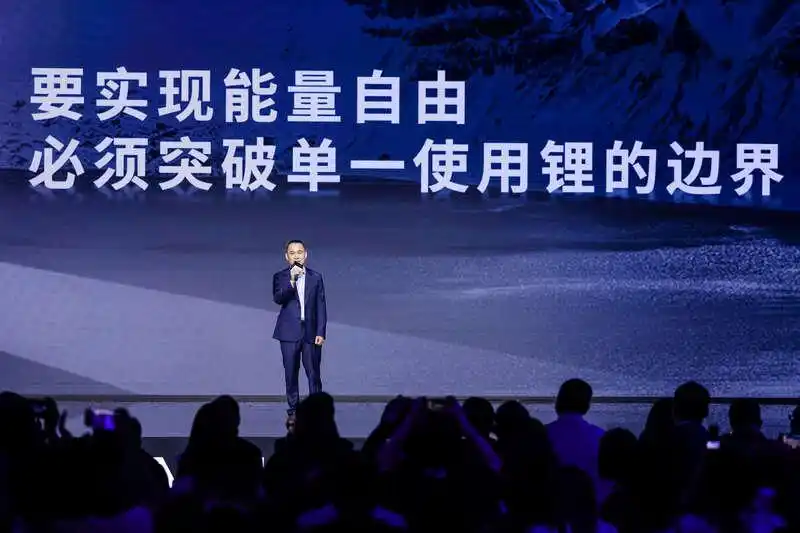
Recently, CATL officially released a sodium-ion battery called "Naxin" and launched its first product – CATL's Naxin 24V heavy-duty truck starter-in-one battery, which is scheduled to be officially mass-produced in June this year. According to reports, CATL’s sodium-ion battery has an energy density of 175Wh/kg and can achieve full temperature range adaptation from minus 40°C to above zero 70°C. In experiments such as multi-sided extrusion, needle penetration, electric drill penetration and battery sawing, the battery achieved "no fire or explosion".
Sodium-ion batteries use sodium salt as the electrode material. Compared with lithium-ion batteries, they have the advantages of abundant sodium resources, low raw material prices, and a wide operating temperature range. Hu Yongsheng, a researcher at the Institute of Physics of the Chinese Academy of Sciences and chairman of Hainan, said: "The thermal runaway starting temperature of sodium-ion batteries can reach 200°C, and the self-heating rate is lower, which significantly reduces the risk of thermal runaway. Sodium-ion batteries do not catch fire or explode under abuse conditions such as needle sticks, short circuits, overcharges, etc. In addition, they have excellent low-temperature performance. Sodium-ion batteries can still maintain more than 90% of their capacity in a -20°C environment, while the capacity retention rate of lithium batteries at this temperature is usually less than 70%."
On March 28, Zhongke Hainan Na-ion battery commercial vehicle solution made its global debut in Fuyang. The energy density of the cells used exceeded 165Wh/kg, and it can quickly complete 100% charging within 20 to 25 minutes. The cycle life can still exceed 8,000 times in fast charging mode. The attributes of commercial vehicles' production tools determine that their use scenarios are more complex. This innovative achievement has achieved a dual breakthrough in the "technology + industry" of sodium-ion batteries in my country's new energy field.
Earlier, BYD's 2024 annual report showed that BYD's low-cost, long-life sodium-ion battery has achieved a cell capacity of 200Ah and a cycle performance of 10,000+. Its safety, power, high and low temperature performance, etc. are better than lithium batteries.
Technological breakthroughs promote the continuous expansion of sodium-ion batteries in application scenarios. Zhongke Hainan sodium-ion battery commercial vehicle solution has been recognized by mainstream car companies such as CRRC, King Long, JAC, and FAW. Some car companies have entered the joint research and development stage, some are in the process of technology docking, and many other car companies are negotiating cooperation. On March 12, Lynk & Co announced that the Lynk & Co 900 will be equipped with CATL Xiaoyao super hybrid batteries, enabling the installation of sodium-ion batteries in vehicles; Yadi will release a number of sodium-ion battery electric vehicles in January 2025 to promote the replacement of short-range models.
"Sodium batteries will take the lead in energy storage, commercial vehicles and other scenarios. In the next three to five years, the sodium battery market will reach a scale of 100 billion." Hu Yongsheng said.
Accelerating the layout of the industrial chain
Giants are entering the game
Industry insiders believe that the application of sodium-ion batteries in the fields of energy storage and electric vehicles is accelerating, and the demand for battery production will also further expand. "With the promotion of policies, sodium batteries will enter the stage of large-scale shipments in the next three to five years, with shipments expected to exceed 100 GWh." said Tang Liang, deputy secretary-general of the Zhongguancun Energy Storage Industry Technology Alliance.
Recently, many listed companies have disclosed the latest progress in accelerating the layout of the sodium-ion battery industry chain on interactive platforms. ST's automotive starting/start-stop sodium battery products are already on the market, comply with the current standards for the use of such products in passenger cars, and are suitable for most mainstream models on the market.
High-tech enterprise Tongxing Technology stated that the technical advantages of the company's sodium-electric core materials have been recognized by leading companies in the industry. At this stage, downstream partners are in the stage of product suitability testing and process optimization, and the company is actively cooperating with customer needs to continue to improve product performance.
Plit, a new materials company, said that the sodium-ion battery products of Jiangsu Haisida, a subsidiary of the company, have been recognized and applied by global leading customers in many fields such as energy storage, special vehicles, low-speed vehicles, automobile start-stop batteries, and backup power supplies.
Large-scale application still faces challenges
Technological breakthrough is the key
As an emerging energy storage technology, sodium batteries have advantages in resource abundance, safety, and low-temperature performance, but the industrialization process still faces multiple challenges. The industry believes that if the sodium battery industry wants to achieve large-scale application, it needs to make simultaneous efforts in technological breakthroughs, cost control, and industrial chain coordination.
"Currently, sodium batteries are in the transition stage from demonstration and small-scale production to market application and large-scale production." Tang Liang said. In Tang Liang's view, lithium-ion batteries have widely penetrated into various fields such as consumer electronics, power, and energy storage. Sodium-ion batteries need to combine their characteristics to develop differentiated application scenarios with application advantages.
"The rapid growth of the sodium power industry requires the three-end collaboration of 'technology drive + cost optimization + policy guidance.'" Hu Yongsheng said that technically speaking, the energy density of sodium-ion batteries is breaking through from 160Wh/kg to 200Wh/kg (the laboratory has reached 220Wh/kg), and it is expected that 1 By 2 years, it will be the same as the energy density of lithium iron phosphate batteries; from a cost perspective, through large-scale production, manufacturing costs will drop significantly, highlighting its theoretical cost advantage; from a policy guidance perspective, the appropriate guidance of relevant national support policies will accelerate the industrialization development process of sodium-ion batteries.
From a cost perspective, the theoretical cost of sodium-ion batteries is about 20% lower than that of lithium-ion batteries. Compared with the cost of lithium-ion batteries, which is greatly affected by the price of raw materials, sodium-ion batteries are less affected by fluctuations in raw material prices. "The current mass production cost of sodium-ion batteries is about 0.5 yuan/Wh. After large-scale mass production, it can be reduced to 0.3 yuan/Wh, which is more than 30% lower than the current cost." Hu Yongsheng said.
According to Wang Qingsong, a researcher at the National Key Laboratory of Fire Safety at the University of Science and Technology of China, future breakthroughs in sodium batteries will focus on high-entropy cathodes, new electrolytes and solid-state sodium battery technology. If progress is made in these directions, sodium batteries are expected to partially replace lithium batteries in cold areas in areas such as energy storage and low-speed electric vehicles.
For more information or cooperation, please follow the official WeChat of China Economic Net (name: China Economic Net, id: ourcecn)