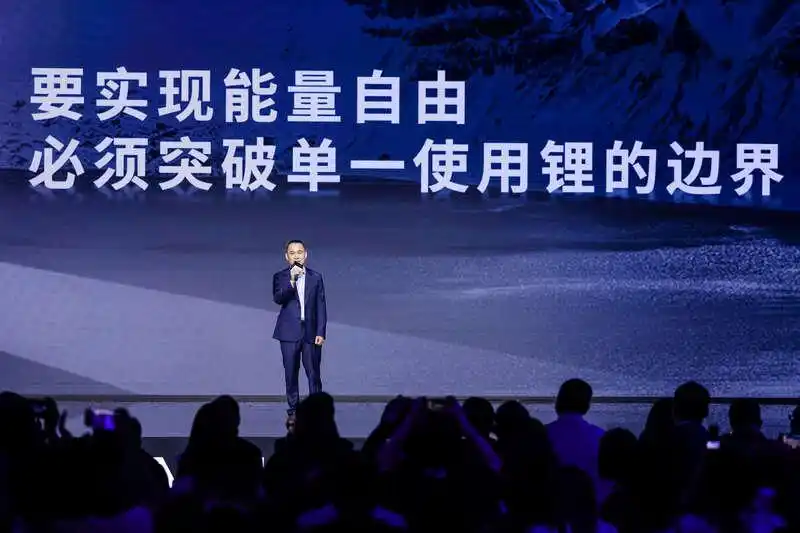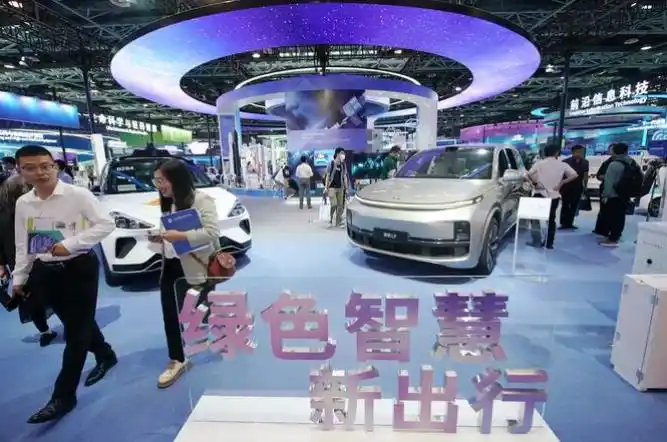
At the Zhongguancun Forum Exhibition (Science and Technology Expo) held in Beijing, new energy vehicles and related products became the focus of attention. Photo by Xinhua News Agency reporter Ren Chao
As the "younger generation" in the new energy battery family, sodium-ion batteries have shown lower cost and safer performance than lithium batteries. At present, sodium-ion batteries have achieved an energy density of 200 watt hours per kilogram in the laboratory, which is expected to further improve performance and reduce costs. Yesterday, the results related to sodium-ion batteries developed by the Institute of Physics of the Chinese Academy of Sciences were released at the 2023 Zhongguancun Forum.
As early as 2011, Hu Yongsheng, a researcher at the Institute of Physics of the Chinese Academy of Sciences, led a team to take the lead in entering the field of sodium-ion batteries. At that time, there were few people interested in this field.
At present, the field of new energy batteries, mainly lithium-ion batteries, is developing rapidly. Why should we find another way to develop sodium-ion batteries? Lu Yaxiang, an associate researcher at the Institute of Physics of the Chinese Academy of Sciences, explained that 70% of my country's lithium resources are imported. The resources required for sodium-ion batteries are abundant and the raw materials are easier to obtain. The cost of its cell material is approximately equivalent to 70% of the cost of lithium iron phosphate cell material, which has a cost advantage.
In order to allow scientific research results to better enter the market, in 2017, Zhongke Hainan Company was established, focusing on the research and development and production of sodium-ion batteries for new generation energy storage systems. At present, relying on the scientific research results of Hu Yongsheng's team, the company has released three sodium-ion battery cell products, related production lines have also been established, and production capacity is continuously expanding. Sodium-ion batteries are gradually approaching our lives.
Last year, Hu Yongsheng's team achieved a breakthrough in achieving an energy density of 200 watt-hours per kilogram for sodium-ion batteries, exceeding the average 180 watt-hours per kilogram of common "lithium iron phosphate-graphite" lithium batteries. "This work proves that as long as the appropriate battery materials and systems are selected, the energy density of sodium-ion batteries can reach or even exceed the level of lithium-ion batteries. Of course, this data is currently only obtained in the laboratory, and continued research is needed to improve the overall performance of the battery." Lu Yaxiang said.
Low cost, sufficient materials, and safer properties. These characteristics of sodium-ion batteries not only make it have broad application prospects in the field of short-life power batteries, but are also more suitable for large-scale energy storage. "I believe that sodium-ion batteries will definitely play an important role in achieving the 'dual carbon' goal." Hu Yongsheng said.