The continued decline in the price of lithium carbonate has affected the investment layout of industrial chain companies in the past two years. Sodium batteries, which were previously in the spotlight, also experienced a cooling down.
However, entering 2025, the development of sodium-ion batteries may usher in a turning point.
On March 16, CATL New Energy Technology Co., Ltd. (hereinafter referred to as "CATL") disclosed that the company disclosed at its latest performance briefing that the company is accelerating the research and development process of second-generation sodium-ion batteries, and its performance indicators have gradually approached that of lithium iron phosphate batteries.
The sodium battery market begins to "warm up"
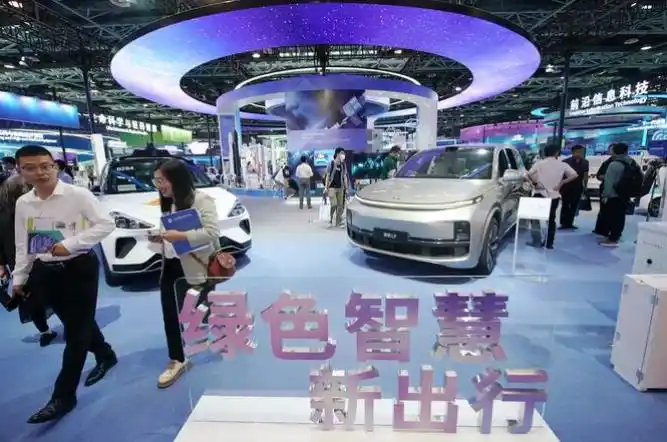
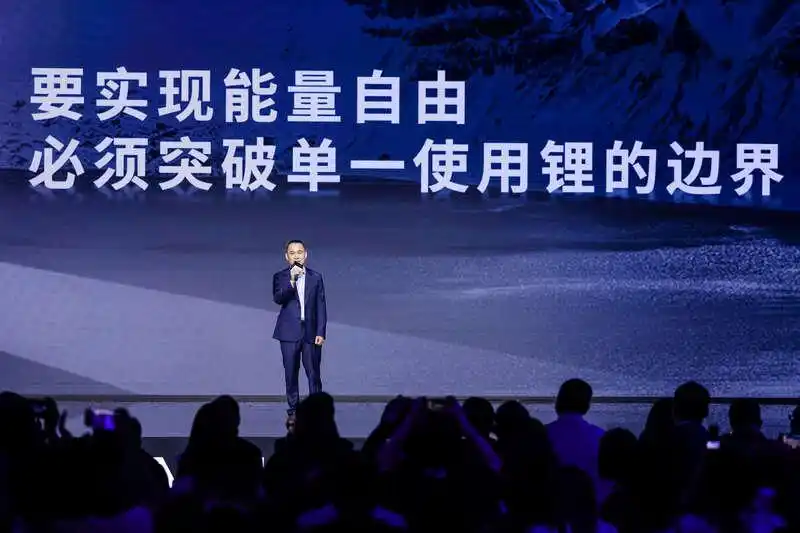
Recently (March 12), Lynk & Co Automobile announced that the Lynk & Co 900 will be equipped with CATL Xiaoyao super hybrid batteries, realizing the installation of sodium batteries in the car. The CATL Xiaoyao super hybrid battery was released in October last year. It can achieve a pure electric range of more than 400 kilometers and has a 4C overcharging function. The core technology includes AB battery system integration technology, which mixes sodium batteries and lithium batteries in proportion to achieve -40°C extreme cold environment discharge and -30°C low temperature charging capabilities.
CATL's research and development results in the field of sodium-ion batteries have attracted much attention. The company released the first-generation sodium-ion battery as early as 2021, which has the advantages of high energy density, high-rate charging, excellent thermal stability, good low-temperature performance and high integration efficiency. The energy density of its battery cell is as high as 160Wh/kg; after 15 minutes of charging at room temperature, the battery capacity can reach more than 80%; in a low temperature environment of -20°C, it also has a discharge retention rate of more than 90%.
Industry insiders believe that CATL’s second-generation sodium-ion battery will achieve technological breakthroughs in terms of energy density and low-temperature performance. At the same time, compared with lithium iron phosphate batteries, sodium will highlight its advantages in different application scenarios.
According to EVTank data, China's actual sodium-ion battery shipments are expected to exceed 2GWh in 2024, much higher than 0.7GWh in 2023.
According to a report released by Zhongyan Puhua Industrial Research Institute, China's planned sodium-ion battery production capacity will reach 60GWh in 2025. Globally, it is expected that the demand for sodium-ion batteries will reach 116GWh by 2026, with applications in the energy storage field accounting for the highest proportion.
The main reason why the current sodium-ion battery shipments and industrialization development are lower than expected is that its cost advantage has not yet been realized.
CATL said at its latest performance briefing that "once large-scale application is achieved, the cost advantage of sodium-ion batteries is expected to surpass that of lithium iron phosphate batteries."
Expected to achieve large-scale cost reduction
"It is foreseeable that with the maturity of sodium battery technology and the increase in downstream applications, the market demand for sodium batteries in 2025 will increase significantly compared with the previous two years." said Mo Ke, chief analyst of True Lithium Research (Beijing Huaqing Zhengxing Technology Development Co., Ltd.).
Cost is one of the key factors affecting the competitiveness of the sodium-ion battery market.
In the past, the reason why sodium batteries once became a hot "track" in the battery field was due to the skyrocketing price of lithium carbonate. As the price of lithium carbonate falls, the advantages of sodium batteries are no longer obvious. Mo Ke analyzed to a reporter from Securities Daily that under the expectation that the market for lithium carbonate will pick up in the future, companies will actively deploy the sodium electricity market and will further seize the initiative in the future market.
He Zhuoxin, a researcher at the China Chemical and Physical Power Supply Industry Association, told a reporter from Securities Daily that in theory, sodium batteries have lower cost, higher safety and environmental protection characteristics than lithium batteries. At present, sodium battery technology has achieved continuous breakthroughs. Some companies have disclosed that the highest energy density of sodium-ion batteries has reached 230Wh/kg; and the latest sodium battery energy storage products have achieved a cycle life of more than 20,000 times. It is expected that as sodium battery technology matures, it is expected to be the first to start mass production and application in energy storage and other fields, achieving a virtuous cycle in the industry.
He Zhuoxin believes that in the future, sodium batteries will mainly focus on improving the level of mass production and stabilizing the industrial chain. Whether the first step of the installation scenario can further expand the application scale in industrial energy storage scenarios, while also having strong competitiveness in the field of household energy storage; secondly, in low-speed electric vehicles, the cost advantage is obvious, and it is also suitable for base station backup power supplies.
(Editor Qiao Chuanchuan)