Professional virtual currency information station welcome
We have been making efforts.

24-hour news update Page 3

24-hour cryptocurrency news update

The Situation Between Russia And Ukraine On April 9: The Latest Updates On Body Exchange, Ceasefire Decision, Meeting Location, Etc.

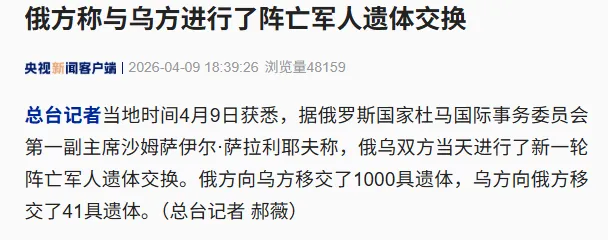
According to CCTV News, a reporter from the main station learned on April 9, local time, that according to First Vice Chairman of the Russian State Duma International Affairs Committee Shamsail Salaliyev, Russia and Ukraine conducted a new round of exchange of remains of fallen soldiers that day. Russia handed over 1,000 bodies to Ukraine, and Ukraine handed over 41 bodies to Russia.

俄方称与乌方进行了阵亡军人遗体交换:俄方移交了1000具遗体,乌方移交了41具遗体__俄方称与乌方进行了阵亡军人遗体交换:俄方移交了1000具遗体,乌方移交了41具遗体

Russia says Putin has not yet made a decision on Ukraine’s ceasefire initiative

Previously, Russian Presidential Press Secretary Peskov pointed out in a regular briefing on April 9 that Russian President Putin has not yet made any decision on the ceasefire this Sunday (Easter).

In response to the news that Russian frigates escorted oil tankers through the English Channel, Peskov said that due to repeated piracy in international waters, Russia has the right and will take measures to protect its own interests. The British side has previously stated that it will intercept the so-called "shadow fleet".

Peskov reiterated that Russia seeks to establish mutually beneficial relations with all countries, including European countries that are unwilling to engage with Russia. Regarding France's remarks that Russia is a threat, he called it "completely baseless." He also revealed that the Kremlin is preparing for contacts between Putin and Indonesian leaders, and relevant information will be communicated in due course.

_俄方称与乌方进行了阵亡军人遗体交换:俄方移交了1000具遗体,乌方移交了41具遗体_俄方称与乌方进行了阵亡军人遗体交换:俄方移交了1000具遗体,乌方移交了41具遗体

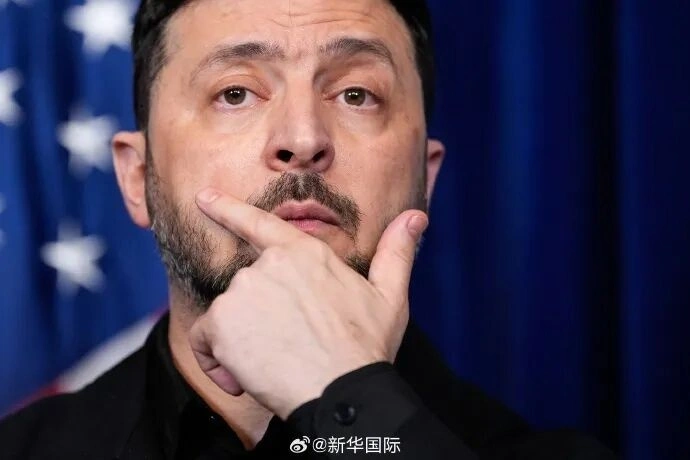
Zelensky: Willing to meet Putin, but not in Moscow

According to CCTV News, a reporter from the main station learned on April 9, local time, that Ukrainian President Zelensky expressed his willingness to meet with Putin, but not in Moscow. He said the meeting could take place in the Middle East, Europe, the United States or other suitable locations.

Regarding the election, Zelensky said that holding the election now violates Ukrainian law. In addition, election voting needs to ensure security, and security conditions are not currently met.

Zelensky had previously changed his tune and said he was willing to hold trilateral talks between Ukraine, the United States and Russia anywhere.

Our reporter learned that on March 27, local time, Ukrainian President Zelensky stated in an interview that due to security restrictions, the US negotiating team could only meet in the United States, while the Russian side was unwilling to go to the United States for negotiations.

俄方称与乌方进行了阵亡军人遗体交换:俄方移交了1000具遗体,乌方移交了41具遗体_俄方称与乌方进行了阵亡军人遗体交换:俄方移交了1000具遗体,乌方移交了41具遗体_

Zelensky said that Ukraine "communicates with the United States every day" but "encounters difficulties" and feels that it is a mediator in the negotiation process rather than a party to the conflict. He said that due to the situation in the Middle East and security concerns, the United States can only hold negotiations in the United States, while Russia is "willing to hold talks anywhere except the United States." Zelensky said that Ukraine is willing to host a trilateral meeting at any location.

Zelensky stressed that Ukraine is making every effort to promote the implementation of the trilateral meeting, and pointed out that the meeting can be held in Europe, Türkiye, Switzerland or the Middle East.

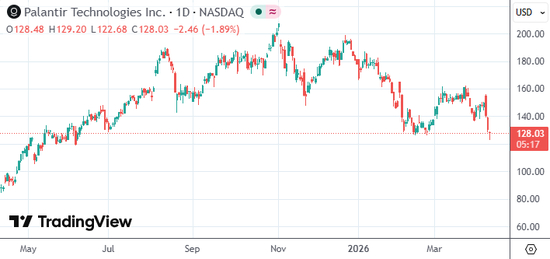
The Leading Short Seller Is Still Shorting Palantir And Has Put Options In Place Two Years From Now

Financial Associated Press, April 11 (Editor Zhao Hao) The well-known American "short seller" Michael Burry recently stated that he still insists on shorting the American defense technology company Palantir Technologies.

Burry became famous for betting against the U.S. housing market in 2008, and his story was later adapted into the blockbuster movie "The Big Short." Regulatory filings in November showed that he bought put options on Nvidia and Palantir, which could profit from falling stock prices.

Burry posted on his paid blog on Friday (April 10) that he still holds long-term put options on Palantir. Burry said he began shorting the company in the fall of 2025 and rolled over the position multiple times.

"I currently hold a put option expiring on June 17, 2027 with a $50 strike price and a put option expiring on December 19, 2026 with a $100 strike price. I will not sell these positions today," Burry wrote.

Shortly before Burry's comments, U.S. President Trump posted on social media that "Palantir has proven to have excellent combat capabilities and equipment." This statement narrowed the intraday decline in Palantir's stock price to less than 2%. The stock is still down nearly 28% so far this year.

特朗普股市跌1000点_特朗普与股市涨跌_

Palantir is world-famous for providing critical data and intelligence analysis support in the hunt for bin Laden. After the conflict between Russia and Ukraine broke out, the company provided military support to the Ukrainian army, including intelligence fusion analysis, intelligent auxiliary decision-making, and satellite-borne algorithm support.

According to US media disclosures, in the recent war in the Middle East, both the US and Israeli militaries were using Palantir's Maven intelligent combat system, and the US military version also integrated the Claude large model. From a performance perspective, artificial intelligence technology can greatly improve combat effectiveness.

During Trump’s second term, Palantir continued to win government contracts and deepened its cooperation with the Pentagon. There is a view in the market that given its extensive business dealings with the US military and intelligence agencies, it may become one of the beneficiaries of the conflict in the Middle East.

However, Burry believes that Palantir has weakened significantly since its peak last year and is still "significantly overvalued." He acknowledged that a rebound is likely in the short term, but the company's fundamental value is less than half its current price.

"Palantir is selling off along with software stocks. As I said, I will continue to hold these puts because I believe the fundamental value of this company is well below $50 a share."

At the same time, Burry also increased his bearishness on Nvidia. "I increased my holdings of put options on Nvidia. This time I bought options that expired on January 27 and had a strike price of $115 at a price of $3.30."

The Situation In The Middle East: Pakistan Strongly Accuses Israel, And The Scope Of The Conflict Continues To Expand

Preface

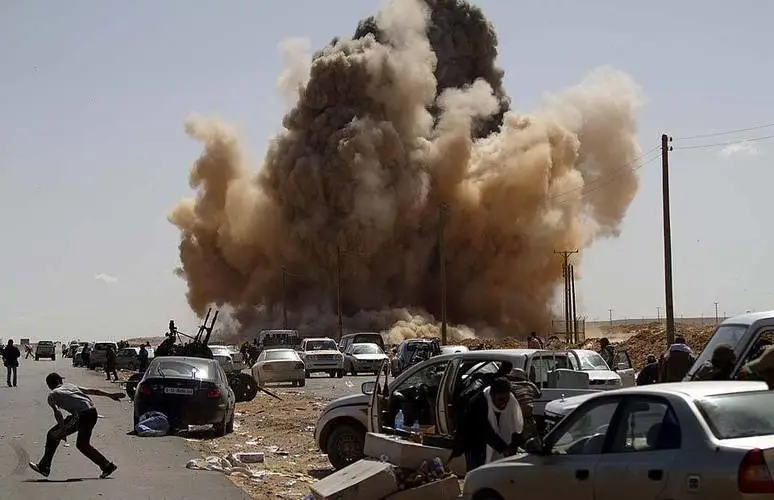
The situation in the Middle East these days is very simple and straightforward: talk about peace, but continue to fight. Some people are mediating, and some are trying to disrupt things. On the surface, the conflict continues, but in essence, the rules are torn away. When things have developed to this point, it is no longer a question of who is right or wrong, but who is still sticking to the bottom line.

以色列血洗中东_以色列中东搅屎棍_

1. Pakistan publicly named people. This is not an emotion, but an attitude.

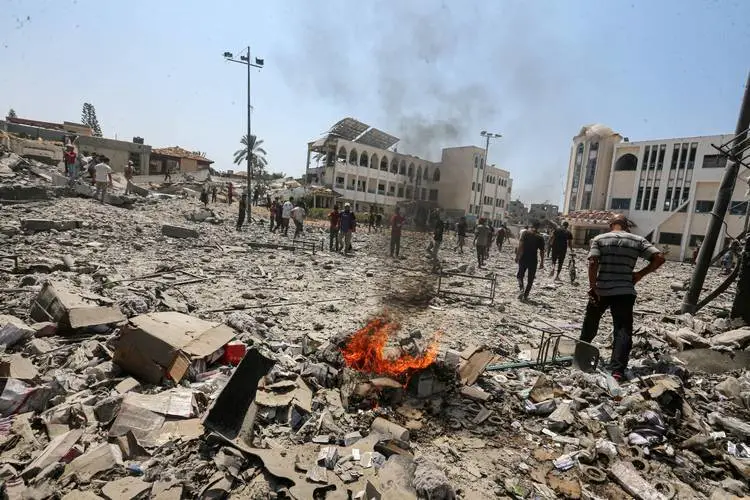
This round of public opinion explosion comes from Pakistan. Defense Minister Khawaja Asif spoke directly on a public platform with a very tough tone, making comprehensive accusations against Israel's series of military operations in the Middle East. His statement left no room for error, and the core meaning was clear: Against the backdrop of multi-party efforts to promote a ceasefire, Israel's actions have not been restrained, but are expanding, and the victims are civilians.

These words are not said casually. Asif's identity is there and he represents the position of the Pakistani government rather than his personal views. More importantly, this time point is very sensitive. Because not long ago, Pakistan was still promoting dialogue between relevant parties in the hope of easing the situation. In other words, while efforts are being made to cool down the situation at the negotiating table, the war is escalating on the other side. This contrast is the core of the problem.

He mentioned several locations, Gaza, Iran, Lebanon. This is not a random enumeration, but a point out of the expansion paths of conflicts. This trend is already obvious, starting from local conflicts and gradually spilling over to wider areas. Asif's voice was essentially expressing a judgment: the situation was getting out of control.

Of course, such strong words quickly triggered a reaction from the other party. Israel did not remain silent, but chose to respond positively.

_以色列中东搅屎棍_以色列血洗中东

2. Israel’s response is very direct: it does not accept any accusations.

Faced with criticism from Pakistan, Israeli Prime Minister Benjamin Netanyahu responded quickly. His stance was equally tough, with a simple core logic: Accusations of Israel's actions are unacceptable, especially from a country that claims to be promoting peace.

This is actually a typical hedging. You accuse me of escalating the conflict, and I say there is something wrong with your position. The two sides did not entangle on the factual level, but directly collided on the political level.

But the problem is that the situation on the ground will not change because of the statement. At the same time as the debate was taking place, the Israel Defense Forces launched a large-scale military operation in Lebanon. The scale of this round of operations is considered to be the largest coordinated attack in recent times. The results given by the Lebanese side are also clear, and the number of casualties has increased.

A key point of conflict arises here: whether the ceasefire actually exists.

Pakistani Prime Minister Shahbaz Sharif had previously mentioned a ceasefire arrangement and made it clear that the scope included Lebanon. However, Israel did not acknowledge this statement. Instead, it emphasized that military operations would continue and would conduct so-called "selective ground operations" against targets.

This is tantamount to directly dismissing the so-called ceasefire. One said to stop, and the other continued to fight. This situation essentially meant that there was no ceasefire.

以色列中东搅屎棍__以色列血洗中东

3. Iran’s judgment is very clear: This is prolonging the war

The situation is not just a confrontation between Palestine and Israel. Iran's attitude is equally critical. Iranian Foreign Minister Abbas Araghchi gave a clear evaluation of Israel's actions, believing that such strikes are deliberately prolonging the conflict cycle and undermining diplomatic efforts that have already been launched.

There are two important points in this judgment. First, the conflict is not simply continued, but actively maintained. Second, the diplomatic process is being interrupted.

What is even more noteworthy is that Iran has extended the chain of responsibility up to the United States. This statement is not new, but it is raised again at this time, indicating that Iran believes that there is a deeper support relationship behind the situation.

This also explains why the situation in the Middle East is always difficult to bring to an end. Because the participants are not just regional countries, but also deep involvement of external forces. As long as this structure remains intact, any ceasefire will be fragile.

_以色列血洗中东_以色列中东搅屎棍

4. The United States is also divided: some people are beginning to oppose continued support

If the opposing positions of various parties in the Middle East are normal, then the internal differences in the United States are even more worthy of attention.

Tucker Carlson, a well-known American media personality, directly made a point in his latest program: The United States should not continue to provide funds and weapons to Israel. His reason is straightforward. He believes that the current policy has deviated from the United States' own interests and is using taxpayers' money to support an action that is not recognized by the public.

The significance of these remarks does not lie in personal attitude, but in that it reflects changes in part of American public opinion. In the past, U.S. domestic support for Israel was relatively unanimous, but now visible cracks are beginning to appear.

Carlson also mentioned a detail: Shortly after the ceasefire was announced, residential areas in Beirut, the capital of Lebanon, were bombed, and weapons provided by the United States were used. This amplifies the problem further. Because it involves not only the conflict itself, but also the attribution of responsibility.

If the weapons come from the United States and the funds come from the United States, is the United States responsible for the consequences? This question is being raised by more and more people.

以色列中东搅屎棍_以色列血洗中东_

5. The problem is no longer conflict, but failure of rules

Taken together, these messages reveal a deeper problem: the fundamental rules of the Middle East are being eroded.

A ceasefire would have been a clear signal that would have meant a halt to large-scale military operations, at least for a short period of time. But what is happening now is that while a ceasefire is announced, attacks continue, which makes the "ceasefire" meaningless.

Diplomatic efforts face the same problem. Some people are pushing for negotiations, but the results of the negotiations cannot constrain action. In this case, the diplomatic space will become smaller and smaller.

Looking deeper, this is the collapse of the trust mechanism. Each party no longer believes that the other party will honor its commitments, so they choose to use actions instead of statements. The result is that the conflict continues to escalate and expand in scope.

From Gaza, to Lebanon, and beyond, the path is very clear. This expansion does not stop automatically without valid constraints.

以色列中东搅屎棍_以色列血洗中东_

Conclusion:

The problem in the Middle East has never been the lack of ceasefire declarations, but the lack of respect for the rules. Talking about stopping but not stopping with hands will not bring peace, but will only push the conflict deeper into the abyss. What really determines the direction is not statements but actions – whoever is still restraining is holding the bottom line; whoever talks and fights at the same time is tearing up the final rules.

Explosives Were Discovered Before The Hungarian Election, And Orban’s Re-election Became The Focus Of The Struggle Between The United States And Ukraine

Hungary's upcoming election has become a "war" between Trump and Zelensky? Ukraine very much hopes that Orban can step down, while the United States is doing its best to get Orban re-elected, and European countries have also begun to intervene, either overtly or covertly.

湖南建筑工程资料软件_梦见抱别人的小孩暍自己奶_

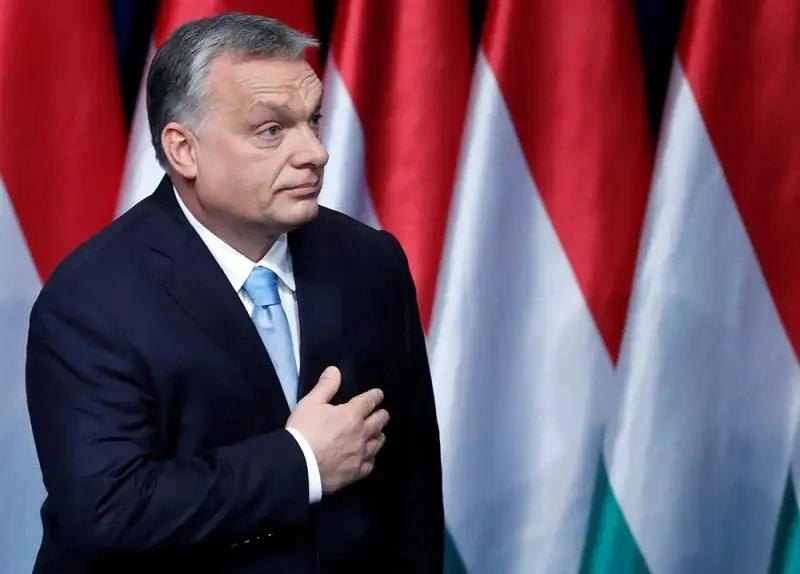
On April 6, local time, Hungarian Prime Minister Orban inspected the border area

Explosives found near natural gas pipeline before Hungarian election

According to plan, Hungary will hold parliamentary elections on April 12. And at the last moment, a crisis attracted the attention of all parties.

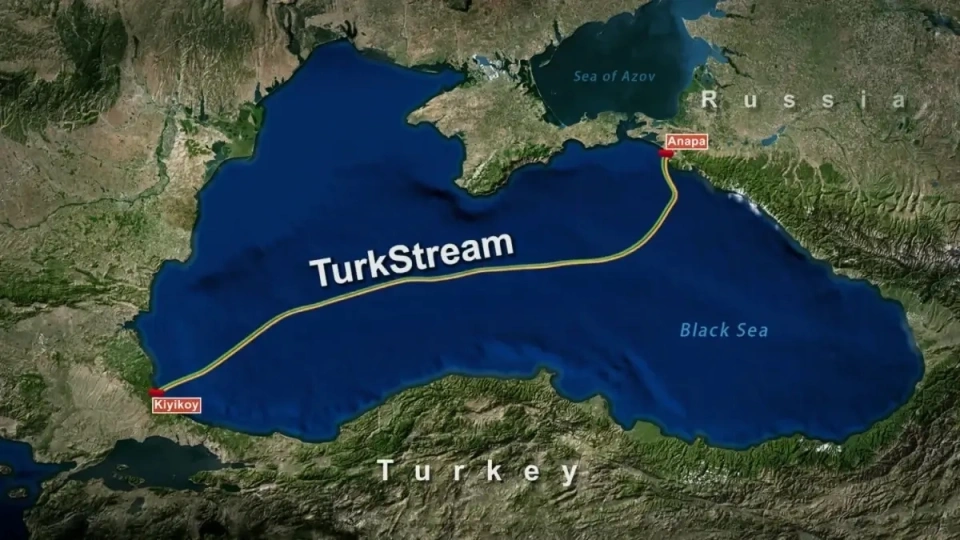
According to a report by Observer.com on April 7, one week before the election, explosives were discovered near the "Turkish Stream" pipeline that passes through countries such as Serbia and Hungary. Once an accident occurs, it can be described as a replica of the "Beixi Incident".

The Turkey Stream pipeline is the lifeblood of Hungarian natural gas. In 2024, Hungary received a record 7.6 billion cubic meters of natural gas from Russia through this pipeline. Without this pipeline, Hungary would have no cheap and stable energy supply.

Serbian President Vucic announced on April 5 that Serbian law enforcement officers discovered two large bags of explosives with fuses near pipelines in the Vojvodina region in the north of the country. If it explodes, the natural gas pipeline will be cut off, leaving Hungary and northern Serbia without gas.

梦见抱别人的小孩暍自己奶__湖南建筑工程资料软件

"Turkish Stream" pipeline through the Black Sea

Hungarian Prime Minister Orban urgently convened the National Defense Council that day, and he directly hinted that the matter was related to Ukraine. Orban pointed out that "Ukraine has been working for many years to cut off Europe's energy ties with Russia."

Serbia's attitude is very cautious and does not want to offend any party. Jovanic, director of the Serbian Military Security Bureau, held a special press conference on the evening of the 5th. "There is some false information that the Serbian military will work for a third party to accuse Ukraine of planning sabotage through the discovery of Ukrainian-made explosives. This is not true."

Later, Serbia added: "The markings on the explosives showed that the items were manufactured in the United States." At this point, many forces that had previously been in a wait-and-see state came to an end and began to intervene in the "final storm" before the Hungarian election.

梦见抱别人的小孩暍自己奶_湖南建筑工程资料软件_

Ukraine denies, Poland strikes back

After the explosive incident, all parties quickly took sides. The Ukrainian Ministry of Foreign Affairs strongly denied it, insisting that "this is most likely a Russian 'false flag operation'" with the purpose of interfering in the Hungarian election.

Russian Kremlin spokesman Peskov said there was no "reliable evidence" yet, but he hinted that "Ukraine may be involved" and mentioned previous attacks by Ukraine on Russian energy infrastructure.

Poland also jumped in. Polish Foreign Minister Sikorski questioned the timing of Orban's emergency meeting of the Defense Council as "suspicious coincidence": it was less than a week before the Hungarian election, which happened to give the ruling party a script for a "national security crisis."

Hungarian opposition leader Magyar even directly accused: This is a "false flag operation" directed and performed by Orban. At this point, Orban's situation is already quite difficult.

Poll data show that Hungarian opposition leader Magyar currently leads Orban by 9 percentage points, and Orban is facing the "last moment."

梦见抱别人的小孩暍自己奶__湖南建筑工程资料软件

The game between the United States and Ukraine comes to the forefront

Regarding the current situation in Hungary, Ukraine only hopes that Orban will step down as soon as possible. At the end of 2025, the European Council approved a loan of 90 billion euros to Ukraine from 2026 to 2027. But on March 19, 2026, Orban announced at the EU Summit in Brussels: Blocking this aid.

Orban’s reason is straightforward: Ukraine has deliberately cut off Hungary’s crude oil supply from Russia since January this year, and energy issues have become a deadlock between the two countries.

The Orban government has blocked a huge amount of aid from Ukraine, which is bound to make the Kiev authorities extremely dissatisfied. However, from a larger perspective, Ukraine's confrontation with the Orban government is equivalent to being at odds with the Trump administration.

湖南建筑工程资料软件__梦见抱别人的小孩暍自己奶

Trump wants Orban to be re-elected, and US Vice President Vance is about to go to Hungary to publicly support Orban. If Orban is not re-elected, Ukraine may become the target of the Trump administration's wrath.

Two Things In Just One Day! China Is Tough, Japan Adjusts Its Statement On China, And The Conflict Behind It Escalates

Preface

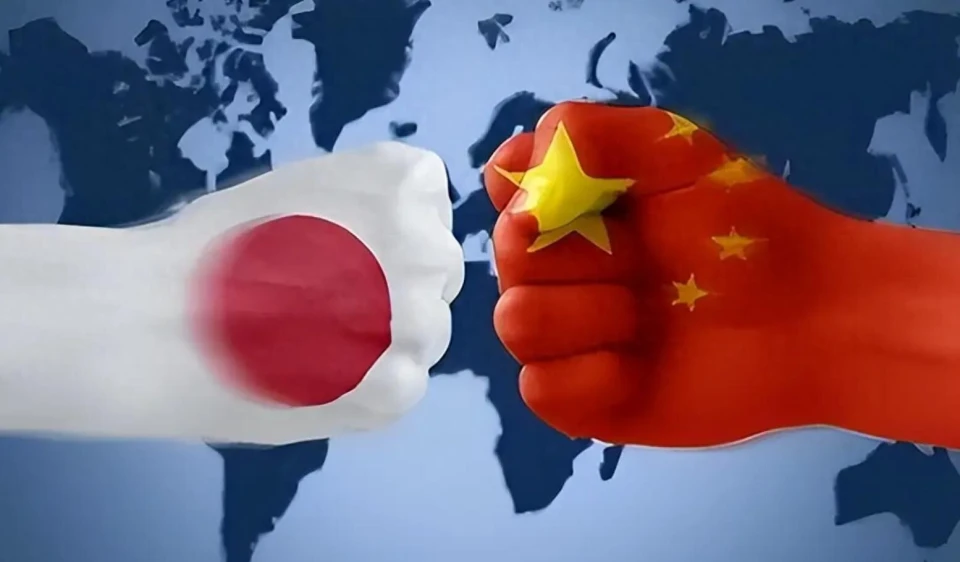
In just one day, two things happened one after another. China sent a tough signal, and Japan quickly adjusted its statement on China. This was no coincidence, but the beginning of a head-on collision. What appears on the surface is a change of wording, but behind the scenes is a conflict of lines.

日本棋战最新消息_日本棋社_

1. It is not a diplomatic friction, but a conflict of directions.

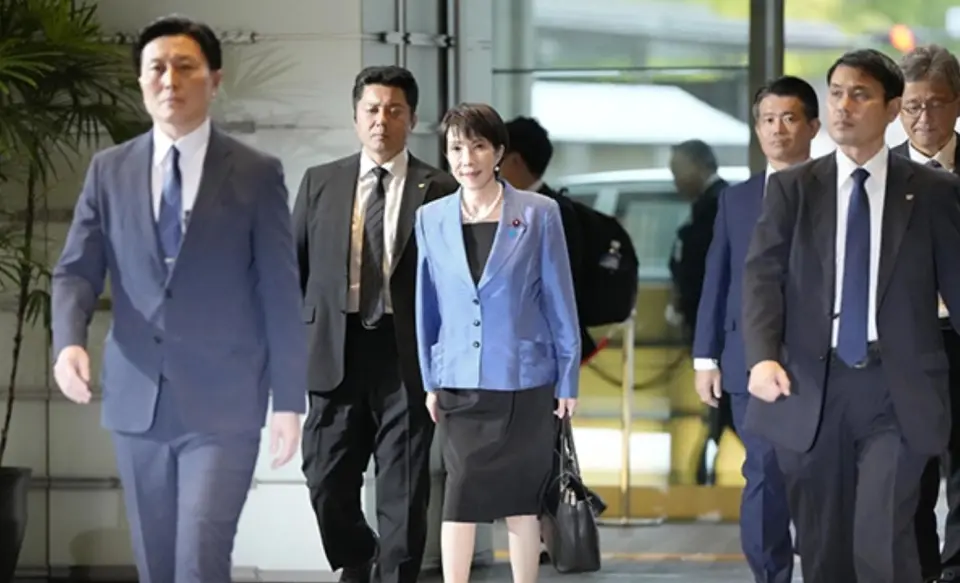
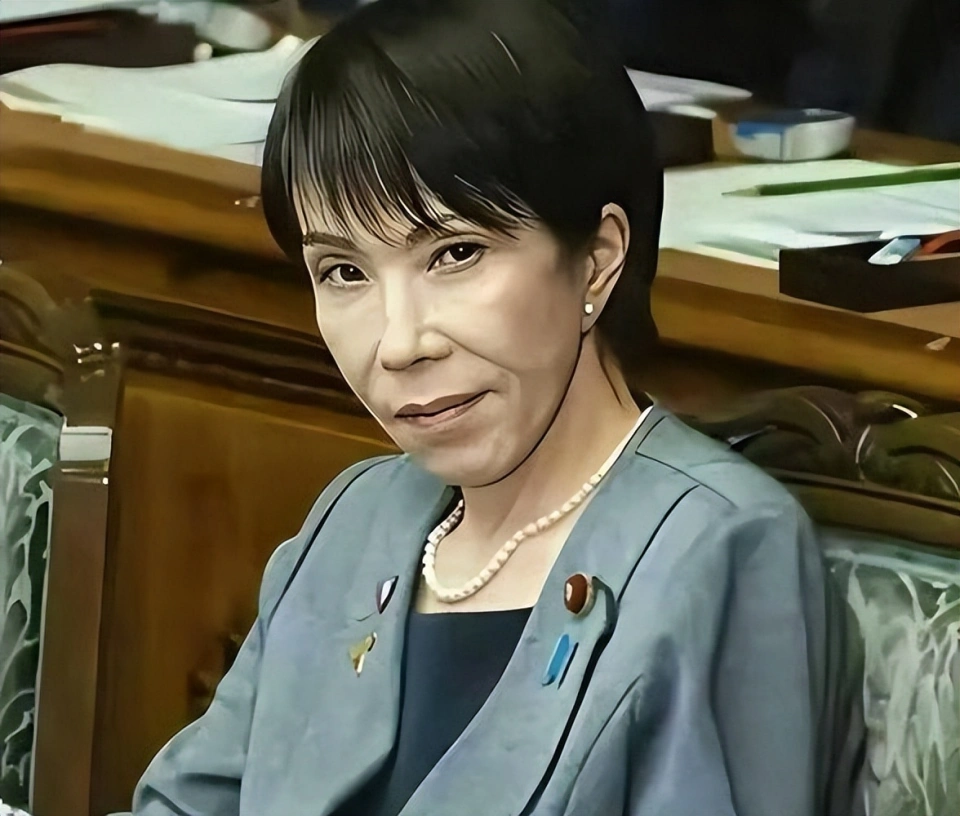
Let’s sort things out first. On April 9, "People's Daily" issued a weighty commentary, directly naming Japanese Prime Minister Takaichi Sanae, asking him to retract his remarks involving military intervention in China, and also named the United States, asking it to restrain Japan. This kind of public naming has not been common in recent years, and the signal is very direct: the problem is no longer differences, but the bottom line.

Less than 24 hours later, Japanese Foreign Minister Toshimitsu Motegi submitted a new version of the "Diplomatic Blue Book" at a cabinet meeting. The most eye-catching point in the document is the change in the positioning of China, which has been adjusted from "one of the most important bilateral relations" that has been used for a long time in the past to "an important neighbor." It seems like there are only a few words missing, but in a diplomatic context, this is a downgrade.

If you look at these two actions together, you can see the nature of the problem. China clearly drew a line, and Japan did not relent. Instead, it responded with institutional documents. This shows that the two sides are not communicating, but confirming their respective positions.

Looking further ahead, Takaichi Sanae previously discussed the so-called "Taiwan incident" in Congress, including the Taiwan Strait issue in Japan's security agenda, and even involved the application of the right of collective self-defense. This statement directly touches on China's core interests. China's response is to make the problem public and clarify the responsibilities. Japan's response is to "downgrade" relations while strengthening its own narrative.

This is not a simple diplomatic friction, but a collision in direction.

日本棋战最新消息_日本棋社_

2. Why does Japan take the initiative to "cool down"? The answer is not in China

Many people will ask, why does Japan take the initiative to push down relations at this point? On the surface, it is dissatisfaction with China's tough stance, but the real reason lies mainly with Japan itself.

The first factor is internal pressure. After Takaichi Sanae came to power, he continued to promote the military expansion route. The defense budget for fiscal year 2026 exceeded 9 trillion yen, which has been increasing for many years. This rhythm has caused considerable controversy and even protests in Japan. With approval ratings under pressure, the government needs an external issue to shift focus. Showing strength to others is the most common method.

Shaping China as a "source of pressure" can, on the one hand, consolidate conservative support, and on the other hand, provide justification for subsequent policies. This kind of operation is not unfamiliar in the politics of various countries.

The second factor is relations with the United States. Japan’s security system has long relied on the U.S.-Japan alliance. In the current international environment, Japan hopes to gain more space in the US strategic system, including loosening military policy and technical cooperation. Being tough on China is a signal. The message is clear: I'm on your side.

The problem is that this kind of "taking sides" does not necessarily lead to reciprocal returns. The strategic priorities of the United States are being adjusted, and support for allies is becoming increasingly conditional. Japan takes the initiative to increase its position, but the other party may not increase its position at the same time.

The third factor is to pave the way for military policy. In recent times, Japan has taken frequent actions in the security field. SDF structural adjustment, long-range strike capability building, and relevant system modifications are all progressing. These changes have clearly gone beyond the traditional "defense-focused" framework.

But these policies are not without controversy at home. For these actions to proceed smoothly, they need a reason. This reason is external threats. Defining China as a source of pressure is intended to make these changes more acceptable.

Therefore, Japan's "downgrade" this time is not a passive reaction, but an active choice. It is the result of the superposition of multiple internal and external factors.

_日本棋社_日本棋战最新消息

3. The so-called “safety transformation” is essentially system reshaping.

If you lengthen the timeline, you will find that Japan's changes are not impulsive, but a continuous path.

Let’s look at the institutional level first. Japan is considering adjusting the "Three Principles of Defense Equipment Transfer". In the past, this principle placed strict restrictions on arms exports and emphasized non-combat uses. The current adjustment direction is to expand the scope, even involving the export of equipment to conflict areas. what does that mean? This means that Japan is shifting from "restricting exports" to "participating in exports."

Let’s look at the military structure. The Maritime Self-Defense Force has canceled its long-standing establishment and replaced it with a more centralized command system. The Ground Self-Defense Force established new intelligence capabilities, and the Air Self-Defense Force strengthened its space capabilities. Taken together, these adjustments point to one result: the combat system is changing from a defensive orientation to a more proactive direction.

Another key point is remote capability building. Japan has deployed equipment capable of attacking enemy bases in some areas. This step is of great significance. In the past, its positioning was defensive, but now it has begun to have the ability to extend outwards.

The superposition of these changes is not a piecemeal adjustment, but a reshaping of the system.

The problem is that this change has ripple effects. Regional security is inherently complex. Once a country significantly adjusts its military route, other countries will inevitably react. Risks are not one-way but diffuse.

日本棋战最新消息_日本棋社_

4. China’s attitude has been made clear and there is no room for ambiguity.

In the face of these changes, China's attitude has actually been made very clear, and it has been progressive.

The first level is the judgment of direction. China believes that Japan's current security policy has deviated from its original track and is developing in a more offensive direction. This judgment is based on a series of specific actions rather than a single event.

The second level is the response to specific remarks. Takaichi Sanae was explicitly asked to retract her statements regarding the Taiwan Strait issue. This is very critical. The Taiwan Strait issue is China's internal affair and there is no room for external intervention. Any talk involving military intervention is an act that crosses the line.

The third level is the roll call of external factors. China mentioned the United States in its statement and asked it to play a restraining role. This illustrates a judgment: Japan’s policy changes are not isolated, but related to the alliance system.

These three levels of attitude constitute a complete bottom-line framework. The core is just one sentence: the direction cannot be wrong, and the red line cannot be touched.

Meanwhile, countermeasures are already underway. Export management in some key areas has been tightened, and the flow of dual-use items involving both military and civilian use has been strictly restricted. The characteristics of this type of measures are obvious. They are not short-term actions, but institutional arrangements.

For Japan, this impact is real. The industrial chain is highly intertwined. Once key links are restricted, the impact will not disappear immediately, but will continue to amplify.

_日本棋战最新消息_日本棋社

Conclusion:

Relationships can be downgraded, but reality will not follow. Treating external pressure as a bargaining chip and risk as a tool often ends up not winning the confrontation, but losing space. The real price is never written in documents, but in future choices.

Hainan's 15th Five-Year Plan Transportation Upgrade: The Airport, High-speed Rail And Port Are More Accessible

China News Service, Haikou, April 10 (Reporter: Wang Ziqian) Qi Shuli, director of the Hainan Provincial Development and Reform Commission, said in Haikou on the 10th that during the "15th Five-Year Plan" period, Hainan will build an infrastructure system with "external connections and internal smoothness" as its vision of "people enjoying their travels and goods flowing smoothly" to help build a strategic intersection of domestic and international dual circulation.

A special press conference on "Starting the 15th Five-Year Plan – High-standard Construction of Hainan Free Trade Port" was held in Haikou on the 10th. At the meeting, how to strengthen the supply capacity and stability of infrastructure and build a new pattern of internal and external connectivity attracted much attention.

The "Hainan Province's 15th Five-Year Plan for National Economic and Social Development" clearly states that Hainan will strengthen the supply capacity and stability of infrastructure, be oriented by integration, focus on making up for shortcomings and strengths and weaknesses, improve security resilience and operational sustainability, and build a new pattern of internal and external connectivity for free trade ports that is moderately advanced.

Qi Shuli said at the meeting that the improvement and upgrading of Hainan’s infrastructure during the “15th Five-Year Plan” is mainly reflected in three aspects:

First, the transportation network is more accessible. In terms of external connectivity, we will accelerate the construction of Sanya New Airport, Danzhou Airport, and Dongfang Airport, and improve the Hainan Free Trade Port's characteristic transportation airport cluster; further improve the port system construction with Yangpu International Hub Port as the leader and Haikou Port as the focus; create the "golden waterway" of the Qiongzhou Strait, accelerate the construction of the Zhanhai High-speed Railway, and significantly shorten the time for passengers to cross the sea.

On January 14, 2026, aerial photography of Yangpu International Hub Port. Photo by China News Network reporter Lin Shijie

In terms of internal transportation, we will promote the public transportation operation of the high-speed rail around the island, implement the expansion and upgrading projects of the island expressway, national and provincial trunk roads, tourist highways, etc., and basically form a "123 transportation circle" to achieve one-hour commuting in the three major economic circles, two-hour interchange in major cities, and three-hour smooth travel throughout the island.

Second, the energy system is more resilient. Hainan will build a clean, low-carbon, safe and efficient new energy system. The energy supply will be cleaner, and offshore wind power, distributed photovoltaics and nuclear power will be further developed to ensure that 100% of new power sources are clean energy. To make the power grid stronger, we have launched a special action to improve the power grid with a total investment of 46 billion yuan, build a flexible and reliable urban distribution network and a strong and sufficient rural power grid, and accelerate the construction of the Hainan-Guangdong power project; the average annual power outage time in key cities and parks has been reduced to less than 30 minutes, and power supply reliability has strived to reach the national advanced level. Full coverage of natural gas pipelines, accelerating the construction of key line pipelines, realizing pipeline gas "county-county access" and integrating into "one national network".

Third, water network construction should be more optimized. On the one hand, the overall ability to prevent flood disasters has been improved, flood control and drainage projects have been started in the Nandu River, Wanquan River and other river basins, the risk relief and reinforcement of dangerous reservoirs has been promoted on a rolling basis, the construction of smart water networks has been accelerated, and the rainwater monitoring and forecasting system has been improved. On the other hand, we will strengthen water resource allocation and water supply capacity construction, complete projects such as the Qiongbei Northwest Water Supply Project and Niululing Irrigation District, accelerate the construction of the Changhua River Water Resources Allocation Project, and support the development of efficient agriculture with tropical characteristics and urban water security. (over)

Haikou Customs Completed The First Review Of Imported Personal-use Items For 'non-resident Long-term Passengers'

China News Service, Haikou, April 10 (Chen Li and Zhu Lin) Haikou Customs introduced on the 10th that Wenchang Customs, a subsidiary of Haikou Customs, recently hired a foreign senior engineer for a high-tech enterprise in Qionghai City to complete the review of self-use items imported by "non-resident long-term passengers". This business is the first inbound and outbound personal-use items business handled by Hainan for "non-resident long-term passengers" since the Customs' official personal-use items supervision function module was launched.

"Non-resident long-term travelers" refer to foreign citizens, people from Hong Kong, Macao and Taiwan, and overseas Chinese who have been approved by the public security department to enter the country and stay continuously in the country for more than one year (including one year), and return to their overseas settlements after the expiration of the period. After such travelers obtain the long-term residence permit in the country, the customs for personal use items (excluding motor vehicles) declared for the first time to enter the country will be exempted from tax in accordance with the law.

It is reported that passengers themselves or their authorized agents can fill in the electronic data online and upload relevant certification materials through the international trade "single window" public declaration module for personal use items. They can complete the entire online declaration process without submitting paper documents, truly realizing "one-stop processing and instant settlement" and greatly reducing the time limit for customs clearance procedures for items brought in by foreign passengers for personal use.

The person in charge of the high-tech enterprise said that the foreign engineer was a professional engineer hired after the enterprise introduced advanced foreign production equipment through the Hainan Free Trade Port's "zero-tariff" self-use production equipment policy. Through the customs' intelligent process guidance and paperless declaration, the items he brought for personal use were quickly inspected and released, which greatly saved service costs. Compared with the previous processing mode, it was more worry-free and efficient, and also made the company's production plan more secure.

"Currently, the customs has realized automatic comparison and verification of work permit information and relevant data from the Ministry of Human Resources and Social Security. With the online use of new functional modules, the customs' supervision and services of public goods business have entered a new stage of intelligence and convenience." Liu Yucheng, deputy director of Wenchang Customs, said. (over)

CCTV Explores Guotai Winery: Winemaking Also Has Black Technology Magic

This is the "magic of winemaking" in the new era – using digital innovation to connect tradition and the future; using cultural innovation to connect wine and life. On January 31st, National Taiwan once again joined hands with CCTV to innovatively launch "Xiao Satan Factory: Intelligent Manufacturing of "Magic"", which quickly became a hit as soon as it was aired. In just a few days, the number of views across the entire network quickly exceeded 100 million times. This audio-visual feast, guided by the magic "exploration" of Maotai Town, with "technology" as its core and "culture" as its soul, not only refreshed the public's cognitive boundaries of the liquor industry, but also transformed the grand proposition of how the "historical classic industry" can move towards modernization into an immersive intellectual journey.

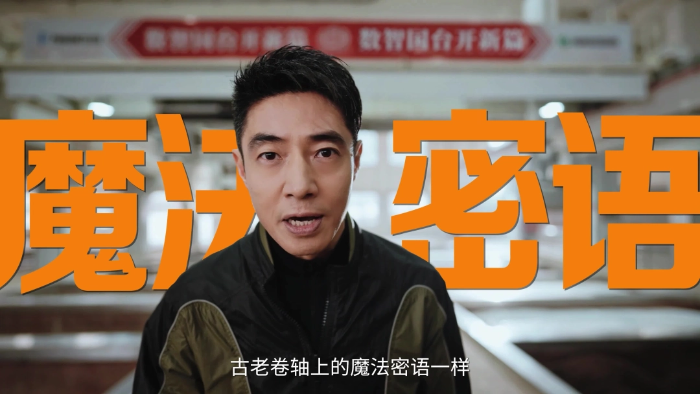
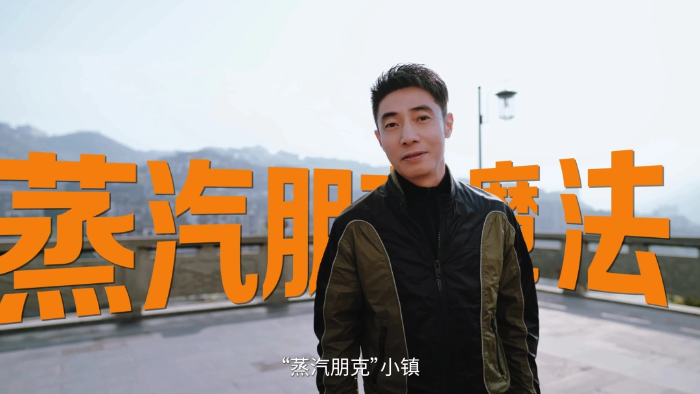
This time, Sa Beining is no longer just a CCTV host familiar to the audience, but has transformed into a "scientific detective", going deep into the core hinterland of Chinese Maotai-flavor liquor – Moutai Town, Kweichow, and entering the Guotai Distillery, trying to solve a question: Why is it that only Maotai Town can brew truly top-level Maotai Liquor? What kind of "magic" is hidden behind high-quality Guotai wine?

CCTV × National Taiwan Network join hands again to tell the modern story of liquor

This is not the first time Sa Beining has walked into Maotai Town. As early as 2024, he visited the Guotai Distillery in Maotai Town as an observer. This "second exploration" is of great significance – it marks that Guotai Liquor and CCTV have once again joined hands to create a phenomenal brand content communication event. Different from the one-way output of traditional advertisements or promotional videos, this cooperation is centered on "characters + narrative + technology experience" and innovatively adopts the content form of documentary + immersive visit + metaverse interaction to transform serious industrial transformation issues into cultural expressions that the public loves to hear.
茅台国台酒业有限公司__茅台变魔术

What's more, the spread was perfectly timed. On October 16, 2025, the Ministry of Industry and Information Technology issued the "Guiding Opinions on Promoting the High-Quality Development of Historical Classic Industries (2026-2030) (Draft for Comment)", which clearly defined the brewing industry as a "historical classic industry" for the first time. This policy positioning not only gives the liquor industry a new historical mission, but also injects a shot in the arm into the liquor industry which is in a period of deep adjustment.

In this context, Guotai Liquor chose to join forces with CCTV to use Sa Beining, a national public figure, to lead hundreds of millions of viewers to re-understand liquor – it is not only a cultural heritage for thousands of years, but also the forefront of technological innovation.

Three key words: distillation, microorganisms, data

In the footage of "Xiao Sa Tan Factory: Intelligent Creation of "Magic"", Sa Beining transforms into a "secret seeker", holding three key words – distillation, microorganisms, and data, and reveals the mystery of Maotai Town sauce wine brewing one by one.

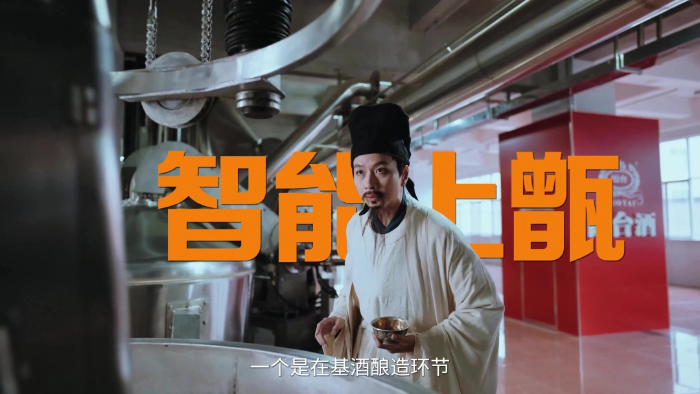
Keyword 1: Distillation – a leap from “one thousand cups without getting drunk” to stable quality. At the beginning of the program, Sa Beining met the "Poetic Immortal" Li Bai by chance at Guotai Winery, triggering a dialogue between ancient and modern times. Li Bai joked that he had "a hundred poems about wine fighting", but in fact, most of the wine he drank at that time was undistilled fermented wine, and the alcohol content was generally very low, far less than that of today's liquor. Even if the distillation technology is mature, because it relies heavily on the personal experience of the master, the process operations vary from person to person, and the quality of the wine is difficult to stabilize.

How to make every bottle of wine reach the same high quality? The answer lies in National Taiwan’s smart brewing system. Here, the traditional sauce wine brewing craft formulas such as "See the steam and press the fermented grains" and "Easy and thin" have been transformed into sophisticated data control. The steam distribution is monitored in real time through an infrared probe, and the mechanical arm accurately reproduces the steamer loading action to ensure that the heating uniformity of each steamer is maximized. This transformation from "experience-driven" to "data-driven" is the scientific sublimation of traditional craftsmanship in modern brewing.

Keyword 2: Microorganisms – the invisible "wine-making magicians". If distillation determines the concentration of wine, then microorganisms are the soul that determines the aroma of wine.

_茅台变魔术_茅台国台酒业有限公司

Wearing VR glasses, Sa Beining and Li Bai entered the world of the "National Taipei Metaverse" together, and a spectacular picture of life appeared in front of them: thousands of microorganisms were active and running in Maotai Town, each performing their own duties – yeast produces aroma, bacteria regulates sourness, and mold promotes transformation. In the brewing process of Guotai liquor alone, more than 1,000 microorganisms are involved and more than 3,000 substances are produced.

What China Taiwan does is to be the "super nanny" and "chef" of these "magicians" – allowing the microorganisms to eat well, grow well, and work efficiently.

Keyword 3: Data – making the "craftsman spirit" replicable and inheritable. If the first two keywords reveal the "natural code" of sauce wine, then the third keyword "data" points to the future direction – intelligence, standardization and replicability.
_茅台国台酒业有限公司_茅台变魔术

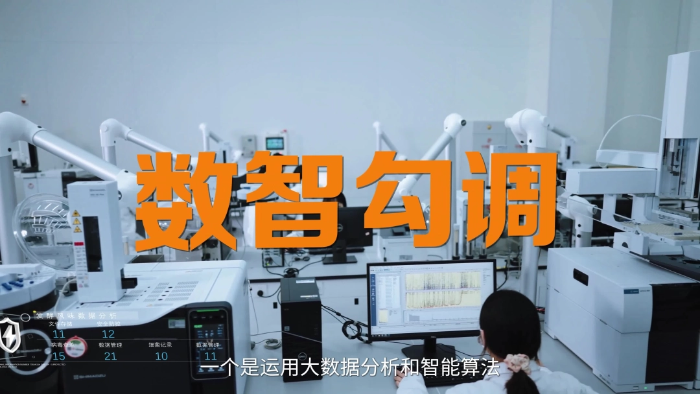
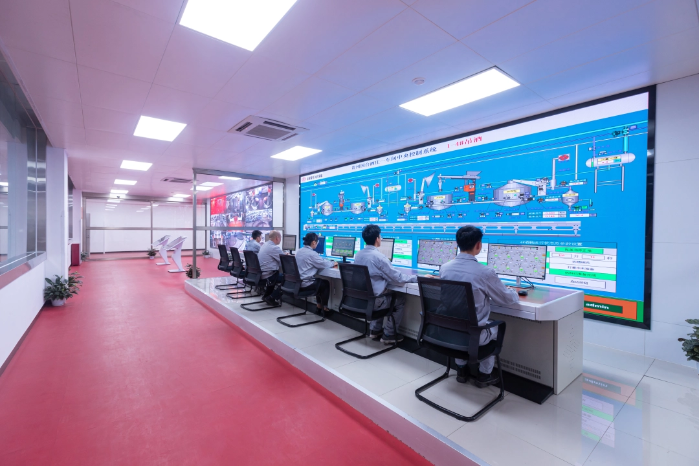
In the Guotai Intelligent Brewing Workshop, Sa Beining witnessed a shocking scene: the robotic arm moved dexterously above the retort, and the infrared probe scanned the steam distribution like an "eye"; on the control system screen, various parameters jumped in real time, forming smooth data curves.

It turns out that National Taiwan has broken down the process of the "12987" sauce wine brewing cycle (i.e. one-year production cycle, two grain feedings, nine cooking times, eight fermentations, and seven wine extractions) into 30 processes, 274 links, and 1,508 process indicators, and the operating standards of each process have been digitized and modeled. For example, in the grain-moistening process, a mathematical model of the gelatinization degree of sorghum was established through image recognition and infrared detection technology, which can accurately determine whether "seven-minute cooked" or "eight-minute cooked" is achieved, thereby achieving the best cooking effect.
茅台国台酒业有限公司__茅台变魔术

"The 'magic' of intelligent manufacturing in Taiwan is to transform the experience and mentality of traditional manual craftsmen into precise digital expressions to build a digitally intelligent production system," Sa Beining concluded.

And this is a true reflection of the concept put forward by National Taiwan University of "adhering to tradition without clinging to the past, and scientific innovation without departing from the original" – respecting tradition, but not stopping at tradition; embracing technology, but never deviating from the essence.

The whole chain transition of Guotai Intelligent Brewing

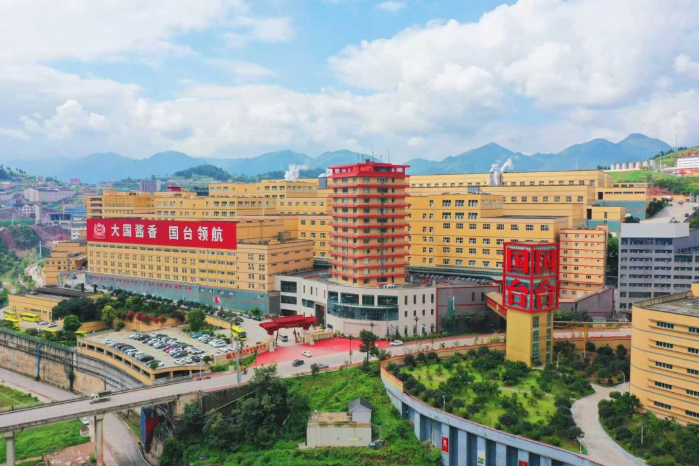
In fact, behind this "intelligent magic" lies more than 20 years of continuous investment and technological research by Taiwan.

Since 1999, for more than ten years, Guotai has focused on systematically learning the authentic Maotai wine brewing techniques and accumulated massive amounts of original data. In the next ten years, it has fully promoted "modernization" – converting experience into numbers and building a digital and intelligent production system covering the entire production process.
茅台变魔术_茅台国台酒业有限公司_

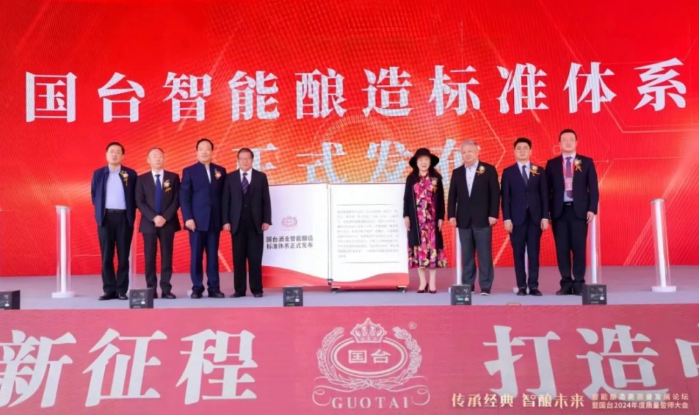
In October 2023, National Taiwan officially released the "National Taiwan Intelligent Brewing Standard System", becoming China's first intelligent brewing standard system for Maotai-flavor liquor. One year later, the system was upgraded to version 2.0, further improving the process indicators and becoming a benchmark for the industry to follow.

Up to now, National Taiwan has joined forces with top institutions such as the China Liquor Industry Association, Jiangnan University, and Tianjin University of Science and Technology to establish a large scientific research platform. It has achieved 5 internationally leading scientific research results, applied for 242 patents, published 143 academic papers, and built a complete innovation chain of "basic research – technological research – achievement transformation".

At the hardware level, China and Taiwan collaborated with equipment manufacturing companies to develop 735 sets of intelligent brewing equipment with primary and auxiliary supporting functions and full linkage, overcoming the shortage of complete sets of equipment for sauce wine production. Whether it is smart koji making, smart steamer loading, smart cooling, or smart wine delivery, all operations have been automated, closed, and clean.

Traditional Maotai-flavor wine needs to be collected in seven rounds. The flavor of the base wine in each round is very different. Finally, it is blended with the "art of the tongue" by the old craftsman to form a unique style. However, this method is highly dependent on personal experience and is easily affected by physical conditions, emotions and other factors, making it difficult to ensure batch consistency.
_茅台国台酒业有限公司_茅台变魔术

Guotai used science and technology to establish a database of ingredients for the flavor of each round of base wine, find the characteristic data of each flavor, establish a fingerprint map, and accurately calculate the blending ratio of each round of base wine. The wine blended in this way is more stable in batches and of better quality.

At the same time, Guotai also researches wine body optimization technology and successfully applies it in many products to make the wine body softer, cleaner and healthier. The specific performance is: the content of fusel oil is lower, and the body feels more comfortable after drinking; the content of aldehydes is lower, the taste is smoother, and the throat is not spicy; the quality standards of national and Taiwanese products have also been improved. On the basis of national standards, 12 new corporate internal control standards have been added, and the control of 8 unhelpful ingredient indicators has been stricter.

The deep logic behind playing more than 100 million yuan

As of the beginning of 2026, the views of "Xiao Sa Returns to Maotai Town" have exceeded 100 million, and related short video secondary creations are emerging one after another. The success of this communication is no accident. The reason why it touches people's hearts is that it tells a story that resonates with the times: In a seemingly conservative traditional industry, a technological revolution that is still flowing deep is quietly taking place.
_茅台变魔术_茅台国台酒业有限公司

Taiwan did not deny tradition, but used technology to accurately inherit tradition; it did not abandon handwork, but let machines inherit ingenuity; it did not cater to short-term traffic, but insisted on long-term R&D investment. It is this attitude of "holding millennium culture in its left hand and modern technology in its right hand" that allowed it to buck the trend during the period of deep adjustment in the industry and become the representative force of "China's new famous wines".

The more far-reaching significance is that this "intelligent manufacturing" practice provides a sample for the digital and intelligent transformation and upgrading of historical classic industries. When the Ministry of Industry and Information Technology lists brewing as a "historical classic industry", it means that its cultural value and development potential are highly recognized at the policy level. National Taiwan’s exploration proves that only by embracing the digital intelligence era and through scientific research empowerment, standard guidance, and intelligent upgrading can classic industries be rejuvenated.

As Sa Beining said at the end of the film: "Today, the iteration of brewing technology has far exceeded the imagination of previous generations. What we see is not only the innovation of Taiwan, but also the vigorous vitality of the historical classic industry of Chinese liquor because of the empowerment of science and technology."
_茅台国台酒业有限公司_茅台变魔术

With history, heritage, ingenuity and technology, from "Steampunk Town" to "Smart Brewing Factory", from Xiao Sa's exploration to the attention of hundreds of millions of people, Guotai Liquor is interpreting the answer to the times of Chinese liquor in a brand new way.

Standing at the new starting point of the "15th Five-Year Plan", National Taiwan will continue to focus on the three major events of "making good wine", "making good wine", and "drinking good wine". With consumers as the center, digital intelligence as the engine, product strength as the foundation, and brand culture as the soul, we will seize opportunities in the turbulent industry changes, break through cycles with innovation, and win the future with digital intelligence empowerment. (Source: Guizhou Daily Press)

270 Million People Watched The Spring Tea Live Broadcast On Douyin, And Buying Tea Online Became A New Trend

See the living inheritance of traditional skills through the live broadcast of spring tea.

The tea proverb goes, "Spring rain is as valuable as oil, and spring tea is as valuable as gold." For tea lovers, sipping spring tea is the ritual of spring. Only this year, there is something new in the way of opening this sense of ritual – more than 270 million users choose to follow and learn about Spring Tea in the live broadcast room, using the screen as the "first scene".

On April 8, Douyin e-commerce released "Spring in the Live Broadcast Room: 2026 Douyin E-commerce Spring Tea Consumption Illustrated Guide" (referred to as the "Illustrated Guide"). The "Illustrated Book" shows that during this year's spring tea season, more than 270 million users on the platform followed Spring Tea in the live broadcast room, and the topic "The first sip of spring tea on Douyin" has a cumulative reading volume of 830 million. These figures clearly convey a signal: Spring tea consumption is experiencing a quiet increase from offline to online, and online channels are becoming an important growth pole for the development of the traditional tea industry.

直播间搭桥,让茶文化与年轻人双向奔赴__直播间搭桥,让茶文化与年轻人双向奔赴

"Spring in the Live Broadcast Room: 2026 Douyin E-commerce Spring Tea Consumption Illustration"

In the past, people watched, tasted and bought tea offline; now, the live broadcast of tea culture content in the live broadcast room has turned spring tea into a perceptible spring experience. When the camera is focused on the place of origin, consumers can not only see the actual situation of the tea mountain, but also watch the manual frying process and listen to the tea master's explanation of tea culture. In the live broadcast room, consumers no longer just "buy tea", but also "see tea and understand tea", truly integrating into tea culture.

This change is particularly important for young people. For a long time, there seems to be an invisible gap between traditional tea culture and young people. In the perception of many young people, tea is "exclusive" for their elders and is often associated with complicated tea ceremony, esoteric culture and even some indescribable sense of distance, which makes them stay away from tea and tea culture.

In fact, it’s not that many young people don’t love tea, but they lack the knowledge to understand tea. Traditionally, tea sales have mainly relied on tea shops scattered in the streets, brand counters or recommendations from acquaintances. The learning cost for novices is high and the price system is complicated. Young people are easily confused and do not dare to test the waters easily. Live streaming e-commerce has significantly lowered this threshold. The popularization of tea knowledge, brewing teaching, origin traceability and other contents in the live broadcast room allow young people to "watch, learn and buy at the same time", achieving a natural integration between young people and tea.

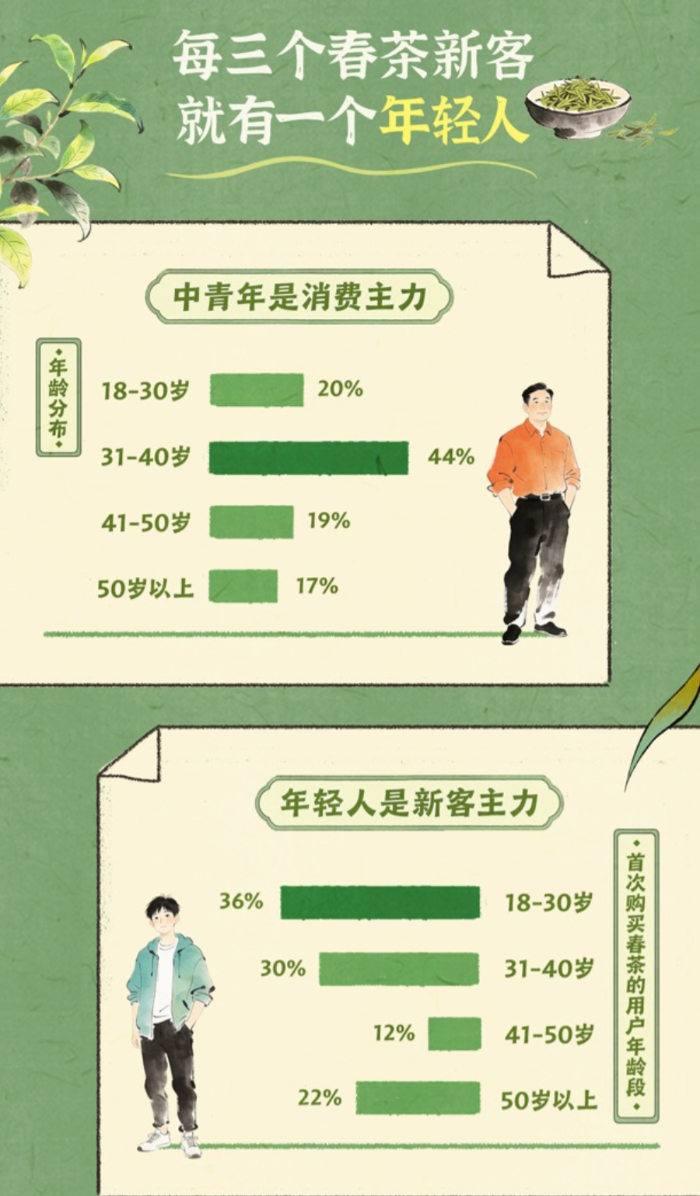
The data confirms this trend. According to the "Illustrated Book", among new customers who buy spring tea for the first time, 36% are aged 18-30, which means that about one out of every three new customers of spring tea is a young person. Live e-commerce is becoming an important bridge for traditional spring tea to connect young groups, allowing traditional tea culture to rejuvenate among the younger generation.

直播间搭桥,让茶文化与年轻人双向奔赴_直播间搭桥,让茶文化与年轻人双向奔赴_

"Spring in the Live Broadcast Room: 2026 Douyin E-commerce Spring Tea Consumption Illustration"

It should be noted that behind this change is not only the innovation of sales channels, but also the change of cultural inheritance methods. The difficulty in the living inheritance of traditional tea culture lies in how to let young people "enter" rather than "be educated". The traditional inheritance method focuses on ritual and seniority-based authority, which is too far away from the lifestyle of young people. Live streaming e-commerce has changed this one-way output and insufficiently grounded inheritance method. Live facts about the place of origin, dismantling of the tea-making process, and records of tea mountain life, these more vivid content forms make tea culture visible, tangible, and participatory. Tea culture is finally no longer a high-level professional knowledge, but has become a touchable daily life.

From an industrial perspective, this change has also brought more certain increments to merchants. In the past, spring tea production areas were far away from consumers, and there was asymmetric information between production and marketing. Live e-commerce shortens this distance with content. Tea farmers and tea companies can directly face consumers, display products, explain processes, and build trust. Consumers' decision-making costs are reduced, and the sales efficiency of production areas will naturally increase. This is an important advantage of live broadcast e-commerce that breaks the limitations of time and space.

It is worth noting that different brands have found their own ways of expression in the live broadcast room. Time-honored brands focus more on keeping integrity. They continue to present traditional tea-making techniques and the daily routine of craftsmen, building trust with visible craftsmanship; cutting-edge brands focus on the needs of young users. Innovative products such as small-portion tasting packs and tea powder meet the needs of young people for ready-to-drink, convenience and early adopters. Different categories of tea are on the same stage, jointly promoting the upgrade of spring tea consumption from a single category to a consumption trend that combines cultural temperament and lifestyle attributes.

From a more macro perspective, the rise of tea culture in live broadcast rooms means that traditional skills are not sealed in museums, but have gained new vitality in compliant and orderly business practices. When discussing the relationship between technology and industry, people of insight often say: "Technology without industrialization is equivalent to useless technology; without continuous technological innovation, there will be no long-term development of the industry." The relationship between live broadcast rooms and tea culture can also be inspired: the spread of traditional culture needs to be connected with contemporary life, and a sustainable path needs to be found in orderly market practice; in turn, the excavation and inheritance of cultural core also injects lasting power into industrial development. Live e-commerce has found a new living inheritance method for traditional tea culture. It uses craft demonstrations and knowledge explanations to bring tea culture into the lives of young people. Behind this is not only the migration of consumption scenes, but also the update of the logic of cultural communication.

Therefore, the empowerment of traditional tea culture by live streaming e-commerce goes far beyond the increase of sales channels. It is also an innovation in the way of expression, allowing traditional tea culture to find a new living space in the digital context, and further promoting the innovation and upgrading of the tea industry. When consumers, especially the new generation of young people, are willing to spend time in the live broadcast room to understand the ins and outs of a piece of tea, there will be more possibilities for the future of traditional tea culture.

It is worth emphasizing that in this upsurge of digital empowerment of traditional industries, industries and platforms need to maintain the bottom line of quality – from geographical indication protection to product quality traceability, from resisting false propaganda to maintaining price transparency. Only by putting consumer rights and interests first can this spring breeze of live broadcasting truly benefit tea farmers, nourish the industry, and make the inheritance of tea culture more stable and further.

From this perspective, the significance of live streaming e-commerce to tea culture has long gone beyond simply selling and bringing goods, and has become a carrier for traditional culture to reach contemporary young people. It breaks the age barrier and the distance of time and space, allowing old craftsmanship to be seen and traditional culture to be understood. It uses the simplest and most convenient way to help the creative transformation of traditional tea culture and continue to thrive. (Text/Jiang Heng)
Exports Of New Energy Vehicles Surged 1.2 Times In The First Quarter, And Automobile Exports Continue To Be Booming

China News Service, Beijing, April 10 (Reporter Zhang Ni) On the 10th, the "China Automobile Association Data" WeChat public account released the production and sales of the automobile industry in March. Data shows that from January to March 2026, 954,000 new energy vehicles were exported, a year-on-year increase of 1.2 times.

Data show that in March 2026, automobile production and sales completed 2.917 million units and 2.899 million units respectively, a month-on-month increase of 74.4% and 60.6% respectively, and a year-on-year decrease of 3% and 0.6% respectively.

From January to March, automobile production and sales completed 7.039 million units and 7.048 million units respectively, down 6.9% and 5.6% year-on-year respectively.

In the first quarter, automobile exports grew rapidly, and new energy vehicles performed brilliantly.

From January to March, automobile exports were 2.226 million units, a year-on-year increase of 56.7%. Among them, automobile exports in March were 875,000 units, a month-on-month increase of 30.2%, and a year-on-year increase of 72.7%. From January to March, the export of new energy vehicles was 954,000 units, a year-on-year increase of 1.2 times; the export of traditional fuel vehicles was 1.271 million units, a year-on-year increase of 29.9%.

According to analysis by the China Association of Automobile Manufacturers, after the Spring Festival, corporate production and operation activities accelerated and market activity increased. In March, automobile production and sales rebounded sharply month-on-month and declined slightly year-on-year, which was an improvement compared with the previous two months.

Among them, the domestic market has been relatively sluggish due to factors such as policy switching and adjustment, pre-release of demand, and a high base during the same period, showing a double-digit decline year-on-year; automobile exports have grown rapidly, and despite the challenges of external uncertainty, they still show strong resilience, and the competitiveness of Chinese brands continues to improve. (over)

Sign In

Forgot Password

Sign Up