Professional virtual currency information station welcome
We have been making efforts.

24-hour news update Page 4

24-hour cryptocurrency news update

China Everbright Bank's Data Is Wrong: The Asset Size Of Branches Of The Hong Kong Stock Exchange And The Shanghai Stock Exchange Is Now Different

China News Service, Beijing, April 2 (Reporter Xie Yiguan) After the Bank of Communications’ dividend announcement was written incorrectly, China Everbright Bank made another mistake in the data.

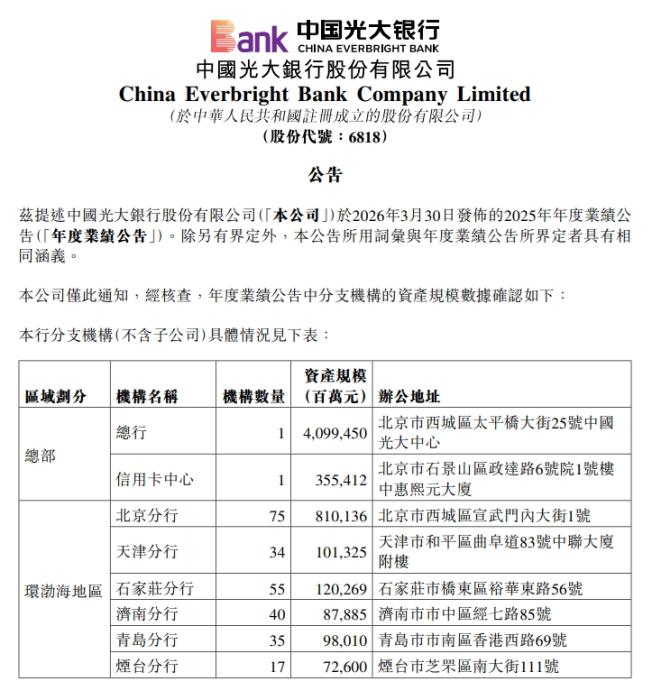
On the evening of April 1, China Everbright Bank issued an announcement on the Hong Kong Stock Exchange, confirming the asset size of its branches. Judging from the data released in the announcement, China Everbright Bank has made changes to the data previously disclosed on the Hong Kong Stock Exchange. The changed data is consistent with the 2025 annual report data released by the Shanghai Stock Exchange.

光大银行乌龙事件案例分析__光大银行乌龙

Screenshot of China Everbright Bank’s announcement.

Everbright Bank also stated in the correction announcement that the above corrections did not have any impact on other information published in the annual performance announcement. Except as disclosed in this announcement, all information and content published in the annual results announcement remain unchanged.

Since China Everbright Bank is listed on A+H shares, China Everbright Bank previously disclosed the "2025 Annual Report of China Everbright Bank Co., Ltd." and the "2025 Annual Performance Announcement" on the Shanghai Stock Exchange and the Hong Kong Stock Exchange respectively.

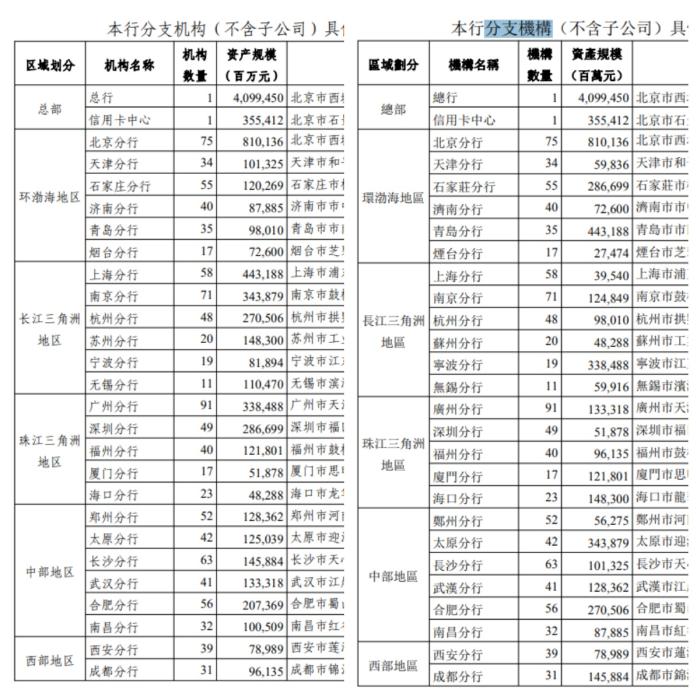
A China News reporter compared the two announcements and found that, except for a few branches such as Beijing Branch, Xi'an Branch, Sydney Branch, and Macau Branch, which had consistent data, the asset scale of 40 branches showed large discrepancies.

For example, in the "2025 Annual Report of China Everbright Bank Co., Ltd." of the Shanghai Stock Exchange, the asset scale of Tianjin Branch is 101.325 billion yuan; but in the "2025 Annual Results Announcement" of the Hong Kong Stock Exchange, Tianjin Branch The asset scale of the Tianjin Branch has become 59.836 billion yuan; the Shanghai Branch is even more outrageous. The asset scale announced in the two reports is 443.188 billion yuan and 39.54 billion yuan respectively, a difference of more than 10 times.

_光大银行乌龙_光大银行乌龙事件案例分析

The left picture is a screenshot from the Shanghai Stock Exchange's "China Everbright Bank Co., Ltd. 2025 Annual Report", and the right picture is a screenshot from the Hong Kong Stock Exchange's "2025 Annual Results Announcement".

According to the annual report of China Everbright Bank, the 2025 financial report will be audited by KPMG Huazhen LLP (Special General Partnership) and KPMG LLP in accordance with the Chinese Auditing Standards for Certified Public Accountants and the International Auditing Standards respectively, and will issue standard unqualified audit reports.

The reporter noticed that as of the evening of April 2, the erroneous annual report from the Hong Kong Stock Exchange had not been removed.

Previously, the China Securities Regulatory Commission issued the "Information Disclosure and Preparation Rules No. 19 of Companies that Offer Securities to the Public – Correction of Financial Information and Related Disclosures" requiring that if there are errors in the financial information of the company's publicly disclosed periodic reports, and the board of directors decides to correct them, the corrected financial information and other information required to be disclosed by these regulations should be disclosed in a separate temporary report in a timely manner.

At the same time, the Hong Kong Stock Exchange stipulates that the issuer should request the Listing Division of the Hong Kong Stock Exchange in writing to cancel the published document, explain the reason for revising the document, and submit the revised version through ESS. The canceled document will still be published on the HKEX website, but HKEX will mark the document as "cancelled and reissued". When submitting a revised version through ESS, the issuer may add the words "revised" and "(Revised)" in the free text title bar.

It is worth mentioning that as of the evening of April 2, the Shanghai Stock Exchange had not issued a correction announcement simultaneously.

According to Article 6 of the "Shanghai Stock Exchange Self-Regulatory Guidelines for Listed Companies No. 2—Information Disclosure Management (Revised in March 2025)", information disclosed in overseas markets should be consistent with the content disclosed domestically. When major differences occur, listed companies and relevant information disclosure obligors shall explain to the Exchange and disclose corrections or supplementary announcements. (over)

Amid The International Energy Crisis, China Has Advantages In Stable Power Supply: 1 Kilowatt Hour Of Green Power Per 3 Kilowatt Hours Of Electricity

China News Service, Beijing, April 10 (Reporter Wang Mengyao) For every 3 kilowatt hours of electricity used, there is 1 kilowatt hour of green electricity. China relies on its high proportion of green electricity applications and the unique structure of coal power generation to achieve stable power supply amid the turbulent international situation.

As tensions in the Middle East continued and shipping in the Strait of Hormuz was blocked, international energy prices rose collectively, with international oil prices once exceeding US$120 per barrel. Morgan Stanley said that the global liquefied natural gas (LNG) market is expected to have a supply gap of approximately 15 million tons (approximately 4%) in 2026. International Energy Agency officials say the escalating conflict in the Middle East is plunging the world into its worst energy crisis in decades.

"Any economy that relies heavily on imported LNG or oil for power production will face skyrocketing power prices and potential power shortages." Nomura China chief economist Lu Ting said that in the global energy crisis, China has a comparative advantage in power supply. China's power system is almost self-sufficient in primary energy sources, with almost no natural gas or oil used in the power generation process. It mainly relies on domestically mined coal and has sufficient spare capacity.

Official data shows that coal power has long played a "backbone" and "ballast" role in ensuring the safe and stable supply of electricity in China. Coal power accounts for less than 40% of the installed capacity, providing about 60% of the power generation.

According to data from the National Energy Administration of China, China's total primary energy production will reach 5.13 billion tons of standard coal in 2025, breaking through the 5 billion tons mark for the first time. The effectiveness of energy supply guarantee is the best year in the "14th Five-Year Plan". Data from the China Coal Industry Association shows that China's coal output will reach 4.83 billion tons in 2025, a year-on-year increase of 1.2%, setting a record high.

At the same time, the proportion of clean energy power generation such as wind power and photovoltaics continues to increase, further reducing dependence on single fossil energy. In 2025, China's large-scale industrial hydropower, nuclear power, wind power and solar power and other clean energy power generation were 3,421.3 billion kilowatt-hours, a year-on-year increase of 8.8%, accounting for 35.2% of the industrial power generation above designated size, an increase of 2.1 percentage points from the previous year.

Zou Ji, CEO of the Energy Foundation and President of China, said that China's energy structure is still dominated by coal, but the proportion of wind, solar, water, and nuclear in primary energy and their power generation capacity and power generation efficiency have become the main supporting factors for new energy sources.

Since the "14th Five-Year Plan", China has built the world's largest renewable energy system. In 2025, the country's new non-fossil energy power generation will account for 112.1% of the entire society's new electricity consumption, and renewable energy power generation will reach approximately 4.0 trillion kilowatt hours, exceeding the combined electricity consumption of the 27 EU countries (approximately 3.8 trillion kilowatt hours). Zheng Shanjie, director of China's National Development and Reform Commission, said that by the end of the 15th Five-Year Plan, most of China's new electricity demand will be met by new clean energy power generation.

Electricity is the "food" for economic development. Lu Ting said that China’s power system is both on the track of low-carbon transformation and has shown strong resilience to oil and natural gas price shocks. Its unique structure makes the manufacturing industry almost unaffected by the LNG and oil price fluctuations currently sweeping the global market. China's manufacturing industry, especially export companies, may gain greater comparative advantage in power supply. (over)

Sweet Tea's New Movie Supreme Marty Won Both Box Office And Word-of-mouth Reviews, But One Sentence Caused Public Outrage.

Approval|Black Jade Red

It seems like it’s been a long time since we’ve seen a film in which the real-life encounter between the protagonist and the actor is so intertextual.

In December 2025, the movie "Marty Supreme" will be released in North America. The film, which tells the story of the gambler-like life of Marty Mauser, an American table tennis player who relied on his talent and arrogance in the early 1950s, has received widespread praise and has a Rotten Tomatoes fresh rating of 97%. Timothée Chalamet, who plays Marty, received unanimous recognition for his performance.

In January 2026, the North American box office of "Marty Supreme" broke the previous record of "The Universe" (2022), also produced by the American independent film company A24. In early February, the film's global box office exceeded US$147 million, and subsequently became A24's highest box office with a global box office of US$180 million. Starring Timothy won the 83rd Golden Globe Award for Best Actor in a Musical/Comedy and the 31st American Critics' Choice Movie Award for Best Actor. "Marty" also swept a total of 9 Oscar nominations this year from technical to acting categories. He is also regarded as the most powerful contender for Best Actor at this Oscar.

At the end of February, Timothy, who seemed to be dazzled by the victory, said casually on a talk show that "opera and ballet are arts that no one cares about" and he did not want to engage in such work. Realizing that the trouble came from his mouth, he immediately tried to make amends, but to no avail. He was criticized on a large scale, and world-renowned theaters such as the Metropolitan Opera, the Royal Ballet, and the Los Angeles Opera, as well as a large number of ballet and opera singers, publicly criticized and boycotted him. Some theaters also mockingly use "Timothy" as a promotional code, which you can enter to get a discount when purchasing tickets.

In March, at the 98th Academy Awards, Timothy missed out on the Best Actor award. "Marty Extreme" scored "0 out of 9 nominations". As the film's producer and starring actor, he couldn't hide his disappointment. The Oscar's failure may have indirectly caused the film's box office failure in the mainland market. Despite Timothy's vigorous promotion in China, the film's box office in its first week was less than 3 million yuan, and the cumulative box office forecast as of press time was less than 4 million yuan.

Timothy's frivolous personality and experience of having tasted some sweetness with his talent, but was beaten by fame and fortune, are exactly the same as the Marty he played.

Marty is a dazed young man in a Jewish immigrant community, struggling all day long on the Lower East Side. He resists the worldly stability of being a shoe store manager planned by his uncle, and wants to use his table tennis talent to achieve a kind of success that will go down in history and be noticed by the world, where there will be champagne, luxury suites, and front-page headlines – this is exactly the kind of Upper East Side image that director Woody Allen created for Timothy in "A Rainy Day in New York."

With an outstanding performance, Timothy bid farewell to his previous literary and artistic image of "Sweet Tea" (this is the nickname given to him by Chinese audiences based on the pronunciation of his name and image and temperament), and found Josh Safdie, who has a very authorial image and style, as the director, and used table tennis player Marty Reisman. Reisman)’s experience and character’s spirit, and with a sleek and powerful new screen image, he customized this ambitious performance award-winning “Oscarbait” for himself.

Marty's thunderous speech in the film is no less controversial than Timothy's real-life remarks. Before the semifinals, he told reporters, "I am the ultimate product of Hitler's defeat." He also said before the finals against Japanese player Endo, "Tomorrow I will drop the third atomic bomb on their heads." But I don’t know if he was “guilty for his words.” Regardless of the so-called Academy Award wins, the judges of the Film Association wanted to use the result of no Oscars to teach him and this film a lesson.

This is exactly what the capitalist, pen and ink king Milton Rockwell does to Marty in the film.

After Marty lost to the Japanese player Endo in the London International Table Tennis Competition in 1952, Rockwell wanted to use match-fixing to hold a challenge match before the next international championship held in Japan, and arranged for Marty to lose to Endo again. It is intended to promote products in the Japanese market through the strategy of manipulating national emotions. Marty fiercely refused and attacked Rockwell's son who died in the Pacific War. "I find it funny that you want to please the Japanese so desperately and they kill your son." However, a series of chaotic events in the later period caused Marty to be unable to raise travel expenses to the World Championships in Japan, so he had no choice but to turn back. Finally, Rockwell asked Marty to take off his pants in front of everyone and hit him on the butt with a bat to humiliate and teach him a lesson, claiming that he was angry with his dead son.

Through the above carefully designed dangerous lines and character settings, "Supreme Marty" not only brilliantly demonstrates the subtle psychology and entanglements behind different positions, identities and ethnic groups after the end of World War II, but also vividly brings us back to the gap of an era and the life atmosphere where politics follows us like a ghost. Behind every action and choice, there is politics and position.

In 1952, the "San Francisco Compact" officially came into effect, and the occupation led by the U.S. Allied Forces ended. Japan regained its sovereignty and could re-participate in international affairs including sports events, so Endo appeared in international events in 1952. For Endo, a table tennis player from defeated Japan, and Japanese nationals, the court is a battlefield. After Endo defeated American player Marty, he was regarded as a national hero. The film shows this through a newsreel showing Endo being embraced after returning home from victory.

Entrepreneur Rockwell wanted to use Marty's failure to please the Japanese market. In his eyes, fascism targeted the Jews, but in the Pacific War, "my son died to liberate you." The Japanese and the Jews were respectively the direct and indirect causes of his son's death. Rockwell confuses the murder of Jews in the early days of fascism with the later Japanese-American War. This successful capitalist used the death of his son to package himself as a victim and a failed father. But in business, he was able to temporarily or selectively forget that his son died in the war with Japan, which shows the logic of capital that business overrides everything.

Marty, who lives in a Jewish community in the United States, has no "hatred of country and family" for the game like Endo. What he wants to achieve is the success of Vanity Fair, which is ancillary to winning the championship. He does not represent a group, only himself. In his own words, "I live in a community where it's every man for himself." Another Jewish table tennis player in the film, former world champion Kretzky, after Rockwell discovered the concentration camp number tattoo on his arm, told the story of how he narrowly escaped death in a concentration camp with his skills and how he covered his body with honey in the wild and returned to the concentration camp to be licked by his roommates to supplement nutrition. The contrast between the attitudes and behavior of the two Jewish players leaves nothing to be desired.

Kretzky's memories are presented through real-life photography. Although it may seem awkward, this was an intentional move by Josh Safdie, the film's director and co-writer. The film chose Géza Röhrig, star of the classic Nazi Holocaust film "Son of Saul", to play Kretzky. This time he no longer passively cleaned up the Jewish prisoners who had turned into corpses in the gas chambers, but took the initiative to save them.

Using restless images, tense rhythm, frequent scenes, fast editing and non-routine stories to express the disordered life of a morally flawed protagonist is what the directors Safdie Brothers are good at.

In 2025, the Safdie brothers stopped collaborating as a creative duo for the first time, and coincidentally both chose to shoot sports-character movies (brother Ben Safdie shot UFC legend Mark Cole, starring Dwayne Johnson). "Supreme Marty"'s grasp of the times and presentation of complex characters allowed the director to achieve new breakthroughs and meanings while continuing his personal characteristics and advantages. Therefore, "Supreme Marty" can surpass all his previous works and become the best of Josh Safdie's current career.

The films of the Safdie brothers have a distinct authorial attribute, and the core driving force of the characters in their lenses is a gambler's mentality. The protagonist who is full of complexity will always rationalize his gambling behavior in his actions, because what lies behind it is often the only glimmer of hope left after he has spent everything.

At the same time, in the gambling and struggle of life, the current situation of social life, which is mostly from the bottom, is also presented. In "Heaven Knows What," it's a drug-addicted girl's choice and wandering among dating partners. In "Good Time," it's a brother's desperate attempt to help his cognitively impaired brother escape from prison. In "Uncut," Gems) is about a drug-addicted diamond dealer who uses an opal that NBA players regard as having spiritual power to make a comeback in the casino. In "Marty Supreme", it is about the table tennis player who wants to win his future in a life that goes against his wishes.

Unlike the director's previous series of backfired O. Henry-esque endings, Josh Safdie has Marty win the game at the end, but his approach is still poignant. In order to make a comeback in the Japanese World Championships, Marty had to attend the exhibition match designed by Rockwell and lost to Endo again as agreed. When he learned on the spot that he had been disqualified from this year's tournament and was humiliatingly assigned to kiss a pig, he chose to reveal the truth about match-fixing on stage and challenge again. After experiencing the shock of the first failure and the humiliation of the second failure, this time he fought for himself.

The film arranges a wonderful paradox here. Victory will bring nothing to Marty. Rockwell warned that if he did this, not only would he not get paid, but he would not even be able to return to the United States on the plane he came from because he was penniless. So in this game, Marty no longer fights for the fame and fortune attached to success, but only fights for success itself. This kind of design also gives the characters a color of existential philosophy, making them more profound and vivid.

Marty, who returned to the United States on a US military withdrawal plane, saw his newborn child. He was filled with tears after refusing to acknowledge the child before. Will he embark on a new and stable life path this time? Is this path actually good or bad?

Marty achieved nothing but success after failure in previous competitions and life. "Marty" failed to win an Oscar after winning awards with a bright future. Between the two intertextualities, we cannot measure the excellence and success of a film solely by the Oscar, because treating the Oscar as the ultimate victory is as ironic as the stories Safdie wants to tell us in his film.

PPI Rose For The First Time After Falling For 41 Consecutive Months, Up 0.5% Year-on-year In March

China News Service, Beijing, April 10 (Reporter Wang Enbo) China's National Bureau of Statistics announced on the 10th that China's industrial producer price index (PPI) in March increased by 0.5% year-on-year from a decrease of 0.9% in the previous month, which was the first increase after 41 consecutive months of decline.

Dong Lijuan, chief statistician of the Urban Department of the National Bureau of Statistics, said that in March, international imported factors affected the year-on-year price increases or decreases in China's related industries. For example, prices in the non-ferrous metal mining and processing industry increased by 36.4% year-on-year, and prices in the non-ferrous metal smelting and rolling processing industry increased by 22.4%, an increase of 6.2 and 0.3 percentage points respectively from the previous month; prices in the oil and natural gas mining industry increased by 5.2% from a decrease of 12.9% in the previous month.

At the same time, the supply and demand relationship in some industries in China has improved, and prices have risen. As the market competition order continues to optimize, the manufacturing prices of photovoltaic equipment and components and lithium-ion battery manufacturing have increased by 5.2% and 2.5% year-on-year respectively; "artificial intelligence +" has accelerated its expansion and the demand for computing power has grown rapidly. The price of optical fiber manufacturing has increased by 76.1% year-on-year, and the price of external storage equipment and components has increased by 21.1% year-on-year.

From a month-on-month perspective that better reflects recent price changes, China's PPI rose by 1.0% in March, rising for six consecutive months. The increase expanded by 0.6 percentage points from the previous month, the largest increase in 48 months.

Among the major industries, affected by the sharp rise in international crude oil and other prices, prices in petroleum-related industries rose rapidly. Among them, the price of oil and natural gas extraction industry increased by 15.8% month-on-month, the price of petroleum, coal and other fuel processing industry increased by 5.8%, and the price of chemical raw materials and chemical products manufacturing industry increased by 3.6%. The increase was 10.7, 5.4 and 2.3 percentage points respectively compared with the previous month. This was the main reason for the expansion of PPI month-on-month increase.

Pang Ming, a distinguished senior researcher at the National Finance and Development Laboratory, analyzed that China's PPI turned from negative to positive year-on-year in March. The main driving force came from disturbances in the international energy market and the recovery of domestic production means prices, marking that the profit improvement in the industrial sector has entered a period of substantial realization. The subsequent PPI is expected to enter a moderate expansion range, but whether the trend can continue still needs to be observed in the dual changes in the global energy market and domestic industrial production. (over)

New Phenomenon Of Qingming Sacrifices: Giving Modern Objects And Luxurious Burials To Ancient People Elicits Different Reactions

给曹操送布洛芬、埋奔驰“陪葬”:我们为何接受前者反感后者?__给曹操送布洛芬、埋奔驰“陪葬”:我们为何接受前者反感后者?

Author | China Business News He Tao

During this year’s Qingming Festival, two pieces of news about sacrifices formed an intriguing contrast.

One is "Cao Cao's tomb is filled with ibuprofen" which is a hot search topic. Historical records record that Cao Cao suffered from migraines all year round, so many young people "prescribed the right medicine" and brought various kinds of ibuprofen to worship him. Similar examples include bringing wine to Li Bai, potato chips and spicy strips to Huo Qubing, paper to Cai Lun, and "Ma Yinglong" to Zhang Juzheng…

Another video in Liaoyang, Liaoning, that appeared to be "buried with a Mercedes-Benz" sparked heated discussion on social platforms. On April 10, the Gongchangling District Government of Liaoyang City announced that the person involved, Jin, violated the law and illegally buried the vehicle due to feudal superstition. After criticism and education from relevant departments, the parties concerned have deeply realized their mistakes and actively cooperated in rectification. Suspected violations of laws and regulations are being dealt with seriously.

It is also an "unconventional" way of offering sacrifices, but judging from public reactions, most of them smile knowingly at the former, but are generally disgusted with the latter. Behind this, it reflects contemporary society's redefinition of the core value of sacrificial behavior: the vitality of sacrificial rituals does not lie in the luxury of material forms, but in the sincerity of emotional expression and the consistency of civilization orientation.

In traditional sacrifices, burning paper money and offering sacrifices are common forms. The logic is that "death is like life", trying to provide material security for the deceased in another world. However, the young man sending ibuprofen to Cao Cao was obviously not based on this superstitious logic.

Qingming festivals are often solemn and solemn because they evoke heavy thoughts of the deceased loved ones. Perhaps because the ancients were not relatives, young people's memorials to them were less heavy and more relaxed, so they offered all kinds of imaginative sacrifices.

The core of this kind of sacrificial behavior is more of a kind of ideological empathy and stress relief. They may have projected the hardships they encountered in their lives onto the ancients. As someone on the Internet lamented: Give Cao Cao ibuprofen and you will be cured.

"Burying a Mercedes-Benz with a car" is a continuation of the logic of material offerings, and highlights the tendency of the parties involved to advocate the ancient idea of ​​"thick burial". Regardless of whether a luxury car can really be "used" by the deceased, this behavior actually extends the mentality of material comparison and showing off wealth in the real world to the field of funerals.

Funeral civilization undoubtedly needs to keep pace with the times. Today in the 21st century, how to bury and worship one's ancestors is no longer purely a matter of "personal freedom" and how one wants to do it, but must comply with public order and good customs, and act in accordance with the law and regulations.

Our country’s funeral management regulations clearly stipulate that funeral management adheres to civility, frugality, and green ecology, and encourages the adoption of funeral methods that meet ecological environmental protection and land-saving requirements. The cost of "burying a Mercedes-Benz with a car" is exaggerated, requires a lot of land, and may pollute the environment. It is obviously contrary to these regulations. The official notification also pointed out that the parties involved were suspected of violating laws and regulations such as the Road Traffic Safety Law of the People's Republic of China, the Forest Law of the People's Republic of China, and the Funeral Management Regulations.

In contrast, the "fancy memorial" behavior of the ancients, although the sacrifice itself is not a traditional thing, consumes very little material, does not occupy additional land, does not cause environmental pollution, and does not violate any laws. More importantly, it conveys knowledge, humor and warmth rather than showing off wealth and superstition. Today, when land resources are becoming increasingly scarce and the whole society advocates "thick maintenance and poor burial" and green and ecological funerals, it is self-evident which behavior is more in line with the direction of civilization.

Looking at the deeper level, the reason why young people "sending ibuprofen to Cao Cao" is widely accepted and even regarded as a cultural phenomenon is because it may create a new paradigm for dialogue with history and tradition. In addition to the traditional ancestor worship culture, young people began to use their own thoughts and actions to complete their tribute and identity to the nation's "cultural ancestors". This is also a kind of spiritual self-comfort.

Faced with "bringing ibuprofen to Cao Cao" and "burying a Mercedes Benz with him", the reason why we have a clear distinction between love and hate is because we clearly see that the dignity of sacrifice comes from the sincerity of the heart and the civilization of the behavior. A box of painkillers worth a few yuan is extremely precious because it carries understanding and care spanning thousands of years; a luxury car worth hundreds of thousands is vulgar because it is full of ostentation, superstition and disregard for the law.

This enlightens us that the key to changing customs is not to simply deny tradition, but to return to people's true emotional needs on the track of the rule of law and public order and good customs. This is a more vital way of cultural inheritance.

Can’t Understand Godard’s Book Of Images? This Movie Review Helps You Understand

Translator: Chen Sihang

Proofreading: Yi Ersan

Source: Sight & Sound

Translator's note: There is no doubt that Jean-Luc Godard is a living cinematic myth. From "Breathless" during the French New Wave in the 1960s, to a series of political modernist films later, and then to the jaw-dropping "History of Cinema", it can be said that Godard has been subverting tradition and overturning people's definition of "cinema" from beginning to end.

In 2018, Godard's "Book of Images" won the "Special Palme d'Or" at the Cannes Film Festival. It's certainly special and it's difficult to juxtapose this film with other Palme d'Or nominees.

"Book of Images"

Like all of Godard's middle and later films, "The Book of Images" challenges traditional film concepts from various angles and seems difficult to be understood by the vast majority of audiences. This film review from the famous film review magazine "Sight and Sound" may provide the audience with a way to understand Godard.

The first image we see is Leonardo da Vinci's "John the Baptist." In this painting, John the Baptist is gazing at the viewer with something of a smirk. His right hand points to heaven, to salvation. There is still debate even among art historians, but according to the most common view, this mysterious painting is considered to be Leonardo da Vinci's last work.

Eighty-eight-year-old Jean-Luc Godard quoted one part of this oil painting at the beginning of "The Book of Images", which is the hand pointing to heaven. The hand is severed from the composition and enlarged until it fills the entire screen. Godard drained it of color, leaving a pattern of light gray on a black background, like the result of a photocopier repeated several times.

"Book of Images"

"The Book of Images" is full of ambiguous intertextuality. However, in this first "gesture", the central idea of ​​Godard's sad image essay is already clearly discernible.

Godard scoured all kinds of multimedia resources and reorganized these image fragments in unique ways, turning them into some kind of strange replicas. He sacrifices the authenticity of the image and pursues a certain kind of abstraction, damage and imitation, which refers to the flexibility and changeability of contemporary visual culture.

Throughout the five chapters of the film, the idea of ​​"manipulation" – etymologically speaking, "manipulation" comes from the Latin "manipulus", meaning "handmade" – is ubiquitous, which is closely related to the digital form of the film ("digital" comes from the Latin "digitus", meaning "finger" or "toe").

Throughout the film, "The Book of Images" ponders what possibilities are contained in redemption and beauty, which can allow us to survive in this terrifying and uncertain world for a long time. Until the end, Godard coughed and declared his own way, calling on us to have the "most earnest hope" when facing this "deepest night".

"Book of Images"

In his epic series of films "The History of Cinema" (1989-1998), Godard turned to digital video media and a collage-like creative method to "shoot" a special, non-linear film history.

His "History of Film" is a story about degradation and redemption, mainly based on the tradition of European and American films, serving more the director's personal views than the facts themselves. Godard called it "La réponse des ténèbres" (The Reply to Darkness). The darkness he spoke of was not just catastrophes like the Holocaust, but the growing sense of disappointment and frustration in the postwar era.

However, all this did not erase his love for movies. Godard has always shown a passion for those unforgettable images, as well as a certain unique belief. This belief can be defined in the discussion of film critic Serge Dardenne: "Cinephilia does not refer to the relationship between people and movies, but to the connection between people and the world through movies."

"Book of Images"

One way to approach "The Book of Images" is as an extension of the "History of Film" series. Of course we can't forget the short film "Origins of the 21st Century" (2000), which also uses this technique.

In The Book of Images , many of Godard's concerns, many of the images he uses are the same, and even the stylistic elements of the film are the same. In his hands, montage was a form of expression of thought.

The title of the first chapter "Remake", as well as countless cases in his previous films, can be evidence of this. Generally speaking, the task of viewers of Godard's films is not only to find the sources from which he quoted the films, but also to find the place of these sources in "Godard's universe": "quotes for quotation madmen".

At the end of The Book of Images, Godard expresses some kind of utopian hope in a black screen. The need for counterargument and defiance, he claims, will never go away. After that, he cut into a dance scene from Max Ophuls's Euphoria (1952).

An old man disguising himself as a young man and dancing on the dance floor until he faints from weakness – this is a perfect example of the expression just mentioned, and the old man can also be seen as an incarnation of Godard himself.

Our interpretation can stop here, but it can also go one step further: this exquisite image shot by the Jewish director who just returned from exile depicts the joy of burning and the depletion after the flames burn out. The melancholic soundtrack to this image comes from Hans Otter’s piano.

In "The Origin of the 21st Century", we also heard Hans Otter's piano music, accompanied by a subtitle board indicating "1900". Godard's first article for Cahiers du Cinema was about "Pleasure" (but it was rejected).

In 1962, Godard called Euphoria the best French film since the end of World War II. This beloved film by Godard, with its inferior and dirty copy, carries many layers of time and meaning – from the birth of cinema, to World War II, to the French New Wave, and to today. Film history became a way to discuss politics and Godard himself.

"Happiness"

In the late 1960s, Godard issued a call to "return to the origin"; and at the end of "The Book of Images", he made another declaration of returning to nature.

The second and third chapters of this film make a lot of references to World War II, trying to demonstrate how civilization became an accomplice of barbarism. This is also the core proposition of "Film History". Through Godard's montage, the Lumière brothers' train picks up the train transporting people to the concentration camps. We also see traces of Hollywood films: Hitchcock, Aldrich, Browning and so on.

However, The Book of Images also touches on new themes. Because Godard has long adopted the method of "remaking", the authenticity of the image has never been his highest ideal – this is the connection created between "The Deserter" (1954) and "The Little Soldier" (1963) in the early stages of the film. If "The Book of Images" is indeed a recreation of history, then this "repetition" must contain some differences.

"Book of Images"

Godard rethinks his early creations, when "cinema" was understood as a kind of architecture, a technology or a site of practice. Today, this concept is replaced by the new concept of "image". Images are regarded as independent individuals, not bound by any rules, separated from any real material materials, and can be circulated around the world. With the click of a mouse, they can be compressed, uploaded, and changed in form.

The collision between image and text embodied in the title of The Book of Images is more than just a tribute to Alexander Aschuk’s caméra-stylo. Godard gives equal importance to how digital imaging essentially becomes a means of writing. Based on the code, the film's images become a field of change and transformation under the author's instructions.

Although Godard did not deny the documentary power of indexical images, he was more inclined to express the various ways of manipulating images: including suddenly changing the frame of the film, making the image appear highly unnatural colors, animation-like effects and intermittent "glitches."

"Book of Images"

The sky suddenly turns orange or vermilion; the movements of characters are broken down into intermittent still images. High-definition images are mixed with heavily processed copies, just as masterpieces of film and art history are mixed with vulgar videos of sex and death.

In The Book of Images, Godard explores the unique plasticity of these new images and the highly variable effects when they are mixed together. It can be said that this film simultaneously understands the evolution of media history from two levels: "rupture" and "continuation."

Cinema was no longer a dictatorship, for Godard used all his techniques to create a broader catalog of images. Like digital visual culture itself, The Book of Images is confusing, highly overloaded, extremely mixed, intermittent, layered, and endlessly repetitive. The film's soundtrack shares these characteristics: it is both multichannel and multilingual.

At times, many different sounds appear simultaneously, vying for the audience's attention, while staccato music plays. Godard’s murmurings are heard throughout, but they are less of a lead-in and more like another element in this chaotic hodgepodge of sounds, with the same status as the other sounds.

"Book of Images"

The geopolitical scope of The Book of Images is completely different from that of The History of Cinema. Perhaps in response to the new conflicts of the twenty-first century, and in response to the increasingly prominent issues surrounding Eurocentrism, Godard chose a more global image.

Images discussing the Middle East occupy a very prominent position, especially in the fifth chapter "Central Area". It can be said that almost half of the images in this film are related to the Middle East.

And this fifth chapter is the closest that The Book of Images comes to any other kind of narrative form. The film tells the story of the fictional Gulf kingdom of Dofa, a country that unfortunately – or fortunately – lacks oil resources and is home to a failed revolution.

In this chapter, Godard spends a lot of time collecting evidence and analyzing the concept of "Orientalism," a prejudice against the Middle East that pervades many cinematic representations of the region. A subtitle board reading "In Western Eyes" flashed across the screen several times.

"Book of Images"

We see passages from the films of Pasolini and Raoul Walsh, and we even ride on a magic carpet from classic Arab films like Youssef Suchin's The Algerian Girl (also known as Gamila, 1958) to new, high-definition images of everyday life.

Godard abstracts a common stereotype from these images and points out the important role of the photographer's subject, who exists outside the subject. In the narration, Godard points out the violence inherent in the act of "speaking on behalf of" others, contrasting this brutal essence with "the inner calm of the act."

If most of the fifth chapter of "The Book of Images" is mainly an indictment of the West and its films, then its tone suddenly changes in the last few minutes of the film. Even before the end, the quote to Elias Canetti is so sad and true – "If we always want the world to be better, then we will never stop grieving" – but Godard ends what may be his final film with a plea.

This plea is not just about the movie, but about every action for justice, every moment of life: "This fact does not affect our hope even if it does not change anything."
Re-watching The 2006 Phenomenon-level Film Little Miss Sunshine, I Had A Profound Feeling.

T.Yerxaa

I recently rewatched an old movie and had a very deep feeling about it.

Twenty years ago, it was considered a phenomenal independent film. Such a movie would probably not be made today. Its stance bears a clear imprint of the "pre-political correctness era", but this movie is extremely suitable for today's Chinese society.

That was 2006, a year when the success ideology in the United States was at its highest and cracks began to appear.

At that time, Tony Robbins' motivational lectures filled stadiums, and Trump's catchphrase "You're fired" in every episode of "The Apprentice" turned the elimination logic of business competition into an entertainment spectacle. At the official level, the George W. Bush administration proposed the education policy of "No Child Left Behind" to embed the logic of competition into children's childhood lives.

There is a single sense of order flowing deep throughout American culture, where people are either rising or sinking, winners or losers.

The winner deserves everything, the loser has only themselves to blame.

"Little Miss Sunshine" exploded in this cultural atmosphere. Screenwriter Michael Arndt later talked about the creative motivation and said that he read Arnold Schwarzenegger saying to high school students, "I hate losers the most in my life. I despise them." There was an impulse in his heart to refute this sentence.

"Little Miss Sunshine"
The film thus sets its critical target from the very source—Richard Hoover. This is a failed motivational speaker who made a career out of promoting the Nine Steps to Success. Richard was the most faithful product of the spiritual climate of that era and the human embodiment of the ideology of success.

Placing such a character in the center of the all-round dysfunctional family in the film, and then letting the road trip peel away the foundation of his beliefs little by little, is the film's most subversive design of the success system.

The film uses a carefully designed structural counterpoint to achieve subversive and satirical goals. We see Richard's nine-step method and his real situation completely forming a cold contrast.

His lectures had only a handful of audiences, and his own children openly disdained everything he said. But the cleverness of the film is that it is not eager to let Richard suffer punishment at the plot level, but allows the life experience of everyone around him to quietly deconstruct his worldview.

Uncle Frank was the top Proust researcher in the United States and held the highest academic honors. He finally bid farewell to the competition by attempting suicide.

In order to become a fighter pilot, young Dwayne kept silent for nine months and armed himself with Nietzsche. The moment he discovered that he was color blind, all the silence turned into a roar.

Grandfather Edwin was expelled from the nursing home for heroin abuse and spent his later years using pornographic magazines and swearing, but he was the only person in the play who truly loved Olive unconditionally.

This family is an exhibition hall of failures created by American winner culture, but the narrative temperature of the film is never a sympathetic look down upon.

The section of Proust that Frank told Dwayne at the dock is unforgettable, not because it has any literary value, but because it logically directly dismantles the core presuppositions of success science.

The basis of success science is that pain is an obstacle that needs to be overcome, happiness is a state that should be optimized, and human value is externalized from achievement to visible victory.

Frank said that when Proust looked back at the end of his life, he concluded that those years of suffering were the best years, they shaped who he was; those happy years? Learned nothing.

This passage is like a key, allowing Dwayne, who is in the darkest moment of his life, to understand that failure itself can be a source of meaning. Its subversiveness lies not in opposing success, but in liberating failure from moral judgment and reducing it to a part of human experience itself.

However, one of the film's most critical narrative strategies is hidden in the place where it seems least politically correct.

Child beauty pageants are a long-standing, but never rigorously scrutinized, idiosyncratic part of American popular culture.

The participating girls wore close-fitting clothing, put on adult makeup, and performed simulated sexy catwalk movements. Parents watched with relish, and the organizers solemnly judged the performance.

The underlying logic of this ritual is that a seven-year-old girl's worth is determined by how well she simulates adult standards of beauty.

This is definitely a practice of sexual objectification of children, but because it is packaged in the form of a competition and circulated in the name of cultivating talents, it is culturally legitimate.

In the scene where Olive dances to the psychopathic Superman on stage, the film does something extremely dangerous in form, it puts a little girl on stage doing what from an outsider's perspective looks like a striptease. The adults in the audience were stunned, the host tried to drag her off the stage, and the organizing committee officials were furious.

But what the film makes clear is that Olive has no awareness of the sexual connotations of the routine – choreographed by her grandfather based on his sixty years of experience in strip clubs, and that Olive dances with total joy and no trace of provocation.

There is an ethical reversal here. Olive's performance is the closest to sexualization in form, but the purest in intention. Instead, the performances of all the other contestants surrounding her are the most harmless in social form, but the most complete in institutional sexual objectification of children.

The film uses this reversal to reveal the essential hypocrisy of beauty pageant culture. It does not really worry about the sexualization of children. It only uses so-called norms of decency to control the disciplinary process of female bodies starting from childhood.

Was Olive banished from the stage because her performance was morally inferior? Not so. The reason is actually that her performance cannot be incorporated into that order.

The reason why this strategy of the film has a strong contemporary attribute is that it can only be effective in the independent film context of the post-ironic era around 2006.

It uses a performance that is even more incorrect on the surface to reveal the real faults of the original system. It requires the audience to be willing to ask for meaning in the discomfort of the form, and it requires a viewing initiative that does not put morality before experience.

This is precisely the audience that American independent films cultivated during that historical period.

Directors Deighton and Faris started out shooting music videos and are very sophisticated at how to create visual pleasure while also embedding critical content.

The grandfather's heroin scene is another application of the same logic.

According to normal plot rules, an old man who takes drugs in the narrative will either be punished in the plot or be morally sympathetic as a tragic figure, but this film categorically rejects both paths.

Edwin's death is understated and provides no moral warning at all; he simply dies quietly in a motel bed.

The family's reaction was grief, but grief was followed by immediate action, stuffing his body into the trunk of the van and going on the road, because it was more important for Olive to compete than to come to terms with the ethics of death.

Therefore, Edwin’s heroin story and his unreserved love for Olive, instead of canceling each other out on the film’s ethical scale, reinforce each other.

It is precisely because he never measures anyone by the standards of decency that he can be the one who tells Olive to try bravely.

Likewise, Frank's homosexuality is mentioned almost passingly in the film. It was introduced by Olive’s questioning during a dinner scene and then sat there without becoming a plot-driven issue or even receiving any kind of special treatment.

In the United States in 2006, the battle to legalize gay marriage was at its most intense stage. Against this background, having a character's gay identity appear in such a homely way was a political stance in itself, but its power did not come from confrontation, but from normalization itself. Treating identity characteristics that should be controversial as trivial is the most radical destigmatization strategy possible.

At the end of the film, the broken yellow van drives onto the highway with its horn blaring continuously. The trumpet is a perfect metaphor for the anxious noise created by the logic of success, which once started cannot stop itself.

But there's no shame in the family sitting in this failing machine that keeps alarming, pushing it, jumping in, and moving on.

This is the most fundamental subversion of the film. It attempts to overturn the definition of success in the American mind, but it also does not want to provide an alternative.

It just shows that under the roar of winner's culture, people can choose not to participate in the game of judgment, and this choice itself is a kind of dignity.

Be Wary Of Utilitarian Football Ruining Children's And Youth's Competitions And Actually Kicking Each Other An Own Goal

Xinhua News Agency, Beijing, April 10th: Sports Commentary: Don’t let utilitarianism ruin the future of Chinese football

Xinhua News Agency reporters Xiao Shiyao, Wang Haoyu and Li Chunyu

Recently, a serious false match incident broke out in the men's U10 group of the Beijing Division of the 2026 Fifth China Youth Football League. The report showed that the 16-year-old Orange team of Dongcheng Sports School and the Kickers Blue team tacitly shot own goals at each other in the competition center. The goalkeeper deliberately let go and acted absurdly.

As soon as the news came out, public opinion was in an uproar. Why would a child under ten years old kick the ball into his own door?

The truth is not complicated, but it is dazzling enough: both teams have qualified in advance before the game. According to the schedule, the winning side will encounter a stronger opponent in the knockout round. As a result, the coaches of both sides unanimously chose to "take the initiative to lose." What is even more outrageous is that the on-site referees and game supervisors failed to stop this obviously unsportsmanlike behavior in time and allowed the farce to continue.

Unreasonable competition system design, useless on-site supervision, distorted and misplaced sports values ​​​​—the three intertwined, eventually led to this farce that should not have happened.

The youth football league, which is supposed to be a pure land for nurturing dreams and a classroom for cultivating moral character, has now once again been tainted by the "match-fixing" scandal, which is heartbreaking.

A match-fixing ruins not only a game, but also the values ​​of a group of children. At an age when children most need to cultivate a correct outlook on life and values ​​and develop a sense of rules, coaches should have taught them that they must try their best no matter whether they win or lose, and they must be upright no matter whether they succeed or fail. Instead, for the sake of a seemingly glorious report card, they instigate children to take advantage of the rules and deeply embed the utilitarian thinking of "winning is everything" into the children's growth trajectory. This not only seriously distorts children's love and understanding of football, but also overdraws the public's trust in youth football competitions and shakes the foundation on which Chinese football is based. After all, when the youth stadium is polluted by utilitarianism, the future of Chinese football loses its purest hope.

After the incident, the Chinese Football Association and the Beijing Municipal Sports Bureau quickly set up a joint investigation team and imposed a "football ban" on the team leader and coach involved. The reaction was not unpleasant and the attitude was not firm. It is important to severely punish the parties involved, but more important than treating the symptoms is to treat the root cause.

The match-fixing incident in the men's football B Group A final of the 2022 Guangdong Provincial Games is not far away. At that time, relevant departments also issued severe penalties, but in just a few years, similar scandals were staged again, which is enough to show that simple case-by-case punishments are just "pressing the gourd and raising the pot", and it is difficult to fundamentally curb the unhealthy tendencies in youth sports. Only by carrying out all-round and deep-seated changes can the cancer be completely eradicated.

First of all, the shortcomings in youth competition supervision and competition system design must be made up. The standards of youth events are not as good as those of professional events, but the bottom line of sports fairness cannot be lowered and supervision standards cannot be relaxed. Event organizers must be deeply vigilant, scientifically design schedule rules, plug speculation loopholes, strengthen on-site supervision, allow referees and game supervisors to truly perform their duties, have "zero tolerance" for violations, use thunderous means to stop unhealthy tendencies, and return youth football to a clean field.

More importantly, the misconception of some practitioners must be reversed – the first mission of youth football is never to rush for results, but to educate people. The sports arena is a small human society. Football teaches children not only passing and shooting, but also a sense of rules, fairness and justice. A correct outlook on winning, losing, and sports is the starting point for a correct outlook on life. If you teach your children to cheat in order to win, they may give up their bottom line for profit in the future; if you teach your children to rely on calculation to get "good grades", they may rely on speculation to take shortcuts in life.

In competitive sports, there is nothing wrong with pursuing victory, but we should resolutely oppose the abnormal orientation of "results only". Only by sticking to the bottom line can we have a future. Football starts from childhood, but also from conscience, and returns football to purity, love, and growth. This is responsible for every child who plays football, and it is the right way for Chinese football to get out of the predicament and move towards the future.

Iran Puts Forward Three New Propositions In Negotiations: Compensation, Management Of The Straits, And No Concessions

伊朗协议25年__伊朗达成协议

Related reports

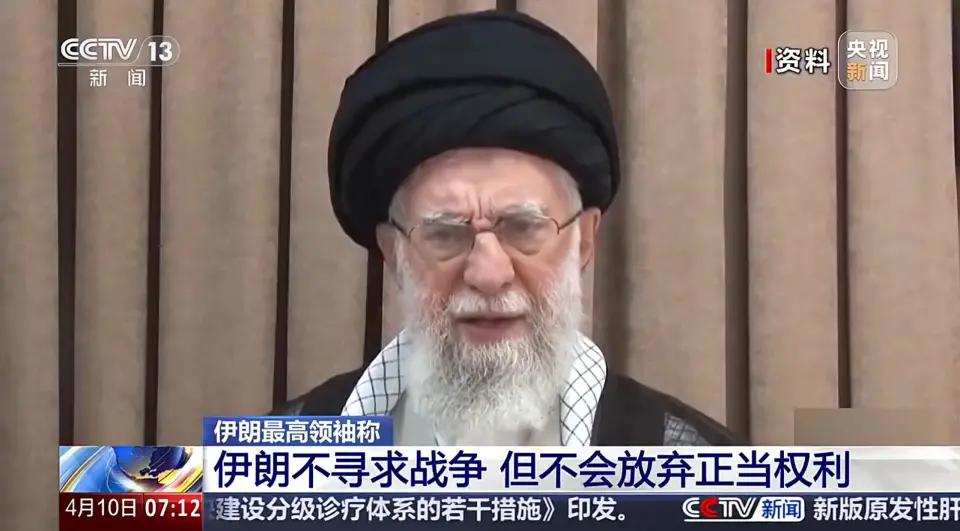
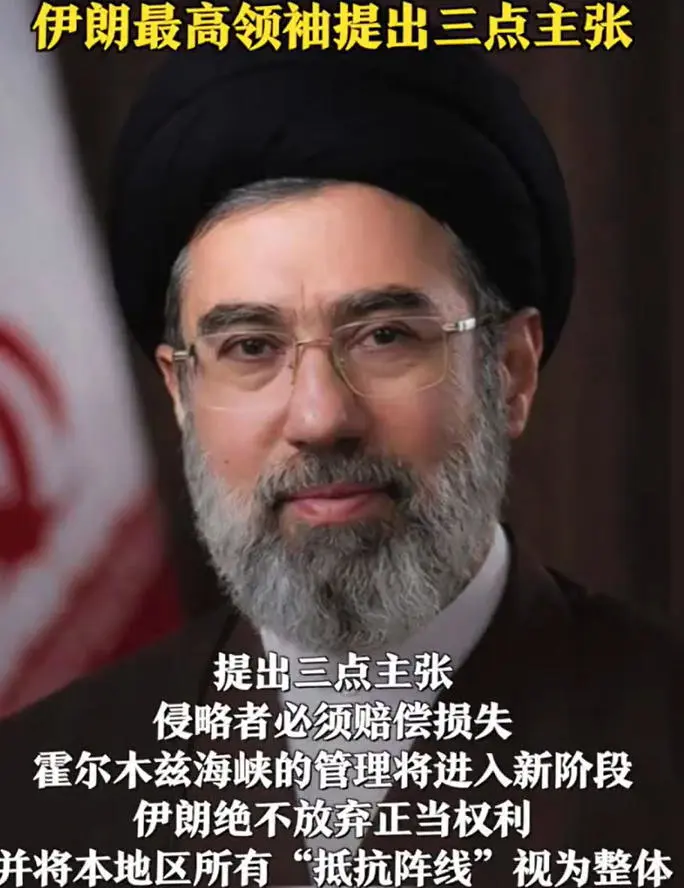
According to him, although Iran agrees to sit down and negotiate with the United States, it does not mean the end of the war. The negotiation table is also a battlefield. Iran will continue to exert its efforts until it completely defeats the enemy. It will be more confident and proactive. The three new propositions proposed this time include that Iran must demand war compensation from the aggressors and vow to collect blood debts for the martyrs; Iran's management of the core Strait of Hormuz will enter a new stage; Iran will not give up all its legitimate rights and will consider all local resistance fronts as a whole.

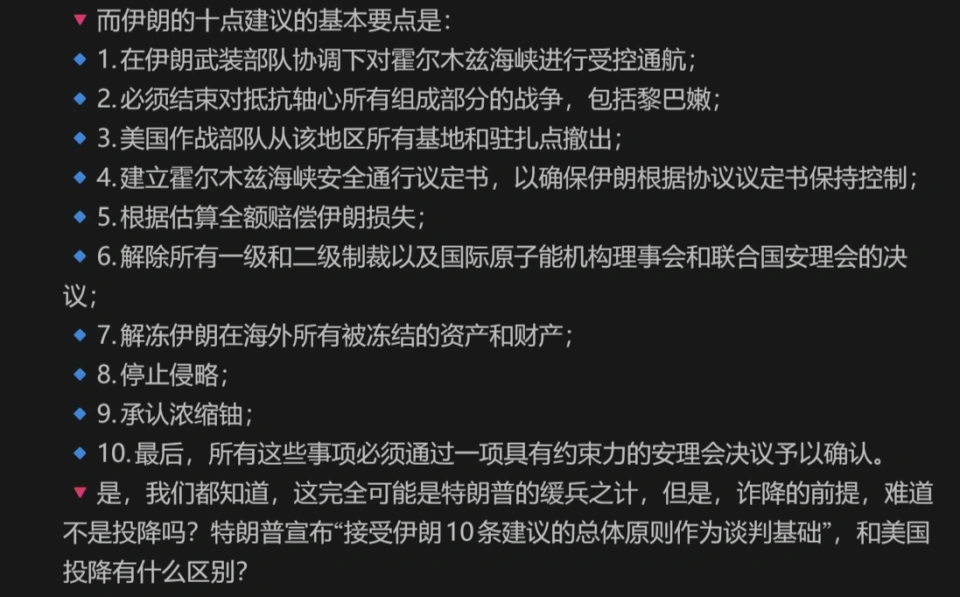
The new three-point proposal is a streamlined version compared to the previous 10-point proposal made by Iran that cannot be changed. It lacks the necessity for the United States to withdraw its troops from various bases in the Middle East, guarantee not to use force against Iran (and obtain guarantees from the international community), lift various sanctions on Iran, and lift the freeze on Iran's overseas assets. From 10 items to 3, in theory, no matter how streamlined it is, it cannot cover all the requirements. Therefore, the new proposition has even been questioned as an initiative to make major concessions.

_伊朗协议25年_伊朗达成协议

Three propositions

伊朗协议25年_伊朗达成协议_

Iran’s 10 demands

As the supreme leader of Iran, he will not express his position easily. The three propositions are obviously based on the needs of the upcoming negotiations. After all, there is always room for negotiation in negotiations, so clear guidance is needed. The original conditions serve as the basis for negotiations but are not completely unchanged, so maximizing benefits locks in the core requirements. However, generally speaking, these three propositions still require relatively large concessions, at least to let the United States feel a certain degree of sincerity before the negotiation. It is a process of trade-offs for both parties, and cannot be set in stone until there is no negotiation.

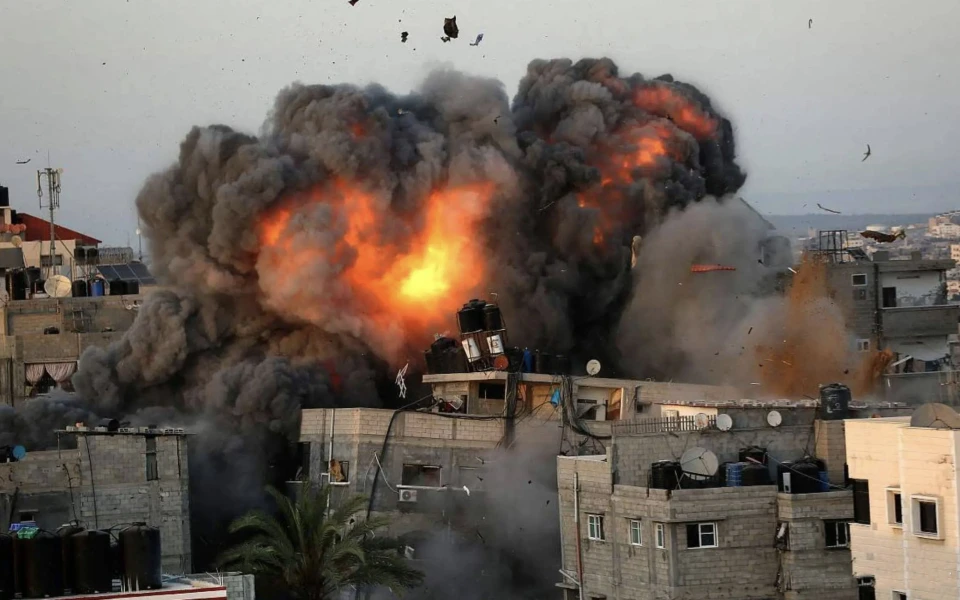
Prior to this, although the United States reached a temporary ceasefire agreement with Iran and accepted the 10-point proposal proposed by Iran. But Trump quickly reneged on part of his promise, saying that he would throw the 10-point plan into the trash. At the same time, Israel was also making small moves, launching large-scale air strikes directly into Lebanon, causing more than 1,000 casualties. That is to say, they did not take Iran's conditions seriously. Hezbollah in Lebanon is a small partner of Iran. At this time, the air strike is to cut off Iran and make it give up.

_伊朗达成协议_伊朗协议25年

Israeli fighter jet

伊朗达成协议_伊朗协议25年_

explosion scene

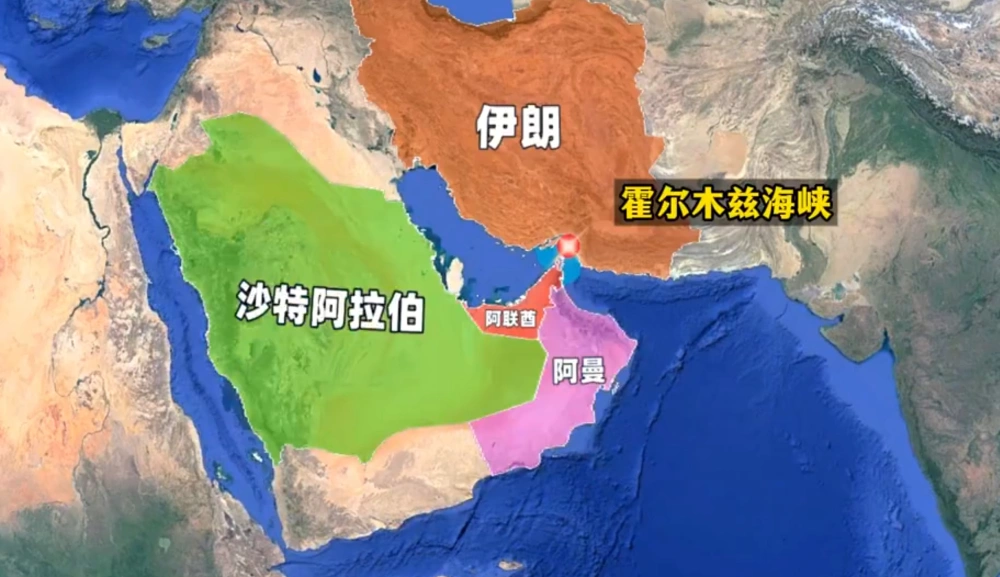
The United States is even more exaggerated, directly proposing to take a piece of the pie in the Strait of Hormuz and cooperate with Iran to control the Strait of Hormuz to collect tolls. All signs indicate that the future negotiations between the United States and Iran will not be easy. At this time, the direction and requirements for the negotiations should be clarified. Therefore, Iran's new leader stated at the critical moment that he was not compromising but sticking to the bottom line.

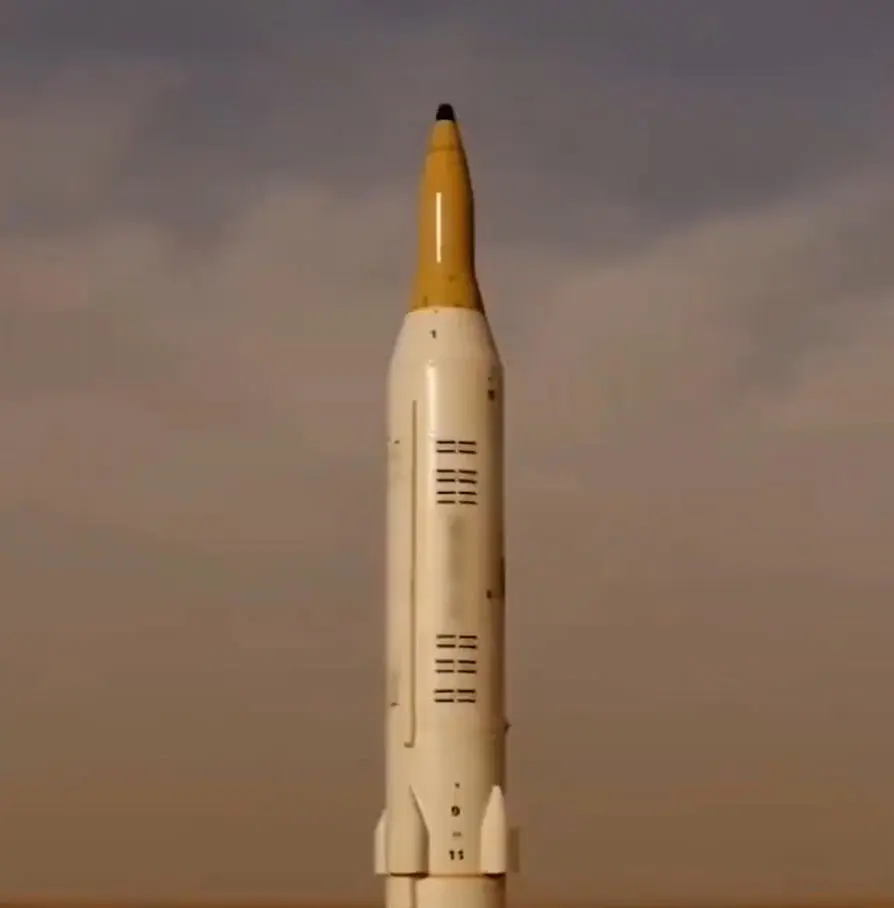
In fact, the United States also has clear requirements that Iran is not allowed to possess nuclear weapons; Iran is not allowed to develop new missiles, and the range of existing missiles must be limited; and Iran is required to cut itself off from neighboring resistance groups. In fact, these conditions are to make Iran abolish its military prowess. The reason why Iran was able to force the United States to the negotiating table in this war was because of its asymmetric advantage of possessing various ballistic missiles. If the United States follows the requirements, Iran will soon be at the mercy of others.

伊朗达成协议_伊朗协议25年_

Strait of Hormuz

伊朗协议25年__伊朗达成协议

iranian missiles

Therefore, we must persist at this time and at least ensure that Iran has sufficient counterattack capabilities. Otherwise, the negotiations are not over yet. After the troops are deployed and ammunition is replenished, a new round of strikes by the United States and Israel may come again. Iran still has the initiative, so it can make some concessions appropriately and sign an agreement with the United States to ensure basic security. Only in this way can the national economy develop healthily. After all, it has been under sanctions for so many years. It is a rare opportunity for the United States to bow its head properly, so it will take the opportunity to finalize and give itself some room for development. As for U.S. war compensation, the possibility is estimated to be basically zero, but this can be used as a premise. It is a strategy to force the United States to make more concessions.

_伊朗协议25年_伊朗达成协议

Strong strength is the guarantee of safety

Vietnam's High-speed Railway Splits 17 Projects And Can Be Designated For Bidding

The Vietnamese government allows the North-South high-speed railway project to be split into 17 independent projects; it is allowed to adopt the form of designated bidding or restricted bidding…

The Vietnamese government issued Resolution No. 98/NQ-CP on April 6, regarding the implementation of Congress Resolution No. 265/2025/QH15, allowing the land acquisition compensation, support and restettlement (tái định cư) content of the North-South Axis High-Speed ​​Railway project to be split into independent projects; adjusting some contents of Annexes I and II of Resolution No. 106/NQ-CP on April 23, 2025.

The largest independent project is the north-south high-speed railway construction line decided to invest by the Ministry of Construction. The goal is to be basically completed by 2035, with an initial total investment of more than 156 trillion VND.

At the same time, there are 15 projects on land acquisition compensation, support, resettlement (tái định cư) and relocation of technical infrastructure projects. According to Resolution No. 98/NQ-CP, the content of land acquisition compensation, support and restettlement (tái định cư) was split into 15 land acquisition and demolition projects with 15 provinces and cities as owners, and one project with Vietnam Electricity Group (Tập đoàn Điện lực Việt The power engineering relocation project implemented by Nam) is expected to be completed in the fourth quarter of 2028.

The Vietnamese government’s resolution allows investment decision-makers to continue to split the above-mentioned projects into sub-projects or independent components to suit the size and characteristics of each road section.

Investment decision-makers do not need to go through the main investment approval procedures and can directly prepare, review and decide on investments. At the same time, they can carry out the construction of resettlement (tái định cư) resettlement areas based on the preliminary design in the pre-feasibility study report.

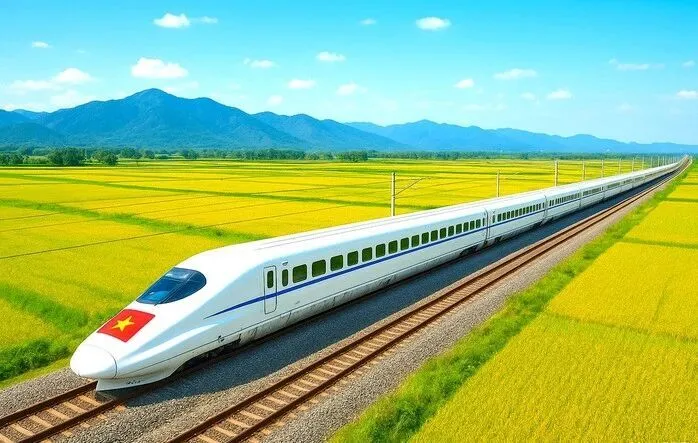
This image may have been generated by AI

_越南南北铁路_越南南北高铁项目始末

Schematic diagram

Regarding land acquisition and demolition, after the owner hands over documents to the local government and determines the actual boundary stakes, land acquisition compensation, support, resettlement (tái định cư) and technical infrastructure relocation will be carried out.

The Vietnamese government also allows the use of designated bidding or restricted bidding when selecting contractors to provide goods, consulting services, construction installation, and EPC (engineering-procurement-construction), EC (engineering-construction), EP (engineering-procurement) and turnkey contracts.

Vietnam’s Ministry of Construction was assigned to work with ministries, industries and localities to guide design consulting units to choose the straightest route possible, ensure technical parameters and adapt to topographic, geological and hydrological conditions to limit adjustments after land acquisition and demolition.

The Ministry of Construction of Vietnam stated that the consulting unit is improving the bidding plan and bidding documents for the survey and feasibility study report of the North-South High-Speed ​​Railway Project. The organization is expected to select the contractor for the preparation of the feasibility study report in the second quarter.

The Vietnam North-South High Speed ​​Railway Project has a total length of 1,541 kilometers, from Hanoi (Hà Nội) to Ho Chi Minh City (TPHCM). It is designed as a double line with a track gauge of 1,435 mm and a speed of 350 kilometers per hour. It includes 23 passenger stations and 5 freight stations; it mainly transports passengers and also meets cargo transportation needs when needed.

The initial total investment is approximately VND1,713 trillion (approximately US$67.34 billion), in the form of public investment, and is expected to be completed between 2025 and 2035.

Sign In

Forgot Password

Sign Up