
Guest Zeng Yanhong In The New Episode Of Zhang Zetian’s Podcast: Talking About The Sixteen-year Journey Of Climbing Mount Everest
After 45 days, Zhang Zetian chose to respect his curiosity, Everest, podcast, Zhang Zetian, Carina Lau
After 45 days, Zhang Zetian chose to respect his curiosity, Everest, podcast, Zhang Zetian, Carina Lau

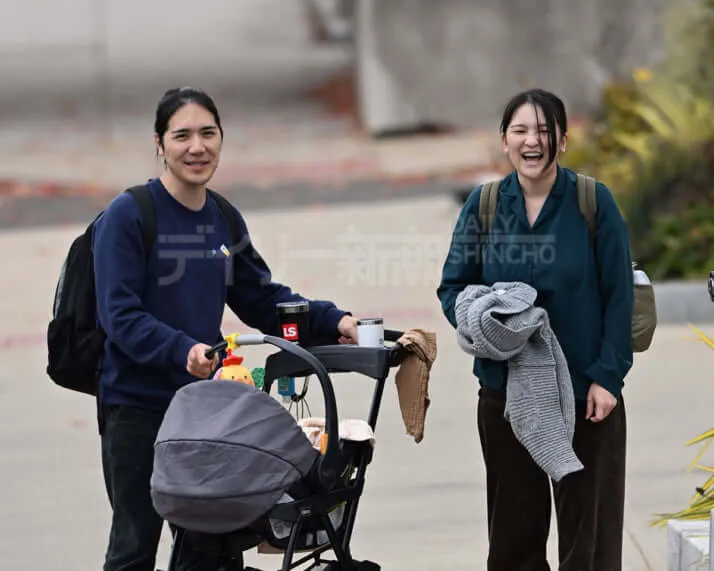
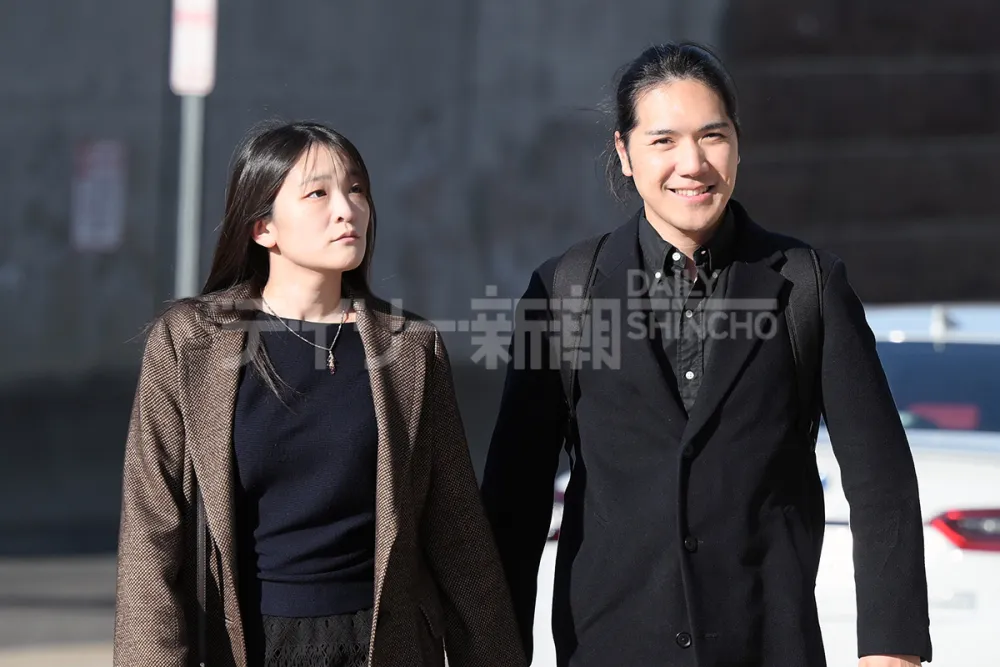
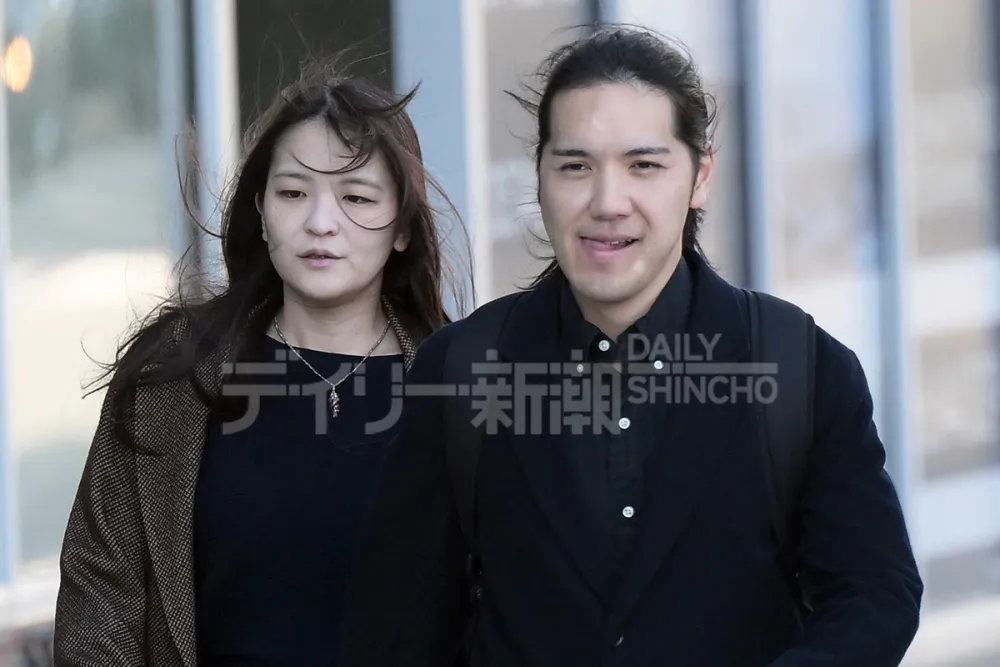
In 2021, Mako Komuro (now 34 years old), the eldest daughter of Akishino Palace in Japan, entered the marriage hall. In just over half a month after submitting her marriage registration in October of the same year, she and her husband Kei Komuro (now 34 years old) went to the United States. Since then, she has not set foot on her homeland, and her life in the United States is now entering its fifth year. After successfully giving birth to their eldest son last year, the family of three chose to settle in Connecticut, which borders New York State. Is the reason why they are reluctant to return to China stem from their pure enjoyment of the free life abroad, or is it because they have been severely criticized by social media and mass media for a long time since announcing the postponement of their wedding in February 2018, and are still trying to "escape reality"? By reviewing the "lessons learned" from those who also chose to leave the royal family and move overseas, we may be able to find out the truth about reality.
The precedent of two former royal families
As the youngest and fifth daughter of Emperor Showa and Empress Kojun, Shimazu Takako (now 86 years old) married his elder brother Hisamazu Hisanagi, a former classmate of His Majesty the Emperor and a member of the Shimazu family, the lord of the old Satsuma domain. After her marriage, due to a job transfer at the Export-Import Bank of Japan (now the Bank for International Cooperation), a government financial institution where her husband worked, she spent a total of six years living overseas in Washington, the United States, and Sydney, Australia.
Takako, who had the title of "Hisashi the Imperial Palace of the Qing Dynasty" before her marriage, was regarded as the perfect model of "Japanese princess" by many women's weekly and other media due to her avant-garde fashionable outfits and elegant manners. She was regarded as a pioneer of fashion trends among the royal family at that time. In 1959, at her coming-of-age ceremony press conference, when she was asked by the media “who is my ideal partner?”, her witty response of “Look at the person I finally choose” instantly became popular across the country and became the most popular catchphrase of the year.
This bold declaration of freedom to break the traditional constraints of the royal family coincides with the eve of the wedding of Her Royal Highness Michiko, the first civilian-born member of the royal family after the war. At this extremely sensitive moment, which is only one month away from the peak of the "Michiko craze", His Highness Takako's bold words not only captivated the young female community, but also attracted as much attention as His Highness Michiko. In addition, the news of their marriage came to light right after this declaration, and the lifestyle of the newlyweds has dominated the headlines of major TV screens and women's magazines almost all year round.
However, as his popularity remained high, Takako began to suffer frequent backlash and criticism from public opinion. Under sensational headlines such as "divorce rumors", the media is often filled with highly exaggerated speculations such as "I had expected this day"; not only that, but also harsh comments such as "please behave more dignified" and "this is the biggest headache for the head of the Imperial Household Agency" are overwhelming. Because of this, life abroad is like escaping into a completely different haven for her - where she is completely free from the high-pressure situation at home where she is always in the public eye. In interviews with overseas media and at press conferences, she once said frankly: "I feel happier here than in Japan because I can finally live a secluded life."
On the other hand, as the fourth son of King Norihiko Higashikuru and the direct grandson of Emperor Meiji, Mr. Toshihiko Tarama was deprived of his imperial status and demoted to a civilian along with other members of the old royal family after the war. After graduating from Keio University in 1951, he went to South America and immigrated to Brazil, where he became the adopted son of the widow of Mr. Tetsusuke Tarama, who had settled there in the early years.
Mr. Tiefu served as a diplomat stationed in Brazil during his lifetime. After his retirement, he purchased property locally and operated agriculture independently. Mr. Toshihiko not only took over the management of a vast coffee plantation in the city of Lins on the outskirts of Sao Paulo, but later moved to the urban area of Sao Paulo and held important positions such as vice president of the Board of Directors of the Brazilian Japanese Culture and Welfare Association, and was deeply active in the Japanese-Brazilian social circle. After that, he married the daughter of an Okinawan immigrant. After having a son, he was officially naturalized and obtained Brazilian citizenship in 1970.
In 2015, the experienced former royal passed away peacefully at his home in Sao Paulo at the age of 86. In the special context of that era when Emperor Showa was haunted by the shadow of war throughout his life and many old royal families were forced to remain silent on war-related topics, Mr. Toshihiko, who was far away in a foreign country, almost completely cut off contact with the Japanese media and spent his 86 years of life peacefully. Ms. Shimazu Takako brilliantly summed up overseas life as "seclusion", which undoubtedly stems from a double spiritual relief: she is far away from the fanatical pursuit caused by the royal family's prominent origins, and she is also completely free from the harsh moral scrutiny that must be endured due to being in the spotlight. This sense of alienation in physical space profoundly reflects the huge irreconcilable contradictions of the fate of the royal family itself.
Aphonia and adjustment disorders
Empress Michiko, who shared a high level of attention with Ms. Takako at the time, suddenly collapsed in the Akasaka Imperial Palace (now renamed Sento Imperial Palace) in Moto-Akasaka, Tokyo, on her birthday in 1993, the fifth year after her accession to the throne. According to official disclosures, the cause was long-term extreme mental fatigue, and she had unfortunately suffered from aphonia at the time. An attendant who served her later recalled: "Her Majesty the Queen endured unimaginable mental pressure at that time, and she felt deeply guilty and guilty about it." These words implicitly pointed out the huge psychological trauma caused to her by the numerous critical reports on the royal family in popular magazines at that time.
Especially in the August issue of "Treasure Island 30" monthly magazine published in July of that year, a blockbuster article titled "Royal Crisis" was published. This anonymous article signed by "Imperial Household Agency Staff" blatantly accuses Her Royal Highness Michiko's private life of being full of "hedonism". Once the article was published, it immediately triggered a violent chain reaction. Other gossip magazines followed suit and published negative content criticizing the royal family. The situation even escalated to the brink of getting out of control. In the end, extreme right-wing elements brazenly shot at the headquarters of the relevant publishing organization and the president's house in protest against the anti-royal reports.
In contrast, the fierce criticism that Empress Masako suffered when she was the Crown Princess is even more well known. Due to her failure to give birth to a male heir to the throne as scheduled in her early years, Her Highness Masako had serious friction with the Imperial Household Agency, which is responsible for royal affairs. Later, she was forced to absent herself from official activities for a long time due to the onset of a full-scale adjustment disorder, and fierce criticism from public opinion swept in like a tsunami. During that period, the online world became the main battlefield for attacking her. On platforms such as a large anonymous online forum that was popular in Japan at the time, a large number of malicious and defamatory posts emerged. These online violence not only focused on the names of His Highness Masako's illness, "shingles" and "adjustment disorder," but also targeted the "personality denial remarks" made by His Majesty the Emperor (then Crown Prince) who defended her, as well as the "temporary cancellation of official duties" due to the recurrence of the disease. Even the one-sided reports published by the then just-started Women’s Weekly website were widely quoted, causing the online siege against the Crown Princess to continue to ferment and cannot be subsided for a long time.
The advent of social media
When time passed to the era when Princess Mako was deeply involved in the whirlpool of public opinion, the well-known social media platform that is now popular around the world has become the absolute center of this storm. When the engagement press conference was held in September 2017, the whole society was filled with overwhelming blessings; however, just three months later in December, "Weekly Women" exposed the complicated "money dispute" between Kei Komuro's mother Kayo and his ex-fiancée, and the trend of public opinion suddenly ushered in a shocking reversal. Sharp criticisms such as "It really doesn't seem that she is choosing her life partner seriously and carefully" came one after another and were overwhelming, eventually forcing the high-profile wedding to be postponed in February of the following year.
Subsequently, Kei Komuro suddenly went to the United States to study in August of that year. Immediately afterwards, Akishino made harsh words at his birthday press conference in November, saying that "if we cannot create a social atmosphere that makes the vast majority of citizens convinced and happy, we will absolutely not be able to hold the traditional acceptance ceremony." This series of changes caused the young couple to suffer more and more criticism, almost out of control. Although Mr. Komuro tried to save the situation and released a 28-page detailed document on the grounds of "providing comprehensive clarification on the misinformation about the so-called money dispute." However, because the document only recorded the dispute process based on the Komuro family's unilateral perspective, it was immediately criticized by public opinion as "the content is extremely one-sided and avoids the important." This move not only failed to calm public anger, but seemed to add fuel to the fire.
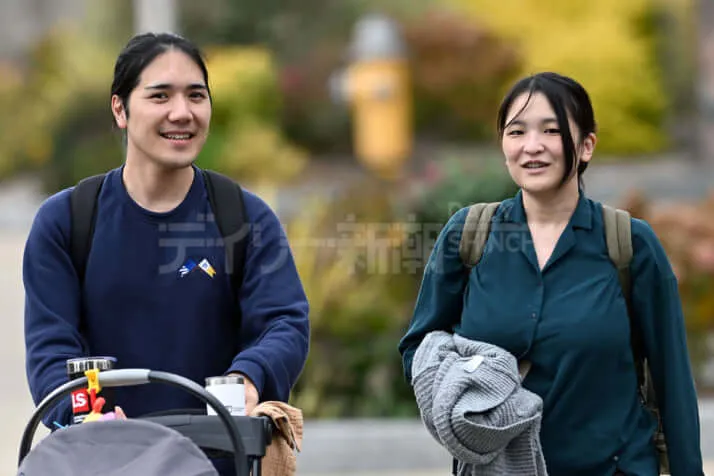
Even more fatally, it was later revealed that the Imperial Household Agency had been deeply involved in the drafting process of this clarification document. This news completely detonated the entire Internet, causing the public criticism to completely go out of control. This long "turmoil" that lasted for four years finally ended with the two of them forcibly registering their marriage and rushing to the United States immediately after the marriage.
A person from the Imperial Household Agency who is well versed in the inside story made the following profound analysis when recalling the tragic situation at that time: “Due to its extremely high anonymity and massive information throughput capacity, online forums are far more destructive than traditional paper media; and modern social media, with its amazing and ever-changing communication power and fermentation speed, can easily spawn terrorism beyond ordinary people’s imagination. The storm of public opinion was terrifying. Regardless of how much of the overwhelming criticism His Highness Mako suffered at the time was unwarranted online slander, the overwhelming psychological impact alone was enough to make any normal person have the decisive thought of fleeing Japan completely."
In addition, a former high-ranking official of the Imperial Household Agency also keenly pointed out the far-reaching social impact of this incident: "In February this year, the expert research group under the Ministry of Justice has reached a clear conclusion: measures to curb insult crimes by strengthening penalties have achieved certain substantive results in dealing with the increasingly rampant online defamation. Today, the entire Japanese society has formed a basic bottom-line consensus - it should never continue Letting go of uncontrolled and unilateral collective online violence on social media. It is undeniable that the direct trigger for the country to strengthen relevant penalties was the tragic incident of female wrestler Hana Kimura who died due to online violence; but the cruel realities that Princess Mako encountered in this storm were also like a heavy hammer, prompting countless citizens to deeply reflect on the advantages and disadvantages of the double-edged sword of modern social networks. "
About the author: Zhaoxia Baoren
Source: 「日本にいるときよりもLuckyせ」と说したancestorも...「小目眞子さん」 5 years old, "female royal family" がバッシングを bathびる background
Police in Bang Lamung District, Chonburi Province, Thailand are investigating a case where human remains were found. A Laotian worker reported to the police on February 25 that he dreamed of a woman begging him for food the night before, and found human skeletons in a coconut grove the next day.

The skeletons were found in a coconut plantation near Khao Song Phi Nong in Takian Tia subdivision.
After receiving the report, Bang Lamung police, together with forensic personnel from the Second Police District, doctors from local hospitals, and personnel from the Rescue Foundation went to the scene to investigate.
The police found scattered human bones in the coconut garden, including a skull fragment, two upper arm bones, a hip bone and multiple smaller bone fragments. Each bone is approximately 40 to 50 meters apart. The police initially estimated that the deceased had been dead for at least 2 to 3 months.
About 10 meters away from the skull, the police found a bag containing clothing containing 6 to 7 items of female products, but it was not yet confirmed whether these items were related to the skeleton.

The skeleton was found by Jamkat, a 23-year-old Laotian worker who worked in the coconut grove. He told the police that when he was watering the coconut trees that day, he found an object that looked like a human skull and immediately ran to notify his employer.
Chankar said that the night before, he dreamed of a woman with a bobbed hair and wearing white clothes approaching him and saying, "I'm very hungry, please give me rice." The woman in the dream also told him that she was 26 years old, and he was trying to find food for her in the dream.
After discovering the skull the next morning, he associated it with a dream and believed it was a woman's spirit that led him to the remains.
A resident who lives near where the upper arm bone was found told the police that his dog had been holding and chewing on a bone for several days, but it was not until the skull was found and the police arrived that they realized it was a human bone.
The resident said he was shocked. He had never smelled the smell of decomposing corpses or noticed anything unusual before.

All skeletal fragments found have been sent to the Institute of Forensic Medicine for a detailed autopsy to confirm the identity and cause of death. Initial assessment revealed that the skull was small and had features similar to those of a female skull.
Police said the scattered bones may have been picked up and chewed by stray dogs, as there are a large number of stray dogs in the area.
According to Thai media reports, investigators will search the scene again to look for other skeletal remains that have not yet been found.
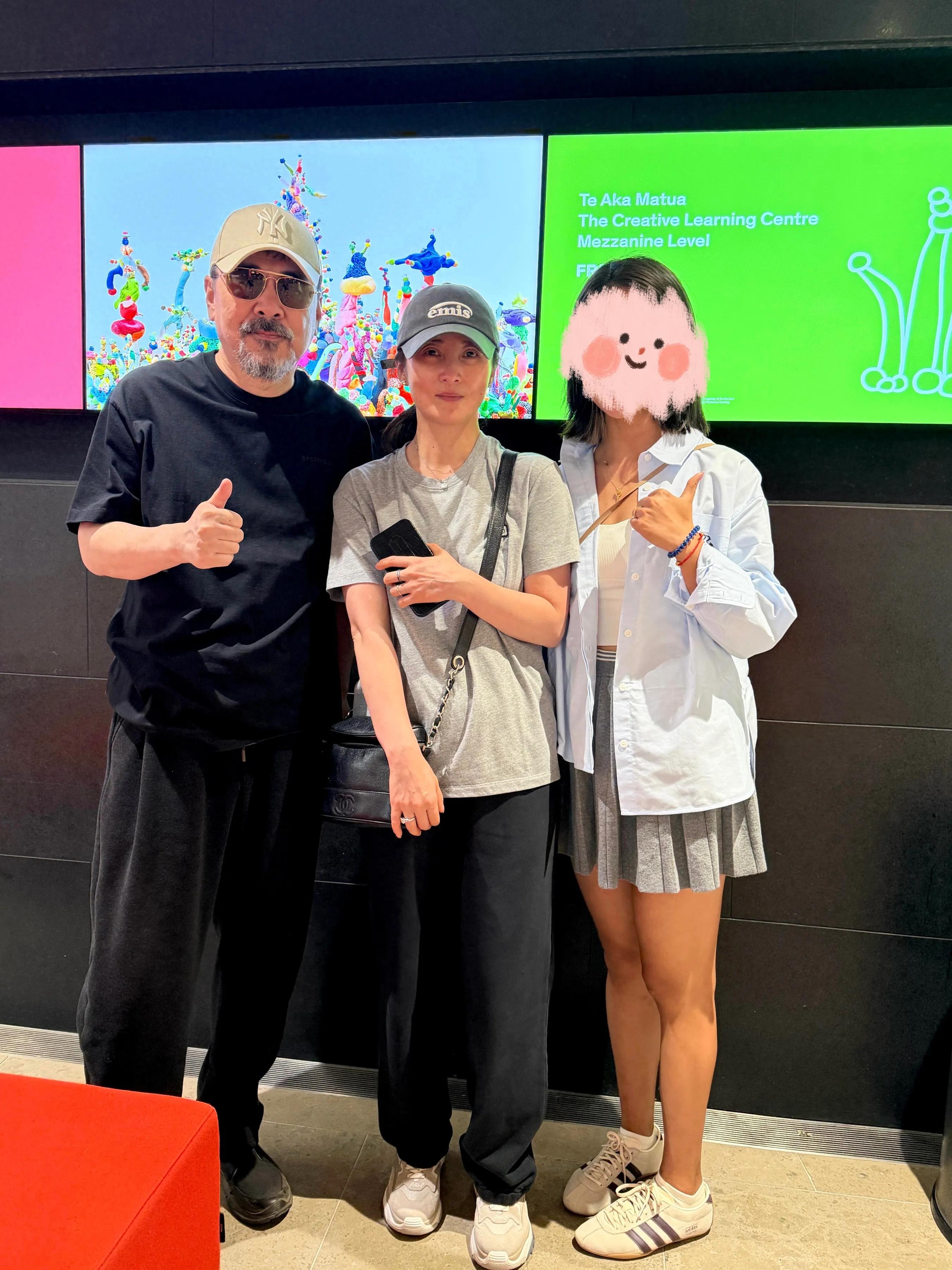
On February 11, some netizens posted photos of Chen Jianbin and Jiang Qinqin who met Chen Jianbin and Jiang Qinqin on vacation in New Zealand. In addition to their two sons, Chen Jianbin’s mother was also traveling with them. The family of five looked warm and relaxed while traveling.
In the morning of that day, some netizens met their family by chance at the art museum and took a group photo with Chen Jianbin and Jiang Qinqin. The couple looked very easy-going. Jiang Qinqin was wearing a gray T-shirt and black trousers, dressed casually. Chen Jianbin wears a black T-shirt and trousers, and wears sunglasses to cover his face. He has a gray beard. He looks very different in age from Jiang Qinqin, but in fact, the 55-year-old Chen Jianbin is only 5 years older than the 50-year-old Jiang Qinqin. It can only be said that Jiang Qinqin takes good care of himself and his beauty is always online.
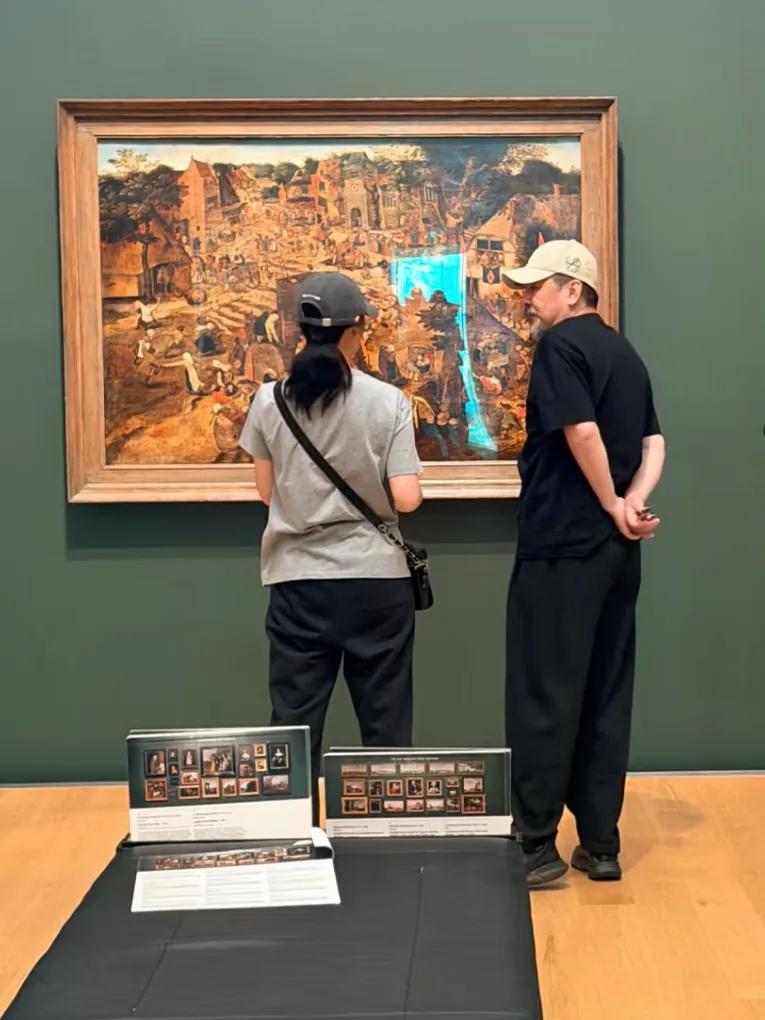
After visiting the art museum, Jiang Qinqin bought souvenirs for his family in a souvenir shop. Chen Jianbin, his mother and two sons were sitting in front of the shop waiting. I saw Mother Chen wearing a white top, sitting next to her eldest grandson, smiling and looking very kind. I felt that Mother Chen was younger than her son.

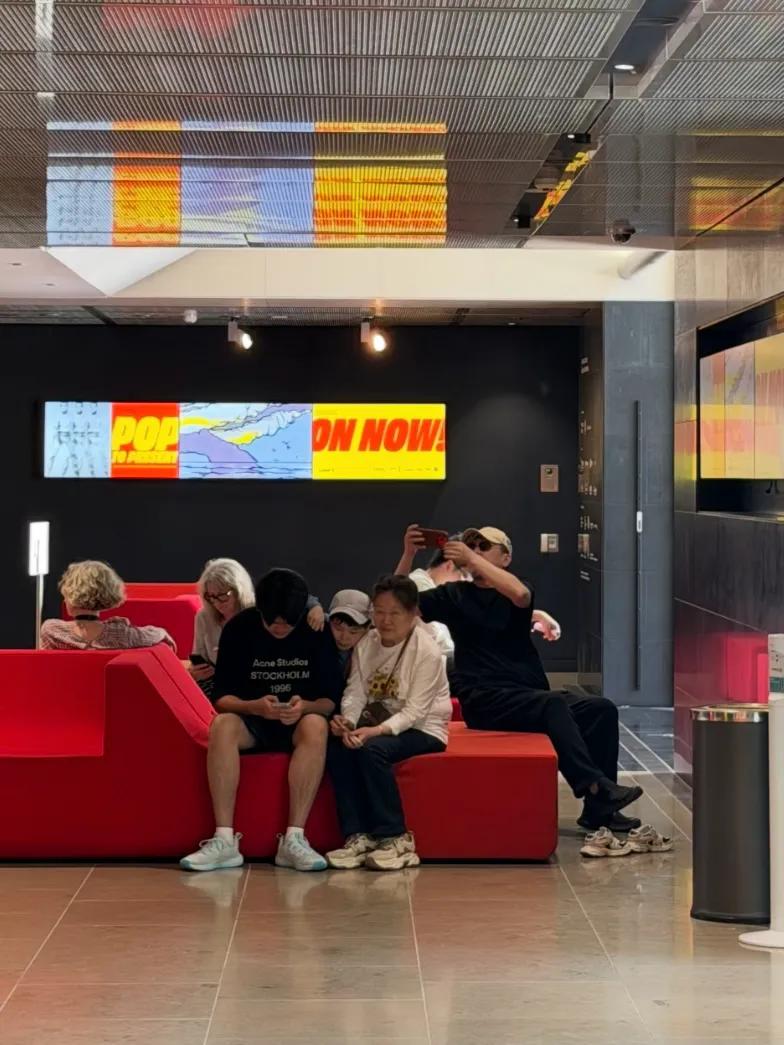
Sitting next to his grandma, Tiger was playing on his mobile phone. He was wearing a black baseball cap, a black T-shirt and shorts. Although he was sitting, it could be seen that the 19-year-old was very tall. The 7-year-old son, Qiang Qiang, was hanging on the shoulders of his grandmother and brother from behind, peeking at his brother playing on his mobile phone. It can be seen that the two sons and grandma are very close. The picture of the three of them in the same frame is warm and loving. Chen Jianbin, who was sitting in the back, couldn't help but take out his mobile phone to take a picture of this loving picture.

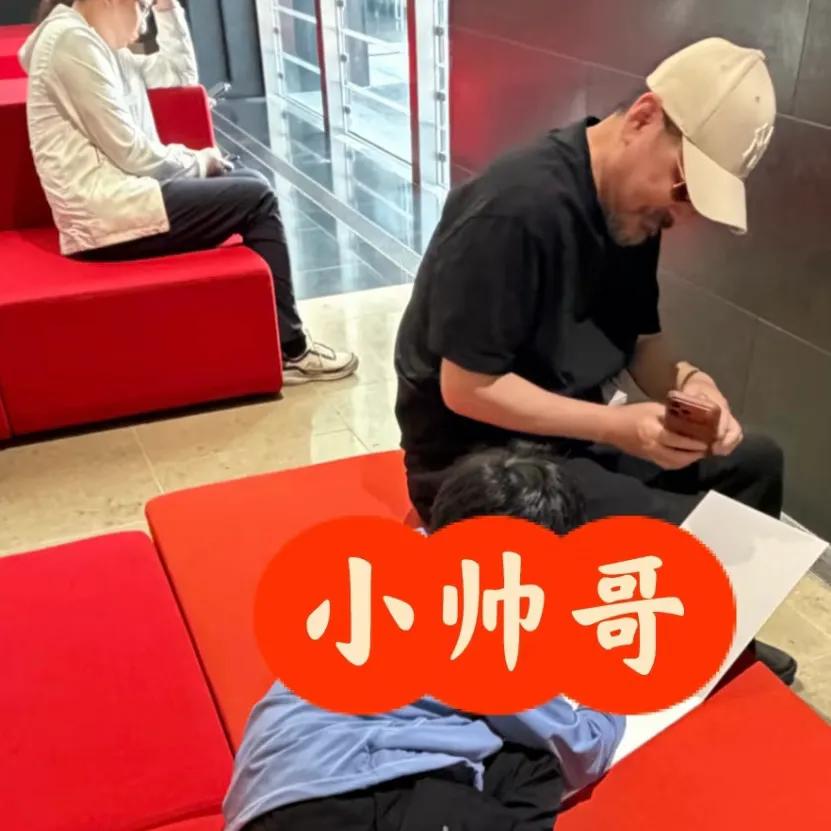
The younger son is lying on the sofa with a drawing book and drawing. Chen Jianbin, who is bored, is also taking various selfies or taking pictures of his son. The father and son have a warm interaction.

Later, some netizens met their family by chance on the roadside. Their two sons were walking on the roadbed. The eldest son Tiger was walking in front, Chen Jianbin was guarding the younger son, and Jiang Qinqin was taking pictures and recording with his mobile phone. Netizens said that without the celebrity halo, they looked like ordinary people traveling as a family, which felt very warm.

Author|Jolene
After 45 days, Zhang Zetian's personal podcast "Xiaotianzhang" has been updated again. Under the trailer, she wrote: "New Year, let's climb the mountain together."
After the first episode of the conversation with Carina Lau aired, both Zhang Zetian and her fledgling personal podcast fell into controversy. Many people were surprised by her continued updates, but what was even more unexpected was that the person sitting opposite her this time was not a celebrity or a business celebrity.
In the recording studio, Zeng Yanhong (Ada) was wearing a black jacket and red running shoes. Once she fell into memories while narrating, she couldn't help but make gestures. The 48-year-old is from Hong Kong and was a middle school teacher. In 2021, Zeng Yanhong climbed to the top of Mount Everest in 25 hours and 50 minutes, becoming the first person in China to quickly climb Mount Everest. In 2017, the Hong Kong SAR government awarded her the "Outstanding Leader" award.
In the 66-minute podcast, Zeng Yanhong talked about her sixteen-year climbing journey: from a promise to students in the life education class, to countless failed summit attempts, to being seriously injured after experiencing an earthquake in Nepal, to climbing Mount Everest multiple times and setting a world record for speed climbing. It took her seven years to climb Mount Everest, and she saw the true face of life in nature while getting along with the snow-capped mountains.
She believed in climbing itself. Do whatever you are doing, and the next goal will emerge on its own. Looking back on her experience of wandering on the edge of life and death at high altitudes, Zeng Yanhong said: "The only thing I can't do is give up."
Zhang Zetian in the public impression seems to belong to two different worlds from the snow-capped mountain climbers. The title of the program gives people a strong sense of contrast.
In fact, during the conversation with Carina Lau, Zhang Zetian mentioned his experience of trying hiking in Bhutan and Longji in Hong Kong. It was also during the mountain climbing process that she met Zeng Yanhong.
In the self-introduction originally released on the "Xiao Tian Zhang" podcast, Zhang Zetian had already shown his interest in outdoor sports. In that two-minute audio, she hoped to communicate with people who had different life experiences and discover different ways of living.
However, the number of views of this introduction on the Little Universe APP is less than half of that of the conversation with Carina Lau. Most people may still follow the stereotype and think that this is a "rich wife's living room" that Zhang Zetian uses to build his own IP.
Inviting Zeng Yanhong was a smart choice. Zeng Yanhong is extremely talkative and can speak fluent Mandarin. She is an atypical and inspiring example of the "middle girl era": from a middle school teacher to the first woman in Hong Kong to climb Mount Everest, she has completed a huge identity leap, faced nature and the limits of life and death, and has endless rich stories.
In this program, Zeng Yanhong, who has a story, becomes the protagonist. As an "outdoor novice", Zhang Zetian listened and asked questions along her memories. Over the course of 66 minutes, she plays the role of a medium, rarely revealing her own ego: the story of her life already carries enough weight.
However, compared with the previous episode, there is no longer an obvious sense of "one party dominates" the dialogue in the second episode. This time, Zhang Zetian gave the spotlight to the guests, but he was not completely carried away by the other party's rhythm. Many comments found that she showed obvious improvement.
Maybe it’s still because of the topic choice. The first issue was about the broad life of celebrities, while the theme of this issue is a specific action that Zhang Zetian himself has performed: climbing. She clearly has a greater curiosity for details based on shared experience.
For example, Zeng Yanhong mentioned that there are dozens of ropes of different colors when going down the mountain. Some of them were old ropes from previous climbing seasons and were at risk of breaking, so she needed to focus on choosing new ropes. Zhang Zetian became interested in this detail: Since there are such clear risks and there is a professional team responsible for the road ropes, why not remove the old ropes?
This is not a simple question. Even Zeng Yanhong, who has climbed Mount Everest many times, remains curious about it. Based on her own climbing experience, she speculated that it was because of the weather: some teams made an emergency descent due to a snowstorm and may not have the conditions to clear the ropes they left behind in time.
Zhang Zetian chose specific and truly interesting topics, which gave her a desire to explore. Her thirst for knowledge kept her seizing the opportunity to throw the ball, and the other party would catch it and throw it back to her. The richer response gave the snow-capped mountains, which are still far away from most listeners, a more concrete image in the recording studio.
In recent months, the unexpected emergence of the "Ao Tai Line" has brought outdoor sports into more people's horizons. These accident videos show that countless people have given climbing too much worldly meaning: traffic, attention, group honor, economic interests...
Nature is pure, but humans are not. Mountaineering has always been a highly commercialized activity, especially the extremely expensive high-altitude mountaineering extreme sport. In just two decades, the total number of climbs on Mount Everest has increased nearly 10 times, transforming it from the mysterious highest peak on earth into a multi-million dollar industry.
However, in the recording studio, the climbing in Zeng Yanhong's words returned to the simple action of life itself. Before everything started, she was a middle school teacher, responsible for life education classes, teaching students how to treat themselves, their friends and the world in practice. She once rode across the Sichuan-Tibet Line and looked up at Mount Everest, feeling it was unattainable. In the first class, Zeng Yanhong asked her students to set life goals. Instead, the students suggested that she climb Mount Everest: If the teacher could even go to Mount Everest, they would dare to think about anything.
Zeng Yanhong agreed immediately and started learning ice climbing and rock climbing. In order to save her salary to pay related expenses, she kept only three sets of clothes and cycled 15 kilometers to and from get off work: "When you want to do something, you have to choose a lifestyle that allows you to get the result. So I welcome the difficulties that I have to face, whether it is money, time, experience or experience, all aspects are lessons that can be taught to students."
Seven years later, she reached the top of Mount Everest. Someone left a message and replied: "I'm very touched. I always thought that climbing Mount Everest was a matter of national will or a show off of the rich. I didn't expect that there is such a spiritual practice."
But the price Zeng Yanhong paid for this included leaving the starting point of everything. She had to resign from the school because mountain climbing delayed her classes: "If I had known at that time that setting this goal would cost me my job, I definitely wouldn't have set this goal."
In the end, Zeng Yanhong decided to leave her job and go to Mount Everest. She has a habit of agreeing first and then forcing herself to solve all problems, and feels that this motivates herself to a certain extent: "I rarely study clearly before saying whether to agree or not. I will ask myself whether I am very interested, and if I am interested, I will agree first. I think this is human nature. If you think about many things slowly, you will definitely not do it in the end."
Zhang Zetian feels the same way about this: "There are many things that after thinking twice, you find that you can't do them. But if you don't care about the three, seven, twenty-one, and take that step first, it seems that sometimes the road will be cleared."
After the first issue of "Xiao Tian Zhang" was launched, both Zhang Zetian and her fledgling podcast were caught in a storm of public opinion. After a month of silence, the second program she gave also had some "act first, talk later" "reckless" energy.
In the interview, Zhang Zetian mentioned an article written by Lindsey Vonn after she was injured in this year's Winter Olympics: "The only failure in life is when you don't try." She also needs to fulfill the promise made in that introduction to her own curiosity and diversity in life.
Zeng Yanhong mentioned that after successfully climbing Mount Everest, her excitement only lasted a few seconds. She had no distracting thoughts during the climb. She only took a photo but did not post it on WeChat Moments. Even though funds were tight, she never accepted commercial sponsorship because she believed that it would burden herself with excessive expectations: just like climbing Mount Everest is not the end, you still need to descend to the base camp, after you come down from the top in life, you have to go to the next destination.
To a certain extent, Zhang Zetian's summary of this also reflects her psychological process of being under public scrutiny in the past month: "Being too perfect or too imperfect is not the real you. In many cases, only you know who you really are. But it is difficult for me to do it, because everyone knows me, and it is difficult for everyone to see the truest state. But you must know in your heart who you are, where you are, and what others say is true and what is false."
"Never put yourself in your position in the eyes of others, otherwise you will lose yourself." This is Zhang Zetian's ideal state. She also frankly admitted the distance from her goal: "I can't do it, but I will still post (in Moments)."
Snow Mountain welcomes climbers of all backgrounds equally. She chose the medium of podcasting because it is inclusive enough: it can accommodate both in-depth interviews and natural chats. People with different purposes can explore and gradually grow in the process of preparation and listening.
In any case, the second episode has been launched. Many people are still speculating, where will "Xiao Tianzhang" go in the future?
In the two-minute introduction when the podcast was launched, Zhang Zetian envisioned a very diverse direction: she wanted to talk about entrepreneurs and share the latest business information. This is obviously the hottest trend in the podcast industry in this age of knowledge anxiety. Of course, as most people expect, she can also use her network advantages to run the "Rich Wife's Living Room" and conduct interviews with celebrities in the entertainment industry to gain direct traffic. However, she also wants to follow her curiosity and learn about different lives.
After 45 days, Zhang Zetian finally chose a more difficult but more sustainable path: she decided to respect her desire for knowledge, communication and expression, and turned the camera on amateurs like Zeng Yanhong who use their lives to write stories.
During the conversation, she talked about the live broadcast of Alex Honnold, the "god of free climbing", free climbing Taipei 101. It wasn't an overnight process or an impulsive decision, Alex had over thirty years of professional training. Not only did he hone his skills, he also had to deal with the instinctive fear of danger within the human amygdala.
Zhang Zetian described the process this way: "He did not choose to suppress fear, but chose to face it head-on. Through repeated practice, he expanded his comfort zone, completely dissipating fear, and became more and more confident. Step by step, he only focused on the point on his hand."
So detailed, it seems that I feel the same way. Faced with the fear of being watched and judged, what Zhang Zetian can grasp is to do a lot of homework. She was new to outdoor sports, so she watched related documentaries: "Aftermath: Mount Everest and the Nepal Earthquake", "Freehand Rock Climbing", and "Barehand Taipei 101 Climbing: Live Broadcast".
The 2015 Nepal earthquake caused psychological trauma to many climbers, and many never returned to the snow-capped mountains. After miraculously escaping from death and undergoing a year of recuperation, Zeng Yanhong decided to climb Muztagh Peak, which is slightly lower in altitude. After success, she planned to return to Mount Everest in 2017. This is done to tell students that the closer they are to their goals, the more reasons they have to give up. However, Zeng Yanhong believes that she will only consider giving up when she touches her principles: for her, the only principle is life. Now that he's fully recovered, "I can't see a reason not to go."
Zhang Zetian quoted "Dead Poets Society": the maverick teacher, and the students who stood at the table to support him. She understands that feeling: in essence, everything Zeng Yanhong does is to educate and influence lives. Even if it does not happen in the classroom, this is the value that has been internalized in the climber's life. But she still couldn't help but ask: "But I am also a mother and a daughter. I would imagine that when encountering such a thing, the feelings of a relative are very complicated... Have you two discussed it?"
Even if we have not personally reached the edge of life and death, people still have empathy. Zhang Zetian, who has done his homework well, leaves the stage to the other party, does not judge, only listens, and concentrates on being the bridge between ordinary listeners and climbers.
Zeng Yanhong mentioned that she made an impulsive decision in 2014: the five-year agreement with the student was about to expire, but she still had no successful mountaineering record. In order to give her students an explanation, she still went to Mount Everest. An avalanche occurred at an altitude of 3,300 meters. She waited at the camp until the last day and was eventually forced to descend. Zhang Zetian asked: "How did you feel when you encountered something like this when you went to Mount Everest for the first time?"
Zeng Yanhong thinks it’s normal: “When you do something, you probably won’t succeed the first time.”
Instead, she hopes the process will be "as long as possible." "You can come again next year. Because I haven't given up yet, it's not over yet, and you (students) aren't over yet either."
Near the end of the program, Zhang Zetian asked Zeng Yanhong: "When will you start thinking about your next goal?"
Zeng Yanhong said: "If you do the job, responsibility, and identity at hand well, the next goal will emerge by itself."
"Xiao Tianzhang" will find his goal in time, and so will Zhang Zetian.
As of October 30, 1 Bitcoin is equivalent to approximately RMB 785,000-791,000. The price fluctuates in real time, with the highest price in the past 30 days exceeding RMB 815,000. Purchases can be made through compliant exchanges: first register an account and complete identity verification, add a bank account and other payment methods, search for Bitcoin on the transaction interface, enter the amount and confirm the purchase to complete the transaction. We will introduce it in detail below.

What is Bitcoin? How did Bitcoin appear?
Bitcoin is a decentralized virtual currency that uses blockchain technology to secure transactions and control the generation and management of currency. Bitcoin has become one of the most valuable virtual currencies currently.
Bitcoin and Blockchain Technology – Bitcoin’s transaction records and currency generation are maintained and managed by a public database called the blockchain. Bitcoin transactions and management do not rely on any central organization, but are conducted through a decentralized peer-to-peer network.
The emergence of Bitcoin can be traced back to 2008, when a mysterious person or team using the pseudonym "Satoshi Nakamoto" published a paper titled "Bitcoin: A Peer-to-Peer Electronic Cash System", which introduced a decentralized digital currency system - Bitcoin.
On January 3, 2009, the first Bitcoin block was mined - Block 0, also known as the "Genesis Block", and contained the following text: "The Times 03/Jan/2009 Chancellor on brink of second bailout for banks." This text is the title of an article in The Times about the British government's failure to stimulate the economy after 2007-08. Most people think this is to prove that the block was produced after this date, but some think it is to express some political point.
How many yuan is one Bitcoin equal to?
For the recent btc market, you can view this link
As of around 15:00 on October 30, 2025, there are differences in the price of 1 Bitcoin against the RMB displayed on different platforms, and the mainstream quotations are concentrated in the range of 780,000 to 791,000 yuan.
Among them, XE platform data shows that 1 Bitcoin is equivalent to approximately 790,511 yuan, the OKEx trading platform quoted price is 784,038.90 yuan, a decrease of 2.37% within 24 hours, and Trading Economics shows that the exchange rate is 785,365 yuan, an increase of 0.52% from the previous day.
This price difference is due to factors such as platform liquidity, transaction fees, and real-time market fluctuations. Judging from the recent trend, the price of Bitcoin in the past 30 days has reached a high of 815,410 yuan and a low of 767,170 yuan, with a volatility of 1.41%. The price fluctuations within 24 hours are more obvious. The OKEx platform shows a volatility of 5.3%, with the highest reaching 807,165.96 yuan and the lowest falling to 766,548.53 yuan. In the long term, the price of Bitcoin has increased significantly, with an appreciation of more than 52% in the past year, reflecting its characteristics of high volatility and long-term appreciation potential.
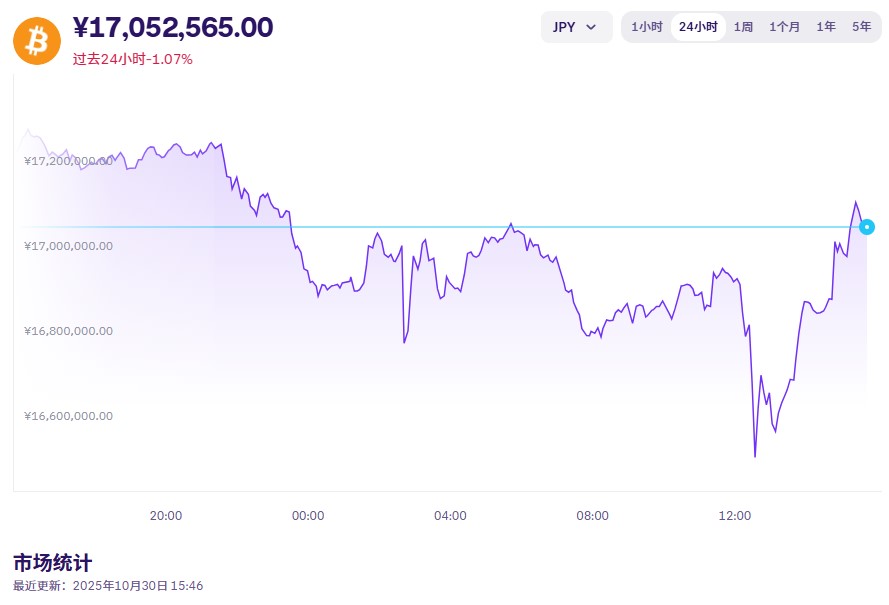
The most complete historical price breakdown of Bitcoin since its birth. The advantages and disadvantages of Bitcoin. Bitcoin exchanges.
Binance (official registration, official download) is the world's largest cryptocurrency exchange, with the largest market share in contract and spot markets. It supports perpetual contracts and delivery contracts, with a maximum leverage of up to 125 times.

OKX (official registration official download) stands out for its rich futures products and Web3 integration. In addition to perpetual futures, OKX also supports options.

Bybit (official registration official download) supports futures and options, has a user-friendly interface, and does not require initial KYC.
Bitget (official registration, official download) is strong in copy trading, and its interface is optimized for Asian traders.
BingX is a beginner-friendly exchange that features social trading and KOL signals.

KuCoin supports futures on multiple altcoins and memecoins without KYC.

MEXC is known as the "Altcoin Futures Paradise" and requires no KYC.

Gate.io (Official Registration Official Download) stands out with its large number of tokens and futures delivery.
LBank is growing rapidly in Asia and supports futures with a simple interface.

Buy Bitcoin on Binance Exchange 1. Register an account
Visit Binance.com, click the "Register" button, fill in your email or mobile phone number, enter the SMS verification code to complete the verification, then set a security password and click "Next". Complete registration.
Step 1: Enter the Binance official website or open the Binance App (official registration, official download). For Apple devices, use overseas ID to download.
Step 2: Click [Register/Login] on the homepage.
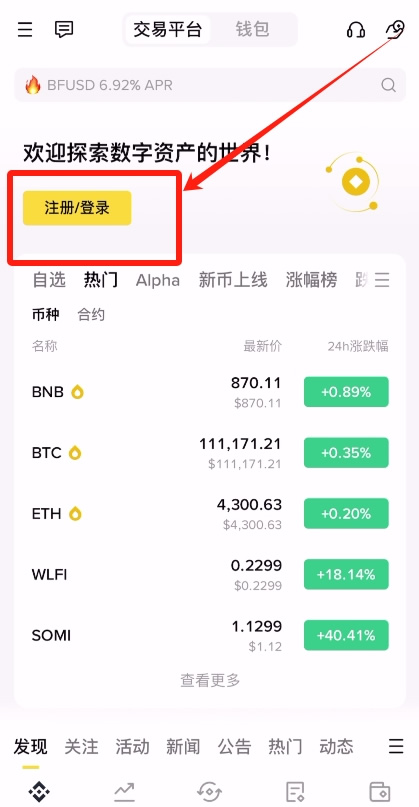
Step 3: Click [Create Binance Account] here below.
Step 4: Here we can use email or mobile phone number to register. We can see the mobile phone number and China’s area code + can also be registered.
Step 5: Here I will use email for demonstration, enter our email here, and then click [Next].
Step 6: At this time, Binance will send a verification code to our email. We will go back to the email to check and then enter it.
Step 7: This time we come to the password creation page. We create a password according to his requirements. The requirement is more than 8 characters, including at least one number and at least one capital letter. Click [Next].
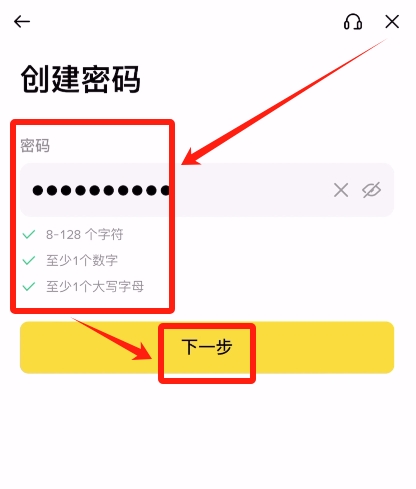
Step 8: At this time, our account is successfully registered. It asks us "Do you have an inviter?" Here we must select "Yes", and then enter A0Y8K980 in the invitation ID. Using this invitation code to register will allow us to permanently enjoy a 20% discount on handling fees in subsequent transactions. We click [Next].
2. Real-name authentication
Step 9: At this time, our Binance account has been successfully registered, and we will jump directly to the identity authentication page. Identity authentication is also very simple. It is nothing more than filling in and confirming our personal information, then uploading the front and back of our ID, and finally performing a face detection. After completing the identity authentication, we can use Binance’s various trading functions.
Step 10: Bind Google Authenticator or Binance Authenticator to enable two-step verification (2FA) to ensure account security
Google Authenticator or Binance Authenticator: These time-based one-time password (TOTP) authenticators are highly recommended. Bind in "Security Settings", scan the QR code or enter the key, and add the generated 6-digit dynamic password to the App. This dynamic code must be entered during sensitive operations such as login and withdrawal.
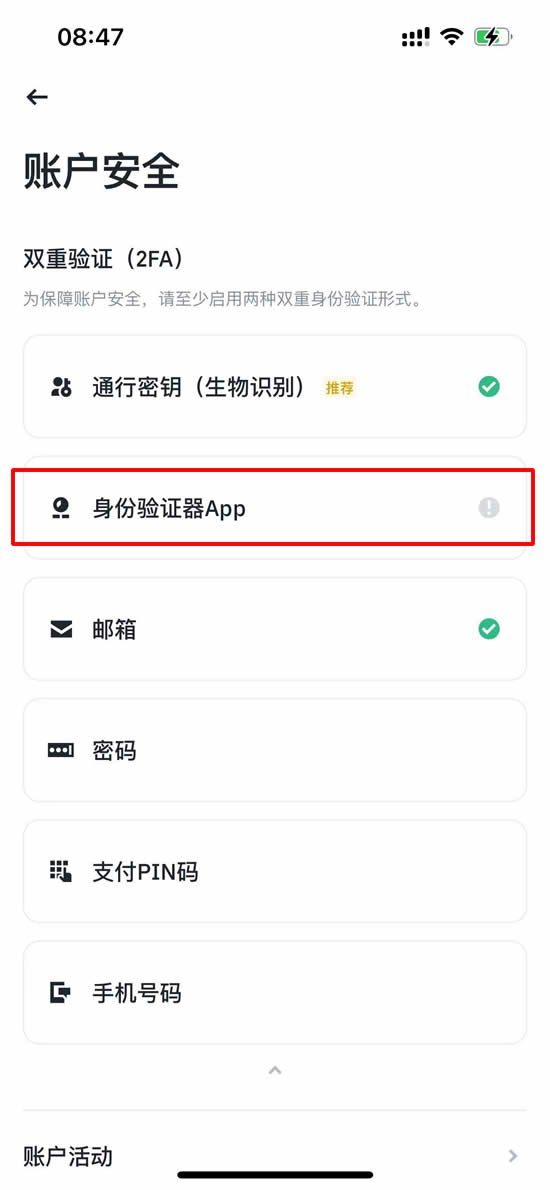
Step 11: Make sure you have installed the Binance Authenticator APP on your phone and click on it.

Step 12: You will then see a 16-digit key on the screen. Please keep this key in a safe place. If you lose your device, this key will allow you to recover your Binance Authenticator account.
Click and go to the Binance Authenticator app.
Step Thirteen: Paste the 16-digit key or enter it manually. Below you can create a custom name for your account, which is useful when adding multiple accounts to Binance Authenticator. Click [Continue].
Step 14: You will then see a 6-digit code.
Step 15: Return to the Binance APP and verify your setup request using the newly enabled Binance Authenticator. Click
Next step
, enter the 6-digit code from Binance Authenticator, and click.

Step 16: After enabling Binance Authenticator, you will need to enter the verification code when logging into your account, withdrawing funds, etc.
3. Buy USDT fiat currency
Step 1: We open the app home page to add funds
First we need to buy USDT. You can click [Add Funds] on the Binance homepage and click [C2C Transaction].
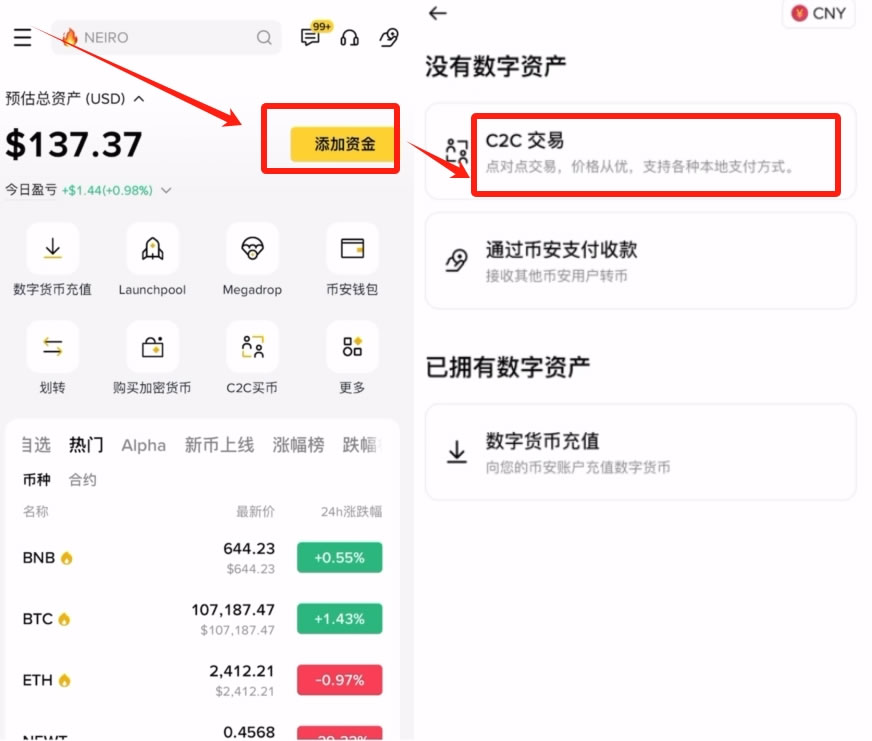
Step 2: At the top, we select [Self-selected area]. The self-selected area is C2C person-to-person transactions. Select [Buy] and the currency to be purchased is USDT. You can understand USDT as the U.S. dollar in digital currencies. You must use USDT to purchase other digital currencies. Then enter the amount you want to purchase. For example, if I want to buy 1,000 RMB USDT, I would select 1,000 yuan and click [Confirm]. The next step is the payment method. Use whichever method you are used to paying. It supports Alipay, WeChat, bank debit cards and QQ wallet. For example, if I am used to using Alipay, I will check "Alipay" and click [Confirm].
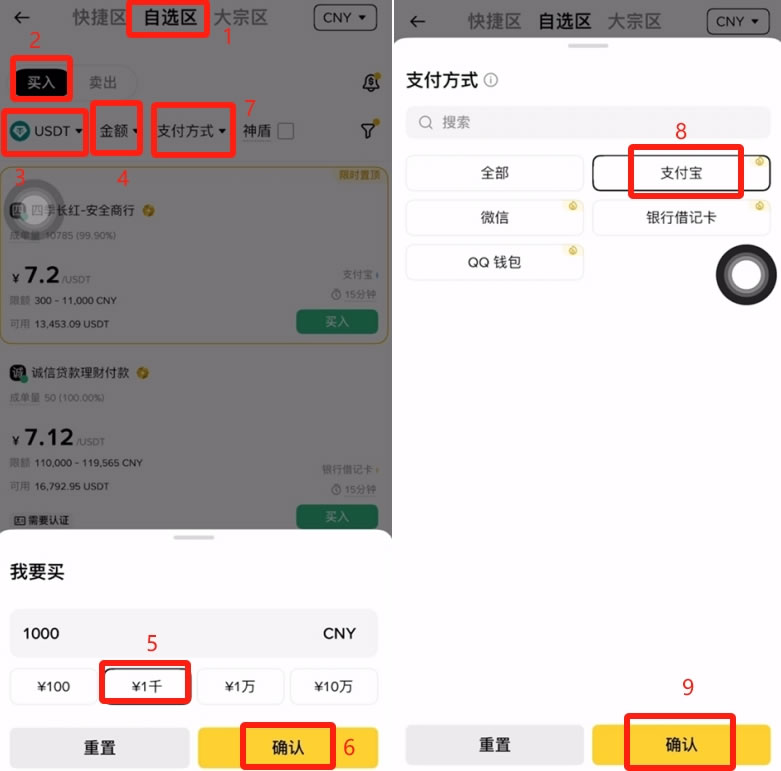
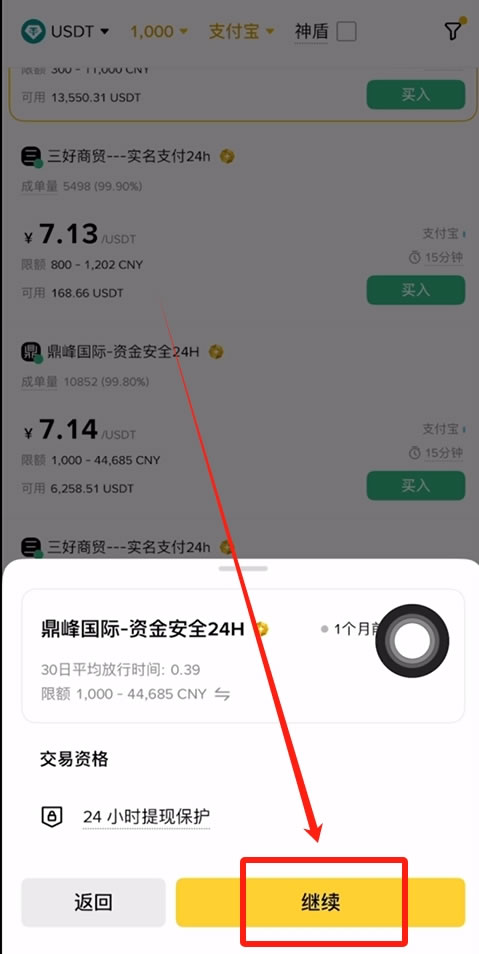
Step 3: The Binance platform will screen merchants that meet the requirements for us. We try to find merchants with high order volume and transaction rate to make purchases. For example, "Dingfeng International" has a transaction volume of 10,000 orders, and its favorable rating is 99.8%. This company is still relatively high. We can buy from this company and click [Buy] at the end.
Step 4: Click [Continue].
Step 5: Enter the amount we want to purchase again and click [Place Order].
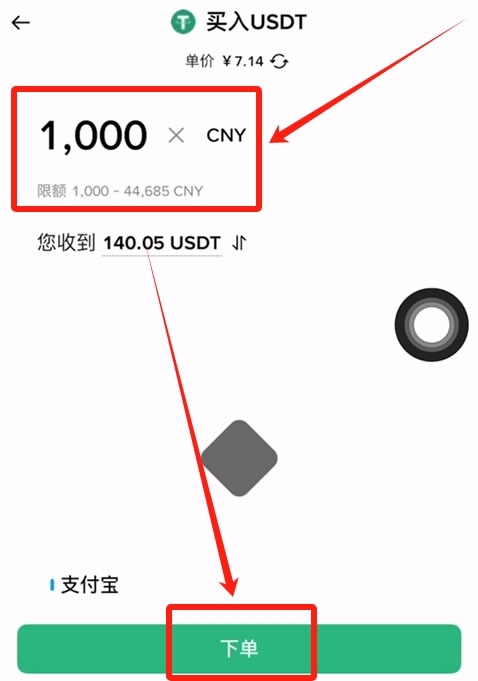
Step 6: Then we transfer money to the other party according to the payment method provided by the merchant. After transferring the money, click [Upload Proof of Payment]. Take a screenshot of your payment interface, and then we will wait for the seller to verify receipt of the money and then transfer the coins to us.
Step 7: The USDT we bought will be in the capital account. We click [Assets] in the lower right corner and find "Account". We can see that our funds are in the capital account. You can click "Transfer" here.
Step 8: Transfer our money from the capital account to the spot account, select USDT as the currency, transfer all, and click [Confirm Transfer].
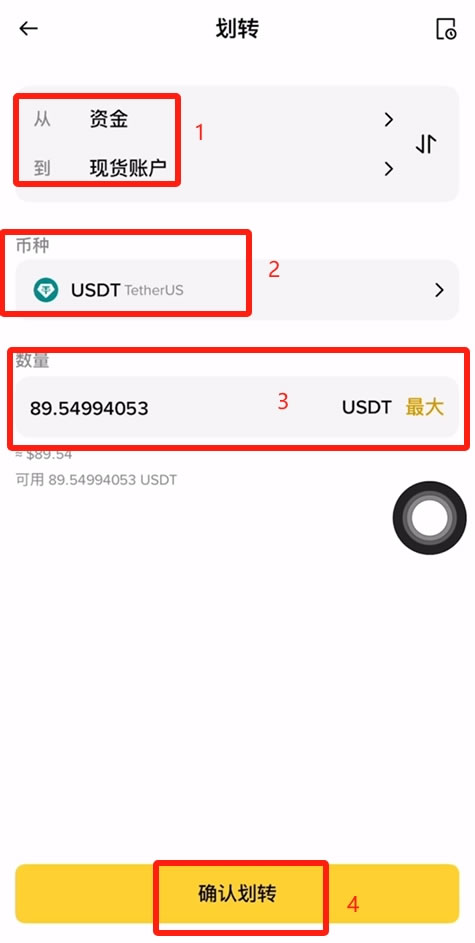
4. Buy Bitcoin
After the fiat currency recharge is successful, select "Spot" on the "Transaction" page, and search and select a Bitcoin trading pair (such as BTC/USDT). Enter the purchase quantity, select the "Buy" button, and complete the transaction.
Since the handling fees for limit order and market order purchasing methods are different, the handling fee for market order will be slightly more expensive than that for limit order. If you are not in a hurry to buy, you can use a limit order to place a pending order to buy.
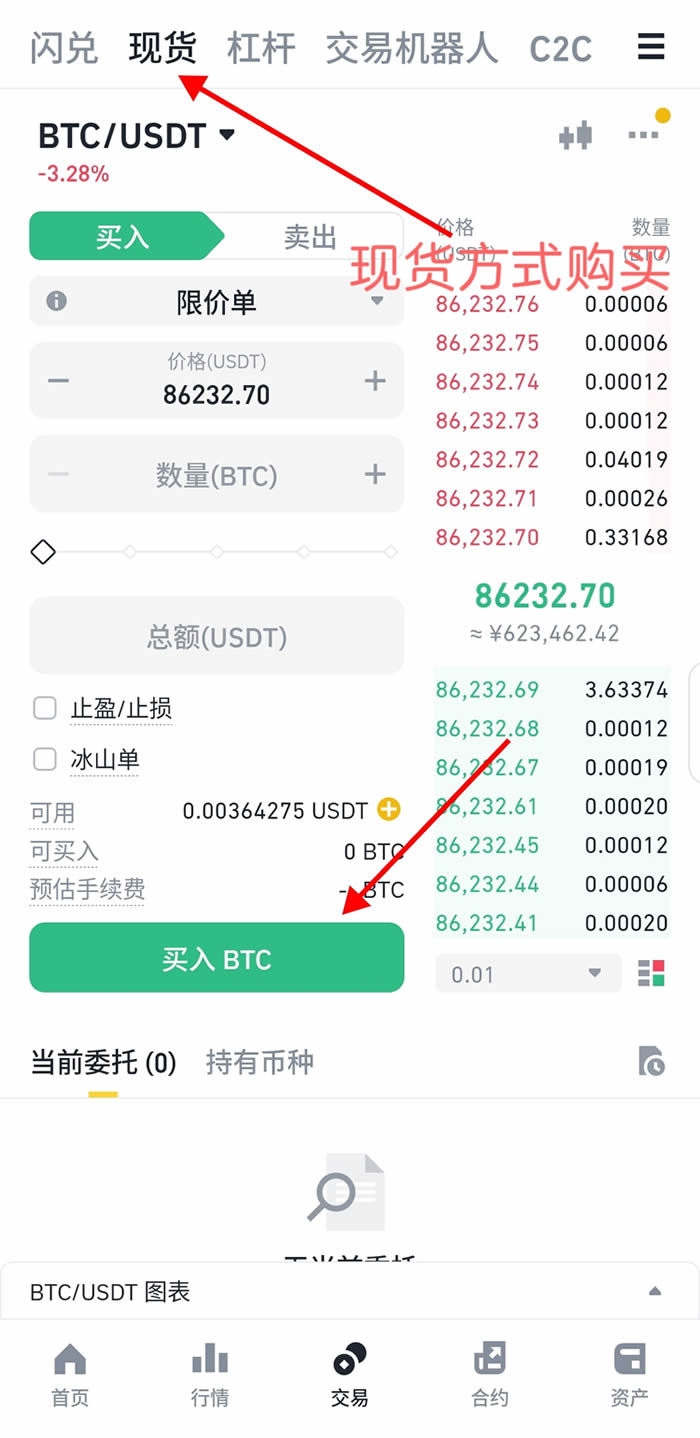
5. Instant Bitcoin Exchange
In addition to the above purchases through the exchange market, Binance also provides a flash swap method to purchase Bitcoin. This method does not charge a handling fee, but only supports some mainstream currencies. Go to the "Flash Exchange" page in "Transactions" and you can directly exchange fiat currency for Bitcoin without charging a handling fee.
6. Withdraw money and leave the market
If you wish to sell the purchased Bitcoins and exchange them for RMB. Then you only need to sell the Bitcoin into fiat currency (USDT) and sell it in "c2c trading".
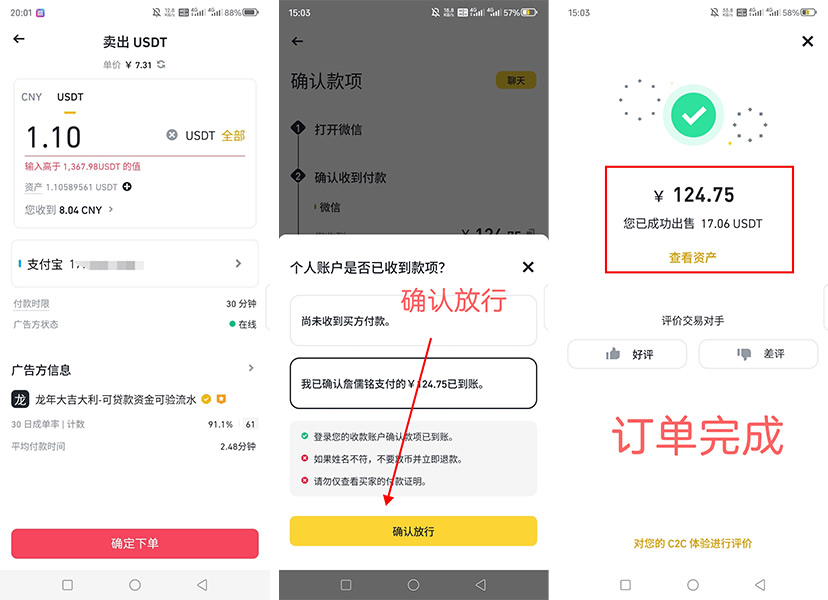
Purchase Bitcoin via P2P (C2C) method
Note: Since Bitcoin is a higher-priced currency, the selling limit varies from seller to seller. Before purchasing, please select the price limit that supports the purchase amount. For example, if you want to buy 20,000 yuan, you can choose a merchant that supports the price limit between 10,000 yuan and 40,000 yuan.
How to use Bitcoin?
According to how it is used, Bitcoin can be divided into two types: investment and payment:
How to make money trading Bitcoin?
There are currently 3 ways to make money by trading Bitcoin:
Risks of investing in Bitcoin
There are three common risks of investing in Bitcoin:
Related Questions Is Bitcoin money?
Bitcoin is not money in the traditional sense. Currently, the public generally believes that Bitcoin is a virtual asset. The money we usually call, or legal currency, is actually supported by government power. There is no evidence that any government is using its own government power to prop up Bitcoin as so-called "money."
How much does Bitcoin cost initially?
When Bitcoin was first released in early 2009, the price was 0.
The first transaction that gave Bitcoin a quantifiable value occurred in October 2009, when Martti Malmi, a Finnish computer science student, sold 5,050 Bitcoins for $5.02, with each Bitcoin worth $0.0009. Based on the Bitcoin price of US$29,000 on May 4, 2023, the current value of these Bitcoins is more than US$140 million, approximately NT$4.5 billion.
On May 22, 2010, Bitcoin was used for the first time in the transaction of real commodities. Laszlo Hanyecz from Florida posted on the bitcointalk.org forum asking if anyone would order him two pizzas for 10,000 Bitcoins. After purchasing two pizzas worth approximately $41 from Papa John's, the price per Bitcoin reached $0.0041. Since then, May 22 has been known as "Bitcoin Pizza Day", and many Bitcoin enthusiasts and companies celebrate this holiday every year. Calculated based on the Bitcoin price of US$95,000 on December 29, 2024, these 10,000 Bitcoins are currently worth approximately US$950 million, or approximately NT$28.5 billion.
Is investing in Bitcoin safe?
Like all other investments, Bitcoin's high returns come with high risks. Taking the following 3 risk prevention measures can help you reduce the risk of investing in Bitcoin:
So far this article is about how much RMB is one Bitcoin equal to in 2025? How to buy? This is the introduction of the article. For more detailed introduction to Bitcoin, please search Script House’s previous articles or continue to browse the relevant articles below. I hope you will support Script House in the future!
NetEase Entertainment reported on June 10 that the fourth episode of "Riding the Wind and Waves" will be broadcast on June 10. In this issue, Tan Weiwei and Cyndi Wang are in the same group after group selection. They will collaborate on "Mountains and Seas" on the second stage. The two have been actively rehearsing.
When talking about the concept of the program "Mountains and Seas", Tan Weiwei believed that of the two of them, "one is harder and the other is softer, just like I am the mountain, she is the sea, and we are each other's mountains and seas." Cyndi Wang also agreed.
Talking about the rap in the song, Tan Weiwei said that she can imagine how handsome Cyndi Wang would be when she sings rap: "I am already like that. I am no longer amazing when I perform this song, but I have to make her (Cyndi Wang) amazing. This is my only purpose."
In this regard, Cyndi Wang said: "Actually, I still want to keep myself." When the host asked "Do you get tired of singing sweet songs?", Cyndi Wang firmly said no. "I can only say that sweetness is my characteristic and not my baggage." She said frankly, "Of course I will work hard to change on this basis, but I don't want to change just for the sake of change. That is not like me, and I am not being myself." Tan Weiwei also nodded in agreement.
Netizens in the comment area expressed great expectations for the collaboration between the two.
Recently, Cyndi Wang's performance of "Love You" on the first stage of "Riding the Wind and Waves" triggered many netizens' youthful memories and sparked heated discussions.
Related reports: Is Cyndi Wang’s popular “Riding the Wind and Waves 3” better than the first two seasons?
NetEase Entertainment special article reported on May 27 (Text/Rong) In the past week, "Riding the Wind and Waves 3" dominated the hot searches almost every day. Most of them were contributed by Cyndi Wang. Many people haven't figured out why #王cyndi is popular again#, but they have already been infected by "Love You", which dominates the charts on all major platforms.
However, objectively speaking, Cyndi’s popularity has little to do with the show itself. After all, her front-facing scenes in the first episode of the show totaled less than 4 minutes, which is far behind Yu Wenwen, who has a complete story line, not to mention Ning Jing and Na Ying who are featured throughout. Her emotional explosion came more from the recent domestic entertainment renaissance craze, but it was quickly captured and amplified through such a short appearance on the stage.
As the new episode aired this week, Cyndi Wang unsurprisingly increased the number of scenes. With the determination of the one-centimeter group, the overall appearance of the program has gradually become clearer.
Although this season has the Cyndi effect that detonated the circle, the Douban score of this season's "Riding the Wind and Waves" is only 6.8 points, which is still significantly lower than the 8.5 points of the first season. Netizens have mixed reviews. Some people love it very much, while others are disappointed. The reason is that this season is very different from the previous two seasons in terms of selection and competition system. Many changes and upgrades are subversive. While challenging the thinking of old viewers, it also gives the show a new perspective and appearance as a whole. One or two episodes is not enough to draw an early conclusion. It will take time to verify whether these changes are a success or a failure.
Competition format: The suspense is getting bigger due to the lack of a big sister
The first two seasons of "Sister Lang" each had a big sister who couldn't be ignored - Jing Jing and Na Ying. In their respective seasons of the show, they enjoyed the popularity of the stars and the pleasure of being able to be themselves. From the moment they appeared, they were destined to become the core figure. Even if they were not the first ones, no one would dare to covet them. Regarding the direction of the rankings, there was no suspense from the beginning.
But in the third season of "Riding the Wind and Waves", there are no contestants like Ning Jing and Na Ying who dare to speak out and are full of drama. Even Zhang Qiang, who has been in the show for 37 years, is a person who does not compete or compete. She does not feel domineering and does not have her own core aura.
So, what will you do if you don’t have your eldest sister?
The program team came up with a good idea: invite the eldest sisters from the first two seasons!
Since there is drama between the two of them, let the audience watch it all at once. It was definitely not appropriate to come back to compete again. The program team gave them the title of senior sisters and asked them to lead the team to victory.
Ning Jing and Na Ying also lived up to their trust. As soon as they appeared on the stage, they rushed to compete with each other to compete with each other. When it came to selecting and competing for talents, they even staged a "gong scheming". They immediately attracted all the contestants of this season and gave the show the centripetal force it needed.
In the third season without the big sister contestants, the core position becomes less important. The suspense of who will stand on the winning spot in the end becomes greater, and it is very difficult to predict: does it depend on ability? Popularity? Or is it the ability of the eldest sister who leads the team? Let’s continue reading this.
An obvious change this season is that the concepts of "women's team" and "group" have been weakened. From the beginning to the end, there is no mention of the final form of the team. It just states that "the final winning seats of this season will be determined by the results of the two senior sisters and the two teams. The number of winning seats will determine how many new members will stand on the podium."
Note that this is "podium", not "debut into a group". So will it end up being a recognition conference? This is another question mark.
However, this season has indeed weakened the concept of competition and canceled the judges' scoring and professional comments on the first stage. The tension is much less, which is why many old viewers feel that it is "unsightly".
The conflicting point in the first issue is not about scoring, but about who can become the captain. What is more tested than professional ability is a person's ability to organize troops and market himself. And what kind of person the sisters who have gone through ups and downs in the entertainment industry are willing to accept the leadership is also one of the highlights.
Therefore, compared with the "Older Version of Produce 101" competition in the previous two seasons, this season is more like a reality show variety show. People and performances are finally integrated into one. It is no longer about performing to get a good score in the competition, but to truly show what you want to show most. In this process, who has helped you, led you, inspired you, or beaten you... This process is the focus of this season.
The four stages set up this season include singing stage, singing stage, singing show stage, and singing and dancing stage, which also means that singing and dancing for girl groups is no longer the only option. Here, you can sing, dance, perform, play musical instruments... unlimited gameplay can maximize the charm of the sisters.
Selection: They are all sisters with stories
The selection of this season did not follow the standards of a girl group like the first season, nor was it like the second season, which seemed to be a stage for becoming popular and re-employing... Instead, we carefully selected sisters from all walks of life with stories to take to the stage and tell everyone their stories through performances.
There are powerful singers such as Tan Weiwei and Xu Ruyun, as well as principal dancers Zhu Jiejing and Tang Shiyi, as well as rock circle veterans Zhang Qiang, childhood idol twins, Wang Cyndi, and Winter Olympic champion Xu Mengtao... These are all women who shine individually, and they all have a lot of experience. They came to Sister Lang not to become members of a certain "girl group".
Instead, many people come to this stage, either to prove themselves or to make up for past regrets. Just like this season's slogan "Happiness at Thirty", the sisters this season want to make themselves happy more than how to please the audience.
This can be seen from their song selection for the first stage. Almost every performance can condense one's current state of mind and inner expression.
For example, Wu Jinyan, although many people suggested that she dance, she still chose to dance the ballet she had learned since she was a child. Because she said that her career of studying ballet in the past ten years did not bring her confidence, and she would stand at the edge of the stage every time she performed. "I don't know much about the light on the stage, and what it feels like to stand there. On the stage of Riding the Wind and Waves, at least a minute and a half is reserved for myself. I want to take a look and see what the light in the middle looks like."
Xu Ruyun, who is famous for her "cloud-style singing", changed her soft style and chose self-playing and singing with a dark and independent temperament. She said, "I chose this song because I hope to break some of their inherent impressions of me. Although I am not very good at physical dancing, I can coordinate my finger jumps."
Tan Weiwei, who debuted in Super Girl, has put down her competitive mentality this time. She said that her biggest regret when she first debuted was that she forgot to enjoy the stage and the music. "More importantly, I want to see how many fans came today and how many lights were held up. Why didn't I? I was very anxious. Sixteen years later, the sisters have a sense of being in the scene together. When I have this opportunity, I must go and enjoy the stage and not be disturbed by other things around me."
And Cyndi Wang, who became popular as soon as she debuted on the stage, recreated her look when she danced in the "Love You" music video. Her brisk dance steps and sweet smile are still as sweet as a girl, making people forget that she is almost forty years old.
After many years of failed transformations into sexy and mature, Cyndi Wang finally reconciled with her label of "Sweetheart Leader", "If I am still on crutches at the age of 80, dancing to "Love You" and "Rainbow Smile", I can still be called "Sweetheart Grandma", which is actually pretty good."
Rather than saying that everyone was attracted to Cyndi Wang again by her memories, it is better to say that through her performance, the story she presented on this stage was re-accepted by everyone today. A 30+ girl who is not cool, cool, or even smart is actually charming and cute.
Women should not conform to the stereotypes of the outside world. As they grow older, they must be mature and stable. Women can live any way they like and do whatever they like. This is what time has taught us.
Mode: A great fusion of classic variety shows, there’s always something you love
The third season of "Riding the Wind and Waves" is like a collection of various classic variety shows. The music part brings together professional singers at the "Singer" level, as well as the rock scene of "Summer of the Band". Cantonese singers like Myolie Wu and Sit Kai-chi come to "The Sound of Life" every minute. Things like Guo Caijie's Gothic white-voice singing, Liu Lian's jazz and kazoo performance, Xu Ruyun's dark playing and singing... all make this stage much richer in musicality.
As for the reality show part, the embarrassing scenes brought about by Yu Wenwen are comparable to the reappearance of "Flower Flower 2". Neither Ning Jing nor Na Ying wanted to choose Yu Wenwen. Na Ying's reason was: "I don't know her at all and I'm afraid I won't be able to manipulate her." Ning Jing's reason was: "Wen Wen is like me in the past, and I can't hold her."
Facing the two eldest sisters, Yu Wenwen didn't know whether he was naturally upright or had poor emotional intelligence, so he continued: "What can't you hold on to?"
The air froze for a moment. Comments all said: "Sister Lang's recipe, the taste of Hua Shao". This kind of annual embarrassing scene with a subtle atmosphere between celebrities has only been seen in "Flower Flower 2".
Na Ying added: "Because Wenwen doesn't like to chat much, I'm afraid I won't be able to manipulate you."
Yu Wenwen was still able to continue: "What should we do?"
Na Ying, who is used to seeing big scenes, has never seen such a character, so he can only make a fuss: "Then you can choose whoever you want."
In the end, Yu Wenwen ended up in the Serenity Group. Ning Jing was very anxious when she didn't find the ideal candidate. She held a meeting with members in the middle of the night to steal people.
I have to say that the competition between Ning Jing and Na Ying in the first episode was a bit like "Extreme Challenge". One is "smart" and the other is "stupid". Ning Jing's side has already arranged various formations. Na Ying's side has not yet understood the competition system... but the "smart" one has never been able to take advantage and has not been able to choose what he wanted. The so-called "stupid" seems to be one of the tactics. With the broadcast of the second episode, the brain-burning song selection grouping session between the two made the horse-grabbing variety show full of effect. Ning Jing used small things to fight for big things. She used her acting skills to deceive Na Ying and got what she wanted without any effort. Na Ying was surprised. The two sisters' battle of wits and courage had a strong dramatic effect and was full of fun to watch.
After the second episode was broadcast, it instantly occupied many hot search seats. However, it is not surprising that the third season of "Riding the Wind and Waves", which combines so many classic variety show models, can arouse so much discussion. After all, there has been nothing more interesting to watch recently.

 China’s Digital Currency Is Coming Soon, What Is The Connection And Difference Between It And Virtual Currency?2026-03-03Comments(0)
 Admission Scores And Recommended Major References For Tianjin Communications Vocational College In 20262026-02-23Comments(0)
 Shanghai Driverless Taxi Operation, Intelligent Connected Vehicle Testing And Application Space Expansion2026-02-13Comments(0)
 Copyright-free Free Video Material Website 1-102026-02-26Comments(0)