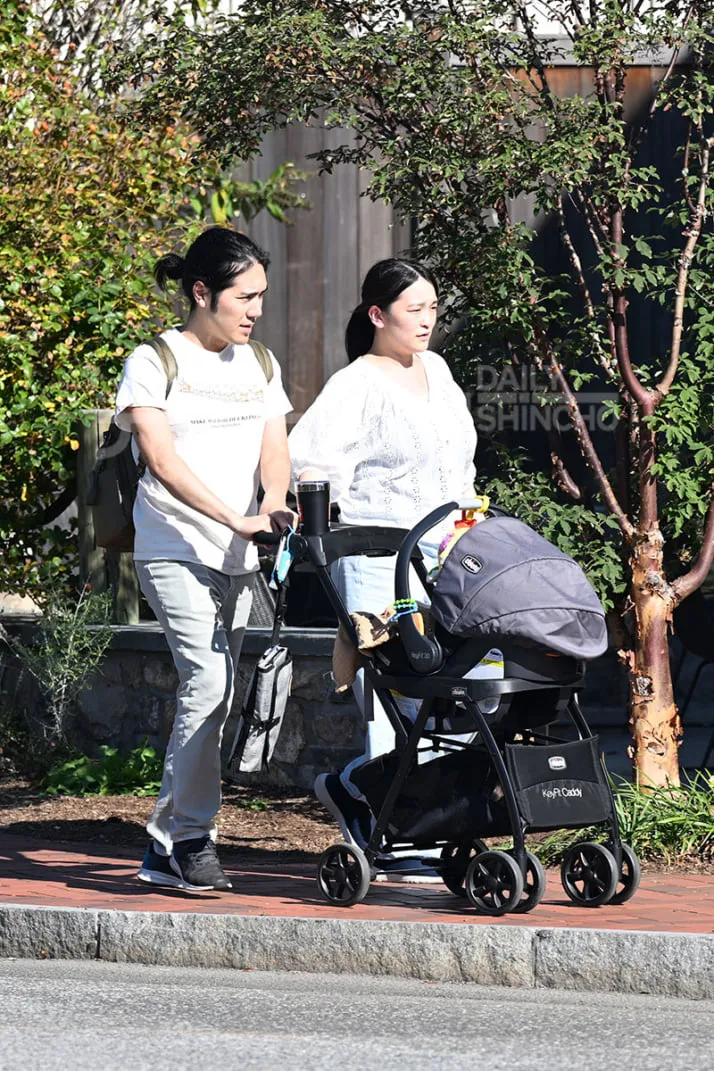
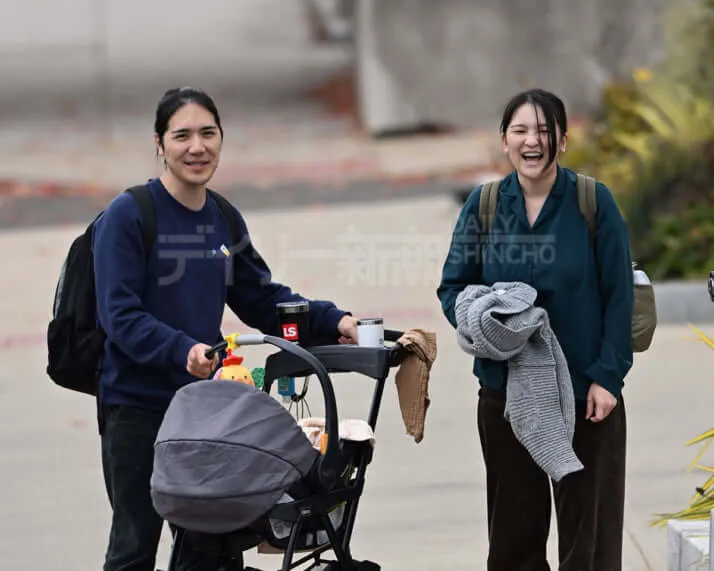
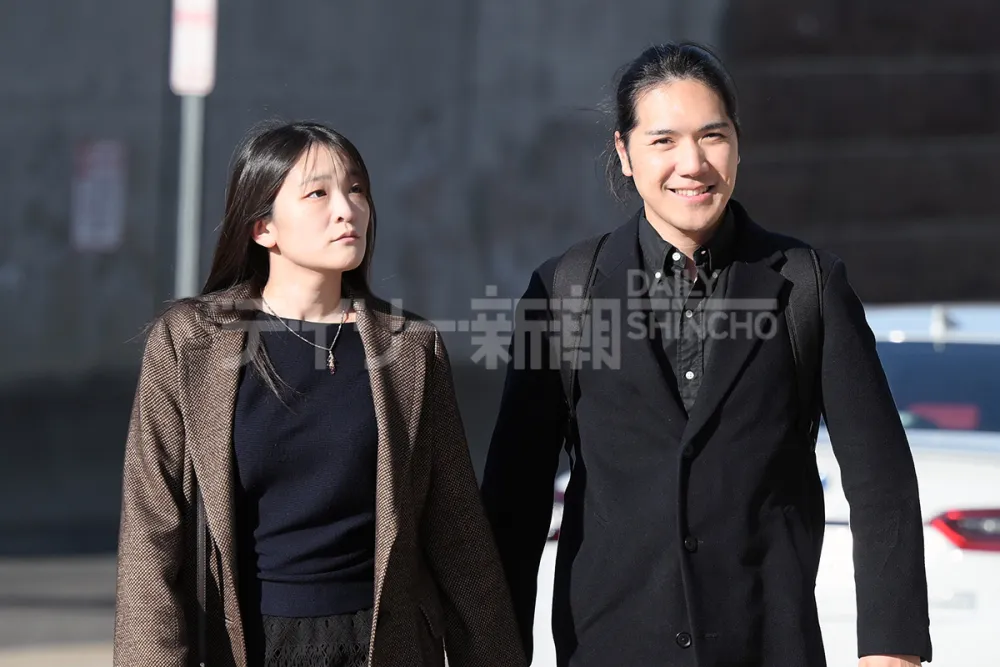
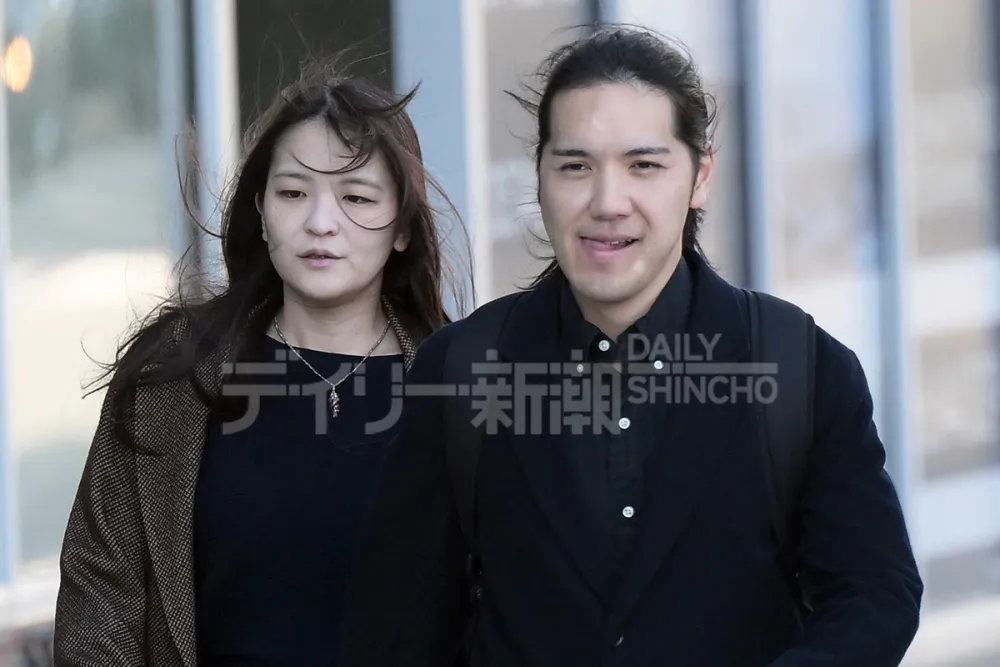
In 2021, Mako Komuro (now 34 years old), the eldest daughter of Akishino Palace in Japan, entered the marriage hall. In just over half a month after submitting her marriage registration in October of the same year, she and her husband Kei Komuro (now 34 years old) went to the United States. Since then, she has not set foot on her homeland, and her life in the United States is now entering its fifth year. After successfully giving birth to their eldest son last year, the family of three chose to settle in Connecticut, which borders New York State. Is the reason why they are reluctant to return to China stem from their pure enjoyment of the free life abroad, or is it because they have been severely criticized by social media and mass media for a long time since announcing the postponement of their wedding in February 2018, and are still trying to "escape reality"? By reviewing the "lessons learned" from those who also chose to leave the royal family and move overseas, we may be able to find out the truth about reality.
The precedent of two former royal families
As the youngest and fifth daughter of Emperor Showa and Empress Kojun, Shimazu Takako (now 86 years old) married his elder brother Hisamazu Hisanagi, a former classmate of His Majesty the Emperor and a member of the Shimazu family, the lord of the old Satsuma domain. After her marriage, due to a job transfer at the Export-Import Bank of Japan (now the Bank for International Cooperation), a government financial institution where her husband worked, she spent a total of six years living overseas in Washington, the United States, and Sydney, Australia.
Takako, who had the title of "Hisashi the Imperial Palace of the Qing Dynasty" before her marriage, was regarded as the perfect model of "Japanese princess" by many women's weekly and other media due to her avant-garde fashionable outfits and elegant manners. She was regarded as a pioneer of fashion trends among the royal family at that time. In 1959, at her coming-of-age ceremony press conference, when she was asked by the media “who is my ideal partner?”, her witty response of “Look at the person I finally choose” instantly became popular across the country and became the most popular catchphrase of the year.
This bold declaration of freedom to break the traditional constraints of the royal family coincides with the eve of the wedding of Her Royal Highness Michiko, the first civilian-born member of the royal family after the war. At this extremely sensitive moment, which is only one month away from the peak of the "Michiko craze", His Highness Takako's bold words not only captivated the young female community, but also attracted as much attention as His Highness Michiko. In addition, the news of their marriage came to light right after this declaration, and the lifestyle of the newlyweds has dominated the headlines of major TV screens and women's magazines almost all year round.
However, as his popularity remained high, Takako began to suffer frequent backlash and criticism from public opinion. Under sensational headlines such as "divorce rumors", the media is often filled with highly exaggerated speculations such as "I had expected this day"; not only that, but also harsh comments such as "please behave more dignified" and "this is the biggest headache for the head of the Imperial Household Agency" are overwhelming. Because of this, life abroad is like escaping into a completely different haven for her – where she is completely free from the high-pressure situation at home where she is always in the public eye. In interviews with overseas media and at press conferences, she once said frankly: "I feel happier here than in Japan because I can finally live a secluded life."
On the other hand, as the fourth son of King Norihiko Higashikuru and the direct grandson of Emperor Meiji, Mr. Toshihiko Tarama was deprived of his imperial status and demoted to a civilian along with other members of the old royal family after the war. After graduating from Keio University in 1951, he went to South America and immigrated to Brazil, where he became the adopted son of the widow of Mr. Tetsusuke Tarama, who had settled there in the early years.
Mr. Tiefu served as a diplomat stationed in Brazil during his lifetime. After his retirement, he purchased property locally and operated agriculture independently. Mr. Toshihiko not only took over the management of a vast coffee plantation in the city of Lins on the outskirts of Sao Paulo, but later moved to the urban area of Sao Paulo and held important positions such as vice president of the Board of Directors of the Brazilian Japanese Culture and Welfare Association, and was deeply active in the Japanese-Brazilian social circle. After that, he married the daughter of an Okinawan immigrant. After having a son, he was officially naturalized and obtained Brazilian citizenship in 1970.
In 2015, the experienced former royal passed away peacefully at his home in Sao Paulo at the age of 86. In the special context of that era when Emperor Showa was haunted by the shadow of war throughout his life and many old royal families were forced to remain silent on war-related topics, Mr. Toshihiko, who was far away in a foreign country, almost completely cut off contact with the Japanese media and spent his 86 years of life peacefully. Ms. Shimazu Takako brilliantly summed up overseas life as "seclusion", which undoubtedly stems from a double spiritual relief: she is far away from the fanatical pursuit caused by the royal family's prominent origins, and she is also completely free from the harsh moral scrutiny that must be endured due to being in the spotlight. This sense of alienation in physical space profoundly reflects the huge irreconcilable contradictions of the fate of the royal family itself.
Aphonia and adjustment disorders
Empress Michiko, who shared a high level of attention with Ms. Takako at the time, suddenly collapsed in the Akasaka Imperial Palace (now renamed Sento Imperial Palace) in Moto-Akasaka, Tokyo, on her birthday in 1993, the fifth year after her accession to the throne. According to official disclosures, the cause was long-term extreme mental fatigue, and she had unfortunately suffered from aphonia at the time. An attendant who served her later recalled: "Her Majesty the Queen endured unimaginable mental pressure at that time, and she felt deeply guilty and guilty about it." These words implicitly pointed out the huge psychological trauma caused to her by the numerous critical reports on the royal family in popular magazines at that time.
Especially in the August issue of "Treasure Island 30" monthly magazine published in July of that year, a blockbuster article titled "Royal Crisis" was published. This anonymous article signed by "Imperial Household Agency Staff" blatantly accuses Her Royal Highness Michiko's private life of being full of "hedonism". Once the article was published, it immediately triggered a violent chain reaction. Other gossip magazines followed suit and published negative content criticizing the royal family. The situation even escalated to the brink of getting out of control. In the end, extreme right-wing elements brazenly shot at the headquarters of the relevant publishing organization and the president's house in protest against the anti-royal reports.
In contrast, the fierce criticism that Empress Masako suffered when she was the Crown Princess is even more well known. Due to her failure to give birth to a male heir to the throne as scheduled in her early years, Her Highness Masako had serious friction with the Imperial Household Agency, which is responsible for royal affairs. Later, she was forced to absent herself from official activities for a long time due to the onset of a full-scale adjustment disorder, and fierce criticism from public opinion swept in like a tsunami. During that period, the online world became the main battlefield for attacking her. On platforms such as a large anonymous online forum that was popular in Japan at the time, a large number of malicious and defamatory posts emerged. These online violence not only focused on the names of His Highness Masako's illness, "shingles" and "adjustment disorder," but also targeted the "personality denial remarks" made by His Majesty the Emperor (then Crown Prince) who defended her, as well as the "temporary cancellation of official duties" due to the recurrence of the disease. Even the one-sided reports published by the then just-started Women’s Weekly website were widely quoted, causing the online siege against the Crown Princess to continue to ferment and cannot be subsided for a long time.
The advent of social media
When time passed to the era when Princess Mako was deeply involved in the whirlpool of public opinion, the well-known social media platform that is now popular around the world has become the absolute center of this storm. When the engagement press conference was held in September 2017, the whole society was filled with overwhelming blessings; however, just three months later in December, "Weekly Women" exposed the complicated "money dispute" between Kei Komuro's mother Kayo and his ex-fiancée, and the trend of public opinion suddenly ushered in a shocking reversal. Sharp criticisms such as "It really doesn't seem that she is choosing her life partner seriously and carefully" came one after another and were overwhelming, eventually forcing the high-profile wedding to be postponed in February of the following year.
Subsequently, Kei Komuro suddenly went to the United States to study in August of that year. Immediately afterwards, Akishino made harsh words at his birthday press conference in November, saying that "if we cannot create a social atmosphere that makes the vast majority of citizens convinced and happy, we will absolutely not be able to hold the traditional acceptance ceremony." This series of changes caused the young couple to suffer more and more criticism, almost out of control. Although Mr. Komuro tried to save the situation and released a 28-page detailed document on the grounds of "providing comprehensive clarification on the misinformation about the so-called money dispute." However, because the document only recorded the dispute process based on the Komuro family's unilateral perspective, it was immediately criticized by public opinion as "the content is extremely one-sided and avoids the important." This move not only failed to calm public anger, but seemed to add fuel to the fire.
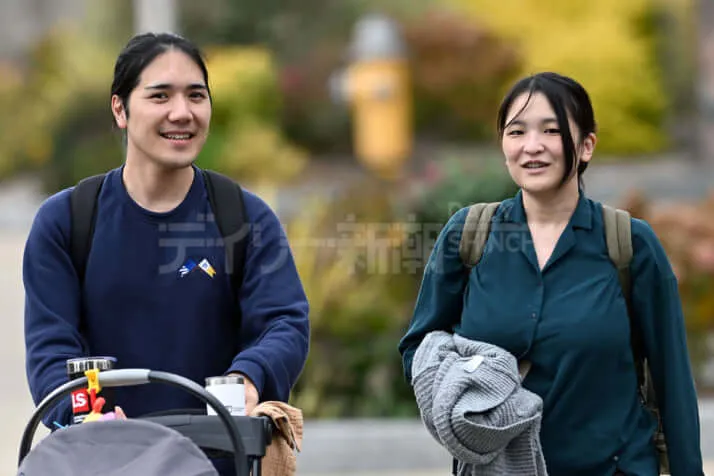
Even more fatally, it was later revealed that the Imperial Household Agency had been deeply involved in the drafting process of this clarification document. This news completely detonated the entire Internet, causing the public criticism to completely go out of control. This long "turmoil" that lasted for four years finally ended with the two of them forcibly registering their marriage and rushing to the United States immediately after the marriage.
A person from the Imperial Household Agency who is well versed in the inside story made the following profound analysis when recalling the tragic situation at that time: “Due to its extremely high anonymity and massive information throughput capacity, online forums are far more destructive than traditional paper media; and modern social media, with its amazing and ever-changing communication power and fermentation speed, can easily spawn terrorism beyond ordinary people’s imagination. The storm of public opinion was terrifying. Regardless of how much of the overwhelming criticism His Highness Mako suffered at the time was unwarranted online slander, the overwhelming psychological impact alone was enough to make any normal person have the decisive thought of fleeing Japan completely."
In addition, a former high-ranking official of the Imperial Household Agency also keenly pointed out the far-reaching social impact of this incident: "In February this year, the expert research group under the Ministry of Justice has reached a clear conclusion: measures to curb insult crimes by strengthening penalties have achieved certain substantive results in dealing with the increasingly rampant online defamation. Today, the entire Japanese society has formed a basic bottom-line consensus – it should never continue Letting go of uncontrolled and unilateral collective online violence on social media. It is undeniable that the direct trigger for the country to strengthen relevant penalties was the tragic incident of female wrestler Hana Kimura who died due to online violence; but the cruel realities that Princess Mako encountered in this storm were also like a heavy hammer, prompting countless citizens to deeply reflect on the advantages and disadvantages of the double-edged sword of modern social networks. "
About the author: Zhaoxia Baoren
Source: 「日本にいるときよりもLuckyせ」と说したancestorも…「小目眞子さん」 5 years old, "female royal family" がバッシングを bathびる background


![[Netherlands] France Turns To The Netherlands To Support Its Military Operations-Lijin Finance](https://www.erbetc.com/wp-content/uploads/2026/03/1773277663261_0.webp)