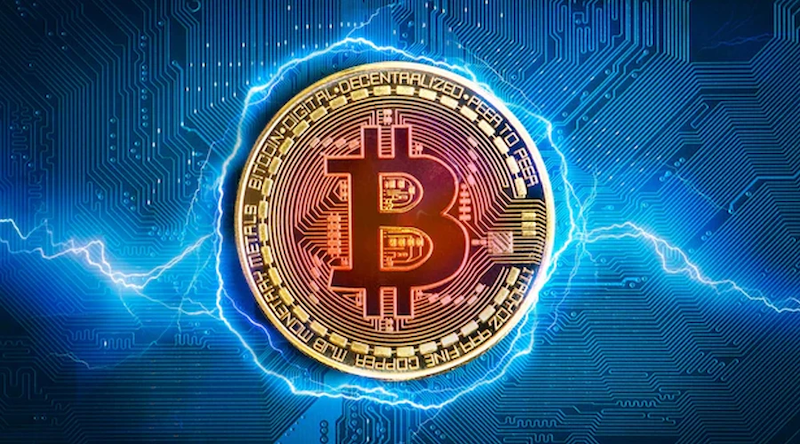
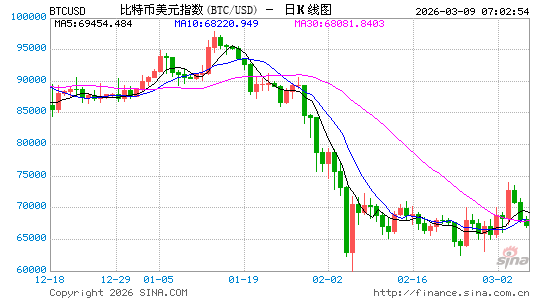
In 8 years, Bitcoin created a myth-the price increased nearly 3 million times, and the domestic price once exceeded 20,000 yuan. In this myth, different people see different stories. Speculators see opportunities to make money, technology geeks see technology that will change the future, and traditional financial institutions may see a growing ghost…
Today, Galaxy Research Institute will talk about something lighter and introduce the two most popular brothers in the electronic payment industry, Bitcoin and Ethereum, and their underlying blockchain technology. Can they really reshape the world economy? After reading this article, I hope you can get your own answer.
The birth of Bitcoin, the beginning of the revolution?
When it comes to the electronic payment industry, the first thing we think of is either Alipay or WeChat. In fact, behind these two giants, there are two problems that have been plaguing researchers, and they are also problems that truly show the "ambition" of the electronic payment industry:
The first is how to conduct online transfers between the two parties in need without going through an authoritative third party;
The second is how to record payment information while conducting electronic transfers to avoid repeated payments and ensure the safety of funds.
The solution of these two problems means that there will be an independent electronic currency system that has basically nothing to do with the current banking system.
In 2008, a person or a technical group published a white paper titled "A Person-to-Person Electronic Cash Payment System" under the pseudonym Satoshi Nakamoto. Nakamoto proposed two solutions to these two problems:
First, in person-to-person transfers, there is a need for an electronic currency whose value can be judged without being attached to a third-party pricing agency;
Then, we need to have a decentralized digital ledger (once there is a center, it means there is still an "authoritative third-party institution" equivalent to a traditional bank, which is obviously not in line with the ideal world of these geeks) that can distribute transaction records and stored transaction information to computers around the world. Of course, the ledger operates in roughly the same way as other traditional accounting methods.
In 2009, this technical solution that can transmit electronic wealth was officially launched. Its product form is Bitcoin, which has attracted widespread attention today. The underlying technical algorithm it relies on, which is now called blockchain technology, has been proven to have wider practical value and significance.
Although blockchain technology has not yet entered the mainstream government thinking and discourse system, as mentioned before, it has revolutionized the world's economic development.

1. Bitcoin surpasses Amazon
Bitcoin is essentially a decentralized, person-to-person electronic currency system. This kind of electronic banknote has no asset collateral, and it can be issued and circulated without going through clearing and custody institutions such as central banks and banks. Transaction and asset data are stored in every corner of the world connected to the Internet.
The transformation of human trading in the minds of geeks may look like this:
barter
Things – RMB, US dollars, rupees, rubles, pounds… – barter exchange
Things-Electronic Currency-Exchange
The first standardized value of Bitcoin was set at US$0.0008 on October 5, 2009, calculated based on the calculation that 1 US dollar equals 1309.03 Bitcoins. Each Bitcoin is currently trading at over $2,300. The intrinsic value of each Bitcoin has increased 2.9 million times.
According to the Washington Post, if you had purchased $100 worth of Bitcoin seven years ago, those bitcoins would be worth more than $73 million today. By comparison, if you had invested $100 in Amazon stock during its IPO in 1997, your investment would be worth about $64,000 now.
However, the intrinsic value of Bitcoin itself cannot be measured. Therefore, the speculative nature of Bitcoin as an electronic currency is much stronger than the stocks of companies such as Amazon. This means that short-term price fluctuations are very violent, and there is no basis for judgment on forward price trends.
As Bitcoin continues to dominate news headlines around the world, many onlookers naturally have a question: How did Bitcoin come about?
2. Are Bitcoins mined?
One of the characteristics of Bitcoin is that there is no central bank as an issuing institution, so how did they come into being? In fact, it can be said that it was gradually mined by Bitcoin miners.

The simplest analogy is to imagine the mining method of gold miners. Gold miners mine gold from the earth. As the gold is dug out and processed, the gold flowing into the market becomes part of the wealth and currency of the economy. The same is true for Bitcoin.
Newly mined Bitcoins are obtained through a complex competitive mining process – miners are rewarded with Bitcoins by running computational programs using highly specialized hardware facilities.
3. How to use Bitcoin?
When Bitcoins are mined, how will they be used and in what situations?
Bitcoin is traded on exchanges just like stocks, bonds, and currencies, and it can also be used as a currency to exchange services or goods.
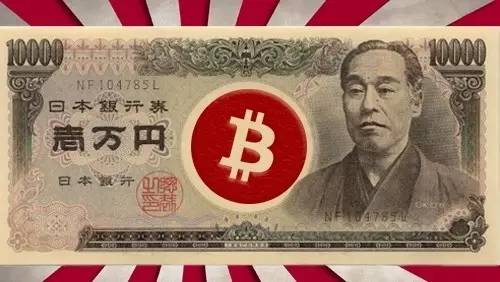
Japan is the first country in the world to officially announce that it accepts Bitcoin as a legal currency. As Japan treats Bitcoin as a currency, it is expected that the number of suppliers and merchants that accept Bitcoin as a currency for purchasing goods and services will increase from 1,000 to 100,000.
Such awesome technology and products that may "subvert the world" have received great attention since their emergence, and their value has continued to skyrocket. At present, the number of Bitcoin investors, enthusiasts, including some business people and even financial institutions is already very large.
The most important thing is that with its development, the two functions originally envisioned have been gradually realized and improved, and the idea of whether it can be used as an equivalent electronic currency has been confirmed. Seeing that the originator of electronic currency was so popular and did not die on the beach, thousands of digital currencies were designed and generally kept their value rising. Among them, the most famous latecomer with high market value is Ethereum.
The current total market value of Bitcoin is approximately US$37 billion, and the total market value of Ethereum during the same period is approximately US$16 billion. While Bitcoin was the first electronic currency to appear on the market and thus received most of the media attention, many believe that the Ethereum blockchain and the Ethereum currency based on this technology will become a more powerful tool.
Competitor Ethereum
In the electronic payment industry, another white paper "impacting the world" has appeared.
In 2013, 19-year-old Vitalik Buterin first mentioned the idea of Ethereum in a book titled "Ethereum White Paper: The Next Generation of Intelligent Connection and Decentralized Application Platform". Then in 2014, the Ethereum algorithm and protocol were officially implemented, and US$150 million was raised. The system itself was finally completed on July 30, 2015.

Vitalik Buterin
There is an issue that we need to understand very much, and it is also the biggest competitive potential and focus of debate on this platform: that is, Ethereum is not only an electronic currency, but also a platform and smart contract system based on blockchain technology, which can be used to build applications, and electronic currency is just one of the manifestations of this technology.
Similar to financial instruments, properties, domain names, and more complex financial product transactions, derivatives, gambling, as well as identity recognition and personal credit systems that involve the circulation and recording of information and wealth, Ethereum theoretically has a lot of room for development.
Take smart contracts as an example:
Smart contracts are Ethereum’s important contribution to the rapidly expanding field of electronic currency and blockchain technology. It can be seen as a way to use digital means to ensure the security of value exchange and other links. It can save the expensive services provided by professionals such as lawyers and notaries in a transparent and disintermediated way, and instead ensure the validity of the contract by executing the digital terms of the smart contract itself.
1. Ethereum VS Bitcoin
Now, let’s talk about another unique feature of Ethereum – the digital currency Ethereum.
Ethereum is a digital currency like Bitcoin, but the difference is that Ethereum has two digital currencies circulating and trading in the market. One of them uses ETH as the transaction token, and the other is called classic Ethereum, which circulates transactions under the token of ETC.

ETC
ETH
The Ethereum Foundation defines the role of Ethereum as a fuel, or a means of payment that allows customers to pay for performing requested operations on servers in the Ethereum platform.
In 2016, a huge scandal shocked the Ethereum community. A still-unidentified hacker exploited a software vulnerability to try to steal more than $50 million worth of Ethereum. The result of this incident was the birth of the second type of Ethereum for transactions.
2. Where did Ethereum come from? What does it do?
Similar to Bitcoin, Ethereum is obtained through mining, with teams of miners verifying and storing Ether, which is then traded on the Ethereum platform. While Bitcoin and other digital currencies can be used to purchase goods or services, as mentioned before, Ethereum is primarily used to pay for fees incurred by users on the Ethereum network.
The value foundation of Bitcoin and Ethereum: Blockchain
Finally, let’s talk about the value foundation of Bitcoin and Ethereum—blockchain technology. The original idea of the framework proposed by Nakamoto was to allow individuals to quickly complete online transactions without the need for traditional middlemen or third parties. This technical framework is currently known as blockchain.
Blockchain is an indestructible digital ledger that can be set up to record not just financial transactions, but almost any valuable information without fear of tampering.
In the simplest model, the blockchain is a simple distributed ledger, but the inherent meaning of the blockchain is far greater than the superficial meaning of its name. Blockchain can transfer value itself during the transaction process. As Sally Rivers, a technology writer at the Financial Times, said, for Bitcoin, blockchain is to it what the Internet is to email.
Just as email facilitates the communication of information, blockchain facilitates the transfer of wealth.
Areas where blockchain technology is being rapidly explored and deployed include capital markets, financial services, payment and remittance, derivatives trading, credit management, government governance, sharing economy, supply chain, auditing, stock trading, the Internet of Things, insurance, healthcare, and many more.
Although digital currencies such as Bitcoin and Ethereum have achieved extraordinary development speed, their size and value are still insignificant compared to the traditional monetary system. It is still difficult to predict how much impact digital currencies will have on the traditional monetary system backed by assets or sovereign credit in the future.
But the development value of blockchain technology goes without saying. It is foreseeable that the blockchain technology hidden in the gorgeous figure of digital currency will be well integrated with the traditional financial industry. In the future, currency transactions, financial asset transactions and transfers, including personal credit records will all rely on the security protection brought by blockchain technology. Perhaps blockchain will be the "ghost" that accompanies the traditional financial system's transition to an unknown digital monetary and financial system.
Reference article: Billy Silva, “Blockchain for the Rest of Us”.